Insight Blog
Agility’s perspectives on transforming the employee's experience throughout remote transformation using connected enterprise tools.
38 minutes reading time
(7554 words)
Employee News App - Stop Important Company Updates From Getting Lost

Employee News App - Stop Important Company Updates From Getting Lost
Discover how an employee news app keeps company updates visible, reduces email overload, and connects office, remote, frontline, and deskless employees.
Employee News App - Stop Important Company Updates From Getting Lost

Your Company Sent the Update—But Did Anyone See It?
Your HR team sends an important company announcement by email.
A manager shares it again in a group chat.
Someone uploads the latest policy document to the company intranet.
A week later, employees are still asking, "When did this change?"
The problem isn't always that companies aren't communicating.
It's that important information is getting lost in the noise.
Research from Firstup found that 61% to 67% of employees have missed an important policy or procedural update, highlighting a serious communication gap between organisations sending information and employees actually receiving it.
When that missed update involves a new company policy, compliance requirement, safety procedure, operational change, or urgent leadership announcement, the consequences can be far more serious than an unread email.
61–67%
of employees
Research from Firstup found that 61% to 67% of employees have missed an important policy or procedural update, highlighting a serious communication gap between organisations sending critical information and employees actually receiving it.
Source: Firstup
This challenge becomes even greater for organisations with remote, hybrid, frontline, and deskless employees. Important company news can quickly become fragmented across email inboxes, messaging apps, shared drives, outdated intranets, and informal conversations.
Employees are left wondering where to look, while internal communications and HR teams have little confidence that critical messages are actually reaching the right people.
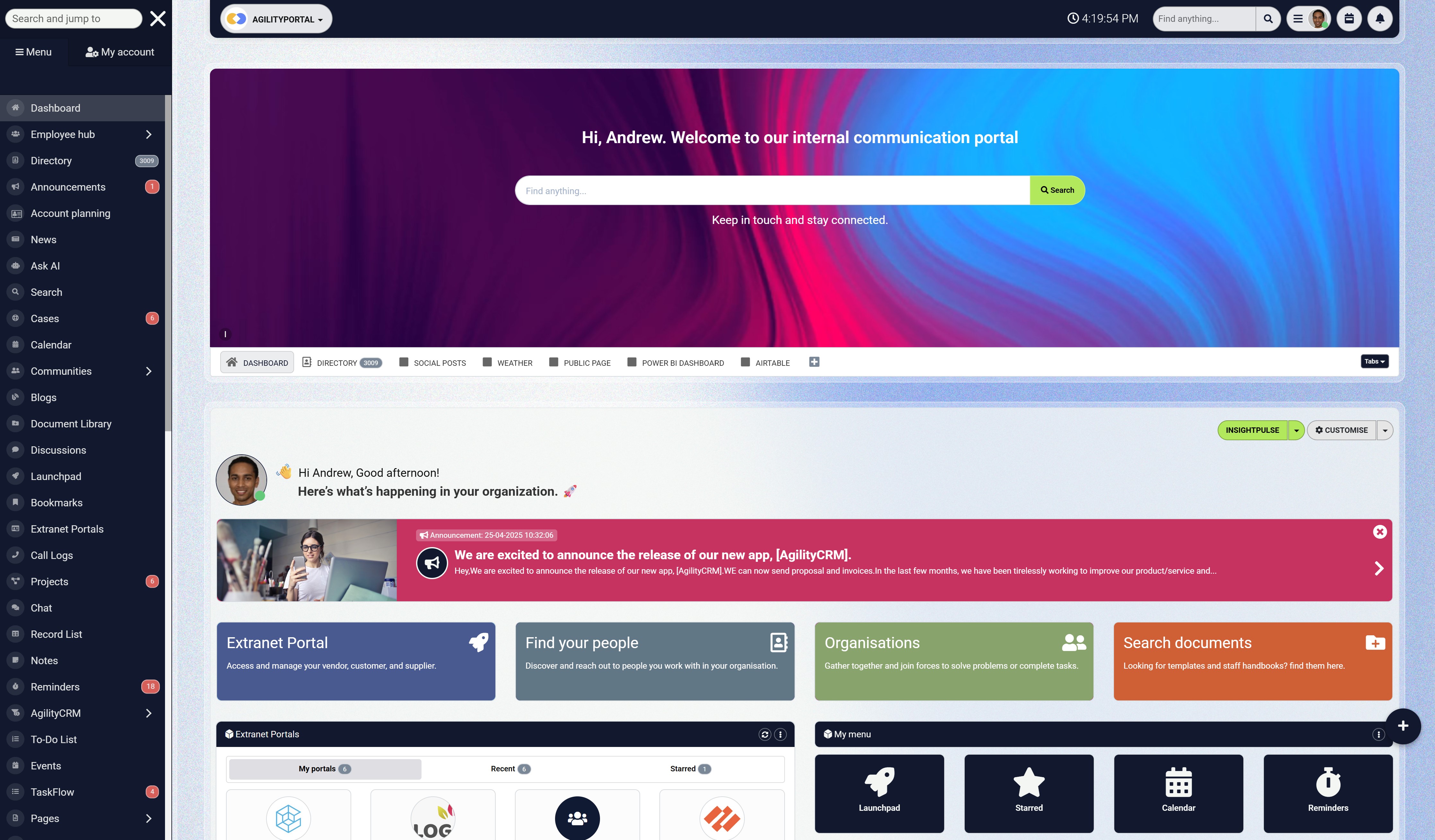
An employee news app provides a more centralised way to publish company news, internal announcements, leadership updates, policy changes, and urgent communications—giving employees one accessible place to stay informed wherever they work.
But not every solution is built the same.
In this guide, we'll explain what an employee news app is, why traditional communication channels often fail to keep everyone informed, and the essential features you should look for when choosing a platform.
We'll also compare employee news apps with email and show how the right employee communication platform can help your organisation make sure important company updates are seen, understood, and far less likely to get lost.
Key Takeaways
- An employee news app gives organisations a central place to publish company news, internal announcements, leadership updates, policy changes, and urgent workplace information.
- Relying heavily on email, group chats, shared drives, and noticeboards can cause important company updates to become buried, fragmented, or missed by employees.
- Mobile access and push notifications can help organisations reach frontline, deskless, remote, and distributed employees who may not regularly access corporate email.
- When choosing an employee news solution, organisations should consider targeted announcements, personalised news feeds, audience segmentation, mobile access, engagement tools, searchable content, and communication analytics.
- The right internal news platform should not simply add another workplace app—it should create a trusted destination where employees can easily access relevant and up-to-date company information.
What Is an Employee News App?

What Is an Employee News App?
An employee news app is a dedicated digital platform that helps organisations share company news, internal announcements, leadership updates, policy changes, urgent alerts, and other important workplace information directly with employees.
Think of it as a central communication hub where employees can quickly see what's happening across the organisation without searching through crowded email inboxes, scrolling through endless group chats, or checking multiple workplace systems.
Unlike email, where important announcements can quickly become buried under hundreds of other messages, an employee news app gives company communications a dedicated place to live.
It also differs from WhatsApp and Slack-style messaging, which are primarily designed for conversations and real-time chat rather than structured company-wide news and long-term access to important announcements.
Modern platforms can provide employees with a personalised news feed, mobile access, targeted announcements, push notifications, and searchable content.
This allows HR and internal communications teams to deliver relevant information to specific departments, locations, teams, or the entire workforce.
For organisations with remote, hybrid, frontline, and deskless employees, an internal communications app can be particularly valuable.
Employees don't necessarily need to sit behind a desk or constantly monitor a company email account to know what's happening—they can access important updates directly from their mobile device.
Examples of Top Employee News Apps on the Market
The table below compares some of the leading employee news apps available today, highlighting what each platform is best suited for, the types of workforces they support, and the platforms employees can use to access them.
Examples of Top Employee News Apps on the Market
| Software | Best For | Workforce Fit | Platforms |
| AgilityPortal | Organisations wanting an all-in-one platform for employee news, company announcements, internal communication, engagement, knowledge sharing, and workplace collaboration | SMB to enterprise; remote, hybrid, frontline, deskless, and distributed teams | Web, iOS, Android |
| MangoApps | Enterprise organisations needing communications, HR, and operations unified in a single app, with no corporate email required | Mid-market to enterprise; frontline-heavy industries including healthcare, retail, manufacturing, and hospitality | Web, iOS, Android, Desktop |
| Blink | Frontline-focused organisations wanting a branded mobile app with social-style engagement and workplace integrations | Frontline and deskless; particularly suited to larger distributed workforces | iOS, Android, Web, Desktop |
| WorkJam | Enterprise retail and hospitality teams needing employee communication alongside scheduling and task execution | Enterprise frontline; retail, hospitality, and supply chain | iOS, Android, Web, Kiosk |
| Flip | Enterprises wanting a branded, mobile-first workforce communication app with AI capabilities and HR integrations | Enterprise frontline; manufacturing, retail, and food service | iOS, Android, Web |
| YOOBIC | Multi-location organisations combining employee communications, microlearning, and task execution for frontline teams | Enterprise frontline; retail, hospitality, and multi-location operations | iOS, Android, iPad, Web |
| Zipline | Retail organisations needing store-level communication, execution, compliance, and role-targeted updates across multiple locations | Enterprise retail and multi-location workforces | iOS, Android, Web, Tablet |
| Sociabble | Organisations prioritising internal communications, multilingual content delivery, and employee advocacy | Mid-market to enterprise; mixed desk-based and frontline workforces | iOS, Android, Web, Desktop |
| Connecteam | Small and mid-sized deskless teams looking to combine employee communication with scheduling and time tracking | SMB to mid-market; frontline and deskless teams | iOS, Android, Web |
What Problems Does an Employee News App Solve?
A well-designed company news app can help organisations overcome some of the most common problems with internal communication:
- Important announcements getting buried in email – Gives company news and critical updates a dedicated, highly visible place instead of competing with everyday emails.
- Employees missing urgent information – Push notifications and priority announcements can alert employees when important information requires their attention.
- Difficulty reaching frontline and deskless workers – Mobile access helps organisations communicate with employees who may not have regular access to a computer or corporate email.
- Information scattered across too many platforms – Brings company news, announcements, updates, and workplace information into one central communication hub.
- Employees receiving irrelevant communications – Targeted publishing allows organisations to send relevant updates to specific departments, teams, locations, or employee groups.
- Remote and distributed teams feeling disconnected – A shared news feed helps employees stay connected to company developments regardless of where they work.
- Employees not knowing where to find previous announcements – A searchable archive makes it easier to revisit important company news and historical updates.
- Low engagement with internal communications – Interactive features such as comments, reactions, polls, and social engagement can turn company news into two-way communication.
- HR and communications teams repeatedly answering the same questions – Providing one reliable source for official announcements helps employees find information themselves.
- Limited visibility into communication performance – Engagement insights and analytics can help communication teams understand which announcements employees are viewing and engaging with.
Ultimately, an employee announcement app helps close the gap between sending an important message and making sure employees actually have the opportunity to see and engage with it.
Instead of hoping an important email gets opened, organisations can create a central, accessible communication ch
Related Internal Communication Guides You May Want to Read Next
This Internal Communication Platform guide helps you compare software and choose the right solution for your organisation. The related resources below explore internal communication strategies, campaign planning, team structures, common challenges, AI, and practical ways to improve communication across the workplace.
- Internal Communication Strategies for a More Connected Workforce
- Types of Internal Communication Campaigns With Practical Examples
- How to Write an Internal Communication Mission Statement
- Internal Communication Plan and Strategy Template
- How to Structure an Internal Communications Department
- How to Improve Internal Communication Across Your Business
- What Is an Internal Communication System and How Does It Work?
- Best Practices for a Successful Internal Communication Strategy
- Common Internal Communication Problems and How to Overcome Them
- How to Improve Internal Communication Within an Organisation
- Building an Effective Internal Communications Strategy
- Internal Communication Strategy: Steps, Goals, and Examples
- AI in Internal Communications: Benefits, Risks, and Use Cases
Together, these resources create a practical internal communications knowledge hub covering strategy, technology, employee engagement, campaign planning, communication measurement, and the use of AI in the modern workplace.
Why Important Company Updates Keep Getting Lost

Why Important Company Updates Keep Getting Lost
Most organisations don't have a shortage of information.
The real problem is getting the right information in front of the right employees at the right time.
An important announcement might start as an email from HR, get mentioned in a team chat, appear briefly on the company intranet, and then be discussed in a meeting that half the workforce didn't attend. Within days, employees are working from different versions of the same information—or haven't seen the update at all.
This communication gap becomes particularly risky when the message involves policy changes, workplace safety, compliance requirements, organisational changes, benefits, or urgent operational updates.
Sending an announcement doesn't automatically mean employees have seen or understood it.
Research published by AgilityPortal in its 2025 Employee Communication Impact Study highlights the challenge, particularly among non-desk workers, who reported lower satisfaction with internal communication than their desk-based colleagues.
For companies with frontline, mobile, and distributed workforces, relying heavily on traditional communication channels can leave a significant part of the organisation disconnected.
So, Why Are Employees Missing Important Updates?
- Email overload and crowded inboxes – Critical company announcements compete with meeting invitations, customer emails, automated notifications, and everyday conversations. Even an important message can disappear down the inbox within hours.
- Important news looks like every other message – When a major leadership announcement or policy change arrives through the same channel as routine communication, employees may not immediately recognise its importance.
- Frontline employees don't always have regular email access – Retail workers, healthcare teams, warehouse employees, field workers, and other deskless staff may rarely sit in front of a computer or check a corporate inbox throughout their working day.
- Remote and distributed teams are harder to reach consistently – Employees working across different offices, countries, shifts, and time zones may receive information at different times or through completely different channels.
- Too many communication tools create confusion – When news is spread across email, instant messaging, shared drives, intranet pages, and workplace apps, employees are forced to work out which source contains the latest information.
- Communications teams lack visibility – Sending a message is easy. Knowing whether employees actually saw it is much harder when organisations rely on channels with limited engagement insights.
- Employees don't know where to find previous announcements – When someone needs to revisit an update from three months ago, searching through old emails and chat conversations can quickly become frustrating.
The result is an internal communication environment where employees may hear about important changes late, receive information second-hand, or miss announcements completely.
This is where choosing the best employee news app for your workforce becomes important. The goal isn't simply to introduce another workplace application. It's to create a reliable, central destination for internal news and announcements where employees know they can find accurate and up-to-date information.
For HR and internal communications teams, that means moving away from the "we sent the email, so everyone must know" mindset and towards a more measurable approach to workforce communication, company announcements, employee alerts, mobile communications, and internal news distribution.
Because when an update genuinely matters, simply pressing Send isn't enough.
7 Features to Look for in an Employee News App
Choosing the right internal communication solution isn't simply about finding another tool that lets you publish company updates. Most businesses can already send announcements through email, messaging platforms, or an existing intranet.
The real question is whether those announcements are actually reaching the employees who need to see them.
The best employee news app should make internal communication easier to manage while giving employees a simple and reliable way to stay informed.
For organisations comparing different solutions, here are seven features that can make the biggest difference.

7 Features to Look for in an Employee News App
1. Targeted Company Announcements
Not every announcement needs to reach every employee.
A change to warehouse procedures might only affect operations teams, while an office closure may only be relevant to employees at a particular location.
Sending every update to the entire workforce can create communication overload and eventually cause employees to ignore messages that don't seem relevant.
Look for a platform that allows internal communications teams to target announcements based on criteria such as:
- Departments
- Teams
- Office locations
- Job roles
- Employee groups
- Workspaces or communities
Targeted communication helps reduce unnecessary noise while increasing the likelihood that employees pay attention when a relevant update appears.
2. Personalised Employee News Feeds
Personalised Employee News Feeds
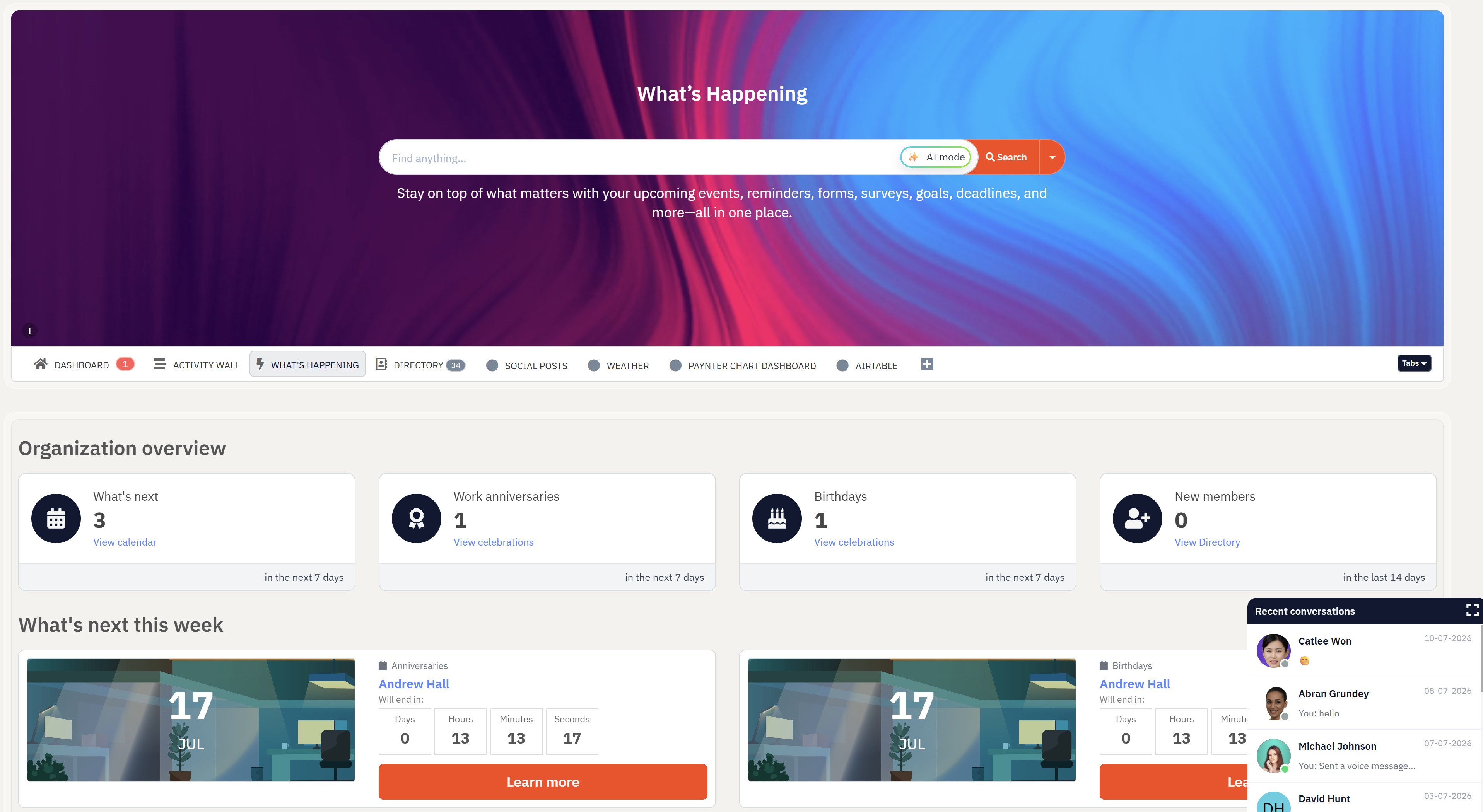
A personalised news feed gives employees a central place to see company information that's relevant to them.
Rather than searching across email, group chats, shared drives, and different intranet pages, employees can open one workplace news feed and quickly understand what's happening across the organisation.
Personalisation can also help larger organisations avoid overwhelming employees with information.
A sales employee in London, for example, may see company-wide announcements alongside updates from their department and local office.
The business benefit is simple: employees spend less time searching for information and are more likely to engage with news that directly affects their work.
3. Mobile Access and Push Notifications
For organisations with frontline, deskless, remote, or mobile employees, desktop-only communication can create significant gaps.
A mobile employee app allows workers to access company news and announcements from their smartphone wherever they are working. Push notifications can also alert employees when a new or important update has been published.
This is particularly useful for industries such as healthcare, retail, hospitality, logistics, construction, and manufacturing, where many employees don't spend their working day sitting in front of a computer.
Mobile access helps create a more inclusive communication experience by giving more of the workforce direct access to company information.
4. Urgent Alerts and Priority Communications
Some company updates can't wait until an employee happens to check their inbox.
Emergency notifications, office closures, IT outages, safety alerts, security incidents, and urgent operational changes may need to reach employees quickly.
A good internal communications app should make it possible to distinguish urgent information from everyday company news. Priority alerts and push notifications can help important messages stand out when employees need to act quickly.
For businesses operating across multiple locations or shifts, this can be particularly valuable because critical updates can be distributed rapidly without relying entirely on managers to pass information down through the organisation.
5. Audience Segmentation
Audience Segmentation
As organisations grow, internal communication becomes more complex.
A company with hundreds or thousands of employees may need to communicate differently with departments, subsidiaries, offices, project teams, frontline workers, contractors, or regional workforces.
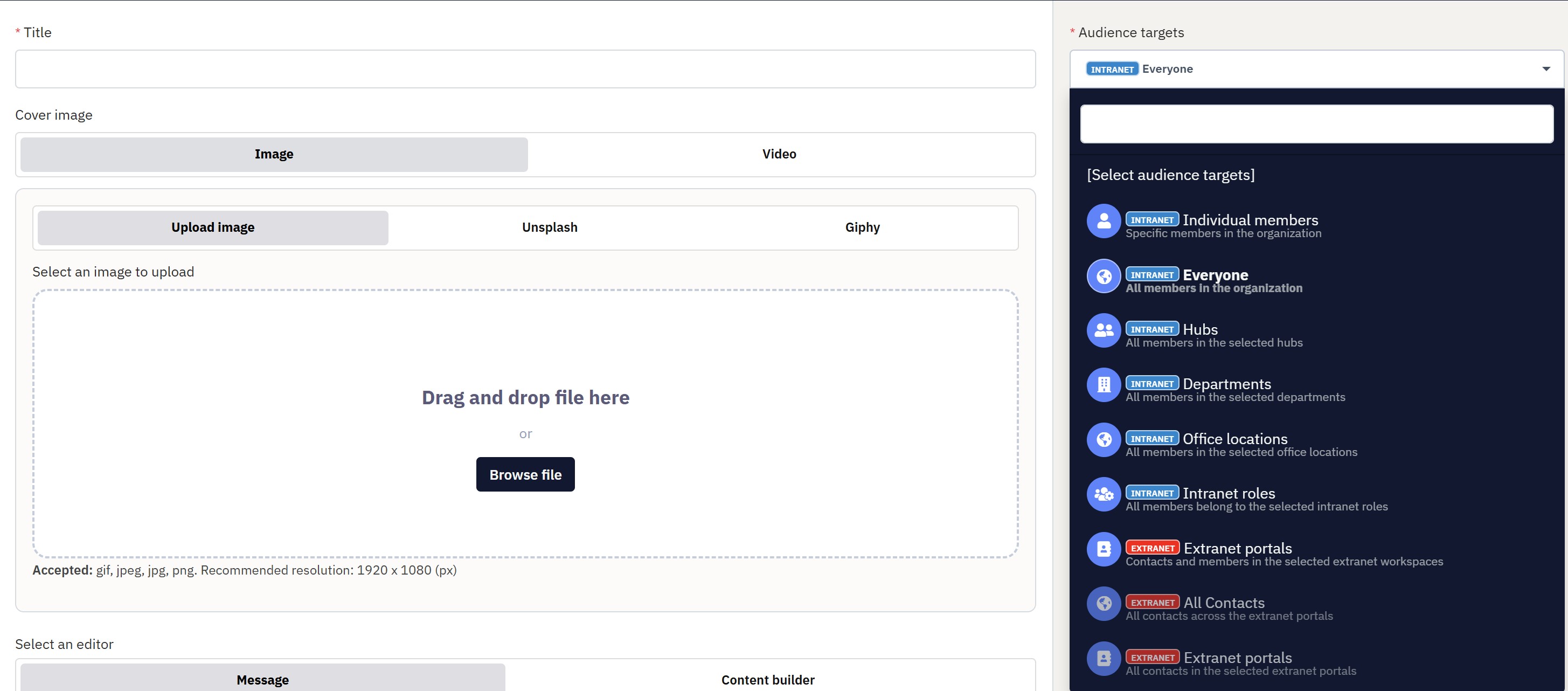
Audience segmentation allows communication teams to control exactly who receives particular content.
For example, HR might publish a benefits announcement for employees in one country, while operations sends a procedural update to workers at a specific facility.
Better segmentation means employees receive fewer irrelevant messages, helping important communications stand out rather than becoming part of the background noise.
6. Employee Engagement and Communication Analytics
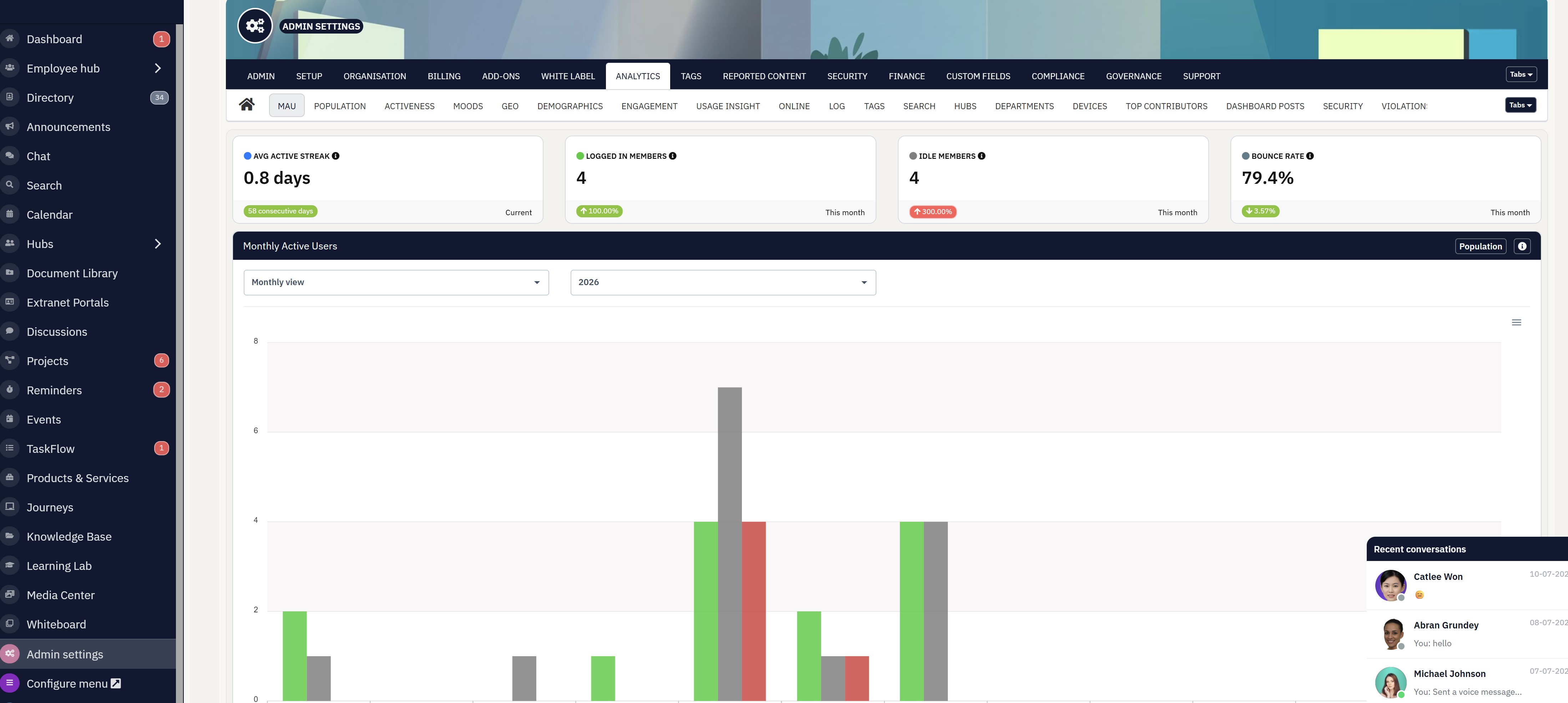
Communication Analytics
Publishing company news shouldn't always be a one-way conversation.
Features such as comments, reactions, polls, likes, and employee feedback can encourage employees to interact with company updates and give communication teams a clearer picture of how information is being received.
Analytics and communication insights can add another layer of visibility.
Depending on the platform, organisations may be able to understand which announcements are attracting attention, which topics generate engagement, and where communication gaps may exist.
This information can help HR and internal communications teams move away from simply measuring how many messages they send and start understanding how effectively they are connecting with employees.
7. Searchable News and Announcement Archives
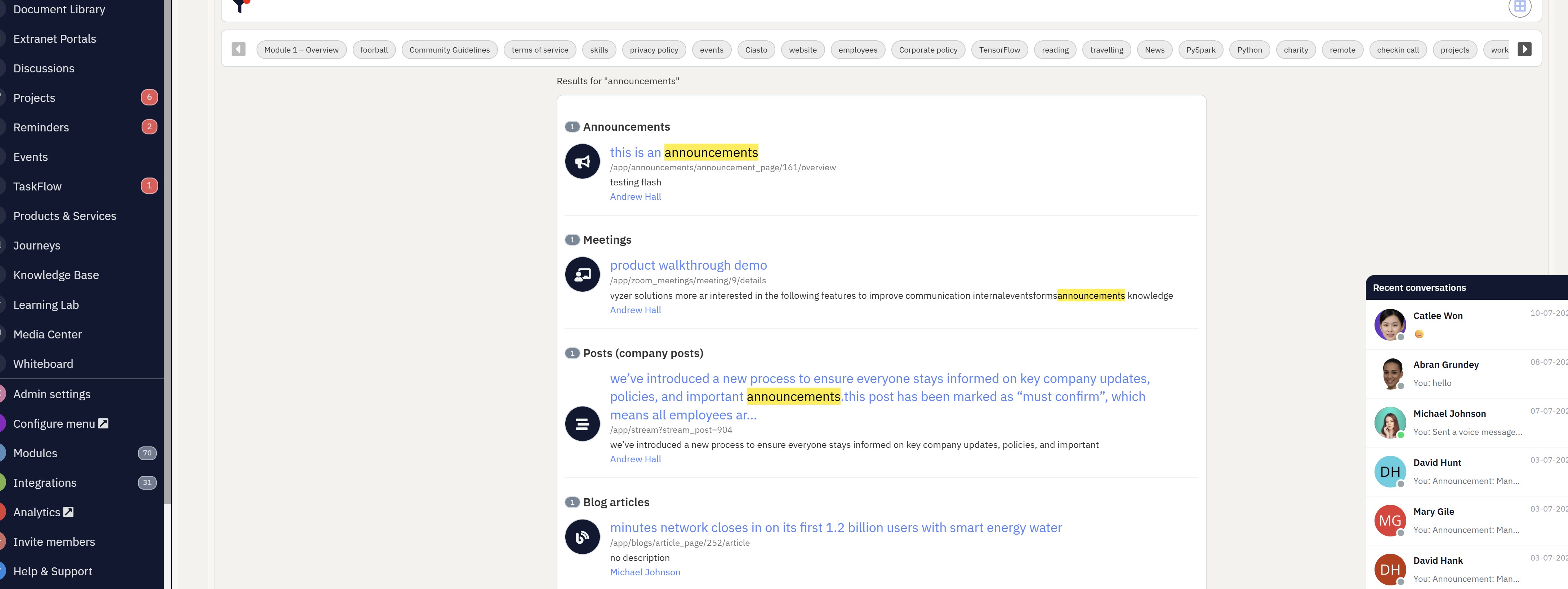
Searchable News and Announcement Archives
Company announcements shouldn't disappear the moment they fall off the front page.
Employees often need to revisit previous updates, whether they're looking for a policy announcement from last month, details about a company initiative, or information shared by leadership.
A searchable internal news archive creates a reliable source of historical company information.
Instead of searching through hundreds of emails or scrolling through old chat conversations, employees can quickly find previous announcements and updates when they need them.
Over time, this can also help create a stronger organisational knowledge base, preserving important communications and making information easier to access for both existing and new employees.
Choosing the Right Features for Your Workforce
The features your organisation needs will ultimately depend on how and where your employees work.
A small office-based business may prioritise personalised news feeds and engagement tools, while a large distributed organisation may place greater importance on mobile access, targeted communications, audience segmentation, and urgent alerts.
Before choosing a platform, consider who you need to reach, what types of information you regularly share, and where your current communication process is failing.
The goal isn't to send more messages. It's to make sure the right employees see the right information at the right time.
That's the difference between simply having another communication tool and building an internal news channel employees can actually rely on.
Employee News App vs Email: Which Is Better for Company Announcements?
Email has been the default channel for internal business communication for decades. It's familiar, easy to use, and almost every organisation already has it.
But there's a fundamental problem: email wasn't designed to be a central home for company news.
An important leadership announcement can arrive at 9:00 a.m. and be buried beneath meeting invitations, customer messages, automated notifications, and internal conversations before lunchtime.
For employees already dealing with crowded inboxes, distinguishing an important company update from everyday communication becomes increasingly difficult.
The challenge is even greater for frontline and deskless workers who may not have regular access to corporate email.
An employee news app, on the other hand, creates a dedicated destination for internal news and company announcements.
Instead of competing for attention inside an inbox, important updates can be published to a central news feed, targeted to relevant audiences, and supported by mobile notifications and engagement tools.
Here's how the two approaches compare:
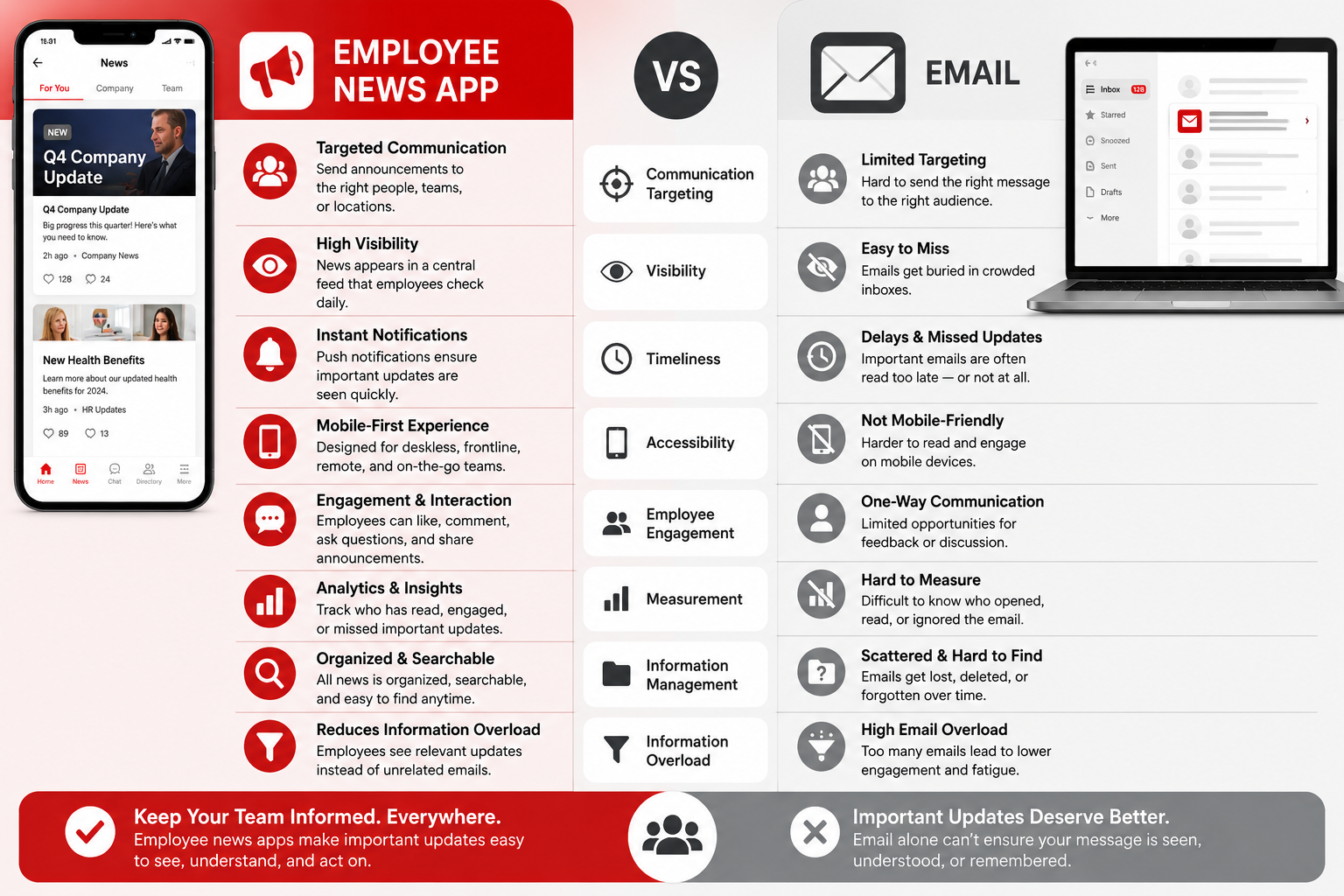
Employee News App vs Email: Which Is Better for Company Announcements
| Feature | Employee News App | |
| Centralised company news | ✓ Dedicated news feed | Limited — messages become buried |
| Push notifications | ✓ Alerts employees to important updates | Limited — depends on individual email settings |
| Targeted announcements | ✓ Target by team, department, location, or group | ✓ Distribution lists can be used |
| Mobile-first access | ✓ Designed for mobile and distributed workforces | ✓ Available through mobile email apps |
| Frontline and deskless access | ✓ Can provide access without relying solely on corporate email | Limited for employees without regular email access |
| Employee engagement | ✓ Comments, reactions, polls, and feedback | Limited |
| Searchable news archive | ✓ Central history of previous announcements | Difficult — information is spread across individual inboxes |
| Communication analytics | ✓ Can provide engagement and content insights | Limited depending on the email platform |
| Personalised news feeds | ✓ Relevant content based on employee groups | ✗ Not typically available |
| Urgent communications | ✓ Priority alerts and mobile notifications | Limited — urgent emails can still be missed |
Does an Employee News App Replace Email?
Not necessarily—and for most organisations, it shouldn't.
Email still plays an important role in workplace communication. It's useful for direct conversations, external communication, formal correspondence, and messages that require a personal response.
The problem arises when organisations rely on email as the primary destination for important company news.
Internal announcements, leadership updates, policy changes, employee recognition, operational information, and company-wide communications can quickly become fragmented when they're distributed across hundreds or thousands of individual inboxes.
A dedicated internal news platform creates a central source employees can return to whenever they need information. Email can then complement that communication rather than being responsible for carrying every company update.
The goal isn't to eliminate email.
It's to stop treating an overcrowded inbox as your company's internal newsroom.
For organisations where employees regularly say, "I didn't see that email," or "Nobody told me about that," moving important announcements to a dedicated company news and communication platform can provide a more structured, visible, and accessible way to keep everyone informed.
10 Benefits to Expected When Rolling Out an Employee News App Across Your Organisation
Rolling out an employee news app isn't just about introducing another communication channel.
Done properly, it can change how information moves across your organisation and give employees a reliable place to find the updates that matter to them.
For HR and internal communications teams, the biggest benefit is control and visibility.
Instead of publishing an announcement and hoping employees notice it, organisations can take a more structured approach to distributing company news across departments, locations, and different types of workers.
Here are some of the key benefits businesses can expect.
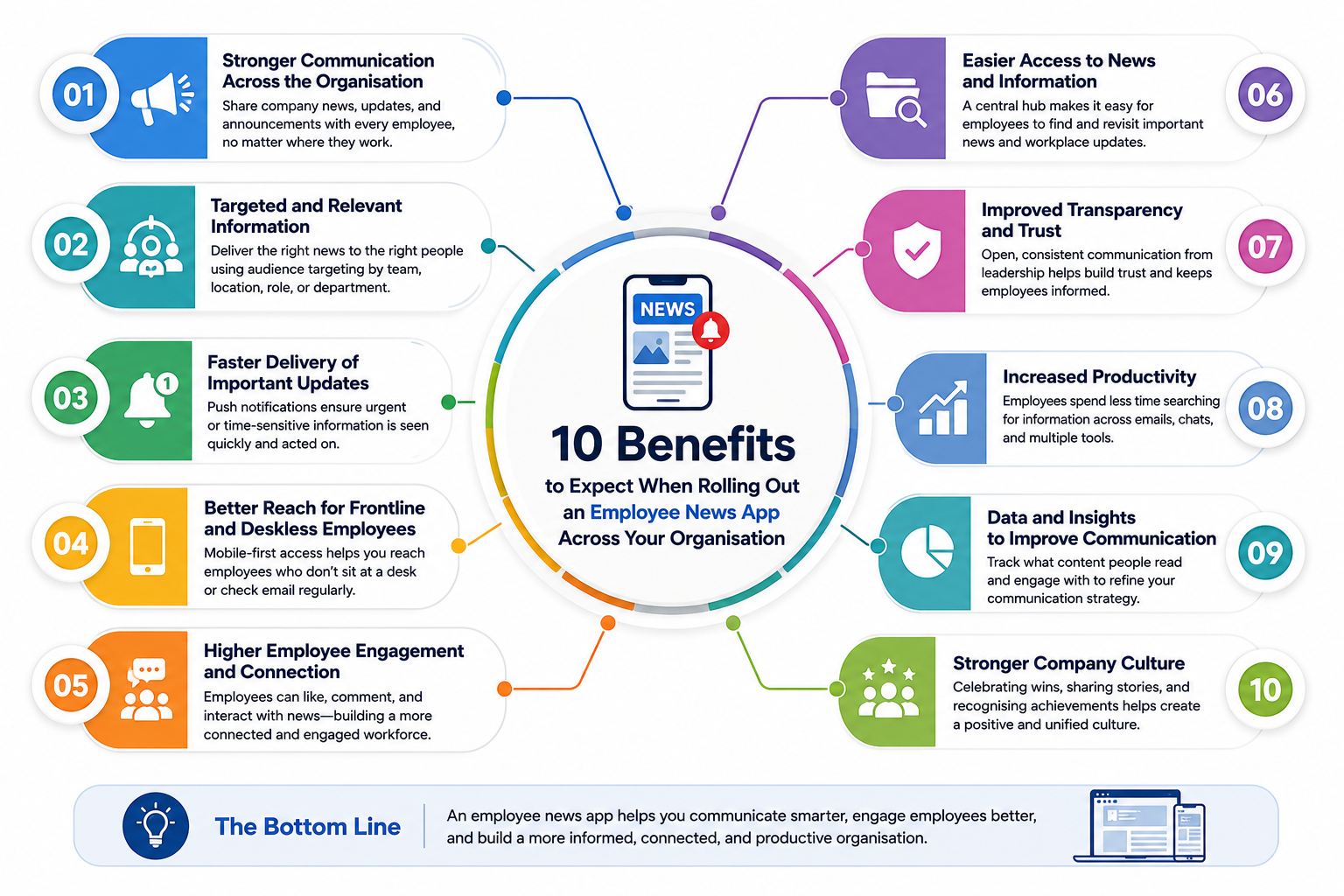
10 Benefits to Expected When Rolling Out an Employee News App Across Your Organisation
1. Keep Employees Better Informed
When company news is scattered across emails, chats, meetings, and shared drives, it's easy for employees to miss important information.
A central news feed gives employees one place to check for official company updates, leadership announcements, policy changes, and operational information.
Over time, employees know exactly where to look when they want to understand what's happening across the organisation.
2. Reach Frontline and Deskless Employees
Traditional internal communication often works best for employees sitting behind a computer.
That's a problem for organisations with people working in warehouses, retail stores, hospitals, construction sites, hotels, factories, or out in the field.
Mobile access can help bridge this communication gap by allowing employees to receive workplace updates directly through their smartphones, making company information more accessible regardless of where people work.
3. Reduce Internal Email Overload
Not every company update needs to become another all-staff email.
Moving general announcements, company news, employee stories, leadership updates, and organisational information to a dedicated internal news feed can reduce the volume of broadcast emails employees receive.
Email can then be reserved for conversations and communications where it genuinely makes sense.
4. Deliver More Relevant Communications
Employees are more likely to pay attention when the information they receive is relevant to them.
Audience targeting allows communication teams to publish specific updates for departments, locations, teams, or employee groups.
For example, a new warehouse procedure can be sent to operations employees without notifying the finance department, while a London office update doesn't need to interrupt employees working elsewhere.
This helps reduce communication noise and makes important messages easier to recognise.
5. Improve Employee Engagement
Company news doesn't always have to be one-way communication.
Features such as comments, reactions, polls, likes, and feedback can give employees opportunities to interact with announcements and participate in workplace conversations.
This can make internal communication feel less like a corporate broadcast and more like an ongoing connection between employees and the organisation.
6. Create a Single Source for Official Company News
One of the biggest communication problems in growing organisations is information fragmentation.
Employees may receive one version of an update by email, hear something slightly different in a team chat, and find an outdated document sitting in a shared folder.
A central company news hub provides a clearer source for official announcements, helping employees find the latest information rather than relying on second-hand messages or outdated communications.
7. Make Important Updates Easier to Find Later
An announcement might be relevant today, but employees may also need to reference it weeks or months later.
A searchable archive allows employees to revisit previous company news, leadership communications, policy announcements, and other updates without digging through an overloaded inbox.
This can be particularly helpful for new employees who need to understand previous organisational changes and important company developments.
8. Improve Communication Across Multiple Locations
As organisations expand across offices, regions, or countries, maintaining consistent communication becomes more difficult.
A central platform can help organisations distribute company-wide information while still allowing local teams and departments to publish relevant updates for their own audiences.
This creates a balance between consistent corporate communication and more targeted local information.
9. Gain Better Insight Into Communication Performance
One of the limitations of traditional internal communication is knowing whether your messages are actually connecting with employees.
Communication analytics can help HR and internal communications teams understand how employees interact with published content, identify which topics generate interest, and spot areas where engagement may be lower.
Instead of measuring success by how many announcements were sent, organisations can start evaluating whether their communication strategy is actually working.
10. Build Greater Trust and Transparency
Employees are more likely to feel connected to an organisation when they understand what's happening and why decisions are being made.
Regular leadership updates, business news, employee recognition, organisational changes, and progress reports can help create greater transparency across the workforce.
When employees have consistent access to accurate information directly from the organisation, there's also less room for rumours and incomplete information to fill the communication gap.
Ultimately, the biggest benefit of introducing an employee news solution is simple: important information has a better chance of reaching the people who need it.
For organisations struggling with missed announcements, disconnected workforces, email overload, or fragmented internal communication, creating one trusted destination for company news can make communication more accessible, relevant, and measurable across the entire workforce.
Why Your Frontline Workforce Needs a Dedicated Employee News App
The business case for a dedicated employee app goes beyond simply improving communication. The bigger problem is what happens when frontline and deskless employees become disconnected from the systems and information designed to support them.
When employees can't easily access company announcements, policy updates, safety procedures, schedules, or HR information, they often have to rely on managers for answers. Every question takes up supervisory time, while every important update becomes another manual process involving emails, printed notices, group messages, or word-of-mouth communication.
For organisations with large frontline workforces, this creates a serious information gap. Employees working in retail stores, warehouses, healthcare facilities, manufacturing sites, hospitality venues, or out in the field may not regularly check corporate email or have access to the same digital tools as office-based colleagues.
Gallup has previously estimated that low employee engagement costs the global economy trillions of dollars in lost productivity each year, highlighting the wider business impact when employees feel disconnected from their organisation and its purpose.
A dedicated employee news app can help close this gap by giving frontline workers a consistent and accessible channel for company news, urgent announcements, workplace information, and organisational updates.
Instead of relying on a fragmented mix of paper notices, text messages, emails, and managers passing information from one person to another, employees have one reliable place to stay informed.
For frontline teams, that means easier access to the information they need. For managers, it means fewer repetitive questions and less time spent manually distributing updates. And for the organisation, it creates a more direct connection with employees who have traditionally been the hardest to reach.
How AgilityPortal Helps Keep Employees Informed
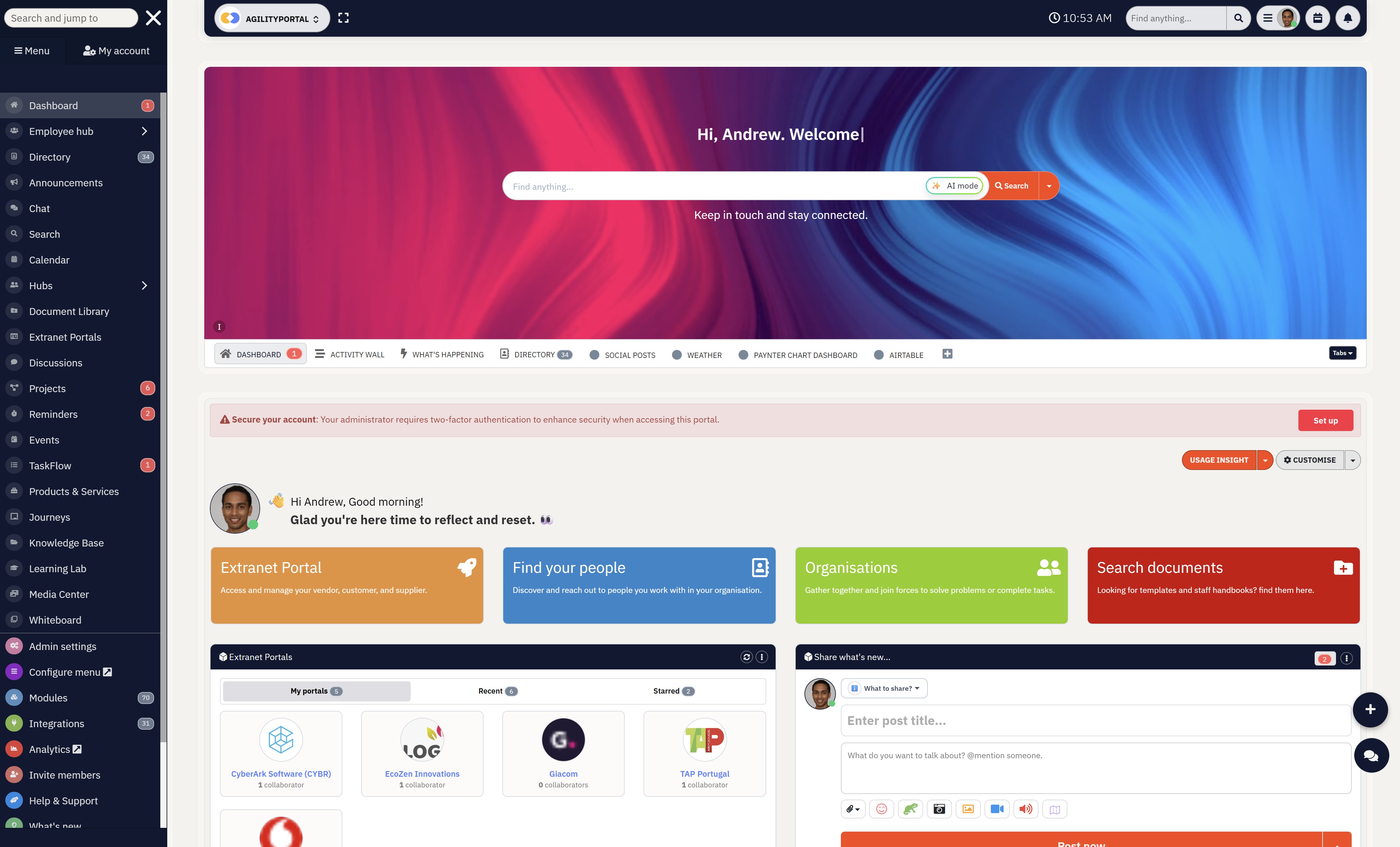
How AgilityPortal Helps Keep Employees Informed
When important company updates are spread across email, group chats, shared drives, and multiple workplace tools, keeping everyone informed becomes unnecessarily complicated.
AgilityPortal provides organisations with a central place to publish and manage internal news, company announcements, leadership communications, and important workplace updates.
Instead of relying on employees to search through crowded inboxes or check several different platforms, businesses can create a more consistent communication experience across the workforce.
This is particularly useful for organisations with remote, hybrid, distributed, frontline, and deskless employees who may access company information in very different ways.
With AgilityPortal, organisations can:
- Centralise company news and announcements – Give employees one reliable destination for official updates, organisational news, leadership messages, and important workplace information.
- Target communications to relevant audiences – Share content with specific teams, departments, locations, spaces, or employee groups rather than sending every announcement to the entire organisation.
- Reach employees on mobile devices – Give frontline, deskless, and remote employees easier access to company information wherever they work through mobile-friendly access and dedicated apps.
- Send push notifications for important updates – Alert employees when urgent or high-priority information has been published instead of hoping they eventually discover it.
- Create engaging rich-media updates – Make internal news more engaging by incorporating images, videos, documents, and other content rather than relying entirely on text-heavy emails.
- Encourage two-way employee engagement – Allow employees to interact with workplace content through features such as comments and reactions, helping internal communication become more conversational.
- Make information easier to find – Keep company updates and workplace information organised and searchable so employees can return to important content when they need it.
- Connect distributed teams – Create a shared communication experience for employees working across different offices, locations, countries, shifts, or working arrangements.
The goal isn't to give employees another app they have to remember to check. It's to create a trusted digital destination where company news, announcements, and workplace information are easier to access and harder to miss.
For HR and internal communications teams, this can mean less dependence on mass emails and manual communication processes. For employees, it means having a clearer understanding of what's happening across the organisation and where to go when they need reliable information.
Ready to stop important company updates from disappearing into crowded inboxes?
See how AgilityPortal can bring your internal news and employee communications into one connected platform—and help keep your workforce informed wherever they work.
AgilityPortal
One Employee News App to Keep Everyone Informed
Tired of important company updates getting buried in crowded inboxes? AgilityPortal gives your organisation one central place to publish company news, internal announcements, leadership updates, urgent communications, and important workplace information. Reach office-based, remote, hybrid, frontline, and deskless employees through one connected digital workplace—helping your teams stay informed wherever they work.
Starts from $99/month for up to 100 employees
14-day free trial available
No credit card required
Is an Employee News App Right for Your Business?
Not every organisation needs another workplace app. But if your current communication channels aren't reliably reaching employees, the problem isn't going to disappear by sending more emails.
As businesses grow, communication naturally becomes more complicated. New locations open, teams become distributed, employees work different shifts, and frontline workers may have limited access to corporate email.
Before long, important company news is being shared across email, chat apps, meetings, shared drives, and noticeboards—with no single place employees can trust for the latest information.
Does Your Organisation Need an Employee News App?
Your business may benefit from a dedicated internal news solution if:
- Important company announcements regularly go unread or employees frequently say they weren't aware of an update.
- Employees don't know where to find official company information and have to search through emails, chats, shared folders, or outdated intranet pages.
- Frontline and deskless employees are difficult to reach because they don't regularly use corporate email or work from a desktop computer.
- Internal news is spread across too many platforms, creating confusion about which information is current and accurate.
- HR and internal communications teams rely heavily on mass emails to distribute company-wide updates and important announcements.
- Managers spend too much time passing information to their teams or repeatedly answering questions that could be addressed through a central communication hub.
- Remote and distributed employees feel disconnected from company news, leadership updates, and what's happening across the wider organisation.
- Employees receive too many irrelevant communications because your existing tools don't allow messages to be targeted by department, team, location, or employee group.
- Leadership has limited visibility into communication engagement and can't easily understand whether employees are seeing or interacting with important updates.
- You need a faster way to distribute urgent information, such as operational changes, office closures, safety announcements, or critical business updates.
If several of these problems sound familiar, it may be time to reconsider how your organisation distributes internal news.
The right solution should do more than give you another place to publish content. It should make important information easier to distribute, easier for employees to access, and easier for communication teams to manage.
Ready to Keep Your Workforce Better Informed?
AgilityPortal brings company news, internal announcements, employee communication, knowledge sharing, and workplace engagement together in one connected digital workplace.
Whether you're trying to reach office-based employees, remote teams, or frontline workers, you can create a central destination where employees know exactly where to go for the latest company information.
Stop relying on crowded inboxes and disconnected communication channels to deliver your most important updates.
Book an AgilityPortal demo or start your 14-day free trial today and see how a centralised employee communication experience can help keep your entire workforce informed and connected.
Final Thoughts
Keeping employees informed shouldn't depend on whether they happened to notice an email, checked the right group chat, or walked past a noticeboard at the right time.
As organisations become more distributed, the challenge isn't simply sending more information—it's making sure important company news reaches the right people in a way that's accessible, relevant, and easy to find again.
An employee news app can help close that communication gap by creating one central destination for company announcements, leadership updates, urgent alerts, and workplace information.
For frontline and deskless employees in particular, mobile access and push notifications can provide a more direct connection to the organisation without relying entirely on corporate email.
When choosing the right solution, focus on how well it fits your workforce.
Consider whether you need targeted communications, personalised news feeds, mobile access, audience segmentation, engagement tools, searchable content, and communication insights.
Most importantly, don't introduce another app simply for the sake of having another communication channel. Choose a platform that solves the problems your employees and communication teams are already experiencing.
If missed announcements, email overload, disconnected frontline workers, and fragmented internal communications sound familiar, it may be time for a different approach.
AgilityPortal brings employee news, company announcements, internal communication, knowledge sharing, and employee engagement into one connected digital workplace—helping your organisation keep people informed wherever they work.
Ready to make important company updates harder to miss?
Start your 14-day AgilityPortal trial or book a demo today.
Frequently Asked Questions About Employee News Apps
What is an employee news app?
An employee news app is a digital platform that organisations use to share internal news, company announcements, leadership updates, urgent alerts, and workplace information with employees.
It provides a central communication channel that can be accessed by office-based, remote, hybrid, frontline, and deskless workers.
What is the best employee news app?
The best employee news app depends on your workforce size, communication requirements, and how your employees work.
Look for features such as targeted announcements, mobile access, push notifications, personalised news feeds, employee engagement tools, search, and communication analytics.
Platforms such as AgilityPortal are designed to bring internal news and wider employee communication into one connected digital workplace.
What is the best way to send company announcements to employees?
The best approach is to use a combination of communication channels based on the urgency and audience of the message.
An employee announcement app can provide a central location for official company news, while push notifications can alert employees to urgent updates. Email can still be used for direct or formal communication when appropriate.
Can an employee news app replace internal email?
An employee news app can reduce reliance on mass internal emails, but it doesn't necessarily need to replace email completely.
Company announcements, leadership updates, employee news, and general workplace information can be published centrally, while email remains useful for direct conversations, external communication, and messages requiring individual responses.
How do you communicate company news to frontline employees?
Mobile-first communication is one of the most effective ways to reach frontline and deskless employees.
A company news app allows workers to access announcements and workplace updates from their smartphones, while targeted push notifications can draw attention to important or urgent information.
What features should an employee communication platform include?
A good employee communication platform should include company news feeds, targeted announcements, push notifications, mobile access, audience segmentation, search, employee directories, engagement features, and communication analytics.
The exact features required will depend on the size and structure of your workforce.
Can employees receive push notifications for important announcements?
Yes. Many modern employee communication apps support mobile push notifications that alert employees when important company announcements or urgent updates are published.
This can be particularly valuable for frontline and mobile workers who may not regularly check corporate email.
Which is the best employee tracking app?
The best employee tracking app depends on what you need to track. Workforce management tools may focus on attendance, working hours, shifts, or employee activity. An employee news app serves a different purpose, focusing primarily on keeping employees informed and engaged rather than monitoring individual employee activity.
What is the best free news app?
For general public and world news, apps such as Reuters, AP News, and other news aggregators offer free access to a range of current affairs and business coverage.
However, businesses looking to distribute private internal announcements should consider a dedicated company news app rather than a general public news application.
What's a good app for staff communication?
A good staff communication app should make it easy to reach employees across different teams, locations, and working environments.
Look for mobile access, company announcements, targeted communications, push notifications, messaging, employee engagement features, and searchable workplace information. AgilityPortal is one option for organisations looking to combine staff communication with a broader digital workplace.
What is the HR app for employees?
An HR app for employees typically provides access to HR-related services and information such as policies, onboarding resources, employee documents, leave information, benefits, and workplace updates.
Some digital workplace platforms combine HR information with internal communications, allowing employees to access company news and workplace resources from one central location.
How do you make sure employees read important company announcements?
Use targeted communications to send relevant information to the right employees and use push notifications for high-priority updates.
Keeping announcements in a central, searchable location also makes it easier for employees to find information later rather than relying entirely on email.
What is the difference between an employee news app and an intranet?
An employee news app typically focuses on delivering company news, announcements, alerts, and updates, often with a strong emphasis on mobile access.
A modern intranet usually provides a broader digital workplace that may include internal communications, document management, knowledge sharing, employee directories, collaboration, and other workplace tools.
Are employee news apps suitable for small businesses?
Yes. Small businesses can use employee news apps to centralise announcements and reduce reliance on scattered emails and group chats.
However, businesses should consider their workforce size and communication complexity to ensure the benefits justify introducing a dedicated platform.
Can an employee news app be used for emergency communications?
Yes.
Employee communication apps with push notifications and priority alerts can be used to distribute urgent information such as office closures, operational disruptions, IT outages, security incidents, and workplace safety updates.
Organisations should still maintain appropriate emergency communication procedures and alternative channels where required.
AI Summary
- An employee news app gives organisations a central place to publish company news, internal announcements, leadership updates, policy changes, urgent alerts, and important workplace information.
- The best employee news apps typically include targeted announcements, personalised news feeds, mobile access, push notifications, audience segmentation, employee engagement features, searchable content, and communication analytics.
- Businesses relying heavily on email, group chats, shared drives, and noticeboards risk important company updates becoming buried, fragmented, outdated, or missed entirely by employees.
- Mobile-first communication can help organisations reach frontline, deskless, remote, and distributed workers who may not regularly access corporate email or work from a desktop computer.
- This guide explores employee news solutions including AgilityPortal, MangoApps, Blink, WorkJam, Flip, YOOBIC, Zipline, Sociabble, and Connecteam, alongside the different use cases they support.
- Choosing the right internal news platform can help reduce email overload, improve communication visibility, make important information easier to find, and create a more connected and informed workforce.
Most Popular Posts

Effective communication among team members is vital for the productivity and success of any organization. Surprisingly, 60% of companies lack a long-term internal communication strategy, which p...


Businesses thrive on communication for efficiency, productivity and accomplishment. When the right information is passed from the right designation in the organization, it promotes positivity an...

Categories
Blog
(3224)
Business Management
(396)
Employee Engagement
(235)
Digital Transformation
(220)
Growth
(150)
Intranets
(142)
Internal communications
(109)
Remote Work
(68)
Sales
(53)
Collaboration
(53)
Customer Experience
(33)
Culture
(30)
Knowledge Management
(29)
Project management
(29)
Leadership
(20)
Comparisons
(9)
News
(1)

Related Posts

AI for personal injury law firms is becoming part of everyday casework. These tools can help teams sort through medical records, build timelines, draft demand packages and find details buried in a big case file. That could free up attorneys and...

Ever left an online meeting unsure what was decided—and wondered how to run an effective meeting without wasting everyone's time? A call can bring a distributed team together quickly, but when it starts late, includes people who don't know why ...

Where can I send a fax from in my area when a document needs to go out today? The answer might be a nearby print or shipping shop, a library or an online fax service, but what's available depends on your location. The UPS Store lists a ne...

AI in internal communications can help a small team turn one important update into useful messages, answers and resources for employees—but only when the information is accurate and a person checks the result. Comms teams are expected to keep p...

How is Edge AI changing business operations in 2026, and when does it make sense to process data near where it is created instead of sending it all to the cloud? The investment forecasts point to growing interest: Capgemini Research Institute's...


Jill Romford
I am a digital nomad, lover of exploring new places and making friends.
I love to travel and I love the internet. I take pictures of my travels and share them on the internet using Instagram.
Traveler, entrepreneur, and community builder. I share my insights on digital marketing and social media while inspiring you to live your fullest life.
Ready to learn more? 👍
One platform to optimize, manage and track all of your teams. Your new digital workplace is a click away. 🚀
Free for 14 days, no credit card required.