Insight Blog
Agility’s perspectives on transforming the employee's experience throughout remote transformation using connected enterprise tools.
52 minutes reading time
(10353 words)
10 Best Frontline Communication Platforms 2026 Buyers Guide

10 Best Frontline Communication Platforms 2026 Buyers Guide
Discover the best frontline communication platforms for retail, healthcare, manufacturing, and remote teams. Compare features, pricing, mobile apps, integrations, and employee engagement tools to find the right platform for your workforce.
10 Best Frontline Communication Platforms 2026 Buyers Guide

Frontline employees are usually the people keeping the business running day-to-day, but ironically, they're often the last people to receive important company updates.
Whether it's retail staff, healthcare workers, warehouse teams, hospitality employees, or field workers, most frontline teams are constantly moving, working shifts, and rarely sitting behind a desk checking emails all day.
That's a huge reason why businesses are now investing in the best frontline communication platforms to improve employee engagement, simplify communication, and keep distributed teams connected in real time.
And honestly, the demand is growing fast.
According to Microsoft, over 80% of the global workforce is considered "deskless," yet many companies still rely on outdated communication methods like email chains, WhatsApp groups, printed notices, or disconnected apps.
At the same time, research from Gallup shows that highly engaged employees lead to 23% higher profitability, which explains why businesses are treating frontline communication as a serious operational priority instead of just an HR problem.
23%
higher profitability
Research from Gallup shows that highly engaged employees can lead to 23% higher profitability, which explains why businesses now treat frontline communication as a serious operational priority instead of just an HR initiative.
The challenge is that most traditional communication tools were never designed for frontline workers.
They were built for office teams sitting behind laptops all day. .
But frontline employees need mobile-first communication, instant alerts, simple access to company updates, digital documents, schedules, training, and real-time collaboration without unnecessary complexity.
That's where the best frontline communication platforms come in.
These tools help businesses centralize communication, improve operational visibility, reduce missed updates, and create a better employee experience across the entire workforce.
In this guide, we'll break down the top frontline communication platforms, compare their features, strengths, weaknesses, pricing, and explain what businesses should actually look for before choosing a solution for their workforce.
Key Takeaways
- The best frontline communication platforms help businesses connect deskless employees, reduce communication gaps, and improve workforce engagement across distributed teams.
- Traditional communication methods like emails and notice boards often fail frontline workers who rarely sit behind desks during shifts.
- Mobile-first employee communication platforms improve operational visibility by delivering real-time updates, announcements, and alerts directly to employee devices.
- Businesses using frontline communication software often see improvements in employee engagement, operational coordination, compliance communication, and workforce productivity.
- Features like push notifications, mobile access, analytics, employee engagement tools, and workforce collaboration help modern platforms stand out from basic messaging apps.
- Organizations managing remote, hybrid, and shift-based workforces increasingly rely on frontline communication platforms to centralize communication and reduce app overload.
What Is a Frontline Communication Platform?
A frontline communication platform or frontline workers app is a tool designed to help businesses connect with employees who are constantly on the move instead of sitting behind desks all day.
Think retail workers, nurses, hotel staff, warehouse teams, delivery drivers, manufacturing employees, and field service workers.
Unlike traditional office communication tools, these platforms are built for speed, simplicity, and mobile access.
They allow companies to send updates, announcements, schedules, training materials, documents, and messages directly to employees through a centralized employee communication app.
The reason this matters so much today is simple — most frontline employees don't have corporate email accounts or access to desktop systems during their shifts.
That disconnect creates serious operational problems.
Employees miss important updates, managers struggle to communicate across locations, and businesses end up dealing with lower engagement, higher turnover, and inconsistent communication across teams.
Modern frontline employee communication platforms solve this problem by giving businesses a faster and more reliable way to reach workers in real time.

What Is a Frontline Communication Platform?
Why Deskless Employees Are Often Disconnected From Internal Communication
One of the biggest challenges companies face today is reaching frontline workers consistently. Office employees usually have laptops, Microsoft Teams, Slack, or email open all day, but frontline workers rarely do.
A retail employee might spend an entire shift helping customers. A warehouse worker may never sit down at a computer.
A nurse could move between departments for 12 hours straight without checking emails once.
That's why traditional communication methods often fail.
In many businesses, important company announcements are still buried inside long email chains, pinned to physical notice boards, or shared verbally between managers.
The result is usually confusion, missed updates, and communication gaps between leadership and frontline teams.
Research from Gallup found that employees who feel disconnected from workplace communication are significantly less engaged at work, which directly impacts productivity and retention.
This is where frontline worker apps become essential. They help companies send real-time updates directly to employee smartphones through push notifications, chat channels, social feeds, and mobile alerts.
Instead of hoping employees eventually see an email, businesses can instantly deliver communication directly into the hands of frontline workers.
How Frontline Communication Software Differs From Traditional Intranets
Traditional intranets were originally designed for corporate office environments.
They mainly focused on storing company documents, policies, internal news, and static resources.
The problem is that most frontline workers rarely log into intranets because they're simply not built for fast-moving operational environments.
A modern workforce communication platform is very different.
Instead of acting like a passive document portal, frontline communication software focuses on real-time engagement and operational communication.
Employees can receive instant alerts, participate in team discussions, complete tasks, acknowledge policies, access training materials, and collaborate directly from mobile devices.
Modern platforms also include features like:
- Push notifications
- Real-time messaging
- Employee recognition
- Shift communication
- Mobile document access
- Pulse surveys
- Task management
- Multi-language communication
- Social-style company feeds
This creates a much more connected employee experience, especially for distributed and remote frontline teams.
The Growing Demand for Mobile-First Workforce Communication Tools
The workplace has changed dramatically over the last few years. Employees now expect workplace communication to feel as simple and fast as the apps they use in everyday life.
That shift is one of the main reasons businesses are investing heavily in mobile workforce communication platforms.
According to research from Deloitte, mobile-enabled workers can improve productivity by up to 34% because they have faster access to information, communication, and operational updates in real time.
At the same time, younger employees entering the workforce expect instant communication, mobile accessibility, and easier collaboration tools.
Businesses still relying on outdated communication systems are struggling to keep employees engaged.
A mobile-first communication platform helps solve this by giving employees:
- Instant company updates
- Mobile access to schedules and documents
- Team collaboration tools
- Training resources
- Emergency alerts
- Two-way communication channels
- Recognition and engagement features
For businesses managing multiple locations or shift-based workforces, this becomes a major operational advantage.
Common Industries Using Frontline Employee Communication Platforms
Almost every industry with deskless workers can benefit from better frontline communication, but some sectors rely on it more heavily than others.
Retail businesses use frontline communication tools to coordinate store operations, share promotions, manage shift updates, and improve employee engagement across locations.
Healthcare organizations use them to communicate with nurses, doctors, administrative staff, and support teams while improving compliance and operational coordination.
Manufacturing companies rely on frontline communication platforms to distribute safety procedures, operational updates, maintenance alerts, and shift communication in real time. Beyond communication, many manufacturers also deploy a connected worker platform that goes further digitizing the actual execution layer by guiding operators through standard work, quality checks, autonomous maintenance tasks, and safety observations directly on their mobile devices, capturing structured data from every shift.
Hospitality businesses use them to keep hotel staff, housekeeping teams, kitchen employees, and management connected throughout daily operations.
Logistics and field service companies depend on mobile communication tools to connect remote workers, drivers, dispatch teams, and field technicians across multiple regions.
As businesses continue expanding distributed workforces, the need for reliable frontline employee communication platforms will only continue growing.
Why Businesses Are Replacing Traditional Communication Methods
For a long time, businesses relied on emails, notice boards, printed memos, and manager pass-downs to communicate with frontline employees.
The problem is those methods simply don't work anymore, especially for fast-moving teams spread across multiple locations, shifts, or departments.
Most frontline workers are too busy during shifts to sit down and check emails. In industries like retail, healthcare, hospitality, logistics, and manufacturing, employees are constantly moving, helping customers, handling operations, or working on-site. As a result, important updates often get missed entirely.
That creates a ripple effect across the business.
Managers spend more time repeating information, employees feel disconnected from leadership, and operational mistakes become more common because teams are working with inconsistent or outdated information.
In some industries, poor communication can even create serious compliance and safety risks.
This is one of the biggest reasons businesses are now investing in the best frontline communication platforms instead of relying on outdated workplace communication methods.
Why Email and Notice Boards No Longer Work for Frontline Teams
Traditional communication methods were built around office environments where employees regularly sit behind computers. Frontline workers operate very differently.
A warehouse employee may never log into a company email account during an entire shift. A nurse working in a hospital may only check updates during a short break. Retail staff are focused on customers, not internal inboxes.
Printed notices create even more problems because they quickly become outdated, difficult to track, and easy to ignore. There's also no reliable way to know whether employees actually saw or understood the information being shared.
This often leads to missed updates, inconsistent communication across locations, and employees feeling disconnected from the wider business.
Modern frontline employee communication platforms solve this by delivering information instantly through mobile apps, push notifications, team feeds, and real-time alerts that employees can access from anywhere.
Why Shift Workers Need Instant and Mobile Communication
Shift-based businesses move incredibly fast, which means communication delays can quickly become operational problems.
Managers constantly need to update schedules, share policy changes, communicate staffing issues, notify employees about emergencies, or coordinate between locations. Trying to manage all of this through emails or phone calls becomes chaotic very quickly.
That's why businesses are increasingly adopting mobile workforce communication tools that allow employees to receive updates in real time directly on their phones.
Instead of waiting until the next shift handover or hoping someone checks an email, managers can instantly send alerts, announcements, or operational updates to the right teams at the right time.
This becomes especially important for industries operating 24/7 where employees work across different shifts, locations, and time zones.
Real-time communication helps reduce confusion, improve shift coordination, and keep operations running smoothly without constant back-and-forth communication.
How Communication Gaps Create Compliance and Operational Risks
Poor communication is not just frustrating — it can become expensive very quickly.
When frontline employees miss important updates, businesses risk inconsistent processes, compliance failures, health and safety issues, and operational mistakes that directly impact customers and revenue.
For example, if employees don't receive updated safety procedures, policy changes, or compliance instructions, businesses may struggle to prove that communication was properly delivered and acknowledged.
In industries like healthcare, manufacturing, and logistics, this can create serious legal and operational consequences.
According to Gallup, employees who feel disconnected from workplace communication are significantly less engaged, and disengaged employees are far more likely to contribute to errors, low productivity, and higher turnover.
This is why many organizations are replacing disconnected communication systems with centralized workforce communication platforms that provide message tracking, policy acknowledgments, document access, and real-time communication visibility.
Why Employees Now Expect Consumer-Grade Communication Experiences
Workplace communication expectations have changed dramatically over the last few years.
Employees now expect communication at work to feel as easy as the apps they use in their personal lives. They want fast messaging, instant notifications, mobile access, social-style feeds, and simple user experiences that don't require complicated training.
Unfortunately, many traditional workplace systems still feel outdated, slow, and difficult to use, especially for frontline workers who need quick access to information during busy shifts.
This is one of the reasons adoption rates for older intranet systems are often low. Employees simply avoid tools that create friction or slow them down.
Modern frontline communication platforms are designed differently. They focus on simplicity, accessibility, and mobile-first communication that employees can actually use without frustration.
And honestly, that matters more than many businesses realize.
Because when employees find communication tools easy to use, engagement naturally improves, operational communication becomes faster, and teams stay far more connected across the organization
The Biggest Problems Frontline Teams Face Today
Even with all the technology available today, many frontline teams still struggle with communication problems that slow down operations, frustrate employees, and create unnecessary confusion across the business.
The reality is that most companies are still trying to manage frontline communication using disconnected systems that were never designed for fast-moving, deskless workforces.

The Biggest Problems Frontline Teams Face Today
Employees Missing Critical Company Updates
One of the biggest issues businesses face is making sure frontline employees actually receive important updates when they need them most.
Unlike office staff, frontline workers are rarely checking emails throughout the day, which means critical information often gets missed entirely.
Common problems businesses experience include:
- Employees miss important operational announcements because updates are buried inside emails or chat threads.
- Managers struggle to confirm whether frontline workers have actually seen company communications.
- Emergency updates and urgent operational changes are difficult to distribute quickly across shifts and locations.
- Policy updates and compliance instructions often fail to reach every employee consistently.
- Frontline workers frequently feel disconnected from leadership because communication feels one-sided or delayed.
Too Many Disconnected Workplace Apps Create Operational Chaos
Many businesses now rely on multiple disconnected tools for messaging, scheduling, training, documents, and collaboration.
Instead of simplifying communication, this often creates confusion and digital overload for employees.
Research from Atlassian found employees switch between workplace apps more than 1,200 times per day, which creates constant interruptions and productivity loss.
Some of the biggest challenges include:
- Employees waste time switching between multiple workplace apps just to complete simple tasks.
- Important updates become scattered across emails, chats, documents, and scheduling systems.
- Frontline workers struggle to know which platform contains the latest information.
- Managers spend more time repeating updates across disconnected systems.
- Employees become overwhelmed by notification overload from too many communication tools.
Poor Communication Across Multiple Locations Slows Everything Down
Businesses operating across multiple branches, stores, warehouses, or regions often struggle to maintain consistent communication standards across the organization.
Without centralized frontline employee communication tools, teams quickly become disconnected from each other and from company leadership.
This usually leads to problems such as:
- Different locations operating with inconsistent information or outdated procedures.
- Employees receiving conflicting updates from local managers.
- Operational changes taking too long to reach remote teams.
- Leadership struggling to maintain visibility across distributed workforces.
- Communication becoming fragmented between departments, shifts, and locations.
Language and Accessibility Barriers Create Communication Gaps
For global businesses and diverse workforces, language barriers can become a major communication challenge, especially in industries with multinational frontline teams.
Traditional communication methods often fail to support employees who speak different languages or have varying levels of digital confidence.
Businesses commonly face issues where:
- Employees struggle to fully understand important company updates or safety procedures.
- Communication becomes inconsistent across multilingual teams.
- Frontline workers avoid using complicated workplace systems that feel difficult to navigate.
- Accessibility limitations prevent some employees from engaging with internal communication platforms.
- Businesses struggle to ensure equal communication experiences across the workforce.
Low Employee Engagement and High Turnover Continue To Rise
When employees feel disconnected from communication, they also tend to feel disconnected from the company itself. Over time, this can seriously impact morale, engagement, productivity, and retention.
According to Gallup, low employee engagement continues to cost businesses billions annually through lower productivity, absenteeism, and employee turnover.
Poor communication often contributes to problems like:
- Employees feeling undervalued or ignored by leadership.
- Frontline workers lacking visibility into company goals and updates.
- Managers struggling to build stronger workplace culture across distributed teams.
- Employees becoming less motivated due to weak communication and recognition.
- Higher staff turnover caused by poor employee experience and disengagement.
10 of The Best Frontline Communication Platforms Compared
#1. AgilityPortal
#1. AgilityPortal
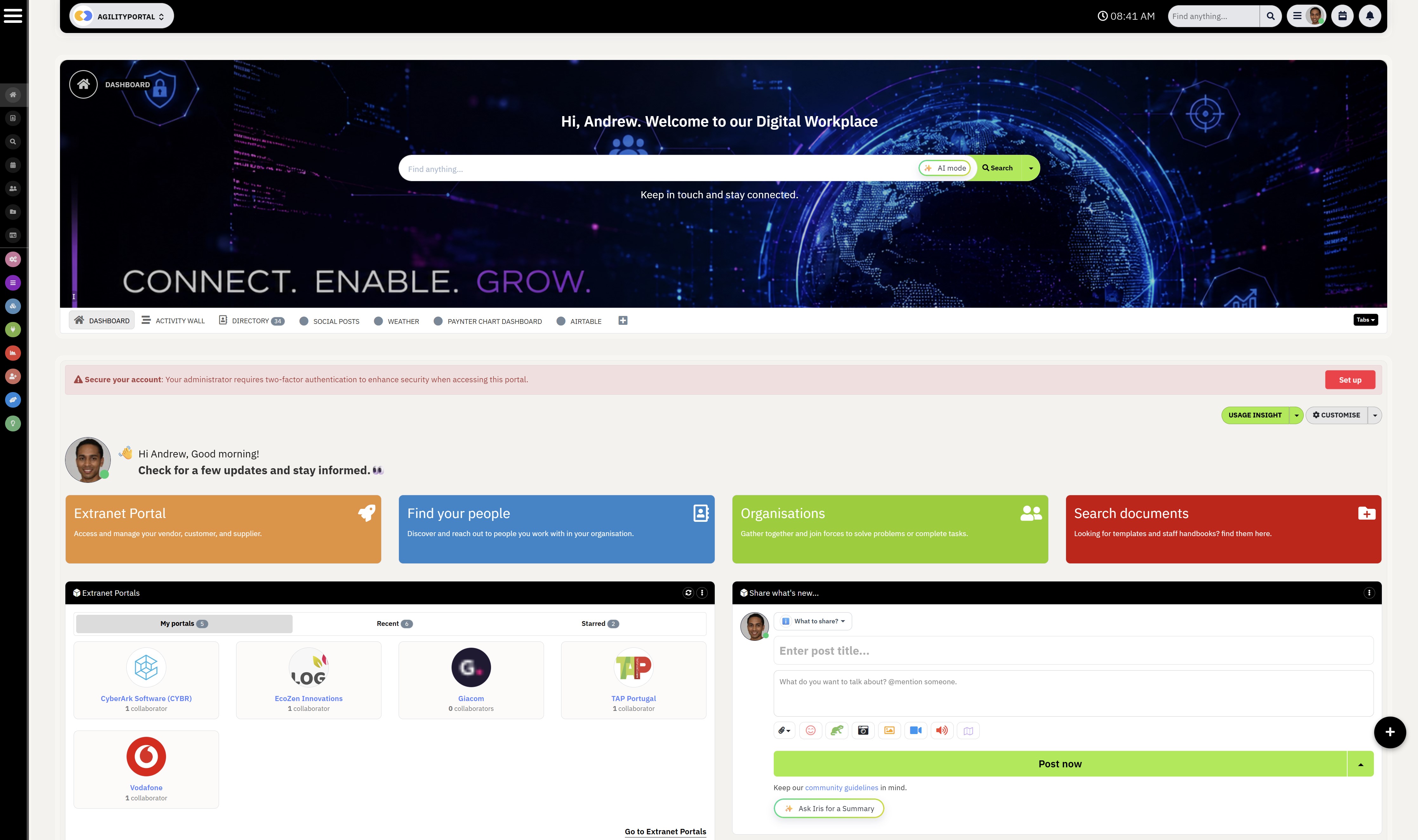
AgilityPortal is the all-in-one frontline communication platform designed to help businesses connect deskless employees, improve workforce communication, and centralize collaboration across distributed teams. AgilityPortal for Frontline workers is a mobile solution designed to enhance the efficiency and communication of frontline workers.
Built for modern organizations managing remote, hybrid, and frontline workers, the platform combines employee communication, engagement, knowledge sharing, document management, and operational collaboration into one mobile-first digital workplace.
What makes AgilityPortal stand out from many traditional intranet and communication tools is its focus on simplicity, mobility, and frontline usability.
Instead of forcing employees to jump between disconnected apps for messaging, updates, documents, tasks, and engagement, AgilityPortal brings everything together into a single connected employee experience.
The platform is especially strong for businesses that need better communication visibility across multiple locations, shifts, departments, or remote workforces.
Whether employees are working in retail stores, healthcare facilities, warehouses, hospitality venues, construction sites, or field operations, AgilityPortal helps ensure workers stay connected to company communication in real time.
According to Gallup, employees who feel connected to workplace communication are significantly more engaged and productive.
That's one of the biggest reasons businesses are now investing in modern frontline communication platforms instead of relying on outdated intranet systems and fragmented communication tools.
Key capabilities:
- Mobile-first employee communication platform designed for frontline and deskless workers
- Real-time company announcements, social feeds, chat, and team collaboration in one platform
- Knowledge sharing and centralized document management with secure access controls
- Employee engagement tools including recognition, reactions, comments, polls, and surveys
- Built-in employee directory with departments, teams, and organizational visibility
- Push notifications for urgent updates, operational communication, and company-wide alerts
- Multi-device access across mobile, desktop, and tablet environments
- Integrated calendars, tasks, workflows, and operational collaboration tools
- Role-based permissions and audience targeting for secure communication distribution
- Offline mobile accessibility for remote or field-based employees
- Analytics dashboards for engagement, communication reach, and workforce visibility
- Microsoft 365 and Google Workspace integrations for connected workplace collaboration
- Multi-language support for global and distributed frontline workforces
Strengths:
- Combines communication, collaboration, engagement, and knowledge management in one connected platform
- Strong mobile experience designed specifically for frontline and deskless employees
- Simpler user experience compared to overly complex enterprise intranet systems
- Flexible enough for both small businesses and enterprise organizations
- Works well for remote, hybrid, and distributed workforce environments
- Strong employee engagement capabilities beyond basic messaging tools
- Reduces app overload by centralizing workplace communication into a single platform
Things to consider:
- Organizations replacing multiple legacy systems may require onboarding and adoption planning during rollout
- Businesses with highly customized enterprise workflow requirements may need additional configuration depending on operational complexity
- Best for: Businesses looking for a modern frontline employee communication platform that combines employee engagement, communication, collaboration, knowledge sharing, and operational visibility into one mobile-first digital workplace.
#2. Microsoft Viva

#2. Microsoft Viva
Microsoft Viva is a workplace experience platform designed for businesses already using Microsoft 365, Teams, and SharePoint.
Built for enterprise organizations, Viva helps improve employee communication, engagement, learning, and knowledge sharing across hybrid and remote teams.
Its biggest advantage is the deep integration with Microsoft Teams, allowing businesses to centralize updates, collaboration, and workplace resources inside a familiar environment.
While powerful for enterprise collaboration, some businesses may find Viva more complex compared to simpler mobile-first frontline communication platforms built specifically for deskless workers.
Key capabilities include:
- Deep Microsoft Teams integration for workplace communication and collaboration
- Employee engagement and wellbeing tools for workforce sentiment tracking
- Knowledge management powered by SharePoint and AI search
- Learning and onboarding modules for employee development
- Enterprise-grade security and compliance within Microsoft 365
- Analytics and reporting for employee engagement insights
Strengths:
- Excellent for organizations already invested in Microsoft 365
- Strong enterprise security and governance features
- Centralizes communication and collaboration into one ecosystem
- Scales well across large global organizations
Things to consider:
- Can feel complex for frontline and deskless employees
- Advanced features may require additional Microsoft licensing
- Often requires IT support during deployment and management
Best for: Large organizations already using Microsoft 365 that want to improve employee communication, engagement, and workplace collaboration without introducing another standalone platform.
#3. Workvivo
#3. Workvivo
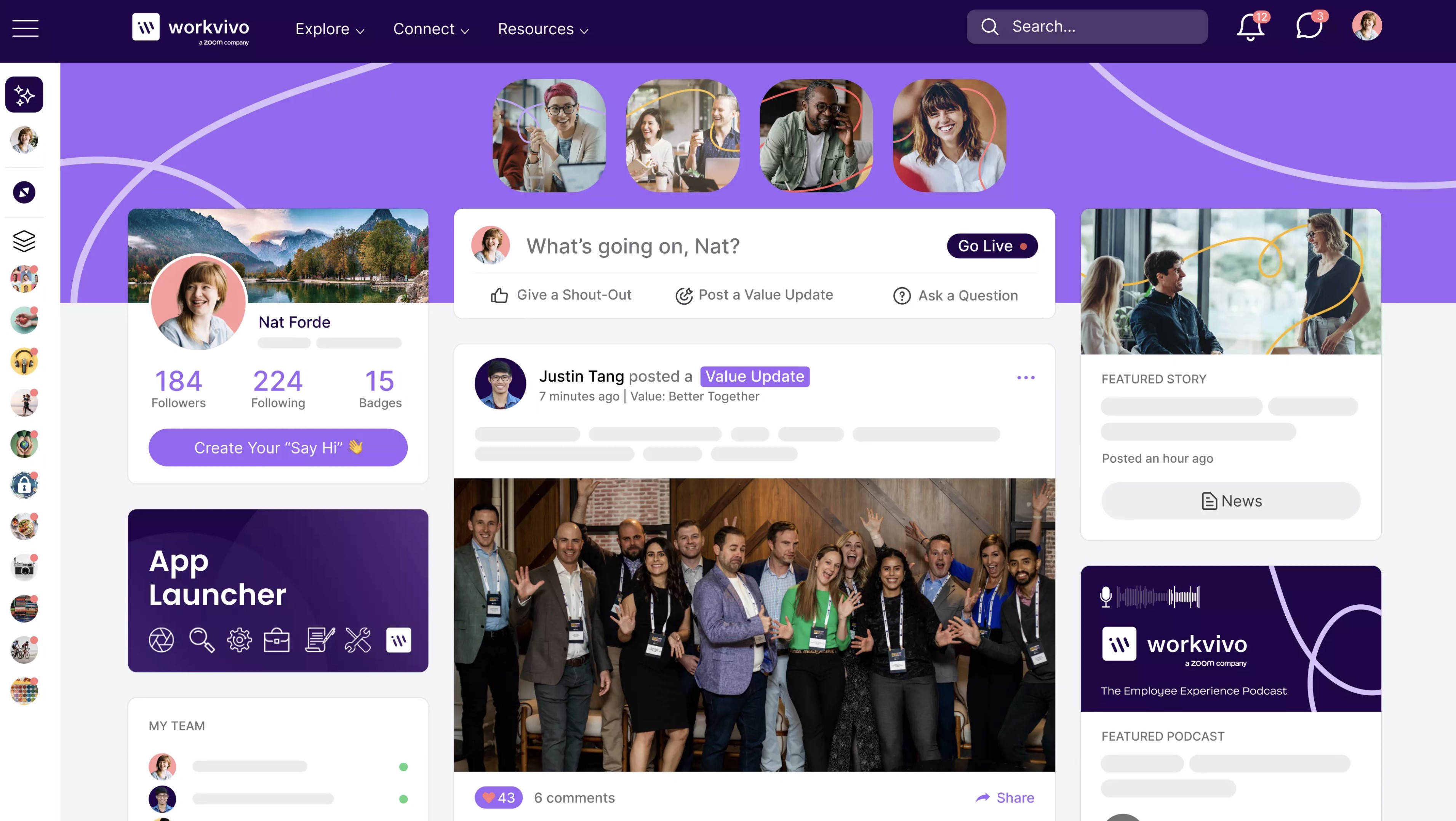
Workvivo is an employee communication and engagement platform designed to help businesses create a more connected workplace culture across remote, hybrid, and frontline teams.
The platform is designed to make workplace communication feel more interactive and engaging instead of relying on static intranets or traditional email communication.
Key capabilities include:
- Social-style company feeds for announcements, updates, and employee interaction
- Employee recognition and shoutout features to improve engagement and morale
- Live streaming and video communication tools for leadership communication
- Mobile-first communication experience for frontline and remote employees
- Employee surveys, polls, and feedback tools for workforce engagement
- Integration with Microsoft Teams, Zoom, Google Workspace, and Slack
- Analytics and reporting for communication reach and engagement tracking
Strengths:
- Very strong employee engagement and workplace culture features
- Simple and familiar user experience similar to social media platforms
- Good mobile experience for distributed and frontline teams
- Strong leadership communication and company-wide engagement tools
Things to consider:
- Less focused on operational workflows and document management compared to broader digital workplace platforms
- Some organizations may still require additional tools for knowledge management or advanced collaboration
Best for: Businesses focused heavily on employee engagement, workplace culture, and internal communication that want a modern social-style employee experience platform for hybrid and frontline teams.
#4. Slack

#4. Slack
Slack is one of the most recognized workplace communication platforms and is widely used by businesses looking to improve real-time collaboration across teams.
However, while Slack works extremely well for office collaboration and fast communication, some frontline businesses may find it less effective as a complete employee communication platform because it lacks deeper workforce engagement, intranet, and operational communication capabilities found in broader digital workplace platforms.
Key capabilities include:
- Real-time team messaging through channels, groups, and direct chat
- File sharing and searchable communication history
- Mobile apps for remote and frontline workforce communication
- Workflow automation and integrations with thousands of business tools
- Audio and video collaboration features for team communication
- Notifications and alerts for operational updates and announcements
- Integration with Microsoft 365, Google Workspace, Zoom, Salesforce, and project management tools
Strengths:
- Very easy to use and widely adopted across businesses
- Excellent for fast real-time team communication
- Large integration ecosystem with third-party business apps
- Strong mobile communication experience for distributed teams
- Flexible channels help organize conversations across departments and projects
Things to consider:
- Can become noisy and overwhelming in large organizations with heavy channel usage
- Less focused on employee engagement, intranet features, and knowledge management
- May require additional platforms for company-wide communication and frontline workforce engagement
Best for: Businesses looking for fast and flexible workplace messaging and collaboration tools that improve team communication across remote, hybrid, and operational teams.
#5. Staffbase

#5. Staffbase
Staffbase is an employee communication platform built primarily for large enterprises that need better internal communication across office, remote, and frontline employees.
Staffbase is particularly popular with enterprise organizations that need branded employee communication apps and centralized communication management for large workforces.
Key capabilities include:
- Branded employee communication apps for frontline and remote workers
- Company news feeds, announcements, and leadership communication tools
- Employee email and multichannel communication management
- Mobile-first communication experience for deskless employees
- Analytics and reporting for communication reach and engagement tracking
- Integration with Microsoft 365, Teams, SharePoint, and HR systems
- Content targeting for different departments, regions, and employee groups
Strengths:
- Strong enterprise internal communication capabilities
- Excellent mobile communication experience for distributed workforces
- Good communication analytics and audience targeting tools
- Well suited for large organizations managing company-wide communication
Things to consider:
- Less focused on operational collaboration and workflow management
- Can require additional tools for project collaboration and document management
- Better suited for enterprise communication teams than smaller businesses
Best for: Large enterprises looking for a dedicated employee communication platform that improves internal communication, leadership messaging, and frontline workforce engagement across distributed organizations.
#6. Blink
#6. Blink
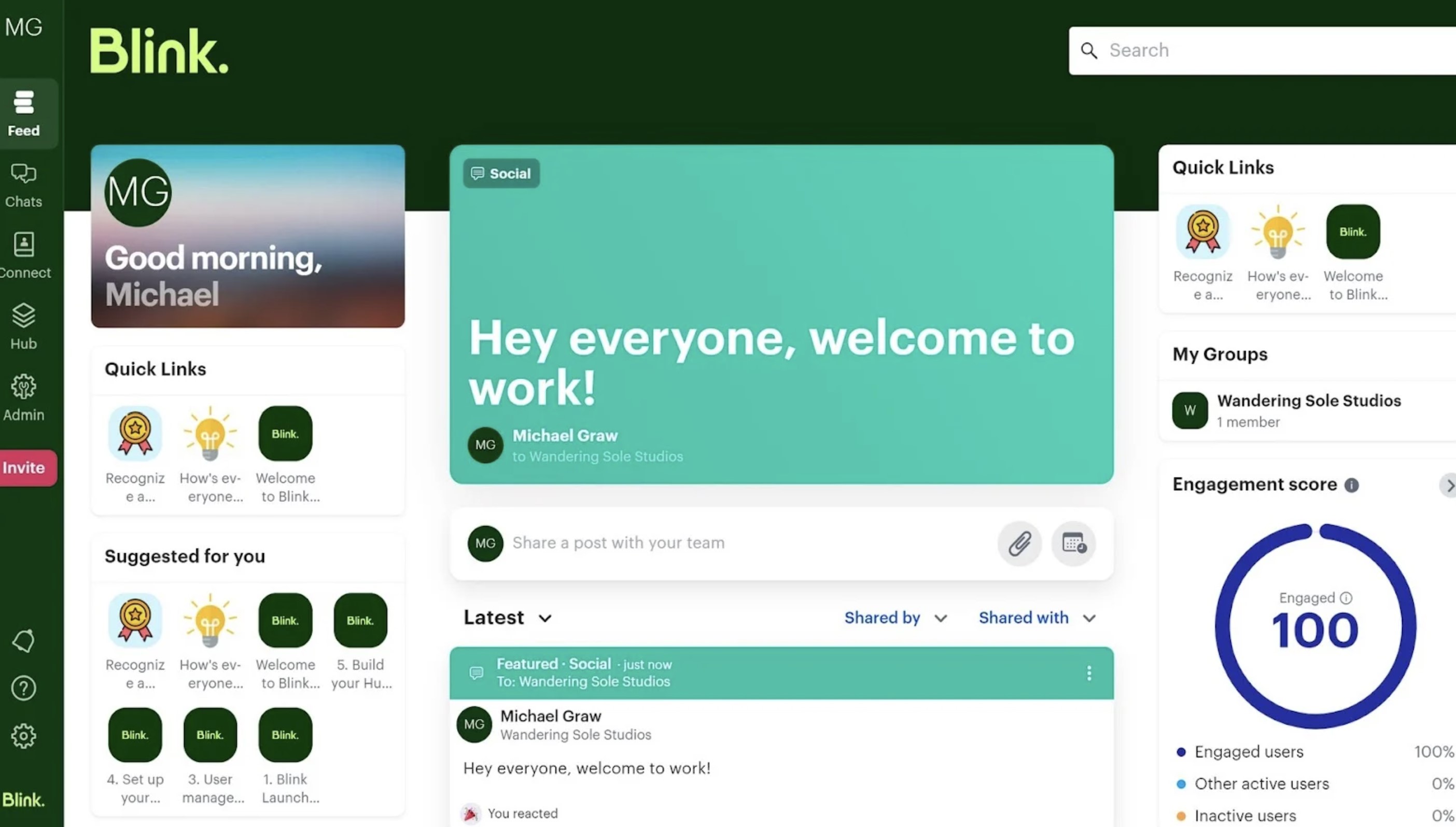
Blink is a mobile-first frontline communication platform built specifically for deskless and frontline employees working across industries like retail, healthcare, hospitality, logistics, and manufacturing.
According to Deloitte, mobile-enabled employees can improve productivity by up to 34%, which explains why mobile-first frontline communication platforms like Blink continue gaining popularity across distributed workforces.
Key capabilities include:
- Mobile-first communication app designed for frontline employees
- Real-time messaging, company updates, and operational announcements
- Single sign-on access to workplace tools and resources
- Digital forms, surveys, and employee feedback tools
- News feeds and personalized employee communication streams
- Integration with Microsoft Teams, HR systems, and workplace apps
- Push notifications for urgent updates and shift communication
Strengths:
- Very simple and easy-to-use mobile experience
- Strong focus on frontline and deskless workforce communication
- Fast deployment compared to larger enterprise platforms
- Good communication accessibility for shift-based teams
Things to consider:
- Less advanced knowledge management and intranet functionality compared to broader digital workplace platforms
- Some organizations may require additional collaboration or document management tools
Best for: Businesses looking for a lightweight and mobile-first frontline employee communication platform that improves communication, engagement, and operational visibility for deskless workers.
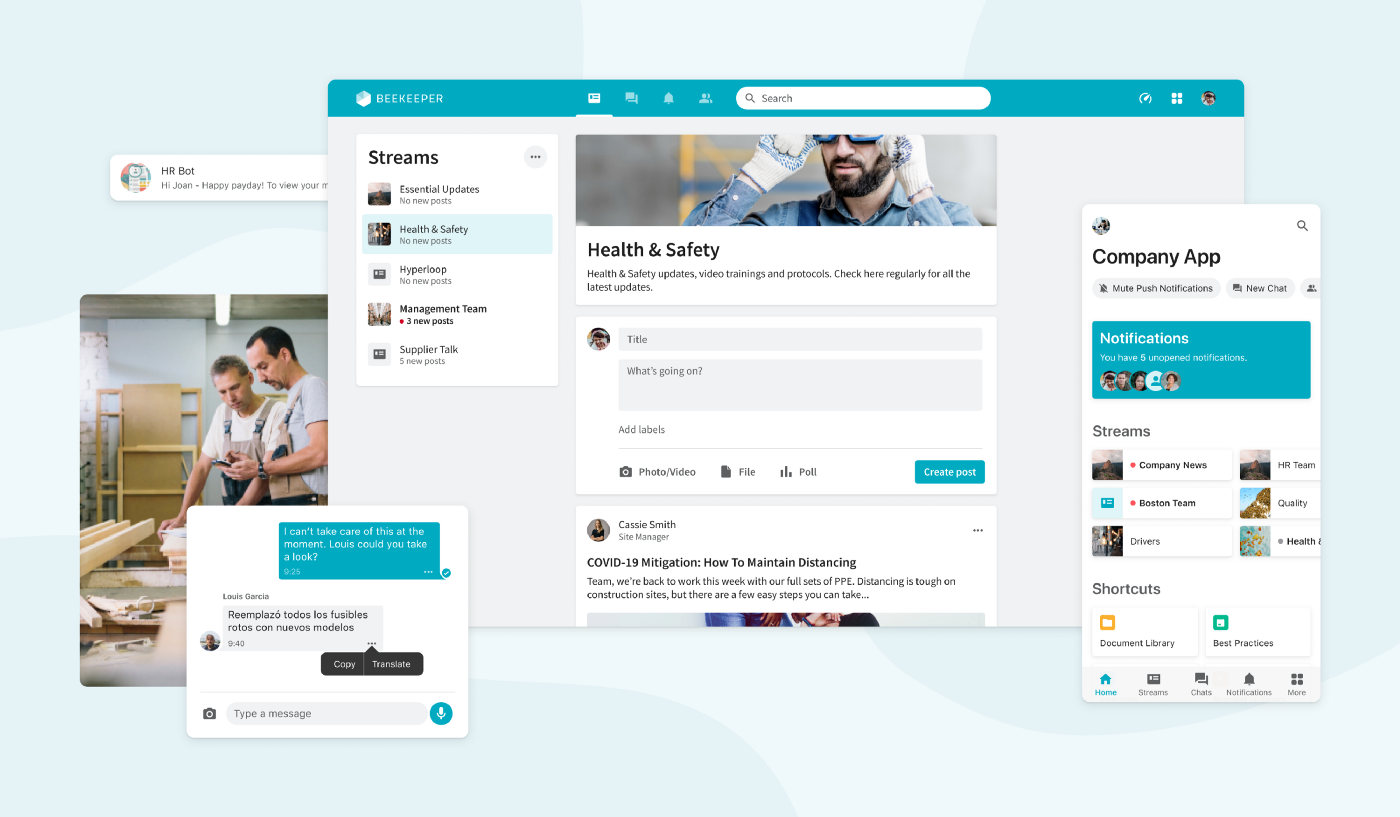
#7. Beekeeper
#7. Beekeeper
Beekeeper is a frontline communication and workforce productivity platform built for businesses managing large numbers of deskless employees across industries like hospitality, manufacturing, construction, retail, and healthcare.
Key capabilities include:
- Mobile-first frontline communication platform for deskless employees
- Real-time messaging, announcements, and operational updates
- Workflow automation and task management for frontline operations
- Digital forms, checklists, and process management tools
- Employee surveys and engagement features
- Secure document sharing and centralized workplace resources
- Integration with HR systems, payroll platforms, and workplace tools
- Analytics and communication tracking for workforce visibility
Strengths:
- Strong operational communication and workflow functionality
- Good mobile experience for frontline and shift-based workers
- Useful automation features for daily workforce operations
- Well suited for industries with distributed operational teams
Things to consider:
- Can feel more operations-focused than culture-focused compared to employee engagement platforms
- Some businesses may require additional intranet or advanced knowledge management functionality
Best for: Businesses looking for a mobile-first frontline communication platform that combines workforce communication, operational workflows, and employee collaboration for deskless teams.
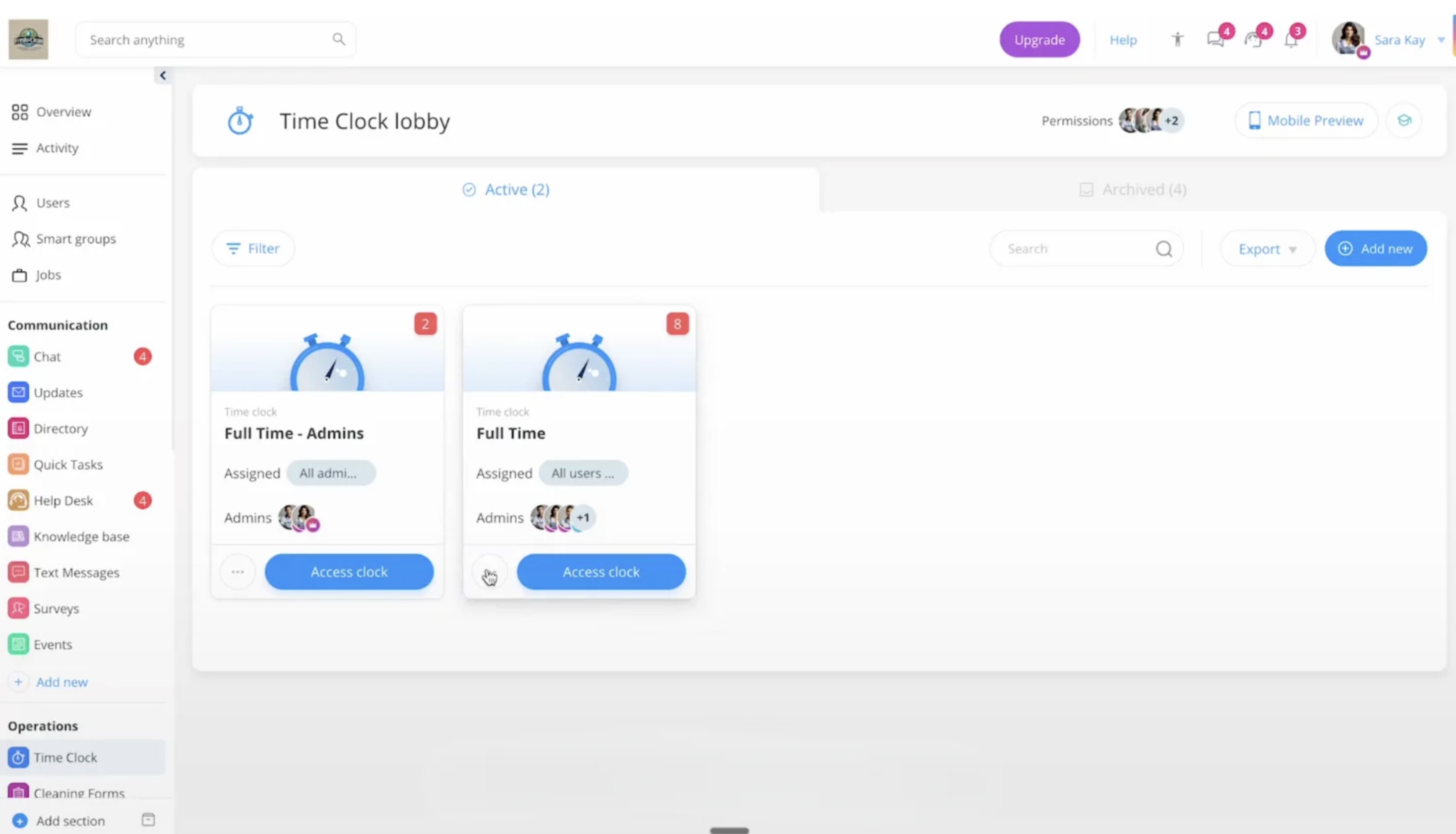
#8. Connecteam
#8. Connecteam
Connecteam is a workforce management and frontline communication platform designed for businesses with non-desk employees working across multiple locations, shifts, and operational environments.
For businesses managing shift-based employees, this creates a more connected operational workflow while improving communication across frontline teams.
Key capabilities include:
- Mobile-first employee communication and workforce management platform
- Real-time messaging, updates, and team communication tools
- Employee scheduling and shift management functionality
- Time tracking and GPS-enabled workforce monitoring
- Task management, digital checklists, and operational workflows
- Employee onboarding and training modules
- Forms, surveys, and compliance management tools
- Integration with payroll, HR, and operational business systems
Strengths:
- Strong combination of communication and workforce management tools
- Very useful for operational and shift-based businesses
- Easy-to-use mobile experience for frontline employees
- Helps centralize scheduling, communication, and task management in one app
Things to consider:
- Less focused on employee engagement and social workplace culture features
- May feel more operational than collaboration-focused for some organizations
- Advanced customization can require setup time depending on business complexity
Best for: Businesses looking for a mobile-first frontline communication platform that combines workforce management, scheduling, operational workflows, and employee communication into one centralized solution for deskless teams.
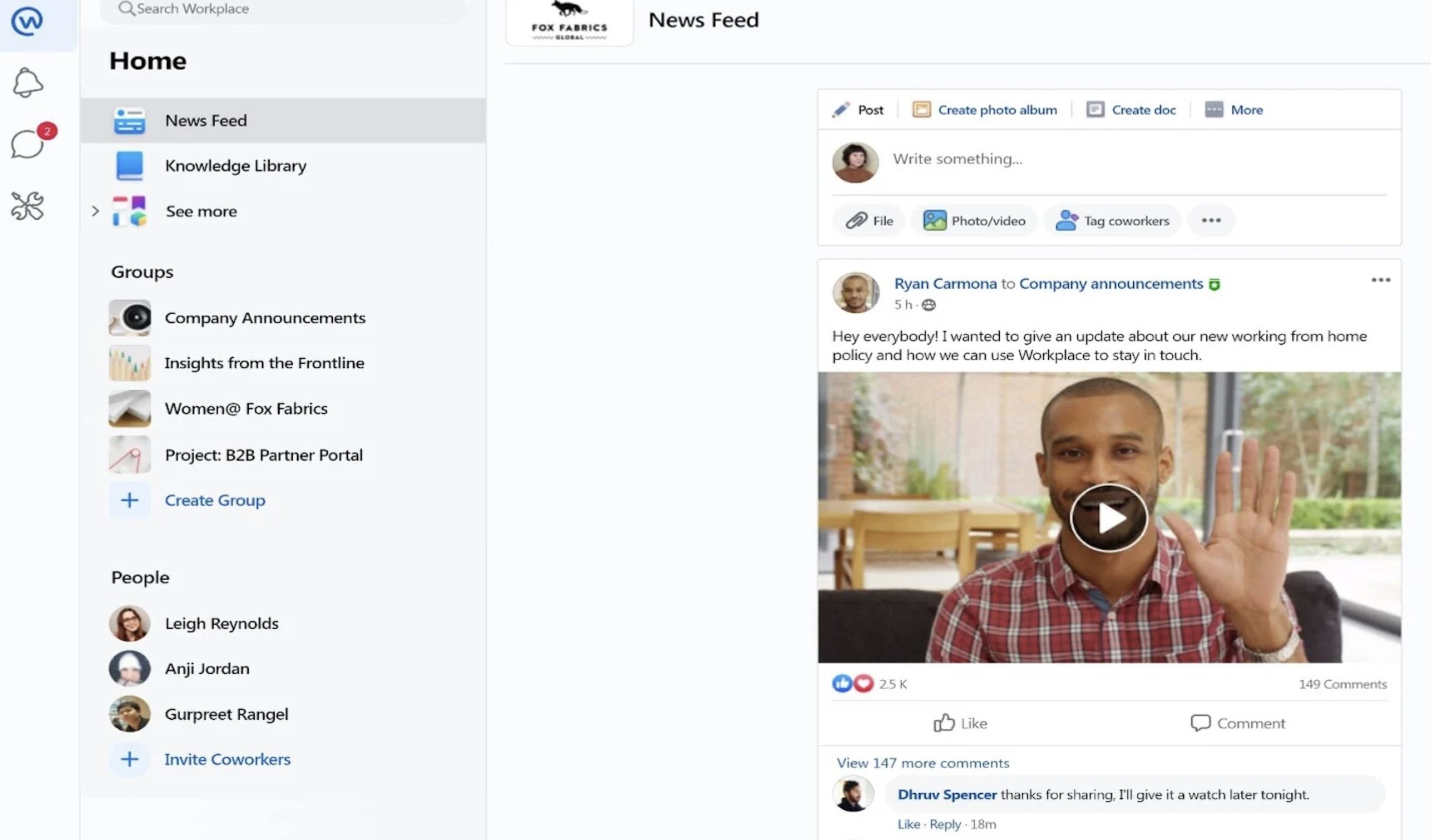
#9. Workplace from Meta
#9. Workplace from Meta
Workplace from Meta was a business communication platform designed to bring familiar social-media-style communication into the workplace for frontline and distributed teams.
Although Meta announced the shutdown of Workplace, many organizations previously relied on the platform to connect frontline workers who lacked regular access to traditional workplace systems.
Key capabilities included:
- Social-style communication feeds and employee groups
- Real-time messaging and company-wide announcements
- Mobile-first communication experience for deskless workers
- Live video streaming and leadership communication tools
- Knowledge sharing and employee collaboration features
- Integration with workplace productivity and HR systems
Strengths:
- Very easy for employees to adopt due to familiar social-style interface
- Strong engagement and company culture functionality
- Good mobile communication experience for frontline teams
- Simple communication experience for distributed organizations
Things to consider:
- Platform shutdown has forced businesses to migrate to alternative solutions
- Less focused on advanced operational workflows and document management
- Organizations now require replacement platforms for long-term communication strategies
Best for: This apps is now closed down however it would have been previously suited for businesses looking for a simple and engaging frontline communication platform focused on social collaboration and company-wide communication for distributed workforces.
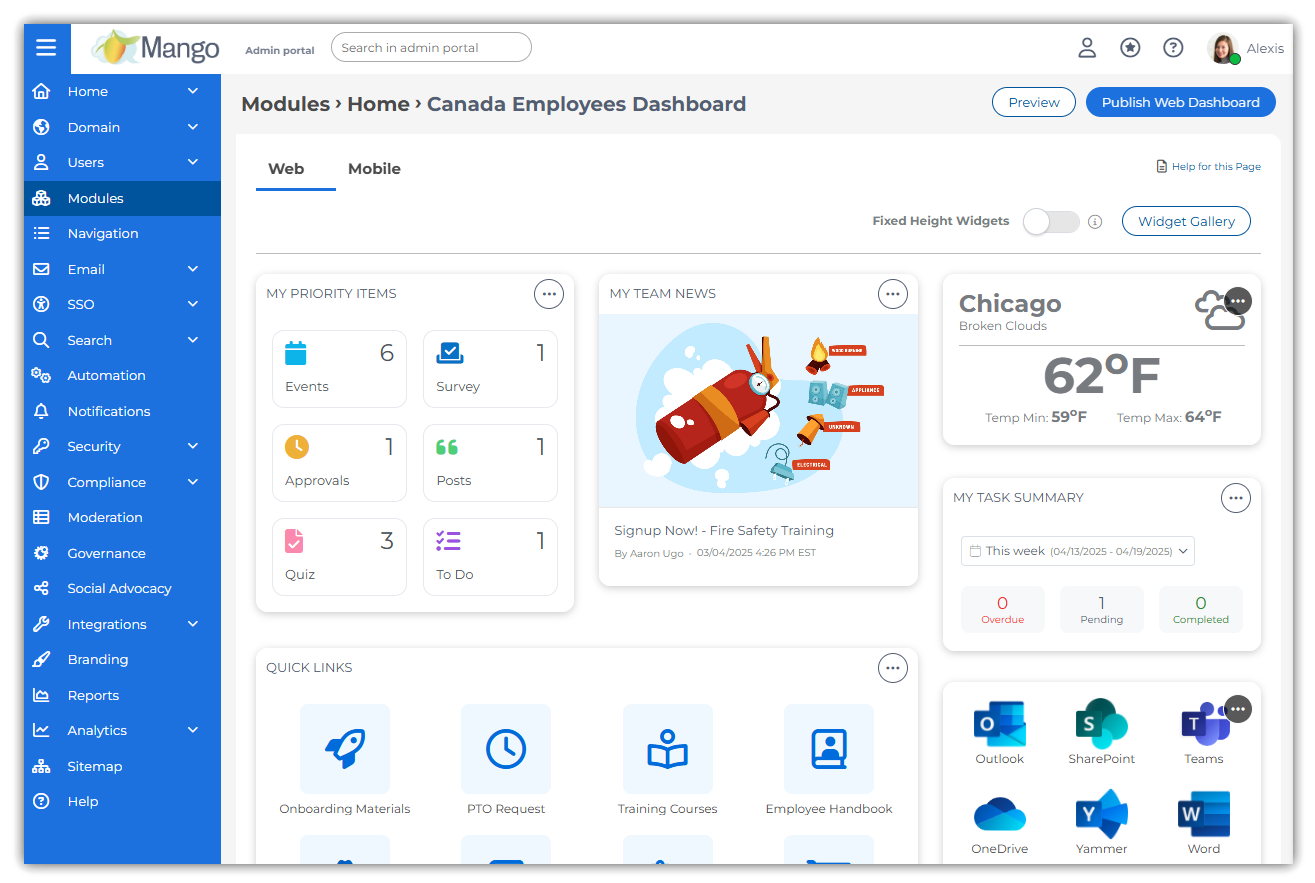
#10. MangoApps
#10. MangoApps
MangoApps is an all-in-one employee communication and digital workplace platform designed to help businesses centralize communication, collaboration, knowledge sharing, and employee engagement.
The platform also places a strong focus on frontline employee accessibility through mobile apps and personalized communication experiences.
Key capabilities include:
- Employee communication and social collaboration tools
- Mobile-first frontline communication app
- Company intranet and knowledge management functionality
- Employee onboarding and training resources
- Document management and secure file sharing
- Task management, workflows, and operational collaboration
- Employee recognition and engagement features
- Analytics and reporting for workforce communication insights
Strengths:
- Broad all-in-one digital workplace functionality
- Strong combination of communication, collaboration, and intranet features
- Good mobile accessibility for frontline employees
- Helps reduce app sprawl by centralizing workplace tools
Things to consider:
- Large feature set may require onboarding and setup planning
- Some businesses may only use a portion of the platform capabilities
- User experience can feel more enterprise-focused depending on deployment
Best for: Organizations looking for a complete frontline communication platform and digital workplace solution that combines communication, collaboration, intranet, engagement, and knowledge management into one centralized platform.
Which Workplace Operations Platform Is Best for Your Business
The modern workforce looks completely different from what it did a decade ago.
Today, millions of employees work away from traditional office desks, whether they are serving customers in retail stores, caring for patients in hospitals, operating machinery in manufacturing plants, or managing deliveries in the field.
The problem is that many businesses still rely on communication systems originally built for office workers sitting behind laptops all day.
That creates a huge disconnect between leadership and frontline employees, especially when important updates are buried inside emails or inaccessible systems.
This is one of the biggest reasons businesses are now investing heavily in mobile-first frontline communication platforms that make communication faster, simpler, and more accessible for deskless workers.
Most Frontline Employees Do Not Sit Behind Desks
One of the biggest communication challenges businesses face is that frontline employees simply do not work in front of computers all day.
A nurse moving between patients, a warehouse employee managing inventory, or a hotel worker supporting guests rarely has time to stop and log into a desktop system.
According to Microsoft, nearly 80% of the global workforce is considered deskless.
That means traditional communication methods like company emails, static intranets, and printed notices are often ineffective for reaching the majority of employees.
As businesses continue managing larger distributed workforces, communication needs to become more accessible, faster, and mobile-friendly. Employees expect to receive updates instantly without needing to search through multiple disconnected systems during busy shifts.
This is why mobile-first employee communication platforms are becoming essential for operational communication and workforce engagement.
Smartphones Are Replacing Traditional Workplace Communication
Smartphones have fundamentally changed the way employees communicate both personally and professionally.
Workers now expect workplace communication to feel just as fast and accessible as the apps they use every day outside of work.
Instead of relying on notice boards, emails, or verbal communication between managers, businesses are increasingly using mobile apps to deliver company announcements, operational updates, schedules, policies, and employee engagement directly to workers' devices.
This shift has become especially important for industries with remote, frontline, and shift-based employees because smartphones allow businesses to communicate instantly regardless of location or department.
Modern frontline communication platforms are designed around this mobile-first experience, helping businesses improve communication reach while reducing delays, confusion, and missed updates across teams.
Push Notifications Improve Message Visibility
One of the biggest problems with traditional workplace communication is that employees often never see important updates in time.
Emails get ignored, messages become buried inside long communication threads, and printed notices are easy to overlook completely.
For frontline businesses, this creates serious operational risks because employees may miss critical updates related to safety procedures, schedules, compliance, or operational changes.
Push notifications solve this problem by delivering updates directly to employee devices in real time.
Instead of waiting for employees to check emails or log into systems manually, businesses can instantly notify workers about urgent operational updates, company announcements, shift changes, emergencies, or compliance reminders.
This dramatically improves communication visibility across distributed teams while helping businesses maintain stronger operational alignment.
Mobile Apps Support Real-Time Operational Updates
Modern businesses operate much faster than they used to, especially in industries managing shift workers, distributed teams, and frontline operations across multiple locations.
Managers constantly need to communicate schedule changes, staffing issues, operational alerts, policy updates, and daily instructions to employees. Trying to coordinate all of this through emails or disconnected systems quickly becomes inefficient.
Mobile-first workforce communication platforms help businesses centralize operational communication while giving employees instant access to updates from anywhere.
Employees can view announcements, access documents, communicate with managers, complete tasks, respond to updates, and stay connected to workplace operations directly from their mobile devices.
For many organizations, this is no longer just a communication improvement — it has become a critical operational requirement for managing modern frontline workforces effectively.
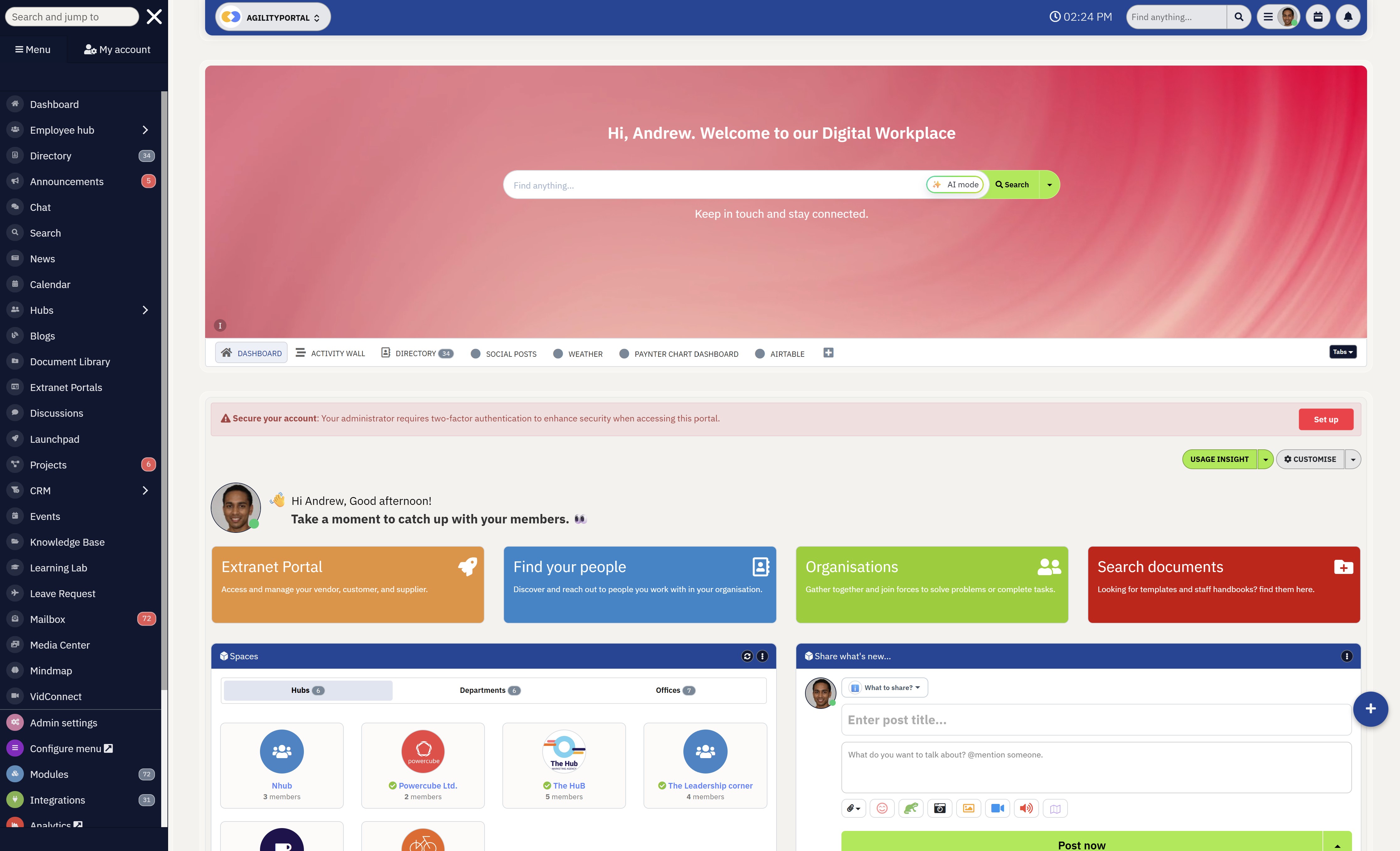
Why AgilityPortal Works Well for Frontline Teams
Why AgilityPortal Works Well for Frontline Teams
AgilityPortal works particularly well for frontline teams because it combines employee communication, collaboration, engagement, knowledge sharing, and operational updates into one mobile-first platform.
Instead of forcing employees to switch between disconnected apps for messaging, documents, tasks, and company updates, everything is centralized in a single digital workplace experience.
The platform is designed specifically for distributed and deskless workforces, making it ideal for industries like healthcare, retail, hospitality, nonprofits, logistics, and remote teams.
Employees can access company announcements, workplace documents, chat, recognition tools, and operational communication directly from mobile devices in real time.
For businesses struggling with communication gaps, low engagement, and app overload, AgilityPortal offers a much simpler alternative to fragmented workplace systems while helping teams stay connected, informed, and operationally aligned across every location.
Built for Modern Frontline Teams
Connect Frontline Employees With One Centralized Communication Platform
Many businesses struggle to keep frontline employees informed because company updates, operational communication, schedules, documents, training resources, and employee engagement tools are often spread across disconnected apps, emails, chat systems, and outdated intranet platforms.
AgilityPortal helps businesses centralize frontline communication, employee engagement, collaboration, operational updates, document sharing, and workforce communication into one connected mobile-first digital workplace platform.
- Mobile-first frontline communication platform for deskless and distributed teams
- Real-time company announcements, push notifications, and workforce updates
- Employee engagement tools including social feeds, recognition, surveys, and reactions
- Secure document management and knowledge sharing for operational communication
- Team collaboration, employee chat, and workplace communication tools in one platform
- Role-based permissions, department targeting, and workforce segmentation features
- Designed for remote, hybrid, frontline, nonprofit, healthcare, retail, and hospitality teams
Conclusion
Frontline communication has become far more than just an HR initiative.
For modern businesses, it is now a critical operational advantage that directly impacts productivity, employee engagement, operational efficiency, and workforce alignment.
As more companies manage remote, hybrid, and deskless employees across multiple locations, traditional communication methods simply cannot keep up with the speed of modern operations.
Frontline workers now expect fast, mobile, and accessible communication that works wherever they are, whether they're on a retail floor, inside a warehouse, working in healthcare, or operating remotely in the field.
That's why businesses are increasingly investing in modern frontline communication platforms that combine employee engagement, operational updates, collaboration, and workforce communication into one connected experience.
The right platform ultimately depends on your workforce size, operational complexity, industry requirements, and employee communication needs.
Some businesses may prioritize operational workflows and scheduling, while others may focus more heavily on employee engagement, collaboration, or knowledge sharing.
The most important thing is choosing a platform employees will actually use. Businesses should prioritize mobile usability, simplicity, workforce accessibility, and long-term adoption instead of selecting overly complicated systems that create more friction than value.
FAQ on Workplace Operations Platform
What is the best frontline communication platform?
The best frontline communication platform depends on your business size, workforce structure, and operational needs. Platforms like AgilityPortal, Staffbase, Blink, Beekeeper, and Connecteam are popular because they help businesses improve employee communication, workforce engagement, operational collaboration, and mobile accessibility for deskless employees.
What is frontline employee communication software?
Frontline employee communication software is a platform designed to help businesses communicate with deskless and shift-based workers in real time. These platforms typically include messaging, mobile apps, announcements, employee engagement tools, document sharing, push notifications, and operational communication features.
How do frontline communication platforms work?
Frontline communication platforms centralize workplace communication into one mobile-friendly system where employees can access updates, messages, schedules, documents, and operational information from anywhere. Most platforms use mobile apps, notifications, and real-time messaging to improve communication visibility across distributed workforces.
What features should frontline communication software include?
The best frontline communication platforms usually include mobile access, push notifications, employee messaging, company announcements, workforce collaboration tools, document sharing, analytics, employee engagement features, and integrations with HR or operational systems. Businesses should also look for strong usability and mobile-first functionality.
Which industries benefit most from frontline communication tools?
Industries with deskless or distributed employees benefit the most from frontline communication platforms. This includes retail, healthcare, manufacturing, hospitality, logistics, construction, nonprofits, education, and field service businesses where employees work across multiple locations or shifts.
Are frontline communication apps secure?
Most modern frontline communication platforms include enterprise-grade security features such as encrypted communication, secure login authentication, role-based permissions, and compliance controls. Security levels may vary depending on the provider, so businesses should review compliance requirements carefully before choosing a platform.
Can frontline communication platforms work offline?
Some frontline communication platforms support offline functionality, allowing employees to access certain documents, messages, or operational information even when internet connectivity is limited. This is especially useful for field workers, remote locations, and mobile frontline teams.
What is the difference between Slack and frontline communication software?
Slack is primarily designed for workplace messaging and team collaboration, while frontline communication software focuses more heavily on deskless employees, operational communication, workforce engagement, mobile accessibility, and frontline workforce management. Many frontline platforms also include features like scheduling, employee recognition, operational workflows, and company-wide communication tools that go beyond basic chat functionality.
AI Summary
- Frontline communication platforms help businesses centralize employee communication, operational updates, collaboration, and workforce engagement across deskless and distributed teams.
- Modern frontline communication software is designed for mobile-first workforces, helping organizations connect shift workers, field employees, retail staff, healthcare teams, and remote workers in real time.
- Businesses use frontline communication platforms to improve internal communication, reduce missed updates, streamline operational coordination, and increase employee engagement across multiple locations.
- The best frontline communication platforms often include mobile apps, push notifications, employee engagement tools, messaging, document sharing, analytics dashboards, and workforce collaboration capabilities.
- Popular frontline communication platforms include AgilityPortal, Microsoft Viva, Workvivo, Slack, Staffbase, Blink, Beekeeper, Connecteam, Workplace from Meta, and MangoApps.
- Before choosing a frontline communication platform, businesses should compare mobile usability, employee adoption, integrations, scalability, frontline accessibility, operational workflows, analytics, and long-term flexibility.
Most Popular Posts

Effective communication among team members is vital for the productivity and success of any organization. Surprisingly, 60% of companies lack a long-term internal communication strategy, which p...


Businesses thrive on communication for efficiency, productivity and accomplishment. When the right information is passed from the right designation in the organization, it promotes positivity an...

Categories
Blog
(3214)
Business Management
(396)
Employee Engagement
(235)
Digital Transformation
(219)
Growth
(150)
Intranets
(142)
Internal communications
(107)
Remote Work
(68)
Sales
(53)
Collaboration
(53)
Customer Experience
(33)
Culture
(30)
Knowledge Management
(29)
Project management
(29)
Leadership
(20)
Comparisons
(9)
News
(1)

Related Posts

Choosing the best ERP for Shopify often starts when the workarounds stop working. Your store shows stock that the warehouse can't find. Wholesale orders live in spreadsheets. Finance spends days reconciling payouts, while customer service...

Could choosing the wrong proxy disrupt your team's work or increase costs without improving results? When comparing rotating proxies vs static proxies, the answer depends on what your business needs: a consistent IP address for an ongoing sessi...

What happens when a buyer asks Google for the best employee communication platform—and discovers competing brands before reaching your website? Choosing the best link building services can help a digital workplace business strengthen its broade...

Could gaps in digital accessibility be stopping your employees from completing the training they need to do their jobs? Imagine a new starter opening a mandatory course, only to discover they can't follow the audio, navigate the quiz with a keyboard ...

The Amazon advertising agency landscape has changed dramatically over the past two years. With the introduction of AI-powered shopping experiences, Amazon Rufus, advanced attribution reporting, Sponsored Brands Video, and Amazon DSP enhancement...


Jill Romford
I am a digital nomad, lover of exploring new places and making friends.
I love to travel and I love the internet. I take pictures of my travels and share them on the internet using Instagram.
Traveler, entrepreneur, and community builder. I share my insights on digital marketing and social media while inspiring you to live your fullest life.
Ready to learn more? 👍
One platform to optimize, manage and track all of your teams. Your new digital workplace is a click away. 🚀
Free for 14 days, no credit card required.