
Insight Blog
Agility’s perspectives on transforming the employee's experience throughout remote transformation using connected enterprise tools.
26 minutes reading time
(5238 words)
Why Poor Communication in Healthcare Teams Is Costing You More Than You Think

Why Poor Communication in Healthcare Teams Is Costing You More Than You Think
Poor communication in healthcare teams leads to costly errors, delays, and burnout. Learn how to fix it with structured communication systems.
Why Poor Communication in Healthcare Teams Is Costing You More Than You Think

Have you ever stopped to consider how much poor communication is happening wihtin your healthcare teams, and how much it's really costing you—beyond just frustration?
In many organisations, breakdowns in communication don't just slow things down—they directly impact patient safety, delay critical decisions, and increase pressure on already overstretched staff.
In fact, studies from the Joint Commission found that communication failures are a leading cause in over 60% of serious adverse events in healthcare settings.
60%+
serious adverse events
Studies from The Joint Commission found that communication failures are a leading cause in over 60% of serious adverse events in healthcare settings.
Source: The Joint Commission
Despite this, many healthcare teams still rely on disconnected systems—emails, meetings, and scattered tools—that make consistent, structured communication nearly impossible.
This article explores why poor communication continues to be such a costly issue in healthcare, what's really causing it behind the scenes, and how organisations can fix it using a more structured, system-driven approach.
Key Takeaways
- Poor communication in healthcare teams leads to increased clinical errors, delayed decisions, and higher staff burnout.
- Training alone is not enough—systems must support structured communication frameworks to create lasting change.
- Fragmented tools like email, meetings, and chat apps create confusion, reduce visibility, and slow down critical workflows.
- Structured approaches, supported by platforms like AgilityPortal, combine training, communication, and knowledge in one place.
- Improving communication systems leads to better patient safety, faster collaboration, and more engaged healthcare teams.
Poor communication in healthcare teams is quietly driving up costs, errors, and staff burnout
Poor communication in healthcare teams isn't just an operational issue—it's a direct risk to patient safety, staff wellbeing, and organisational performance.
And the reality is, most healthcare leaders underestimate just how widespread the problem is.
Take medical errors, for example. When a nurse updates patient notes in one system, a doctor relies on email for updates, and another department uses a separate tool altogether, critical information gets lost.
This kind of fragmentation is exactly why research from the Joint Commission shows communication failures contribute to over 60% of serious adverse events.
On top of that, research published in the Journal of Patient Safety estimates preventable patient harm in U.S. hospitals at somewhere between 210,000 and 440,000 cases annually, with communication breakdowns woven into a significant chunk of that figure.
210K–440K
cases annually
Research published in the Journal of Patient Safety estimates preventable patient harm in U.S. hospitals at between 210,000 and 440,000 cases annually, with communication breakdowns contributing to a significant portion of these incidents.
Source: Journal of Patient Safety
Then there's the issue of delayed decisions and patient care.
In busy environments like NHS trusts or private providers such as Bupa and HCA Healthcare, even a small delay in getting the right information to the right person can slow down treatment.
When updates are buried in inboxes or scattered across tools, response times suffer—and so do patient outcomes.
Another hidden cost is duplicate work across teams.
Without a centralised communication system, staff often end up recreating reports, re-checking information, or repeating tasks simply because they can't find what already exists.
According to Atlassian, employees can spend up to 25% of their workweek searching for information, which is a massive drain in high-pressure healthcare environments.
25%
of the workweek
According to Atlassian, employees can spend up to 25% of their workweek searching for information—a major productivity drain, especially in high-pressure healthcare environments.
Source: Atlassian
And finally, there's staff frustration and burnout—something every healthcare organisation is battling right now.
When communication is unclear, inconsistent, or hard to access, it creates unnecessary stress.
Over time, that leads to disengagement, mistakes, and higher turnover—especially among frontline workers who rely on fast, accurate updates.
This is why terms like poor communication in healthcare teams, healthcare communication training, and improve communication in healthcare aren't just search keywords—they reflect real, ongoing challenges that organisations are actively trying to solve.
Related Reading
Want to go deeper into communication breakdown in hospitals, healthcare collaboration challenges, and digital workplace solutions? These guides will help you improve internal communication in healthcare, streamline workflows, and enhance patient safety.
- Why Poor Communication in Healthcare Teams Is Costing You More Than You Think
- Communication Challenges in UAE Healthcare: What Teams Are Getting Wrong
- The #1 Communication Issue in Australian Healthcare Teams
- Top Communication Challenges in UK Healthcare (And How to Fix Them)
- How Intranet Solutions Are Transforming Patient Care and Outcomes
- Top 10 Health Technologies Revolutionising the Healthcare Industry
- Mobile App vs Web App for Healthcare: What Drives Better Patient Engagement?
- How Learning Management Systems Are Transforming Healthcare Education
Most healthcare organisations don't have a communication problem—they have a system problem

It's easy to assume the issue comes down to people not communicating properly.
But in reality, most healthcare professionals are doing their best within systems that make effective communication difficult.
The real issue isn't a lack of effort—it's the environment they're working in.
Disconnected tools are creating more confusion than clarity
Many healthcare organisations rely on a mix of platforms—email, internal systems, messaging apps, and paper-based processes.
Instead of improving collaboration, this creates fragmented workflows where critical information is spread across multiple channels.
For example, a clinician might receive updates via email, check patient data in another system, and rely on verbal handovers during shifts. That's not just inefficient—it increases the risk of missed or outdated information.
This is a common challenge tied to clinical communication breakdowns, where the issue isn't the message itself, but where and how it's delivered.
There is no single source of truth for teams to rely on
When information lives in different places, teams don't know what to trust.
Policies, patient updates, and internal communications can easily become outdated or inconsistent across departments.
Imagine a scenario where two departments follow slightly different procedures because they're referencing different versions of the same document.
That's how small inconsistencies turn into larger operational risks.
This lack of alignment is a core issue in hospital communication systems, where visibility and consistency are critical but often missing.
Important information is buried in emails, chats, and folders
Even when the right information exists, finding it is another problem entirely.
Staff often spend valuable time searching through inboxes, shared drives, or chat threads just to locate what they need.
In high-pressure environments, that delay can have real consequences.
Whether it's locating a policy, confirming a procedure, or accessing patient-related updates, slow access to information creates friction at every level.
This challenge is closely linked to healthcare workflow inefficiencies, where time is lost not because of complexity, but because of poor information access.
Training alone won't fix broken systems
Healthcare organisations often invest in communication training—but without fixing the underlying systems, those efforts don't stick.
People fall back into old habits because the tools they use every day don't support structured, consistent communication.
If the goal is to truly improve how teams communicate, the focus needs to shift from just training individuals to fixing the systems they rely on.
Relying on emails, meetings, and chat apps is making communication worse—not better

Relying on emails, meetings, and chat apps is making communication worse—not better
On the surface, these tools look like they should solve communication issues.
In reality, they often create more noise, more delays, and less clarity—especially in fast-paced healthcare environments.
Emails are slowing teams down and fragmenting critical information
- Important updates get buried in long email threads
- Staff miss key messages during busy shifts or handovers
- No real-time visibility into whether information has been seen or acted on
- Attachments and documents become outdated quickly with multiple versions floating around
Emails weren't designed for real-time, high-stakes communication—and it shows.
Chat apps create noise instead of structured communication
- Conversations become scattered across channels and threads
- Important messages get lost in fast-moving chats
- No clear structure for critical updates vs casual communication
- Searching for past information becomes frustrating and time-consuming
- Mobile and desktop experiences often differ, causing inconsistency
Chat tools are fast—but without structure, they quickly become chaotic.
The result is a lack of visibility, accountability, and control
- No clear record of who shared what information and when
- Difficult to track decisions or actions across teams
- Communication becomes reactive instead of structured
- Teams rely on memory rather than systems
This is where most healthcare organisations struggle—not because they lack tools, but because the tools they rely on weren't built for how healthcare teams actually operate.
Structured communication training only works when it's supported by the right tools
Healthcare organisations often invest heavily in communication training—and on the surface, it makes sense.
Frameworks are introduced, staff are trained, and expectations are set. But then, a few weeks later, things quietly slip back to how they were.
The reason is simple: training changes behaviour temporarily, but systems shape behaviour permanently.

Structured communication training only works when it's supported by the right tools
Experience alone isn't enough to prevent communication breakdowns
There's a common assumption that experienced healthcare professionals will naturally communicate effectively, especially when they've had exposure to things like de-escalation training for healthcare workers, which is one of the most immediate investments you can make in patient safety and staff well-being.
In reality, even the most skilled teams struggle when the environment doesn't support them.
Training—whether it's communication frameworks or de-escalation techniques—can only go so far if the systems people rely on every day are inconsistent or fragmented.
In practice, the challenges show up quickly:
- Information is often incomplete or delayed
- Staff rely on memory during shift changes
- Verbal handovers introduce inconsistencies
- High-pressure situations lead to shortcuts in communication
Experience and training both matter—but they don't eliminate risk when the system itself is flawed.
Skills that actually move the needle need to be reinforced daily
Training introduces structured communication methods, but without reinforcement, those skills fade quickly—no matter how effective they are in theory.
Frameworks like SBAR (Situation, Background, Assessment, Recommendation) exist for a reason.
They're designed to reduce miscommunication during critical moments, especially during handoffs between care providers—where information loss is most likely to happen.
Teams that consistently apply structured handoff methods make fewer clinical errors and are less likely to experience interpersonal conflict, which often stems from unclear or incomplete communication.
The problem is, people don't abandon these frameworks because they don't work—they abandon them because the workflow doesn't support them.
In practice, for structured communication to stick, teams need an environment that reinforces it daily:
- Clear, repeatable communication processes that align with structured frameworks
- Easy access to accurate, up-to-date information during critical moments
- Visibility across departments and roles to avoid gaps in communication
- Systems that guide how communication should happen—not just rely on memory
When the environment supports the behaviour, these frameworks stop being "training material" and become part of how teams naturally communicate every day.
The patient safety case is hard to ignore
This isn't just about efficiency—it's about safety.
Communication failures continue to be one of the most common contributors to clinical incidents, and the consequences can be serious.
- Delayed or missed updates affect treatment decisions
- Lack of clarity increases the risk of errors
- Poor coordination leads to duplicated or conflicting actions
Even small gaps in communication can escalate quickly in healthcare settings.
Without system support, people fall back into old habits
When teams are under pressure, they default to what's fastest and easiest—not necessarily what's most effective.
That usually means:
- Sending quick emails instead of structured updates
- Relying on verbal communication
- Using chat tools without clear organisation
- Skipping formal processes to save time
This is why training alone rarely delivers long-term change.
You need both behaviour and infrastructure to fix the problem
If organisations want to see real improvement, they need to combine structured training with systems that reinforce it every day.
That means:
- Training teams on how to communicate effectively
- Implementing tools that support structured workflows
- Creating a single, reliable source of truth
- Making communication visible, trackable, and consistent
Without that combination, communication training becomes a short-term fix for a much deeper problem.
Here's what effective communication in healthcare teams actually looks like in practice

Here's what effective communication in healthcare teams actually looks like in practice
A centralised communication hub keeps everyone aligned
In high-pressure healthcare environments, information can't afford to live in multiple places.
Effective teams operate from a single, centralised communication hub where updates, documents, and conversations are all connected.
Instead of jumping between emails, folders, and messaging tools, staff know exactly where to go to find accurate, up-to-date information.
This reduces confusion, eliminates duplication, and ensures that everyone is working from the same source of truth.
Clear channels by department and role remove unnecessary noise
One of the biggest challenges in healthcare communication is filtering what actually matters to each person.
In well-structured systems, communication is organised by department, role, or function—so a nurse, administrator, or specialist only sees what's relevant to them.
This cuts down on noise, improves focus, and ensures that critical updates don't get lost in a flood of unrelated messages.
Standardised workflows create consistency in how teams communicate
Effective communication isn't just about sending messages—it's about how those messages are structured and delivered.
Leading healthcare teams rely on standardised workflows that guide how information is shared, whether it's patient updates, internal announcements, or procedural changes.
This consistency reduces ambiguity, improves accountability, and makes it easier for teams to follow the same communication patterns across the organisation.
Easy access to policies and updates reduces delays and errors
When staff can't quickly access the information they need, they either delay decisions or rely on outdated knowledge.
In a well-designed communication system, policies, procedures, and updates are easy to find, searchable, and always current.
This means staff spend less time searching and more time acting, which is critical in environments where every second counts.
Mobile-first access ensures frontline staff are always connected
Healthcare doesn't happen behind a desk—and communication systems need to reflect that.
Effective teams use mobile-first platforms that allow frontline staff to access updates, documents, and communication tools wherever they are.
Whether it's on a ward, in transit, or between shifts, staff stay connected in real time without needing to rely on desktop access or delayed handovers.
This is what "good communication" actually looks like in practice—not more messages, but better structure, visibility, and access across the entire organisation.
What Happens When Organizations Skip This Investment
The costs of not investing in structured communication training are real, but they tend to be diffuse and hard to attribute directly.
Nobody writes "poor communication culture" on an incident report. So the connection gets missed, the investment doesn't happen, and the pattern continues.
In practice, the data shows up as:
- Higher rates of near-miss events and adverse patient outcomes
- More workplace violence incidents involving patients, families, and staff
- Staff turnover that costs far more than training ever would have
- HR complaints and grievances that consume significant management time and legal resources
- Patient satisfaction scores that reflect what staff already know: that communication in this environment isn't working
There's also a liability dimension worth considering.
Organizations that can't demonstrate they provided adequate, documented training for foreseeable communication and conflict risks are in a weaker legal position when incidents result in litigation.
A consistent training record isn't just good practice. In some contexts, it's part of what constitutes a defensible standard of care.
What Good Training Actually Looks Like
A lot of communication training checks a box without changing anything.
The programs that actually produce lasting change tend to share a few characteristics.
They prioritize practice over instruction.
Watching a video on de-escalation or reading a policy document on respectful communication doesn't build the muscle memory to use those skills under pressure.
Scenario-based practice with real feedback does. If a program doesn't include substantial, repeated practice time, ideally with scenarios that reflect the actual situations staff face, it's producing awareness, not capability.
Crucially, leadership has to model the behavior.
This is the one that organizations most consistently underestimate.
If senior staff communicate dismissively, avoid difficult conversations, or react badly when challenged, no amount of training for junior staff will shift the culture. The team takes its cues from the top.
Leaders who visibly practice what the training teaches make those behaviors normal rather than exceptional.
I've seen this dynamic play out in both directions: a department head who modeled calm, clear communication through a genuinely difficult period, and another whose dismissiveness quietly undermined every training initiative the organization attempted.
This is where platforms like AgilityPortal can facilitate training and improve communication
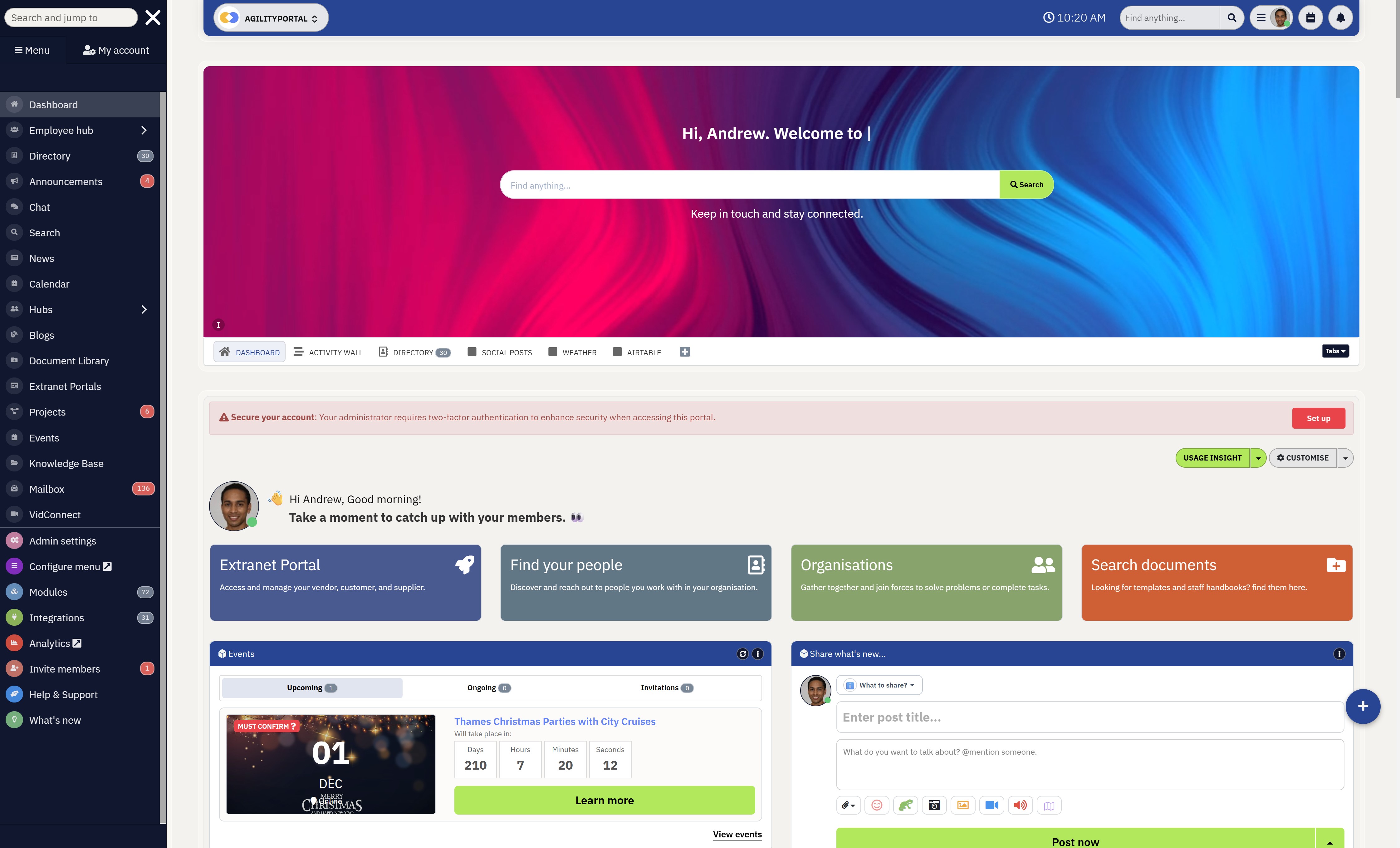
This is where platforms like AgilityPortal can facilitate training and improve communication
Fixing communication in healthcare isn't just about sending messages faster—it's about making sure people know how to communicate properly in the first place, and then reinforcing that behaviour every day.
That's where AgilityPortal stands out. Instead of treating training and communication as separate things, it brings them together into one system—so teams don't just learn better communication, they actually apply it in real workflows.
Here's what that looks like in practice:
- Learning Lab to deliver structured communication training (e.g. SBAR, protocols, compliance)
- Pathways to guide staff through step-by-step training journeys and role-based learning
- Onboarding modules to ensure new hires follow consistent communication standards from day one
- Built-in chat and communication tools that reinforce structured, real-time collaboration
- Centralised knowledge access so staff can quickly find policies, procedures, and updates
- Ongoing learning + communication in one place, so training isn't forgotten after completion
The key difference is this: instead of training being a one-off exercise, it becomes part of how teams work every day.
That's what actually changes behaviour—and ultimately improves patient safety, coordination, and outcomes.
AgilityPortal
Fix Healthcare Communication by Combining Training, Knowledge, and Collaboration
Struggling with poor communication in healthcare teams, inconsistent training, and fragmented systems? AgilityPortal solves this by bringing communication, learning, and knowledge management into one connected platform designed for modern healthcare environments.
Instead of relying on disconnected tools, teams get a centralised system where structured training (like communication frameworks and onboarding), real-time communication, and critical information all work together— reducing errors, improving coordination, and supporting better patient outcomes.
Start your 14-day free trial — no credit card required. Built for healthcare teams that need structured communication, training, and real-time collaboration.When communication improves, everything else in healthcare starts to improve too
When healthcare organisations fix communication at the root level, the impact isn't isolated—it ripples across every part of the operation.
What starts as clearer messaging quickly turns into better coordination, faster decisions, and more confident teams.
One of the most immediate improvements is a reduction in errors. When staff have access to the right information at the right time—and know exactly where to find it—there's far less room for misinterpretation or missed updates.
This directly supports safer patient care and reduces the risk of preventable incidents.
You also start to see faster response times.
Instead of chasing information across emails or waiting for updates in meetings, teams can act quickly because everything is visible and accessible. In healthcare, where timing can be critical, that speed makes a real difference.
Collaboration naturally improves as well.
When communication is structured and transparent, departments are no longer working in silos. Everyone understands what's happening, who's responsible, and what needs to be done next. That clarity removes friction and helps teams work together more effectively.
And just as important—staff engagement increases. When communication is clear and consistent, employees feel more confident, less stressed, and more connected to their work.
Over time, that leads to higher morale, better retention, and a more resilient workforce.
- Fewer errors and improved patient safety
- Faster response times across teams
- Better collaboration between departments
- Higher staff engagement and reduced burnout
This is the real outcome of fixing communication—it's not just about better messaging, it's about building a healthcare environment that actually works.
If you want to fix communication in healthcare teams, start by fixing the system—not just the training
Healthcare organisations that have successfully improved communication didn't just invest in training—they redesigned the systems behind it.
The difference is clear when you look at providers like Mayo Clinic and Cleveland Clinic, both of which have focused heavily on structured workflows, standardised communication processes, and integrated digital systems.
The result?
Better coordination across departments, fewer delays in care delivery, and measurable improvements in patient outcomes.
This shift toward structured systems is also backed by data.
According to McKinsey & Company, organisations that improve communication and collaboration through digital tools can increase productivity by up to 20–25%.
In healthcare specifically, that translates into faster decision-making, reduced duplication of work, and more time spent on patient care rather than administrative tasks.
Another strong example comes from Kaiser Permanente, where investment in digital communication systems and workflow alignment has helped improve care coordination across large, distributed teams.
By reducing fragmentation and improving visibility, they've been able to streamline operations and enhance both staff and patient experiences.
To get to that level, organisations need to take a more practical, system-first approach. That means stepping back and identifying where communication is actually breaking down—not just assuming more training will fix it.
Start by auditing your current tools and asking a simple question: where is information getting lost, delayed, or duplicated? In many cases, the issue isn't a lack of tools—it's too many tools that don't work together.
This is where healthcare information flow optimisation becomes critical, ensuring that data moves seamlessly between teams without friction.
Next, identify bottlenecks in your workflows. Look at where delays happen—handoffs between departments, approval processes, or accessing critical updates. These are often signs of care team coordination issues, where communication isn't structured or visible enough to support fast decision-making.
From there, the priority should be to centralise communication. Bringing everything into one place creates a single source of truth, which is essential for consistency and accountability.
This is a core principle behind digital transformation in healthcare communication, where organisations move away from fragmented tools toward integrated platforms that support both communication and workflows.
Finally, reinforce everything with training—but this time, within the system itself. When staff are trained and the tools they use every day support that training, behaviour actually changes. Communication becomes consistent, repeatable, and far less reliant on memory or individual effort.
The takeaway is straightforward: if the system is broken, training won't fix it. But when the system is designed properly, everything else—communication, collaboration, and patient care—starts to fall into place.
FAQs
1. What causes poor communication in healthcare teams?
The root cause of communication breakdown in hospitals usually comes down to fragmented systems, unclear processes, and inconsistent workflows.
Many organisations struggle with internal communication in healthcare because information is spread across emails, meetings, and disconnected tools.
This creates visibility gaps, delays, and increases the risk of errors—especially during handovers and high-pressure situations.
2. How can healthcare teams improve communication?
To overcome healthcare collaboration challenges, organisations need more than just training—they need structured systems.
The most effective approach is combining communication frameworks with a digital workplace for healthcare that centralises updates, documents, and workflows.
Using an employee communication platform healthcare teams actually adopt ensures information is shared consistently, reducing confusion and improving coordination across departments.
3. Why is communication important in healthcare?
Communication plays a direct role in patient outcomes. Poor communication leads to delays, duplication, and mistakes, while strong communication supports improving patient safety communication across teams.
When information flows clearly and quickly, healthcare providers can make faster, more accurate decisions—ultimately improving both efficiency and patient care.
4. What tools improve healthcare communication?
The best results come from tools designed specifically for healthcare workflow management and collaboration.
This includes clinical team collaboration tools, intranet platforms, and integrated systems like AgilityPortal.
These tools bring communication, training, and knowledge into one place—helping teams stay aligned, reduce errors, and work more effectively in real time.
AI Summary
- Poor communication in healthcare teams is a major contributor to clinical errors, delayed care, and increased staff burnout, making it a critical issue for patient safety.
- Many healthcare organisations rely on fragmented tools like email, meetings, and chat apps, which create silos, reduce visibility, and slow down decision-making.
- Training alone is not enough—without system support, structured communication frameworks like SBAR often fail to stick in real-world workflows.
- Access to accurate, up-to-date information remains a key challenge, with staff frequently wasting time searching across disconnected systems instead of focusing on patient care.
- Platforms like AgilityPortal combine communication, training, and knowledge management into one system, helping teams apply structured communication consistently.
- The most effective approach is fixing the system itself—centralising communication, improving visibility, and reinforcing behaviour through integrated tools and workflows.
Most Popular Posts

Effective communication among team members is vital for the productivity and success of any organization. Surprisingly, 60% of companies lack a long-term internal communication strategy, which p...


Businesses thrive on communication for efficiency, productivity and accomplishment. When the right information is passed from the right designation in the organization, it promotes positivity an...

Categories
Blog
(3168)
Business Management
(392)
Employee Engagement
(234)
Digital Transformation
(212)
Growth
(149)
Intranets
(140)
Internal communications
(106)
Remote Work
(68)
Sales
(53)
Collaboration
(52)
Customer Experience
(32)
Culture
(30)
Knowledge Management
(29)
Project management
(29)
Leadership
(20)
Comparisons
(9)
News
(1)

Related Posts

Could your employees still find the policies, forms and information they rely on if your intranet moved to a new Microsoft 365 tenant tomorrow? An intranet migration can sound simple on a project plan: move sites, documents and user access from one M...

When Should You Hire IT Consulting Companies? 9 Costly Warning Signs Growing Businesses Can’t Ignore
Is Your Business Growing Faster Than Its IT Can Handle? Is your business growing faster than the systems, support and people behind it can keep up? It is an easy problem to miss at first. A few slow laptops, another spreadsheet workaround, or o...

Connected devices are useful, but every connection creates a responsibility. Have you ever stopped to think about how many everyday devices now collect data, communicate with other systems, or make decisions without someone actively watching the...

Hybrid work isn't going anywhere, and neither is the chaos that comes with managing who's in the office, who's remote, and which desks are actually available. Teams are tired of turning up to find no space, double-booked meeting rooms, or entir...

What Is an Authorization Letter and When Do You Need One? What happens when an important document needs to be collected, submitted or processed, but you cannot be there in person? For many people, this is a practical issue rather than an unusual one....


Jill Romford
I am a digital nomad, lover of exploring new places and making friends.
I love to travel and I love the internet. I take pictures of my travels and share them on the internet using Instagram.
Traveler, entrepreneur, and community builder. I share my insights on digital marketing and social media while inspiring you to live your fullest life.
Ready to learn more? 👍
One platform to optimize, manage and track all of your teams. Your new digital workplace is a click away. 🚀
Free for 14 days, no credit card required.