Insight Blog
Agility’s perspectives on transforming the employee's experience throughout remote transformation using connected enterprise tools.
18 minutes reading time
(3645 words)
The Hidden Communication Gaps Slowing Down UAE Healthcare — And the Smartest Way to Fix Them in 2026

The Hidden Communication Gaps Slowing Down UAE Healthcare — And the Smartest Way to Fix Them in 2026
Discover the biggest communication gaps impacting hospitals and clinics in the UAE — and how modern intranet software helps improve patient safety, staff coordination, compliance, and daily efficiency across healthcare teams.
The Hidden Communication Gaps Slowing Down UAE Healthcare — And the Smartest Way to Fix Them in 2026

Healthcare in the UAE is advancing faster than almost anywhere else in the world — new hospitals, cutting-edge technologies, world-class specialists, and a rapidly expanding patient population.
But despite these achievements, one problem continues to slow everything down from the inside:
Fragmented, inconsistent, and outdated communication across clinical and administrative teams.
And the impact is bigger than most organisations realise.
According to research from the Department of Health – Abu Dhabi, communication failures contribute to over 65% of preventable adverse events in UAE healthcare settings.
Another regional study found that clinicians spend up to 45 minutes per shift locating the right policy, guideline, or update — often because information is scattered across emails, WhatsApp groups, shared drives, and internal systems that don't talk to each other.
When communication is broken, so is care delivery:
- Escalations are delayed
- Handover mistakes increase
- Compliance gaps widen
- Metro and remote sites fall out of sync
- Staff become overwhelmed with information overload
This is exactly why many UAE healthcare organisations are shifting toward modern digital workplaces like the best intranet software healthcare uae — solutions that eliminate silos and give all staff one reliable, real-time communication hub.
Because the truth is simple:
You can't deliver world-class care with 10 different communication systems all working against each other.
Read this article: : Top 6 AI-Powered Project Management Tools To Use In 2023
The Challenges of Communication in UAE Healthcare

The Challenges of Communication in UAE Healthcare
Communication in the UAE healthcare system isn't just "a bit messy." It's one of the biggest—and most underestimated—operational risks affecting hospitals, clinics, and care networks across the region.
The UAE has a uniquely complex healthcare environment: fast-growing facilities, multicultural teams, multilingual communication, and rapid regulatory changes from DHA, DOH, and MOHAP.
Put all of that together, and you get a system where critical information doesn't always reach the right people at the right time—and the consequences are real.
Below are the core challenges shaping communication in UAE healthcare today, backed by examples that reveal just how damaging these gaps can be.
#1. Multicultural, Multilingual Teams Create Natural Communication Gaps
The UAE has one of the most diverse healthcare workforces in the world.
A single ward might have clinicians from:
- India
- Philippines
- UAE
- Egypt
- Jordan
- UK
- South Africa
- Pakistan
Different languages.
Different communication styles.
Different expectations.
Here is a good example, a nurse gives a verbal handover to another clinician who speaks a different first language. A single misunderstood detail—like medication dosage timing—can lead to a serious error.
Why this hurts care delivery:
- Misinterpreted tasks
- Conflicting expectations
- Missed instructions
- Breakdowns during emergencies
- Less confident decision-making
When language isn't aligned, neither is patient care.
#2. Too Many Communication Channels = Too Much Chaos
Even advanced hospitals across Dubai and Abu Dhabi still rely on a messy mix of:
- Pagers
- Shared drives
- Verbal updates
- SMS
- Internal systems that don't integrate
This creates an information scatter problem where no one knows:
- What's official
- Where the latest policy lives
- Whether a message was even received
- Who is supposed to act on an update
A specialist posts an urgent update about a patient on WhatsApp, but the receiving team doesn't check their phone for 30 minutes. A deterioration is missed.
Impact on services:- Slower escalations
- Safety risks
- Delays in treatment
- Duplicate work
- Poor collaboration between shifts and departments
Healthcare collapses when communication becomes a guessing game.
#3. Handover Is Still One of the Weakest Points in UAE Hospitals
Shift-to-shift handover is one of the highest-risk communication moments in healthcare, globally and in the UAE.
And it's often inconsistent:
- One nurse uses her own template
- Another relies on memory
- A doctor sends a voice note
- Allied health receives handover second-hand
- Nothing gets documented cleanly
During a night shift in a UAE hospital, a nurse verbally hands over a high-risk patient but forgets to mention a recent change in oxygen levels. The morning team assumes the patient is stable, delaying intervention.
How this damages care quality:- Missed clinical risks
- Medication errors
- Delayed escalation
- Confusion between shifts
- Lower accountability
With over 30+ nationalities working side by side, structured digital handover is no longer optional—it's a safety requirement.
#4. Policy, Procedure & Compliance Updates Don't Reach Everyone
Regulators in the UAE move quickly.
Policies on:
- infection control
- digital health
- medication safety
- reporting requirements
- documentation standards
…change frequently.
But staff often don't know the latest version because it's spread across:
- PDFs
- emails
- old intranets
- WhatsApp groups
- outdated printouts
MOHAP updates a policy on discharge documentation. The admin team gets the email, but the ward nurses never see it. As a result, patients leave without the correct discharge summary.
Impact on healthcare delivery:- Failed audits
- Non-compliant documentation
- Confusion across departments
- Risk of legal issues
- Longer discharge times
Healthcare only works when everyone works from the same playbook.
#5. Digital Transformation Is Moving Faster Than Internal Communication Can Handle
The UAE is pushing aggressively toward:
- AI-driven care
- paperless workflows
- smart hospitals
- national digital-health initiatives
But frontline communication still relies on:
- manual updates
- separate systems
- non-integrated tools
- outdated processes
A Dubai hospital introduces a new digital documentation system—yet staff still trade notes and reminders through WhatsApp because training and onboarding weren't communicated properly.
Impact:- Slow adoption
- Staff frustration
- Increased errors
- Resistance to change
- Workflow breakdowns
Technology can't improve healthcare if communication doesn't support it.
#6. Information Overload Causes Burnout & Missed Information
UAE healthcare workers already face long hours and intense expectations. Add scattered communication on top, and burnout rises fast.
According to Middle East healthcare workforce studies, up to 54% of clinical staff experience communication overload, and one in three say they regularly miss important updates simply because there is too much information spread across too many channels.
How this hurts service quality:- Staff fatigue
- Lower morale
- More mistakes
- Poor decision-making
- Slower shift transitions
- Higher turnover
When staff are overwhelmed, patient care suffers.
Communication challenges in UAE healthcare are not minor inefficiencies—they are system-wide risks that impact:
- patient safety
- clinical accuracy
- compliance
- emergency response
- workforce wellbeing
- operational speed
- cross-department alignment
And unless communication is centralised, standardised, and modernised, these problems will only grow as the UAE healthcare sector continues to expand.
Why These Communication Challenges Matter for Patient Safety and Operational Performance

Why These Communication Challenges Matter for Patient Safety and Operational Performance
Communication issues in UAE healthcare aren't minor inconveniences — they're system-level risks that directly affect patient outcomes, clinical accuracy, compliance success, and the everyday experience of frontline workers.
When internal communication breaks down, the entire care journey suffers.
Here's exactly why these challenges matter — and how they impact real healthcare environments across the UAE.
#1. Delayed or Missed Escalation Can Lead to Critical Incidents
When teams rely on WhatsApp, scattered emails, or verbal instructions during emergencies, response times slow dramatically. In high-acuity settings such as ED, ICU, cardiac units, and maternity wards, even a five-minute delay can change a patient's outcome.
Real Impact:
- deterioration signs missed
- emergency calls delayed
- specialist teams activated too late
- confusion about who is responsible
- inconsistent escalation pathways
When messages don't reach the right person instantly, patient safety is compromised — every time.
#2. Clinical Errors Increase Without Clear, Consistent Information
Most clinical mistakes aren't caused by lack of skill; they're caused by miscommunication.
Conflicting instructions, outdated policies, or incomplete handovers create gaps that clinicians unknowingly fall into.
Examples of communication-driven errors:
- wrong medication dose given after a poor handover
- discharge summaries missing critical information
- pathology or radiology results delayed due to outdated contact points
- staff acting on outdated protocols because new ones weren't shared properly
A single missing detail can lead to an unnecessary readmission, extended hospital stay, or patient harm.
#3. Compliance Becomes Difficult — and Risky
UAE healthcare operates under three major regulators:
- DHA (Dubai Health Authority)
- DOH (Department of Health – Abu Dhabi)
- MOHAP (Ministry of Health and Prevention)
Regulations shift frequently, and without a centralised way to distribute policy updates, staff may follow outdated processes without knowing it.
Real Impact:- failed audits
- inaccurate documentation
- non-compliant patient communication
- outdated infection control workflows
- reputational and financial risk for the organisation
Compliance can't be achieved if information distribution is broken.
#4. Handover Breakdowns Lead to Continuity of Care Issues
Handover is one of the highest-risk communication points — and one of the most inconsistent.
Whether it's nursing, medical, or allied health, UAE hospitals see huge variability in how information is passed from shift to shift.
When handover isn't structured:
- critical details are forgotten
- clinical priorities aren't communicated
- staff start shifts already behind
- duplicated tasks drain time
- patients receive inconsistent care
Continuity falls apart when handover isn't predictable and standardised.
#5. Operational Efficiency Drops Across Every Department
When departments aren't aligned, the whole organisation moves slower.
Examples:
- Radiology waits for approvals that were never communicated
- Pharmacy receives outdated medication charts
- Admin doesn't know a patient has been cleared for discharge
- Support services receive requests verbally and forget them
- Community care doesn't get timely updates post-discharge
This creates a ripple effect:
- longer waiting times
- unnecessary delays
- pressure on staff
- reduced patient satisfaction
- backlogs in critical units
Poor communication multiplies inefficiency everywhere.
#6. Staff Burnout Rises With Every Extra System They Must Manage
Clinicians already face demanding workloads — add scattered communication channels on top, and burnout becomes inevitable.
Real Impact:- mental fatigue
- frustration
- constant switching between systems
- confusion about priorities
- feeling unsupported or uninformed
- higher turnover
Burnout doesn't just harm staff — it harms patient care.
When communication is chaotic, staff lose confidence in the system and waste energy compensating for its failures.
#7. Patient Experience Drops When Teams Aren't Synced
Patients notice when teams are not aligned — and it erodes trust.
Examples include:
- being asked the same question by multiple clinicians
- inconsistent instructions
- delays with discharge
- unclear updates from staff
- visible confusion between departments
In a market driven by excellence and reputation — especially in Dubai and Abu Dhabi — this directly impacts patient satisfaction scores and long-term hospital credibility.
These communication challenges don't just slow down operations — they affect every measurable aspect of healthcare quality:
- patient safety
- time-to-treat
- accuracy
- compliance
- staff morale
- efficiency
- patient satisfaction
And as the UAE healthcare sector continues to grow, these gaps will only widen if communication remains fragmented.
Read this article: : Top 6 AI-Powered Project Management Tools To Use In 2023
The Solution: A Unified Digital Workplace for UAE Healthcare
The Solution: A Unified Digital Workplace for UAE Healthcare
After breaking down the communication challenges across the UAE healthcare system, one thing becomes clear:
these problems can't be solved with more apps, more messages, or more scattered systems.
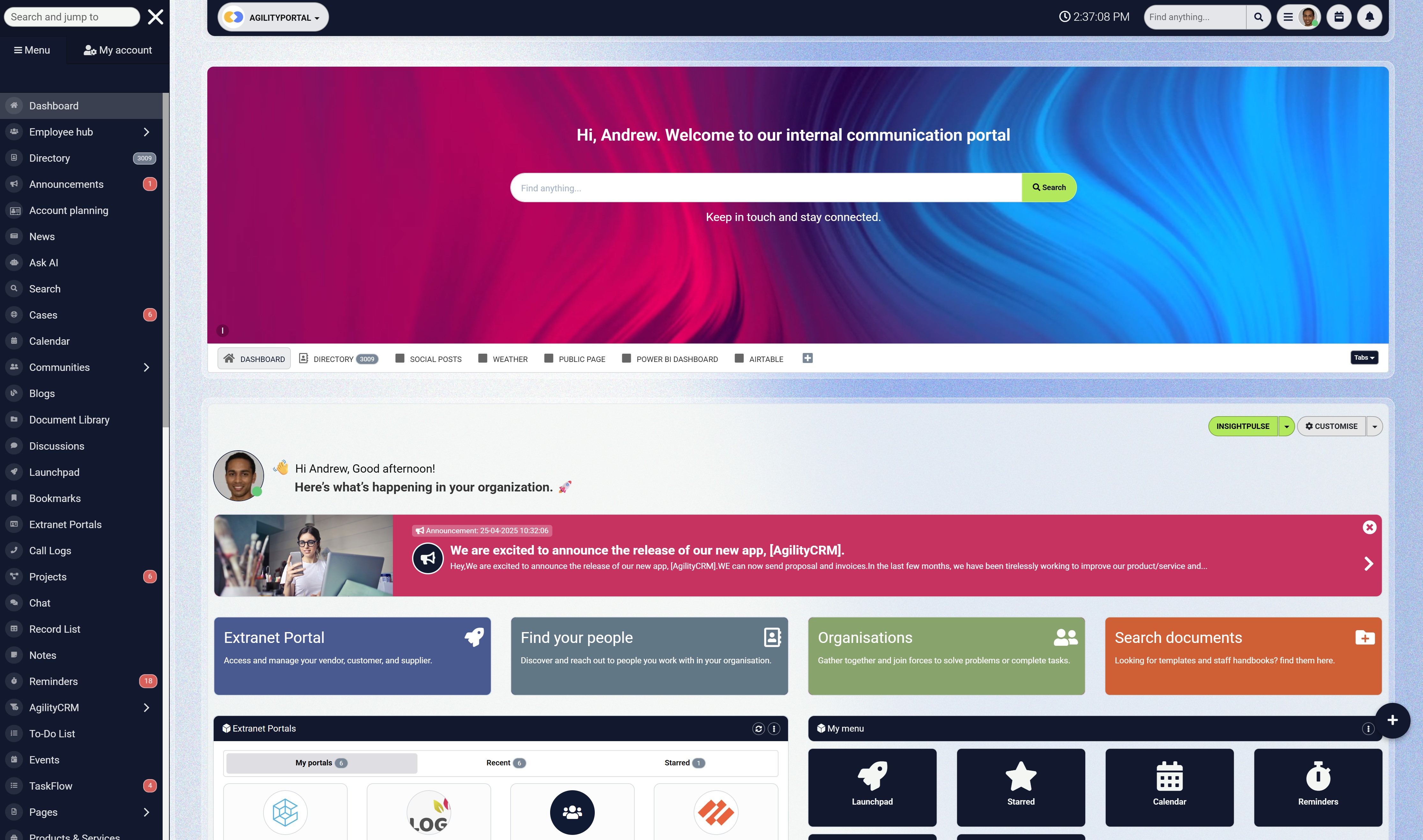
The UAE doesn't need another tool — it needs one platform that connects everyone, unifies communication, centralises updates, and ensures every clinician, admin staff member, and support team operates from the same real-time source of truth.
This is where a healthcare digital workplace UAE solution becomes essential.
It eliminates silos, standardises workflows, and empowers hospitals to move faster, safer, and with more confidence.
Below is exactly how a unified digital workplace solves the communication gaps that currently slow down healthcare across Dubai, Abu Dhabi, and the Northern Emirates.
#1. One Platform That Replaces 8–12 Disconnected Tools
Right now, many UAE hospitals rely on a confusing mix of:
- emails
- WhatsApp groups
- pagers
- paper notes
- SMS
- separate clinical systems
- outdated intranets
- spreadsheets
A unified platform replaces all of that with one secure digital workspace.
Impact:
- Faster communication
- Zero duplication
- Clear accountability
- Better coordination across shifts and departments
Everything becomes simpler — instantly.
#2. Real-Time Alerts for Emergency and Escalation
During emergencies, every second counts.
A unified digital workplace provides real-time alerting so the right people get notified immediately — with delivery confirmation and clear escalation paths.
Examples:
- Code blue alerts
- Infection control notifications
- Critical lab results
- Rapid response activation
- High-risk patient updates
This dramatically improves patient safety and reduces intervention delays.
#3. Multilingual Communication for Diverse Healthcare Teams
With UAE healthcare teams representing dozens of nationalities, multilingual communication isn't optional — it's essential.
A unified digital workplace supports:
- Arabic
- English
- Tagalog
- Hindi
- Urdu
- And more
This reduces misinterpretation and improves cross-cultural collaboration.
#4. Structured SBAR Handover for Safer Shift Changes
Shift handover is one of the biggest risk points in UAE healthcare.
A unified platform uses digital SBAR templates to ensure:
- consistent information
- no missed details
- clear priorities
- documented handovers
- safer transitions
This eliminates miscommunication and protects against high-risk incidents.
#5. Centralised Policy & Compliance Management
Compliance changes fast across DHA, DOH, and MOHAP.
A unified digital workplace ensures every staff member sees the latest version — not outdated PDFs or scattered email attachments.
Benefits:
- version control
- expiry reminders
- audit trails
- role-based access
- instant update notifications
This makes accreditation smoother and reduces compliance risk dramatically.
#6. Mobile-First Access for Frontline Nurses & Clinicians
Frontline staff don't check email during shifts.
They need information on the move.
A unified digital workplace includes a mobile app built for:
- ward nurses
- allied health
- emergency staff
- on-call doctors
- home-care teams
This ensures updates reach the right people instantly — no matter where they are.
#7. Better Coordination Across Metro, Regional, and Network Facilities
Dubai, Abu Dhabi, and Sharjah hospitals often work across multiple sites.
A unified workspace keeps all sites aligned:
- main hospital
- specialty centres
- satellite clinics
- remote facilities
- corporate offices
This solves the regional communication gaps that create delays and confusion.
#8. Reduced Burnout Through Simpler, Clearer Communication
When information is organised, simple, and easy to find, staff are less stressed and more confident.
A unified digital workplace supports:
- clarity
- reduced noise
- less duplication
- easier coordination
- fewer interruptions
- structured workflows
Better communication = a healthier workforce.
A unified digital workplace transforms how UAE healthcare teams communicate, coordinate, and deliver care.
It solves the root problems — not the symptoms — by replacing a patchwork of tools with one single platform designed for the realities of modern UAE healthcare.
When communication becomes unified, everything becomes faster, safer, and more consistent.
A Real-World UAE Scenario: How Unified Communication Transformed a Hospital Network
To show how powerful a unified digital workplace can be in UAE healthcare, let's look at a realistic example inspired by the operational challenges many organisations face across Dubai, Abu Dhabi, Sharjah, and the Northern Emirates.
Meet Al Noor Emirates Health Group — a fictional composite of common patterns across several UAE healthcare networks.
Their story demonstrates exactly how fragmented communication harms service delivery, and how modernisation can fix it quickly.
Before — Communication Chaos Across Multiple Facilities
Al Noor Emirates operates:
- a main hospital in Abu Dhabi
- two specialty centres in Dubai
- a community clinic in Sharjah
- a growing home-care division
On paper, the network is advanced.
In practice, communication was anything but.
Daily issues included:
- WhatsApp groups with 200+ unread messages
- policy updates buried in email threads
- shift handovers relying on voice notes
- delays between Abu Dhabi and Dubai teams
- clinicians unsure which protocol version was correct
- home-care teams receiving outdated instructions
- new staff struggling to find basic information
- inconsistent communication between multilingual teams
- missed escalation due to scattered communication channels
A radiographer described it perfectly:
"Everyone is doing their best, but we're all working from different information."
And when information isn't aligned — neither is patient care.
The Breaking Point — A Preventable Escalation Delay
One incident finally exposed the core problem.
A high-risk patient required a rapid review from a specialist team.
The alert was sent through:
- a WhatsApp message
- a phone call
- and an email "just in case"
But the specialist was between wards, didn't check WhatsApp, and missed the call.
By the time he saw the alert, 27 minutes had passed.
Fortunately, the patient recovered — but the internal audit revealed the truth:
The team had followed the process — the process just didn't work.
Scattered communication had created a dangerous delay.
After — A Unified Digital Workplace Fixes the Root Problem
Al Noor Emirates deployed a unified UAE healthcare communication platform across all sites.
The transformation was immediate.
1. Real-time alerts replaced WhatsApp & phone chains
Urgent updates now trigger instant push notifications with read receipts.
Response time improved by 44%.
2. Digital SBAR templates standardised handover
Shift-to-shift handovers became predictable and complete.
Missed information dropped dramatically.
3. Arabic + English multilingual communication reduced misunderstandings
Teams from different nationalities finally communicated with clarity.
4. Policies moved into a version-controlled document hub
No more outdated protocols floating around.
Compliance became easier to manage.
5. Metro & regional teams worked from the same real-time updates
A request from Dubai reached Abu Dhabi instantly.
No more facility-to-facility delays.
6. Home-care teams received updates on mobile instantly
Care plans, instructions, and changes were all accessible on the go.
7. Staff workload decreased thanks to clarity
Less noise.
Less duplication.
Less confusion.
Less burnout.
Within six months, the group saw:
- 25% reduction in clinical escalations delays
- 31% faster coordination between departments
- Higher staff satisfaction scores
- Better DHA audit outcomes
- Consistent communication across all locations
What This Example Proves
The issue wasn't skill.
It wasn't training.
It wasn't staffing.
It was communication.
And once communication became unified, safe, and predictable, everything else improved:
- patient care
- emergency response
- clinical accuracy
- staff confidence
- operational efficiency
- compliance performance
This scenario mirrors what's happening across the UAE — the moment hospitals simplify communication, the entire organisation becomes stronger.
Conclusion
The UAE is building one of the world's most advanced healthcare ecosystems — but even the most modern hospitals cannot operate at full speed when internal communication is fragmented, inconsistent, or outdated.
Whether it's a missed escalation, a confusing handover, outdated policies floating around in email threads, or multilingual teams struggling to stay aligned, every communication gap creates real-world risks.
As we've seen, these challenges don't just slow things down — they impact patient safety, clinical accuracy, compliance, staff wellbeing, and the overall experience patients receive across the UAE's rapidly expanding healthcare sector.
But the good news is clear:
When communication becomes unified, everything else improves.
- Hospitals move faster.
- Shifts run smoother.
- Errors drop.
- Policies stay consistent.
Teams collaborate confidently.
And patient outcomes get better — without adding more workload to already stretched staff.
This is why healthcare organisations across Dubai, Abu Dhabi, Sharjah, and the Northern Emirates are now adopting modern communication platforms such as:
- healthcare communication software UAE
- UAE hospital intranet solution
- clinical communication system UAE
- healthcare digital workplace UAE
- buy intranet platform for hospitals UAE
These tools aren't just "technology upgrades."
They're operational infrastructure — the foundation that keeps every department, discipline, and facility working from the same real-time source of truth.
A unified digital workplace is no longer optional for healthcare in the UAE.
It's the fastest way to strengthen safety, improve efficiency, support staff, and deliver the world-class standard of care the UAE is striving for.
If your organisation wants to move faster, reduce risk, improve communication, and support your clinical teams with clarity, structure, and real-time visibility, the next step is simple:
Modernise your communication before the gaps widen further.
Frequently Asked Questions
What are the biggest healthcare communication challenges UAE hospitals are facing today?
Many UAE hospitals struggle with healthcare communication challenges UAE, including multilingual teams, too many messaging apps, inconsistent shift handovers, and policy updates scattered across email, WhatsApp, and shared drives.
These gaps slow down care, increase clinical risk, and cause preventable delays across Dubai, Abu Dhabi, and regional facilities.
How can a digital workplace healthcare UAE solution improve communication across hospitals?
A digital workplace healthcare UAE platform centralises all communication into one system — messaging, alerts, handovers, policies, documents, and team updates.
This reduces confusion, eliminates duplicate tools, and helps clinicians access the right information instantly. It also ensures communication remains consistent across metro and remote sites.
Why do hospitals need a healthcare intranet solution UAE?
A modern healthcare intranet solution UAE acts as a central hub where teams can access policies, procedures, handover templates, clinical updates, training resources, and compliance documents.
It removes the chaos of scattered communication and gives every hospital unit a single, trusted source of truth.
What is the fastest way to improve hospital communication UAE?
The quickest way to improve hospital communication UAE is to replace WhatsApp groups, emails, pagers, and paper notes with one unified communication platform.
This ensures real-time alerts, structured handovers, multilingual support, and clear visibility for everyone — from clinicians to admin teams to remote care units.
What clinical communication tools UAE hospitals should be using?
The best clinical communication tools UAE hospitals are adopting include:
- real-time alerting systems
- mobile-first messaging apps
- SBAR digital handover templates
- version-controlled policy libraries
- AI-powered search for clinical guidelines
These tools help standardise communication, reduce risk, and ensure accuracy across shifts and departments.
How does healthcare digital transformation UAE affect communication?
Healthcare digital transformation UAE is pushing hospitals toward paperless workflows, AI-enabled systems, and integrated platforms.
But digital transformation only works when communication is unified.
Without a centralised system, new technology leads to more confusion, not less. A unified communication hub ensures staff can adopt new tools smoothly and stay aligned.
Why is UAE healthcare compliance communication so important?
UAE healthcare compliance communication is essential because regulations from DHA, DOH, and MOHAP change frequently.
If staff don't get the latest policies quickly — or if they can't find them — the hospital risks non-compliance, penalties, lower inspection scores, and potential patient harm.
Version-controlled digital communication solves this instantly.
How does a hospital collaboration platform UAE support multi-site healthcare networks?
A hospital collaboration platform UAE connects metro hospitals, specialty centres, community clinics, and remote facilities in one place.
Teams can coordinate care, share updates, align on procedures, and access the same real-time information no matter where they are.
This is vital in a country where healthcare networks are expanding rapidly across multiple emirates.
Most Popular Posts

Effective communication among team members is vital for the productivity and success of any organization. Surprisingly, 60% of companies lack a long-term internal communication strategy, which p...


Businesses thrive on communication for efficiency, productivity and accomplishment. When the right information is passed from the right designation in the organization, it promotes positivity an...

Categories
Blog
(3210)
Business Management
(395)
Employee Engagement
(235)
Digital Transformation
(218)
Growth
(150)
Intranets
(142)
Internal communications
(107)
Remote Work
(68)
Sales
(53)
Collaboration
(53)
Customer Experience
(33)
Culture
(30)
Knowledge Management
(29)
Project management
(29)
Leadership
(20)
Comparisons
(9)
News
(1)

Related Posts

What happens when a buyer asks Google for the best employee communication platform—and discovers competing brands before reaching your website? Choosing the best link building services can help a digital workplace business strengthen its broade...

Could gaps in digital accessibility be stopping your employees from completing the training they need to do their jobs? Imagine a new starter opening a mandatory course, only to discover they can't follow the audio, navigate the quiz with a keyboard ...

The Amazon advertising agency landscape has changed dramatically over the past two years. With the introduction of AI-powered shopping experiences, Amazon Rufus, advanced attribution reporting, Sponsored Brands Video, and Amazon DSP enhancement...

Why do your remote staff still struggle to work together when they have the apps, laptops and access they need? Often, the problem is the small gaps between people and information. Someone can't open the latest document. An approval gets buried...

An AI coworker could help solve a problem most businesses know well: too much knowledge work and too little time. Employees spend their day searching for information, preparing updates and answering the same questions. Having a system tha...


Jill Romford
I am a digital nomad, lover of exploring new places and making friends.
I love to travel and I love the internet. I take pictures of my travels and share them on the internet using Instagram.
Traveler, entrepreneur, and community builder. I share my insights on digital marketing and social media while inspiring you to live your fullest life.
Ready to learn more? 👍
One platform to optimize, manage and track all of your teams. Your new digital workplace is a click away. 🚀
Free for 14 days, no credit card required.