Insight Blog
Agility’s perspectives on transforming the employee's experience throughout remote transformation using connected enterprise tools.
29 minutes reading time
(5744 words)
Here Are the Top Trending Employee Benefits in 2026 Shaping the Future of Work Life Balance

Here Are the Top Trending Employee Benefits in 2026 Shaping the Future of Work Life Balance
Discover how Employee Benefits improve Work Life Balance, boost retention, reduce burnout, and drive engagement with real data and practical examples.
Here Are the Top Trending Employee Benefits in 2026 Shaping the Future of Work Life Balance

Let's be honest — the conversation around employee benefits has changed fast.
What used to be health insurance and a pension is now just the starting point. Today, people expect benefits that genuinely support their work life balance, not just their job title.
The data backs this up. Gallup reports global engagement at just 23%, and Deloitte found nearly 70% of professionals feel employers aren't doing enough to prevent burnout.
On top of that, more than 60% of employees say they would consider leaving for better benefits.
That's not a trend. That's a shift.
23%
Global engagement
Gallup reports global employee engagement at just 23%. Meanwhile, Deloitte found nearly 70% of professionals believe employers aren't doing enough to prevent burnout — and over 60% say they would consider leaving for better benefits.
Sources: Gallup State of the Global Workplace; Deloitte Workforce Research
If you're in HR, this is about retention and performance.
If you're an employee, it's about knowing what you should expect.
Modern employee benefits examples now include flexibility, mental health support, financial wellbeing, and personalized options that reflect real life — not outdated policies.
We are going to walk you through:
- What employees actually want in 2026 (with real statistics to back it up)
- The most in-demand employee benefits examples today
- How benefits directly impact work life balance
- What HR managers should prioritize if they want to attract and retain top talent
Because here's the reality — companies that treat benefits as a checkbox will struggle. The ones that treat them as a performance lever will win.
Let's break it down.
Key Takeaways
- Modern employee benefits are directly tied to retention, engagement, and sustainable work life balance — not just compensation packages.
- Gallup reports global engagement at 23%, while nearly 70% of professionals say burnout prevention is insufficient, making wellbeing investment critical.
- Flexible work arrangements, mental health support, financial wellness programs, and personalised benefits deliver the strongest impact on employee retention.
- Work life balance is shifting from a cultural slogan to a measurable KPI driven by workload visibility, engagement data, and benefit adoption rates.
- Organisations that align employee benefits with business goals and communicate them clearly gain a long-term competitive advantage in talent attraction and performance.
Why Employee Benefits Matter More Than Ever
Let's not sugarcoat it — company employee benefits are now one of the biggest deciding factors in whether people stay or leave.
This isn't just about perks anymore.
It's about how people experience work, how they protect their worklife, and whether they can realistically maintain a healthy life balance without sacrificing their wellbeing.
Employees today expect flexibility, autonomy, and support — not just a paycheck. Younger generations especially are evaluating roles based on flexibility, purpose, and how a company supports their worklife priorities.
Traditional benefits like standard health coverage and annual leave are now the baseline.
They don't differentiate you. What makes a difference is whether your benefits reflect modern realities — remote work, caregiving responsibilities, mental health awareness, and financial stress.
Burnout isn't rare anymore — it's common. When workloads increase but support systems don't, people disengage. And disengagement leads to turnover.

Why Employee Benefits Matter More Than Ever
Strong company employee benefits that support mental health, flexibility, and recovery time directly protect worklife stability and overall life balance. When companies ignore this, employees don't just complain — they quietly update their CV.
The job market is more transparent than ever. Employees can compare offers in seconds. If another employer offers stronger flexibility, better wellbeing support, or more tailored benefits, people move.
Nut understand this, companies that ignore worklife needs are losing talent to businesses that understand one simple truth: performance improves when people have real life balance.
Remote and hybrid work changed expectations permanently. Employees now expect benefits that support distributed teams — home office stipends, flexible scheduling, digital wellbeing tools, and clearer boundaries between work and personal time.
If your company employee benefits haven't evolved with hybrid work, you're already behind.
The bottom line?
Traditional benefits alone are no longer enough. Employees want support that protects their worklife and strengthens their life balance. Companies that recognize this are attracting and keeping top talent.
Those that don't are watching it walk out the door.
What Employees Actually Mean by Work Life Balance in 2026

What Employees Actually Mean by Work Life Balance in 2026
Let's clear something up straight away.
When employees talk about work life balance today, they're not saying they want to work less or avoid responsibility.
They're saying they want work to fit into their lives in a sustainable way.
There's a big difference.
Here's what people really mean in 2026:
Flexibility Over Fixed Schedules
Employees don't want to be judged by the clock. They want to be judged by outcomes.
For many, balance means being able to start earlier, finish later, compress hours, or structure their day around school runs, appointments, or personal energy levels. It's about having control over when and where work happens. It's about having more control over when and where work happens and, increasingly, how people manage personal routines while working. For example, some adult nicotine users may choose discreet alternatives such as nicotine pouches rather than stepping away from work for a traditional smoking break.
Flexibility supports real worklife stability because life doesn't run on a strict 9–5 schedule anymore.
Autonomy Over Micromanagement
Balance also means trust.
Employees want clarity on goals, but they don't want constant monitoring. Micromanagement creates stress and kills productivity. Autonomy, on the other hand, increases ownership and engagement.
When people feel trusted, their performance improves. When they feel controlled, they disengage. Simple as that.
- Trust drives engagement
- Clear goals reduce the need for constant oversight
- Micromanagement lowers morale
- Autonomy builds accountability
- High performers thrive when given ownership
Mental Wellbeing Over Hustle Culture
The "always on" mentality is fading. People are tired of hustle culture being glorified.
Employees now value boundaries, mental health days, manageable workloads, and leadership that respects downtime. They want companies to acknowledge that sustained performance requires recovery.
Protecting mental wellbeing isn't soft. It's smart. Burned-out employees don't perform at their best — and they don't stay.
- Recovery improves long-term performance
- Mental health support reduces turnover
- Boundaries prevent burnout
- Sustainable workloads increase retention
Time Wealth Over Overtime Pay
This is a big shift.
More employees would choose time off over extra pay. They value flexibility, additional leave, and compressed weeks more than overtime bonuses.
Why? Because time is the one thing they can't earn back.
In 2026, true worklife balance is about time wealth — having enough time for family, health, hobbies, and rest without feeling constantly behind.
- Time is more valuable than short-term financial gain
- Additional leave can be a stronger retention tool than bonuses
- Flexible time policies improve loyalty
- Worklife balance is measured in freedom, not salary alone
The Biggest Misconception
Here's the mistake companies make: assuming work life balance means lower productivity.
It doesn't.
It means working smarter, not longer. It means sustainable performance instead of short bursts followed by burnout. It means designing systems where people can thrive long-term — not just survive the quarter.
That's what employees actually mean when they talk about work life balance.
- Balance does not equal laziness
- Sustainable systems outperform pressure-driven cultures
- Long-term productivity depends on wellbeing
Here Are the Top Trending Employee Benefits in 2026
Let's get practical.
These aren't random perks HR teams pulled out of thin air. These benefits became popular because the data forced companies to pay attention. Employees asked for them.
Retention numbers demanded them. And forward-thinking organisations acted early.
Here's what's trending — and why.

Here Are the Top Trending Employee Benefits in 2026
#1. Flexible Work Arrangements
Hybrid models. Four-day workweek pilots. Asynchronous schedules.
This isn't a fad — it's a structural shift.
Gallup research consistently shows that flexibility is one of the top drivers of job satisfaction.
In fact, more than 50% of employees say they would leave a role that doesn't offer flexible working options. Microsoft's Work Trend Index also found that flexibility is now a higher priority than compensation for many professionals.
The 4-day workweek trials in the UK and other countries showed something interesting — productivity didn't drop. In many cases, it improved, while burnout reduced significantly.
Why did this become a trending employee benefit? Because it directly supports work-life balance while maintaining output. Companies realised that forcing presence doesn't equal performance.
- Flexibility is now an expectation, not a bonus
- Productivity can increase when employees control their time
- Hybrid models improve retention
- Outcome-based cultures outperform clock-based ones
#2. Mental Health and Wellbeing Programs
Therapy stipends. Paid mental health days. Wellness allowances.
This benefit exploded post-2020 — and it hasn't slowed down.
Deloitte reports that burnout affects nearly 70% of professionals in high-demand industries. The World Health Organization estimates depression and anxiety cost the global economy $1 trillion annually in lost productivity.
Companies started connecting the dots.
Mental health support became a trending employee benefit because ignoring it became expensive. Therapy stipends, wellness allowances, and structured mental health policies reduce absenteeism and improve engagement.
And employees notice. Studies show workers are significantly more likely to stay with employers who openly prioritise wellbeing.
- Burnout is measurable and costly
- Mental health investment improves retention
- Wellness benefits signal cultural maturity
- Prevention is cheaper than turnover
#3. Personalized Benefits Packages
One-size-fits-all benefits are fading fast.
Customisable benefit wallets and lifestyle spending accounts allow employees to choose what matters most — whether that's gym memberships, childcare, home office upgrades, or even funds to open a savings account for long-term security.
Why did this trend take off? Because workforces are more diverse than ever. A 25-year-old single employee and a 45-year-old parent have completely different priorities.
Personalisation increases perceived value without necessarily increasing cost.
Research from MetLife shows that employees who feel their benefits are personalised are more satisfied and more loyal.
- Personalisation increases perceived value
- Different life stages require different support
- Flexible benefit structures improve engagement
#4. Financial Wellness Support
Student loan repayment assistance. Emergency savings programmes. Financial coaching.
Financial stress is one of the biggest hidden productivity killers.
PwC's Employee Financial Wellness Survey found that financially stressed employees are more distracted at work and more likely to look for new jobs.
This benefit became popular because financial pressure directly impacts performance and mental wellbeing.
Helping employees build emergency funds or manage debt isn't just generous — it reduces absenteeism and improves focus.
Financial stability strengthens work-life balance because money stress doesn't follow you home as aggressively.
- Financial stress reduces productivity
- Student loan support is highly attractive to younger talent
- Emergency savings programmes improve retention
- Financial coaching increases confidence and loyalty
#5. Caregiver and Family Support
Enhanced parental leave. Childcare subsidies. Eldercare support.
Care responsibilities are rising. In many households, both adults work. At the same time, populations are ageing, increasing eldercare demands.
Companies that ignore caregiving realities lose experienced employees.
Research shows employees with caregiving responsibilities are significantly more likely to leave roles without flexibility or support.
Extended parental leave and childcare support have become competitive advantages — especially in industries fighting for skilled talent.
This trend grew because companies realised life doesn't pause for work.
- Caregiving support improves gender equality
- Family-friendly policies increase long-term loyalty
- Employees stay where life responsibilities are respected
#6. Learning and Career Growth Benefits
Upskilling budgets. Microlearning programmes. Certification reimbursement.
Employees want growth. LinkedIn's Workplace Learning Report consistently shows that opportunities to learn and develop are among the top reasons people stay with an employer.
In a fast-changing digital economy, skills become outdated quickly. Organisations that fund certifications and structured learning are protecting both their workforce and their competitiveness.
This became a trending employee benefit because stagnation leads to turnover. Growth fuels engagement.
- Learning benefits increase retention
- Upskilling supports internal mobility
- Career growth improves engagement
- Development investment strengthens employer brand
#7. Technology That Enables Work-Life Balance
Technology That Enables Work-Life Balance
This is the quiet enabler behind many of these benefits.
Digital workplace tools, employee engagement platforms, and smart scheduling systems help companies manage flexibility, monitor workload distribution, and track benefit engagement without micromanaging.
Research from McKinsey shows employees spend up to 20–25% of their workweek searching for information. That's one full day lost. Better technology reduces friction, improves communication, and supports healthier work patterns.
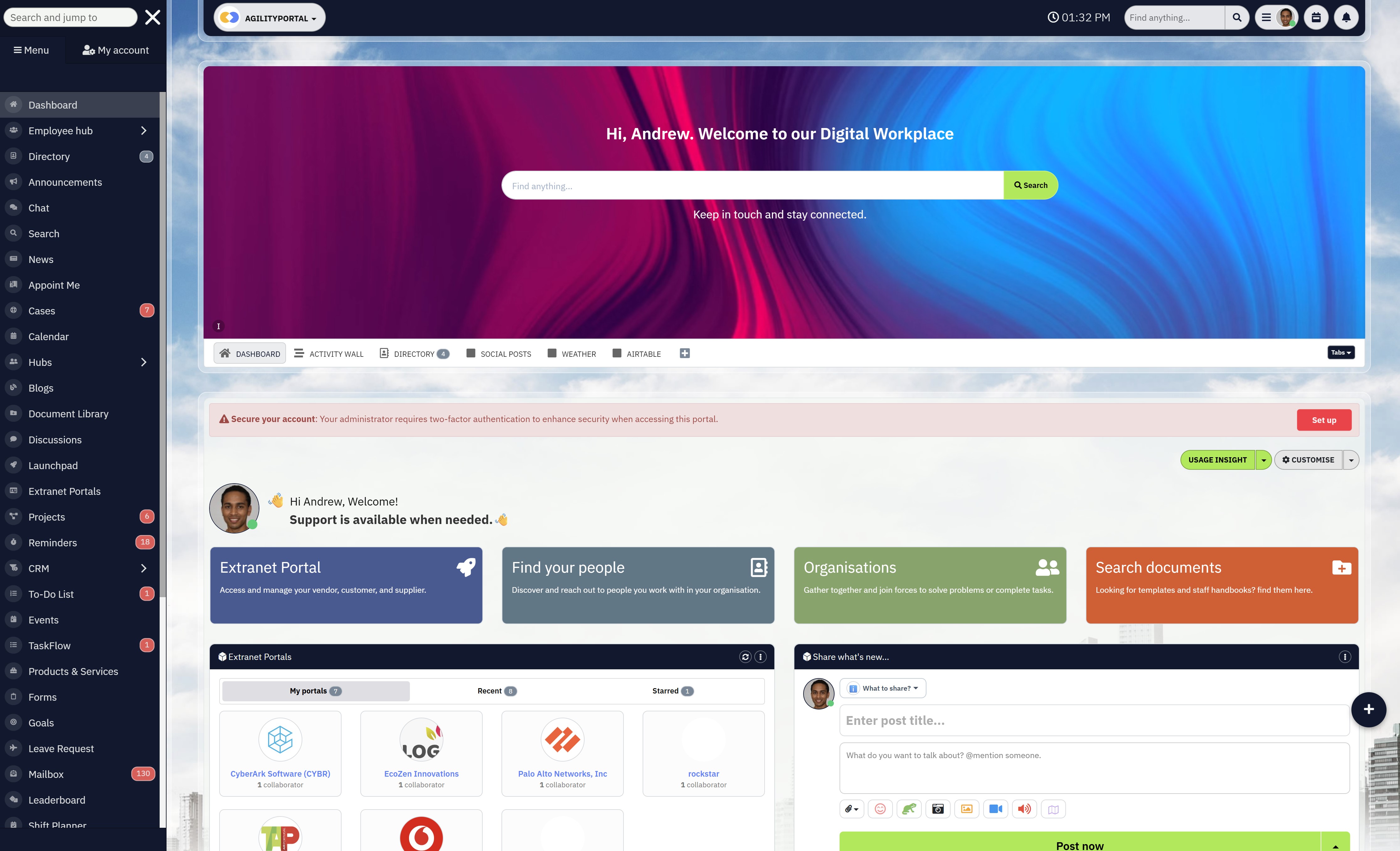
Here's where platforms like AgilityPortal come into play.
If you're offering flexible working, learning budgets, wellbeing initiatives, or financial support — but employees can't find the information, don't know how to access it, or can't see updates clearly — the benefit loses impact.
AgilityPortal helps centralise communication, streamline scheduling, and give HR real visibility into engagement.
Instead of chasing emails or buried policies, employees can access benefits information, company updates, shared calendars, and collaboration tools in one place. That reduces friction. And less friction means less stress.
Technology became a trending benefit because without the right systems, flexibility fails. You can't promise autonomy and then manage everything through scattered emails and disconnected tools.
- Poor systems create stress
- Clear communication tools reduce overload
- Smart scheduling prevents burnout
- Data-driven visibility improves decision-making
- Centralised platforms like AgilityPortal make modern benefits actually usable
At the end of the day, benefits only work when people can access and understand them easily. The right technology turns good intentions into real outcomes.
Which Employee Benefits Deliver the Highest ROI
Let's talk about what leadership really wants to know.
Which employee benefits actually pay off?
Because here's the truth — not every benefit delivers the same return. Some look good on a careers page but don't move the needle. Others directly impact retention, productivity, and long-term performance.
If you're in HR, this is where you justify budget.
If you're an employee, this explains why some benefits matter more than others.
Let's break it down by measurable outcomes.
Reduced Turnover
Turnover is expensive. SHRM estimates that replacing an employee can cost between 50% to 200% of their annual salary, depending on role complexity.
Benefits that consistently reduce turnover:
- Flexible work arrangements
- Career development and learning budgets
- Mental health and wellbeing support
- Caregiver and family benefits
Why? Because these benefits solve real-life friction points. When employees feel supported in maintaining work-life balance, they're significantly less likely to leave.
Gallup data shows that employees who feel their wellbeing is supported are far more engaged — and engaged employees are less likely to look elsewhere.
Higher Engagement Scores
Engagement is directly tied to productivity. Gallup reports that highly engaged teams show:
- 21% higher profitability
- 17% higher productivity
- 41% lower absenteeism
Benefits that improve engagement:
- Personalised benefit options
- Financial wellness support
- Growth and development programmes
When people see that their employer invests in them long-term, they reciprocate with discretionary effort.
This isn't theory. It shows up in performance metrics.
Lower Absenteeism
Burnout and financial stress are two major drivers of unscheduled absence.
The World Health Organization reports that depression and anxiety cost the global economy $1 trillion annually in lost productivity. Much of that shows up as absenteeism and presenteeism.
Benefits that reduce absence:
- Mental health programmes
- Flexible scheduling
- Financial wellness initiatives
When stress drops, attendance improves. It's that straightforward.
Improved Employer Brand
Today's workforce researches employers the same way customers research products.
Companies known for strong employee benefits attract better candidates and reduce time-to-hire.
LinkedIn data consistently shows that organisations with strong employer brands receive more qualified applicants and experience lower recruitment costs.
Trending benefits like flexible work, wellbeing investment, and learning budgets send a clear signal: this company supports work-life balance.
That reputation compounds over time.
ROI Comparison Table
Here's a simplified breakdown of how different benefits impact measurable outcomes:
| Employee Benefit | Reduces Turnover | Boosts Engagement | Lowers Absenteeism | Strengthens Employer Brand |
| Flexible Work Arrangements | High | High | Moderate | High |
| Mental Health Support | High | High | High | Moderate |
| Financial Wellness Programs | Moderate | Moderate | High | Moderate |
| Career Development Benefits | High | High | Low | High |
| Caregiver & Family Support | High | Moderate | Moderate | High |
| Personalised Benefit Packages | Moderate | High | Moderate | High |
If you're deciding where to invest, focus on benefits that:
- Protect work-life balance
- Address real stress drivers
- Support long-term growth
- Improve retention metrics
The highest ROI benefits aren't flashy. They're practical. They reduce friction in employees' lives — and that shows up in performance data.
Companies that track these metrics consistently see the connection between modern employee benefits and sustainable business results.
Common Mistakes Companies Make With Employee Benefits
Let's be blunt for a moment.
Most companies don't fail at offering employee benefits because they lack budget. They fail because they lack execution.
You can have flexible policies, wellbeing programs, and development budgets in place — but if employees don't use them, don't understand them, or don't even know they exist, the impact is zero.
Here are the biggest mistakes I see again and again.
Offering Trendy Benefits Without Adoption
Just because something is trending on LinkedIn doesn't mean it's working internally.
Some organisations announce a new benefit, promote it once, and assume it will drive engagement. But adoption requires visibility, reminders, leadership endorsement, and clear access.
If employees don't know:
- How to access it
- Who qualifies
- Where to find the policy
- Whether leadership actually supports it
…it becomes a "paper benefit."
This is where internal communication gaps show up. Benefits buried in PDFs or scattered across emails don't drive work-life balance — they create confusion.
Not Measuring Impact
You can't improve what you don't measure.
Many HR teams roll out benefits but never track:
- Usage rates
- Engagement impact
- Retention changes
- Absenteeism trends
Without visibility, you're guessing.
If flexible work is offered but productivity drops — why? If mental health support exists but no one uses it — why?
Data tells the real story. Companies that track benefit engagement alongside performance metrics make smarter decisions and adjust faster.
No measurement = no ROI clarity.
Poor Communication and Low Visibility
This is the silent killer.
You might have excellent benefits. But if they're communicated once during onboarding and never reinforced, employees forget.
Internal visibility matters.
Ask yourself:
- Are benefits easy to find in one place?
- Are managers trained to promote them?
- Are updates communicated clearly?
- Can employees access information without chasing HR?
When communication is fragmented, employees assume benefits don't exist or are difficult to access. That perception alone damages trust.
Strong internal communication isn't optional — it's the bridge between offering benefits and actually improving work-life balance.
One-Size-Fits-All Packages
Workforces are diverse. Life stages vary. Priorities differ.
Yet many companies still offer identical benefit packages to everyone.
A graduate employee may value learning budgets and financial wellness support. A working parent may prioritise flexibility and caregiver assistance. A mid-career professional may focus on career mobility.
When benefits don't reflect real-life needs, employees disengage.
Personalisation — even at a basic level — dramatically increases perceived value and adoption.
The Real Issue Behind These Mistakes
Most of these problems come down to two things:
- Lack of visibility
- Weak internal communication systems
It's not that companies don't care. It's that benefits are often managed in silos, communicated inconsistently, and measured poorly.
If employees can't see, access, or understand their benefits easily, those benefits won't improve retention or work-life balance — no matter how generous they are.
The companies getting this right treat employee benefits like a product launch. They communicate clearly, track usage, gather feedback, and adjust.
That's the difference between offering benefits and making them work.
How to Build a Modern Employee Benefits Strategy
Alright — this is where we move from theory to action.
If you're in HR or leadership, you don't need more ideas. You need a clear, practical framework you can actually implement.
Here's a step-by-step way to build a modern employee benefits strategy that improves retention, performance, and genuine work-life balance.
Step 1: Audit Your Current Benefits
Before adding anything new, take a hard look at what you already offer.
Ask yourself:
- Which benefits are actually being used?
- Which ones look good on paper but have low adoption?
- Are there overlaps or outdated policies?
- Do employees even know what's available?
Pull real data. Look at usage rates, retention patterns, exit interview feedback, and absence trends.
You might discover that your most expensive benefit isn't the one employees value most.
Don't guess. Diagnose first.
Step 2: Survey Employees Properly
Here's where many companies get it wrong — they assume they know what employees want.
Ask them directly.
Run a structured survey that explores:
- What benefits they value most
- What currently causes stress in their worklife
- Where they feel unsupported
- What would most improve their work-life balance
Keep it anonymous. Encourage honesty.
You'll likely find that small, targeted changes can create more impact than expensive, broad initiatives.
And remember — different departments or life stages may have different priorities. Don't treat the workforce as one uniform group.
Step 3: Align Benefits to Business Goals
This is critical.
Benefits should support business performance — not compete with it.
For example:
- If retention is your main challenge, focus on flexibility, growth, and wellbeing.
- If productivity is slipping, look at workload visibility, scheduling systems, and burnout indicators.
- If hiring is slow, strengthen benefits that enhance employer brand.
Every benefit should answer one question:
How does this improve both employee experience and organisational outcomes?
When benefits align with business objectives, leadership support becomes much easier.
Step 4: Use Technology to Manage and Track
This is where execution either succeeds or fails.
You need visibility.
Modern platforms like AgilityPortal allow you to centralise communication, share policy updates, manage flexible schedules, track engagement, and measure adoption — all in one place.
Without technology, benefits live in spreadsheets, email threads, and disconnected systems. That creates confusion.
With the right system, you can:
- Monitor usage trends
- Communicate updates clearly
- Gather employee feedback
- Track engagement alongside performance data
If you can't see it, you can't improve it.
Step 5: Review and Optimise Quarterly
Benefits strategy is not "set and forget."
Workforces evolve. Business conditions change. Employee expectations shift.
Set a quarterly review process where you:
- Analyse usage data
- Review retention and absence metrics
- Collect feedback
- Adjust underperforming benefits
Small refinements over time outperform massive overhauls every few years.
Consistency wins.
Building a modern employee benefits strategy isn't about copying competitors.
It's about:
- Understanding your workforce
- Aligning support with real needs
- Backing decisions with data
- Using technology to maintain visibility
- Reviewing regularly
When done properly, benefits stop being an expense line item — and start becoming a performance lever that protects work-life balance while driving sustainable results.
If you'd like, next we can create a short executive checklist version of this section that HR leaders can download or screenshot.
So What Are the Real Benefits of Modern Employee Benefits?
Let's zoom out for a second.
We've talked about trends. We've looked at ROI. We've covered strategy. But let's answer the simple question both employees and HR managers are thinking:
What are the actual benefits of strong employee benefits?
Not the marketing version. The real-world impact.
Higher Retention and Lower Hiring Costs
When employees feel supported, they stay longer. It's that straightforward.
Replacing staff is expensive — recruitment fees, onboarding time, lost productivity, training costs. Strong employee benefits reduce voluntary turnover because people don't leave environments where they feel valued and supported.
If your benefits genuinely improve work-life balance, you're not just keeping people — you're keeping experience and institutional knowledge.
Improved Productivity Without Burnout
There's a myth that pushing people harder gets better results.
In reality, sustainable performance wins.
Benefits like flexible scheduling, mental health support, and learning budgets help employees manage energy — not just time. When stress is reduced, focus improves. When people aren't exhausted, they make better decisions.
Modern employee benefits aren't about working less. They're about working better.
Stronger Engagement and Morale
Engaged employees don't just complete tasks — they contribute ideas, collaborate better, and take ownership.
When a company invests in benefits that reflect real-life needs, it sends a message: "We see you as a human, not just a job title."
That perception builds trust. And trust drives engagement.
Better Employer Reputation
Today, employer brand spreads fast.
Candidates research companies. Employees leave reviews. Word travels.
Organisations known for supporting work-life balance and offering meaningful employee benefits attract stronger candidates and reduce time-to-hire.
Reputation compounds. And in competitive markets, that edge matters.
Healthier Workplace Culture
Benefits shape culture more than slogans ever will.
If flexibility is supported, culture becomes outcome-driven.
If mental health is prioritised, culture becomes psychologically safer.
If growth is funded, culture becomes future-focused.
Benefits are behavioural signals. They show what a company truly values.
Strong employee benefits are not just HR initiatives. They are business strategy.
For employees, they mean:
- Less stress
- More flexibility
- Clearer growth opportunities
- Real support for maintaining work-life balance
For HR managers and leaders, they mean:
- Higher retention
- Better engagement metrics
- Stronger employer brand
- Sustainable performance
The companies getting ahead in 2026 aren't just increasing salaries.
They're redesigning the employee experience — and benefits are at the centre of that shift.
If you'd like, we can now close the article with a powerful conclusion that ties everything together and drives action.
The Future of Work Life Balance and Employee Benefits
The future of work life balance and employee benefits isn't about adding more perks — it's about redesigning how work fits into real life.
We're moving away from fixed, one-size-fits-all policies toward flexible, personalised benefit models that adapt as employees' needs change. Careers are more dynamic, and benefits will need to evolve just as quickly.
Work life balance will also become measurable.
Instead of talking about wellbeing in broad terms, companies will track workload patterns, burnout risks, engagement data, and benefit usage to spot issues early. Balance will shift from being a cultural slogan to a performance metric tied directly to retention and productivity.
Technology will play a major role in this shift. Automation and smarter systems will reduce repetitive tasks and admin overload, giving employees more time for meaningful work.
At the same time, mental health support will become embedded into workplace design, with clearer boundaries and structured recovery built into operations.
Most importantly, time is becoming the new currency.
Flexible schedules, compressed weeks, and expanded leave options are gaining traction because employees value control over their time as much as salary.
Companies that recognise this — and design benefits around sustainable performance — will define the next generation of work.
Wrapping up
Let's bring this home.
Employee benefits are no longer administrative add-ons. They are strategic levers.
If you're still treating benefits as a checklist item handled once a year during renewal season, you're already behind. The workforce has evolved. Expectations have shifted. And the companies that recognise this are pulling ahead.
For employees, modern benefits mean something simple but powerful — real support. Support for flexibility. Support for mental health. Support for financial stability. Support for growth. In short, support for genuine work-life balance.
For HR managers and leadership teams, this is about more than generosity. It's about performance and retention.
Work-life balance isn't a soft concept. It's a retention engine. When employees feel supported, they stay longer. They engage more. They perform better. They speak positively about the company. That momentum compounds over time.
The organisations winning talent in 2026 aren't necessarily the ones paying the highest salaries. They're the ones adapting fastest. They're modernising their employee benefits, using data to refine them, and communicating them clearly.
So here's the real question:
Are your current benefits designed for the workforce of yesterday — or the workforce you're trying to attract and retain tomorrow?
Now is the time to evaluate, measure, and modernise.
Because companies that adapt don't just keep up.
Frequently Asked Questions About Employee Benefits and Work Life Balance
What are the most popular employee benefits in 2026?
Right now, the most popular employee benefits aren't just about salary or insurance — they're about flexibility and wellbeing.
Employees consistently rank flexible schedules, hybrid work options, Employee Assistance Program (EAP) access, and strong employee recognition programs among the top priorities.
Search trends around perks at work, employee rewards programs, and employee assistance program show strong interest because people want practical support, not just policies on paper.
Financial-related benefits like ESOP schemes and long term disability insurance are still important, but flexibility and wellbeing are driving the biggest engagement.
In short, the benefits gaining traction are the ones that directly improve work life balance and reduce stress.
How do employee benefits improve work life balance?
Strong employee benefits reduce friction in daily life. When companies offer flexibility, mental health support through an EAP program, or structured employee recognition programs, they remove common stress triggers.
For example, flexible scheduling supports work and life balance by allowing employees to manage school runs, appointments, or personal energy cycles. Financial wellness benefits reduce money-related anxiety. Recognition programs improve morale and motivation.
Real work life balance examples include:
- Hybrid work arrangements
- Four-day workweek trials
- Mental health days
- Financial wellbeing initiatives
- Career development budgets
When benefits are practical and accessible, they help employees protect both productivity and wellbeing.
Are flexible benefits better than traditional benefits?
Traditional benefits like health insurance and pension schemes are essential — but they're no longer enough on their own.
Flexible benefits allow employees to choose what matters most to them.
A younger employee might prioritise an ESOP or learning budget. A working parent may focus on flexible hours. Someone focused on financial stability may value long term disability insurance.
This shift reflects the growing demand for worklife flexibility and personalised support. One-size-fits-all packages don't reflect modern realities. Flexibility increases satisfaction because it aligns benefits with real-life needs.
The data supports this: organisations that personalise benefits often see stronger employee retention and higher engagement.
How can small businesses compete with large companies on benefits?
Small businesses don't need massive budgets to compete.
They can win on:
- Flexibility
- Culture
- Direct recognition
- Transparent communication
Offering flexible schedules, strong employee recognition programs, and accessible EAP support can be just as powerful as expensive corporate packages.
Smaller organisations often move faster. They can implement work life blending models or results-focused environments more easily than large enterprises tied to rigid systems.
Employee retention is often higher in companies where culture feels human and responsive — and that doesn't require a global HR budget.
What employee benefits matter most to Gen Z and Millennials?
Younger generations are prioritising growth, purpose, and flexibility.
They actively search for terms like work life balance coach, life balance coach, and finding balance in life because they want guidance and support, not burnout.
For Gen Z and Millennials, top priorities include:
- Career development funding
- Flexible or remote work
- Strong employee assistance program access
- Meaningful employee rewards programs
- Transparent growth pathways
They also value ownership opportunities like ESOP structures and clear recognition systems.
The biggest takeaway? Younger employees don't separate career success from personal wellbeing. For them, work life balance isn't optional — it's expected.
If there's one consistent pattern across all these questions, it's this: modern employee benefits are directly tied to performance, engagement, and long-term retention. Companies that understand this shift — and act on it — are the ones attracting and keeping top talent.
AI Summary
- Modern employee benefits are no longer optional perks but strategic drivers of retention, engagement, and sustainable work life balance.
- Gallup reports global engagement at 23%, while Deloitte finds nearly 70% of professionals feel employers aren’t doing enough to prevent burnout — highlighting the urgency for smarter benefits.
- Flexible work arrangements, mental health support, financial wellness programs, and personalised benefits consistently deliver higher employee retention and improved productivity.
- Employee Assistance Programs (EAP), recognition initiatives, and adaptive benefit models reduce absenteeism and strengthen employer brand competitiveness.
- Work life balance is shifting from a cultural slogan to a measurable performance metric tied directly to engagement, workload visibility, and benefit adoption data.
- The future of employee benefits will focus on flexibility, time autonomy, embedded wellbeing strategies, and technology-enabled visibility to prevent burnout before it impacts performance.
Most Popular Posts

Effective communication among team members is vital for the productivity and success of any organization. Surprisingly, 60% of companies lack a long-term internal communication strategy, which p...


Businesses thrive on communication for efficiency, productivity and accomplishment. When the right information is passed from the right designation in the organization, it promotes positivity an...

Categories
Blog
(3208)
Business Management
(395)
Employee Engagement
(235)
Digital Transformation
(218)
Growth
(150)
Intranets
(142)
Internal communications
(106)
Remote Work
(68)
Sales
(53)
Collaboration
(53)
Customer Experience
(33)
Culture
(30)
Knowledge Management
(29)
Project management
(29)
Leadership
(20)
Comparisons
(9)
News
(1)

Related Posts

The Amazon advertising agency landscape has changed dramatically over the past two years. With the introduction of AI-powered shopping experiences, Amazon Rufus, advanced attribution reporting, Sponsored Brands Video, and Amazon DSP enhancement...

Why do your remote staff still struggle to work together when they have the apps, laptops and access they need? Often, the problem is the small gaps between people and information. Someone can't open the latest document. An approval gets buried...

An AI coworker could help solve a problem most businesses know well: too much knowledge work and too little time. Employees spend their day searching for information, preparing updates and answering the same questions. Having a system tha...

When is the right time to upgrade to a self-hosted AI agent—and how do you know whether switching will solve your team's problems or create more work? Picture an employee asking your AI assistant where to find the latest leave policy. It cannot...

Could an AI coworker take some of the busywork off your team's plate? The best AI coworkers promise to help employees research topics, prepare documents, find information and handle recurring tasks. But choosing one means looking beyond an impressive...

Jill Romford
I am a digital nomad, lover of exploring new places and making friends.
I love to travel and I love the internet. I take pictures of my travels and share them on the internet using Instagram.
Traveler, entrepreneur, and community builder. I share my insights on digital marketing and social media while inspiring you to live your fullest life.
Ready to learn more? 👍
One platform to optimize, manage and track all of your teams. Your new digital workplace is a click away. 🚀
Free for 14 days, no credit card required.