Insight Blog
Agility’s perspectives on transforming the employee's experience throughout remote transformation using connected enterprise tools.
56 minutes reading time
(11281 words)
2026 Intranet Buyers Guide: Choosing a Platform That Delivers Real Value

2026 Intranet Buyers Guide: Choosing a Platform That Delivers Real Value
Choose the right intranet platform with this 2026 buyer’s guide. Learn how to evaluate solutions that improve communication, collaboration, and real business value.
2026 Intranet Buyers Guide: Choosing a Platform That Delivers Real Value

Choosing the right intranet platform can feel a bit overwhelming, um… especially when every vendor claims their solution will transform how your company communicates and collaborates.
The demos look polished, the feature lists seem endless, and lately it feels like every product suddenly has AI built into it.
On paper, everything sounds impressive.
But hmm… once many organizations actually roll out their intranet, the reality can be very different.
Employees still struggle to find information, documents remain scattered across multiple systems, and the platform that looked great during the demo slowly turns into just another tool people avoid using.
In fact, research from McKinsey found that employees can spend up to 28% of their workweek searching for information across disconnected systems.
When an intranet contributes to that problem instead of solving it, productivity and engagement take a hit.
Read more: Intranet Best Practices | UPDATED 2026 | A Complete Guide
28%
of the workweek
Research from McKinsey found that employees can spend up to 28% of their workweek searching for information across disconnected systems. When an intranet adds to that confusion instead of solving it, both productivity and employee engagement suffer.
Source: McKinsey Global Institute
And here's the tricky part — choosing the wrong intranet isn't just inconvenient. Ah… it can be expensive and difficult to reverse.
Once a platform is implemented, companies often invest months of effort into migration, training, and internal adoption.
Replacing it later can mean repeating that entire process again, which is exactly why many organizations end up stuck with systems that no one really likes using.
The issue usually isn't the idea of an intranet itself — it's how organizations evaluate the options.
Too many buyers focus heavily on feature lists and vendor promises instead of asking the deeper questions that determine whether a platform will actually succeed inside the business.
This intranet buyers guide is designed to help you take a more practical approach.
Rather than getting distracted by flashy demos or buzzwords, we'll walk through what really matters when choosing an intranet platform — usability, employee adoption, integrations, governance, and the overall impact on how work gets done.
By the end of this guide, you'll have a clearer framework for evaluating intranet solutions and, hmm… choosing a platform that delivers real value instead of becoming another underused system inside your organization.
Key Takeaways
- An intranet buyers guide helps organizations evaluate modern intranet platforms that centralize communication, documents, and collaboration into a single digital workplace.
- Many businesses struggle with fragmented tools and scattered information, which leads to employees wasting time searching across multiple systems.
- Modern intranet platforms provide a unified employee experience with personalized content, powerful search, and integrations with workplace tools.
- Key capabilities to evaluate include internal communication tools, knowledge management, enterprise search, mobile access, integrations, and security governance.
- Organizations comparing intranet platforms such as AgilityPortal, SharePoint, Staffbase, Workvivo, MangoApps, and Bitrix24 should prioritize usability, scalability, and employee adoption.
- The right intranet platform improves productivity, strengthens communication, and creates a connected digital workplace that supports long-term business growth.
The Decision Many Intranet Buyers Overlook
Hmm… here's something most organizations don't realize when they start researching intranet software.
Choosing an intranet platform isn't just selecting another workplace tool.
It's actually a structural decision that shapes how information flows across your entire company.
And um… that's where many buyers underestimate the impact.
An intranet sits at the center of communication, documents, knowledge sharing, and collaboration. If that foundation is weak, everything built on top of it becomes harder — employees struggle to find information, teams create workarounds, and departments start relying on disconnected tools.
In fact, research from IDC suggests that knowledge workers spend nearly 2.5 hours per day searching for information across different systems.
When an organization's intranet fails to act as a true information hub, that time quickly turns into lost productivity.
Why This Decision Is Harder Than It Looks
At first glance, most intranet platforms appear similar.
They all promise:
- better internal communication
- improved collaboration
- centralized document management
- stronger employee engagement
So it's easy to assume the differences between platforms are minor.
Ah… but the real difference isn't always in the features — it's in how the platform is structured and how employees actually use it.
For example, some intranet systems are built primarily as document repositories, while others are designed as digital workplace platforms that connect communication, workflows, and collaboration in one place.
That structural difference affects everything from employee adoption to long-term scalability.
Here's the uncomfortable truth many organizations discover too late.
Even the most feature-rich intranet can fail if employees don't use it.
This is where many buying decisions go wrong. Companies evaluate platforms based on feature lists, vendor presentations, and technical requirements — but they underestimate the importance of usability, search experience, and daily employee workflows.
And hmm… when adoption drops, the intranet slowly becomes just another forgotten system.
That's why the most successful organizations approach intranet selection differently. Instead of asking "Which platform has the most features?" they ask a much more important question:
"Which platform will employees actually use every day?"
Because when the structural foundation is right, the intranet stops being just software — it becomes the central hub that connects the entire organization.
Related Intranet & Digital Workplace Guides You Should Explore Next
If you're evaluating intranet software for large enterprises, improving internal communication, or building a modern digital workplace, these practical guides will help you explore intranet strategy, employee engagement, and platform best practices in more detail.
- Intranet Games A Complete Guide to Digital Workplace Gamification
- Intranet Style Guide
- Intranet Communications Plan
- Intranets vs Extranets
- Intranet Security Best Practices
- Best Intranet Hosting Platforms
- Cloud Based Intranets for Employee Engagement
- How to Build an Intranet with Open Source Software
- Intranet Based Training
- A Simple Intranet Software Guide
- 5 Things That Define Your Company’s Intranet Success
- 11 Ways an Intranet Social Media Portal Will Make Your Company a Better Place to Work At
- What Is an Employee Intranet
- Social Intranet Software
So Why Do Companies Invest in Intranet Platform?

So Why Do Companies Invest in Intranet Platform?
One of the most common questions businesses ask when researching intranet software is simple: why do companies invest in an intranet platform at all?
In many organizations, information is scattered across emails, shared drives, chat tools, and multiple business applications. Employees often spend unnecessary time trying to locate documents, track down updates, or determine which version of a file is correct.
This is why many decision-makers begin searching for an intranet guide like this one—to understand how a modern intranet can bring communication, knowledge, and collaboration into a single, structured environment.
When implemented properly, an intranet platform becomes the central hub of the digital workplace, helping employees access information quickly, stay connected to company updates, and collaborate more effectively.
Below are some of the key reasons organizations invest in intranet platforms.
- Improve Internal Communication
- Reduce Information Silos
- Support Hybrid and Remote Work
- Quick access to tools and documents
- For productivity and engagement reasons
Improve Internal Communication
Internal communication is often one of the first challenges organizations try to solve.
Important announcements can easily get buried in email threads, teams may rely on different messaging tools, and leadership updates don't always reach the entire workforce.
This leads to confusion, missed information, and reduced engagement.
A modern intranet provides a central communication channel where employees can stay informed about company news and updates.
Typical communication features include:
- company-wide announcements and news feeds
- leadership messages and internal updates
- employee engagement features such as comments, polls, and recognition
- targeted communications for specific departments or locations
Instead of relying on scattered communication tools, employees can access updates from a single, reliable platform.
Reduce Information Silos
Information silos are another major issue in many organizations.
Documents are often stored in multiple systems, knowledge is trapped in email conversations, and employees frequently waste time searching for information they need to complete their work.
A well-designed intranet helps solve this problem by acting as a centralized knowledge hub.
Key capabilities often include:
- centralized document storage
- searchable knowledge bases and internal resources
- structured policies, procedures, and documentation
- version-controlled document management
Research from McKinsey & Company shows that employees can spend up to 28% of their workweek searching for information across disconnected tools and systems.
By organizing company knowledge in one place, intranet platforms can significantly reduce that inefficiency.
Support Hybrid and Remote Work
The shift toward hybrid and remote work has made intranet platforms even more important.
When employees work across different locations, time zones, or departments, maintaining clear communication and collaboration becomes more challenging.
Without a central workspace, teams may rely on multiple disconnected tools to stay aligned.
Modern intranet platforms provide a shared digital workplace that allows employees to collaborate regardless of location.
These platforms typically support:
- mobile access for remote and frontline employees
- collaboration spaces for teams and departments
- shared resources, calendars, and company updates
- integrated tools that connect communication and workflows
By centralizing communication and knowledge, the intranet helps organizations maintain alignment and productivity across distributed teams.
Free Intranet Guide
How To Get Your Intranet Off The Ground
Launching an intranet can feel overwhelming. Many organizations struggle with adoption, planning, and choosing the right platform. This practical ebook explains how to launch a successful intranet project and build a digital workplace employees actually use.
- Step-by-step intranet launch strategy
- Common intranet adoption mistakes to avoid
- How to improve internal communication and engagement
- Build a digital workplace that employees actually use
Download the Free Ebook
Instant access • No credit card required
Essential Features to Evaluate in a Modern Intranet Platform
Choosing the right intranet is not just about comparing long lists of features.
The real goal is to identify the capabilities that improve how employees communicate, collaborate, and access information every day.
A well-designed intranet should simplify work, reduce friction between teams, and act as the central hub for knowledge and communication.
This intranet guide highlights the core features organizations should evaluate when selecting a modern intranet platform.
Before comparing detailed features, organizations should first determine whether a platform meets a few baseline experience requirements. If an intranet cannot demonstrate these fundamentals, deeper evaluation usually becomes irrelevant.
A modern intranet should function as the central digital hub for communication, knowledge, and employee services. Two experience principles should act as early filters during the evaluation process.
Employees should interact with a consistent interface across devices and channels. Communication, documents, tools, and services should feel connected rather than scattered across multiple systems.
If employees must constantly decide which tool to open, where information is stored, or how systems relate to each other, the intranet is not fulfilling its purpose.
Employees should automatically see information relevant to their role, department, or location. Content, resources, and recommendations should adapt to the employee without requiring manual configuration.
Effective personalization reduces information overload and helps employees quickly find what matters to them.
Where Intranet Platforms Begin to Differ
Once a platform meets these baseline standards, the evaluation becomes more detailed.
This is where vendors begin to separate themselves based on capability, scalability, and long-term value.
When reviewing an intranet platform as part of an intranet guide, consider whether the following core capabilities exist and how effectively they support the organization.
- Communication and employee engagement: Audience-based announcements, company news publishing, flexible content layouts, and employee engagement tools such as comments, reactions, or surveys. The platform should allow internal communications teams to manage updates at scale without constant IT support.
- Knowledge management: Clear content ownership, approval workflows, governance policies, and lifecycle management for documentation. Teams should be able to maintain knowledge responsibly without creating bottlenecks.
- Enterprise search: Advanced search capabilities that allow employees to find information quickly. Search should support natural language queries, respect permission controls, and continuously improve relevance.
- Employee services: Self-service workflows integrated with HR, IT, or operational systems. Employees should be able to complete common tasks—such as submitting requests or accessing policies—directly within the intranet.
- Frontline workforce support: Mobile-first access for employees who do not work at desks. The experience should support role-based communication, location-based updates, and offline access when needed.
- Integration and extensibility: Strong integrations with workplace tools such as Microsoft 365, Google Workspace, HR systems, and collaboration platforms. APIs and configuration options should allow the intranet to extend across the broader technology ecosystem.
- Security and governance: Built-in security controls such as role-based permissions, encryption, compliance standards, and accessibility requirements. Governance should be embedded into the platform rather than added as an afterthought.
These capabilities form the core operational foundation of a modern intranet platform.
Organizations that evaluate intranet solutions through this lens are far more likely to select a system that supports long-term adoption and meaningful business value.
What Questions Every Intranet Buyer Should Ask?
Selecting the right platform requires more than comparing feature lists.
Buyers should ask practical questions that reveal how well a platform will perform in real business environments.
These questions help determine whether the intranet will actually deliver value after implementation, not just look impressive during a product demonstration.
Questions Around Usage, Will Employees Actually Use It?
One of the biggest reasons intranet platforms fail is poor adoption.
Even powerful systems can become ineffective if employees avoid using them.
A successful intranet should be intuitive, accessible, and easy for employees to navigate without training.
When evaluating a platform, consider:
- User interface simplicity – Is the platform easy to understand and navigate?
- Adoption potential – Does the design encourage employees to use it regularly?
- Onboarding experience – How easy is it for employees to get started and learn the system?
A modern intranet should feel like a natural part of the employee workflow rather than another system employees must remember to use.
Questions Around Scaling, Can It Scale With the Business?
Organizations evolve over time.
The intranet platform chosen today must still meet the company's needs as it grows, expands into new locations, or adds more employees.
Important scalability factors include:
- User growth – Can the platform support a larger workforce without performance issues?
- Departmental workspaces – Does it support spaces for teams, departments, or regions?
- System integrations – Can it integrate with new tools and business systems as the technology stack evolves?
A scalable intranet ensures that companies do not need to replace the platform as the organization grows.
Questions Around Management, How Easy Is It to Manage?
Intranet platforms should empower internal teams to manage content and users without relying heavily on IT support.
Systems that are difficult to administer often become outdated or poorly maintained.
Evaluation should include:
- Administrative controls – Are there clear tools for managing users, content, and permissions?
- Role-based permissions – Can administrators control who can access or edit information?
- Content governance – Does the platform support approval workflows and structured content management?
Strong governance features help ensure the intranet remains organized, secure, and relevant over time.
Questions Around Cost, What Is the Total Cost of Ownership?
Pricing for intranet platforms extends beyond monthly subscription costs.
Buyers should consider the full investment required to implement and maintain the platform.
Key cost factors include:
- Licensing costs – How pricing scales with employee numbers
- Implementation requirements – Setup, configuration, and content migration
- Training and ongoing maintenance – Resources required to manage and support the platform
Understanding the total cost of ownership helps organizations select an intranet solution that remains sustainable in the long term rather than becoming an unexpected operational expense.
Additional Questions Intranet Buyers Should Ask Vendors
Beyond core features and capabilities, buyers should also ask forward-looking questions that reveal how well an intranet platform will evolve over time.
These questions help organizations understand whether the platform can support long-term digital workplace strategies without introducing unnecessary complexity.
When evaluating solutions as part of your intranet guide research, consider asking vendors the following:
- How will AI capabilities enhance the platform without adding unnecessary tools or disrupting existing workflows?
AI should improve search, knowledge discovery, and productivity—not force employees to adopt entirely new systems. - How does the platform maintain consistent governance and access control as automation and AI features expand?
Permissions, data security, and compliance should remain stable even as new automation capabilities are introduced. - How does the platform balance innovation with usability and employee experience?
New features should improve productivity while keeping the platform intuitive and easy for employees to navigate. - Will future updates simplify employee workflows or introduce additional processes employees must learn?
The goal of an intranet should always be to reduce complexity, not increase it. - How does the platform adapt to evolving compliance, security, and accessibility requirements?
Organizations should ensure the platform supports regulatory standards and accessibility best practices as requirements change. - How does the vendor approach AI assistants or digital agents, and how will their role evolve over time?
Vendors should provide a clear roadmap for how intelligent assistants will support employees while maintaining responsible governance. - Which capabilities allow HR and internal communications teams to manage content independently, and which require IT support?
A modern intranet should empower non-technical teams to manage communication, content, and workflows without constant IT involvement.
These questions help buyers evaluate whether an intranet platform is built not only for today's needs but also for the future of the digital workplace.
Common Mistakes When Choosing an Intranet Platform
Buying an intranet platform is a strategic decision that affects communication, knowledge sharing, and employee productivity across the entire organization.
However, many companies approach the evaluation process in a way that leads to poor adoption or limited long-term value.
Understanding the most common mistakes can help organizations make smarter decisions when researching intranet software, employee intranet platforms, and digital workplace solutions.
Below are some of the most frequent issues companies encounter when selecting modern intranet software.
Choosing an Intranet Based on Features Alone
One of the biggest mistakes organizations make is comparing intranet platforms purely based on feature lists.
Vendors often highlight long lists of capabilities—document management, news feeds, collaboration tools, integrations, and analytics.
While these features are important, they do not guarantee that the platform will improve the employee digital workplace experience.
A platform with dozens of features may still fail if those features are difficult to use or poorly integrated into everyday workflows.
Instead of focusing only on functionality, buyers should also evaluate:
- usability and interface design
- how employees interact with the platform daily
- whether the intranet simplifies work or adds complexity
- how easily employees can find information
When organizations evaluate intranet software for businesses through the lens of real employee usage, they are more likely to choose a platform that delivers lasting value.
Ignoring Employee Adoption
Even the most advanced intranet platform will fail if employees do not actively use it.
Many organizations focus heavily on technical requirements during the buying process but overlook the importance of employee adoption and engagement.
A successful company intranet platform should be easy for employees to navigate and should naturally become part of their daily workflow.
Important adoption factors include:
- intuitive navigation and interface
- mobile accessibility for remote and frontline workers
- personalized content based on role or department
- fast search functionality for finding documents and resources
Modern employee intranet solutions should make it easy for workers to access the information they need without requiring extensive training.
Underestimating Intranet Implementation Effort
Another common challenge occurs during implementation.
Many companies assume an intranet can be deployed quickly with minimal preparation.
In reality, launching a successful corporate intranet platform often involves several steps:
- migrating existing documents and knowledge resources
- restructuring internal content and navigation
- integrating with existing business systems
- training employees on the new platform
Without a clear implementation plan, organizations may experience delays or struggle with early adoption.
Planning for these steps early helps ensure the intranet rollout supports the organization's long-term digital workplace strategy.
Selecting Tools That Don't Integrate With Existing Systems
Modern workplaces rely on many different tools, including email platforms, HR systems, project management tools, and document storage systems.
If the intranet does not integrate well with these existing systems, it can become another isolated tool rather than a central hub for collaboration.
When evaluating intranet platforms for businesses, buyers should consider integration capabilities such as:
- Microsoft 365 or Google Workspace connectivity
- HR system and employee directory integration
- document storage and file collaboration tools
- APIs or connectors for extending platform functionality
A well-integrated digital workplace platform allows employees to access tools and information from one place, improving productivity and reducing the need to switch between multiple systems.
Avoiding these mistakes helps organizations select an intranet platform that supports communication, knowledge sharing, and employee productivity for years to come.
A well-chosen solution becomes more than just software—it becomes the foundation of a connected digital workplace.
How to Evaluate Intranet Platforms Step-by-Step
Choosing the right intranet platform does not have to be complicated.
The key is to focus on what your organization actually needs instead of getting distracted by long feature lists or impressive demos. A good evaluation process helps you look at how the intranet will work in real life for employees.
The following four steps will help you evaluate intranet platforms in a clear and practical way.
Step 1 — Define Your Business Goals
The first step is understanding why your organization wants an intranet platform.
Many companies rush into buying software without clearly defining the problems they are trying to solve. When that happens, the intranet often becomes underused because it was not built around real employee needs.
Take time to identify the biggest challenges employees face.
Some companies struggle with poor communication between departments, while others deal with scattered documents or outdated company policies that are difficult to locate.
Common intranet goals include:
- improving internal communication across teams
- creating a central knowledge base for company documents
- supporting collaboration between departments
- connecting remote and frontline employees
- reducing time spent searching for information
When these goals are clear, it becomes much easier to evaluate which intranet platform actually supports your organization's priorities.
Step 2 — Identify Your Core Requirements
Once you understand your goals, the next step is to identify the essential features your intranet must provide.
Every organization is different, so the platform should support your specific workflows, communication style, and operational needs.
Many companies make the mistake of focusing only on advanced features. In reality, the most important capabilities are often the basic ones that employees rely on every day.
Core intranet requirements often include:
- document management and file sharing
- company news and internal announcements
- employee directories and team profiles
- powerful search for finding information quickly
- integrations with tools like Microsoft 365 or Google Workspace
- secure permissions and access control
By clearly defining these requirements early in the process, organizations can narrow down vendors that truly match their needs.
Step 3 — Compare Different Intranet Vendors
With your requirements defined, the next step is to start evaluating different intranet software vendors.
This stage involves researching platforms, reviewing product demonstrations, and understanding how each solution supports real workplace scenarios.
Instead of focusing only on marketing claims, pay attention to how the platform performs in practical situations. Look for evidence that the system works well in organizations similar to yours.
When comparing intranet vendors, consider:
- product demos that show real use cases
- customer reviews and industry feedback
- case studies from organizations using the platform
- ease of use and employee experience
- scalability as your company grows
This stage helps you separate platforms that look good in presentations from those that actually perform well in everyday use.
Step 4 — Test the Platform With Real Employees
Before making a final decision, it is important to test the intranet with a small group of employees.
This step is often called a pilot program or trial rollout.
The goal is to see how employees interact with the platform in real working conditions. Their feedback will reveal whether the intranet is easy to use and whether it truly improves productivity.
During this stage, observe how employees:
- navigate the intranet interface
- search for documents and company information
- interact with communication tools and announcements
- collaborate with teams or departments
- respond to the overall user experience
If employees naturally begin using the platform without much guidance, it is a strong indicator the intranet will succeed when deployed across the organization.
Intranet vs Digital Workplace Platforms: What Buyers Need to Know
When researching solutions in an intranet guide, many buyers come across another term: digital workplace platform.
At first glance, the two concepts seem very similar, and many vendors even use the terms interchangeably.
However, there is an important difference.
An intranet typically focuses on internal communication and information sharing, while a digital workplace platform connects communication, collaboration tools, business systems, and workflows into a broader productivity environment.
Understanding the distinction can help organizations choose the right type of platform for their long-term needs.
Key Differences Between Intranet and Digital Workplace Platforms
Although both platforms support internal communication and knowledge sharing, their scope is different.
| Intranet | Digital Workplace Platform |
| Primarily focused on internal communication | Designed as a full workplace productivity ecosystem |
| Central hub for company news and announcements | Integrates multiple business applications and workflows |
| Document storage and knowledge management | Collaboration tools, automation, and workflow integration |
| Used mainly for sharing information | Used for completing work and coordinating tasks |
| Limited integrations in traditional systems | Deep integrations with business systems and productivity tools |
In simple terms, an intranet helps employees find information, while a digital workplace helps employees get work done.
Work environments have changed significantly over the past decade.
Hybrid work, remote teams, and increasing digital collaboration have made it more important than ever for employees to access tools and information from one place.
Instead of managing multiple disconnected systems, organizations are increasingly looking for platforms that unify their digital tools.
Digital workplace platforms help address challenges such as:
- scattered communication across multiple tools
- employees struggling to find documents or information
- disconnected business systems and workflows
- poor collaboration between teams and departments
By connecting communication, knowledge, and productivity tools, these platforms create a more streamlined and efficient digital work environment.
For some companies, a traditional intranet may still meet their needs—especially if the primary goal is to centralize communication and documents.
However, many organizations now prefer platforms that combine intranet capabilities with broader digital workplace functionality.
When evaluating solutions in this intranet guide, consider whether your organization needs:
- a communication and knowledge hub
- deeper integrations with workplace tools
- collaboration spaces for teams and departments
- automated workflows and employee services
Platforms that combine these capabilities often provide greater long-term value because they support both information sharing and everyday work activities.
Ultimately, the best solution is the one that aligns with how your employees work and helps create a more connected, productive workplace.
Top 6 Intranet Platforms Businesses Commonly Evaluate
When organizations begin researching intranet software or a digital workplace platform, they often compare several well-known solutions before making a decision.
Each platform offers different strengths depending on company size, communication needs, and how teams collaborate.
Below are some of the most commonly evaluated intranet platforms and what they are generally known for in the market.
Comparison of Popular Intranet Platforms
When researching intranet software comparison options, in this intranet guide, many organizations compare several well-known platforms before making a final decision.
Each solution has its own strengths depending on business size, communication needs, and how teams collaborate.
| Platform | Best Known For | Key Strengths | Potential Limitations |
| AgilityPortal - Organizations wanting a flexible digital workplace platform that combines intranet, communication, and collaboration | Digital workplace and modern intranet platform | Unified communication, knowledge sharing, collaboration spaces, employee engagement tools, strong integrations | Smaller brand awareness compared to some enterprise vendors |
| Microsoft SharePoint - Large enterprises already heavily invested in Microsoft tools | Enterprise document management and Microsoft ecosystem integration | Deep integration with Microsoft 365, document storage, workflow automation | Complex to configure as a user-friendly intranet, can require heavy customization |
| Staffbase - Large enterprises prioritizing structured internal communications | Internal communications platform for large companies | Targeted communication campaigns, strong mobile communication for frontline teams | Less focused on full digital workplace functionality |
| Workvivo - Companies focusing on engagement and company culture | Employee experience and social-style intranet | Social engagement features, employee recognition, culture-focused communication | Limited document and knowledge management capabilities |
| MangoApps - Businesses seeking an all-in-one employee platform | All-in-one digital workplace platform | Collaboration tools, knowledge bases, learning tools, and communication features | Interface can feel complex depending on configuration |
| Bitrix24 - Small to mid-size companies needing CRM and collaboration in one system | Business management suite with intranet features | CRM, project management, collaboration tools included | Intranet experience may feel secondary to CRM features |
The things is not all intranet platforms are designed for the same purpose.
Some solutions focus primarily on communication, while others emphasize document management or broader digital workplace functionality.
When comparing platforms, buyers should focus on factors such as:
- how easily employees can find information
- how well communication tools support engagement
- how the platform integrates with existing systems
- whether the platform can scale with the organization
The right choice ultimately depends on how well the platform supports your company's communication, collaboration, and knowledge management needs.
AgilityPortal
Organizations wanting a flexible digital workplace platform that combines intranet, communication, and collaboration
AgilityPortal
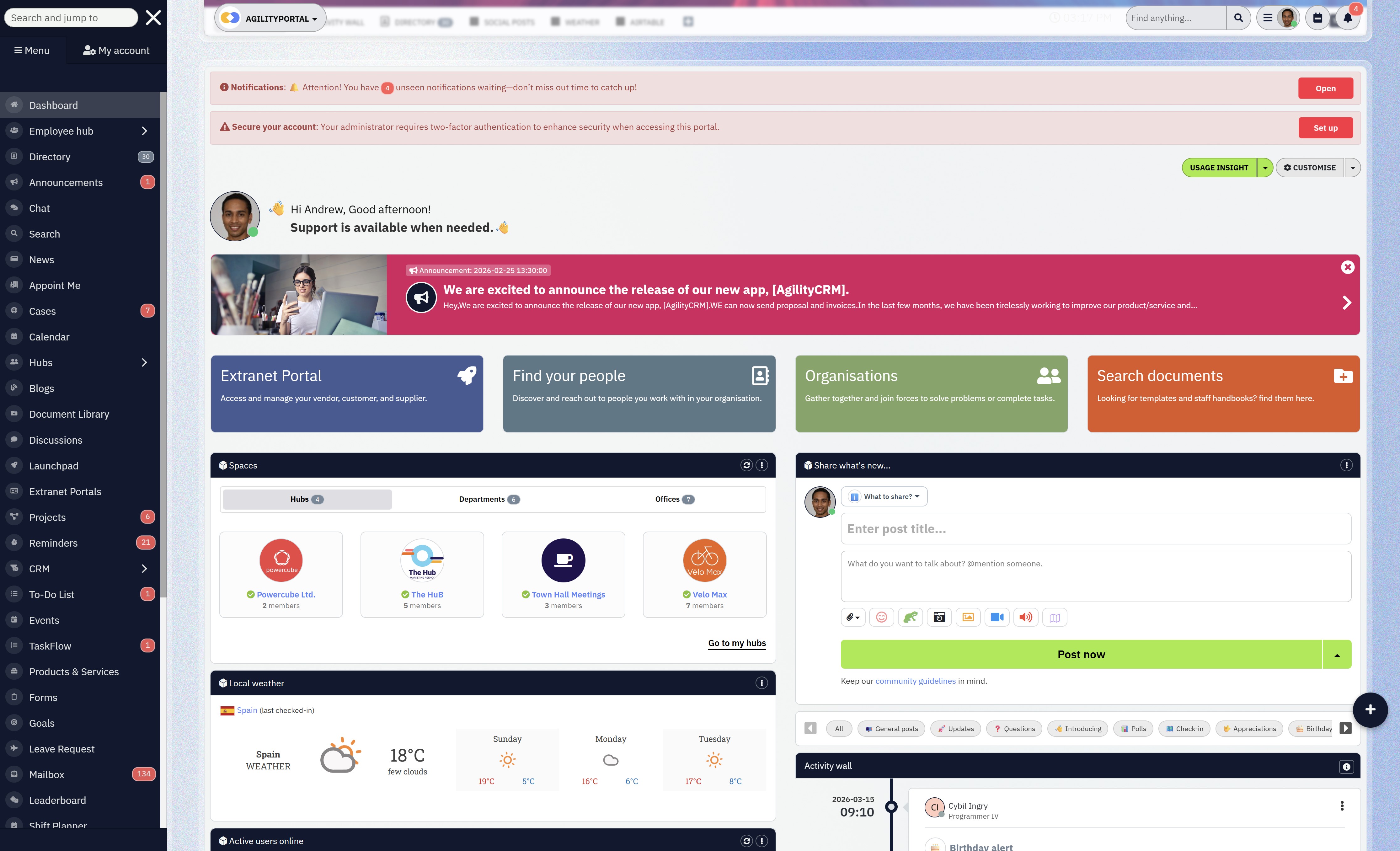
AgilityPortal stands out as a strong option for organizations looking for more than just a traditional intranet.
Instead of functioning as a static information portal, it is designed to act as a complete digital workplace platform where communication, knowledge, and collaboration come together in one environment.
Organizations often choose AgilityPortal because it helps solve common workplace challenges such as scattered communication, disconnected tools, and difficulty finding company information.
Key capabilities include:
- company news, announcements, and internal communication tools
- centralized document libraries and knowledge management
- employee directories and team collaboration spaces
- integrations with Microsoft 365, Google Workspace, and other business systems
- mobile intranet access for remote teams and frontline employees
- employee engagement tools such as recognition, surveys, and activity feeds
Because these capabilities are built into a single platform, employees can access information, collaborate with colleagues, and stay updated without switching between multiple systems.

“AgilityPortal gave us one place for company updates, documents, and team collaboration without making things harder for staff. The platform was easy to roll out, adoption was much better than our previous system, and employees finally knew where to go to find the information they needed.”
Looking for an Intranet That Employees Actually Use?
Many organizations invest in intranet software expecting better communication and collaboration, but end up with platforms employees rarely visit. Poor search, scattered tools, and outdated interfaces often make intranets more frustrating than helpful.
AgilityPortal is a modern digital workplace and intranet platform designed to centralize communication, documents, and employee collaboration in one place. Instead of managing multiple disconnected systems, your teams get a single platform where they can find information, stay aligned, and get work done faster.
- Modern intranet hub for communication, knowledge, and collaboration
- Powerful search that helps employees find documents and information quickly
- Employee engagement tools including news feeds, recognition, and spaces
- Integrations with Microsoft 365, Google Workspace, and business systems
- Mobile-first intranet experience for remote and frontline workers
- Analytics and dashboards to track engagement and platform adoption
If you're evaluating intranet platforms in this guide, AgilityPortal gives you a modern solution that improves communication, simplifies knowledge sharing, and connects employees across your organization.
Try AgilityPortal Free for 14 Days
No credit card required
Microsoft SharePoint
Microsoft SharePoint
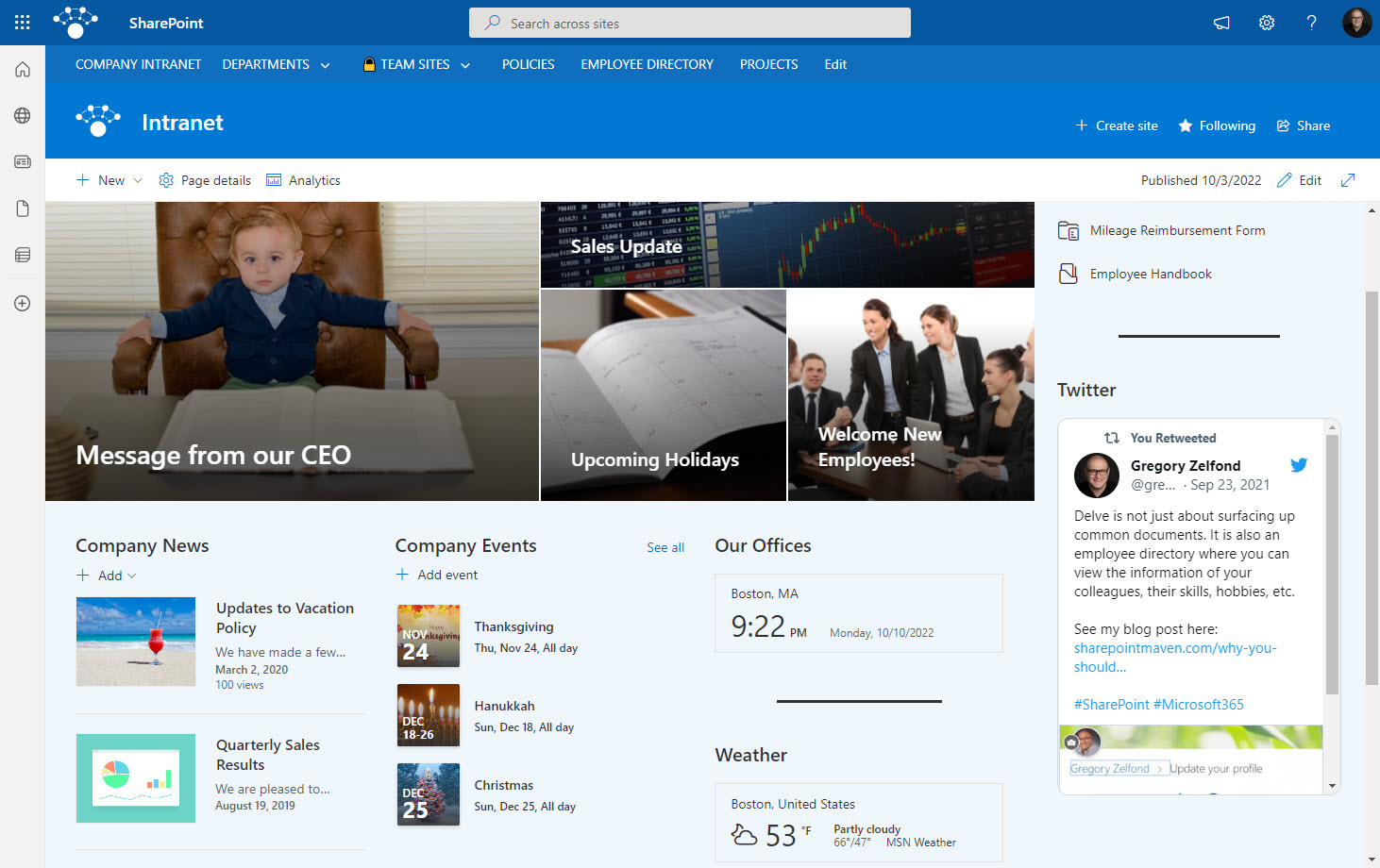
Microsoft SharePoint is one of the most widely used intranet solutions, particularly among organizations already using Microsoft 365.
It provides document management, internal sites, and collaboration capabilities integrated with Microsoft tools like Teams, Outlook, and OneDrive.
Common features include:
- document storage and version control
- team collaboration sites
- integration with Microsoft Office applications
- workflow automation using Microsoft Power Automate
SharePoint is often selected by large enterprises that already rely heavily on the Microsoft ecosystem. However, it can require significant customization to function as a full employee intranet experience.
“SharePoint gave us a central place to store documents and build internal sites, especially since we were already using Microsoft 365. It is powerful once set up properly, but it did take planning and extra work to make the experience easier for employees across different teams.”
Considering Microsoft SharePoint for Your Intranet?
Microsoft SharePoint is one of the most widely used enterprise platforms for document management and internal collaboration. Many organizations evaluate it when searching for intranet software, especially if they already use Microsoft 365 tools such as Teams, Outlook, and OneDrive.
As part of the Microsoft ecosystem, SharePoint allows businesses to create internal sites, store documents, and manage content across departments. However, building a fully functional intranet often requires customization, governance planning, and additional configuration.
- Enterprise document management and file sharing
- Integration with Microsoft 365 tools like Teams and Outlook
- Team collaboration sites and departmental workspaces
- Workflow automation using Microsoft Power Automate
- Permission-based document access and governance controls
- Extensive customization through Microsoft ecosystem tools
If you're researching intranet platforms, reading independent user reviews can provide valuable insights into how SharePoint performs in real organizations.
Read SharePoint Reviews on G2
See real user feedback
Staffbase
Staffbase
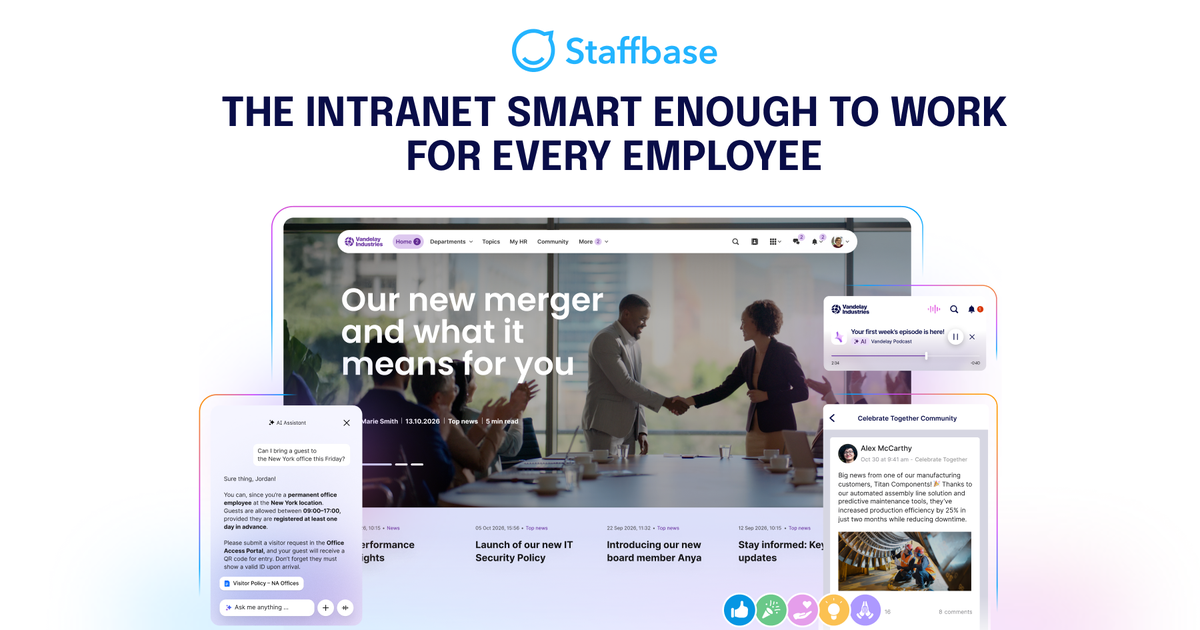
Staffbase is primarily known as an internal communications platform designed to help large organizations manage employee messaging and engagement at scale.
The platform focuses strongly on communication features such as:
- company announcements and targeted messaging
- employee mobile apps for frontline workers
- campaign planning and internal communication analytics
- employee engagement tools such as surveys and feedback
Staffbase is often used by large enterprises that prioritize structured communication strategies across distributed workforces.
“Staffbase helped us improve how we communicate company updates to employees across multiple locations. The mobile communication features were particularly useful for reaching frontline staff who do not always work at a desk.”
Considering Staffbase for Internal Communications?
Staffbase is a communication-focused platform designed for organizations that need to deliver company updates, announcements, and campaigns across large or distributed teams. It is often evaluated by businesses looking to improve employee communication, especially across deskless, frontline, and multi-location workforces.
As an internal communications platform, Staffbase is known for helping organizations manage top-down messaging, mobile communication, and audience targeting at scale. Many teams compare it when searching for employee communication software rather than a broader all-in-one digital workplace platform.
- Targeted employee communication and company announcements
- Mobile-first communication for frontline and deskless workers
- Campaign management and internal communication planning tools
- Employee engagement features such as surveys and feedback
- Audience segmentation for location, role, or department-based messaging
- Analytics for measuring communication reach and engagement
If you are comparing internal communication platforms, independent reviews can help you understand how Staffbase performs for real teams, especially around usability, rollout, and long-term adoption.
Read Staffbase Reviews on G2
See real user feedback
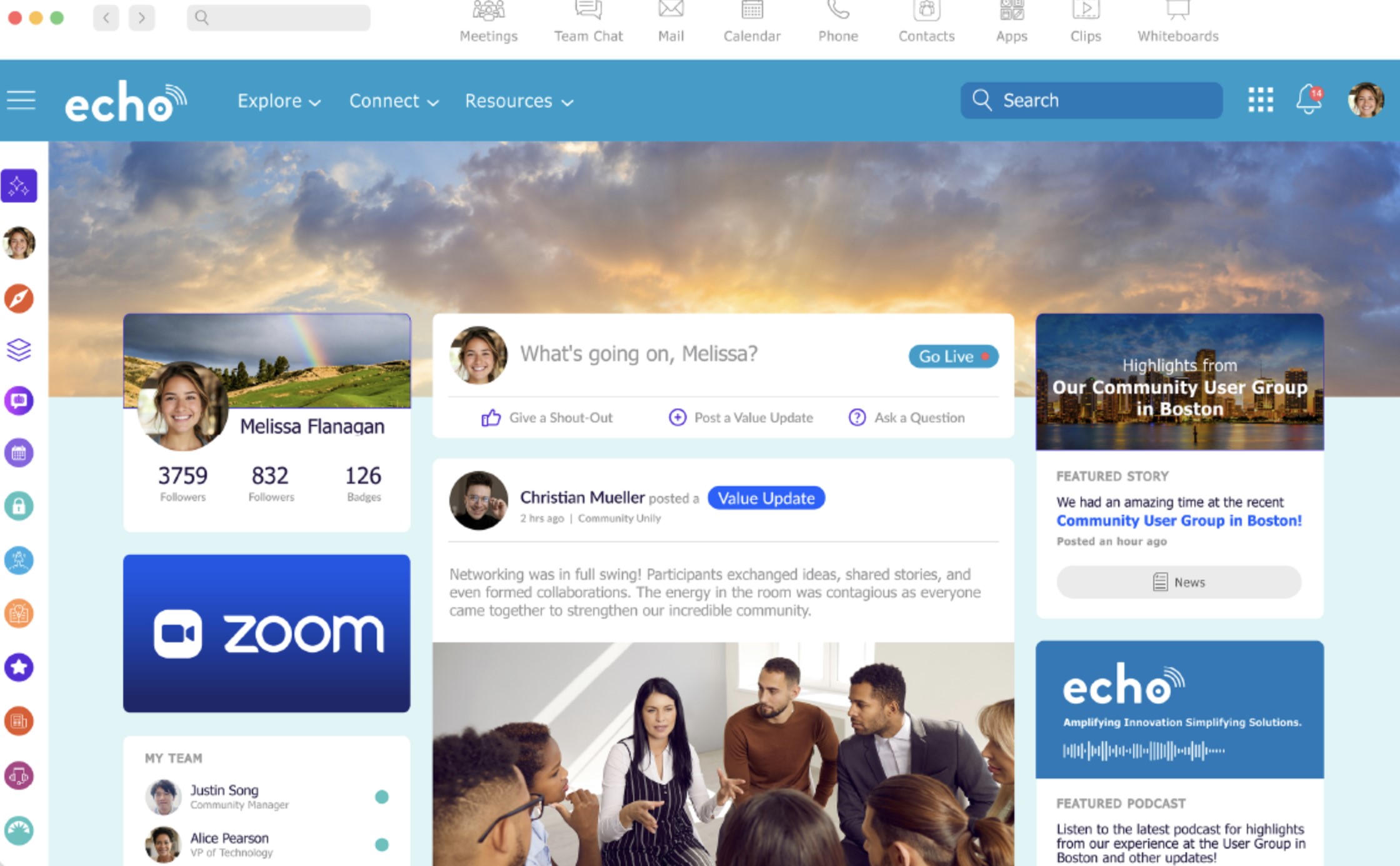
Workvivo
Workvivo
Workvivo is an employee experience platform that combines elements of intranet software with social collaboration features. It is designed to create a more engaging and social internal communication environment.
Key capabilities include:
- social-style company activity feeds
- employee recognition and engagement tools
- internal communication and announcements
- analytics for employee engagement and participation
Workvivo is commonly used by organizations that want to focus heavily on employee engagement and culture-building through internal communication platforms.
“Workvivo helped us bring more visibility to company culture and employee recognition. The social-style feed made it easier for employees to interact with company updates and celebrate achievements across teams.”
Considering Workvivo for Employee Engagement?
Workvivo is an employee experience platform designed to improve engagement and internal communication through a social-style workplace interface. Many organizations explore Workvivo when they want to strengthen company culture, encourage employee participation, and create a more connected workplace.
The platform focuses heavily on social communication features such as activity feeds, recognition tools, and employee engagement campaigns. It is often evaluated alongside intranet software and digital workplace platforms when businesses are looking to improve employee connection and culture.
- Social-style employee activity feeds and company updates
- Employee recognition and engagement tools
- Internal communication and announcement capabilities
- Community groups and collaboration spaces
- Employee surveys and feedback tools
- Analytics to measure employee engagement and participation
If you are comparing employee engagement platforms, reviewing independent user feedback can help you understand how Workvivo performs in real organizations and workplace environments.
Read Workvivo Reviews on G2
See real user feedback
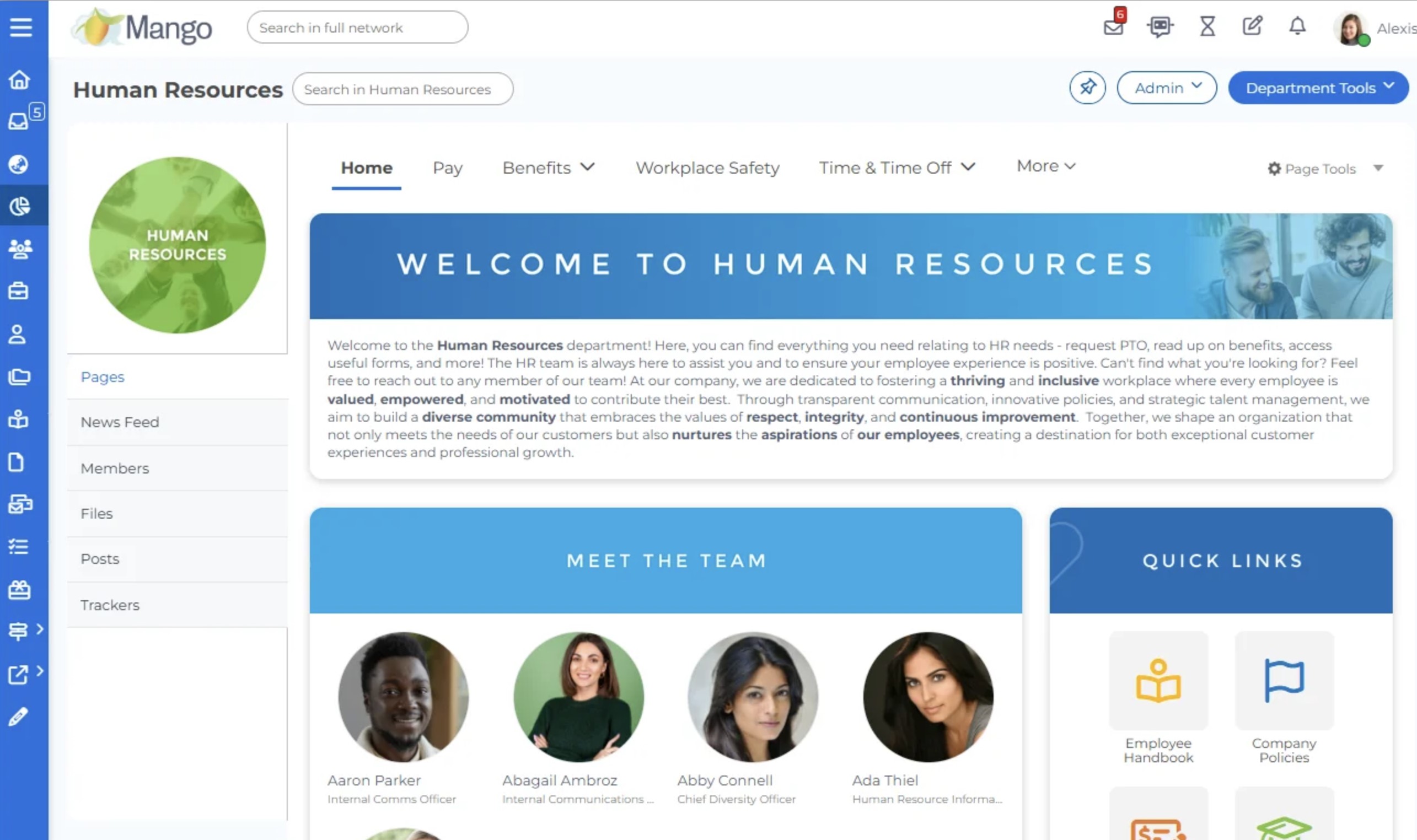
MangoApps
MangoApps
MangoApps is a digital workplace platform that combines intranet functionality with collaboration and productivity tools. It aims to create an all-in-one workspace where employees can communicate, access knowledge, and manage work activities.
The platform typically includes:
- internal communication tools and announcements
- document management and knowledge bases
- team collaboration and project spaces
- employee training and onboarding features
MangoApps is often chosen by organizations looking for an all-in-one intranet and collaboration platform.
“MangoApps helped us bring multiple tools into one digital workplace. Teams can share documents, communicate internally, and collaborate on projects in the same platform, which reduced the number of systems employees needed to use daily.”
Considering MangoApps for Your Intranet Platform?
MangoApps is a digital workplace platform designed to combine intranet functionality with collaboration and productivity tools. Organizations often evaluate MangoApps when searching for an all-in-one solution that connects communication, knowledge sharing, and teamwork across departments.
The platform aims to bring multiple workplace functions into a single environment, helping teams access company resources, collaborate on projects, and stay informed through internal communication tools. Businesses researching modern intranet platforms frequently compare MangoApps with other digital workplace solutions.
- Company intranet with news feeds and internal communication tools
- Document management and knowledge base capabilities
- Team collaboration spaces and project workspaces
- Employee directories and social engagement features
- Employee onboarding and learning modules
- Mobile apps for remote and frontline workers
If you are evaluating digital workplace platforms, independent reviews can provide helpful insights into how MangoApps performs for real teams, including usability, implementation experience, and long-term adoption.
Read MangoApps Reviews on G2
See real user feedback
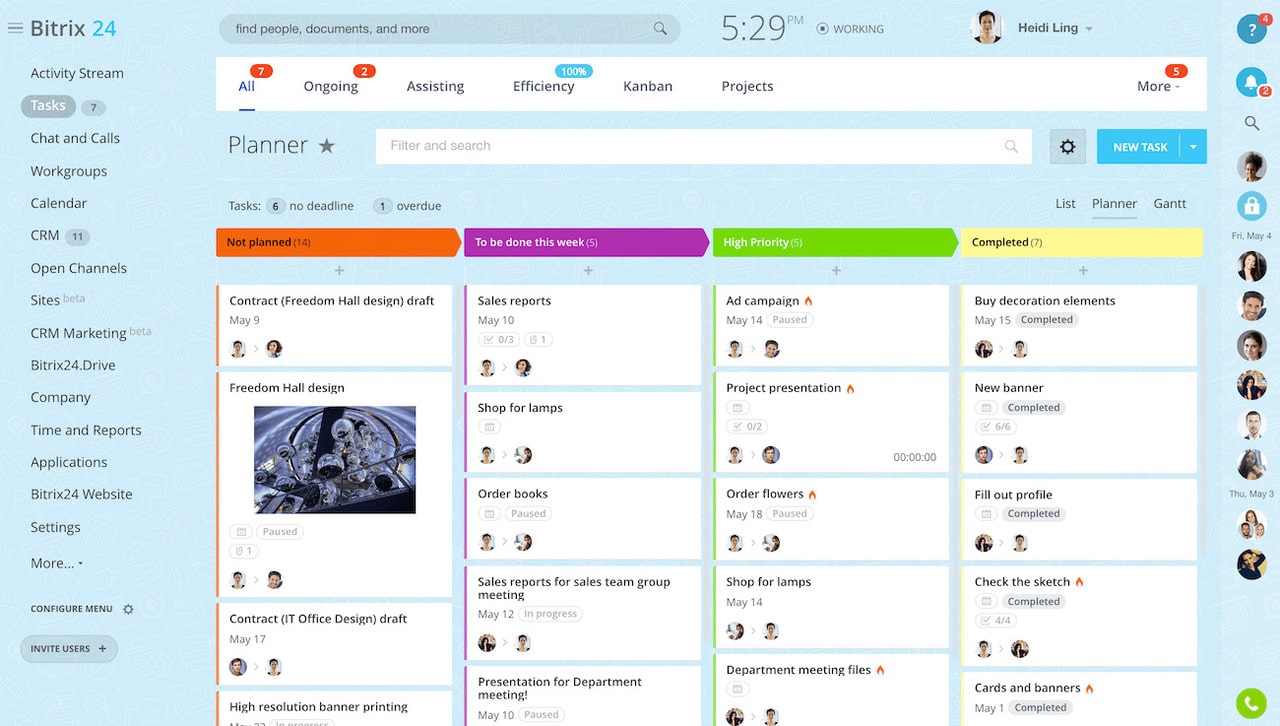
Bitrix24
Bitrix24
Bitrix24 is a broad business management platform that includes intranet features alongside CRM, project management, and collaboration tools.
Capabilities include:
- company communication tools and activity streams
- document sharing and team collaboration
- project and task management
- CRM and sales management features
Bitrix24 is often used by companies that want to combine intranet communication with broader business management tools within a single system.
When evaluating intranet platforms in this intranet guide, organizations should focus less on which vendor has the longest feature list and more on which platform aligns best with their communication needs, employee workflows, and long-term digital workplace strategy.
“Bitrix24 gave us a combination of intranet tools, project management, and CRM features in one platform. It helped our team keep track of tasks and internal communication while also managing customer relationships.”
Considering Bitrix24 for Your Intranet and Collaboration Platform?
Bitrix24 is a business collaboration platform that combines intranet features with CRM, project management, and team communication tools. Many organizations evaluate Bitrix24 when looking for a platform that can support internal collaboration while also managing sales pipelines and operational workflows.
The platform aims to bring several workplace functions together in one system, including messaging, document sharing, project tracking, and customer relationship management. Businesses comparing intranet software often review Bitrix24 when they want a broader business management platform alongside internal communication tools.
- Company intranet with internal communication and activity streams
- Built-in CRM for managing sales and customer relationships
- Project and task management tools for teams
- Document sharing and collaboration capabilities
- Team chat, video calls, and communication tools
- Automation tools for workflows and business processes
If you are researching intranet platforms or business collaboration software, independent user reviews can provide useful insights into how Bitrix24 performs in real organizations.
Read Bitrix24 Reviews on G2
See real user feedback
Why Many Companies Are Replacing Traditional Intranets
Many organizations are moving away from traditional intranet systems because the way employees work has changed.
Older intranets were mostly designed as simple document portals where companies stored policies, files, and announcements.
While these systems served a purpose in the past, they often struggle to support modern work environments where teams are distributed, tools are cloud-based, and employees expect fast access to information.
As businesses look to modernize their digital workplaces, they are increasingly replacing outdated intranet systems with more flexible platforms.
One major reason for this shift is the growing demand for employee experience platforms. Modern organizations want technology that does more than store documents—they want tools that actively support communication, engagement, and collaboration.
A modern intranet is expected to help employees stay connected, share knowledge easily, and participate in company conversations. Platforms that focus on the overall employee experience tend to see higher adoption because they are designed around how employees actually work.
Another important trend is the rise of mobile-first communication. Many employees no longer work exclusively at desks. Frontline workers, remote teams, and field employees all need access to company updates and resources while on the move.
Traditional intranets were rarely built with mobile users in mind, which made them difficult to use outside the office.
Modern intranet platforms now prioritize mobile accessibility, allowing employees to receive updates, collaborate with colleagues, and access company resources directly from their phones or tablets.
Organizations are also increasingly looking for AI-powered search and knowledge discovery.
In large companies, information can quickly become scattered across multiple systems and documents.
When employees struggle to find what they need, productivity suffers.
Modern intranet platforms are introducing smarter search capabilities that use artificial intelligence to surface relevant documents, answers, and internal expertise faster. This helps employees spend less time searching and more time focusing on their actual work.
Finally, companies are paying closer attention to analytics and engagement insights.
Traditional intranets rarely provided clear data about how employees interacted with the platform. Today's organizations want to understand which content employees read, how communication campaigns perform, and where knowledge gaps exist.
Modern platforms provide dashboards and analytics tools that allow leadership, HR teams, and internal communications teams to measure engagement and improve how information flows across the company.
As these expectations continue to grow, many organizations realize that traditional intranet systems no longer meet the needs of a modern workforce.
Replacing outdated platforms with modern digital workplace solutions allows companies to create a more connected, productive, and engaging environment for employees.
How the Right Intranet Drives Real Business Value
A well-designed intranet does more than organize company information.
When implemented correctly, it becomes a central system that improves communication, productivity, and collaboration across the organization.
Instead of employees jumping between disconnected tools or struggling to find documents, a modern intranet helps teams access the information they need quickly and work together more efficiently.
Below are some of the key ways the right intranet platform delivers real business value.
Faster Access to Information
One of the biggest productivity gains from a modern intranet is faster access to company information.
Employees often spend significant time searching for documents, policies, or internal resources across emails, shared drives, and multiple systems.
A well-structured intranet solves this problem by acting as a central knowledge hub.
With organized content, searchable documents, and clear navigation, employees can quickly locate the information they need.
This reduces wasted time and allows teams to focus more on meaningful work rather than searching for files or answers.
Improved Employee Engagement
A modern intranet also plays an important role in employee engagement.
When employees have easy access to company updates, recognition programs, and collaboration spaces, they feel more connected to the organization.
Features such as company news feeds, employee recognition tools, and discussion spaces encourage participation and help employees stay informed about what is happening across the business.
When communication becomes more transparent and interactive, employees are more likely to feel involved and aligned with company goals.
Stronger Internal Communication
Clear communication is essential for any successful organization.
An intranet platform provides a structured channel for leadership updates, company announcements, and department-level communication.
Instead of relying only on email or separate messaging tools, the intranet becomes a central communication platform where employees can access important updates in one place.
This ensures that key messages reach the right audience and reduces the risk of information being missed or buried in inboxes.
Reduced Tool Sprawl
Many organizations rely on multiple disconnected tools for communication, document sharing, and collaboration.
Over time, this creates confusion as employees try to remember where different types of information are stored.
A modern intranet helps reduce this tool sprawl by bringing multiple workplace functions into a single environment. Communication, knowledge sharing, collaboration spaces, and employee services can all exist within one platform.
This simplifies the digital workplace and makes it easier for employees to stay productive.
Better Knowledge Retention
Companies generate a large amount of knowledge every day, but without proper systems in place, valuable information can easily be lost.
When employees leave the organization or projects change teams, important knowledge often disappears with them.
An intranet platform helps preserve this knowledge by storing documentation, processes, and internal expertise in a structured knowledge base.
Over time, this creates a valuable organizational resource where employees can learn from past work, access internal expertise, and build on existing knowledge rather than starting from scratch.
How AgilityPortal can help
How AgilityPortal can help
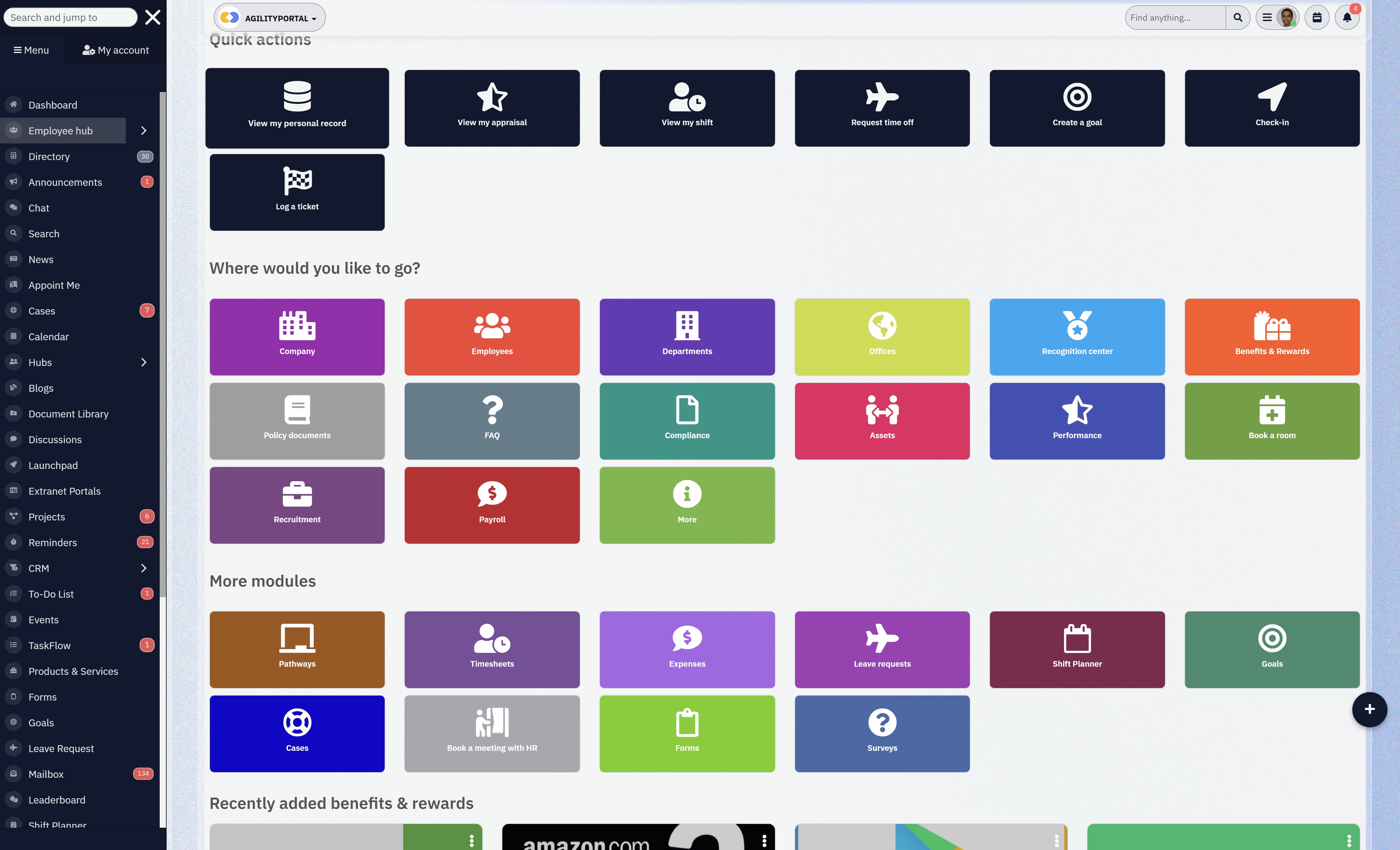
AgilityPortal positions its platform around many of the same principles outlined in this intranet guide.
The experience brings together communications, knowledge management, enterprise search, and employee services into a single digital workplace environment.
AI capabilities are embedded within the platform to support content discovery, automation, and employee productivity, while governance controls remain consistent as the system evolves.
The platform is designed so internal communications and HR teams can manage content, updates, and employee resources without relying heavily on IT.
Employees access a unified interface across devices, with personalization features that adapt based on role, location, and how individuals interact with the platform over time.
Security controls, integration capabilities, and analytics tools are intended to give IT teams oversight while supporting long-term scalability.
Simpplr also focuses on ongoing product development, working with customers to refine features and improve the platform as workplace needs change. The goal is to create a digital workplace that continues to evolve and provide value as organizations grow and adapt.
For organizations researching intranet platforms, reviewing resources such as an intranet buyer's guide can help clarify evaluation criteria, build a business case, and identify the most important vendor questions to ask during the selection process.
Businesses exploring digital workplace solutions can also request a product demonstration to better understand how platforms like Simpplr support employee communication, knowledge sharing, and collaboration at scale.
Final Thoughts: Choosing an Intranet That Works
Selecting the right intranet platform is not simply a technology decision—it is a decision about how your organization communicates, shares knowledge, and collaborates every day.
The intranet often becomes the central place where employees access information, stay informed about company updates, and work together across teams and departments.
A successful intranet should do more than store documents or publish company announcements.
It should create a connected digital workplace where employees can easily find what they need, communicate effectively, and complete their work without unnecessary friction.
When the platform is designed around usability and employee needs, adoption becomes much easier and the intranet naturally becomes part of daily workflows.
Organizations that get the most value from their intranet focus on practical outcomes rather than feature lists.
They evaluate how well the platform supports real employee tasks, how easily information can be discovered, and how effectively communication flows across the company.
Strong platforms prioritize simplicity, accessibility, and integration with existing workplace tools, ensuring that the intranet enhances productivity instead of adding another layer of complexity.
Ultimately, choosing the right intranet platform means investing in a system that helps employees stay connected, informed, and productive.
When implemented correctly, the intranet becomes the foundation of a modern digital workplace, supporting communication, collaboration, and knowledge sharing across the entire organization.
AI Summary
- This intranet guide explains how organizations can evaluate modern intranet platforms that centralize communication, knowledge, and collaboration into one connected digital workplace.
- Many companies struggle with fragmented tools, scattered documents, and employees spending significant time searching for information instead of completing meaningful work.
- A successful intranet platform provides a unified employee experience with personalized content, strong search capabilities, and integrations with workplace systems.
- Key features to evaluate include communication tools, knowledge management, enterprise search, employee services, mobile access for frontline workers, and security governance.
- Modern intranet platforms are evolving into digital workplace solutions that connect communication, collaboration tools, and business workflows into one environment.
- Organizations comparing platforms such as AgilityPortal, SharePoint, Staffbase, Workvivo, MangoApps, and Bitrix24 should focus on usability, scalability, integrations, and employee adoption.
- Choosing the right intranet platform can significantly improve productivity, employee engagement, knowledge sharing, and long-term digital workplace success.
FAQ on Intranet Buyers Guide: Choosing a Platform That Delivers Real Value
What is intranet platforms and how do they work?
Many people ask what is intranet platforms and how they support employees in modern organizations.
In simple terms, intranet platforms are private internal systems used by companies to share information, resources, and tools with employees.
A modern intranet platform often acts as a central hub where teams can access documents, updates, policies, and company news in one place.
Many organizations combine company intranet software with a digital workplace platform so employees can collaborate, communicate, and complete daily tasks without switching between multiple systems.
Why is intranet good for business?
A common question organizations ask is why is intranet good for business.
The main reason is that an employee intranet platform helps centralize knowledge, improve communication, and reduce the time employees spend searching for information.
When businesses implement corporate intranet solutions or enterprise intranet software, teams can access company resources, collaborate on projects, and stay aligned with company goals.
With intranet collaboration tools and internal communication software built into the system, employees can share updates, manage tasks, and work more efficiently across departments.
What are the most important requirements for intranet software?
When evaluating intranet software, organizations should focus on the requirements for intranet that support communication, collaboration, and knowledge sharing.
Many businesses use an intranet requirements checklist to identify what capabilities they need before choosing a platform.
This checklist often includes features like document management, employee directories, enterprise search, mobile access, integrations with business systems, and secure access controls.
Modern intranet platforms also integrate with employee experience platform tools to help improve engagement and productivity across the organization.
What should an intranet guide include when selecting a platform?
A practical intranet guide should help organizations understand how to choose the right technology based on their business needs.
This typically includes identifying key intranet requirements checklist items such as scalability, ease of use, integration with other systems, and support for remote or hybrid teams.
The guide should also explain how digital workplace platform capabilities connect with company intranet software, allowing employees to collaborate, share knowledge, and manage workflows in one environment.
How do employees log into intranet systems?
Most companies provide secure access so employees can easily log into intranet platforms through a company portal or single sign-on system.
Once employees log into intranet environments, they can access company updates, internal communication software, documents, and collaboration tools from one centralized location.
Many modern intranet platforms also support mobile access so teams can stay connected with intranet collaboration tools whether they are working remotely, in the office, or in the field.
How does an intranet support employee collaboration and engagement?
An employee intranet platform helps organizations improve engagement by providing a shared space where employees can communicate, share knowledge, and collaborate on projects.
With intranet collaboration tools, teams can work together on documents, share announcements, and discuss ideas in real time.
When combined with an employee experience platform, intranet software helps create a connected digital workplace where employees feel informed, supported, and aligned with company goals.
Many modern intranet platforms also include analytics and engagement features that help organizations understand how employees interact with internal systems.
Most Popular Posts

Effective communication among team members is vital for the productivity and success of any organization. Surprisingly, 60% of companies lack a long-term internal communication strategy, which p...


Businesses thrive on communication for efficiency, productivity and accomplishment. When the right information is passed from the right designation in the organization, it promotes positivity an...

Categories
Blog
(3182)
Business Management
(393)
Employee Engagement
(235)
Digital Transformation
(215)
Growth
(150)
Intranets
(141)
Internal communications
(106)
Remote Work
(68)
Sales
(53)
Collaboration
(52)
Customer Experience
(32)
Culture
(30)
Knowledge Management
(29)
Project management
(29)
Leadership
(20)
Comparisons
(9)
News
(1)

Related Posts

Looking for a New Job Remotely can feel like a simple next step: update your CV, turn on job alerts and start applying. In reality, the strongest remote job searches start much earlier. You need to be clear about the work you want, the kind of ...

Hiring globally is easier than employing globally Have you found the right person for a role, only to realise they live in a country where your business has no legal entity? That's where EOR international hiring can be useful. An Employer of Re...

Sales operations and planning are essential to harmonizing sales objectives with operational capabilities, ensuring seamless coordination between departments like sales, marketing, production, and finance. This alignment enables businesses to forecas...

How can a business collect the public web data it genuinely needs without creating avoidable security, privacy or supplier-risk problems? That's the question more teams are now facing. From competitor price monitoring and SEO research to brand protec...

The sales interview is a crucial part of the job search process, as it provides an opportunity for the candidate to showcase their skills, experience, and personality to the hiring manager. In this interview, the candidate is evaluated on their...


Jill Romford
I am a digital nomad, lover of exploring new places and making friends.
I love to travel and I love the internet. I take pictures of my travels and share them on the internet using Instagram.
Traveler, entrepreneur, and community builder. I share my insights on digital marketing and social media while inspiring you to live your fullest life.
Ready to learn more? 👍
One platform to optimize, manage and track all of your teams. Your new digital workplace is a click away. 🚀
Free for 14 days, no credit card required.