
Insight Blog
Agility’s perspectives on transforming the employee's experience throughout remote transformation using connected enterprise tools.
31 minutes reading time
(6209 words)
Featured
What are the Best Alternatives to Microsoft SharePoint? UPDATED 2026 List

What are the Best Alternatives to Microsoft SharePoint? UPDATED 2026 List
Discover the Best Alternatives to Microsoft SharePoint. Compare top tools for collaboration, intranet, and document management to find the right fit for your team.
What are the Best Alternatives to Microsoft SharePoint? UPDATED 2026 List

Hundreds of millions of people throughout the world rely on SharePoint. It makes it easy for people to access information, save and share files, organize projects, and work together across different companies, all in the same place.
However, there are drawbacks to using SharePoint. So numerous use cases necessitate a custom programming effort, which is both expensive and time-consuming.
Additionally, it's a difficult technology that requires a lot of time and effort to learn how to use, which adds to the expense of using it.
Many firms are now looking for alternatives to SharePoint that are less expensive and less time-consuming to set up, operate, and maintain.
Let's dive into the sharepoint alternative, features, strengths, and limitations of both platforms—so you can decide which one truly supports your business in 2026 and beyond.
1,000+
apps per enterprise
According to Gartner, the average enterprise now uses over 1,000 cloud applications—many overlapping, underutilised, or poorly integrated. This kind of tool sprawl is a key reason businesses start re-evaluating platforms like SharePoint and looking for simpler, more unified alternatives.
Source: Gartner
What is Microsoft SharePoint?
At its heart, SharePoint is a file storage and sharing platform for businesses. It is a part of Microsoft 365, so it's accessible as an add-on for Office.
Companies use SharePoint to build intranet sites that house all of the vital information that their workers require in order to carry out their duties effectively.
Libraries and metadata are also included in SharePoint's content management features.
Shared documents and workflows can also be utilized for external communication and to automate corporate procedures.
SharePoint is a flexible platform that can be customized to meet the specific requirements of a company. Although this makes it difficult to set up, the end-user may find it difficult to understand at times.
Key Takeaways
- Many businesses look for SharePoint alternatives because of complexity, low adoption, and the time it takes to manage permissions and structure.
- Modern workplace platforms focus on usability first, helping teams communicate, collaborate, and access information without training.
- Costs increase quickly with SharePoint as teams grow, especially when factoring in setup, maintenance, and additional tools.
- All-in-one solutions that combine communication, file management, and workflows reduce the need to switch between multiple apps.
- Choosing the right alternative starts with understanding your gaps—whether that’s collaboration, search, integrations, or user experience.
The Problem with Microsoft SharePoint
Microsoft SharePoint is often positioned as the go-to document management system and intranet solution within Microsoft 365.
On the surface, it promises a centralized place for file sharing, team collaboration, and content management. But in practice, many businesses find it creates more problems than it solves.
As companies scale, SharePoint tends to become cluttered and difficult to navigate.
Files are duplicated across multiple sites, folders grow without structure, and search becomes unreliable. Instead of acting as a single source of truth, it turns into a fragmented system where employees struggle to find what they need.
Research from McKinsey & Company shows employees spend up to 28% of their workweek searching for information, a problem often linked to poorly structured platforms like SharePoint.
Another major issue is complexity.
Managing permissions, access levels, and document libraries requires ongoing admin effort, making it hard for non-technical teams to use effectively. This leads to low adoption, with employees defaulting to simpler tools like email or cloud storage alternatives instead of using the company intranet.
While SharePoint is powerful, it often requires heavy customization, third-party integrations, and continuous maintenance to meet modern business needs.
For organizations looking for a modern intranet, employee collaboration software, or a more intuitive digital workplace platform, SharePoint can feel outdated, slow to deploy, and expensive to manage over time.
Related Reading
Want to explore more about SharePoint alternatives, migration planning, governance, and intranet strategy? These guides will help you compare platforms, reduce migration risk, and build a more modern digital workplace.
- Best SharePoint Alternative
- SharePoint Governance Plan Framework: A Complete Guide
- SharePoint Managed Metadata: A Complete Guide
- How to Audit SharePoint: A Complete Guide
- SharePoint Migration Plan Template, Checklist, and Best Practices
- SharePoint Intranet in a Box: A Comprehensive Guide
- Intranet Pricing Guide
- Best SharePoint Migration Tools
- Why You Should Consider AgilityPortal Instead of SharePoint
- Best SharePoint Online Site Templates
- Confluence vs SharePoint
- SharePoint Copilot
- SharePoint Analytics
Why Do Businesses Need Alternatives to SharePoint?

Why do businesses need alternatives to SharePoint?
Despite the fact that SharePoint is a great tool, it has several serious drawbacks. If you're looking for a replacement for SharePoint, here are some reasons why:
r/
What Reddit Users Say
Advice for businesses moving away from SharePoint
“If you haven’t already, take the time to document your requirements. Think about the parts of SharePoint that are not working for you and whether it’s a technology problem or a process problem. SharePoint is not the right fit for everyone, but it does work for many scenarios, so it’s worth understanding exactly why it’s falling short. Once you pinpoint what doesn’t suit your business, it becomes much easier to compare alternatives and focus on the features you actually need.”
Requirement gathering
Migration planning
Feature comparison
It's More Expensive Than It Looks and Costs Increase as Your Team and Needs Grow
At first glance, Microsoft SharePoint seems like it's already "included" if you're using Microsoft 365. But once you dig a bit deeper, the costs start stacking up—and fast.
Depending on your plan, SharePoint can cost up to $23 per user per month, which might seem manageable at the start. The problem is, that cost scales directly with your team size. As your business grows, so does your monthly bill—often without delivering additional value to match.
It doesn't stop there. As your requirements evolve, you'll likely need more advanced features, tighter security controls, or better integrations. That usually means upgrading plans, adding third-party tools, or investing in custom development—pushing costs even higher.
And then there are the hidden costs most people don't factor in:
- Setup and configuration
- Ongoing admin and maintenance
- Customisation or add-ons
- Employee training and support
A company with 100 employees could be paying over $2,000/month in licenses alone. As that team grows to 200 or 300
Organizations frequently underestimate the total cost of ownership for enterprise software, as costs extend beyond licenses to include implementation, integration, and ongoing support.
Craig Roth, Gartner
Locked Into the Microsoft Ecosystem
One of the biggest limitations of Microsoft SharePoint is how tightly it's tied to Microsoft 365.
It works best when everything in your business already runs on Microsoft tools—but that's not always the reality.
If your team uses a mix of platforms—like different CRM systems, project management tools, or external apps—you'll quickly run into friction. Integrations are possible, but they're rarely seamless.
Most require extra configuration, third-party connectors, or developer support just to get things working properly.
This creates a situation where SharePoint becomes less of a flexible enterprise content platform and more of a closed system. Instead of fitting into your existing workflow, your workflow has to adapt to it.
Let's say your sales team uses a non-Microsoft CRM while your operations team relies on another project tool.
Connecting both into SharePoint can take time, effort, and ongoing maintenance—turning what should be simple into a long-term technical dependency.
In the end, businesses looking for flexible collaboration software, open integrations, or a more adaptable digital workspace often find SharePoint too restrictive unless they're fully committed to the Microsoft stack.
Not Built for Everyday Users and Might be Difficult to Use
Let's be honest—Microsoft SharePoint isn't the easiest tool to pick up and use.
It's packed with features, but that's part of the problem.
The interface can feel overwhelming, navigation isn't always clear, and simple tasks like uploading files or managing pages can take more steps than they should. For non-technical teams, this creates friction straight away.
Instead of a smooth user experience, many employees find themselves confused about where things live, how to access them, or what they're even supposed to do next.
That's not ideal for a tool that's meant to improve team productivity and internal communication.
Because of this, companies often have to invest in:
- Training sessions
- User guides and onboarding
- Ongoing internal support
A new employee joins and needs to find a document or update a page. Instead of figuring it out quickly, they end up asking a colleague or IT for help—slowing everything down.
Over time, this leads to poor adoption. People avoid the platform altogether and fall back on easier tools they already understand.
For businesses looking for easy-to-use intranet software, intuitive collaboration tools, or a more accessible employee experience platform, this becomes a major reason to explore alternatives.
r/
What Reddit Users Say
Real feedback on SharePoint adoption challenges
“We moved from on-prem file servers to SharePoint and our users just hate it. They find it complicated and feel like it doesn’t work well.”
User frustration
Complex interface
Low adoption
It Requires High Maintenance
In order for SharePoint to function correctly, it must be set up in a way that requires considerable time and effort. It also requires frequent upkeep to ensure proper operation.
Prioritizing solutions that are quick and simple in setup and maintenance may be a good strategy for companies searching for alternatives to SharePoint.
Restricted Collaboration for Modern Teams
While Microsoft SharePoint is often seen as a collaboration platform, its capabilities are actually quite limited when it comes to how modern teams work—especially in remote or hybrid environments.
SharePoint is primarily built for document storage and content sharing, not real-time interaction.
It lacks native features like instant messaging, team chat, or seamless video collaboration, which are essential for keeping distributed teams connected. Instead, businesses are forced to rely on additional tools within Microsoft 365, creating a fragmented experience across multiple apps.
This disconnect slows down communication and makes simple workflows more complicated than they need to be.
SharePoint can only be used for one-way communications
Microsoft SharePoint works fine when it comes to pushing information out—company updates, policies, announcements—but that's where it starts to fall short.
It's largely designed for top-down communication, not for creating real conversations across teams. Employees can read content, but contributing, reacting, or engaging in meaningful discussions isn't as natural or seamless as it should be.
In today's workplace, businesses need more than just a place to publish updates—they need tools that encourage two-way communication, feedback, and participation at every level. Without that, engagement drops and employees feel disconnected from what's happening across the organisation.
Example:
A leadership team posts an important update. Staff can view it, but there's no easy, engaging way to comment, react, or start a discussion—so feedback either doesn't happen or gets lost in emails and side conversations.
That's why many companies are moving toward employee engagement platforms, social intranet tools, and internal communication software that make it easy for everyone to contribute, share ideas, and be heard.
How to Choose the Right SharePoint Alternative
If you're thinking about moving away from Microsoft SharePoint, the biggest mistake you can make is swapping one complicated system for another.
So here's how to actually choose something better.
First, ask yourself this: would your team actually use it without training? A lot of platforms look great in demos but fall apart in real use. If navigation isn't obvious and things feel clunky, adoption will drop fast—no matter how many features it has.
Next, look beyond basic storage. You want something that helps your team work, not just store files. That means things like task coordination, internal communication, simple approvals, and visibility across projects—not just folders and documents.
Integrations matter too, but not in the way vendors sell it. It's not about having hundreds of integrations—it's about whether it connects properly with the tools you already rely on, like Microsoft 365, your CRM, or whatever your team uses daily.
Security and control should be solid, but not overly complicated. If managing access feels like a full-time job, it's already a red flag.
And finally—cost. Not just the monthly fee, but the hidden stuff: setup time, admin overhead, and how much effort it takes to keep things running smoothly.
The reality is simple: the right platform should make work easier from day one—not something you have to constantly fix, manage, or explain.
7 Best Alternatives to Microsoft SharePoint
| Platform | Best For | Ease of Use | Core Strength | Weakness |
| AgilityPortal | All-in-one digital workplace | ★★★★★ | Combines intranet, communication, and documents | Less known than Microsoft |
| ONLYOFFICE | Document collaboration | ★★★★☆ | Real-time editing + self-hosted options | Limited intranet capabilities |
| Nuxeo | Enterprise content management | ★★★☆☆ | Advanced content lifecycle + scalability | Complex setup and learning curve |
| Confluence | Team knowledge base | ★★★★☆ | Structured documentation and wiki system | Not a full collaboration platform |
| Notion | Flexible workspace | ★★★★★ | Customisable pages, databases, and workflows | Not ideal for large enterprises |
| Google Workspace | Simple collaboration | ★★★★★ | Real-time editing and ease of use | Lacks full intranet functionality |
| Slack | Team communication | ★★★★★ | Messaging, channels, and integrations | Weak document and knowledge management |
#1. AgilityPortal
#1. AgilityPortal
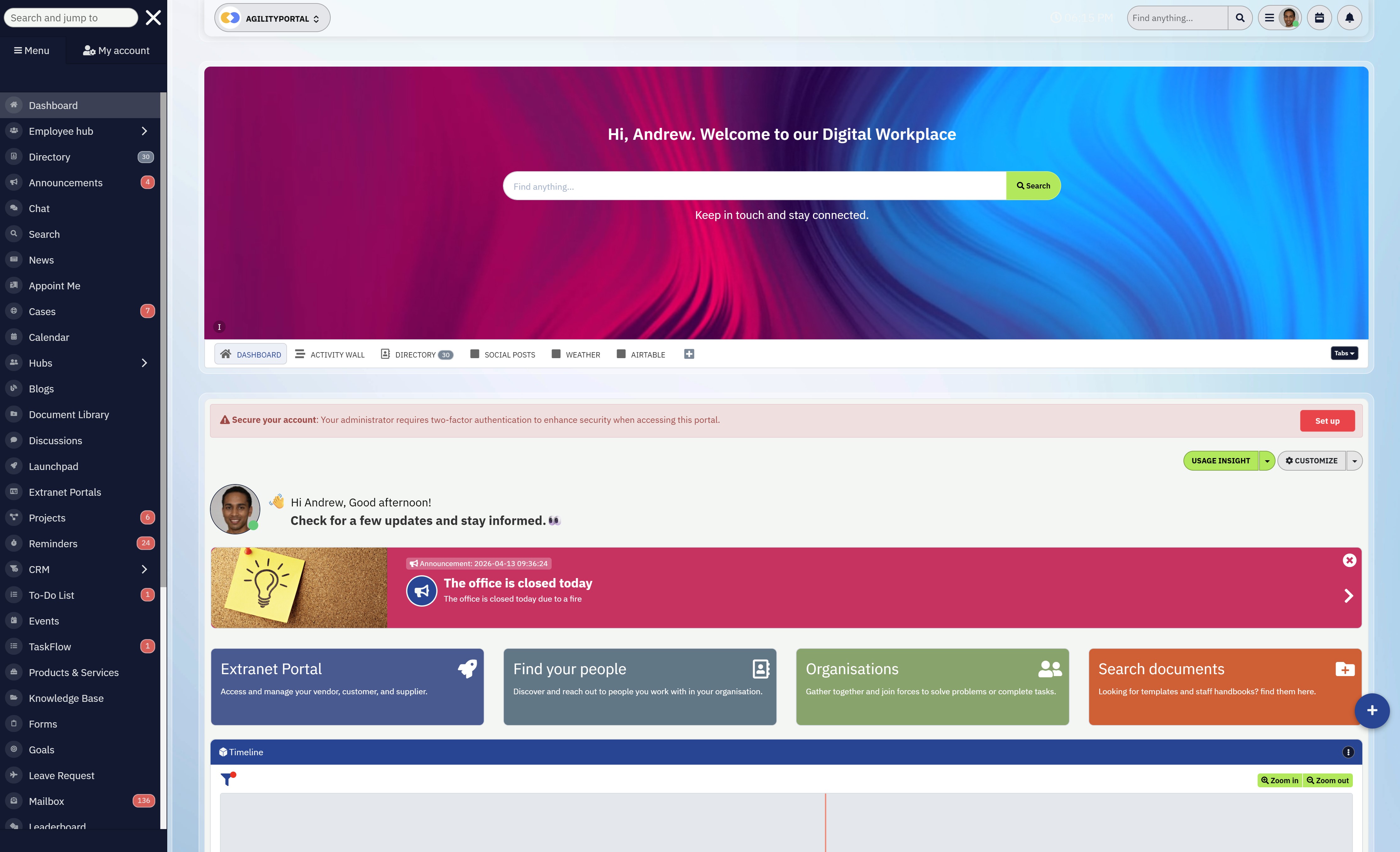
Compared to Microsoft SharePoint, AgilityPortal is built as a modern digital workplace hub designed for real-world team usage—not just document storage.
Instead of forcing teams to juggle multiple tools, it brings together internal communications, knowledge sharing, and workflow coordination into one simple, connected platform.
Where SharePoint can feel fragmented and admin-heavy, AgilityPortal focuses on usability and adoption. It's designed so both office-based and frontline employees can quickly access updates, collaborate, and stay aligned—without needing constant training or support.
This makes it a strong choice for businesses looking for a more practical employee experience platform or company intranet solution that people actually use.
Book a demo to see how enterprise teams are revolutionizing their information access.
Key features
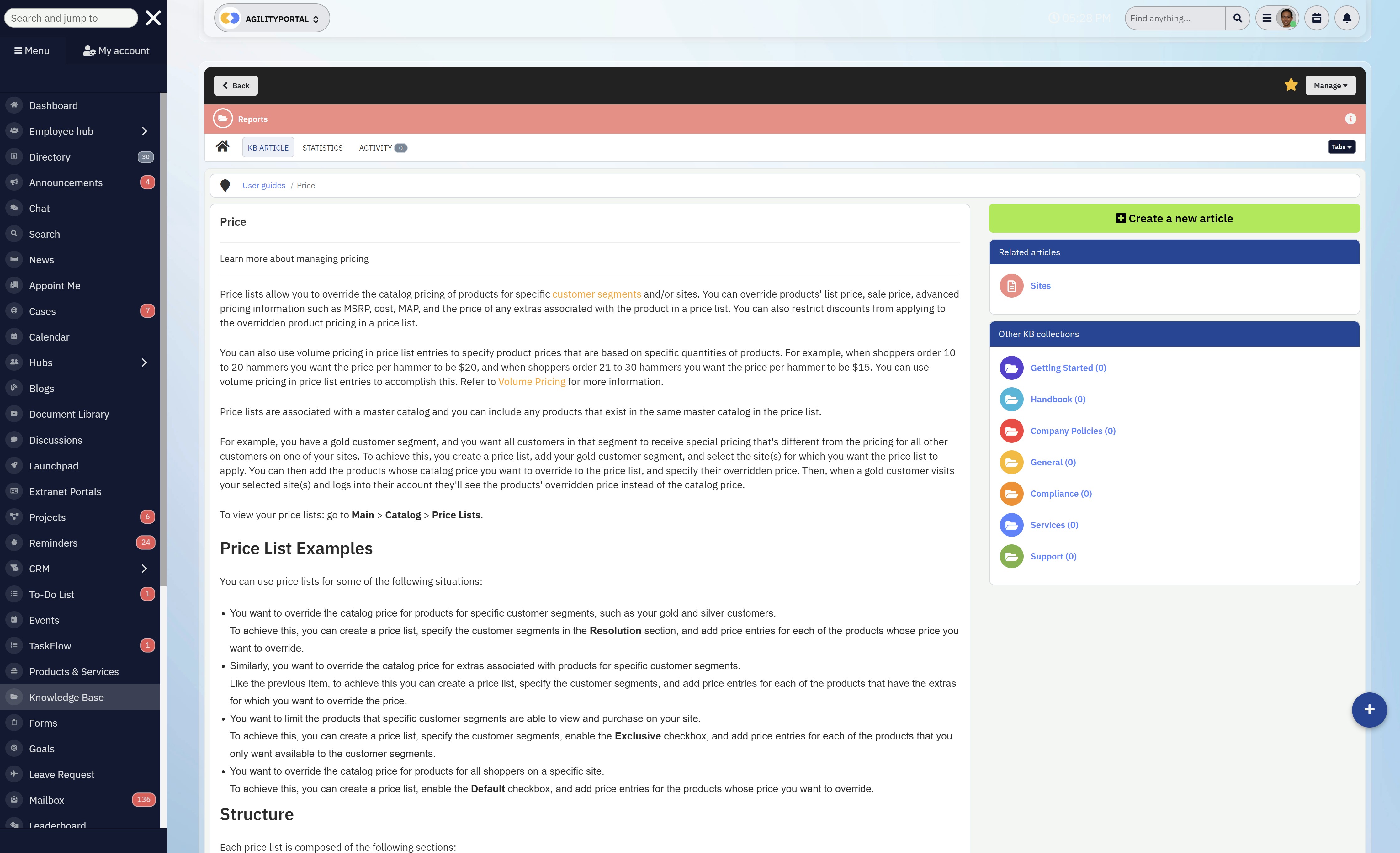
- AgilityPortal combines team messaging, news feeds, and announcements to improve company-wide communication in real time.
- It includes a structured document hub with advanced search, making it easy to find files without digging through folders.
- Built-in task and project tracking tools help teams manage work without switching between apps.
- Mobile-first design ensures frontline and remote workers stay connected from anywhere.
- It supports integrations with tools like Google Workspace, CRMs, and other business systems.
Who It's Best For
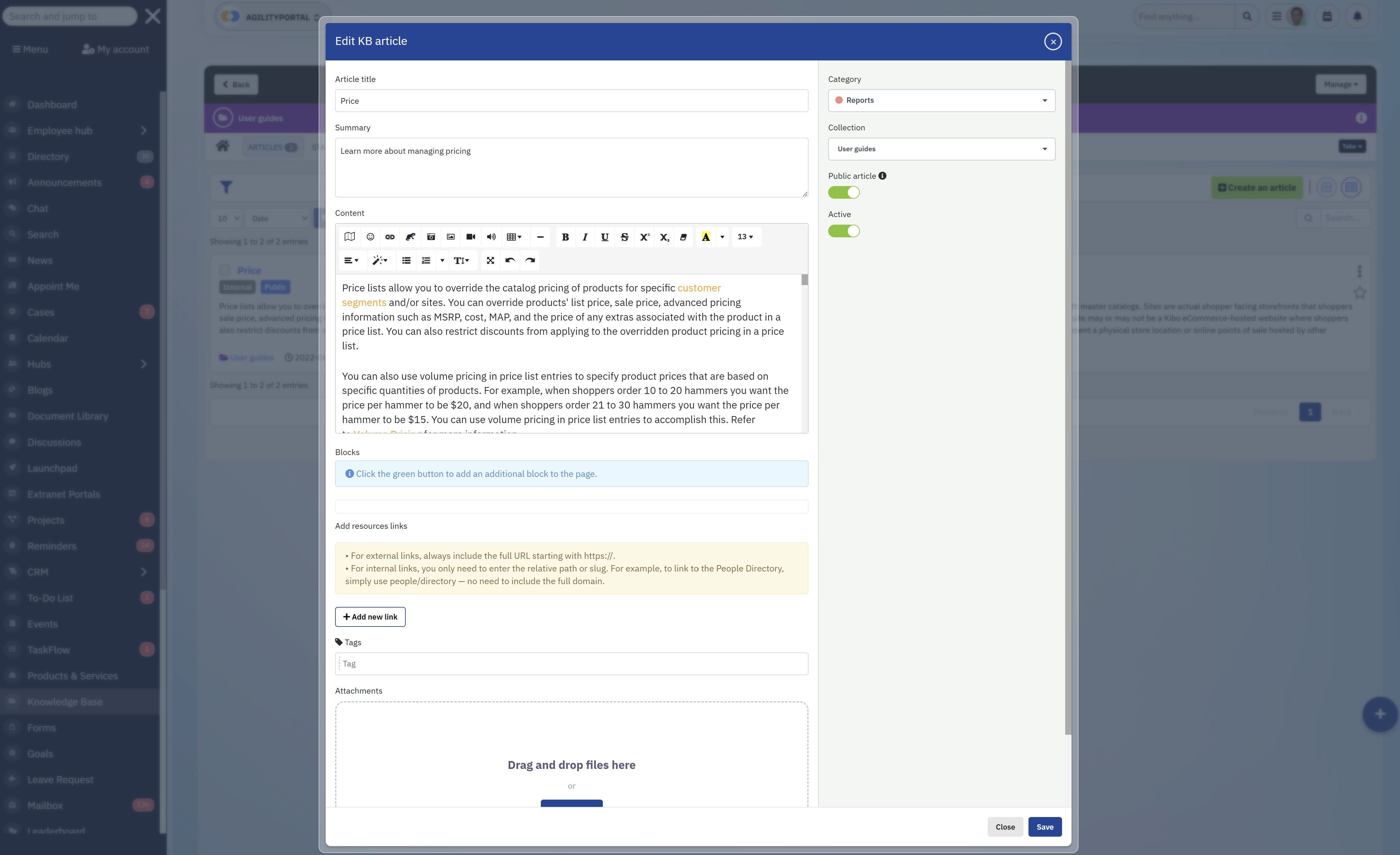
- AgilityPortal is ideal for organisations that want a connected workplace platform without the complexity of SharePoint. It's especially useful for companies with hybrid teams, distributed workforces, or frontline staff who need quick, easy access to information and communication tools.
Pricing
- AgilityPortal offers flexible pricing based on business needs, with a 14-day free trial (no credit card required)—making it easy to test before committing.
JM
James M.
Operations Manager
“We replaced multiple tools with AgilityPortal and finally have one place for communication and knowledge. Our team spends far less time searching.”
AgilityPortal
A Simpler, More Powerful Alternative to SharePoint
AgilityPortal is a modern SharePoint alternative built to simplify how your teams communicate, collaborate, and manage content. Instead of dealing with complex permissions, scattered documents, and low adoption, you get a single platform that combines your company intranet, document management system, and internal communication tools in one place. Designed for real-world usage, it helps teams find information faster, stay aligned, and actually use the platform without constant training or IT support. Whether you’re replacing SharePoint or upgrading your digital workplace, AgilityPortal gives you a more intuitive and scalable way to work.
Try it free for 14 days – no credit card required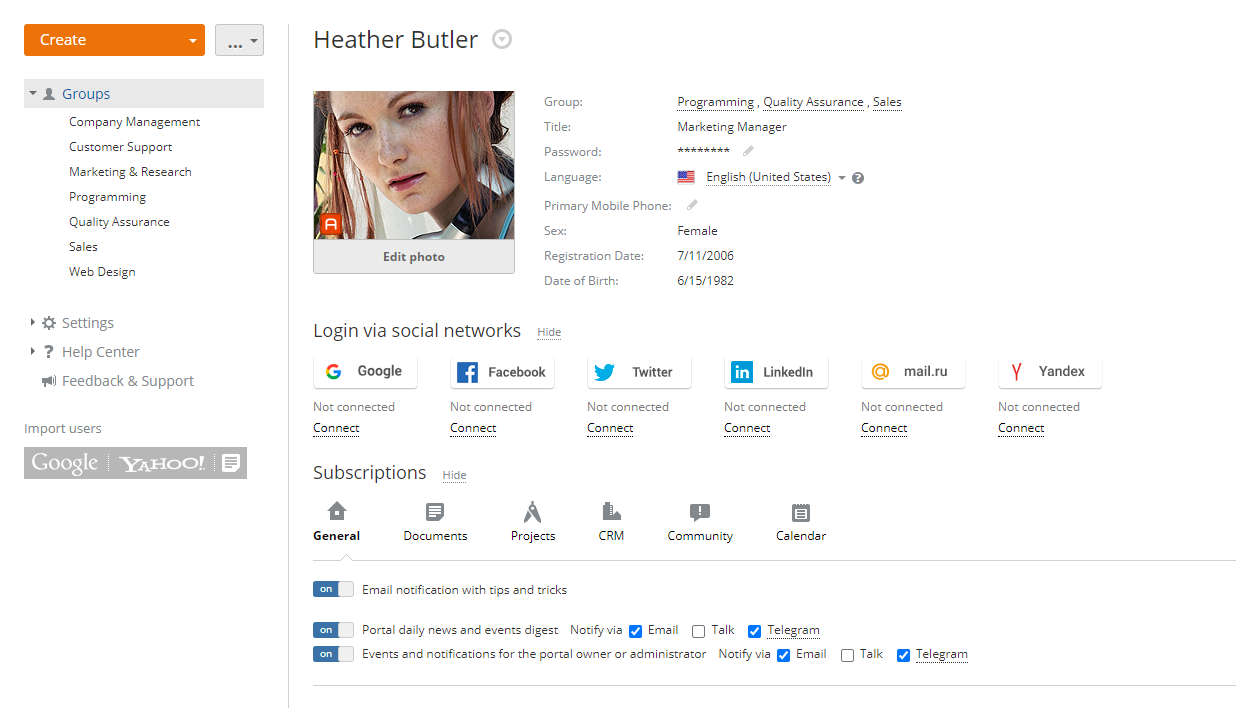
ONLYOFFICE Workspace focuses more on document collaboration and self-hosted productivity tools, giving businesses greater control over their data and environment.
It combines file management with built-in editors, making it a strong option for teams that want everything in one place without relying heavily on external apps.
What stands out is its flexibility. You can deploy it in the cloud or host it on your own servers, which is a big win for companies prioritising data ownership, privacy, and secure file sharing.
It also offers real-time co-editing, so teams can work together on documents, spreadsheets, and presentations without switching platforms.
Key features
- ONLYOFFICE includes integrated editors for documents, spreadsheets, and presentations with real-time collaboration.
- It offers file version control and role-based access to keep content organised and secure.
- Built-in tools for email, calendar, and project coordination help centralise daily work.
- Supports integration with third-party platforms and storage providers for added flexibility.
Who It's Best For
- ONLYOFFICE Workspace is a good fit for organisations that want a self-hosted collaboration suite, especially those with strict compliance or data control requirements. It's also ideal for teams that prioritise document editing and sharing over broader intranet features.
Pricing
- ONLYOFFICE Workspace offers both free and paid plans, with pricing depending on deployment type (cloud vs self-hosted) and the number of users.
ONLYOFFICE Workspace
A Flexible SharePoint Alternative for Document Collaboration
ONLYOFFICE Workspace is a practical SharePoint alternative for businesses that want stronger document collaboration software without being tied too closely to a wider Microsoft setup. It combines file management, online editing, and team tools into one connected workspace, making it easier to manage content and collaborate in real time. For organisations focused on secure workflows and flexible deployment, it offers a more controlled and adaptable team productivity platform.
See real user reviews, pricing insights, and comparisons#3. Nuxeo
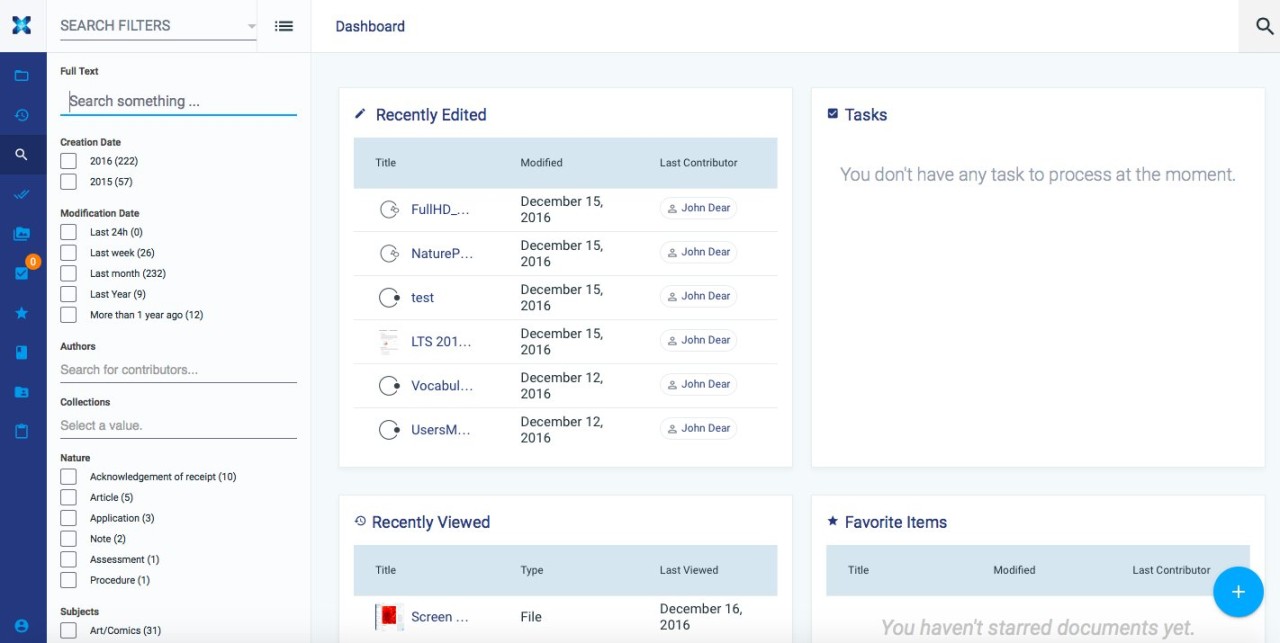
Nuxeo is built for organisations that need serious content lifecycle management rather than just basic file storage.
It's designed to handle large volumes of digital assets, making it a strong option for enterprises dealing with complex documents, media files, and structured data.
Where SharePoint can struggle with scalability and organisation at scale, Nuxeo focuses on digital asset management (DAM) and advanced content services platforms.
It gives businesses the ability to manage, automate, and track content across its entire lifecycle—from creation to archiving—without losing control or visibility.
Key features- Nuxeo offers powerful content modeling and metadata management for organising large datasets.
- Advanced workflow automation tools help streamline approvals and document processes.
- It supports AI-powered tagging and content classification to improve discoverability.
- Highly scalable architecture designed for enterprise-level content operations.
- Nuxeo is best suited for large organisations that need a scalable content platform with deep customisation. It's ideal for industries like media, finance, and legal where managing high volumes of structured and unstructured content is critical.
- Nuxeo typically offers custom enterprise pricing based on requirements, making it more suitable for organisations with larger budgets and complex needs.
Nuxeo
A Scalable SharePoint Alternative for Enterprise Content Management
Nuxeo is a powerful SharePoint alternative designed for organisations that need more than basic document storage. It focuses on enterprise content management and digital asset management, helping businesses manage large volumes of content across their entire lifecycle. Unlike SharePoint, which can become difficult to scale and organise, Nuxeo provides a flexible platform for automating workflows, structuring content, and maintaining control over complex data environments. It’s particularly suited for companies handling high-value content, compliance requirements, or large-scale operations.
Explore enterprise reviews, capabilities, and use cases#4. Confluence
Confluence
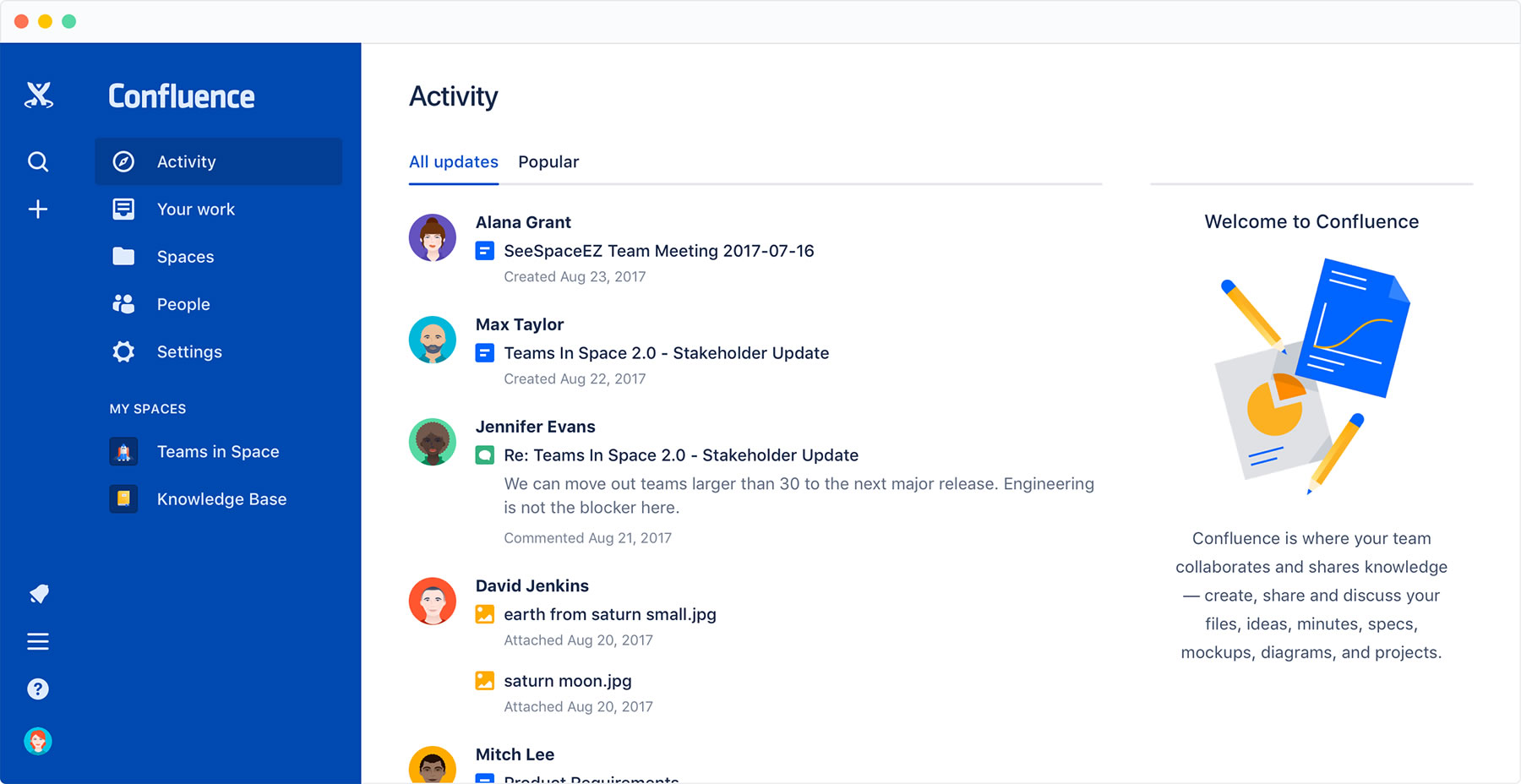
Confluence is built more as a team knowledge base than a traditional file repository.
Developed by Atlassian, it focuses on helping teams document, share, and organise information in a way that's easy to navigate and maintain.
Instead of relying on folders and libraries, Confluence uses pages and spaces, making it feel more like a structured wiki.
This approach works well for teams that want to centralise documentation, meeting notes, and processes without the complexity often associated with SharePoint.
Key features- Confluence provides a clean, page-based editor for creating and organising internal documentation.
- It includes real-time editing, comments, and mentions to support collaboration across teams.
- Powerful search functionality helps users quickly find content across spaces.
- Tight integration with tools like Jira makes it ideal for product and development teams.
- Confluence is a strong fit for teams that need a collaborative knowledge management tool, particularly in tech, product, or project-driven environments. It's less focused on being a full intranet and more on creating a reliable internal knowledge hub.
- Confluence offers a free plan for small teams, with paid plans scaling based on users and additional features.
Confluence
A SharePoint Alternative Built for Team Knowledge Sharing
Confluence is a strong SharePoint alternative for teams that want a more structured and easy-to-use team knowledge base. Developed by Atlassian, it focuses on helping teams create, organise, and share content without the complexity of traditional document systems. Instead of relying on folders, Confluence uses pages and spaces to make information easier to manage and navigate. For organisations looking to improve documentation, onboarding, and internal processes, it offers a more intuitive knowledge sharing platform than SharePoint.
See how teams use Confluence for documentation and collaboration#4. Notion
Compared to Microsoft SharePoint, Notion takes a completely different approach by focusing on flexibility and simplicity rather than rigid structure. It's an all-in-one workspace tool that blends notes, databases, and lightweight project planning into a single environment.
Instead of dealing with complex libraries and permissions, Notion lets you build your own system using pages and blocks.
This makes it popular with teams that want a more visual, adaptable setup for managing content, tasks, and internal resources without heavy configuration.
Key features- Notion uses a flexible block-based editor that allows you to create pages, databases, and dashboards in any format.
- It supports collaborative editing, comments, and task tracking in one place.
- Built-in templates and databases help organise everything from meeting notes to product roadmaps.
- Includes optional AI features for writing, summarising, and organising content.
- Notion is ideal for smaller teams, startups, or departments looking for a lightweight productivity workspace that replaces multiple tools. It's especially useful for teams that value flexibility over strict structure.
- Notion offers a generous free plan, with paid tiers based on team size and advanced features like permissions and admin controls.
Notion
A Flexible SharePoint Alternative for Modern Workspaces
Notion is a popular SharePoint alternative for teams that want a more flexible and visual way to manage work. Instead of rigid structures, it uses a block-based system that lets you build pages, databases, and workflows exactly how you need them. This makes it ideal for teams looking for an all-in-one workspace that combines notes, task tracking, and lightweight project management in one place. For businesses that value simplicity and adaptability, Notion offers a more user-friendly productivity platform compared to SharePoint.
See how teams use Notion to organise work and knowledge#5. Google Workspace
Compared to Microsoft SharePoint, Google Workspace offers a more streamlined and familiar approach to cloud-based collaboration.
Instead of a single complex system, it provides a suite of connected tools like Docs, Drive, Gmail, and Meet that work together seamlessly.
The biggest advantage is ease of use.
Most people already know how to use Google's tools, so there's little to no learning curve. Real-time editing, automatic saving, and simple sharing make it easy for teams to collaborate without worrying about version conflicts or complicated setups.
Key features- Google Drive enables simple file storage and sharing with granular access controls.
- Docs, Sheets, and Slides support real-time co-editing with comments and suggestions.
- Built-in communication tools like Gmail and Meet support remote collaboration.
- Strong integration across Google apps creates a smooth, connected workflow.
- Google Workspace is ideal for teams that want simple collaboration tools without heavy setup. It works well for small to mid-sized businesses that prioritise speed, usability, and real-time teamwork over complex enterprise features.
- Google Workspace offers multiple pricing tiers depending on storage, security, and admin features, with plans typically starting at a lower cost than many enterprise-focused platforms.
Google Workspace
A Simpler SharePoint Alternative for Real-Time Collaboration
Google Workspace is a widely used SharePoint alternative that focuses on simplicity, speed, and real-time collaboration. Instead of a single complex system, it offers a suite of tools like Docs, Drive, Gmail, and Meet that work seamlessly together. This makes it easy for teams to collaborate, share files, and communicate without the overhead often associated with SharePoint. For businesses looking for a more accessible cloud collaboration platform, Google Workspace delivers a familiar and easy-to-use team productivity suite.
See how teams collaborate using Google Workspace tools#6. Slack
Compared to Microsoft SharePoint, Slack is built entirely around real-time communication rather than structured document storage. If your main issue with SharePoint is slow communication or disconnected teams, Slack solves that fast—but it comes with trade-offs.
Slack shines when it comes to instant messaging, team channels, and quick collaboration. Conversations are organised into channels, making it easier to keep discussions focused around projects, teams, or topics instead of scattered across emails.
Key features- Slack enables fast team chat with channels, direct messages, and threaded conversations to reduce noise.
- It supports file sharing and integrates with tools like Google Drive, Dropbox, and OneDrive.
- Slack Connect allows you to collaborate with external partners without giving full system access.
- Offers thousands of integrations and simple automation to streamline workflows.
- Includes lightweight task tracking features to keep teams aligned.
- Slack is ideal for businesses that prioritise internal communication tools, fast decision-making, and team alignment. It works especially well for startups and fast-moving teams—but it's not designed to be a full knowledge repository or structured content management system.
- Slack offers a free plan, with paid tiers starting around $8.75 per user/month. Costs can rise quickly as your team grows, especially if you need advanced admin controls, security, and support.
Slack
A Communication-First SharePoint Alternative for Fast-Moving Teams
Slack is a leading SharePoint alternative for teams that prioritise real-time communication over document-heavy workflows. Instead of focusing on file storage, Slack brings conversations, updates, and collaboration into one place through channels, messaging, and integrations. It’s built for speed, making it easier for teams to stay aligned, share updates, and make decisions quickly. For businesses that need a more responsive team communication platform, Slack offers a simpler and more engaging experience than traditional systems like SharePoint.
See how teams use Slack to improve communication and collaborationFinal Thoughts: Choosing the Right SharePoint Alternative
At this point, it's pretty clear—Microsoft SharePoint isn't necessarily broken, but it's not built for how most teams work today.
Between the complexity, rising costs, and low adoption, many businesses reach a point where they ask the same question: is there a simpler way to do this?
The answer is yes—but only if you focus on what actually matters.
You don't need another tool packed with features your team won't use. You need something that:
- Your employees can pick up without training
- Brings communication, documents, and workflows together
- Scales with your business without increasing complexity
- Actually gets used day to day
That's where platforms like AgilityPortal stand out.
Instead of forcing your team to adapt to the system, AgilityPortal is built around how teams already work—making it easier to share updates, manage content, and stay aligned without the usual friction.
If you're serious about moving away from SharePoint, don't just compare features.
Look at usability. Look at adoption. Look at how quickly your team can get value from day one.
Because the best alternative isn't the one with the most features—it's the one your team will actually use.
AI Summary
- Many businesses are moving away from SharePoint due to complexity, low adoption, and the need for simpler, more user-friendly collaboration tools.
- Modern digital workplace platforms combine communication, file management, and workflows into one system, reducing reliance on multiple disconnected tools.
- Costs with SharePoint can increase quickly as teams grow, especially when factoring in setup, maintenance, and additional integrations.
- Alternatives like intranet platforms, team collaboration software, and employee experience tools focus on usability and faster implementation.
- Choosing the right solution starts with identifying your biggest pain points, whether that’s search, communication, permissions, or integrations.
- Businesses that prioritise ease of use and adoption are more likely to successfully replace SharePoint with a platform their teams actually use.
Most Popular Posts

Effective communication among team members is vital for the productivity and success of any organization. Surprisingly, 60% of companies lack a long-term internal communication strategy, which p...


Businesses thrive on communication for efficiency, productivity and accomplishment. When the right information is passed from the right designation in the organization, it promotes positivity an...

Categories
Blog
(3162)
Business Management
(392)
Employee Engagement
(233)
Digital Transformation
(211)
Growth
(149)
Intranets
(139)
Internal communications
(106)
Remote Work
(68)
Sales
(53)
Collaboration
(52)
Customer Experience
(32)
Culture
(30)
Knowledge Management
(29)
Project management
(29)
Leadership
(20)
Comparisons
(9)
News
(1)

Related Posts

Frontline communication used to mean putting an update on a noticeboard and hoping people saw it. But that just doesn't work anymore. If you manage retail staff, care teams, warehouse workers, hospitality employees or people working out in the field,...

Remote work gives businesses access to wider talent and more flexibility, including people working in remote administrative jobs. However, it can also create a familiar problem: employees spend too much time chasing updates, sitting through mee...

How many meetings have started late because someone could not find the link, could not connect to the meeting-room system, or simply could not hear the people sitting around the table? It happens more often than most businesses would like to ad...

If you'd asked me a few years ago what AI could actually do, I'd probably have said, "Answer questions and write a few paragraphs." That was impressive at the time, but it didn't take long before everything changed. Then AI stopped being just a...

Work chat apps have become the everyday communication layer for modern organisations. Teams use them to ask quick questions, share files, coordinate shifts, solve customer issues and keep projects moving without filling everyone's inbox. ...


Jill Romford
I am a digital nomad, lover of exploring new places and making friends.
I love to travel and I love the internet. I take pictures of my travels and share them on the internet using Instagram.
Traveler, entrepreneur, and community builder. I share my insights on digital marketing and social media while inspiring you to live your fullest life.
Ready to learn more? 👍
One platform to optimize, manage and track all of your teams. Your new digital workplace is a click away. 🚀
Free for 14 days, no credit card required.