Insight Blog
Agility’s perspectives on transforming the employee's experience throughout remote transformation using connected enterprise tools.
1 hour and 2 minutes reading time
(12361 words)
Featured
Employee Engagement Platforms for Businesses: Complete 2026 Buyer Guide

Employee Engagement Platforms for Businesses: Complete Buyer Guide
Discover the best employee engagement platforms for businesses. Compare features, pricing, and tools to choose the right solution for your team.
Employee Engagement Platforms for Businesses: Complete Buyer Guide

If you're looking into employee engagement platforms for businesses, chances are something isn't working the way it should.
Maybe communication feels scattered, employees aren't engaging with tools you've already paid for, or teams just seem disconnected—especially if you're managing remote or hybrid staff.
And here's the reality: it's rarely a people problem.
It's usually a platform problem.
The numbers back this up.
Research from Gallup shows that only around 23% of employees are actively engaged at work, while a huge portion are either disengaged or quietly checked out.
23%
actively engaged
Research from Gallup shows that only around 23% of employees are actively engaged at work, while the majority are either disengaged or quietly checked out.
Source: Gallup Workplace Report
On top of that, studies from McKinsey & Company highlight that employees can spend up to 20–28% of their workweek just searching for information across disconnected systems.
That's not just frustrating—it's expensive.
28%
of the workweek
According to McKinsey & Company, employees can spend 20–28% of their workweek searching for information across disconnected systems.
Source: McKinsey Global Institute
Now layer in the shift to remote and hybrid work.
The global workplace is changing fast, and it's not slowing down anytime soon.
In fact, remote-first and digital workplace platforms are expected to boom significantly by 2033, driven by distributed teams, global hiring, and the need for always-on communication.
Businesses that don't adapt their internal systems now are going to feel that gap widen.
At the same time, there's a wave of emerging innovations shaping the future of work—things like AI-powered search and summarisation, real-time employee sentiment tracking, automation of internal workflows, and fully integrated digital workplaces that replace 4–5 separate tools with one system.
These aren't "nice-to-have" features anymore—they're quickly becoming the baseline.
So as you read through this guide, think of it less as "choosing software" and more as fixing how your business communicates, connects, and operates at scale.
Because the right platform doesn't just improve engagement—it changes how your entire organisation works.
Key Takeaways
- Employee engagement platforms help businesses improve communication, gather feedback, and create a more connected workforce that drives productivity and retention.
- Low adoption, poor mobile experience, and disconnected tools are the main reasons many engagement platforms fail to deliver value.
- The most effective solutions combine communication, surveys, analytics, and knowledge management into one system employees actually use.
- Features like pulse surveys, people analytics, and action planning are essential for turning feedback into real business improvements.
- Choosing the right platform depends on usability, integration, and the ability to move from insight to action quickly.
What Are Employee Engagement Platforms (And Why They Matter for Business Growth)
Let's keep this simple—employee engagement platforms for businesses are tools designed to help you actually understand, connect with, and improve how your employees feel and perform at work.
Not just surface-level "engagement," but the stuff that directly impacts retention, productivity, and how well your teams operate day to day.
At their core, these platforms give you visibility.
Instead of guessing how your workforce feels, you're working with real data. That's where features like employee engagement surveys, pulse surveys, and lifecycle surveys come in.
They help you capture feedback at different stages—whether it's onboarding, ongoing sentiment, or exit insights—so you're not reacting too late.
Then you've got 360 feedback, which goes a step further by giving a well-rounded view of performance and collaboration across teams. It's not just top-down anymore—you're seeing how people actually work together.

But collecting feedback is only half the job. The real value comes from what you do with it.
That's where reporting dashboards and people analytics play a big role.
These tools turn raw feedback into something actionable—highlighting trends, spotting disengagement early, and showing you exactly where issues are building.
Some platforms even go deeper with comments analysis, using AI to break down open-text responses so you can understand the "why" behind the data, not just the numbers.
And most importantly, the best platforms don't stop at insights—they push you toward action planning. Because there's no point running surveys if nothing changes. The goal is to turn feedback into real improvements that employees actually notice.
Why does all this matter?
Because engagement isn't just an HR metric—it directly impacts business performance. Higher engagement leads to lower turnover, better productivity, and stronger internal communication.
Companies that get this right don't just have happier employees—they run more efficiently and grow faster.
So instead of thinking of these platforms as another tool in your stack, it's better to see them for what they really are: a system for understanding and improving how your business works from the inside out.
Related Guides You May Want to Read Next
This employee engagement platforms guide works best as a central resource. The articles below go deeper into surveys, strategy, tools, and engagement models to help you build a stronger, more connected workplace.
- Dimensions of Employee Engagement Explained
- What Are the Components of Employee Engagement?
- How to Measure Employee Engagement Effectively
- Guide to Conducting an Employee Engagement Survey
- How Employee Engagement Is Measured in Practice
- How Do You Choose an Employee Engagement Model?
- Employee Experience vs Employee Engagement: What’s the Difference?
- Top Free Employee Engagement Tools for Growing Teams
- Employee Engagement Tools That Help Boost Company Performance
- Most Effective Ways to Boost Employee Engagement for Frontline Workers
Together, these resources create a stronger employee engagement content hub, giving readers more practical ways to improve communication, feedback, and workplace experience.
Why Employee Engagement Software Actually Matters

Employee Engagement Software Actually Matters
Here's the thing—employee engagement is way too important to just "go with your gut" and hope for the best.
If you're serious about improving retention, building stronger leadership, reducing day-to-day friction, and creating a better employee experience, you need real visibility into what's actually going on inside your business.
That means consistently collecting feedback, understanding what it's telling you, and—most importantly—doing something with it.
This is exactly where employee engagement platforms for businesses come into play.
They make it easier to:
- collect structured feedback without chasing people
- spot trends across teams, departments, or locations
- track engagement over time (not just one-off snapshots)
- quickly identify what needs attention
- give managers clear, data-backed actions
- and show employees that their feedback actually leads to change
Without the right setup, most companies end up in the same place—feedback scattered across tools, slow reporting, and not much real follow-through. And employees notice that.
But with the right platform in place, everything becomes more focused.
You move from guessing to knowing, from reacting late to acting early, and from collecting feedback to actually improving how your organisation runs.
What Should Employee Engagement Software Actually Do?
At a basic level, it's not just about collecting feedback—it's about helping you make sense of it and act on it.
The right platforms for businesses should give you clear answers to questions like:
- How engaged are our employees right now?
- What's actually driving engagement (or disengagement) across different teams?
- Where are the biggest risks or pressure points building up?
- Are things improving, staying flat, or getting worse over time?
- What are employees really saying in their comments—not just the scores?
- And most importantly, what should leaders focus on first?
Because here's where most tools fall short—they stop at surveys. They give you data, but no direction.
Good software goes further. It connects the dots, highlights what matters, and makes it obvious what actions to take next.
That's the difference between just "listening" to employees and actually improving how your business runs.
Why Most Employee Engagement Platforms Fail (And Cost You More Than You Think)
Here's the uncomfortable truth—most employee engagement apps don't fail because the idea is wrong… they fail because of how they're implemented, adopted, and used day to day.
And when they fail, the impact isn't small—it ripples across your entire organisation.
Let's break down the common issues, and more importantly, what they actually lead to.
Here's where it breaks down:
- Low adoption → employees ignore it → communication falls apart
- Too many tools → information gets scattered → productivity drops
- Poor mobile experience → frontline teams excluded → engagement gaps grow
- No clear ROI → leadership loses confidence → budget gets cut
- Overcomplicated systems → slow rollout → frustration across teams
The result?
- Disengaged employees who feel unheard
- Slower communication across teams
- Increased employee turnover
- Lower productivity and efficiency
- Wasted software spend with little return
Buying the wrong platform doesn't just fail to improve engagement—it actively makes things worse.
It creates friction, disconnects teams, and erodes trust in internal systems. That's why choosing the right platform isn't just about features—it's about how it fits into the way your business actually works.
8 Key Features to Look for in Employee Engagement Software
When you're comparing tools, it's easy to get distracted by long feature lists.
But the best employee engagement software focuses on what actually improves communication, visibility, and day-to-day experience for your team.
Here's what really matters:
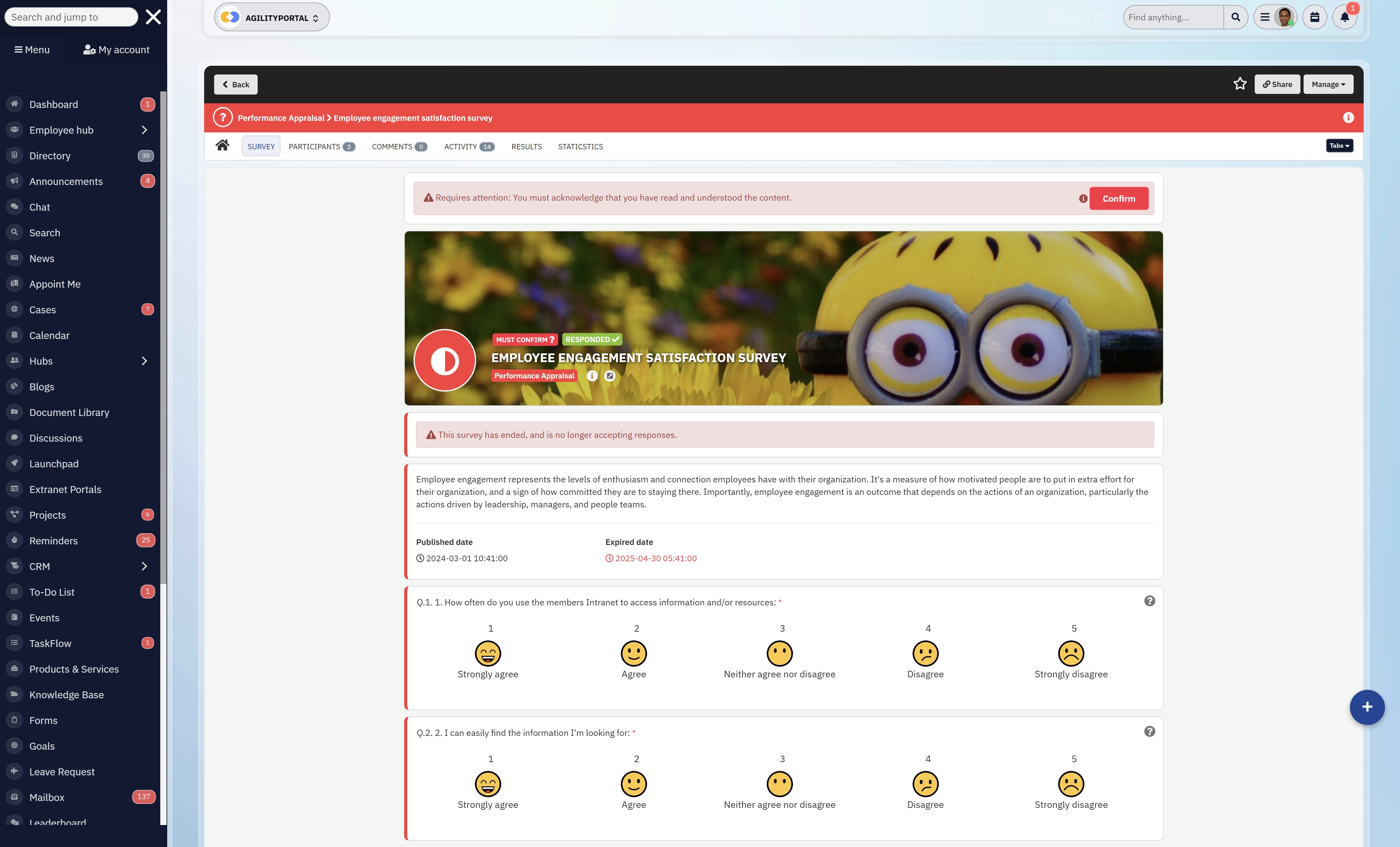
1. Surveys & Engagement Analytics
Surveys & Engagement Analytics
What really separates good engagement software from average tools is what happens after feedback is collected.
It's not just about running surveys—it's about understanding what employees are telling you and turning that into clear next steps.
A strong platform should support things like:
- pulse surveys
- lifecycle surveys
- 360 feedback
- reporting dashboards
- people analytics
- comments analysis
- action planning
Each of these pieces works together.
Surveys capture feedback at different moments, dashboards and analytics highlight what's changing, and comment analysis helps uncover the real meaning behind responses.
Then action planning ties it all together by helping managers actually respond and improve things.
If a tool stops at collecting responses, it's only doing half the job.
The real value comes from helping you spot what matters quickly—and making it easier to act on it before issues grow.
2. Integration with other System
No platform works on its own, and it shouldn't have to.
Look for a solution that connects smoothly with the tools your team already relies on.
In addition, strong platforms typically integrate with tools like:
- Slack (for messaging and team collaboration)
- Microsoft Teams (for meetings and internal communication)
- Salesforce (for customer and business data)
- BambooHR (for employee data and HR workflows)
- Workday (for enterprise workforce management)
- Zoho People (for HR processes and employee records)
The idea isn't to replace everything—it's to bring it all together.
When your systems are connected, information flows properly, teams don't have to jump between tools, and your workplace feels a lot more joined up instead of scattered.
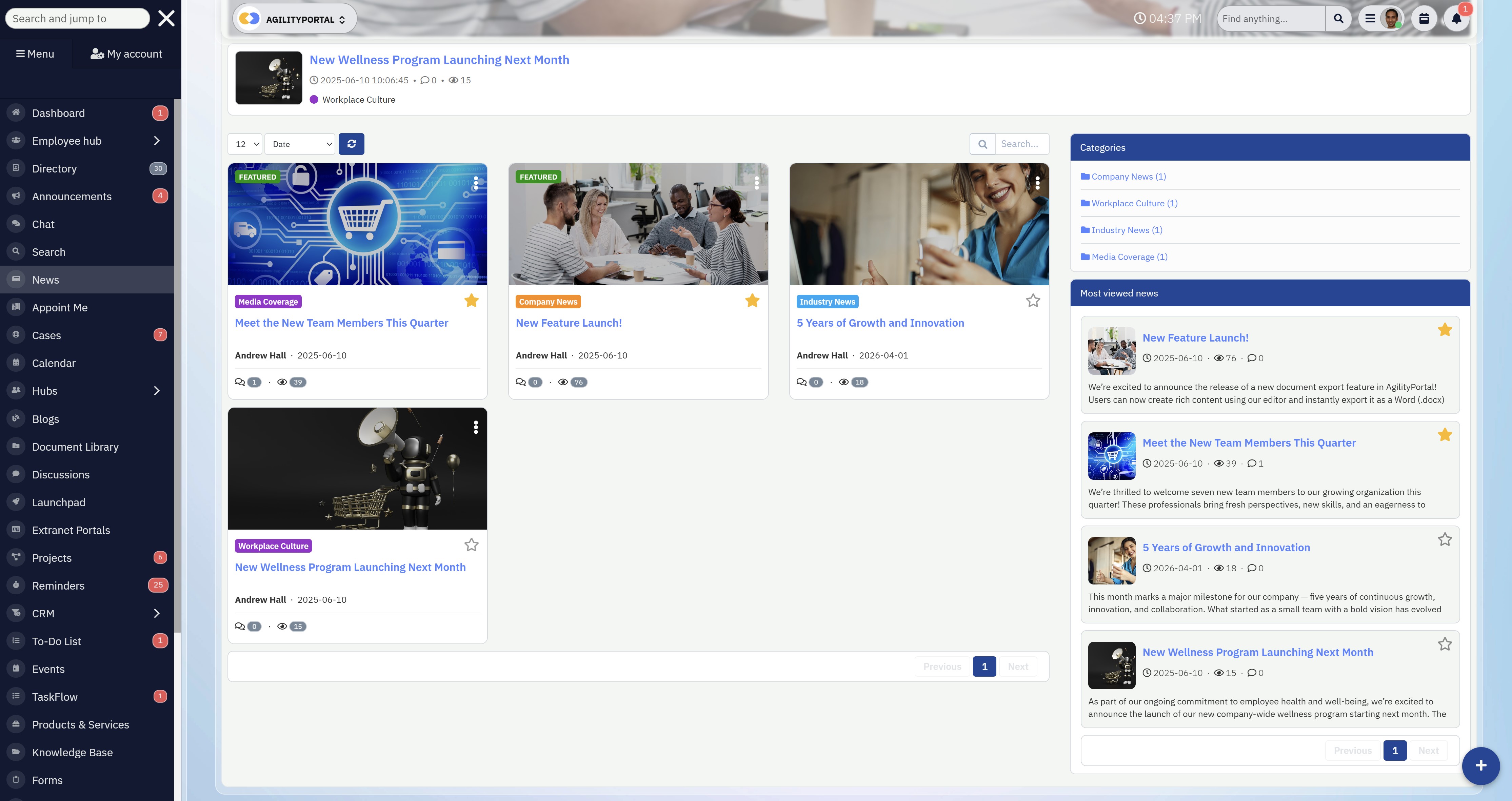
3. Built-in Internal Communication Tools
Built-in Internal Communication Tools
At the core, you need a better way to share information.
Look for features like company news feeds, targeted announcements, and updates that reach the right people at the right time. If communication is still buried in emails, nothing improves.
Key features to look for include:
- Company-wide news feeds and announcements
- Targeted messaging by team, role, or location
- Scheduled and automated communications
- Read receipts and engagement tracking
- Multimedia content (video, images, documents)
- Mobile push notifications for instant updates
- Centralised communication hub (reducing email reliance)
The goal is simple—make sure important information is seen, understood, and acted on, without employees having to go digging for it.
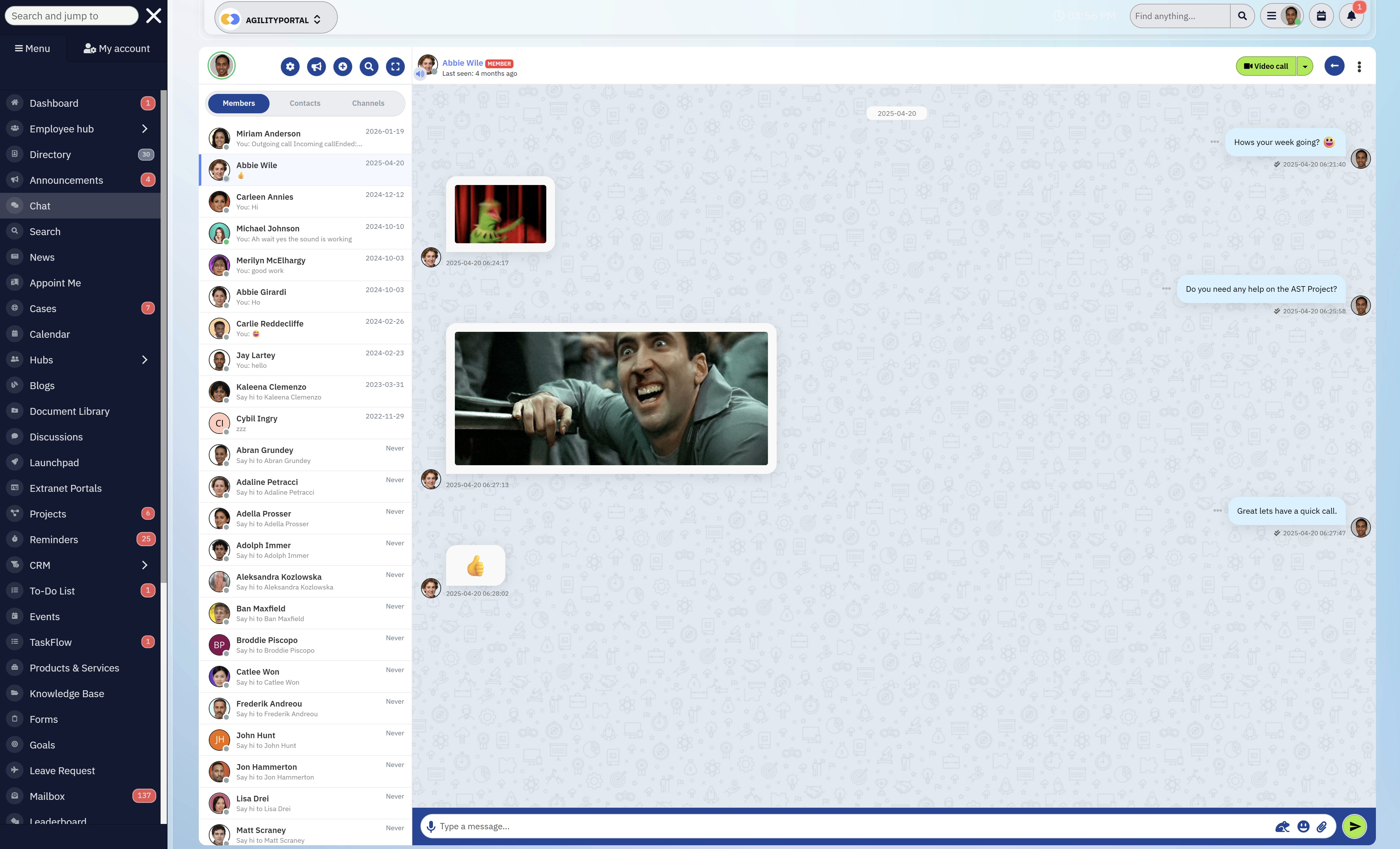
4. Real-Time Chat & Collaboration Features
Real-Time Chat & Collaboration Features
Your team needs to communicate and collaborate without friction.
Built-in chat, channels, and shared spaces help bring conversations into one place instead of being spread across multiple tools.
Key features to look for include:
- Real-time messaging (one-to-one and group chat)
- Team channels or topic-based discussions
- File sharing and collaboration within conversations
- Searchable message history for easy access to past discussions
The goal is to make communication fast, organised, and easy to follow—so teams can stay aligned without constantly switching between apps.
5. Employee Recognition & Rewards Features
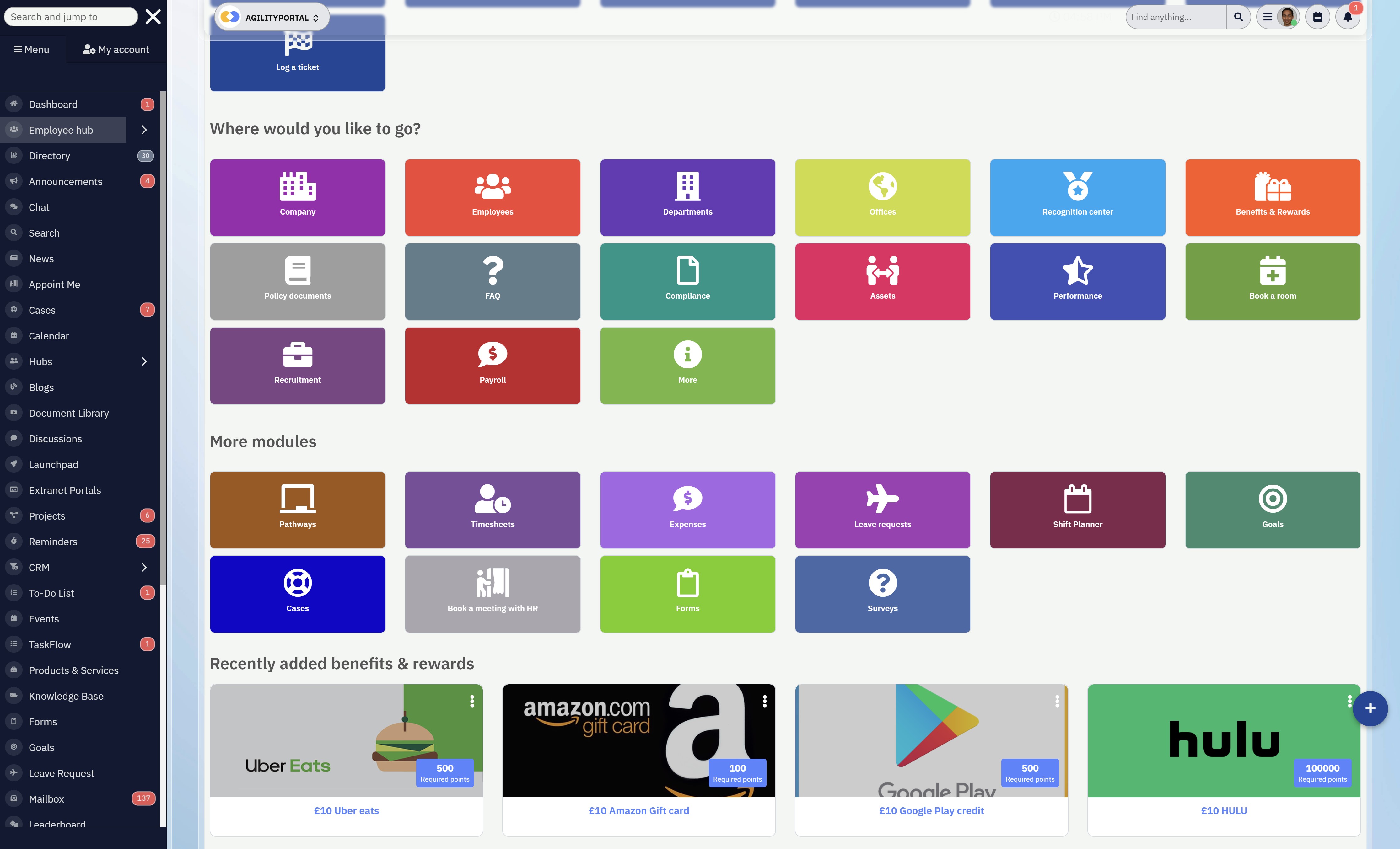
Employee Recognition & Rewards Features
Engagement isn't just about getting work done—it's about people feeling recognised and valued for what they do.
When employees feel appreciated, they're far more likely to stay motivated and connected to the business.
Key features to look for include:
- Peer-to-peer recognition and shoutouts
- Reward systems (points, badges, or incentives)
- Public recognition feeds to celebrate wins
- Milestone tracking (birthdays, work anniversaries, achievements)
The goal is to make recognition visible, consistent, and part of everyday work—not something that only happens once a year.
6. Knowledge Management & Document Management
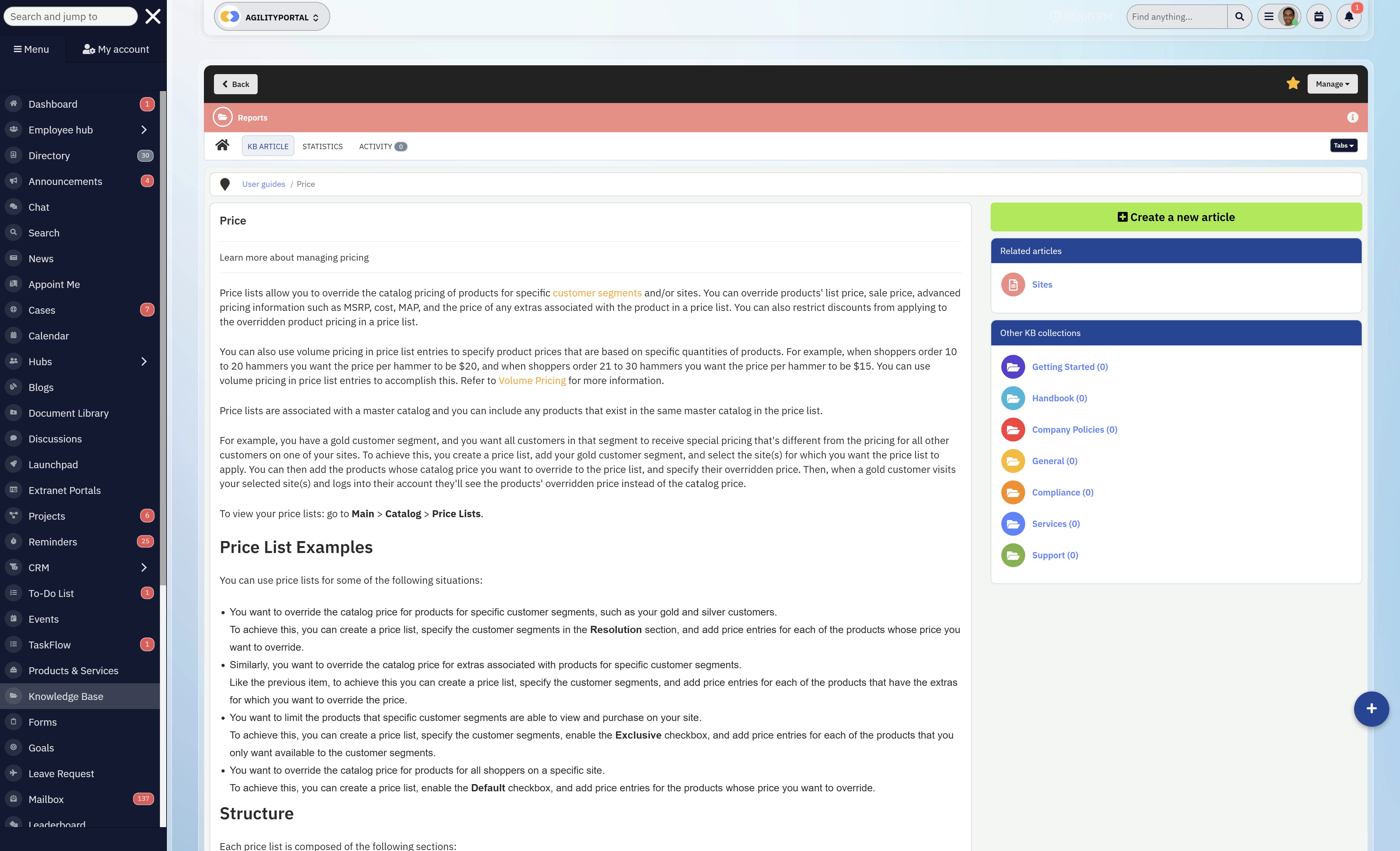
6. Knowledge Management & Document Management
If employees can't find what they need quickly, they switch off—it's that simple.
It should provied a knowledge base library a central place for documents, policies, and resources helps create a single, reliable source of truth.
Key features to look for include:
- Centralised document storage with organised folders and permissions
- Powerful search to quickly find files, policies, and resources
- Version control to ensure employees always access the latest information
The goal is to remove the frustration of searching and make information instantly accessible when it's needed.
7. Mobile-First Experience
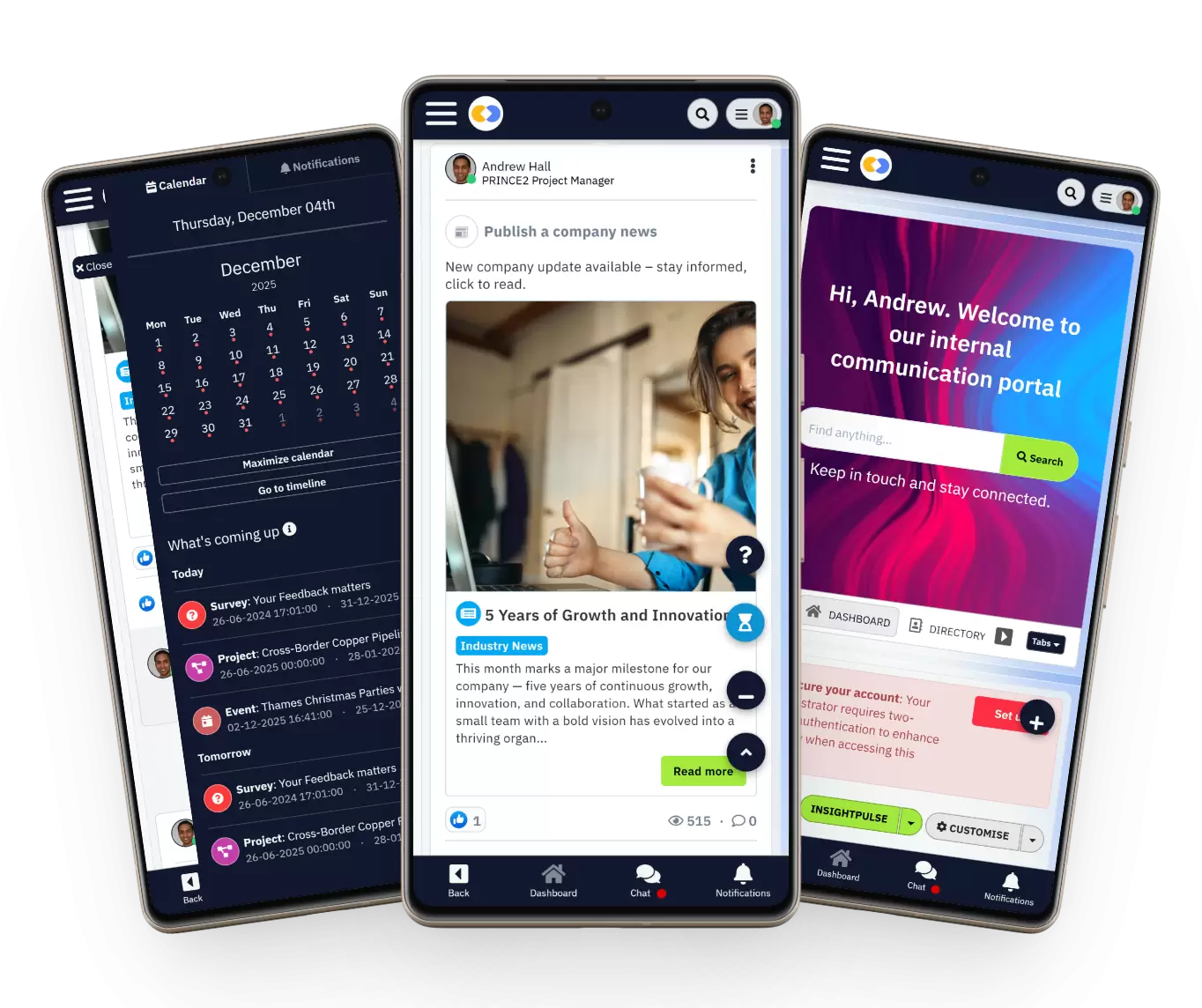
7. Mobile-First Experience
If your platform doesn't work seamlessly on mobile, you're leaving out a huge part of your workforce.
This is especially critical for frontline and remote teams who don't sit at a desk all day.
Key features to look for include:
- Fully responsive mobile app (iOS and Android)
- Offline access for employees in low-connectivity environments
- Push notifications for real-time updates and alerts
- Mobile-friendly content creation and approvals
- Secure access with features like biometric login or PIN
- Multi-language support for diverse, global teams
- Simple, intuitive interface designed for quick, on-the-go use
The goal is to make the platform just as easy to use on a phone as it is on a desktop—so everyone stays connected, no matter where they are.
8. Strong Data Security and Confidentiality
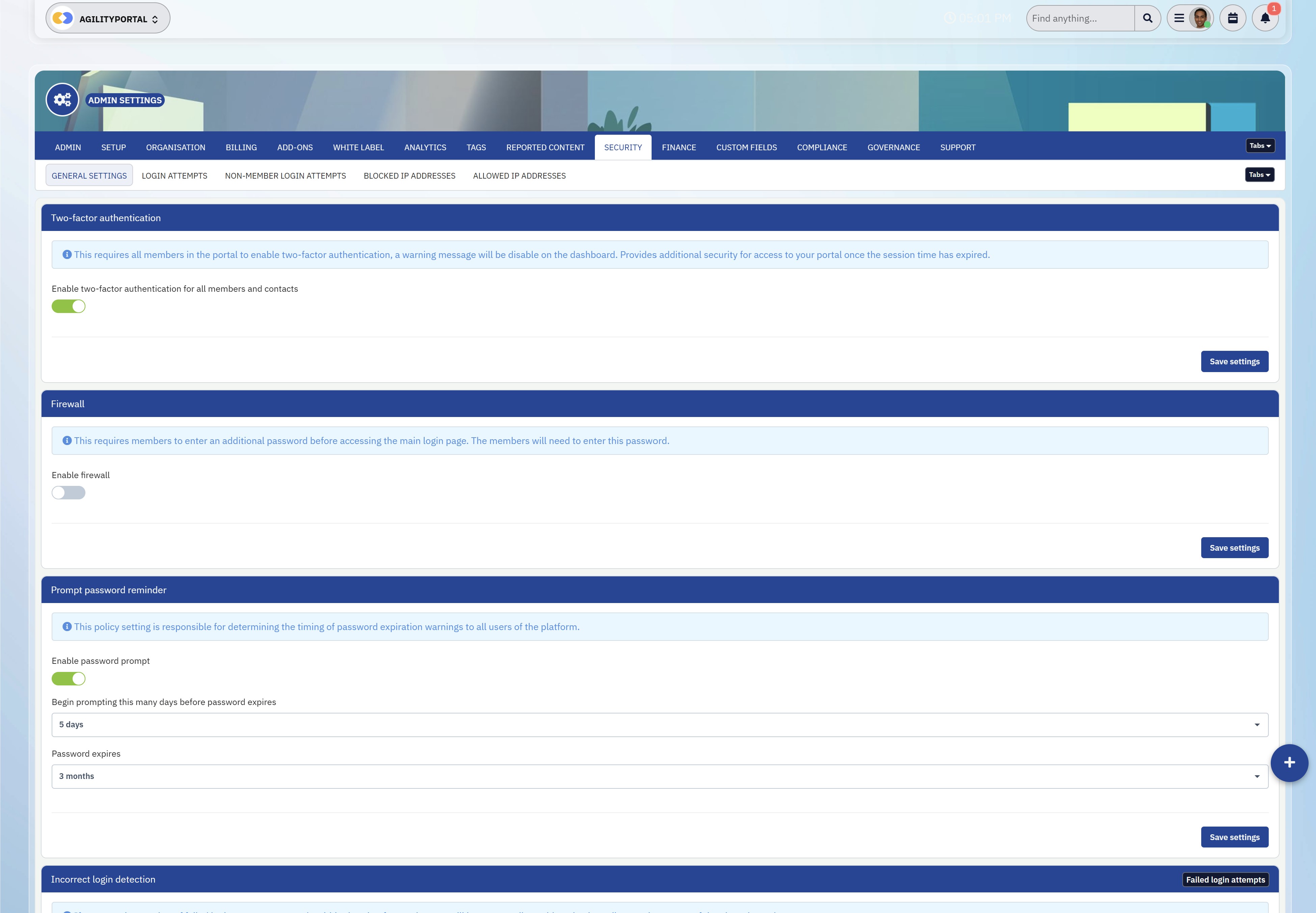
Strong Data Security and Confidentiality
For feedback to be honest, people need to trust the system they're using.
That means your engagement software should have solid security in place, clear confidentiality controls, and strong compliance standards.
If employees feel their responses could be exposed or misused, they'll either hold back—or not respond at all.
This isn't a "nice-to-have." It's a core part of making employee listening actually work. Without trust, the data you collect won't reflect reality—and that defeats the whole purpose.
Types of Employee Engagement Platforms (And Which One You Actually Need)
Let's be honest—this is where most businesses get it wrong.
You start searching for the best employee engagement software, and suddenly you're looking at five different tools—one for communication, one for surveys, another for documents, and something else for recognition.
Before you know it, you've built a stack that's harder to manage than the original problem.
So let's break it down properly, so you can actually choose the right type of employee engagement tools for your business.
Communication-First Platforms
These are your typical employee communication tools—focused on messaging, chat, and quick updates.
They're great if your main issue is getting teams talking and sharing information quickly. But here's the catch—they're not built for deeper engagement, analytics, or long-term employee insights.
👉 Good for: quick communication and team messaging
👉 Limitation: lacks full workforce engagement software capabilities
Intranet-Based Platforms
These fall more into the intranet software or digital workplace tools category.
They're designed to store company information—documents, policies, announcements—and give employees a central place to access it. Done right, they create a strong "single source of truth."
But many older intranet systems struggle with usability, which leads to low adoption.
👉 Good for: document management and internal knowledge
👉 Limitation: often weak as a full employee engagement solution
Employee Experience Platforms
These are more focused on the "people" side—think employee engagement software, surveys, feedback tools, and analytics.
They're strong when it comes to measuring engagement—pulse surveys, sentiment tracking, and recognition—but they often rely on other tools for communication and collaboration.
👉 Good for: insights, feedback, and people analytics
👉 Limitation: not a complete employee engagement system on its own
All-in-One Digital Workplace Platforms
This is where the market is heading—and where most businesses are getting the best results.
These platforms combine internal communication tools, employee engagement software, knowledge management, and collaboration tools into one place. Instead of juggling multiple apps, everything sits in a single system your team actually uses daily.
👉 Good for: complete employee engagement solution for companies
👉 Limitation: may need initial setup to match your structure
Here's the reality—you probably don't need more tools. You need fewer tools that work together.
If your current setup includes chat apps, intranet software, survey tools, and file storage all in separate places, you're already creating friction. That's exactly why many businesses are now moving toward more unified employee engagement platforms or digital workplace solutions.
Because at the end of the day, it's not about ticking feature boxes—it's about choosing something your team will actually use without thinking twice.
Employee Engagement Platform Comparison (Top Solutions for Businesses)
Let's make this simple—if you're comparing tools, you don't want fluff.
You want to quickly see what each platform is good at, where it falls short, and whether it fits your business.
Here's a straightforward comparison of 15 employee engagement platforms worth looking at:
| Platform | Best For | Key Strength | Weakness |
| AgilityPortal | All-in-one engagement + communication | Combines comms, engagement, and knowledge in one place | Limited AI Features |
| Workvivo | Social engagement | Strong user experience and social features | Limited structure for knowledge |
| Staffbase | Enterprise internal comms | Scales well for large organisations | High cost |
| Slack | Team messaging | Easy to adopt and widely used | Not built for engagement or HR insights |
| Microsoft Teams | Document management | Strong within Microsoft ecosystem | Poor user adoption |
| Microsoft SharePoint | Collaboration + meetings | Strong within Microsoft ecosystem | Can feel cluttered |
| Lark | Messaging platform | Familiar Facebook-style interface | Being phased out / limited future |
| Simpplr | Modern intranet | Clean UX and easy navigation | Expensive at scale |
| LumApps | Enterprise intranet | Strong Google integration | Complex setup |
| Jostle Corporation | Company-wide communication | Simple and engaging interface | Limited advanced features |
| Haiilo | Internal communications | Strong content targeting | Less focus on collaboration |
| Connecteam | Frontline teams | Mobile-first and easy to use | Limited desktop experience |
| Beekeeper | Deskless workforce | Excellent mobile communication | Can get expensive |
| BambooHR | HR management | Strong employee data and HR tools | Weak communication features |
| Culture Amp | Surveys & analytics | Deep insights and benchmarking | Not a full workplace solution |
If you're noticing a pattern—you should.
Most tools fall into one of three buckets:
- Communication tools (Slack, Teams)
- Intranet/document tools (SharePoint, LumApps)
- Engagement/HR tools (Culture Amp, BambooHR)
Very few actually combine all three effectively—which is why many businesses end up stitching multiple tools together.
That's usually where things start to break.
#1. AgilityPortal (Best All-in-One Employee Engagement Platform)
Let's start with AgilityPortal—because this is where things get interesting.
From what we've seen, this isn't just another employee engagement platform trying to bolt features together.
It's clearly built as a complete digital workplace, which means you're not jumping between tools to manage communication, engagement, and knowledge.
If you're tired of stacking apps (chat + surveys + intranet + docs), this is the kind of platform that actually replaces that mess.
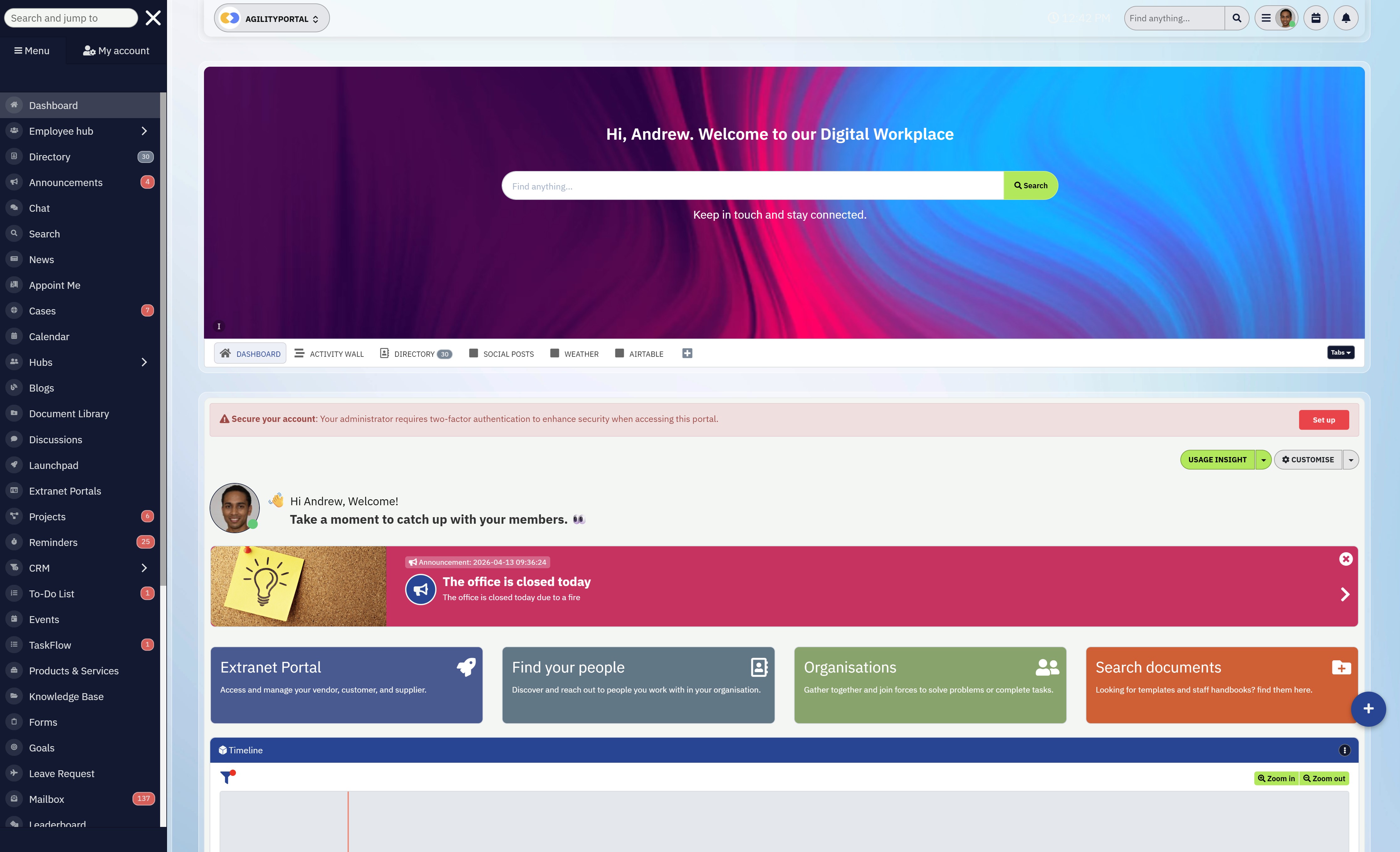
#1. AgilityPortal (Best All-in-One Employee Engagement Platform)
- Engagement surveys to capture real-time employee feedback
- Built-in performance and review management tools
- Goal tracking to align teams with business objectives
- Analytics dashboards for engagement and workforce insights
- Internal communication tools (news feeds, chat, announcements)
- Centralised document and knowledge management
- Everything sits in one place internal comm, employee portal, (huge win for adoption)
- Strong analytics and reporting without needing extra tools
- Combines communication + engagement + knowledge (rare)
- Scales well as your business grows
- Requires some setup to match your company structure
- Might feel like more than you need if you only want surveys
- Best value comes when you use the full platform
If you're looking for a simple survey tool, this probably isn't it.
But if you want a platform that actually improves how your business runs day to day—communication, engagement, and visibility—AgilityPortal is easily one of the strongest all-in-one options out there.
AgilityPortal
An All-in-One Digital Workplace Platform for Communication, Engagement, and Collaboration
AgilityPortal is built as a complete employee engagement platform that brings communication, collaboration, and knowledge into one place. Instead of juggling multiple tools, it gives businesses a single system for announcements, chat, documents, and feedback. This makes it easier for teams to stay aligned, access information quickly, and actually use the platform every day—not just when they have to.
See how AgilityPortal can improve communication, engagement, and productivity in your business#2. Workvivo (Best for Social-Style Employee Engagement)
Workvivo takes a very different approach—it's built more like a social network for your company than a traditional employee engagement tool.
From our experience, it's one of the easiest platforms to roll out. People get it quickly because it feels familiar (think Facebook-style feeds, likes, comments). That alone solves a big problem—adoption.
But… that simplicity also comes with trade-offs.
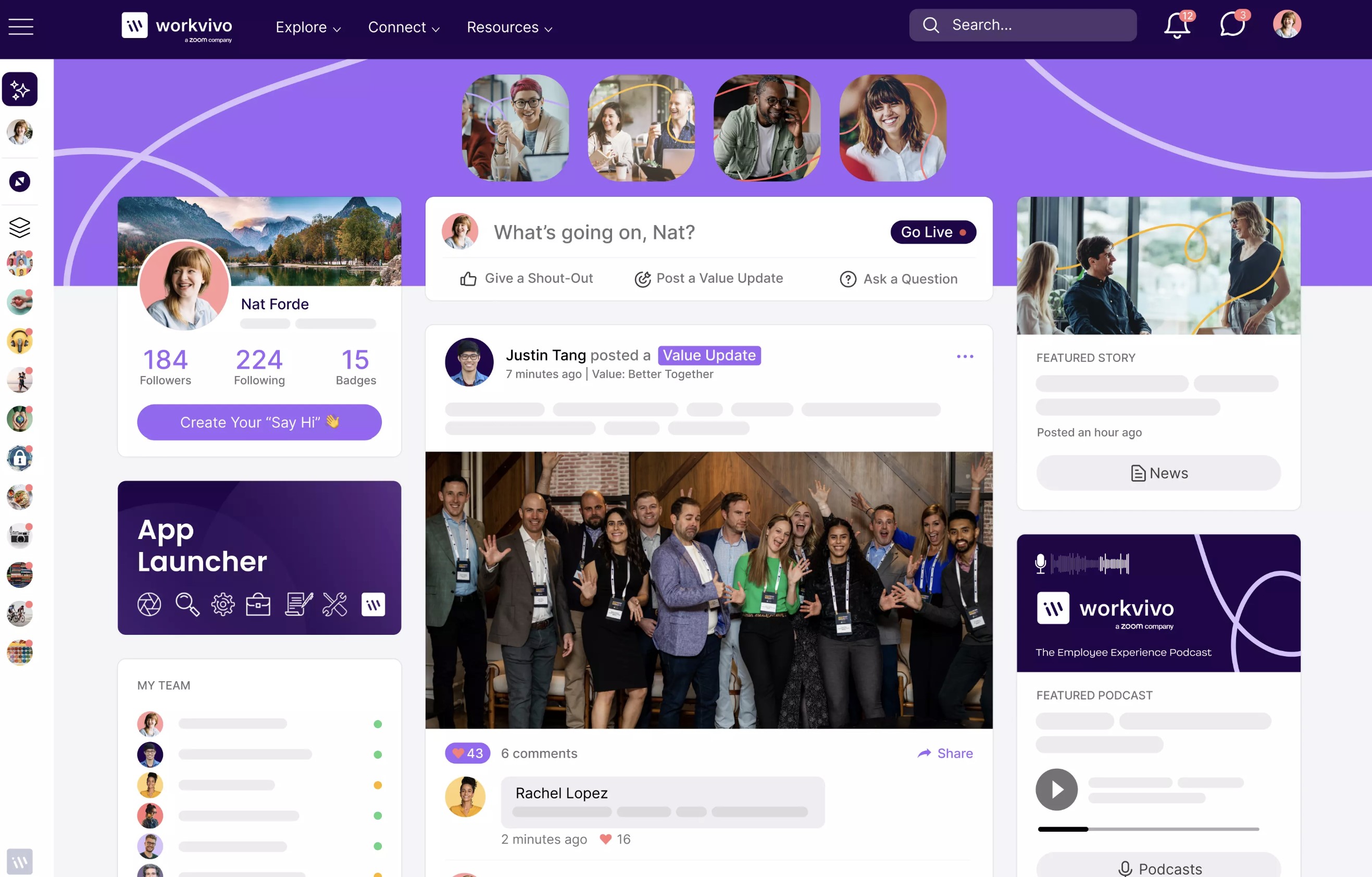
#2. Workvivo (Best for Social-Style Employee Engagement)
Key Features:
- Social news feed with posts, likes, and comments
- Employee recognition and shoutouts
- Surveys and polls for quick feedback
- Basic analytics and engagement insights
- Very easy for employees to adopt
- Strong focus on culture and engagement
- Great for internal communication and updates
- Lacks depth in knowledge management
- Limited structure for documents and processes
- Analytics not as advanced as some competitors
- Custom pricing (typically mid-to-high range depending on size)
If your main goal is to boost engagement and culture quickly, Workvivo does that well.
But if you need something more structured—like document management, deeper analytics, or a full digital workplace—you'll likely need to pair it with other tools.
Workvivo
A Social-First Employee Engagement Platform Built for Culture, Communication, and Visibility
Workvivo is a strong option for businesses that want an employee engagement platform with a more social, community-driven feel. Instead of acting like a traditional intranet, Workvivo focuses on internal communication, employee recognition, updates, and social interaction in one place. It’s especially well suited to organisations that want to improve visibility, strengthen culture, and give employees a more engaging digital workplace experience without relying only on email or static intranet pages.
See how Workvivo is positioned for employee engagement, communication, and culture#3. Staffbase (Best for Enterprise Internal Communications)
Staffbase is clearly built for large organisations that need to control and scale internal communication across multiple locations, teams, and regions.
From what we've seen, it's very strong when it comes to structured communication—especially for enterprises that need targeted messaging, governance, and consistency.
But it leans heavily into comms rather than being a full employee engagement platform
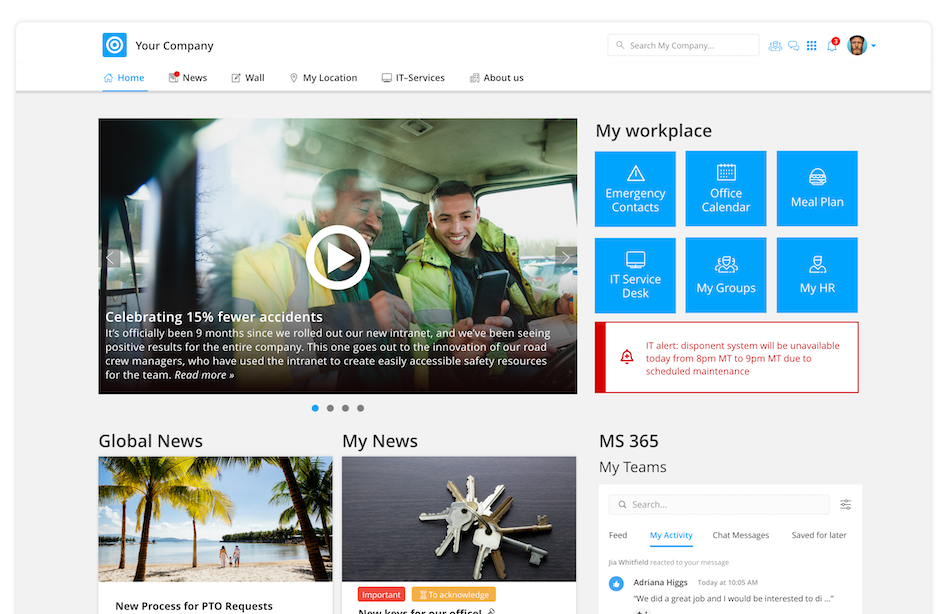
#3. Staffbase (Best for Enterprise Internal Communications)
Key Features:
- Targeted internal communications and announcements
- Mobile app for frontline and remote employees
- Content management and campaign planning tools
- Employee surveys and communication analytics
- Excellent for large-scale, structured communication
- Strong mobile experience for frontline teams
- Advanced targeting and segmentation
- Expensive compared to other tools
- Limited collaboration and knowledge features
- Not a full all-in-one workplace solution
- Custom enterprise pricing (typically higher-end)
If your priority is enterprise-grade internal communication, Staffbase does that really well.
But if you're looking for something that combines communication, engagement, collaboration, and knowledge in one place, you may find it a bit too focused on just one area.
Staffbase
An Enterprise-Grade Internal Communication Platform Built for Scale
Staffbase is designed for organisations that need structured, large-scale internal communication tools. It focuses on delivering targeted messages, company updates, and content across distributed teams—especially frontline and global workforces. Rather than acting as a full employee engagement platform, Staffbase excels in helping enterprises control communication, improve reach, and ensure employees stay informed.
See how Staffbase supports enterprise communication and employee engagement at scale#4. Slack (Best for Team Messaging and Collaboration)
Slack is probably the most well-known team communication tool, and for good reason—it's fast, simple, and easy to roll out.
From what we've seen, it works really well for day-to-day conversations and keeping teams connected.
But when it comes to being a full employee engagement platform, it starts to show its limits pretty quickly.

#4. Slack (Best for Team Messaging and Collaboration)
Key Features:
- Real-time messaging and team channels
- Direct messaging and group chats
- File sharing and app integrations
- Searchable message history
- Extremely easy to use and adopt
- Huge ecosystem of integrations
- Great for quick communication and collaboration
- Not built for employee engagement or surveys
- Important information gets lost in chats
- No structured knowledge management
- Free plan available
- Paid plans per user, per month
Slack is great if you just need fast, reliable communication.
But if you're trying to improve engagement, track feedback, or create a structured digital workplace, it's not enough on its own—you'll end up needing multiple tools around it.
Slack
A Communication-First Platform Built for Fast, Real-Time Collaboration
Slack is one of the most widely used team communication platforms, designed to replace email with faster, real-time messaging. It brings conversations, files, and integrations into one place through channels and direct messaging. While it’s not a full employee engagement platform, it plays a key role in improving communication, collaboration, and day-to-day team alignment—especially for fast-moving businesses.
See how Slack helps teams improve communication and collaboration#5. Microsoft Teams (Best for Collaboration and Meetings)
Microsoft Teams is one of those tools most businesses already have—but don't always use properly.
From what we've seen, it's strong for day-to-day collaboration.
Messaging, video calls, and file sharing are all in one place, which makes it easy for teams to stay connected—especially if you're already using Microsoft 365.
But when it comes to being a full employee engagement platform, it's not really built for that.
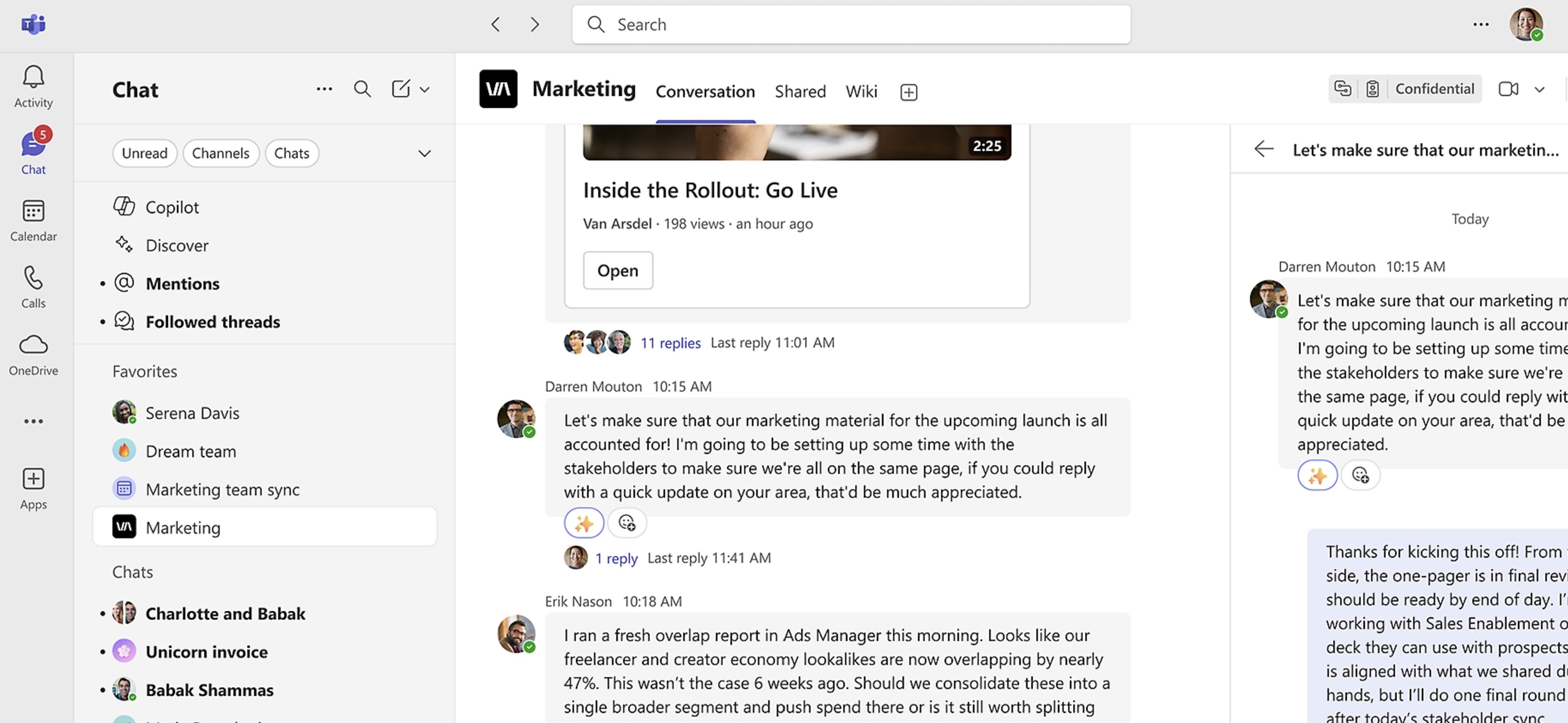
#15. Microsoft Teams (Best for Collaboration and Meetings)
Key Features:
- Team messaging and channel-based communication
- Video meetings and conferencing
- File sharing and collaboration within chats
- Integration with Microsoft 365 tools
Pros:
- Easy to adopt if you're already using Microsoft
- Combines chat, meetings, and files in one place
- Works well for remote and hybrid teams
Cons:
- Can feel cluttered as teams grow
- Important information gets buried in conversations
- No built-in engagement surveys or analytics
Pricing:
- Included with Microsoft 365 plans
Microsoft Teams is great for collaboration and communication.
But if your goal is to improve engagement, collect feedback, or get real insight into your workforce, you'll need something more specialised alongside it
Microsoft Teams
A Collaboration Platform for Messaging, Meetings, and Teamwork in One Place
Microsoft Teams is a widely used collaboration platform that brings messaging, video meetings, and file sharing together within the Microsoft ecosystem. It works well for day-to-day communication and teamwork, especially for organisations already using Microsoft 365. While it supports collaboration effectively, it’s not a full employee engagement platform with surveys, analytics, or structured feedback built in.
See how Microsoft Teams supports collaboration and communication across organisations#6. Microsoft SharePoint (Best for Document Management and Intranet)
Microsoft SharePoint has been around for years and is still widely used as an intranet and document management system, especially in organisations already using the Microsoft ecosystem.
From what we've seen, it's powerful—but not exactly user-friendly. It does a solid job storing and organising content, but when it comes to engagement or daily usage, it can feel clunky.
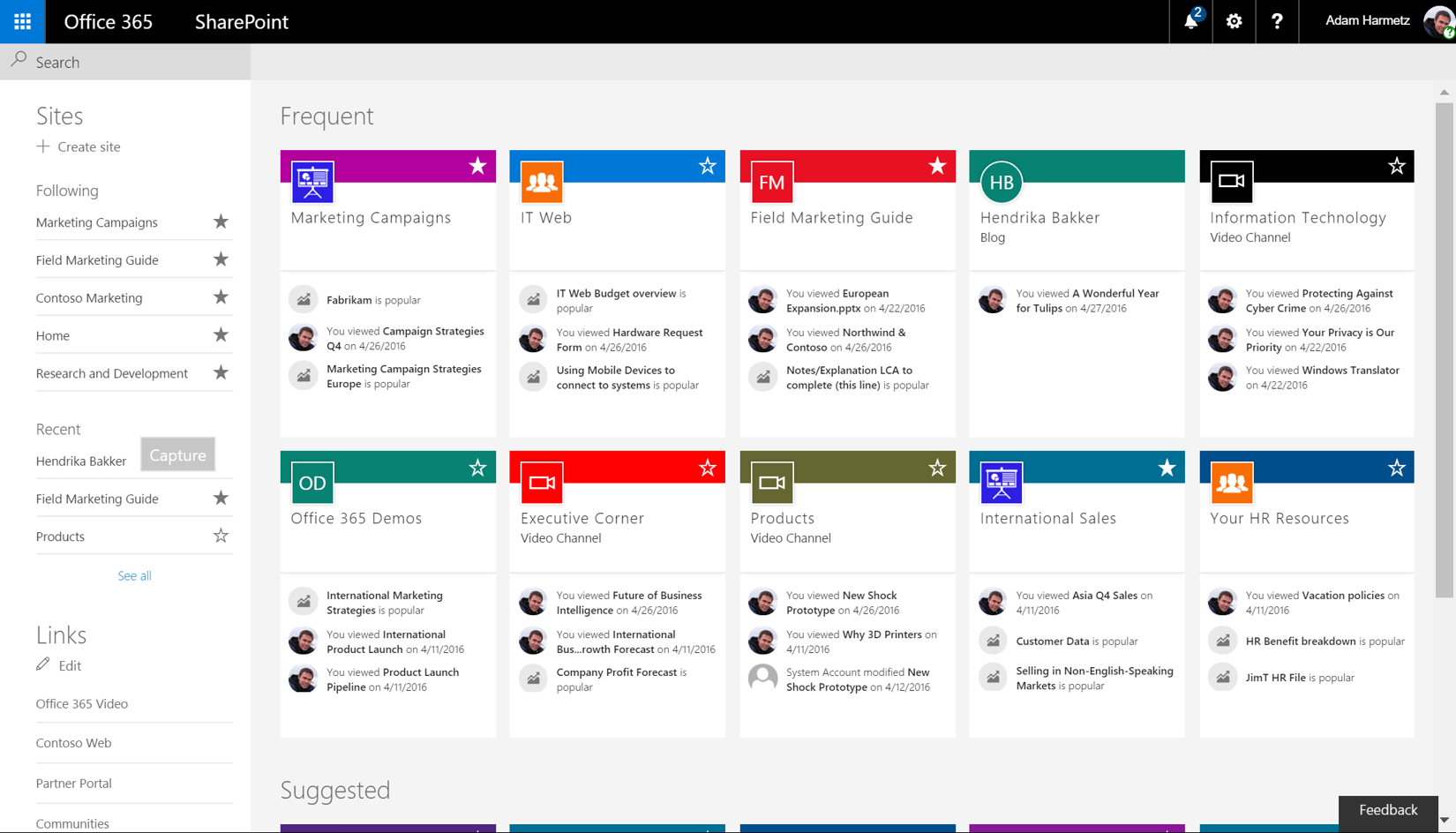
#4. Slack (Best for Team Messaging and Collaboration)
Key Features:
- Document management and file storage
- Intranet pages and internal sites
- Permissions and access control
- Integration with Microsoft 365 tools
- Strong document control and governance
- Deep integration with Microsoft tools
- Scales well for large organisations
- Low user adoption in many companies
- Complex to set up and manage
- Not designed for engagement or real-time communication
- Included with Microsoft 365 subscriptions
SharePoint works well as a back-end system for documents and intranet content.
But if you're expecting it to drive engagement or improve communication, it usually falls short—which is why many businesses end up layering other tools on top.
Microsoft SharePoint
An Enterprise Intranet and Document Management Platform for Structured Content
Microsoft SharePoint is widely used as an intranet software and document management platform within the Microsoft ecosystem. It’s designed to organise content, manage permissions, and create internal sites for teams. While it provides strong control over files and governance, it’s not built as a full employee engagement platform, which is why many organisations layer additional tools on top for communication and collaboration.
See how SharePoint is used for intranet, document management, and enterprise content control#7. Lark (Best for All-in-One Collaboration with Built-In Productivity Tools)
Lark is one of those platforms trying to do everything in one place—chat, meetings, documents, calendars, and workflows—all tightly integrated.
From what we've seen, it's surprisingly strong if you want a single tool to handle day-to-day collaboration. It feels like a mix between Slack, Google Workspace, and a lightweight intranet.
But it leans more toward productivity than a true employee engagement solution.
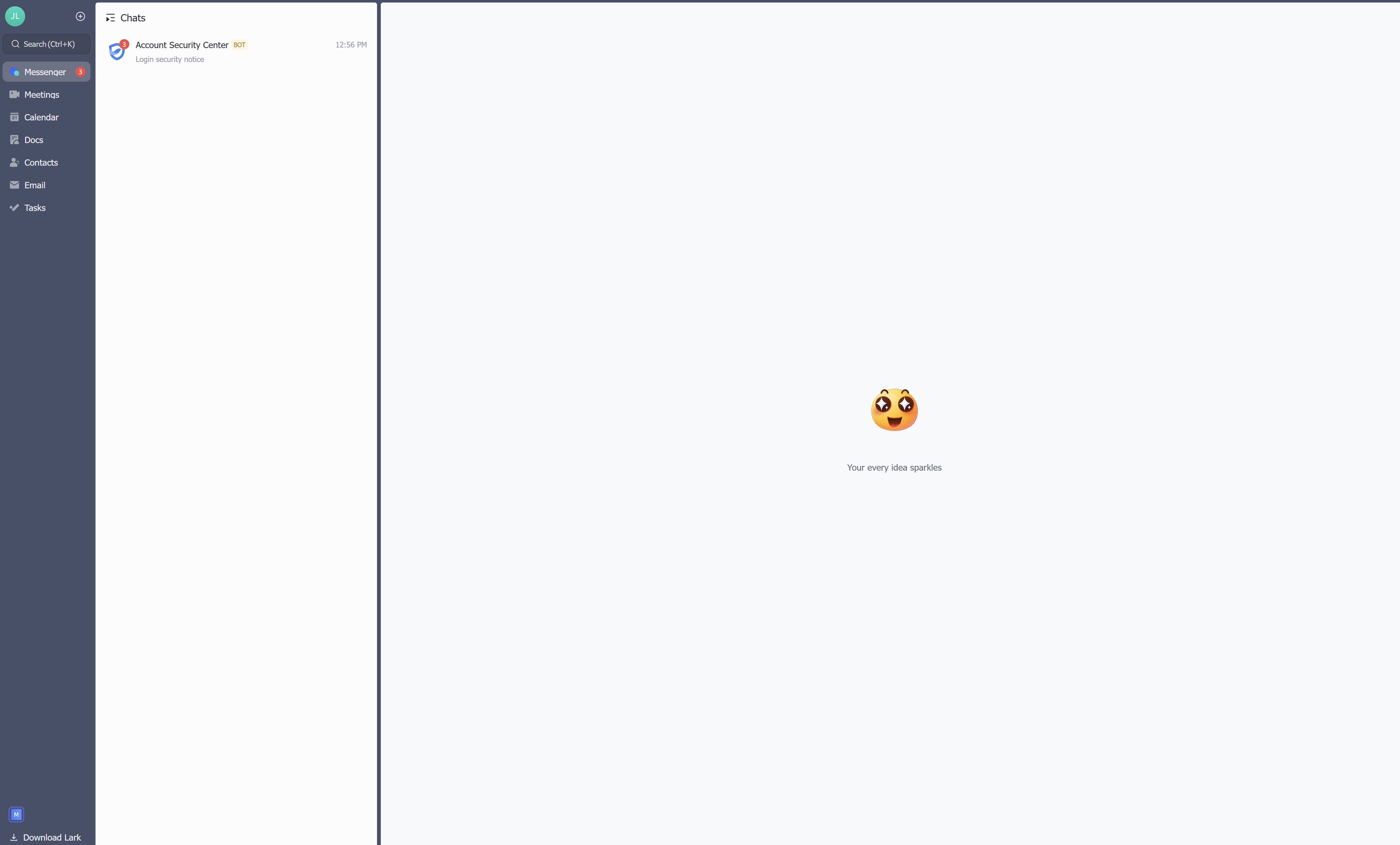
#7. Lark (Best for All-in-One Collaboration with Built-In Productivity Tools)
Key Features:
- Real-time messaging and video conferencing
- Shared documents and collaborative editing
- Built-in calendar and task management
- Workflow automation and approvals
- Strong all-in-one collaboration setup
- Reduces need for multiple productivity tools
- Good value compared to using separate apps
- Limited focus on engagement and surveys
- Analytics and insights are fairly basic
- Can feel overwhelming with so many features
- Free plan available
- Paid plans per user, per month
Lark is a solid option if your goal is to replace multiple productivity tools with one platform.
But if you're specifically looking to improve engagement, track employee sentiment, or run structured feedback programs, you'll likely need something more specialised alongside it.
Lark
An All-in-One Collaboration Platform Combining Chat, Docs, and Meetings
Lark is designed as an all-in-one collaboration platform that brings messaging, video calls, documents, and workflows into a single system. Instead of switching between multiple tools, teams can manage communication and productivity in one place. While it’s strong for daily operations and collaboration, it leans more toward productivity than a full employee engagement platform with deep feedback and analytics features.
See how Lark combines communication and productivity tools into one platform#8. Simpplr (Best for Modern Intranet Experience)
Simpplr is focused on doing one thing really well—creating a clean, modern intranet experience that employees actually use.
From what we've seen, it's a big step up from traditional intranet tools like SharePoint. The interface is simple, content is easier to manage, and it feels much more user-friendly.
That said, it's still primarily an intranet—not a full employee engagement platform.
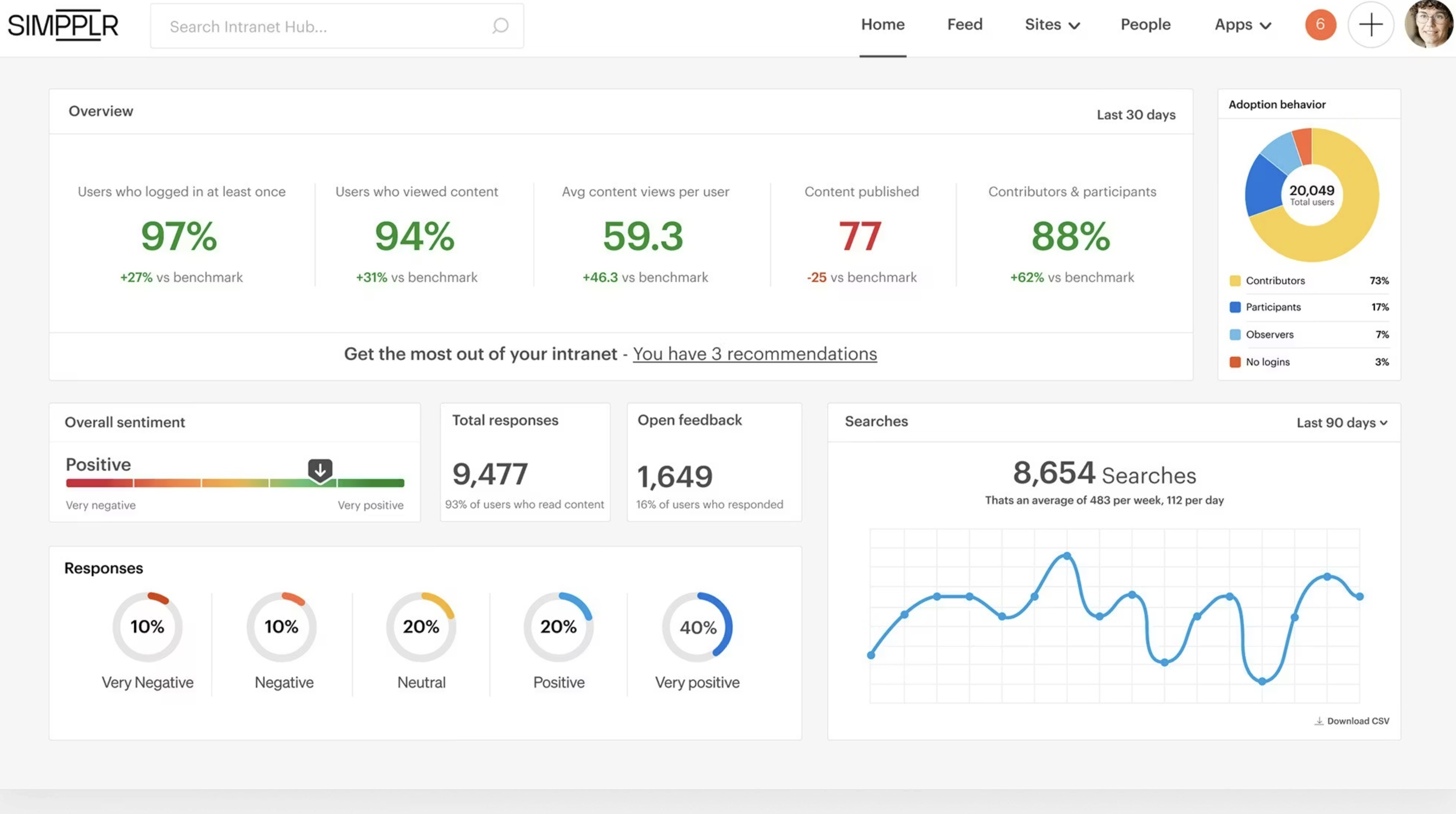
#8. Simpplr (Best for Modern Intranet Experience)
Key Features:
- Modern intranet with personalised content
- Internal news, announcements, and updates
- Employee directory and profiles
- Content management and publishing tools
- Clean, easy-to-use interface (good for adoption)
- Strong internal communication features
- Much simpler than legacy intranet systems
- Limited engagement and survey capabilities
- Not built for collaboration or messaging
- Can get expensive as you scale
- Custom pricing (typically mid-to-high range)
If your main goal is to replace a clunky intranet, Simpplr does a solid job.
But if you're looking for something that also covers engagement, feedback, and collaboration, you'll likely need to combine it with other tools.
Simpplr
A Modern Intranet Platform Built for Simplicity, Communication, and Adoption
Simpplr is a modern intranet software designed to make internal communication and content management easier to use and more engaging. It focuses on delivering personalised employee experiences, company updates, and knowledge sharing in a clean, user-friendly interface. While it improves adoption compared to traditional intranets, it’s still primarily an intranet solution rather than a full employee engagement platform with deep analytics or feedback tools.
See how Simpplr helps improve intranet adoption and internal communication#9. LumApps (Best for Enterprise Intranet with Google Integration)
LumApps is built for organisations that want a more advanced, enterprise-level intranet—especially if you're already using Google Workspace.
From what we've seen, it's powerful and flexible, but it's not the simplest tool to get up and running.
It's more of a structured digital workplace platform than a quick plug-and-play solution.
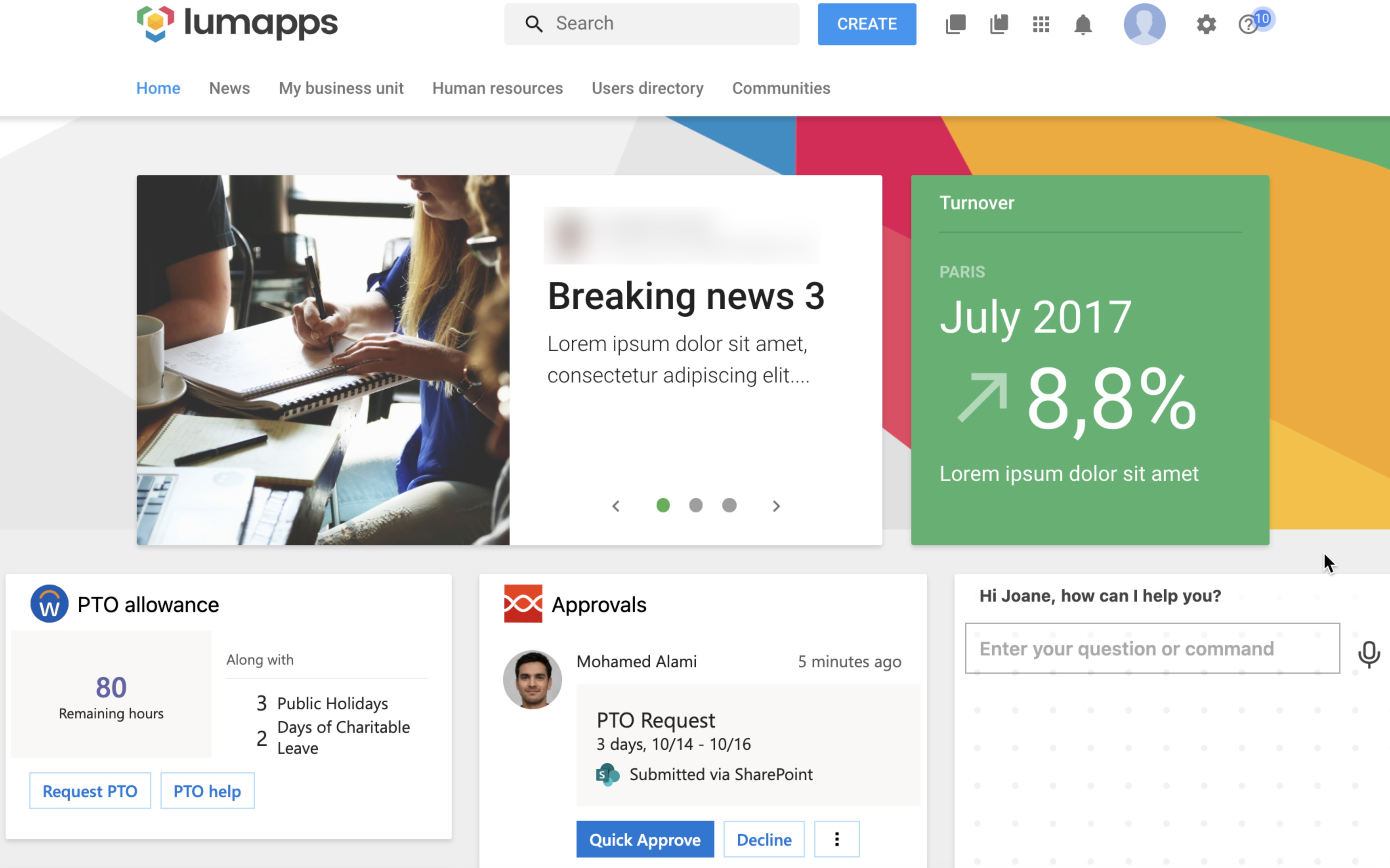
#9. LumApps (Best for Enterprise Intranet with Google Integration)
Key Features:
- Enterprise intranet with personalised content
- Strong integration with Google Workspace
- Internal communications and content targeting
- Employee directory and knowledge management
Pros:
- Excellent for companies using Google tools
- Scales well for large, global organisations
- Strong content personalisation and targeting
Cons:
- Setup can be complex and time-consuming
- Requires ongoing management to maintain
- Not heavily focused on engagement or surveys
Pricing:
- Custom enterprise pricing
LumApps is a good fit if you want a structured, enterprise intranet tied into Google Workspace.
But if your focus is improving engagement, collecting feedback, or simplifying your tech stack, it may feel a bit heavy and not as focused on those areas.
LumApps
An Enterprise Intranet Platform Built for Google Workspace and Large Organisations
LumApps is designed as an enterprise intranet platform that connects employees, content, and communication in one structured environment. It integrates closely with Google Workspace, making it a strong option for organisations already using Google tools. While it delivers powerful personalisation and content targeting, it’s more focused on intranet and communication rather than being a complete employee engagement platform with deep feedback features.
See how LumApps supports enterprise intranet and employee experience at scale#10. Jostle (Best for Simple Company-Wide Communication)
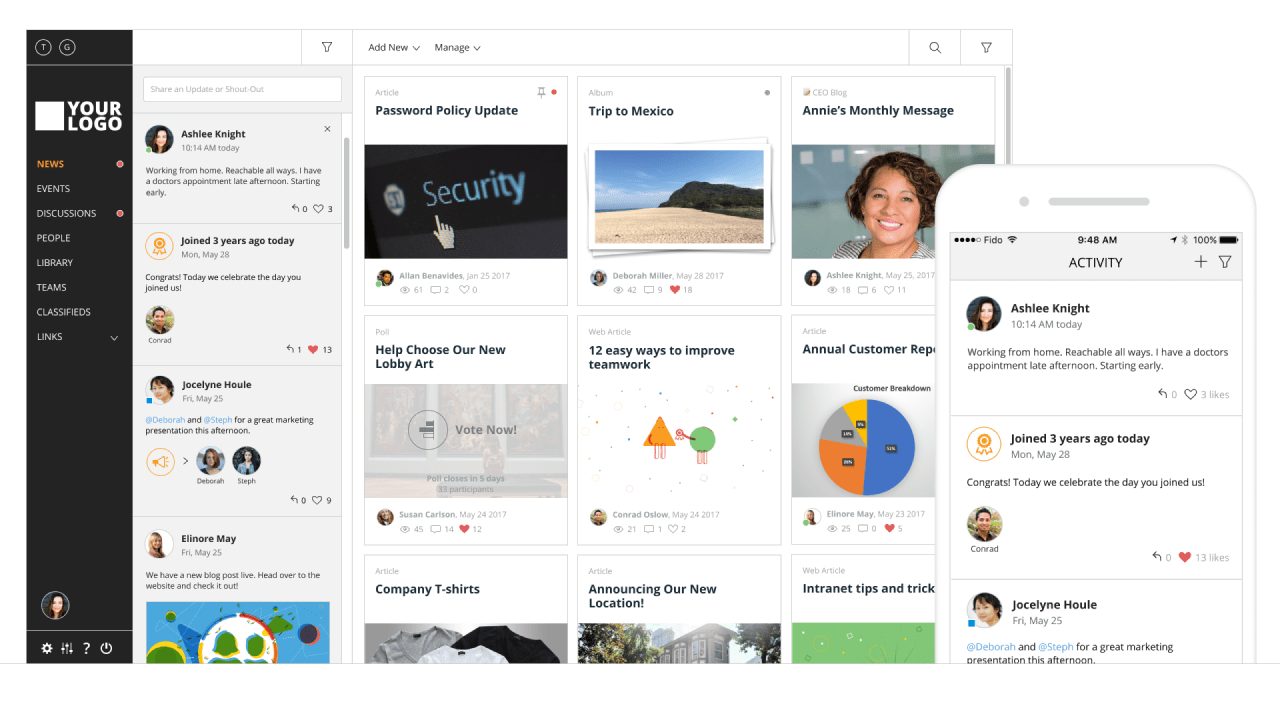
Jostle takes a more straightforward approach—it's built to help organisations improve internal communication without adding too much complexity.
From what we've seen, it's easy to get started with and doesn't overwhelm users, which is a big plus for adoption. But it's definitely more of a communication-focused tool than a full employee engagement platform.
#10. Jostle (Best for Simple Company-Wide Communication)
Key Features:
- Company news and announcement feeds
- Employee directory and profiles
- Simple content sharing and updates
- Basic engagement tracking
- Very easy to use and roll out
- Clean interface that employees can pick up quickly
- Good for improving internal visibility and updates
- Limited analytics and reporting
- Lacks deeper engagement tools like surveys or feedback
- Not designed for complex workflows or collaboration
- Custom pricing (typically mid-range)
Jostle works well if your goal is to improve internal communication without overcomplicating things.
But if you need deeper insights, structured engagement tools, or a more complete digital workplace, you'll likely outgrow it pretty quickly.
Jostle
A Simple Internal Communication Platform Built to Keep Teams Informed and Connected
Jostle is designed to make internal communication straightforward and accessible for everyone in the organisation. It focuses on sharing company updates, improving visibility, and helping employees stay connected without adding unnecessary complexity. While it’s easy to use and quick to roll out, it’s more of a communication tool than a full employee engagement platform with deep analytics or structured feedback features.
See how Jostle helps improve internal communication and employee visibility#11. Haiilo (Best for Internal Communications and Employee Advocacy)
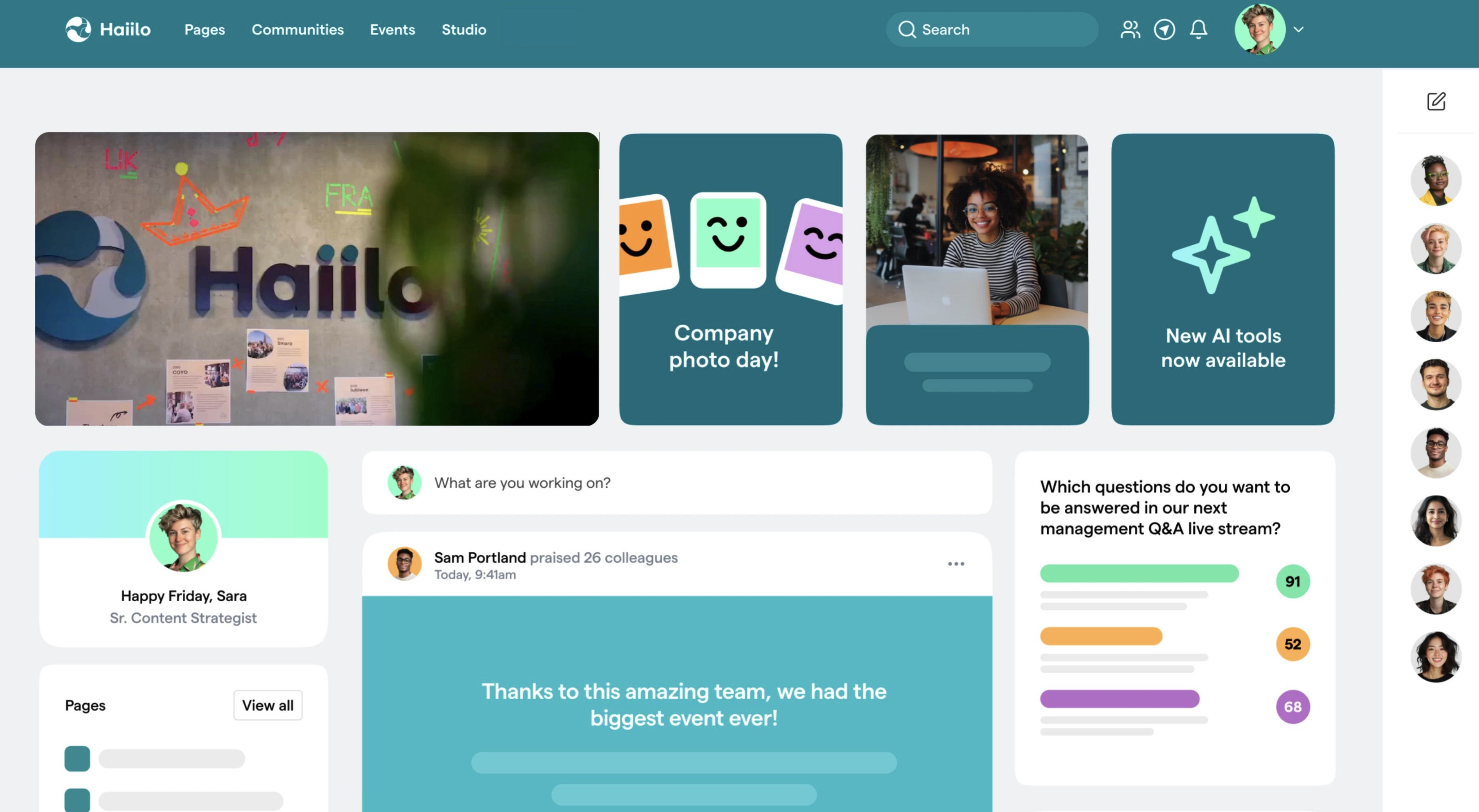
Haiilo is built around internal communications, with a strong focus on content distribution and employee advocacy.
It's designed for organisations that want to manage messaging at scale while also encouraging employees to share and amplify content.
From what we've seen, it's solid for comms-heavy use cases—but it leans more toward marketing-style communication than a full employee engagement solution.
#11. Haiilo (Best for Internal Communications and Employee Advocacy)
Key Features:
- Targeted internal communications and content distribution
- Employee advocacy and content sharing tools
- Campaign planning and content scheduling
- Basic analytics and engagement tracking
Pros:
- Strong content targeting and distribution
- Useful for organisations focused on brand and advocacy
- Good structure for managing communication campaigns
Cons:
- Limited collaboration and messaging features
- Engagement tools (like surveys) are not a core focus
- Can feel more like a comms/marketing tool than a workplace platform
Pricing:
- Custom pricing (typically mid-to-high range)
Haiilo works best if your priority is managing internal communication and employee advocacy at scale.
But if you're looking for deeper engagement insights, feedback tools, or a more complete digital workplace, it may not cover everything you need.
Haiilo
An Internal Communications Platform Focused on Content, Campaigns, and Employee Advocacy
Haiilo is built for organisations that need structured internal communication tools and content distribution at scale. It focuses on delivering targeted messaging, managing campaigns, and enabling employee advocacy through content sharing. While it performs well for communication-led strategies, it’s less focused on being a full employee engagement platform with deep surveys or collaboration features.
See how Haiilo helps organisations manage internal communication and employee advocacy#12. Connecteam (Best for Frontline and Deskless Teams)
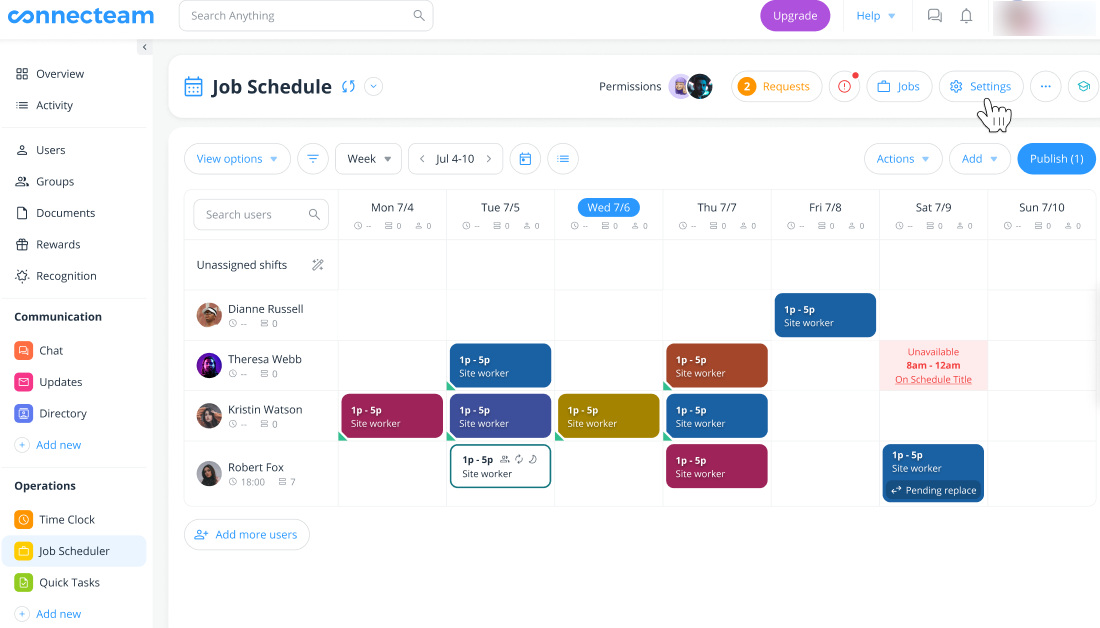
Connecteam is built specifically for frontline workers—think retail, construction, hospitality—where employees aren't sitting at desks all day.
From what we've seen, it does a good job simplifying day-to-day operations like scheduling, communication, and task management. It's very mobile-focused, which is exactly what this type of workforce needs.
That said, it's more of an operations tool than a full employee engagement platform.
#12. Connecteam (Best for Frontline and Deskless Teams)
Key Features:
- Mobile-first employee app
- Scheduling and shift management
- Task management and checklists
- Internal communication and updates
Pros:
- Strong mobile experience for deskless teams
- Easy to roll out and use
- Combines operations and communication in one app
Cons:
- Limited engagement analytics and surveys
- Not designed for complex knowledge management
- Less suited for office-based teams
Pricing:
- Free plan available
- Paid plans per user, per month
Connecteam is a solid choice if you need to manage and communicate with frontline teams efficiently.
But if your focus is deeper engagement insights, feedback, or a full digital workplace experience, you'll likely need additional tools alongside it
Connecteam
A Mobile-First Platform Built for Frontline Teams, Scheduling, and Daily Operations
Connecteam is designed for businesses managing frontline and deskless employees, bringing communication, scheduling, and task management into one mobile-first app. It focuses on operational efficiency—helping teams manage shifts, track tasks, and stay connected without needing a desktop. While it includes communication features, it’s more of an operations tool than a full employee engagement platform with advanced analytics or feedback systems.
See how Connecteam helps manage frontline teams and daily operations#13. Beekeeper (Best for Frontline Communication and Operations)
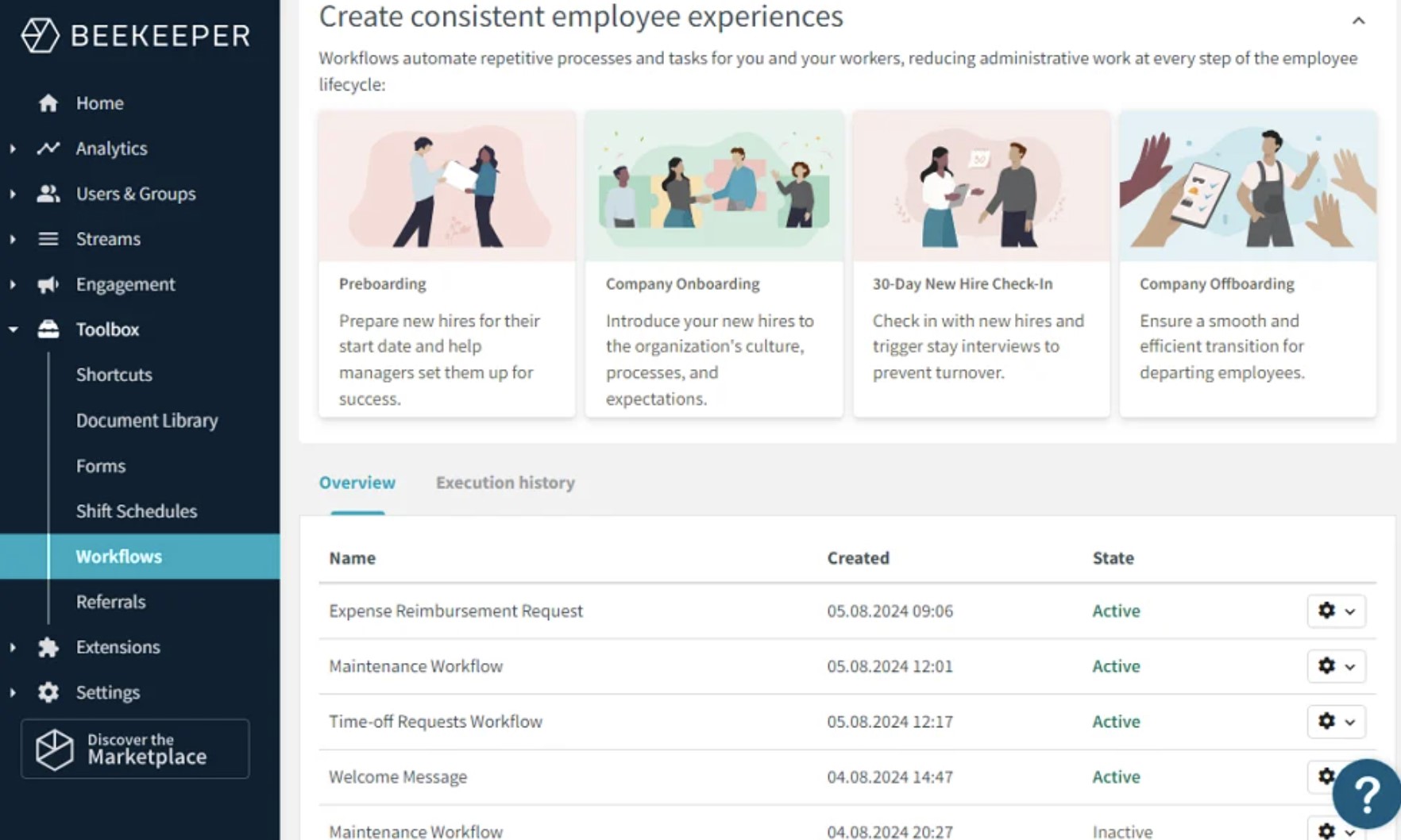
Beekeeper is built with frontline teams in mind—especially industries like hospitality, retail, and manufacturing where employees are constantly on the move.
From what we've seen, it does a strong job combining communication with operational tools, making it easier to keep deskless workers informed and aligned.
But like many frontline-focused tools, it leans more toward communication and operations than full employee engagement software.
#13. Beekeeper (Best for Frontline Communication and Operations)
Key Features:
- Mobile-first communication and messaging
- News feeds and company updates
- Task management and workflows
- Integrations with HR and operational systems
Pros:
- Excellent for reaching and engaging frontline employees
- Strong mobile usability and real-time updates
- Combines communication with operational workflows
Cons:
- Can become expensive as you scale
- Limited depth in engagement analytics and surveys
- Not ideal for office-based collaboration
Pricing:
- Custom pricing (typically higher-end for enterprise use)
Our Take
Beekeeper works well if your priority is keeping frontline teams connected and operationally aligned.
But if you're looking for deeper engagement insights, structured feedback tools, or a full digital workplace solution, it may not cover everything on its own.
Beekeeper
A Mobile-First Communication Platform Built for Frontline and Deskless Teams
Beekeeper is designed to connect frontline employees through mobile-first communication, messaging, and operational workflows. It helps organisations keep teams informed, aligned, and productive without relying on email or desktop tools. While it’s strong for communication and operations, it’s not a full employee engagement platform with advanced surveys or deep analytics capabilities.
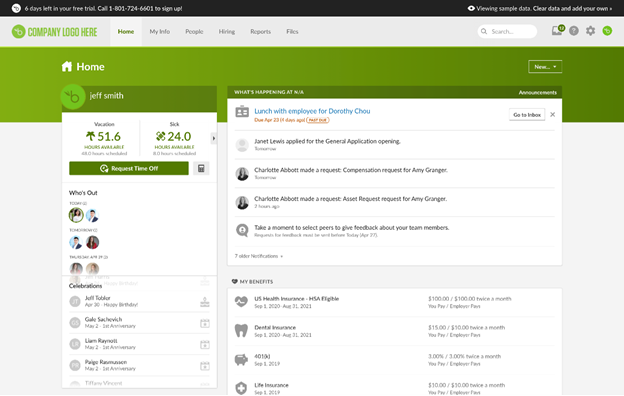
See how Beekeeper helps connect and support frontline teams at scale#14. BambooHR (Best for HR Management with Basic Engagement Tools)
BambooHR is primarily an HR system first, with some employee engagement features layered in.
It's designed to manage employee data, onboarding, and HR processes rather than being a full engagement or communication platform.
From what we've seen, it works well if you want everything HR-related in one place.
But when it comes to deeper engagement, communication, or collaboration, it's fairly limited.
#14. BambooHR (Best for HR Management with Basic Engagement Tools)
Key Features:
- Employee records and HR database
- Onboarding and offboarding workflows
- Performance management tools
- Basic surveys and feedback collection
Pros:
- Strong, easy-to-use HR system
- Good for managing employee lifecycle processes
- Clean interface with solid reporting
Cons:
- Limited communication and collaboration tools
- Engagement features are fairly basic
- Not a complete digital workplace solution
Pricing:
- Custom pricing based on modules and company size
Our Take
BambooHR is a great fit if you need a reliable HR system with some light engagement features.
But if your goal is to improve communication, track engagement deeply, or create a connected workplace experience, you'll need to pair it with other tools.
BambooHR
An HR Platform Focused on Employee Data, Onboarding, and Lifecycle Management
BambooHR is built as a core HR management system that helps businesses manage employee data, onboarding, and performance processes in one place. It simplifies HR operations and improves visibility across the employee lifecycle. While it includes some feedback and engagement features, it’s not a full employee engagement platform focused on communication, collaboration, or deep analytics.
See how BambooHR helps manage employee data and HR processes#15. Culture Amp (Best for Surveys and People Analytics)
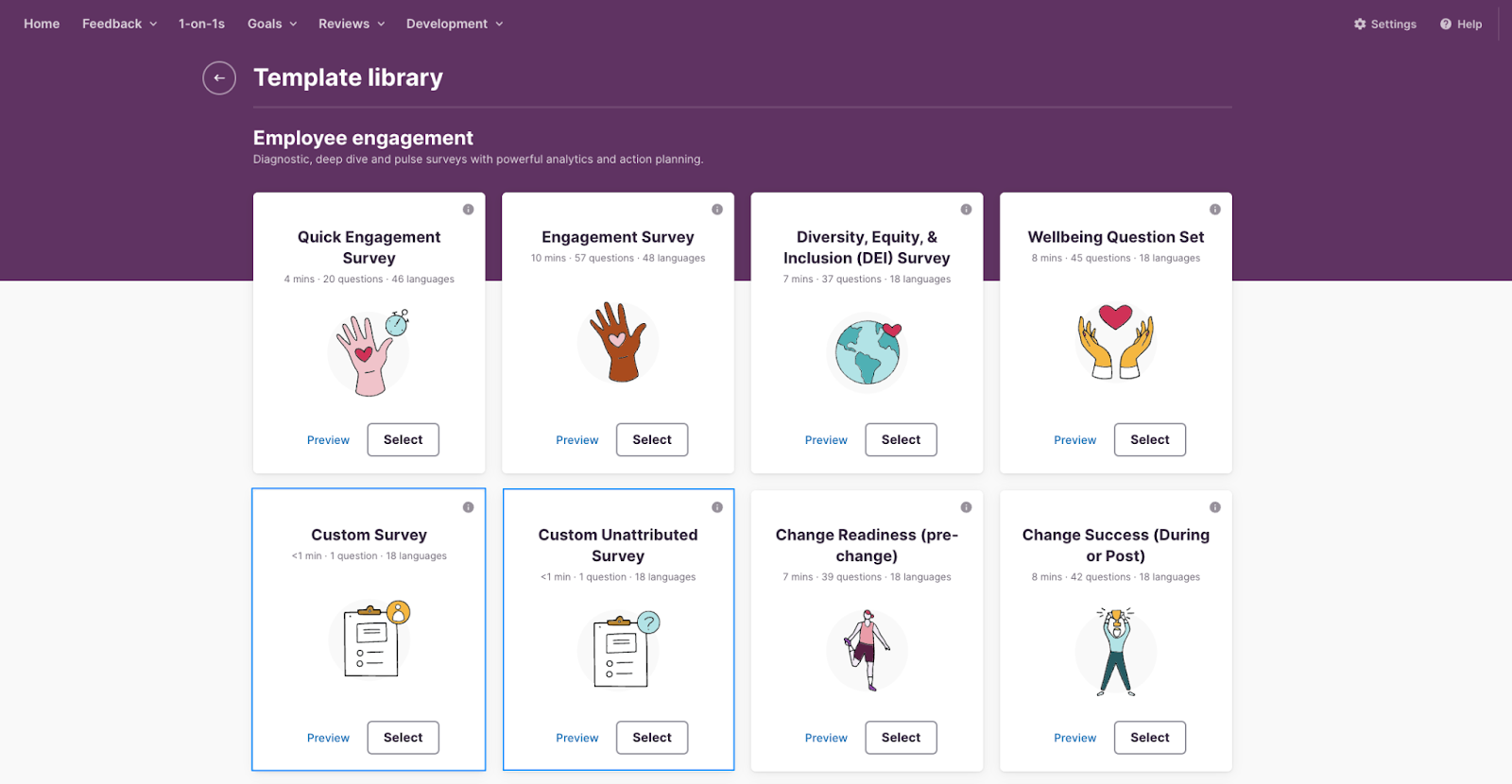
Culture Amp is one of the more well-known employee engagement software companies, especially when it comes to surveys and deep people insights.
From what we've seen, it's very strong on the analytics side.
If your goal is to measure engagement, run surveys, and benchmark results, it does that really well. But it's not built to handle communication, collaboration, or day-to-day workflows.
#15. Culture Amp (Best for Surveys and People Analytics)
Key Features:
- Engagement surveys and pulse surveys
- 360 feedback and performance reviews
- People analytics and benchmarking
- Action planning tools based on insights
Pros:
- Deep analytics and reporting capabilities
- Strong benchmarking against industry data
- Well-designed surveys and feedback tools
Cons:
- No built-in communication or messaging tools
- Requires other platforms for daily collaboration
- Can be complex for smaller teams
Pricing:
- Custom pricing (typically mid-to-high range)
Culture Amp is a strong choice if you want deep insight into employee engagement and performance.
But if you're looking for something that also handles communication, knowledge sharing, and daily collaboration, it won't cover everything on its own.
Culture Amp
A Data-Driven Employee Engagement Platform Focused on Surveys and People Analytics
Culture Amp is built for organisations that want deeper insight into their workforce through employee engagement surveys and people analytics. It helps businesses measure engagement, track trends, and benchmark results against industry data. While it’s powerful for insights and feedback, it doesn’t cover communication or collaboration, so it’s often used alongside other employee engagement tools.
See how Culture Amp helps organisations measure and improve employee engagementHow to Choose the Right Employee Engagement Software
When you're comparing options, don't get distracted by long feature lists. The real question is—what will this tool actually help you do once it's in place?
A better way to evaluate your options is to ask:
- Will this help us clearly understand what's driving engagement (and what's not)?
- Can managers and leaders easily use the insights without needing extra support?
- Does it handle open-text feedback properly, not just scores?
- Will it support real action planning after feedback is collected?
- Can it adapt to different survey types like pulse checks and lifecycle feedback?
- Does it help us turn insight into actual improvements—not just reports?
- Is there support available if we need guidance along the way?
That last one matters more than most people think.
Because for many businesses, the best results don't come from software alone—they come from how it's used.
Having the right setup, guidance, and strategy behind the tool is what turns feedback into something meaningful.
Without that, even the best platform can end up underused. With it, you've got a system that actually helps you improve how your organisation runs.
Pricing Breakdown – What Do Employee Engagement Platforms Cost?
Let's keep this simple—most employee engagement software is priced per user, per month, so your cost scales as your team grows.
Here's what you need to understand:
- Monthly or annual per-user pricing - You pay for each employee using the platform. Annual plans usually work out cheaper, but you're committing upfront.
- Tiered plans based on features - Lower tiers cover the basics, while higher plans unlock things like analytics, integrations, and advanced reporting. The more you need, the more you pay.
- Discounts for larger teams - As your team grows, vendors often reduce the cost per user. This makes some tools more viable at scale.
- Setup and onboarding time - Getting everything configured—teams, permissions, surveys—takes time. Whether handled internally or externally, it's still a cost.
- Integrations with other tools - Connecting HR systems, communication apps, or workflows can require extra setup or paid add-ons, increasing overall spend.
- Ongoing admin and management - Someone needs to run surveys, review data, and keep things updated. Without ownership, the platform quickly loses value.
- Reduce turnover - Done right, these tools help you spot issues early and keep employees longer—saving on hiring and training costs.
- Improve productivity - Better communication means less time wasted searching for information and more time focused on actual work.
- Fix communication gaps - A strong platform keeps everyone aligned, reducing confusion and improving how teams work together.
Don't just compare pricing—compare results. The cheapest option often costs more if no one uses it or it fails to deliver real impact.
Common Mistakes Businesses Make When Buying Employee Engagement Software
This is where a lot of companies go wrong—and it's usually why the platform ends up underused or abandoned altogether.
If you want to avoid wasting time and budget, watch out for these common mistakes:
- Choosing based on brand name - Big names don't always mean the best fit. Many businesses pick well-known tools assuming they'll work, but end up with something that doesn't match how their teams actually operate.
- Ignoring frontline workers - It's easy to choose a platform that works well for office staff but completely overlooks frontline teams. If a large part of your workforce can't access or use it properly, engagement will never be accurate.
- Overpaying for unused features - Some platforms are packed with features you'll never use. You end up paying for complexity instead of focusing on what actually drives engagement and adoption.
- Not aligning with business goals - If you don't define what success looks like—better communication, higher retention, improved productivity—you'll struggle to measure whether the platform is working.
- No rollout or adoption strategy - Even the best tool will fail without a proper launch. If employees aren't shown how and why to use it, adoption drops fast and the platform becomes another unused system.
Most failures don't come from the software itself—they come from poor decisions around selection and rollout. Get those right, and you're already ahead of most businesses.
Why All-in-One Platforms Are Replacing Traditional Tools
If you look at how most businesses are set up today, it's easy to see the problem—too many tools doing different things, none of them fully connected. You've got one app for chat, another for documents, another for surveys, and something else for announcements. The result? Constant app switching, missed information, and low adoption across the board.
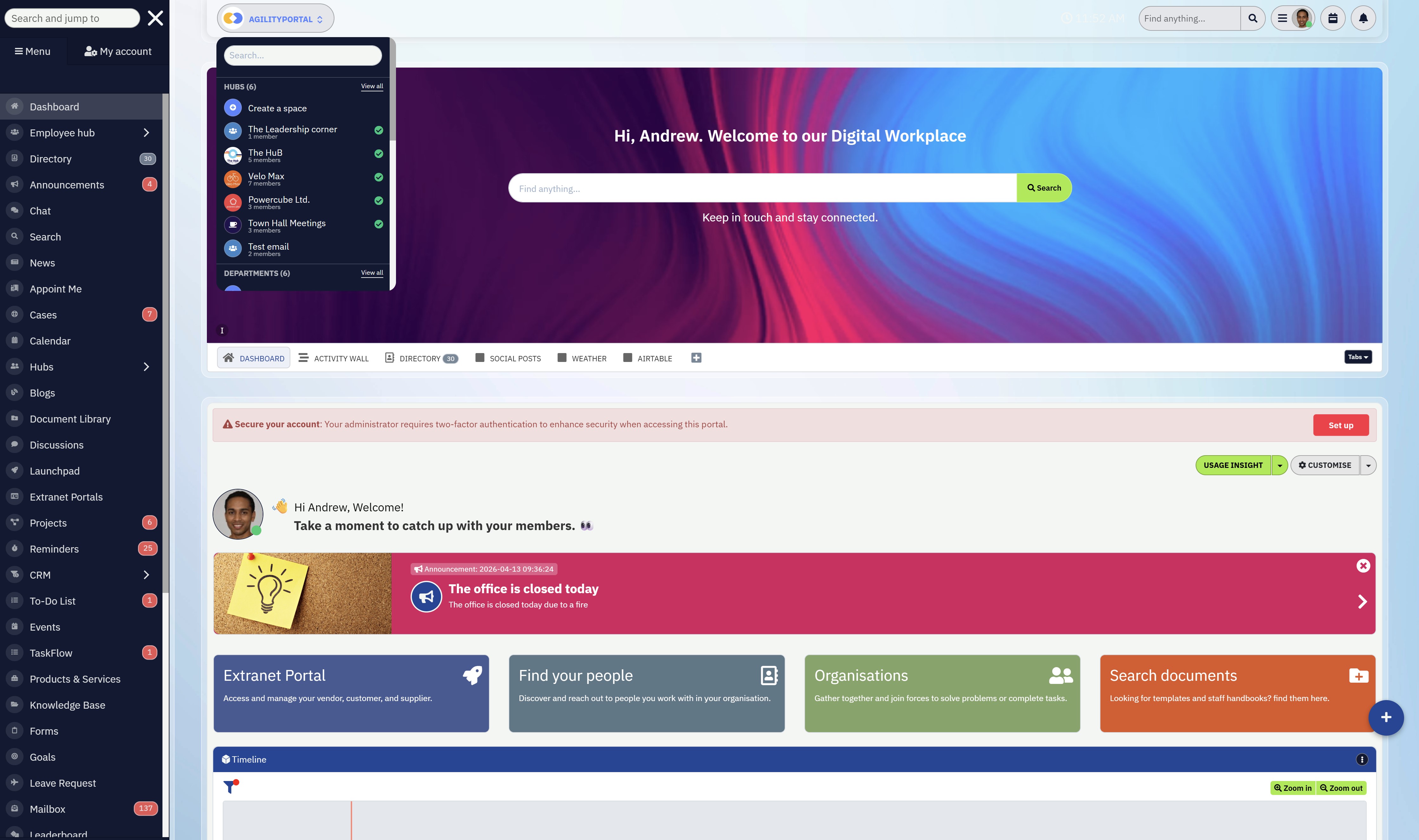
That's exactly why all-in-one platforms like AgilityPortal are gaining traction. Instead of spreading communication, knowledge, and engagement across multiple systems, everything sits in one place. This reduces friction for employees, makes it easier to find what they need, and significantly improves adoption because people aren't forced to jump between tools just to get through the day.
It also gives businesses a much clearer picture of what's going on. When everything is connected—communication, feedback, documents, and activity—you get better analytics and more meaningful insights, not fragmented data across different platforms. And that's the real shift: companies are moving away from disconnected tools and towards unified systems that actually support how modern teams work.
Why Employee Engagement Platforms Matter in 2026
The right tools don't just collect feedback—they help you understand your workforce, respond faster, and create a more connected environment.
When used properly, they improve morale, boost productivity, and help keep employees around for the long term.
- Better visibility into employee sentiment - You get real-time insight through surveys, feedback tools, and analytics. This makes it easier to understand how people feel, spot trends early, and act before small issues turn into bigger problems.
- Faster response to problems - Instead of waiting for issues to surface months later, you can identify concerns as they happen. That allows managers to step in quickly and make improvements while it still matters.
- Stronger communication across teams - With centralised updates, messaging, and collaboration tools, everyone stays on the same page. Less confusion, fewer missed messages, and a more aligned workforce.
- Clearer alignment with business goals - Many platforms include goal tracking and performance visibility, helping employees understand their role in the bigger picture. When people see how their work connects to company objectives, engagement naturally improves
What Makes AgilityPortal Different?
Before vs After
Fix Broken Communication Fast
See how AgilityPortal turns scattered tools into one organised employee portal.
Before
BEFORE AGILITYPORTAL
- Scattered tools slow communication
- Updates get buried in emails
- Documents are hard to find
- Insights are missing or delayed
- Teams feel disconnected daily
After
AFTER AGILITYPORTAL
- One portal for everything
- Updates stay clear and visible
- Documents are easy to access
- Decisions happen with confidence
- Teams stay connected anywhere
What Makes AgilityPortal Different
Let's be honest—there's no shortage of tools claiming to improve engagement. The real question is whether they actually help you move from collecting feedback to making meaningful changes.
That's where AgilityPortal stands out.
It's not just about surveys or data—it's about giving you a complete system that helps you understand what's happening and actually do something about it.
With AgilityPortal, you can:
- gather feedback through pulse surveys, lifecycle surveys, and ongoing communication
- clearly understand results with built-in dashboards and people analytics
- uncover what's really behind the scores with deeper insights and trends
- analyse comments at scale using AI-powered summaries and sentiment insights
- prioritise actions based on what matters most to your teams
- support managers and leaders with tools that help them follow through
The platform is designed to make employee voice simple to understand—and even easier to act on.
Instead of just producing reports, it connects feedback with communication, knowledge sharing, and day-to-day workflows. So improvements don't sit in a dashboard—they show up in how your business actually runs.
That's the difference. It's not just about listening—it's about turning insight into real progress.
Wrapping Up on Choosing an Employee Engagement Platform That Actually Works
At the end of the day, the best platform isn't the one with the most features—it's the one your team will actually use.
Simplicity matters more than complexity, because if the tool feels easy and fits naturally into daily work, adoption takes care of itself. And without adoption, nothing else really counts.
What you're really looking for is something that improves how your business operates.
Better communication, clearer insights, faster decision-making, and a more connected workforce—those are the outcomes that matter, not just dashboards or reports.
So as you're comparing options, focus on what will genuinely make a difference day to day.
If it helps your teams stay aligned, reduces friction, and turns feedback into real action, you're on the right track.
And if you want to see how that looks in practice, it's worth exploring a platform in action—because the difference becomes obvious when you experience it firsthand.
FAQs: Employee Engagement Platforms (What Businesses Want to Know)
When people start searching for the best employee engagement platforms, they usually have the same set of questions. Here are clear, straight answers to help you make the right call.
What is the best employee engagement platform for businesses?
The best employee engagement platforms for businesses are the ones your team will actually use daily.
That usually means a platform that combines communication, feedback, analytics, and knowledge sharing in one place.
Tools that only focus on one area—like surveys or chat—often fall short because they don't give you the full picture.
If you're comparing options, look for something that balances ease of use with real insight, rather than just a long feature list.
What are the best employee engagement platforms in the UK?
If you're specifically searching for employee engagement platforms UK, you'll find a mix of global and regional providers.
Most UK businesses look for platforms that support GDPR compliance, mobile access, and hybrid working.
Popular choices include all-in-one digital workplace platforms, as well as specialist employee engagement software companies focused on surveys and analytics.
The key is choosing one that fits your structure—not just what's trending.
How much does employee engagement software cost?
Most employee engagement software is priced per user, per month.
Costs can vary depending on features, company size, and whether you need integrations or advanced analytics.
There are also free employee engagement platforms for businesses, but these are usually limited in features or scalability.
For most companies, investing in a paid solution delivers better long-term value through improved retention and productivity.
What features should I look for in engagement software?
Strong employee engagement apps and platforms should include:
- Surveys (pulse, lifecycle, and employee engagement survey platforms)
- Real-time communication tools
- Analytics and reporting dashboards
- Recognition and feedback features
- Mobile-first experience for remote and frontline teams
The goal is to find a platform that not only collects feedback but helps you act on it quickly.
Are employee engagement platforms worth it?
Yes—if they're used properly.
The right employee engagement companies and tools can help reduce turnover, improve productivity, and strengthen communication across teams.
But if the platform isn't adopted or doesn't fit your workflow, it quickly becomes a wasted investment.
It's less about the tool itself and more about how well it's implemented and used.
What's the difference between engagement software and intranet tools?
This is where a lot of confusion comes in.
- Employee engagement software focuses on feedback, surveys, recognition, and analytics
- Intranet or digital workplace platforms focus on communication, documents, and internal resources
Some modern tools—like all-in-one platforms—combine both. That's why many businesses are moving away from separate systems and choosing unified solutions instead.
What is Blink employee experience platform?
Blink is a mobile-first employee engagement app designed mainly for frontline workers. It focuses on communication, messaging, and quick access to information on the go.
It's a good option for deskless teams, but like many single-focus tools, it may need to be combined with other systems for full engagement and analytics.
If you're searching for the best employee engagement platforms for businesses, don't just follow rankings—focus on what solves your actual problems.
The right platform should improve communication, give you real insight, and make it easier to take action.
AI Summary
- Employee engagement platforms help businesses improve communication, gather feedback, and create a more connected workforce, leading to higher productivity and retention.
- The best employee engagement software combines surveys, analytics, communication tools, and knowledge management into one system employees actually use daily.
- Modern employee engagement platforms support pulse surveys, lifecycle surveys, and 360 feedback, giving businesses real-time insight into employee sentiment and performance.
- Common challenges include low adoption, disconnected tools, and lack of measurable ROI, which can reduce the effectiveness of engagement initiatives.
- Businesses are increasingly moving toward all-in-one digital workplace platforms that reduce tool overload and improve adoption across remote and frontline teams.
- Choosing the right solution depends on ease of use, mobile accessibility, integrations, and the ability to turn feedback into clear, actionable improvements.
Most Popular Posts

Effective communication among team members is vital for the productivity and success of any organization. Surprisingly, 60% of companies lack a long-term internal communication strategy, which p...


Businesses thrive on communication for efficiency, productivity and accomplishment. When the right information is passed from the right designation in the organization, it promotes positivity an...
Categories
Blog
(2976)
Business Management
(373)
Employee Engagement
(223)
Digital Transformation
(192)
Growth
(142)
Intranets
(137)
Remote Work
(63)
Sales
(53)
Collaboration
(48)
Customer Experience
(30)
Culture
(29)
Knowledge Management
(28)
Project management
(28)
Leadership
(20)
Comparisons
(9)
News
(1)

Related Posts

What's next for AI-powered image generation? Rapid generative AI advancements have revolutionised how businesses, artists, and marketers create visual content. As we move into 2026, the industry is poised for even more significant t...

The digital workplace has become the foundation of modern business operations. Whether employees work remotely, in the office, or in a hybrid environment, organizations need effective systems that keep people connected, informed, and productive. This...

If you're searching for a Highspot alternative, you're probably evaluating more than just sales enablement features. Today's organizations need platforms that not only help sales teams find content and engage buyers but also support employee co...

This is why many organizations are investing in a modern client and partner portal to create a centralized, secure environment where external users can access documents, collaborate with teams, complete onboarding tasks, receive updates, and find the...

Partner collaboration has become a critical part of business growth, especially for organizations that rely on distributors, resellers, suppliers, affiliates, consultants, and channel partners to generate revenue. Yet surprisingly, many compani...


Annet Herges
I am a digital nomad, lover of exploring new places and making friends.
I love to travel and I love the internet. I take pictures of my travels and share them on the internet using Instagram.
Traveler, entrepreneur, and community builder. I share my insights on digital marketing and social media while inspiring you to live your fullest life.
Ready to learn more? 👍
One platform to optimize, manage and track all of your teams. Your new digital workplace is a click away. 🚀
Free for 14 days, no credit card required.