Insight Blog
Agility’s perspectives on transforming the employee's experience throughout remote transformation using connected enterprise tools.
39 minutes reading time
(7709 words)
The One-Size-Fits-All Trap - How to Build a Global Financial Wellbeing Strategy That Works

The One-Size-Fits-All Trap: How to Build a Global Financial Wellbeing Strategy That Works
earn how to build a global financial wellbeing strategy that balances worldwide consistency with local employee needs, laws and living costs.
The One-Size-Fits-All Trap: How to Build a Global Financial Wellbeing Strategy That Works

Open by explaining that global businesses often try to create fairness by offering every employee the same financial wellbeing resources.
It sounds reasonable—but equal provision doesn't necessarily create equitable outcomes.
An employee in London, Lagos and Manila may work for the same company, but they operate within completely different tax systems, currencies, living costs, banking environments and cultural attitudes towards money.
55%
of workers experienced financial strain
According to PwC’s 2025 Global Workforce Hopes and Fears Survey, 55% of workers experienced financial strain, including 14% who couldn’t or struggled to pay their monthly bills. A standardised financial wellbeing programme may therefore miss the employees who need meaningful and locally relevant support most.
Use PwC's finding that 55% of workers experienced financial strain in 2025, including 14% who couldn't or struggled to pay their monthly bills. Explain that a standardised programme may therefore miss the people who need meaningful support most.
And across the U.S., about 57% of employees say that finances are their top life stressor, according to the PWC 2026 Employee Financial Wellness Survey.
End by telling readers that the article will explain how to combine global principles with locally relevant benefits, education, communication and measurement.
Key Takeaways
- A global financial wellbeing strategy should establish consistent principles while adapting support to local employee needs.
- Giving every employee identical benefits may appear fair, but it can overlook differences in living costs, laws, currencies, healthcare, and pensions.
- Employee surveys, regional workforce data, and local specialists help organisations identify the financial support employees genuinely need.
- Confidentiality and data protection are essential because employees will avoid support if they believe their financial activity is being monitored.
- Workplace technology can centralise guidance, target regional content, and improve access for office-based, remote, and frontline employees.
- Employers should measure awareness, accessibility, trust, and regional outcomes—not rely solely on attendance or global engagement figures.
What Is a Global Financial Wellbeing Strategy?
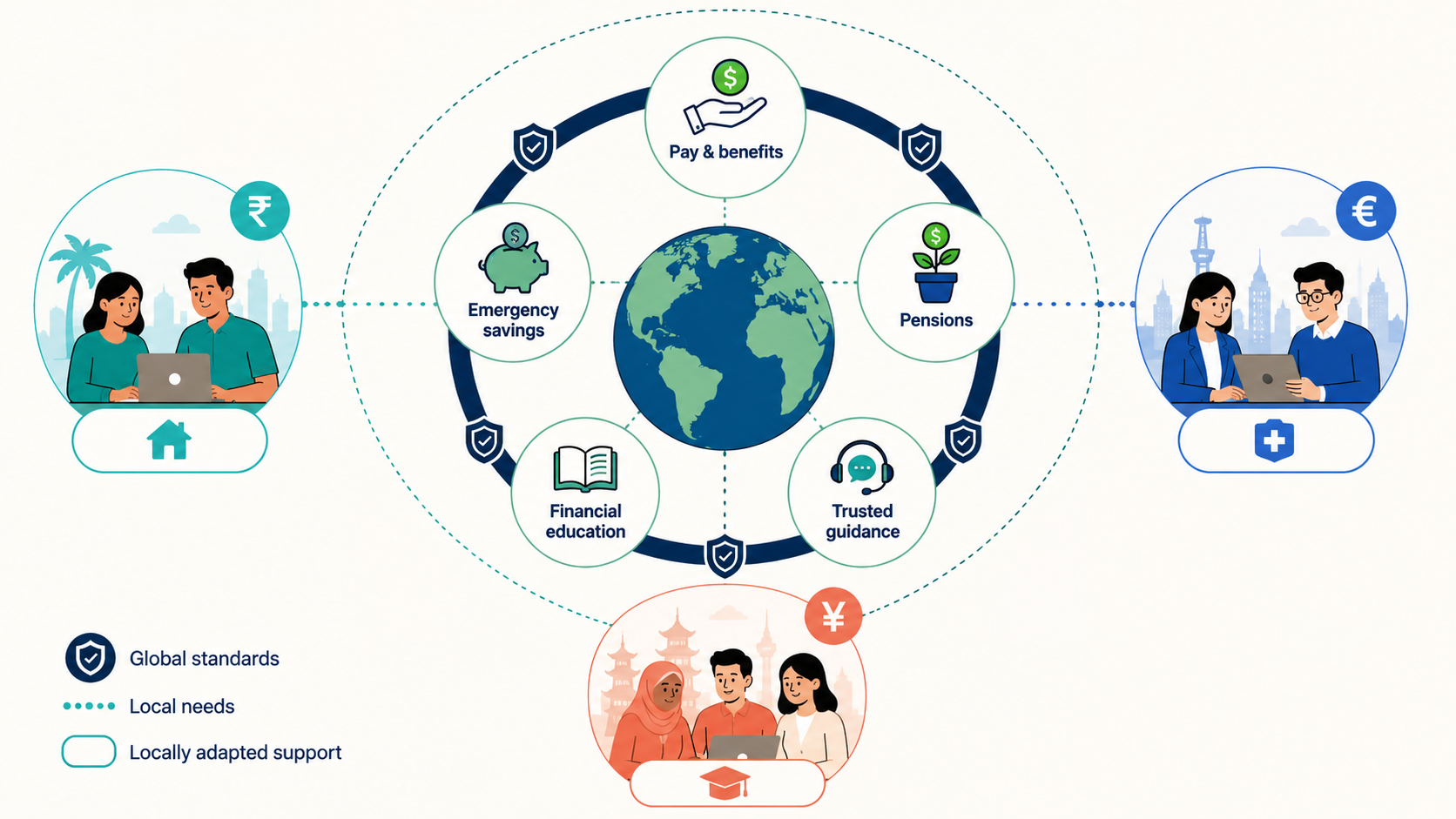
A global financial wellbeing strategy is a coordinated approach to supporting the financial security, knowledge and resilience of employees working across different countries.
Rather than offering a few generic money-management resources, it gives an organisation a structured way to help employees understand their finances, manage financial pressure and prepare for the future.
This support must account for differences in local salaries, currencies, living costs, tax systems and employee benefits.
The goal isn't to take control of employees' finances or provide personal financial advice. It's to create an environment in which people can access clear information, relevant workplace benefits and trustworthy support when they need it.
This includes improving financial literacy, which refers to the knowledge, skills and behaviours people need to make informed decisions about their money. However, financial literacy is only one part of a much broader strategy.
What Is a Global Financial Wellbeing Strategy
It's More Than Financial Education
Financial education can help employees understand topics such as budgeting, borrowing and saving.
But information alone won't solve every financial challenge—particularly when employees are dealing with inadequate benefits, rising living costs or confusing pension arrangements.
A comprehensive global financial wellbeing strategy may cover:
- Pay and total rewards: Helping employees understand their salary, bonuses, allowances and complete benefits package.
- Emergency savings: Providing resources or workplace programmes that help employees prepare for unexpected expenses.
- Debt and budgeting support: Giving employees access to confidential tools and practical guidance without judgement.
- Pensions and retirement planning: Explaining locally available retirement schemes, employer contributions and long-term saving options.
- Insurance and healthcare costs: Helping employees understand what is covered, what they may need to pay and which protections are available.
- Financial literacy: Building employees' confidence when making everyday and long-term financial decisions.
- Trustworthy guidance: Directing employees towards qualified, independent and locally appropriate sources of support.
- Benefits communication: Making sure people know which benefits exist, how they work and how to access them.
This distinction matters because an employee can understand budgeting perfectly well and still struggle because of inflation, insecure housing costs, unexpected medical bills or limited access to affordable financial products.
Global Standards Versus Local Delivery
The central principle is straightforward:
Establish consistent global objectives, but adapt the support used to achieve them locally.
Every employee should receive the same underlying commitment to confidentiality, accessibility, dignity and trustworthy information. But that doesn't mean every country should receive an identical programme.
For example, employees in the UK may need guidance about workplace pensions and salary sacrifice, while employees elsewhere may be more concerned about healthcare costs, currency instability or access to emergency savings. Even attitudes towards debt, family support and discussing money at work can differ considerably between cultures.
The strongest strategy therefore creates a consistent global framework while giving regional HR teams enough flexibility to respond to real local needs.
That is how an organisation moves from simply offering equal resources to providing genuinely equitable financial support.
Why Does the One-Size-Fits-All Approach Fail?
Why Does the One-Size-Fits-All Approach Fail
A standardised financial wellbeing programme might look fair on paper.
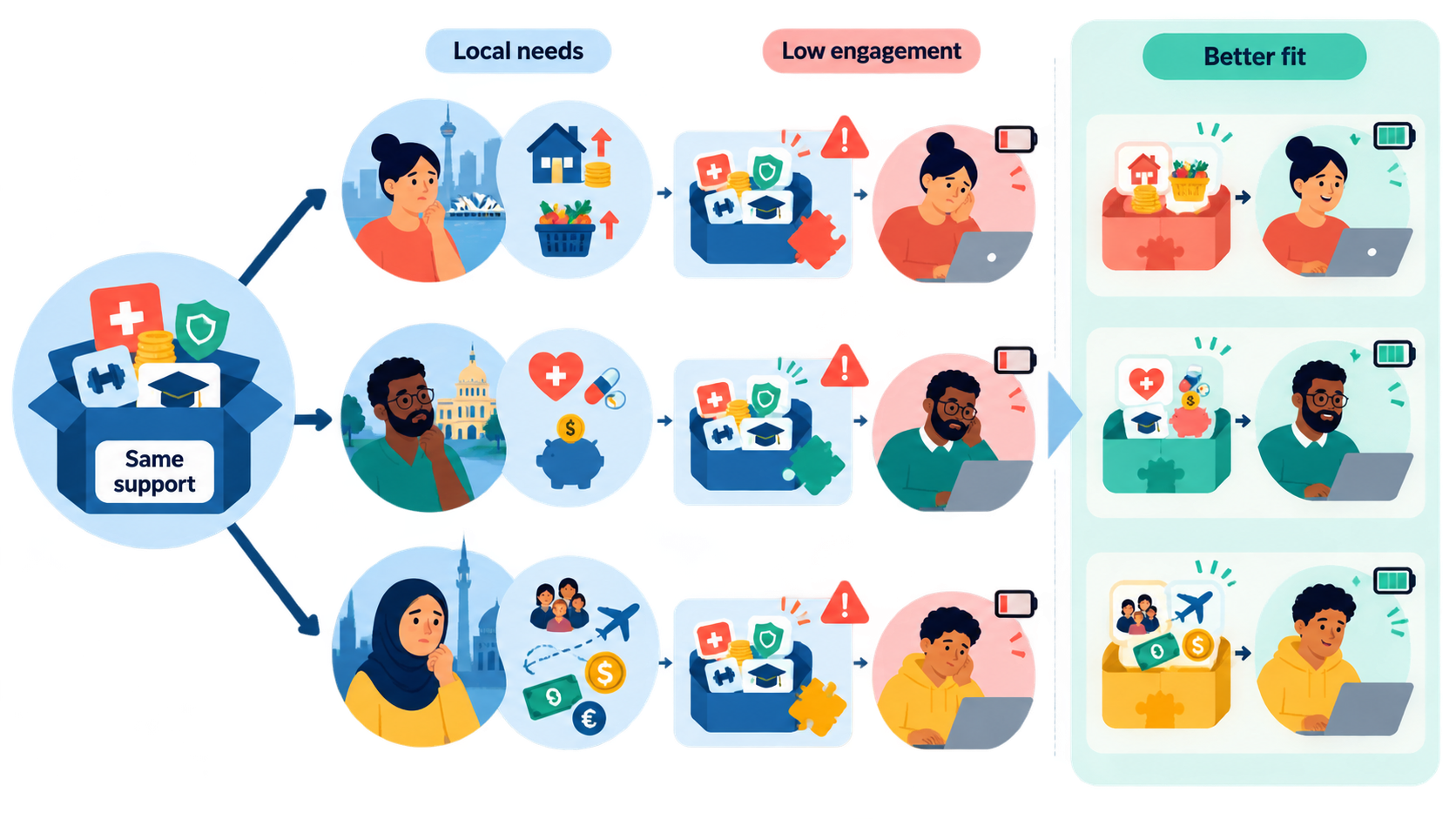
Every employee receives the same resources, attends the same webinars and has access to the same benefits information. The problem is that employees across a global workforce don't live within the same financial reality.
Two people doing similar jobs can face completely different housing costs, tax obligations, healthcare expenses and levels of financial security. They may also have different cultural expectations around saving, borrowing and supporting relatives.
Treating everyone identically can therefore create the appearance of fairness while failing to address what employees genuinely need.
The Same Salary Doesn't Have the Same Purchasing Power
Salary figures rarely tell the whole story. What matters to an employee is what their income allows them to afford after accounting for local living costs and financial responsibilities.
Housing and energy costs can consume a much larger proportion of someone's salary in one city than another. Food, transport and childcare costs also vary considerably between countries—and sometimes between regions within the same country.
Employers must also consider:
- Local inflation and its effect on everyday expenses
- Currency fluctuations that reduce the value of earnings
- Regional salary expectations
- Tax and social security deductions
- The number of people an employee financially supports
- Access to affordable housing, healthcare and transport
An employee may appear well paid when their salary is converted into dollars or pounds. But that doesn't mean they have the same disposable income or ability to build emergency savings as a colleague elsewhere.
This is why a global financial wellbeing strategy should examine purchasing power and local conditions instead of relying exclusively on headline salaries.
Benefits Operate Differently Across Borders
A benefit that employees value highly in one country may offer little value somewhere else.
Healthcare is a good example. Employees working in countries with publicly funded healthcare may prioritise pension contributions, childcare or flexible benefits.
In countries where medical treatment is largely paid for privately, health insurance may be one of the most important parts of an employee's financial safety net.
The same problem applies to:
- Workplace pensions and retirement accounts
- Parental leave and childcare assistance
- Income protection and life insurance
- Tax-efficient benefits
- Student loan support
- Commuting and meal allowances
- Statutory sick pay
- Annual leave entitlements
Employers cannot simply design a programme around the rules and expectations of their headquarters and distribute it worldwide. Local HR, legal and benefits specialists should help determine which support is compliant, relevant and genuinely valuable in each market.
Financial Access Isn't Equal
Financial wellbeing is also shaped by whether employees can access affordable banking, credit, savings and money-transfer services.
The World Economic Forum reports that financial inclusion is improving, but only 56% of adults in low- and middle-income economies said they could reliably access additional money within 30 days of an emergency.
That leaves a considerable proportion of the global population financially exposed when faced with illness, job loss or an unexpected household expense. World Economic Forum
56%
could access emergency money
According to the World Economic Forum, only 56% of adults in low- and middle-income economies said they could reliably access additional money within 30 days of an emergency. This leaves a considerable proportion of people financially exposed to illness, job loss and unexpected household expenses.
Source:
World Economic Forum
International employees may face another cost that local financial wellbeing programmes often overlook: supporting family members in another country.
For context, the World Bank's third-quarter 2025 data showed that sending $200 from the United States to the Philippines through Citibank could involve a $35 fee—17.5% of the amount being transferred—and take approximately two days.
Other providers listed by the World Bank charged much less, showing just how dramatically the cost of sending money can vary. World Bank Remittance Prices Worldwide
$35
fee on a $200 transfer
The World Bank’s third-quarter 2025 data showed that sending $200 from the United States to the Philippines through Citibank could involve a $35 fee—17.5% of the amount transferred—and take approximately two days. Other listed providers charged considerably less, showing how dramatically international transfer costs can vary.
Fintech services may provide a cheaper and faster alternative. For example, BOSS Money currently advertises three introductory transfers with no transfer fee for new customers who send money to the Philippines. Exchange rates, eligibility and payout methods can still affect the overall value, so employees should compare the complete cost rather than looking at the advertised fee alone.
This example matters because remittances aren't always optional spending. For some international employees, sending money home helps cover their family's housing, food, healthcare or education.
A generic budgeting webinar that ignores these responsibilities could completely misunderstand where their money goes.
Employers don't need to recommend a particular financial provider. However, they can offer impartial education on comparing transfer fees, exchange-rate margins, delivery times and regulated services. This is what locally relevant financial support looks like in practice.
Money Is Also a Cultural Issue
Money is personal, but it is also influenced by culture, family structures and social expectations.
In some cultures, supporting parents, siblings or extended family is considered a normal financial responsibility. In others, personal independence and individual retirement saving may receive greater emphasis.
Attitudes towards debt, insurance and borrowing can also differ substantially.
Culture may affect:
- Whether employees feel comfortable discussing financial difficulties
- How debt and borrowing are perceived
- Expectations around supporting extended family
- Trust in banks and financial institutions
- Attitudes towards pensions and long-term saving
- Willingness to use employer-provided financial support
- Preference for private guidance rather than group education
This means employers must think carefully about how support is communicated. A public workshop about debt may work for one employee group but discourage participation in another. Confidential consultations, anonymous digital resources or translated guidance may be more appropriate.
The answer isn't to create an entirely separate strategy for every employee. It is to establish consistent global standards while giving local teams enough flexibility to address the financial pressures, systems and cultural expectations affecting their workforce.
Equal Support and Equitable Support Aren't the Same Thing

Equal Support and Equitable Support Aren't the Same Thing
It's easy to assume that fairness means giving every employee exactly the same financial benefits, resources and guidance. In a global workforce, however, equal support doesn't always produce equal value.
Equal support gives everyone the same thing. Equitable support recognises that employees face different financial systems, living costs and barriers—and adjusts the delivery so everyone has a fair opportunity to benefit.
Imagine offering every employee access to the same retirement-planning webinar. It may be useful for people working in the country where the presentation was created.
But employees elsewhere could have different pension rules, tax arrangements and retirement options. Technically, everyone received equal support, but only part of the workforce received something genuinely useful.
The same problem appears when organisations rely on digital tools that require a bank account, communicate benefits in only one language or schedule live sessions without considering time zones and frontline working patterns.
| Workplace situation | Why standardised support falls short | Better response |
| Employees face rapidly rising food and energy costs | Retirement webinars don't address their immediate financial pressure | Provide budgeting tools, emergency-support resources and relevant cost-of-living guidance |
| Local pension systems are difficult to navigate | Generic retirement information may be inaccurate or incompatible with local rules | Offer guidance from appropriately qualified local specialists |
| Employees have limited access to conventional banking | App-based savings tools may exclude people who are unbanked or underbanked | Provide accessible local alternatives that don't depend on a particular bank or device |
| Talking about debt carries social stigma | Public workshops may attract little participation and make employees uncomfortable | Offer confidential consultations and private digital resources |
| Benefits information is available only in English | Employees may misunderstand important terms, conditions or application processes | Translate and localise the information using familiar terminology and examples |
| Frontline employees don't have regular computer access | Desktop-only resources may never reach the people who need them | Provide mobile access, manager briefings and alternative communication channels |
| Employees regularly support family members overseas | Standard budgeting advice may treat remittances as discretionary spending | Recognise international family obligations and provide impartial transfer-cost guidance |
| Healthcare is primarily paid for privately | A benefits package designed around public healthcare may leave serious financial gaps | Adapt insurance and medical support to the local healthcare system |
| Employees work across several time zones | A single live financial education session excludes parts of the workforce | Offer recordings, regional sessions and on-demand resources |
| Financial pressures vary by employee group | Company-wide averages can hide the needs of lower-paid or vulnerable employees | Analyse anonymised feedback by country, role and working environment |
Equitable support doesn't mean lowering standards or creating an unmanageable collection of unrelated programmes. The organisation can still maintain consistent principles covering confidentiality, accessibility, trustworthy guidance and employee dignity.
What changes is how those principles are delivered.
A global company might establish the same objective of helping employees build financial resilience, for example. In one country, that could mean improving pension knowledge. Somewhere else, it might involve emergency savings, healthcare protection or guidance on sending money to family members abroad.
The objective remains consistent, but the practical response reflects local reality.
That distinction is critical. Employees are unlikely to engage with financial wellbeing resources simply because they exist. They will use them when the support feels relevant, accessible and designed for people living in circumstances like theirs.
Related Financial Wellbeing, Employee Benefits & Global Workforce Guides
A global financial wellbeing strategy is only one part of creating a fair and supportive employee experience. These related AgilityPortal guides explore financial stress, employee benefits, workplace wellness, international employment, financial resource hubs and the digital workplace tools organisations can use to make support easier to find across global and frontline teams.
- Why Workplace Financial Wellbeing Is the Next Big Employee Benefit
- How Financial Stress Impacts Employee Wellbeing—and How Employers Can Help
- What Should Be in an Employee Financial Wellness Resource Hub?
- How Employee Intranets Can Support Financial Wellness and Reduce Stress
- Top Trending Employee Benefits Shaping the Future of Work-Life Balance
- Corporate Digital Wellness Programs for Employees
- How an Employer of Record Simplifies Global Hiring and Employee Onboarding
- Why the Traditional Job Relocation Package Is Failing
- Why Remote Organisations Need Employee Experience Software
- Digital Workplace Platforms: The Complete Guide
Together, these guides strengthen the topic cluster around global financial wellbeing, employee financial wellness, financial stress, international employee benefits, global workforce management, benefits communication and accessible workplace support.
So, What Should Remain Consistent Globally?
Local flexibility is important, but a global financial wellbeing strategy still needs clear standards.
The benefits and delivery methods may change between countries, but every employee should receive the same basic level of protection and support.
These global principles should include:
- Confidentiality: Employees must be able to seek help without their financial circumstances being exposed to managers or colleagues.
- Accessibility: Resources should be available across different languages, devices, locations and working patterns.
- Employee dignity: Support must be offered without judgement, stigma or assumptions about how people manage money.
- Financial inclusion: Programmes should consider employees with limited access to banking, credit or digital tools.
- Reliable information: Guidance must be accurate, current and appropriate for the employee's country.
- Freedom from sales pressure: Employees shouldn't be pushed towards specific financial products.
- Clear ownership: HR, reward and regional teams need defined responsibilities.
- Data protection: Personal and financial information must be collected only when necessary and handled securely.
- Regular measurement: Employers should monitor awareness, participation and relevance while protecting individual privacy.
The delivery can change by country, but these standards shouldn't. That consistency is what turns separate local initiatives into one trusted global strategy.
Where Should Businesses Allow Local Flexibility?
A global strategy provides consistency, but local teams need enough flexibility to make financial wellbeing support useful.
Employees are unlikely to engage with resources that don't reflect their language, financial system or daily working environment.
Benefits and Financial Products
Local HR and benefits teams should help determine which benefits are useful, compliant and appropriate for employees in their region.
Pension schemes, healthcare coverage, savings products and tax-efficient benefits can operate very differently across countries.
Employers should also avoid promoting financial products that aren't regulated or widely available in the relevant market.
Language and Communication
Translation is important, but simply converting English content into another language isn't enough.
Currencies, examples, tax terminology, pension arrangements and references to financial products must also be localised.
Employees need to recognise their own financial reality in the guidance. Otherwise, even an accurate translation may remain confusing or irrelevant.
Delivery Channels
Not every employee has regular access to a desktop computer or company email.
Frontline, mobile and field-based employees may need information delivered through:
- Mobile notifications
- An employee app or intranet
- Manager briefings
- Printed materials
- Recorded sessions
- Local workplace events
Employers should use the channels employees already trust and access regularly instead of expecting them to find financial resources for themselves.
Timing
Financial wellbeing communications are more effective when they arrive at the moment employees need them.
Local teams should align support with relevant events such as:
- Tax deadlines
- Benefits enrolment periods
- Annual salary reviews
- School and childcare expenses
- Religious or cultural celebrations
- Changes to pensions or employment law
The global objective stays the same, but local flexibility ensures the support reaches employees in the right format, language and moment.
Imagine Offering the "Right" Benefit in the Wrong Country
Just imagine a UK-based company introducing the same retirement-focused financial education programme across its global workforce.
Employees in the UK find the content useful because it explains workplace pensions, employer contributions and tax-efficient ways to save. But employees in another region are more concerned about healthcare costs, emergency savings and supporting family members.
The pension guidance may be accurate, but it doesn't address their immediate financial priorities.
Frontline workers face another problem. The sessions are delivered as live desktop webinars during UK working hours, making them difficult—or impossible—to attend.
Participation remains low, so the organisation concludes that employees aren't interested in financial wellbeing. In reality, the programme failed because it offered the wrong content through the wrong channels at the wrong time.
Before launching it globally, the organisation should have:
- Researched financial priorities in each region
- Segmented employees by country, role and working environment
- Consulted local HR teams and qualified specialists
- Adapted the subjects and examples to local financial systems
- Offered mobile, recorded and regionally scheduled sessions
The retirement programme wasn't necessarily a bad idea. It was simply treated as a universal solution when employees needed locally relevant support.
How to Build a Global Financial Wellbeing Strategy
A successful strategy starts with understanding employees rather than immediately choosing benefits or financial tools.
The following steps will help organisations create support that is consistent globally while remaining relevant in each location.

How to Build a Global Financial Wellbeing Strategy
1. Define What Financial Wellbeing Means
Start by defining what financial wellbeing means within your organisation. It could include financial confidence, emergency preparedness, benefit awareness and the ability to plan for retirement.
This definition should reflect the needs of your workforce and the level of support the business can realistically provide.
A clear definition prevents the programme from becoming a collection of disconnected benefits without a shared purpose.
2. Establish Global Principles and Objectives
Set principles covering confidentiality, accessibility, inclusion, reliable information and freedom from sales pressure.
Turn these principles into measurable objectives, such as increasing benefit awareness or improving access to financial guidance.
Make sure each objective connects to a real employee or business need. This gives regional teams direction while still allowing them to choose locally appropriate solutions.
3. Survey Employees Anonymously
Ask employees about their financial priorities, existing knowledge and barriers to accessing support.
Questions could cover emergency savings, healthcare expenses, pensions, debt, family responsibilities and benefit awareness.
Keep responses anonymous so employees can answer honestly without fearing judgement or consequences at work. Explain how the results will be used and avoid collecting personally identifiable financial information unnecessarily.
4. Segment the Results
Don't rely on a single company-wide average when analysing the survey.
Break the findings down by country, job type, income band and working environment where privacy safeguards allow it.
This can reveal important differences between office employees, remote teams and frontline workers. Segmentation helps employers direct resources towards genuine needs instead of applying the most common response everywhere.
5. Review Existing Pay and Benefits
Audit the salaries, pensions, healthcare coverage, insurance and statutory benefits available in each market.
Look at whether employees understand these benefits and can access them easily—not merely whether they exist on paper. Compare the package with local living costs and common financial pressures.
This may reveal that better communication is needed in one country while a genuine benefit gap exists in another.
6. Compare Global Policy With Local Reality
A global policy may promise consistent support while delivering very different value between countr
ies. For example, private medical insurance may be essential in one location but less important where comprehensive public healthcare exists. Speak to local employees and HR teams to understand how policies operate in practice.
The aim is to identify where standardisation has created gaps, barriers or benefits that employees rarely use.
7. Consult Local Teams
Regional HR teams, employee representatives and local managers can identify issues that headquarters may overlook.
They understand local employment rules, cultural expectations and the financial pressures employees discuss privately. Bring them into the planning process before selecting providers or designing communications.
Their involvement reduces assumptions and gives the final programme greater credibility with local employees.
8. Involve Qualified Regional Specialists
Financial rules differ significantly across countries, especially around pensions, taxation, insurance and regulated advice.
Use appropriately qualified local specialists to review resources and provide guidance where necessary. Generic advice created for another market could be inaccurate or legally inappropriate.
Employers should also check that external providers are regulated, independent and transparent about any commercial interests.
9. Choose Support Relevant to Each Workforce
Use employee research and regional evidence to decide which forms of support to offer.
Options might include emergency savings tools, pension education, budgeting resources, healthcare guidance or confidential financial coaching. Avoid selecting fashionable benefits simply because other organisations provide them.
A smaller collection of relevant resources will usually deliver more value than a large programme employees don't understand or need.
10. Test the Programme Before Expanding
Pilot the programme in a small selection of markets before introducing it globally.
Choose locations with different workforce profiles so the test reveals problems involving language, access and local relevance.
Measure participation and collect confidential feedback from both employees and regional administrators. Use what you learn to correct weaknesses before committing more time and money to a full rollout.
11. Localise the Employee Experience
Localisation involves much more than translating English content into another language. Adapt currencies, examples, tax terminology, pension references and financial scenarios to match each market.
Review the content with local speakers who understand the subject rather than relying entirely on automated translation.
Employees are more likely to trust and use guidance when it clearly reflects the financial system in which they live.
12. Create One Accessible Location
Publish approved benefits information, guidance and support links in one central digital location.
An employee intranet or workplace platform can show people relevant resources based on their country, role or employee group. Ensure the information works on mobile devices so frontline and deskless employees aren't excluded.
A central location also makes it easier to update outdated guidance before conflicting versions spread across the organisation.
13. Train Managers Carefully
Managers are often the first people employees approach when personal pressures begin affecting work.
Train them to respond sensitively, respect confidentiality and direct employees towards approved resources.
Make it clear that they aren't expected to provide financial advice or investigate someone's personal circumstances. This protects employees while giving managers a safe and practical way to offer support.
14. Protect Sensitive Employee Information
Financial information can reveal debt, income pressure, family responsibilities and other highly personal circumstances.
Collect only the data genuinely needed to improve the programme and use anonymised findings wherever possible.
Tell employees who can access their information, why it is collected and how long it will be retained. Strong privacy controls are essential because employees won't use the programme if they believe participation could affect their job or career.
15. Measure Outcomes by Region
Track programme awareness, participation, accessibility and perceived usefulness across different locations.
Don't treat attendance alone as proof that the support is working.
Employee feedback, benefit understanding and confidence in finding help can provide a more useful picture. Regional analysis also prevents strong participation in one large office from hiding poor access elsewhere.
16. Review the Strategy Regularly
Financial needs change as inflation, exchange rates, employment laws and living costs move.
Review the programme at least annually and after significant economic or organisational changes.
Use updated employee feedback and regional data to decide which resources should be expanded, replaced or removed. A global financial wellbeing strategy must evolve with the workforce rather than remaining fixed after launch.
The goal isn't to create 16 separate projects or an overly complicated benefits system. It is to build a repeatable process that combines global standards, local evidence and employee feedback.
When those elements work together, financial wellbeing support becomes more relevant, accessible and trusted across the organisation.
Who Should Own the Strategy?
A global financial wellbeing strategy shouldn't sit with one person or department.
HR may lead it, but the programme also affects pay, benefits, compliance, data protection and internal communication.
Clear ownership prevents important tasks from being duplicated, overlooked or passed between regional teams. Every contributor should understand what they control and when another specialist must be involved.
| Role | Main responsibility | Why it matters |
| Chief People Officer | Sets the global vision and connects financial wellbeing with the wider people strategy | Senior sponsorship helps secure funding, accountability and regional cooperation |
| HR or Reward Director | Designs the programme, reviews benefits and coordinates delivery across countries | This role keeps global objectives and local initiatives aligned |
| Local HR leaders | Identify regional employee needs, cultural expectations and local requirements | They prevent headquarters from making decisions based on assumptions |
| Finance team | Reviews affordability, pay data and the long-term sustainability of proposed benefits | The programme must remain financially realistic as it expands |
| Legal and compliance | Reviews employment law, financial promotions and regulatory risks | Financial information or provider recommendations could create legal exposure |
| Data Protection Officer | Protects employee survey responses, usage information and personal data | Employees need confidence that seeking support won't expose private circumstances |
| Internal communications | Makes benefits and guidance clear, accessible and relevant to each audience | Even valuable support will fail if employees don't know it exists or understand it |
| Managers | Recognise concerns and direct employees towards approved resources | Managers can provide a route to support without acting as financial advisers |
| Employees | Share feedback about their priorities, access barriers and programme experience | Their input shows whether the strategy is delivering practical value |
One senior leader should remain ultimately accountable, even when responsibilities are shared.
A cross-functional working group can then coordinate regional research, providers, communication and measurement.
Local teams should have flexibility, but significant decisions must still follow the organisation's global standards. Without that structure, the strategy can quickly become a collection of disconnected benefits with no clear purpose or accountability.
Employee Trust Can Make or Break the Programme
Financial wellbeing is deeply personal.
Employees may need support but still avoid the programme if they think their employer can see their debts, savings or spending habits.
Some may also worry that asking for help will make them appear irresponsible or affect future pay and promotion decisions.
Unless those concerns are addressed directly, even a well-funded programme can struggle to attract meaningful participation.
Employers should clearly explain:
- What personal information is collected
- Whether the employer can see individual activity
- How survey responses are anonymised
- Who operates any financial tools or coaching services
- Whether providers receive commission for recommending products
- Who can access programme data
- How long information will be retained
- How employees can request deletion of their information
Where possible, employers should receive only aggregated reports showing patterns such as overall participation or the subjects employees access most frequently. Managers shouldn't be able to see whether a particular employee has viewed debt guidance, used a budgeting tool or contacted a financial coach.
External providers must also be examined carefully. Employees should know whether guidance is independent or whether the provider is trying to sell loans, insurance, investments or other financial products.
Any commercial relationships, referral fees or potential conflicts of interest should be disclosed clearly.
The purpose of the programme is to give employees access to trustworthy support—not to monitor their financial behaviour. Strong privacy controls and transparent communication allow people to seek help without feeling watched or judged.
When employees trust the system, they're far more likely to use it before financial pressure becomes a serious personal or workplace problem.
How Workplace Technology Supports Global Delivery
How Workplace Technology Supports Global Delivery
A global financial wellbeing strategy becomes difficult to manage when resources are scattered across emails, shared drives and different regional systems.
Employees may know that support exists but still struggle to find the right policy, benefit or contact for their location.
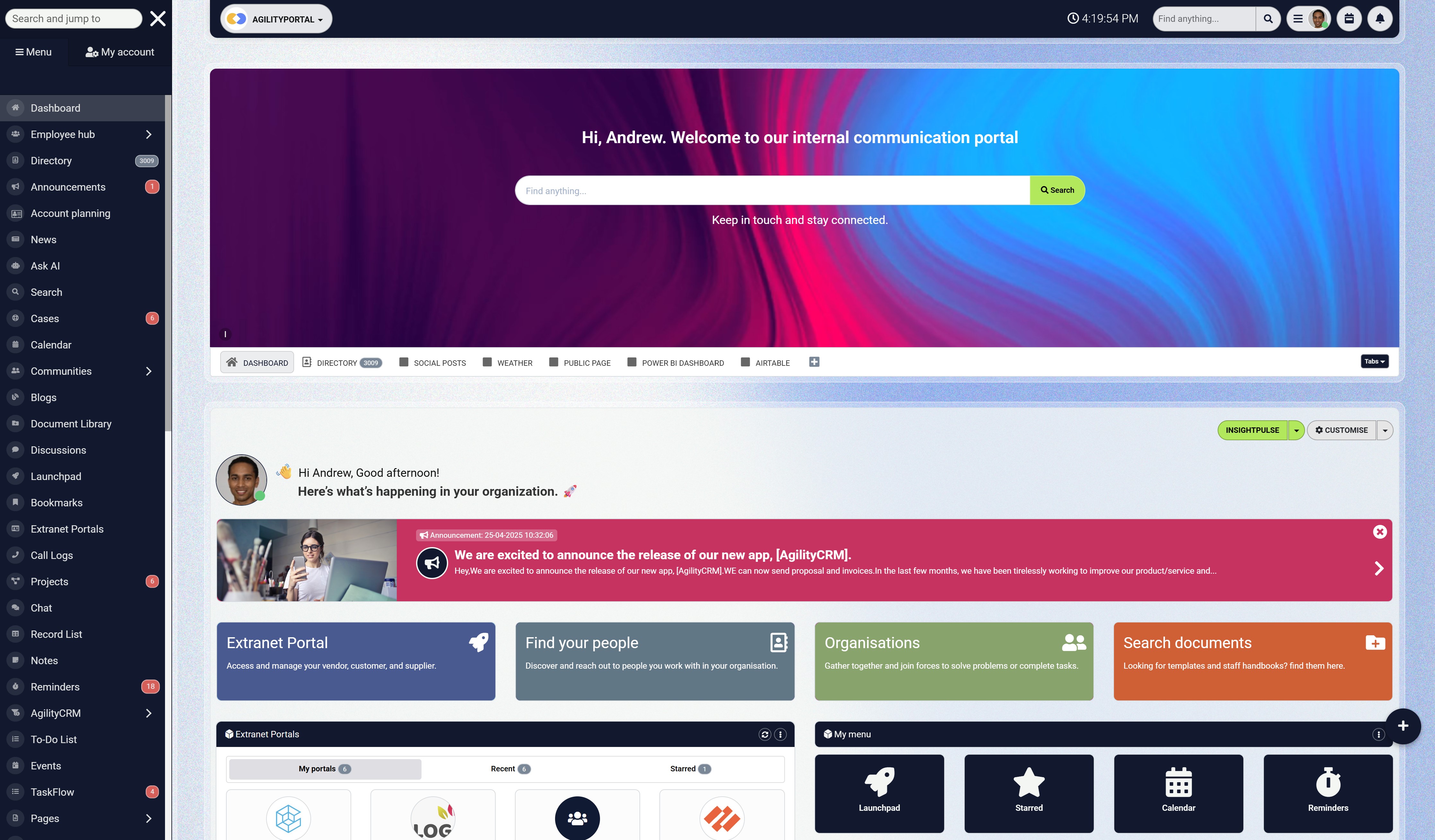
A central employee platform gives organisations one place to publish, organise and update approved financial wellbeing information. It also helps employees access relevant support without repeatedly explaining their circumstances to a manager.
A digital workplace such as AgilityPortal can provide:
- A searchable financial wellbeing resource centre
- Country-specific content and access permissions
- Translated policies and localised guidance
- Targeted announcements for particular regions or employee groups
- Mobile access for frontline and deskless workers
- Events, webinars and confidential support links
- Anonymous employee surveys
- Benefits FAQs and practical guides
- Engagement analytics showing which content employees use
Country-specific targeting is particularly important.
Employees in the UK can receive information about workplace pensions, while teams elsewhere see guidance relevant to their local healthcare, taxation or savings systems.
This reduces confusion without forcing the organisation to operate completely separate platforms for every region.
Technology also improves communication.
HR teams can send reminders before local tax deadlines, benefit enrolment periods or financial education events instead of relying on one company-wide announcement. Mobile access ensures the same information reaches employees who don't regularly use a desk or company email.
However, workplace technology doesn't solve financial pressure by itself. Its role is to make trustworthy support visible, accessible and easier to understand.
The underlying benefits, guidance and employee protections must still be relevant, properly funded and reviewed by qualified people.
AgilityPortal
Best for Centralising and Communicating Global Financial Wellbeing Support
AgilityPortal gives organisations one secure digital workplace for publishing financial wellbeing resources, benefits information, localised guidance, employee surveys, support links, and targeted communications across a global workforce.
One Trusted Place for Employee Support
Create searchable resource centres, target content by country or employee group, send important announcements, collect feedback, and give office-based, remote, and frontline employees mobile access to relevant financial wellbeing information.
How Do You Know Whether the Strategy Is Working?
Webinar attendance and page views can show activity, but they don't prove that employees are receiving meaningful support.
A successful global financial wellbeing strategy should improve awareness, understanding, confidence and access across different parts of the workforce.
Employers therefore need to combine platform analytics with anonymous surveys and broader workforce data. Results should also be reviewed by country and employee group rather than hidden inside one global average.
Useful measures include:
- Awareness of available support: Do employees know what help exists and where to find it?
- Participation by region: Are some countries, departments or employee groups engaging more than others?
- Use of confidential guidance: Are employees using coaching, helplines or independent support services?
- Employee confidence: Do people feel better able to make informed financial decisions?
- Benefit understanding: Can employees explain the benefits available to them and how to access them?
- Perceived relevance: Does the programme address employees' actual financial priorities?
- Financial stress trends: Are anonymous reports of financial pressure improving or worsening?
- Absence and retention patterns: Are there changes that may be associated with improved employee support?
- Frontline accessibility: Can deskless and mobile employees access resources as easily as office-based teams?
- Trust in confidentiality: Do employees believe they can use the programme without being monitored or judged?
Employers should be careful when interpreting these results. Lower absence or staff turnover may have several causes, so the financial wellbeing programme shouldn't automatically receive all the credit.
Participation may also increase temporarily after a communication campaign without producing a lasting improvement in employee confidence.
The strongest evidence comes from combining several indicators over time.
If employees understand their benefits, trust the programme and report that the support reflects their needs, the strategy is moving in the right direction.
If participation remains low in a particular region, employers should investigate relevance, accessibility and communication before concluding that employees simply aren't interested.
What Will Global Financial Wellbeing Look Like Next?
Global financial wellbeing is likely to become more personalised and locally responsive.
Instead of giving every employee the same benefits package, employers will increasingly use workforce data to understand what different regions, roles and life stages actually need.
This could mean offering employees more choice across emergency savings, healthcare, pensions and financial education. The challenge will be personalising support without collecting excessive personal information.
Financial resilience will also receive greater attention.
Employers will look beyond retirement planning and consider whether employees can manage an unexpected bill, temporary loss of income or sudden increase in living costs. The World Economic Forum reports that financial inclusion is improving, but financial resilience remains limited for a large proportion of adults. This makes emergency preparedness an increasingly important part of workplace financial support.
Digital financial education will continue growing, but employers shouldn't assume every employee can confidently use financial apps and online services. The OECD's international research into digital financial literacy found an average score of only 53 out of 100 across participating economies.
That gap could leave employees vulnerable to poor financial decisions, hidden charges, online fraud and unsuitable products. Future programmes will therefore need to teach people how to evaluate digital tools—not simply give them access.
Support will also need to reach contractors, gig workers and other people outside conventional employment structures. These workers may not receive the pensions, insurance or financial protections offered to permanent employees, even when they contribute regularly to the organisation.
Businesses must decide how far their wellbeing responsibilities extend while remaining clear about employment status and legal obligations. At minimum, approved educational resources and signposting can be made more widely accessible.
Finally, HR, benefits and employee communication systems will become more closely connected. A central digital workplace can deliver locally relevant guidance, benefits updates and confidential support links to different employee groups.
This won't replace qualified advisers or suitable benefits, but it can make existing support easier to find and understand.
The future of global financial wellbeing will depend on combining appropriate technology with local knowledge, employee trust and responsible programme design.
Global Financial Wellbeing Strategy Checklist
Use this checklist to assess whether your financial wellbeing strategy balances global consistency with local employee needs.
It can also help identify gaps before launching the programme in a new country or region.
Strategy and Research
Compliance and Local Relevance
Access and Communication
Privacy and Measurement
- Privacy protections are documented: Employees know what information is collected, who can access it and how long it is retained.
- Regional metrics are established: Awareness, participation, accessibility and usefulness are measured by location and employee group.
- Results are reported in aggregate: Individual financial activity isn't exposed to managers or used for employment decisions.
- An annual review is scheduled: The strategy will be updated as employee needs, regulations and economic conditions change.
A programme doesn't need every element perfected before it begins.
However, any unchecked item represents a potential gap in relevance, accessibility, trust or compliance. Complete the checklist during planning, after the initial pilot and at every formal review.
Final Thoughts
Building a global financial wellbeing strategy doesn't mean creating a completely separate programme for every office.
That would quickly become expensive, inconsistent and difficult to manage.
The better approach is to establish clear global principles while allowing regional teams to adapt benefits, guidance and communication to local circumstances. This creates consistency without ignoring the financial realities employees face.
Employers must also recognise that equal treatment doesn't always produce equitable outcomes.
Giving everyone the same retirement webinar, budgeting tool or benefits guide may look fair, but it offers little value when the content doesn't match local financial systems or employee priorities.
Fairness comes from ensuring every employee can access support that is relevant, understandable and genuinely useful.
The strongest strategies combine employee feedback, regional expertise, privacy protection and accessible workplace technology. They're reviewed regularly as living costs, regulations and workforce needs change.
When global standards and local flexibility work together, financial wellbeing becomes more than another employee benefit—it becomes a practical part of building a supported and resilient workforce.
AI Summary
- A global financial wellbeing strategy helps organisations support employees across different countries while accounting for local living costs, laws, currencies and financial systems.
- Offering every employee identical benefits may appear fair, but standardised support can fail when employees face different healthcare costs, pension arrangements and financial pressures.
- Successful strategies establish consistent global principles covering confidentiality, accessibility, inclusion, reliable guidance, data protection and employee dignity.
- Regional flexibility allows employers to localise benefits, languages, examples, communication channels and programme timing around actual employee needs.
- Employee surveys, local HR teams and qualified regional specialists can help organisations identify gaps between global policies and local financial realities.
- A central employee platform can make financial wellbeing resources searchable, accessible and relevant while protecting employees’ personal financial information.
Most Popular Posts

Effective communication among team members is vital for the productivity and success of any organization. Surprisingly, 60% of companies lack a long-term internal communication strategy, which p...


Businesses thrive on communication for efficiency, productivity and accomplishment. When the right information is passed from the right designation in the organization, it promotes positivity an...

Categories
Blog
(3122)
Business Management
(389)
Employee Engagement
(232)
Digital Transformation
(206)
Growth
(148)
Intranets
(138)
Internal communications
(104)
Remote Work
(65)
Sales
(53)
Collaboration
(50)
Customer Experience
(32)
Culture
(30)
Knowledge Management
(29)
Project management
(29)
Leadership
(20)
Comparisons
(9)
News
(1)

Related Posts

Choosing an identity protection service can feel like a sensible way to put a protective barrier around your personal information. After all, data breaches, phishing attacks and account takeovers have made it increasingly difficult to know wher...

Open by explaining that global businesses often try to create fairness by offering every employee the same financial wellbeing resources. It sounds reasonable—but equal provision doesn't necessarily create equitable outcomes. An employee in London, L...

Lets get into external data APIs, and how it gives marketing teams access to market signals, customer information and competitive intelligence that their internal systems cannot generate alone. That matters because even the most detailed interna...

A traditional job relocation package once felt like a compelling offer. An employer might pay for professional movers, temporary accommodation, travel and even help with selling a home. For an employee expected to move permanently to a fixed wo...

Outdated workplace technology rarely looks like a major business problem. It usually appears as a slow computer that takes several minutes to start, unreliable Wi-Fi that drops during meetings, a malfunctioning printer, incompatible software or...


Jill Romford
I am a digital nomad, lover of exploring new places and making friends.
I love to travel and I love the internet. I take pictures of my travels and share them on the internet using Instagram.
Traveler, entrepreneur, and community builder. I share my insights on digital marketing and social media while inspiring you to live your fullest life.
Ready to learn more? 👍
One platform to optimize, manage and track all of your teams. Your new digital workplace is a click away. 🚀
Free for 14 days, no credit card required.