Insight Blog
Agility’s perspectives on transforming the employee's experience throughout remote transformation using connected enterprise tools.
33 minutes reading time
(6512 words)
What Working Remotely Teaches Leaders About Managing Global Teams

What Working Remotely Teaches Leaders About Managing Global Teams
Learn what working remotely teaches leaders about managing global teams, from asynchronous communication and trust to remote onboarding and employee engagement.
What Working Remotely Teaches Leaders About Managing Global Teams

We all know managing global teams is not simply a matter of giving employees laptops, chat software and video-call links.
As remote and hybrid work become a normal part of modern employment, leaders need clearer systems for communication, knowledge sharing, accountability and inclusion across borders and time zones.
Gallup reports that six in 10 employees with remote-capable jobs want a hybrid arrangement, while around one-third prefer to work fully remotely—making a connected global team strategy essential rather than optional.
60%
want hybrid work
Gallup reports that six in 10 employees with remote-capable jobs want a hybrid arrangement, while around one-third prefer to work fully remotely. This makes a connected global team strategy essential, not optional.
Source:
Gallup – Hybrid Work
For many professionals, working abroad in Asia offers a practical introduction to these realities.
It exposes people to different communication styles, approaches to hierarchy, local work customs and time-zone challenges—lessons that directly apply when leading a dispersed workforce.
Working remotely teaches leaders that proximity cannot be the basis for alignment: important information must be easy to find, decisions need to be documented, and collaboration must work asynchronously as well as in live meetings.
Businesses that get this right can build stronger, more trusted global teams; those that rely on scattered emails, chat messages and meeting-heavy routines risk leaving employees disconnected or uninformed.
What Is Remote Workforce Management?

What Is Remote Workforce Management
Remote workforce management is how an organisation leads, supports and coordinates employees who work outside a traditional office, whether they are fully remote, hybrid or based in different countries.
It includes setting clear communication expectations, sharing company information, tracking work and goals, supporting wellbeing, and ensuring employees can access the tools and guidance they need from anywhere.
Done properly, it is not about monitoring people more closely.
It is about creating reliable workflows, using connected digital workplace tools, and updating policies so employees have the clarity and autonomy to do their best work while staying connected to the wider business.
Key Takeaways
- Managing global teams requires clear communication rules, shared expectations and reliable access to important information across every location and time zone.
- Asynchronous communication helps remote and hybrid employees stay aligned without relying on meeting-heavy routines or expecting people to be online at the same time.
- Trust-based remote leadership focuses on outcomes, ownership and regular support instead of constant monitoring of employee activity.
- Remote employees need equal access to onboarding, training, recognition, feedback and company updates to feel connected to the wider organisation.
- A connected digital workplace brings communication, knowledge, tasks and employee engagement into one place, reducing friction for distributed teams.
What Are the Challenges of Managing Remote Employees?
Managing remote employees can create challenges around communication, visibility, performance, scheduling, wellbeing and career development.
Flexible work can improve morale and productivity, but without clear systems it can also lead to misunderstandings, isolation and an unhealthy overlap between work and personal life.
Here are some common issues leaders need to address.
- Communication gaps when informal conversations disappear - Remote teams do not have the quick desk-side conversations that often resolve questions before they become problems. Important context can be missed, especially when a newer employee is unsure whether to ask for clarification in a busy group call or chat channel.
- Maintaining accountability without micromanaging - Managers cannot rely on seeing who is at their desk. The goal should be clear outcomes, responsibilities and regular check-ins—not constant status updates. Too much monitoring can damage trust; too little can leave employees unsupported when they are blocked or overloaded.
- Time-zone differences and scheduling conflicts - Coordinating live work becomes harder when employees are based in different regions. Even a small business with staff in the UK and contractors in Europe may struggle to find fair meeting times. Async updates, shared documents and recorded meetings help work move forward without expecting everyone to be online at once.
- Reduced visibility of employee wellbeing - It can be difficult to spot burnout or disengagement when interactions are mostly digital. An employee may continue meeting deadlines while privately struggling with workload, loneliness or poor work-life boundaries. Regular one-to-ones and opportunities for honest feedback are essential.
- Fewer opportunities for learning and career growth - Remote employees can miss informal mentoring, coaching and development conversations that happen naturally in an office. Leaders should make training, onboarding resources, learning opportunities and career conversations visible and accessible to everyone, regardless of where they work.
Recognising these challenges is the first step. The next is creating people-first policies and connected communication systems that give remote employees clarity, support and a genuine sense of belonging.
Related Remote Workforce Management & Global Team Guides
Managing remote and global teams requires more than flexible working policies. These AgilityPortal guides explore remote team communication, hybrid-work collaboration, distributed team management, employee onboarding, workplace portals and the tools that help employees stay aligned across locations and time zones.
- Remote Team Management Software: Best App for Team Management
- Best Virtual Collaboration Tools for Modern Global Teams
- 8 Tips and Challenges of Managing Remote Teams
- How to Connect Remote Teams and Help Employees Feel Included
- 7 Essential Remote Employee Onboarding Tips for New Hires
- Distributed Team Management Software: Supporting Global Teams
- What Is a Workplace Portal? How It Supports Hybrid Work and Flexible Teams
- 5 Tips to Boost Remote Work Productivity With Collaboration Tools
- How Can Organisations Prevent Silos in a Remote Workplace?
- Top Internal Communication Tools for Distributed and Global Teams
Together, these guides support the topic cluster around remote workforce management, managing global teams, hybrid work, asynchronous communication, remote onboarding, employee engagement and connected digital workplaces.
5 Things Working Remotely Teaches Leaders About Managing Global Teams
Working remotely teaches leaders that managing people successfully has far less to do with where they are sitting and far more to do with how clearly they are supported, informed and included.
For leaders managing global teams, those lessons become even more important. Different time zones, cultures, languages and working patterns can create friction quickly when communication and processes are unclear.
A strong global team does not need to be online at the same time every day to work well. It needs shared expectations, trusted information, accessible tools and a culture where people can contribute confidently from wherever they are based.
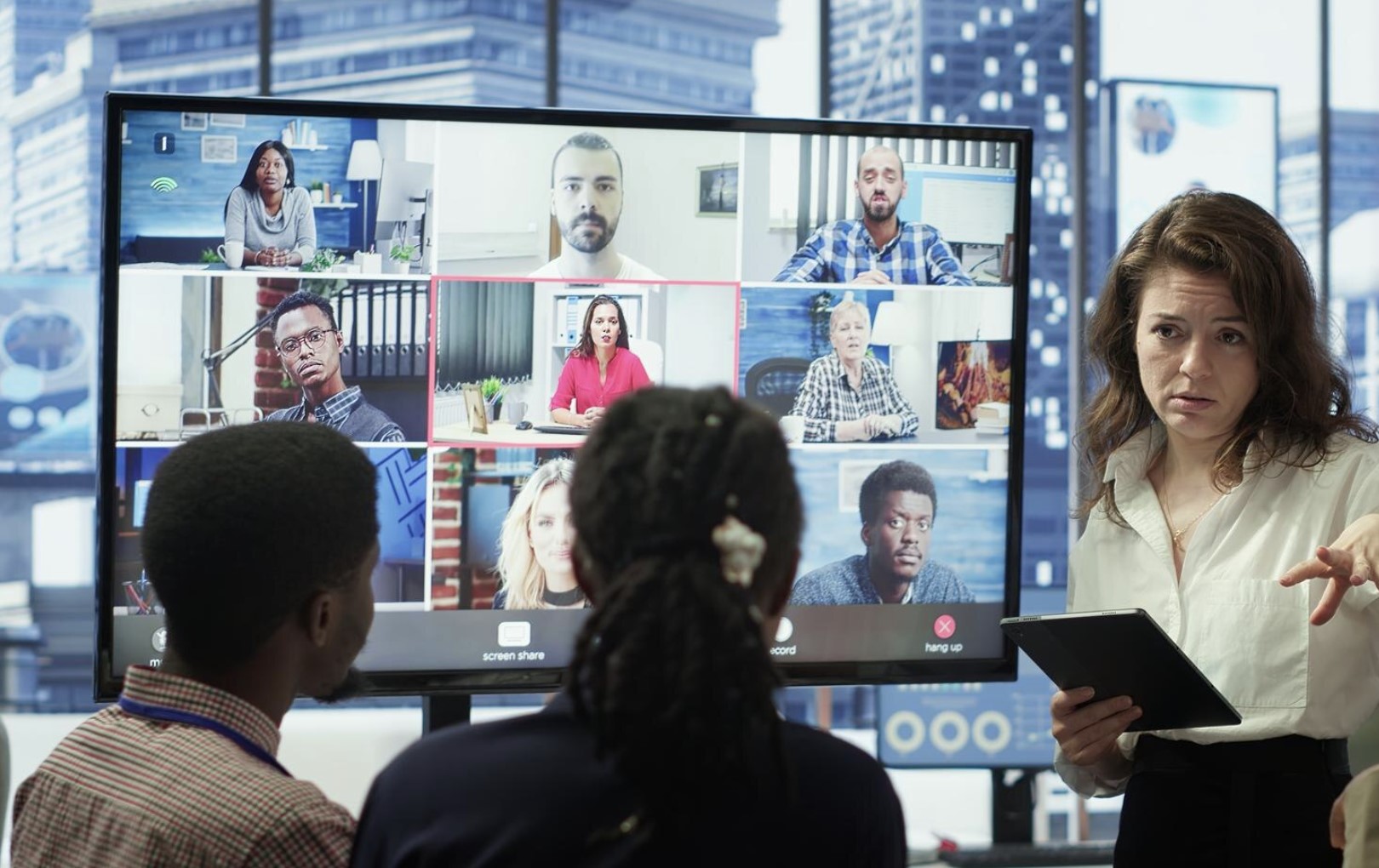
Here are five important lessons remote work can teach leaders about managing global teams.
5 Things Working Remotely Teaches Leaders About Managing Global Teams
#1. Clear communication matters more than constant communication
One of the biggest lessons from remote work is that more messages do not automatically create better communication. In fact, employees can become less informed when important updates are scattered across email, chat threads, video calls, shared drives and project tools.
When people work in the same office, they can often fill in missing context through quick conversations.
A colleague can lean across a desk to ask a question, clarify a deadline in the kitchen or overhear a useful discussion. Remote and global employees do not have those informal opportunities.
That means leaders need to communicate with more purpose. Every employee should know:
- Where to find official company announcements.
- Which channels are used for urgent issues.
- Where policies, documents and processes are stored.
- How project decisions are recorded.
- When they are expected to respond to a message.
- Who to contact when they need help.
This is especially important when managing global teams. A message sent during one region's working day may not be read by colleagues until several hours later. If the details are vague or incomplete, work can slow down while people wait for clarification.
The answer is not to schedule more meetings or expect employees to respond outside their working hours. It is to make communication clearer the first time.
Written updates should provide enough context, ownership, deadlines and next steps for people to act without needing several follow-up messages.
A connected digital workplace can help by giving employees one trusted place for company news, team updates, documents and knowledge. Chat still has a role, but it should not become the only place where important information lives.
#2. Asynchronous work creates a fairer global workplace
Remote work quickly reveals how unfair a meeting-first culture can become.
A weekly call that is convenient for employees in London may require colleagues in Asia, Australia or North America to join very early, very late or outside their normal working hours.
Over time, this creates an imbalance. Employees who cannot attend every live session may miss decisions, feel less visible or struggle to contribute to discussions that have already moved on by the time they start work.
Leaders managing global teams should make asynchronous communication a normal part of how work gets done. This does not mean eliminating live meetings completely.
Some conversations are better in real time, particularly sensitive discussions, complex planning or decisions where several people need to work through a problem together.
However, many updates do not need a meeting at all.
Progress reports, project handovers, leadership announcements, policy changes, training materials and meeting summaries can be shared in a format employees can access when their workday begins.
Useful asynchronous practices include:
- Recording key meetings and sharing clear written summaries.
- Documenting decisions, owners and deadlines after discussions.
- Using shared task lists and project updates rather than status meetings.
- Posting company announcements in a central, searchable location.
- Creating a handover process for work moving between time zones.
- Rotating essential meeting times so the inconvenience is shared fairly.
- Setting realistic response-time expectations for non-urgent messages.
This approach helps employees stay informed without creating pressure to be always available. It also improves the quality of communication because people have time to read, reflect and respond thoughtfully rather than feeling forced to react immediately in a call.
For a global team, asynchronous work is not simply a productivity tactic. It is an inclusion practice. It gives employees in every location a more equal opportunity to understand what is happening and contribute their perspective.
#3. Trust and accountability must work together
Managing employees remotely can make some leaders uncomfortable because they cannot see people working. In an office, managers may feel reassured by visible activity: employees at their desks, conversations taking place or a busy meeting calendar.
But visibility is not the same as performance. An employee can appear busy all day without making meaningful progress, while another may complete excellent work independently with little need for supervision.
Working remotely teaches leaders to focus on outcomes instead of activity. Rather than asking whether an employee is online, leaders should ask whether the person understands their priorities, has the resources to do their work and is making progress towards agreed goals.
Trust does not mean removing accountability. It means creating accountability that is fair, transparent and based on clear expectations.
Managers can do this by agreeing:
- What good performance looks like for each role.
- Which goals, tasks or deliverables matter most.
- When progress should be reviewed.
- How employees should raise blockers or risks.
- What level of autonomy employees have when making decisions.
- When a manager should step in to provide support.
For example, instead of requiring a remote employee to send a daily list of every task completed, a manager could agree on weekly priorities and schedule a regular check-in to discuss progress, challenges and changing demands.
This creates a healthier relationship. Employees are trusted to manage their work, while managers have enough visibility to offer help before issues become serious.
For leaders managing global teams, trust is particularly important because direct oversight is often impractical. Employees may work different hours, interact with different customers or manage local responsibilities that their manager cannot observe closely. Strong systems for goals, tasks, updates and feedback create confidence without turning remote work into surveillance.
#4. Culture needs deliberate action, not office proximity
A common mistake is assuming that workplace culture only exists when people are physically together. Remote work proves that culture is shaped by much more than a shared office, team lunch or conversation near the coffee machine.
Culture is created through everyday behaviour: how leaders communicate, how colleagues treat each other, whose views are heard, how success is recognised and whether employees feel safe asking for help.
For remote and global teams, culture must be more intentional because employees may not naturally see or experience those behaviours every day. A new employee might know their job responsibilities but still feel disconnected from the wider company if they do not understand its values, people or purpose.
Leaders can strengthen remote culture by:
- Sharing regular leadership updates that explain business priorities.
- Recognising individual and team achievements publicly.
- Creating opportunities for employees to share ideas and feedback.
- Making onboarding welcoming and consistent for every location.
- Including remote employees in company news and celebrations.
- Encouraging managers to check in on people, not only tasks.
- Creating spaces for peer recognition, questions and informal connection.
- Making organisational values visible in policies, decisions and daily communication.
A strong employee intranet or digital workplace can help create this consistency. It gives everyone access to the same company news, events, employee directory, recognition, resources and conversations, whether they are working from home, travelling, in a regional office or on the frontline.
For a global team, inclusion also means recognising cultural differences rather than expecting everyone to work in exactly the same way. Leaders should avoid treating one office, country or time zone as the default. Meeting schedules, public holidays, communication styles and social activities should be considered with a wider workforce in mind.
When employees feel respected and included, they are more likely to share ideas, collaborate openly and stay connected to the organisation.
#5. Knowledge must be easy to find and easy to trust
Remote work exposes a major weakness in many organisations: important knowledge often exists, but employees cannot find it when they need it.
Policies may be buried in old emails. Training may sit in a folder that new employees do not know exists. Project decisions may be trapped in chat conversations. Teams may rely on a few experienced people to answer the same questions repeatedly because there is no clear, trusted source of information.
This problem becomes more serious when managing global teams. Employees cannot always wait for someone in another time zone to come online and explain a process. They need the ability to find accurate answers independently.
Leaders should make sure employees can easily access:
- Company policies and procedures.
- Onboarding materials and role-specific guidance.
- Team goals, responsibilities and project information.
- Training and development resources.
- Organisational charts and employee contact details.
- Frequently asked questions and support information.
- Leadership announcements and business updates.
- Current documents rather than outdated versions.
Creating this type of knowledge system does not mean documenting every small detail. It means identifying the information employees need most often and giving it a clear home.
A central knowledge base, document library or intranet can reduce repeated questions, improve onboarding and help employees work with more confidence. It also protects the business when key knowledge is not held only in one person's inbox or memory.
For global workforce management, accessible knowledge is a practical form of support. It lets employees make informed decisions, resolve routine issues and keep work moving without depending on constant real-time communication.
Working remotely teaches leaders that managing global teams is not about recreating the office online. It is about building better ways of working: clear communication, flexible collaboration, trust-based accountability, inclusive culture and information that employees can rely on.
When these foundations are in place, distance becomes less of a barrier. Employees can work across locations and time zones while still feeling informed, supported and part of one connected organisation.
What Are Some Best Practices for Managing Remote Teams?
The most effective practices for managing remote teams include building trust, setting shared expectations, communicating with purpose, creating reliable feedback channels, protecting team culture and making development accessible to every employee.
There is no universal formula for remote workforce management. A small business with a few hybrid employees will work differently from a large global team spanning several time zones.
However, successful remote and distributed teams usually have one thing in common: employees know what is expected, where to find information, how to get support and how their work contributes to wider business goals.
Whether you are leading a fully remote workforce, a hybrid workplace or employees across several countries, the aim is to make people feel trusted, informed and connected—not simply monitored from a distance.
Here are practical best practices for managing remote teams effectively.
#1. Build trust through autonomy and consistent support
Trust is the foundation of strong remote leadership. Employees need ownership of their responsibilities, with clear goals and deadlines, rather than constant requests to prove they are working.
For example, instead of asking a remote marketer to report in every day, agree on the campaign objective, deliverables, timeline and success measures.
Then use regular check-ins to remove blockers, discuss priorities and provide support.
This approach gives managers appropriate visibility while allowing employees to manage their own time. It also creates accountability based on outcomes, not online status or how quickly someone replies to a message.
For leaders managing global teams, this matters even more.
Different working hours, cultural norms and personal circumstances mean a rigid, one-size-fits-all management style can quickly damage trust.
#2. Set clear and shared expectations
Remote employees should never have to guess what they are responsible for, when they need to be available or where key information is stored.
Clear expectations reduce unnecessary meetings, prevent duplicated work and make performance conversations more objective.
Every employee should understand:
- Their responsibilities and priorities.
- The deadlines and outcomes they own.
- Their normal working hours and availability expectations.
- How progress, quality and performance will be measured.
- Which tools or channels should be used for different types of communication.
- Where they can find policies, project documents and company updates.
Documenting these expectations in onboarding materials, shared calendars, team pages or an employee intranet helps everyone work from the same source of truth. This is particularly important for a global team, where local working practices, public holidays and time zones can differ significantly.
A simple "ways of working" guide can set expectations for communication, meetings, response times, escalation routes and document storage. It should also make a clear distinction between synchronous and asynchronous work.
- Live meetings and video calls: best for sensitive conversations, complex decisions, collaboration workshops or issues that need immediate discussion.
- Asynchronous communication: best for project updates, task comments, written decisions, recorded walkthroughs and non-urgent questions that colleagues can respond to in their own working hours.
#3. Communicate intentionally and consistently
In an office, employees can pick up context through informal conversations, quick questions and everyday observation. Remote employees do not have those same opportunities, so internal communication has to be more deliberate.
Use a balanced mix of live and asynchronous communication to keep employees informed without filling their calendar with unnecessary meetings.
- Use team meetings, one-to-ones and planning sessions for discussion, decisions and problem-solving.
- Share written summaries, project updates, recorded videos and announcements for information that does not need an instant reply.
- Set clear response-time expectations, so employees know what is urgent and what can wait.
- Use a central communication platform or digital workplace to ensure important company news does not disappear in busy chat channels.
- Respect focus time by using comments, tasks and shared documents when a written response is enough.
Tone also matters. Written messages can be interpreted differently when employees are not speaking face to face, particularly across cultures. Managers should model clear, respectful communication, provide enough context and ask questions before assuming intent.
Good remote communication is not about sending more messages. It is about making the right information easy to understand, easy to find and relevant to the people receiving it.
#4. Create structured opportunities for feedback
Feedback does not happen as naturally in a remote workplace.
Managers cannot rely on a quick conversation after a meeting or an informal chat to understand what employees are struggling with.
That means feedback needs a clear rhythm. Useful options include:
- Monthly or quarterly performance check-ins.
- Regular one-to-one meetings.
- Pulse surveys to understand engagement and morale.
- Anonymous feedback forms for sensitive concerns.
- Q&A sessions where employees can ask leadership questions openly.
- Retrospectives after major projects or busy periods.
Feedback should always work both ways.
Managers need to provide practical guidance, recognition and constructive support, but they also need to listen to what employees say about workload, unclear processes, poor tools or communication gaps.
For remote workforce management, this creates an early-warning system. It helps leaders spot issues before they turn into disengagement, missed deadlines or employee turnover.
#5. Make team culture visible and inclusive
Remote culture is not created by adding a chat channel or arranging the occasional virtual quiz.
It is built through the habits leaders repeat every day: how they communicate, recognise good work, include quieter employees and respond when someone needs help.
A connected culture can be strengthened by:
- Starting relevant meetings with a brief personal check-in.
- Publicly recognising employee achievements and team wins.
- Encouraging peer-to-peer recognition, not just manager-led praise.
- Creating optional social moments, such as virtual coffee chats or informal drop-ins.
- Sharing leadership updates and business news consistently.
- Making company values visible through everyday behaviour and decision-making.
- Ensuring remote and frontline employees receive the same important updates as office-based staff.
Small rituals can have a lasting effect.
A weekly "win of the week," employee spotlight or team shout-out may seem simple, but it helps people feel seen and connected to the wider organisation.
For managers of global teams, inclusion also means being fair about meeting times, avoiding assumptions based on location, and creating ways for employees to contribute even when they cannot attend a live session.
#6. Invest in training and development for remote employees
Remote employees cannot depend on informal shadowing, hallway conversations or being physically close to senior colleagues to learn. Training and career development need to be visible, structured and available from anywhere.
Offer learning opportunities that support:
- Remote collaboration and communication skills.
- Time management, self-leadership and prioritisation.
- Digital confidence across core workplace tools.
- Cybersecurity, data handling and company policies.
- Leadership skills for managers of remote and distributed teams.
- Cultural awareness and inclusive communication for global teams.
Formal learning should be supported by mentoring, buddy programmes, coaching and regular career conversations.
A central learning hub or knowledge base makes it easier for employees to find training materials, onboarding resources and development opportunities when they need them.
Effective managing global teams comes down to clarity, connection and trust.
With the right communication practices, digital workplace tools and people-first leadership, organisations can create a resilient remote culture where employees do their best work together—regardless of where they are based.
How Can You Promote Team Culture in a Remote Environment?
You can promote team culture in a remote environment by creating consistent opportunities for connection, recognition, honest communication and shared routines that reflect the organisation's values.
Remote culture is not built through occasional virtual social events alone.
It is shaped by the small, repeatable actions managers and HR leaders take to help employees feel included, valued and connected to the wider business.
- Create space for genuine connection: Schedule opportunities for employees to talk beyond tasks, such as optional virtual coffee chats, Friday drop-ins or informal team sessions.
- Help people show their personality: Encourage employees to share interests, photos, personal milestones or lighter updates in appropriate team Spaces or informal communication channels.
- Recognise good work openly: Celebrate individual contributions, team achievements and business milestones so remote employees feel noticed, even when they are not working face to face.
- Build simple, repeatable rituals: Weekly round-ups, team shout-outs, welcome messages for new starters and "win of the week" posts help create familiarity and belonging over time.
- Make values visible in everyday leadership: Reinforce the organisation's culture through clear policies, transparent updates, fair decision-making and leadership behaviour that matches what the business says it believes in.
When these habits are consistent, remote employees are more likely to feel part of one connected team rather than isolated workers completing separate tasks.
What Tools and Technology Support Remote Workforce Management?
What Tools and Technology Support Remote Workforce Management?
Remote workforce management works best when employees have one connected place to communicate, find information, manage work and stay engaged—regardless of their location or time zone.
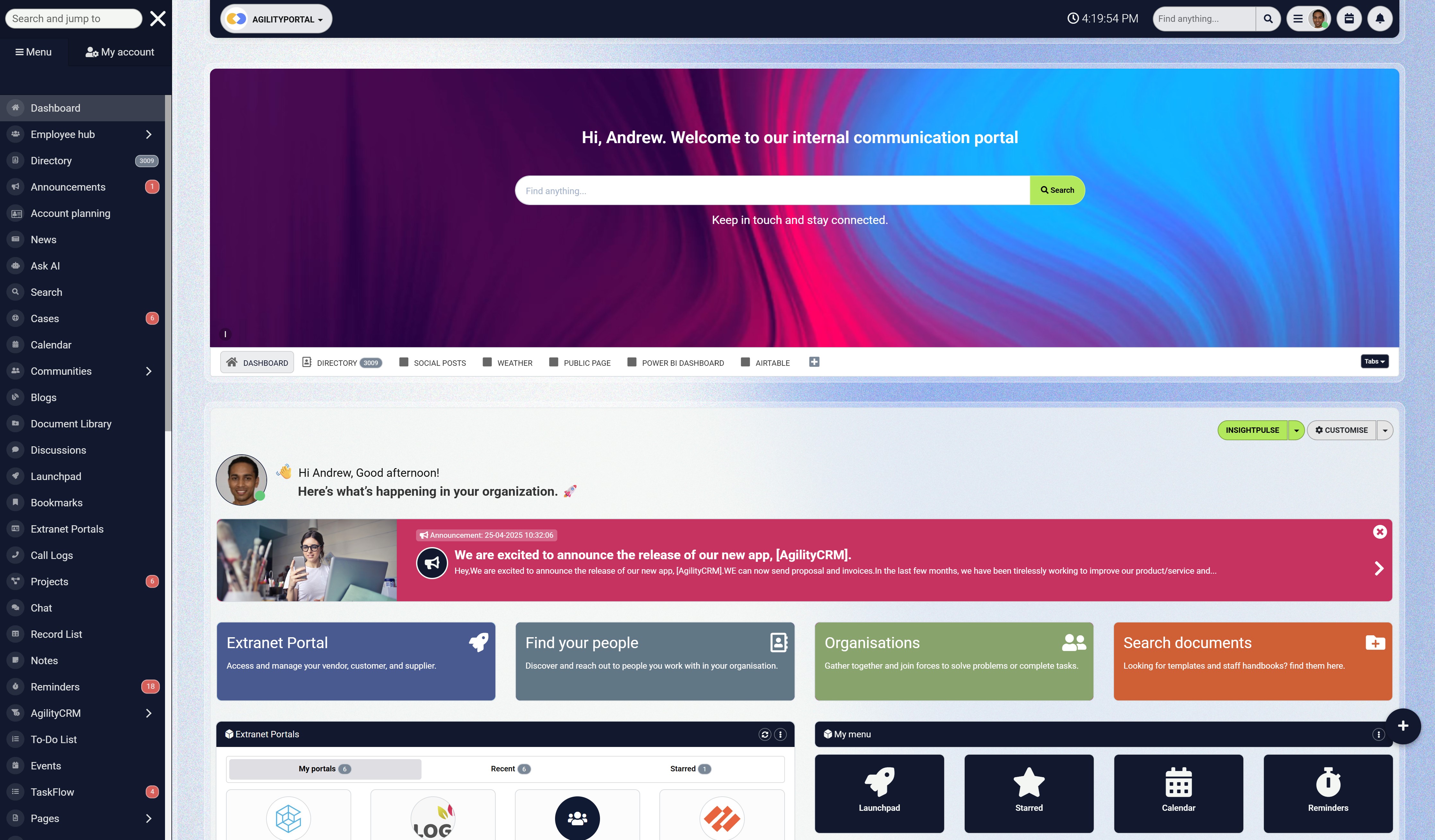
Rather than adding another disconnected app to the stack, AgilityPortal brings many of the everyday tools remote and global teams need into one digital workplace. This helps leaders improve visibility and coordination without relying on constant check-ins or micromanagement.
AgilityPortal supports remote workforce management through:
- Company announcements and targeted communication: Publish important news, leadership updates, policy changes and team communications to the right employees, with clear visibility beyond email inboxes.
- Team Spaces and instant messaging: Give teams dedicated places for everyday conversations, quick questions, project discussions and informal connection, while keeping communication organised.
- Knowledge base, Pages and document library: Create one trusted source for policies, procedures, onboarding information, project resources and frequently asked questions, so employees can find answers without waiting for someone to come online.
- Tasks, reminders and goals: Assign responsibilities, track progress, set deadlines and keep shared priorities visible. This supports accountability while allowing employees the autonomy to manage their work.
- Events, calendars and scheduling: Share company events, meetings, deadlines and important dates in one place, making it easier for distributed teams to coordinate across different working patterns.
- Employee directory and org chart: Help remote employees understand who does what, find the right colleague and build connections across departments, locations and global teams.
- Onboarding and learning tools: Give new starters structured access to welcome information, training, documents and key business processes from their first day.
- Forms, polls, Q&A and feedback: Collect employee feedback, run pulse surveys, answer common questions and give people a clear voice in the organisation.
- Recognition and employee engagement: Celebrate achievements, share kudos and strengthen workplace culture so remote employees feel seen and connected to the wider business.
- Mobile access and integrations: Keep frontline, remote and travelling employees connected through mobile access, while integrating with tools such as Microsoft Teams, SharePoint, Google Drive, HR systems and video platforms.
The best remote workforce technology reduces friction instead of creating more tool overload.
AgilityPortal gives organisations a central digital workplace that combines internal communication, knowledge sharing, employee engagement and everyday collaboration in one accessible platform.
AgilityPortal
A Connected Digital Workplace for Remote and Global Teams
AgilityPortal helps organisations bring internal communication, knowledge, documents, training, employee directories and everyday collaboration into one central employee intranet. This gives HR, IT and Internal Communications teams a more reliable way to support remote, hybrid and distributed employees.
Rather than asking employees across different offices, countries and time zones to search through disconnected email, chat and file-sharing tools, AgilityPortal provides one digital workplace where employees can find announcements, policies, team resources, workplace knowledge and the right people from desktop or mobile.
Keep every employee informed and connected
Support managing global teams with centralised communication, searchable knowledge, documents, onboarding, employee profiles, tasks and feedback tools that work across web, iOS and Android devices.
Final Thoughts - Build Systems That Make Global Work Easier
Effective remote leadership combines empathy with structure.
Employees do not need to work in exactly the same way, at the same hours or from the same location to contribute well. They do, however, need equal access to trusted information, clear expectations, support from their managers and a meaningful way to share feedback and ideas.
For organisations managing global teams, this means designing communication around more than live meetings.
A written project update can keep colleagues in different time zones aligned; a structured remote onboarding journey can help new starters feel part of the business from day one; and rotating essential meeting times shows that no one region is treated as an afterthought.
The right tools should make this easier, not add to the noise.
AgilityPortal gives remote and distributed employees one connected digital workplace for company communication, knowledge sharing, onboarding, collaboration, recognition and employee feedback. Instead of searching across email, chat threads and disconnected systems, employees can find the information and people they need in one place.
When businesses invest in clear processes, inclusive communication and a platform that keeps everyone connected, distance stops being the main challenge.
The result is a stronger global workforce where employees can collaborate confidently, stay informed and feel part of one organisation—wherever they are based.
FAQs: What Working Remotely Teaches Leaders About Managing Global Teams in 2026
How do I keep remote workers engaged and motivated?
Keeping remote employees engaged starts with regular, meaningful communication—not constant monitoring.
Managers should recognise good work, invite employees to share ideas and explain how individual contributions support wider business goals.
Opportunities for development also matter. Managing remote employees training, mentoring, online learning and clear career conversations help people feel valued and see a future with the organisation.
For a global team, use accessible digital channels so recognition, updates and development opportunities reach everyone, regardless of location or time zone.
What is the biggest challenge of managing remote teams?
For many leaders, the biggest challenge is communication. Informal conversations do not happen naturally in a remote environment, so employees can miss context, misunderstand priorities or hesitate to ask questions.
That is why leading remote teams requires clear communication rules.
Employees need to know where official information is published, when to use chat rather than email, what counts as urgent and where to find documented decisions.
Proactive internal communication helps prevent the confusion that can build when people work across different schedules and locations.
Do remote employees need different training?
Yes. Remote employees often need additional support with time management, self-motivation, digital collaboration, cybersecurity awareness and written communication.
Training should also cover asynchronous working, so employees can contribute effectively without needing to be online at the same time as every colleague.
Managers benefit from training too. Managing remote and hybrid teams requires leaders to set expectations, give feedback, identify workload concerns and build trust without falling into micromanagement. A central learning hub makes these resources easier to access and revisit.
Can remote teams build a strong company culture?
Yes. A strong culture does not depend on sharing an office, but it does require deliberate action.
Leaders should make room for connection, recognise achievements, share business updates openly and reinforce the organisation's values through everyday decisions.
Small rituals, such as virtual Friday wrap-ups, welcome posts for new employees, peer recognition or monthly team shout-outs, can build belonging over time.
The key is ensuring remote employees are included in company life rather than treated as separate from office-based colleagues.
How can I support remote employees' wellbeing?
Start by asking employees how they are doing and creating an environment where they can answer honestly. Remote work can blur the boundary between work and personal life, particularly when employees feel pressure to respond outside normal hours.
Encourage clear working hours, regular breaks and realistic workloads. Managers should also normalise taking annual leave, offer flexibility where possible and make mental-health or wellbeing support easy to find. A regular one-to-one can uncover issues that may not appear in task updates or performance data.
What is the best leadership style for remote teams?
The most effective style is trust-based, empathetic and focused on outcomes.
Leaders should set clear goals, give employees the autonomy to achieve them and provide support when they encounter barriers.
This is a core principle of leading in a remote environment: judge performance by agreed results and quality of work, not by online activity. Strong leaders check in consistently, welcome feedback and make sure employees have the tools, information and context required to succeed.
How often should remote teams meet in person?
Remote teams should meet in person when there is a clear purpose, such as strategic planning, onboarding, relationship-building, team development or a major project milestone.
Some teams may benefit from quarterly meetups, while others only need one or two in-person sessions a year.
The right frequency depends on budget, team size, distance and working style. In-person time should be intentional and inclusive, rather than an expectation that disadvantages employees who are further away or have caring responsibilities.
Where can managers learn more about remote leadership?
Managers looking for practical leadership and communication Harvard resources can read Harvard Business School Online's guidance on managing remote employees and managing global teams. Harvard also offers free leadership courses, although course availability, audit access and certificate fees can vary.
These resources can be useful alongside workplace-specific training on communication, inclusive leadership, remote environment in strategic management, employee engagement and global workforce collaboration.
AI Summary
- Managing remote and hybrid teams requires more than video calls and chat apps. Leaders need clear communication rules, shared goals and one trusted place for employees to find important information.
- Asynchronous communication helps global teams work fairly across time zones. Written updates, recorded meetings, shared documents and clear handovers reduce pressure for everyone to be online at the same time.
- Trust-based leadership is essential in a remote environment. Managers should focus on outcomes, responsibilities and regular support rather than monitoring online activity or relying on constant check-ins.
- Remote employees need equal access to onboarding, training, policies, company news and career-development opportunities. A connected digital workplace helps prevent important information from being lost across disconnected tools.
- Team culture still matters when employees work apart. Recognition, feedback, inclusive communication and simple shared rituals help remote workers feel seen, supported and connected to the wider organisation.
- AgilityPortal supports remote workforce management by bringing internal communication, knowledge sharing, employee engagement, onboarding, tasks and collaboration into one central digital workplace for remote and global teams.
Most Popular Posts

Effective communication among team members is vital for the productivity and success of any organization. Surprisingly, 60% of companies lack a long-term internal communication strategy, which p...


Businesses thrive on communication for efficiency, productivity and accomplishment. When the right information is passed from the right designation in the organization, it promotes positivity an...

Categories
Blog
(3226)
Business Management
(396)
Employee Engagement
(235)
Digital Transformation
(220)
Growth
(150)
Intranets
(142)
Internal communications
(110)
Remote Work
(68)
Sales
(53)
Collaboration
(53)
Customer Experience
(33)
Culture
(30)
Knowledge Management
(29)
Project management
(29)
Leadership
(20)
Comparisons
(9)
News
(1)

Related Posts

What would your leadership team do if a serious allegation about your business started spreading online before anyone knew whether it was true? That's where crisis communication and management really matter. An employee spots the post, screensh...

AI for personal injury law firms is becoming part of everyday casework. These tools can help teams sort through medical records, build timelines, draft demand packages and find details buried in a big case file. That could free up attorneys and...

Ever left an online meeting unsure what was decided—and wondered how to run an effective meeting without wasting everyone's time? A call can bring a distributed team together quickly, but when it starts late, includes people who don't know why ...

Where can I send a fax from in my area when a document needs to go out today? The answer might be a nearby print or shipping shop, a library or an online fax service, but what's available depends on your location. The UPS Store lists a ne...

AI in internal communications can help a small team turn one important update into useful messages, answers and resources for employees—but only when the information is accurate and a person checks the result. Comms teams are expected to keep p...


Jill Romford
I am a digital nomad, lover of exploring new places and making friends.
I love to travel and I love the internet. I take pictures of my travels and share them on the internet using Instagram.
Traveler, entrepreneur, and community builder. I share my insights on digital marketing and social media while inspiring you to live your fullest life.
Ready to learn more? 👍
One platform to optimize, manage and track all of your teams. Your new digital workplace is a click away. 🚀
Free for 14 days, no credit card required.