
Insight Blog
Agility’s perspectives on transforming the employee's experience throughout remote transformation using connected enterprise tools.
32 minutes reading time
(6456 words)
How Partner Portals Improve Transparency, Trust, and Collaboration Between Business Partners

How Partner Portals Improve Transparency, Trust, and Collaboration Between Business Partners
Discover how partner portals improve transparency, strengthen trust, and enhance collaboration between business partners. Learn how shared access to information helps reduce delays, improve accountability, and drive better business outcomes.
How Partner Portals Improve Transparency, Trust, and Collaboration Between Business Partners

If you've ever managed relationships with partners, distributors, resellers, suppliers, or clients, you've probably experienced the frustration of searching through endless email threads, outdated spreadsheets, and scattered documents just to find a simple answer.
The reality is that many organizations still rely on disconnected systems to collaborate with external partners, creating confusion, delays, and a lack of visibility across the entire partnership.
This is where partner transparency becomes critical.
When everyone has access to the same information, conversations move faster, decisions become easier, and trust grows naturally.
In fact, research from Salesforce found that 88% of customers and business buyers say the experience a company provides is just as important as its products or services, highlighting the growing importance of clear communication and transparency throughout business relationships.
88%
of buyers agree
According to Salesforce, 88% of customers and business buyers say the experience a company provides is just as important as its products or services, highlighting why transparency, communication, and trust have become critical to successful business relationships.
Source: Salesforce State of the Connected Customer
There's also a psychological factor at play: trust.
People are more likely to engage, collaborate, and invest in a relationship when they feel informed and included.
When partners can easily access updates, documents, performance data, and important communications, they gain confidence that everyone is working from the same source of truth.
In this article, we'll explore how modern partner portals improve transparency between business partners, eliminate communication bottlenecks, strengthen trust, and create more productive partnerships.
You'll learn the common challenges businesses face, the features that drive transparency, and how leading organizations are using partner portals to build stronger partner ecosystems.
Key Takeaways
- Partner transparency helps build trust, improve communication, and create stronger business relationships between distributors, resellers, suppliers, channel partners, and strategic partners.
- Many organizations struggle with information silos, scattered documents, email overload, and limited visibility into partner activities, making collaboration more difficult than it should be.
- A modern partner portal provides a single source of truth for documents, training, announcements, communication, reporting, and partner engagement.
- Features such as document management, activity tracking, role-based permissions, knowledge bases, and onboarding tools help improve accountability and transparency across the partner ecosystem.
- Organizations that invest in partner transparency often experience faster onboarding, stronger partner engagement, improved collaboration, and more scalable partner relationship management.
The Growing Challenges of Partner Management in 2026
Managing business partnerships has never been more important—or more complicated.
As companies expand their partner ecosystems to include distributors, resellers, suppliers, consultants, affiliates, and strategic alliances, keeping everyone aligned has become a significant challenge.
One of the biggest problems organizations face in 2026 is information fragmentation. Important documents, product updates, training materials, contracts, and marketing assets are often spread across email inboxes, cloud drives, messaging apps, and internal systems.
When partners can't quickly find the information they need, productivity suffers and opportunities are missed.
Communication is another major obstacle.
Many organizations still rely heavily on email to collaborate with external partners, despite the fact that the average office worker receives more than 120 emails per day.
Important updates become buried in crowded inboxes, resulting in delayed responses, missed deadlines, and inconsistent messaging across partner networks.

Visibility is also becoming a growing concern.
Partner managers often struggle to understand which partners are actively engaged, which resources are being used, and where collaboration bottlenecks exist.
Without clear insights, it becomes difficult to identify underperforming partnerships or provide timely support when partners need assistance.
Security and compliance requirements have added another layer of complexity.
Businesses must ensure sensitive information is only accessible to authorized partners while maintaining strict governance standards. As partner ecosystems grow, manually managing permissions becomes increasingly difficult and prone to human error.
Finally, today's partners expect the same seamless digital experience they receive from modern consumer applications.
They want instant access to information, self-service resources, real-time updates, and mobile-friendly collaboration tools. Organizations that fail to meet these expectations risk lower partner engagement, slower onboarding, and weaker business relationships.
The challenge isn't simply managing more partners—it's managing them more effectively.
This is why many organizations are moving away from disconnected communication methods and investing in dedicated partner portals that provide transparency, visibility, and a centralized hub for collaboration.
Should You Build a Partner Portal or Invest in B2B Portal Development Software?
One of the biggest decisions businesses face is whether to build a custom portal from scratch or invest in an existing solution.
While B2B portal development can provide complete control over functionality and branding, it often requires significant investment in development, security, integrations, testing, and ongoing maintenance.
For most organizations, purchasing a proven partner portal platform is the faster and more cost-effective route.
Modern platforms already include essential features such as secure
document sharing, partner communication, training, knowledge management, analytics, role-based permissions, and mobile access.
Instead of spending months—or even years—on B2B portal development projects, businesses can launch a portal in a matter of weeks and begin improving partner collaboration immediately.
Custom development may be the right choice for enterprises with highly specialized workflows and dedicated development teams.
However, for the majority of organizations, buying an established solution reduces risk, lowers total cost of ownership, accelerates deployment, and delivers a much faster return on investment.

Should You Build a Partner Portal or Invest in B2B Portal Development Software
What Does Transparency Mean in Partner Relationships?
Transparency is the foundation of every successful business partnership.
Whether you're working with channel partners, distributors, resellers, suppliers, consultants, or strategic alliances, transparency ensures that everyone has access to the information they need to make informed decisions and work toward common goals.
Without transparency, partnerships often become frustrated by communication gaps, conflicting information, delayed responses, and a lack of accountability.
Over time, these issues can erode trust and negatively impact business performance.
Shared Access to Information
Shared Access to Information
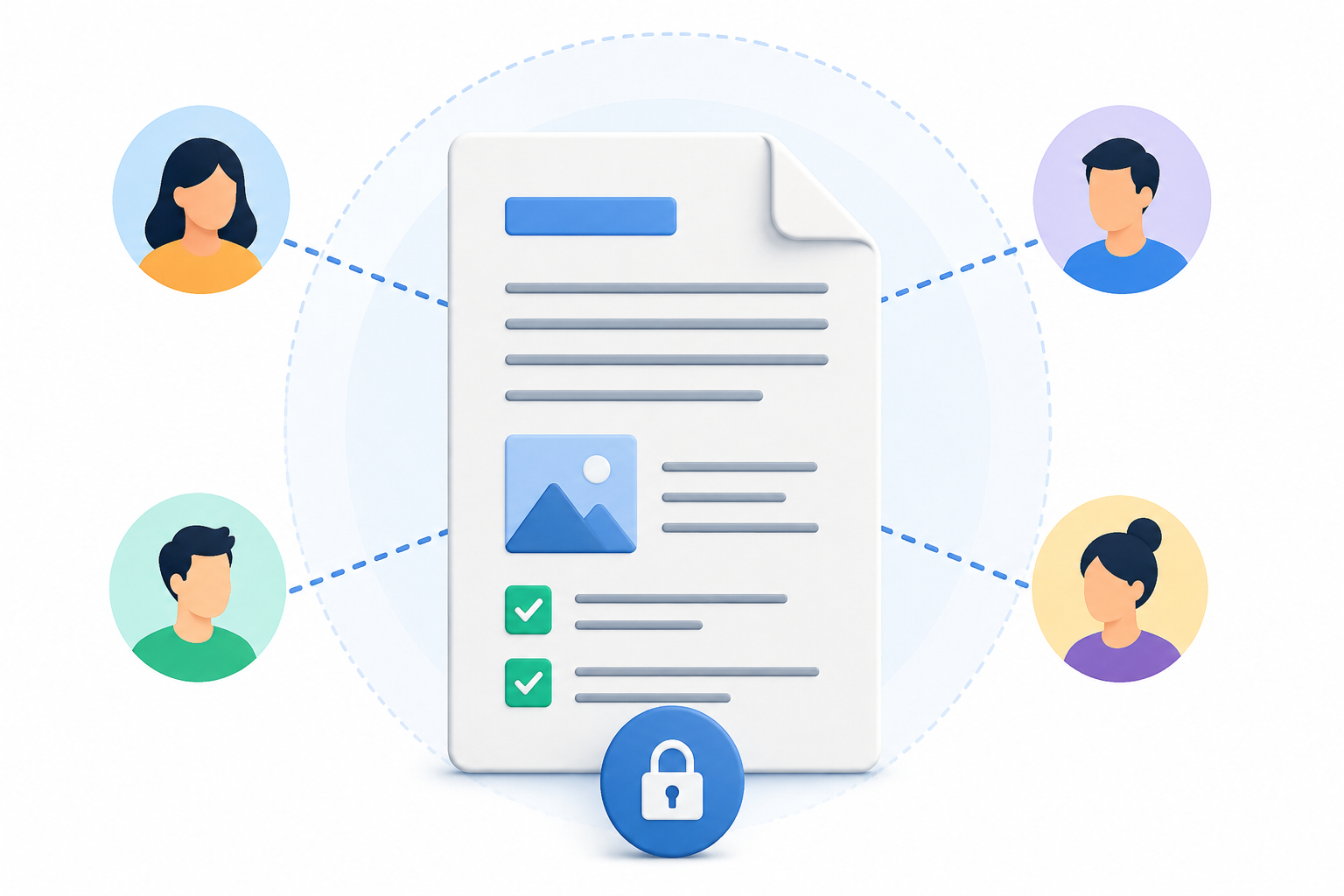
One of the most important aspects of partner transparency is ensuring that everyone works from the same source of truth.
In many organizations, important documents, product updates, training materials, pricing information, and marketing assets are scattered across emails, shared drives, and messaging platforms.
A partner portal solves this problem by providing centralized access to the resources partners need.
Whether a reseller is looking for the latest product documentation or a supplier needs updated compliance requirements, information can be accessed quickly without waiting for emails or manual requests.
When partners have immediate access to accurate information, they can work more efficiently and confidently.
Clear Communication Channels

Clear Communication Channels
Communication is often where partnerships break down.
Important updates can become buried in email chains, team members may receive conflicting instructions, and critical announcements can be missed entirely.
Transparent partnerships rely on clear and consistent communication channels that keep everyone informed.
Modern partner portals provide announcements, discussion forums, messaging tools, and knowledge hubs that help ensure information reaches the right people at the right time.
This is especially valuable for organizations managing large networks of distributors, channel partners, or suppliers across multiple locations and time zones.
Accountability Across Organizations
Accountability Across Organizations
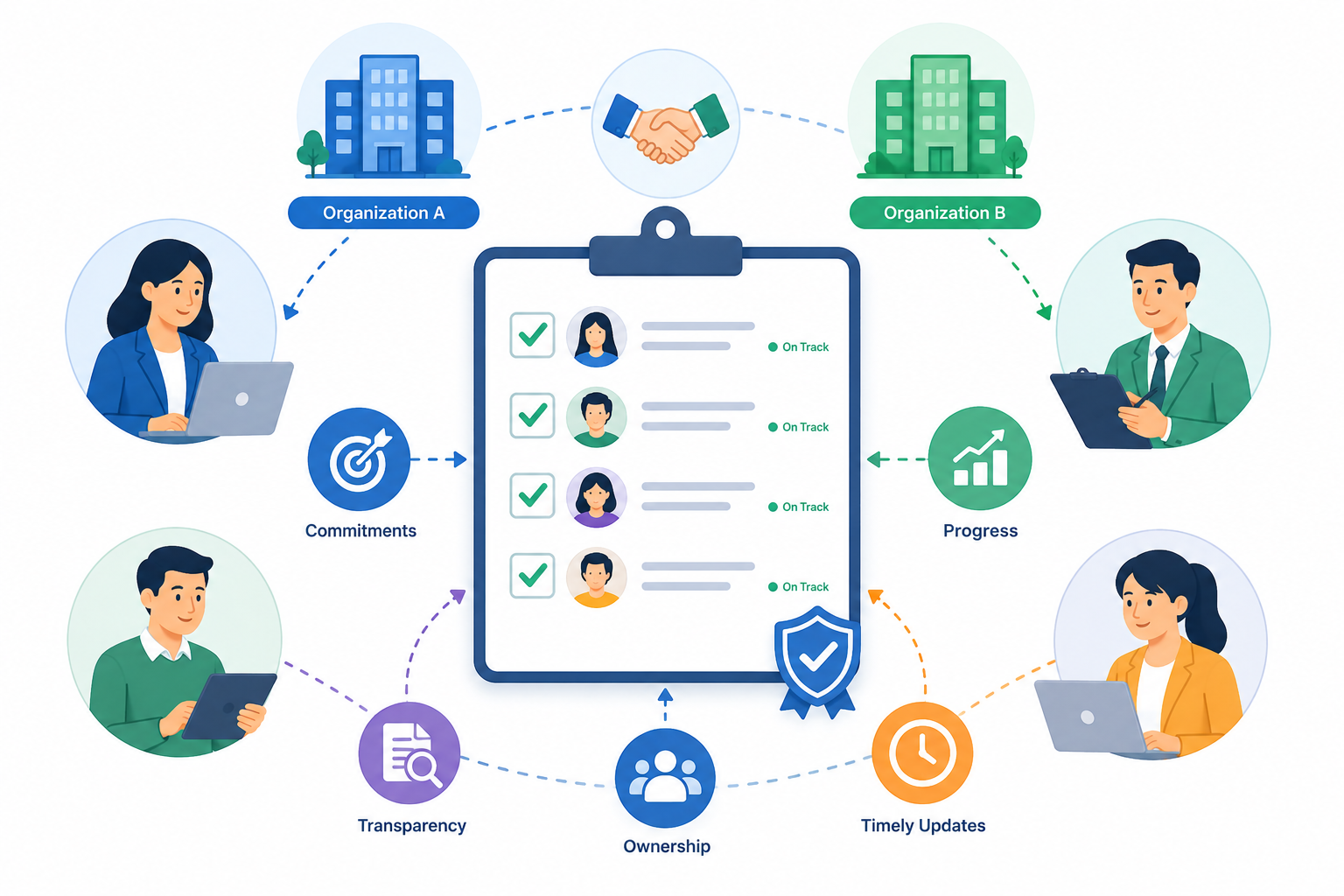
Transparency also creates accountability.
When activities, communications, and shared resources are visible to all relevant stakeholders, it becomes easier to track progress, identify bottlenecks, and ensure responsibilities are being fulfilled.
For example, a distributor can see when new sales materials are published, a supplier can verify compliance documentation has been received, and channel managers can monitor partner engagement with training resources.
This visibility helps eliminate confusion, reduces finger-pointing, and strengthens trust between organizations. Instead of relying on assumptions, everyone has access to the same information and can clearly see what actions have been taken.
Ultimately, transparent partnerships are stronger partnerships.
When information is easy to access, communication is clear, and accountability is built into daily workflows, businesses create an environment where collaboration can thrive and long-term partner relationships can grow.
Common Transparency Challenges Businesses Face
While partnerships have become increasingly important for growth, many organizations still struggle with transparency across their partner ecosystem.
Whether you're managing distributors, suppliers, resellers, channel partners, or strategic alliances, a lack of visibility can create inefficiencies that impact productivity, trust, and revenue.
Research from McKinsey suggests that employees spend nearly 20% of their workweek searching for internal information or tracking down colleagues for help, highlighting how difficult it can be to access the right information at the right time.
When external partners are involved, these challenges often become even more severe.
20%
of the workweek
Research from McKinsey suggests that employees spend nearly 20% of their workweek searching for internal information or tracking down colleagues for assistance, highlighting the productivity costs of disconnected systems, information silos, and fragmented workplace communication.
Source: McKinsey Global Institute Research
Information Silos
Information Silos
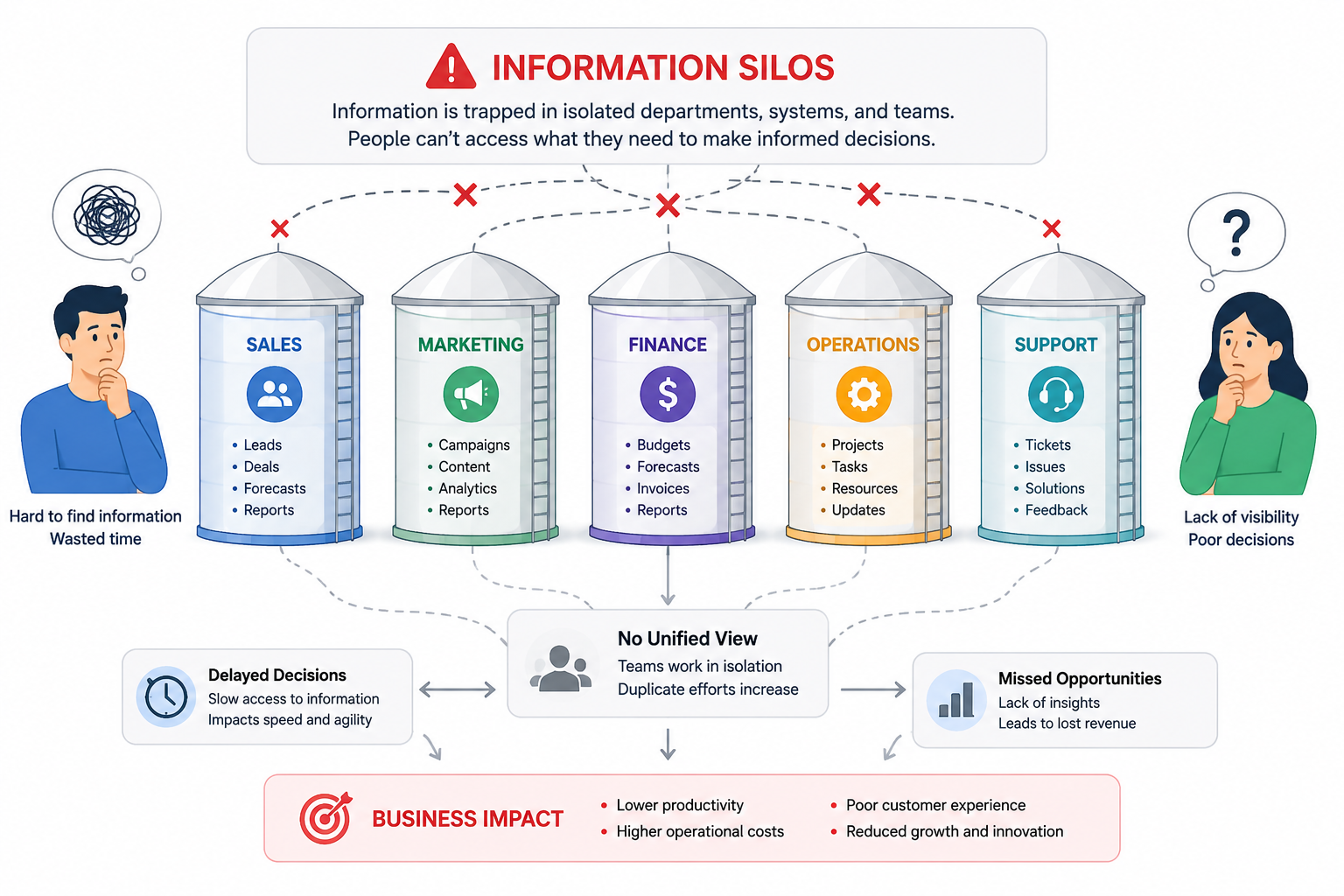
Information silos remain one of the biggest barriers to effective partner collaboration.
Critical resources are often scattered across email inboxes, shared drives, cloud storage platforms, CRM systems, spreadsheets, and messaging applications.
As a result, partners frequently struggle to locate the information they need, leading to delays and frustration.
Common examples include:
- Product documentation stored in multiple locations
- Outdated sales collateral being shared with customers
- Training materials distributed through email attachments
- Pricing updates not reaching every partner
- Compliance documents being difficult to access
Without a centralized partner portal, businesses risk creating multiple versions of the truth, making collaboration far more difficult than it needs to be.
Delayed Responses and Approvals
Delayed Responses and Approvals
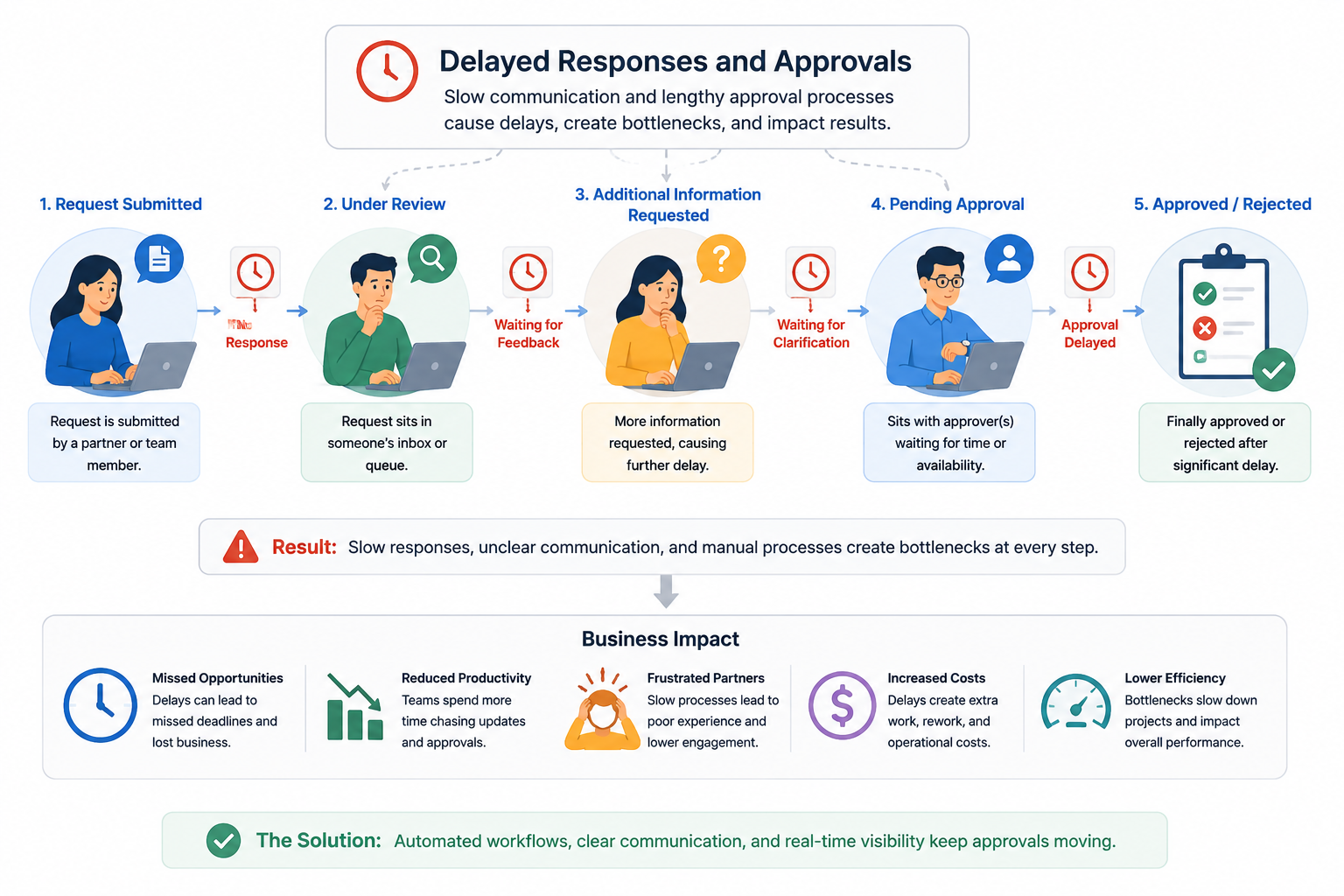
Many organizations still rely on email as the primary method of communication with external partners.
While email remains useful, it often slows down collaboration when approvals, document reviews, or urgent updates are required.
Partners may find themselves waiting days for responses while opportunities sit idle.
Common delays often involve:
- Marketing asset approvals
- Deal registration requests
- Supplier onboarding processes
- Contract reviews
- Product launch communications
These delays can impact customer experiences, slow revenue generation, and reduce partner satisfaction.
Modern partner relationship management strategies focus on creating self-service environments where partners can access information without waiting for manual responses.
Version Control Problems
Version Control Problems
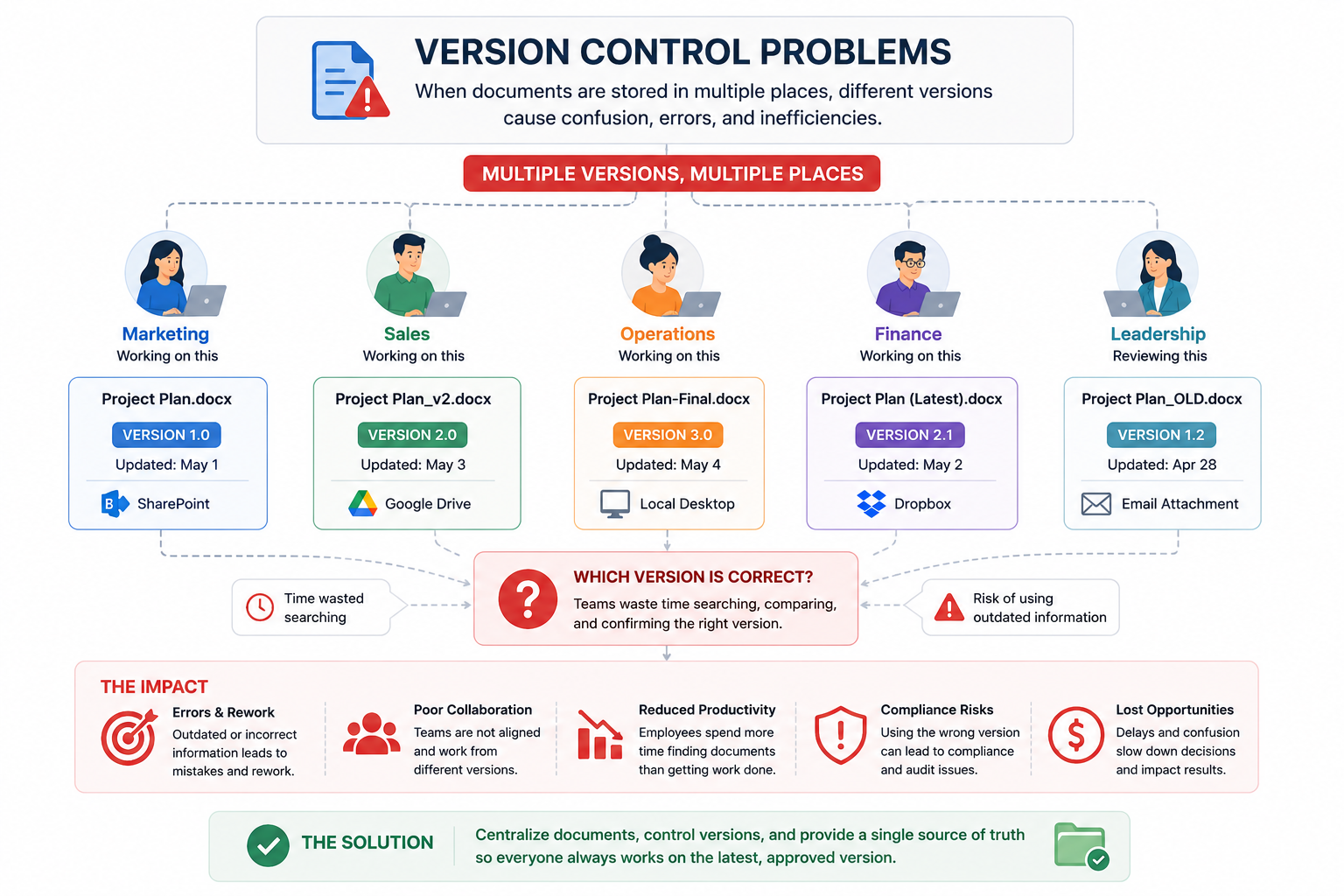
Have you ever received three different versions of the same document and wondered which one is correct?
Version control issues are extremely common in partner networks.
When files are shared through email or stored in multiple locations, partners often end up working from outdated information.
This creates risks such as:
- Incorrect pricing being quoted
- Outdated product specifications being shared
- Compliance violations
- Inconsistent messaging across partner channels
- Increased support requests
A centralized partner management platform helps ensure everyone accesses the latest approved content, reducing confusion and maintaining consistency across the entire partner ecosystem.
Lack of Visibility Into Partner Activities
Lack of Visibility Into Partner Activities
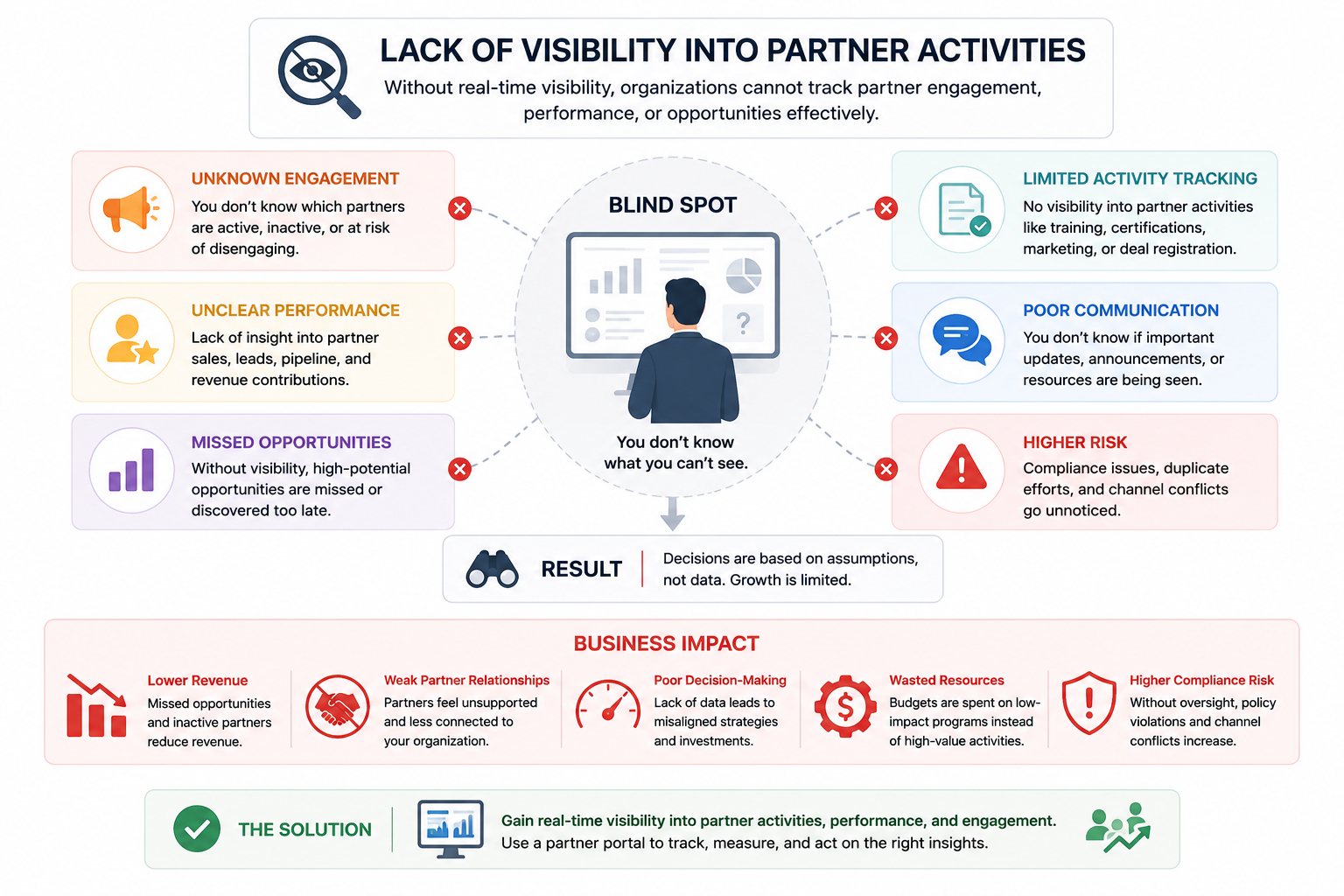
Many businesses have limited insight into how partners interact with company resources.
Partner managers often struggle to answer important questions such as:
- Which partners are actively engaged?
- Who completed partner training?
- Which documents are being downloaded most often?
- Which partners require additional support?
- What content drives the highest engagement?
Without this visibility, organizations are forced to make decisions based on assumptions rather than data.
A modern partner engagement platform provides activity tracking, reporting dashboards, and analytics that help businesses better understand partner behavior and identify opportunities to improve collaboration.
Why These Challenges Matter
Transparency issues don't just create operational headaches—they directly affect business performance.
When partners cannot easily access information, communicate effectively, or understand their responsibilities, trust begins to erode.
The most successful organizations focus on creating a transparent partner experience by providing:
- Centralized document management
- Secure partner communication
- Real-time collaboration tools
- Activity tracking and reporting
- Self-service knowledge sharing
- Role-based access controls
- Partner onboarding resources
By addressing these challenges, businesses can improve partner transparency, strengthen relationships, increase partner engagement, and build a more scalable partner ecosystem that supports long-term growth.
How Partner Portals Improve Transparency
Transparency doesn't happen automatically.
It requires systems and processes that ensure everyone has access to the same information, understands what is happening, and can easily find the resources they need.
This is where a modern partner portal becomes invaluable.
By centralizing communication, documents, training, and reporting, partner portals help organizations eliminate information silos and create a more collaborative partner ecosystem.
Keeps Documents Centralized For Easy Sharing
One of the fastest ways to lose partner trust is by sharing outdated or conflicting information.
When documents are spread across email attachments, cloud drives, and internal systems, partners often waste valuable time searching for the latest version.
A partner portal acts as a single source of truth, ensuring everyone accesses the same approved content.
Key benefits include:
- Centralized document management
- Version control and document history
- Secure file sharing
- Easy access to sales and marketing assets
- Reduced email dependency
- Faster partner onboarding
Imagine a software company launching a new product through 150 channel partners worldwide.
Without a partner portal, updated pricing sheets and product guides may be sent via email, leaving some partners using outdated materials.
With a partner portal, every partner accesses the latest approved documents from one location. When pricing changes, updates are instantly available to the entire partner network, reducing errors and protecting revenue opportunities.
Real-Time Communication
Many partnership problems stem from poor communication rather than poor performance.
Critical announcements often become buried in inboxes, while important updates may never reach the right stakeholders.
A partner portal provides dedicated communication channels that keep everyone informed.
Common communication features include:
- Partner announcements
- Discussion forums
- Product launch updates
- Event notifications
- Knowledge-sharing communities
- Partner support channels
Consider a manufacturing company working with distributors across multiple countries. New compliance regulations require distributors to follow updated procedures within 30 days.
Instead of sending dozens of emails and hoping partners read them, the company publishes the update in its partner portal.
Partners receive notifications, access supporting documents, and ask questions directly within the platform, ensuring consistent communication across the entire network.
Activity Tracking and Audit Trails
One of the biggest challenges in partner relationship management is understanding how partners engage with resources and content.
Without visibility, it's difficult to identify engagement levels or measure program effectiveness.
Modern partner portals provide detailed analytics and activity tracking that help organizations make data-driven decisions.
These insights often include:
- Content downloads
- Training completion rates
- User logins
- Document views
- Search activity
- Announcement engagement
- Resource usage patterns
A cybersecurity vendor notices that several reseller partners are underperforming.
By reviewing portal analytics, the channel team discovers those partners haven't completed new certification training or accessed recent product documentation.
Rather than guessing the cause, the team can proactively offer support and training, improving partner performance and increasing sales opportunities.
Role-Based Access Controls
Not every partner should have access to every document or piece of information. As partner ecosystems grow, maintaining security becomes increasingly important.
Role-based access controls allow organizations to manage exactly who can view, edit, download, or share specific resources.
Benefits include:
- Secure partner collaboration
- Controlled document visibility
- Protection of confidential information
- Compliance support
- Reduced security risks
- Department-specific access controls
A healthcare technology company works with distributors, implementation consultants, and service providers. Each group requires different information.
Distributors may need pricing and marketing assets, while consultants require technical documentation and implementation guides.
Through role-based permissions, the company can ensure each partner only sees content relevant to their role, improving both security and user experience.
Why It Matters
The most successful partner ecosystems are built on trust, visibility, and collaboration.
By combining document management, partner communication, activity tracking, and role-based permissions into a single platform, partner portals help organizations create a more transparent and scalable way to manage business relationships.
When partners can easily access information, stay informed, and collaborate securely, they become more engaged, more productive, and ultimately more successful.
Real-World Example: How a Partner Portal Transformed Partner Collaboration
To understand the impact of partner transparency, let's look at a real-world scenario that many growing organizations face.
Imagine a software company working with more than 200 channel partners across North America, Europe, and Asia.
The company relied heavily on email, spreadsheets, and shared cloud folders to distribute product updates, training materials, sales collateral, and pricing information.
As the partner network grew, problems quickly emerged.
Before Implementing a Partner Portal
Partners frequently complained that they couldn't find the latest information.
Sales teams were using outdated product sheets, marketing assets were scattered across multiple locations, and onboarding new partners required dozens of manual emails.
The company faced several challenges:
- Slow partner onboarding processes
- Inconsistent communication across regions
- Multiple versions of product documentation
- Poor visibility into partner engagement
- Increased support requests
- Missed sales opportunities due to outdated information
Partner managers spent hours every week responding to repetitive requests for documents and answering questions that could have been solved through self-service access.
After Implementing a Partner Portal
The company launched a centralized partner portal that included a document library, partner training center, announcements hub, knowledge base, discussion forums, and analytics dashboard.
Almost immediately, partners gained access to a single source of truth for all resources.
The results included:
- Faster partner onboarding
- Reduced dependency on email
- Improved partner engagement
- Better visibility into partner activity
- Stronger collaboration between internal and external teams
- Increased adoption of training programs
The Measurable Impact
The business tracked performance over the first 12 months and reported significant improvements:
| Metric | Before Portal | After Portal |
| Average Partner Onboarding Time | 30 Days | 12 Days |
| Monthly Partner Support Requests | 1,200+ | 650 |
| Training Completion Rate | 42% | 84% |
| Partner Content Downloads | Limited Visibility | Fully Trackable |
| Product Launch Adoption | 55% | 87% |
| Partner Satisfaction Score | 68% | 89% |
Similar Results Seen Across Industries
This type of improvement isn't unique.
Research from Forrester found that companies with mature partner enablement programs can experience faster revenue growth and improved partner productivity.
Meanwhile, industry studies show that organizations with strong collaboration practices are significantly more likely to outperform competitors in revenue growth and customer satisfaction.
Whether you're managing:
- Channel partners
- Distributors
- Resellers
- Suppliers
- Franchise networks
- Strategic alliances
the outcome is often the same: when partners have easier access to information and greater visibility into business processes, trust increases, communication improves, and partnerships become more profitable.
The lesson is simple.
Transparency isn't just a communication benefit—it's a business advantage.
Organizations that provide partners with a centralized collaboration platform often see improvements in onboarding, engagement, operational efficiency, and long-term partner success.
Key Features That Support Transparent Partner Collaboration
Not all partner portals are created equal.
While many platforms offer basic document sharing and communication tools, the best solutions are specifically designed to improve partner transparency, strengthen collaboration, and provide visibility across the entire partner ecosystem.
The following features help organizations build stronger relationships with distributors, resellers, suppliers, channel partners, and external stakeholders by ensuring everyone has access to accurate information and clear communication.
| Feature | How It Improves Transparency | Real-World Example |
| Document Library | Creates a single source of truth where partners access the latest approved documents, pricing sheets, policies, and marketing assets. | A reseller downloads the latest product brochure instead of using an outdated email attachment. |
| Activity Tracking | Provides visibility into partner engagement, content downloads, training participation, and portal usage. | A channel manager identifies partners who haven't completed certification training. |
| Partner Announcements | Ensures important updates, product launches, and company news are communicated consistently. | All distributors receive the same pricing update on the same day. |
| Knowledge Base | Gives partners self-service access to FAQs, guides, support articles, and best practices. | A supplier finds compliance requirements without contacting support. |
| Training Portal | Standardizes onboarding and education across the partner network. | New channel partners complete onboarding before selling products. |
| Reporting Dashboard | Provides performance visibility and helps measure partner success. | Managers track engagement, certifications, and sales readiness metrics. |
Why These Features Matter
When these capabilities are combined within a modern partner collaboration platform, businesses gain far more than just a document repository.
They create a transparent environment where partners can easily find information, stay informed, and understand their responsibilities.
Some of the biggest benefits include:
- Reduced communication bottlenecks
- Faster partner onboarding
- Improved partner engagement
- Better document governance
- Increased accountability
- Stronger partner relationships
- More efficient channel management
- Better visibility into partner performance
For example, imagine a technology company managing hundreds of resellers across different regions. Without a centralized partner management portal, updates may be shared through email, training might be inconsistent, and performance tracking could require multiple systems.
With the right partner portal, every reseller has access to the same knowledge base, training resources, announcements, and reporting dashboards.
This creates greater transparency, improves trust, and helps partners become productive faster.
Ultimately, the goal of transparent partner collaboration is simple: ensure every partner has the right information, at the right time, through a single trusted platform.
Choosing the Right Partner Portal for Your Business
Not all partner portals deliver the same value.
Some are little more than document repositories, while others provide a complete partner management platform that supports communication, onboarding, training, collaboration, analytics, and partner engagement.
If you're evaluating partner portal software or considering a B2B portal development project, it's important to focus on the features that will support your business not only today but also as your partner ecosystem grows.
Security and Permissions
Security should be one of the first factors you evaluate.
Partner portals often contain sensitive business information, including contracts, pricing documents, marketing assets, customer information, sales reports, and proprietary training materials.
Without proper access controls, confidential information can easily end up in the wrong hands.
Look for features such as:
- Role-based permissions
- Single Sign-On (SSO)
- Multi-factor authentication (MFA)
- Audit trails and activity logs
- Document-level security controls
- Compliance support (GDPR, HIPAA, SOC 2)
For example, a distributor may need access to pricing information while a supplier only requires access to compliance documentation. A secure partner portal ensures every user sees only the information relevant to their role.
Ease of Adoption
The best partner portal in the world won't help if nobody uses it.
One of the biggest reasons partner portal projects fail is because they are too complicated. Partners want quick access to information without having to learn another complex system.
A user-friendly portal should offer:
- Simple navigation
- Mobile accessibility
- Fast search functionality
- Self-service knowledge bases
- Easy document access
- Intuitive onboarding experiences
Think about it from your partner's perspective. If finding a sales brochure takes five minutes, they'll probably email someone instead. If it takes five seconds, adoption rates will naturally increase.
Integration Capabilities
Your partner portal should not operate in isolation.
The most effective partner collaboration platforms integrate with the systems your business already uses.
Strong integrations help eliminate duplicate work and ensure data remains accurate across multiple systems.
Common integrations include:
- CRM platforms
- Microsoft 365
- Google Workspace
- ERP systems
- Learning Management Systems (LMS)
- Marketing automation tools
- Customer support platforms
- Document management systems
For example, when a new partner is added to your CRM, their portal account can be automatically created, reducing manual administration and improving the onboarding process.
Scalability for Growth
Many organizations choose a portal based on current requirements and forget to consider future growth.
A platform that works well for 20 partners may struggle when you're managing hundreds or thousands of external users.
When evaluating scalability, consider:
- Number of partner users supported
- Storage capacity
- Performance under heavy usage
- Global accessibility
- Multi-language support
- Advanced reporting and analytics
- Future integration requirements
Imagine launching a new channel program and doubling your partner network within 12 months. The last thing you want is to replace your portal because it can no longer support your growth.
What the Best Partner Portals Have in Common
The most successful organizations typically look for a combination of:
- Strong security and governance
- Easy-to-use interfaces
- Centralized document management
- Partner communication tools
- Training and onboarding capabilities
- Reporting and analytics
- Integration flexibility
- Long-term scalability
Ultimately, choosing the right partner portal solution isn't about finding the platform with the most features.
It's about selecting a system that improves partner transparency, strengthens collaboration, reduces administrative overhead, and helps your partner ecosystem grow more efficiently over time.
Want to Improve Partner Transparency and Collaboration? Try AgilityPortal for 14 Days Free, No Credit Card Required
Want to Improve Partner Transparency and Collaboration? Try AgilityPortal for 14 Days Free, No Credit Card Required
If your partners are still relying on endless email chains, scattered documents, and disconnected systems, it may be time to rethink how your partner ecosystem operates.
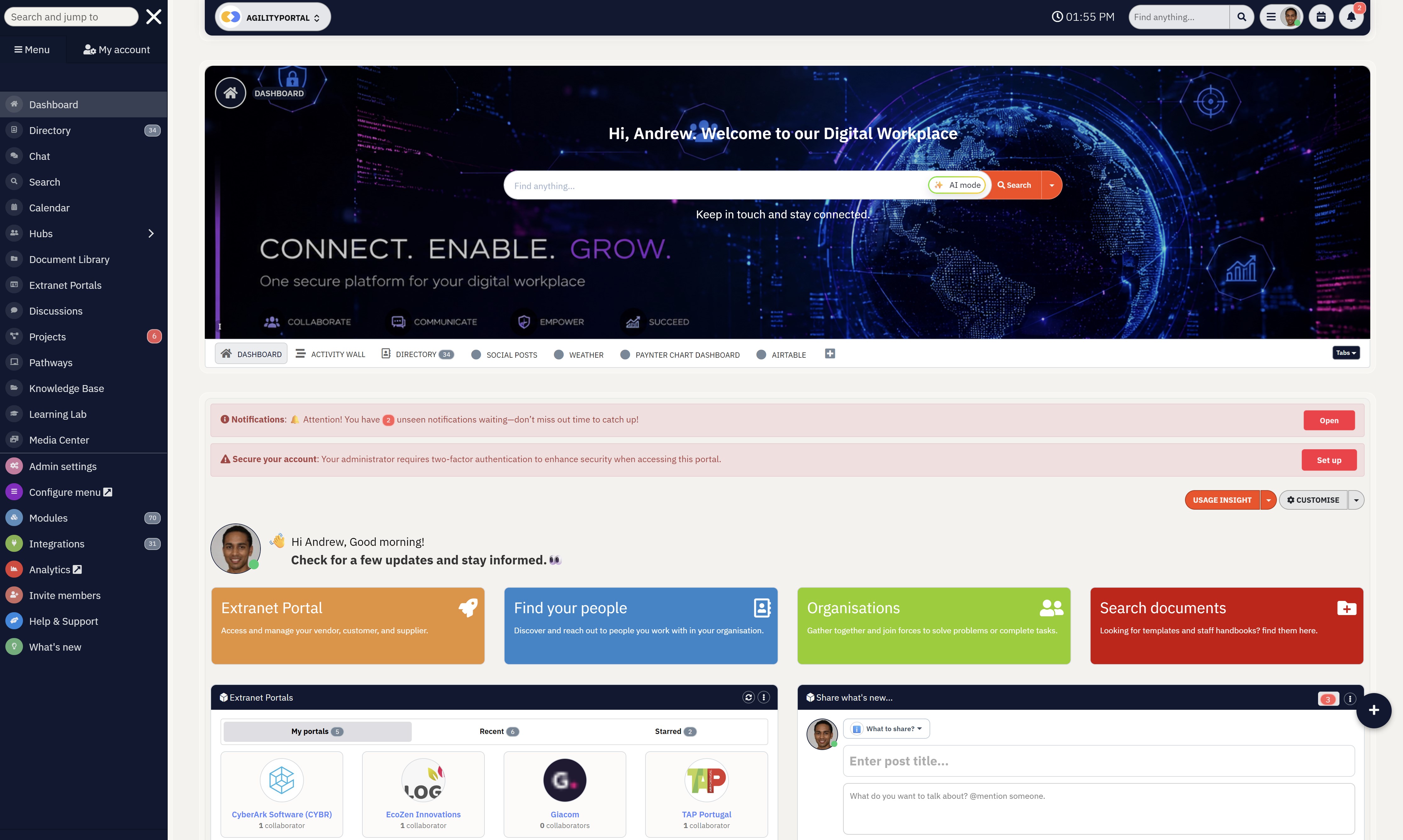
AgilityPortal is an all-in-one partner portal software and partner collaboration platform designed to help organizations improve transparency, strengthen partner relationships, and simplify communication with distributors, resellers, suppliers, consultants, and channel partners.
With AgilityPortal, you can:
- Create a secure, branded partner portal
- Centralize documents, training, and resources
- Improve partner communication and engagement
- Streamline partner onboarding processes
- Share announcements and business updates
- Manage permissions with role-based access controls
- Track partner activity and engagement
- Build a searchable knowledge base
- Reduce email dependency and information silos
- Scale your partner ecosystem with confidence
Whether you're looking for a modern alternative to shared drives, email-based collaboration, or expensive custom B2B portal development, AgilityPortal provides everything you need to launch a professional partner portal quickly and cost-effectively.
Why Businesses Choose AgilityPortal
Organizations use AgilityPortal to create more transparent partnerships, improve collaboration, and give partners instant access to the information they need to succeed.
The result?
- Faster partner onboarding
- Better partner engagement
- Increased operational efficiency
- Stronger trust and accountability
- Improved partner satisfaction
- More scalable partner management
Start Building Stronger Partner Relationships Today
Don't let poor communication and information silos slow down your partner program.
👉 Start your free 14-day trial today — no credit card required.
👉 Book a personalized demo and see how AgilityPortal can help you improve partner transparency, partner engagement, and partner collaboration.
Try AgilityPortal: https://agilityportal.io/product/pricing
Book a Demo: https://agilityportal.io/product/request-a-demo
Partner Portal & Collaboration Platform
Improve Partner Transparency, Trust & Collaboration
AgilityPortal helps organizations create a secure partner portal where distributors, resellers, suppliers, channel partners, and external stakeholders can access documents, updates, training, announcements, and collaboration tools in one centralized place. Replace scattered emails, shared drives, and manual processes with a platform that improves visibility, accountability, and partner engagement.
Start Free Trial
```
Book a Demo
```
Give partners a single source of truth for documents, announcements, onboarding, training, communication, reporting, and collaboration.
Frequently Asked Questions About Partner Transparency
Q1: What Is Partner Transparency?
Partner transparency refers to the practice of openly sharing relevant information, communications, expectations, performance metrics, and business updates between organizations working together.
In a business context, transparency helps partners build trust, reduce misunderstandings, and collaborate more effectively.
Think of it as creating a shared view of what's happening across the partnership. Instead of relying on scattered emails and manual updates, partners have access to the same information, resources, and objectives.
Common partner transparency examples include:
- Sharing sales performance dashboards
- Providing access to product roadmaps
- Publishing company announcements
- Making training resources available to all partners
- Tracking project progress in real time
- Offering visibility into support requests and resolutions
The more transparent a partnership becomes, the easier it is to align goals and achieve better business outcomes.
Q2: What Is Transparency in a Relationship?
Many people ask, "what is transparency in a relationship?"
While the term is often used in personal relationships, the same principles apply to business partnerships.
Transparency means being honest, open, and clear about expectations, decisions, challenges, and progress. It creates an environment where trust can develop naturally because all parties have access to accurate information.
In business relationships, transparency helps partners:
- Build credibility
- Reduce uncertainty
- Improve communication
- Increase accountability
- Strengthen long-term collaboration
Whether it's a personal relationship or a strategic business partnership, transparency is often considered one of the key foundations of trust.
Q3: What Are Some Examples of Transparency in a Relationship?
When discussing examples of transparency in a relationship, the concept typically involves openness and honesty.
In personal relationships, transparency may include:
- Open communication about concerns
- Honest discussions about goals and expectations
- Sharing important decisions
- Following through on commitments
In business partnerships, similar principles apply:
- Sharing project updates regularly
- Providing access to performance data
- Being honest about challenges and delays
- Communicating policy changes early
- Making important information easily accessible
The goal is not to share everything but to ensure the information needed for trust and collaboration is available.
Q4: How Does a Partner Portal Improve Collaboration?
A partner portal improves collaboration by providing a centralized location where partners can access documents, training, communications, and resources without relying on endless email chains.
Instead of searching through multiple systems, partners can:
- Access the latest documents
- Participate in discussions
- Complete training courses
- View announcements
- Track activities and performance
- Find answers through a knowledge base
Research consistently shows that organizations with strong collaboration practices tend to outperform those with fragmented communication systems.
A partner portal helps create that collaborative environment by ensuring everyone works from the same source of truth.
Q5: What Are the Benefits of a Partner Portal?
Modern partner portal software offers benefits that extend far beyond document sharing.
Key benefits include:
- Improved partner transparency
- Faster onboarding processes
- Better partner engagement
- Reduced email dependency
- Stronger security and compliance
- Improved knowledge sharing
- Enhanced partner communication
- Better visibility into partner performance
- Increased partner satisfaction
- More scalable partner management
For organizations managing channel partners, distributors, suppliers, or resellers, a partner portal often becomes the central hub for partner relationship management.
Q6: Can Partner Portals Improve Partner Engagement?
Yes. One of the primary goals of a partner portal is to increase partner engagement.
When partners can easily find information, access training, communicate with stakeholders, and track their progress, they are more likely to actively participate in your partner program.
Partner engagement typically improves through:
- Self-service resources
- Personalized dashboards
- Partner communities
- Recognition programs
- Learning and certification programs
- Real-time announcements
- Mobile accessibility
Engaged partners tend to generate more revenue, complete training faster, and remain loyal for longer periods.
Q7: Privacy vs Transparency in Relationships: Where Is the Balance?
A common question is whether there should be complete openness or whether privacy still matters.
The debate around privacy vs transparency in relationships applies to both personal and business relationships.
Transparency does not mean giving unrestricted access to everything.
Healthy transparency focuses on sharing information that helps build trust and improve collaboration, while privacy protects sensitive or confidential information.
In business partnerships, this balance is often managed through:
- Role-based permissions
- Secure document sharing
- Confidentiality agreements
- Data governance policies
- Access controls
The goal is to provide visibility where it's needed while maintaining appropriate levels of security and confidentiality.
Q8: What Does Reddit Say About Partner Transparency?
Discussions around partner transparency Reddit threads often highlight a common theme: trust grows when communication is open and expectations are clearly understood.
Whether people are discussing personal relationships or business partnerships, the consensus is generally the same:
- Transparency builds trust
- Poor communication creates problems
- Hidden information often damages relationships
- Clear expectations improve outcomes
While every relationship is different, transparency consistently appears as one of the most important factors in creating successful long-term partnerships.
Q9: What About Phone Transparency in a Relationship?
Questions about phone transparency in a relationship are usually related to personal trust rather than business partnerships.
While some people believe sharing access to devices demonstrates openness, others view it as a privacy issue.
In business partnerships, the equivalent concept is not sharing personal devices but providing appropriate visibility into projects, communications, and business activities.
The focus should always be on creating trust through clear communication and accountability rather than surveillance.
The same principle applies in both cases: transparency should strengthen trust, not replace it.
Wrapping up
As partner ecosystems continue to grow, transparency is no longer a nice-to-have—it's a business necessity.
Whether you're working with distributors, resellers, suppliers, consultants, or strategic partners, success depends on everyone having access to accurate information, clear communication channels, and complete visibility into shared goals and activities.
The challenge is that many organizations still rely on disconnected tools such as email, spreadsheets, shared drives, and manual processes to manage partner relationships.
These outdated methods often create information silos, communication gaps, delayed decisions, and unnecessary frustration for both internal teams and external partners.
This is why centralized partner collaboration platforms and partner portals are becoming essential for modern businesses.
They provide a single source of truth where partners can access documents, training, announcements, knowledge bases, and performance insights without constantly relying on email or manual support.
The benefits are clear:
- Improved partner transparency
- Faster communication and decision-making
- Better partner engagement
- Reduced administrative workload
- Stronger security and governance
- More effective partner onboarding
- Greater accountability across organizations
- Increased partner satisfaction and trust
Perhaps most importantly, a partner portal helps strengthen the foundation of every successful business relationship: trust.
When partners can easily access information, track progress, and collaborate effectively, they are more likely to stay engaged, aligned, and committed to achieving shared business objectives.
As businesses continue investing in digital transformation and B2B portal development, organizations that prioritize transparency will be better positioned to build stronger partnerships, scale their partner ecosystems, and drive sustainable growth for years to come.
Companies that invest in transparent systems are better positioned to maintain trust and achieve long-term success. Approaches supported by platforms like Asabix reflect this shift toward more open and efficient collaboration.
AI Summary
- Partner transparency helps organizations build trust, improve communication, reduce misunderstandings, and strengthen collaboration across distributors, resellers, suppliers, channel partners, and strategic alliances.
- Modern partner portals provide a centralized location for documents, announcements, onboarding resources, training, reporting, and partner communication, helping every partner work from the same source of truth.
- Poor partner transparency often leads to information silos, delayed responses, outdated documents, reduced partner engagement, weak accountability, and missed revenue opportunities.
- Organizations that improve partner visibility through secure document sharing, activity tracking, knowledge bases, and reporting dashboards can create more efficient and scalable partner ecosystems.
- Partner portals help balance transparency and privacy by using role-based permissions, secure access controls, audit trails, and controlled document visibility.
- Successful partner transparency strategies focus on open communication, accurate information sharing, partner enablement, accountability, collaboration, and long-term relationship building.
Most Popular Posts

Effective communication among team members is vital for the productivity and success of any organization. Surprisingly, 60% of companies lack a long-term internal communication strategy, which p...


Businesses thrive on communication for efficiency, productivity and accomplishment. When the right information is passed from the right designation in the organization, it promotes positivity an...

Categories
Blog
(3248)
Business Management
(399)
Employee Engagement
(237)
Digital Transformation
(224)
Growth
(151)
Intranets
(142)
Internal communications
(110)
Remote Work
(68)
Sales
(53)
Collaboration
(53)
Customer Experience
(33)
Culture
(30)
Project management
(30)
Knowledge Management
(29)
Leadership
(20)
Comparisons
(9)
News
(1)

Related Posts

Searching for "communal work spaces near me" but unsure which option will actually suit your growing business? By the end of this guide, you'll know how to compare offices to rent, spot extra costs and ask the right questions before committing....

Do you know what happens to your information after you share it with an AI assistant? That question sits at the heart of AI privacy—and it's easy to overlook when you're trying to finish a task. You paste in a customer email, upload a spr...

What would happen if your website moved successfully, but your customers and employees suddenly couldn't reach you by email? Email migration tools can help transfer your messages, but keeping business communication running takes more than copyi...

Does your team still message HR to ask where the holiday policy is? Employee self service should make everyday tasks easier, giving people a straightforward way to find answers, access documents and submit requests. But when policies are buried...

How quickly can a new partner go from signing an agreement to confidently working with your business? If the answer involves chasing documents, forwarding training links and answering the same questions repeatedly, your onboarding process may n...


Jill Romford
I am a digital nomad, lover of exploring new places and making friends.
I love to travel and I love the internet. I take pictures of my travels and share them on the internet using Instagram.
Traveler, entrepreneur, and community builder. I share my insights on digital marketing and social media while inspiring you to live your fullest life.
Ready to learn more? 👍
One platform to optimize, manage and track all of your teams. Your new digital workplace is a click away. 🚀
Free for 14 days, no credit card required.