
Insight Blog
Agility’s perspectives on transforming the employee's experience throughout remote transformation using connected enterprise tools.
46 minutes reading time
(9148 words)
How Poor Fund Management Is Costing Your Partner Program Revenue (And What to Do About It)

How Poor Fund Management Is Costing Your Partner Program Revenue (And What to Do About It)
Poor fund management can reduce partner engagement, delay campaigns, and negatively impact partner program revenue. Learn how better fund management processes improve partner performance, accountability, and ROI.
How Poor Fund Management Is Costing Your Partner Program Revenue (And What to Do About It)

We all know that Fund management plays a critical role in the success of any partner program.
Whether you're managing marketing development funds (MDF), co-marketing budgets, partner incentives, rebates, training initiatives, or broader partner enablement programs, the way those funds are allocated, approved, tracked, and measured can have a direct impact on revenue growth.
Many organizations invest heavily in marketing to help channel partners generate leads, increase brand awareness, and execute local marketing campaigns.
In fact, industry reports estimate that companies allocate billions of dollars annually to MDF and channel marketing initiatives, yet as much as 30–50% of available MDF budgets often go unused due to inefficient processes and lack of partner engagement.
However, simply allocating funds is not enough.
Without proper oversight and accountability, MDF budgets can quickly become underutilized, mismanaged, or disconnected from actual business outcomes.
50%
of MDF budgets
Industry estimates suggest that as much as 30% to 50% of available Marketing Development Funds (MDF) often go unused each year due to inefficient approval processes, poor visibility, manual workflows, and low partner engagement.
Source: Industry MDF & Channel Marketing Research
Unfortunately, many companies still rely on spreadsheets, email chains, and manual approval processes to manage partner funding.
These outdated methods often create bottlenecks that delay campaign launches, reduce visibility into spending, and make it difficult to measure return on investment.
Research shows that organizations using manual fund management processes can spend significantly more time on approvals and reporting compared to those using automated systems.
As a result, partners become frustrated, marketing opportunities are missed, and significant portions of allocated budgets may go unused.
Poor fund management doesn't just create administrative headaches—it can directly affect partner engagement, campaign performance, and overall channel revenue.
Studies indicate that channel partners influence more than 70% of B2B technology sales, making effective management of marketing development funds essential for maximizing partner performance.
When partners struggle to access funding, receive approvals, or understand program requirements, participation often declines and valuable growth opportunities are lost.
In this guide, we'll explore how poor fund management impacts partner programs, why many organizations fail to maximize their marketing development funds investments, and the practical strategies businesses can implement to improve visibility, accountability, partner engagement, and long-term revenue growth.
Key Takeaways
- Poor fund management creates bottlenecks that slow partner execution, delay campaigns, and reduce overall program effectiveness.
- Unused marketing development funds (MDF) often represent significant lost revenue opportunities that could have been invested in lead generation and partner growth.
- Lack of visibility into funding allocations, approvals, and utilization rates reduces accountability and makes performance measurement difficult.
- Manual processes such as spreadsheets and email approvals increase administrative costs, create delays, and frustrate both partners and internal teams.
- Organizations with structured fund management processes typically achieve higher partner engagement, better MDF utilization, and stronger return on investment.
- Partner portals help centralize fund requests, approvals, reporting, communication, and collaboration while improving transparency across partner programs.
What Is Fund Management in a Partner Program?
Fund management is the process of planning, allocating, approving, tracking, and measuring financial resources provided to channel partners.
These funds are typically used to support marketing campaigns, partner enablement initiatives, training programs, events, lead generation activities, and other growth-focused projects designed to increase partner performance and revenue.
For organizations that operate partner, reseller, distributor, or channel programs, effective fund management ensures that investments are used strategically and deliver measurable business outcomes.
Without proper controls, visibility, and reporting, partner funds can become difficult to track, leading to wasted budgets, delayed campaigns, and reduced return on investment.
Understanding Partner Fund Management
Partner fund management covers a variety of funding programs that help organizations support and grow their partner ecosystem.
One of the most common examples is marketing development funds (MDF). Marketing development funds are financial resources provided by vendors to channel partners to help execute marketing activities such as webinars, trade shows, digital advertising campaigns, content creation, email marketing, and local events.
The goal is to generate demand, increase brand awareness, and drive new revenue opportunities for both the vendor and the partner.
In addition to marketing development funds, organizations may also offer co-op marketing funds, incentive programs, training budgets, and partner development funds.
Each serves a different purpose but shares a common objective: helping partners become more successful while supporting broader business growth goals.
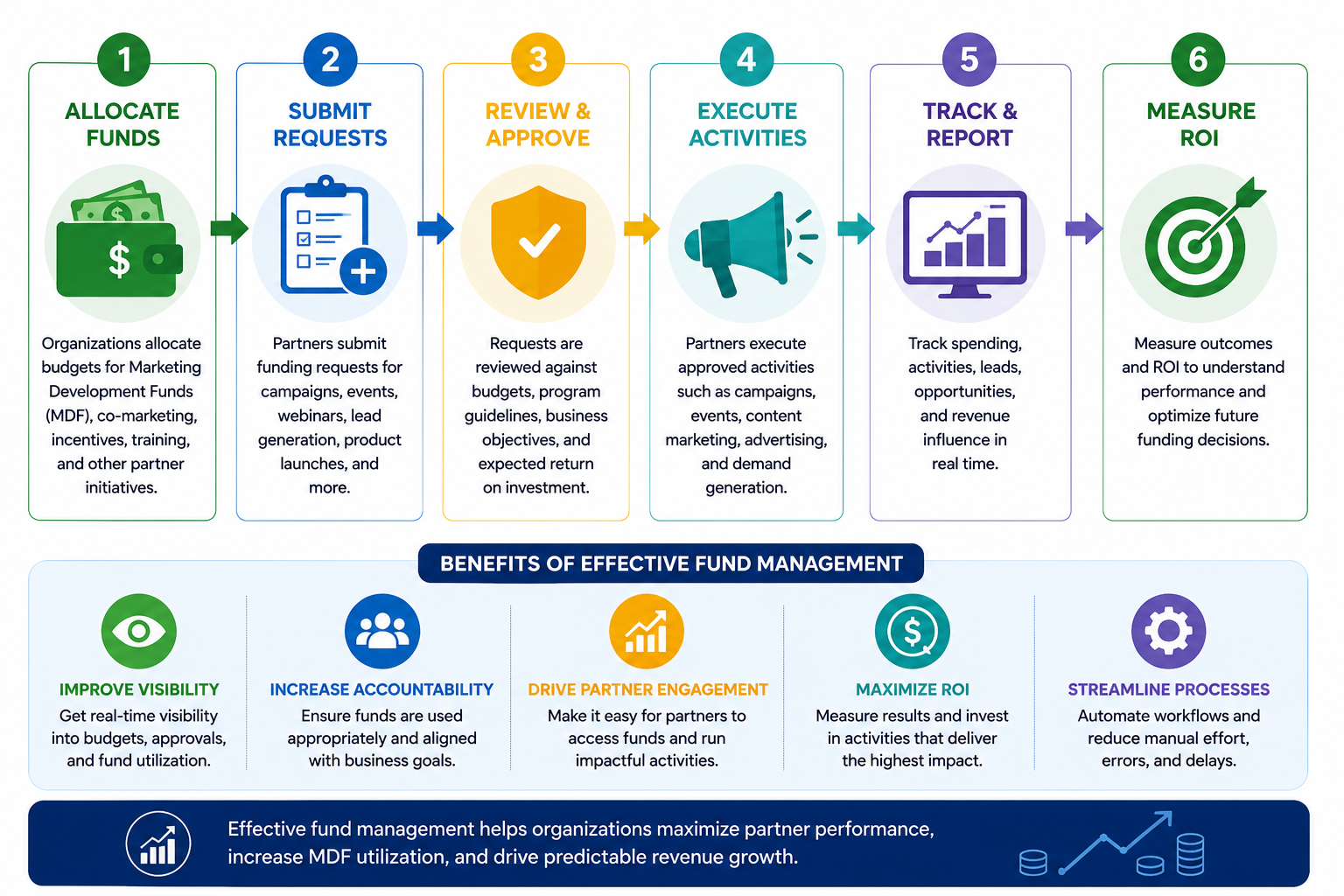
What Is Fund Management in a Partner Program
Why Fund Management Matters
Effective fund management is essential because it directly influences partner participation, campaign execution, and revenue generation.
When partners can easily access funding, receive approvals quickly, and understand program requirements, they are more likely to participate in marketing initiatives and invest in growing the partnership.
Conversely, slow approval processes, unclear policies, and poor visibility often discourage participation and reduce the effectiveness of partner programs.
Strong fund management helps organizations:
- Increase partner activation and engagement
- Improve marketing campaign performance
- Maximize utilization of marketing funds
- Strengthen partner relationships
- Accelerate channel revenue growth
- Expand into new markets more effectively
- Improve accountability and ROI measurement
Organizations that manage partner funds efficiently are often better positioned to scale their channel programs while ensuring every dollar invested contributes toward measurable business outcomes.
Common Types of Partner Funds
Different funding programs support different partner objectives.
Understanding these categories helps organizations allocate resources more effectively.
| Fund Type | Purpose |
| Marketing Development Funds (MDF) | Support partner marketing campaigns and lead generation activities |
| Co-op Marketing Funds | Shared investment in joint marketing initiatives |
| Incentive Funds | Reward partners for achieving sales or performance targets |
| Training Funds | Support certifications, onboarding, and partner enablement programs |
| Event Funds | Help partners participate in trade shows, conferences, and customer events |
| Partner Development Funds | Invest in long-term partner growth and business expansion |
Regardless of the funding model used, successful organizations focus on transparency, accountability, and performance measurement to ensure their investments generate meaningful results for both the business and its partners.
Here Are 4 Hidden Cost of Poor Fund Management That You Should Be Aware of
Many organizations invest heavily in marketing development funds (MDF), partner incentives, and channel marketing programs, expecting those investments to drive revenue growth.
However, poor fund management can significantly reduce the effectiveness of these programs and create hidden costs that impact both vendors and partners.
#1. Delayed Campaign Execution
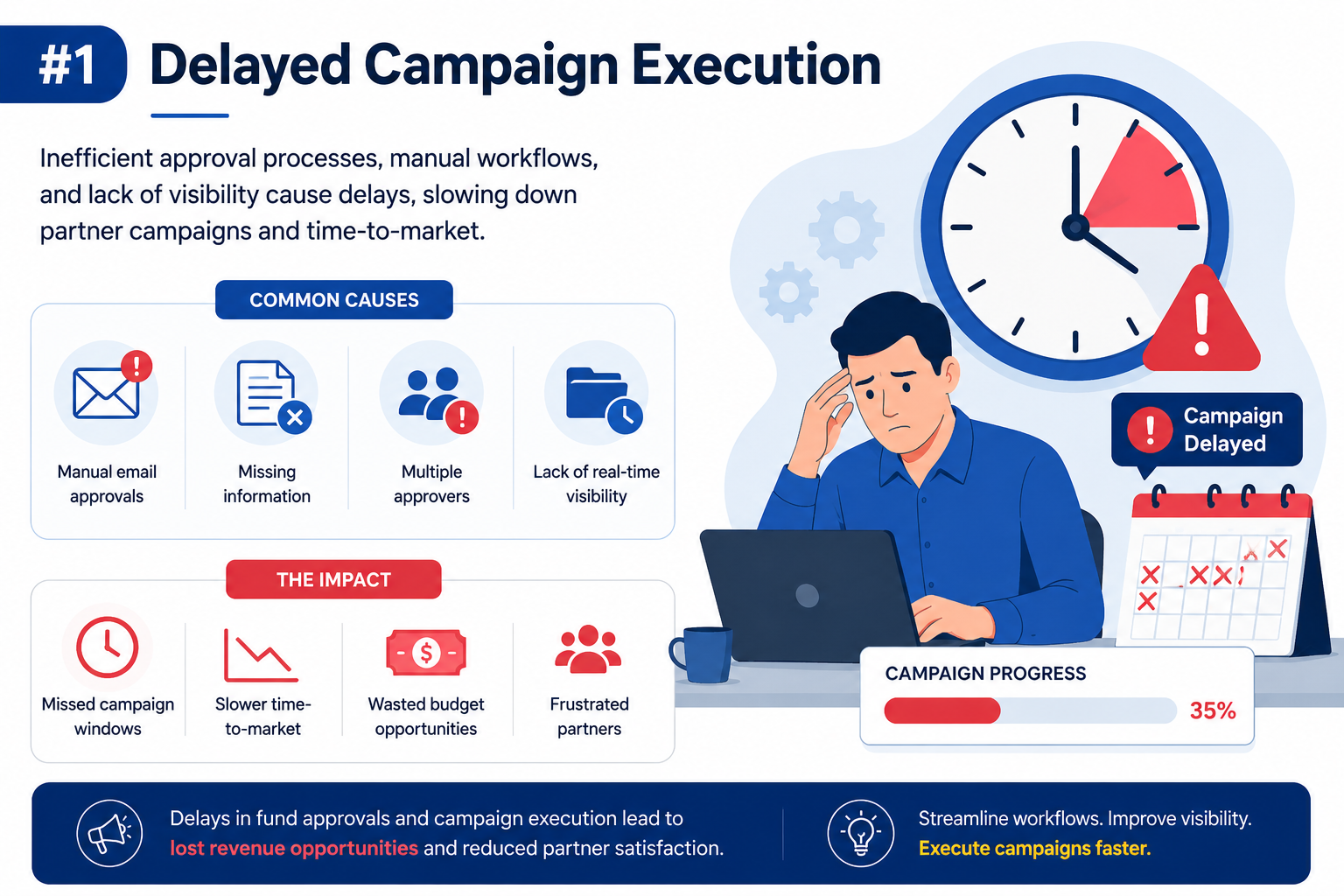
#1. Delayed Campaign Execution
One of the most common consequences of poor fund management is delayed campaign execution.
When fund requests require multiple approval layers, lengthy email chains, and manual reviews, partners often struggle to launch campaigns on time.
Research from the Content Marketing Institute shows that organizations that respond quickly to market opportunities are significantly more likely to achieve stronger marketing performance than those relying on slow, manual processes.
In competitive markets, even a few weeks of delay can mean lost leads and missed revenue opportunities.
MDF Approval Scenario
$100,000 in Partner Marketing Funds Can Stall Without Clear Approval Workflows
$100K
MDF allocated
Budget assigned to support partner-led webinars for a new product launch.
3
approval teams
Channel managers, finance teams, and marketing departments must review the request.
High
delay risk
More handoffs increase the chance of slow decisions, missed launch windows, and partner frustration.
Partner submits request
→
Channel review
→
Finance approval
→
Marketing sign-off
→
Campaign launch
A software vendor allocates $100,000 in marketing development funds to support partner-led webinars promoting a new product launch. The approval process requires sign-off from channel managers, finance teams, and marketing departments.
The approval cycle takes four weeks.
During that time:
- Competitors launch similar campaigns.
- Search demand begins to decline.
- Partner enthusiasm decreases.
- Lead generation opportunities are missed.
By the time the campaign launches, the company experiences significantly lower engagement than initially forecast.
#2. Unused Partner Budgets
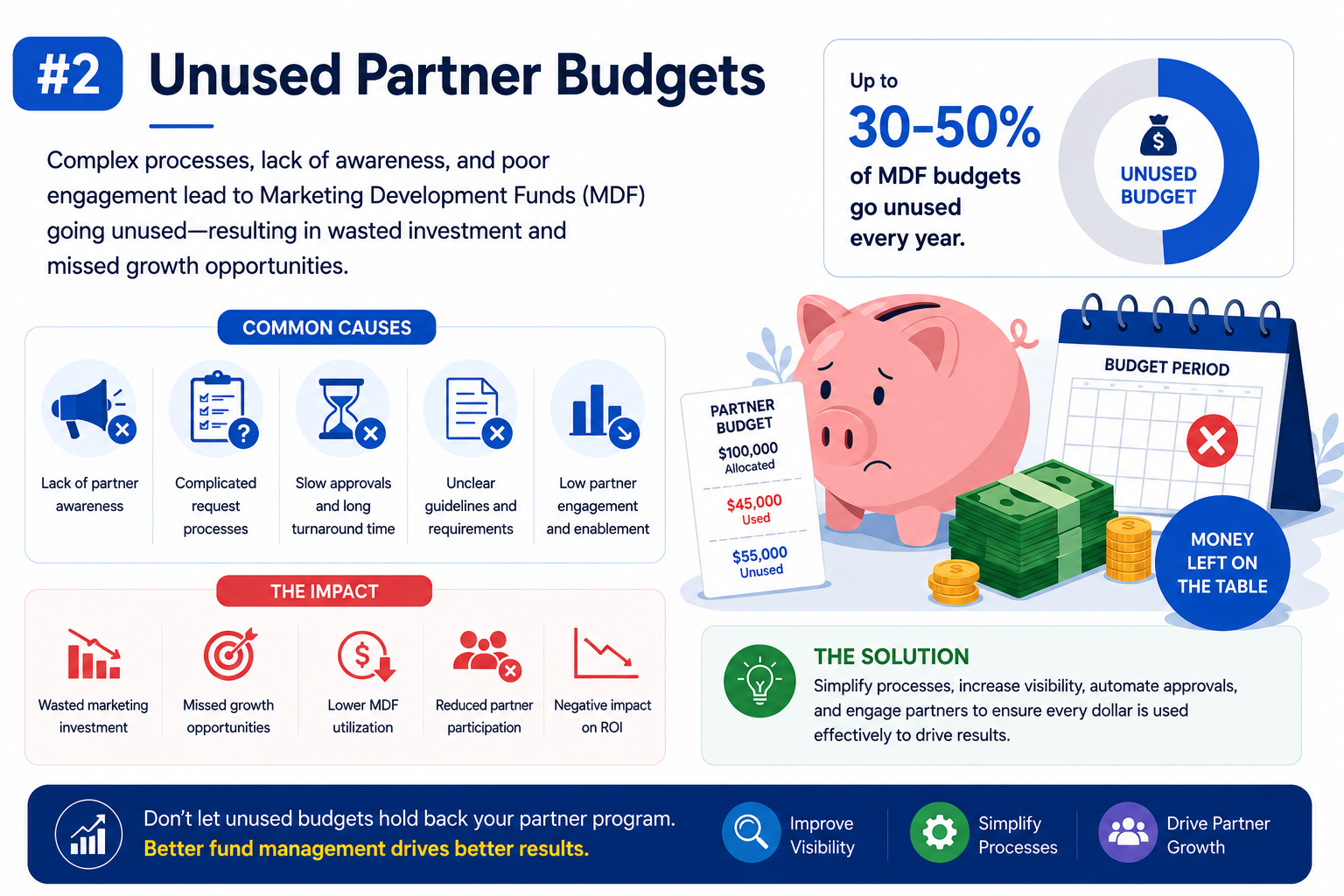
#2. Unused Partner Budgets
Industry analysts estimate that between 30% and 50% of available marketing development funds often go unused each year.
In many organizations, partners either don't know funds are available or find the process too difficult to navigate.
30–50%
Unused MDF Budgets
Industry analysts estimate that between 30% and 50% of available Marketing Development Funds (MDF) often go unused each year because partners are unaware funding exists or find the application and approval process too difficult to navigate.
30–50%
MDF Often Unused
Lower
Partner Participation
Higher
Revenue Leakage
Source: Industry MDF & Channel Marketing Research
Unused budgets represent more than wasted money—they represent missed growth opportunities.
A technology company allocates $1 million annually in MDF across its partner network.
At the end of the year:
- Only $550,000 is utilized.
- $450,000 expires unused.
- Several planned campaigns never launch.
- Hundreds of potential leads are never generated.
If those funds had generated even a conservative 5:1 marketing return, the business could have influenced millions of dollars in additional pipeline revenue.
This is why leading organizations focus on improving MDF utilization rates and partner participation levels.
#3. Administrative Overhead
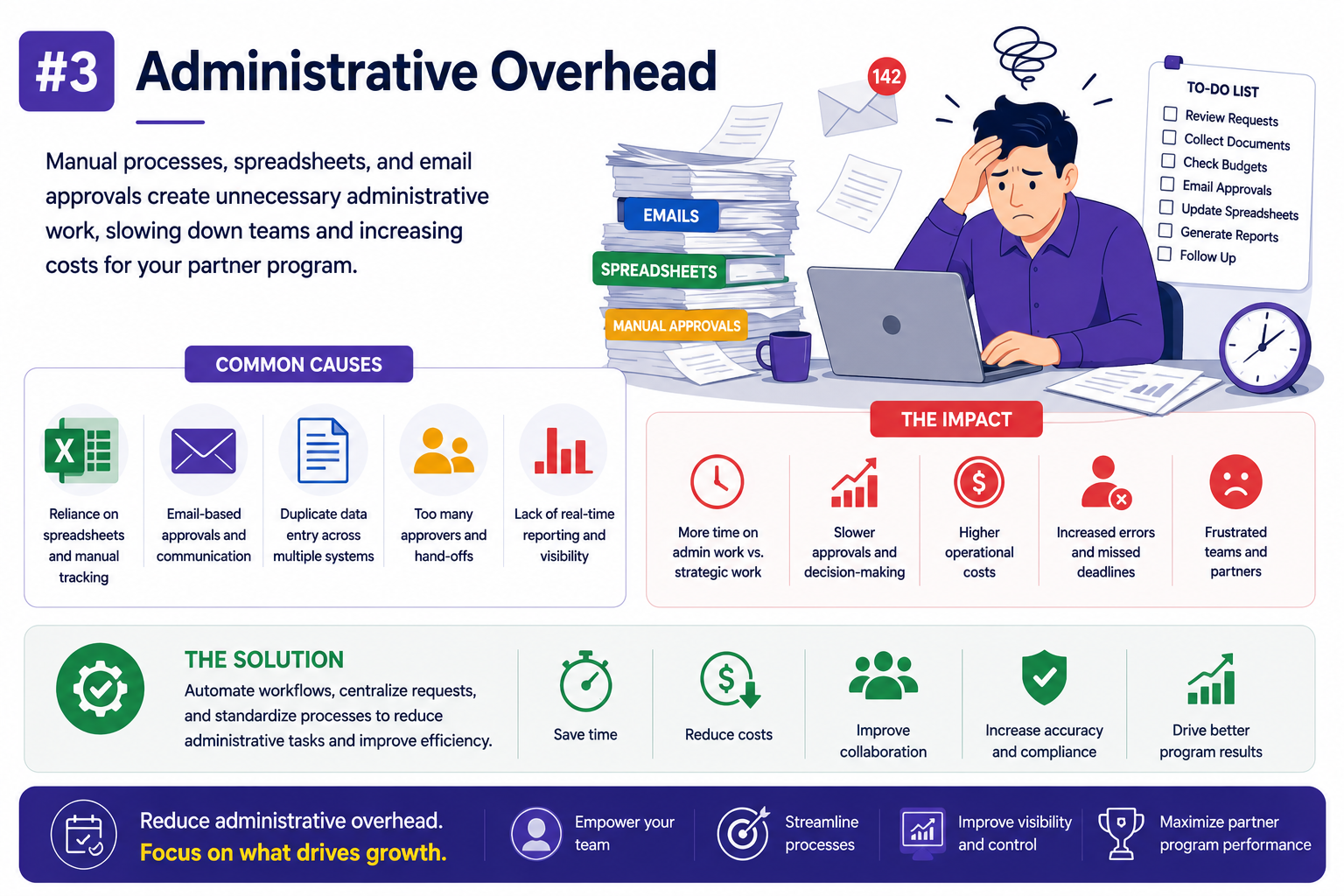
#3. Administrative Overhead
Manual fund management creates a significant administrative burden for channel teams, finance departments, and partners.
According to research from IDC, knowledge workers spend nearly 30% of their workweek searching for information or managing administrative tasks instead of focusing on strategic activities.
When fund requests are managed through spreadsheets and email, the workload increases substantially.
A channel marketing manager oversees 200 partners and receives dozens of MDF requests every month.
To process a single request, they must:
- Review funding applications.
- Verify available budgets.
- Request approvals.
- Track supporting documents.
- Update spreadsheets.
- Generate reports.
If each request requires 45 minutes of administration and the company processes 500 requests annually, that's more than 375 hours of administrative effort every year.
Automated workflows and partner portals can dramatically reduce this burden while improving accuracy and visibility.
#4. Reduced Partner Trust
#4. Reduced Partner Trust
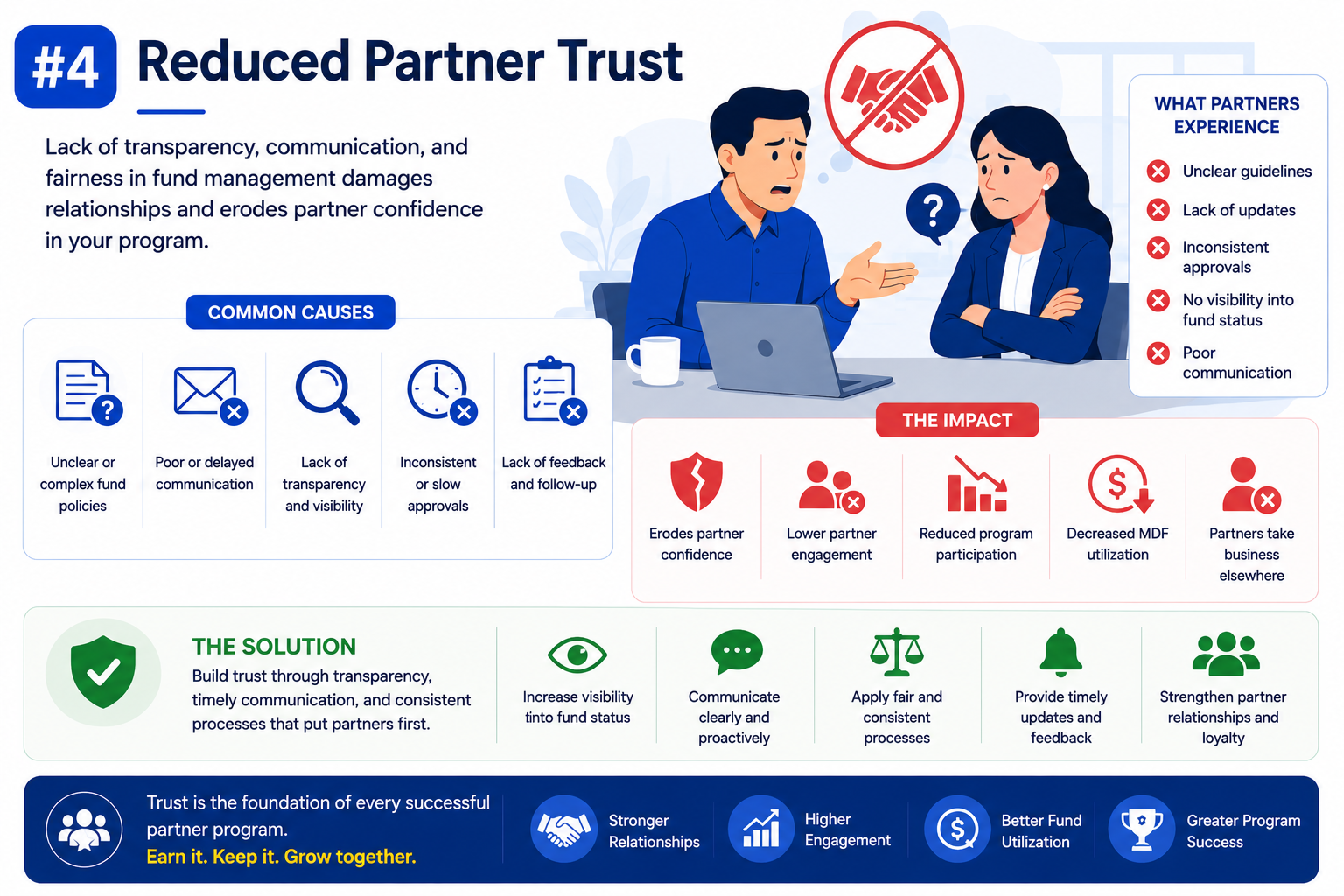
Trust is one of the most valuable assets in any partner relationship. Unfortunately, poor fund management can quickly damage that trust.
Partners expect transparency regarding budget availability, approval status, reimbursement timelines, and campaign expectations. When communication breaks down, frustration grows and engagement often declines.
Research from the Channel Company has consistently shown that partners are more likely to invest in vendors that provide clear communication, predictable processes, and easy access to resources.
For example, a reseller submits an MDF request to support a regional marketing event.
After submission:
- The partner receives no status updates.
- Approval takes six weeks.
- Reimbursement is delayed for several months.
- Questions go unanswered.
The result?
The partner begins prioritizing competitors that offer faster approval processes and better support. Over time, the vendor loses mindshare, engagement, and potentially significant channel revenue.
Organizations that provide transparent fund management processes often experience:
- Higher partner satisfaction
- Greater partner engagement
- Increased MDF utilization
- Stronger partner retention
- Better partner marketing performance
Poor management of marketing development funds doesn't just create operational inefficiencies—it directly impacts campaign performance, partner participation, and revenue growth.
Organizations that improve visibility, automate approvals, and centralize partner communication are far more likely to maximize MDF utilization, strengthen partner relationships, and achieve higher returns from their channel marketing investments.
7 Warning Signs Your Fund Management Process Is Broken
Many organizations assume their partner funding programs are working simply because budgets have been allocated.
However, allocating funds and effectively managing them are two very different things.
Poor fund governance often goes unnoticed until revenue growth slows, partner participation drops, and marketing investments fail to deliver expected results.
If any of the following warning signs sound familiar, it may be time to reevaluate your fund management strategy.

7 Warning Signs Your Fund Management Process Is Broken
1. Partners Frequently Ask About Budget Status
One of the clearest signs of a broken process is when partners constantly contact your team asking questions such as:
- How much funding is available?
- Has my request been approved?
- When will reimbursement be processed?
- What funds remain available?
These questions often indicate a lack of transparency and poor visibility into available funding programs.
When partners cannot easily access funding information, they spend more time chasing updates instead of executing growth initiatives. This can slow down business development efforts and reduce participation in strategic programs.
2. Approval Cycles Take Weeks Instead of Days
Funding approvals should help accelerate growth, not create roadblocks.
When approval requests pass through multiple departments with no standardized workflow, delays become common. What should take a few days can often stretch into several weeks.
Long approval cycles can cause:
- Missed campaign opportunities
- Delayed product launches
- Reduced partner satisfaction
- Lower pipeline generation
In fast-moving markets, slow decision-making can result in lost competitive advantage.
3. Fund Utilization Rates Remain Low
Unused funds are often one of the largest hidden costs within partner ecosystems.
If a large percentage of available funding remains untouched each year, it may indicate:
- Complex application processes
- Poor partner awareness
- Difficult reimbursement requirements
- Ineffective partner communications
Low utilization rates often suggest that funding programs are not aligned with partner needs or business objectives.
4. Business Growth Initiatives Are Frequently Delayed
Funding programs exist to support expansion, customer acquisition, partner recruitment, and market penetration.
If strategic initiatives are routinely postponed because funding requests remain unresolved, your processes may be preventing growth rather than enabling it.
Organizations with streamlined approval systems are generally able to launch initiatives faster and respond more effectively to market opportunities.
5. Reporting Is Difficult to Produce
If leadership requests a funding report and it takes days to gather information from spreadsheets, emails, and disconnected systems, there is likely a visibility problem.
Effective reporting should answer questions such as:
- Where has funding been allocated?
- Which initiatives generated results?
- Which partners are actively participating?
- What return was generated from investments?
Without accurate reporting, decision-makers struggle to optimize future investments.
6. Finance and Channel Teams Disagree on Numbers
When different departments report different funding figures, it often indicates a lack of centralized data management.
Common symptoms include:
- Conflicting budget reports
- Duplicate records
- Missing documentation
- Inconsistent forecasting
A single source of truth is critical for maintaining accountability and ensuring accurate financial planning.
7. Partners Stop Participating in Programs
Perhaps the most concerning warning sign is declining participation.
When funding programs become difficult to access or manage, partners may simply stop engaging altogether. Instead of applying for funding opportunities, they may focus their efforts on vendors that offer a more streamlined experience.
Over time, declining participation can lead to:
- Lower partner retention
- Reduced sales activity
- Weaker ecosystem engagement
- Slower revenue growth
A healthy funding program should encourage participation, strengthen relationships, and create mutual business value.
Here is a Fund Management Health Check Checklist

Here is a Fund Management Health Check Checklist
Here is a checklist you can use to quickly assess whether your current fund management process is helping or hurting your partner program.
If you answer "Yes" to three or more of these questions, there may be opportunities to improve visibility, streamline approvals, and increase marketing development fund (MDF) utilization.
How Poor Fund Management Impacts Partner Revenue
Many organizations focus on increasing funding allocations but overlook the systems and processes required to manage those investments effectively.
While budgets may appear healthy on paper, poor oversight can create operational inefficiencies that directly impact revenue generation, market growth, and partner success.
When funding programs lack visibility, accountability, and strategic alignment, businesses often experience lower participation rates, weaker sales outcomes, and reduced return on investment.
Lower Program Adoption
One of the earliest indicators of ineffective fund management is declining adoption of funding programs.
Partners are more likely to participate when funding opportunities are easy to understand, simple to access, and supported by clear guidelines. When processes become complicated, adoption rates often fall.
Research from industry channel studies suggests that top-performing partner ecosystems typically achieve significantly higher participation rates because they remove administrative friction and provide partners with a seamless experience.
A vendor launches a growth initiative designed to support regional demand-generation activities.
Although funding is available, the application process requires:
- Multiple forms
- Manual document submissions
- Lengthy approval reviews
Within six months, fewer than 25% of eligible participants submit requests.
The result is reduced activity across the ecosystem despite significant funding availability.
Reduced Business Development Activity
Funding programs are often designed to encourage business development efforts that drive awareness, customer acquisition, and market penetration.
When funding remains difficult to access, organizations may see fewer growth initiatives launched by partners.
This can lead to:
- Fewer promotional activities
- Reduced customer outreach
- Lower event participation
- Declining market awareness
A study by Forrester found that organizations with highly engaged partner ecosystems frequently generate substantially higher growth rates than those with disengaged networks.
A company allocates resources to support local awareness campaigns across multiple regions.
Due to approval delays and reimbursement uncertainty, participating organizations reduce their planned activities by nearly half.
As a result, customer engagement opportunities decline and potential growth slows across several territories.
Enter your custom HTML codes in this section ...
Missed Revenue Opportunities
Poor financial oversight often creates situations where investment opportunities are missed altogether.
When approvals arrive too late or funding information is unclear, organizations may lose opportunities to capitalize on seasonal demand, product launches, industry events, or emerging market trends.
Here is an example, a technology provider plans a major product launch supported by funding initiatives.
However:
- Requests remain pending for several weeks
- Promotional activities start late
- Competitive vendors enter the market first
Industry research consistently shows that speed-to-market can significantly influence sales performance, particularly in highly competitive sectors.
The delayed launch ultimately results in fewer opportunities generated and lower revenue than projected.
Slower Geographic Expansion
Funding programs are frequently used to support expansion into new regions, industries, and customer segments.
When resources are difficult to access, growth initiatives often stall before they begin.
Take this example, a software company seeks to expand into three new international markets.
Funding has been allocated to support:
- Market research
- Local events
- Industry partnerships
- Awareness campaigns
Due to fragmented administration processes, approvals take months rather than weeks.
Expansion plans are postponed, allowing competitors to establish a stronger presence before launch.
Organizations that streamline investment governance are generally able to enter new markets faster and capitalize on emerging opportunities more effectively.
Declining Stakeholder Satisfaction
Funding programs should strengthen relationships across the ecosystem. Unfortunately, inconsistent processes often create frustration among both internal teams and external stakeholders.
Common complaints include:
- Lack of status visibility
- Slow decision-making
- Confusing requirements
- Delayed reimbursements
- Poor communication
Over time, these frustrations can weaken trust and reduce long-term participation.
A great example, a partner submits multiple requests throughout the year but receives limited updates regarding approval status and funding availability.After repeated delays, the organization chooses to prioritize vendors that provide:
- Faster responses
- Better transparency
- Easier collaboration
The original vendor loses engagement, activity levels decline, and future revenue opportunities are impacted.
Real-World Revenue Impact Scenario
Consider a company that allocates $500,000 annually to support strategic growth initiatives.
Over the course of a year:
- 40% of available funding remains unused
- Requests take an average of 45 days to process
- Several initiatives launch behind schedule
- Opportunity creation declines
- Stakeholder participation falls
If those unused resources had generated a conservative 4:1 return, the organization could have influenced more than $800,000 in additional pipeline value.
The issue isn't a lack of investment. The problem is that inefficient management prevents resources from generating their full business impact.
Why Traditional Fund Management Methods No Longer Work
The Spreadsheet Problem
For many organizations, spreadsheets remain the default tool for managing partner funding programs.
While spreadsheets may work for a small number of partners, they quickly become difficult to manage as programs grow.
Multiple versions of the same file, manual data entry, inconsistent reporting, and human error can create significant challenges for channel teams.
According to research from Gartner, poor data quality costs organizations millions of dollars annually through inefficiencies, missed opportunities, and poor decision-making.
When critical funding information is spread across multiple spreadsheets, it becomes difficult to track allocations, monitor spending, and accurately measure program performance.
As partner networks expand, spreadsheets often become a barrier to growth rather than a solution.
Email Approval Bottlenecks
Email was never designed to manage complex funding workflows.
Yet many organizations still rely on lengthy email chains to approve requests, review documentation, and communicate funding decisions.
The problem is that emails can easily become lost, overlooked, or buried within crowded inboxes. Delays increase when multiple stakeholders need to review and approve requests before funds can be released.
Research suggests that employees spend more than a quarter of their workweek managing emails, which significantly impacts productivity.
When approval processes depend entirely on email communication, response times slow down, accountability decreases, and partners often experience unnecessary frustration while waiting for decisions.
Lack of Real-Time Visibility
Modern partner programs require immediate access to accurate information.
Traditional fund management methods rarely provide real-time visibility into available budgets, request statuses, funding utilization, or program performance. Instead, teams are forced to manually compile reports from multiple systems and data sources.
This creates delays in decision-making and limits the organization's ability to react quickly to changing business conditions.
Without real-time visibility, leaders often struggle to answer simple questions about available funding, active requests, or overall program effectiveness.
The result is reduced transparency, slower execution, and a greater risk of budget misallocation.
Growing Partner Ecosystems
Partner ecosystems are becoming larger and more complex than ever before.
Organizations may manage hundreds or even thousands of resellers, distributors, consultants, affiliates, and strategic alliances across multiple regions.
As ecosystems grow, traditional fund management processes become increasingly difficult to scale. What once worked for ten partners may completely fail when managing hundreds of funding requests across multiple territories.
Research from Canalys indicates that partner-led sales continue to account for a significant percentage of global technology revenue, making scalable partner operations essential for long-term growth.
Businesses that continue relying on manual processes often struggle to support expanding partner communities effectively.
Increasing Compliance Requirements
Regulatory requirements and financial accountability expectations continue to increase across industries.
Organizations must now demonstrate how funds are allocated, approved, spent, and measured while maintaining accurate records for audits and reporting purposes.
Traditional methods often lack the documentation, security controls, and audit trails needed to meet modern compliance standards. Missing approvals, incomplete records, and inconsistent documentation can expose businesses to unnecessary risk.
As organizations invest more heavily in channel growth initiatives, maintaining proper governance becomes increasingly important.
Modern fund management platforms help create a transparent, auditable process that supports both operational efficiency and regulatory compliance.
What Effective Fund Management Looks Like
Effective fund management is about much more than approving budgets and tracking expenses.
High-performing organizations treat fund management as a strategic business function that supports partner growth, improves accountability, and drives measurable revenue outcomes.
Rather than relying on disconnected systems and manual processes, successful companies create structured frameworks that make it easy for partners to access funding, submit requests, track progress, and demonstrate results.
As partner ecosystems become more competitive, organizations that modernize their approach to channel funding, partner investments, and market expansion programs are often better positioned to maximize return on investment and strengthen long-term partner relationships.
Centralized Fund Requests
One of the defining characteristics of effective fund management is a centralized request process.
Instead of forcing partners to submit funding applications through emails, spreadsheets, or multiple systems, organizations provide a single location where requests can be submitted, reviewed, and tracked.
A centralized process improves transparency for both partners and internal teams.
Everyone involved can see request statuses, available budgets, supporting documentation, and approval progress without needing to search through multiple communication channels.
Research from McKinsey has found that organizations that centralize business processes often improve operational efficiency while reducing administrative complexity. In the context of partner funding, centralization helps accelerate request processing while improving the overall partner experience.
Automated Approval Workflows
Manual approval processes create unnecessary delays and increase the likelihood of human error.
Effective fund management replaces manual reviews with automated workflows that route requests to the appropriate stakeholders based on predefined business rules.
Automation helps ensure consistency across funding programs while reducing approval times.
Rather than waiting for email responses or manually forwarding documents between departments, requests automatically move through the required stages until a decision is reached.
Organizations that automate business workflows often report significant productivity gains because employees spend less time on repetitive administrative tasks and more time focused on strategic initiatives.
Faster approvals also help partners launch campaigns sooner, creating opportunities for quicker revenue generation and stronger market engagement.
Real-Time Budget Tracking
Visibility is critical for effective financial management.
Organizations need immediate access to accurate information about funding allocations, spending levels, available balances, and program utilization.
Real-time budget tracking eliminates the uncertainty that often exists within traditional funding programs.
Instead of waiting for monthly reports or manually updating spreadsheets, stakeholders can access current data whenever needed.
This level of visibility helps leadership teams make more informed decisions while allowing program managers to identify underutilized budgets, funding gaps, and emerging opportunities.
It also supports better resource allocation across sales initiatives, growth programs, and strategic partnerships.
Clear Audit Trails
As funding programs grow, maintaining accountability becomes increasingly important.
Effective fund management includes comprehensive audit trails that document every action taken throughout the funding lifecycle.
An audit trail records key information such as request submissions, approvals, modifications, budget allocations, supporting documents, and reimbursement activity.
This creates a complete history that can be reviewed at any time.
Strong audit capabilities not only support internal governance but also help organizations meet financial reporting requirements and compliance obligations.
Businesses that maintain detailed records are better prepared for audits, financial reviews, and operational assessments while reducing the risk of disputes or reporting inaccuracies.
Performance Measurement
Perhaps the most important element of effective fund management is performance measurement.
Funding programs should not be evaluated solely based on how much money was distributed.
Instead, organizations should focus on the business outcomes generated by those investments.
Successful organizations track key performance indicators such as lead generation, opportunity creation, customer acquisition, revenue influence, program adoption, and partner productivity.
These metrics help determine which investments deliver the greatest value and where future resources should be allocated.
According to research from Forrester, organizations that consistently measure program effectiveness are more likely to optimize spending and achieve stronger business outcomes.
By connecting funding activities to measurable results, businesses can transform partner investments from a cost center into a strategic growth engine.
Traditional vs Modern Fund Management
| Traditional Process | Modern Process |
| Spreadsheets | Centralized portal |
| Email approvals | Automated workflows |
| Manual tracking | Real-time visibility |
| Delayed reporting | Live dashboards |
| Limited accountability | Full audit history |
| Static budgets | Dynamic budget management |
| Reactive decision-making | Data-driven insights |
| Fragmented communication | Unified collaboration platform |
| Manual reconciliation | Automated record management |
| Limited reporting | Advanced analytics and forecasting |
Best Practices for Managing Partner Funds
Managing partner funds effectively requires more than simply allocating budgets and approving requests.
Organizations that consistently achieve strong results from their funding programs typically follow a structured approach focused on transparency, accountability, performance measurement, and partner engagement.
By implementing the right processes, businesses can maximize the value of their investments while improving partner satisfaction and driving stronger revenue outcomes.
Create Clear Fund Allocation Policies
One of the biggest reasons funding programs fail is because partners do not fully understand how funds can be used, who qualifies, or what activities are eligible for reimbursement.
Unclear policies often lead to confusion, delays, rejected requests, and underutilized budgets.
A well-defined fund allocation policy should clearly explain how funds are distributed, the types of activities that qualify for support, documentation requirements, reimbursement timelines, and approval criteria.
When partners understand the rules from the beginning, they are more likely to participate and use available funding effectively.
Research has shown that businesses with clearly documented operational processes can improve execution efficiency by more than 25% compared to organizations relying on informal procedures.
Effective allocation policies should include:
- Funding eligibility requirements
- Approved marketing and sales activities
- Budget allocation guidelines
- Documentation and compliance requirements
- Reimbursement procedures
- Reporting expectations
Clear policies help reduce misunderstandings while creating consistency across the entire partner ecosystem.
Establish Approval SLAs
Funding requests should move quickly through the approval process.
When requests remain pending for weeks, partners often delay campaigns, postpone growth initiatives, or abandon funding opportunities altogether.
A Service Level Agreement (SLA) establishes expectations for how quickly requests will be reviewed and approved. Defined timelines help create accountability while improving the overall partner experience.
According to operational performance studies, organizations that implement formal service-level objectives often reduce process delays by up to 40%.
Many successful programs establish targets such as:
- Initial request review within 48 hours
- Funding decisions within 5 business days
- Reimbursement processing within 15 business days
- Automated notifications for status changes
Faster approval cycles allow partners to respond more quickly to market opportunities and maintain momentum throughout campaign execution.
Track Fund Utilization Rates
One of the most important metrics in partner funding is fund utilization. This measures how much of the available budget is actually being used by partners.
Industry analysts estimate that between 30% and 50% of available funding often goes unused each year. Unused budgets represent lost opportunities for lead generation, brand awareness, customer acquisition, and revenue growth.
Tracking utilization rates helps organizations identify:
- Underperforming programs
- Low partner participation
- Budget allocation issues
- Regional adoption trends
- Opportunities for optimization
Organizations should regularly review utilization data and investigate why funds remain unused. In many cases, the issue is not a lack of budget but rather poor awareness, complex processes, or inadequate partner support.
Require Campaign Performance Reporting
Allocating funding without measuring outcomes makes it difficult to determine whether investments are generating value. Every funded initiative should include a mechanism for reporting performance and results.
Performance reporting helps organizations understand which activities generate the strongest return and where future investments should be focused.
Useful reporting metrics may include:
- Leads generated
- Opportunities created
- Event attendance
- Customer acquisition rates
- Revenue influenced
- Conversion rates
- Engagement metrics
Studies have found that organizations that consistently measure campaign performance are significantly more likely to achieve positive marketing outcomes than those that do not.
When performance data is collected consistently, funding decisions become more strategic and evidence-based.
Measure ROI Consistently
Return on investment remains one of the most important indicators of funding program success.
Unfortunately, many organizations focus primarily on spending budgets rather than measuring the value generated by those investments.
ROI measurement helps determine whether funding programs are contributing to business objectives and producing meaningful results.
A strong ROI framework should evaluate:
- Revenue generated
- Pipeline influenced
- Customer acquisition costs
- Partner contribution
- Market expansion impact
- Long-term business value
Research suggests that data-driven organizations are substantially more likely to outperform competitors because they make investment decisions based on measurable outcomes rather than assumptions.
Consistent ROI analysis allows businesses to prioritize the highest-performing initiatives while eliminating programs that fail to deliver value.
Improve Communication with Partners
Even the most generous funding program can struggle if communication is poor.
Partners need timely access to information, updates, resources, and support throughout the funding lifecycle.
Many participation challenges stem from communication gaps rather than budget limitations. When partners are unsure how programs work or where to find information, engagement naturally declines.
Effective communication strategies include:
- Centralized funding resources
- Self-service partner portals
- Automated status notifications
- Regular program updates
- Training and onboarding materials
- Dedicated support channels
Organizations with strong communication practices often experience higher participation rates, greater funding utilization, and stronger long-term partner relationships.
Ultimately, successful fund management is built on a foundation of transparency, speed, accountability, and collaboration.
Organizations that embrace these best practices are far more likely to maximize the impact of their funding programs while creating stronger, more profitable partner ecosystems.
How Partner Portals Improve Fund Management
As partner ecosystems grow, managing funding programs through spreadsheets, email threads, and disconnected systems becomes increasingly difficult.
Organizations need a centralized solution that allows partners, channel managers, finance teams, and leadership to work from the same source of truth.
This is where partner portals play a critical role.
A modern partner portal provides a secure environment where funding requests, approvals, documentation, reporting, and communication can be managed from a single platform.
By centralizing these activities, businesses can improve efficiency, increase transparency, and maximize the value generated from partner investments.
Research shows that organizations with mature partner programs can generate significantly higher revenue through indirect sales channels compared to businesses that rely on fragmented partner management processes.
A partner portal helps create the structure needed to support sustainable growth while improving the overall partner experience.
Fund Request Submission
One of the biggest challenges in traditional fund management is the submission process itself.
Partners often struggle to locate forms, understand eligibility requirements, or determine who should receive their requests.
A partner portal simplifies this process by providing a centralized location where funding requests can be submitted electronically. Partners can complete standardized forms, upload supporting documentation, and track the progress of their requests without relying on manual communication.
This streamlined approach reduces administrative effort while improving accuracy and consistency. It also creates a more professional experience for partners who can access funding opportunities whenever they need them.
Automated Approval Processes
Funding requests often require multiple levels of review before approval. Without automation, requests can become delayed as they move between departments and stakeholders.
Partner portals help eliminate these bottlenecks by introducing automated approval workflows. Requests are automatically routed to the appropriate individuals based on predefined rules, helping reduce delays and improve accountability.
Organizations that automate business processes frequently experience faster turnaround times and lower administrative costs.
Automated workflows also provide complete visibility into approval status, ensuring that both internal teams and partners know exactly where requests stand.
Shared Marketing Resources
Successful funding programs require more than financial support. Partners also need access to the right resources to execute campaigns effectively.
A partner portal provides a central repository for marketing materials, sales enablement content, product information, campaign templates, brand guidelines, training resources, and promotional assets.
Instead of requesting documents through email or searching across multiple systems, partners can quickly access the resources they need to launch campaigns and support customers.
This improves consistency across the partner ecosystem while helping organizations protect brand standards and messaging.
Budget Tracking
Visibility into available budgets is essential for effective fund management. Without real-time insight, organizations often struggle to understand how funds are being allocated and utilized.
Partner portals provide centralized budget tracking that allows stakeholders to monitor allocations, approved requests, spending activity, and remaining balances in real time.
This visibility helps organizations identify underutilized budgets, improve forecasting accuracy, and make better investment decisions.
It also reduces the likelihood of overspending or duplicate funding approvals while improving overall financial governance.
Performance Reporting
Funding programs should always be measured against business outcomes.
Without reporting capabilities, organizations cannot accurately determine whether investments are generating value.
A partner portal enables performance tracking through centralized dashboards and reporting tools.
Businesses can monitor participation rates, campaign results, opportunity creation, revenue influence, and overall program effectiveness.
According to industry research, organizations that consistently measure performance are more likely to improve operational efficiency and achieve stronger business results.
Reporting tools help leadership teams identify successful initiatives and optimize future funding decisions based on real-world data.
Communication and Collaboration
Poor communication remains one of the most common reasons partner programs fail to achieve their full potential. When information is scattered across emails, phone calls, and spreadsheets, misunderstandings and delays become inevitable.
Partner portals improve communication by providing a dedicated space where partners and internal teams can collaborate, share updates, ask questions, and access important information.
This creates a more connected partner ecosystem while reducing communication silos. Improved collaboration often leads to stronger relationships, faster decision-making, and higher levels of engagement across the entire partner network.
Benefits of Using a Partner Portal for Fund Management
| Portal Feature | Business Benefit |
| Fund Requests | Faster request processing and improved accuracy |
| Approval Workflow | Reduced delays and better accountability |
| Budget Management | Greater financial visibility and control |
| Marketing Asset Library | Consistent campaign execution |
| Performance Dashboards | Better data-driven decision making |
| Collaboration Tools | Improved partner engagement |
| Document Management | Centralized records and compliance support |
| Activity Tracking | Increased transparency and governance |
| Resource Center | Faster partner onboarding and enablement |
| Reporting & Analytics | Improved funding effectiveness and ROI |
How AgilityPortal Helps Organizations Improve Fund Management
How AgilityPortal Helps Organizations Improve Fund Management
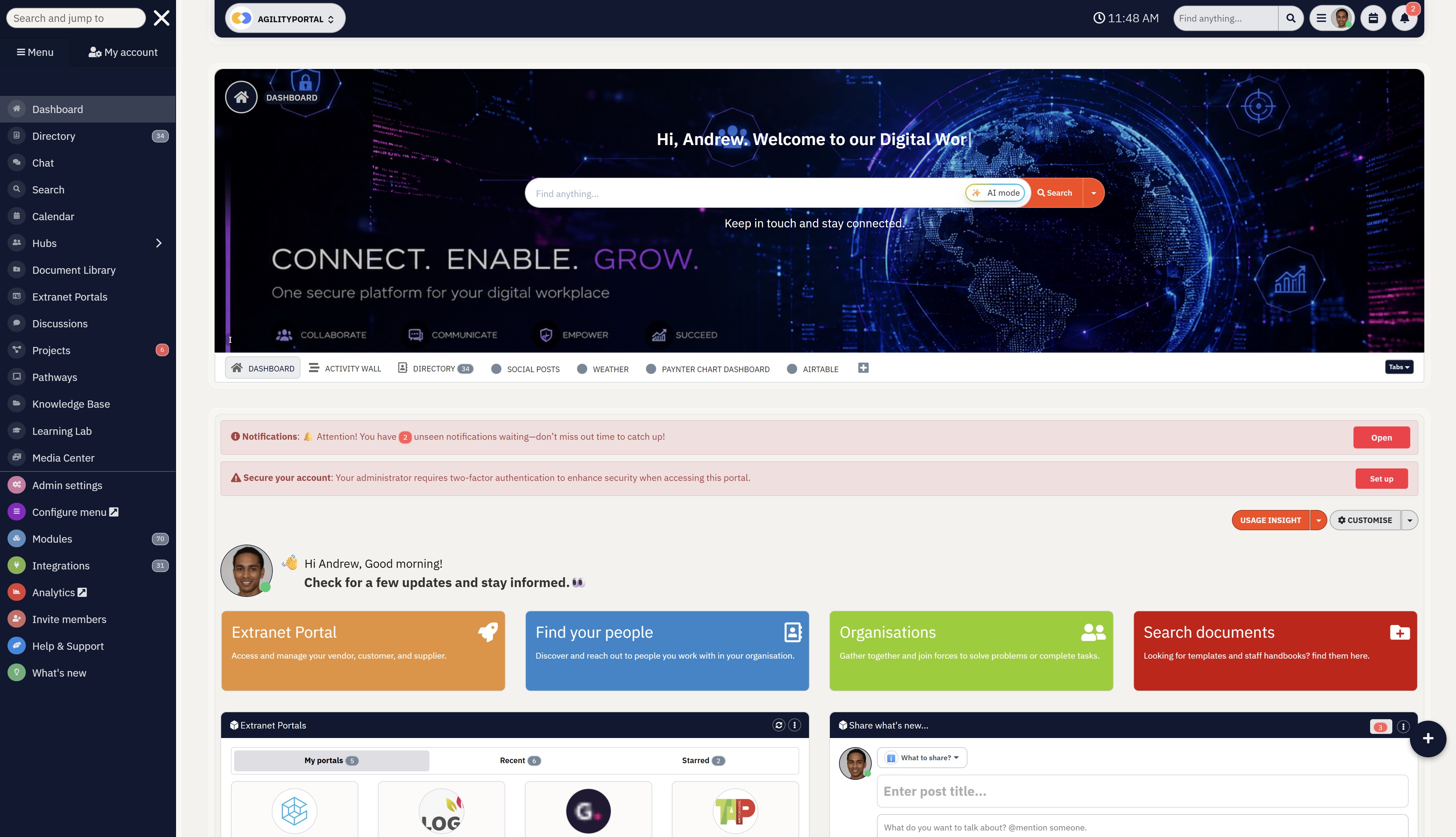
Managing partner funds can become complex as partner programs grow. AgilityPortal simplifies fund management by centralizing workflows, documents, communication, and reporting in one platform.
- Centralized Partner Portal - Give partners a single place to access funding guidelines, forms, resources, and updates, reducing time spent searching for information.
- Fund Request Workflows - Automate funding requests and approvals with structured workflows that improve efficiency, consistency, and accountability.
- Document Management - Store and manage proposals, invoices, contracts, and supporting documents securely in one centralized location.
- Partner Communication - Keep partners informed with built-in communication tools for announcements, updates, and program information.
- Campaign Collaboration - Enable partners to access campaign assets, training materials, and shared resources to improve coordination and execution.
- Reporting and Visibility - Track funding activity, budget utilization, and program performance through centralized dashboards and reporting tools.
Why Organizations Choose AgilityPortal
Organizations using AgilityPortal can:
- Centralize partner funding programs in one platform
- Improve approval efficiency through workflow automation
- Reduce reliance on spreadsheets and email chains
- Strengthen partner communication and engagement
- Simplify document management and compliance
- Improve visibility into funding performance
- Support scalable partner growth initiatives
- Enhance collaboration across partner ecosystems
- Measure program effectiveness more accurately
- Increase accountability across funding processes
Stop Losing Revenue Due to Poor Fund Management
Poor fund management can lead to delayed campaigns, unused budgets, frustrated partners, and missed revenue opportunities. AgilityPortal helps organizations replace manual processes with a centralized partner platform designed to improve visibility, collaboration, and operational efficiency.
Whether you're managing partner incentives, growth initiatives, business development programs, or marketing development funds, AgilityPortal provides the tools needed to streamline operations, improve partner experiences, and maximize return on investment.
Start your free trial or book a personalized demo today to see how AgilityPortal can transform your partner fund management strategy.
Partner Portal & Fund Management Platform
Simplify Partner Fund Management, MDF Programs & Partner Collaboration
AgilityPortal helps organizations centralize marketing development funds (MDF), partner funding requests, approvals, communication, document management, reporting, and partner collaboration in a single secure platform. Eliminate spreadsheets and email chains while improving visibility, accountability, and partner engagement.
Replace disconnected partner management tools with a centralized platform for fund requests, approvals, document management, partner communication, reporting, and partner engagement.
Wrapping up
Fund management is far more than a financial process—it directly influences partner engagement, campaign execution, and revenue growth.
Organizations that continue relying on manual processes often experience delayed approvals, underutilized budgets, and missed opportunities.
By improving visibility, automating workflows, and centralizing partner collaboration, businesses can transform fund management from an administrative burden into a strategic advantage that drives measurable partner program success.
AI Summary
- Fund management helps organizations allocate, approve, track, and measure partner investments to improve accountability, partner participation, and business growth.
- Marketing development funds (MDF) provide financial support for partner-led marketing activities, helping generate leads, increase brand visibility, and drive channel revenue.
- Poor fund management often results in approval delays, unused budgets, reduced partner engagement, limited visibility, and missed revenue opportunities.
- Organizations that automate workflows, centralize fund requests, and improve reporting can increase MDF utilization and improve return on investment.
- Partner portals help streamline fund management by providing a centralized location for funding requests, approvals, document management, collaboration, and performance tracking.
- Successful fund management strategies focus on transparency, communication, performance measurement, scalability, and continuous partner enablement.
Most Popular Posts

Effective communication among team members is vital for the productivity and success of any organization. Surprisingly, 60% of companies lack a long-term internal communication strategy, which p...


Businesses thrive on communication for efficiency, productivity and accomplishment. When the right information is passed from the right designation in the organization, it promotes positivity an...

Categories
Blog
(3244)
Business Management
(398)
Employee Engagement
(236)
Digital Transformation
(224)
Growth
(151)
Intranets
(142)
Internal communications
(110)
Remote Work
(68)
Sales
(53)
Collaboration
(53)
Customer Experience
(33)
Culture
(30)
Project management
(30)
Knowledge Management
(29)
Leadership
(20)
Comparisons
(9)
News
(1)

Related Posts

What would happen if your website moved successfully, but your customers and employees suddenly couldn't reach you by email? Email migration tools can help transfer your messages, but keeping business communication running takes more than copyi...

Does your team still message HR to ask where the holiday policy is? Employee self service should make everyday tasks easier, giving people a straightforward way to find answers, access documents and submit requests. But when policies are buried...

How quickly can a new partner go from signing an agreement to confidently working with your business? If the answer involves chasing documents, forwarding training links and answering the same questions repeatedly, your onboarding process may n...

Looking for the best GraphQL CMS because keeping several brands organised is becoming a headache? You update a product description for one website, then realise two other brands are still showing the old version. Meanwhile, your frontend ...

Are you weighing up an employer of record vs local entity to hire overseas—and wondering which option will help you grow without creating expensive compliance problems? If you're a business owner, HR director or people operations leader struggling to...


Jill Romford
I am a digital nomad, lover of exploring new places and making friends.
I love to travel and I love the internet. I take pictures of my travels and share them on the internet using Instagram.
Traveler, entrepreneur, and community builder. I share my insights on digital marketing and social media while inspiring you to live your fullest life.
Ready to learn more? 👍
One platform to optimize, manage and track all of your teams. Your new digital workplace is a click away. 🚀
Free for 14 days, no credit card required.