Insight Blog
Agility’s perspectives on transforming the employee's experience throughout remote transformation using connected enterprise tools.
36 minutes reading time
(7205 words)
Beyond Surveys: How Conversational Feedback Drives Innovation & Employee Engagement in 2026

Beyond Surveys: How Conversational Feedback Drives Innovation and Employee Engagement
Learn how conversational feedback helps organizations improve employee engagement, uncover innovative ideas, strengthen workplace communication, and build a culture of continuous improvement.
Beyond Surveys: How Conversational Feedback Drives Innovation and Employee Engagement

Organizations spend millions of dollars each year trying to improve employee engagement, encourage innovation, and build stronger workplace cultures.
Yet many still rely on annual surveys to understand what employees are thinking.
The problem? By the time survey results are collected, analyzed, and shared, valuable opportunities for improvement may already have been missed.
In fact, only 21% of employees worldwide are engaged at work, according to Gallup, highlighting a significant gap between organizational efforts and employee experience.
This is where conversational feedback is changing the game.
Instead of relying solely on scheduled surveys, organizations are beginning to capture insights from everyday workplace conversations, discussions, comments, team communities, and employee interactions.
These ongoing conversations often reveal challenges, opportunities, and innovative ideas long before they appear in formal feedback reports.
21%
globally engaged
According to Gallup, only 21% of employees worldwide are engaged at work, highlighting a significant gap between organizational efforts and the actual employee experience.
Source: Gallup State of the Global Workplace
The impact can be significant.
According to Gallup, employees who strongly agree that their opinions count at work are nearly five times more likely to feel engaged.
When employees feel heard, they are more likely to contribute ideas, collaborate with colleagues, and actively participate in driving positive change across the organization.
In this article, we'll explore how conversational feedback helps organizations strengthen employee engagement, improve workplace communication, amplify employee voice, and uncover valuable insights that can guide innovation decisions.
You'll learn why leading organizations are moving beyond traditional surveys, how continuous employee listening creates a culture of innovation, and practical ways to turn everyday conversations into meaningful action.
Key Takeaways
- Conversational feedback helps organizations move beyond traditional employee engagement surveys by capturing real-time employee insights through ongoing workplace conversations.
- Organizations that prioritize employee listening and employee voice programs often experience stronger employee engagement, higher participation, and improved workplace culture.
- Employee-driven innovation frequently emerges from everyday discussions, helping organizations identify process improvements, customer challenges, and new opportunities for growth.
- Digital workplace platforms, employee communication software, and collaboration tools help centralize conversations, improve knowledge sharing, and strengthen internal communications.
- The most successful feedback strategies focus on continuous improvement by acting on employee suggestions, closing the feedback loop, and measuring engagement, sentiment, and innovation outcomes.
What Is Conversational Feedback?
At its core, conversational feedback in the workplace is the process of gathering insights, opinions, suggestions, and concerns through ongoing employee conversations rather than relying solely on traditional surveys.
These conversations happen naturally during daily interactions and often provide a more authentic view of what employees are experiencing, thinking, and feeling.
Unlike annual surveys that capture feedback at a single point in time, real-time employee feedback systems allow organizations to continuously listen to their workforce.
This approach helps leaders identify emerging issues, uncover innovative ideas, and make faster decisions based on current employee sentiment rather than outdated survey results.
One of the biggest advantages of employee listening strategies for hybrid workplaces is that they create multiple opportunities for employees to share their thoughts.
Whether it's through team discussions, workplace communities, collaboration tools, or recognition programs, every interaction becomes a potential source of valuable insight.
Understanding the Shift from Surveys to Conversations
Organizations are increasingly recognizing that how conversational feedback improves employee engagement goes far beyond simply collecting opinions.
Continuous conversations help build trust, strengthen transparency, and encourage greater participation across the workforce.
Traditional surveys typically generate structured feedback through predefined questions and rating scales. While useful, they often fail to capture the context behind employee experiences.
In contrast, employee feedback and innovation management initiatives benefit from unstructured conversations that reveal detailed insights, suggestions, and opportunities that may never appear in a survey response.
This shift is driving greater investment in employee listening and innovation programs designed to capture feedback as it happens.
By creating a culture where employees feel comfortable sharing ideas regularly, organizations can better understand workforce needs while identifying opportunities for continuous improvement.
Conversational Feedback Example:
Many organizations already generate valuable feedback without realizing it.
Common sources include:
- Team discussions and project meetings
- Workplace communities and collaboration groups
- Employee forums and discussion boards
- Collaboration platforms and digital workplace tools
- One-on-one manager conversations
- Employee recognition and peer appreciation programs
- Social intranet discussions and knowledge-sharing spaces
When organizations effectively capture and analyze these conversations, they create a powerful foundation for innovation management through employee feedback, helping transform everyday discussions into actionable improvements that benefit both employees and the organization.
Essential Elements of Effective Conversational Feedback
Organizations that successfully use conversational feedback don't simply collect comments and suggestions—they create an environment where meaningful dialogue can thrive.
The most effective feedback strategies combine communication, listening, transparency, and measurable outcomes to improve both employee experiences and organizational performance indices.
Below are the key elements that make conversational feedback successful.
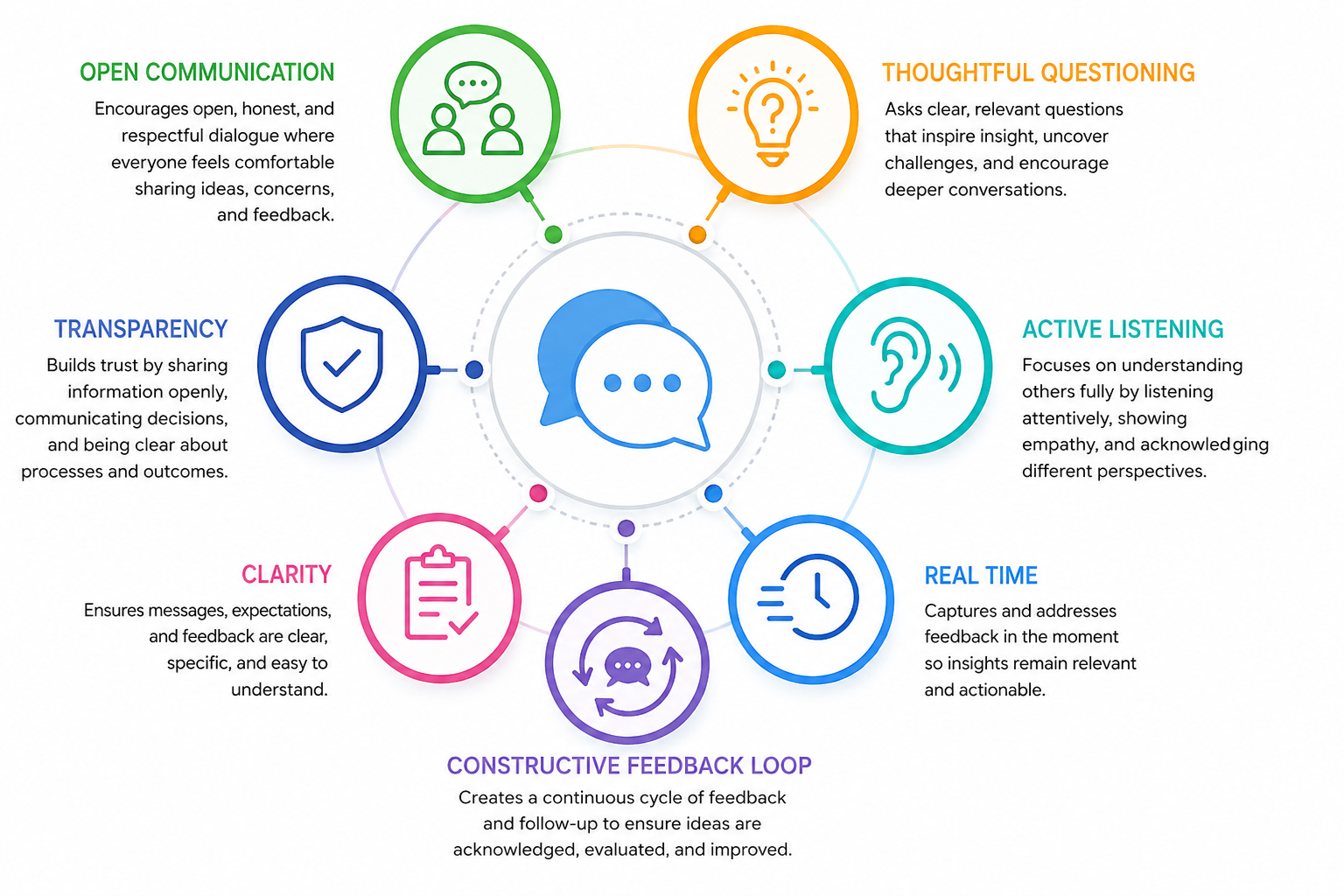
Essential Elements of Effective Conversational Feedback
1. Open Communication Environment
A strong feedback culture starts with creating a workplace where people feel comfortable sharing their thoughts, ideas, and concerns. When employees believe their opinions are valued, they are more likely to participate in discussions and contribute innovative ideas.
Key practices include:
- Creating a safe and supportive environment for open dialogue.
- Encouraging honest conversations without fear of criticism or repercussions.
- Using clear, inclusive language that everyone can understand.
- Promoting participation across all levels of the organization.
2. Thoughtful Questioning
The quality of feedback often depends on the quality of the questions being asked.
Open-ended questions encourage deeper discussions and help uncover insights that might otherwise remain hidden.
To improve conversational feedback:
- Ask relevant questions that encourage detailed responses.
- Explore specific experiences, challenges, and opportunities.
- Encourage employees to share practical examples and suggestions.
- Focus discussions on understanding the "why" behind opinions.
3. Active Listening
Effective feedback is a two-way process.
Active listening demonstrates respect, builds trust, and helps ensure that valuable insights are fully understood before decisions are made.
Organizations should:
- Listen attentively without interrupting.
- Acknowledge contributions and clarify misunderstandings.
- Ask follow-up questions when additional context is needed.
- Demonstrate that feedback is being genuinely considered.
4. Real-Time Interaction
One of the biggest advantages of conversational feedback is the ability to address issues and opportunities as they arise.
Real-time interactions keep discussions relevant, engaging, and actionable.
This can be achieved by:
- Encouraging timely responses and ongoing discussions.
- Using digital workplace platforms that support instant communication.
- Reducing delays between feedback and action.
- Creating continuous opportunities for employees to contribute.
5. Constructive Feedback Loop
Collecting feedback alone is not enough. Organizations must demonstrate that feedback leads to meaningful action.
A constructive feedback loop helps employees see that their contributions have value and influence decisions.
Best practices include:
- Establishing clear processes for reviewing feedback.
- Communicating actions taken based on employee suggestions.
- Tracking improvements resulting from employee input.
- Using feedback to support continuous improvement initiatives.
6. Clarity and Transparency
Trust is built when employees understand how feedback is collected, evaluated, and used. Transparent communication encourages greater participation and increases confidence in the process.
Organizations should:
- Clearly communicate the purpose of feedback initiatives.
- Explain how employee input influences decisions.
- Share outcomes and progress updates regularly.
- Provide visibility into key goals, improvements, and performance indices influenced by employee feedback.
When these six elements work together, conversational feedback becomes more than a communication tool—it becomes a strategic driver of employee engagement, innovation, collaboration, and measurable organizational performance.
Why Conversational Feedback Matters More Than Ever
In today's workplace, organizations can no longer afford to wait for annual surveys to understand how employees feel.
Workforce expectations have changed. Employees want opportunities to share ideas, provide input, and contribute to decision-making in real time.
This is why conversational feedback in the workplace has become an essential part of modern employee engagement strategies and employee listening programs.
Organizations that actively listen to employees gain a competitive advantage. They can identify problems sooner, uncover innovative ideas faster, and build a culture where people feel valued and heard.
More importantly, continuous feedback helps leaders make informed decisions based on current employee experiences rather than outdated survey data.
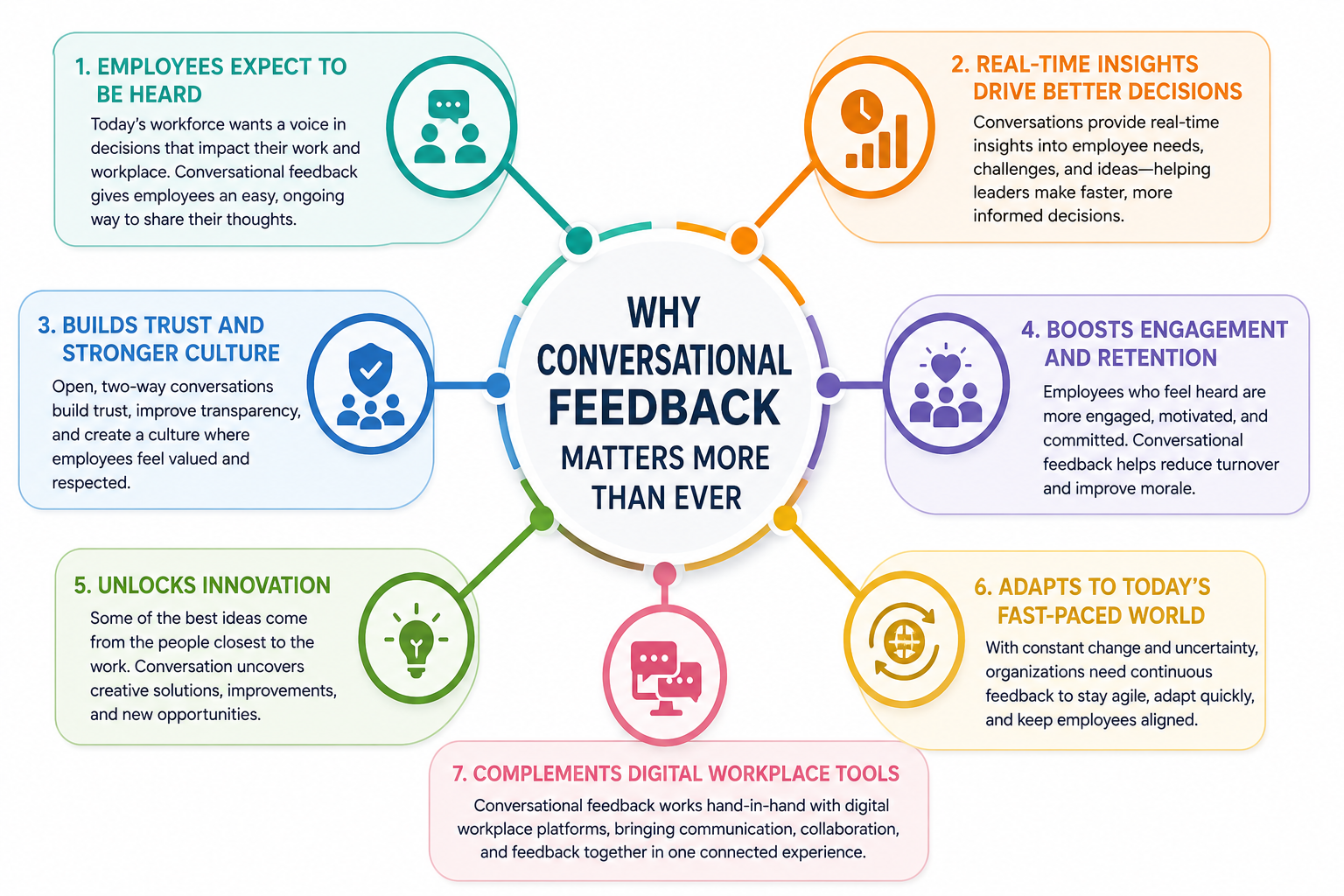
Why Conversational Feedback Matters More Than Ever
Employees Want to Be Heard in Real Time
Employees are more engaged when they believe their opinions matter.
According to Gallup, employees who strongly agree that their voice is heard at work are significantly more likely to be engaged and less likely to seek opportunities elsewhere.
This makes real-time employee feedback systems one of the most effective tools for improving retention and workplace satisfaction.
When organizations embrace continuous employee feedback, they create stronger relationships between leadership and employees.
Team members feel more connected to organizational goals, more invested in their work, and more motivated to contribute meaningful ideas.
Benefits include:
- Higher employee engagement levels.
- Improved employee retention and loyalty.
- Better workplace communication.
- Increased trust in leadership.
- Stronger employee experience initiatives.
Innovation Often Starts with Frontline Employees
Some of the best ideas for improving a business don't come from the boardroom—they come from the employees who work closest to customers, processes, and daily operations.
Frontline employees, customer service teams, technicians, sales representatives, and operational staff experience challenges firsthand. They often spot inefficiencies, customer pain points, emerging trends, and opportunities for innovation long before senior leadership becomes aware of them.
This is why effective innovation portfolio management starts with listening to employees. By capturing and evaluating ideas from across the organization, businesses can identify the innovations with the greatest potential impact, prioritize investment, and ensure resources are focused on initiatives that deliver real business value.
Organizations that encourage employee-driven innovation, innovation management, and continuous employee feedback create a culture where ideas are shared openly instead of being overlooked. This not only improves decision-making but also helps organizations build a balanced innovation portfolio that aligns with strategic goals while responding quickly to changing customer and market needs.
Benefits of Using Employee Feedback for Innovation Portfolio Management
- Identify operational challenges before they become costly business problems.
- Capture innovative ideas directly from employees closest to the work.
- Prioritize high-value initiatives through effective innovation portfolio management.
- Improve products, services, and customer experiences based on real-world insights.
- Encourage collaboration between departments and business units.
- Make better, data-driven decisions using continuous employee feedback.
- Increase employee engagement by giving staff a voice in organizational innovation.
- Create a sustainable innovation culture that supports long-term business growth.
Building a Culture of Continuous Improvement
The most successful organizations don't view feedback as a one-time event. Instead, they use employee listening and innovation practices to create a continuous cycle of learning, improvement, and adaptation.
Rather than reacting to problems after they occur, organizations can use ongoing conversations to identify trends, address concerns early, and proactively improve workplace processes. This shift from reactive management to proactive innovation helps organizations remain agile and responsive in a rapidly changing business environment.
By investing in creating a culture of employee voice, organizations encourage employees to contribute ideas regularly, share knowledge openly, and participate in shaping the future of the workplace.
A strong culture of continuous improvement can lead to:
- Higher workforce engagement.
- Increased knowledge sharing.
- Stronger workplace collaboration and innovation.
- Better organizational performance.
- Sustainable long-term growth driven by employee insights.
Ultimately, conversational feedback is more than a communication strategy. It is a powerful tool for improving employee engagement, strengthening workplace culture, and turning everyday conversations into meaningful innovation opportunities.
The Connection Between Conversational Feedback and Innovation
Many organizations think innovation comes from leadership workshops, strategy meetings, or dedicated innovation teams. While these initiatives certainly play a role, some of the most valuable ideas often originate from everyday employee conversations.
This is why conversational feedback in the workplace has become such an important component of modern innovation management and employee engagement strategies.
Employees interact with customers, processes, systems, and colleagues every day. As a result, they often spot opportunities, inefficiencies, and emerging challenges long before they appear in reports or performance reviews.
Organizations that embrace employee listening and innovation can transform these insights into meaningful improvements that benefit both employees and the business.
How Everyday Conversations Reveal Hidden Opportunities
Every discussion, suggestion, or piece of feedback has the potential to uncover opportunities for improvement.
Whether shared during team meetings, workplace communities, collaboration platforms, or one-on-one conversations, employee insights can help organizations make smarter decisions.
Enter your text here ...
- Identifying Process Inefficiencies - Employees are often the first to recognize when workflows are slowing productivity. Through continuous employee feedback, organizations can identify repetitive tasks, unnecessary approvals, and outdated processes that create frustration and reduce efficiency.
- Discovering Customer Pain Points - Frontline employees regularly hear customer concerns, complaints, and suggestions. By capturing this feedback, organizations gain valuable insights that can lead to better products, improved services, and enhanced customer experiences.
- Improving Workflows and Collaboration - Many workplace challenges stem from poor communication, disconnected systems, or knowledge silos. Through workplace collaboration and innovation, organizations can use employee feedback to streamline workflows, improve information sharing, and reduce friction between departments.
- Reducing Operational Bottlenecks - Operational bottlenecks often remain hidden until they impact performance. Ongoing conversations help leaders uncover obstacles early, allowing them to make proactive improvements that support productivity and organizational performance.
- Turning Employee Ideas into Measurable Business Outcomes - The true value of employee-driven innovation comes when organizations turn feedback into action. By listening to employees and implementing meaningful changes, businesses can improve productivity, increase engagement, and strengthen overall performance.
Turning Employee Ideas into Measurable Business Outcomes
| Employee Insight | Innovation Opportunity | Potential Impact |
| Repetitive task complaints | Workflow automation | Increased productivity and efficiency |
| Customer feedback trends | Service and product improvements | Higher customer satisfaction |
| Knowledge-sharing challenges | Better collaboration tools | Faster onboarding and knowledge transfer |
| Communication gaps between teams | Improved employee communication platforms | Stronger collaboration and engagement |
| Delays in approvals and decision-making | Automated approval workflows | Faster business processes |
| Difficulty accessing information | Centralized knowledge management | Improved employee experience |
| Low participation in company initiatives | Enhanced employee engagement programs | Higher participation and morale |
Organizations that successfully leverage innovation management through employee feedback create a culture where ideas are encouraged, evaluated, and acted upon.
Over time, this leads to stronger employee engagement, improved workplace communication, better decision-making, and a sustainable culture of innovation that benefits the entire organization.
Five Ways Conversational Feedback Improves Employee Engagement
Organizations that embrace conversational feedback in the workplace often see significant improvements in employee engagement, workplace communication, and overall employee experience.
When employees are given opportunities to share ideas, ask questions, and contribute to decisions, they become more invested in the organization's success.
Here are five ways conversational feedback strengthens engagement, along with real-world examples and benefits.
1. Creates a Stronger Sense of Employee Voice
One of the biggest drivers of engagement is ensuring employees feel their opinions matter. Creating a culture of employee voice allows employees to contribute ideas, raise concerns, and participate in shaping workplace initiatives.
A customer service representative suggests a new ticket-routing process through an employee discussion forum.
Leadership reviews the idea, implements it, and reduces response times by 20%.
Benefits:
- Employees feel valued and respected.
- Higher participation in workplace discussions.
- Increased ownership of organizational goals.
- More innovative ideas from across the workforce.
- Improved employee satisfaction and retention.
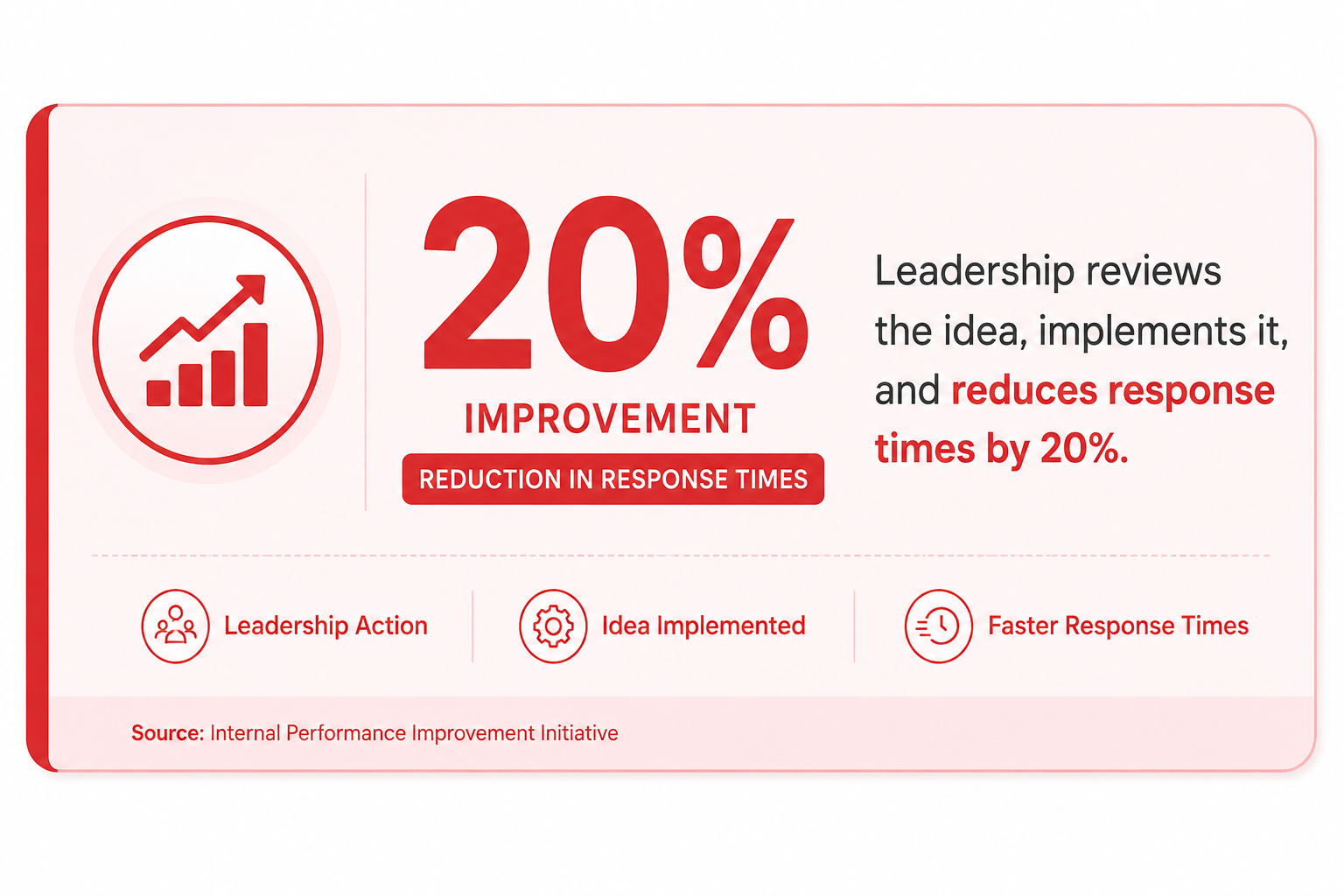
Leadership reviews the idea, implements it, and reduces response times by 20%.
2. Builds Trust Between Leadership and Teams
Trust grows when employees see leaders actively listening and responding to feedback.
Effective employee listening strategies create transparency and demonstrate that leadership is committed to continuous improvement.
Employees repeatedly mention communication challenges during weekly discussions.
Leadership acknowledges the feedback, introduces new communication guidelines, and shares regular progress updates.
Benefits:
- Greater trust in leadership decisions.
- Improved transparency across the organization.
- Stronger workplace relationships.
- Increased employee confidence and morale.
- Better alignment between leadership and employees.
3. Encourages Collaboration Across Departments
Many organizations struggle with departmental silos that limit communication and knowledge sharing.
Workplace collaboration and innovation thrive when employees from different teams can openly exchange ideas and perspectives.
The marketing and customer support teams collaborate through a digital workplace community to identify recurring customer questions. Together, they create new resources that improve customer satisfaction and reduce support requests.
Benefits:
- Better cross-functional collaboration.
- Increased knowledge sharing.
- Faster problem-solving.
- Improved communication between departments.
- More innovative solutions through diverse perspectives.
4. Increases Recognition and Participation
When employees are encouraged to contribute and their input is publicly acknowledged, participation naturally increases. Recognition reinforces positive behaviors and motivates others to get involved.
An employee proposes a workflow improvement in a company innovation forum. The suggestion is implemented, and the employee receives recognition during a company-wide announcement.
Benefits:
- Higher participation in feedback initiatives.
- Stronger peer-to-peer engagement.
- Improved employee motivation.
- Greater sense of belonging.
- Increased contributions to workplace improvement efforts.
5. Helps Employees See Their Impact
One of the most powerful aspects of continuous employee feedback is showing employees how their suggestions lead to meaningful change. This creates a feedback-to-action loop that encourages ongoing participation.
Employees request a centralized knowledge base to reduce time spent searching for information.
The organization launches a knowledge management platform and later shares metrics showing improved productivity and faster onboarding.
Benefits:
- Employees see tangible results from their feedback.
- Increased trust in the feedback process.
- Greater engagement in future initiatives.
- Stronger connection to organizational success.
- Improved organizational performance and performance indices.
Organizations that invest in real-time employee feedback systems, employee engagement strategies, and employee-driven innovation create workplaces where people feel heard, valued, and empowered to contribute.
Over time, these conversations become a powerful source of innovation, collaboration, and continuous improvement that benefits employees and the organization alike.
Common Challenges Organizations Face When Managing Conversational Feedback
While the benefits of conversational feedback in the workplace are clear, many organizations struggle to turn employee conversations into meaningful action.
Without the right processes, technology, and culture, valuable employee insights can easily be overlooked, resulting in missed opportunities for innovation, employee engagement, and organizational improvement.
Understanding these common challenges is the first step toward building a successful employee listening strategy and creating a workplace where feedback drives measurable outcomes.
Feedback Is Collected but Never Acted Upon
One of the most common frustrations employees experience is providing feedback that seemingly disappears into a black hole.
Organizations often collect information through employee feedback tools, employee engagement surveys, pulse surveys, suggestion boxes, discussion forums, and team meetings, but fail to communicate what happens next.
When employees don't see action being taken, participation quickly declines. Over time, this can damage trust, reduce engagement, and discourage future contributions.
A company launches a quarterly employee survey and receives hundreds of suggestions about improving internal communication. Months pass without updates, causing employees to believe their feedback is being ignored.
Potential Impact:
- Lower employee engagement.
- Reduced trust in leadership.
- Survey fatigue.
- Declining participation rates.
- Fewer innovation ideas from employees.
- Poor employee experience.
Organizations that successfully implement continuous employee feedback create closed-loop feedback processes where employees can see how their suggestions influence decisions and workplace improvements.
Too Many Disconnected Communication Channels
Today's workplaces often use multiple communication tools including email, chat platforms, project management systems, intranet software, collaboration tools, employee apps, video meetings, and social platforms.
While each serves a purpose, the result is often fragmented communication.
When conversations are scattered across different platforms, organizations struggle to capture meaningful insights and identify emerging trends.
An employee raises a process improvement idea in a chat channel, another discusses the same issue during a video meeting, while a third submits feedback through a survey. Because these conversations occur in separate systems, leadership never connects the dots.
Challenges Include:
- Information silos.
- Poor knowledge sharing.
- Duplicate discussions.
- Missed innovation opportunities.
- Reduced workplace collaboration.
- Fragmented employee communication.
This is why many organizations are investing in digital workplace platforms, employee communication platforms, and social intranet software that centralize conversations and improve visibility across the organization.
Valuable Insights Get Lost in Email and Meetings
Many important ideas never make it beyond a meeting room or email thread. Employees frequently share suggestions, concerns, and customer insights during discussions, but without a structured approach to capturing feedback, these valuable contributions are forgotten.
This creates a significant barrier to innovation management through employee feedback because organizations miss opportunities to learn from frontline employees and subject matter experts.
During a weekly operations meeting, a team member suggests automating a manual reporting process that consumes several hours each week. The idea is discussed briefly but never documented, reviewed, or implemented.
Consequences Include:
- Lost employee knowledge.
- Missed productivity improvements.
- Slower decision-making.
- Reduced innovation.
- Inefficient business processes.
- Poor organizational learning.
Organizations that prioritize knowledge management, workplace collaboration, and employee idea management create systems that capture and preserve valuable insights before they disappear.
Lack of Visibility Into Employee Sentiment
Many leaders rely on periodic surveys to understand employee morale and workplace satisfaction. However, employee sentiment can change rapidly due to organizational changes, workload pressures, leadership decisions, or external factors.
Without access to real-time employee feedback systems, leaders may not identify issues until they have already affected engagement, productivity, or retention.
A company undergoes a major organizational restructuring. Employees begin expressing concerns through informal conversations and workplace communities, but leadership remains unaware because no mechanism exists to monitor employee sentiment between annual surveys.
Common Risks Include:
- Increased employee turnover.
- Lower employee morale.
- Reduced productivity.
- Poor change management outcomes.
- Declining workplace culture.
- Missed warning signs of disengagement.
Modern organizations increasingly use employee sentiment analysis, employee engagement analytics, workforce analytics, employee listening platforms, and AI-powered employee feedback tools to gain deeper visibility into workforce sentiment and identify trends before they become larger problems.
The biggest challenge is not collecting feedback—it's turning feedback into action.
Organizations that successfully leverage conversational feedback, employee voice programs, employee engagement strategies, internal communication tools, employee listening platforms, and workplace collaboration software are better positioned to improve employee experience, increase engagement, strengthen workplace culture, and drive continuous innovation.
By centralizing conversations, capturing employee insights, measuring employee sentiment, and closing the feedback loop, organizations can transform everyday discussions into one of their most valuable sources of business intelligence and innovation.
Best Practices for Capturing Conversational Feedback
Successfully implementing conversational feedback in the workplace requires more than simply encouraging employees to share their opinions.
Organizations must create an environment where feedback is easy to provide, actively encouraged, and consistently acted upon.
The most effective employee listening strategies combine the right culture, processes, and technology to ensure valuable employee insights are captured and transformed into meaningful improvements.
Create Dedicated Spaces for Discussion
Employees are more likely to participate in conversations when they have clear and accessible channels for sharing their thoughts.
Organizations should establish dedicated spaces where discussions can take place naturally, whether through workplace communities, digital workplace platforms, employee forums, team collaboration hubs, or social intranet software.
When employees know where to contribute ideas, ask questions, and discuss challenges, organizations gain a continuous stream of feedback that can support employee engagement, workplace collaboration, and innovation management.
Dedicated discussion spaces also help reduce information silos by bringing conversations into a centralized location where they can be reviewed, analyzed, and acted upon.
Encourage Two-Way Communication
Many organizations make the mistake of treating feedback as a one-way process where employees provide input and leadership quietly reviews it behind the scenes.
Effective employee communication strategies require genuine dialogue. Employees should have opportunities to ask questions, challenge ideas, provide additional context, and participate in discussions about organizational decisions.
Two-way communication helps create trust and transparency while strengthening employee voice across the organization.
When leaders actively participate in conversations and respond to employee concerns, employees feel heard and become more engaged in workplace initiatives.
This approach also supports better decision-making because leaders gain a deeper understanding of employee experiences and perspectives.
Recognize and Reward Contributions
mployees are more likely to participate in ongoing feedback programs when they see that their contributions are valued. Recognition plays a critical role in encouraging engagement and fostering a culture of continuous improvement.
Organizations should acknowledge employees who share valuable insights, propose innovative ideas, or contribute to meaningful discussions.
Recognition does not always need to be financial.
Public acknowledgment, employee recognition programs, peer-to-peer recognition, achievement badges, and leadership appreciation can all encourage greater participation.
When employees see that ideas are welcomed and rewarded, they become more willing to contribute to employee-driven innovation, knowledge sharing, and workplace improvement initiatives.
Use Analytics to Identify Trends
As organizations collect larger volumes of feedback, manually reviewing every conversation becomes increasingly difficult. This is where employee engagement analytics, employee sentiment analysis, and workforce analytics become essential.
By analyzing patterns within conversations, organizations can identify recurring themes, emerging challenges, and opportunities for improvement.
Analytics help leaders move beyond individual comments and focus on broader organizational trends. For example, repeated discussions about workload concerns may highlight potential burnout risks, while recurring suggestions about customer service processes could reveal opportunities for innovation.
Modern employee listening platforms and AI-powered employee feedback tools can help organizations uncover valuable insights that might otherwise go unnoticed.
Enter your custom HTML codes in this section ...
Close the Feedback Loop
Perhaps the most important best practice is ensuring that employees understand how their feedback is being used. Too often, organizations collect suggestions and ideas without communicating what actions were taken.
This creates frustration and can reduce participation over time.
Closing the feedback loop means sharing updates, communicating decisions, and demonstrating how employee feedback has influenced change. When employees see their ideas leading to new initiatives, process improvements, policy changes, or workplace enhancements, they become more invested in future conversations.
This strengthens trust, improves employee experience, increases engagement, and reinforces a culture where continuous feedback drives continuous improvement.
Organizations that follow these best practices are better positioned to capture valuable employee insights, strengthen workplace communication, improve employee engagement, and create a sustainable culture of innovation where every conversation has the potential to create meaningful change.
How Digital Workplace Platforms Support Conversational Feedback
As organizations embrace more flexible and connected ways of working, the role of the digital workplace has evolved far beyond simply sharing company news or storing documents.
Modern employee experience platforms and workplace collaboration software have become essential tools for capturing employee insights, facilitating ongoing dialogue, and supporting a culture of continuous feedback.
Rather than relying solely on annual surveys or occasional feedback sessions, organizations can use digital workplace technology to create an environment where conversations happen naturally every day.
This enables leaders to better understand employee needs, identify emerging trends, and make data-driven decisions that improve both workforce engagement and organizational performance.
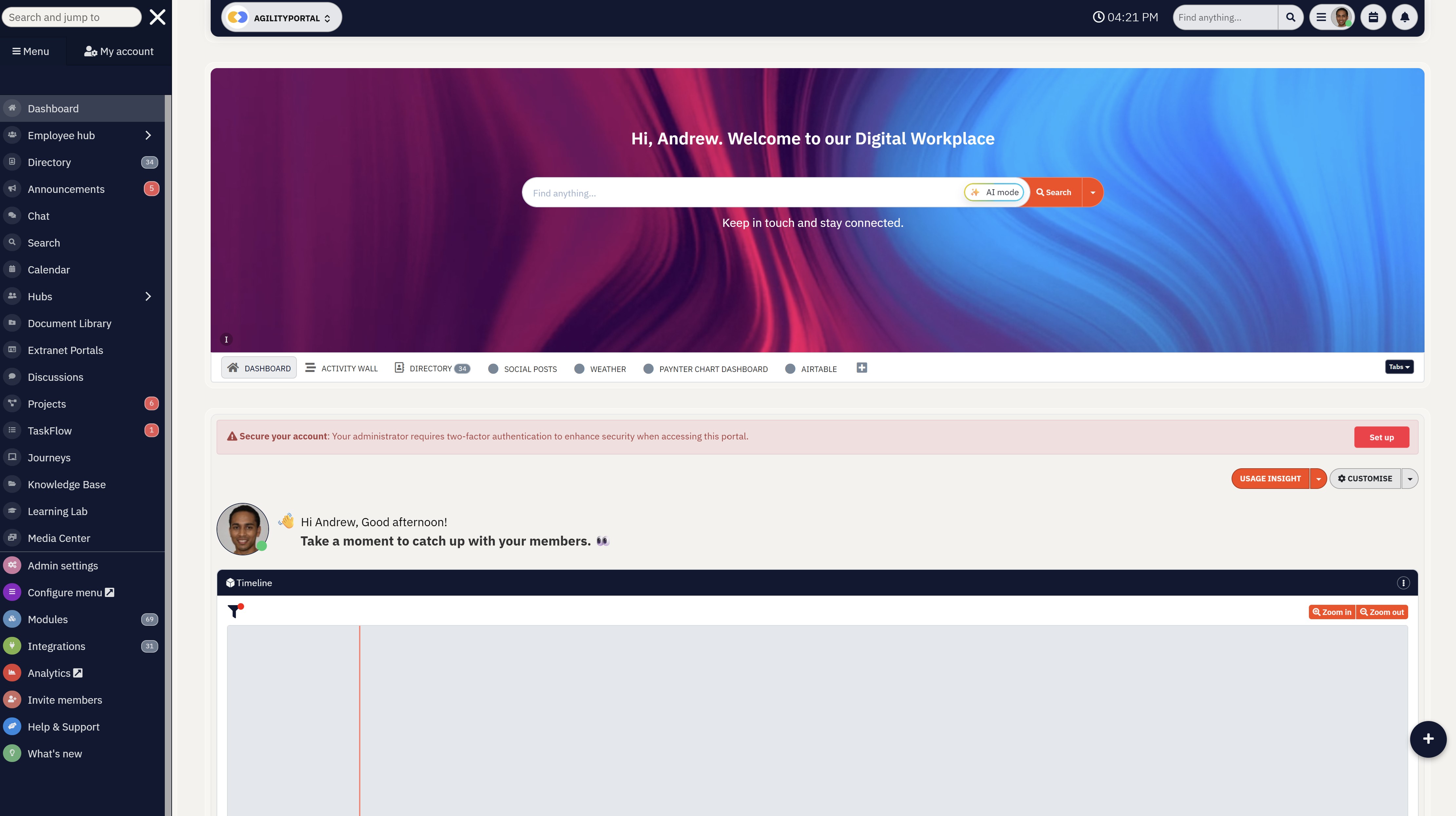
How Digital Workplace Platforms Support Conversational Feedback
Bringing Conversations, Ideas, and Engagement Together
One of the biggest advantages of a modern employee communication platform is its ability to centralize conversations from across the organization. Instead of feedback being scattered across emails, meetings, spreadsheets, and disconnected tools, employees can participate in discussions through communities, collaboration spaces, social feeds, and dedicated feedback channels.
These platforms help create stronger internal communications by providing employees with opportunities to share ideas, ask questions, contribute suggestions, and participate in workplace discussions. This continuous exchange of information helps organizations build stronger connections between teams while encouraging greater participation and collaboration.
Many organizations also use built-in recognition tools to strengthen workplace culture. Employee recognition programs allow managers and peers to acknowledge achievements, celebrate milestones, and reinforce positive behaviors. Recognition not only boosts morale but also encourages employees to become more engaged contributors within the organization.
In addition, modern platforms often include pulse surveys, quick polls, employee sentiment tools, and workforce feedback mechanisms that provide leaders with ongoing visibility into employee opinions. Unlike traditional surveys that may only occur once or twice a year, these tools support continuous listening and help organizations respond to issues more quickly.
Knowledge sharing is another critical component of successful conversational feedback. Employees frequently possess valuable expertise that can help solve problems, improve processes, and drive innovation. Through knowledge bases, discussion forums, employee communities, and collaborative workspaces, organizations can capture and distribute this information more effectively across the business.
Many organizations are also leveraging employee engagement analytics, workforce intelligence, and people analytics to identify patterns within conversations. These insights help leaders understand engagement levels, monitor organizational health, track participation, and measure the impact of workplace initiatives.
Why Organizations Are Moving Beyond Standalone Survey Tools
Traditional survey tools still serve an important purpose, but they often provide only a limited view of the employee experience.
By the time survey results are collected and analyzed, employee sentiment may have already shifted. In fast-moving workplaces, organizations need access to real-time insights rather than delayed snapshots.
This is why many businesses are moving toward integrated employee listening platforms, employee engagement software, and digital workplace solutions that combine communication, collaboration, feedback collection, knowledge management, recognition, and analytics in a single environment.
Rather than asking employees for feedback once every few months, organizations can continuously monitor conversations, identify workplace challenges, gather innovation ideas, and understand employee sentiment as it evolves.
This creates a more responsive workplace where leaders can take action quickly and employees feel their voices are genuinely being heard.
As a result, organizations gain deeper workforce insights, stronger employee engagement, improved internal communication, better collaboration, and more opportunities for employee-driven innovation.
By bringing conversations, knowledge, recognition, and feedback together in one connected platform, organizations can transform everyday interactions into a powerful source of organizational intelligence and continuous improvement.
Employee Engagement & Conversational Feedback Platform
Turn Everyday Employee Conversations Into Innovation and Action
Collecting feedback is only the beginning. Organizations need a way to capture employee insights, encourage employee voice, support workplace communication, and transform feedback into measurable improvements. AgilityPortal helps organizations centralize conversations, employee listening, knowledge sharing, collaboration, recognition, and engagement analytics in one connected digital workplace platform.
A modern employee engagement platform designed to help organizations improve communication, employee listening, collaboration, employee recognition, knowledge management, innovation programs, and workplace culture across every location.
Measuring the Success of Conversational Feedback Programs
Measuring the Success of Conversational Feedback Programs
Implementing a conversational feedback strategy is only the first step.
To understand whether your efforts are actually improving employee engagement, workplace communication, and innovation outcomes, organizations need to measure the impact of their feedback initiatives over time.
The most successful organizations treat conversational feedback as a business process rather than a one-time activity.
By tracking the right metrics and performance indicators, leaders can identify what's working, uncover areas for improvement, and demonstrate the value of employee listening programs across the organization.
Employee Engagement Scores
One of the clearest indicators of success is an improvement in employee engagement levels.
When employees feel heard, valued, and included in workplace discussions, engagement naturally increases.
Organizations should regularly monitor employee engagement scores through pulse surveys, sentiment analysis, and workforce engagement assessments to understand whether conversational feedback is having a positive impact.
Higher engagement often leads to increased productivity, improved job satisfaction, stronger workplace relationships, and better employee performance.
Participation Rates
A successful conversational feedback program depends on active employee involvement.
Tracking participation rates helps organizations understand whether employees are contributing to discussions, sharing ideas, completing surveys, joining workplace communities, and engaging with collaboration tools.
Growing participation levels often indicate that employees trust the feedback process and believe their opinions matter. Low participation rates, on the other hand, may signal communication challenges, lack of awareness, or concerns about psychological safety.
Idea Submissions and Employee Contributions
One of the primary goals of conversational feedback is to encourage employee-driven innovation.
Organizations should measure the number of ideas, suggestions, recommendations, and improvement opportunities being submitted by employees across various channels.
This could include contributions made through innovation portals, workplace communities, discussion forums, knowledge-sharing platforms, social intranets, or employee suggestion programs.
An increase in idea generation often reflects a healthy culture of collaboration and continuous improvement.
Innovation Adoption Rates
Collecting ideas is important, but implementing them is what creates real business value. Organizations should track how many employee-generated ideas progress from suggestion to implementation.
Monitoring innovation adoption rates helps leaders understand whether feedback is being translated into meaningful action. This metric also demonstrates the effectiveness of innovation management processes and highlights how employee insights contribute to organizational growth, operational efficiency, and business transformation.
Employee Retention and Turnover Rates
Employees who feel listened to are generally more likely to remain with an organization.
Tracking employee retention rates alongside turnover metrics can provide valuable insight into the effectiveness of conversational feedback initiatives.
When organizations actively respond to employee concerns, improve communication, and involve employees in decision-making, they often experience higher retention, lower voluntary turnover, and stronger workforce stability.
These outcomes can significantly reduce recruitment costs while preserving institutional knowledge.
Internal Communication Effectiveness
Effective conversational feedback should lead to better communication throughout the organization.
Leaders should evaluate how information flows between departments, management teams, and employees to determine whether communication barriers are being removed.
Key indicators may include increased message engagement, higher readership of internal communications, improved collaboration between teams, faster response times, and stronger alignment around organizational goals.
Improved communication effectiveness often serves as a leading indicator of broader cultural and operational improvements.
Employee Sentiment and Workplace Culture
Modern organizations are increasingly using employee sentiment analysis and workplace culture metrics to understand how employees feel about their work environment. By monitoring trends in employee conversations, discussion forums, surveys, and collaboration platforms, leaders can gain valuable insight into morale, satisfaction, and overall employee experience.
Positive shifts in employee sentiment often indicate that feedback initiatives are building trust, improving transparency, and creating a stronger workplace culture.
The success of a conversational feedback program should not be measured by the amount of feedback collected but by the outcomes it creates. Organizations that track employee engagement, participation levels, innovation metrics, employee retention, communication effectiveness, workforce sentiment, and organizational performance indicators gain a clearer understanding of how feedback contributes to business success.
When measured correctly, conversational feedback becomes more than a communication tool—it becomes a strategic asset that drives employee engagement, strengthens workplace culture, improves decision-making, and fuels long-term innovation.
Conclusion: Conversations Drive Innovation
The organizations that will thrive in the future are not necessarily the ones with the biggest budgets or the most advanced technology—they are the ones that listen.
In today's fast-moving workplace, relying solely on annual surveys is no longer enough.
Employees generate valuable insights every day through discussions, collaboration, feedback, questions, and shared experiences. Organizations that capture these conversations gain access to a continuous source of knowledge, innovation, and improvement.
Effective conversational feedback helps organizations move beyond traditional employee engagement surveys and embrace a more dynamic approach to employee listening.
By encouraging ongoing dialogue, businesses can better understand employee needs, identify operational challenges earlier, uncover new opportunities, and strengthen workplace culture.
Many of the best ideas for improving processes, enhancing customer experiences, increasing productivity, and driving innovation come from the people closest to the work.
Through employee-driven innovation, continuous feedback, and strong workplace communication, organizations can turn everyday conversations into meaningful action.
The key is creating an environment where employees feel comfortable sharing their ideas and confident that their voices will be heard. When organizations actively listen, respond transparently, and act on feedback, they build higher levels of trust, stronger collaboration, improved employee experience, and greater workforce engagement.
Ultimately, conversational feedback is more than a communication strategy. It is a powerful tool for strengthening employee engagement, improving internal communications, supporting knowledge sharing, driving innovation management, and creating a culture of continuous improvement.
Organizations that embrace ongoing employee conversations today will be better positioned to adapt, innovate, and succeed tomorrow.
AI Summary
- Conversational feedback helps organizations move beyond traditional surveys by capturing real-time employee insights through everyday discussions, workplace communities, collaboration platforms, and ongoing dialogue.
- Organizations that implement strong employee listening strategies gain a better understanding of workforce sentiment, employee needs, workplace challenges, and opportunities for continuous improvement.
- Unlike annual employee engagement surveys, conversational feedback provides continuous visibility into employee experiences, helping leaders make faster and more informed decisions.
- Employee-driven innovation often starts with workplace conversations, where employees identify process inefficiencies, customer pain points, communication gaps, and opportunities to improve organizational performance.
- Modern digital workplace platforms support conversational feedback by combining employee communication, collaboration, knowledge sharing, recognition, employee engagement analytics, and workforce feedback tools in a single environment.
- Organizations that actively listen, close the feedback loop, and act on employee suggestions typically experience stronger employee engagement, improved workplace culture, higher participation rates, and increased innovation outcomes.
Frequently Asked Questions
What is conversational feedback?
Conversational feedback is the process of gathering employee insights, opinions, suggestions, and concerns through ongoing workplace discussions rather than relying solely on formal surveys.
These conversations can take place through team meetings, collaboration platforms, workplace communities, social intranets, one-on-one discussions, employee forums, and digital workplace tools.
The goal is to create a continuous feedback culture where organizations can capture real-time employee perspectives and act on them quickly.
How does conversational feedback improve employee engagement?
Conversational feedback improves employee engagement by giving employees a voice in workplace decisions and creating opportunities for meaningful dialogue.
When employees feel heard and see their feedback leading to positive change, they become more engaged, motivated, and committed to organizational success.
Continuous employee feedback also strengthens trust, improves workplace communication, and helps employees feel connected to the organization's goals and culture.
Why is employee feedback important for innovation?
Employee feedback is often one of the most valuable sources of innovation within an organization.
Employees interact with customers, systems, processes, and colleagues every day, allowing them to identify challenges and opportunities before leadership becomes aware of them.
By encouraging employee-driven innovation and capturing frontline insights, organizations can improve products, streamline workflows, enhance customer experiences, and develop new ideas that support long-term growth.
What are examples of conversational feedback?
Examples of conversational feedback include team discussions, employee community conversations, workplace chat channels, manager check-ins, employee recognition posts, innovation forums, suggestion programs, project retrospectives, town hall discussions, and peer-to-peer feedback.
Any workplace interaction where employees share ideas, concerns, experiences, or recommendations can be considered a form of conversational feedback.
How can organizations collect employee feedback continuously?
Organizations can collect continuous employee feedback by creating multiple opportunities for employees to share their thoughts throughout the workday.
This may include workplace communities, employee communication platforms, pulse surveys, discussion forums, social intranet software, collaboration tools, knowledge-sharing spaces, feedback forms, and regular manager conversations.
The key is to make feedback easy, accessible, and part of everyday work rather than a periodic activity.
What tools help organizations capture conversational feedback?
Many organizations use employee engagement platforms, digital workplace software, employee listening platforms, social intranet solutions, workforce analytics tools, collaboration software, and internal communication platforms to capture conversational feedback.
These tools help centralize employee discussions, collect feedback from multiple channels, analyze workforce sentiment, and provide leaders with actionable insights that support better decision-making.
How do digital workplace platforms support employee listening?
Digital workplace platforms support employee listening by bringing communication, collaboration, feedback collection, employee recognition, knowledge management, and workforce analytics into a single environment.
Instead of relying on disconnected tools, organizations can monitor employee sentiment, identify engagement trends, capture innovation ideas, and encourage open communication across teams.
This creates a stronger feedback culture while helping leaders make more informed decisions based on real employee experiences and workplace data.
Most Popular Posts

Effective communication among team members is vital for the productivity and success of any organization. Surprisingly, 60% of companies lack a long-term internal communication strategy, which p...


Businesses thrive on communication for efficiency, productivity and accomplishment. When the right information is passed from the right designation in the organization, it promotes positivity an...

Categories
Blog
(3176)
Business Management
(393)
Employee Engagement
(234)
Digital Transformation
(214)
Growth
(149)
Intranets
(141)
Internal communications
(106)
Remote Work
(68)
Sales
(53)
Collaboration
(52)
Customer Experience
(32)
Culture
(30)
Knowledge Management
(29)
Project management
(29)
Leadership
(20)
Comparisons
(9)
News
(1)

Related Posts

Most workplace incidents do not start with one dramatic failure. They usually begin with something ordinary: a blocked walkway, rushed manual handling, a poorly set-up workstation, unclear procedures, or a safety concern that nobody reported. U...

Are you still relying on spreadsheets to manage your customer data? If so, you're not alone—but you might be holding your business back. A study by Forrester found that 68% of sales professionals waste time switching between tools to find customer in...

Cyber Essentials is often described as a technical certification, but it is really a practical test of whether a business has the basics under control. That matters because cyber incidents rarely stay inside the IT department. They can interrupt payr...

Outsourced IT support becomes worth considering when technology problems stop being minor inconveniences and begin affecting how the business operates. A slow laptop or one-off password reset is manageable. But recurring downtime, unresolved support ...

An intranet network example in business could be as simple as a central employee hub where people find company policies, announcements, forms, training, documents and team updates. In practice, managing it well takes more than putting files beh...


Jill Romford
I am a digital nomad, lover of exploring new places and making friends.
I love to travel and I love the internet. I take pictures of my travels and share them on the internet using Instagram.
Traveler, entrepreneur, and community builder. I share my insights on digital marketing and social media while inspiring you to live your fullest life.
Ready to learn more? 👍
One platform to optimize, manage and track all of your teams. Your new digital workplace is a click away. 🚀
Free for 14 days, no credit card required.