Insight Blog
Agility’s perspectives on transforming the employee's experience throughout remote transformation using connected enterprise tools.
1 hour and 6 minutes reading time
(13191 words)
Best AI Tools for Digital Marketing vs Best Search Engine Optimization Agency: Which Delivers Faster Growth?

Best AI Tools for Digital Marketing vs Best Search Engine Optimization Agency: Which Delivers Faster Growth?
Best AI Tools for Digital Marketing vs Best Search Engine Optimization Agency: Compare costs, capabilities and the fastest route to sustainable growth.
Best AI Tools for Digital Marketing vs Best Search Engine Optimization Agency: Which Delivers Faster Growth?

Should you invest in the best AI tools for digital marketing and build your search strategy in-house, or is hiring the best search engine optimization agency the faster route to real business growth?
It is a fair question.
AI can now help marketing teams research audiences, draft content, analyse performance, create campaign assets and automate repetitive work in a fraction of the time.
HubSpot reports that 80% of marketers use AI for content creation, while 75% use it for media production—so this is no longer a niche experiment.
80%
use AI for content creation
HubSpot reports that 80% of marketers use AI for content creation, while 75% use it for media production—showing that AI is now a mainstream part of marketing workflows.
Source:
HubSpot State of Marketing 2026
But faster output does not automatically mean more qualified traffic, stronger rankings or more revenue.
The hardest parts of SEO still require sound judgement: choosing the right opportunities, fixing technical issues, producing genuinely helpful content and building a brand people trust.
Google has made this clear: the same SEO fundamentals—helpful content, technical quality, clear structure and authority—still matter in AI-powered search.
In this guide, we will compare the best AI tools for digital marketing with the value a specialist SEO agency can bring, recommend seven options in each category, and help you decide whether an in-house, agency-led or hybrid approach is most likely to deliver sustainable growth.
Key Takeaways
- AI marketing tools can speed up research, drafting, reporting and campaign workflows, but they still need clear human direction.
- Search software can reveal opportunities and website issues, yet it cannot independently decide which work will create meaningful commercial growth.
- An experienced SEO agency adds strategy, technical diagnosis, editorial standards and accountable delivery alongside the tools it uses.
- Small businesses may benefit from a focused in-house tool stack, while complex or competitive websites often require specialist support.
- The strongest approach for many teams is hybrid: use AI for efficiency while relying on experienced people for judgement, quality control and measurement.
- Measure qualified leads, conversions, sales opportunities and revenue—not just rankings, impressions, content volume or visibility scores.
Why This Decision Has Become Harder in 2026

Why This Decision Has Become Harder in 2026
Choosing between the best AI tools for digital marketing and the best search engine optimization agency is no longer as straightforward as it once was.
There are now tools that can help you research keywords, write first drafts, generate ad variations, review website data and produce social content in minutes. For a busy business owner, that can make paying an agency feel unnecessary.
But this is where things can get confusing.
AI can make marketing work faster, but it cannot automatically tell you which opportunities will bring in qualified leads, which technical issues are holding your website back, or whether your content is actually persuading the right people to contact you.
That is why many businesses still compare popular marketing agencies with small business online marketing services before deciding what to do. The right choice depends on what you need help with.
If you already have a confident marketing team and a clear plan, the right AI tools can save a huge amount of time.
If your website is struggling to rank, your leads are inconsistent, or you do not have SEO expertise in-house, working with the best company for SEO may be the more sensible investment.
Local businesses have another layer to consider.
A best local SEO agency can help improve visibility in local search results, Google Business Profile listings, local landing pages, reviews and location-based searches—work that is difficult to manage properly with a few software subscriptions alone.
The practical answer is to start with the problem, not the newest platform or the biggest agency name.
In the next sections, we will look at where AI tools genuinely help, what a specialist SEO agency can do differently, and how to decide which option gives your business the strongest path to sustainable growth.
Related AI Marketing, SEO & Growth Guides
Choosing between AI marketing software and external search support is only one part of building sustainable online growth. These AgilityPortal guides explore AI-powered marketing, search strategy, AI discovery, SEO workflows, marketing automation and how growing businesses can make better digital investment decisions.
- What Is the Best AI Tool for Digital Marketing? Top Tools of 2026
- How to Use AI in Digital Marketing for Better ROI
- Best AI for SEO: Why Businesses Are Doing It Themselves
- How to Use AI for SEO and Improve Search Rankings
- The Rise of AI Search Engines: How Businesses Are Adapting
- 10 Best MCP Servers for SEO and AI-Powered Keyword Research
- Best SEO Agencies for Startups in Europe
- Growth Marketing Agencies Helping Small Businesses Build Demand
- The Rise of AI in Digital Marketing
Together, these guides build a useful resource hub around AI marketing, search visibility, SEO strategy, customer acquisition, agency selection and the practical systems that help businesses turn digital activity into growth.
What Are the Best AI Tools for Digital Marketing Actually Good At?
The best AI tools for digital marketing are not necessarily the ones with the biggest name or the longest feature list.
The right tool depends on the job you need it to do.
A small business may need help finding content opportunities and keeping social posts consistent.
A larger marketing team may need faster reporting, campaign testing and a clearer way to turn website interest into qualified leads.
AI can be very useful in both situations, but it works best as a capable assistant—not as the person making every strategic decision.
Honest assessment: for an in-house brand team that owns authority and demand, the all-round pick is SE Ranking, because it puts competitor research, backlink authority, rank tracking, and AI-answer visibility in one place a single team can run.
Runner-up: Ahrefs, when backlink research is the daily job. What not to lead with: HubSpot, strong for capturing demand, the wrong tool for earning it.
Research, Customer Insight and Keyword Discovery
AI can speed up the early research that often takes marketing teams hours. It can help group keyword lists by search intent, suggest content topics, summarise customer feedback, identify common questions and spot competitors that appear repeatedly in search results.
For example, instead of manually reviewing hundreds of keyword ideas, a team can use AI to separate them into groups such as informational searches, comparison searches and ready-to-buy searches. That gives the team a more useful starting point for planning content.
However, this is where human knowledge still matters.
A tool may show that a keyword receives plenty of searches, but it cannot always tell whether those searchers are the right customers, whether they are likely to buy, or whether the topic fits your product and sales process.
Someone who understands your customers, sales conversations and commercial goals needs to validate the opportunities before the team invests time creating content.
Content Production and Optimisation
This is where most businesses first see the appeal of AI.
It can help create content briefs, first drafts, outlines, meta descriptions, social captions, email variations and ideas for updating older pages. It can also make it easier to repurpose one useful piece of content into a newsletter, LinkedIn post, webinar outline or sales enablement resource.
Used properly, this can save a lot of time. A marketer no longer has to start every page from a blank screen.
But producing lots of generic pages quickly is not a dependable SEO strategy. Search engines and potential customers still need content that is accurate, useful, specific and clearly connected to real experience.
The strongest content usually includes product knowledge, customer questions, examples, credible sources and a point of view that a competitor cannot simply copy and paste.
AI can speed up the process, but people need to shape the argument, check the facts and make sure the final content is genuinely worth reading.
Paid Campaigns, Email and Workflow Automation
AI is also useful for the repetitive work that can slow down campaign delivery.
It can suggest ad variations, help tailor messages for different audiences, draft email sequences, summarise campaign results and identify possible tests for a landing page.
For a small business, this can mean creating several sensible ad or email starting points without needing to write each version from scratch. For a larger team, it can help organise campaign workflows, enrich CRM records and flag leads or customer groups that may need a different message.
The key word is "starting point." AI-generated variations still need someone to check that they are on-brand, legally safe, accurate and relevant to the audience.
A weak offer with better wording is still a weak offer. Good marketing teams use AI to test ideas faster, then let real performance data decide what stays.
Measurement and AI-Search Visibility
AI can also make reporting easier to understand.
It can summarise analytics data, flag unusual traffic changes, identify pages that have lost visibility and help teams spot patterns across campaigns. That is particularly useful when a marketing manager needs a quick view of what changed and where to investigate next.
Some platforms now track whether a brand appears in AI-generated search results and answers from tools such as ChatGPT, Google AI Overviews, Gemini or Perplexity.
This can be useful for monitoring brand presence and understanding how your company is being discussed.
However, AI-search visibility should not be treated as proof of revenue. A brand mention does not always lead to a website visit, a sales enquiry or a customer. Attribution is still developing, and no business should make major decisions based only on a visibility score from a software dashboard.
The better approach is to use those signals alongside the numbers that matter most: qualified traffic, conversions, demo requests, sales opportunities, customer acquisition cost and revenue.
Comparison: 7 Best AI-Enabled Digital Marketing Tools for In-House Teams
The best AI tools for digital marketing are rarely a single magic platform.
Most in-house teams need a connected stack: one source of search data, one source of conversion truth, tools for campaign execution, and a way to create useful assets without losing brand control.
The seven options below cover those jobs.
| Tool | The job it owns for an in-house team | What it does for authority or demand | Starting price* |
| SE Ranking | Search, competitor and AI-visibility monitoring | Helps teams evaluate organic competitors, backlink gaps and search visibility from one working hub | Check current plan |
| Google Analytics 4 | Demand and conversion evidence | Shows which pages, campaigns and journeys create meaningful user actions | Free |
| Ahrefs | Backlink, keyword and competitor-gap research | Reveals which competitors win links and visibility, helping teams prioritise stronger content opportunities | From $29/mo |
| HubSpot | Capturing and nurturing demand | Connects forms, contacts, email sequences and attribution so earned traffic can become pipeline | From $20/seat/mo |
| Sprout Social | Social publishing, listening and response | Helps teams publish consistently and identify brand mentions and conversations to act on | From $79/seat/mo annually |
| Semrush | Broad SEO, content research and AI-search visibility | Combines keyword, competitor, site-audit and AI visibility data for wider search monitoring | From $139/mo |
| Canva | On-brand creative and linkable assets | Helps turn internal expertise, research and datasets into visuals people can understand and share | Free; paid plans vary |
Disclaimer:
Tool features, pricing and plan limits can change.
This comparison is for general guidance only; always check each provider's current website before making a purchasing decision.
Tool features, pricing and plan limits can change.
This comparison is for general guidance only; always check each provider's current website before making a purchasing decision.
7 Best AI-Powered Digital Marketing Tools for In-House Teams for 2027
The right digital marketing tool stack can help an in-house team research competitors, measure customer activity, strengthen online visibility, manage social conversations and turn website interest into leads.
These seven platforms cover different parts of the job—from website intelligence and backlink research to customer follow-up and on-brand creative production.
None is a complete growth strategy on its own.
The best choice depends on the gap your team needs to close: finding demand, proving what converts, improving search performance, managing customer journeys or producing better campaign assets.
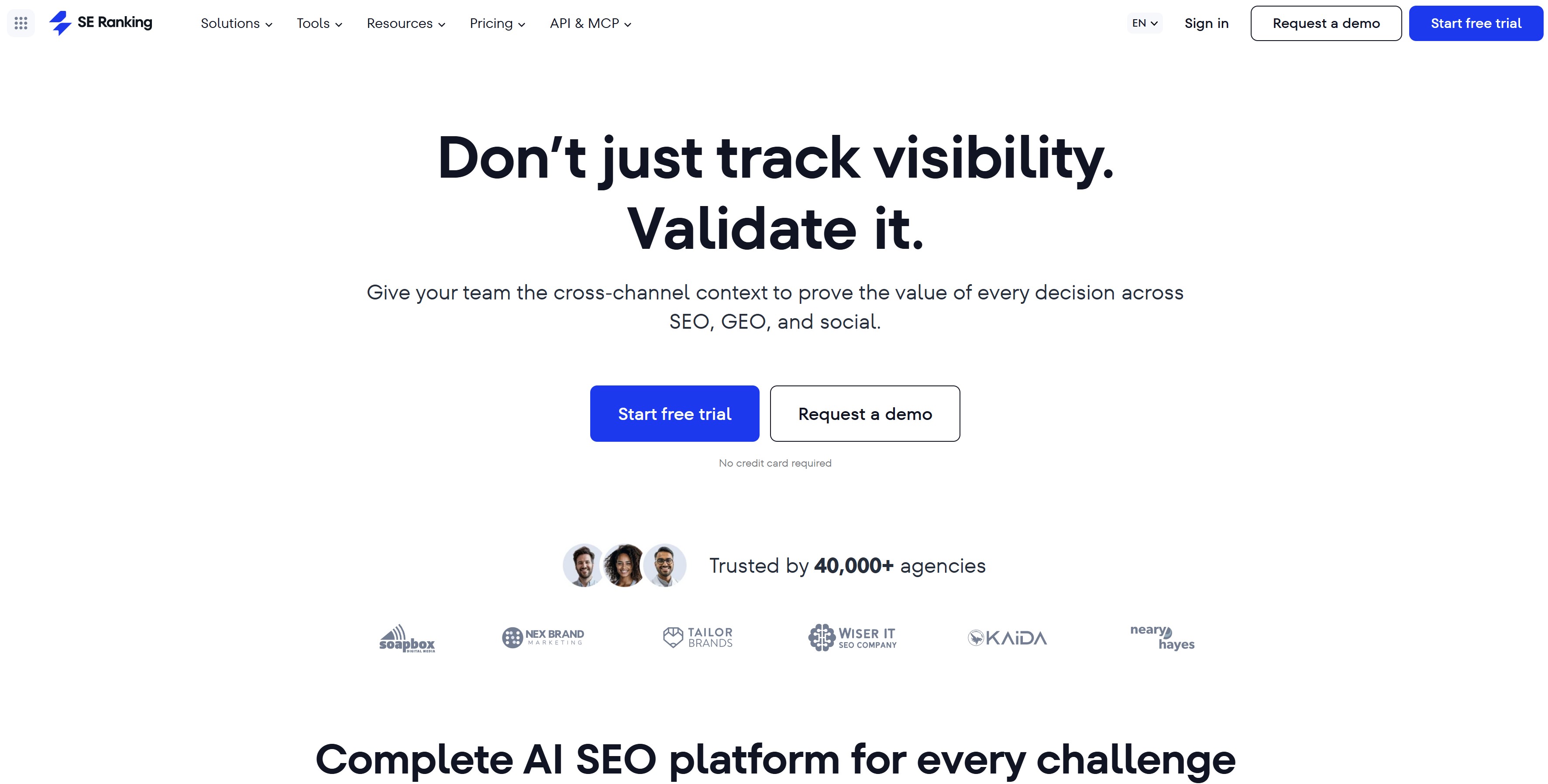
1. SE Ranking — Best for Search Intelligence, SERP Monitoring and Competitive Research
1. SE Ranking — Best for Search Intelligence, SERP Monitoring and Competitive Research
SE Ranking is a practical search marketing dashboard for in-house teams that need to track search performance, analyse competitors and manage backlink research without jumping between several separate platforms.
- Best for: Marketing teams that need one place for SERP monitoring, competitor benchmarking, keyword opportunity research, backlink auditing and executive reporting.
- Standout: SE Ranking lets you review a competitor's organic visibility, paid-search activity and AI-answer presence without first creating a project. Teams can pair that competitive intelligence with position tracking across Google, Bing and YouTube, plus backlink analysis using Domain Trust, Page Trust and toxicity indicators.
- Why it works for an in-house team: The platform is particularly useful when a business has no external search consultancy producing reports each month. It gives marketing leaders a clearer view of what competitors are doing, where rankings are changing and whether link-building or content efforts are improving online discoverability. Scheduled, branded reports also make it easier to share progress with leadership without manually rebuilding the same update every month.
Pros:
- Review a competitor's organic, paid-search and AI-answer visibility without setting up a separate project
- Track search positions across Google, Bing and YouTube alongside selected AI search engines
- Schedule branded reports for stakeholders without a per-report charge
- Assess potential backlinks using trust and toxicity signals before pursuing them
- Bring keyword research, website auditing, ranking data and competitor analysis into one workspace
Cons:
- Advanced functionality, such as deeper AI prompt monitoring and white-label reporting, may require paid add-ons
- It is designed for structured, ongoing search programmes rather than occasional use
- Some regional data sets may be less extensive than those offered by longer-established specialist platforms
Pricing: From $129 per month, with lower effective pricing available on annual billing. A 14-day trial is available without a card. Check the provider's current pricing page before publishing, as plans and features can change.
AgilityPortal's Marketing Team Honest assessment:
SE Ranking is a strong option for businesses that need search visibility reporting, competitor intelligence and backlink oversight in one system. It will not replace a clear marketing strategy or experienced decision-making, but it can give an internal team the data and reporting structure needed to run a more disciplined organic growth programme.
Our Verdict · #1
SE Ranking
Best for search intelligence in one in-house workspace
#1
Tool rank
Starting price
From $129/month; annual billing may reduce the effective monthly cost.
Best feature
Competitor, backlink, ranking and AI-answer visibility in one dashboard.
Pricing, product features and add-ons can change. Confirm details with the provider before purchasing.
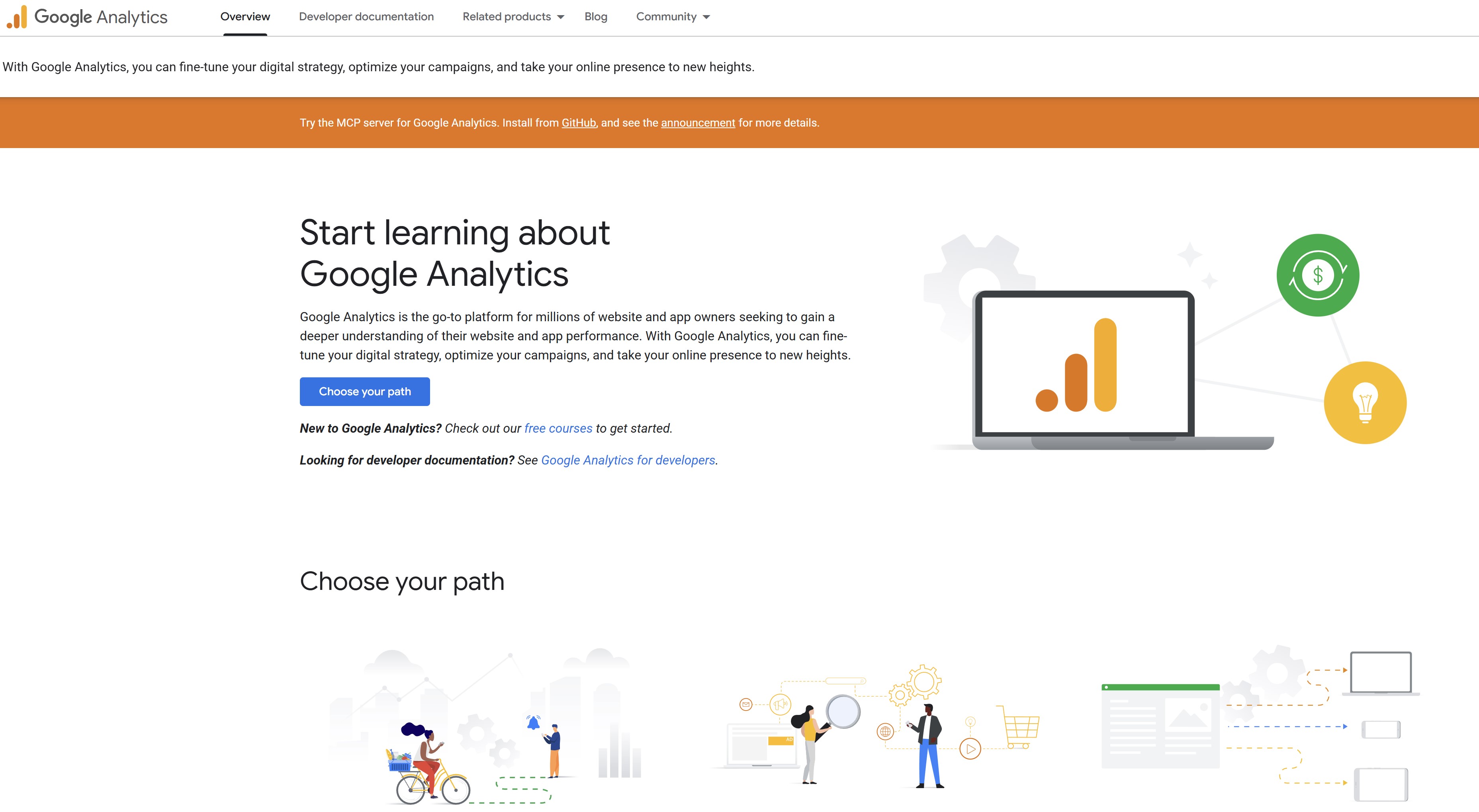
2. Google Analytics 4 — Best for Website Measurement and Conversion Insight
2. Google Analytics 4 — Best for Website Measurement and Conversion Insight
Google Analytics 4 is the free web analytics platform that shows what visitors do after they reach your website—and whether that attention becomes a meaningful business action.
- Best for: Teams that need to understand visitor journeys, lead actions, online sales and campaign performance before spending more on content or advertising.
- Standout: It tracks events rather than relying only on page views. That means you can measure actions such as form submissions, demo bookings, file downloads, video engagement and purchases.
- Why it works for an in-house team: Every growth decision should start with evidence. GA4 helps a small team identify which pages generate enquiries and which campaigns bring the wrong audience. For larger organisations, it creates a shared measurement layer across marketing channels, regions and customer journeys.
Pros:
- Free to use for standard website measurement
- Tracks important actions, not just visitor numbers
- Connects with Google Ads, Search Console and Looker Studio
- Helps identify high-performing landing pages and traffic sources
- Supports custom events and conversion reporting
Cons:
- Setup can be confusing without clear tracking goals
- Historical data is limited if events were not configured correctly from the start
- Reports can be misread when teams focus on traffic instead of commercial actions
Pricing: Free.
AgilityPortal's Marketing Team Honest assessment:GA4 is not a planning or content-creation platform. It is the evidence layer. If you do not know which pages, campaigns and channels create qualified interest, buying more marketing software will not solve the problem
Our Verdict · #2
Google Analytics 4
Best for understanding which activity creates real customer action
#2Tool rank
Starting price
Free for standard website measurement and conversion tracking.
Best feature
Event-based reporting for journeys, form submissions, bookings and purchases.
Correct configuration matters. Review your events and conversions before relying on reports for business decisions.
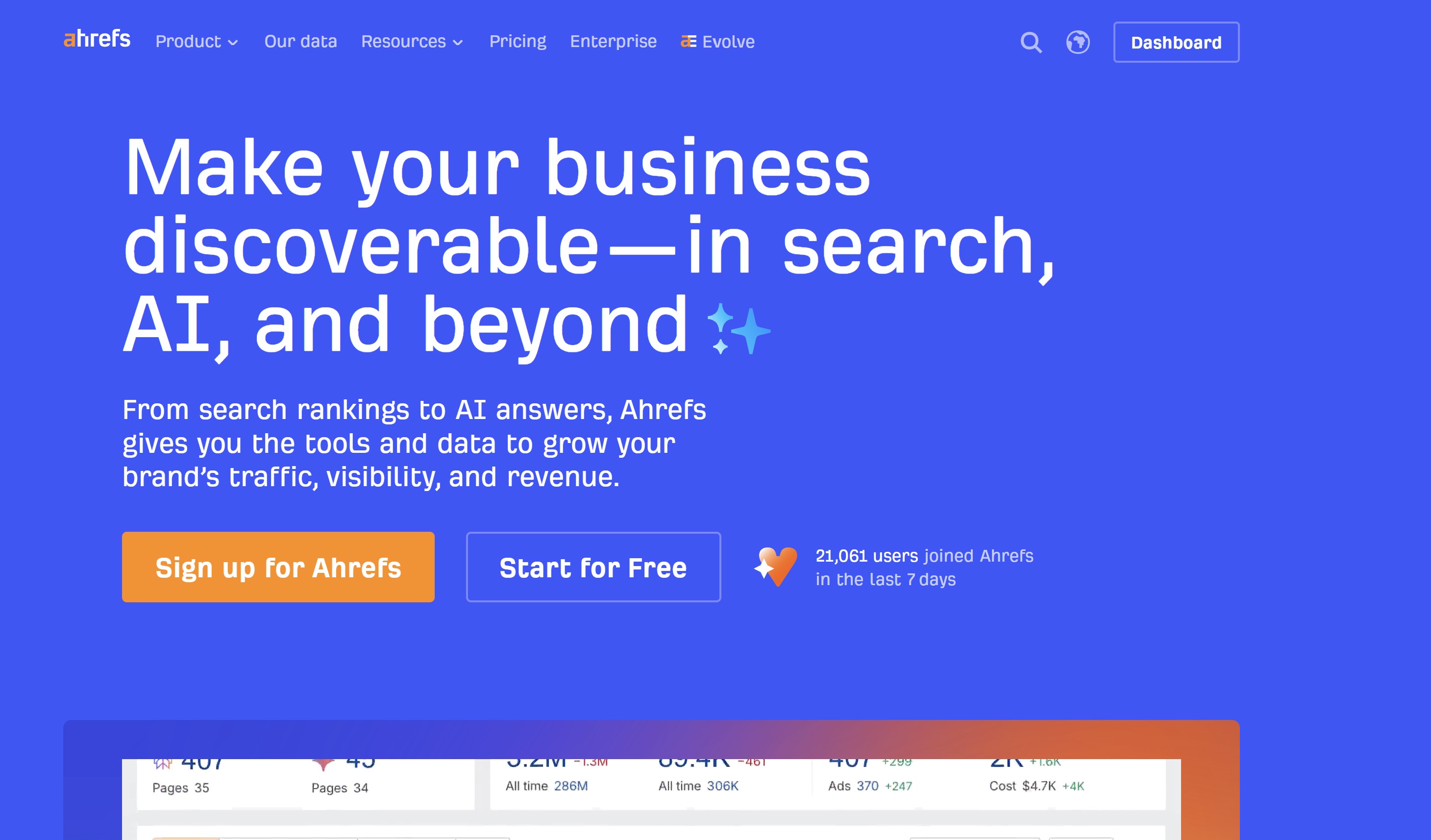
3. Ahrefs — Best for Link Intelligence and Search Opportunity Research
3. Ahrefs — Best for Link Intelligence and Search Opportunity Research
Ahrefs is a search research platform built for teams that want to understand who links to competitors, what people search for and where their own website has room to improve.
- Best for: Content-led businesses, in-house search teams and companies that need to investigate competitor authority before investing in new pages or outreach.
- Standout: Its Site Explorer and link index make it easier to see which websites mention competitors, which pages attract links and where your own site may be missing important topical coverage.
- Why it works for an in-house team: Instead of guessing why a competitor appears more often in search results, marketers can study the pages, referring domains and content themes behind that visibility. This makes it easier to build a realistic editorial plan rather than chasing random keywords.
Pros:
- Strong referring-domain and link-profile research
- Useful keyword discovery and content-gap analysis
- Site audit tools for identifying crawl and page-quality issues
- Brand Radar supports research into AI-search mentions on higher-tier plans
- Starter access provides an affordable entry point for smaller teams
Cons:
- Credits and usage limits need careful management
- Advanced AI brand-monitoring capability costs extra
- It provides research; it does not create a strategy or implement fixes for you
Pricing: From $29 per month for Starter; broader plans cost more.
AgilityPortal's Marketing Team Honest assessment:
Ahrefs is excellent for discovering why other sites win visibility and what content or authority opportunities may exist. It is most valuable when someone has the experience and time to turn the data into a focused plan
Our Verdict · #3
Ahrefs
Best for backlink intelligence and competitor authority research
#3Tool rank
Starting price
From $29/month for Starter access; usage and plan limits apply.
Best feature
Site Explorer reveals competitor link profiles, content winners and search opportunities.
Starter plans have credits and feature limits. Confirm the current package before committing.
4. HubSpot — Best for Lead Capture, Lifecycle Marketing and Revenue Attribution
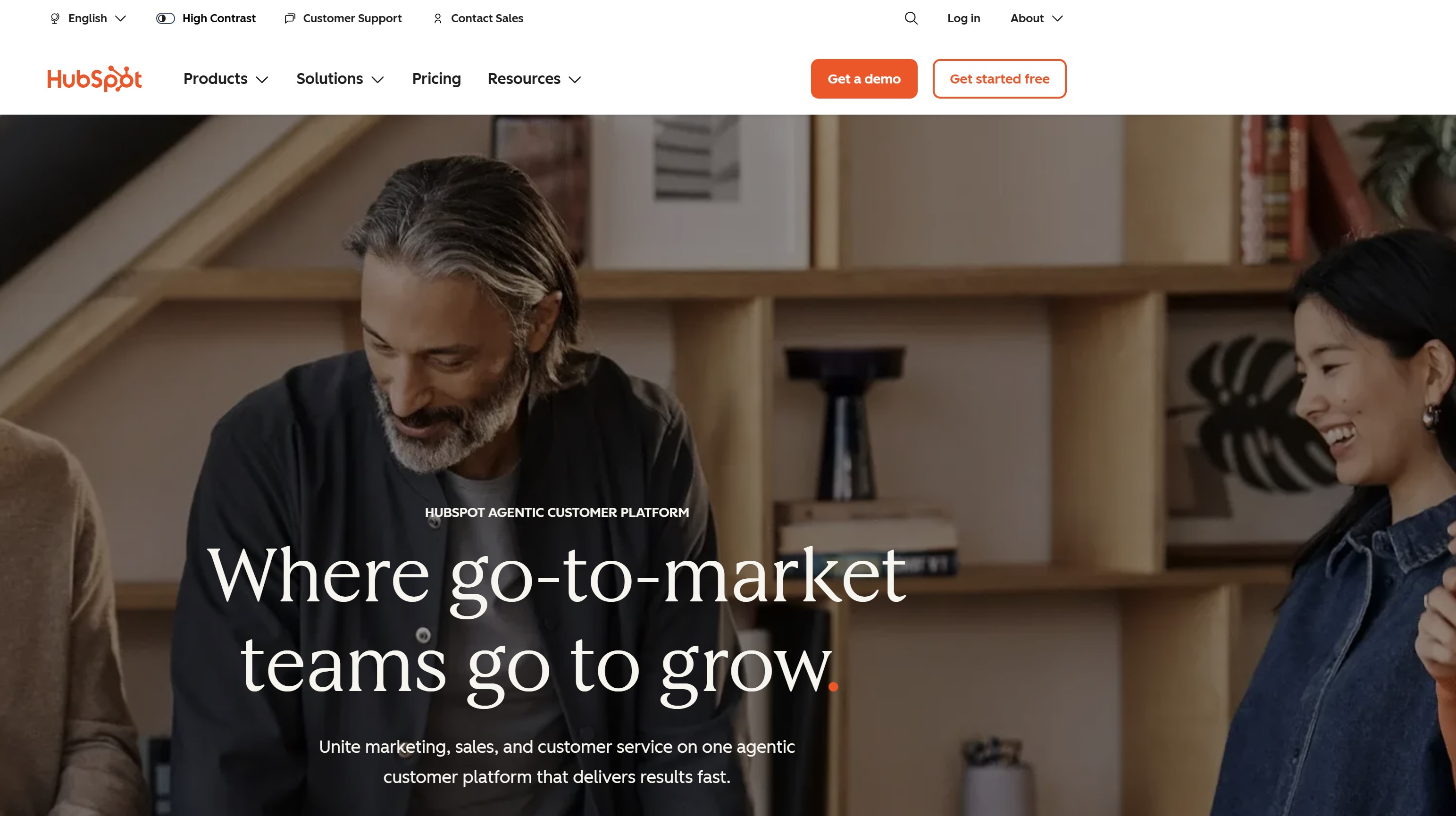
4. HubSpot — Best for Lead Capture, Lifecycle Marketing and Revenue Attribution
HubSpot is a customer platform that helps businesses turn website interest into identifiable contacts, follow-up activity and measurable pipeline.
- Best for: Businesses that generate leads online and need marketing, sales and customer data to work together rather than sit in disconnected systems.
- Standout: It combines forms, contact records, email automation, landing pages, CRM activity and attribution reporting, making it easier to see what happens after someone downloads a resource or requests a conversation.
- Why it works for an in-house team: Attracting visitors is only half the job. HubSpot helps marketers create follow-up journeys, score engagement and give sales teams more context about a prospect's interests before they speak to them.
Pros:
- Combines CRM records, forms, email and campaign management
- Supports automated lead follow-up and audience segmentation
- Helps connect marketing activity with sales opportunities
- Offers a low-cost starting tier and free tools
- Useful for building repeatable customer journeys
Cons:
- Costs can rise as contact volumes, users and advanced features increase
- Requires thoughtful setup to avoid poor-quality CRM data
- Does not replace a clear offer, sales process or content strategy
Pricing: From $20 per seat/month for Starter, with higher tiers for advanced marketing features.
AgilityPortal's Marketing Team Honest assessment:
HubSpot is a good choice when the main issue is not getting attention, but capturing, nurturing and proving the value of that attention. It is more than an email tool, but teams need a clear process to get value from it.
Our Verdict · #4
HubSpot
Best for turning website interest into managed customer follow-up
#4Tool rank
Starting price
From $20 per seat/month for Starter; broader automation needs higher tiers.
Best feature
Connects forms, contacts, email journeys and sales activity in one customer platform.
Costs can increase with contacts, seats and advanced functionality. Review pricing for your expected scale.
5. Sprout Social — Best for Social Publishing, Audience Listening and Brand Response
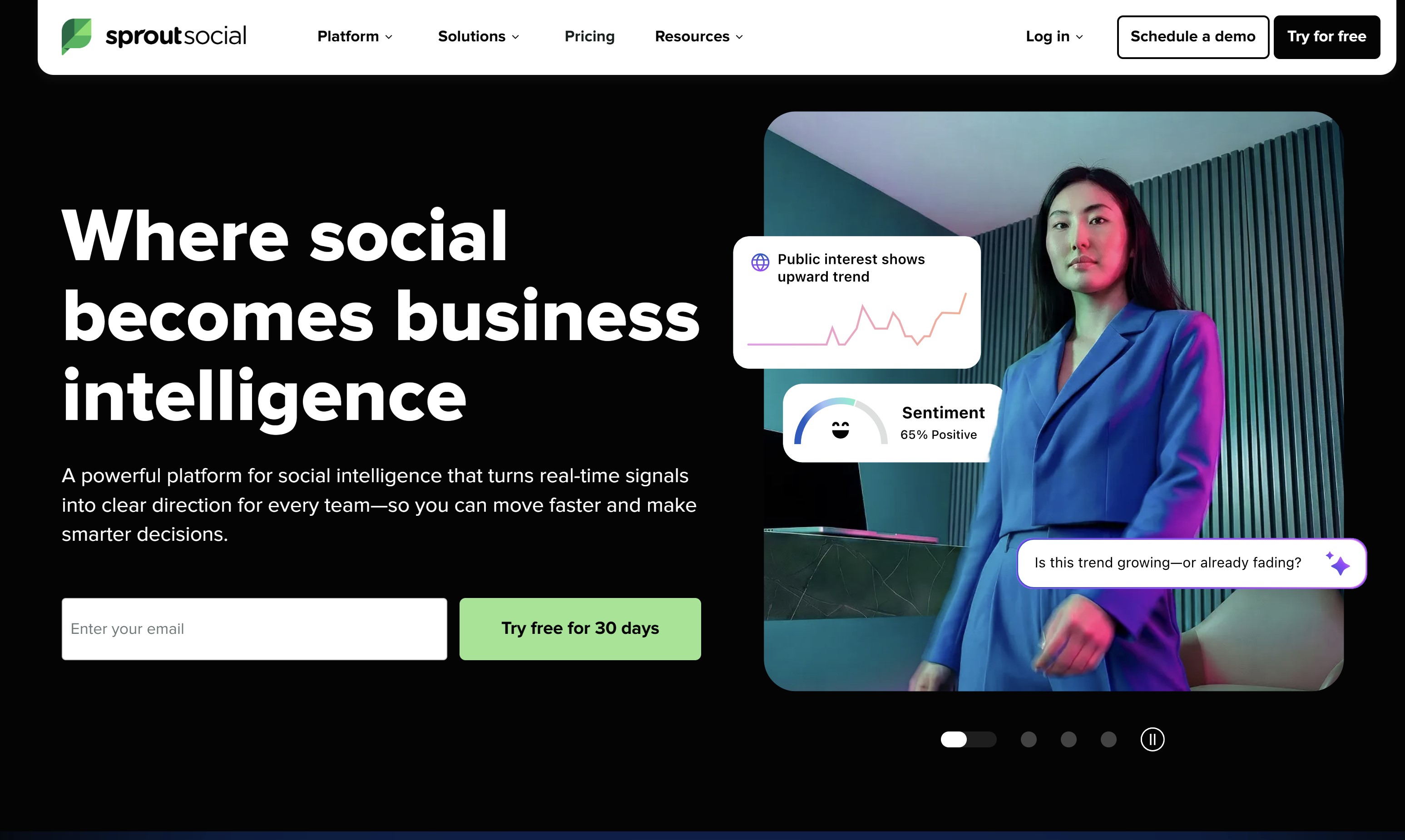
5. Sprout Social — Best for Social Publishing, Audience Listening and Brand Response
Sprout Social is a social media management platform for teams that need to plan publishing, monitor conversations and respond consistently across several networks.
- Best for: Brands with active social channels, multiple contributors or a need to manage customer conversations without losing oversight.
- Standout: It combines publishing workflows, reporting, social listening and shared inbox functionality, helping teams see where the brand is being discussed and respond without relying on individual account logins.
- Why it works for an in-house team: Social media can quickly become reactive. Sprout Social gives teams a central place to schedule content, monitor mentions, coordinate replies and review which posts actually create engagement or website visits.
Pros:
- Shared publishing calendar for organised content planning
- Consolidated inbox for messages and comments
- Brand-keyword and location monitoring on relevant plans
- Team permissions and approval workflows
- Reporting that makes channel performance easier to explain
Cons:
- Paid plans are expensive for very small teams
- Advanced listening features sit above the entry-level package
- More social activity does not automatically create demand or sales
Pricing: From $79 per seat/month when billed annually, or $99 monthly.
AgilityPortal's Marketing Team Honest assessment:
Sprout Social is best for organisations that treat social channels as an ongoing customer and brand touchpoint, not simply a place to schedule occasional posts. It brings operational control, but the quality of the content and response still matters most.
Our Verdict · #5
Sprout Social
Best for social publishing, audience listening and shared response
#5Tool rank
Starting price
From $79 per seat/month when billed annually, or $99 on monthly billing.
Best feature
Shared publishing and inbox workflows for teams managing multiple social channels.
Listening, monitoring and advanced collaboration features may require higher-tier plans.
6. Semrush — Best for All-Round Online Visibility Research
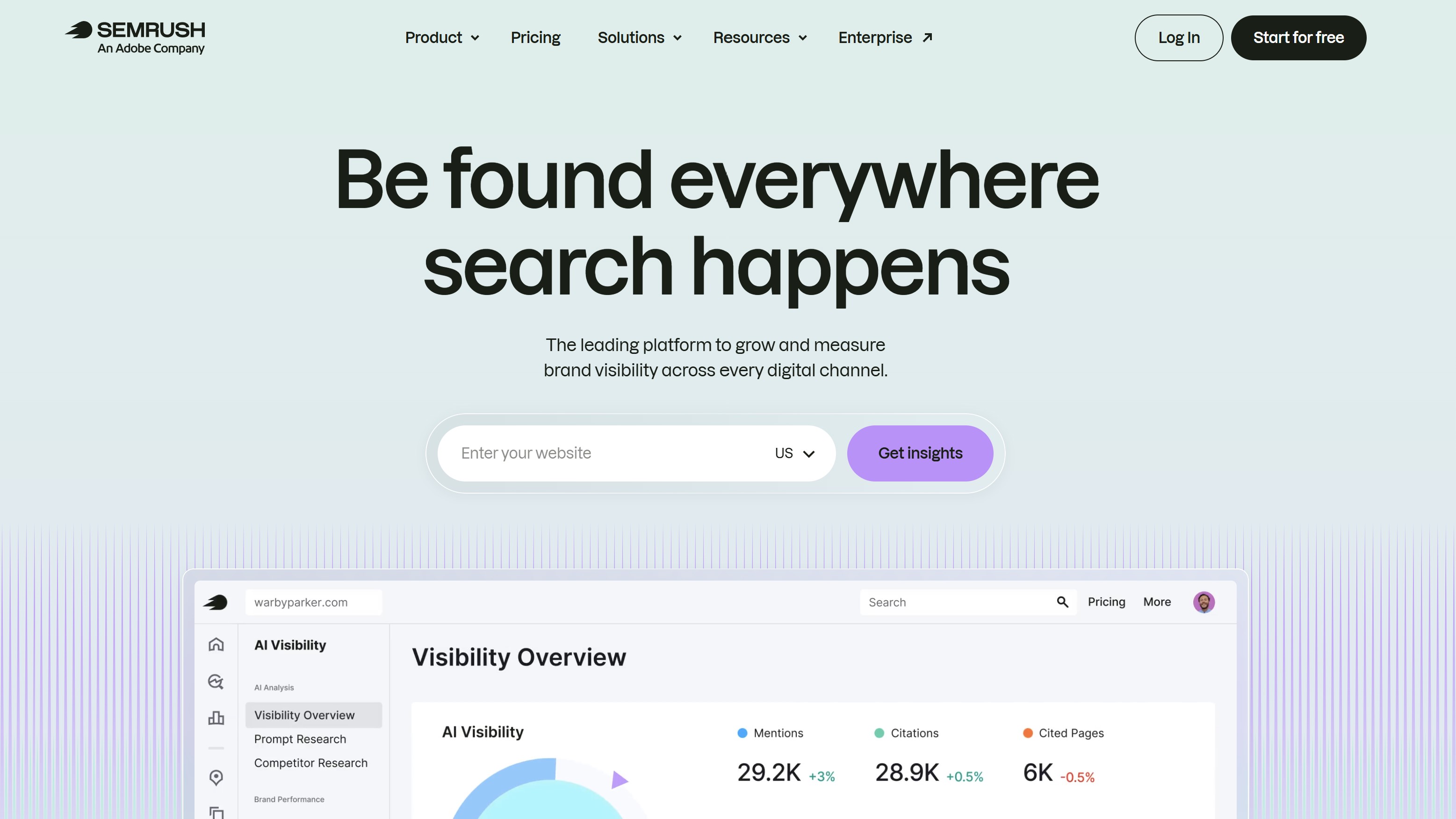
6. Semrush — Best for All-Round Online Visibility Research
Semrush is a broad online visibility platform covering keyword discovery, website auditing, competitor research, content planning, advertising intelligence and AI-search tracking.
- Best for: Marketing teams that want a wide set of research tools and are willing to learn a more complex platform.
- Standout: It brings traditional search research and emerging AI visibility measurement together, helping teams review keyword opportunities, technical website issues, competitor movement and brand presence across different discovery channels.
- Why it works for an in-house team: Semrush can be useful when a company wants to replace several narrow research subscriptions with one broader platform. It is particularly suited to teams managing organic growth, paid search and content planning together.
Pros:
- Wide range of keyword, competitor and site-audit features
- Position tracking and content-planning tools
- Paid-search and advertising research
- AI visibility and sentiment monitoring are available in selected packages
- Suitable for teams managing several websites or markets
Cons:
- The feature set can feel overwhelming at first
- AI visibility features may need a separate package or add-on
- A large amount of data can lead to poor prioritisation without an experienced owner
Pricing: Standard SEO plans start from $139 per month; combined SEO and AI-search plans cost more.
AgilityPortal's Marketing Team Honest assessment:
Semrush is one of the most comprehensive platforms in this list. It is powerful, but it rewards teams that have defined processes and know which performance questions they are trying to answer.
Our Verdict · #6
Semrush
Best for broad online visibility research across search and AI discovery
#6Tool rank
Starting price
SEO plans from $139/month; AI visibility functionality may need a separate package.
Best feature
Wide research suite covering keyword gaps, website audits, paid search and competitor movement.
Package names, pricing and AI-search features can change. Check the current plan comparison before buying.
7. Canva — Best for Visual Content, Campaign Assets and Brand Consistency
7. Canva — Best for Visual Content, Campaign Assets and Brand Consistency
Canva is an accessible design workspace that helps non-designers create on-brand social graphics, presentations, reports, videos and visual content without relying on a separate creative team for every asset.
- Best for: Small marketing teams, busy founders and distributed teams that need a simple way to produce consistent visual materials.
- Standout: Brand templates, shared folders and easy editing make it practical to turn research, customer stories, product information or campaign messages into content that is easier to understand and share.
- Why it works for an in-house team: Not every campaign needs a full design agency. Canva helps teams produce polished working assets quickly, especially when they need a social graphic, sales one-pager, presentation slide, data visual or downloadable guide.
Pros:
- Free version is useful for basic design work
- Easy-to-use templates for many formats
- Brand kits help keep colours, logos and fonts consistent
- Supports team collaboration and asset sharing
- Useful for turning complex information into clearer visual content
Cons:
- Templates can make brands look similar if used without care
- It does not replace a professional designer for major brand work
- Teams still need clear messaging and approved brand rules
Pricing: Free plan available; paid plans and team pricing vary.
AgilityPortal's Marketing Team Honest assessment:
Canva is a practical production tool, not a brand strategy. It is excellent for helping teams create consistent everyday assets, provided they work from a clear visual identity and avoid relying on generic templates alone.
Our Verdict · #7
Canva
Best for creating consistent campaign visuals without a design bottleneck
#7Tool rank
Starting price
Free plan available; paid individual and team plans vary by location and package.
Best feature
Brand templates and easy collaboration for everyday social, presentation and data-led assets.
Templates should support, not replace, a clear brand identity and appropriate creative review.
So, What Does a Best Search Engine Optimization Agency Bring That Software Cannot?
The best search engine optimization agency does far more than log into the same tools your team could subscribe to.
Software can show rankings, backlinks, traffic patterns and technical warnings.
What it cannot reliably do is decide which issue matters most, connect search activity to your sales goals, or take responsibility for turning recommendations into measurable progress.
That is where experienced small business online marketing services can make a real difference.
Rather than giving you another dashboard to review, a good agency should help you understand what is stopping your website from attracting the right people—and what to fix first.
Search Strategy Connected to Commercial Goals
A strong SEO strategy starts with the customers you actually want, not simply the keywords with the highest search volume.
For example, a keyword might bring thousands of visitors each month, but if those visitors are students, job seekers or people looking for a free solution, it may do very little for your business. The best company for SEO will look at your ideal customer profile, sales process, service margins and target markets before building a plan.
That usually means identifying:
- High-intent searches from people actively comparing providers or looking for a solution
- Important service, product and location pages that need improving
- Gaps between the questions customers ask and the information on your website
- Content opportunities that support sales conversations rather than create traffic for its own sake
- Conversion paths that turn visitors into calls, enquiries, demos or purchases
- Realistic KPIs, such as qualified leads, conversion rate, visibility for commercial terms and revenue influence
This is one of the biggest differences between using the best AI tools for digital marketing and working with an experienced agency. The tools can help gather information, but someone still needs to decide what deserves investment and why.
Technical SEO and Website Problem-Solving
Many websites do not struggle because they lack blog posts.
They struggle because search engines and users have trouble finding, understanding or using the pages already there.
A specialist agency can investigate issues such as crawlability, indexing, broken internal links, duplicate pages, slow loading times, poor site structure, incorrect redirects and weak schema markup.
They should also know how to handle higher-risk work, including website migrations, international SEO, multi-location websites and CMS limitations.
For a local business, this work may sit alongside Google Business Profile optimisation, review strategy, local landing pages and location-specific content.
That is why a best local SEO agency should understand more than traditional keyword rankings. It needs to know how customers discover nearby services and what signals help a business appear credible in local results.
The point is not to make every technical issue sound urgent. It is to identify the issues that are actually holding back performance, prioritise them properly and make sure somebody follows through.
Editorial Experience and Authority
AI can draft an article quickly.
It cannot interview your customers, explain why your service is different, validate a technical claim with an expert or create a genuinely useful perspective from experience.
The most effective SEO agencies combine search data with editorial judgement.
They help turn internal expertise into content that answers real customer questions, supports trust and gives people a reason to choose your business over a competitor.
That can include:
- Interviewing product, sales or operational experts
- Reviewing facts, sources and claims before publication
- Creating comparison pages, guides and resources with a clear point of view
- Improving thin or repetitive content rather than publishing more of it
- Building digital PR campaigns and useful data assets that can earn relevant links
- Strengthening trust signals, such as author expertise, case studies, references and clear company information
This is why popular marketing agencies should not be judged only by how many articles or backlinks they promise.
Ask how they will make your website more useful, credible and difficult to copy.
Clear Ownership When Performance Stalls
SEO is not always a straight line.
Rankings can change, competitors can improve, site updates can cause problems and search behaviour can move faster than expected. When that happens, you need more than a monthly report saying that visibility changed.
A good agency should investigate what happened, explain the likely cause in plain language and recommend the next sensible action.
Depending on the agreement, it should either implement the work directly or coordinate with your developers, writers and internal marketing team to make sure it gets done.
Before choosing an agency, ask:
- Who will be responsible for strategy and day-to-day delivery?
- What happens if rankings or leads fall?
- Will you explain the work in terms of business impact, not just technical metrics?
- What work is included in the monthly retainer, and what is charged separately?
- How will you report on qualified leads, conversions and revenue—not only traffic?
The right agency does not promise instant rankings or hide behind a dashboard. It gives you a clear plan, honest trade-offs and someone accountable for moving the work forward.
Comparison: 7 Search Engine Optimization Agencies Worth Shortlisting
Choosing the best search engine optimization agency should not be a popularity contest.
The right partner depends on your market, website complexity, internal marketing capacity, budget and whether you need technical SEO, content, digital PR, international search support or all of the above.
These agencies are credible starting points to research—not a universal ranking.
| Agency | Stronger fit for | Why it belongs on a shortlist | Ask before appointing |
| First Page Sage | B2B firms investing heavily in thought leadership | Known for content-led SEO and authority-building programmes | Who creates subject-matter expertise, and how is revenue impact measured? |
| Siege Media | Content marketing and digital PR | Strong fit for teams that need linkable assets, editorial campaigns and organic growth content | What links or placements are realistically achievable in our niche? |
| BrainZ Digital | B2B, SaaS, technology and international SEO | Offers technical SEO, AI SEO, content, PR and consultancy services | Which work is delivered in-house, and who owns implementation? |
| Impression | UK businesses needing integrated performance marketing | Suitable to evaluate where SEO needs to connect with paid media, analytics and broader growth work | How will organic work be separated from paid-media reporting and attribution? |
| Blue Array | UK businesses seeking specialist SEO focus | An SEO-led option to assess for strategy, technical delivery and content direction | What senior-level time is included in the retainer? |
| WebFX | Larger-scale SEO and full-service digital marketing needs | Broad service range and established operational scale | Which named specialists will work on the account, and what is their relevant sector experience? |
| NP Digital | International, enterprise and multi-market growth | Worth evaluating for companies needing broad international capabilities | How will the strategy be localised rather than reused across markets? |
Disclaimer:
These agencies are listed as reputable options to research, not as a definitive ranking or endorsement.
Services, pricing, availability and results vary, so assess each agency's relevant experience, scope of work and client references before appointing one.
These agencies are listed as reputable options to research, not as a definitive ranking or endorsement.
Services, pricing, availability and results vary, so assess each agency's relevant experience, scope of work and client references before appointing one.
7 Search Marketing Agencies for 2027
The right agency depends on the kind of growth problem you need to solve.
Some are built around B2B thought leadership, while others are stronger in technical search, digital PR, international expansion or full-funnel performance marketing.
These are credible agencies to research—not a universal ranking or a guarantee of results.
1. First Page Sage — Best for B2B Thought Leadership and Demand Generation
First Page Sage is a strong shortlist option for B2B and specialist businesses that want content-led growth tied to lead generation.
Its services combine SEO, GEO/AEO, strategic consulting, conversion optimisation and thought-leadership content.
- Best for: Businesses with complex products, longer buying cycles and a need to build trust before prospects are ready to buy.
- Consider carefully: Ask who will interview your experts, how content will support sales, and what commercial metrics will be reported.
Agency Shortlist · #1
First Page Sage
Best for B2B thought leadership and demand generation
#1Shortlist
Pricing
Custom quote; confirm contract length, scope and senior-team involvement.
Best feature
Combines thought-leadership content, search strategy and lead-generation focus.
Shortlist position is editorial, not a customer-review score.
2. Siege Media — Best for Digital PR, Content Assets and Earned Authority
Siege Media focuses on SEO consulting, content production, digital PR and AI-search visibility.
It is a sensible option for brands that need shareable content assets and relevant media coverage as part of their organic growth plan.
- Best for: SaaS, ecommerce and online brands that need content campaigns capable of attracting both visitors and relevant links.
- Consider carefully: Ask what types of assets it recommends for your sector, how it defines a quality link, and how it connects authority-building work to leads or sales.
Agency Shortlist · #2
Siege Media
Best for digital PR, linkable assets and organic content campaigns
#2Shortlist
Pricing
Custom quote; ask what editorial, design and outreach work is included.
Best feature
Content and digital PR campaigns designed to earn relevant coverage and links.
Shortlist position is editorial, not a customer-review score.
3. BrainZ Digital — Best for B2B SaaS, Technical Search and AI Discovery
BrainZ Digital positions itself as an AI-first search and content partner for B2B SaaS, technology brands and digital-first businesses.
Its work spans technical SEO, content strategy and generative search optimisation.
- Best for: Established B2B or ecommerce brands that want conventional search work and AI-search visibility considered together.
- Consider carefully: It may be a better fit for mature businesses with a meaningful growth budget than for a company looking for a low-cost, basic website package.
Agency Shortlist · #3
BrainZ Digital
Best for B2B SaaS, technical search and AI discovery
#3Shortlist
Pricing
Custom quote; scope can include project, consultancy or ongoing retainer work.
Best feature
Blends technical SEO, strategic content and AI-search visibility for digital-first brands.
Shortlist position is editorial, not a customer-review score.
4. Impression — Best for Integrated Performance Marketing
Impression is a UK-based performance marketing agency with SEO, paid media, digital PR, content and experimentation capabilities.
Its integrated approach can work well when organic growth needs to sit alongside paid activity and broader performance measurement.
- Best for: Mid-market and enterprise businesses that want search strategy connected to wider acquisition activity.
- Consider carefully: Confirm that the proposed team has deep experience in your exact market and that organic-search outcomes will not be buried within broad performance reporting.
Agency Shortlist · #4
Impression
Best for integrated performance marketing and experimentation
#4Shortlist
Pricing
Custom quote; confirm which specialist channels and reporting are included.
Best feature
Connects organic search with paid media, digital PR, content and broader performance work.
Shortlist position is editorial, not a customer-review score.
5. Blue Array — Best for UK Organic Search and Enterprise SEO Support
Blue Array is a UK specialist agency focused on SEO, digital PR and generative engine optimisation.
Its consultancy-agency model is geared towards businesses that need strategic input alongside implementation support.
- Best for: UK companies, established brands and enterprise teams that need specialist organic search advice, training or scalable delivery.
- Consider carefully: Ask for the balance between senior consultancy, hands-on implementation and internal-team training.
Agency Shortlist · #5
Blue Array
Best for UK organic search, consultancy and enterprise support
#5Shortlist
Pricing
Custom quote; establish the split between strategy, implementation and training.
Best feature
Specialist organic search support spanning SEO, digital PR and generative search.
Shortlist position is editorial, not a customer-review score.
6. WebFX — Best for Full-Service, Revenue-Focused Marketing Support
WebFX provides SEO alongside content, web design, conversion optimisation, paid media and broader digital marketing services.
It is worth considering for businesses that prefer one larger partner to coordinate several connected channels.
- Best for: Businesses that need SEO to work alongside website improvements, paid advertising and conversion-rate work.
- Consider carefully: Larger full-service agencies can have more process and resources, but you should still ask exactly who will manage the account and what work is included each month.
Agency Shortlist · #6
WebFX
Best for full-service, revenue-focused digital marketing support
#6Shortlist
Pricing
Proposal-based; clarify account ownership, deliverables and additional service costs.
Best feature
Broad delivery across SEO, website work, paid campaigns and conversion optimisation.
Shortlist position is editorial, not a customer-review score.
7. NP Digital — Best for International and Multi-Channel Growth Programmes
NP Digital is a global performance marketing agency offering SEO, paid media, content, analytics, social and creative services.
Its scale makes it a sensible agency to evaluate for businesses operating in several markets or needing support beyond organic search alone.
- Best for: Multi-market companies and growth teams that need a coordinated programme across search, paid channels, content and analytics.
- Consider carefully: Make sure the proposed strategy is tailored to your market and not simply a large-agency playbook applied across every client.
Agency Shortlist · #7
NP Digital
Best for international and multi-channel growth programmes
#7Shortlist
Pricing
Custom proposal; define country coverage, reporting requirements and channel scope.
Best feature
Global performance marketing capability across search, content, paid media and analytics.
Shortlist position is editorial, not a customer-review score.
AI Tools vs SEO Agency: A Practical Comparison
At this point, the choice between the best AI tools for digital marketing and the best search engine optimization agency should feel a little clearer. AI tools can help a capable in-house team move much faster.
An agency can bring the strategy, specialist knowledge and accountability that many businesses do not have internally.
Neither is automatically the right answer.
It comes down to the people, time and expertise you already have—and the size of the growth problem you need to solve.

AI Tools vs SEO Agency: A Practical Comparison
| Decision factor | AI marketing tools | SEO agency |
| Upfront cost | Usually a lower monthly subscription cost, although multiple tools can quickly add up | Higher monthly or project-based investment |
| Speed of output | Very fast for research, drafts, campaign variations, reporting and workflow tasks | Fast once the strategy, access and approval process are in place |
| Strategic direction | Depends on the experience of your internal team | Usually included as part of the service |
| Technical SEO | Limited unless someone in-house understands what to investigate and how to fix it | Specialist diagnosis, prioritisation and coordination of technical work |
| Quality assurance | Your team is responsible for checking accuracy, brand voice, compliance and usefulness | Shared responsibility, with the agency expected to provide expert review |
| Brand and subject expertise | Requires clear prompts, reliable source material and human review | Requires close collaboration so the agency can understand your business and customers |
| Best fit | Skilled in-house teams with time to manage tools and execute a clear plan | Businesses that need SEO expertise, hands-on delivery or a stronger growth strategy |
For many small businesses, small business online marketing services can feel like the safer choice because they provide support across the areas that are hardest to manage alone.
This is especially true when a business has limited marketing resources, an underperforming website or no one internally who owns SEO.
On the other hand, if you already have an experienced marketing lead, good product knowledge and a reliable content process, the right AI tools can help you get more done without immediately increasing agency costs.
They can make research quicker, reduce time spent on routine tasks and help your team test more ideas.
However, it is important not to expect either option to produce results on its own. The most popular marketing agencies cannot fix a weak product, unclear positioning or a website that makes it difficult for people to buy.
Equally, even the best AI platform cannot turn poor briefs, generic content and weak conversion pages into sustainable demand.
So a SEO agency may be a better fit if your business depends on local customers, calls, appointments or visits. In that case, local search strategy, Google Business Profile management, reviews, service-area pages and local trust signals may matter more than publishing large volumes of content.
The smartest choice is usually the one that gives you clear ownership of the basics: a strong offer, useful pages, a good customer journey, accurate information and a realistic plan for converting attention into revenue.
Which Option Delivers Faster Growth?
There is no honest one-size-fits-all answer.
The fastest route depends on how much marketing experience you already have, how healthy your website is, and whether the real problem is execution, strategy or technical complexity.
Choose Digital Marketing Software When Your Team Has the Skills to Use It
A self-managed marketing platform can be a strong choice when you already have someone internally who understands your audience, knows how to read performance data and has time to act on what they find.
This approach tends to work best when your team has:
- A documented content and campaign plan
- Subject-matter experts who can provide accurate input
- A clear approval process for content, email and paid campaigns
- Someone responsible for website performance and conversion tracking
- Enough capacity to turn research and reports into real improvements
In this situation, automation can remove repetitive work and help your team move faster. It can speed up research, create useful first drafts, suggest testing ideas and make reporting easier to understand.
But it still needs a capable person to decide what matters and make sure the work supports business goals.
Bring in an Organic Growth Consultancy When the Problem Is Bigger Than Output
External expertise becomes more valuable when you are not sure what is holding your website back—or when fixing it requires specialist knowledge that your team does not have.
This is often the right route if:
- Organic traffic or enquiries have levelled off
- Your site has major technical issues, duplicate pages or poor indexing
- You are moving to a new website or changing domains
- You operate in a competitive market where competitors already have strong authority
- You need a clearer route from search traffic to leads or sales
- No one internally has ownership of search performance
A specialist partner can assess the whole picture, identify what should be fixed first and prevent your team from spending months working on low-impact tasks.
The goal is not simply to publish more pages; it is to build a plan that improves visibility, trust and conversion potential together.
Use a Hybrid Search Strategy When You Need Both Speed and Quality
For many growing businesses, the strongest option is a hybrid model.
Your internal team stays close to customers, brand knowledge and day-to-day campaigns, while external specialists provide strategic direction, technical support and quality control.
In practice, that might look like this:
- The consultancy creates the search roadmap and prioritises technical work.
- Your internal team uses automation for research, briefs, campaign variations and reporting.
- Subject experts review important claims and add real experience.
- Both sides agree on clear metrics, responsibilities and approval rules.
- Performance is reviewed against leads, sales and business outcomes—not just traffic charts.
This model gives you the speed of modern marketing technology without losing the expertise and accountability needed to turn that activity into sustainable growth.
A Realistic Example: When More Content Does Not Mean More Customers
Imagine a B2B software company that decides to use content automation to grow its online presence. Over three months, its small marketing team publishes 80 new blog posts.
The articles look polished at first glance, include plenty of relevant phrases and cover a wide range of industry questions.
But after the initial excitement, very little changes.
Website visits barely increase, the sales team does not share the articles with prospects, and few readers take the next step to book a demo or request information.
When the team looks more closely, it finds several pages are making similar points, using vague claims and answering questions that potential buyers were never really asking.
The issue was not that the company used AI. The issue was that it treated publishing volume as the strategy.
This creates a familiar problem for growing businesses. Writers and reviewers spend more time checking pages, the website becomes harder to manage, and important product or customer knowledge gets buried among content that adds little value. The business has created activity, but not much authority, trust or commercial momentum.
A stronger approach would have started with audience needs and buying intent.
Before creating anything, the team could have identified the questions that appear most often in sales calls, support conversations and competitor comparisons. It could then have mapped those topics to key product, service and conversion pages.
Instead of creating 80 average articles, the business might have published 15 to 20 genuinely useful resources that include:
- Clear answers from product and customer-facing experts
- Specific examples, screenshots or practical guidance
- Evidence from trusted sources where appropriate
- Internal links that guide readers towards the right solution
- Calls to action that match the reader's stage in the buying journey
- Regular review to improve pages that are not performing
Automation still has a valuable role here. It can help organise research, group common questions, prepare content briefs, create first-draft structures and simplify reporting. But the final direction should come from people who understand the customer, the product and the outcome the business is trying to achieve.
The aim is not to publish the most pages. It is to create the pages that make the right people more likely to trust, contact and buy from your business.
Here's Where AI-Led Marketing Can Go Wrong
AI can make marketing teams quicker, but speed creates its own problems when no one is checking the work properly.
The biggest risk is not using AI itself. It is allowing content, customer data or major decisions to move through the business without clear standards or accountability.
One common issue is accuracy.
AI can produce confident-sounding statements that are incomplete, outdated or simply wrong. If those claims appear on a product page, customer email or thought-leadership article, they can damage trust quickly.
Every important claim should be checked against a reliable source or a person who genuinely knows the subject.
Another problem is sameness.
When businesses use the same prompts, the same public information and the same automated writing processes, their content can begin to sound like everyone else's. Pages may be technically readable but add no fresh expertise, useful example or clear reason for a buyer to choose that company.
Teams should also be careful with data.
Pasting customer records, sales conversations, internal financial information, product roadmaps or confidential documents into unapproved AI platforms can create privacy, security and contractual risks.
Employees need to know which tools are approved, what information can be used and when they must ask for guidance.
Finally, do not confuse activity with results. Higher impressions, more keywords, an improved visibility score or a large number of generated articles may look positive in a report. But those figures matter only if they lead to better-quality enquiries, stronger conversion rates, sales opportunities or retained customers.
A simple governance structure helps prevent these mistakes:
| Owner | Responsibility |
| Marketing Director | Sets commercial priorities, approves budgets and makes final decisions on performance investment |
| Organic Growth Lead or External Search Strategist | Builds the search plan, prioritises work and recommends technical and editorial improvements |
| Content Manager | Maintains editorial standards, brand consistency, source checks and publication quality |
| Subject-Matter Expert | Confirms first-hand accuracy, product knowledge and industry context |
| IT or Information Security Lead | Approves platforms, controls access and sets rules for handling company data |
| Legal or Privacy Lead | Reviews customer-data use, privacy obligations, contracts and regulatory requirements |
The goal is not to turn every campaign into a lengthy approval process.
It is to make sure the right people review the decisions that could affect customer trust, data protection and business performance.
How to Choose Without Wasting Six Months
The quickest way to waste time is to buy several platforms, hire an external partner and start publishing more content before agreeing on what success actually looks like.
A better approach is to start small, measure properly and only increase investment when you can see what is working.
This applies whether you are a small company with one person handling marketing or an enterprise team managing multiple products, regions and websites.
Start With the Business Outcome, Not the Marketing Activity
Before choosing any platform or provider, decide what you need marketing to improve. "More traffic" is rarely enough on its own.
Choose one or two outcomes that matter, such as:
- More qualified leads or demo requests
- More online sales or booked appointments
- Better visibility for priority services
- Lower customer acquisition costs
- Higher conversion rates on important pages
- Greater local awareness in specific areas
- Better pipeline from organic search
Practical tip: Write the target as a simple sentence: "We need to increase qualified demo requests from our website by 25% within six months."
This gives everyone a clear target and makes it easier to reject work that does not support it.
This gives everyone a clear target and makes it easier to reject work that does not support it.
Audit What You Already Have Before Buying More
Do not assume you need a new tool or a new agency because performance feels slow.
First, look at the basics:
- Can search engines find and index your important pages?
- Are visitors reaching the right service or product pages?
- Does the website make it easy to contact, buy or book?
- Which pages already generate leads?
- What questions do prospects repeatedly ask sales or support teams?
- Does anyone internally understand who owns website growth?
For a small company, this may be a simple review of Google Search Console, web analytics, key landing pages and a few sales calls.
For an enterprise, it may involve a technical audit, analytics review, stakeholder interviews, market analysis and separate checks for each region or business unit.
Useful trick: Start with your five highest-value pages, not your whole website.
Improving a handful of pages that already receive relevant traffic can produce a faster result than publishing dozens of new articles.
Improving a handful of pages that already receive relevant traffic can produce a faster result than publishing dozens of new articles.
Use Automation for Repetitive Work, Not High-Stakes Decisions
Automation is effective when the task is repetitive, time-consuming and easy for a person to check.
Good uses include:
- Grouping keyword ideas by topic or search intent
- Turning meeting notes into an initial content brief
- Creating first-draft social captions and email variations
- Summarising long reports or customer feedback
- Finding pages with missing metadata or outdated references
- Highlighting unusual changes in traffic or conversions
- Creating a first draft of a reporting summary
Avoid using it without human review for:
- Legal, financial, medical or regulatory claims
- Customer data and confidential business information
- Final product messaging
- Complex technical changes
- Publishing large numbers of pages without an editorial check
- Decisions about budget, priorities or brand positioning
For smaller teams, this approach helps one marketer get more done without creating a messy process. For enterprise businesses, it provides a safer way to scale output while keeping governance and consistency in place.
Run a Short Pilot Before Committing
Instead of changing your whole marketing process, run a focused 60- to 90-day pilot.
Choose one clear area, such as:
- Improving a group of high-value service pages
- Building a content hub around one product category
- Increasing local visibility for one office or service area
- Testing a new lead-nurture email sequence
- Fixing technical problems on a priority section of the website
Record a baseline before you begin.
This should include current rankings, qualified traffic, conversion rate, leads, pipeline and revenue where possible.
Practical tip: Do not judge the pilot by how much content was published. Judge it by whether the work improved the metric you agreed at the start.
Give One Person Clear Ownership
Marketing, sales, IT and external partners can all contribute to growth. But when everyone owns the result, nobody really does.
A small business may appoint the founder, marketing manager or commercial lead.
An enterprise may appoint a digital marketing director, demand generation lead or web performance manager, supported by specialists in analytics, content, IT and regional marketing.
That owner should be responsible for:
- Keeping the strategy focused on agreed goals
- Approving priorities and budgets
- Making sure recommendations are implemented
- Removing delays between teams
- Reviewing performance and changing direction when needed
Set Simple Rules for Content and Data
You do not need a 40-page policy to use marketing technology responsibly. Start with a short, practical set of rules that everyone can follow.
For example:
- Only use company-approved platforms for work
- Never paste customer, employee or confidential business information into public tools
- Check important facts and sources before publishing
- Clearly identify who approves content before it goes live
- Keep a record of where major claims, statistics and visuals came from
- Review automated content for tone, accuracy and duplication
For larger organisations, these rules should sit alongside formal privacy, security and brand-governance policies. For small companies, even a one-page checklist can prevent expensive mistakes.
Measure What Helps the Business, Not What Looks Busy
It is easy to be impressed by a report showing more impressions, keywords, articles or social posts. These are useful supporting measures, but they are not the end goal.
Track the figures that show whether marketing is helping the business:
| Business type | Metrics that matter most |
| Local business | Calls, form enquiries, bookings, directions requests, review quality and local visibility |
| B2B small business | Qualified leads, demo requests, sales opportunities, conversion rate and cost per lead |
| Ecommerce business | Revenue, conversion rate, average order value, repeat purchases and organic product-page visits |
| Enterprise organisation | Pipeline contribution, revenue influence, share of search visibility, regional performance and customer acquisition cost |
Useful trick: Ask sales one question every month: "Are the enquiries coming from the website becoming more relevant?" This often reveals more than a traffic chart alone.
Keep the Tools That Earn Their Place
It is common for teams to collect subscriptions that overlap.
One platform is used for keyword research, another for reporting, another for social scheduling, another for writing and another for AI visibility—yet nobody has time to use half of them.
Every quarter, review each subscription and ask:
- Does it save meaningful time?
- Does it help us make better decisions?
- Is someone actively using it?
- Does another platform already do the same job?
- Can we connect its use to leads, revenue or operational efficiency?
Cancel tools that only create more dashboards. Keep the ones that remove real friction from the process.
Hold External Partners Accountable to Outcomes
If you work with a consultancy or agency, do not accept vague updates or reports filled with unexplained charts.
Ask for clear priorities, ownership and evidence of completed work.
Each monthly review should answer:
- What was completed this month?
- Why was it prioritised?
- What changed in performance?
- What is blocked, and who needs to unblock it?
- What will happen next month?
- Are we still moving towards the agreed business goal?
The most effective method is not choosing software or agencies in isolation. It is building a simple, disciplined process: set the goal, test one approach, measure the result, keep what works and improve the rest.
How a Connected Workplace Keeps Marketing Knowledge From Getting Lost
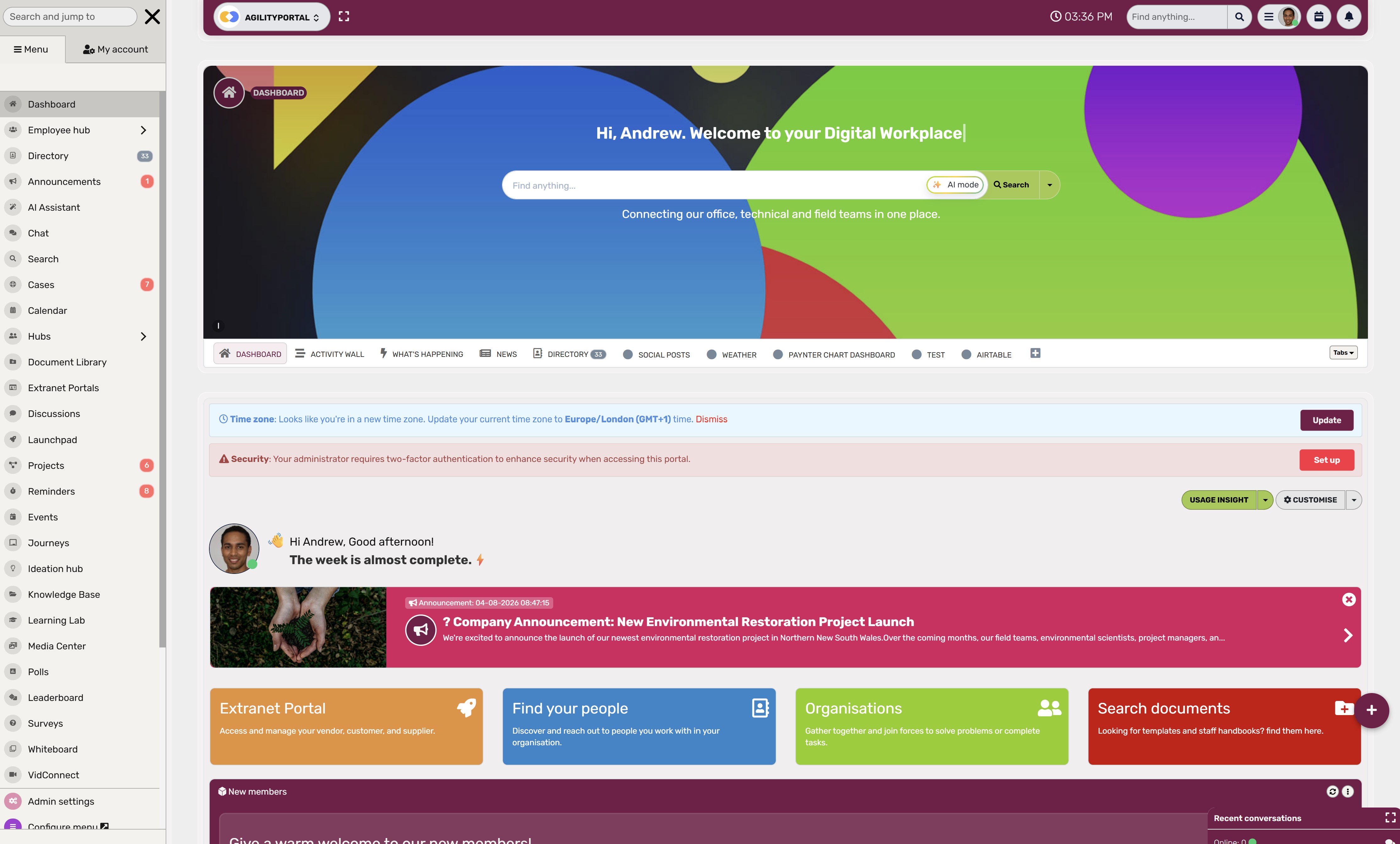
How a Connected Workplace Keeps Marketing Knowledge From Getting Lost
Good marketing decisions are rarely made from one tool alone.
They depend on product knowledge, customer feedback, brand guidelines, campaign results, sales insight and clear approval processes.
The problem is that this information often ends up scattered across email threads, shared drives, chat messages, spreadsheets and individual team members' heads.
When that happens, people waste time asking the same questions, content gets created using outdated information, and campaign lessons disappear as soon as a project ends.
A connected digital workplace gives marketing, sales, product and leadership teams one trusted place to find the information they need. Instead of searching through different platforms, they can access approved guidance, working templates and the latest decisions in a single location.
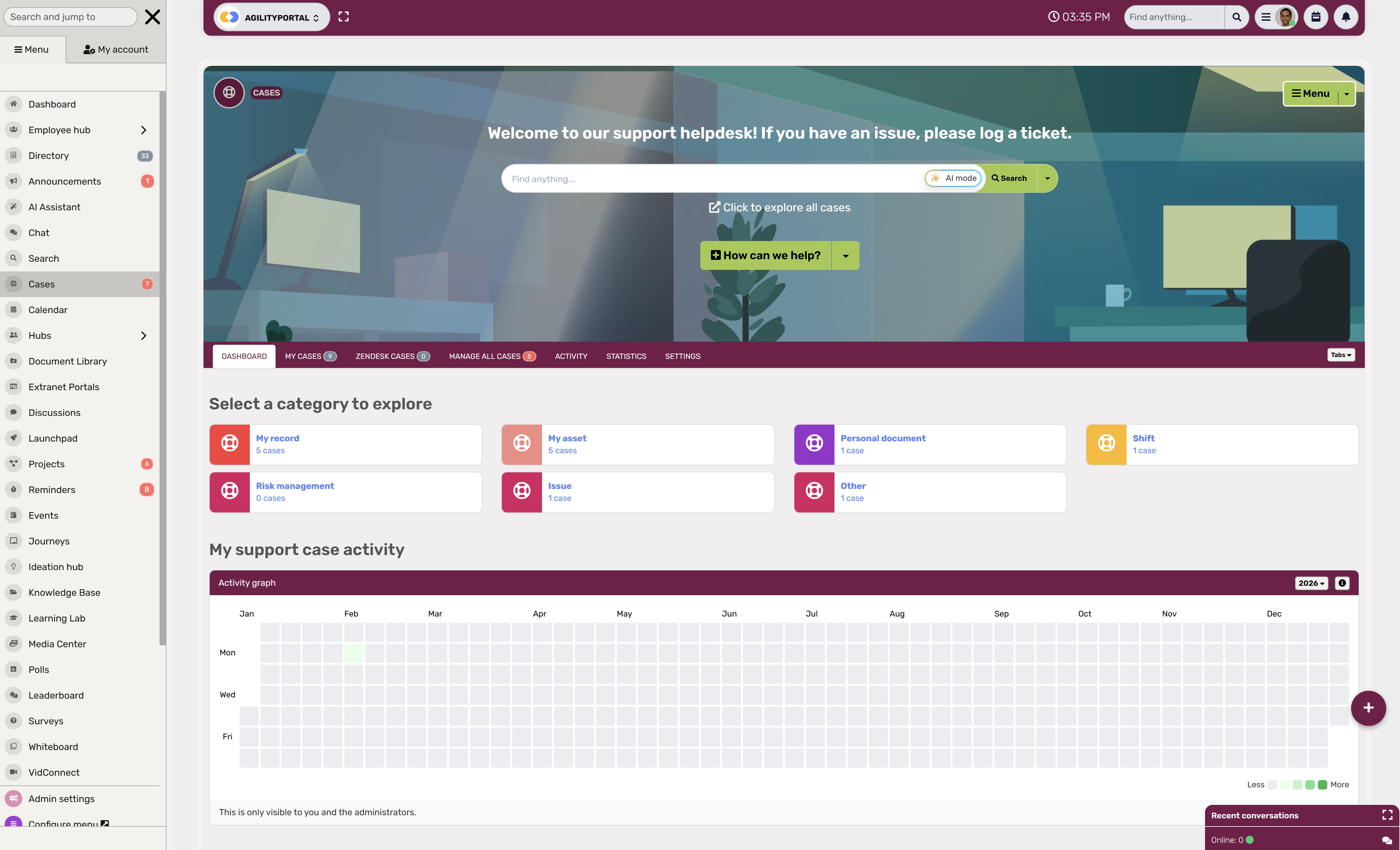
AgilityPortal
For example, teams can centralise:
- Approved guidance on using automation and generative tools safely
- Search optimisation checklists, content briefs and publishing standards
- Brand voice, positioning, audience messaging and visual guidelines
- Product updates, customer research, sales objections and common questions
- Onboarding materials and training for new marketing team members
- Approval workflows for content, campaigns, creative assets and public claims
- Campaign updates, performance reports and lessons learned from previous activity
This is especially useful for growing companies where one marketer may be managing several channels, or for larger organisations with regional teams, agencies and multiple stakeholders.
Everyone works from the same current information, rather than relying on old files or informal advice.
AgilityPortal can support this by giving teams a secure space to publish marketing playbooks, organise resources, share updates, collect approvals and make important knowledge easier to find.
It is not a replacement for specialist marketing software or external expertise. It helps make sure the people using those tools have the right information, processes and shared understanding to use them well.
AgilityPortal
Keep Marketing Knowledge, AI Guidance and Campaign Decisions in One Place
AgilityPortal gives marketing, sales, product and leadership teams one secure digital workplace for organising the information that keeps campaigns consistent and effective. Teams can centralise approved AI-use guidance, content briefs, SEO checklists, brand voice rules, product updates, customer insight, training resources and campaign learnings—so people do not have to search across chat messages, email threads and disconnected folders. With pages, document management, forms, approvals, announcements, search and mobile access, AgilityPortal helps growing businesses make important marketing knowledge easier to find, review and use.
Better marketing starts when every team works from the same trusted information.
AI Will Change Marketing Roles, but It Will Not Remove the Need for Judgement
Marketing teams will spend less time starting every task from scratch.
Drafting a social post, summarising customer feedback, turning a webinar into several campaign assets or preparing an initial content brief can now happen much faster.
That does not mean marketing roles are disappearing. It means the most valuable work is shifting.
Instead of spending all day producing individual assets manually, marketers will increasingly be responsible for setting clear standards, choosing the right ideas to develop, checking evidence, interpreting performance data and making sure every campaign still sounds like the business behind it.
This matters because AI can create content that looks finished before it is actually ready.
A draft may sound confident but contain an outdated claim, miss an important customer concern or make the business sound exactly like its competitors. Someone still needs to ask: Is this accurate? Is it useful? Does it reflect what we really offer?
Will it help the right customer make a better decision?
The same applies to search visibility. Google's guidance remains focused on helpful, reliable, people-first content rather than content produced simply to influence rankings.
That means businesses should use AI to support better work—not to publish large volumes of generic pages with little original insight.
The strongest marketing teams will combine automation with human strengths that are harder to copy:
- Understanding what customers genuinely care about
- Turning product and sales knowledge into useful guidance
- Checking facts, sources and claims
- Making decisions from data rather than vanity metrics
- Protecting brand reputation, privacy and customer trust
- Creating campaigns with a clear point of view and commercial purpose
For smaller businesses, this can help a lean team operate with more speed and confidence.
For enterprise organisations, it can make large-scale marketing more consistent without losing governance or local market knowledge.
The future is not about replacing marketers with software. It is about giving marketers more time to use their experience, creativity and judgement where it has the greatest impact.
Final Verdict: Tools Create Speed; Expertise Turns It Into Growth
The best AI tools for digital marketing can give a business real leverage.
They can reduce repetitive work, speed up research, help teams create first drafts and make campaign data easier to understand. For a capable in-house team, that can free up valuable time and make everyday marketing much more efficient.
But software is not an automatic replacement for experienced search specialists.
A tool cannot fully understand your customers, decide which opportunities are commercially worthwhile, fix complex website issues or take responsibility when performance falls short. Those decisions still need strategy, context and accountable people behind them.
The right choice depends on your situation. If you have a clear plan, strong internal marketing knowledge and enough time to act on insights, an AI-enabled tool stack may be all you need.
If your website has technical problems, your growth has stalled or nobody owns search performance, outside expertise may deliver better value.
For many businesses, a hybrid approach gives the best balance: technology makes work faster, while specialists help make sure it is worth doing.
The businesses that win will not be those producing the most AI-assisted content; they will be the ones that combine speed with sound judgement, useful expertise and a clear reason for every page they publish.
Frequently Asked Questions About Digital Marketing in 2026
What are the biggest trends in digital marketing 2026?
The biggest trends in digital marketing 2026 include AI-assisted content and campaign workflows, AI-search visibility, short-form video, stronger first-party data practices, creator partnerships and more focus on proving revenue impact.
The common theme is not simply doing more marketing with AI.
It is using technology to work faster while making content, customer experiences and measurement more useful.
What are the most important social media marketing trends 2026?
Key social media marketing trends 2026 include short-form video, community-led content, social search, employee-created content, faster customer response and more selective use of AI for captions, visuals and campaign planning.
Brands should focus less on posting constantly and more on publishing content that gives customers a useful reason to stop, save, share or start a conversation.
What are the top 10 digital marketing tools businesses should consider?
The right top 10 digital marketing tools vary by business, but a practical stack often includes Google Analytics 4, Google Search Console, Ahrefs or Semrush, SE Ranking, HubSpot, Canva, Sprout Social, an email platform, a CRM and a content or project-management workspace.
Do not buy every platform at once.
Start with the tools that solve a specific problem, such as measuring conversions, researching search demand or managing customer follow-up.
Can AI tools replace an SEO agency?
Not completely. AI can support research, drafting, reporting and campaign ideas, but it cannot reliably replace search strategy, technical diagnosis, expert review or accountable delivery.
A capable in-house team may use AI successfully, while businesses with more complex websites or limited internal expertise may benefit from specialist support.
Is it cheaper to use AI tools than hire an agency?
Usually, yes at first. Software subscriptions are often cheaper than a monthly retainer.
However, the real cost includes the time needed to learn the tools, validate outputs, produce content, make technical changes and measure results.
A lower monthly bill is not a saving if the business never turns the work into qualified leads or sales.
Will AI-generated content rank in digital marketing in 2026?
It can, but only if it is genuinely useful. Google focuses on helpful, reliable and people-first content—not whether a person or AI created the first draft.
Generic pages published at scale with little original insight, accuracy checking or customer value are unlikely to be a sustainable approach.
Do I need a digital marketing 2026 course to use AI effectively?
A digital marketing 2026 course can be useful if you are new to SEO, analytics, paid campaigns or AI workflows. However, a course alone will not replace practical experience.
Choose training that covers strategy, measurement, privacy, customer research and content quality—not just how to use the latest tool.
What are the current trends in digital marketing that small businesses should prioritise?
The most valuable current trends in digital marketing for small businesses are often the least flashy: accurate local listings, useful service pages, quick mobile websites, customer reviews, email follow-up, clear conversion journeys and content that answers real buyer questions.
AI can help a small team move faster, but it should support these basics rather than distract from them.
Are Brandwatch digital marketing trends 2026 reports useful?
A Brandwatch digital marketing trends 2026 report can be useful for understanding wider consumer conversations, social listening patterns and emerging cultural themes.
Treat it as a source of ideas, not a ready-made strategy. Check whether any trend is relevant to your customers, market and commercial goals before putting budget behind it.
Is digital marketing 2026 Reddit advice trustworthy?
Searches for digital marketing 2026 Reddit can uncover honest views from practitioners about tools, agency experiences and real-world challenges.
It can be useful for research, but it should not be your only source. Reddit posts may be anecdotal, outdated or influenced by personal experiences.
Verify important recommendations through official documentation, credible case studies and your own small-scale tests.
AI Summary
- AI-enabled marketing tools can speed up research, content planning, campaign variations, reporting and repetitive workflow tasks for in-house teams.
- Software can surface data and create useful first drafts, but it cannot independently decide which search opportunities are commercially valuable or how a business should prioritise them.
- A specialist SEO agency brings strategy, technical diagnosis, editorial quality control and accountability that tools alone cannot provide.
- Small businesses with strong internal marketing knowledge may benefit from a focused tool stack, while complex websites or competitive markets often need specialist support.
- A hybrid approach can offer the strongest balance: in-house teams use approved AI tools for speed, while search specialists guide strategy, technical work and measurement.
- AgilityPortal helps teams keep marketing guidance, approved AI-use policies, content briefs, brand standards and campaign learnings organised in one secure digital workplace.
Most Popular Posts

Effective communication among team members is vital for the productivity and success of any organization. Surprisingly, 60% of companies lack a long-term internal communication strategy, which p...


Businesses thrive on communication for efficiency, productivity and accomplishment. When the right information is passed from the right designation in the organization, it promotes positivity an...

Categories
Blog
(3228)
Business Management
(396)
Employee Engagement
(235)
Digital Transformation
(220)
Growth
(151)
Intranets
(142)
Internal communications
(110)
Remote Work
(68)
Sales
(53)
Collaboration
(53)
Customer Experience
(33)
Culture
(30)
Knowledge Management
(29)
Project management
(29)
Leadership
(20)
Comparisons
(9)
News
(1)

Related Posts

Have you ever welcomed a new employee, shared a mountain of information, and wondered how much they'll remember by tomorrow? A clear presentation can make the first day easier by showing new starters who to contact, where to find key informatio...

What would your leadership team do if a serious allegation about your business started spreading online before anyone knew whether it was true? That's where crisis communication and management really matter. An employee spots the post, screensh...

AI for personal injury law firms is becoming part of everyday casework. These tools can help teams sort through medical records, build timelines, draft demand packages and find details buried in a big case file. That could free up attorneys and...

Ever left an online meeting unsure what was decided—and wondered how to run an effective meeting without wasting everyone's time? A call can bring a distributed team together quickly, but when it starts late, includes people who don't know why ...

Where can I send a fax from in my area when a document needs to go out today? The answer might be a nearby print or shipping shop, a library or an online fax service, but what's available depends on your location. The UPS Store lists a ne...


Jill Romford
I am a digital nomad, lover of exploring new places and making friends.
I love to travel and I love the internet. I take pictures of my travels and share them on the internet using Instagram.
Traveler, entrepreneur, and community builder. I share my insights on digital marketing and social media while inspiring you to live your fullest life.
Ready to learn more? 👍
One platform to optimize, manage and track all of your teams. Your new digital workplace is a click away. 🚀
Free for 14 days, no credit card required.