Insight Blog
Agility’s perspectives on transforming the employee's experience throughout remote transformation using connected enterprise tools.
22 minutes reading time
(4392 words)
The Proven Way Online LMS Platforms and Support Learning Goals Examples by Experts You Can Copy

The Proven Way Online LMS Platforms and Support Learning Goals Examples by Experts You Can Copy
Discover how online LMS platforms boost training results with clear learning paths and support learning goals examples that improve retention and performance.
The Proven Way Online LMS Platforms and Support Learning Goals Examples by Experts You Can Copy

Most organisations still approach training with good intentions—but not always with a clear direction. Teams spend countless hours completing courses, yet performance barely shifts.
The real problem isn't motivation; it's the lack of defined learning goals that guide what employees should learn and how success should be measured.
And while the challenges around structure and outcomes feel modern, this struggle goes back a century.
In 1924, Professor Sidney Pressey built the world's first electronic teaching machine to help educators deliver more meaningful learning experiences. Fast-forward 100 years, and his mission hasn't changed—but the scale has exploded.
Today, more than 100 million people use LMS platforms globally (up from ~75 million just a few years ago). Analysts predict the LMS industry will surge from USD $23.7 billion in 2024 to over $57 billion by 2032, driven by digital transformation, AI-powered personalisation, and the rapid adoption of remote work training.
Yet the purpose remains the same: helping organisations create learning that actually leads to better performance.
That's precisely what modern online LMS platforms do—they bring structure, tracking, personalisation, and measurable outcomes to every training programme.
Whether you're using an enterprise system or exploring learning management software free to get started, the right platform can transform how your teams learn and improve.
In this article, we're breaking down how online LMS platforms support learning goals—with practical, learning goals examples you can copy to strengthen your training strategy and lift performance across your organisation.
Read this article:
Developing a Microlearning Course: Hints & Tips
Developing a Microlearning Course: Hints & Tips
What Are Learning Goals and Why They Matter in Modern Training
Learning goals are clear, specific targets that define what a learner should know or be able to do upon completing a training program.
Think of them as the roadmap for development—they give direction, set expectations, and ensure that every training step has a real purpose behind it.
Without defined goals, training quickly becomes a box-ticking exercise rather than a meaningful learning experience.
It's also essential to distinguish early learning goals from learning objectives examples.
- Learning goals describe the big-picture outcomes (e.g., "Strengthen customer communication skills").
- Learning objectives break that goal into measurable steps (e.g., "Respond to customer queries within 2 minutes using the approved workflow").
When organisations skip this structure, training quality suffers. Teams end up completing courses without truly understanding how the content connects to performance.
This is one of the main reasons why traditional training often feels disconnected from real-world results.
What Are Learning Goals and Why They Matter in Modern Training
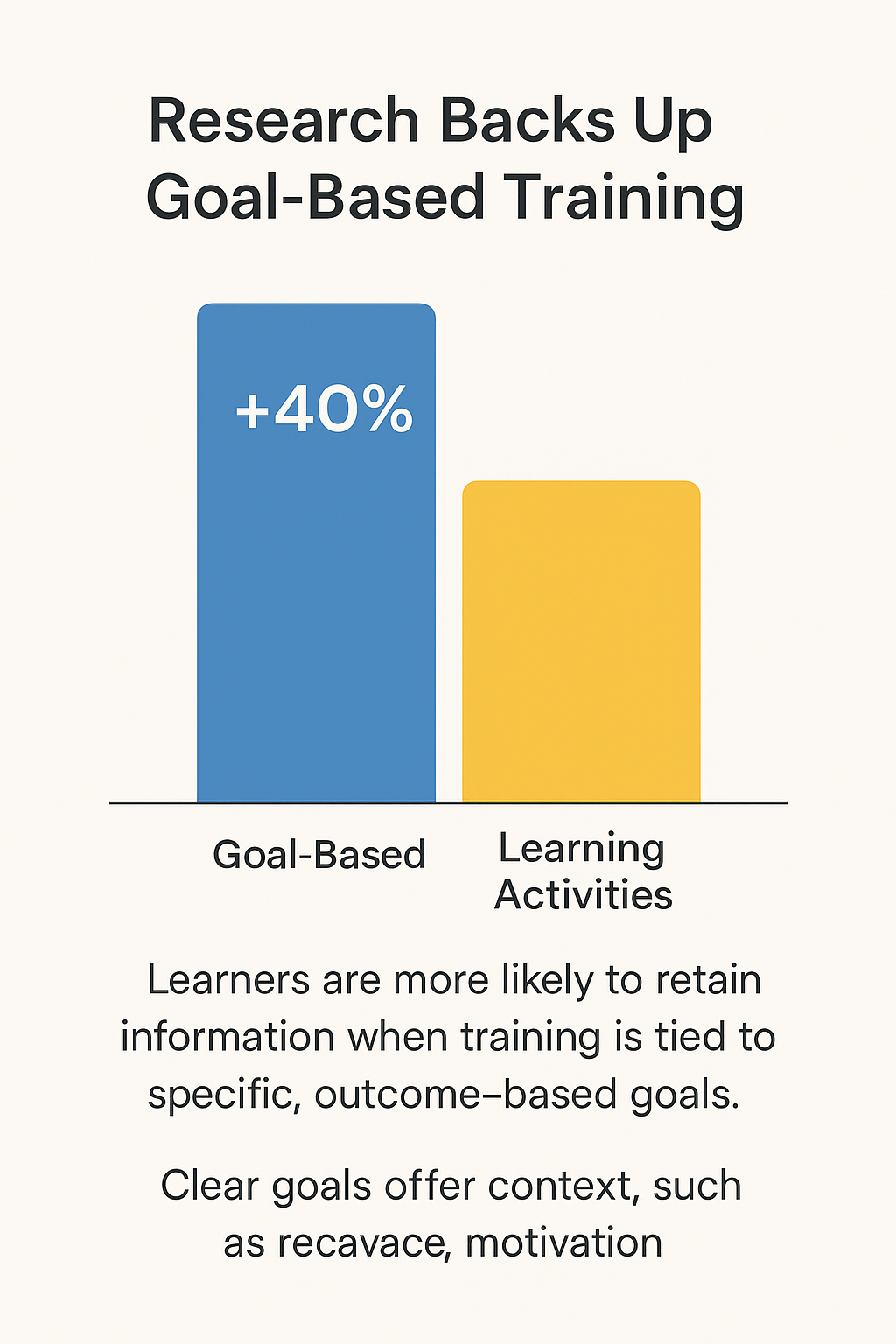
Research backs this up: studies show that learners are up to 40% more likely to retain information when training is tied to specific, outcome-based goals than when it is tied to generic learning activities.
Clear goals offer context, which improves recall, relevance, and motivation.
Setting strong learning goals also makes life easier for L&D teams.
It helps them design targeted programs, select appropriate materials, and monitor progress using tools such as analytics dashboards and assessments.
And when these goals are built into an LMS, the entire learning experience becomes more consistent, trackable, and measurable.
In short: learning goals turn training from guesswork into a structured path that drives real business impact.
The Role of Online LMS Platforms in Achieving Strong Learning Outcomes
The Role of Online LMS Platforms in Achieving Strong Learning Outcomes
If you've ever tried to run training without a proper structure, you already know how chaotic it gets.
People jump between modules, lose track of what they've done, and everyone ends up learning something different.
That's exactly where online e-learning platforms step in—they turn scattered training into a guided, personalised learning journey that actually supports your goals. Here's how they make it happen:
Structured Learning Paths That Reduce Confusion
One of the biggest advantages of an LMS is how it organises learning into clean, easy-to-follow paths.
Instead of dumping a bunch of courses on employees and hoping for the best, you're giving them a roadmap that says:
"Start here → learn this → complete this → reach your goal."
It keeps everyone focused and moving in the right direction.
If your learning goal is "Improve customer service resolution time," you can build a path that walks staff through communication basics, troubleshooting steps, and scenario practice.
No guessing.
No overwhelm.
Just progress.
Automated Assessment Tools That Verify Mastery
Let's be honest—traditional training often relies on gut feeling to decide if someone understood the material. An LMS removes all that guesswork.
You get quizzes, micro-assessments, simulations, and interactive scenarios that instantly show whether a learner actually mastered the content.
No need to chase managers for feedback or rely on subjective evaluations.
A compliance team might set quarterly assessments to check whether employees are still up to date on required regulations. The LMS grades everything, tracks pass rates, and even alerts managers when someone needs a refresher.
Real-Time Progress Tracking for Managers and Learners
Nobody likes being left in the dark—not learners, and definitely not managers.
Online LMS platforms make progress completely transparent. At any moment, you can see who's on track, who's stuck, and where the knowledge gaps are forming.
The best part?
Learners can see their own dashboard too, which keeps motivation high. When people see progress, they naturally want to keep going.
If a team is consistently falling behind on a particular module, the data will show it instantly. Managers can step in early rather than discovering the issue months later.
Personalised Learning Recommendations
Modern LMS platforms are smart—some even use AI to recommend courses based on job role, skill levels, interests, and past performance.
It's like having a personalised career coach inside your training system.
If someone spends a lot of time in spreadsheets, the LMS might suggest advanced Excel training or data analytics courses to help them level up.
Personalisation keeps learners engaged and helps organisations close skill gaps faster.
Centralised Content That Ensures Learning Consistency
Before LMS platforms, training materials lived everywhere—USB sticks, outdated PDFs, random email attachments, or someone's desktop folder.
With an LMS, you finally have one source of truth.
Everyone gets the same version of the content, updates go live instantly, and there's no confusion about what's current or approved.
If your HR team updates a company policy, they can upload the new version once. Within seconds, every learner sees the correct content and old files disappear for good.
Read this article:
Time Management Tools for Remote Learning: Maximizing Productivity
Time Management Tools for Remote Learning: Maximizing Productivity
Expert Examples - How Online LMS Platforms Support Learning Goals in the Real World

How Online LMS Platforms Support Learning Goals in the Real World
Even the best training strategy falls apart without clear goals and systems that reinforce them.
The good news?
Modern LMS platforms aren't just content libraries — they're engines that support measurable learning outcomes.
Here are real examples, backed by industry experts and current research, showing exactly how organisations use LMS tools to hit their targets.
The First Example — Improving Employee Onboarding
So let's get into the learning goal - "New hires must complete mandatory training within 7 days."
A structured LMS lets HR teams automate onboarding from day one.
New hires get instant access to role-specific modules, progress reminders, and assessments that verify understanding.
According to Brandon Hall Group, organisations that use LMS-driven onboarding experience up to 82% higher new-hire retention and 70% faster time-to-productivity compared to companies without structured learning systems.
Automated workflows and built-in analytics make it easy to ensure every new employee finishes required training on time — no chasing, no spreadsheets.
Josh Bersin, global HR analyst, explains:
Digital learning platforms allow companies to onboard at scale while still tailoring the experience to each role. This is essential for building confidence and reducing early turnover.
Josh Bersin, global HR analyst, explains
The Second Example — Strengthening Compliance Training
The next Learning Goal focus on "Achieve 100% compliance certification across departments."
Compliance training succeeds only when it's consistent, trackable, and impossible to ignore.
LMS platforms handle this with expiration alerts, automatic reminders, recurring assessments, and downloadable audit reports.
A 2024 report from Deloitte found that companies using LMS-based compliance programmes saw a 55% reduction in compliance violations and 40% fewer audit findings.
The Association for Talent Development (ATD) notes:
When compliance content is built into an LMS, organisations gain verifiable proof of completion — the number-one requirement for regulatory audits.
Certification tracking ensures no learner slips through the cracks, protecting both employees and the organisation.
And the 3rd Example — Developing Leadership Skills
This Learning Goal sets a deadline "Team leads complete leadership fundamentals within 30 days.
Leadership development only works when learning is personalised.
Modern LMS tools can recommend courses based on career paths, skills gaps, and performance discussions.
LinkedIn's 2024 Workplace Learning Report found that leadership and management skills remain the #1 priority for L&D teams, and companies using digital learning for leadership see up to 29% improvement in leadership effectiveness.
Harvard Business Publishing writes:
Blended and digital leadership programs allow organisations to scale leadership development without diluting quality — something traditional workshops simply can't do.
The impact is big managers stay on track with deadlines, while HR gets visibility into who's progressing and who needs coaching.
And the 4th — Upskilling Customer Service Teams
This Learning Goal its to "Increase CSAT score by 10%."
Customer service teams benefit most from scenario-based learning, micro-lessons, and skills assessments that mimic real conversations.
Research from McKinsey shows that companies investing in structured digital upskilling programmes see 20–25% improvements in customer satisfaction and faster case resolution times.
LMS simulations and role-play modules help agents practice real scenarios safely, leading to more confident conversations and smoother customer experiences.
CX strategist Shep Hyken says:
Customer service excellence is a learned skill. Regular, bite-sized training through digital platforms is one of the fastest ways to lift CSAT and consistency.
What to Look for in an Online LMS Platform (The No-Nonsense Checklist)
Choosing an LMS can feel like trying to compare phone plans — everything sounds the same until you actually start using it.
To save you the headache, here's a simple, straight-talking checklist of what actually matters when picking an online LMS platform.
1. A Course Builder That Doesn't Make You Want to Scream
A Course Builder That Doesn't Make You Want to Scream
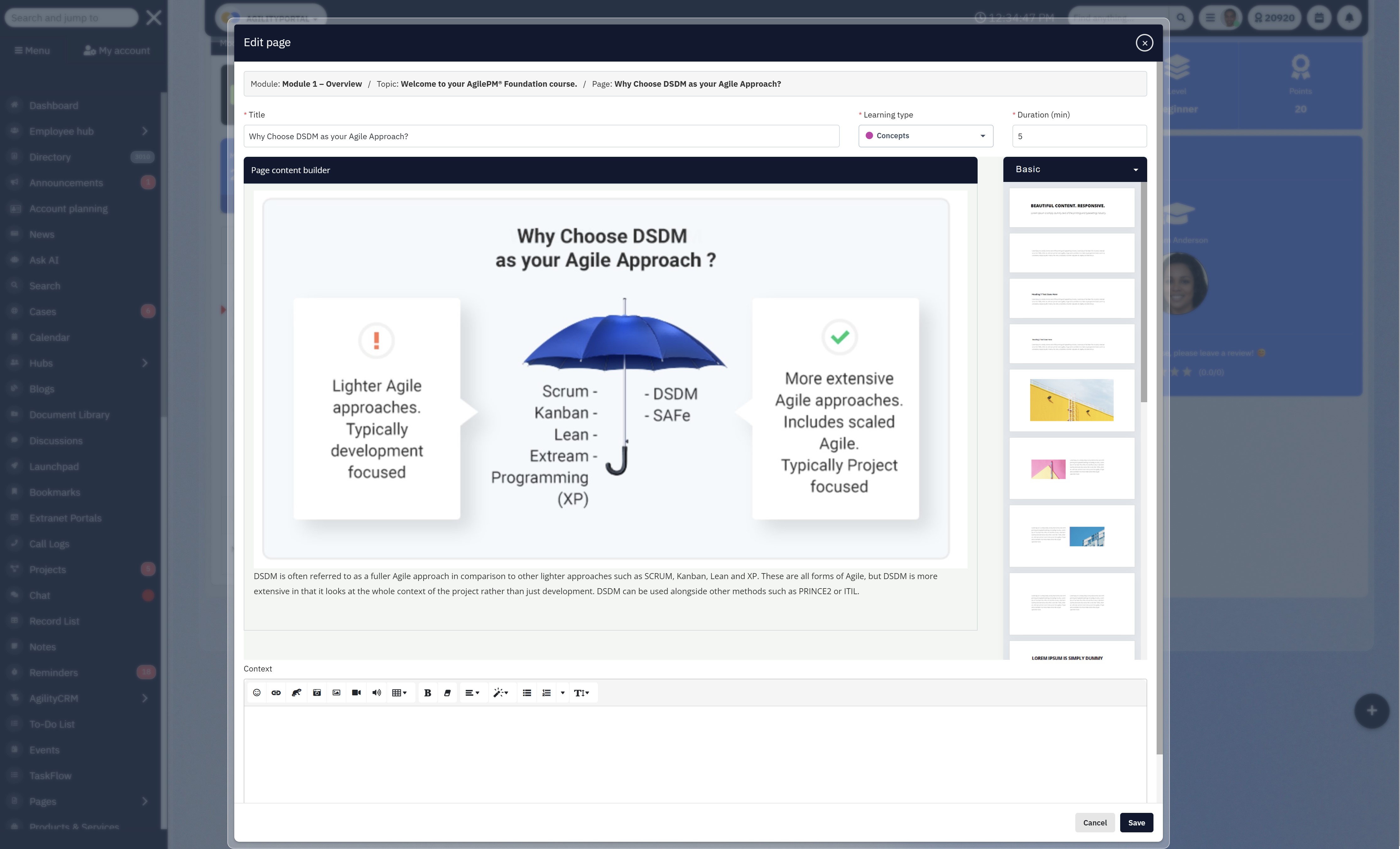
You shouldn't need a design degree or two hours of tutorials just to build a course.
Look for an LMS with a drag-and-drop course builder, clean templates, and the ability to upload different file types (videos, PDFs, quizzes, you name it).
If it takes longer to build the course than to take it, walk away.
2. A User Experience That Feels Like… 2026, Not 2006
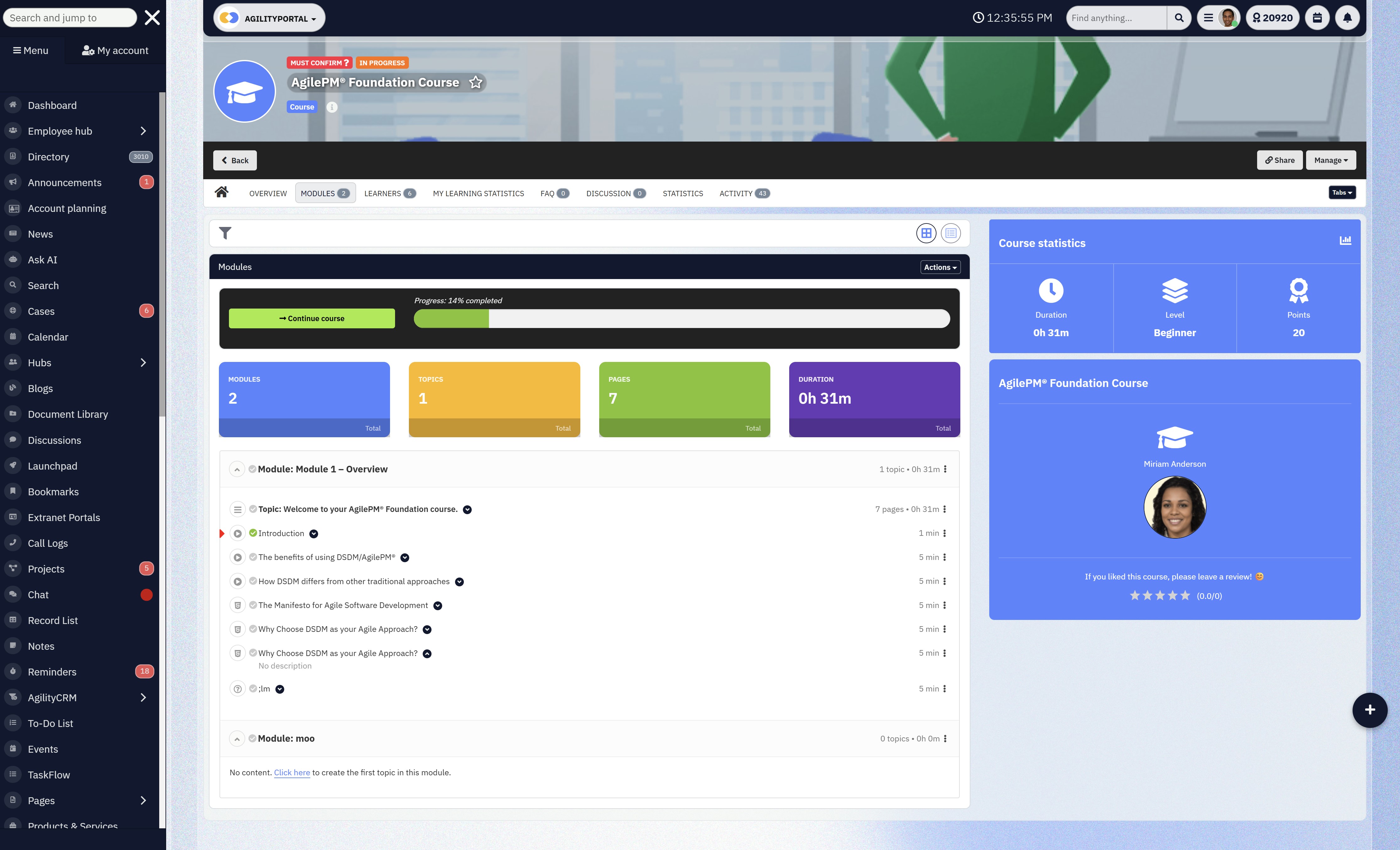
A User Experience That Feels Like… 2026, Not 2006
If the platform is clunky, your learners will feel it instantly — and stop using it.
You want something modern, simple, and intuitive. Clear menus. Clean dashboards. Zero confusion.
If your team can navigate Netflix, they should be able to navigate your LMS.
3. Mobile Training That Actually Works on Mobile
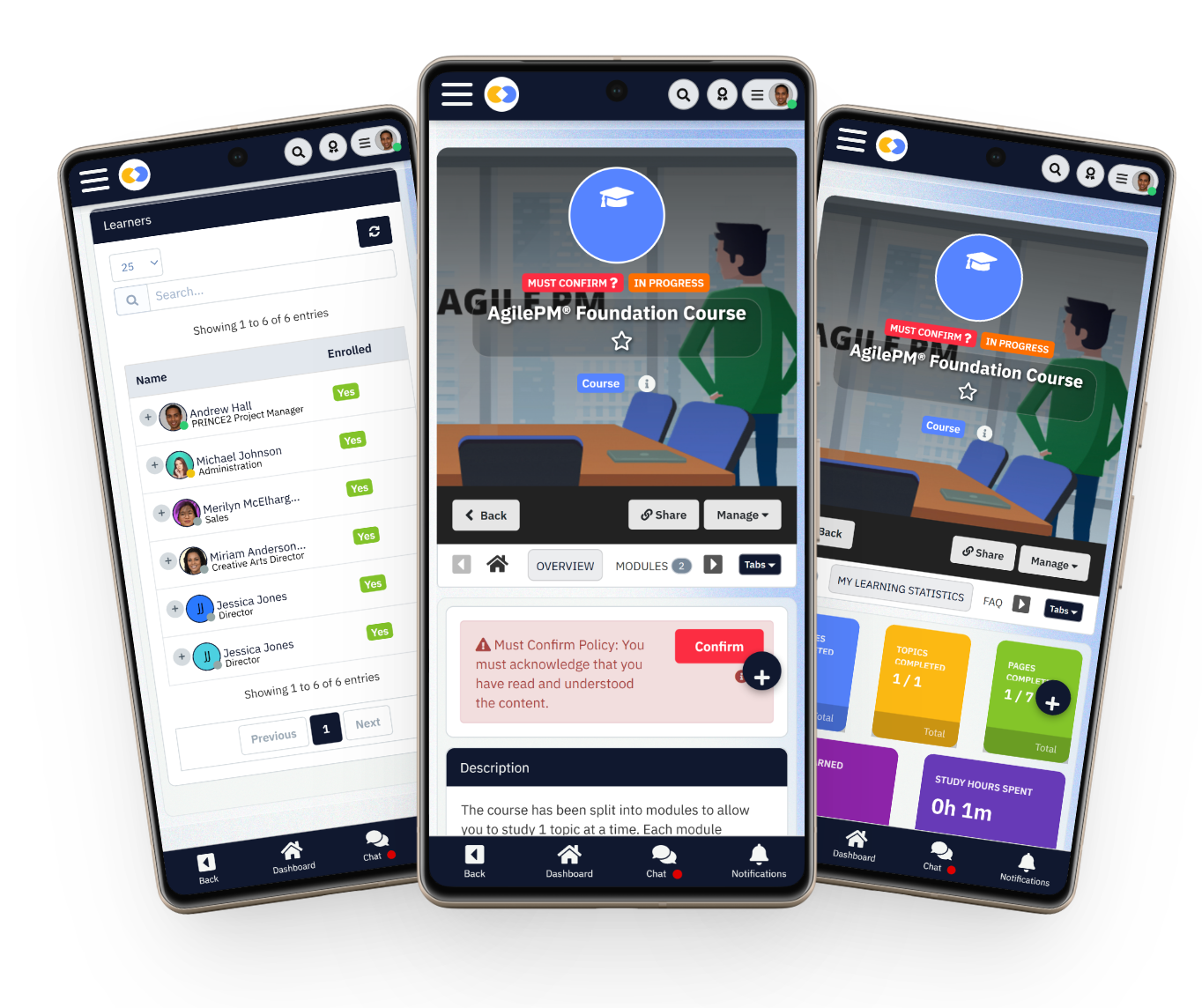
Mobile Training That Actually Works on Mobile
Not just "mobile-friendly," but genuinely usable.
A good LMS lets people complete lessons, watch videos, and take assessments right from their phone. Perfect for frontline workers, hybrid teams, or anyone catching up while commuting.
4. Gamification That Makes Learning a Little Less Boring

Gamification That Makes Learning a Little Less Boring
Badges, points, leaderboards — they sound silly, but they work.
Gamification boosts motivation, increases completion rates, and makes training feel less like homework. Even small touches like progress bars help learners stay engaged.
5. Analytics + Reporting You'll Actually Use
You don't need a NASA-level dashboard.
You just need clear, visual data that shows:
- who's progressing
- who's falling behind
- what's working
- what's not
Great analytics turn your LMS into a performance tool, not just a content repository.
6. Integrations That Don't Require a Developer to Set Up
Look for native integrations with:
- HRIS systems
- Single Sign-On (SSO)
- Payroll tools
- Calendar and communication apps
The more your LMS connects to the tools you already use, the smoother your training operations will run.
7. Certification Management That Keeps Everyone Compliant
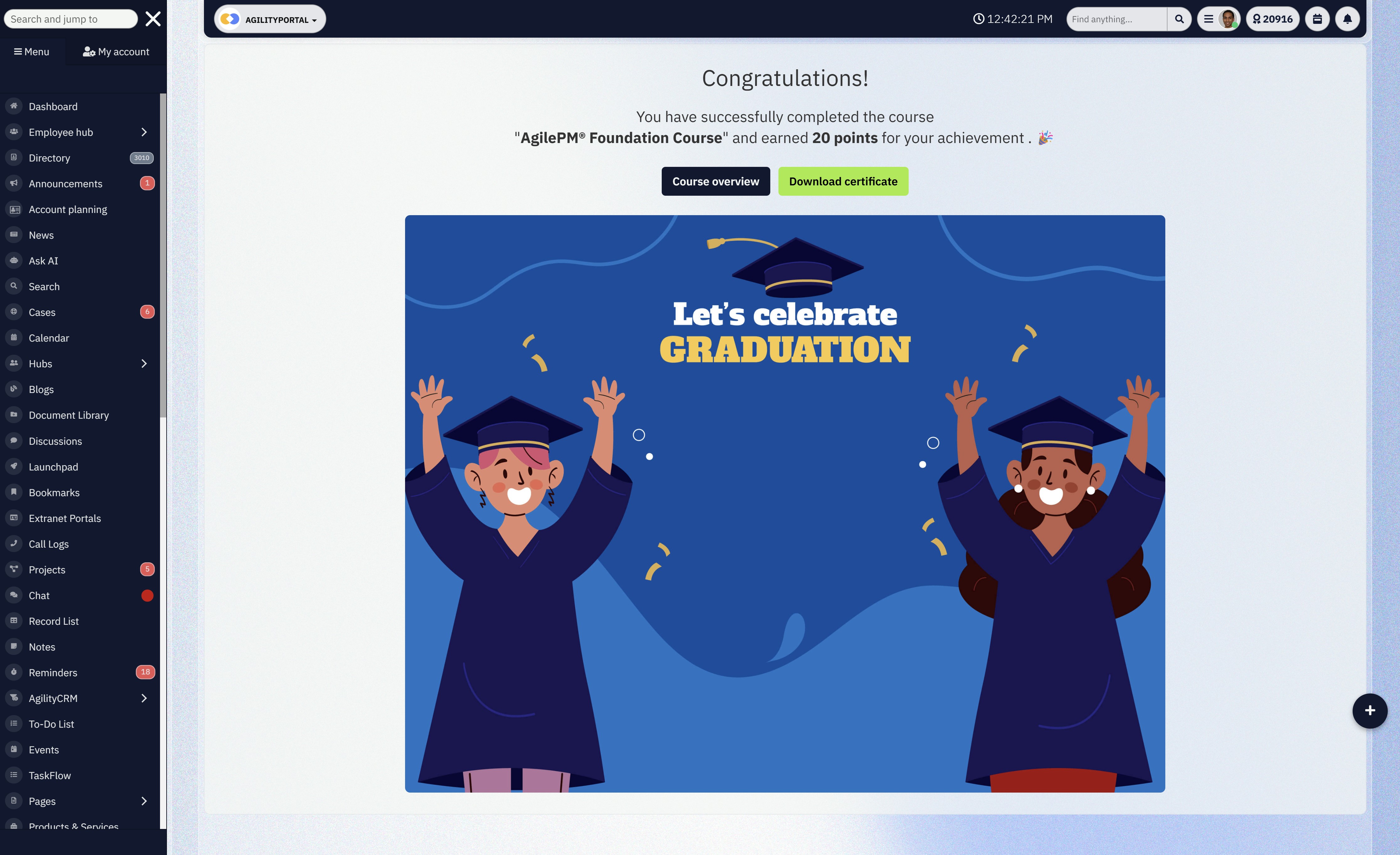
Certification Management That Keeps Everyone Compliant
If your industry relies on certifications, recertifications, or audits, this one's non-negotiable.
Your LMS should handle:
- certificate creation
- expiry reminders
- renewal workflows
- downloadable proof for audits
Basically, your LMS should remember the deadlines so you don't have to.
Top 20 Best LMS Platforms in 2026
Below are the best lms systems for corporate training, those platforms leading the learning tech space in usability, features, innovation, and adoption across different industries.
- AgilityPortal – My Learning Module - Best for companies that want an all-in-one digital workplace where learning, communication, onboarding, and employee engagement live in one platform — ideal for hybrid and frontline teams.
- Doceb - Best for enterprise organisations, best lms for corporate training that need AI-powered personalisation, deep integrations, and scalable learning experiences across large global teams.
- TalentLMS - Best for small to mid-sized businesses that want a simple, digital strategy training, fast-to-deploy LMS with clean UX and zero complexity.
- LearnUpon - Best for companies delivering training to multiple audiences — employees, customers, and partners — through a unified, easy-to-manage portal.
- Cornerstone LMS - Best for large enterprises that require advanced compliance management, workforce upskilling, and structured career pathing.
- Moodle Workplace - Best for organisations that need a highly customisable, corporate learning management system, open-source LMS with flexible hosting and deep configuration options.
- Absorb LMS - Best for mid-market and enterprise teams that want automation, corporate lms, powerful reporting, and a polished learner experience.
- SAP Litmos - Best for regulated industries that need compliance-focused training with a huge ready-made content library and fast global rollout, the perfect corporate lms systems.
- Adobe Learning Manager - Best for companies producing multimedia-rich training that benefits from AI tagging, lms corporation, content automation, and strong user experience design.
- Blackboard Learn Ultra - Best for universities, blended-learning environments, and organisations that need academic-level structure, governance, and accessibility.
- iSpring Learn - Best for businesses that want a lightweight LMS paired with one of the industry's strongest course-authoring tools.
- Canvas LMS - Best for education providers and corporate teams that need modern course management, grading workflows, and intuitive instructional design tools.
- 360Learning - Best for mid-sized and enterprise companies with rich internal expertise that want a collaborative, fast-to-iterate learning platform for employee, customer, and partner training.
- EdApp by SafetyCulture - Best for frontline and mobile-first workforces that benefit from microlearning, gamification, and bite-sized lessons delivered on the go.
- Tovuti LMS - Best for organisations that want interactive learning experiences with built-in course creation, gamification, and strong design flexibility.
- Schoology - Best for K–12 schools and education providers needing blended learning tools, assessments, and strong parent–student communication capabilities.
- LearnDash - Best for course creators and businesses running WordPress who want full control over selling online courses and memberships.
- Cypher Learning (NEO / MATRIX) - Best for teams looking for an AI-driven LMS that personalises content, automates tasks, and delivers a premium learner experience.
- Growth Engineering LMS - Best for organisations that want learning to feel fun and competitive, using gamification mechanics like battles, XP points, and quests.
- Kajabi - Best for creators, coaches, and digital entrepreneurs who want an all-in-one platform for building, marketing, and selling online courses and memberships.
Common Mistakes People Make When Setting Learning Goals in an LMS
Setting learning goals sounds simple, but a lot of teams get it wrong — and it's usually not because they don't care about training.
It's because the goals they set aren't actually usable.
Here are the most common mistakes companies run into (and how you can avoid them):
1. Setting goals that are way too vague
A classic mistake. Goals like "improve communication" or "get better at customer service" feel inspiring, but they're impossible to track.
Clear goals should sound more like the learning goals examples you'd find in a well-structured training plan — specific, measurable, and tied to what success actually looks like.
If your goals can't be turned into learning objectives examples, they're probably too fluffy.
2. Not connecting learning goals to real business outcomes
Your LMS isn't just a place to store content — it's a performance tool.
A good goal should directly support something the business cares about:
- faster onboarding
- fewer safety incidents
- higher CSAT
- reduced errors
This is true whether you're building employee programs or early learning goals for foundational training. If the goal doesn't move the needle somewhere, it's not worth adding to the LMS.
3. Setting goals but not measuring anything after launch
This happens all the time: teams set learning goals, upload some modules, and… never check back in.
- No progress tracking.
- No reports.
- No follow-up.
The whole point of using an LMS is to make learning measurable. Without looking at analytics — completion rates, assessment scores, behaviour changes — you're guessing.
Good learning objectives examples always include how progress will be measured.
4. Treating the LMS like a content dumping ground
Uploading random PDFs and slides into your LMS isn't a learning strategy — it's digital storage.
For goals to work, content needs structure. Sequenced modules, assessments, practice activities, scenario simulations… all of these help your teams actually master the skills behind your goals.
If you've ever looked at early education frameworks, you'll notice even early learning goals have structure and progression. Workplace learning should be no different.
If you can't easily explain how your LMS content supports your learning goals, the goals or the content probably need adjusting.
According to Educause, well-organized digital learning environments significantly improve both teaching effectiveness and student outcomes.
How to Get Started - A Simple Framework to Align Your LMS With Your Learning Goals
To build an effective learning program, you must start with intentional design.
The steps below will help you connect your business needs, study goals, learning goals, and LMS features into one cohesive strategy.
Follow this framework as if you were teaching a class — each step builds on the one before it.
Just as platforms like AgilityPortal support students in tracking their academic progress, your LMS should guide learners with the same clarity and structure you'd expect in a classroom.
And whether you're designing workplace training or developing early learning goals, the principles remain the same.
1. Identify Your Core Business Outcomes
Begin by clarifying why the training exists.
Your LMS is not just a storage space for lessons; it must support real outcomes.
Ask yourself:
- What problem are we trying to solve?
- What skills are missing?
- Which behaviours need to change?
These outcomes form the foundation for your study goals or goal orientation and learning pathways.
2. Convert Each Goal Into Measurable Learning Objectives
Once you understand your destination, translate each goal into clear, observable learning objectives.
Think of these as the "success criteria" — similar to how early learning goals define what young learners should be able to do by the end of a stage.
For example:
- Learning goal: Improve customer communication
- Learning objective: Demonstrate accurate responses to customer queries using the approved workflow within two minutes
Specific objectives give both teachers and learners a shared understanding of what success looks like.
3. Map These Objectives Into Your LMS Learning Pathway
Design your LMS pathway the same way a teacher structures a curriculum.
Organise content so it flows logically, supporting both study goals and skills development.
A solid pathway should:
- Introduce the concept
- Use smart learning objective
- Give context
- Provide real examples
- Offer opportunities to practice
- Reinforce knowledge with repetition
This structured approach mirrors how platforms like Jisc Study Goal help learners stay organised and on track.
4. Use Assessments to Validate Learning
Assessment is a core part of teaching. It helps you check whether learners truly understand the content — not just whether they clicked through a module.
Use a mix of:
- quizzes
- Smart lesson objectives
- simulations
- scenario-based tasks
- knowledge checks
These tools allow you to see whether your study goals and learning objectives are being met.
5. Review Analytics Monthly and Adjust as Needed
Teaching is iterative so its important to focus on the objectives for learning. Regularly review your LMS analytics to check whether learning goals are actually being achieved.
Look for:
- modules with high drop-off rates
- recurring skill gaps
- low assessment performance
- teams or individuals falling behind
Just as teachers review progress toward early learning goals, your organisation should use LMS data to refine training continuously.
Turn everyday employees into high-performing teams with learning that finally sticks with AgilityPortals Learning Lab
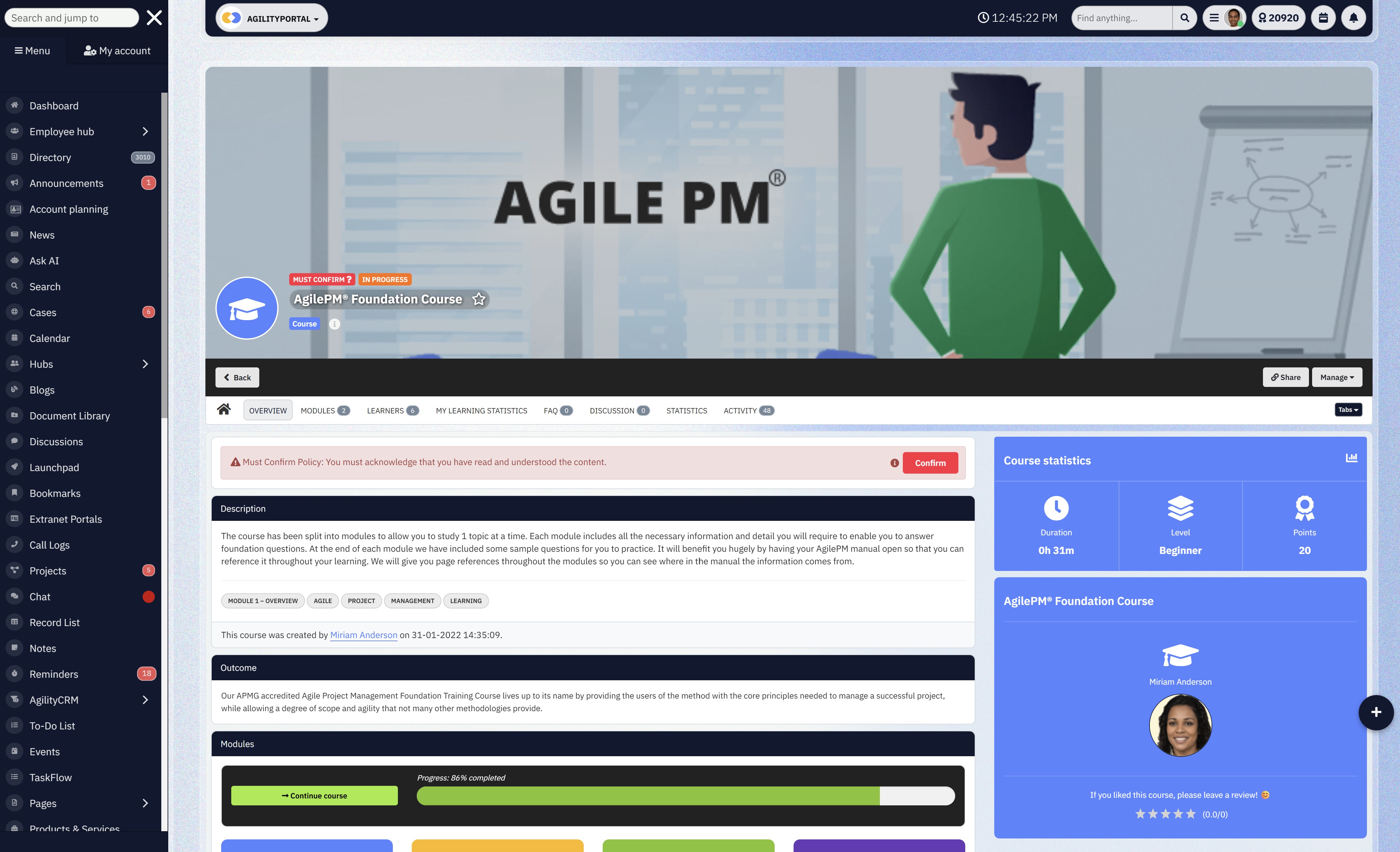
Turn everyday employees into high-performing teams with learning that finally sticks with AgilityPortals Learning Lab
AgilityPortal's Learning Lab brings structured learning paths, personalised recommendations, and outcomes-based assessments into one seamless experience.
Wrapping up - A Better Way to Train and Measure Success
If there's one thing we know for certain, it's this: learning becomes far more effective when it's guided by structure and clarity.
Online LMS platforms give you the tools to set meaningful learning goals, track progress, and actually see whether your training is working. Instead of guessing, you're teaching with purpose — and learners feel that difference immediately.
When organisations take an analytics-driven approach, learning stops being a one-off event and becomes an ongoing process that continuously supports performance.
It's the same principle educators use every day: clear goals, real measurement, and a learning environment that adapts to the needs of the learner.
Whether you're building a program for new hires, developing leadership skills, or designing early career pathways, a well-structured LMS makes it easier to stay focused, stay accountable, and stay aligned with your wider business objectives.
If you're ready to bring more clarity and impact to your training, start mapping your goals today with a simple template. A small step in structure can lead to a big shift in outcomes.
Frequently Asked Questions (FAQs)
1. What are some good employee training goals examples?
If you want great employees, it start with great training goals examples focus on measurable behaviour and performance improvements.
For instance:
- "Reduce onboarding time by 30% through structured LMS modules."
- "Improve customer service quality scores by practising scenario-based learning."
- "Increase compliance certification completion rates to 100% using automated LMS reminders."
- "Help managers complete leadership development goals within 60 days."
Strong goals link directly to business outcomes, which is why a corporate learning management system makes such a difference — it helps you monitor and measure progress clearly.
2. How do I create learning goals for an LMS?
Start by identifying the skills your team needs, then translate them into clear outcomes.
Good learning goals explain what learners should be able to do after training.
Break each goal into measurable steps using learning objectives examples, and then map those into structured LMS learning paths.
This approach works in corporate environments and even mirrors how early learning goals are designed in education — clear, simple, and measurable.
3. How does LMS performance tracking work?
LMS performance tracking uses dashboards, completion data, assessment scores, and behavioural metrics to show whether learning is actually happening.
A strong corporate LMS will display:
- who is progressing
- who is falling behind
- which modules need improvement
- skill gaps across departments
These insights feed into your digital learning strategy and help refine your training content continuously.
4. What is the best LMS for corporate training?
The best LMS for corporate training depends on your size, industry, and compliance needs.
However, top-performing platforms often include:
- Docebo
- Cornerstone
- SAP Litmos
- Absorb
- 360Learning
- TalentLMS for smaller teams
AgilityPortal's My Learning Module is also a powerful option for organisations wanting learning, communication, and engagement all in one place.
These are considered some of the best corporate learning management systems on the market today.
5. What should a digital learning strategy include?
A strong digital learning strategy includes:
- clearly defined learning goals
- mapped learning objectives
- engaging learning formats (microlearning, video, simulations)
- a reliable corporate LMS system
- performance analytics
- continuous improvement loops
It should be tied directly to business outcomes like productivity, compliance, or customer service improvements.
6. What are learning development goals examples for corporate teams?
Examples include:
- developing leadership skills for new managers
- building technical proficiency in job-specific tools
- improving safety awareness and reducing incidents
- developing communication and collaboration skills
These goals are easier to deliver and measure using a learning management system for corporates.
7. What features define the best LMS systems for corporate training?
Look for features like:
- automated assignment workflows
- SCORM/xAPI support
- skills tracking and competency mapping
- customisable learning paths
- SSO and HR system integrations
- real-time analytics
Platforms offering these capabilities typically rank among the top corporate learning management systems and best enterprise LMS solutions.
8. Which corporate LMS platforms are most popular in 2026?
The current top LMS companies for business include Docebo, Cornerstone, Absorb, 360Learning, TalentLMS, Moodle Workplace, and AgilityPortal.
These platforms dominate the corporate LMS market because they combine usability, scalability, and deep analytics capabilities.
9. How do learning management systems for corporate training improve performance?
A corporate LMS software supports performance in three ways:
- delivering consistent training across teams
- tracking learning progress and identifying gaps
- reinforcing skills through assessments and repetition
Together, these elements create more capable, confident, and productive employees.
10. What's the difference between a corporate LMS and a standard LMS?
Corporate LMS platforms are built for business needs — compliance, reporting, onboarding workflows, and job-specific skills development.
Education-focused LMS tools tend to prioritise grading, academic progression, and classroom-based learning structures.
If you're training employees, partners, or customers, choose a corporate LMS system or an enterprise LMS.
11. Which LMS is best for business teams in 2026?
For businesses, the top LMS for business typically includes:
- Absorb LMS
- Docebo
- 360Learning
- TalentLMS
- AgilityPortal
These are widely considered the best LMS systems for business due to ease of use, automation, and built-in analytics.
12. What role do corporate learning systems play in digital transformation?
Corporate learning systems help teams adapt faster by supporting new skills, reducing training time, and reinforcing behavioural change.
They're foundational in any digital strategy training plan because they make upskilling scalable, measurable, and repeatable.
Most Popular Posts

Effective communication among team members is vital for the productivity and success of any organization. Surprisingly, 60% of companies lack a long-term internal communication strategy, which p...


Businesses thrive on communication for efficiency, productivity and accomplishment. When the right information is passed from the right designation in the organization, it promotes positivity an...

Categories
Blog
(3182)
Business Management
(393)
Employee Engagement
(235)
Digital Transformation
(215)
Growth
(150)
Intranets
(141)
Internal communications
(106)
Remote Work
(68)
Sales
(53)
Collaboration
(52)
Customer Experience
(32)
Culture
(30)
Knowledge Management
(29)
Project management
(29)
Leadership
(20)
Comparisons
(9)
News
(1)

Related Posts

Looking for a New Job Remotely can feel like a simple next step: update your CV, turn on job alerts and start applying. In reality, the strongest remote job searches start much earlier. You need to be clear about the work you want, the kind of ...

Hiring globally is easier than employing globally Have you found the right person for a role, only to realise they live in a country where your business has no legal entity? That's where EOR international hiring can be useful. An Employer of Re...

Sales operations and planning are essential to harmonizing sales objectives with operational capabilities, ensuring seamless coordination between departments like sales, marketing, production, and finance. This alignment enables businesses to forecas...

How can a business collect the public web data it genuinely needs without creating avoidable security, privacy or supplier-risk problems? That's the question more teams are now facing. From competitor price monitoring and SEO research to brand protec...

The sales interview is a crucial part of the job search process, as it provides an opportunity for the candidate to showcase their skills, experience, and personality to the hiring manager. In this interview, the candidate is evaluated on their...

Jill Romford
I am a digital nomad, lover of exploring new places and making friends.
I love to travel and I love the internet. I take pictures of my travels and share them on the internet using Instagram.
Traveler, entrepreneur, and community builder. I share my insights on digital marketing and social media while inspiring you to live your fullest life.
Ready to learn more? 👍
One platform to optimize, manage and track all of your teams. Your new digital workplace is a click away. 🚀
Free for 14 days, no credit card required.