
Insight Blog
Agility’s perspectives on transforming the employee's experience throughout remote transformation using connected enterprise tools.
42 minutes reading time
(8472 words)
Workplace Hygiene in Hybrid Work: Best Practices for Employee Wellbeing, Safety, and Engagement

Workplace Hygiene in Hybrid Work: Best Practices for Employee Wellbeing, Safety, and Engagement
Discover workplace hygiene best practices for hybrid teams. Improve employee wellbeing, workplace safety, productivity, and retention with expert tips.
Workplace Hygiene in Hybrid Work: Best Practices for Employee Wellbeing, Safety, and Engagement

Workplace hygiene has evolved far beyond keeping desks clean and ensuring washrooms are stocked.
In today's hybrid work environment, it encompasses everything from workplace cleanliness and air quality to employee wellbeing, health and safety policies, shared workspaces, and even digital hygiene practices.
As employees split their time between corporate offices, home workspaces, client sites, and co-working environments, organizations face new challenges in maintaining consistent standards that support both health and productivity.
The importance of workplace hygiene has become increasingly clear.
According to the UK's Health and Safety Executive (HSE), an estimated 40.1 million working days were lost due to work-related illness and workplace injuries during 2024/25, highlighting the significant impact that employee health and workplace conditions continue to have on businesses and the wider economy.
£22.9B
annual economic cost
The UK Health and Safety Executive (HSE) estimates that work-related ill health and workplace injuries cost the UK economy approximately £22.9 billion every year. This highlights the financial importance of workplace hygiene, employee wellbeing, workplace safety, and effective health and safety hygiene practices across all industries.
Source: UK Health and Safety Executive (HSE) – Costs to Great Britain of Workplace Injury and New Cases of Work-Related Ill Health
The HSE also estimates that work-related ill health and injuries cost the UK economy approximately £22.9 billion annually.
40.1M
working days lost
According to the UK Health and Safety Executive (HSE), an estimated 40.1 million working days were lost due to work-related illness and workplace injuries during 2024/25, highlighting the significant impact that workplace hygiene, employee wellbeing, and workplace safety continue to have on organizations and the wider economy.
Source: UK Health and Safety Executive (HSE) – Work-Related Ill Health and Injury Statistics 2024/25
Hybrid work has fundamentally changed how organizations approach workplace hygiene.
Unlike traditional office environments, employees now move between multiple locations, often sharing desks, meeting rooms, devices, and communal spaces with different colleagues throughout the week.
This increased flexibility delivers many benefits, but it also creates new risks related to cleanliness, illness prevention, employee wellbeing, and workplace safety.
This article explores why workplace hygiene remains a critical business priority in hybrid work environments.
Readers will learn what workplace hygiene really means, how poor hygiene practices can affect productivity and employee engagement, and the practical steps organizations can take to create healthier, safer, and more productive workplaces for everyone.
Key Takeaways
- Workplace hygiene is no longer just a cleaning issue—it directly impacts employee wellbeing, workplace safety, productivity, and talent retention.
- Common workplace hygiene issues examples include dirty toilets, poor workplace cleanliness, inadequate hygiene supplies, poor ventilation, and the spread of infectious diseases.
- Strong workplace hygiene practices and a clear workplace hygiene policy help reduce absenteeism, improve employee satisfaction, and support health and safety hygiene requirements.
- Personal hygiene in the workplace plays a critical role in preventing illness, maintaining cleanliness in the workplace, and creating a healthier work environment.
- Organizations that invest in workplace sanitation, professional deep cleaning services, employee wellbeing programs, and workplace technology are better positioned to create safer and more productive hybrid workplaces.
Why Workplace Hygiene Is Becoming a Talent Retention Issue
Workplace hygiene is no longer just a facilities management concern.
In today's hybrid work environment, it has become an important part of the overall employee experience.
Employees increasingly expect organizations to provide clean, safe, and healthy workplaces that support both wellbeing and productivity.
When workplace hygiene practices are inconsistent, employees often view it as a sign that the organization does not prioritize their health and comfort. Over time, this can negatively affect engagement, trust, and retention.

Common workplace hygiene issues examples that frustrate employees include:
- Poorly maintained shared workspaces
- Inadequate cleaning of meeting rooms and communal areas
- Lack of hygiene supplies such as sanitizers and wipes
- Poor ventilation and air quality
- Outdated health and safety procedures
- Unclear workplace hygiene policies
Hybrid workers are particularly sensitive to these issues because they often have the flexibility to choose where they work. If employees feel safer, healthier, and more productive working from home than in the office, they may become less willing to attend the workplace regularly.
Research from the UK's Health and Safety Executive (HSE) estimates that millions of working days are lost each year due to work-related illness, highlighting the direct link between workplace health and business performance.
Organizations that fail to address workplace hygiene concerns may experience:
- Higher employee absenteeism
- Reduced productivity
- Lower employee morale
- Increased staff turnover
- Difficulty attracting new talent
A clear workplace hygiene policy can help address these concerns by setting expectations, communicating standards, and demonstrating a commitment to employee wellbeing. Employees are more likely to remain loyal to organizations that actively invest in creating safe and healthy work environments.
Ultimately, workplace hygiene has become a talent retention issue because it directly influences how employees feel about their workplace.
Organizations that prioritize workplace hygiene practices are better positioned to build trust, improve employee satisfaction, and retain top talent in an increasingly competitive labor market.
What Is Workplace Hygiene?
What Is Workplace Hygiene?
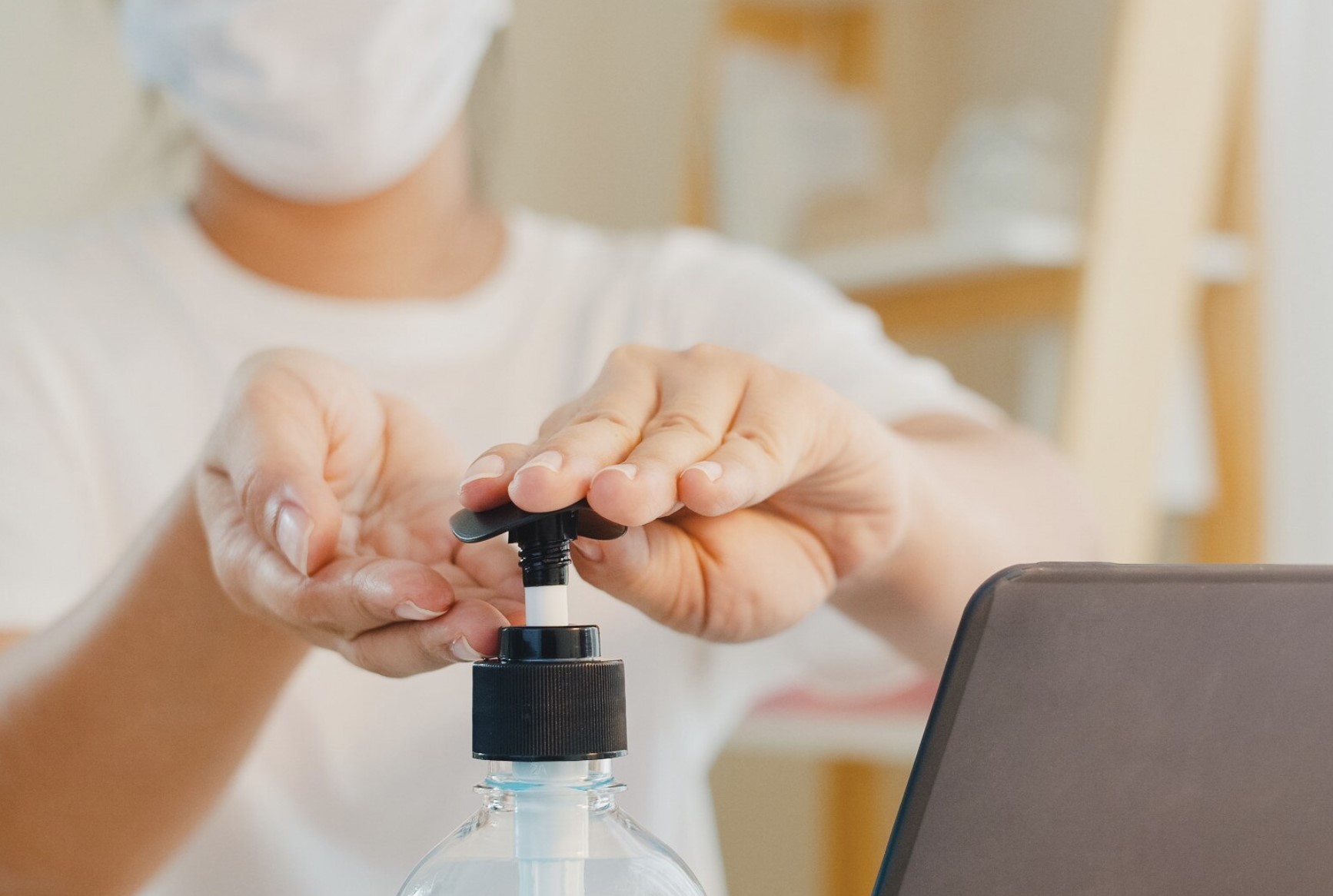
Workplace hygiene refers to the practices, policies, and standards organizations implement to maintain a clean, safe, healthy, and productive work environment.
While many people associate workplace hygiene with cleaning offices and sanitizing surfaces, the concept extends much further and includes employee health, shared workspace management, workplace safety, and even digital security.
In today's hybrid work environment, workplace hygiene has become increasingly important as employees regularly move between offices, home workspaces, co-working locations, and client sites.
Effective workplace hygiene practices help reduce health risks, improve employee wellbeing, increase productivity, and create a positive workplace culture.
A comprehensive workplace hygiene policy should clearly outline expectations, responsibilities, cleaning procedures, health protocols, and workplace safety standards to ensure consistency across all work locations.
Some workplace hygiene issues may seem minor on the surface, but they can have a significant impact on employee wellbeing, workplace safety, productivity, employee satisfaction, and overall occupational health.
Organizations should regularly monitor and address the following concerns as part of their workplace cleanliness and sanitation programs:
- Dirty toilets – Poorly maintained restroom facilities can create a negative employee experience, damage workplace morale, increase health risks, and affect facility management standards.
- Lack of soap and hand sanitizer – Employees need easy access to hygiene supplies, hand hygiene products, and sanitization stations to help prevent the spread of germs and maintain good workplace hygiene practices.
- Inadequate hand-drying facilities – Empty paper towel dispensers or poorly functioning hand dryers can reduce hygiene effectiveness, increase contamination risks, and compromise infection control efforts.
- Unavailability of menstrual hygiene products – Providing essential menstrual hygiene products supports employee wellbeing, workplace inclusivity, employee comfort, and restroom accessibility.
- Odor issues – Unpleasant odors from restrooms, kitchens, waste areas, poor ventilation, or inadequate cleaning services can negatively affect employee satisfaction and perceptions of workplace cleanliness.
- Dirty sinks and countertops – Shared facilities that are not cleaned regularly can quickly become hotspots for bacteria, germs, and cross-contamination, contributing to poor workplace hygiene standards.
- Spread of infectious diseases – Poor workplace hygiene can increase the risk of illnesses such as Influenza, Norovirus, Streptococcus, Staphylococcus, Rhinovirus, and COVID-19 spreading throughout the workplace, leading to higher absenteeism, reduced productivity, and increased workplace health and safety concerns.
Physical Workplace Hygiene
Physical Workplace Hygiene
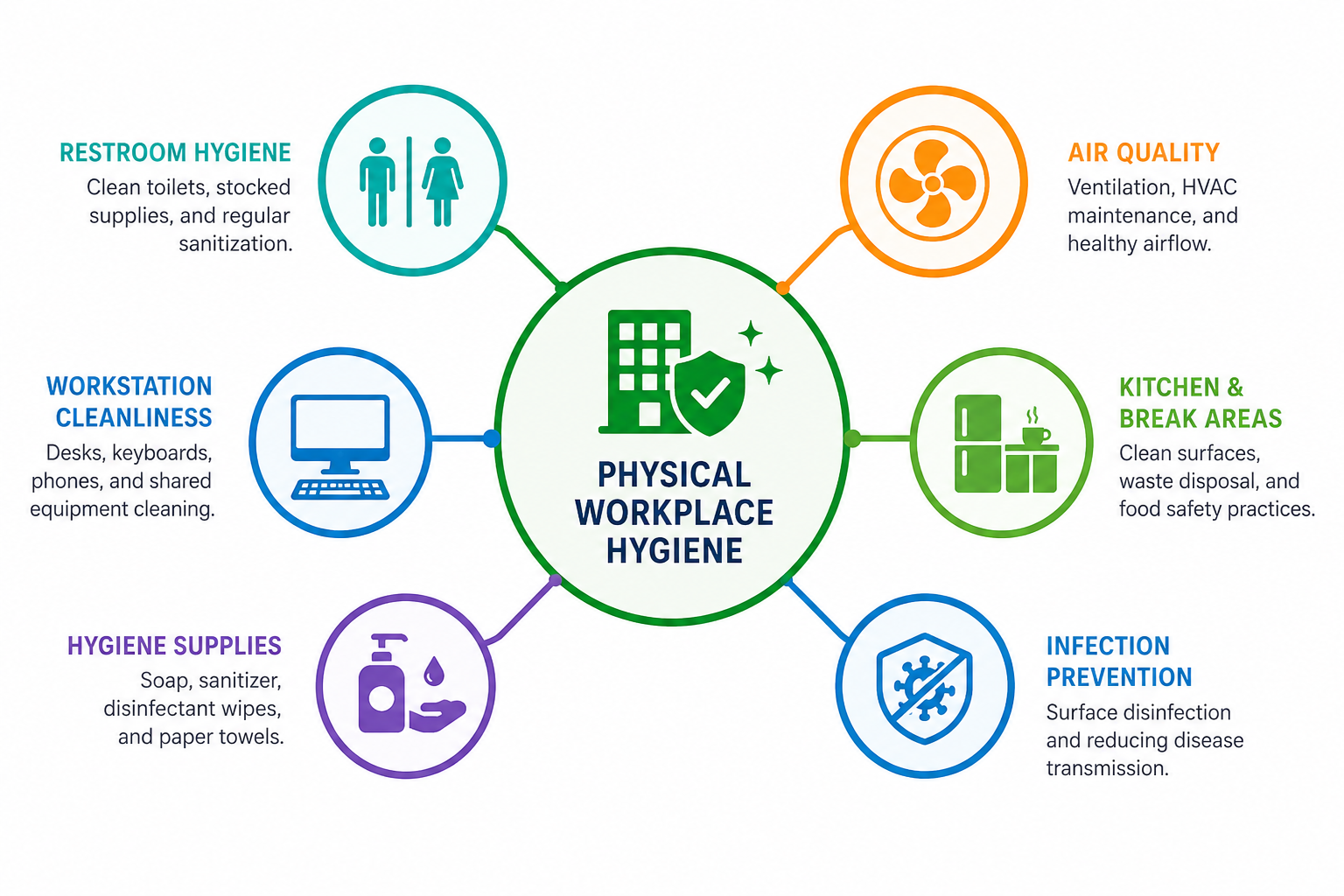
Physical workplace hygiene focuses on maintaining clean, safe, and organized workspaces that support employee health and productivity.
Key workplace hygiene practices include:
- Regular cleaning and disinfecting of shared surfaces
- Maintaining clean workstations and desks
- Sanitizing meeting rooms and collaboration spaces
- Providing access to hand sanitizers and hygiene supplies
- Ensuring break rooms and kitchen facilities remain clean
- Proper waste disposal and recycling procedures
- Maintaining good ventilation and air quality
Organizations that invest in physical workplace hygiene often experience lower absenteeism rates and higher employee satisfaction because staff feel more comfortable and valued in their work environment.
Personal Hygiene in the Workplace
Personal Hygiene in the Workplace
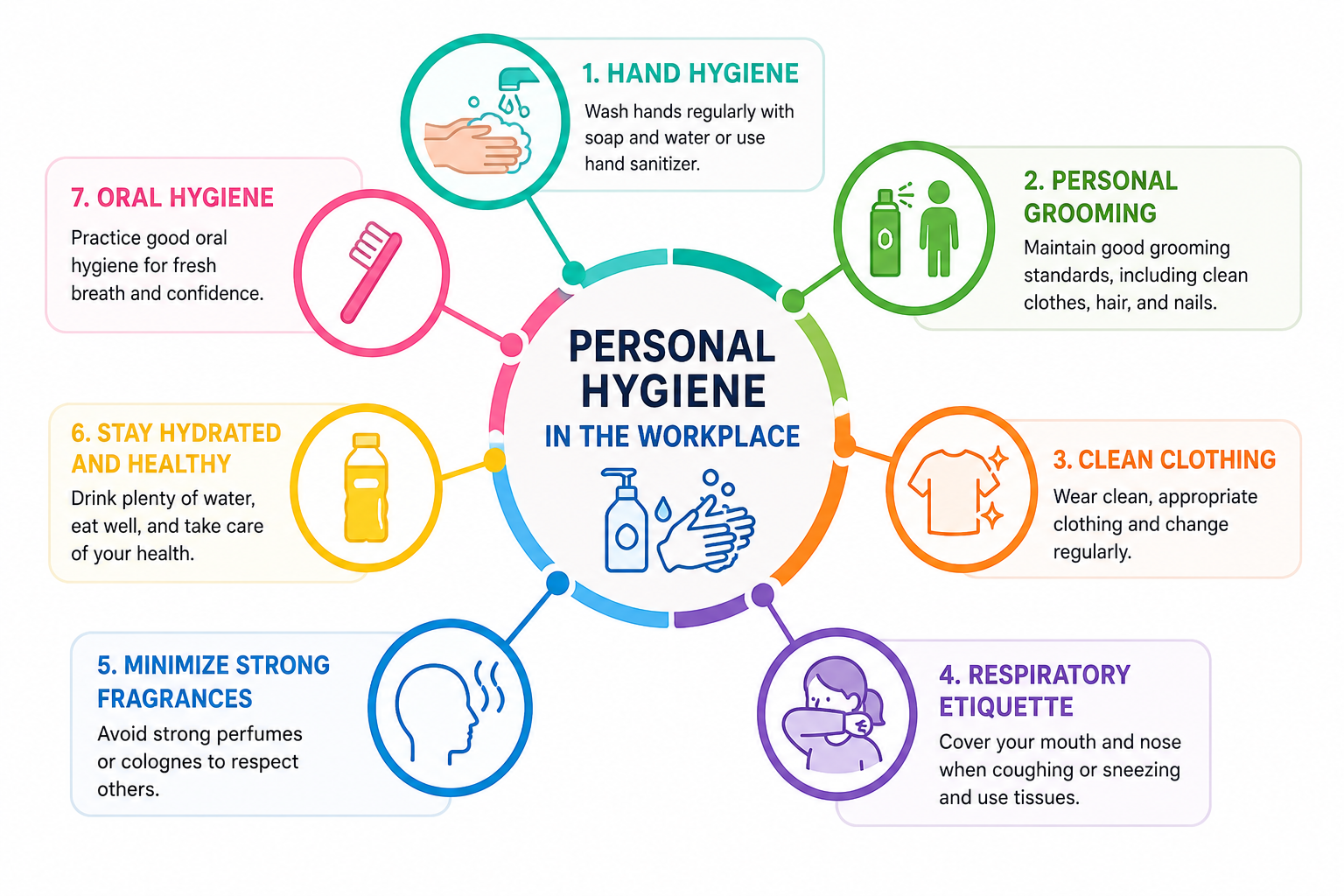
Personal hygiene plays a critical role in preventing illness and maintaining a healthy workplace. Employees share common spaces, equipment, and facilities, making personal hygiene an important responsibility for everyone.
Examples of good personal hygiene practices include:
- Regular hand washing throughout the day
- Using hand sanitizer when appropriate
- Covering coughs and sneezes properly
- Staying home when experiencing contagious illnesses
- Maintaining clean personal work areas
- Following workplace health and safety guidelines
These practices help reduce the spread of common illnesses while supporting overall workplace wellbeing.
Digital Workplace Hygiene
Digital Workplace Hygiene
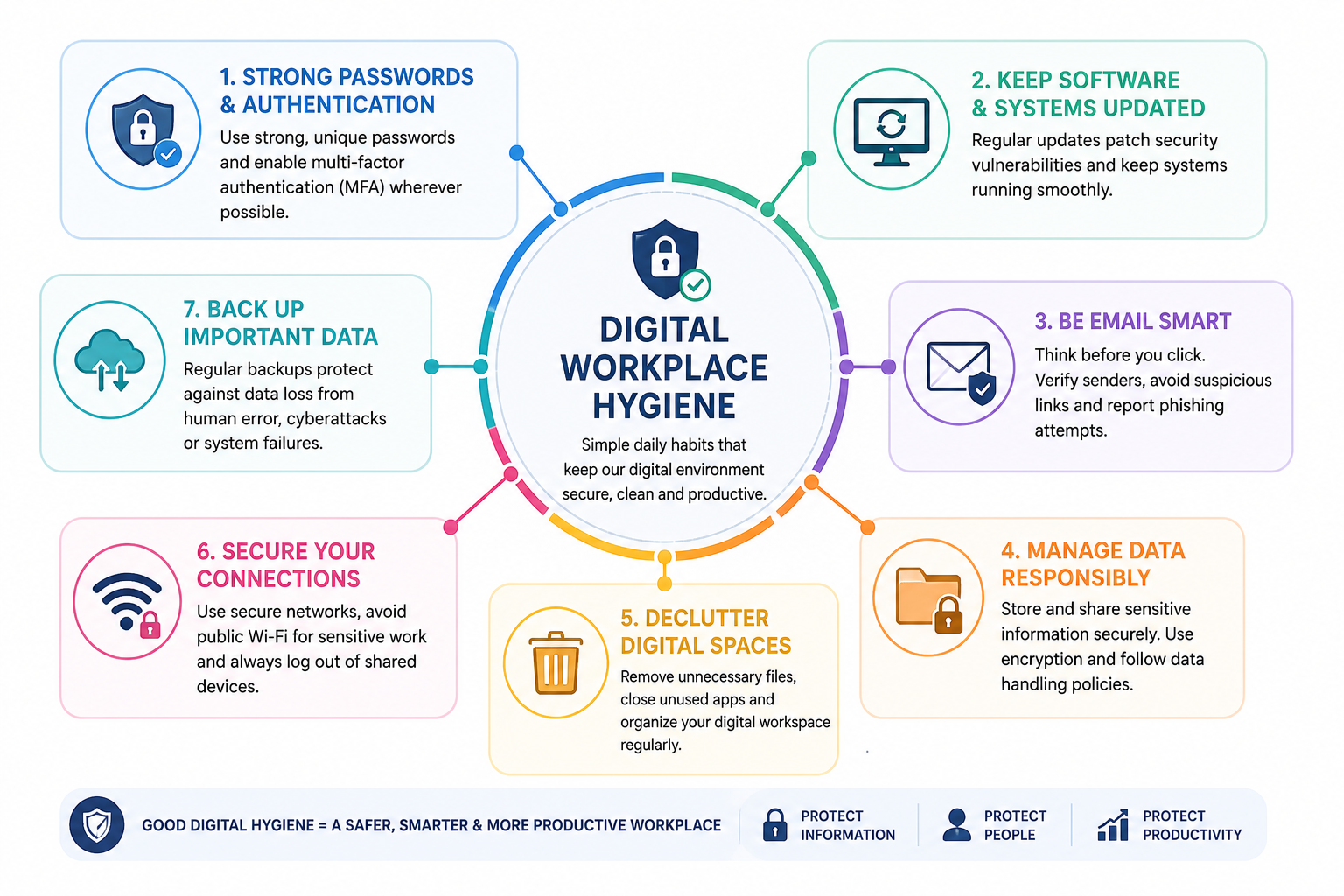
As hybrid work becomes more common, digital workplace hygiene has emerged as an essential component of workplace health and security.
Digital workplace hygiene includes:
- Using strong passwords and multi-factor authentication
- Keeping devices updated with security patches
- Following secure file-sharing procedures
- Protecting sensitive company information
- Avoiding unsecured public Wi-Fi networks
- Following company cybersecurity policies
- Safely managing digital documents and records
Poor digital hygiene can expose organizations to data breaches, compliance risks, and operational disruptions that may be just as damaging as physical workplace hygiene issues.
Workplace Hygiene Issues Examples
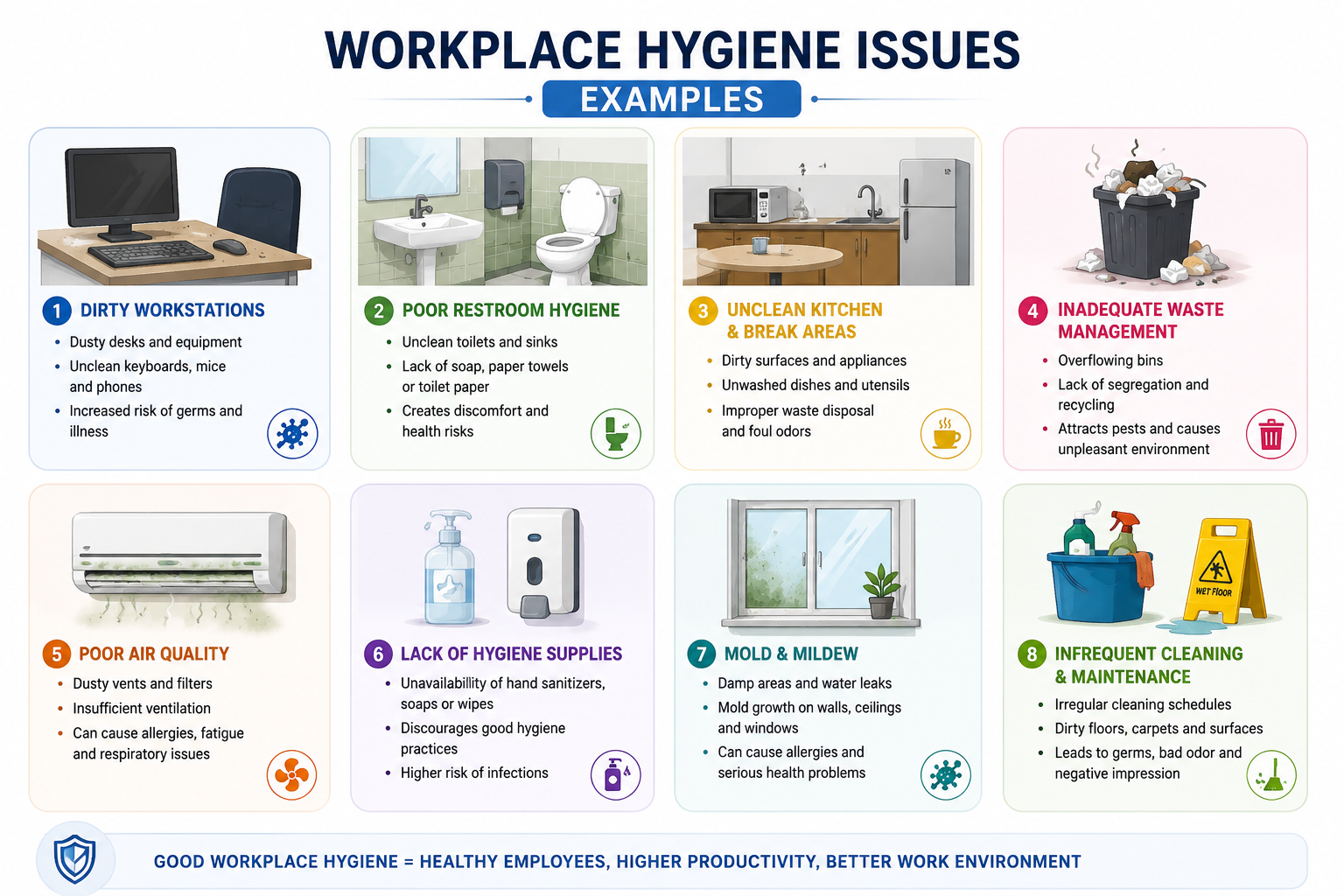
Workplace Hygiene Issues Examples
Organizations frequently encounter workplace hygiene issues that can negatively impact employee health, productivity, and engagement.
Common workplace hygiene issues examples include:
- Shared desks that are not cleaned between users
- Inadequate cleaning of meeting rooms and communal areas
- Poor ventilation and indoor air quality
- Lack of hygiene supplies such as sanitizers and wipes
- Employees working while unwell and spreading illness
- Cluttered or unsafe workspaces
- Weak cybersecurity practices among remote workers
- Inconsistent workplace hygiene policies across locations
Addressing these issues proactively helps organizations create safer and more effective hybrid work environments.
Why a Workplace Hygiene Policy Matters in 2026
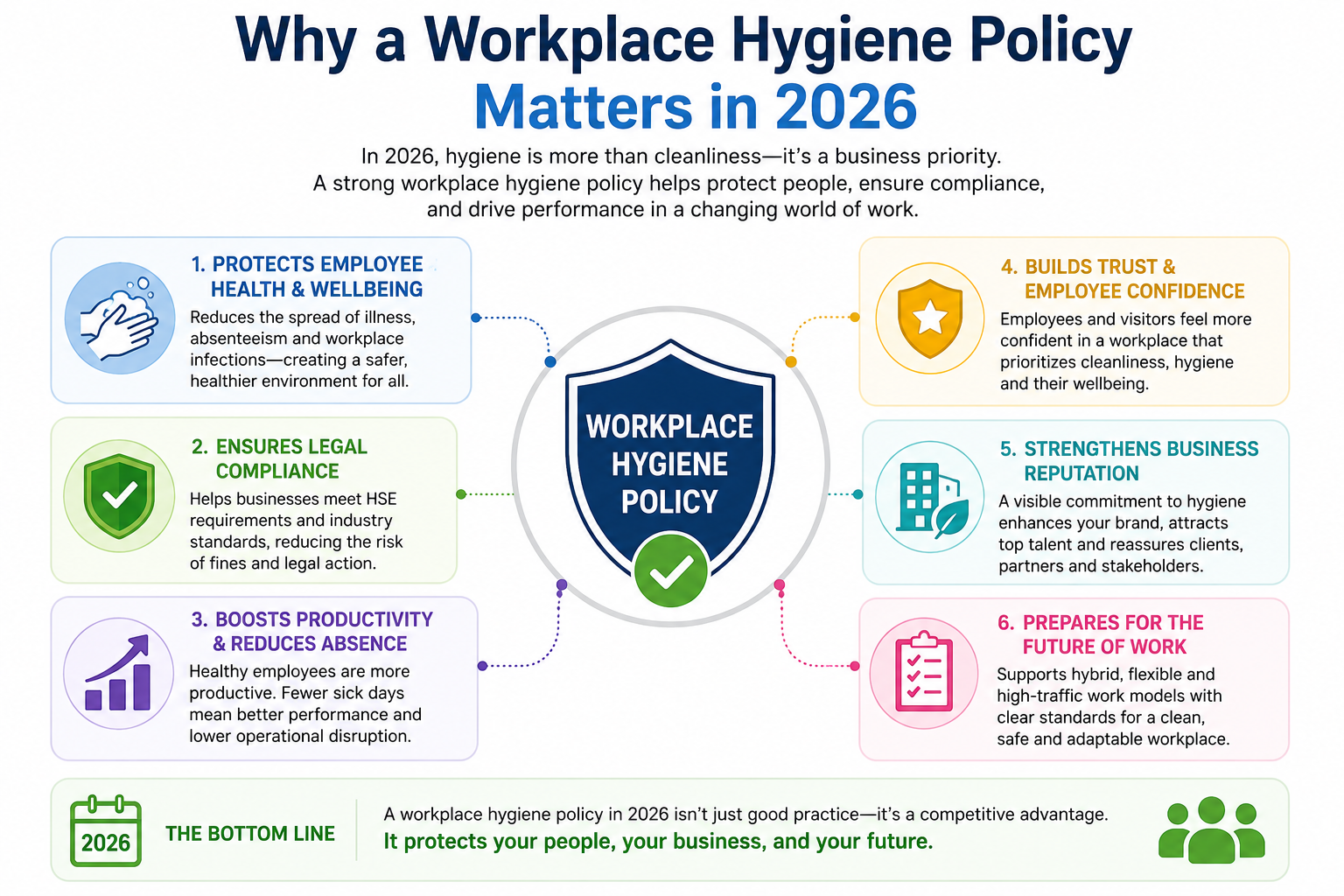
Why a Workplace Hygiene Policy Matters in 2026
A workplace hygiene policy provides clear guidance on the standards employees and managers should follow to maintain a healthy work environment.
An effective workplace hygiene policy should include:
- Cleaning and sanitation requirements
- Employee health and wellbeing expectations
- Shared workspace protocols
- Remote and hybrid work hygiene guidelines
- Digital security and data protection practices
- Reporting procedures for health and safety concerns
- Roles and responsibilities for maintaining hygiene standards
Organizations with clearly defined workplace hygiene policies are often better positioned to support employee wellbeing, reduce workplace risks, and maintain consistent standards across both physical and digital work environments.
Related Workplace & Digital Workplace Guides
Workplace hygiene is closely connected to employee wellbeing, workplace safety, hybrid work, and the overall employee experience. The resources below explore digital workplace strategies, collaboration tools, workplace technology, and best practices that help organizations create healthier and more productive work environments.
- What Are Workplace Platforms? Benefits, Features and Examples
- Best Digital Workplace Platforms for Modern Organizations
- Digital Workspace Solutions: A Complete Guide
- Digital Workplace Tools and Real-World Examples
- Top Remote Collaboration Tools for Distributed Teams
- Digital Workplace Software for Employee Communication and Collaboration
- Digital Workplace Services Explained
- Comparing Digital Workspace Software Solutions
- How to Build a Successful Digital Workplace Strategy
- Digital Workplace Best Practices for Employee Success
- Best Hybrid Work Collaboration Tools
- Best Workplace Operations Platforms for Growing Businesses
Together, these resources provide practical guidance on workplace technology, employee communication, collaboration, hybrid work, and digital workplace strategies that support healthier, safer, and more productive organizations.
Why Workplace Hygiene Matters More in Hybrid Work Environments
The shift to hybrid work has transformed how organizations think about workplace hygiene. In traditional office environments, employees typically worked from the same desk, used the same facilities, and followed established workplace routines.
Today, employees move between home offices, corporate workspaces, co-working facilities, and client locations, creating new workplace hygiene challenges that organizations must address.
As a result, workplace hygiene is no longer just about cleanliness. It has become an important factor in employee wellbeing, workplace safety, productivity, and employee retention.
Organizations that fail to prioritize workplace hygiene practices may experience higher absenteeism, lower employee satisfaction, and reduced workplace engagement.
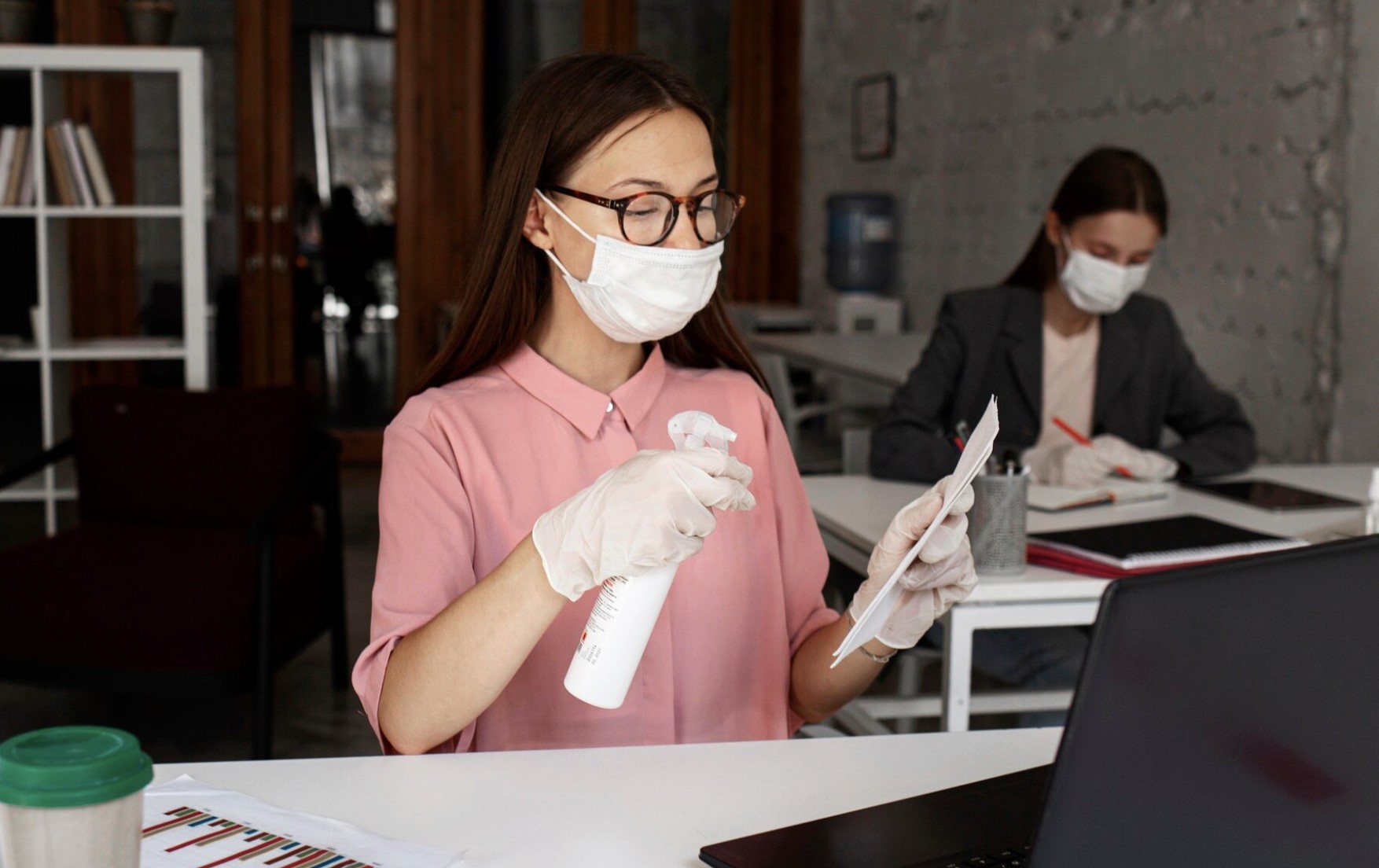
Why Workplace Hygiene Matters More in Hybrid Work Environments
Increased Movement Between Locations
Hybrid employees regularly transition between different working environments throughout the week.
Each location presents unique hygiene standards, health risks, and workplace conditions.
Unlike traditional office settings, organizations have less control over the environments employees use outside the workplace.
This increased movement can make it difficult to maintain consistent workplace hygiene standards and reinforces the need for a clear workplace hygiene policy that supports both office-based and remote employees.
Shared Desks and Hot-Desking Risks
Many organizations have adopted hot-desking and flexible seating arrangements to support hybrid work.
While this approach improves office utilization, it can also introduce workplace hygiene issues if shared workstations, meeting rooms, and communal equipment are not cleaned properly between users.
Common workplace hygiene issues examples include unclean desks, shared keyboards, poorly maintained collaboration spaces, and insufficient sanitization of high-touch surfaces.
When these issues become frequent, employees may feel uncomfortable returning to the office, which can negatively affect workplace culture and engagement.
Employee Health and Absenteeism
Effective workplace hygiene practices play a critical role in protecting employee health.
Poor hygiene standards can contribute to the spread of illnesses, resulting in increased absenteeism and reduced productivity.
According to the UK's Health and Safety Executive (HSE), millions of working days are lost every year due to work-related illness.
While many factors contribute to employee absence, maintaining high workplace hygiene standards can help reduce preventable health risks and create a healthier work environment.
Organizations that invest in workplace cleanliness, employee wellbeing initiatives, and workplace safety programs often benefit from improved attendance, stronger morale, and higher productivity levels.
Building Trust and Psychological Safety
Employees want to feel confident that their employer values their wellbeing. A clean, safe, and well-maintained workplace demonstrates that the organization takes employee health seriously.
This helps build trust, strengthen workplace culture, and support psychological safety.
When employees see that workplace hygiene policies are actively enforced and regularly communicated, they are more likely to feel comfortable collaborating with colleagues, attending meetings, and participating in workplace activities.
Conversely, poor hygiene standards can create anxiety, reduce confidence in leadership, and contribute to employee dissatisfaction.
Ultimately, workplace hygiene has become a key component of the modern employee experience.
Organizations that prioritize workplace hygiene practices, employee wellbeing, and workplace safety are better positioned to create productive hybrid work environments where employees feel supported, engaged, and motivated to perform at their best.
The Business Impact of Poor Workplace Hygiene
Many organizations view workplace hygiene as a facilities or compliance issue.
However, the reality is that poor workplace hygiene can have a direct impact on productivity, employee wellbeing, workplace safety, and talent retention.
In today's hybrid work environment, employees expect workplaces to be clean, safe, and supportive of their health.
When these expectations are not met, businesses often experience increased absenteeism, lower morale, and rising operational costs.
According to the UK's Health and Safety Executive (HSE), an estimated 40.1 million working days were lost due to work-related illness and workplace injuries during 2024/25, demonstrating the significant impact that workplace health issues continue to have on organizations across the UK.
The total economic cost of workplace injury and ill health is estimated at £22.9 billion annually.
40.1M
working days lost
According to the UK Health and Safety Executive (HSE), approximately 40.1 million working days were lost due to work-related illness and workplace injuries during 2024/25. The HSE also estimates the total economic cost of workplace injury and ill health at £22.9 billion annually, demonstrating why workplace hygiene, employee wellbeing, and workplace safety remain critical business priorities.
Source: UK Health and Safety Executive (HSE) – Work-Related Ill Health and Injury Statistics 2024/25
Reduced Productivity
Poor workplace hygiene can significantly affect employee productivity.
Employees who work in environments with poor cleanliness standards, inadequate ventilation, cluttered workspaces, or insufficient hygiene measures may find it harder to concentrate and perform at their best.
Research consistently shows that healthier workplaces contribute to improved employee performance, reduced distractions, and fewer workplace disruptions.
In hybrid workplaces, maintaining consistent workplace hygiene practices helps ensure employees feel comfortable and productive when attending the office.
The HSE reports that 35.7 million working days were lost due to work-related ill health alone, highlighting the substantial productivity impact associated with employee health issues.
35.7M
days lost to ill health
The UK Health and Safety Executive (HSE) reports that 35.7 million working days were lost due to work-related ill health alone, highlighting the significant productivity impact that employee health, workplace hygiene, and workplace safety issues can have on organizations across the UK.
Source: UK Health and Safety Executive (HSE) – Work-Related Ill Health Statistics 2024/25
Increased Employee Sick Days
One of the most visible workplace hygiene issues examples is increased employee absence.
Poor hygiene standards can contribute to the spread of illnesses, particularly in shared workspaces, meeting rooms, communal kitchens, and hot-desking environments.
The latest HSE figures estimate that 1.9 million workers were suffering from work-related ill health during 2024/25, while approximately 680,000 workers sustained a workplace injury. These figures demonstrate how health-related issues continue to affect businesses of all sizes.
Organizations that implement effective workplace hygiene policies are often better positioned to reduce preventable illness-related absences and create healthier working environments.
1.9M
workers affected
The latest UK Health and Safety Executive (HSE) figures estimate that 1.9 million workers were suffering from work-related ill health during 2024/25, while approximately 680,000 workers sustained a workplace injury. These figures highlight the ongoing importance of workplace hygiene, workplace safety, employee wellbeing, and health and safety hygiene programs across organizations of all sizes.
Source: UK Health and Safety Executive (HSE) – Work-Related Ill Health and Workplace Injury Statistics 2024/25
Lower Employee Morale and Retention
Workplace hygiene also influences how employees perceive their employer.
A workplace that appears neglected or poorly maintained can create concerns about employee wellbeing and workplace safety.
Employees increasingly expect employers to provide:
- Clean and safe workspaces
- Good air quality and ventilation
- Clear health and safety procedures
- Access to hygiene supplies
- Consistent workplace hygiene practices
When these expectations are not met, employee satisfaction can decline. Over time, poor workplace conditions can contribute to disengagement, reduced trust in leadership, and increased staff turnover.
As competition for skilled employees continues to increase, workplace hygiene is becoming an important component of the overall employee experience and employer brand.
Potential Compliance and Legal Risks
A poorly implemented workplace hygiene policy can expose organizations to compliance, health and safety, and reputational risks.
Employers have a legal duty to provide a safe working environment, and failure to maintain appropriate workplace standards may increase the likelihood of complaints, regulatory scrutiny, and potential legal action.
Beyond regulatory concerns, workplace incidents can damage employee trust and negatively impact an organization's reputation among both existing employees and prospective candidates.
Key Workplace Hygiene Statistics
The latest workplace health and safety data highlights why workplace hygiene should be viewed as a strategic business priority:
- 40.1 million working days were lost due to work-related illness and workplace injuries in Great Britain during 2024/25.
- 1.9 million workers reported work-related ill health.
- 680,000 workers sustained a workplace injury.
- £22.9 billion is the estimated annual cost of workplace injury and ill health to the UK economy.
- Ill health accounts for approximately 72% of the total economic cost, significantly outweighing injury-related costs.
These figures demonstrate that workplace hygiene is not simply about cleanliness. It is closely linked to employee wellbeing, workplace safety, productivity, compliance, and long-term business performance.
Workplace Hygiene Challenges and Solutions for Hybrid Workplaces
Before implementing workplace hygiene best practices, organizations should understand the most common challenges affecting employee health, workplace safety, and employee retention in hybrid work environments.
| Workplace Hygiene Challenge | Business Impact | Recommended Solution |
| Shared desks and hot-desking | Increased risk of germs spreading between employees | Establish cleaning protocols between desk usage |
| Poor workplace cleanliness | Reduced employee confidence and satisfaction | Schedule regular professional deep cleaning services |
| Inadequate ventilation | Lower productivity and employee comfort | Improve air circulation and HVAC maintenance |
| Inconsistent hygiene standards | Different experiences across locations | Implement a company-wide workplace hygiene policy |
| Poor communication of hygiene expectations | Reduced policy compliance | Provide regular training and workplace updates |
| Lack of hygiene supplies | Increased workplace health concerns | Ensure hygiene stations are easily accessible |
| Employee wellbeing concerns | Higher absenteeism and turnover | Invest in employee wellbeing initiatives |
Organizations that proactively address these workplace hygiene issues examples are more likely to create healthier, safer, and more productive work environments.
7 Workplace Hygiene Best Practices for Hybrid Teams
1. Create a Clear Workplace Hygiene Policy
A workplace hygiene policy provides employees with clear expectations regarding cleanliness, workplace safety, health protocols, and shared workspace responsibilities.
In hybrid environments, policies should cover both office-based and remote workers to ensure consistency across all locations.
Key elements of an effective workplace hygiene policy include:
- Clear cleaning and sanitation responsibilities
- Guidelines for shared desks, meeting rooms, and communal areas
- Health and illness reporting procedures
- Expectations for remote workspace cleanliness and safety
- Access to hygiene supplies and resources
2. Invest in Professional Deep Cleaning Services
Regular workplace cleaning is important, but professional deep cleaning services provide a more thorough approach to maintaining workplace hygiene.
Key areas that benefit from deep cleaning include:
- High-touch surfaces such as door handles, light switches, and shared devices
- Meeting rooms used by multiple teams throughout the week
- Communal kitchens and break areas
- Restrooms and sanitation facilities
- Shared equipment and hot-desking workstations
These spaces can accumulate bacteria and contaminants over time, particularly in hybrid offices where multiple employees use the same areas.
Professional deep cleaning services offer several benefits:
- Help maintain higher workplace hygiene standards
- Demonstrate a commitment to employee wellbeing and workplace safety
- Improve employee confidence in returning to the office
- Support overall workplace satisfaction and productivity
- Reduce the risk of hygiene-related workplace concerns
Investing in professional deep cleaning can play an important role in creating a healthier, safer, and more welcoming work environment.
3. Improve Air Quality and Ventilation
Air quality plays a significant role in workplace health and employee wellbeing.
Poor ventilation can contribute to discomfort, reduced concentration, fatigue, and increased health concerns among employees.
In hybrid workplaces, where occupancy levels may fluctuate throughout the week, maintaining consistent air quality can be particularly challenging but remains essential for employee comfort and productivity.
Organizations should regularly inspect ventilation systems, maintain HVAC equipment, and ensure adequate airflow throughout office spaces.
They may also consider using air quality monitoring tools, replacing filters on schedule, and increasing access to natural ventilation where possible. Improving indoor air quality can help create a healthier and more comfortable working environment while supporting employee wellbeing, engagement, and overall workplace performance.
4. Provide Hygiene Supplies in Shared Spaces
Employees should have easy access to essential hygiene supplies throughout the workplace.
Key supplies should include:
- Sanitizing stations
- Disinfectant wipes
- Hand soap
- Cleaning materials
These resources encourage employees to participate in maintaining workplace hygiene standards.
Providing these resources also reinforces the organization's commitment to workplace health and safety.
5. Support Employee Wellbeing Programs
Workplace hygiene extends beyond physical cleanliness.
Employee wellbeing initiatives that support physical and mental health can contribute to healthier workplaces and stronger employee engagement.
Organizations that prioritize wellbeing often experience lower absenteeism, higher productivity, and improved employee retention.
A comprehensive wellbeing strategy helps employees feel supported both in the office and while working remotely. When employees have access to resources that promote healthy lifestyles, stress management, and work-life balance, they are more likely to remain engaged and perform at their best.
Wellbeing programs also demonstrate that the organization values its workforce, which can strengthen trust and improve overall workplace culture.
Examples of effective employee wellbeing initiatives include:
- Mental health support programs and employee assistance services
- Flexible working arrangements that encourage work-life balance
- Wellness workshops focused on nutrition, exercise, and stress management
- Regular health screenings and preventative healthcare initiatives
- Access to fitness memberships or virtual wellness activities
- Training for managers to recognize and support employee wellbeing concerns
- Dedicated wellbeing resources available through digital workplace platforms
Organizations should regularly gather employee feedback to understand which wellbeing initiatives are most valuable and identify opportunities for improvement.
By combining strong workplace hygiene practices with meaningful wellbeing programs, businesses can create healthier, safer, and more supportive environments that benefit both employees and the organization as a whole.
6. Encourage Responsible Hybrid Working Practices
Employees should be encouraged to follow workplace hygiene practices regardless of where they work. This includes maintaining clean workspaces, following health and safety guidance, and staying home when unwell.
A culture of shared responsibility helps create safer workplaces and reduces health-related disruptions.
7. Use Digital Workplace Tools to Share Policies and Updates
Communication is essential for maintaining workplace hygiene standards. Employees need easy access to workplace hygiene policies, health and safety updates, training materials, and wellbeing resources.
Digital workplace platforms can help organizations distribute important information, collect employee feedback, and ensure workplace hygiene initiatives remain visible across the entire workforce.
Several digital workplace tools can support these efforts and improve compliance with workplace hygiene standards. Employee intranet platforms provide a central location where staff can access hygiene policies, cleaning schedules, health and safety procedures, and wellbeing resources at any time.
Collaboration tools such as Microsoft Teams and Slack can be used to share real-time updates, reminders, and announcements about workplace hygiene initiatives, ensuring employees stay informed regardless of whether they are working remotely or in the office.
Learning management systems (LMS) are also valuable for delivering workplace hygiene training and tracking employee completion rates. These platforms help organizations ensure that all employees understand their responsibilities and remain up to date with changing health and safety requirements.
Survey and feedback tools, such as Microsoft Forms or SurveyMonkey, allow organizations to gather employee input on workplace cleanliness, identify concerns, and make improvements based on real feedback.
The benefits of using digital workplace tools include improved communication, greater policy visibility, higher employee engagement, and more consistent hygiene practices across multiple locations.
They also help reduce confusion, streamline training processes, and provide measurable insights into employee participation and compliance. By leveraging the right digital tools, organizations can create a more informed, connected, and health-conscious workforce while supporting a positive employee experience in hybrid work environments.
The Role of Leadership in Workplace Hygiene
Leadership plays a critical role in the success of any workplace hygiene strategy. While organizations may invest in workplace hygiene practices, professional deep cleaning services, and employee wellbeing programs, these efforts are unlikely to succeed without visible leadership support.
Employees often look to managers and senior leaders to understand what behaviors are expected and which workplace initiatives are genuinely important.
Research from the workplace consultancy and research firm Gallup has consistently found that managers account for up to 70% of the variance in employee engagement, demonstrating the significant influence leadership has on workplace culture and employee behavior.
When leaders actively support workplace hygiene initiatives, employees are more likely to follow workplace hygiene policies and contribute to a healthier work environment.
Setting Expectations
Effective leaders establish clear expectations around workplace hygiene standards and employee responsibilities.
A well-defined workplace hygiene policy should outline how employees are expected to maintain clean workspaces, use shared facilities responsibly, and support workplace health and safety initiatives.
Employees are far more likely to follow workplace hygiene practices when expectations are clearly communicated and consistently reinforced.
Organizations that fail to establish these standards often experience workplace hygiene issues examples such as poorly maintained shared spaces, inconsistent cleaning practices, and lower compliance with workplace health guidelines.
Communicating Policies Clearly
Communication is essential for ensuring workplace hygiene policies are understood and followed.
According to research by Project Management Institute, ineffective communication is one of the leading causes of organizational challenges and project failures. The same principle applies to workplace hygiene.
Leaders should regularly communicate:
- Workplace hygiene policies and expectations
- Health and safety updates
- Changes to workplace procedures
- Employee wellbeing initiatives
- Available workplace resources
Regular communication helps ensure that employees remain informed, engaged, and aware of their responsibilities regardless of whether they work remotely, in the office, or in a hybrid environment.
Leading by Example
One of the most effective ways to promote workplace hygiene is through leadership behavior.
Employees are more likely to adopt workplace hygiene practices when managers and senior leaders visibly follow the same standards they expect from others.
When leaders actively support workplace cleanliness, follow workplace safety procedures, and participate in employee wellbeing initiatives, they help create a culture where workplace hygiene becomes a shared responsibility rather than simply a compliance requirement.
This approach also strengthens trust. Employees are more likely to view workplace hygiene initiatives as genuine efforts to support wellbeing rather than administrative exercises.
Encouraging Employee Feedback
Workplace hygiene standards should continually evolve based on employee experiences and workplace needs. Leaders should create opportunities for employees to share feedback regarding workplace cleanliness, safety concerns, and wellbeing initiatives.
According to research from Qualtrics, employees who believe their feedback is heard are significantly more likely to feel engaged and committed to their organization. Gathering employee input can also help identify workplace hygiene issues before they become larger problems.
Feedback can be collected through:
- Employee surveys
- Pulse checks
- Team meetings
- Suggestion programs
- Digital workplace platforms
By listening to employees and acting on feedback, leaders can improve workplace hygiene standards while strengthening employee trust and engagement.
Leadership Drives Workplace Culture
Ultimately, workplace hygiene is not just a facilities issue—it is a leadership responsibility.
Organizations that prioritize workplace hygiene practices, communicate workplace hygiene policies effectively, and actively support employee wellbeing are better positioned to create healthier, safer, and more productive workplaces.
In today's hybrid work environment, strong leadership can make the difference between workplace hygiene becoming a compliance exercise or a competitive advantage that improves employee satisfaction, retention, and organizational performance.
How Technology Supports Workplace Hygiene and Safety
Technology has become an essential tool for supporting workplace hygiene, workplace safety, and employee wellbeing in today's hybrid work environment.
As employees split their time between offices, remote workspaces, and shared locations, organizations need reliable ways to communicate workplace hygiene practices, enforce workplace hygiene policies, and ensure consistent workplace cleanliness standards across all work environments.
Modern digital workplace platforms help organizations manage workplace hygiene more effectively by providing employees with instant access to workplace hygiene policies, workplace safety procedures, training materials, cleaning schedules, and employee wellbeing resources. This helps reduce workplace hygiene issues, improve compliance, and create safer working environments.
Policy Management
A centralized policy management system allows organizations to create, manage, and distribute a workplace hygiene policy from a single location.
Employees can quickly access the latest workplace hygiene practices, workplace sanitation procedures, infection prevention guidelines, and health and safety requirements.
This is particularly important in a hybrid work environment where employees may not regularly visit the office.
Centralized policy management ensures every employee follows the same workplace hygiene standards regardless of their location.
Employee Communications
Clear communication plays a critical role in maintaining workplace hygiene and workplace safety.
Organizations must regularly share updates related to workplace cleanliness, office hygiene standards, cleaning schedules, facility maintenance, and employee health initiatives.
Digital employee communication platforms make it easier to distribute workplace hygiene updates, policy changes, and health alerts in real time.
According to Gallup research, employees who feel informed and connected are more engaged and productive, highlighting the importance of effective workplace communication.
Training and Onboarding
Workplace hygiene practices should be introduced from an employee's first day.
Digital onboarding and training platforms help organizations educate employees about workplace hygiene policies, office hygiene standards, workplace safety requirements, and employee wellbeing initiatives.
Training programs can cover topics such as infection prevention, workplace sanitation, proper use of shared workspaces, and reporting workplace hygiene concerns.
Online learning systems also provide reporting capabilities that help organizations track compliance and completion rates.
Incident Reporting
Even with strong workplace hygiene practices in place, workplace hygiene issues examples can still occur. Employees may encounter cleanliness concerns, sanitation problems, health and safety risks, or facility maintenance issues that require immediate attention.
Digital incident reporting systems allow employees to quickly report workplace hygiene concerns, helping organizations respond faster and maintain higher workplace cleanliness standards. This proactive approach helps reduce risk while supporting a healthier workplace environment.
Workplace Announcements
Regular workplace announcements help reinforce workplace hygiene policies and keep employees informed about important health and safety updates.
Organizations can use intranet platforms, employee apps, and communication tools to share cleaning schedules, facility updates, workplace wellness initiatives, and workplace hygiene reminders.
Consistent communication ensures workplace hygiene remains visible and reinforces employee responsibility for maintaining a safe and healthy workplace.
Digital Document Access
Easy access to workplace hygiene documentation is essential for maintaining compliance and accountability.
Employees should be able to locate workplace hygiene policies, cleaning protocols, workplace sanitation guidelines, health and safety procedures, and employee wellbeing resources whenever they need them.
Centralized document management systems ensure employees always access the latest version of workplace hygiene information, reducing confusion and improving compliance.
Supporting Employee Wellbeing
Technology also plays an important role in supporting employee wellbeing.
Many organizations use digital workplace platforms to provide access to wellbeing programs, health resources, mental health support, wellness initiatives, and employee feedback tools.
Research consistently shows that organizations that invest in employee wellbeing experience higher engagement, lower absenteeism, and improved retention.
Combining employee wellbeing initiatives with strong workplace hygiene practices helps create healthier and more productive workplaces.
Technology Creates Safer and Healthier Workplaces
Modern employee communication and digital workplace platforms help organizations improve workplace hygiene by making workplace hygiene policies, workplace safety procedures, cleaning schedules, workplace sanitation standards, and employee wellbeing resources easily accessible.
This is especially important in a hybrid work environment where employees may work across multiple locations and require consistent access to workplace hygiene information.
By combining workplace hygiene practices with technology, organizations can improve workplace cleanliness, strengthen workplace safety, support employee wellbeing, and reduce workplace hygiene issues before they impact productivity or employee satisfaction.
Workplace Hygiene Checklist for Hybrid Organizations
Maintaining workplace hygiene in a hybrid work environment requires more than occasional cleaning.
Organizations need clear workplace hygiene practices, documented procedures, and ongoing monitoring to ensure employees remain safe, healthy, and productive.
The following workplace hygiene checklist can help organizations assess whether they have the right workplace hygiene policies, workplace sanitation standards, and workplace safety measures in place.
Workplace Hygiene Assessment Checklist
✅ Cleaning procedures documented and regularly reviewed
Ensure all workplace cleaning protocols, workplace sanitation procedures, and cleaning schedules are clearly documented and updated regularly.
✅ Professional deep cleaning services scheduled
Regular professional deep cleaning helps maintain workplace cleanliness and reduce workplace hygiene issues in shared workspaces, meeting rooms, kitchens, and restrooms.
✅ Hygiene supplies readily available
Employees should have easy access to soap, hand sanitizer, disinfectant wipes, paper towels, and other workplace hygiene supplies throughout the workplace.
✅ Workplace hygiene policy communicated to employees
A clear workplace hygiene policy should be accessible to all employees and reinforced through training, onboarding, and workplace communications.
✅ Hybrid work policies updated and aligned with health and safety requirements
Hybrid work arrangements should include guidance on workplace hygiene practices, employee wellbeing, workplace safety, and remote working expectations.
✅ Health and safety training completed
Employees should receive regular training on workplace hygiene, infection prevention, workplace safety procedures, and emergency response protocols.
✅ Incident reporting process clearly defined
Employees should know how to report workplace hygiene concerns, workplace safety risks, facility issues, or health-related incidents.
✅ Employee wellbeing resources available
Organizations should provide resources that support employee wellbeing, workplace wellness, mental health, and overall occupational health.
✅ Ventilation and air quality systems maintained
Regular inspections and maintenance of HVAC systems can improve workplace air quality and support employee health.
✅ Shared workspaces regularly inspected
Hot desks, meeting rooms, communal kitchens, and shared equipment should be monitored to ensure workplace hygiene standards are consistently maintained.
✅ Emergency communication process established
Organizations should have a reliable process for communicating workplace hygiene alerts, health updates, and workplace safety information during emergencies.
✅ Digital workplace tools available to support compliance
Employees should have access to workplace hygiene policies, training materials, health and safety documents, and wellbeing resources through centralized digital platforms.
Organizations that can confidently check every item on this workplace hygiene checklist are generally better positioned to support employee wellbeing, improve workplace safety, reduce workplace hygiene issues, and create a healthier hybrid work environment.
Regular reviews of workplace hygiene practices and workplace hygiene policies can help ensure standards remain effective as workplace needs evolve.
Prioritize Workplace Hygiene for a Better Workplace With AgilityPortal
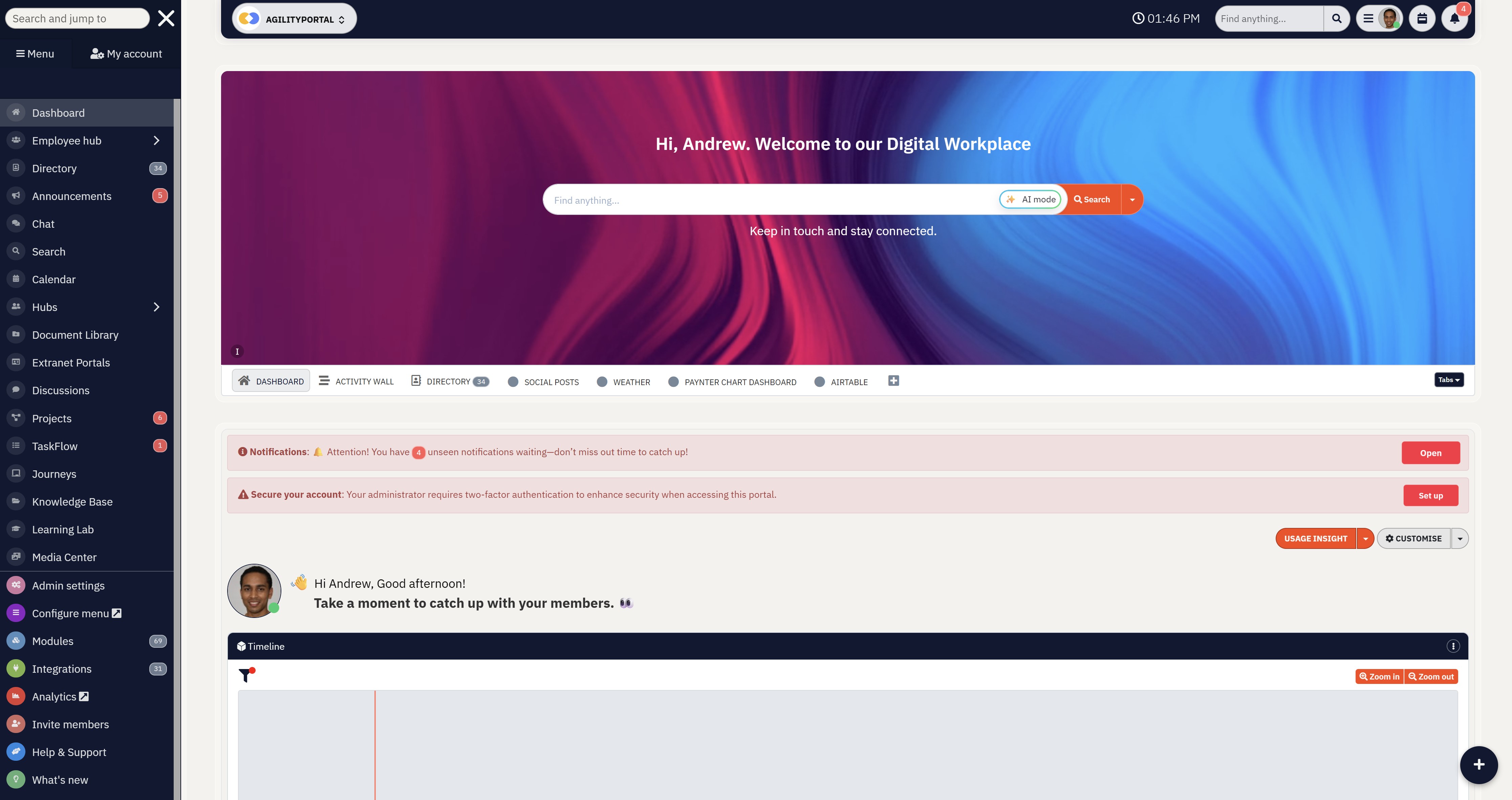
Prioritize Workplace Hygiene for a Better Workplace With AgilityPortal
Workplace hygiene policies are only effective when employees can easily access, understand, and follow them. AgilityPortal helps organizations centralize workplace hygiene policies, health and safety procedures, training materials, workplace announcements, and employee communications in a single secure platform.
Whether you're managing office-based, remote, or hybrid teams, AgilityPortal ensures employees stay informed about workplace hygiene standards, safety updates, cleaning procedures, and employee wellbeing initiatives.
With built-in document management, policy acknowledgements, training pathways, employee communications, and mobile access, organizations can improve compliance, reduce workplace risks, and create a healthier workplace culture.
Key Benefits:
- Centralize workplace hygiene policies and procedures
- Library of articles stored in a knowledge base
- Share health and safety updates instantly
- Deliver workplace hygiene training and onboarding
- Track policy acknowledgements and compliance
- Improve employee wellbeing and workplace safety
- Collaboration tools and communication
- Keep hybrid and frontline workers informed anywhere
Start building a cleaner, safer, and more connected workplace with AgilityPortal today.
Workplace Hygiene, Safety & Employee Communication Platform
Prioritize Workplace Hygiene Policies and Procedures with AgilityPortal
AgilityPortal helps organizations centralize workplace hygiene policies, health and safety procedures, employee wellbeing resources, training materials, cleaning updates, and workplace communications in one secure digital workplace platform.
A modern employee communication and digital workplace platform for organizations that want to keep workplace hygiene procedures visible, accessible, and easy to follow across office, frontline, remote, and hybrid teams.
Final Thoughts on Workplace Hygiene
Workplace hygiene has evolved far beyond basic cleaning routines and facility maintenance. In today's hybrid work environment, workplace hygiene encompasses workplace safety, employee wellbeing, personal hygiene in the workplace, workplace sanitation, and the policies and practices that help employees remain healthy, engaged, and productive.
Organizations that invest in workplace hygiene practices are not simply creating cleaner offices—they are building workplaces that support employee health, reduce absenteeism, improve workplace culture, and strengthen employee retention.
From maintaining cleanliness in the workplace and promoting personal hygiene at work to implementing a clear workplace hygiene policy and supporting health and safety hygiene standards, every aspect contributes to a better employee experience.
As employee expectations continue to evolve, workplace hygiene is increasingly becoming a strategic business priority. Poor hygiene at work can negatively impact employee morale, productivity, and trust, while strong workplace hygiene standards can help organizations attract and retain top talent.
In fact, many of the most common workplace hygiene issues examples, such as inadequate cleaning, poor ventilation, and lack of hygiene supplies, are now viewed as indicators of how much an organization values its people.
Ultimately, organizations that prioritize workplace hygiene, employee wellbeing, workplace safety, and workplace cleanliness are better positioned to create healthier, safer, and more productive workplaces.
By combining effective workplace hygiene practices with strong leadership, clear communication, and modern workplace technology, businesses can foster a positive workplace culture that supports long-term employee engagement and organizational success.
Frequently Asked Questions About Workplace Hygiene
What is workplace hygiene?
Workplace hygiene refers to the practices, policies, and procedures organizations use to maintain a clean, safe, and healthy working environment.
Workplace hygiene includes cleanliness in the workplace, personal hygiene in the workplace, workplace sanitation, infection prevention, and workplace safety measures.
Effective workplace hygiene practices help reduce health risks, improve employee wellbeing, and create a more productive work environment.
Why is workplace hygiene important in hybrid work?
Workplace hygiene is especially important in hybrid work environments because employees move between offices, home workspaces, co-working facilities, and client locations.
Maintaining consistent workplace hygiene practices helps reduce the spread of illness, supports employee wellbeing, and ensures health and safety hygiene standards are maintained regardless of where employees work.
Strong workplace hygiene policies also help build employee trust and confidence in the workplace.
How does workplace hygiene affect employee wellbeing?
Good workplace hygiene directly contributes to employee wellbeing by creating a cleaner, healthier, and safer work environment. Poor hygiene at work can increase exposure to germs, reduce employee comfort, and negatively affect morale.
Research from the UK's Health and Safety Executive (HSE) shows that millions of working days are lost annually due to work-related illness, highlighting the importance of workplace hygiene and employee health initiatives.
What are the biggest workplace hygiene risks in hybrid workplaces?
Some of the most common workplace hygiene issues examples include dirty toilets, poor workplace cleanliness, inadequate handwashing facilities, lack of soap and hand sanitizer, shared workstations that are not properly cleaned, poor ventilation, and inconsistent workplace hygiene practices across different locations.
These issues can increase health risks, reduce productivity, and negatively affect employee satisfaction.
What is personal hygiene in the workplace?
Personal hygiene in the workplace refers to the habits and behaviors employees follow to maintain cleanliness and prevent the spread of illness.
Examples include regular handwashing, using hand sanitizer, covering coughs and sneezes, maintaining clean workspaces, and staying home when unwell.
Good personal hygiene at work plays an important role in supporting workplace hygiene, employee wellbeing, and workplace safety.
How can employers improve workplace hygiene?
Organizations can improve workplace hygiene by implementing a clear workplace hygiene policy, providing hygiene supplies, maintaining workplace cleanliness, investing in professional deep cleaning services, improving ventilation, offering employee wellbeing programs, and delivering regular health and safety hygiene training.
Consistent communication and employee education are also critical for maintaining high workplace hygiene standards.
What is the connection between workplace hygiene and health and safety?
Workplace hygiene and health and safety hygiene go hand in hand.
Maintaining clean facilities, reducing workplace hazards, preventing the spread of infectious diseases, and promoting employee wellbeing all contribute to a safer workplace.
Effective workplace hygiene practices help organizations meet health and safety obligations while protecting employees and visitors.
How does technology help support workplace hygiene?
Technology helps organizations manage workplace hygiene by providing centralized access to workplace hygiene policies, workplace safety procedures, employee training, incident reporting systems, and workplace communications.
Digital workplace platforms can improve compliance, increase awareness of hygiene at work, and ensure employees have access to important workplace hygiene information wherever they work.
AI Summary
- Workplace hygiene has become a critical business priority in modern hybrid work environments, influencing employee wellbeing, workplace safety, productivity, and employee retention.
- Common workplace hygiene issues examples include dirty toilets, poor workplace cleanliness, inadequate handwashing facilities, lack of hygiene supplies, poor ventilation, and the spread of infectious diseases.
- Strong workplace hygiene practices help organizations reduce absenteeism, improve employee satisfaction, support health and safety hygiene requirements, and create healthier working environments.
- Personal hygiene in the workplace plays an important role in preventing illness and maintaining cleanliness in the workplace through proper handwashing, sanitization, and responsible workplace behavior.
- A clear workplace hygiene policy helps establish expectations for hygiene at work, workplace sanitation, infection prevention, shared workspace management, and employee wellbeing.
- Organizations that invest in workplace cleanliness, professional deep cleaning services, employee wellbeing programs, and workplace safety initiatives are better positioned to attract and retain top talent.
- Digital workplace platforms can support workplace hygiene by improving policy communication, employee training, incident reporting, and access to workplace health and safety information.
Most Popular Posts

Effective communication among team members is vital for the productivity and success of any organization. Surprisingly, 60% of companies lack a long-term internal communication strategy, which p...


Businesses thrive on communication for efficiency, productivity and accomplishment. When the right information is passed from the right designation in the organization, it promotes positivity an...
Categories
Blog
(2988)
Business Management
(376)
Employee Engagement
(223)
Digital Transformation
(192)
Growth
(143)
Intranets
(137)
Remote Work
(63)
Sales
(53)
Collaboration
(48)
Customer Experience
(30)
Culture
(30)
Knowledge Management
(28)
Project management
(28)
Leadership
(20)
Comparisons
(9)
News
(1)

Related Posts

Workplace hygiene has evolved far beyond keeping desks clean and ensuring washrooms are stocked. In today's hybrid work environment, it encompasses everything from workplace cleanliness and air quality to employee wellbeing, health and safety p...

Recruitment challenges remain one of the biggest obstacles to growth for deep tech companies in 2026. As demand for AI engineers, data scientists, robotics specialists, semiconductor experts, and biotech researchers continues to rise, organizat...

The rise of artificial intelligence is transforming the way SEO professionals research keywords, analyze competitors, monitor rankings, and optimize content. According to a 2024 HubSpot survey, more than 64% of marketers already use AI tools in...

The DEI maturity model represents a structured approach to assessing and enhancing diversity, equity, and inclusion within corporate environments. This model serves as a crucial framework for organizations aiming to not only diversify their wor...

If you've ever managed relationships with partners, distributors, resellers, suppliers, or clients, you've probably experienced the frustration of searching through endless email threads, outdated spreadsheets, and scattered documents just to find a ...


Jill Romford
I am a digital nomad, lover of exploring new places and making friends.
I love to travel and I love the internet. I take pictures of my travels and share them on the internet using Instagram.
Traveler, entrepreneur, and community builder. I share my insights on digital marketing and social media while inspiring you to live your fullest life.
Ready to learn more? 👍
One platform to optimize, manage and track all of your teams. Your new digital workplace is a click away. 🚀
Free for 14 days, no credit card required.