Insight Blog
Agility’s perspectives on transforming the employee's experience throughout remote transformation using connected enterprise tools.
35 minutes reading time
(6955 words)
Featured
Partner & Supplier Portals: The Modern Solution to Eliminate Endless Email Threads and Improve Collaboration

Partner & Supplier Portals: The Modern Solution to Eliminate Endless Email Threads and Improve Collaboration
Learn how a supplier portal improves supplier communication, connects buyers with vendors, and eliminates long email threads and document confusion.
Partner & Supplier Portals: The Modern Solution to Eliminate Endless Email Threads and Improve Collaboration

Most organizations still manage supplier and partner commun
ication the same way they did ten or even twenty years ago — through long email threads, scattered documents, and disconnected tools. If you've ever worked in procurement, operations, or supply chain management, you've probably experienced this firsthand.
It usually starts simple enough. Someone from the procurement team sends a document to a supplier.
The supplier replies with a revised file. Another colleague jumps into the thread, adds comments, and forwards it to someone else internally.
Before you know it, that single update turns into a 20- or 30-email conversation where no one is quite sure which document version is the right one anymore.
And the real challenge isn't just one supplier.
Now imagine managing this process across dozens or even hundreds of suppliers.
Research from McKinsey & Company found that employees spend nearly 20% of their workweek searching for information or tracking down colleagues. In supply chain and procurement environments, that lost time often comes from chasing documents, checking email threads, or confirming updates with suppliers.
Another study from Deloitte reports that 79% of organizations say supply chain visibility is critical, yet many still rely on fragmented communication methods that make collaboration difficult.
So the problem isn't just email — it's how disconnected supplier communication has become.
79%
of organizations
Research from Deloitte reports that 79% of organizations say supply chain visibility is critical, yet many companies still rely on fragmented communication methods such as email threads, spreadsheets, and disconnected systems that make supplier collaboration difficult.
Source: Deloitte Global Supply Chain Research
That's why more companies are moving toward partner portals and supplier portals — centralized platforms built specifically for collaboration, document management, and supplier communication.
Unlike traditional tools, these platforms aren't trying to replace ERP systems. Instead, they work alongside them.
A modern supplier portal or partner portal acts as a shared digital workspace where your team and your suppliers can:
- post updates and announcements
- collaborate on documents with version control
- track conversations and activity history
- manage supplier discussions in one place
- access shared files without email attachments
Instead of searching inboxes for the latest file or forwarding messages across departments, everything lives in one organized environment designed for connecting suppliers with buyers.
And the result is simple: less confusion, faster communication, and a supply chain that actually runs the way it should.
20–30
emails per thread
In many organizations, a single supplier update can quickly turn into 20–30 email replies between teams, suppliers, and stakeholders. As the conversation grows, attachments multiply and it becomes difficult to determine which document version is the correct one. This is one of the most common causes of confusion in supplier communication and procurement workflows.
Source: Procurement and supplier collaboration workflow analysis
Key Takeaways
- Traditional email communication creates fragmented supplier collaboration, leading to lost updates, document confusion, and slower procurement workflows.
- Modern supplier portals and partner portals centralize communication, documents, and updates in one secure collaboration environment.
- Research shows employees spend nearly 20% of their workweek searching for information, highlighting the need for better supplier communication platforms.
- Activity feeds, shared document libraries, and collaboration workspaces allow organizations to connect suppliers with buyers more efficiently.
- The best supplier communication software and SRM platforms improve transparency, governance, and long-term supplier relationships.
The Real Problem: Email Was Never Designed for Supplier Collaboration
For many organizations, supplier communication still happens through email.
While email works for simple conversations, it quickly breaks down when procurement teams, vendors, and partners are all involved in the same discussion.
As supplier networks grow, relying on inbox communication creates confusion, delays, and lost information.
Companies searching for better supplier communication tools, vendor collaboration platforms, or supplier portal software often discover that email simply cannot support the level of coordination required in modern supply chains.

Email Creates Fragmented Conversations
When multiple stakeholders are included in supplier discussions, email threads become difficult to manage.
Messages are forwarded between departments, replies get buried, and important updates are easily missed.
Without a centralized supplier communication platform, teams often struggle to keep track of key discussions.
Common issues include:
- Multiple versions of the same document shared across different email threads
- Attachments buried deep inside long email conversations
- Important supplier updates missed by internal teams
- Unclear ownership of tasks or supplier responsibilities
- No centralized record of supplier communication history
Over time, procurement teams spend unnecessary time searching inboxes for documents that should be easily accessible through a supplier portal or vendor management system.
Document Attachments Create Version Chaos
Email attachments are one of the biggest sources of confusion in supplier communication.
When contracts, specifications, or compliance documents are shared through email, it becomes difficult to determine which version is the latest.
It's common to see file names like:
- Contract_v1.pdf
- Contract_v2_FINAL.pdf
- Contract_v2_FINAL_REVIEW.pdf
- Contract_v2_FINAL_REVIEW_FINAL.pdf
Without proper document version control, suppliers and internal teams may work from outdated information.
This increases the risk of mistakes, operational delays, and compliance issues.
Suppliers Are Forced to Use Too Many Systems
Another major challenge is that suppliers often interact with multiple companies, each using a different platform.
Many organizations deploy portals that are heavily tied to internal ERP systems or complicated procurement tools.
From the supplier's perspective, these systems can be difficult to navigate and rarely focus on communication.
As a result, suppliers frequently default back to email instead of using the systems provided.
This happens because many traditional supplier systems are:
- Built specifically for ERP transactions rather than supplier collaboration
- Complex and difficult for external partners to use
- Designed for internal teams instead of suppliers and vendors
- Missing simple communication tools suppliers actually need
A modern supplier portal, partner portal, or extranet platform solves this by creating a single workspace designed for connecting suppliers with buyers through structured communication, shared documents, and real-time updates.
Partner & Supplier Portals vs Email Collaboration
| Area | Area | Partner/Supplier Portal | Partner/Supplier Portal |
| Business Impact | Scattered across inboxes, long threads | Difficult to track history | Complete activity logs and records |
| Document Management | Scattered across inboxes, long threads | Centralized in one shared workspace | Master responses and fewer missed messages |
| Visibility | Multiple versions, lost attachments | Single source of truth with version control | Reduced errors and rework |
| Collaboration Speed | No clear tracking of updates or actions | Full visibility across activity and workflows | Better decision-making and accountability |
| Security | Delayed replies and back-and-forth emails | Real-time updates and notifications | Faster project delivery |
| Audit Trail | Difficult to track history | Secure, role-based access control | Improved data protection and compliance |
| Efficiency | Time wasted searching emails and files | Time wasted searching emails and files | Everything searchable and structured |
What Is a Partner or Supplier Portal?
Ok the first questions is what is Partner portal app, or Extranet, Supplier portal?
A partner portal or supplier portal is a secure online workspace that allows businesses to collaborate with external partners, vendors, and suppliers in one centralized platform.
Instead of managing communication through scattered emails, shared drives, or disconnected tools, companies can use a portal to organize supplier interactions, documents, and updates in a structured environment.
These platforms are often referred to as vendor portals, supplier collaboration platforms, or extranet portals, and they are designed to improve transparency between buyers and suppliers.
By bringing communication, documentation, and updates into one place, organizations can simplify supplier engagement and reduce the operational friction that often slows down procurement processes.
A modern supplier collaboration portal typically allows organizations and their partners to:
- Share files and supplier documentation through a centralized document management system
- Publish updates, announcements, and supplier communications through activity feeds
- Manage discussions between buyers, vendors, and procurement teams
- Coordinate projects, supplier onboarding, and operational tasks
- Provide partners with secure access to resources and company updates
Rather than relying on long email chains and document attachments, a partner or supplier portal creates a shared digital environment where both internal teams and external partners can collaborate more efficiently.
Why Supplier Portals Should Not Be ERP Systems
Many organizations assume that a supplier portal must be built directly into their ERP system.
While ERP platforms play a critical role in managing financial transactions and procurement records, they were never designed to support modern supplier collaboration.
An ERP system is primarily built to manage internal business operations such as:
- finance and accounting processes
- inventory and supply chain records
- procurement transactions and purchase orders
These systems are excellent for managing structured data and operational workflows, but they are not optimized for supplier communication, collaboration, or document sharing.

Why Supplier Portals Should Not Be ERP Systems
ERP Systems Focus on Transactions, Not Collaboration
Most ERP platforms are designed to handle transactions rather than communication.
While they can record supplier activity such as purchase orders and invoices, they rarely provide tools that support real-time supplier engagement.
This is why many procurement teams struggle when trying to manage supplier communication directly inside ERP environments.
Important interactions such as updates, discussions, document reviews, and supplier feedback often end up happening outside the system through email or messaging platforms.
Organizations looking for better ways of connecting suppliers with buyers often turn to dedicated supplier collaboration software or supplier communication platforms to fill this gap.
Supplier Portals Are Designed for Communication and Collaboration
A modern supplier portal, partner portal, or extranet portal focuses on collaboration rather than transactions.
These platforms provide shared environments where buyers and suppliers can communicate, share documents, and coordinate activities in real time.
Instead of replacing ERP systems, a supplier relationship management platform complements them by providing the tools needed for supplier engagement.
Key collaboration capabilities found in the best supplier communication software include:
- centralized communication between buyers and suppliers
- shared document libraries with version control
- supplier updates and announcements through activity feeds
- collaboration spaces for projects and supplier onboarding
- secure workspaces for vendors and external partners
These tools help organizations create structured communication environments that go far beyond what traditional ERP systems can offer.
ERP + Supplier Portal: A Better Approach
Rather than forcing ERP systems to handle collaboration, many organizations adopt a two-platform approach.
In this model:
- the ERP system manages financial transactions, purchase orders, and operational records
- the supplier portal or SRM platform manages communication, collaboration, and supplier engagement
This combination allows organizations to benefit from the operational power of ERP systems while leveraging the flexibility of modern vendor collaboration software.
Companies implementing this approach often find that a dedicated supplier connect platform improves supplier responsiveness, reduces communication delays, and creates stronger relationships between buyers and vendors.
As supply chains become more complex and globally distributed, organizations that adopt modern supplier portals and SRM tools will gain a competitive advantage by improving visibility, collaboration, and communication across their supplier networks.
Related Guides You May Want to Read Next
If you're exploring supplier portals, extranets, and client collaboration tools, these guides will help you understand how to improve external communication, streamline workflows, and build secure partner ecosystems.
- The Complete Guide to Managing Supplier Relationships
- How a Supplier Portal Can Save Time and Improve Collaboration
- What Is an Extranet Used For? Use Cases Explained
- Intranet vs Extranet: What’s the Difference?
- Internet vs Intranet vs Extranet Explained
- Types of Intranet Security Every Business Should Know
- Extranet Software for Secure Client Collaboration
- Best Extranet Portal Software for External Collaboration
- What Is Client Portal Software and Why It Matters
- Best Client Portal Software Compared
- Top Client Management Systems for Modern Businesses
Key Features of a Modern Supplier Collaboration Portal
A modern supplier portal, partner portal, or extranet portal is designed to improve communication, document management, and collaboration between buyers and suppliers.
Organizations looking for the best supplier communication software or best SRM software need platforms that go beyond simple document sharing and provide structured tools for managing supplier relationships.
Below are some of the most important features found in a modern supplier collaboration platform.
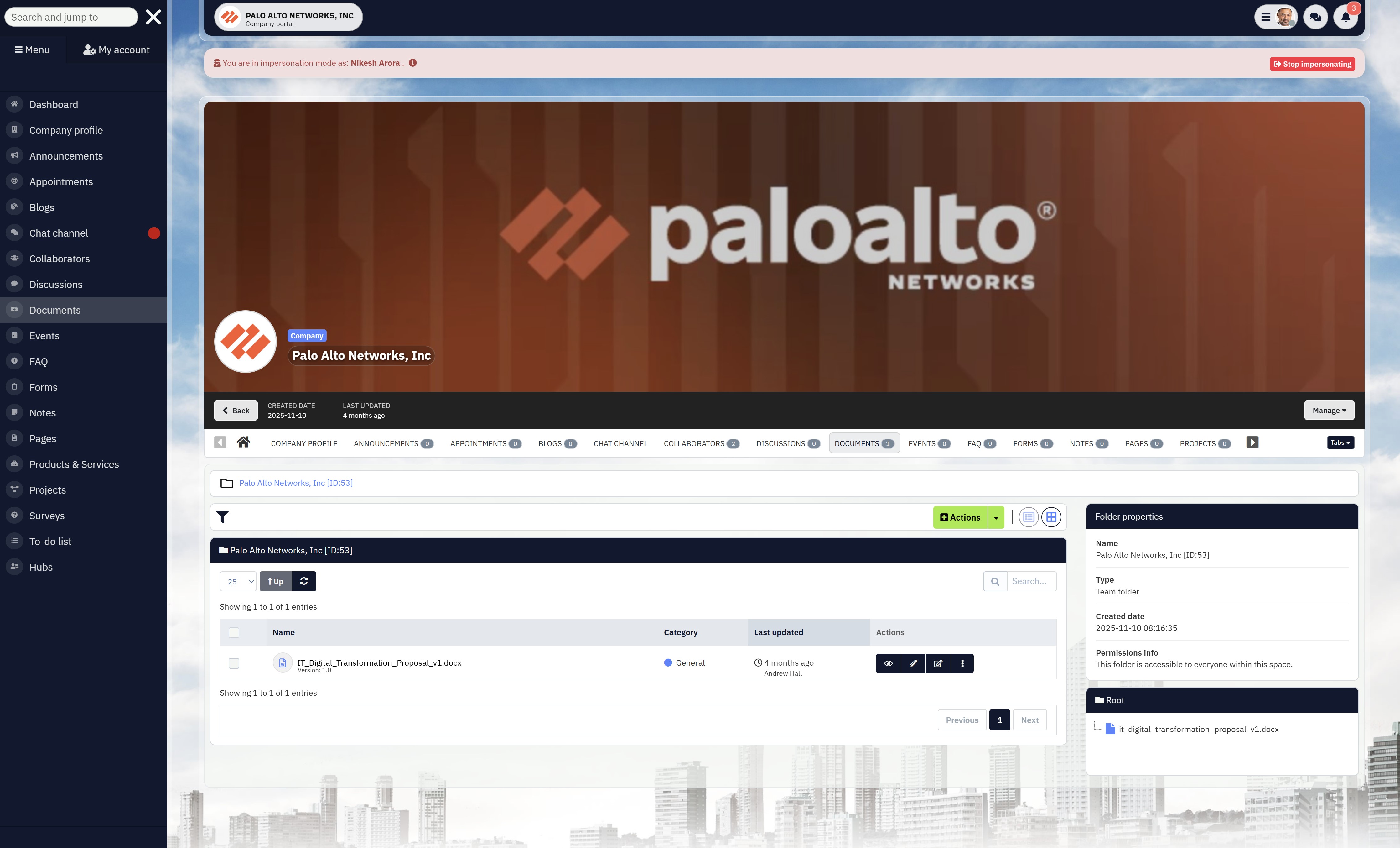
Centralized Document Library
Centralized Document Library
One of the most essential capabilities of a supplier portal system is a centralized document library where all shared files are stored in a secure, organized environment.
Instead of sending documents through email attachments, companies can use supplier document management software to maintain a single source of truth for supplier documentation.
This ensures both buyers and suppliers always access the latest information.
Key benefits of a centralized document repository include:
- Document version control to prevent outdated files from being used
- Permission-based access for suppliers, partners, and internal teams
- Document history tracking to monitor changes and updates
- Advanced search capabilities to quickly find files and records
For companies implementing supplier relationship management (SRM) software, centralized document management helps reduce errors, improve compliance, and ensure suppliers always work from the latest documentation.
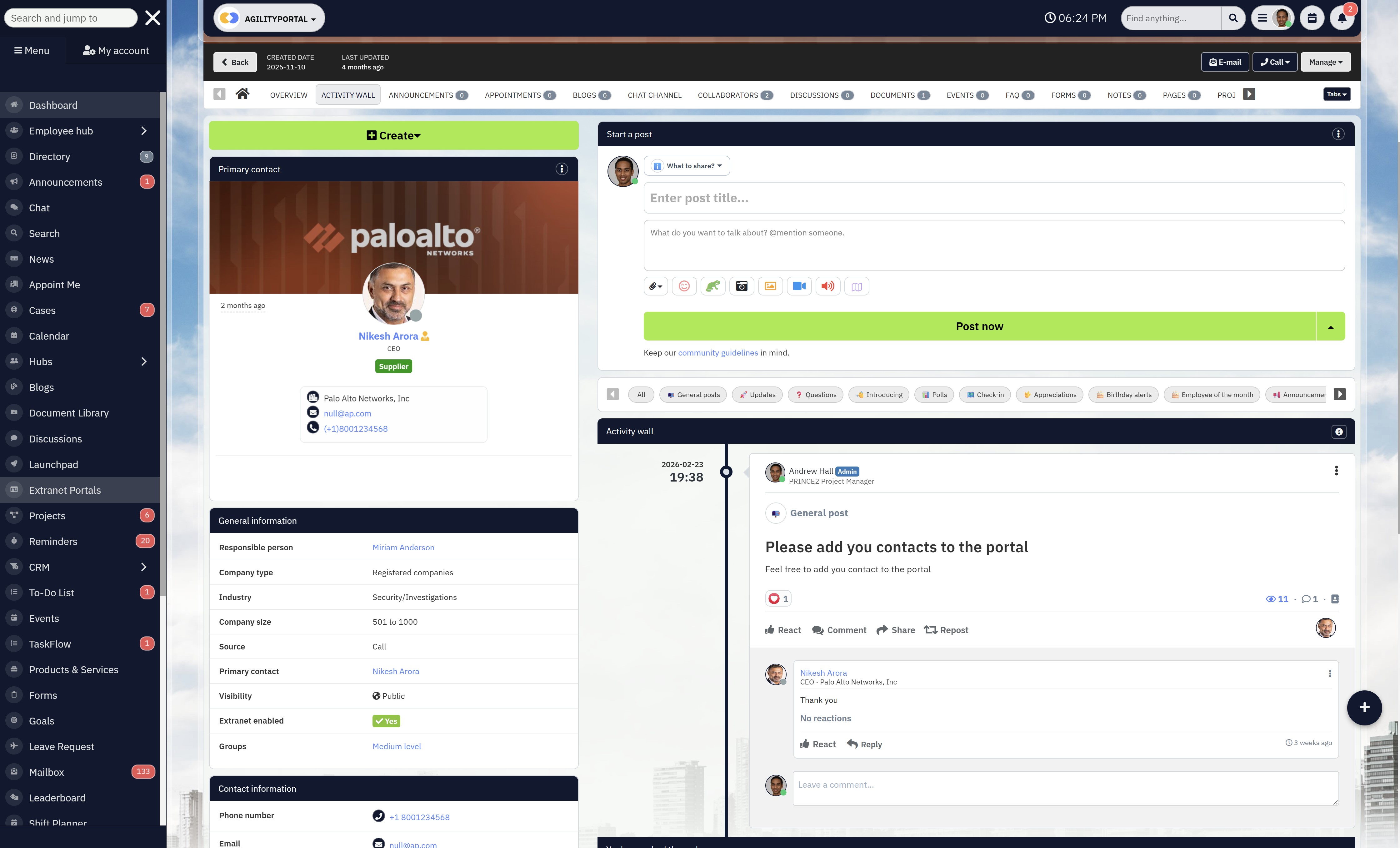
Activity Feeds for Real-Time Updates
Activity Feeds for Real-Time Updates
A modern supplier collaboration portal often includes an activity feed that allows procurement teams and suppliers to share updates in real time.
Instead of relying on email notifications, suppliers receive updates through a shared supplier communication platform where announcements, documents, and discussions are visible in a structured feed.
Through this activity stream, suppliers and partners can see:
- operational announcements
- newly uploaded documents
- updates from procurement teams
- responses from suppliers or partners
This feature is commonly found in the best supplier communication software, as it allows companies to broadcast information to suppliers while maintaining a clear communication history.
By improving supplier connect communication, organizations ensure that suppliers stay informed without needing to search through long email threads.
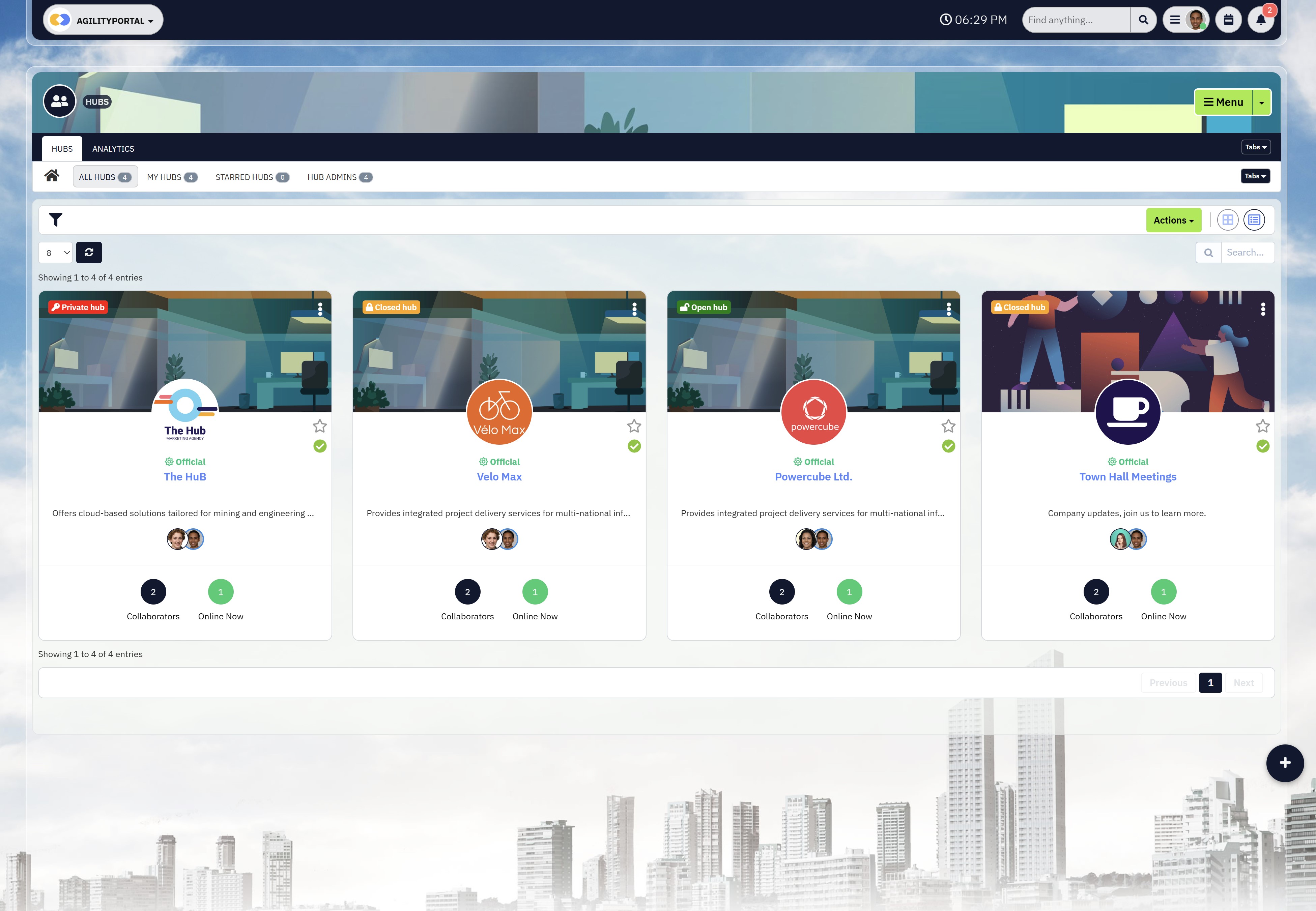
Secure Collaboration Spaces
Secure Collaboration Spaces
A modern partner portal or vendor collaboration platform provides dedicated workspaces where buyers and suppliers can collaborate on projects, documentation, and operational updates.
These secure collaboration environments allow organizations to structure supplier communication around specific initiatives or supplier relationships.
Typical collaboration spaces within a supplier portal support activities such as:
- supplier onboarding programs
- contract negotiations and document reviews
- product specifications and technical documentation
- compliance and regulatory documentation
- supply chain and project updates
Secure collaboration spaces help organizations manage supplier interactions while ensuring data remains protected and accessible only to authorized users.
For companies investing in supplier relationship management software, this level of structured collaboration significantly improves supplier engagement.
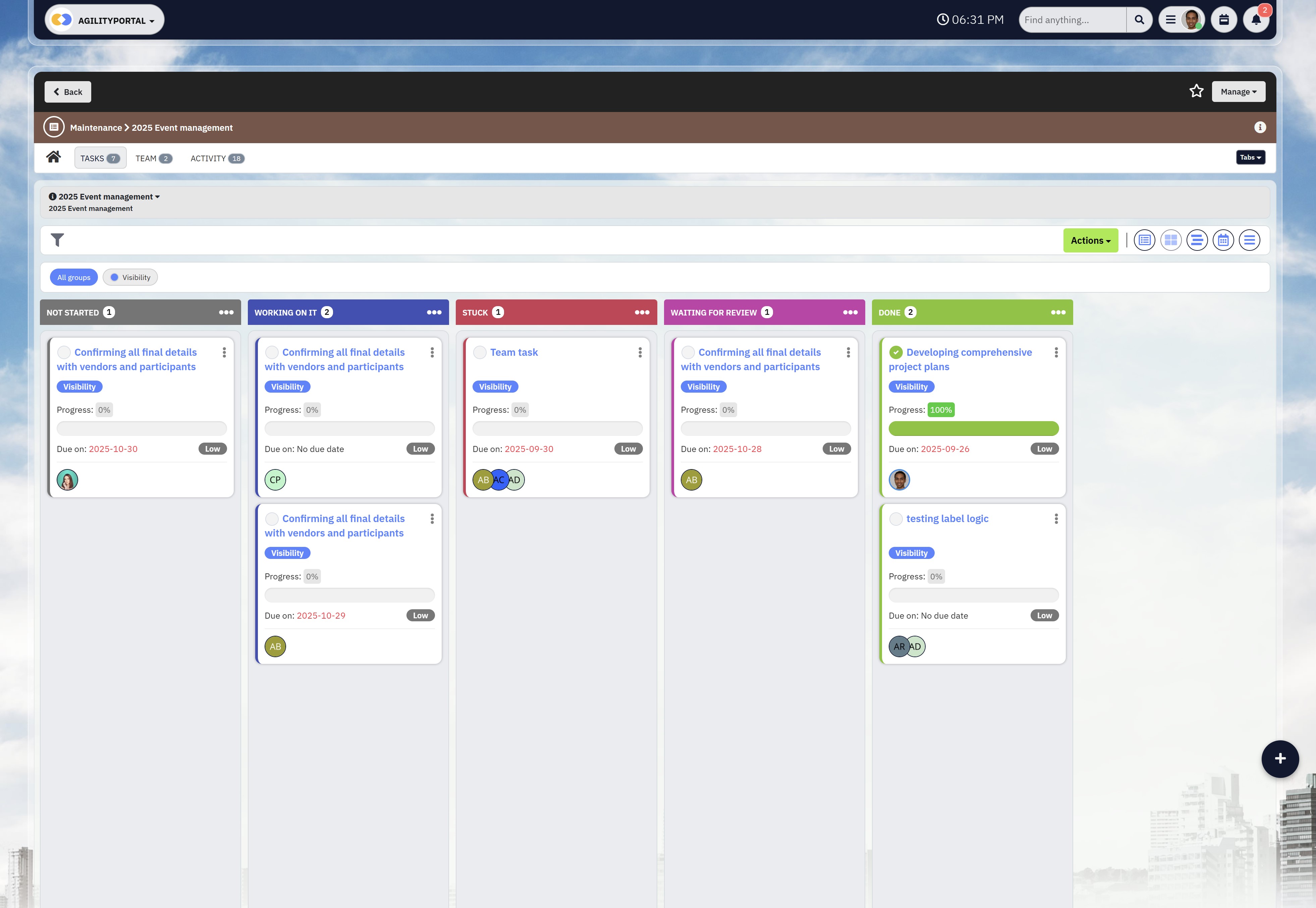
Task and Workflow Management
Task and Workflow Management
Managing suppliers often involves structured processes that require approvals, documentation reviews, and compliance checks.
A modern supplier portal platform supports these activities through built-in workflow automation.
Workflow tools allow organizations to standardize supplier interactions and improve operational efficiency.
Typical workflows supported by supplier management software include:
- supplier onboarding and vendor registration
- document approvals and contract reviews
- compliance verification processes
- procurement approvals and supplier requests
By implementing workflow automation within a supplier portal, companies can reduce manual coordination and improve accountability across procurement teams.
This is why many organizations evaluating the best SRM software prioritize platforms that combine communication, collaboration, and workflow management into a single system designed for connecting suppliers with buyers efficiently.
Benefits of Partner and Supplier Portals
Organizations working with external vendors often struggle with fragmented communication, scattered documents, and inefficient collaboration processes.
A modern supplier portal, partner portal, or extranet portal helps solve these problems by creating a centralized environment where buyers, suppliers, and partners can collaborate more effectively.
Companies searching for the best supplier communication software or best SRM software often discover that a well-designed portal dramatically improves communication, transparency, and operational efficiency across their supplier ecosystem.
Eliminate Long Email Chains
Email was never designed to manage complex supplier relationships.
Over time, conversations become buried inside long email threads where important messages and document attachments are difficult to find.
A supplier portal replaces this chaos with structured communication that takes place inside a shared platform.
Instead of forwarding emails between departments and suppliers, discussions happen directly within the portal.
This ensures:
- conversations stay organized and easy to follow
- updates are visible to the right stakeholders
- communication history is searchable
- suppliers and buyers stay aligned on key decisions
For organizations implementing a supplier connect platform, eliminating email overload is often one of the biggest productivity gains.
Faster Supplier Collaboration
A partner portal or supplier collaboration platform gives suppliers a single place to access the information they need.
Instead of asking for documents or updates through email, suppliers can log in and immediately view the latest resources, updates, and requests.
Within a modern supplier portal, partners can easily access:
- shared documents and specifications
- operational updates and announcements
- collaboration discussions
- tasks and requests from procurement teams
By connecting suppliers with buyers through a centralized platform, organizations reduce response times and improve coordination across teams and supply chain partners.
Improved Transparency Across Supplier Relationships
Transparency is essential for maintaining strong supplier partnerships.
When communication is scattered across emails, spreadsheets, and shared drives, it becomes difficult to track responsibilities or monitor progress.
A supplier relationship management platform improves transparency by providing visibility into supplier activity and communication.
Both internal teams and suppliers can easily view:
- operational updates
- shared documentation
- project timelines
- responsibilities and tasks
This shared visibility removes ambiguity and helps build trust between organizations and their supplier network.
Less Administrative Work for Procurement Teams
Procurement and operations teams spend a surprising amount of time performing manual coordination tasks.
This includes tracking down documents, forwarding updates, and managing supplier communications through multiple systems.
By implementing the best supplier communication software or best SRM software, organizations can automate and centralize many of these processes.
Instead of administrative work, teams can focus on higher-value activities such as:
- supplier performance management
- strategic sourcing initiatives
- supply chain optimization
- building stronger supplier relationships
A modern supplier connect platform ultimately allows procurement teams to shift from reactive communication toward proactive supplier collaboration.
Better Document Governance and Compliance
Managing documents through email attachments introduces serious risks related to version control, compliance, and information security.
A supplier portal with document management capabilities centralizes files in a secure environment where both suppliers and internal teams can access the latest information.
Key governance features often include:
- document version control
- role-based access permissions
- full audit trails
- centralized document storage
These capabilities are especially valuable for organizations operating in regulated industries where compliance, documentation accuracy, and accountability are critical.
How Supplier Portals Improve Communication

How Supplier Portals Improve Communication
One of the biggest challenges in modern procurement and supply chain management is communication.
Many organizations still rely on long email threads, spreadsheets, and disconnected tools to manage supplier interactions.
Over time, this creates confusion, missed updates, and delays in decision-making.
A supplier portal changes this by creating a centralized environment where communication becomes structured, visible, and searchable. Instead of information being buried inside inboxes, updates, documents, and conversations are organized within a shared digital workspace.
For companies looking for the best supplier communication software or modern supplier relationship management platforms, supplier portals provide a far more efficient way of connecting suppliers with buyers.
Centralized Communication Between Buyers and Suppliers
Traditional communication methods often scatter supplier discussions across multiple channels.
A supplier collaboration platform centralizes conversations so that procurement teams, operations staff, and suppliers can communicate within the same system.
This approach improves transparency and ensures that all stakeholders have access to the same information.
By using a supplier connect platform, organizations can maintain a clear communication history and reduce misunderstandings between buyers and vendors.
Activity Feeds for Real-Time Updates
Modern supplier portals and partner portals include activity feeds that allow both suppliers and internal teams to post updates, announcements, and important information.
These feeds function similarly to collaboration tools used inside organizations but are designed specifically for supplier communication and vendor collaboration.
Real-time updates help ensure that suppliers stay informed about:
- product changes
- operational updates
- procurement announcements
- compliance requirements
- project progress
This reduces the need for repeated email notifications and helps suppliers quickly access the latest information.
Shared Document Management and Version Control
One of the most common problems in supplier communication is document management.
Contracts, specifications, compliance records, and operational documents are often sent as email attachments, making it difficult to track the most recent version.
A supplier portal with document management capabilities solves this issue by providing a centralized document library where files can be uploaded, shared, and updated with version control.
Using a supplier collaboration platform, both buyers and suppliers can:
- access the latest documents
- leave comments or feedback
- review document revisions
- track changes and approvals
This significantly reduces errors and ensures that everyone works from a single source of truth.
Collaboration Spaces for Projects and Supplier Engagement
Many organizations are now using supplier relationship management (SRM) software to move beyond simple transactions and toward long-term supplier collaboration.
Supplier portals provide dedicated collaboration spaces where teams can work together on initiatives such as:
- supplier onboarding
- product development
- contract reviews
- compliance documentation
- supply chain planning
By creating structured collaboration environments, organizations can treat suppliers as strategic partners rather than simply external vendors.
Notifications and Alerts for Faster Responses
Communication delays often occur because important messages get lost in email inboxes.
A modern supplier communication platform solves this by providing notifications and alerts when new updates, documents, or requests are posted.
Suppliers and internal teams can receive alerts for:
- document updates
- task assignments
- supplier requests
- procurement announcements
- workflow approvals
This ensures faster response times and keeps supplier relationships running smoothly.
Turning Suppliers Into Strategic Partners
Ultimately, the goal of implementing a supplier portal or SRM platform is to improve collaboration across the supply chain.
When communication becomes centralized and transparent, suppliers are no longer treated as external contacts who only interact through email.
Instead, they become active participants in a shared collaboration environment designed for connecting suppliers with buyers and improving supply chain performance.
Organizations that adopt the best SRM software and supplier communication tools gain greater visibility, stronger supplier relationships, and more efficient procurement processes — all of which are critical for building resilient supply chains in today's digital business environment.
When Organizations Should Consider a Supplier Portal
Many organizations don't realize they need a dedicated supplier collaboration platform until communication with partners becomes difficult to manage.
As businesses scale and supply chains grow more complex, relying on email threads and shared folders quickly leads to confusion, missed updates, and inefficient workflows.
Companies should start evaluating a supplier portal or partner collaboration platform when supplier communication becomes fragmented across different systems.
A modern supplier connect platform or vendor collaboration software can centralize discussions, documents, and updates, making it easier for internal teams and external partners to work together.
Organizations benefit most from adopting a supplier communication platform when they:
- Manage large supplier or vendor networks across multiple regions
- Exchange contracts, specifications, and operational documents regularly
- Run procurement processes involving multiple stakeholders and approvals
- Need stronger visibility into supplier communication and performance
- Want to reduce email overload between buyers and suppliers
In these situations, tools designed for connecting suppliers with buyers help streamline collaboration and create a structured environment where suppliers and internal teams can communicate without relying on endless email threads.
Platforms often described as the best supplier communication software or best SRM software allow organizations to create secure workspaces where suppliers can access documentation, share updates, and collaborate with procurement teams in real time.
This improves transparency, speeds up response times, and helps organizations build stronger supplier relationships.
Industries Where Supplier Portals Deliver the Most Value
While nearly any organization working with external vendors can benefit from a supplier relationship management platform, certain industries rely heavily on supplier collaboration and therefore gain the most value from a modern vendor portal system.
Common industries adopting Vendor collaboration software include:
- Manufacturing – managing component suppliers, production partners, and supply chain documentation
- Construction – coordinating subcontractors, suppliers, and project documentation
- Logistics and transportation – communicating with carriers, distributors, and service providers
- Healthcare – coordinating suppliers for equipment, medical products, and compliance documentation
- Retail and supply chains – managing vendors, product updates, and operational communication
In these industries, having a centralized supplier portal or partner portal ensures that updates, documentation, and discussions are visible to the right people without relying on scattered communication tools.
As supply chains continue to evolve, organizations investing in modern supplier connect platforms and SRM tools will gain a significant advantage by improving communication, increasing operational visibility, and strengthening collaboration between suppliers and internal teams.
🚀 Why AgilityPortal Is Different, Try AgilityPortal Now
Why AgilityPortal Is Different
In the past, many companies relied on traditional supplier portals connected to ERP systems.
These systems focused heavily on transactions like purchase orders and invoices but rarely solved the real challenge: day-to-day collaboration with suppliers and partners.
At AgilityPortal, we take a different approach.
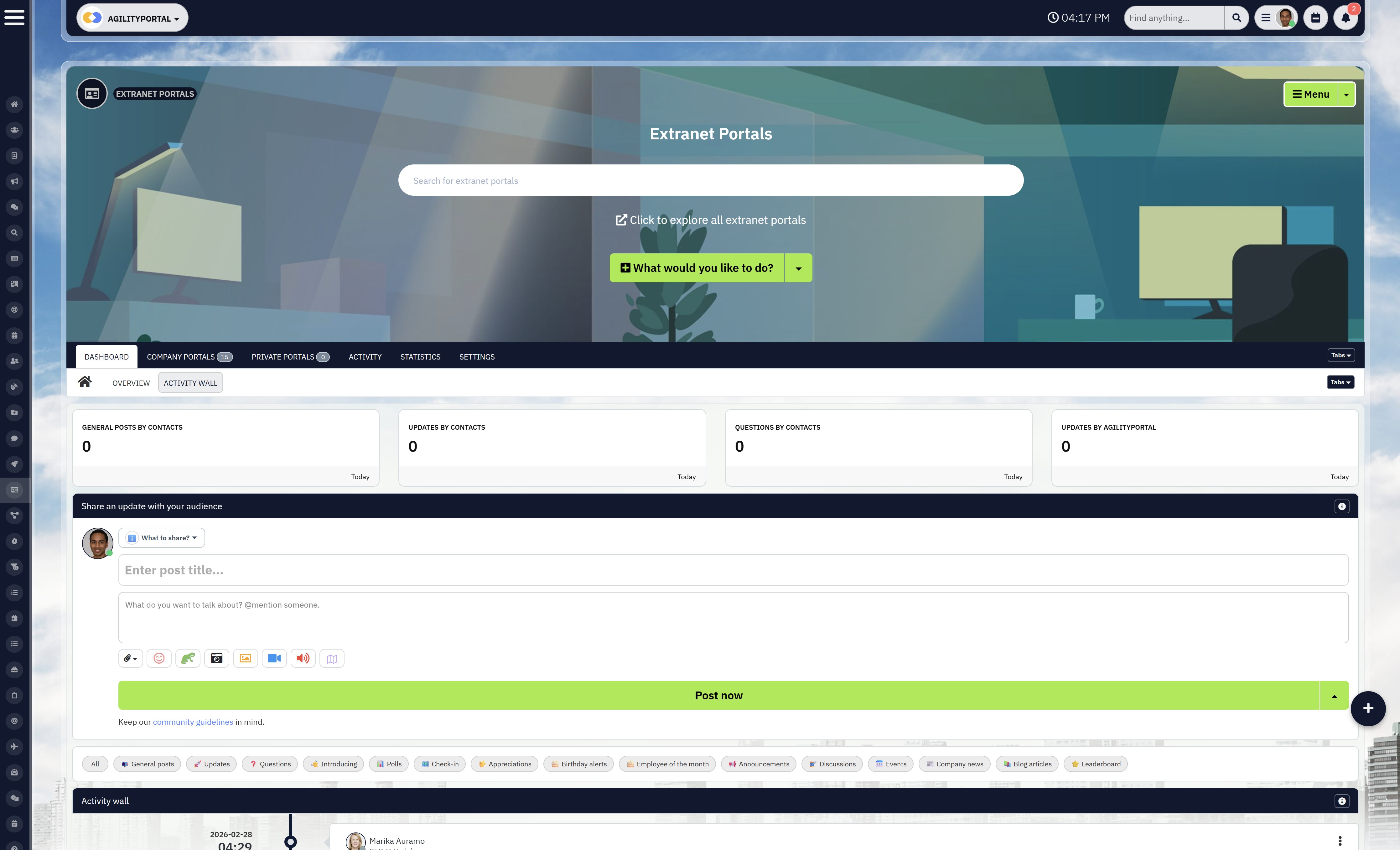
Instead of another complex system suppliers must learn, AgilityPortal provides a simple, collaborative partner workspace where your teams and suppliers can communicate, share documents, and post updates in real time.
Even with a basic setup, teams can start by posting updates to suppliers or partners through a shared activity feed. Procurement teams can broadcast updates, documentation, or announcements, while suppliers can respond, upload documents, or share important updates back with your team.
Everything happens in one place — no more digging through endless email threads or sending document attachments back and forth.
Instead of emailing files every time someone needs information, documents live in a centralized library with version control, so both your team and your suppliers always access the latest version.
AgilityPortal also includes built-in governance and compliance controls, ensuring the right people have access to the right information while maintaining visibility and accountability across supplier interactions.
The result is a more transparent, collaborative relationship with your partners, without the chaos of email.
Test drive AgilityPortal—the most comprehensive extranet platform on the list.
Whether you need internal comms, employee engagement, document sharing, or team collaboration—all in one place—AgilityPortal does it all.
✅ No credit card needed.
✅ 14-day free trial.
✅ Built for hybrid, deskless, and remote teams.
Try AgilityPortal for Supplier & Partner Collaboration
Ready to Simplify Supplier & Partner Collaboration?
Managing suppliers and partners through long email threads and document attachments quickly becomes messy and inefficient. Important updates get buried, documents become outdated, and teams waste time searching through inboxes instead of focusing on collaboration.
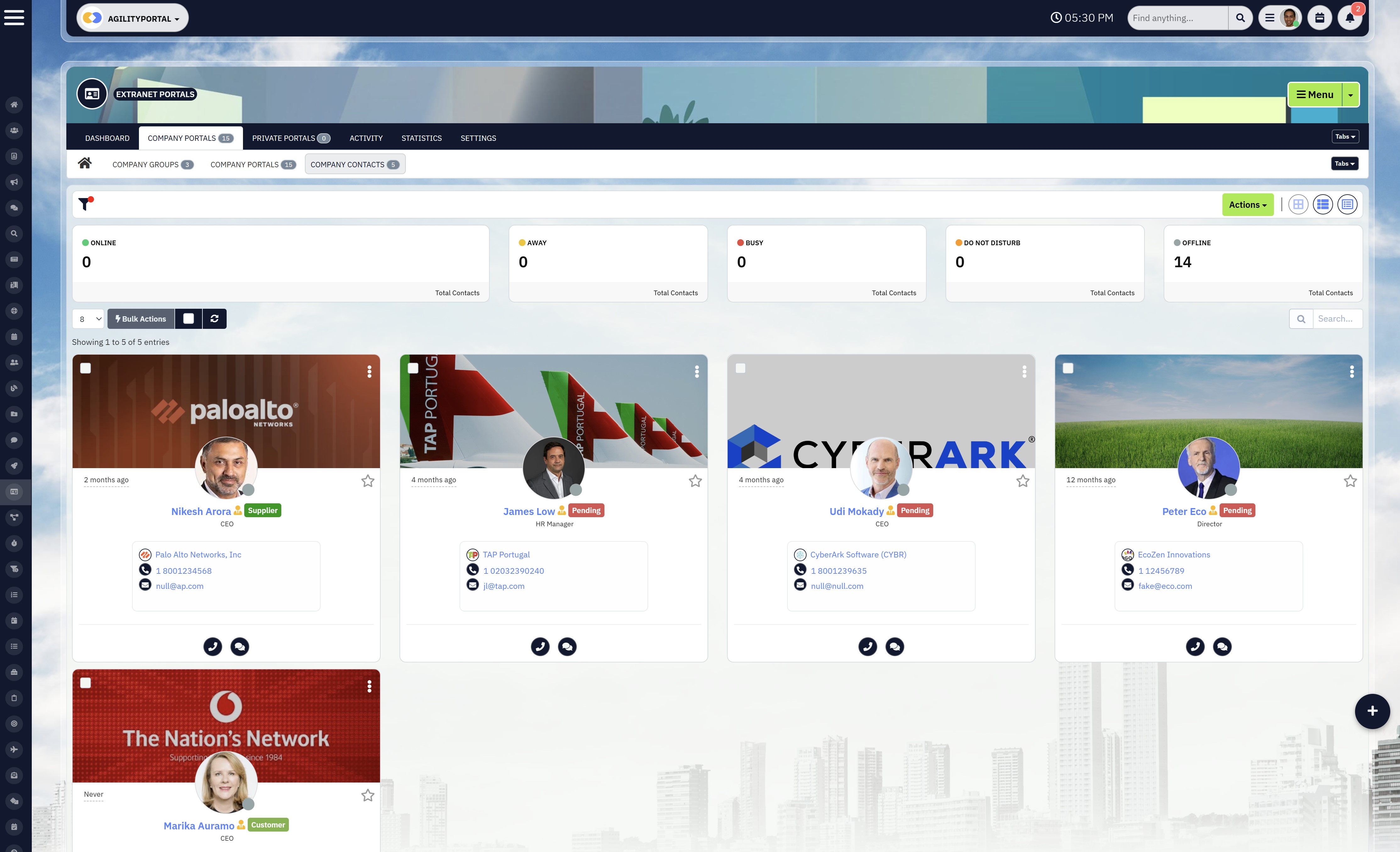
AgilityPortal provides a modern Extranet portal that allows organizations to create secure Supplier portals and Partner portals where external partners and internal teams can collaborate in one shared workspace. Instead of sending files through email, documents, updates, and discussions live in a centralized platform that keeps everyone aligned.
- Create secure supplier and partner workspaces for collaboration
- Post updates and announcements through a shared activity feed
- Centralize documents with version control instead of email attachments
- Allow suppliers and partners to share updates and responses
- Improve governance, compliance, and visibility across external communication
Thousands of organizations use AgilityPortal to replace fragmented communication with a secure extranet environment that strengthens supplier relationships and partner collaboration.
Start Your Free 14-Day Trial
No credit card required
The Future of Supplier Collaboration
Supply chains are becoming more complex, global, and digitally connected.
As a result, relying on email and spreadsheets to manage supplier relationships is quickly becoming outdated.
Businesses now need better ways to support supplier connect, streamline communication, and keep both internal teams and suppliers aligned in real time.
The scale of the challenge is significant.
28%
of the workweek
Research from McKinsey & Company shows employees spend up to 28% of their workweek searching for information across emails, documents, and disconnected systems. In supplier and procurement environments, fragmented communication tools often make this problem even worse.
Source: McKinsey Global Institute
In procurement environments where suppliers exchange large volumes of documents, specifications, and updates, this inefficiency quickly compounds.
At the same time, supply chain complexity continues to increase.
According to Deloitte, 79% of organizations say supply chain visibility is critical to their business success, yet many still rely on fragmented communication methods that make collaboration difficult.
This is why organizations are investing in solutions designed for connecting suppliers with buyers through centralized digital collaboration platforms.
These systems bring together communication, documentation, and collaboration into a single workspace, allowing procurement teams and suppliers to work together without delays caused by lost emails or outdated attachments.
Industry research also highlights the operational benefits of improving supplier communication.
A report from Gartner found that companies implementing structured supplier collaboration platforms can improve procurement productivity by up to 25% and significantly reduce supplier response times.
These improvements are driving demand for platforms recognized as the best supplier communication software, which allow organizations to:
- Share updates through centralized activity feeds
- Manage supplier discussions in structured threads
- Centralize documents with version control
- Maintain transparency across supplier interactions
Instead of relying on inboxes, procurement teams can manage supplier engagement through a shared digital environment that keeps everyone aligned.

“The next generation of procurement technology isn’t just about controlling suppliers — it’s about collaborating with them more effectively.”
Similarly, supply chain analysts at Deloitte emphasize that organizations that invest in collaborative supplier platforms see faster issue resolution, improved supplier engagement, and stronger supply chain resilience.
As companies continue evaluating the best SRM software, the focus is increasingly shifting beyond transactional management to include communication, transparency, and long-term supplier relationships.
Looking ahead, organizations that prioritize supplier connect initiatives and platforms designed for connecting suppliers with buyers will be better positioned to build resilient and responsive supply chains.
By adopting modern collaboration tools and the best supplier communication software, businesses can replace fragmented communication with structured supplier engagement that supports long-term growth and operational efficiency.
FAQ – Supplier Portals, Vendor Portals & Collaboration Platforms
What is a supplier portal?
A supplier portal is a digital platform that allows businesses to manage supplier relationships, communication, documents, and transactions in one centralized system.
A modern supplier portal replaces email-based workflows with a structured supplier platform that improves visibility, collaboration, and efficiency across the supply chain.
What is a vendor portal and how is it different from a supplier portal?
A vendor portal and supplier portal are often used interchangeably, but both refer to systems that enable organizations to manage vendors, onboarding, communication, and transactions.
A vendor management portal focuses more on procurement, compliance, and vendor lifecycle management, while a supplier collaboration portal emphasizes communication and document sharing.
What is a supplier onboarding portal?
A supplier onboarding portal is a system that allows businesses to register, verify, and onboard suppliers through a structured workflow. It typically includes a supplier registration portal, document uploads, compliance checks, and approval processes, reducing manual onboarding efforts and improving data accuracy.
What is a vendor onboarding portal?
A vendor onboarding portal helps organizations collect vendor information, verify credentials, and manage approvals in one place.
A vendor registration portal simplifies onboarding by allowing vendors to submit details, upload documents, and track approval status without relying on email.
What is a supplier management portal?
A supplier management portal is a centralized platform used to manage supplier relationships, performance, contracts, and communication. It often includes features like supplier self service portal access, supplier information tracking, and supplier network visibility to improve operational control.
What is a supplier self service portal?
A supplier self service portal allows suppliers to manage their own information, upload documents, track orders, and communicate with buyers without manual intervention.
This reduces administrative workload and improves accuracy across the supplier network.
What is a B2B supplier portal?
A B2B supplier portal is a platform designed for business-to-business collaboration, enabling organizations to connect with suppliers, manage procurement processes, and share information securely across a supply chain portal.
What is a vendor management portal?
A vendor management portal is a system used to track vendor
performance, manage contracts, handle onboarding, and ensure compliance. It provides visibility into vendor activity and helps organizations streamline procurement and supplier lifecycle management.
What is a supplier collaboration portal?
A supplier collaboration portal enables real-time communication, document sharing, and workflow coordination between businesses and their suppliers.
It replaces fragmented communication with a structured vendor collaboration portal that improves efficiency and reduces delays.
What is a supplier registration portal?
A supplier registration portal allows new suppliers to submit their information, complete onboarding forms, and register within a system. It is often part of a broader supplier portal system or vendor portal solution.
What is a supply chain portal?
A supply chain portal is a centralized platform that connects suppliers, vendors, and internal teams to manage procurement, communication, and logistics. It improves transparency and coordination across the entire supplier network.
What is a supplier web portal?
A supplier web portal is an online platform accessible via browser that enables suppliers to manage information, communicate with buyers, and access documents in real time.
What features should the best supplier portals include?
The best supplier portals typically include:
- Supplier onboarding portal workflows
- Vendor registration portal functionality
- Supplier self service portal access
- Document and contract management
- Role-based access control
- Supplier collaboration portal tools
- Reporting and analytics dashboards
These features ensure scalability, security, and improved supplier management.
What are vendor portal solutions used for?
Vendor portal solutions are used to streamline vendor onboarding, manage supplier data, improve communication, and automate procurement workflows.
They help businesses replace manual processes with structured systems that improve efficiency and reduce risk.
What is a supplier portal system?
A supplier portal system is a complete platform that integrates supplier onboarding, communication, document management, and workflow automation into one centralized solution.
It supports supplier management portal functions and enhances supply chain collaboration.
What is an ERP supplier portal?
An ERP supplier portal integrates with enterprise resource planning systems to allow suppliers to access purchase orders, invoices, and payment updates. It connects internal systems with external partners through a unified supplier platform.
Why are supplier portal solutions important?
Supplier portal solutions help businesses eliminate email overload, improve supplier collaboration, increase visibility, and streamline onboarding and procurement processes.
They are essential for managing modern supply chains efficiently.
AI Summary
- A supplier portal provides a centralized platform where businesses can communicate with vendors, share documents, and manage supplier collaboration without relying on long email threads.
- Modern supplier communication software helps organizations connect suppliers with buyers through shared workspaces, activity feeds, and secure document libraries.
- Many procurement teams adopt supplier relationship management (SRM) platforms to improve visibility, streamline supplier communication, and strengthen long-term vendor partnerships.
- Research shows employees spend nearly 20% of their workweek searching for information, highlighting the need for better supplier collaboration and centralized communication tools.
- Supply chain studies indicate that 79% of organizations consider supply chain visibility critical, yet many still rely on fragmented communication systems.
- Using a partner portal or extranet portal allows companies to manage supplier updates, documentation, and collaboration in one governed environment.
Most Popular Posts

Effective communication among team members is vital for the productivity and success of any organization. Surprisingly, 60% of companies lack a long-term internal communication strategy, which p...


Businesses thrive on communication for efficiency, productivity and accomplishment. When the right information is passed from the right designation in the organization, it promotes positivity an...

Categories
Blog
(3158)
Business Management
(392)
Employee Engagement
(233)
Digital Transformation
(211)
Growth
(149)
Intranets
(139)
Internal communications
(106)
Remote Work
(67)
Sales
(53)
Collaboration
(52)
Customer Experience
(32)
Culture
(30)
Knowledge Management
(29)
Project management
(29)
Leadership
(20)
Comparisons
(9)
News
(1)

Related Posts

How many meetings have started late because someone could not find the link, could not connect to the meeting-room system, or simply could not hear the people sitting around the table? It happens more often than most businesses would like to ad...

If you'd asked me a few years ago what AI could actually do, I'd probably have said, "Answer questions and write a few paragraphs." That was impressive at the time, but it didn't take long before everything changed. Then AI stopped being just a...

Work chat apps have become the everyday communication layer for modern organisations. Teams use them to ask quick questions, share files, coordinate shifts, solve customer issues and keep projects moving without filling everyone's inbox. ...

The best productivity apps do not simply give employees another dashboard, notification stream or AI button to click. They make it easier to find information, understand priorities and complete work without switching between disconnected tools. That ...

How can remote workers stay connected and productive when tasks, updates, schedules and important information are spread across different teams and tools? Remote work is not always easy. It depends on strong coordination between teams, clear communic...


Jill Romford
I am a digital nomad, lover of exploring new places and making friends.
I love to travel and I love the internet. I take pictures of my travels and share them on the internet using Instagram.
Traveler, entrepreneur, and community builder. I share my insights on digital marketing and social media while inspiring you to live your fullest life.
Ready to learn more? 👍
One platform to optimize, manage and track all of your teams. Your new digital workplace is a click away. 🚀
Free for 14 days, no credit card required.