
Insight Blog
Agility’s perspectives on transforming the employee's experience throughout remote transformation using connected enterprise tools.
56 minutes reading time
(11207 words)
The Complete Guide to Partner Enablement for Modern Businesses

The Complete Guide to Partner Enablement for Modern Businesses
Learn how partner enablement helps businesses improve partner collaboration, streamline onboarding, increase channel sales, and scale partner programs with the right tools and strategies.
The Complete Guide to Partner Enablement for Modern Businesses

Partner enablement is becoming a critical growth strategy for businesses that rely on distributors, resellers, suppliers, franchisees, or strategic partners.
As partner networks expand, organizations need a better way to share information, deliver training, streamline onboarding, and support collaboration at scale.
Yet many companies still depend on email, spreadsheets, and disconnected systems to manage partner relationships.
This often leads to communication breakdowns, slow onboarding, inconsistent messaging, and lost business opportunities.
70%
of global technology spending
According to Canalys, channel partners influence approximately 70% of global technology spending, making partner enablement a critical investment for organizations looking to increase revenue, improve collaboration, and support long-term growth.
Source: Canalys
According to Canalys, channel partners influence approximately 70% of global technology spending, making partner enablement a critical investment for organizations looking to increase revenue, improve collaboration, and support long-term growth through their partner ecosystem.
That's why businesses are investing in modern partner enablement strategies to help partners become productive faster and perform more effectively.
In this guide, we'll explain what partner enablement is, why it matters, the challenges organizations face, and how modern tools such as partner portals can improve onboarding, communication, training, and collaboration.
We'll also cover partner enablement vs sales enablement, helping you understand how each supports business growth in different ways.
Key Takeaways
- Partner enablement helps organizations equip resellers, distributors, suppliers, and strategic partners with the tools, training, and resources needed to succeed.
- Without a structured enablement strategy, partners often struggle with poor communication, inconsistent onboarding, outdated information, and lower engagement.
- Modern partner enablement programs centralize communication, knowledge sharing, training, and collaboration through dedicated partner portals.
- Understanding Partner Enablement vs Sales Enablement is essential, as one focuses on external partners while the other supports internal sales teams.
- Businesses that invest in partner enablement typically improve partner productivity, accelerate onboarding, strengthen relationships, and generate more partner-driven revenue.
What Is Partner Enablement?

Businesses today rely heavily on external partners to generate revenue, expand into new markets, support customers, and deliver products and services. However, simply recruiting partners isn't enough.
Organizations must give those partners the tools, knowledge, and resources they need to succeed.
This is where partner enablement becomes essential.
Partner enablement is the process of equipping external partners with the training, content, communication channels, technology, and support required to effectively represent and grow your business.
The goal is to help partners become productive faster, stay informed, and perform at a higher level throughout their relationship with your organization.
Defining Partner Enablement in Simple Terms
Instead of partners searching through emails, requesting documents, or waiting for answers from account managers, they can access training materials, sales resources, product updates, marketing assets, and company knowledge from a centralized location.
A well-designed partner enablement strategy helps ensure that every partner receives a consistent experience and has access to the same information, regardless of location or rol
How Partner Enablement Differs from Partner Management
Many businesses mistakenly use partner enablement and partner management interchangeably, but they serve different purposes.
Partner management focuses on building and maintaining relationships with partners. This includes recruiting new partners, negotiating agreements, managing contracts, and overseeing overall performance.
Partner enablement focuses on empowering those partners to succeed.
It provides the tools, knowledge, onboarding, training, and resources that help partners sell more effectively, collaborate more efficiently, and deliver better results.
A simple way to think about it is this:
- Partner management builds the relationship.
- Partner enablement strengthens the partner's ability to succeed.
The most successful organizations combine both approaches to create a scalable partner ecosystem.
The Role of Enablement in a Modern Partner Ecosystem
Today's partner ecosystems are more complex than ever.
Businesses may work with hundreds or even thousands of resellers, distributors, suppliers, franchise operators, consultants, and strategic alliances across multiple regions.
Without a structured enablement program, communication becomes fragmented, onboarding takes longer, and partners struggle to access the information they need.
Modern partner enablement helps solve these challenges by creating a central hub for communication, training, knowledge sharing, document management, and collaboration. This ensures every partner receives the same experience and can quickly access the resources needed to perform their role.
As organizations continue expanding their partner networks, enablement becomes a critical component for maintaining consistency, efficiency, and scalability.
Why Partner Success Directly Impacts Business Growth
The success of your partners directly influences the success of your business.
When partners have the right information, training, and support, they can close more deals, provide better customer experiences, and strengthen your brand reputation.
Research from Forrester has found that partner ecosystems influence more than 75% of global trade, highlighting the growing importance of external partnerships in driving revenue and business growth.
Consider a software company that generates 70% of its revenue through reseller partners.
If those partners struggle to find product information, receive inconsistent onboarding, or lack access to updated sales materials, sales performance will inevitably suffer.
However, when those same partners have access to a dedicated partner portal, structured onboarding, training programs, and real-time communication tools, they can become productive much faster and contribute significantly more revenue.
Simply put, partner success is business success.
Organizations that invest in partner enablement are often better positioned to scale their partner programs, improve collaboration, increase partner engagement, and drive long-term growth.
Related Partner Enablement Guides You May Want to Read
Want to go deeper into partner portals, supplier collaboration, extranets, secure document sharing, and external stakeholder communication? These related guides will help you build a stronger partner enablement strategy.
- What Is a Partner Portal?
- Partner and Supplier Portal Collaboration Platform
- What Is an Extranet Used For?
- Best Extranet Portal Software
- Extranet Software for Secure Client Collaboration
- How to Pick a Supplier Portal That Actually Saves Time
- Intranets vs Extranets
- Internet vs Intranet vs Extranet
Together, these resources support the full partner enablement journey, from secure external access and partner onboarding to supplier communication, document sharing, and scalable partner collaboration.
Partner Enablement vs Sales Enablement: What's the Difference?
Many organizations confuse Partner Enablement vs Sales Enablement, but they serve different audiences and business objectives.
Understanding the difference between Partner Enablement vs Sales Enablement is important because, while both focus on improving performance and driving revenue, the people they support and the resources they provide are not the same.
Sales enablement is designed to help internal sales teams close more deals by providing training, content, tools, coaching, and customer insights.
Partner enablement, on the other hand, focuses on external partners such as resellers, distributors, franchisees, suppliers, and strategic alliances.
When comparing Partner Enablement vs Sales Enablement, the key distinction is that partner enablement equips external organizations with the knowledge, resources, and support they need to successfully represent your products or services.
Think of it this way: in the discussion of Partner Enablement vs Sales Enablement, sales enablement helps your employees sell more effectively, while partner enablement helps external organizations succeed on your behalf.
As businesses increasingly rely on partner ecosystems to expand their reach and generate revenue, both strategies have become essential.
In fact, many high-performing organizations combine sales enablement and partner enablement to ensure both internal teams and external partners have access to consistent messaging, training, and resources.

Partner Enablement vs Sales Enablement
Partner Enablement vs Sales Enablement Comparison
| Feature | Partner Enablement | Sales Enablement |
| Primary Audience | External partners, resellers, distributors, suppliers | Internal sales teams |
| Main Goal | Improve partner success and collaboration | Improve sales performance and close rates |
| Training Focus | Partner onboarding, product knowledge, certifications | Sales skills, product knowledge, sales methodologies |
| Content Provided | Partner resources, marketing assets, documentation | Sales playbooks, battle cards, customer content |
| Communication | External collaboration and partner engagement | Internal sales communication and coaching |
| Success Metrics | Partner adoption, partner-generated revenue, engagement | Quota attainment, win rates, pipeline growth |
| Technology Used | Partner portals, PRM software, collaboration platforms | CRM systems, sales enablement platforms, coaching tools |
🤝
Looking for a Partner Enablement Platform?
If you're struggling with partner onboarding, fragmented communication, outdated training materials, limited partner visibility, or disconnected partner experiences, it may be time to modernize your partner enablement strategy.
Speak with our partner enablement specialists to see how AgilityPortal helps organizations centralize partner communication, training, document sharing, collaboration, and partner engagement from one secure platform.
Book a Demo Speak to an Expert✓ Free onboarding assistance ✓ Setup support ✓ Data migration guidance ✓ No obligation consultation
Ultimately, sales enablement focuses on helping your employees succeed, while partner enablement focuses on helping your external network succeed.
Businesses that invest in both are often better positioned to scale revenue, improve collaboration, and create a stronger ecosystem that benefits everyone involved.
Why Partner Enablement Has Become a Business Growth Priority
Partner ecosystems have evolved dramatically over the last decade.
Businesses now depend on resellers, distributors, suppliers, franchise operators, consultants, and strategic alliances to drive revenue and expand into new markets.
As these external networks grow, organizations need a structured way to communicate, train, support, and collaborate with their partners.
According to Forrester, ecosystem partnerships influence more than 75% of global trade, demonstrating just how important partner relationships have become.
75%+
of global trade influenced
According to Forrester, ecosystem partnerships influence more than 75% of global trade, showing how critical partner relationships have become for business growth.
Source: Forrester
The challenge is that many organizations still manage partners using outdated processes that create inefficiencies and limit growth.
Without a proper partner enablement strategy, partners often struggle to access information, stay aligned with company objectives, and deliver consistent customer experiences.
Modern Partner Networks Are More Complex Than Ever
Most organizations today manage significantly more external relationships than they did a decade ago.
A business may work with hundreds of partners across different regions, industries, languages, and time zones.
Managing this complexity becomes increasingly difficult when information is spread across multiple systems and departments.
Partners often require access to product documentation, sales materials, training resources, company updates, compliance documents, and support services.
Common challenges include:
- Different partners needing different resources
- Inconsistent onboarding experiences
- Difficulty sharing updates across multiple regions
- Lack of visibility into partner engagement
- Multiple communication channels creating confusion
- Information becoming outdated or duplicated
Partner enablement helps solve these problems by creating a centralized framework where partners can access everything they need to succeed.
Why Traditional Communication Methods Are No Longer Effective
Many businesses still rely heavily on email, spreadsheets, and shared drives to communicate with external partners.
While these tools may work for a small partner network, they quickly become difficult to manage as programs scale.
Partners frequently struggle to locate current documents, training materials, pricing updates, and product information. Valuable time is wasted searching through inboxes or contacting account managers for resources that should be readily available.
Some of the most common issues include:
- Multiple versions of the same document
- Lost email attachments
- Delayed responses from internal teams
- Outdated training materials
- Lack of a single source of truth
- Poor visibility into who has accessed information
Research from IDC found that employees spend nearly 20% of their workweek searching for information, and external partners face many of the same challenges when resources are fragmented.
20%
of the workweek
Research from IDC found that employees spend nearly 20% of their workweek searching for information, and external partners often face the same challenge when documents, training materials, and resources are spread across multiple systems.
Source: IDC
Poor Partner Communication Creates Hidden Business Costs
Communication issues don't just frustrate partners—they directly impact revenue, customer satisfaction, and operational efficiency.
When partners miss important announcements or struggle to access information, mistakes become more frequent.
Product updates may be overlooked, pricing information may become inaccurate, and customer inquiries can take longer to resolve.
The business impact often includes:
- Lost sales opportunities
- Increased support requests
- Slower deal cycles
- Reduced partner engagement
- Lower customer satisfaction
- Increased operational costs
Organizations that prioritize partner enablement typically see stronger partner relationships because communication becomes more consistent, transparent, and accessible.
Faster Access to Information Leads to Better Business Outcomes
In competitive markets, speed matters.
Partners need immediate access to accurate information to answer customer questions, respond to opportunities, and deliver exceptional service.
Every delay in accessing information can slow down decision-making and impact performance.
Partners that wait days for product updates or sales materials are often at a disadvantage compared to competitors with instant access to resources.
A successful partner enablement strategy helps organizations:
- Accelerate partner onboarding
- Improve partner productivity
- Reduce dependency on internal teams
- Increase partner engagement
- Shorten sales cycles
- Generate more partner-driven revenue
By giving partners self-service access to the resources they need, businesses create a more scalable ecosystem that benefits both the organization and its partner network.
Ultimately, partner enablement is no longer simply about sharing information.
It's about creating an environment where partners can work independently, stay informed, and contribute more effectively to long-term business growth.
6 Common Challenges Businesses Face Without Partner Enablement
Many organizations invest heavily in recruiting partners but fail to provide the systems, processes, and resources needed to support them effectively.
As partner ecosystems grow, communication becomes more difficult, information becomes scattered, and both partners and internal teams struggle to stay aligned.
Even some of the world's largest organizations have faced challenges managing complex partner networks.
Companies such as Cisco, Microsoft, Salesforce, and Oracle have all invested heavily in partner portals, certification programs, and partner ecosystems because managing thousands of partners manually simply doesn't scale.
Let's look at some of the most common challenges businesses face when partner enablement is missing.
Challenge 1 - Partners Cannot Find Critical Information
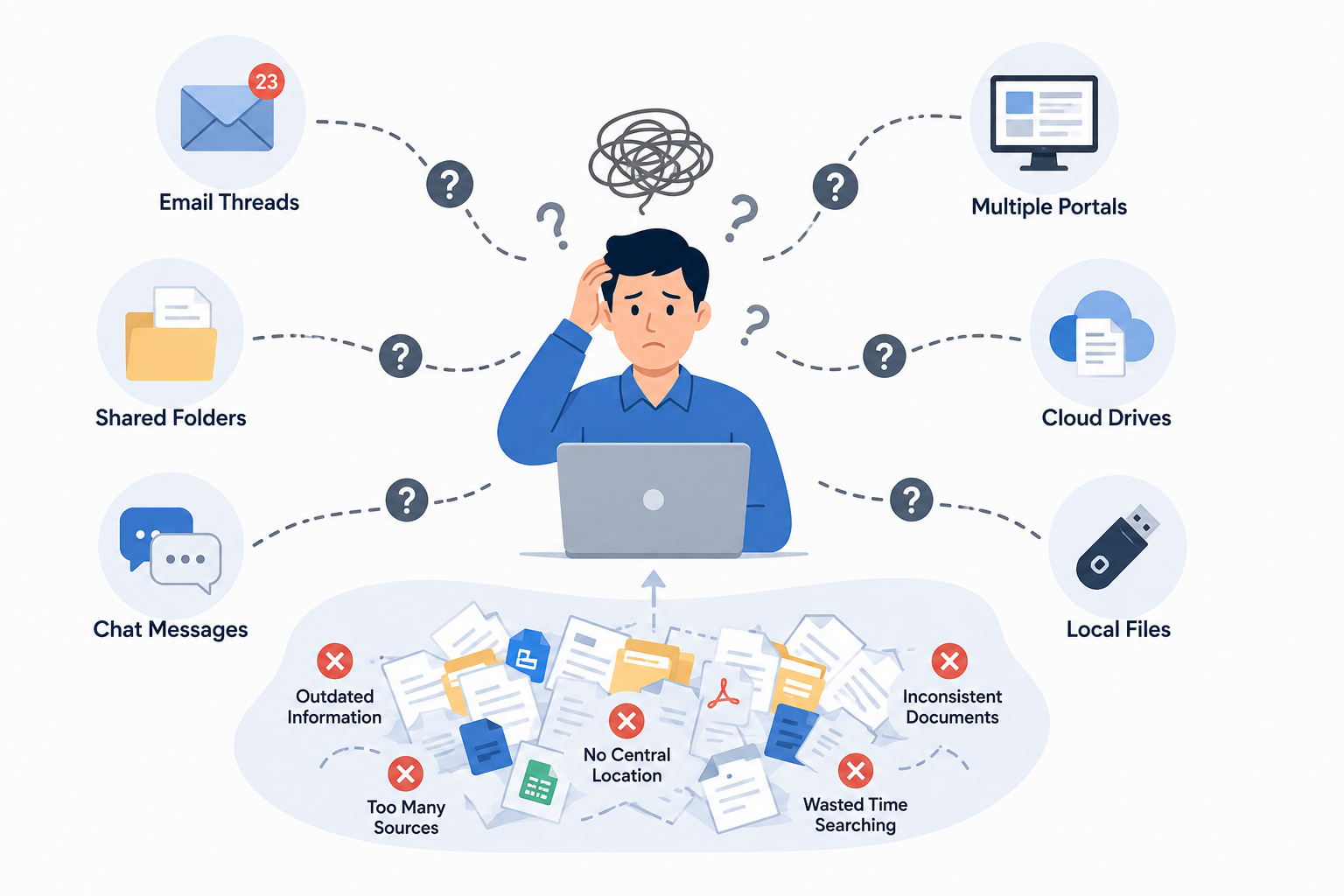
Challenge 1 - Partners Cannot Find Critical Information
One of the biggest frustrations partners experience is not knowing where to find the information they need.
Product updates, sales presentations, pricing documents, marketing materials, and technical resources are often stored across multiple systems.
When information is difficult to locate, partners spend more time searching and less time serving customers or generating revenue.
Common symptoms include:
- Partners emailing account managers for documents
- Duplicate versions of important files
- Outdated sales presentations being used
- Slow response times to customer questions
- Reduced partner productivity
Imagine a cybersecurity company working with 150 reseller partners across Europe.
A new product update is released, but the updated sales guide is shared through email while the pricing sheet is uploaded to SharePoint and technical documentation remains in another system.
A reseller preparing for a customer meeting spends 45 minutes searching for the latest information and still presents outdated pricing. The result is confusion for both the partner and the customer.
Challenge 2 - Inconsistent Onboarding Experiences
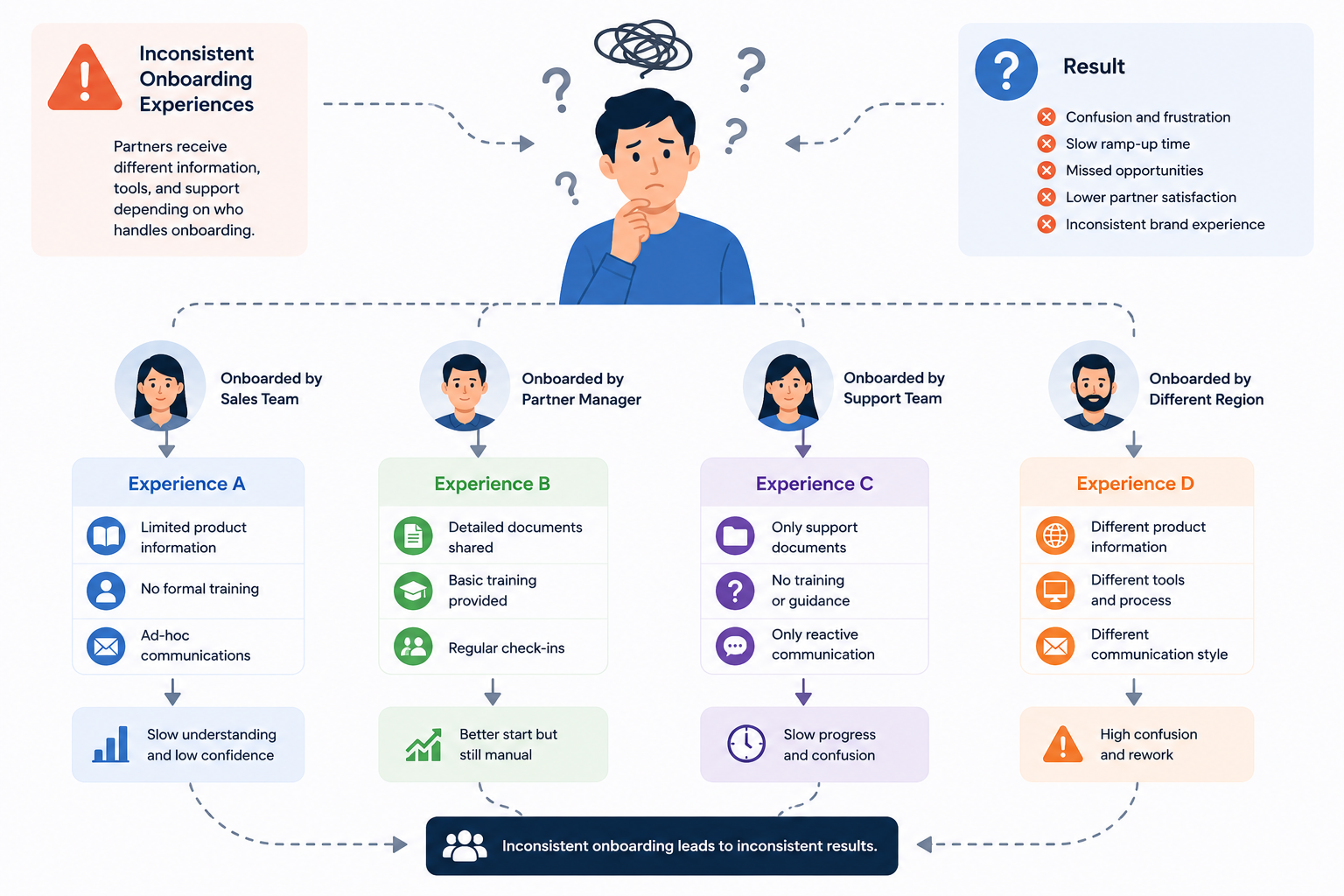
Challenge 2 - Inconsistent Onboarding Experiences
Without a structured onboarding process, every partner receives a different experience. Some partners may receive training and support immediately, while others are left figuring things out on their own.
This inconsistency often delays the time it takes for partners to become productive and can negatively impact their confidence in the partnership.
Organizations commonly experience:
- Longer onboarding periods
- Increased support requests
- Lower partner engagement
- Reduced program participation
- Delayed revenue generation
A software vendor signs five new reseller partners in the same month.
Two partners receive comprehensive onboarding sessions and training resources, while the other three receive only a welcome email and a PDF document.
Six months later, the first two partners have generated multiple sales opportunities, while the others remain largely inactive because they never fully understood how to position the solution.
Challenge 3 - Training Materials Become Outdated
Challenge 3 - Training Materials Become Outdated
Products, services, pricing, compliance requirements, and market conditions change constantly.
Without centralized content management, partners often continue using outdated materials long after they should have been replaced.
This creates risk for both the partner and the business.
Common issues include:
- Expired marketing collateral
- Incorrect pricing information
- Outdated compliance documentation
- Old product specifications
- Conflicting customer messaging
A manufacturing company updates its product specifications to comply with new industry regulations. However, several distributors continue using documentation that was downloaded months earlier.
Customers receive conflicting information, creating confusion and damaging trust in the brand.
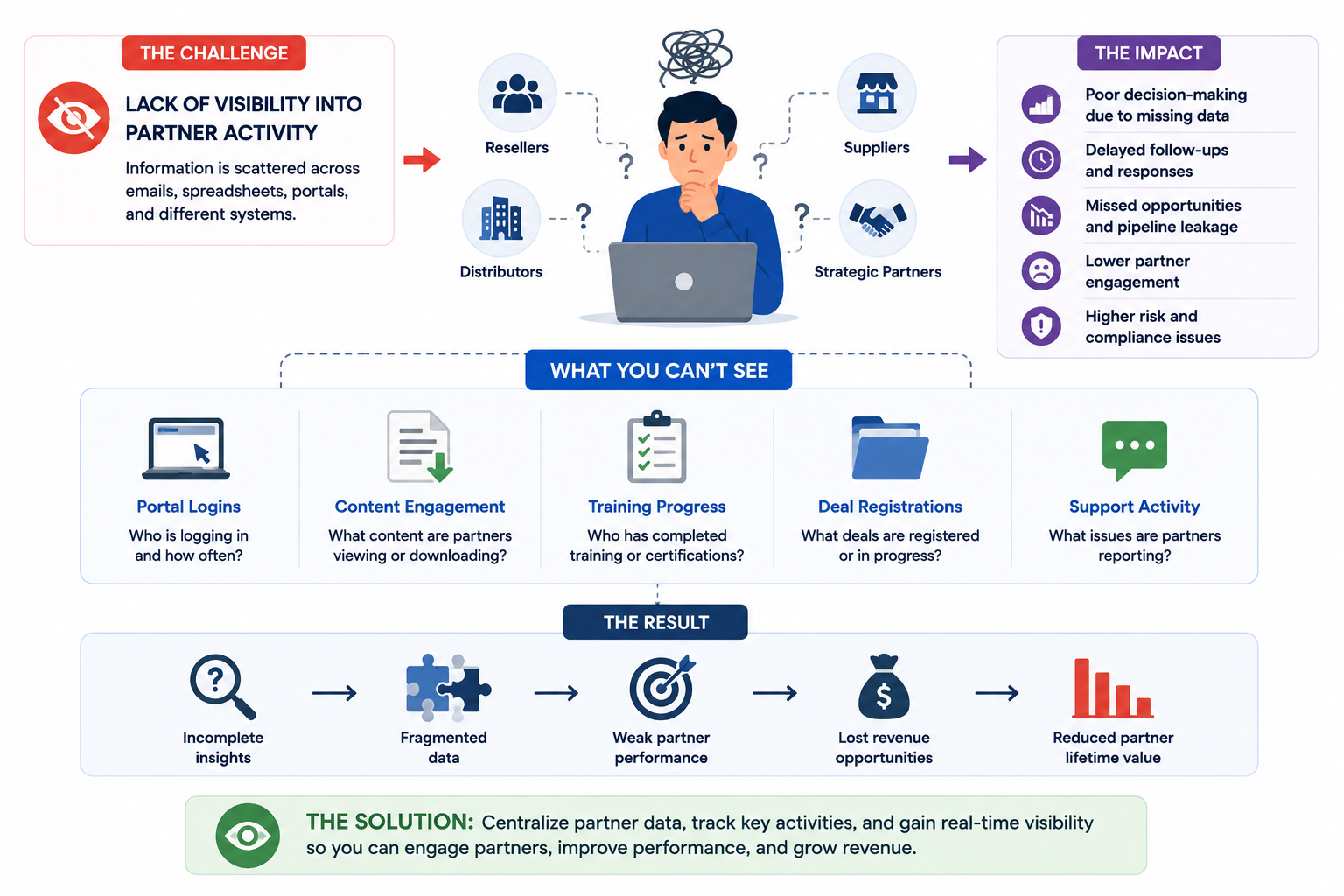
Challenge 4 - Lack of Visibility Into Partner Activity
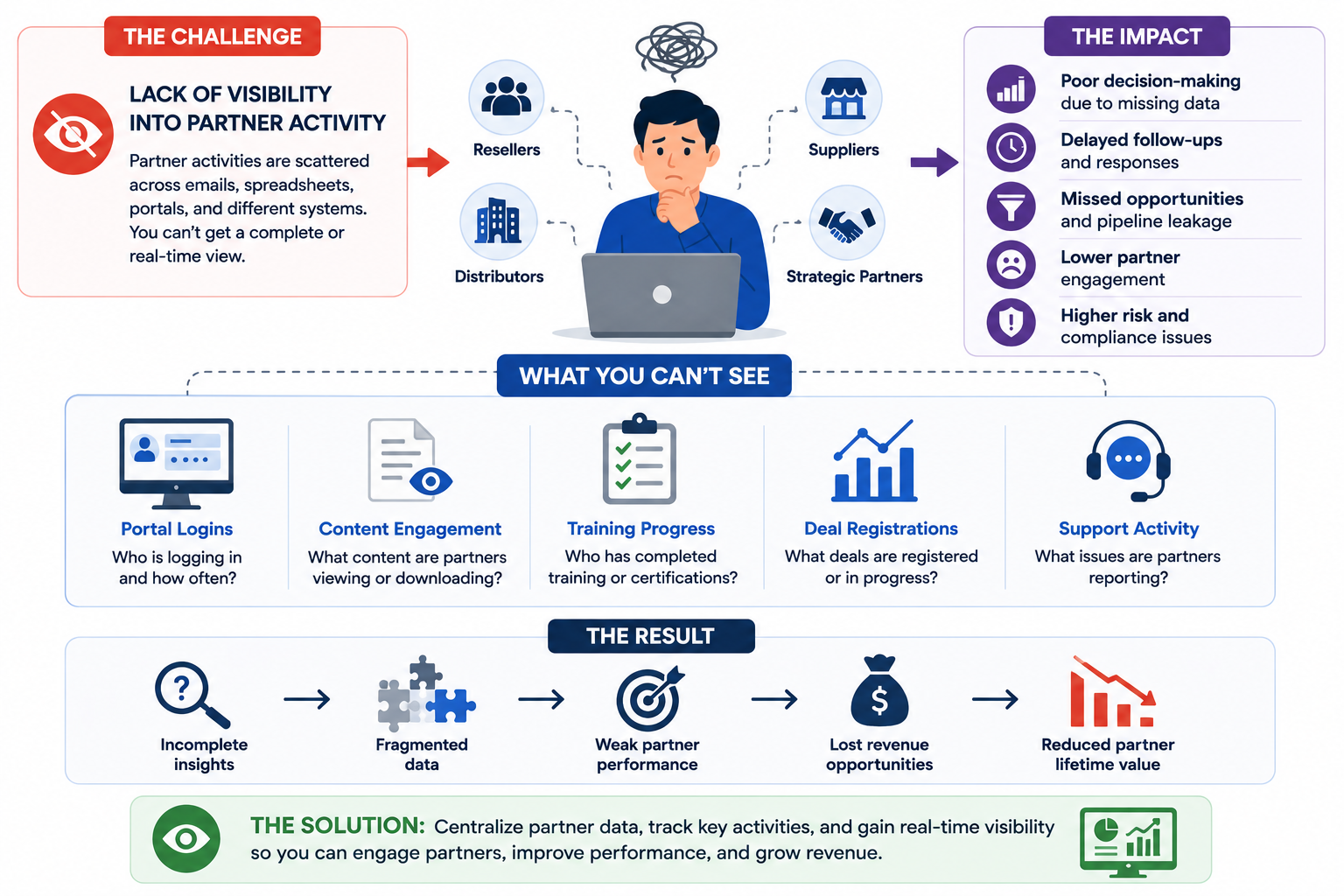
Challenge 4 - Lack of Visibility Into Partner Activity
Many organizations have little understanding of what their partners are actually doing.
They cannot see who has completed training, accessed resources, viewed updates, or actively engaged with the program.
Without visibility, it becomes difficult to identify successful partners or provide support where needed.
Typical challenges include:
- No insight into content usage
- Limited engagement reporting
- Difficulty measuring partner performance
- Lack of accountability
- Missed opportunities for improvement
A technology company launches a new product and uploads training materials for partners. Three months later, management assumes partners are ready to sell the solution.
After disappointing sales results, they discover that less than 20% of partners ever accessed the training content. Had they monitored engagement earlier, they could have intervened before revenue was affected.
Challenge 5 - Sales Teams and Partners Operate in Silos
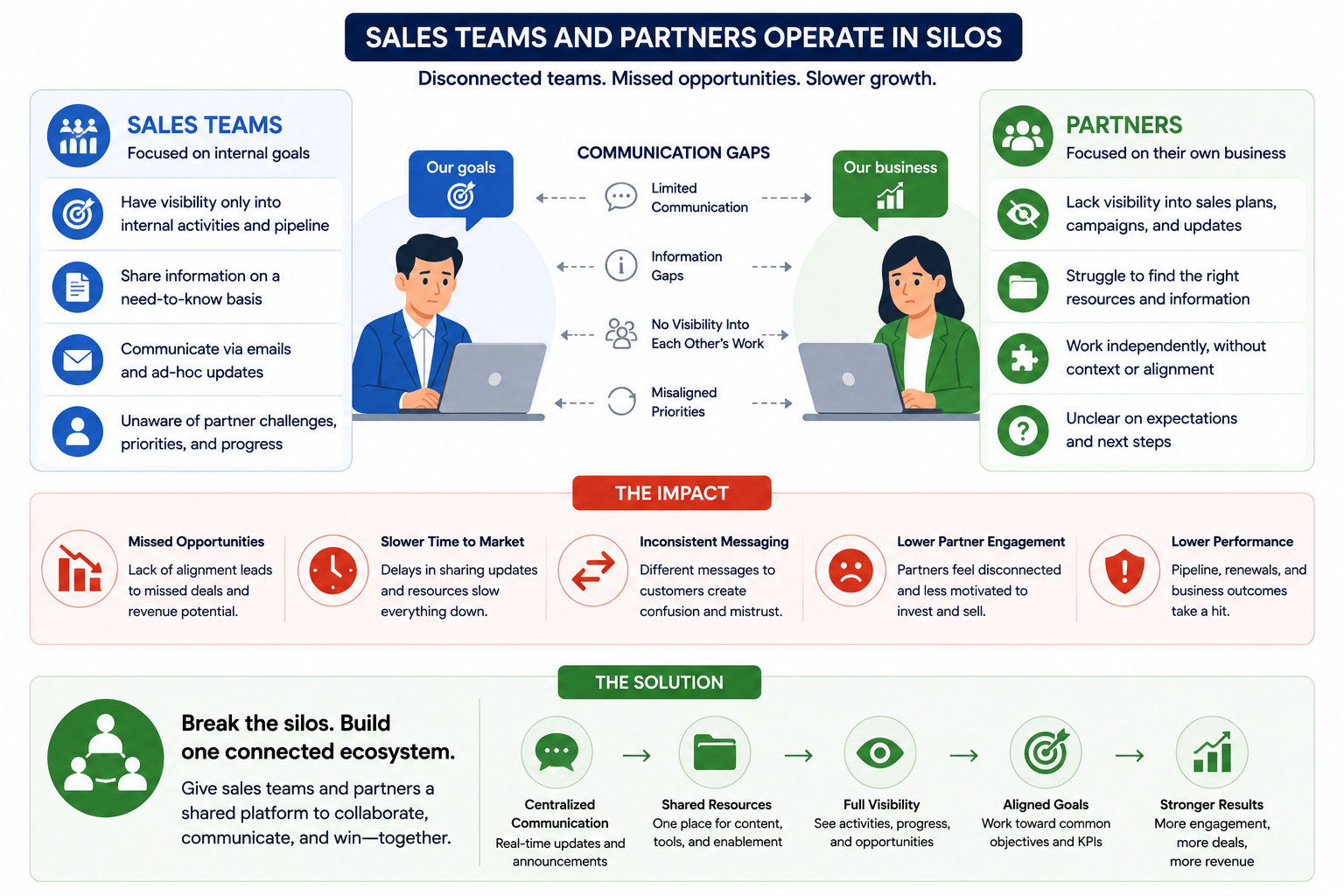
Challenge 5 - Sales Teams and Partners Operate in Silos
One of the most damaging issues is the disconnect between internal sales teams and external partners.
When information is not shared effectively, both groups often pursue opportunities independently without coordination.
This can lead to mixed messaging, duplicated efforts, and channel conflict.
Common symptoms include:
- Partners receiving outdated sales information
- Duplicate customer outreach
- Poor lead distribution
- Inconsistent messaging
- Reduced trust between teams
A SaaS company launches a new product promotion. Internal sales teams receive updated messaging immediately, but partners are not informed until two weeks later.
During that period, customers hear different pricing and value propositions depending on who they speak to, creating confusion and hurting conversion rates.
Challenge 6 - Security Risks From Uncontrolled File Sharing
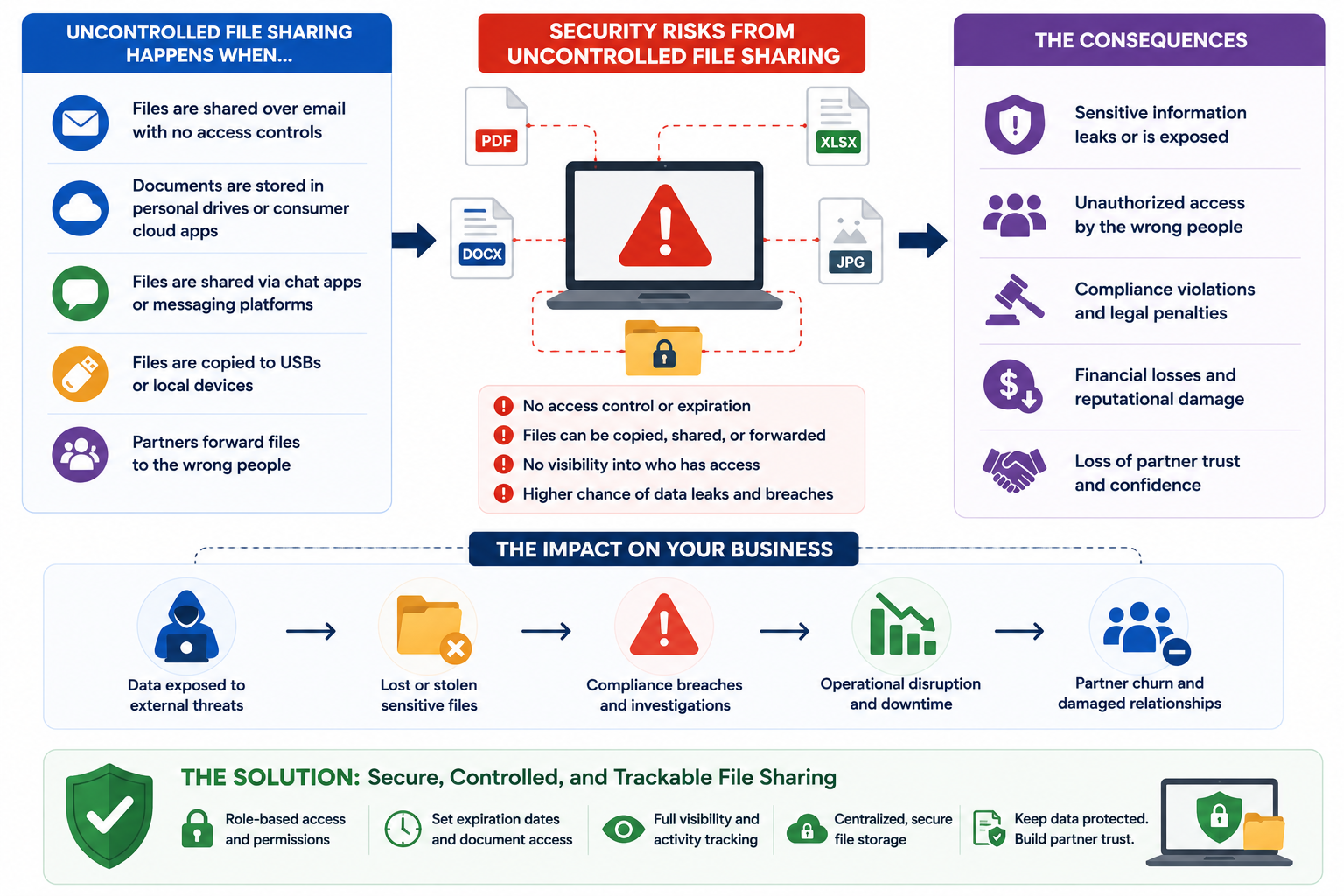
Challenge 6 - Security Risks From Uncontrolled File Sharing
As partner networks expand, many organizations resort to sharing files through email attachments, public links, personal cloud storage accounts, and unsecured file-sharing platforms.
This creates significant security and compliance risks.
Potential risks include:
- Unauthorized access to confidential information
- Accidental data leaks
- Compliance violations
- Lack of audit trails
- Uncontrolled document distribution
A healthcare technology provider shares sensitive implementation documents with external partners through email attachments.
One partner accidentally forwards the information to an unauthorized recipient.
Without access controls, version management, or audit tracking, the company has no visibility into who accessed the information, creating both security and compliance concerns.
The reality is that most partner-related challenges are not caused by the partners themselves.
They are usually the result of fragmented communication, disconnected systems, and a lack of structured enablement processes.
Businesses that invest in partner enablement create a more scalable, secure, and productive environment where both partners and internal teams can succeed together.
The Core Components of an Effective Partner Enablement Strategy
Successful partner enablement doesn't happen by accident.
The most effective partner programs are built around a clear framework that helps partners access information, complete training, collaborate with teams, and measure success.
Whether you're working with ten partners or ten thousand, these core components form the foundation of a scalable partner enablement strategy.
The Essential Components of a Successful Partner Enablement Framework
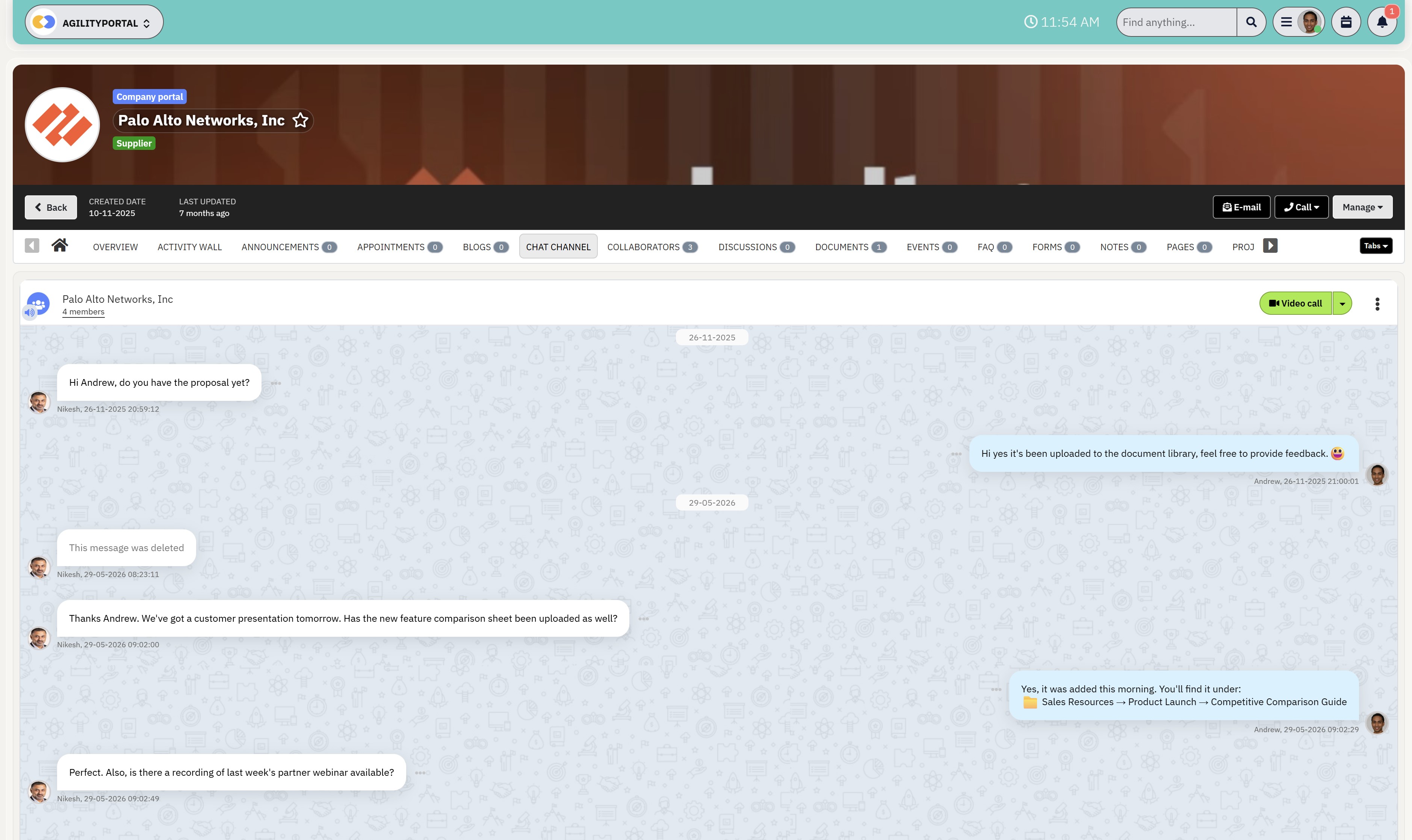
The Essential Components of a Successful Partner Enablement Framework
Communication is the backbone of every successful partner relationship.
Partners need a reliable way to receive announcements, product updates, company news, and important business information.
Without a centralized communication channel, information quickly becomes fragmented across emails, chats, and multiple platforms.
Key benefits include:
- Faster information sharing
- Improved partner engagement
- Consistent messaging
- Reduced email dependency
- Better collaboration across partner networks
Microsoft's partner ecosystem as an example, it relies heavily on centralized partner communications to keep thousands of partners informed about product releases, certifications, and program updates.
Streamline Partner Onboarding for Faster Success
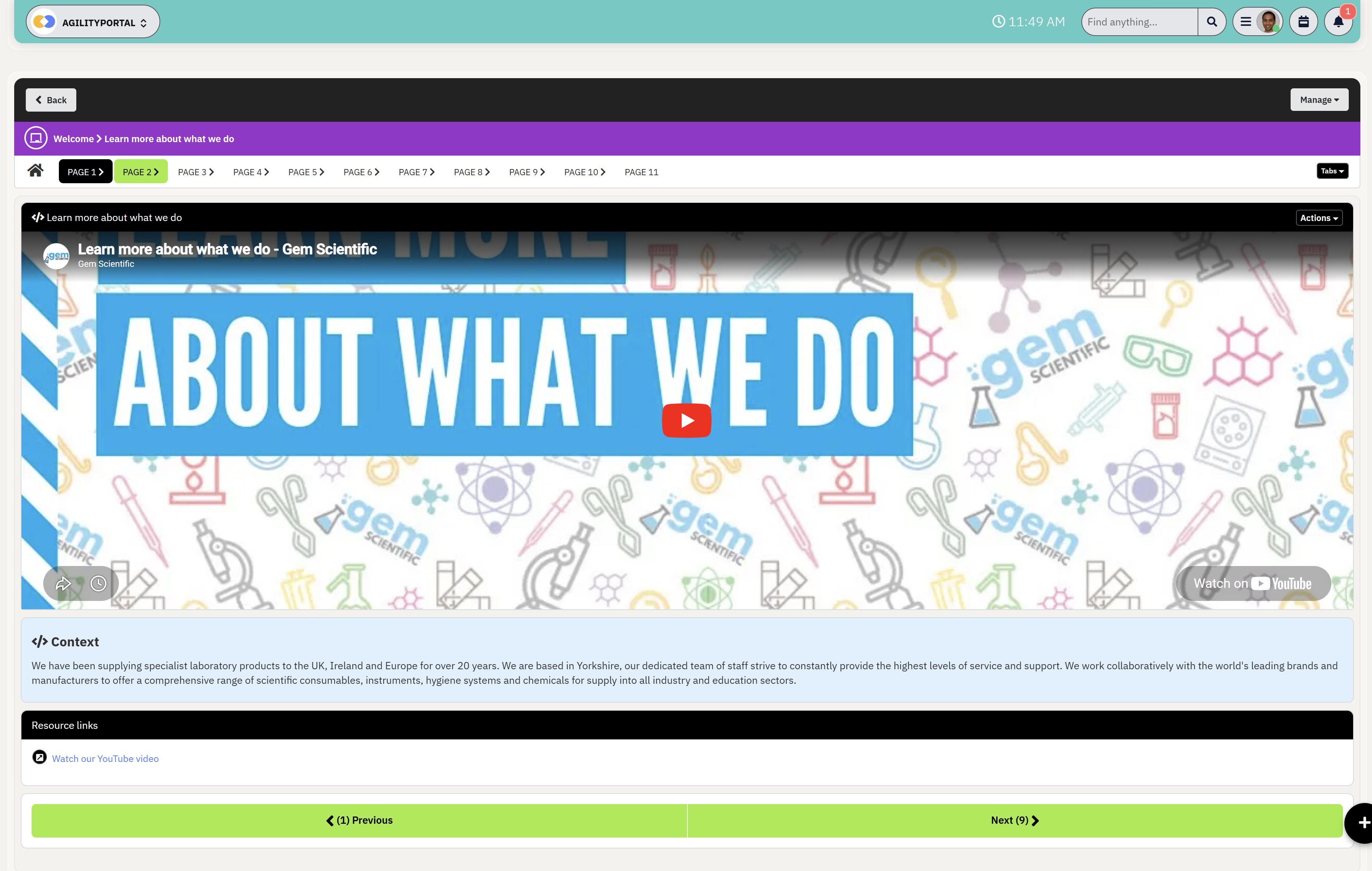
Streamline Partner Onboarding for Faster Success
First impressions matter.
A structured onboarding process helps new partners understand your products, processes, expectations, and available resources from day one.
The faster partners become productive, the faster they can generate value for both themselves and your business.
Key onboarding elements include:
- Welcome materials
- Training pathways
- Product documentation
- Partner guidelines
- Access to key resources
A software company that provides guided onboarding and training can often reduce partner ramp-up time from several months to just a few weeks.
Knowledge Management and Documentation
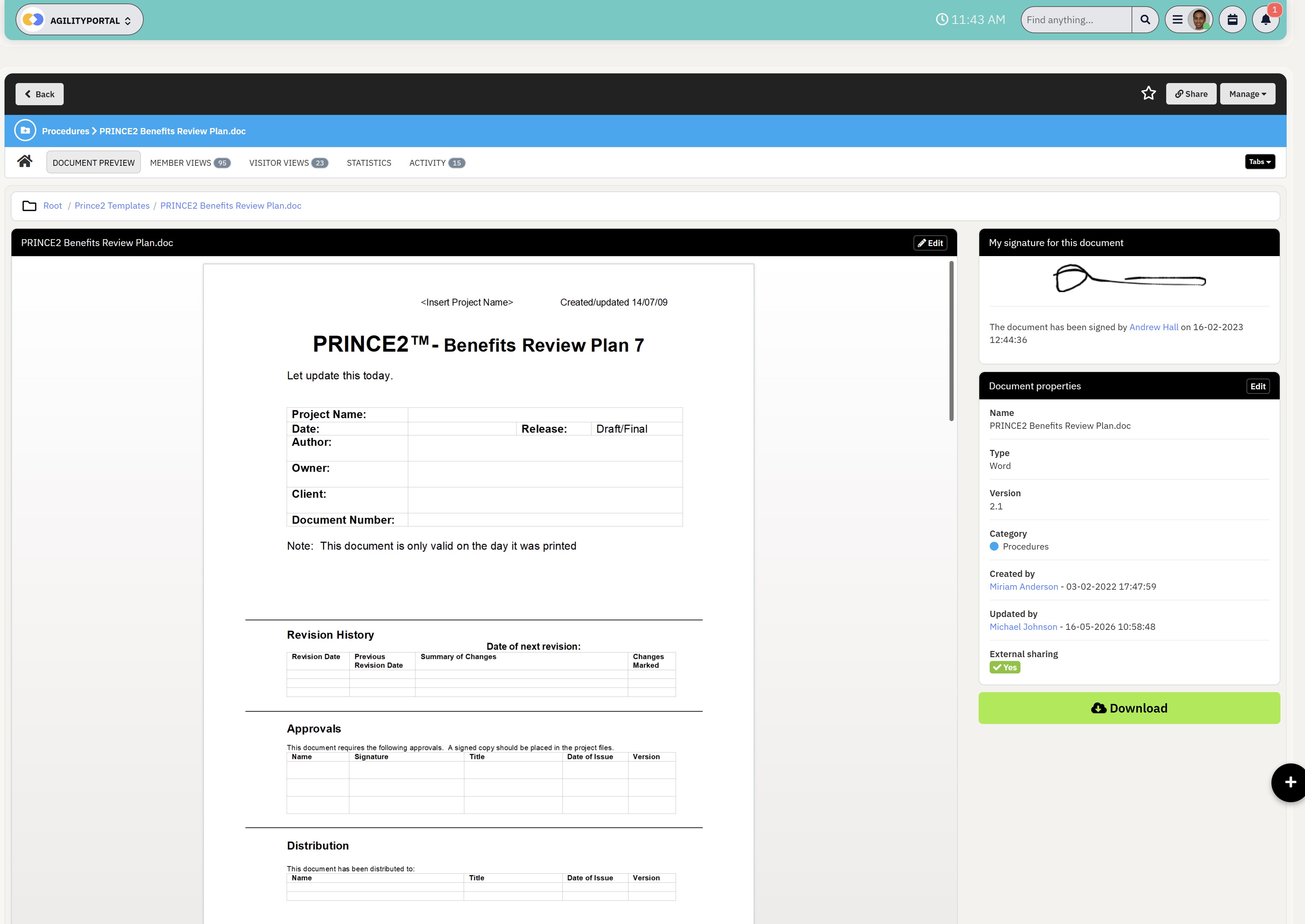
Knowledge Management and Documentation
Partners constantly need access to information.
Product specifications, pricing sheets, FAQs, compliance documents, sales presentations, and technical resources should all be easily accessible from a single location.
Cisco provides partners with extensive documentation libraries that allow them to quickly access technical and sales resources without contacting support teams.
Strong knowledge management ensures partners always have access to the latest information.
Important resources include:
- Product documentation
- Knowledge bases
- FAQs
- Process guides
- Compliance materials
Learning and Certification Programs
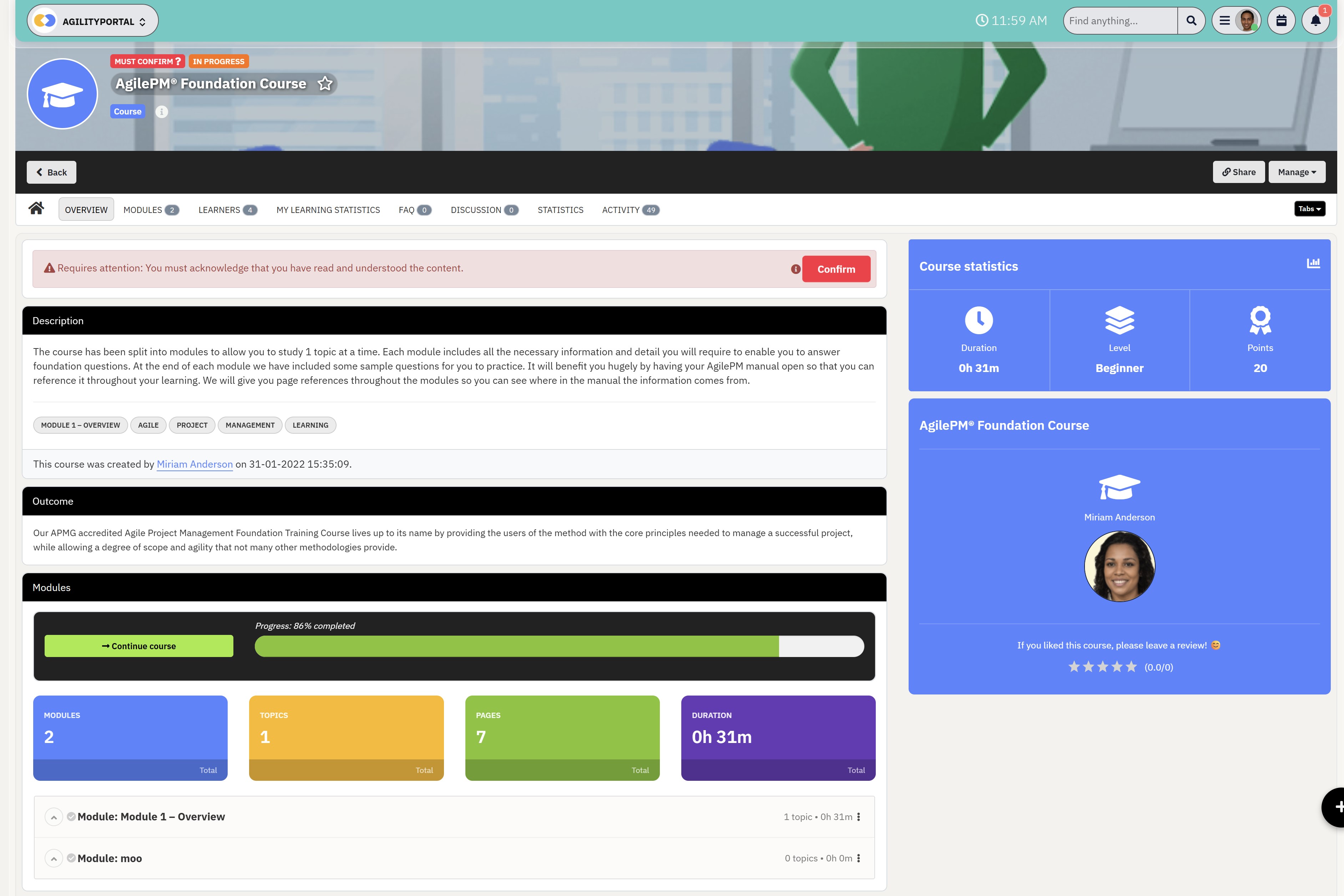
Learning and Certification Programs
Training helps partners build confidence and expertise.
The more knowledgeable your partners become, the more effectively they can represent your brand and support customers.
Many organizations use certification programs to ensure partners meet required competency levels.
Benefits include:
- Improved product knowledge
- Higher sales confidence
- Better customer support
- Increased partner engagement
- Consistent service delivery
Salesforce's partner certification programs help ensure partners possess the skills required to implement and support customer solutions effectively.
Sales Enablement Resources
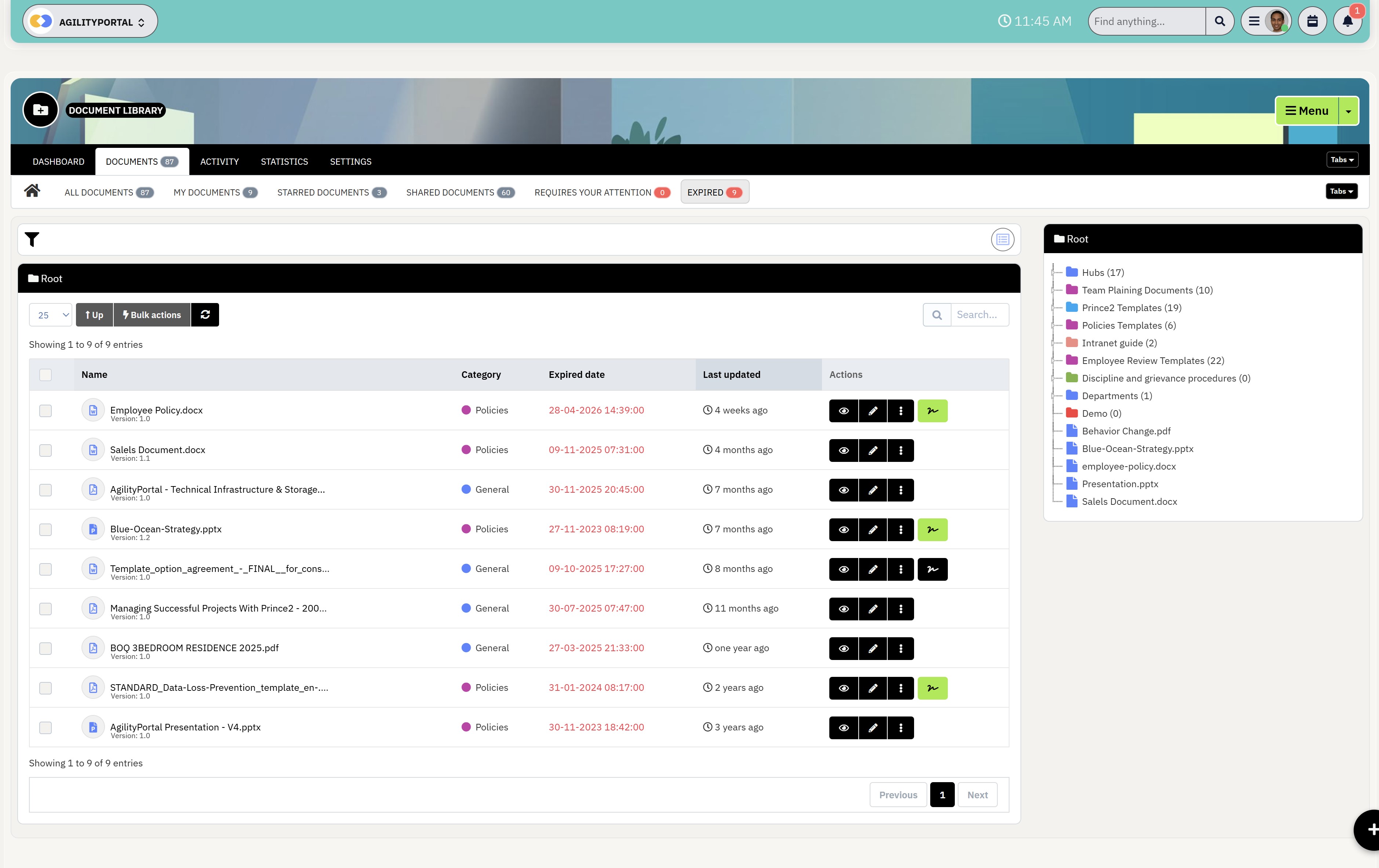
Sales Enablement Resources
Partners need more than product knowledge—they also need resources that help them sell successfully.
Providing sales tools enables partners to position your solution correctly and overcome customer objections.
Typical sales resources include:
- Sales playbooks
- Product presentations
- Battle cards
- Proposal templates
- Competitive comparison sheets
A reseller preparing for a customer presentation can quickly download approved sales materials rather than creating content from scratch.
Marketing Asset Distribution
Many partners actively promote products and services on behalf of vendors.
Providing ready-to-use marketing materials helps ensure brand consistency while reducing effort for partners.
Marketing assets should be easy to access, download, and customize when appropriate.
Common assets include:
- Campaign templates
- Social media content
- Email templates
- Product brochures
- Brand guidelines
Technology vendors often provide partners with pre-built marketing campaigns that can be launched immediately without requiring additional design work.
Performance Measurement and Reporting
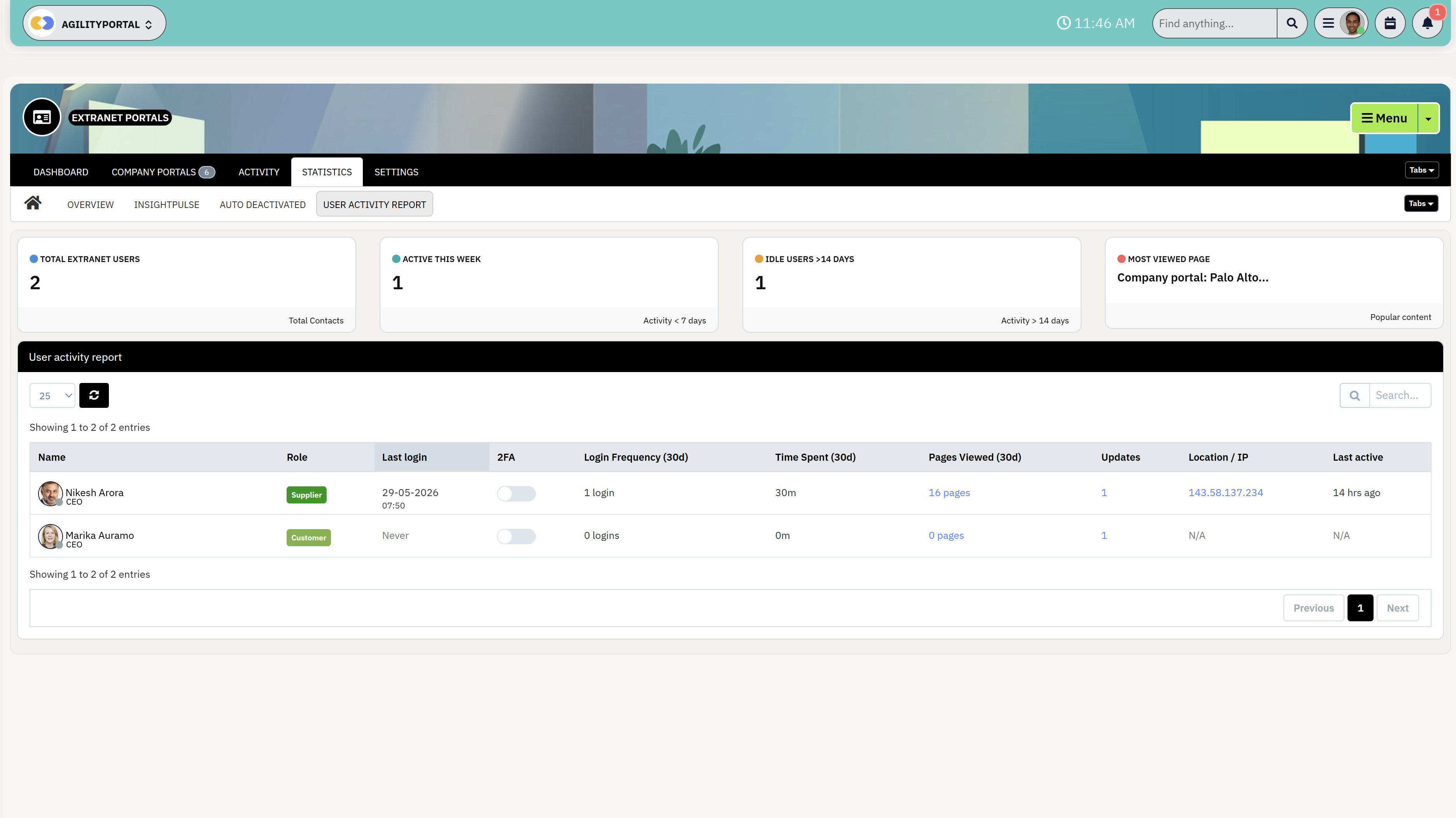
Performance Measurement and Reporting
You cannot improve what you cannot measure.
Tracking partner engagement and performance allows businesses to identify successful partners, uncover challenges, and optimize their enablement strategy.
Reporting also helps demonstrate the return on investment of partner programs.
Useful metrics include:
- Partner engagement rates
- Training completion rates
- Resource usage
- Deal registrations
- Partner-generated revenue
- Customer satisfaction scores
A business may discover that partners who complete certification programs generate significantly more revenue than those who do not, helping justify further investment in training.
When these seven components work together, organizations create a partner enablement framework that improves communication, accelerates onboarding, increases engagement, and ultimately drives stronger business growth.
What Is a Partner Portal and Why Is It Important?
A partner portal is a secure online workspace designed to help organizations communicate, collaborate, and share resources with external partners.
Instead of relying on emails, spreadsheets, shared drives, and multiple disconnected systems, businesses can provide partners with a single location where they can access everything they need to be successful.
As partner ecosystems grow, managing information becomes increasingly difficult.
A partner portal solves this challenge by centralizing communication, training, documentation, support resources, and performance tracking into one platform.
This not only improves the partner experience but also reduces administrative work for internal teams.
Companies such as Microsoft, Cisco, Salesforce, HubSpot, and Oracle all use dedicated partner portals to support thousands of partners worldwide and ensure they have access to consistent information and resources.
How Partner Portals Support Partner Enablement
A partner portal acts as the foundation of a successful partner enablement strategy. It gives partners self-service access to information while helping businesses maintain consistency, control, and visibility.
Rather than waiting for responses from account managers or support teams, partners can quickly find the answers and resources they need.
Key benefits include:
- Faster partner onboarding
- Centralized communication
- Improved knowledge sharing
- Better collaboration
- Reduced support requests
- Increased partner engagement
- Greater visibility into partner activity
Imagine a cybersecurity company working with 250 reseller partners. Instead of sending product updates through email and managing training manually, the company provides a partner portal where partners can access certifications, sales resources, pricing updates, and support documentation anytime they need it.
Features Every Modern Partner Portal Should Include
Not all partner portals are created equal.
The most effective platforms provide partners with everything they need to operate independently while maintaining strong connections with your business.
Essential features include:
| Feature | Purpose |
| Document Library | Centralized access to files, policies, presentations, and resources |
| Training Center | Courses, certifications, and onboarding programs |
| Communication Hub | News, announcements, updates, and notifications |
| Resource Center | Sales materials, marketing assets, and templates |
| Knowledge Base | FAQs, guides, and troubleshooting resources |
| Partner Directory | Find and connect with other partners or contacts |
| Discussion Forums | Community collaboration and peer support |
| Task Management | Track onboarding tasks and partner activities |
| Analytics Dashboard | Monitor engagement, activity, and performance |
The goal is to create a single source of truth where partners can access everything they need without constantly contacting internal teams.
Partner Portal vs Traditional Extranet
Many businesses assume that a partner portal and an extranet are the same thing, but there are important differences.
A traditional extranet is primarily used to provide external users with access to documents and basic information.
A partner portal goes much further by supporting onboarding, training, collaboration, communication, reporting, and partner engagement.
| Capability | Traditional Extranet | Partner Portal |
| Document Sharing | ✓ | ✓ |
| News & Updates | Limited | ✓ |
| Partner Training | ✗ | ✓ |
| Certifications | ✗ | ✓ |
| Discussion Forums | Limited | ✓ |
| Analytics & Reporting | Limited | ✓ |
| Partner Onboarding | ✗ | ✓ |
| Community Collaboration | Limited | ✓ |
In simple terms, an extranet provides access, while a partner portal actively supports partner success.
Real-World Example of a Partner Portal in Action
Let's say a software company has 500 reseller partners across North America, Europe, and Asia. Without a partner portal, the company relies on emails, shared folders, and support tickets to distribute information.
Partners frequently ask for updated pricing, product documentation, and marketing materials. Internal teams spend hours responding to repetitive requests, and partners often struggle to find the latest resources.
After implementing a partner portal, the company creates a centralized environment where partners can:
- Complete onboarding programs
- Access product training
- Download sales and marketing assets
- Register opportunities
- Submit support requests
- Collaborate with other partners
- Receive real-time company updates
The result is faster onboarding, fewer support requests, improved partner engagement, and a more scalable partner ecosystem that supports long-term growth.
Simply put, a partner portal transforms partner enablement from a manual process into a structured, scalable system that benefits both the business and its partners.
How to Build a Successful Partner Onboarding Process
A great partner relationship starts with a great onboarding experience.
The reality is that many partner programs fail because businesses assume partners will figure everything out on their own. They won't.
If you want partners to become productive quickly, generate revenue, and represent your brand effectively, you need a structured onboarding process that guides them every step of the way.
The following framework will help you create an onboarding experience that sets partners up for long-term success.
Step 1: Introduce Your Partner Program
The first thing you should do is help partners understand who you are, what your business does, and what they can expect from the partnership.
Don't overwhelm new partners with dozens of documents on day one. Instead, focus on providing a clear introduction to your company, products, services, and partner program.
Make sure partners understand:
- Your company mission and goals
- Products and services offered
- Partner program benefits
- Available resources and support
- Key contacts within your organization
Microsoft provides new partners with structured onboarding paths that explain program benefits, certifications, support options, and growth opportunities before asking them to complete more advanced training.
Step 2: Provide Training and Learning Resources
Once partners understand the basics, it's time to educate them.
Your partners should have access to training that helps them confidently sell, support, and promote your products or services. The more knowledgeable they become, the more successful they are likely to be.
Focus on providing:
- Product training
- Sales training
- Technical documentation
- Certification programs
- Industry best practices
Salesforce's partner ecosystem includes certification pathways that help partners build expertise before working with customers.
Step 3: Give Partners Access to the Right Tools
Partners cannot succeed if they don't have access to the tools and resources needed to do their jobs.
This is where many organizations create unnecessary friction. Partners spend weeks waiting for login credentials, documentation, or access to important systems.
Make access simple by providing:
- Partner portal access
- Marketing resources
- Sales materials
- Knowledge bases
- Support channels
Instead of emailing documents individually, provide partners with a centralized portal where they can access everything from one location.
Step 4: Establish Clear Communication Channels
One of the biggest reasons partnerships fail is poor communication.
Partners need to know where to go for updates, support, announcements, and questions. Establishing communication channels early helps prevent confusion later.
Consider providing:
- Partner newsletters
- Community forums
- Dedicated chat channels
- Regular webinars
- Partner events and updates
Cisco uses dedicated partner communities to share updates, training opportunities, and important announcements across its global partner network.
Step 5: Set Expectations and Success Metrics
Successful partnerships require clear expectations from both sides.
Partners should understand what success looks like and how their performance will be measured. This creates accountability while helping partners focus on the activities that matter most.
Define:
- Sales targets
- Certification requirements
- Customer service expectations
- Reporting requirements
- Program participation goals
A software vendor may require partners to complete onboarding certification within 60 days before receiving advanced sales opportunities.
Step 6: Monitor Engagement and Continuously Improve
Partner onboarding shouldn't end after the first few weeks.
The most successful organizations continuously monitor engagement and provide ongoing support.
Pay attention to how partners interact with your program and identify opportunities for improvement.
Track metrics such as:
- Portal logins
- Training completion rates
- Resource downloads
- Partner satisfaction
- Revenue contribution
- Support requests
If you notice that only a small percentage of partners complete onboarding training, it may indicate that the process is too complex or difficult to access.
By following these six steps, you'll create a partner onboarding experience that helps partners become productive faster, stay engaged longer, and contribute more effectively to your business growth.
The easier you make it for partners to succeed, the more successful your partner program will become.
The Technology Stack Behind Modern Partner Enablement
Partner enablement is not powered by a single tool. Successful organizations use a combination of technologies that work together to support onboarding, training, communication, collaboration, knowledge sharing, and performance management.
As partner ecosystems grow, having the right technology stack becomes essential for creating a seamless experience for both partners and internal teams.
Let's look at the technologies that form the foundation of a modern partner enablement strategy.
Partner Enablement Software
Partner enablement software acts as the central hub where partners can access resources, training materials, company updates, sales content, and support tools.
Instead of relying on multiple disconnected systems, businesses can provide partners with a single destination for everything they need.
The primary goal of partner enablement software is to make it easier for partners to find information, stay engaged, and become productive faster.
Companies such as Microsoft, HubSpot, and Salesforce have invested heavily in partner enablement platforms because managing large partner ecosystems manually becomes increasingly difficult as programs scale.
For most organizations, this serves as the foundation upon which the rest of the partner ecosystem is built.
Partner Relationship Management (PRM) Platforms
A Partner Relationship Management (PRM) platform focuses specifically on managing partner relationships throughout their lifecycle.
While partner enablement software provides resources and support, PRM platforms help businesses manage partner recruitment, onboarding, deal registration, lead distribution, certifications, and performance tracking.
Think of a PRM system as the partner equivalent of a CRM.
It helps organizations maintain visibility into partner activity while ensuring opportunities are properly managed and attributed.
Companies with large channel sales programs often rely on PRM platforms to streamline operations and improve collaboration with resellers, distributors, and strategic partners.
Learning Management Systems (LMS)
Training is one of the most important components of partner enablement. If partners do not understand your products, services, or processes, they will struggle to represent your business effectively.
A Learning Management System (LMS) allows organizations to deliver structured training programs, certifications, onboarding courses, and ongoing education.
Rather than sending training documents through email, businesses can provide interactive learning experiences that track progress and completion.
For example, Salesforce's Trailhead platform has become one of the most recognized partner learning ecosystems in the technology industry, helping thousands of partners develop product expertise and certifications.
Communication and Collaboration Tools
Communication plays a critical role in maintaining strong partner relationships.
Partners need access to company announcements, product updates, discussions, support channels, and collaboration opportunities.
Modern communication platforms help businesses keep partners informed while reducing dependency on lengthy email chains.
These tools create a more connected ecosystem where partners can ask questions, share knowledge, and collaborate with both internal teams and fellow partners.
Organizations that prioritize communication often experience higher engagement levels because partners feel more connected to the business and its objectives.
Knowledge Management Platforms
Partners frequently need access to documentation, policies, pricing guides, FAQs, product specifications, and support resources.
Without a structured approach to knowledge management, information becomes fragmented and difficult to locate.
Knowledge management platforms provide a centralized repository where partners can quickly find accurate and up-to-date information. This reduces support requests while improving the overall partner experience.
Cisco is a good example of a company that has built extensive knowledge resources for its partner community, allowing partners to access technical documentation and sales information whenever they need it.
Analytics and Reporting Solutions
The final piece of the technology stack is analytics and reporting. Without data, it is almost impossible to understand whether your partner enablement strategy is working.
Analytics platforms help organizations measure partner engagement, training completion rates, resource usage, onboarding progress, certification performance, and partner-generated revenue.
These insights allow businesses to identify successful partners, uncover gaps in their programs, and continuously improve their enablement efforts.
For example, if reporting reveals that partners who complete training generate significantly more revenue than those who do not, organizations can justify investing further in education and certification programs.
When these technologies work together, businesses create a complete partner enablement ecosystem that improves communication, accelerates onboarding, strengthens collaboration, and supports long-term partner success.
Key Benefits of Partner Enablement
Partner enablement delivers far more than improved communication.
When implemented correctly, it helps businesses create stronger partner relationships, improve operational efficiency, and drive measurable revenue growth.
Whether you're managing a small reseller network or a global partner ecosystem, the benefits quickly become apparent when partners have access to the right tools, information, and support.
Faster Partner Onboarding
One of the biggest advantages of partner enablement is reducing the time it takes for new partners to become productive.
Instead of waiting for documents, training sessions, or answers from account managers, partners can immediately access everything they need from a centralized platform.
Benefits include:
- Faster time-to-productivity for new partners.
- Reduced onboarding workload for internal teams.
- More consistent onboarding experiences across the partner network.
A software vendor that previously took three months to onboard new resellers can reduce that timeframe to just a few weeks by providing self-service training, onboarding guides, and certification programs through a partner portal.
Increased Partner Engagement
Partners are more likely to stay engaged when they have easy access to resources, communication channels, and ongoing support.
An engaged partner is typically more active, better informed, and more invested in helping your business succeed.
Benefits include:
- Higher participation in partner programs.
- Greater adoption of training and certifications.
- Improved collaboration between partners and internal teams.
Microsoft keeps its global partner ecosystem engaged through regular updates, learning opportunities, and dedicated partner communities that encourage ongoing participation.
Improved Sales Performance
Partners who understand your products and have access to the right sales resources are far more effective at closing deals.
Partner enablement helps ensure every partner is equipped with accurate information and proven sales tools.
Benefits include:
- Higher conversion rates.
- Faster sales cycles.
- Increased partner-generated revenue.
A reseller can quickly access updated pricing sheets, product presentations, and competitive comparison guides before meeting a prospect, improving their chances of winning the opportunity.
Better Information Sharing
Without partner enablement, information often becomes scattered across emails, shared drives, and multiple systems.
A centralized platform creates a single source of truth where partners can find accurate and up-to-date information.
Benefits include:
- Reduced confusion and misinformation.
- Faster access to business-critical resources.
- Improved consistency across the partner ecosystem.
Instead of emailing updated product documentation to hundreds of distributors, a manufacturing company can publish it once in a partner portal where everyone accesses the latest version.
Reduced Support Requests
When partners can find answers independently, support teams spend less time responding to repetitive questions and more time focusing on strategic initiatives.
Benefits include:
- Lower support workloads.
- Faster problem resolution.
- Improved operational efficiency.
A technology company that publishes FAQs, knowledge base articles, and troubleshooting guides may see a significant reduction in partner support tickets because answers are available on demand.
Stronger Partner Relationships
Partner enablement demonstrates that your organization is invested in partner success.
When partners feel supported and valued, trust grows and relationships become stronger over time.
Salesforce invests heavily in partner training, certification, and support programs, helping create stronger relationships with thousands of implementation and consulting partners worldwide.
Greater Partner Retention
Partners are more likely to remain active when they receive ongoing value from the relationship. A strong enablement strategy creates a better experience that encourages long-term participation.
Benefits include:
- Higher partner loyalty.
- Reduced partner churn.
- More sustainable revenue growth.
A company that continuously provides new training resources, marketing materials, and business opportunities is far more likely to retain high-performing partners than a business that only communicates when it needs something.
Ultimately, partner enablement creates a win-win scenario.
Partners become more successful because they have access to the resources and support they need, while businesses benefit from higher engagement, stronger relationships, and increased partner-driven revenue.
Measuring Partner Enablement Success
Implementing a partner enablement strategy is only the first step.
To understand whether your program is delivering results, you need to measure performance consistently.
Tracking the right metrics helps identify what's working, where partners need additional support, and how your enablement efforts contribute to overall business growth.
Partner Adoption Rates
Partner adoption rates measure how many partners actively use your enablement platform, resources, and programs.
High adoption levels often indicate that partners see value in the tools and information provided, while low adoption may signal usability or engagement issues.
If 80 out of 100 partners regularly access your partner portal each month, your adoption rate would be 80%, providing a clear indicator of engagement across the network.
Training Completion Metrics
Training completion metrics help determine whether partners are actively participating in onboarding, certification, and educational programs.
These metrics are important because well-trained partners are typically more confident, productive, and capable of representing your business effectively.
A technology vendor may discover that partners who complete certification programs generate more sales opportunities than those who skip training, highlighting the value of educational initiatives.
Resource Utilization
Resource utilization measures how frequently partners access documents, sales materials, marketing assets, knowledge base articles, and support resources.
This helps businesses understand which content delivers value and which resources may require improvement.
If product comparison guides are downloaded significantly more often than other resources, it may indicate that partners rely heavily on these materials during customer conversations.
Partner Satisfaction Scores
Partner satisfaction scores provide insight into how partners feel about their relationship with your organization.
Gathering feedback through surveys and reviews helps identify strengths, uncover frustrations, and improve the overall partner experience.
A quarterly satisfaction survey may reveal that partners appreciate training resources but would like faster access to product updates and marketing materials.
Revenue Generated Through Partners
Revenue generated through partners is one of the most important indicators of enablement success.
This metric measures the direct financial contribution of your partner ecosystem and helps demonstrate the return on investment of your program.
A software company may find that partner-generated revenue increases by 30% after introducing structured onboarding, training, and sales enablement resources.
Time-to-Productivity
Time-to-productivity measures how quickly new partners become active and start contributing value after joining your program.
The shorter this timeframe, the more effective your onboarding and enablement processes are likely to be.
If new partners previously took six months to generate their first opportunity but now achieve the same result within two months, the enablement program is clearly improving efficiency.
Deal Registration Activity
Deal registration activity measures how frequently partners submit and register new business opportunities.
Consistent deal registration often indicates strong engagement and confidence in your products or services.
An increase in registered opportunities after launching a partner portal may suggest that partners are finding it easier to collaborate, access resources, and pursue new business opportunities.
By monitoring these seven metrics consistently, organizations gain a clearer understanding of partner performance, engagement, and business impact.
The most successful partner enablement programs use this data to continuously refine their strategy and strengthen their partner ecosystem over time.
Signs Your Partner Enablement Strategy Is Broken
Many organizations assume their partner program is working simply because partners remain enrolled.
However, true partner enablement success is measured by engagement, adoption, collaboration, and business outcomes.
If partners are disengaged or struggling to access information, these problems often reveal themselves through warning signs that should not be ignored.
#1. Partners Rarely Log Into Your Systems
If partners rarely access your portal, training platform, or resource center, it often indicates they do not see value in the experience you're providing.
People naturally gravitate toward tools that make their jobs easier and avoid those that create friction.
Warning Signs:
- Low portal login rates.
- Minimal document downloads.
- Limited engagement with updates.
- Few returning users.
Impact:
- Partners become disconnected from your business.
- Product knowledge becomes outdated.
- Communication gaps increase.
- Revenue opportunities are missed.
#2. Constant Requests for Basic Information
When partners repeatedly ask for information that should already be available, it usually means resources are difficult to find or poorly organized.
Over time, this creates frustration for both partners and internal teams.
Warning Signs:
- Repeated requests for pricing sheets.
- Frequent questions about products.
- Partners asking for documents already available.
- Support teams answering the same questions repeatedly.
Impact:
- Increased support workload.
- Reduced partner productivity.
- Slower customer response times.
- Higher operational costs.
#3. Slow Onboarding Times
A lengthy onboarding process is one of the fastest ways to discourage new partners.
If it takes months for partners to become productive, your enablement process is likely too complex or lacks structure.
Warning Signs:
- Partners taking months to become active.
- Low completion rates for onboarding tasks.
- Delayed access to systems and resources.
- High dependency on account managers.
Impact:
- Lost revenue opportunities.
- Lower partner confidence.
- Increased onboarding costs.
- Reduced long-term engagement.
#4. Low Training Participation
Training is one of the strongest indicators of partner engagement.
If partners consistently ignore training opportunities, it may signal that content lacks relevance, accessibility, or perceived value.
Warning Signs:
- Low course completion rates.
- Poor certification participation.
- Minimal attendance at webinars.
- Limited use of learning resources.
Impact:
- Poor product knowledge.
- Inconsistent customer experiences.
- Lower sales performance.
- Increased support requirements.
#5. Partners Continue Using Email for Everything
When partners rely on email instead of your portal or collaboration platform, it often means your enablement tools are not becoming part of their daily workflow.
Warning Signs:
- Most communication happens via email.
- Documents are shared through attachments.
- Partners avoid portal-based discussions.
- Teams maintain separate communication channels.
Impact:
- Information becomes fragmented.
- Version control issues increase.
- Important updates get missed.
- Collaboration becomes inefficient.
#6. Lack of Reporting and Visibility
If you cannot see what partners are doing, you cannot effectively manage or improve your partner program.
Visibility is essential for understanding engagement, performance, and business impact.
Warning Signs:
- No engagement reporting.
- Limited activity tracking.
- Unknown training completion rates.
- No insight into resource usage.
Impact:
- Poor decision-making.
- Difficulty measuring ROI.
- Missed improvement opportunities.
- Reduced program effectiveness.
#7. Declining Partner Satisfaction
Partner satisfaction often reflects the overall health of your enablement strategy. When partners feel unsupported, engagement and loyalty typically decline.
Warning Signs:
- Negative survey feedback.
- Reduced participation in programs.
- Fewer referrals and recommendations.
- Increased partner churn.
Impact:
- Weaker partner relationships.
- Lower retention rates.
- Reduced partner-generated revenue.
- Damage to brand reputation.
If several of these warning signs sound familiar, it may be time to reassess your partner enablement strategy. The earlier you identify and address these issues, the easier it becomes to improve engagement, strengthen relationships, and create a more successful partner ecosystem.
Industry Examples of Partner Enablement
Partner enablement is not limited to one industry. Organizations across multiple sectors rely on partners to extend their reach, deliver services, support customers, and generate revenue.
While the specific requirements may vary, the underlying goal remains the same: giving partners the resources, knowledge, and tools they need to succeed.
SaaS Companies
Software-as-a-Service (SaaS) companies often depend heavily on reseller, implementation, and consulting partners to drive growth.
As product portfolios expand and technology evolves rapidly, partners need continuous access to training, product updates, sales resources, and certifications.
For example, Salesforce has built one of the world's largest partner ecosystems through its Trailhead learning platform and partner community.
Rather than relying on internal teams to train every partner manually, Salesforce provides structured learning paths, certifications, documentation, and support resources that help partners become experts in the platform.
This approach allows partners to onboard faster, deliver better customer outcomes, and generate more revenue while reducing the administrative burden on Salesforce's internal teams.
Cybersecurity Vendors
Cybersecurity companies face unique challenges because products are often complex, highly technical, and constantly evolving to address new threats. Partners need up-to-date knowledge to confidently position solutions and support customers.
Cisco and Palo Alto Networks invest heavily in partner enablement programs that provide technical certifications, product training, threat intelligence updates, and sales resources.
These programs ensure that partners can accurately communicate product capabilities while staying informed about the latest security developments.
By maintaining a highly educated partner network, cybersecurity vendors improve customer trust, accelerate adoption, and strengthen their market presence.
Manufacturing Organizations
Manufacturers often work with distributors, suppliers, dealers, and regional sales partners spread across multiple countries.
Without a centralized enablement strategy, maintaining consistent communication and product information becomes extremely difficult.
Consider a global industrial equipment manufacturer launching a new product line. Without partner enablement, distributors may receive information at different times, resulting in inconsistent customer messaging and missed sales opportunities.
Through a partner portal, manufacturers can distribute technical specifications, pricing updates, training materials, marketing resources, and compliance documentation from a single location.
This creates a more consistent customer experience while helping partners sell and support products more effectively.
Healthcare Providers
Healthcare organizations increasingly collaborate with external partners, suppliers, technology vendors, consultants, and service providers. Because the industry operates within strict regulatory frameworks, accurate information sharing is critical.
A healthcare technology company, for example, may rely on implementation partners to deploy software solutions across hospitals and clinics.
Those partners need access to product training, compliance documentation, technical support resources, and best-practice guides.
Partner enablement helps ensure that everyone involved follows consistent processes, understands regulatory requirements, and delivers a higher standard of service.
The result is improved patient outcomes, reduced risk, and stronger partner relationships.
Franchise Businesses
Franchise organizations are heavily dependent on partner enablement because every franchise owner essentially acts as an extension of the brand. Consistency is critical, as customers expect the same experience regardless of location.
Companies such as McDonald's and Subway have built highly structured enablement programs that provide franchise operators with operational procedures, training resources, marketing materials, and ongoing business support.
By giving franchisees access to centralized resources and communication channels, these businesses maintain brand standards while helping individual locations operate more efficiently.
This not only improves the customer experience but also increases franchise success rates and long-term profitability.
Although each industry faces unique challenges, the common theme is clear: organizations that invest in partner enablement create stronger partnerships, improve collaboration, and build scalable ecosystems that support sustainable business growth.
Future Trends Shaping Partner Enablement
Partner enablement is evolving rapidly as businesses embrace artificial intelligence, automation, data analytics, and digital collaboration. Organizations are no longer focused solely on providing documents and training materials.
Today's partner programs are expected to deliver personalized experiences, intelligent recommendations, real-time support, and measurable business outcomes.
According to Gartner, by 2028, organizations that effectively leverage ecosystem partnerships will outperform competitors in revenue growth and innovation.
At the same time, AI adoption continues to accelerate, with McKinsey reporting that more than 70% of organizations are now regularly using AI in at least one business function.
These trends are transforming how companies support and engage their partner networks.
AI-Powered Partner Support
Artificial intelligence is becoming one of the most significant developments in partner enablement.
Rather than waiting for support teams to respond to routine questions, partners increasingly expect instant access to answers and recommendations.
AI-powered assistants can help partners find product information, locate sales resources, answer technical questions, and guide them through onboarding processes.
This creates a faster and more efficient experience while reducing the workload on internal teams.
For example, a reseller preparing for a customer meeting could ask an AI assistant for the latest product comparison guide and receive an immediate response rather than searching through multiple systems.
The result is faster decision-making, improved productivity, and a better overall partner experience.
Intelligent Knowledge Discovery
As partner ecosystems grow, the amount of information available can become overwhelming.
Traditional search functions often struggle to deliver the most relevant content, particularly when thousands of documents exist across different systems.
Intelligent knowledge discovery uses AI and contextual search to surface the most relevant information based on a partner's role, location, certifications, and previous activity. Instead of searching manually, partners receive tailored recommendations that help them find information faster.
Research from IDC suggests knowledge workers spend nearly 20% of their workweek searching for information. By reducing search time, businesses can improve partner productivity while ensuring important resources are used more effectively.
Personalized Learning Paths
Generic training programs are gradually being replaced by personalized learning experiences.
Partners today expect training that reflects their specific role, industry, skill level, and business objectives.
Modern learning platforms can automatically recommend courses, certifications, and educational content based on individual needs. This approach improves engagement because partners only receive training that is relevant to them.
For example, a technical implementation partner may receive advanced product certification courses, while a sales-focused reseller receives training centered on customer conversations and competitive positioning.
Personalized learning helps partners develop expertise faster while improving knowledge retention and program participation.
Automated Partner Onboarding
Many organizations still rely on manual onboarding processes that involve emails, spreadsheets, and repetitive administrative tasks.
As partner ecosystems scale, this approach becomes increasingly difficult to manage.
Automation is changing how businesses onboard new partners by automatically assigning training, granting access to resources, delivering welcome communications, and tracking progress.
This creates a consistent experience while reducing delays and administrative effort.
Organizations that automate onboarding often see partners become productive more quickly because they can access everything they need immediately rather than waiting for manual approvals or support requests.
Predictive Partner Analytics
Data is becoming one of the most valuable assets in partner enablement.
Rather than simply reporting on historical performance, businesses are increasingly using predictive analytics to identify future opportunities and risks.
Predictive analytics can help organizations identify which partners are likely to generate revenue, which partners may disengage, and which enablement activities produce the strongest results.
This allows teams to take proactive action before problems impact performance.
For example, if data shows that partners who complete certification programs generate significantly higher revenue, businesses can encourage participation and invest more heavily in training initiatives.
The result is better decision-making and improved program effectiveness.
Digital Partner Communities
Partner relationships are becoming more collaborative and community-driven.
Rather than relying solely on one-to-one communication with account managers, partners increasingly want opportunities to learn from each other, share experiences, and exchange best practices.
Digital partner communities provide a space where partners can ask questions, discuss challenges, access resources, and collaborate with both peers and internal teams.
This creates stronger engagement while reducing dependency on support teams.
Companies such as Microsoft and Salesforce have built thriving partner communities that help partners solve problems faster, discover new opportunities, and stay connected to the wider ecosystem.
As remote work and global partnerships continue to grow, digital communities are expected to become a standard component of modern partner enablement strategies.
The future of partner enablement will be defined by intelligence, automation, personalization, and collaboration.
Organizations that adopt these technologies early will be better positioned to scale their partner ecosystems, improve engagement, and create stronger long-term business relationships.
How AgilityPortal Supports Partner Enablement
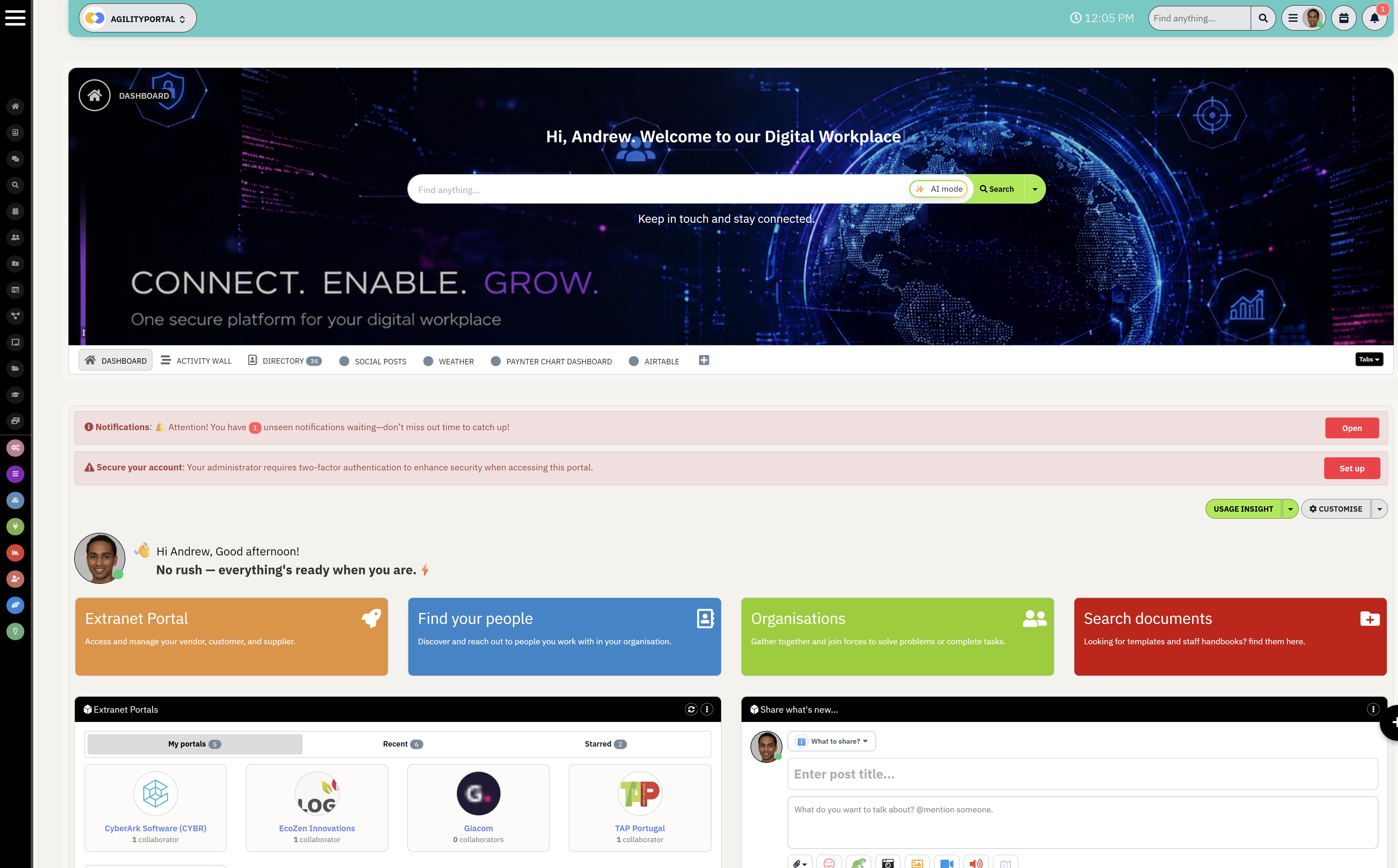
How AgilityPortal Supports Partner Enablement
Building a successful partner enablement program requires more than simply sharing documents and sending emails.
Partners need a centralized environment where they can access resources, complete training, communicate with teams, and stay informed about important updates.
AgilityPortal brings all of these capabilities together into a single platform, helping organizations create a more connected and productive partner ecosystem.
- Centralized Partner Workspace - A centralized partner workspace gives partners a single location to access everything they need to succeed. Instead of searching through emails, shared drives, or multiple applications, partners can find resources, updates, and tools from one secure environment. This creates a more organized experience, reduces confusion, and helps partners become productive much faster.
- Secure Document Management - Secure document management allows businesses to share policies, pricing sheets, product information, contracts, and marketing materials while maintaining control over who can access them. Partners always have access to the latest versions of important documents, reducing the risk of outdated information being used during customer interactions. This improves accuracy, strengthens compliance, and minimizes administrative overhead.
- Partner Training and Learning - Partner training and learning provide structured onboarding, educational content, certifications, and ongoing development opportunities. Rather than relying on manual training sessions, organizations can create learning pathways that help partners develop expertise at their own pace. This leads to better product knowledge, greater confidence, and improved partner performance.
- Real-Time Communication and Collaboration - Real-time communication and collaboration help partners stay connected with internal teams and receive updates as they happen. Whether sharing announcements, discussing opportunities, or resolving issues, partners can communicate through a centralized platform rather than relying on lengthy email chains. This improves responsiveness, strengthens relationships, and keeps everyone aligned.
- Partner Communities and Discussions - Partner communities create a collaborative environment where partners can ask questions, exchange ideas, and learn from one another. Instead of every question going directly to support teams, partners can benefit from shared knowledge and peer-to-peer discussions. This encourages engagement, builds stronger relationships, and creates a more connected ecosystem.
- Analytics and Engagement Tracking - Analytics and engagement tracking provide visibility into how partners interact with content, training programs, and resources. Organizations can identify which partners are actively engaged, which resources are delivering value, and where additional support may be required. This data helps businesses make informed decisions and continuously improve their enablement strategy.
- Mobile Access for Distributed Partners - Mobile access ensures partners can stay connected regardless of location. Whether attending customer meetings, working remotely, or travelling between sites, partners can access documents, training materials, announcements, and communication tools from their mobile devices. This flexibility improves adoption, increases engagement, and supports a modern workforce that expects information to be available anytime and anywhere.
AgilityPortal combines communication, training, document management, collaboration, and analytics into a single platform, helping organizations simplify partner enablement while creating a better experience for every partner in their ecosystem.
Frequently Asked Questions About Partner Enablement
What is partner enablement?
Partner enablement is the process of providing partners with the training, resources, tools, communication channels, and support they need to successfully sell, support, market, or distribute your products and services.
A strong partner enablement strategy helps businesses improve partner onboarding, increase engagement, strengthen collaboration, and generate more partner-driven revenue.
Why is partner enablement important?
Partner enablement is important because it helps organizations build stronger partner relationships while ensuring partners have access to the information they need to succeed.
Businesses with effective partner enablement programs often experience faster onboarding, improved partner performance, higher engagement rates, and increased sales through their partner ecosystem.
What is a partner portal?
A partner portal is a secure online platform that allows external partners to access training materials, documents, marketing resources, company updates, support services, and collaboration tools from a single location.
Modern partner portals are a key component of successful partner enablement programs because they create a centralized hub for communication and knowledge sharing.
How does partner enablement improve partner engagement?
Partner enablement improves partner engagement by giving partners easy access to relevant resources, training, communication channels, and support. When partners can quickly find information, complete certifications, collaborate with teams, and stay informed about company updates, they are more likely to remain active and engaged within the partner program.
What software is used for partner enablement?
Partner enablement software typically includes partner portals, partner relationship management (PRM) platforms, learning management systems (LMS), knowledge management software, communication platforms, and analytics tools.
These technologies help businesses streamline partner onboarding, collaboration, training, and performance management.
What is the difference between partner management and partner enablement?
Partner management focuses on recruiting, developing, and maintaining relationships with partners throughout their lifecycle.
Partner enablement focuses on giving those partners the tools, knowledge, training, and resources needed to succeed. In simple terms, partner management builds the relationship, while partner enablement helps partners perform effectively.
How do you measure partner enablement success?
Partner enablement success is typically measured using metrics such as partner adoption rates, training completion rates, partner engagement levels, resource utilization, deal registrations, partner satisfaction scores, and partner-generated revenue.
Tracking these metrics helps businesses understand the effectiveness of their enablement strategy and identify opportunities for improvement.
What are the biggest challenges in partner enablement?
Common partner enablement challenges include poor communication, inconsistent onboarding, outdated training materials, fragmented information, low partner engagement, limited visibility into partner activity, and security concerns related to document sharing.
A centralized partner enablement platform can help address many of these challenges.
What are the 4 types of partnerships?
The four most common types of business partnerships are strategic partnerships, reseller partnerships, affiliate partnerships, and supplier partnerships.
Strategic partnerships focus on long-term collaboration and shared goals, reseller partnerships help distribute products and services, affiliate partnerships generate leads and referrals, while supplier partnerships support operational and supply chain activities.
Each type of partnership benefits from a structured partner enablement program that improves communication, collaboration, and performance.
What does enablement mean?
Enablement refers to the process of providing people with the knowledge, tools, resources, and support they need to perform successfully.
In a business context, enablement often applies to employees, sales teams, customers, and partners.
Partner enablement specifically focuses on helping external partners become more productive, knowledgeable, and successful through training, communication, onboarding, and access to critical business resources.
AI Summary
- Partner enablement is the process of providing resellers, distributors, suppliers, franchisees, affiliates, and strategic partners with the tools, training, resources, and support needed to succeed.
- Modern partner enablement programs help businesses improve partner onboarding, increase partner engagement, strengthen collaboration, and accelerate partner-generated revenue growth.
- Many organizations use partner portals to centralize communication, document management, training, certifications, knowledge sharing, and partner support within a single platform.
- Understanding Partner Enablement vs Sales Enablement is important because partner enablement focuses on external partners while sales enablement supports internal sales teams.
- Common partner enablement challenges include poor communication, fragmented information, inconsistent onboarding, low training participation, and limited visibility into partner performance.
- Emerging trends such as AI-powered partner support, automated onboarding, intelligent search, predictive analytics, and digital partner communities are transforming how businesses manage partner ecosystems.
- Before selecting a partner enablement platform, organizations should evaluate onboarding capabilities, document management, partner training, analytics, integrations, scalability, security controls, and partner adoption requirements.
Most Popular Posts

Effective communication among team members is vital for the productivity and success of any organization. Surprisingly, 60% of companies lack a long-term internal communication strategy, which p...


Businesses thrive on communication for efficiency, productivity and accomplishment. When the right information is passed from the right designation in the organization, it promotes positivity an...
Categories
Blog
(2962)
Business Management
(371)
Employee Engagement
(222)
Digital Transformation
(191)
Growth
(142)
Intranets
(135)
Remote Work
(63)
Sales
(53)
Collaboration
(47)
Customer Experience
(30)
Culture
(29)
Knowledge Management
(28)
Project management
(28)
Leadership
(20)
Comparisons
(9)
News
(1)

Related Posts

Partner enablement is becoming a critical growth strategy for businesses that rely on distributors, resellers, suppliers, franchisees, or strategic partners. As partner networks expand, organizations need a better way to share information, deli...

If your business relies on resellers, distributors, affiliates, consultants, or channel partners, one small communication breakdown can quickly turn into missed revenue, frustrated partners, and lost opportunities. That's exactly why more companies a...

As businesses continue evolving through digital transformation, hybrid work, and AI-powered collaboration, the need for a modern knowledge management framework has become more important than ever. According to IDC, employees spend nearly 30% of...

Remote work is the new thing. With more modern companies moving to work from home, and with telecommuting becoming a more common way for people to work remotely, remote workers are growing in numbers. A Gallup study on the state of remote work ...

Frontline employees are usually the people keeping the business running day-to-day, but ironically, they're often the last people to receive important company updates. Whether it's retail staff, healthcare workers, warehouse teams, hospitality ...


Jill Romford
I am a digital nomad, lover of exploring new places and making friends.
I love to travel and I love the internet. I take pictures of my travels and share them on the internet using Instagram.
Traveler, entrepreneur, and community builder. I share my insights on digital marketing and social media while inspiring you to live your fullest life.
Ready to learn more? 👍
One platform to optimize, manage and track all of your teams. Your new digital workplace is a click away. 🚀
Free for 14 days, no credit card required.