
Insight Blog
Agility’s perspectives on transforming the employee's experience throughout remote transformation using connected enterprise tools.
20 minutes reading time
(3943 words)
How to Advertise on Social Media Using Viral Video Clips (Best Tools to Create Them Fast)

How to Advertise on Social Media Using Viral Video Clips (Best Tools to Create Them Fast)
Learn how to advertise on social media using viral video clips. Discover the best tools to create viral clips faster, boost engagement, and run high-performing social media ads.
How to Advertise on Social Media Using Viral Video Clips (Best Tools to Create Them Fast)

Advertising today moves at the speed of attention.
To advertise on social media effectively, brands are increasingly using viral video clips—short, engaging videos designed to capture attention in seconds and encourage shares.
The shift is backed by data.
Cisco reports that video accounts for over 80% of global internet traffic, while HubSpot research shows short-form video delivers the highest ROI of any social media content format, outperforming static posts in engagement and clicks.
Creating videos used to require large production teams, but AI tools are changing that. Marketers can now transform long content—like webinars or demos—into multiple short clips within minutes.
The team behind ByteDance has introduced Seedance, an AI video generation platform designed to simplify how creators produce short-form social media content.
The platform uses AI to analyze video footage, identify key moments, and generate short clips formatted for platforms such as TikTok, Instagram Reels, and YouTube Shorts.
By automating parts of the editing process, tools like Seedance 2.5 reflect a broader shift toward AI-assisted video production, helping creators keep up with the constant demand for short-form content across social media platforms.
80%
internet traffic
According to Cisco, video now accounts for over 80% of global internet traffic. At the same time, HubSpot research shows that short-form video delivers the highest ROI of any social media content format, outperforming static posts in both engagement and click-through rates.
Source: Cisco Annual Internet Report & HubSpot Marketing Research
The Challenges of Social Media Advertising in 2026 and Beyond

The Challenges of Social Media Advertising in 2026 and Beyond
While viral clips and AI tools are transforming marketing, the landscape is also becoming more competitive and complex. One of the biggest challenges is content saturation.
According to Statista, more than 95 million photos and videos are uploaded to Instagram every day, making it harder than ever for brands to stand out in crowded feeds.
Another major issue is declining organic reach. Research from Hootsuite suggests that the average organic reach for branded social media content has dropped to below 5% of followers, meaning most companies now rely on paid promotion to gain visibility.
At the same time, audiences are becoming more selective.
Users scroll through content rapidly, and marketers often have less than three seconds to capture attention before someone moves on.
Looking ahead, the brands that succeed will be those that can produce high-quality content quickly, test multiple variations, and adapt to constantly changing platform algorithms—a challenge that makes AI-driven video tools and rapid content creation strategies increasingly essential.
95M+
uploads daily
According to Statista, more than 95 million photos and videos are uploaded to Instagram every day. This constant stream of content makes it increasingly difficult for brands to stand out and capture attention in crowded social media feeds.
Source: Statista
Key Takeaways
- Short-form viral video clips have become one of the most effective formats for social media advertising, capturing attention quickly and encouraging higher engagement.
- Research shows video dominates online consumption, with over 80% of global internet traffic driven by video content.
- Successful viral clips rely on strong hooks, emotional triggers, and clear messaging within the first few seconds.
- AI-powered tools such as Pollo AI, Opus Clip, and CapCut help marketers generate and repurpose short-form videos faster.
- Brands that test multiple clip variations, optimize for each platform, and track metrics like watch time and CTR often achieve stronger advertising performance.
Why Viral Video Clips Are Dominating Social Media Advertising
Attention Spans Are Getting Shorter
One of the biggest shifts in social media marketing is how quickly audiences consume content.
Users scroll through feeds rapidly, often deciding within a few seconds whether something is worth watching.
This is why TikTok-style content—short, fast, and visually engaging—has become the dominant format across most social platforms.
Research from Microsoft's attention span studies suggests the average online attention span is now around 8 seconds, meaning marketers have a very small window to capture interest.
In practice, most successful viral clips focus on a 3–15 second engagement window, delivering a strong hook immediately and getting straight to the point.
To succeed in this environment, content needs strong scroll-stopping techniques such as bold opening statements, surprising statistics, quick storytelling, or visually dynamic edits.
Without that immediate hook, viewers will simply keep scrolling.
Platforms Reward Short Video Content
Social media algorithms increasingly prioritize short-form video because it keeps users engaged longer and encourages more interaction.
As a result, platforms now heavily promote this type of content within their feeds and discovery pages.
Major platforms pushing short-form video include:
- Instagram Reels
- TikTok
- YouTube Shorts
- LinkedIn short video posts
These formats are designed for quick consumption, vertical viewing, and rapid sharing.
Because platforms want to keep users inside their apps, they tend to boost short videos that generate strong engagement signals, such as likes, comments, watch time, and shares.
For advertisers and creators, this means that producing short clips often gives content a better chance of reaching wider audiences, both organically and through paid promotion.
Viral Clips Increase Ad Performance
Beyond organic reach, short viral clips are also proving highly effective for paid advertising campaigns.
Their fast pace and engaging format naturally fit how people interact with social media feeds.
Short video ads often lead to:
- Higher click-through rates (CTR) because the message is delivered quickly
- Lower advertising costs when engagement improves ad relevance scores
- More shares and organic amplification, extending the reach beyond paid impressions
According to HubSpot's marketing research, short-form video consistently ranks as the highest-performing content format for engagement and ROI across social media marketing campaigns.
For brands, this means that well-crafted viral clips can serve a dual purpose: attracting attention organically while also functioning as highly efficient social media ad creatives.
What Makes a Viral Clip Effective for Social Media Ads
Creating a viral video clip isn't just about editing something short and posting it online.
Successful clips are carefully structured to capture attention quickly, trigger emotional reactions, and deliver a clear message in a short time.
Because social media feeds move so quickly, the most effective clips follow a few key principles that keep viewers watching and encourage them to engage.
The First 3 Seconds Matter Most
The opening seconds of a video determine whether someone continues watching or scrolls past.
On fast-moving platforms like TikTok and Instagram, viewers often decide almost instantly if a video is worth their attention.
This is why strong hooks are critical.
A hook should immediately create curiosity or present something unexpected.
Common approaches include:
- surprising statistics
- bold or controversial statements
- thought-provoking questions
For example, a video might begin with a statement like:
"Most companies waste 60% of their marketing budget. Here's why."
This type of opening creates curiosity and encourages viewers to keep watching to learn more.
Emotion Drives Sharing
Another key factor behind viral content is emotional engagement. People are far more likely to share content that makes them feel something or sparks a reaction.
Common emotional triggers used in viral clips include:
- curiosity
- humor
- surprise
- controversy
- relatability
For example, a short clip that reveals an unexpected marketing insight or shows a relatable workplace scenario can quickly gain traction because viewers feel compelled to share it with others who might relate to the same experience.
Keep Videos Short and Focused
Short videos tend to perform better because they match how people consume content on mobile devices. Instead of long explanations, viral clips typically focus on delivering one clear idea or takeaway.
Different platforms also favor different video lengths. While there is flexibility, many high-performing clips follow these general ranges:
| Platform | Ideal Length |
| TikTok | 7–15 seconds |
| Instagram Reels | 10–20 seconds |
| 15–30 seconds | |
| YouTube Shorts | under 60 seconds |
Keeping videos concise helps maintain viewer attention and increases the likelihood that people will watch the clip all the way through—an important signal that social media algorithms use to determine whether a video should be shown to more users.
Step-by-Step Guide to Advertising with Viral Video Clips
Creating viral clips for social media advertising doesn't require a full production team, but it does require a clear process.
The most successful marketers follow a repeatable workflow that allows them to quickly turn existing content into short, engaging clips that can be tested across multiple platforms.
Step 1: Identify Content Worth Clipping
The first step is identifying longer content that can be broken into short, engaging segments. Many businesses already have valuable content that can be repurposed without starting from scratch.
Good sources of clip-worthy material include:
- podcast interviews
- webinars or virtual events
- product demonstrations
- educational or training content
Long-form content often contains dozens of short moments that can be turned into engaging clips. Instead of producing entirely new videos, marketers can extract multiple pieces of content from a single recording.
Step 2: Extract High-Impact Moments
Once the source content is identified, the next step is finding the moments most likely to capture attention.
Not every section of a video will work well as a short clip, so the focus should be on segments that deliver quick value or create curiosity.
Look for moments such as:
- strong or memorable quotes
- surprising facts or statistics
- short tips or tutorials
These moments tend to perform well because they deliver immediate value while encouraging viewers to continue watching.
Step 3: Add Captions and Hooks
Captions play a critical role in social media videos.
Studies from Verizon Media have shown that up to 69% of people watch videos without sound, particularly when browsing on mobile devices in public places.
Because of this behavior, captions help ensure viewers can still understand the message even if audio is turned off.
Adding a strong hook in the opening line—either through on-screen text or narration—also helps stop viewers from scrolling past the video.
Step 4: Optimize for Each Platform
Not all social media platforms prioritize the same formats, so clips should be optimized depending on where they will be published.
Key elements to adjust include:
- video length based on platform expectations
- aspect ratio, typically vertical (9:16) for short-form video
- captions and on-screen text for mobile viewing
- hashtags and descriptions to improve discoverability
Tailoring clips to each platform increases the likelihood that algorithms will surface the content to a wider audience.
Step 5: Turn High-Performing Clips Into Ads
One effective strategy is to first publish clips organically and monitor how audiences respond.
When a particular video gains strong engagement—such as high watch time, shares, or comments—it can then be turned into a paid advertisement.
At this stage, marketers typically:
- boost the post to reach a larger audience
- run targeted paid advertising campaigns
- retarget viewers who interacted with the clip
Using this approach allows businesses to promote content that has already demonstrated strong engagement, reducing the risk of spending advertising budget on videos that may not resonate with audiences. For campaigns that need fresh creatives rather than repurposed organic posts, marketers can also create video ads with ai to quickly produce additional variations and test different hooks, formats, and messages.
Best Tools to Create Viral Video Clips Faster
1. Pollo AI
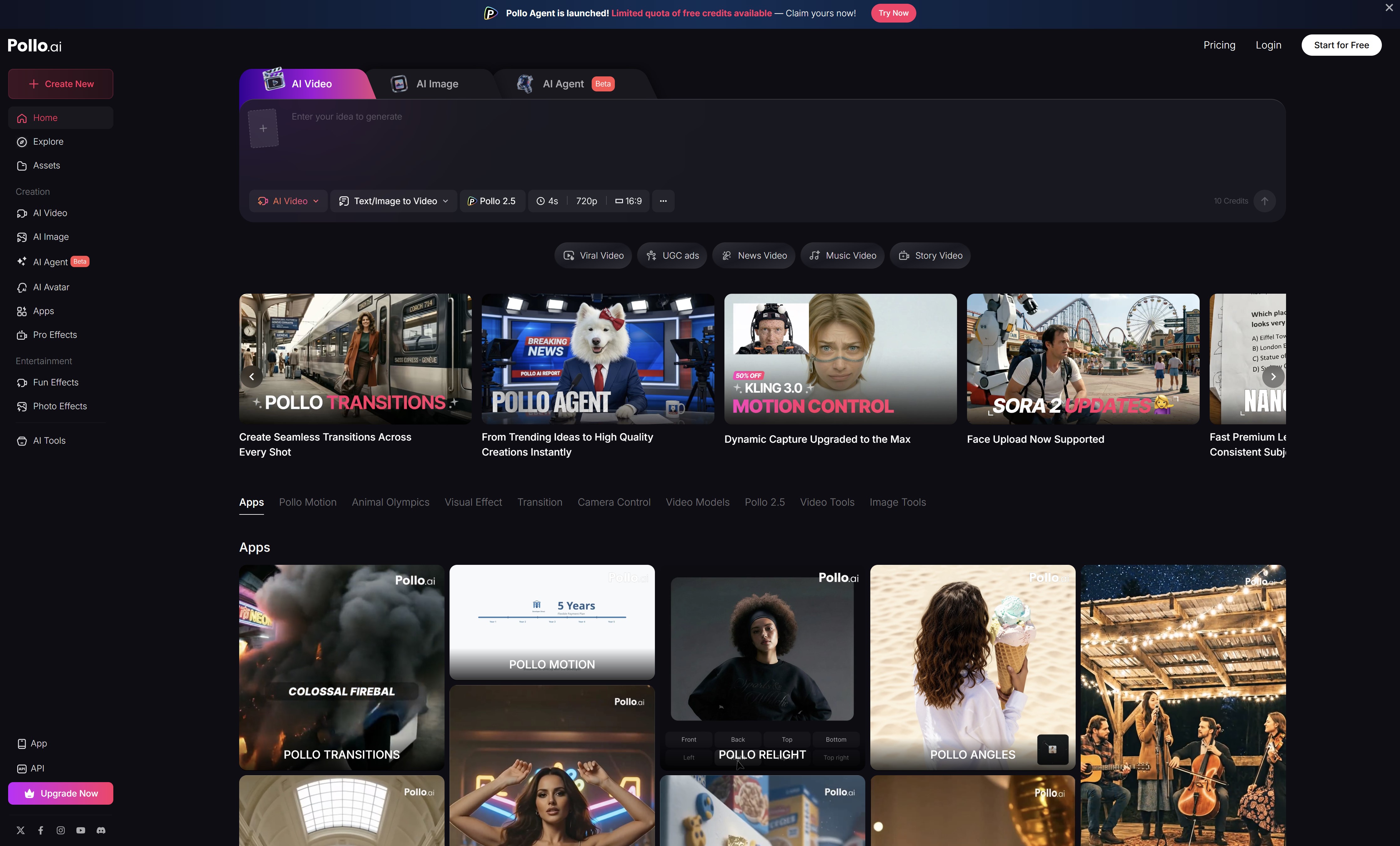
Pollo AI
Pollo AI is designed for creators, marketers, and social media teams who need to generate short-form AI videos quickly and AI video generator without spending hours editing footage.
The platform focuses on turning simple inputs—such as text prompts, images, or concepts—into ready-to-share video clips that work well for platforms like TikTok, Instagram Reels, YouTube Shorts, and other short-form video channels.
As short-form content continues to dominate social media, tools like Pollo AI help reduce the production time required to keep up with posting schedules.
Instead of recording and editing every clip manually, users can generate video concepts using AI and refine them for different campaigns or social media strategies.
Key Features:
- Text-to-Video AI Generation - Create videos using simple prompts. Users can describe an idea or message, and the platform generates a video sequence automatically.
- Automated Short-Form Video Creation - Designed for fast production of short social media clips, helping marketers generate multiple videos without extensive editing.
- Social Media Optimized Formats - Videos are generated in formats suited for major platforms, including:
- TikTok
- Instagram Reels
- YouTube Shorts
- Facebook Reels
- Multiple AI Video Models - Supports different AI generation models, allowing creators to experiment with styles, visuals, and animations.
Including:
- Input the trending audio
- Describe character appearances and expressions
- Specify camera angles and comedic timing
- Generate multiple takes with variations
- Select and publish the funniest execution
2. Opus Clip
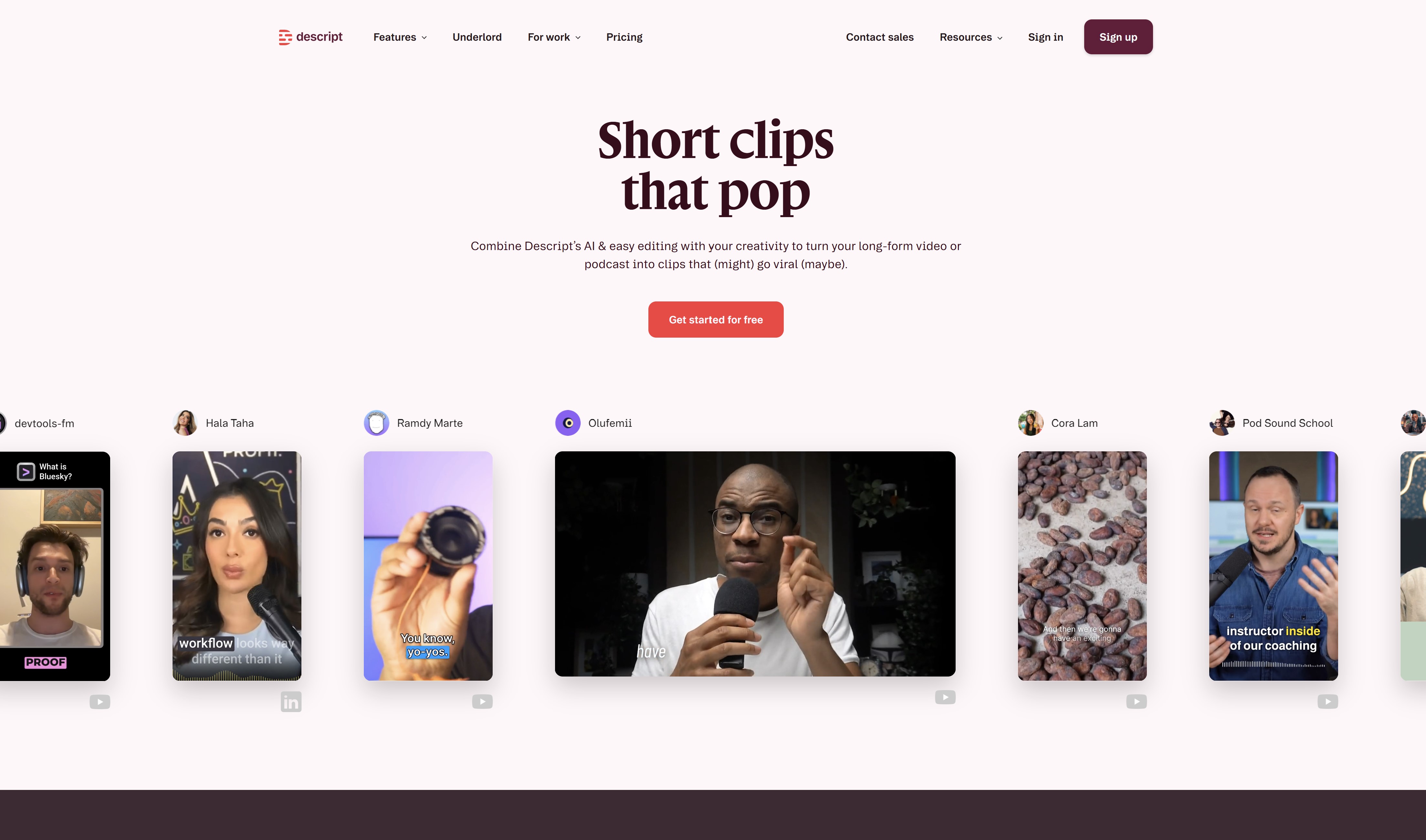
Opus Clip
Automatically turning long-form videos into short viral clips for platforms like TikTok, Instagram Reels, and YouTube Shorts.
Key Features:
- AI Clip Detection - Automatically scans long videos and identifies segments most likely to perform well as short clips.
- Automatic Captions - Generates captions and subtitles to improve accessibility and engagement, especially for viewers watching without sound.
- Viral Score Prediction - Uses AI to analyze clips and estimate their potential viral performance based on engagement patterns.
- Social Media Formatting - Converts videos into vertical short-form formats suitable for TikTok, Reels, and Shorts.
Including:
Another feature often associated with modern AI video tools is the ability to integrate or support multiple AI generation models. These models help generate visuals, animations, and scenes based on prompts or inputs. This flexibility allows users to experiment with different visual styles and creative outputs depending on the type of content they want to produce.
3. CapCut
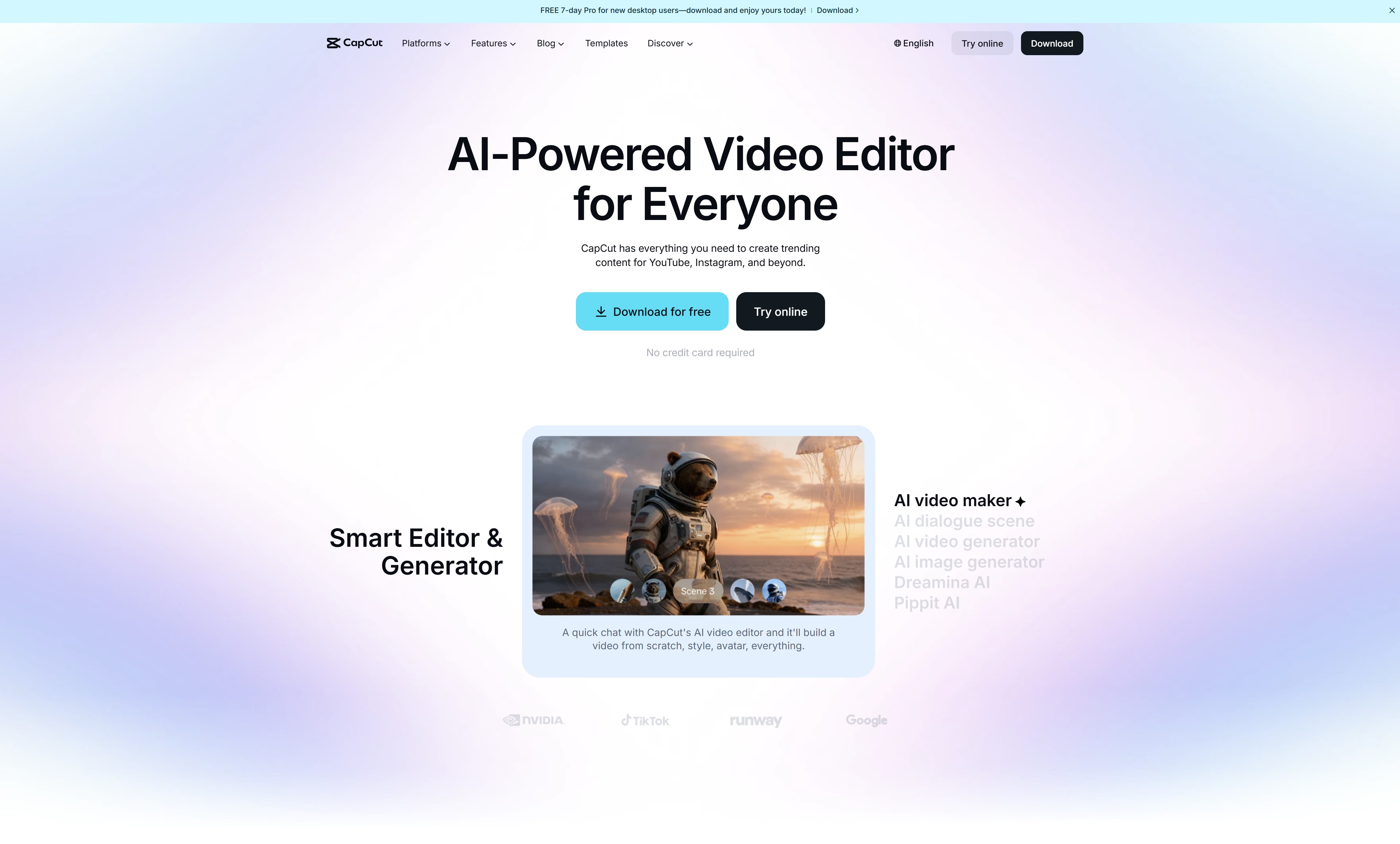
CapCut
Social media creators and marketers who want a simple video editor for creating short-form content for TikTok, Instagram Reels, and YouTube Shorts.
Key Features
- Video Templates - Pre-built templates designed for trending social media formats, making it easy to create engaging videos quickly.
- Automatic Captions
Generates subtitles automatically, helping videos remain understandable when viewed without sound. - Effects and Transitions - Includes a large library of visual effects, filters, and transitions commonly used in social media videos.
- Mobile and Desktop Editing - Available as both a mobile app and desktop editor, allowing creators to edit videos on the go.
Including:
Viral Clip Strategies Used by Successful Brands
Many well-known brands have adopted short viral clips as a core part of their social media strategy.
Instead of relying on polished, long-form advertisements, they focus on short, engaging content that captures attention quickly and encourages interaction.
The "Hook + Value" Formula
One strategy commonly used by brands is the Hook → Value → CTA structure. The video begins with a strong hook to stop viewers from scrolling, followed by a quick insight or piece of value, and finishes with a simple call to action.
Brands such as HubSpot, Shopify, and Nike frequently use this approach in their social media content. Their clips often start with bold statements, quick tips, or surprising statistics that immediately grab attention before delivering a short insight or lesson.
Example structure:
- Hook: "Most businesses are wasting their marketing budget."
- Value: A quick explanation or tip
- CTA: "Follow for more marketing insights."
This simple structure works because it delivers value quickly while keeping the viewer engaged throughout the clip.
Repurpose Long Content Into 20+ Clips
Another strategy used by companies like Gary Vaynerchuk Media, HubSpot, and Adobe is repurposing long-form content into multiple short clips.
Instead of producing separate videos for every platform, brands often follow a workflow like this:
- record a webinar, interview, or podcast
- extract 10–20 short clips
- distribute those clips across platforms such as TikTok, LinkedIn, Instagram Reels, and YouTube Shorts
This approach dramatically increases the amount of content a brand can publish without constantly creating new material. A single hour-long webinar, for example, can easily produce dozens of short clips using tools like Riverside's video editor.
Use Comments to Find Viral Hooks
Many brands also pay close attention to audience comments and questions to identify ideas for future viral clips.
Companies like Duolingo, Ryanair, and Netflix often build content around audience reactions, trending discussions, or humorous comments left by followers. This approach helps ensure that content reflects what audiences are already interested in.
Common signals brands look for include:
- audience questions that appear repeatedly
- controversial opinions or debates in the comments
- unexpected reactions or jokes from followers
By turning these insights into short videos, brands can create content that feels more relatable and timely—two factors that often contribute to higher engagement and shareability.
Common Mistakes When Using Viral Clips for Advertising
Short viral clips can be extremely effective for social media advertising, but many campaigns fail because they overlook a few key fundamentals.
Even well-produced videos can struggle to perform if they are not designed for how people actually consume content on modern social platforms.
Ignoring the Hook
One of the most common mistakes is failing to include a strong hook at the beginning of the video.
Social media feeds move quickly, and users often decide within the first few seconds whether they want to continue watching or scroll past.
If a clip starts slowly or lacks a clear point, viewers will simply move on to the next piece of content. A strong hook helps stop the scroll and creates curiosity.
Effective hooks often include:
- a surprising statistic
- a bold statement
- a quick question that sparks curiosity
For example, opening a video with a line such as "Most companies waste half their marketing budget without realizing it" immediately gives viewers a reason to keep watching.
Overproducing the Video
Another common issue is making videos overly polished or overly scripted.
While high production value can be useful in some cases, social media audiences often respond better to content that feels authentic and natural.
Many viral clips are simple, direct, and filmed in everyday environments rather than studio settings.
Platforms like TikTok and Instagram tend to favor content that feels relatable and genuine rather than highly produced advertisements.
This means creators and marketers should focus more on clear messaging and engaging ideas rather than complex editing or heavy production.
Not Testing Multiple Variations
A single video rarely performs perfectly on the first attempt. Successful social media advertisers typically create multiple variations of the same clip to see which one resonates most with their audience.
For example, marketers may test:
- different hooks
- different captions
- different clip lengths
- different thumbnails or opening frames
Running five to ten variations of a short video makes it easier to identify which version performs best in terms of watch time, engagement, and click-through rates.
Testing variations allows marketers to optimize their campaigns based on real performance data rather than relying on guesswork.
Measuring the Success of Viral Video Ads
When running viral clip campaigns, marketers should track several key performance indicators (KPIs) to understand how well the content is performing across social media platforms.
| Metric | What It Measures | Why It Matters |
| Watch Time | How long viewers stay on the video | Indicates engagement and whether the content holds attention |
| Click-Through Rate (CTR) | Percentage of viewers who click the link or ad | Shows how effective the video is at driving traffic or conversions |
| Shares | Number of times users share the video | A strong indicator of viral potential and organic reach |
| Engagement Rate | Likes, comments, and interactions | Helps measure audience interest and algorithm visibility |
| Cost Per Click (CPC) | Amount paid for each ad click | Shows how efficient the ad campaign is |
| Completion Rate | Percentage of viewers who watch the full video | Indicates whether the message is compelling from start to finish |
Wrapping up
If you want to advertise on social media successfully, viral video clips are one of the most powerful formats available today.
Short videos capture attention quickly, spread easily across platforms, and can dramatically improve the performance of your campaigns.
By combining the right viral clip strategy with modern AI video tools, marketers can create high-impact content faster than ever before.
AI Summary
- Social media advertising is increasingly driven by short-form viral video clips because they capture attention faster than static posts and long-form content.
- Video now dominates online consumption, with research showing it accounts for over 80% of global internet traffic, while short-form video continues to deliver strong engagement and return on investment.
- Successful viral clips depend on strong opening hooks, emotional triggers, concise messaging, and platform-specific formatting that matches how users consume content.
- Brands face growing challenges in 2026 and beyond as social feeds become more crowded, organic reach declines, and competition for attention intensifies across major platforms.
- AI-powered tools such as Pollo AI, Opus Clip, CapCut, and Seedance are helping marketers create, repurpose, and scale short-form video content faster than traditional workflows allow.
- Tracking metrics such as watch time, click-through rate, shares, engagement rate, and completion rate is essential for improving the performance of viral video advertising campaigns.
Most Popular Posts

Effective communication among team members is vital for the productivity and success of any organization. Surprisingly, 60% of companies lack a long-term internal communication strategy, which p...


Businesses thrive on communication for efficiency, productivity and accomplishment. When the right information is passed from the right designation in the organization, it promotes positivity an...

Categories
Blog
(3248)
Business Management
(399)
Employee Engagement
(237)
Digital Transformation
(224)
Growth
(151)
Intranets
(142)
Internal communications
(110)
Remote Work
(68)
Sales
(53)
Collaboration
(53)
Customer Experience
(33)
Culture
(30)
Project management
(30)
Knowledge Management
(29)
Leadership
(20)
Comparisons
(9)
News
(1)

Related Posts

Searching for "communal work spaces near me" but unsure which option will actually suit your growing business? By the end of this guide, you'll know how to compare offices to rent, spot extra costs and ask the right questions before committing....

Do you know what happens to your information after you share it with an AI assistant? That question sits at the heart of AI privacy—and it's easy to overlook when you're trying to finish a task. You paste in a customer email, upload a spr...

What would happen if your website moved successfully, but your customers and employees suddenly couldn't reach you by email? Email migration tools can help transfer your messages, but keeping business communication running takes more than copyi...

Does your team still message HR to ask where the holiday policy is? Employee self service should make everyday tasks easier, giving people a straightforward way to find answers, access documents and submit requests. But when policies are buried...

How quickly can a new partner go from signing an agreement to confidently working with your business? If the answer involves chasing documents, forwarding training links and answering the same questions repeatedly, your onboarding process may n...


Jill Romford
I am a digital nomad, lover of exploring new places and making friends.
I love to travel and I love the internet. I take pictures of my travels and share them on the internet using Instagram.
Traveler, entrepreneur, and community builder. I share my insights on digital marketing and social media while inspiring you to live your fullest life.
Ready to learn more? 👍
One platform to optimize, manage and track all of your teams. Your new digital workplace is a click away. 🚀
Free for 14 days, no credit card required.