Insight Blog
Agility’s perspectives on transforming the employee's experience throughout remote transformation using connected enterprise tools.
29 minutes reading time
(5865 words)
Healthcare Digital Transformation Isn't Just About Digital Technology—It's About Connected Teams

Healthcare Digital Transformation Isn't Just About Digital Technology—It's About Connected Teams
Discover why successful healthcare digital transformation depends on connected teams, effective communication, and collaboration—not just connected devices and new technology.
Healthcare Digital Transformation Isn't Just About Digital Technology—It's About Connected Teams

Healthcare digital transformation has changed the way hospitals, clinics, and healthcare providers deliver care.
From electronic health records and telehealth to AI-powered diagnostics and connected medical devices, healthcare organizations are investing heavily in technology to improve patient outcomes and make everyday work more efficient.
In fact, according to Deloitte, more than 70% of healthcare executives say digital transformation is a top strategic priority as they work to improve operational efficiency and patient care.
But here's the thing—buying new technology is only half the job.
70%+
of healthcare executives
According to Deloitte, more than 70% of healthcare executives say digital transformation is a top strategic priority as they work to improve operational efficiency, workforce performance, and patient care.
Source: Deloitte Insights – Global Healthcare Outlook & Digital Transformation Research
Even the most advanced healthcare systems won't make a real difference if doctors, nurses, administrators, and frontline staff can't communicate effectively or quickly access the information they need.
That's why connected teams are just as important as connected devices. When healthcare communication is seamless and everyone has access to the right information at the right time, decisions are made faster, collaboration improves, and patients receive safer, more consistent care.
In this guide, we'll explore why successful healthcare digital transformation depends on both technology and people.
You'll learn how better healthcare communication, workforce collaboration, and digital workplace solutions help organizations break down information silos, improve staff engagement, and ultimately deliver better patient outcomes.
Key Takeaways
- Successful healthcare digital transformation depends on connected teams just as much as connected technology, with communication and collaboration driving long-term success.
- Disconnected systems, information silos, and fragmented communication reduce productivity, delay decision-making, and can negatively impact patient care.
- Healthcare organizations should prioritize a centralized digital workplace that combines employee communication, knowledge sharing, document management, and collaboration in one secure platform.
- Providing frontline healthcare workers with mobile access to policies, updates, training, and organizational news improves employee engagement, compliance, and operational efficiency.
- Measuring employee adoption, communication effectiveness, and workforce collaboration delivers a more accurate view of digital transformation success than technology deployment alone.
Why Technology Alone Isn't Enough

Why Technology Alone Isn't Enough
When people hear the term healthcare digital transformation, they usually think of AI, smart medical devices, cloud-based platforms, electronic health records (EHRs), and medical device app development. While these innovations are revolutionizing healthcare, technology alone isn't enough to overcome the everyday challenges faced by healthcare providers and clinical teams.
Think of it this way: you can give every doctor and nurse the latest technology, but if they can't quickly find patient information, communicate with colleagues, or receive important updates, that technology won't deliver the results you expected.
This is one of the biggest reasons why many digital transformation initiatives struggle. Healthcare organizations often invest heavily in new systems, but overlook the people who use them every day. As a result, teams continue working in information silos, communication becomes fragmented, and staff switch between multiple disconnected applications just to complete simple tasks.
Successful healthcare communication isn't just about sharing messages—it's about making sure the right information reaches the right people at the right time.
When healthcare teams are connected through a modern digital workplace, collaboration improves, staff spend less time searching for information, and they can focus more on delivering excellent patient care.
In short, technology is only an enabler. Real healthcare digital transformation happens when technology, people, and processes work together to create a more connected, efficient, and patient-focused organization.
The Biggest Challenges in Healthcare Digital Transformation

The Biggest Challenges in Healthcare Digital Transformation
Healthcare digital transformation isn't as simple as installing new software or buying connected medical devices.
While technologies like AI, electronic health records (EHRs), remote patient monitoring, and cloud-based healthcare platforms are changing the industry, they also introduce new challenges.
One of the biggest problems is that many healthcare organizations end up adding more technology without improving how their people work together. Doctors, nurses, administrators, and frontline staff often have to switch between multiple systems to find patient information, access policies, or communicate with colleagues. This creates information silos, slows decision-making, and increases the risk of mistakes.
Healthcare leaders also have to balance several priorities at the same time. New digital solutions must integrate with existing EHR systems, protect sensitive patient data, meet healthcare regulations such as HIPAA, and remain simple enough for busy employees to use without extensive training. If a system is difficult to use, adoption suffers, and the investment delivers far less value than expected.
That's why successful healthcare digital transformation isn't just about choosing the latest technology. It's about creating a connected digital workplace where communication, collaboration, knowledge sharing, and clinical systems work together seamlessly. When healthcare teams have the right information at the right time, they're able to work more efficiently, reduce administrative burden, and focus on what matters most—delivering better patient care.
The good news is that these challenges can be overcome. By following a few proven best practices, healthcare organizations can build connected teams that fully support their digital transformation strategy.
How Connected Teams Improve Patient Care
At the heart of every successful healthcare digital transformation project is one simple goal: helping people deliver better patient care.
While technologies like electronic health records (EHRs), AI, and connected medical devices play an important role, they're only effective when healthcare teams can communicate and collaborate efficiently.
Think about what happens during a typical day in a hospital or clinic. Doctors, nurses, specialists, pharmacists, and administrative staff all need to share information quickly.
If one team is working with outdated information or misses an important update, it can lead to delays, duplicated work, or even medical errors.
That's why connected teams make such a big difference.
- Faster Communication Between Departments - A connected digital workplace allows departments to share updates instantly instead of relying on emails, paper notices, or phone calls. Whether it's a new clinical protocol, staffing update, or urgent announcement, everyone receives the same information at the same time.
- Better Care Coordination - Patients often receive care from multiple healthcare professionals. When teams can easily access shared information and collaborate in real time, handovers become smoother, treatment plans stay aligned, and patients experience more coordinated care.
- Fewer Errors and Greater Efficiency - Searching through multiple systems or waiting for information wastes valuable time. By centralizing communication, documents, and knowledge, healthcare organizations reduce administrative tasks, minimize misunderstandings, and allow staff to spend more time focusing on patients.
- A More Consistent Patient Experience - Patients expect clear communication and high-quality care, regardless of which department they visit. Connected healthcare teams help ensure everyone follows the same procedures, has access to the latest information, and delivers a consistent experience throughout the patient's journey.
Ultimately, healthcare communication, team collaboration, and knowledge sharing are just as important as investing in new technology.
When people, processes, and digital tools work together, healthcare organizations improve operational efficiency, increase employee engagement, and deliver safer, more effective patient care.
Expert Tip
Measure Outcomes, Not Just Technology
Don’t judge healthcare digital transformation by how many systems you’ve deployed. Instead, measure how quickly employees can find information, communicate with colleagues, and complete everyday tasks.
Healthcare Digital Transformation: Connected Teams vs. Disconnected Teams
| Area | Connected Healthcare Teams | Disconnected Healthcare Teams |
| Internal Communication | Staff receive announcements and updates instantly through one centralized platform. | Important information is spread across emails, paper notices, and multiple apps, leading to missed updates. |
| Patient Care Coordination | Doctors, nurses, and specialists collaborate in real time, improving care continuity. | Poor communication leads to delays, duplicated work, and inconsistent patient experiences. |
| Information Access | Employees can quickly search for policies, procedures, and clinical documents from one location. | Staff waste time searching across multiple systems or asking colleagues for information. |
| Employee Productivity | Less time spent on administration means more time caring for patients. | Employees spend valuable time switching between disconnected applications and manual processes. |
| Frontline Communication | Mobile-first communication keeps frontline healthcare workers informed wherever they are. | Deskless employees often miss critical updates because information is only available through desktop systems or email. |
| Knowledge Sharing | Best practices, training, and organizational knowledge are easy to access and share. | Knowledge becomes trapped in departments, creating information silos. |
| Compliance | Policy updates, mandatory training, and regulatory changes are distributed consistently across the organization. | Staff may work from outdated procedures, increasing compliance risks. |
| Employee Engagement | Employees feel informed, connected, and aligned with the organization's goals. | Poor communication often leads to frustration, disengagement, and higher staff turnover. |
| Digital Transformation Success | Technology, communication, and collaboration work together to improve patient outcomes. | Technology becomes another disconnected tool with low adoption and limited business value. |
Successful healthcare digital transformation isn't measured by how many digital tools an organization purchases.
It's measured by how effectively those tools help employees communicate, collaborate, and deliver better patient care.
Organizations that invest in connected teams, healthcare communication, and a modern digital workplace are far more likely to achieve lasting transformation than those that focus on technology alone.
Best Practices for Building Connected Teams During Healthcare Digital Transformation
If your healthcare organization is investing in digital transformation, don't focus only on buying new technology.
The biggest improvements often come from helping your people work together more effectively.
Here are five practical steps to get started:
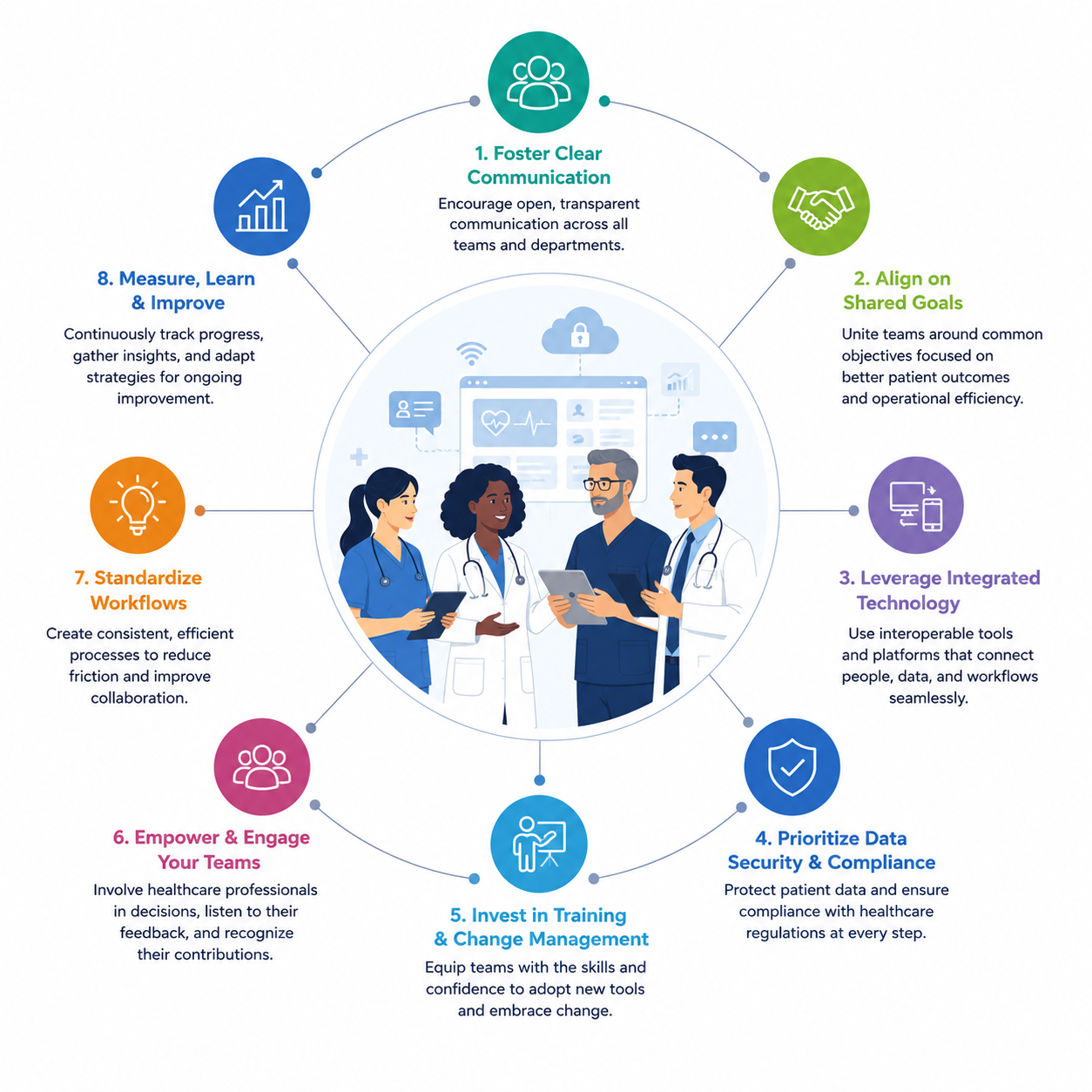
Best Practices for Building Connected Teams During Healthcare Digital Transformation
1. Put Communication in One Place
Fragmented communication is one of the biggest barriers to effective healthcare operations. When information is scattered across emails, paper notices, messaging apps, and multiple systems, critical updates can easily be missed, delayed, or misunderstood. This not only impacts staff efficiency but can also affect patient care.
A centralized communication platform helps eliminate these gaps by creating a single, reliable source of truth for all internal communication.
To implement this effectively, focus on:
- Consolidating channels: Bring announcements, policies, updates, and documents into one unified platform instead of spreading them across multiple tools.
- Ensuring real-time updates: Make sure staff receive timely notifications for urgent changes, such as protocol updates or emergency alerts.
- Creating role-based communication: Deliver targeted messages to specific departments, roles, or locations to avoid information overload.
- Maintaining consistency: Standardize how information is shared so employees know exactly where to go for updates.
- Improving accountability: Track who has seen or acknowledged important communications to ensure compliance and awareness.
By centralizing communication, healthcare organizations reduce confusion, improve response times, and create a more aligned workforce.
2. Make Information Easy to Find
Even with centralized communication, information is only valuable if employees can quickly locate what they need. In fast-paced healthcare environments, time spent searching for documents or procedures can lead to delays and frustration.
A well-structured, searchable knowledge hub ensures that staff can access critical information instantly.
Key best practices include:
- Organizing content logically: Structure documents by department, function, or topic for intuitive navigation.
- Using powerful search functionality: Enable keyword-based search so employees can find information in seconds.
- Keeping content up to date: Regularly review and update policies, procedures, and guidelines to ensure accuracy.
- Standardizing documentation: Use consistent formats and naming conventions to make content easier to recognize and retrieve.
- Providing quick-access resources: Highlight frequently used documents, forms, and protocols for faster access.
Making information easy to find not only saves time but also improves compliance, reduces errors, and supports better decision-making.
3. Give Frontline Staff Mobile Access
A large portion of healthcare workers operate away from desks—on hospital floors, in clinics, or in the field. Without mobile access, these employees can miss critical updates or struggle to stay connected with the rest of the organization.
Mobile-friendly communication tools ensure that everyone stays informed, regardless of location.
To support frontline staff effectively:
- Enable mobile-first platforms: Ensure your communication tools are optimized for smartphones and tablets.
- Deliver push notifications: Send real-time alerts for urgent updates, schedule changes, or emergency communications.
- Provide offline access: Allow staff to view important documents even when connectivity is limited.
- Simplify user experience: Design interfaces that are easy to navigate quickly in high-pressure environments.
- Support two-way communication: Allow frontline employees to provide feedback, report issues, or ask questions directly from their devices.
Mobile access empowers staff to stay connected, informed, and responsive, ultimately improving both employee experience and patient care.
4. Measure Employee Adoption
Implementing new technology is only the first step—ensuring that employees actually use it is what drives real value. Without proper adoption, even the best tools can fail to deliver results.
Tracking and improving employee engagement with your digital tools is essential for long-term success.
Focus on these areas:
- Monitor usage metrics: Track logins, active users, and feature usage to understand how employees interact with the platform.
- Measure engagement: Analyze how often staff read announcements, access documents, or participate in communication channels.
- Identify gaps: Pinpoint departments or roles with low adoption and investigate the reasons behind it.
- Gather feedback: Regularly ask employees for input on usability, challenges, and improvement opportunities.
- Provide training and support: Offer onboarding sessions, tutorials, and ongoing support to help employees feel confident using the system.
By continuously measuring and optimizing adoption, organizations can ensure their digital transformation efforts deliver meaningful outcomes.
5. Choose Technology That Connects Your Workforce
One of the most common mistakes in digital transformation is adding more tools without improving the overall employee experience. Disconnected systems create silos, increase complexity, and reduce efficiency.
Instead, healthcare organizations should prioritize solutions that unify communication, collaboration, and knowledge sharing into a single digital workplace.
When evaluating technology, consider:
- Integration capabilities: Ensure the platform connects seamlessly with existing systems such as HR, scheduling, and clinical tools.
- All-in-one functionality: Look for solutions that combine communication, document management, collaboration, and engagement features.
- Scalability: Choose technology that can grow with your organization and adapt to future needs.
- Security and compliance: Ensure the platform meets healthcare regulations and protects sensitive data.
- User experience: Prioritize intuitive, easy-to-use interfaces that encourage adoption across all staff levels.
By selecting the right technology, healthcare organizations can simplify workflows, reduce silos, and create a more connected and efficient workforce.
When healthcare organizations focus on both technology and people, they reduce information silos, improve workforce collaboration, and create better experiences for employees and patients alike. That's what turns digital transformation from an IT project into a long-term business success.
Common Barriers to Healthcare Digital Transformation
Every healthcare organization wants to improve patient care, increase efficiency, and modernize operations.
However, achieving successful healthcare digital transformation isn't always straightforward. While investing in new technology is important, many organizations face challenges that slow adoption and prevent them from seeing the full benefits.
Below are some of the most common barriers healthcare providers encounter—and how they impact both employees and patients.

Common Barriers to Healthcare Digital Transformation
Staff Resistance to Change
One of the biggest challenges isn't the technology itself—it's helping people embrace new ways of working.
Healthcare professionals are often under significant pressure, so introducing new systems can feel like another task added to an already busy schedule.
When employees don't understand the benefits or haven't received proper training, they're more likely to continue using old processes or avoid new tools altogether.
Common causes include:
- Limited training and onboarding.
- Fear that technology will make jobs more complicated.
- Lack of leadership support and communication.
- Unclear benefits for frontline employees.
- Poor user experience that makes systems difficult to navigate.
Successful digital transformation starts with people. Involving employees early, providing ongoing training, and clearly communicating the value of new technology helps increase adoption and reduce resistance.
Multiple Disconnected Systems
Many hospitals and healthcare providers use separate platforms for electronic health records (EHRs), scheduling, HR, internal communication, document management, and patient services. While each system may perform its job well, they often don't work together.
This forces employees to switch between multiple applications throughout the day, wasting valuable time and increasing the likelihood of mistakes.
Common challenges include:
- Information stored across multiple platforms.
- Duplicate data entry.
- Poor integration between healthcare systems.
- Employees logging into several applications every day.
- Difficulty finding the latest documents or patient information.
Creating a connected digital workplace that integrates existing systems helps eliminate information silos and gives healthcare teams a single place to communicate and collaborate.
Information Overload
Healthcare workers receive hundreds of emails, notifications, policy updates, and operational messages every week.
When too much information arrives through too many different channels, employees can struggle to identify what's actually important.
As a result, critical updates may be overlooked, delayed, or forgotten altogether.
Signs of information overload include:
- Employees ignoring internal emails.
- Important announcements being missed.
- Duplicate communications from different departments.
- Difficulty prioritizing urgent information.
- Increased stress and reduced productivity.
Organizations should focus on delivering targeted, role-based communication so employees only receive information that's relevant to their responsibilities.
Limited Frontline Access to Critical Updates
Not every healthcare employee works behind a desk.
Nurses, care assistants, technicians, home healthcare workers, and support staff spend most of their day on the move. If important updates are only available through desktop systems or email, many frontline employees won't see them until much later.
Delayed communication can affect operational efficiency, compliance, and even patient safety.
Healthcare organizations should ensure frontline staff have:
- Mobile access to company communications.
- Real-time notifications for urgent updates.
- Easy access to policies, procedures, and training materials.
- Secure communication tools that work anywhere.
- The ability to ask questions and provide feedback directly from their mobile devices.
Providing mobile-first communication helps keep every employee informed, regardless of where they're working, creating a more connected workforce and improving the overall patient experience.
When healthcare organizations address these barriers, they create the foundation for successful healthcare digital transformation.
Connected teams, integrated systems, and effective communication make it easier to deliver safer care, improve employee engagement, and achieve long-term operational success.
Expert Insights: Why Connected Teams Are Critical to Healthcare Digital Transformation
Research consistently shows that successful healthcare digital transformation depends on more than adopting new technology.
Organizations that invest in healthcare communication, employee engagement, and workforce collaboration are far more likely to achieve long-term improvements in patient care and operational efficiency.
According to McKinsey & Company, employees can spend up to 28% of their workweek searching for information across disconnected systems.
In healthcare, where every minute matters, this lost time can delay decision-making, reduce productivity, and take valuable time away from patient care.
28%
of the workweek
According to McKinsey & Company, employees can spend up to 28% of their workweek searching for information across disconnected systems. In healthcare, where every minute matters, this lost time can delay clinical decisions, reduce workforce productivity, and take valuable time away from delivering quality patient care.
Source: McKinsey Global Institute
Industry organizations such as the World Health Organization (WHO) and HIMSS also emphasize that digital transformation should focus on people, processes, and technology working together.
Simply implementing electronic health records (EHRs), AI tools, or connected medical devices isn't enough if employees struggle to communicate or access the information they need.
Real-world healthcare organizations that prioritize connected communication platforms often see measurable improvements by:
- Reducing communication delays between departments.
- Giving frontline employees instant access to policies and procedures.
- Improving employee engagement and collaboration.
- Accelerating onboarding for new healthcare workers.
- Supporting compliance with healthcare regulations.
- Creating a more consistent patient experience across multiple locations.
The lesson is clear: digital transformation isn't just an IT initiative—it's an organizational strategy.
Healthcare providers that build connected teams alongside connected technology are better positioned to improve clinical outcomes, increase workforce productivity, and deliver safer, more efficient patient care.
By combining a modern digital workplace, centralized employee communication, and collaborative tools, organizations can remove information silos and create a healthcare environment where both employees and patients benefit.
Building Connected Healthcare Teams Starts with Better Communication
Building Connected Healthcare Teams Starts with Better Communication
One of the biggest goals of healthcare digital transformation is improving patient care, but that can't happen without improving how healthcare teams communicate.
While many organizations invest in electronic health records (EHRs), AI, and connected medical devices, they often overlook the importance of keeping employees connected.
Healthcare is built on collaboration. Doctors, nurses, specialists, pharmacists, administrative staff, and support workers all need timely access to information to make informed decisions.
When communication is fragmented across emails, noticeboards, messaging apps, and disconnected systems, employees waste valuable time searching for information instead of focusing on patient care.
This challenge has become even more significant as healthcare organizations expand across multiple sites, support hybrid administrative teams, and manage a growing number of frontline employees who rarely work from a desk.
Without a centralized communication strategy, important updates, policy changes, and operational announcements can easily be missed.
Improve Access to Organizational Knowledge
Healthcare professionals need instant access to policies, procedures, training materials, and organizational updates. Unfortunately, many organizations still store this information across multiple systems, making it difficult for employees to find what they need when they need it.
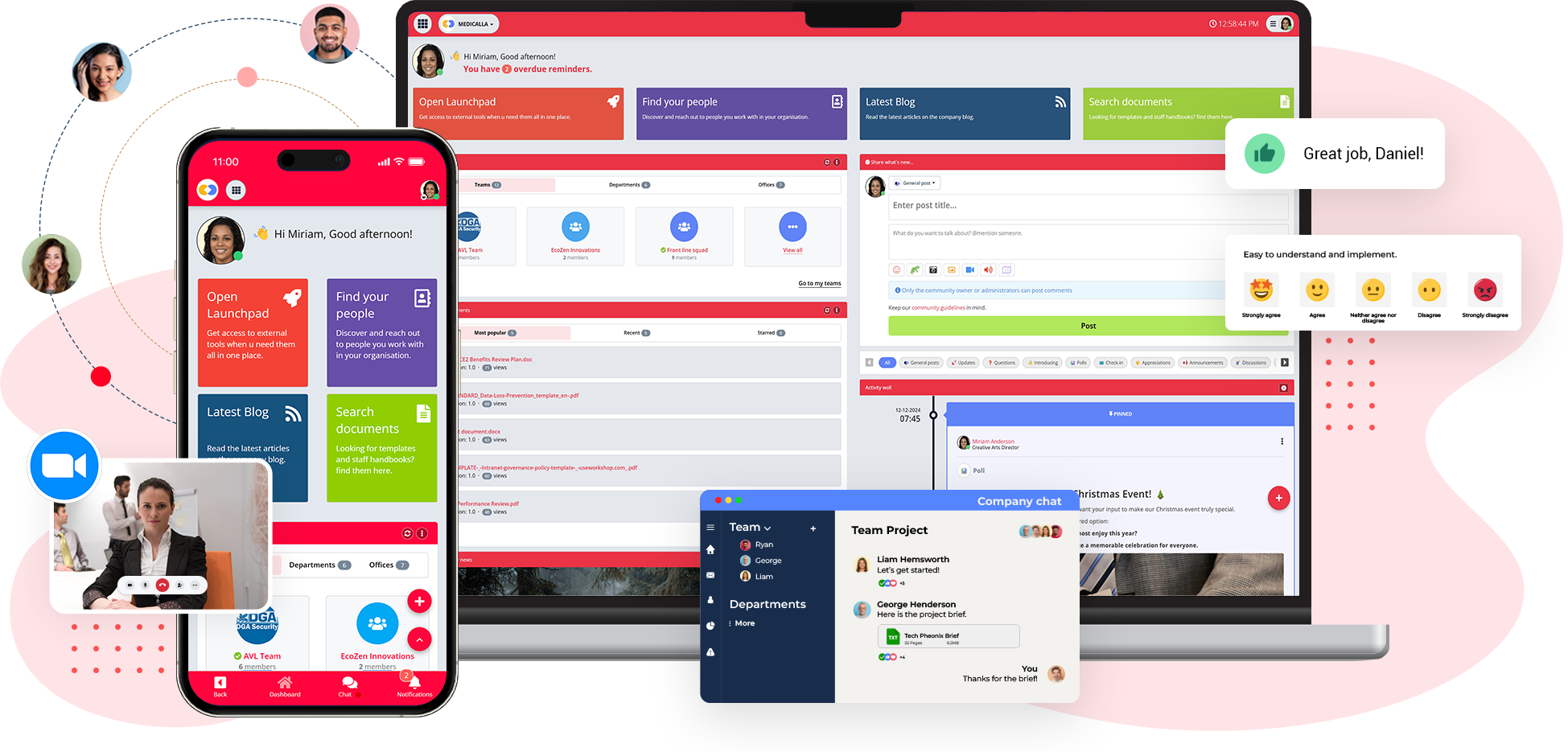
A modern digital workplace platform like AgilityPortal creates a single source of truth where employees can securely access:
- Company announcements and organizational news.
- Clinical policies and compliance documents.
- Department-specific resources.
- Knowledge bases and standard operating procedures.
- Training materials and onboarding content.
- Employee directories and collaboration spaces.
Instead of searching through multiple applications, staff can quickly find information from one centralized platform, helping reduce delays, improve compliance, and support better decision-making.
Improve Access to Organizational Knowledge
Keep Frontline Healthcare Workers Connected
Many frontline healthcare employees spend their day moving between wards, clinics, care homes, or community locations.
They don't have constant access to desktop computers, making traditional communication methods less effective.
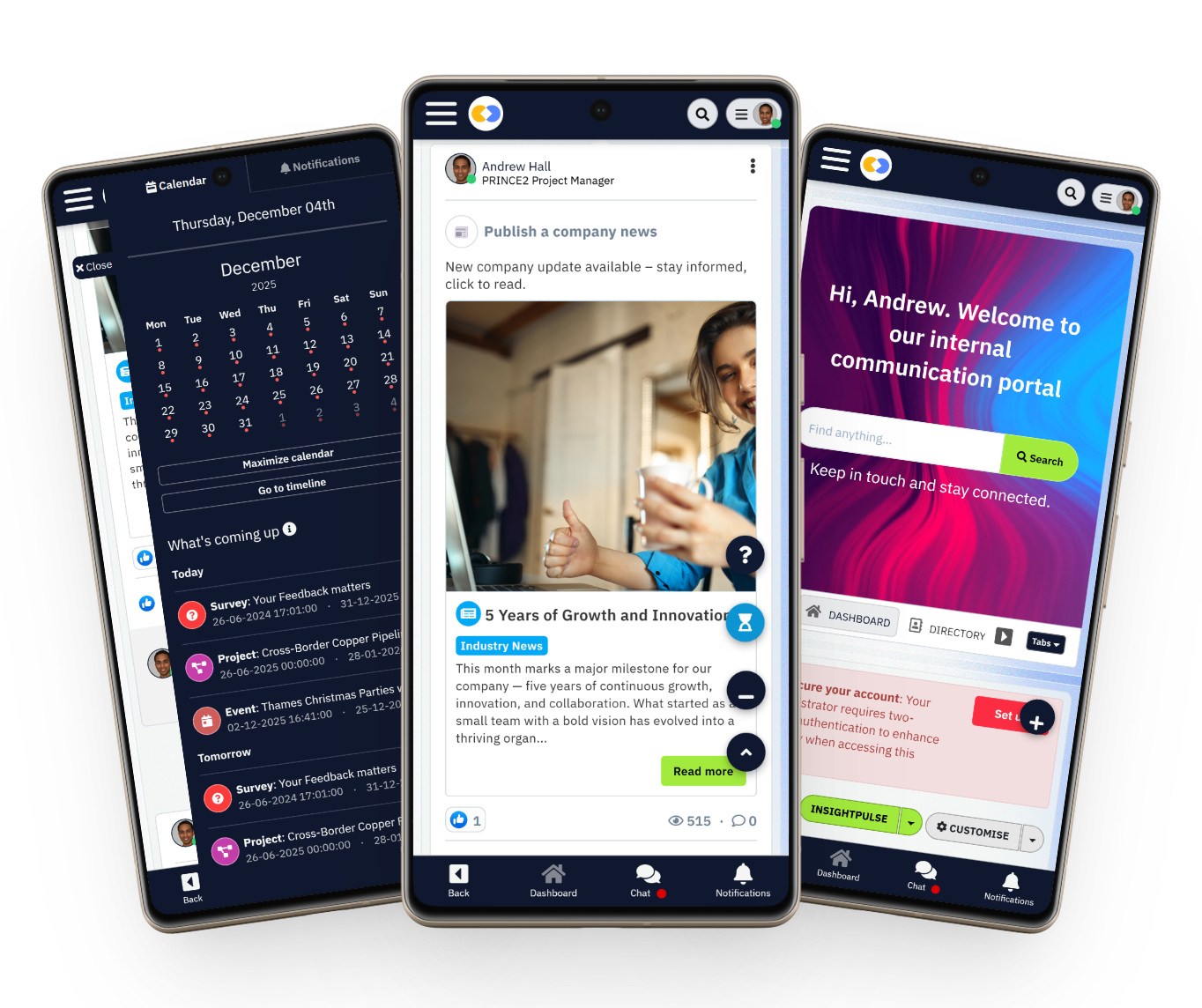
A mobile-first employee communication platform ensures healthcare workers can:
- Receive urgent notifications in real time.
- Access important documents from any device.
- Stay informed about policy and regulatory updates.
- Collaborate with colleagues across departments.
- Share feedback and ask questions instantly.
This creates a more connected workforce while improving operational efficiency and employee engagement.
Simplify Healthcare Employee Onboarding
Starting a new role in healthcare can be overwhelming.
New employees need to learn policies, understand procedures, complete mandatory training, and become familiar with organizational culture—all while delivering high-quality patient care.
Providing a centralized employee hub makes onboarding significantly easier.
With AgilityPortal, healthcare organizations can create personalized onboarding experiences that give new employees access to:
- Welcome resources and organizational information.
- Role-specific training materials.
- HR documents and employee handbooks.
- Compliance policies and mandatory learning.
- Team directories and collaboration spaces.
- Frequently asked questions and knowledge articles.
By giving employees everything they need from day one, organizations improve confidence, reduce onboarding time, and help new staff become productive more quickly.
Create a Healthcare Communication Strategy That Works
Technology alone won't transform healthcare. Success comes from ensuring every employee has easy access to the information, knowledge, and communication tools they need to perform their role effectively.
Rather than adding another disconnected application, healthcare organizations should focus on building a connected digital workplace that brings communication, collaboration, knowledge sharing, document management, and employee engagement together in one secure platform.
Solutions like AgilityPortal help healthcare providers reduce information silos, improve frontline communication, strengthen collaboration between multidisciplinary teams, and support long-term healthcare digital transformation.
When your teams stay connected, patient care improves, employees feel more engaged, and your entire organization becomes better equipped to adapt to the future of healthcare.
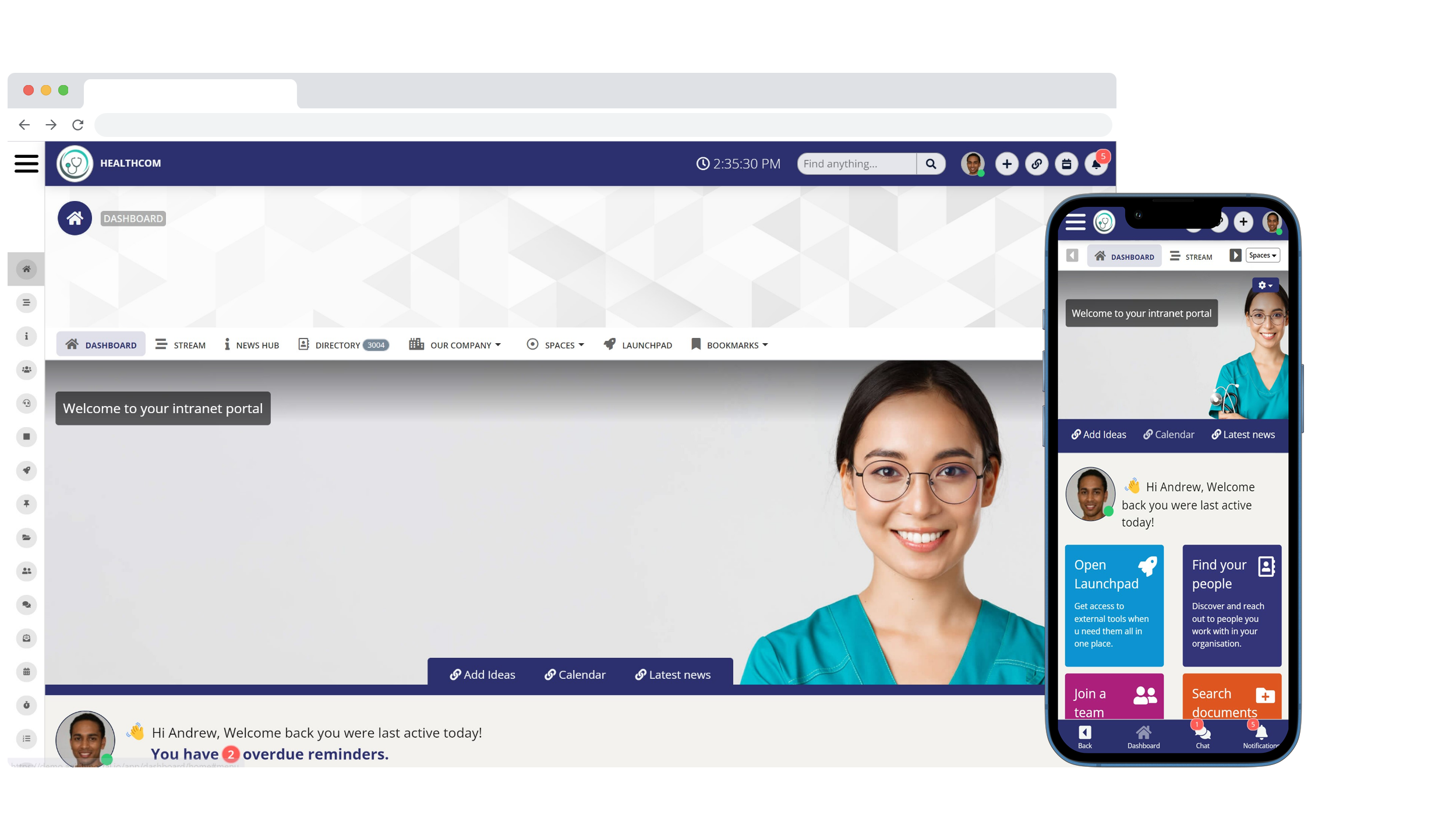
Create a Healthcare Communication Strategy That Works
AgilityPortal
Connect Healthcare Teams During Digital Transformation
AgilityPortal helps healthcare organizations support digital transformation by bringing employee communication, knowledge sharing, document management, frontline access, and workforce engagement into one secure digital workplace. Instead of relying on disconnected systems, emails, and paper notices, healthcare teams can access the updates, policies, training, and resources they need from one central hub.
Price starts from $99 per 100 users per month
14 days free trial available
No credit card required
Try it free for 14 days – no credit card required
14 days free trial available
No credit card required
Final Thoughts
The future of healthcare digital transformation isn't just about investing in smarter technology—it's about helping people work smarter together.
While connected medical devices, AI, and electronic health records generate valuable data, they're only part of the solution. Real transformation happens when healthcare professionals can easily communicate, collaborate, and access the information they need to make faster, better decisions.
As we've explored throughout this guide, many healthcare organizations still face challenges such as disconnected systems, information silos, poor internal communication, and limited access for frontline employees.
Addressing these issues is just as important as adopting the latest digital health technologies.
By building a connected digital workplace, healthcare providers can centralize employee communication, improve workforce collaboration, simplify knowledge sharing, and create a better experience for both staff and patients.
The result is improved operational efficiency, stronger employee engagement, fewer communication gaps, and ultimately better patient outcomes.
If your organization is planning its next stage of healthcare digital transformation, don't just ask, "What new technology should we buy?" Instead, ask, "How can we better connect our people?" That's where lasting transformation begins.
Platforms like AgilityPortal help healthcare organizations bring communication, collaboration, document management, knowledge sharing, and employee engagement together in one secure digital workplace—giving every employee the tools they need to stay informed, connected, and focused on delivering exceptional patient care.
Frequently Asked Questions (FAQs)
What is healthcare digital transformation?
Healthcare digital transformation is the process of using digital technologies to improve how healthcare organizations deliver patient care, manage operations, and communicate with employees.
It includes technologies such as electronic health records (EHRs), AI, telehealth, cloud platforms, mobile applications, and connected medical devices.
However, successful healthcare digital transformation also depends on improving employee communication, collaboration, and access to information—not just implementing new technology.
What is digital health?
Digital health is a broad term that describes the use of digital technologies to improve healthcare services and patient outcomes.
It includes mobile health (mHealth), wearable devices, telemedicine, artificial intelligence (AI), remote patient monitoring, electronic health records, and healthcare analytics. The goal of digital health is to make healthcare more efficient, accessible, and personalized.
What are some digital health examples?
Common digital health examples include:
- Electronic Health Records (EHRs)
- Telehealth and virtual consultations
- Remote patient monitoring devices
- AI-powered diagnostic tools
- Mobile healthcare apps
- Digital patient portals
- Online appointment scheduling
- Electronic prescribing (ePrescribing)
- Wearable fitness and medical devices
- Employee communication and collaboration platforms for healthcare organizations
These technologies help healthcare providers improve patient care while streamlining day-to-day operations.
What is digital transformation in healthcare in the UK?
Digital transformation in healthcare UK refers to the modernization of healthcare services through technology across the NHS and private healthcare providers.
This includes expanding digital patient services, improving interoperability between healthcare systems, supporting virtual care, enhancing cybersecurity, and providing healthcare professionals with better digital tools to improve communication, collaboration, and patient outcomes.
What is the NHS digital transformation strategy?
The NHS digital transformation strategy focuses on creating a more connected and efficient healthcare system by improving digital infrastructure, expanding digital health services, increasing interoperability between healthcare systems, and giving healthcare professionals better access to patient information.
The strategy also aims to improve patient experiences through online services, digital records, and integrated care pathways.
What is the NHS England Digital Strategy?
The NHS England Digital Strategy outlines how digital technology will improve healthcare across England. Its priorities include:
- Modernizing NHS digital infrastructure.
- Improving cybersecurity and data protection.
- Expanding digital health services.
- Increasing interoperability between NHS systems.
- Supporting clinicians with better digital tools.
- Using data and AI to improve patient outcomes.
- Enhancing workforce productivity through connected technologies.
The strategy recognizes that technology should simplify healthcare delivery while supporting both clinicians and patients.
What is the difference between digital health and healthcare digital transformation?
Although they're often used interchangeably, they are different.
Digital health refers to the technologies themselves, such as telemedicine, AI, wearable devices, and healthcare apps.
Healthcare digital transformation is the wider organizational change that includes adopting digital health technologies, redesigning workflows, improving employee communication, modernizing processes, and creating a connected digital workplace.
How can healthcare organizations improve digital transformation?
Healthcare organizations can accelerate digital transformation by focusing on people as well as technology.
Best practices include:
- Centralizing employee communication.
- Connecting frontline healthcare workers through mobile access.
- Eliminating information silos.
- Integrating existing healthcare systems.
- Providing ongoing employee training.
- Measuring technology adoption and employee engagement.
- Creating a secure digital workplace that supports collaboration and knowledge sharing.
Organizations that prioritize connected teams alongside connected technology are far more likely to achieve long-term success.
What is Imperial's role in digital transformation in healthcare?
When people search for digital transformation in healthcare Imperial, they are typically referring to research and innovation carried out by Imperial College London and Imperial College Healthcare NHS Trust.
These organizations are known for advancing AI in healthcare, digital medicine, clinical research, health data science, and innovation programs that support improvements in patient care and healthcare delivery.
Where can I find a digital health PDF?
Many organizations publish free digital health PDF reports and frameworks, including:
- World Health Organization (WHO)
- NHS England
- NHS Transformation Directorate
- Deloitte
- McKinsey & Company
- HIMSS
- The King's Fund
These publications provide guidance on digital health strategies, healthcare transformation, AI adoption, and digital maturity models.
Are there careers in NHS digital transformation?
Yes. Searches for NHS digital transformation jobs continue to grow as healthcare organizations expand their digital capabilities. Typical roles include:
- Digital Transformation Manager
- Clinical Informatics Specialist
- Digital Programme Manager
- Health Data Analyst
- Clinical Systems Manager
- Healthcare IT Project Manager
- Business Change Manager
- Digital Product Manager
- EHR Implementation Consultant
- Cyber Security Specialist
These professionals help healthcare organizations modernize services, improve operational efficiency, and support better patient outcomes through digital innovation.
AI Summary
- Healthcare digital transformation is about more than adopting new technology—it also requires connected teams, effective communication, and streamlined workflows to improve patient care.
- Successful healthcare organizations combine digital health technologies such as electronic health records (EHRs), AI, telehealth, and connected medical devices with a modern digital workplace that supports collaboration.
- Common barriers include disconnected systems, information silos, limited frontline communication, and poor employee adoption, all of which can slow decision-making and reduce operational efficiency.
- Healthcare providers can accelerate digital transformation by centralizing employee communication, knowledge sharing, document management, onboarding, and mobile access within a single secure platform.
- Organizations should measure digital transformation success using employee adoption, communication effectiveness, workforce engagement, and patient outcomes—not simply the number of technologies deployed.
- Platforms like AgilityPortal help healthcare organizations improve frontline communication, strengthen multidisciplinary collaboration, reduce information silos, and create a more connected digital workplace.
Most Popular Posts

Effective communication among team members is vital for the productivity and success of any organization. Surprisingly, 60% of companies lack a long-term internal communication strategy, which p...


Businesses thrive on communication for efficiency, productivity and accomplishment. When the right information is passed from the right designation in the organization, it promotes positivity an...

Categories
Blog
(3190)
Business Management
(394)
Employee Engagement
(235)
Digital Transformation
(217)
Growth
(150)
Intranets
(141)
Internal communications
(106)
Remote Work
(68)
Sales
(53)
Collaboration
(52)
Customer Experience
(32)
Culture
(30)
Knowledge Management
(29)
Project management
(29)
Leadership
(20)
Comparisons
(9)
News
(1)

Related Posts

Welcome to AgilityPortal's guide to the best VPN for Remote teams. How do you give employees secure access to company systems when they work from home, the office and everywhere in between? It's a question more businesses need to answer: 28% of worki...

Have you ever left a meeting thinking everyone agreed on the next step, only to discover a week later that each person remembered something different? Open source meeting transcription can help teams keep a searchable record of the conversation...

The best ai image editors can save a team hours of repetitive work. A marketing manager can remove a distracting background, an HR team can improve a staff event photo, and an online shop can turn a basic product shot into something ready to pu...

Ever opened a PDF just before a meeting and realised you need to edit a page, pull figures from a scanned report, or gather everyone's comments? What should be a quick task can turn into a frustrating search for the right tool. That lost time a...

Looking for a New Job Remotely can feel like a simple next step: update your CV, turn on job alerts and start applying. In reality, the strongest remote job searches start much earlier. You need to be clear about the work you want, the kind of ...


Jill Romford
I am a digital nomad, lover of exploring new places and making friends.
I love to travel and I love the internet. I take pictures of my travels and share them on the internet using Instagram.
Traveler, entrepreneur, and community builder. I share my insights on digital marketing and social media while inspiring you to live your fullest life.
Ready to learn more? 👍
One platform to optimize, manage and track all of your teams. Your new digital workplace is a click away. 🚀
Free for 14 days, no credit card required.