Insight Blog
Agility’s perspectives on transforming the employee's experience throughout remote transformation using connected enterprise tools.
22 minutes reading time
(4302 words)
Your Dev Software Team Is Quietly Quitting — Here’s How Broken Team Workflow Is to Blame

Your Dev Software Team Is Quietly Quitting — Here’s How Broken Team Workflow Is to Blame
Dev software should speed teams up, not slow them down. Here’s how broken dev software is killing team workflow in 2026—and what to fix.
Your Dev Software Team Is Quietly Quitting — Here’s How Broken Team Workflow Is to Blame

Let's be blunt: your developers probably aren't disengaged because they don't care.
They're disengaged because your dev software and team workflow are exhausting them.
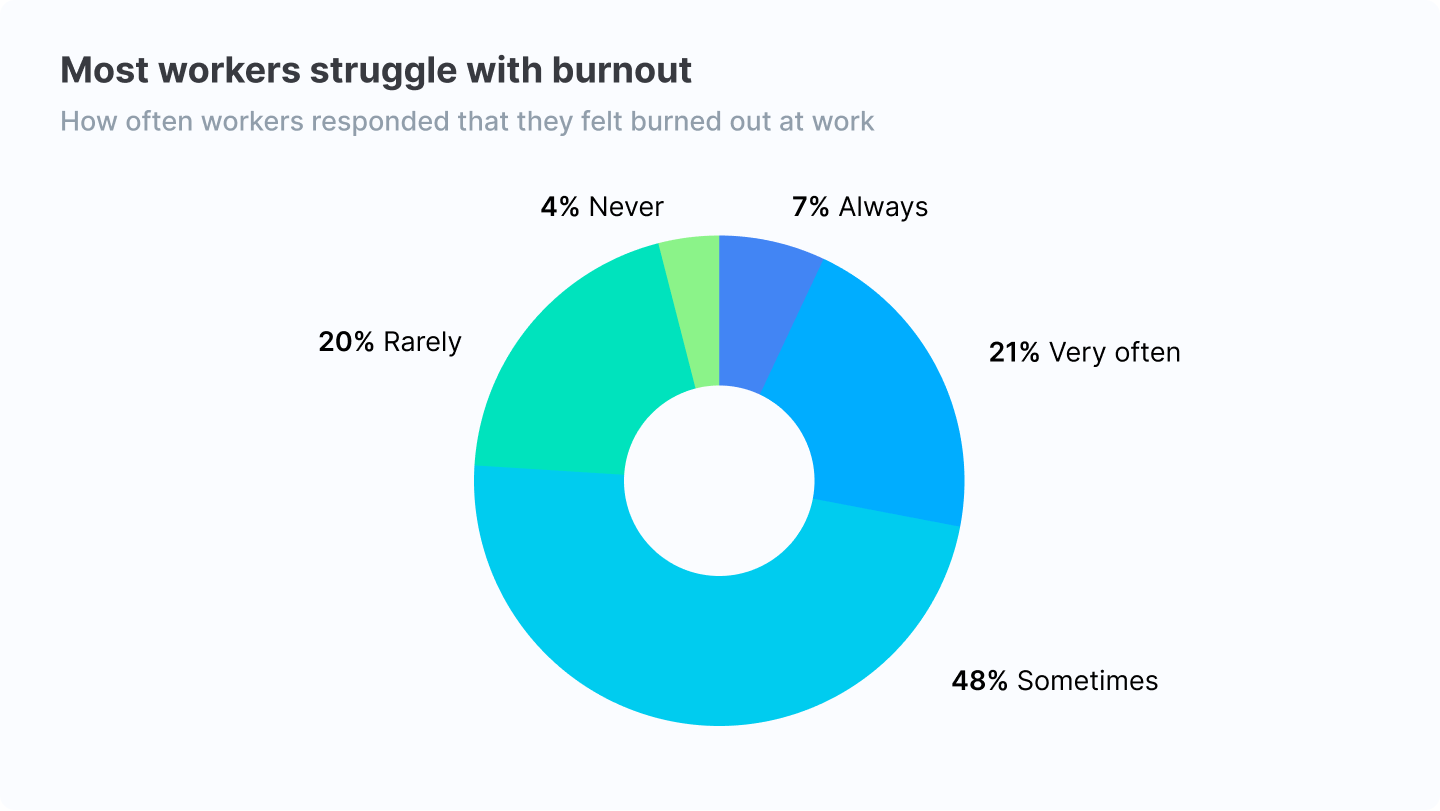
Quiet quitting in software teams doesn't look like people walking out the door — it looks like missed deadlines, minimal effort, endless "we'll fix it later," and smart engineers mentally checking out while still on payroll.
The data backs this up.
Studies consistently show developers lose up to one-third of their working week to poor workflows, tool overload, and constant context switching.
Another industry survey found that more than 65% of engineers say unclear processes and bloated tool stacks hurt their productivity more than technical complexity.
In other words, it's not the work that's burning them out — it's how the work moves (or doesn't move) through the system.
In 2026, this problem is only getting worse.
Teams are more distributed, release cycles are tighter, and expectations are higher than ever. When the team workflow is broken, developers stop pushing back.
They stop suggesting improvements.
They stop caring about outcomes and start doing the bare minimum to get through the sprint.
That's quiet quitting — and most leadership teams don't spot it until performance drops or people leave.
In this article, we'll break down how broken workflows inside modern dev software stacks slowly drain motivation, momentum, and accountability.
More importantly, we'll show you how to spot the warning signs early and rebuild a team workflow that actually supports your developers — instead of pushing them out the door one frustrated day at a time.
Read this article: : Top 6 AI-Powered Project Management Tools To Use In 2023
Why Developers Are Quietly Quitting (And Why It's Not About Motivation)
When the development team structure and workflow aren't designed to support real work, developers don't quit loudly — they quietly disengage.
They're not losing passion for building great software; they're being worn down by poorly designed workflows that drain energy day after day.
When the way work moves through your dev software is broken, frustration becomes routine — and routine frustration kills engagement faster than long hours ever will.
One of the biggest culprits is workflows that were never designed for developers in the first place. Many teams are stuck with processes built around tools, not humans.
Tickets bounce between systems. Decisions live in chat threads that disappear.
Requirements change mid-sprint without visibility.
Developers are forced to chase context instead of writing code. Over time, they stop pushing back and switch to survival mode: do the task, close the ticket, move on.

The numbers are ugly. Research shows developers lose up to 40% of their productive time to interruptions, context switching, and unclear handoffs.
Another survey found that more than 60% of engineers say bad internal processes frustrate them more than legacy code or technical debt. That's telling — developers expect hard problems. What they don't expect is chaos disguised as "agility."
Poorly created workflows also send a subtle but powerful message: your time doesn't matter. When developers are asked to update three tools with the same information, sit through meetings with no decisions, or work around broken systems, motivation drops.
Not instantly — gradually. They stop suggesting improvements because nothing changes. They stop caring about outcomes because they don't control the process. That's quiet quitting in action.
By 2026, this problem is amplified.
Teams are more distributed, more async, and more dependent on dev software than ever. When workflows aren't clearly defined, documented, and supported by the right tools, developers disengage quietly and efficiently.
They don't burn out — they check out. And unless leadership fixes the workflow itself, no amount of perks, bonuses, or pep talks will bring them back.
Excellent Workflows vs Poor Workflows - The Difference Developers Feel Every Day
The gap between an excellent workflow and a poorly designed one isn't subtle — developers feel it every single day.
Great workflows fade into the background and let people focus on building.
Bad workflows demand attention, create friction, and slowly grind motivation down. Same team. Same talent. Completely different outcomes.
Excellent workflows are intentional.
They're designed on purpose, not stitched together over time.
What excellent workflows look like:
- Work is clearly defined and scoped upfront
- Ownership is obvious — no guessing who's responsible
- Everyone knows what "done" actually means
- Tasks move in one direction, not in circles
- Decisions are documented where the work lives
- Developers can open a task and start building immediately
Poor workflows are reactive. They grow organically, tool by tool, without anyone stepping back to design them properly.
What poor workflows look like:
- Information scattered across tickets, chats, docs, and meetings
- Constant interruptions to clarify things that should be clear
- Requirements changing mid-stream with little visibility
- Progress dependent on who's online, not the process
- Developers spending more time managing tools than writing code
The impact shows up fast.
Teams with strong workflows ship more often, onboard faster, and recover from mistakes quicker.
That's not because they work harder — it's because their workflow removes friction instead of creating it.
Poor workflows do the opposite:
- Busywork is rewarded over outcomes
- Reviews pile up and handoffs stall
- Momentum slows, then stops
- Developers stop suggesting improvements
- Quiet quitting starts to take hold
In short, excellent workflows respect developer time and attention.
Poor workflows waste both.
And by 2026, the difference between teams that thrive and teams that struggle won't be talent, tech, or budget — it will be whether their workflow was designed deliberately or allowed to decay by accident.
The Silent Workflow Killers Hidden Inside Modern Dev Software
Most teams don't break their workflow overnight.
It happens quietly, one tool and one workaround at a time.
What looks like flexibility on the surface often turns into friction underneath — and by the time teams notice, the damage is already baked in.
New tools get added to "solve" problems, but nothing ever gets removed.
What that usually looks like:
- One tool for tickets
- Another for docs
- Another for chat
- Another for planning
- And a few more for "edge cases"
Instead of flexibility, developers get decision fatigue and duplicate work.
They spend more time figuring out where to do the work than actually doing it.
Poor integration makes everything harder than it should be.
When dev tools, documentation, and communication don't talk to each other:
- Decisions get lost in chat
- Docs fall out of date
- Tickets lack context
- Important updates get missed
Developers are forced to play detective instead of builder, chasing information that should already be connected.
The most dangerous part? Teams normalize inefficiency.
This is where things get really risky.
Over time, teams stop questioning broken workflows.
Workarounds become "just how we do things." Meetings replace clarity. Manual updates replace automation.
From real SaaS and product team experience, this is the tipping point:
- Developers stop raising issues
- Leaders think things are "fine"
- Output looks busy, but progress slows
By the time quiet quitting shows up, the workflow has been broken for a long time.
Modern dev software should remove friction, not create it — but without intentional workflow design, even the best tools can quietly work against the team.
How to Build a Software Dev Team workflow

How to Build a Software Dev Team workflow
Different teams rely on different workflow styles, and each one fits a particular situation.
Some teams need a linear, predictable flow for work that rarely changes. Others need an adaptive, iterative flow because priorities shift throughout the project.
There are also teams that focus on continuous work rather than fixed phases.
These approaches shape how tasks move, how planning happens, and which engineering methods support the work of dedicated development team services.
1. Choose the workflow type that matches your project
Once you understand the available workflow types, you can build one that fits your team's capacity and delivery goals.
- Linear (sequential) workflow follows a step-by-step sequence: requirements → design → development → testing → release. Teams use it when scope stays stable and the product has strict requirements, such as internal tools with fixed specifications or compliance-driven systems. Methods often paired with this workflow include Waterfall planning and scheduled review checkpoints.
- Iterative (agile-driven) workflow. Work flows in cycles. The team plans a small slice of work, builds it, tests it, releases it, and then repeats the cycle. Teams use this approach when the product evolves continuously and new insights appear often like consumer apps, SaaS platforms, early-stage products, or feature-heavy roadmaps. Scrum, Kanban, and hybrid Agile methods all support iterative workflows because they help teams adjust quickly.
- Continuous flow workflow. Here, tasks move independently through a shared pipeline. There are no fixed "phases" or sprints. Work enters the system, progresses through development steps, and exits as soon as it is ready. Teams choose this style when they need steady, uninterrupted throughput DevOps teams or teams shipping constant refinements. Kanban is the most common method, supported by work-in-progress limits, cycle-time tracking, and lean practices.
Agile and continuous flow models now dominate modern software teams because they support faster learning and steady delivery.
According to the State of Agile Report, a very large share of software teams use Agile practices, with many respondents indicating adoption well above 80% in recent years.
However, other workflow strategies still have their place, since some projects require a stable path with fewer changes or a structure that fits strict regulatory demands.
2. Define the stages that represent your team's real work
Of course, a good workflow needs clear stages.
They need to match the way your team actually builds features.
First, we recommend outlining the main steps your tasks move through, such as refinement, development, review, testing and release.
Each stage needs a simple purpose so teammates know what belongs there and what signals that the task can move forward.
When these stages reflect real daily work, the team avoids confusion, handoffs become smoother and progress stays visible from start to finish.
Here how to maximize team productivity with a clean, simple example of workflow stages:
Refinement → Development → Review → Testing → Release
You can expand this flow if your team needs more detail. For example:
Idea → Refinement → Technical Planning → Development → Review → Testing → Release → Monitoring
3. Shape roles and responsibilities around the workflow
It's important to remember that workflow also depends on how the development team is structured.
Engineers write and review code, product owners guide priorities, designers confirm usability details, and QA specialists validate behavior.
Tech leads monitor architectural alignment and help the team move through the stages without friction.
Here's how to structure a software development team:
- Define the core roles your project needs.
- Assign clear ownership for decisions so the team always knows who to ask and who moves work forward.
- Next, match the team structure to the way you plan to build the product. A feature team works well when many updates move in parallel, while a component team fits projects with deep technical layers that require focused expertise. Keep the structure flexible enough to adapt as the product grows.
- Finally, create communication paths that support quick alignment. Regular check-ins, lightweight documentation and visible progress boards help everyone stay informed.
When these responsibilities are visible and understood, the flow becomes easier to follow.
Tasks no longer stall because someone was unsure about ownership, and each stage progresses with fewer delays.
4. Set up the tools that support the way you work
Tools give structure to the workflow and make it easier to follow consistently.
Issue trackers show the current state of each task (Jira, Linear).
Version control systems record changes and manage collaboration (GitHub, GitLab). CI/CD pipelines build and test the work automatically (GitHub Actions, GitLab CI).
Documentation platforms store decisions and notes (Confluence, Notion).
When the toolchain matches the workflow stages, the team moves through the process without constant switching across systems or unclear formats.
The workflow becomes visible in the day-to-day tools the team already uses.
5. Establish rules that keep work moving
Clear handoff rules keep the workflow healthy.
When a task moves from refinement to development, the team agrees on what information must be present.
When a pull request enters review, reviewers know what to check for and how to give actionable feedback.
When testing begins, engineers provide enough context for QA to validate the behavior without guesswork.
These expectations prevent confusion and reduce the time work spends waiting in intermediate states.
The workflow becomes smoother because people understand what "ready" means at every step.
6. Add feedback loops that encourage continuous improvement
A workflow improves through regular examination.
Retrospectives uncover small delays that accumulate over time. Reviewing cycle time helps identify parts of the process that slow down repeatedly.
Grooming sessions remove outdated work before it clutters the backlog.
Architecture discussions prevent long-term technical drift.
These moments of reflection give the team a chance to update the workflow so it keeps pace with new demands, new teammates, and new product directions.
7. Test the workflow in practice and adjust as needed
A workflow works best when it reflects how the team operates in real situations.
Start with a small set of tasks and watch how they travel across the stages.
Notice when they pause, when someone needs more information, or when two steps overlap more than expected.
Adjust the workflow based on those observations rather than trying to force an idealized design.
A practical workflow grows from real work, not theory.
How to Fix a Broken Team Workflow Without Burning Everything Down
Fixing a broken team workflow doesn't mean ripping out every tool and starting from scratch.
That's how teams lose momentum and trust.
The smart move is to slow down, get honest about what's not working, and make targeted fixes that actually reduce friction instead of creating new chaos.
Start with an audit — not a replacement spree.
Before you touch your dev software, map how work actually flows today. Not how it's supposed to flow.
Follow a real task from idea to release and note every handoff, tool, approval, and delay. This usually exposes the problem fast.
Most teams discover they don't have a tooling issue — they have a visibility and ownership issue.
Ask simple questions:
- Where does work stall most often?
- Where do people ask the same questions repeatedly?
- Which tools are updated manually or inconsistently?
Identify workflow choke points.
Every broken workflow has pressure points.
These are the moments where progress slows, decisions get stuck, or developers wait instead of building.
Common choke points include unclear requirements, slow reviews, missing documentation, and approvals that live in private chats.
Once identified:
- Fix one choke point at a time
- Focus on flow, not speed
- Remove unnecessary steps before adding new ones
Small fixes here often unlock outsized gains.
Decide what to consolidate vs what to eliminate.
Most teams don't need more tools — they need fewer, better-used ones.
If two tools do 80% of the same job, consolidate. If a tool exists "just in case" but no one owns it, eliminate it.
Every extra system increases context switching and cognitive load.
A good rule of thumb:
- One system of record for work
- One place for decisions and documentation
- One clear source of truth per workflow stage
Anything else is overhead.
Introduce governance without killing speed.
Governance doesn't have to mean bureaucracy.
Done right, it actually speeds teams up by removing uncertainty.
Define lightweight rules around ownership, permissions, documentation, and approvals — then bake them into the workflow itself.
That means:
- Clear roles instead of ad-hoc decisions
- Default visibility instead of private silos
- Automation where possible, not manual policing
Developers move faster when they know the rules and don't have to guess.
The key takeaway: fixing team workflow is about intentional design, not disruption. You don't need a big bang change.
You need clarity, fewer tools, and workflows that respect how developers actually work.
Get that right, and productivity comes back without burning everything down in the process.
Best optimization hacks for software project workflow
A workflow becomes easier to manage when the team reduces small problems that slow progress. These improvements work best when they stay practical and easy to repeat.
They help teams maintain steady momentum without adding unnecessary processes.
Strong workflows grow from thousands of small habits, not one large overhaul, and each improvement builds a smoother path for the next one.
Below are several optimization hacks that consistently strengthen a software development workflow:
- Prepare tasks with meaningful context before development begins. Make clear feature descriptions and add links to design references to give engineers a solid starting point. When tasks come fully prepared, the team moves forward without repeat questions. The workflow gains speed because each stage begins with enough information to act immediately.
- Keep feedback loops short and predictable. Fast code reviews prevent tasks from stacking up in a queue. Reviewers stay close to the context because the work is still fresh in their minds. QA testers also benefit from this because they receive stable builds earlier and can validate changes while the development team remains available for clarifications. The entire flow becomes more stable when feedback arrives without long delays.
- Maintain a clean and reliable CI pipeline. A trustworthy pipeline encourages developers to push smaller, more frequent changes. Quick test runs, consistent build times, and clear logs allow the team to detect issues early. Slow pipelines interrupt momentum and create hesitation, so optimizing test suites and resource allocation supports daily productivity. Engineers gain confidence when the verification system works predictably.
- Use dashboards that reflect the real state of work. A visible board helps everyone understand what is moving and what needs attention. When tasks sit idle, the team notices the backlog shift immediately. This visibility reduces confusion and helps leads solve problems before they become blockers. Simple boards often perform best because they highlight essential information without distracting noise.
- Address technical debt as part of regular work, not as a separate project. Small, continuous improvements keep the codebase flexible. When engineers refactor parts of the system during normal development, features stay easier to build and maintain. Neglected debt slows delivery because each update requires navigating old patterns or brittle logic. Consistent clean-up work supports long-term stability and reduces regression risk.
A development workflow gains strength through steady refinement.
Each hack supports the next one, creating a smoother environment with fewer blockers and less frustration.
When the team applies these habits regularly, the workflow feels lighter, more organized, and more supportive of the work that matters most.
Read this article: : Top 6 AI-Powered Project Management Tools To Use In 2023
The 2026 Reality: Why This Problem Gets Worse, Not Better
If broken workflows feel painful today, 2026 is where they really start to hurt.
Not because teams are weaker — but because the environment around them is far more demanding.
The margin for inefficiency is shrinking fast, and dev software that once felt "good enough" is now actively holding teams back.
AI is accelerating work — and tool complexity.
AI hasn't simplified dev environments the way many expected. It's done the opposite. New AI-
powered tools are being added on top of existing stacks, not replacing them.
That means more dashboards, more workflows, more decisions about where work should happen.
Without a strong underlying workflow, AI just amplifies chaos instead of productivity.
Hybrid and async teams raise the bar for workflow quality.
In 2026, most development teams aren't working nine-to-five in the same room.
They're distributed, hybrid, and increasingly async.
That changes everything. Poor workflows that could be patched over with quick conversations now break completely.
When workflows aren't clear:
- Decisions don't get documented
- Context doesn't carry over between time zones
- Developers wait instead of moving forward
Async teams don't fail because they're remote — they fail because the workflow wasn't built for clarity.
Faster release cycles leave zero room for friction.
Release expectations keep tightening.
Weekly, daily, even continuous releases are becoming normal. In that world, every delay compounds.
Slow approvals, unclear handoffs, or duplicated updates don't just annoy teams — they directly impact delivery.
High-performing teams aren't moving faster because they rush.
They move faster because their workflow removes unnecessary steps.
Compliance, security, and governance add real pressure.
By 2026, teams can't ignore governance.
Security reviews, access controls, audit trails, and compliance requirements are no longer optional — especially for SaaS, finance, healthcare, and enterprise teams.
When workflows aren't designed with governance in mind, compliance becomes manual, stressful, and slow.
Strong workflows bake these requirements in.
Weak workflows bolt them on — and everyone pays the price.
What high-performing teams are doing differently.
Top teams aren't adding more tools to cope with 2026 pressures.
They're simplifying. They're designing workflows first, then choosing dev software that supports those workflows end to end.
They prioritise visibility, documentation, and ownership — not just speed.
The takeaway is simple: 2026 doesn't forgive messy workflows.
Teams that don't fix them will feel the pain more each quarter.
Teams that do will quietly pull ahead — faster, calmer, and far more resilient.
The New Standard for Dev Software in 2026
By 2026, the bar for dev software has moved — and teams that haven't moved with it are already feeling the strain.
The old approach of piling on features and hoping teams "figure it out" no longer works.
Modern dev software is judged by one thing above all else: how well it supports real team workflow.
- Workflow-first, not feature-first - Great dev software now starts with how work actually moves through a team. Features exist to support the workflow, not to show off in a demo. If a tool adds clicks, steps, or decisions without improving flow, it's a liability. Teams want software that makes the next action obvious and removes friction at every stage — from planning to release.
- Built-in collaboration, not bolt-ons - In 2026, collaboration can't live in disconnected add-ons. When chat, documents, decisions, and tasks are split across tools, context gets lost and developers pay the price. Modern dev software builds collaboration into the core experience so conversations, files, and decisions live next to the work — not somewhere else.
- Visibility for leaders without micromanagement - Leaders need clarity, not constant updates. The new standard gives managers real-time visibility into progress, blockers, and workload without forcing developers to status-report their way through the day. When visibility is built into the workflow, trust goes up and micromanagement fades out naturally.
- Scales with teams instead of against them - What works for five developers often collapses at fifty. In 2026, dev software must scale cleanly — across teams, time zones, and complexity — without creating more overhead. That means clear ownership, consistent workflows, and governance that grows with the team instead of slowing it down.
The takeaway is simple: modern dev software doesn't just help teams build faster — it helps them work smarter, with less friction and more confidence.
Anything that doesn't meet this standard will quietly push teams toward burnout, disengagement, and eventually the exit.
Wrapping up
We encourage teams to start with a simple flow and try it with real tasks. Small shifts often produce clear gains because they remove delays that slow daily work.
We also recommend regular checks of tools and practices so the workflow stays aligned with team capacity and project needs.
Our final advice is to treat the workflow as a living system.
It will change as your team grows or faces new demands.
When each part supports clarity and trust, the team moves with purpose and archives best results!
FAQs: Dev Software, Team Workflow, and Productivity in 2026
1. What is dev software and how does it impact team workflow?
Dev software includes the tools teams use to plan, build, test, and ship products — things like issue trackers, repos, documentation tools, and CI/CD platforms.
When these tools are well connected, they act as true developer productivity tools and support a smooth software development workflow.
When they're fragmented, they create friction, slow handoffs, and widen dev team communication gaps, directly hurting delivery speed and morale.
2. Why do teams struggle with workflow despite modern dev tools?
Because modern tools don't automatically equal a modern workflow. Many teams suffer from dev tool sprawl — adding new tools without removing old ones.
The result is duplicated work, lost context, and unclear ownership.
Without intentional design, even the best agile workflow tools end up fighting each other instead of supporting the team.
3. How can companies improve team workflow in 2026?
In 2026, improvement starts with simplification.
High-performing teams focus on fewer tools, clearer ownership, and better workflow automation for dev teams.
They design workflows around how people actually work, not how tools want to be used.
Strong team collaboration software that combines communication, documentation, and execution in one place is becoming the baseline for modern software teams 2026.
4. What are the signs your dev software stack is failing?
Common warning signs include:
- Developers constantly switching tools to find context
- Decisions buried in chat instead of documented
- Repeated questions about priorities or ownership
- Manual updates replacing automation
- Declining engineering team efficiency despite more tools
If productivity feels harder instead of easier, your stack isn't helping — it's in the way.
5. Is consolidating dev software worth it?
Yes — and for most teams, it's overdue.
Consolidation reduces context switching, closes communication gaps, and makes automation easier.
Teams that reduce dev tool sprawl consistently see improvements in focus, onboarding speed, and overall workflow health.
In 2026, consolidating around a clear software development workflow isn't a cost-saving move — it's a competitive advantage.
Most Popular Posts

Effective communication among team members is vital for the productivity and success of any organization. Surprisingly, 60% of companies lack a long-term internal communication strategy, which p...


Businesses thrive on communication for efficiency, productivity and accomplishment. When the right information is passed from the right designation in the organization, it promotes positivity an...

Categories
Blog
(3182)
Business Management
(393)
Employee Engagement
(235)
Digital Transformation
(215)
Growth
(150)
Intranets
(141)
Internal communications
(106)
Remote Work
(68)
Sales
(53)
Collaboration
(52)
Customer Experience
(32)
Culture
(30)
Knowledge Management
(29)
Project management
(29)
Leadership
(20)
Comparisons
(9)
News
(1)

Related Posts

Looking for a New Job Remotely can feel like a simple next step: update your CV, turn on job alerts and start applying. In reality, the strongest remote job searches start much earlier. You need to be clear about the work you want, the kind of ...

Hiring globally is easier than employing globally Have you found the right person for a role, only to realise they live in a country where your business has no legal entity? That's where EOR international hiring can be useful. An Employer of Re...

Sales operations and planning are essential to harmonizing sales objectives with operational capabilities, ensuring seamless coordination between departments like sales, marketing, production, and finance. This alignment enables businesses to forecas...

How can a business collect the public web data it genuinely needs without creating avoidable security, privacy or supplier-risk problems? That's the question more teams are now facing. From competitor price monitoring and SEO research to brand protec...

The sales interview is a crucial part of the job search process, as it provides an opportunity for the candidate to showcase their skills, experience, and personality to the hiring manager. In this interview, the candidate is evaluated on their...


Jill Romford
I am a digital nomad, lover of exploring new places and making friends.
I love to travel and I love the internet. I take pictures of my travels and share them on the internet using Instagram.
Traveler, entrepreneur, and community builder. I share my insights on digital marketing and social media while inspiring you to live your fullest life.
Ready to learn more? 👍
One platform to optimize, manage and track all of your teams. Your new digital workplace is a click away. 🚀
Free for 14 days, no credit card required.