Insight Blog
Agility’s perspectives on transforming the employee's experience throughout remote transformation using connected enterprise tools.
21 minutes reading time
(4100 words)
Those AI Visibility Tracking Tool Are Quietly Becoming Essential in 2026 — Here’s Why

Those AI Visibility Tracking Tool Are Quietly Becoming Essential in 2026 — Here’s Why
Explore related SEO and AI visibility guides covering AI brand visibility, GEO SEO, SaaS SEO strategies, and how to boost discoverability in 2026.
Those AI Visibility Tracking Tool Are Quietly Becoming Essential in 2026 — Here’s Why

Let's cut the nonsense.
People aren't just Googling anymore.
They're asking ChatGPT. They're trusting AI summaries.
They're clicking answers, not links.
And if your brand isn't showing up inside those AI-generated responses, you're not "ranking lower" — you're invisible.
Here's the stat that should make you sit up straight:
Over 70% of users now say they trust AI-generated answers as much as traditional search results.
That means AI isn't a side channel anymore. It's the front door.
AI Search Is Now a Trust Channel
70%+
Over 70% of users say they trust AI-generated answers as much as traditional search results. This means AI responses are shaping opinions, shortlists, and buying decisions before users ever visit a website.
This is where an ai visibility tracking tool comes in — not as another shiny dashboard, but as a reality check.
It tells you whether AI systems actually see, recognise, and reference your brand when people ask questions that matter to your business.
And no, this guide isn't here to hype every new tool with "AI" slapped on the homepage.
We're breaking down which tools actually matter in 2026, which ones are just SEO cosplay, and how to spot the difference before you waste time, budget, or credibility.
If AI is already answering your customers' questions, the real question is simple:
Is it mentioning you — or your competitors?
● Key Takeaways: AI Trust Is Now a Market Reality
- Over 70% of users say they trust AI-generated answers as much as traditional search results, meaning AI responses now shape buying decisions earlier than your website ever will.
- If your brand is not mentioned in AI answers, you are not “ranking lower” — you are missing from the conversation entirely.
- Tracking and improving AI visibility is no longer a marketing experiment; it is a business risk-control move that protects demand and reputation.
What AI Visibility Really Means in 2026
Let's get something clear right away: AI search is not SEO 2.0.
It's a completely different game.
Traditional SEO was about ranking pages. AI search is about being remembered.
When someone asks an AI assistant a question, it doesn't scroll. It doesn't compare ten blue links. It synthesises an answer from sources it already trusts.
If your brand isn't part of that internal knowledge loop, you're out of the conversation before it even starts.
Learn more about What Is AI Brand Visibility—and How Do You Increase It in ChatGPT? & The Best GEO Agencies for Better AI Brand Visibility
Here's the uncomfortable stat
By 2026, more than 60% of search journeys are expected to end without a click, because the answer is delivered directly by AI.
No click means no traffic. No traffic means rankings stop mattering on their own.
This is where the idea of an ai visibility score comes in.
Platforms like AI SEO Tracker help you measure exactly that — presence inside AI-generated answers, not just rankings on a results page.
Instead of asking "What position do I rank?", you're asking:
- Does AI recognise my brand?
- Does it reference my content?
- Does it recall me consistently across similar questions?
That score isn't about vanity. It's about presence inside AI-generated answers — the place users now trust first.
And this is the key difference most teams miss
- Rankings tell you where a page appears on a search engine.
- AI citations tell you whether AI pulls from your content.
- Mentions show whether your brand is named explicitly.
- Brand recall determines whether AI remembers you without being prompted.
You can rank #1 and still be invisible to AI.
That's not a theory — it's already happening.
In 2026, visibility isn't about winning search results.
It's about earning a permanent seat in the AI's memory.
And if you're not measuring that yet, you're flying blind while everyone else quietly moves ahead.
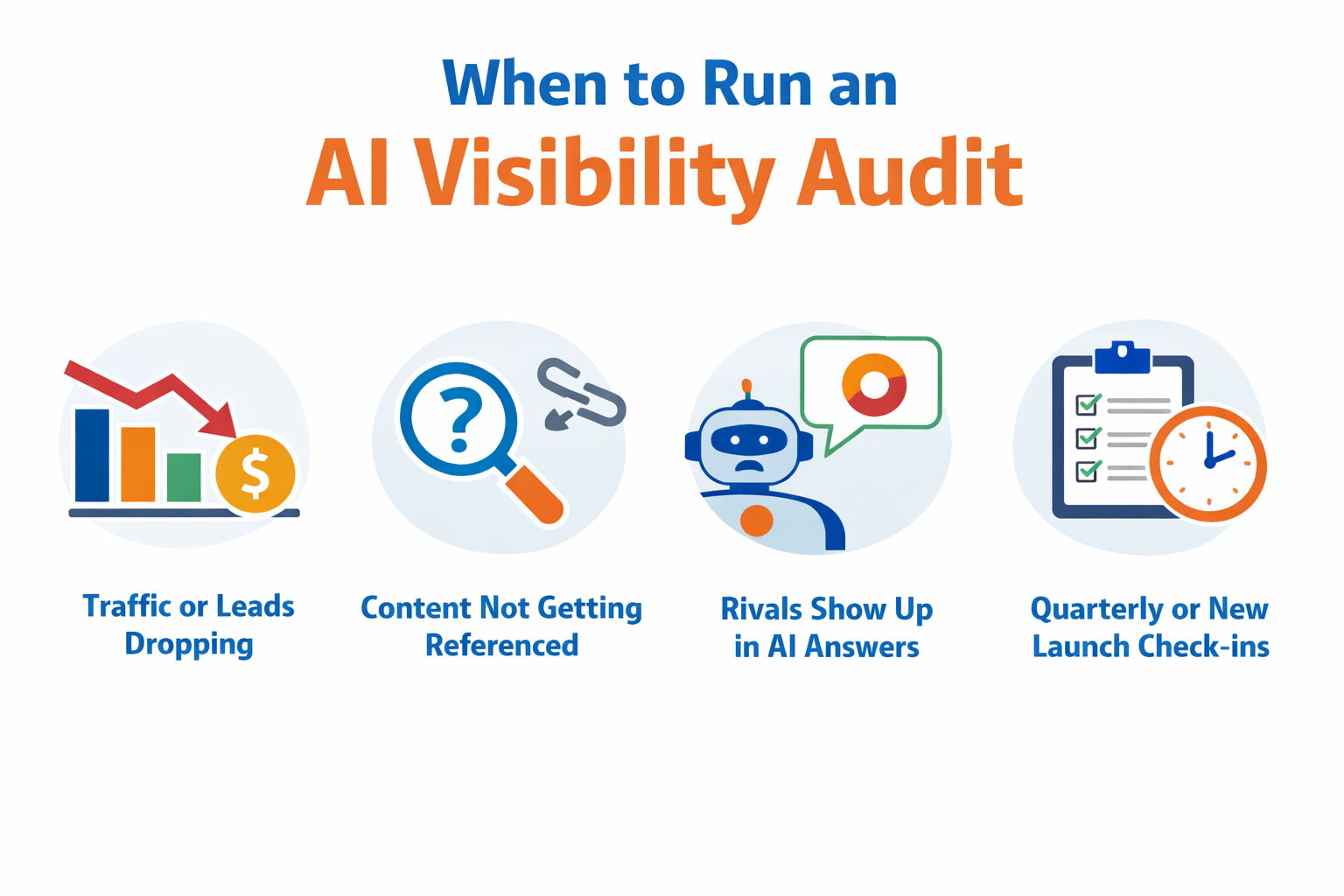
When to Run an AI Visibility Audit (and Why Your Business Can't Ignore It)
When to Run an AI Visibility Audit (and Why Your Business Can't Ignore It)
Most businesses don't realise they have an AI visibility problem until it's already costing them deals.
That's exactly why an ai visibility audit matters.
It's not a "nice-to-have" exercise — it's how you find out whether AI systems actually recognise your brand, or quietly skip over you like you don't exist.
What an AI Visibility Audit Looks Like in Practice
This isn't about checking rankings or traffic charts.
A real audit answers uncomfortable questions like:
- Does AI mention your brand when users ask industry-specific questions?
- Are your competitors being referenced instead of you?
- Is your content being used as a source, summarised, or ignored?
- Does AI understand who you are, what you do, and why you're credible?
In short, it measures presence inside AI answers, not performance on search result pages.
Signs Your Brand Is Invisible to AI Systems
If any of these sound familiar, you're overdue:
- AI-generated answers list competitors but never mention you
- Your content gets traffic, but AI summaries don't reference it
- Sales prospects say, "I saw another company mentioned by AI…"
- You dominate SEO but see zero brand recall in AI tools
Here's the kicker: AI invisibility doesn't show up in Google Analytics.
You can look "healthy" on paper while quietly disappearing from the places people now trust most.
Why Businesses Need to Do This Now (Not Later)
Because AI visibility compounds — fast.
If AI keeps seeing, citing, and recalling the same brands, those brands become the default answers. Everyone else fights uphill just to be noticed.
An ai visibility audit gives businesses:
- Early warning before market perception shifts
- Proof of where AI trust is leaking to competitors
- A baseline to improve visibility deliberately, not by guesswork
- Leverage for content, PR, and authority-building decisions
This is the business reality in 2026:
If AI doesn't understand your brand, it won't recommend it.
If it won't recommend it, customers won't consider it.
And by the time traffic drops, it's already too late.
Run the audit before AI decides who matters in your category — without you in the room.
Related Guides You May Want to Read Next
AI visibility doesn’t exist in isolation. These guides dive deeper into SEO foundations, AI-driven optimisation, and global visibility strategies that support long-term discoverability.
- Unlocking Success: Selecting the Perfect SEO Service to Skyrocket Your Visibility
- A Practical Guide to AI Visibility Optimization and 5 Agencies Offering Geo SEO Services You Can Try
- What Is AI Brand Visibility—and How Do You Increase It in ChatGPT?
- How to Use AI for SEO: Enhance Your SEO Strategy for Better Rankings
- SEO and Multilingual Content Marketing: A Comprehensive Guide to International SEO
- 10 SaaS SEO Strategies to Outrank Competitors
How AI Visibility Optimization Works

How AI Visibility Optimization Works
AI visibility isn't magic, and it's definitely not luck.
AI visibility optimization is about making your brand easy for AI systems to understand, trust, and reuse when they generate answers.
That starts with structure. Clear headings, clean explanations, consistent terminology, and content that actually answers real questions — not vague marketing fluff.
If AI has to guess what you do, it won't guess in your favour.
Next is entity clarity. AI doesn't think in keywords the way search engines used to — it thinks in things. Companies, products, categories, problems, solutions.
If your brand isn't clearly positioned as a specific "thing" in a specific context, AI won't confidently reference it.
Businesses that win here spell out who they are, what they solve, who they serve, and how they differ — repeatedly and consistently across content.
Authority signals are the multiplier. AI pays attention to brands that show up consistently, are referenced elsewhere, and demonstrate expertise over time.
That means original insights, credible data, real-world examples, and content that goes deeper than surface-level blog posts. This doesn't replace SEO — it builds on it. SEO gets you discovered; AI visibility determines whether you're remembered.
Where teams usually mess this up is chasing shortcuts. They stuff content with "AI-friendly" phrases, pump out low-quality pages, or assume rankings automatically equal AI exposure.
They don't.
In fact, that approach often backfires by confusing AI models or diluting authority.
Businesses that get this right focus less on gaming the system and more on being unmistakably clear, useful, and credible.
That's what AI rewards — and that's what keeps you visible when the answers matter most.
What Makes the Best AI Visibility Tools Worth Using
Let's be honest: most tools calling themselves "AI visibility" platforms are half-baked experiments.
Dashboards look fancy, data looks impressive, but when you scratch the surface, there's nothing you can actually act on.
That's why we were ruthless about what made the cut in this review.
Here's exactly what separates tools worth paying for from ones you'll abandon after two weeks.
- Clear AI answer tracking - If a tool can't show whether your brand appears inside AI-generated answers (not just rankings or traffic), it's missing the point. Visibility today is about inclusion, not position.
- Brand and competitor context - Good tools don't just say "you were mentioned." They show who else AI is referencing instead of you. Without competitive context, the data is useless.
- Repeatability, not snapshots - One-off checks are meaningless. Production-ready platforms track visibility over time so you can see trends, not just moments.
- Explainable metrics - If a tool throws out scores without explaining what drives them, walk away. Businesses need metrics they can understand, defend, and improve — not black-box numbers.
- Actionable insights - Experimental tools report problems. Serious tools point to why visibility is weak and what to fix — content gaps, authority signals, entity confusion, or coverage issues.
- Built for real teams - That means exports, reporting, collaboration, and integration into existing workflows. If it only works for one curious marketer, it won't scale.
This is how we define the best ai visibility tools for real businesses in 2026:
Not toys. Not demos. Not hype.
Platforms that help you understand how AI sees your brand — and give you enough clarity to actually do something about it.
Top 11 AI Visibility Trackers You Should Know About in 2026
Each tool below is reviewed using the same structure so you can quickly see what it does, why it matters, and who it's actually for — not who it claims to be for.
AI Visibility Tools Comparison (2026)
| Tool | Primary Strength | Best For |
| Ahrefs Brand Radar | Brand mention monitoring across AI-influenced search | Established brands already using Ahrefs |
| SE Visible (SE Ranking) | AI citation and visibility tracking inside SEO workflows | SEO teams extending into AI search |
| Mangools AI Search Grader | Lightweight AI visibility scoring | Small teams, founders, quick checks |
| Profound | Enterprise-grade AI visibility intelligence | Large enterprises, regulated industries |
| Scrunch | AI search analytics tied to content performance | Content-led growth teams |
| Peec AI | Purpose-built AI answer visibility tracking | Teams prioritising AI-first discovery |
| Otterly AI | Prompt-based AI monitoring and alerts | Agile marketing and growth teams |
| Rankscale AI | AI ranking and comparative analysis | SEO professionals adapting to AI search |
| XFunnel AI | Visibility-to-revenue attribution | Revenue and performance-focused teams |
| Evertune AI | AI-readable content optimisation | Editorial and content strategy teams |
| Goodie AI | Full-cycle AI visibility tracking and optimization across 11 LLMs | Mid-market and enterprise teams that need monitoring and a clear path to action |
#1. Ahrefs Brand Radar
#1. Ahrefs Brand Radar
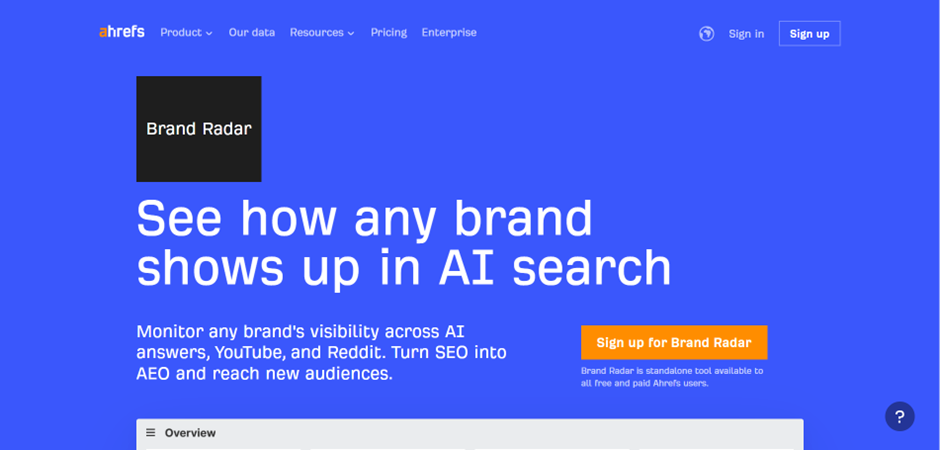
AI feature within Ahrefs' broader SEO platform focused on measuring brand visibility across AI engines and the wider web.
Key capabilities:
Tracks brand mentions, citations, and AI Share of Voice across multiple AI platforms; integrates search demand and web visibility metrics.
Ahrefs Brand Radar lets users see how often their brand appears in AI-generated responses and search results. Unlike simple keyword rank tracking, it focuses on mentions and citations, which shows which AI assistants mention your brand, where those mentions come from, and how visible you are relative to competitors. It ties visibility to existing SEO signals like search demand and web citations, offering a broader picture of online presence.
Why it matters in 2026:
- Provides multi-platform coverage including ChatGPT, AI Overviews, Copilot, and more
- Deep benchmarking and prompt clustering help uncover content gaps
- Works as part of a larger SEO ecosystem andAI brand mention tracking
Brands already invested in Ahrefs or those wanting an integrated SEO plus AI visibility solution.
#2. SE Visible (by SE Ranking)
#2. SE Visible (by SE Ranking)
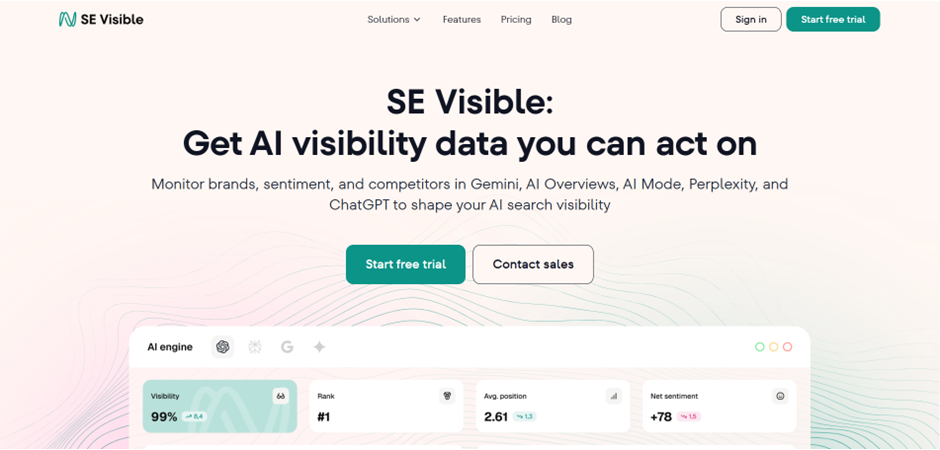
A dedicated AI visibility tracking tool that sits alongside SE Ranking's SEO suite.
Key capabilities:
AI citation tracking and Monitors brand performance across top AI engines like Google AI Mode, Gemini, Perplexity, and ChatGPT; offers competitor benchmarking.
SE Visible makes it straightforward to see how your brand appears across major AI answer platforms and compare that to competitors. Users can track mentions, see average position when the brand does show up, and export data for reporting.
Why it matters in 2026:
- Offers coverage of multiple major AI systems
- Built for strategic insights rather than raw numbers
- Easy to integrate with existing SEO workflows
Teams that already use SE Ranking and want AI visibility tracking bundled with SEO tools.
#3. Mangools AI Search Grader
#3. Mangools AI Search Grader
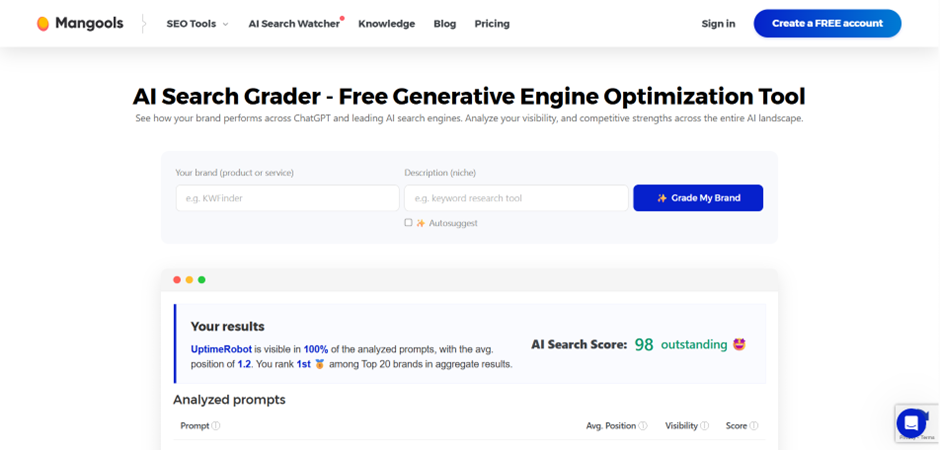
A free tool from Mangools focused on Generative Engine Optimization, measuring brand presence in AI engines.
Key capabilities:
AI search presence score and Evaluates visibility and ranking across multiple models using an AI Search Score.
Mangools AI Search Grader lets you enter a brand name and niche to see how often that brand appears in AI responses and how well it ranks in the top results. It also offers competitor performance comparisons for actionable insights.
Why it matters in 2026:
- Free to use for basic visibility insights
- Covers a broad set of models, offering early AI visibility benchmarks
- Useful for testing AI visibility before investing in paid tools
Small teams, freelancers, and those new to AI visibility tracking.
#4. Profound
#4. Profound
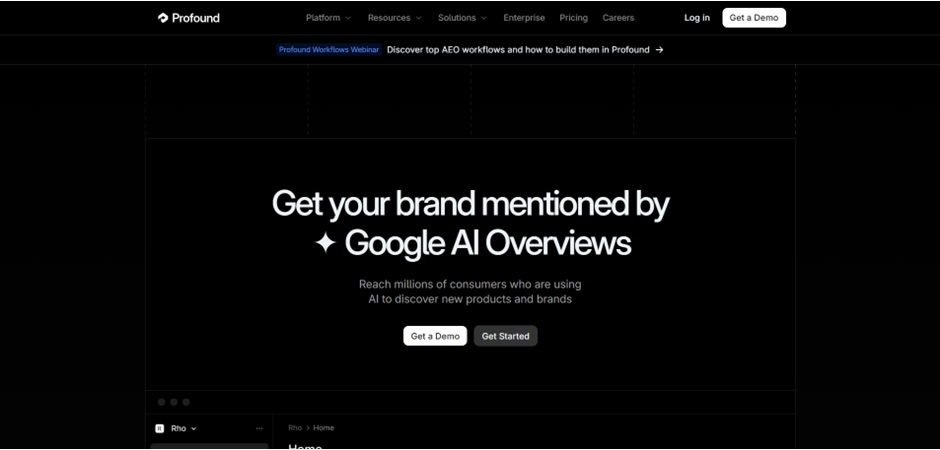
A standalone enterprise AI visibility solution designed to analyze brand presence across numerous AI answer engines.
Key capabilities:
Enterprise AI visibility intelligence and Tracks mentions, citations, sentiment, and prompt volumes at scale; integrates workflows for creating AI-optimized content.
Profound stands out for its enterprise-grade analytics, which means it combines brand visibility data with insights about how AI systems surface brand-related information and where opportunities exist to improve visibility. It also provides dashboards and workflows to put findings into action.
Why it matters in 2026:
- Built for large brands and agencies managing complex, multi-brand visibility strategies
- Deep analytics support content planning and optimization workflows
- Tracks sentiment and competitive context alongside visibility
Enterprises and agencies needing a full-featured AI visibility platform.
#5. Scrunch
#5. Scrunch
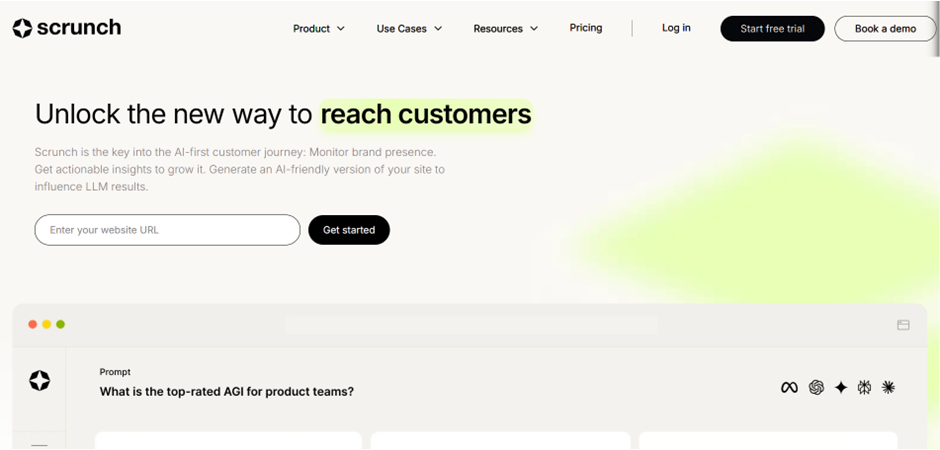
A dedicated AI visibility and brand monitoring platform with multi-platform support and competitive insights.
Key capabilities:
Monitors performance across AI engines, competitive tracking, prompt analytics, and insights into how AI surfaces content.
Scrunch helps teams understand where and how brands appear in AI answers and what AI crawlers and systems reference when generating responses. It also supports monitoring AI crawler traffic and identifying content gaps or technical issues that limit visibility.
Why it matters in 2026:
- Enterprise-ready monitoring with trend analysis over time
- Competitive benchmarking and prompt-level insights
- Tracks context and sentiment in addition to presence
Mid-market to enterprise teams seeking customized and scalable AI visibility analytics.
#6. Peec AI
#6. Peec AI
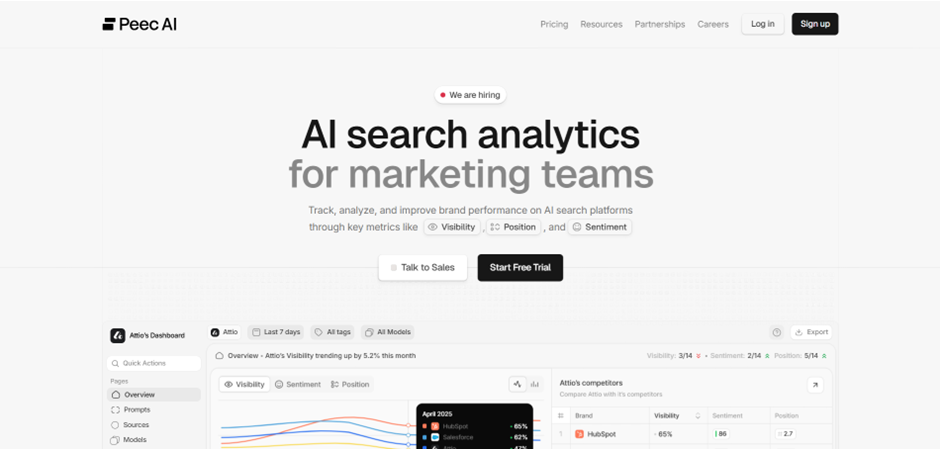
A focused AI visibility tracking platform centered on brand mentions across major AI answer engines.
Key capabilities:
AI answer visibility monitoring and Multi-engine monitoring, sentiment analysis, competitor comparisons, and intuitive dashboards.
Peec AI simplifies tracking when and where your brand appears in AI-generated responses. It places emphasis on both frequency of mentions and the sentiment or context in which brands are referenced.
Why it matters in 2026:
- Clean interface with fast onboarding
- Covers a wide range of AI platforms in one dashboard
- Sentiment analysis adds qualitative context to visibility data
Marketing teams that want depth without enterprise-level complexity.
#7. Otterly AI
#7. Otterly AI
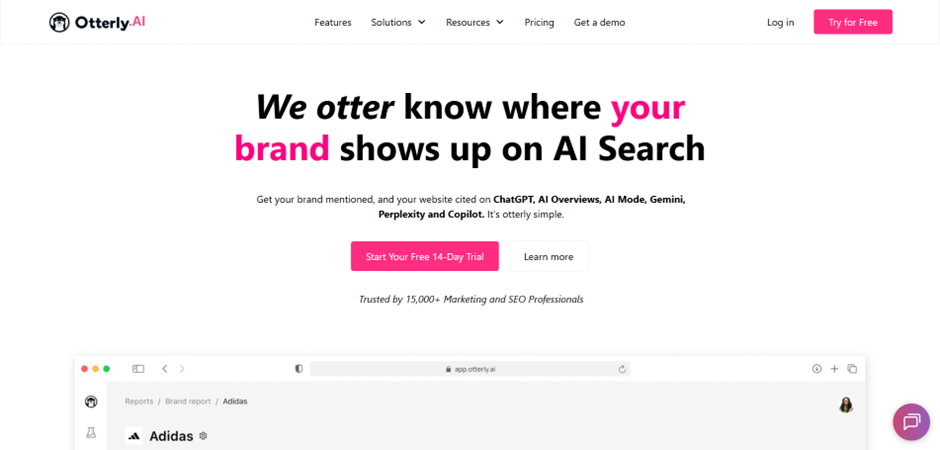
An AI visibility tracker focused on brand mentions and content presence across leading AI platforms.
Key capabilities:
AI prompt monitoring andTracks visibility in AI Overviews, ChatGPT, Perplexity, and similar platforms while linking mentions to source content.
Otterly AI provides insights into where and how content is referenced in AI answers. It also helps identify which queries or prompts trigger brand mentions, supporting more focused content optimization strategies.
Why it matters in 2026:
- Connects AI visibility with content strategy
- Useful for teams refining topic coverage and search intent alignment
- Designed for clarity rather than complexity
Small and medium businesses and content teams.
#8. Rankscale AI
#8. Rankscale AI
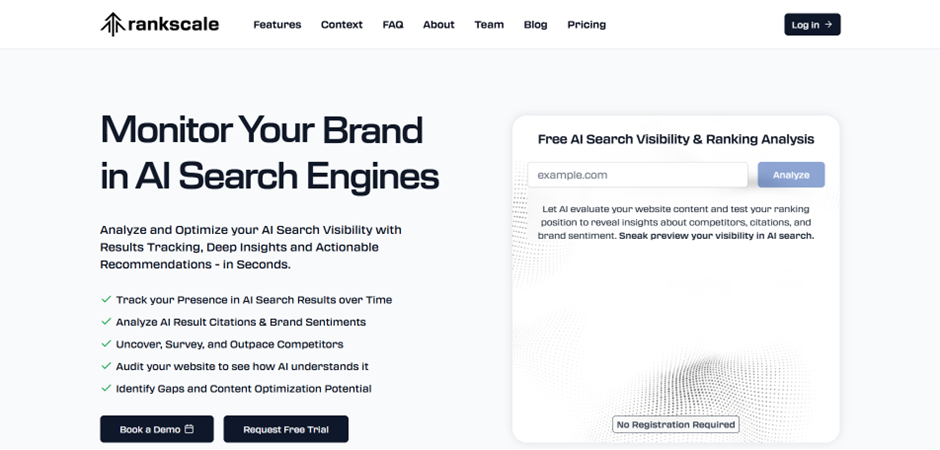
A cost-conscious AI visibility tracker designed for broad monitoring across AI platforms.
Key capabilities:
AI ranking analysis and Aggregates brand visibility performance across multiple AI systems and supports competitor comparisons and trend tracking.
Rankscale AI focuses on providing essential visibility metrics without heavy enterprise features. It appeals to teams that want practical monitoring across a growing number of AI search environments.
Why it matters in 2026:
- Affordable approach to multi-platform visibility tracking
- Useful for early-stage teams and agencies managing multiple clients
- Emphasizes coverage and simplicity
Startups and budget-focused agencies.
#9. XFunnel AI
#9. XFunnel AI
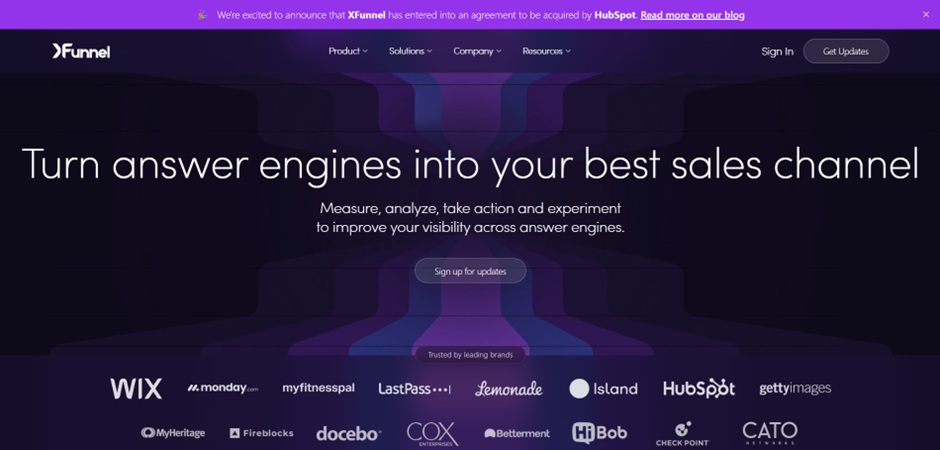
A platform that connects AI visibility data with downstream business performance metrics.
Key capabilities:
AI visibility attribution and Combines AI presence tracking with funnel-level attribution and conversion insights.
XFunnel AI focuses on understanding how visibility in AI-generated answers relates to leads, conversions, and customer journeys, rather than measuring mentions in isolation.
Why it matters in 2026:
- Aligns AI visibility metrics with business outcomes
- Useful for performance-driven marketing teams
- Helps translate visibility data into ROI insights
Growth and revenue teams focused on measurable impact.
#10. Evertune AI
#10. Evertune AI
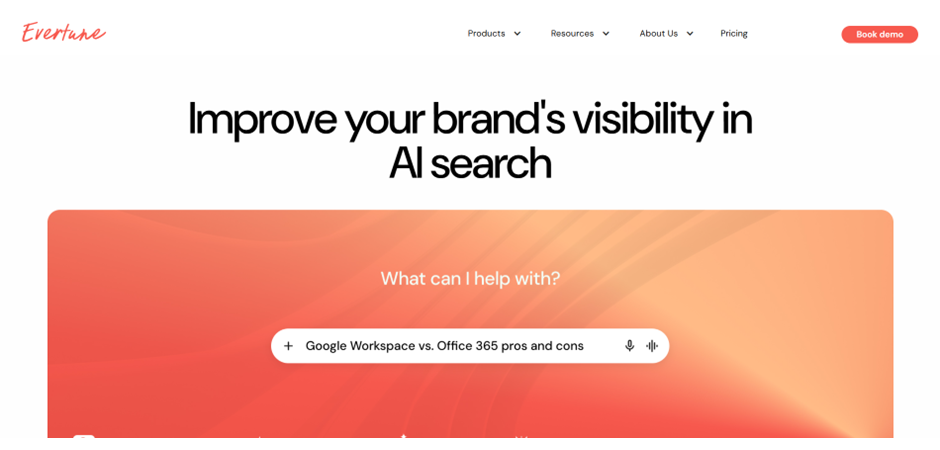
A comprehensive AI visibility and optimization platform designed for large-scale monitoring across AI models and interfaces.
Key capabilities:
AI content optimization and Statistical-scale monitoring, competitive intelligence, and data-driven optimization insights.
Evertune AI provides broad coverage across both consumer-facing AI assistants and underlying model environments. It emphasizes statistically meaningful data to help teams understand not just presence, but consistency and ranking context.
Why it matters in 2026:
- Extensive coverage across AI platforms and models
- Strong analytical depth for strategic planning
- Designed for high-volume, multi-brand visibility tracking
Large brands and agencies with advanced AI visibility requirements.
#11. Goodie AI
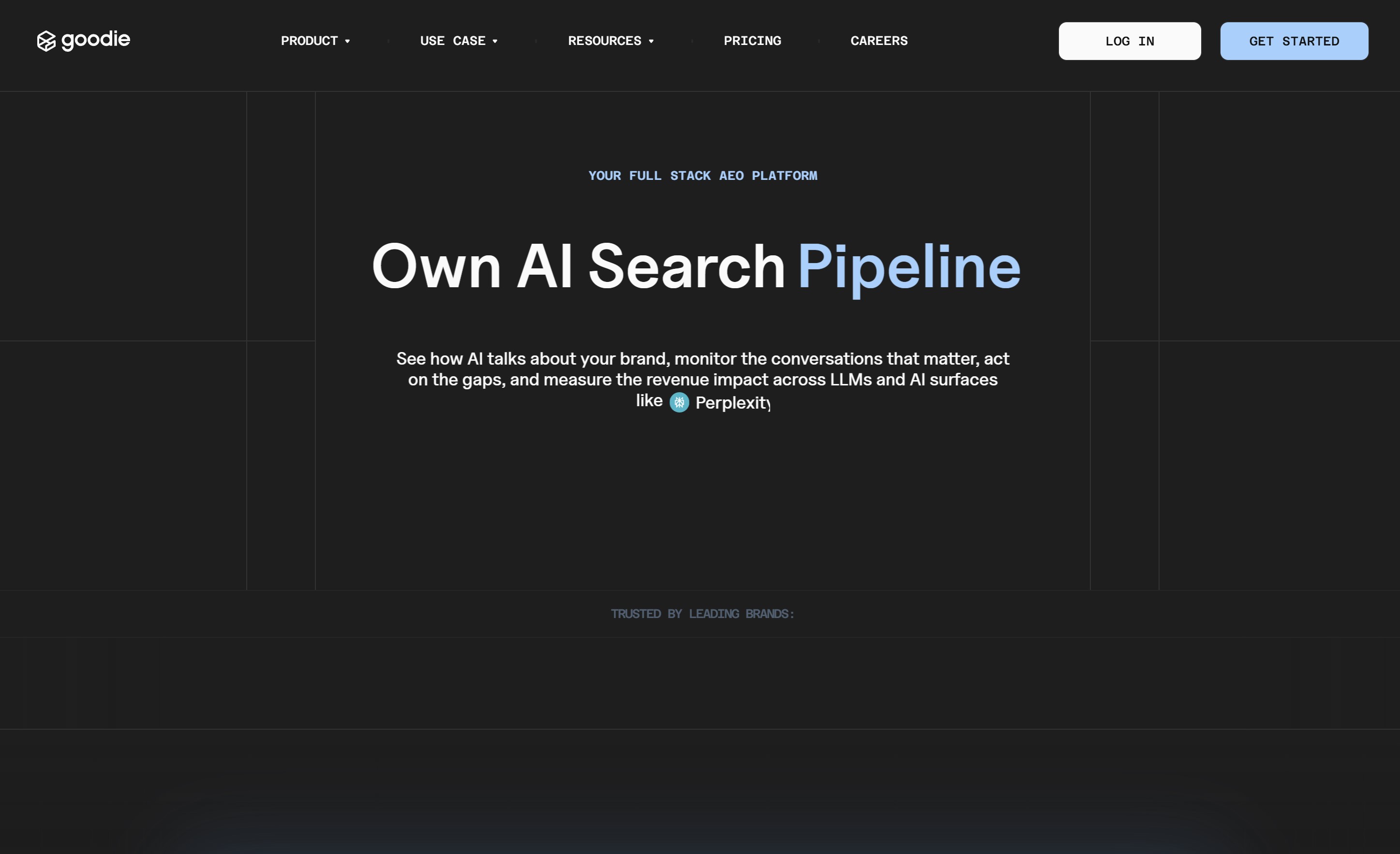
#11. Goodie AI
A dedicated AI visibility and citation intelligence platform built for teams that need to track brand presence across LLMs and act on what they find.
Key capabilities:
High-volume prompt testing across 11 LLMs and Tracks brand citations, mentions, sentiment, and competitive gaps across ChatGPT, Perplexity, Gemini, Copilot, and Google AI Overviews; delivers prioritized optimization recommendations.
Goodie AI covers more LLM environments than most tools in this space, running high-volume prompt testing to catch citation gaps and competitive blind spots that lower-volume monitoring tends to miss. Where many visibility trackers stop at reporting, Goodie AI pairs monitoring with an Optimization Hub that converts visibility data into specific, prioritized actions for SEO, content, and PR teams — so the data points somewhere useful.
For brands selling through AI agents, the Agentic Commerce Optimizer tracks product discoverability inside ChatGPT, Google AI Mode, and Amazon Rufus, extending coverage from informational visibility into commercial performance. Plans start at $399/month, with custom pricing for enterprise teams.
Why it matters in 2026:
- Tracks across 12 LLMs, more model coverage than most dedicated visibility platforms
- Citation intelligence identifies which external sources LLMs rely on, feeding directly into PR and content strategy
- Optimization Hub closes the gap between knowing you have a visibility problem and knowing what to do about it
- Agentic Commerce Optimizer is one of the few features in this market built specifically for AI shopping discoverability
Mid-market and enterprise SEO,
Read this article: : Top 6 AI-Powered Project Management Tools To Use In 2023
How to Choose the Right Tool for Your Business
Choosing an AI visibility tool isn't about grabbing the most popular name or the flashiest dashboard. It's about fit.
The right tool depends on how mature your team is, how complex your stack is, and what decisions you actually need to make from the data. Get this wrong, and you'll either drown in reports or end up with insights that look nice but change nothing.
Start with team size and maturity. Solo marketers and small teams usually need clarity over complexity. You don't need enterprise-grade intelligence if there's no one to act on it.
Simple visibility checks, clear scoring, and obvious next steps beat advanced features that never get used. Enterprise teams, on the other hand, need depth — multiple markets, competitor benchmarking, historical trends, and defensible reporting that leadership can trust.
Next comes stack compatibility.
If a tool doesn't plug into how you already work, adoption will die quietly. Some teams live in SEO platforms, others in analytics dashboards, others in revenue or content workflows. The best tool is the one that fits into your existing rhythm instead of forcing a complete process reset.
Then there's reporting depth versus simplicity — the trade-off most teams underestimate.
More data isn't always better. What matters is whether the insights help you answer real questions: Are we visible? Are we improving? Who's winning instead of us? If reports don't lead to decisions, they're just noise.
Things to sanity-check before you commit:
- Can this tool clearly show if AI mentions your brand or ignores it?
- Does it explain why visibility changes, not just that it did?
- Will non-technical stakeholders understand the output?
- Can you track trends over time, not just snapshots?
- Does it scale with you as AI search keeps evolving?
It's the one your team will actually use, trust, and act on — week after week.
Final Thoughts - AI Visibility Is the New Competitive Moat
Ignoring AI discovery isn't a short-term gamble — it's a long-term liability.
When AI systems decide which brands get mentioned, trusted, and reused in answers, they quietly shape market perception before buyers ever hit your website. If you're not visible there, you're not even being considered.
And the scary part? You won't see the damage until revenue starts leaking.
AI visibility compounds the same way SEO used to — but faster and with fewer second chances. The brands that track visibility early, run audits consistently, and improve deliberately don't just gain exposure.
They become defaults. Once AI systems repeatedly reference the same sources, breaking into that loop gets harder, more expensive, and slower. Waiting doesn't keep you safe — it locks you out.
This is why tracking alone isn't enough. You need to measure, audit, and act in a loop.
Tracking shows whether you exist.
Auditing explains why you're weak or strong. Optimization is how you turn insight into advantage. Skip any one of those steps and you're guessing while competitors are building momentum.
Here's the mindset shift businesses need to make in 2026:
AI visibility is no longer a marketing vanity metric.
It's not about impressions, clicks, or dashboards that look good in a slide deck.
It's a business signal.
It tells you whether AI understands your brand, trusts your expertise, and is willing to recommend you when decisions are being shaped.
That signal affects sales conversations, brand authority, and competitive positioning — whether marketing is ready for it or not.
The companies that treat AI visibility as core infrastructure will own the conversation.
Everyone else will be wondering why demand quietly dried up.
Most Popular Posts

Effective communication among team members is vital for the productivity and success of any organization. Surprisingly, 60% of companies lack a long-term internal communication strategy, which p...


Businesses thrive on communication for efficiency, productivity and accomplishment. When the right information is passed from the right designation in the organization, it promotes positivity an...

Categories
Blog
(3248)
Business Management
(399)
Employee Engagement
(237)
Digital Transformation
(224)
Growth
(151)
Intranets
(142)
Internal communications
(110)
Remote Work
(68)
Sales
(53)
Collaboration
(53)
Customer Experience
(33)
Culture
(30)
Project management
(30)
Knowledge Management
(29)
Leadership
(20)
Comparisons
(9)
News
(1)

Related Posts

Searching for "communal work spaces near me" but unsure which option will actually suit your growing business? By the end of this guide, you'll know how to compare offices to rent, spot extra costs and ask the right questions before committing....

Do you know what happens to your information after you share it with an AI assistant? That question sits at the heart of AI privacy—and it's easy to overlook when you're trying to finish a task. You paste in a customer email, upload a spr...

What would happen if your website moved successfully, but your customers and employees suddenly couldn't reach you by email? Email migration tools can help transfer your messages, but keeping business communication running takes more than copyi...

Does your team still message HR to ask where the holiday policy is? Employee self service should make everyday tasks easier, giving people a straightforward way to find answers, access documents and submit requests. But when policies are buried...

How quickly can a new partner go from signing an agreement to confidently working with your business? If the answer involves chasing documents, forwarding training links and answering the same questions repeatedly, your onboarding process may n...


Jill Romford
I am a digital nomad, lover of exploring new places and making friends.
I love to travel and I love the internet. I take pictures of my travels and share them on the internet using Instagram.
Traveler, entrepreneur, and community builder. I share my insights on digital marketing and social media while inspiring you to live your fullest life.
Ready to learn more? 👍
One platform to optimize, manage and track all of your teams. Your new digital workplace is a click away. 🚀
Free for 14 days, no credit card required.