Insight Blog
Agility’s perspectives on transforming the employee's experience throughout remote transformation using connected enterprise tools.
28 minutes reading time
(5565 words)
7 Facebook Metrics Every Brand Needs to Track for Audience Behavior

7 Facebook Metrics Every Brand Needs to Track for Audience Behavior
Learn the Facebook metrics every brand must track to understand audience behavior, improve engagement, and optimize social media marketing performance.
7 Facebook Metrics Every Brand Needs to Track for Audience Behavior

If you want your Facebook marketing strategy to actually deliver results, you need to understand how your audience behaves on the platform. This is where Facebook analytics becomes essential.
By analyzing how people interact with your content, brands can see which posts generate engagement, when audiences are most active, and how users respond to campaigns or promotions.
Many businesses still focus on vanity metrics like follower counts, but those numbers rarely show the full picture of performance.
Instead, analyzing audience interactions—such as comments, shares, click activity, and content engagement—provides a much clearer understanding of what actually resonates with your audience and influences their decisions.
User behavior data also reveals why Facebook remains such a powerful marketing channel.
According to Pew Research, 93% of Facebook users primarily use the platform to keep up with friends and family, but their activity goes far beyond social interaction.
The study found that 37% of users also look at product reviews or recommendations, 37% use Facebook to access news, and 36% follow sports or pop culture updates.
37%
of Facebook users
According to Pew Research, 37% of Facebook users look at product reviews or recommendations on the platform, while another 37% use Facebook to access news and 36% follow sports or pop culture updates.
Source: Pew Research Center
These behaviors highlight how Facebook has evolved into a platform where people discover information, evaluate products, and engage with brands.
When marketers interpret these insights correctly, they can refine their content strategy, improve audience targeting, and create campaigns that generate stronger engagement and conversions.
Why Audience Behavior Matters in Facebook Marketing
Understanding audience behavior is one of the most important factors in building a successful Facebook marketing strategy.
While metrics like follower count or page likes can look impressive, they rarely tell the full story of how people actually interact with your brand.
By analyzing how users engage with your content, marketers can gain deeper insights into what resonates with their audience and what drives meaningful interaction.

Facebook's Algorithm Rewards Engagement
Facebook's algorithm is designed to prioritize content that generates interaction.
Posts that receive comments, reactions, shares, or link clicks signal to the platform that the content is valuable and relevant to users. As a result, highly engaging posts are more likely to appear in news feeds and reach a wider audience.
This means that brands focusing on audience engagement metrics—rather than just publishing content—are far more likely to improve visibility and organic reach.
When people actively interact with your content, Facebook interprets this as a sign of quality and pushes that content to more users.
Audience Behavior Data Improves Targeting
Tracking audience behavior also helps marketers understand who is interacting with their content and why.
Insights such as age, location, interests, and content preferences allow businesses to refine their targeting strategies and deliver more relevant messaging.
For example, if data shows that a particular audience segment consistently engages with video content, brands can adjust their strategy to produce more video-based posts.
This approach leads to higher engagement and more efficient advertising campaigns.
Audience Insights Connect Directly to Marketing ROI
Audience behavior analytics also play a key role in measuring the return on investment (ROI) of Facebook marketing efforts.
By analyzing how users interact with posts, links, and ads, brands can determine which types of content drive traffic, leads, or convers
ions.
According to HubSpot, engagement on social media significantly influences brand trust and purchasing decisions. When users consistently interact with a brand's content, they are more likely to remember the brand and eventually convert into customers.
Brands Must Look Beyond Likes and Followers
One of the biggest mistakes companies make is focusing only on vanity metrics like page likes or follower growth.
While these numbers can indicate popularity, they do not necessarily reflect how effectively your content is performing.
Modern Facebook marketing requires tracking deeper engagement metrics such as click-through rates, shares, comments, and audience retention.
These indicators reveal how users actually behave when they encounter your content.
This level of insight is essential because Facebook remains one of the largest digital platforms in the world.
With over 3 billion monthly active users globally, the platform offers enormous opportunities for brands that understand how to interpret and act on audience behavior data.
By focusing on meaningful engagement and behavioral insights, businesses can create content strategies that not only attract attention but also drive real business results.
Key Takeaways
- Tracking Facebook metrics helps brands understand audience behavior, content performance, and how users interact with posts, videos, and campaigns.
- Key metrics such as reach, impressions, engagement rate, and click-through rate reveal how visible and effective your Facebook content is.
- Audience insights including demographics, activity patterns, and interests help marketers refine targeting and create more relevant content.
- Metrics like referral traffic and video engagement show how Facebook contributes to website visits, content consumption, and marketing ROI.
- Using tools such as Meta Business Suite, Facebook Insights, and Google Analytics allows brands to turn data into actionable marketing strategies.
- By analyzing performance regularly, businesses can optimize posting schedules, improve engagement, and create campaigns that deliver measurable results.
What to consider before tracking Facebook metrics
Before jumping into Facebook analytics, it's important to approach tracking with a clear purpose.
Many marketers fall into the trap of measuring every available metric, but not all data provides meaningful insight. Instead of tracking everything, pause and ask yourself a simple question: What decision will this data help me make?
The Facebook metrics you monitor should always align with your marketing goals and key performance indicators (KPIs). This makes it much easier to understand whether your social media efforts are delivering real business value.
For example, if your goal is to increase brand awareness, metrics like reach and impressions will give you the clearest picture of how widely your content is being seen.
On the other hand, if your focus is audience targeting or engagement, then metrics such as engagement rate, demographic insights, and content interactions will be far more useful.
Trying to track too many metrics without a defined objective can quickly lead to data overload, making it harder to identify what actually matters. Instead, focus on the Facebook metrics that directly support your strategy and help measure progress toward your goals.
When you identify the most important Facebook KPIs for your brand, those metrics become a guiding framework for your marketing strategy. With a focused approach, you avoid analysis paralysis and gain clearer, actionable insights that help improve campaign performance and drive meaningful results.
Related Facebook Workplace & Meta Platform Guides
If you're analyzing Facebook metrics or exploring how Meta platforms impact workplace communication and company culture, these articles explore performance systems, platform alternatives, and the future of enterprise collaboration tools.
7 Facebook Metrics Every Brand Should Track
Understanding the right Facebook metrics helps marketers measure performance, improve campaigns, and better understand how audiences interact with content.
While there are dozens of data points available in Facebook Insights, a few core social media analytics metrics reveal the most about content visibility, engagement, and overall marketing effectiveness.
Tracking these key metrics allows brands to identify what content performs best, how posts are distributed across the platform, and how audiences respond to different types of updates.
#1. Reach and Impressions
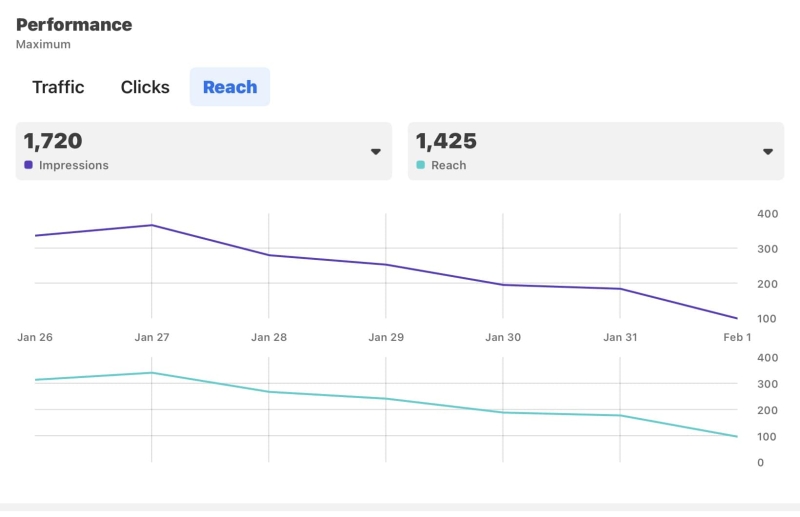
Reach and impressions are two of the most important Facebook performance metrics used to understand how widely your content is being seen.
- Reach measures the number of unique users who saw your post.
- Impressions measure the total number of times your content was displayed, including multiple views from the same person.
For example, if one user sees your post three times in their feed, that counts as one reach but three impressions.
Why it matters
These metrics provide valuable insights into content visibility and distribution. They help marketers understand whether Facebook's algorithm is showing their content to a broad audience or limiting its exposure.
Monitoring reach and impressions also helps brands evaluate how different content formats—such as videos, images, or links—perform in terms of visibility. If reach is low but impressions are high, it may indicate that the same users are seeing the content multiple times rather than new audiences discovering it.
Analyzing these metrics regularly helps brands refine their posting strategy and improve social media reach analytics, ensuring content is reaching the right people at the right time.
Where to find it
Within Meta Business Suite, go to:
Insights → Content → Overview.
Here you can view Reach and Impressions for each post, helping you understand how widely your content is being distributed and which posts are generating the most visibility.
#2. Engagement Rate
Engagement rate tracks how actively users interact with your content. It includes actions such as likes, comments, shares, reactions, and saves, which reflect how audiences respond to your posts rather than simply viewing them.
Why it matters
Engagement is one of the most valuable social media engagement metrics because it shows whether your content actually resonates with your audience. A high engagement rate usually means your messaging, visuals, and topics are relevant and interesting to your followers.
It also influences how Facebook distributes content. Posts that receive strong engagement signals are more likely to be prioritized by the platform's algorithm, increasing visibility and helping your content reach a larger audience organically.
Tracking Facebook engagement rate over time helps brands identify which content formats—such as videos, polls, carousels, or images—generate the most interaction. These insights allow marketers to refine their content strategy and consistently publish posts that encourage conversation and sharing.
Formula
Engagement Rate = Total Engagement ÷ Total Reach × 100
Where to find it
Within Meta Business Suite, navigate to:
Insights → Content → Posts and Stories.
Here you can view metrics such as reactions, comments, shares, and overall engagement for each post. By comparing total engagement against reach, you can calculate your engagement rate and identify which posts perform best.
By monitoring these metrics regularly, brands can improve content performance and learn how to increase engagement on Facebook by focusing on the types of posts their audience interacts with most.
#3. Click-Through Rate (CTR)
Click-Through Rate (CTR) measures the percentage of users who click on a link in your Facebook post, ad, or call-to-action after seeing it. It is one of the most useful Facebook ad performance metrics because it shows whether your content motivates people to take the next step, such as visiting a website, reading an article, or viewing a product page.
Why it matters
CTR is a strong indicator of how effective your messaging, visuals, and call-to-action are. If a post reaches a large audience but receives very few clicks, it may suggest that the content is not compelling enough or that the call-to-action is unclear.
Tracking social media click through rate also helps marketers understand how well their Facebook content supports broader marketing goals such as driving website traffic, generating leads, or promoting campaigns. A higher CTR typically indicates that the content is relevant to the audience and successfully encourages interaction.
Brands often compare their performance against a Facebook CTR benchmark to evaluate whether their campaigns are performing above or below industry averages. Monitoring this metric over time allows marketers to test different headlines, visuals, and calls-to-action to improve campaign performance and generate more meaningful traffic from Facebook.
Where to find it
Within Meta Business Suite, navigate to:
Insights → Content → Posts and Stories, then review the Link Clicks and CTR metrics for each post or campaign.
For advertising campaigns, you can also find CTR in Meta Ads Manager by selecting your campaign and adding the CTR (Link Click-Through Rate) column in the performance metrics view.
#4. Audience Demographics
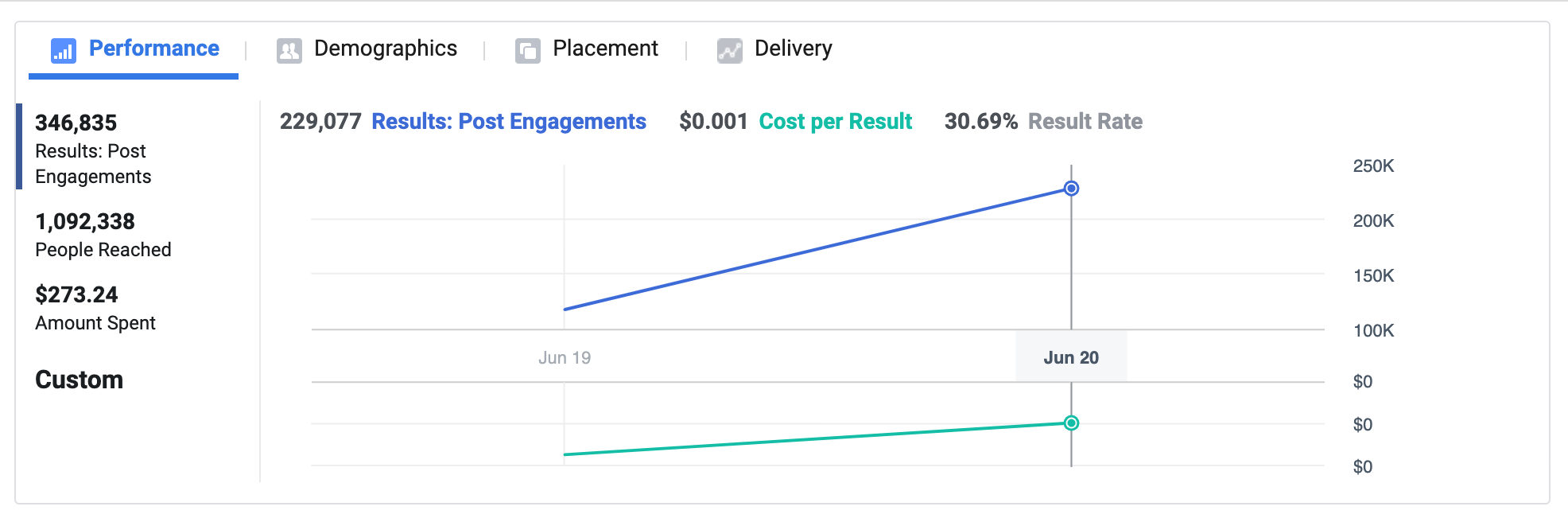
Audience demographics provide insight into who is interacting with your Facebook content. These metrics help marketers understand the characteristics of their audience, including:
- Age
- Location
- Gender
- Language
- Interests
This information is part of Facebook audience insights, which allows businesses to see whether their content is reaching the intended audience.
Why it matters
Understanding your audience demographics is essential for improving social media audience analytics and refining your marketing strategy.
When brands know who their audience is, they can create content that better matches user interests, cultural preferences, and regional trends.
For example, if your audience data shows strong engagement from a particular age group or location, you can adjust your content style, posting times, or campaigns to better serve that audience.
These insights also help improve audience behavior analytics, allowing marketers to tailor messaging and advertising campaigns for specific segments.
Where to find it
Within Meta Business Suite, navigate to:
Insights → Audience → Demographics.
Here you can view breakdowns of your followers and engaged users by age, gender, location, and language, helping you better understand who is interacting with your Facebook page and content.
#5. Video Performance Metrics
Video performance metrics help marketers understand how audiences interact with video content on Facebook.
Since video posts often generate higher engagement than standard text or image posts, tracking video engagement metrics is essential for evaluating content effectiveness.
Key metrics include:
- Video views – The number of times users watch your video for at least a few seconds.
- Watch time – The total amount of time people spend watching your video content.
- Completion rate – The percentage of viewers who watch the video from start to finish.
- Audience retention – Shows where viewers drop off during the video.
These metrics are part of Facebook video analytics, which provide deeper insight into how audiences consume video content.
Why it matters
Video content is one of the most engaging formats on Facebook, making it a powerful tool for capturing attention and communicating messages quickly.
By analyzing Facebook watch time and audience retention, marketers can identify which sections of a video hold viewers' interest and which parts cause viewers to stop watching.
For example, if many viewers drop off in the first few seconds, it may indicate that the opening of the video needs to be more engaging. On the other hand, strong completion rates suggest that the content is relevant and valuable to your audience.
Understanding these patterns helps brands create more effective video strategies that increase engagement, improve visibility in the Facebook algorithm, and encourage viewers to interact with content.
Where to find it
Within Meta Business Suite, navigate to:
Insights → Content → Videos.
Here you can review video views, watch time, audience retention, and other Facebook video analytics, helping you understand how your video content performs and where improvements can be made.
#6. Post Timing and Activity Patterns
Post timing and activity patterns show when your audience is most active on Facebook.
This metric helps marketers identify the specific days and times when followers are online, scrolling their feeds, and more likely to engage with content.
Understanding these Facebook audience activity insights allows brands to schedule posts when their audience is most likely to see and interact with them.
Why it matters
Posting content at the right time can significantly improve visibility and engagement.
If a post goes live when your audience is inactive, it may quickly get buried in the feed before users have a chance to interact with it.
By analyzing activity patterns, marketers can build a more effective social media posting strategy and publish content during peak engagement periods. This helps increase reach, encourage more interactions, and improve overall content performance.
Many marketers also use this data to determine the best time to post on Facebook, which can vary depending on the audience's location, industry, and daily habits.
Where to find it
Within Meta Business Suite, navigate to:
Insights → Audience → When Your Audience Is Online.
This section shows the days and times when your followers are most active, helping you schedule posts at optimal times for higher engagement and better content visibility.
#7. Facebook Referral Traffic
Facebook referral traffic tracks the number of users who visit your website directly from Facebook. This includes people who click links in your posts, ads, or page content and then land on pages within your website.
For brands that regularly share blog articles, product pages, landing pages, or campaign links, this is one of the most valuable Facebook marketing metrics to monitor because it shows how effectively your social media content drives users to your website.
Why it matters
Tracking referral traffic helps marketers understand whether their Facebook content is successfully driving external traffic and supporting broader marketing goals such as lead generation, product discovery, or content consumption.
If you see strong referral traffic from Facebook, it usually means your posts are encouraging users to click through and learn more. This is particularly important for businesses running content marketing campaigns, promotional posts, or Facebook ads that link to landing pages.
Monitoring referral traffic also helps evaluate which types of posts—such as articles, product announcements, or promotions—generate the most interest. These insights allow marketers to refine their content strategy and focus on posts that consistently drive visitors to their website.
Where to find it
Facebook referral traffic is typically measured using Google Analytics.
Navigate to:
Reports → Acquisition → Traffic Acquisition, then look for Facebook or social traffic sources.
This section shows how many visitors arrived from Facebook and which pages they visited. By analyzing these reports, marketers can better understand how Facebook contributes to website traffic, campaign performance, and overall digital marketing results.
How Brands Use Facebook Metrics to Improve Strategy
Tracking Facebook metrics is only useful if brands actually use the data to improve their marketing strategy. By analyzing performance data regularly, businesses can identify patterns in audience behavior, engagement, and content performance, allowing them to refine campaigns and make smarter decisions.
Instead of relying on guesswork, marketers can use Facebook insights to determine what type of content works best, when audiences are most active, and which campaigns drive the strongest results.
One of the most practical uses of Facebook metrics is identifying which content formats generate the most engagement. By comparing performance across posts—such as images, videos, polls, or link posts—brands can quickly see what their audience prefers.
For example, if video posts consistently receive higher engagement than static images, marketers can prioritize video content in future campaigns. Over time, this data-driven approach helps brands publish more content that audiences are likely to interact with.
Audience insights and engagement data also help marketers refine their Facebook advertising targeting. By analyzing demographic information, interests, and behavior patterns, businesses can identify the groups that respond best to their content.
For instance, if a campaign performs well among a specific age group or location, marketers can adjust their ad targeting to focus more on those segments. This improves campaign efficiency and increases the likelihood of generating conversions.
Another powerful strategy is reviewing past posts to identify top-performing content. Metrics such as engagement rate, reach, and link clicks reveal which posts generated the most attention.
Brands often analyze these high-performing posts to understand what made them successful—whether it was the topic, visual style, caption, or posting time. These insights can then be used to replicate successful content patterns in future campaigns.
Facebook metrics also help brands determine the best time to publish content. By reviewing audience activity patterns and engagement levels, marketers can identify the days and times when followers are most active.
Many brands run small experiments by posting similar content at different times to compare performance. Over time, this testing process helps refine a social media posting schedule that maximizes reach and engagement.
Real-World Examples of Facebook Metrics in Action
Across industries, companies use Facebook metrics to continuously improve their marketing strategies.
- Retail brands often analyze engagement and referral traffic to optimize product announcements and promotional campaigns.
- Media companies rely on video analytics and audience retention data to refine storytelling and increase viewer engagement.
- SaaS companies frequently track link clicks and referral traffic to measure how Facebook content drives visitors to blog articles, product pages, or landing pages.
By consistently analyzing these insights, brands can transform Facebook data into actionable strategies that improve engagement, increase traffic, and deliver stronger marketing results.
Common Mistakes Brands Make When Tracking Facebook Metrics
Tracking Facebook metrics can provide powerful insights into audience behavior and campaign performance, but many brands still make mistakes that prevent them from getting real value from their data.
Understanding these common issues can help marketers avoid misleading conclusions and build a more effective social media strategy.
Focusing Only on Follower Growth
One of the most common mistakes is focusing primarily on follower growth.
While gaining new followers can indicate brand awareness, it does not necessarily mean your audience is engaged with your content.
A page may have thousands of followers but still receive very little interaction on posts.
Instead of relying solely on follower counts, brands should monitor engagement metrics such as comments, reactions, and shares to understand how audiences are actually interacting with their content.
Ignoring Engagement Quality
Not all engagement is equal. Some brands look only at the total number of interactions without evaluating the quality of engagement.
For example, a post with many reactions but very few comments or shares may indicate passive interaction rather than meaningful engagement.
Comments, discussions, and shares often signal stronger interest because users are actively participating in the conversation.
Evaluating engagement quality helps marketers understand whether their content is truly resonating with audiences.
Not Tracking Conversions
Another mistake is failing to track conversions from Facebook traffic.
Engagement and reach can be useful indicators of visibility, but they do not always translate into business results.
Brands should connect their Facebook activity to outcomes such as website visits, form submissions, product purchases, or newsletter sign-ups.
Monitoring these conversion-related metrics helps marketers determine whether their social media efforts are contributing to real business goals.
Misinterpreting Reach vs Impressions
Many marketers misunderstand the difference between reach and impressions, which can lead to incorrect conclusions about content performance.
Reach measures the number of unique users who saw a post, while impressions represent the total number of times the content was displayed.
If impressions are high but reach is low, it may mean that the same users are seeing the content multiple times rather than new audiences discovering it.
Understanding this distinction helps marketers better interpret how widely their content is being distributed.
Not Comparing Metrics Over Time
Tracking metrics in isolation can make it difficult to identify meaningful trends.
A single post may perform well or poorly for many reasons, including timing, topic, or external events.
Brands should compare Facebook metrics over longer periods of time, such as weeks or months, to identify patterns in engagement, reach, and audience behavior.
This historical perspective helps marketers recognize which strategies consistently perform well and which ones need improvement.
By avoiding these common mistakes, brands can turn Facebook data into clearer insights that support better marketing decisions and more effective campaigns.
Tools for Tracking Facebook Audience Behavior
To fully understand how users interact with your content, brands need the right tools to analyze Facebook audience behavior and performance metrics.
While Facebook provides its own built-in analytics, many businesses combine multiple platforms to gain a deeper view of engagement, traffic, and campaign performance.
Using the right mix of analytics tools helps marketers track everything from content engagement and reach to website traffic and audience demographics, allowing teams to make more informed decisions about their social media strategy.
Facebook Insights
Facebook Insights is the built-in analytics tool available for all Facebook Pages. It provides a detailed overview of how users interact with your content and helps marketers understand audience behavior patterns.
With Facebook Insights, brands can track metrics such as:
- Post reach and impressions
- Engagement (likes, comments, and shares)
- Follower growth
- Audience demographics
- Video performance metrics
This tool is particularly useful for identifying which types of posts generate the most engagement and which content resonates best with your audience.
Meta Business Suite
Meta Business Suite expands on Facebook Insights by offering a centralized dashboard where businesses can manage both Facebook and Instagram analytics.
It allows marketers to monitor performance across multiple posts, campaigns, and audience segments in one place.
Key insights available in Meta Business Suite include:
- Content performance and engagement trends
- Audience activity patterns and peak online times
- Page growth and follower demographics
- Campaign and post-level analytics
Because it provides a broader overview of content performance, Meta Business Suite is often used to plan and optimize ongoing social media strategies.
Google Analytics
While Facebook tools show how users interact with content on the platform, Google Analytics helps marketers understand what happens after someone clicks a link and visits their website.
By tracking referral traffic from Facebook, brands can analyze how social media contributes to website performance.
Google Analytics can help businesses measure:
- Website visits originating from Facebook
- User behavior after clicking a post or ad
- Landing page performance
- Conversion actions such as form submissions or purchases
This makes it easier to evaluate how Facebook supports lead generation, sales, and overall digital marketing goals.
Social Media Analytics Platforms
Many companies also use third-party social media analytics tools to gain more advanced insights and automate reporting.
These platforms often combine data from multiple social networks, making it easier to compare performance across channels.
Common capabilities include:
- Cross-platform engagement tracking
- Campaign performance reporting
- Competitor analysis
- Automated analytics dashboards
- Content performance comparisons
These tools help marketing teams identify trends faster and optimize campaigns more efficiently.
Collaborating on Insights Across Teams
Tracking Facebook metrics is only part of the process.
Marketing teams also need a way to share insights, discuss performance, and coordinate strategies across departments.
Integrated digital workplace platforms such as AgilityPortal can support this collaboration by bringing marketing data, campaign discussions, and internal communication into one centralized environment.
For example, teams can:
- Share performance reports and campaign updates
- Discuss social media results with marketing or leadership teams
- Store campaign assets and analytics documents in a shared workspace
- Coordinate marketing strategies across distributed teams
By combining analytics tools with collaborative platforms, organizations can turn Facebook audience insights into actionable strategies that improve engagement, marketing performance, and overall business outcomes.
How to Turn Facebook Metrics into Actionable Insights
Collecting data from Facebook is only the first step.
The real value comes from turning those numbers into practical decisions that improve your marketing strategy.
By consistently reviewing performance metrics and linking them to clear goals, brands can identify what works, what doesn't, and where to optimize future campaigns.
Instead of simply monitoring dashboards, marketers should use Facebook data to guide content creation, audience targeting, and campaign improvements.
#1. Define Clear Marketing Goals
Before analyzing any metrics, start by identifying the main objective of your Facebook strategy. Different goals require different performance indicators.
For example:
- Brand awareness → focus on reach and impressions
- Audience engagement → track reactions, comments, and shares
- Website traffic → monitor link clicks and referral traffic
- Lead generation or sales → track conversions and landing page performance
When your goals are clearly defined, it becomes much easier to identify which metrics actually matter.
#2. Identify the Right Metrics to Track
Once your goals are established, choose the metrics that best reflect progress toward those objectives. Tracking too many metrics can lead to confusion and unnecessary complexity.
Some of the most useful Facebook metrics include:
- Engagement rate
- Reach and impressions
- Click-through rate (CTR)
- Audience demographics
- Video watch time and retention
- Referral traffic to your website
Focusing on the right metrics ensures your data remains relevant and actionable rather than overwhelming.
#3. Analyze Audience Behavior Patterns
Next, look for patterns in how users interact with your content.
Understanding audience behavior trends can reveal important insights about your followers.
For example, you may discover that:
- Video posts generate significantly more engagement than images
- Certain topics consistently receive higher interaction
- Specific audience segments respond better to certain types of content
- Engagement increases when posts are published at particular times
Identifying these patterns allows marketers to better align content with audience preferences.
#4. Test Different Content Strategies
Successful social media strategies rely heavily on experimentation.
Once you understand your audience behavior, you can begin testing different approaches to see what improves performance.
Examples of content experiments include:
- Testing different post formats such as videos, carousels, or polls
- Trying new headlines or captions
- Changing posting schedules
- Experimenting with different visual styles or storytelling approaches
Comparing results from these tests helps marketers identify which strategies produce the strongest engagement and reach.
#5. Measure Results and Continuously Refine Campaigns
The final step is to regularly review performance data and refine your strategy based on results.
Social media trends and audience behaviors change over time, so ongoing analysis is essential.
By monitoring key Facebook metrics and adjusting campaigns accordingly, brands can:
- Improve content performance
- Increase engagement rates
- Drive more website traffic
- Achieve stronger marketing ROI
Over time, this continuous improvement process helps transform Facebook analytics into a reliable framework for building more effective social media campaigns.
Wrapping up
Understanding the right Facebook metrics is essential for brands that want to move beyond guesswork and build a data-driven marketing strategy.
By analyzing how people interact with posts, videos, and links, marketers gain a clearer view of audience behavior and what type of content truly resonates with their followers.
Rather than focusing on vanity metrics such as follower counts, successful brands pay closer attention to meaningful performance indicators.
Metrics like engagement rate, reach, click-through rate, audience demographics, and referral traffic reveal how users respond to content and whether campaigns are effectively capturing attention.
When businesses consistently monitor these insights, they can make smarter decisions about their content strategy, posting schedules, and campaign targeting.
Over time, this approach helps improve engagement, increase website traffic, and strengthen overall marketing performance.
Ultimately, tracking the right Facebook data allows brands to turn social media activity into measurable results, ensuring their marketing efforts contribute to real business growth rather than simply generating surface-level engagement.
AI Summary
- Tracking the right Facebook metrics helps brands understand audience behavior, content performance, and how users engage with posts, videos, and links across the platform.
- Key data points such as reach, impressions, engagement rate, click-through rate, and referral traffic reveal whether your content is attracting attention and driving meaningful action.
- Audience insights like demographics, online activity patterns, and content preferences help marketers refine targeting and publish content when followers are most likely to engage.
- Video analytics, link clicks, and website referral traffic provide a clearer picture of how Facebook supports broader goals such as brand awareness, traffic generation, and conversions.
- Tools like Meta Business Suite, Facebook Insights, and Google Analytics make it easier to measure performance, compare post results, and identify what content resonates most with your audience.
- Brands that review Facebook analytics consistently can make smarter decisions, improve engagement, and turn social media activity into measurable marketing results.
Most Popular Posts

Effective communication among team members is vital for the productivity and success of any organization. Surprisingly, 60% of companies lack a long-term internal communication strategy, which p...


Businesses thrive on communication for efficiency, productivity and accomplishment. When the right information is passed from the right designation in the organization, it promotes positivity an...

Categories
Blog
(3196)
Business Management
(395)
Employee Engagement
(235)
Digital Transformation
(218)
Growth
(150)
Intranets
(141)
Internal communications
(106)
Remote Work
(68)
Sales
(53)
Collaboration
(52)
Customer Experience
(32)
Culture
(30)
Knowledge Management
(29)
Project management
(29)
Leadership
(20)
Comparisons
(9)
News
(1)

Related Posts

Could AI produce your next workplace video faster—and still deliver a message your employees can trust? As more businesses use video for onboarding, training and leadership updates, one question keeps coming up: will AI replace video editors in...

Could the best machine learning systems help your employees spend less time sorting requests, updating spreadsheets and chasing information—and more time doing useful work? That's the opportunity, but finding the right system starts with knowin...

What would happen to your team's work and customer information if an employee's MacBook disappeared today? If you're wondering how to protect your Mac physically, the answer goes beyond buying a case. A MacBook used at home, on a train or in a ...

Welcome to AgilityPortal's guide to the best VPN for Remote teams. How do you give employees secure access to company systems when they work from home, the office and everywhere in between? It's a question more businesses need to answer: 28% of worki...

Have you ever left a meeting thinking everyone agreed on the next step, only to discover a week later that each person remembered something different? Open source meeting transcription can help teams keep a searchable record of the conversation...


Jill Romford
I am a digital nomad, lover of exploring new places and making friends.
I love to travel and I love the internet. I take pictures of my travels and share them on the internet using Instagram.
Traveler, entrepreneur, and community builder. I share my insights on digital marketing and social media while inspiring you to live your fullest life.
Ready to learn more? 👍
One platform to optimize, manage and track all of your teams. Your new digital workplace is a click away. 🚀
Free for 14 days, no credit card required.