
Insight Blog
Agility’s perspectives on transforming the employee's experience throughout remote transformation using connected enterprise tools.
43 minutes reading time
(8564 words)
20 Hazards in the Workplace - How to Identify Workplace Hazards and Risks Before They Cause Harm

20 Hazards in the Workplace - How to Identify Workplace Hazards and Risks Before They Cause Harm
Learn how to identify 20 hazards in the workplace, assess workplace hazards and risks, and use practical controls to protect employees and operations.
20 Hazards in the Workplace - How to Identify Workplace Hazards and Risks Before They Cause Harm

Most workplace incidents do not start with one dramatic failure.
They usually begin with something ordinary: a blocked walkway, rushed manual handling, a poorly set-up workstation, unclear procedures, or a safety concern that nobody reported.
Understanding the 20 hazards in the workplace is a practical starting point for protecting people, preventing disruption and managing workplace hazards and risks before they become incidents.
Whether your team works in an office, warehouse, shop, construction site, healthcare setting or from home, every workplace has conditions that can cause harm if they are ignored.
The scale of the issue is hard to overlook.
In places like Great Britain, an estimated 1.9 million people suffered from work-related ill health in 2024/25, while 680,000 sustained an injury at work.
Together, work-related illness and injury led to 40.1 million working days lost.
1.9M
people affected
In Great Britain, an estimated 1.9 million working people suffered from work-related ill health in 2024/25, while 680,000 sustained an injury at work.
Source: Health and Safety Executive · Great Britain 2024/25
That is why health and safety cannot be treated as a compliance document that gets read once and forgotten.
It affects employees' wellbeing, absence levels, morale, productivity and the organisation's ability to keep operating smoothly.
The good news is that many risks can be reduced when managers and employees spot hazards early, communicate clearly and take practical action.
In this guide, we will explain the difference between a hazard and a risk, walk through 20 common workplace hazards, and share practical controls, accountable roles and a straightforward risk-assessment checklist.
Key Takeaways
- Understanding the 20 hazards in the workplace helps organisations prevent injuries, ill health, absence and avoidable operational disruption.
- A hazard is something that could cause harm, while risk considers how likely that harm is and how serious the outcome could be.
- Common risks include slips and trips, manual handling, unsafe equipment, hazardous substances, stress, fatigue and poor workstation setup.
- Employees, contractors, managers and leaders all contribute to safety, but employers remain responsible for managing workplace risks.
- Remote and hybrid workers need the same practical health and safety support, including suitable workstation guidance, wellbeing support and clear reporting routes.
- The strongest approach is simple: identify hazards early, involve employees, put controls in place and review them whenever work changes.
Workplace hazards and risks: what is the difference?
The terms hazard and risk are often used as if they mean the same thing. They are closely connected, but they are not identical — and understanding the difference makes workplace safety much easier to manage.
A hazard is anything that could cause injury, illness or harm. It could be a slippery floor, an unguarded machine, a cleaning chemical, a heavy box, excessive workload or an aggressive customer.
A risk is the chance that the hazard will actually cause harm, combined with how serious that harm could be. In other words, a hazard is the potential danger; risk is the likelihood and possible impact of someone being exposed to it.
A control measure is the practical action used to remove the hazard or make harm less likely. This could mean repairing equipment, changing a process, providing training, separating pedestrians from vehicles, improving ventilation or supplying suitable protective equipment.
Here is a simple example.
A loose cable across a walkway is the hazard. The risk is that someone trips over it, falls and injures themselves. Taping it down may reduce the risk temporarily, but moving or securing the cable properly is usually the better control.
A workplace can contain a hazard without an accident happening immediately.

Workplace hazards and risks: what is the difference?
That does not mean it is safe.
The level of risk changes depending on how often people are exposed, the safeguards already in place, the task being carried out and who may be affected. New starters, pregnant workers, people with disabilities, contractors and lone workers may need additional consideration.
For chemical risks, keeping information current matters just as much as having it available.
In Australia, workplaces that use, handle or store hazardous chemicals must keep safety data sheets (SDS) and maintain an accessible hazardous chemical register that includes the current SDS for each listed chemical.
A search tool such as SDS Australia can help teams find and review the current safety data sheets Australian workplaces are required to keep, making it easier to identify outdated chemical information, missing documentation or controls that no longer reflect what is being used on site.Safe Work Australia also states that manufacturers and importers must review SDSs at least every five years
Why everyday workplace hazards deserve more attention
Modern organisations need to move quickly.
Teams work across offices, homes, sites and customer locations.
Rotas change, new tools are introduced, workloads rise and temporary staff may need to get up to speed fast. That flexibility can help a business operate well, but it can also make ordinary safety risks easier to miss.
A home workstation may be used every day without a proper ergonomic check. A new starter may not know where to find the latest manual-handling guidance.
A contractor may be unfamiliar with site traffic routes. Even a small change — such as moving stock, replacing equipment, changing a cleaning product or rearranging desks — can create a new hazard if nobody pauses to assess it.
Near misses are especially important.
hey are often treated as lucky escapes rather than useful warnings. But a reported near miss can reveal a blocked emergency exit, confusing process, equipment fault or unsafe shortcut before somebody is injured.
HSE advises employers to review controls when workers identify problems, or when accidents and near misses show that something is not working as intended.
£22.9bn
annual cost
HSE estimates that workplace injuries and ill health from current working conditions cost Great Britain £22.9 billion in 2023/24. The impact includes absence, disrupted shifts, lost productivity and avoidable pressure on managers.
Source: Health and Safety Executive · Great Britain 2023/24
The cost of ignoring these warning signs is not limited to an accident report. It can mean absence, disrupted shifts, lost productivity, lower employee trust and avoidable pressure on managers.
The practical answer is not to create more paperwork. It is to make safety part of normal work: regular checks, clear reporting routes, accessible procedures, quick follow-up and honest conversations with the people doing the job.
When employees can raise a concern easily and see that it is taken seriously, small hazards are far less likely to become serious incidents.
20 hazards in the workplace you should be aware of
Not every hazard on this list will apply to every organisation.
A construction site, warehouse, office, retail store and remote team all create different risks. Use these examples as a prompt for a workplace-specific assessment — not as a risk assessment you can copy and file away.
The important question is always: what could cause harm here, who could be affected, and what practical action will reduce the risk?
| # | Workplace hazard | What it can look like | Practical control |
| 1 | Slips, trips and falls on the same level | Wet floors, trailing cables, uneven flooring, cluttered walkways | Keep routes clear, deal with spills quickly and repair damaged surfaces |
| 2 | Falls from height | Ladders, mezzanines, roof access or work platforms | Plan the work, use suitable access equipment and ensure people are trained |
| 3 | Manual handling | Lifting stock, moving furniture, carrying deliveries or repetitive loading | Use lifting aids, redesign tasks and train employees in safer handling methods |
| 4 | Moving vehicles | Forklifts, delivery vans, reversing areas and loading bays | Separate pedestrians and vehicles, set speed rules and improve visibility |
| 5 | Machinery and work equipment | Missing guards, faulty tools or unsafe maintenance | Inspect equipment, maintain guards and use safe isolation procedures |
| 6 | Electricity | Damaged leads, overloaded sockets, exposed wiring or unsuitable equipment | Carry out visual checks, arrange competent repairs and avoid overloaded circuits |
| 7 | Fire and explosion | Flammable materials, blocked exits, faulty electrics or poor storage | Complete fire assessments, control storage and practise emergency procedures |
| 8 | Hazardous substances | Cleaning chemicals, dust, solvents, fumes or gases | Complete COSHH assessments, label products, improve ventilation and provide training |
| 9 | Asbestos and harmful dust | Refurbishment work, drilling in older buildings, construction dust | Use surveys, specialist advice and effective exposure controls before work starts |
| 10 | Biological hazards | Infection, blood, waste, mould, bacteria or contaminated materials | Use hygiene procedures, cleaning controls, PPE and appropriate waste handling |
| 11 | Noise and vibration | Power tools, machinery, vehicles or prolonged use of vibrating equipment | Reduce exposure, maintain equipment and provide hearing protection where needed |
| 12 | Heat, cold and poor ventilation | Outdoor work, kitchens, cold stores, warehouses or poorly ventilated rooms | Plan breaks, provide suitable clothing, water, heating or cooling and improve airflow |
| 13 | Poor ergonomics | Poor desk setup, awkward postures, poorly adjusted chairs or workstations | Carry out DSE checks, adjust workstations and encourage regular movement |
| 14 | Repetitive strain | Repeated keyboard use, packing, assembly work or scanning | Rotate tasks, provide suitable equipment and build breaks into the workday |
| 15 | Poor lighting and visibility | Dim stairs, glare on screens, poorly lit loading areas or obstructed signs | Review lighting, maintain fittings and provide task-specific lighting |
| 16 | Violence, aggression and lone working | Customer abuse, isolated visits, working late or handling conflict alone | Provide reporting routes, conflict training, escalation procedures and check-in plans |
| 17 | Work-related stress and fatigue | Excessive workload, long hours, unrealistic targets or pressured shift patterns | Review workload, train managers and provide meaningful support routes |
| 18 | Unsafe work practices | Shortcuts, rushed tasks, poor supervision or ignoring procedures | Make procedures clear, observe work safely and coach rather than only react after incidents |
| 19 | Inadequate training or communication | A new process is introduced without proper guidance or confirmation of understanding | Provide role-specific training, publish updates clearly and collect acknowledgements |
| 20 | Remote and hybrid work risks | Poor home workstation setup, isolation, blurred work boundaries or weak communication | Offer DSE guidance, regular check-ins and a clear route to report concerns |
Slips, trips and falls are not minor concerns.
They accounted for 30% of RIDDOR-reported non-fatal employee injuries in Great Britain in 2024/25.
Handling, lifting and carrying accounted for a further 17%, which shows why basic housekeeping and task design deserve proper attention.
The hazards that are easiest to overlook
Some workplace hazards are obvious.
A wet floor, exposed wire or broken step is easy to spot.
Others build slowly or stay hidden because they are tied to workload, communication and the way people actually work day to day.
- Work-related stress and fatigue are often missed because they do not look like a traditional safety issue. But excessive workload, poor shift patterns, long hours, unclear priorities and unrealistic deadlines can affect concentration, judgement and wellbeing. Fatigue also makes physical accidents more likely, particularly in roles involving driving, machinery, manual handling or customer-facing decisions. Managers should regularly review workloads, encourage people to speak up early and make sure support is more than a policy link.
- Lone working and customer aggression can also be underestimated. A colleague working late in a building, making deliveries, visiting a customer site or closing a retail location may face risks that are not present when others are nearby. Employees need clear check-in arrangements, a way to raise an urgent concern and confidence that managers will act if a situation becomes unsafe. Customer abuse and violence should be recorded, reviewed and treated as a workplace safety concern — not dismissed as "part of the job."
- New starters, agency workers and contractors may not know the workplace as well as permanent employees. They may be unfamiliar with emergency exits, reporting processes, local equipment, traffic routes or the real risks involved in a task. A quick induction is not enough if it does not match the work they will actually do. Managers should confirm that people understand the information, have access to current procedures and know who to ask when something does not feel right.
- Remote workstation ergonomics are another commonly missed area. Someone working from a laptop at a kitchen table for a day is one thing; doing it every day for months is another. Poor posture, unsuitable seating, screen glare and repetitive movements can contribute to discomfort and musculoskeletal problems. Regular display screen equipment checks, practical setup guidance and open conversations about home-working conditions can help prevent problems from becoming long-term issues.
Finally, pay attention to near misses that are never recorded.
A falling box that narrowly misses someone, a vehicle reversing too close to a pedestrian or a loose cable that almost causes a fall are useful warning signs. If people think reporting is pointless, slow or likely to result in blame, these warning signs disappear.
Make reporting simple, thank employees for raising concerns and share what changed as a result.
That is how a business turns a near miss into prevention rather than waiting for an injury to force action.
What the current data tells us about workplace risk
The latest injury data shows that many workplace incidents are linked to ordinary parts of the working day — walking through a busy area, moving an item, working around vehicles or dealing with difficult behaviour.
30%
of reported injuries
In Great Britain during 2024/25, slips, trips and falls on the same level accounted for 30% of RIDDOR-reported non-fatal employee injuries. Handling, lifting and carrying accounted for 17%, while being struck by a moving object and acts of violence each accounted for 10%.
Source: Health and Safety Executive · RIDDOR 2024/25
In Great Britain during 2024/25, 30% of RIDDOR-reported non-fatal employee injuries involved slips, trips or falls on the same level.
17% involved handling, lifting or carrying, while being struck by a moving object and acts of violence each accounted for 10% of reported injuries.
The message is not that every business needs an expensive safety overhaul. It is that simple controls can make a real difference when they are used consistently.
Clear walkways, prompt spill response, sensible storage, safer manual-handling arrangements, marked vehicle routes and an easy way to report hazards all reduce the chances of everyday problems becoming injuries.
Chemical safety deserves the same practical approach. If your workplace uses, stores or handles hazardous products, a regular safety data sheet search can help teams confirm they are working from current information.For businesses that manufacture, import or need to create and maintain compliant documentation, SDS authoring software can help keep safety data sheets accurate, accessible and easier to update as products, regulations or workplace controls change.
In Australia, hazardous chemical registers must include the current safety data sheet for each listed chemical and be readily accessible to workers and emergency services.
The business takeaway is straightforward: small safety checks, carried out routinely and acted on quickly, are often more effective than waiting for a serious incident to reveal a weakness.
What happens when a hazard is not reported?
A hazard does not need to look serious to cause serious disruption.
The problem is that when small issues are left unreported, people begin to work around them. That can quickly turn a temporary inconvenience into an injury, an investigation and a preventable loss of trust.
A realistic example: the "small" warehouse obstruction- What happened: A delivery arrives during a busy shift and is placed temporarily in a marked pedestrian route. Everyone assumes it will be moved shortly, so nobody raises it. Later, an employee tries to avoid the delivery, steps backwards and catches their foot on the edge of a pallet. They fall and injure their wrist.
- Business and employee impact: The employee may need time away from work or amended duties. Their team loses capacity at a busy time, a manager needs to investigate what happened and the business may need to review whether the incident is reportable. Just as importantly, colleagues may start to question whether safety concerns are taken seriously when obvious obstructions are allowed to remain.
- What should have happened: The pedestrian route should have stayed clear from the start, with a designated safe area for incoming deliveries. Employees should have had a quick, straightforward way to report the obstruction without worrying about blame or delay. A supervisor should have been clearly responsible for arranging its removal, and the near miss should have triggered a review of delivery timing, storage space and traffic management.
The lesson is simple: reporting a hazard is not about creating extra work or getting someone in trouble. It is an early warning system.
When employees can report concerns easily — and see managers act on them — businesses can fix the small issues before someone gets hurt.
What are the most common remote working hazards?
Remote and hybrid work can give employees more flexibility, save commuting time and make it easier to structure the day around focused work.
But working from home is still work, which means health, safety and wellbeing risks do not disappear just because someone is no longer in an office.
In the UK, employers have the same health and safety responsibilities for people working from home as they do for office-based staff. Most home-working risks are straightforward to manage, but they still need to be considered in a suitable risk assessment.
Musculoskeletal disorders and poor workstation setup
A kitchen chair, laptop on a low table or screen positioned at an awkward angle might be manageable for a day or two.
Over weeks or months, however, poor posture and repetitive movements can contribute to back pain, neck pain, shoulder discomfort and repetitive strain injuries.
Employees who regularly use display screen equipment should be able to work in a comfortable, sustainable posture. Where DSE rules apply, employers should carry out an assessment that covers both home and office settings.
Practical steps include:
- Providing a home-workstation self-assessment.
- Offering suitable equipment where the assessment identifies a need.
- Encouraging use of an external monitor, keyboard or mouse where appropriate.
- Helping employees adjust chair height, screen position and lighting.
- Encouraging regular movement rather than remaining seated for hours.
Slips, trips and falls
Slips and trips can happen at home just as easily as they can in an office or warehouse.
Trailing charger cables, clutter near a desk, loose rugs, spills and poor lighting are common examples.
Employees should keep their work area clear and report issues that may affect safe working. Employers can support this by giving simple home-working guidance on cable management, clear routes and checking plugs, sockets and extension leads.
HSE specifically advises employers to address obstructions, spillages and trailing wires when supporting home workers.
Stress, fatigue and burnout
Remote employees can sometimes feel pressure to prove they are productive. That can lead to longer days, skipped breaks, constant availability and difficulty switching off after work.
Over time, this can affect concentration, sleep, wellbeing and performance.
This is not simply a personal resilience issue.
Work-related stress is a workplace risk that employers need to assess and act on. Managers should set clear priorities, avoid treating instant replies as the standard, encourage breaks and discuss workload openly.
Useful habits include:
- Agreeing realistic workloads and deadlines.
- Clarifying expected working hours and response times.
- Encouraging employees to take breaks and annual leave.
- Checking in regularly without turning check-ins into surveillance.
- Training managers to spot signs of overload or withdrawal.
Loneliness and isolation
Some people thrive when working independently; others can feel disconnected from colleagues, decisions and the wider organisation. This can be especially difficult for employees who work remotely full time, are new to the business or live alone.
Regular virtual meetings can help, but they should have a purpose.
A mix of team updates, informal connection, one-to-one conversations and inclusive access to company news is more useful than filling calendars with video calls.
An employee intranet or communication platform can also help by giving remote workers one place to find updates, join conversations, recognise colleagues and access support without relying on scattered emails or missed meetings.
Mental health and wellbeing concerns
Stress, isolation and a poor work-life boundary can worsen existing mental health concerns or make new problems harder to spot. Remote employees may find it easier to hide that they are struggling, particularly if their manager only sees them during formal meetings.
Employers should not assume that everyone has the same home-working experience.
Regular conversations, access to mental-health support and reasonable adjustments can be important, especially where a health condition or disability affects someone's ability to work safely and comfortably.
Acas advises employers to pay attention to both the physical and mental health of people working remotely
Eye strain, screens and poor lighting
Long periods on a laptop can lead to eye fatigue, headaches and discomfort, particularly when there is glare from windows, poor room lighting or an unsuitable screen position.
Encourage employees to:
- Take short breaks away from the screen throughout the day.
- Adjust brightness, text size and contrast for comfort.
- Position screens to reduce glare.
- Use suitable lighting rather than working in a dim room.
- Raise concerns early if they experience persistent discomfort.
Faulty electrical equipment
Employees may use employer-provided laptops, monitors, chargers and other equipment at home. Damaged plugs, frayed leads, overloaded extension sockets or unsuitable equipment can create electrical and fire risks.
Employers are responsible for the equipment they provide, while employees should carry out basic visual checks and report faults promptly.
HSE recommends that home workers check sockets, plugs and leads for damage and receive guidance on the risks of overloaded extension cables.
Lone working and emergency arrangements
Remote workers are often lone workers. If they become unwell, have an accident or face an emergency while working, there may be nobody nearby to help.
Businesses should make sure employees know:
- Who to contact in an emergency.
- How and when to report an accident or safety concern.
- What to do if work equipment fails.
- How managers will respond if they cannot contact an employee when expected.
- How to raise concerns about domestic abuse, personal safety or an unsuitable home-working environment confidentially.
Who should be responsible for managing workplace hazards and risks?
Everyone has a part to play in keeping work safe, but responsibility should never be vague.
When a hazard is identified, people need to know who will assess it, who can authorise changes and who will check that the control measures are actually working.
The employer holds the overall legal responsibility for identifying workplace risks, taking reasonable steps to reduce them, recording significant findings and reviewing arrangements when work changes.
That responsibility cannot simply be passed to a manager, contractor or employee.

Who should be responsible for managing workplace hazards and risks?
| Role | Core responsibility | Why it matters |
| Directors and senior leaders | Set safety expectations, allocate resources and hold leaders accountable | Safety culture starts at the top; it cannot be delegated away |
| HR Director / Chief People Officer | Embed induction, training, wellbeing support and fair reporting processes | Many hazards affect absence, employee trust, mental health and retention |
| Operations Manager | Maintain safe processes, staffing levels, work layouts and daily controls | Changes to tasks, shifts, equipment or workflow can create new exposure |
| Health and Safety lead or competent person | Lead assessments, provide specialist advice and check legal or technical requirements | Gives the business informed oversight rather than relying on guesswork |
| Department managers and supervisors | Act on local concerns, supervise safe working and escalate unresolved risks | They shape what happens in practice, not just what is written in policy |
| IT Director / CIO | Support safe technology, cyber security and home-working equipment arrangements | Hybrid work creates DSE, equipment, communication and data-security considerations |
| Facilities Manager | Maintain buildings, equipment, emergency plans and workplace access | Premises, maintenance and emergency arrangements create everyday safety risks |
| Employees | Follow training, use equipment safely and report hazards, accidents and near misses | Employees often spot unsafe conditions first |
| Contractors and agency workers | Follow site procedures, raise concerns and share relevant risk information | They may face different risks or be unfamiliar with the workplace |
| Health and safety representatives | Bring employee concerns forward and support consultation | They help make sure workers' real experiences influence safety decisions |
Who is responsible for remote workers' health and safety?
When employees work from home or split their time between home and the office, the employer still has the overall responsibility for their health, safety and wellbeing.
This includes carrying out a proportionate risk assessment, providing suitable guidance, considering display screen equipment, managing work-related stress and acting when a risk is identified.
That does not mean an employer is responsible for every aspect of an employee's home.
The focus should be on risks connected to the work being done, the equipment provided and the working arrangements. In most cases, a home-working self-assessment, clear guidance and regular check-ins will be enough.
If a worker has a disability, a significant health concern or is carrying out higher-risk work, more tailored support may be needed.
Remote employees also have responsibilities. They should take reasonable care of their own health and safety, use work equipment correctly, follow agreed guidance and report any issue that affects their ability to work safely.
This could include a faulty charger, unsuitable workstation, persistent pain, excessive workload, isolation or a change in home circumstances.
The practical point is simple: safety works best when ownership is shared, but accountability is clear.
Employees need an easy way to raise concerns, managers need the authority to act, and leaders need visibility that risks are being resolved rather than quietly ignored.
How to prevent workplace hazards for office, frontline and remote employees
Preventing hazards works best when safety is part of everyday work, not something employees only hear about during induction.
Every employee should know how to work safely, where to find current guidance and how to report a concern before it becomes an incident.
A good health and safety policy for home workers should sit alongside the organisation's wider health and safety policy.
It should explain how remote employees assess their workstation, report equipment issues, manage screen use, raise wellbeing concerns and get help if their home environment is not suitable for work.
| Prevention area | What all employees should do | What managers and employers should do | Extra action for remote and hybrid workers |
| Know the risks | Follow safety guidance and ask questions when unsure | Provide role-specific inductions and refreshers | Complete a home-working and DSE self-assessment |
| Report hazards early | Report hazards, faults, accidents and near misses promptly | Make reporting simple, blame-free and easy to access | Report unsuitable workstations, damaged equipment, isolation or excessive workload |
| Keep work areas safe | Keep walkways clear, store items safely and deal with spills | Maintain premises, lighting, storage and emergency routes | Keep cables tidy, maintain a clear workspace and check plugs and leads |
| Use equipment properly | Use equipment as trained and do not bypass safeguards | Provide suitable equipment, maintenance and instructions | Check employer-provided equipment and report faults quickly |
| Protect physical health | Take breaks, use safe lifting methods and avoid unsafe shortcuts | Design work to reduce unnecessary strain and exposure | Adjust screen, chair, keyboard and posture; take regular movement breaks |
| Protect mental wellbeing | Speak up about stress, fatigue or unsafe workloads | Set realistic workloads, train managers and provide support | Agree boundaries, avoid constant availability and stay connected with colleagues |
| Keep safety information current | Read policy updates and confirm understanding where required | Keep policies, assessments and emergency guidance up to date and accessible | Ensure home-working guidance, emergency contacts and reporting routes are easy to find |
| Review and improve | Share ideas about what is not working | Review controls after changes, incidents and near misses | Reassess when work patterns, equipment or home circumstances change |
HSE advises employers to involve workers in identifying hazards and reviewing controls, as employees often have useful insight into the risks they face in practice.
For home workers, employers should use a proportionate assessment approach and provide guidance or take action where a risk is identified.
A practical five-step process for controlling workplace risks
A risk assessment should lead to safer work, not just a completed form.
The most effective approach is to look at how work is really done, involve the people doing it and make sure every action has an owner.
1. Walk the work, not just the paperwork
Start by observing the workplace in normal conditions. Look beyond the main task and include cleaning, maintenance, deliveries, shift handovers, busy periods and emergency arrangements.
Practical actions:
- Walk through work areas with employees and supervisors.
- Check accident records, near misses and recurring complaints.
- Inspect equipment, storage, walkways, exits and welfare areas.
- Ask remote workers to complete a home-working and workstation check.
- Review changes to staffing, layouts, equipment, processes or substances.
2. Ask who could be harmed and how
Do not only think about permanent employees. Contractors, visitors, agency workers, new starters, customers and people with additional needs may face different risks.
Practical actions:
- Identify everyone who could be affected by each hazard.
- Consider young workers, pregnant employees, people with disabilities and lone workers.
- Ask employees what parts of the job feel rushed, awkward or unsafe.
- Consider whether remote workers have suitable equipment, support and emergency contacts.
- Record the likely harm, such as a fall, strain, burn, stress-related illness or exposure to a substance.
3. Assess likelihood and severity
Not every risk needs the same response. Focus first on hazards that could cause serious harm, affect several people or occur frequently.
Practical actions:
- Consider how often people are exposed to the hazard.
- Consider how serious the likely outcome could be.
- Check whether current controls are actually being followed.
- Prioritise urgent risks, such as blocked exits, unsafe equipment, exposed electrics or threats of violence.
- Set clear deadlines for lower-risk improvements instead of allowing them to disappear.
4. Remove or reduce the risk
The strongest control is to remove the hazard completely. If that is not possible, reduce exposure before relying on reminders or personal protective equipment.
Practical actions:
- Eliminate the hazard where possible, such as removing an obstruction or replacing a hazardous substance.
- Substitute safer equipment, materials or processes.
- Separate people from the hazard through barriers, marked routes or restricted access.
- Redesign tasks to reduce lifting, repetitive work, fatigue or time pressure.
- Provide suitable training, instructions and PPE where necessary.
- For remote workers, provide practical workstation guidance and equipment where assessments show it is needed.
5. Assign, record and review actions
A control only works when someone is responsible for putting it in place and checking that it remains effective.
Practical actions:
- Give every action a named owner and completion date.
- Record the hazard, who could be harmed, existing controls and further action required.
- Share relevant changes with employees in a clear, accessible format.
- Collect acknowledgements for important policy or procedure changes.
- Review controls after an incident, near miss, complaint, equipment change or work-pattern change.
- Schedule regular reviews rather than waiting for something to go wrong.
HSE's approach is straightforward: identify hazards, assess the risks, control them, record significant findings and review controls. It also stresses that employees should be involved, because they are often best placed to identify what is happening in practice.
Do not copy another company's risk assessment
Templates are useful because they give you a starting point and help make sure obvious areas are not missed. But they are not a substitute for looking at how your own organisation actually operates.
A risk assessment must reflect your people, premises, equipment, working practices and existing controls. A warehouse with forklift traffic has different risks from a hybrid office team. Even two similar businesses can have different layouts, staffing levels, chemicals, shift patterns, customer interactions and emergency arrangements.
This matters for remote work too. A generic home-working checklist can help employees spot issues, but it cannot assume that every person has the same workspace, equipment, caring responsibilities or wellbeing needs.
Use templates as a prompt, then tailor them by:
- Walking through the work and speaking to employees.
- Identifying who could be harmed and in what way.
- Recording the controls already in place.
- Setting further actions, owners and realistic due dates.
- Reviewing the assessment when work, people, premises or equipment change.
HSE is clear that copying an example risk assessment and simply adding your company name does not meet the requirement or protect employees. The purpose is to control risks in practice, not to produce paperwork that looks complete
How to make safety information easier for people to use
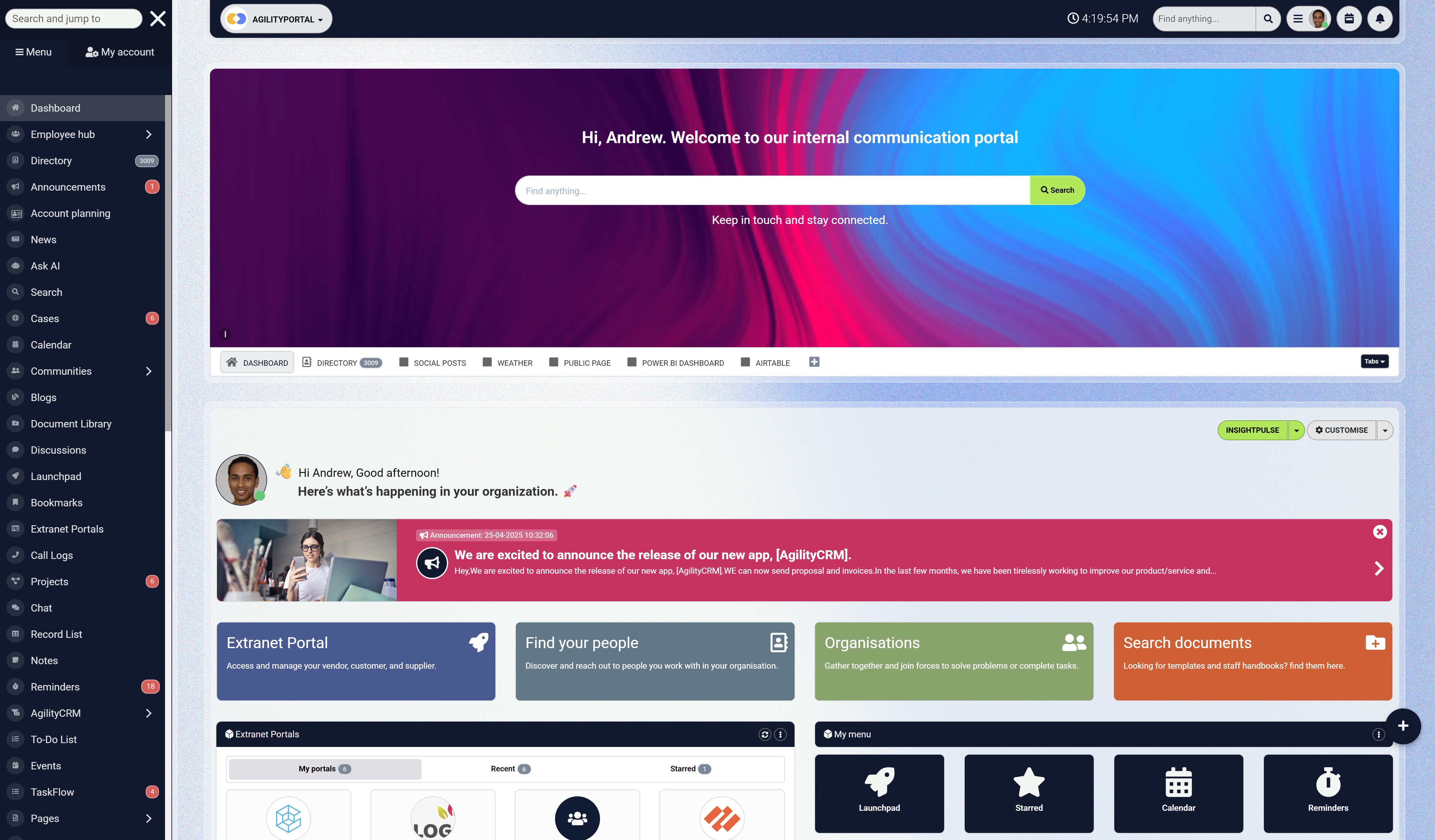
How to make safety information easier for people to use
A safety policy only helps when people can find it, understand it and use it at the moment they need it.
If procedures are buried in email threads, scattered across shared drives or only available to office staff, important information can be missed — especially during a busy shift, when a new starter needs guidance or when an urgent issue arises.
An employee intranet or digital workplace gives organisations one reliable place to manage safety communication and knowledge. Instead of asking employees to search through old emails or chase a manager, they can access the latest information from any device.
A well-organised safety hub can help organisations:
- Publish current health and safety policies, risk-assessment summaries and emergency procedures in one central location.
- Share urgent updates with the right people by location, department, role or shift.
- Create short induction and refresher learning for subjects such as manual handling, fire safety, hazardous substances and remote working.
- Collect policy acknowledgements, so managers can see who has read an important update.
- Give employees a simple route to report hazards, near misses, faulty equipment and safety concerns.
- Keep emergency contacts, first-aid information, evacuation procedures and incident-reporting guidance searchable.
- Make sure frontline, deskless, remote and office-based employees all receive the same essential information.
This is not about replacing managers or turning every safety conversation into a digital form. It is about making the right information easy to access and making it easier for employees to raise a concern before it becomes an incident.
AgilityPortal can help organisations centralise safety communication, knowledge and acknowledgements across office, remote and frontline teams.
Our Verdict · #1
AgilityPortal
Best for making health and safety information, policies, training and hazard reporting easier to access across office, remote and frontline teams.
#1
Our pick
Starting price
From $99/month for 25–99 employees, with a 14-day free trial.
Best feature
Centralise safety policies, risk information, training, forms, acknowledgements and urgent employee updates in one mobile-friendly platform.
AgilityPortal is a strong fit for organisations that want health and safety information to be useful in everyday work, not buried in old emails or shared folders. It gives employees one place to access policies, procedures, learning and emergency information, while giving managers clearer ways to communicate updates and collect acknowledgements.
What organisations can use it for
- Publish health and safety policies, workplace procedures and risk-assessment summaries.
- Share urgent safety updates by department, location, role or employee group.
- Deliver induction and refresher learning for office, frontline and remote employees.
- Use forms and acknowledgements for hazard reporting, near misses and policy updates.
What to consider
- AgilityPortal supports safety communication and knowledge management; it does not replace specialist health and safety advice.
- Safety processes still need clear internal owners who investigate and close reported issues.
- Teams should launch the most important safety areas first, then expand as adoption grows.
- Policies and risk information need regular review to remain accurate and useful.
Pricing, product features and plan availability can change. Confirm current details with AgilityPortal before purchasing.
The future of workplace safety is more connected, not more complicated
The future of workplace safety is not about adding more forms, more monitoring or more complicated systems.
It is about making it easier for people to spot a risk, report it quickly and access the right guidance before a small issue becomes a serious incident.
For many organisations, that starts with mobile access. Frontline, field-based and deskless employees are often away from a computer when they notice a blocked exit, damaged equipment or unsafe condition. A simple mobile reporting process means they can raise the issue there and then, with a photo, location and short description. Managers can then assign action, update the employee and keep a clear record of what was resolved.
There will also be more attention on hazards that are less visible. Musculoskeletal problems, fatigue, excessive workload, stress, isolation and poor workstation setup can affect employees in offices, homes and frontline roles alike. These risks need the same practical attention as slips, machinery or hazardous substances. A safer workplace is one that protects both physical and psychological health.
As workforces become more distributed, safety communication must reach everyone — not just employees who sit at a desk or attend a weekly office meeting. Policies, urgent updates, training and emergency procedures should be easy to access for remote, hybrid, frontline and shift-based employees, wherever they are working.
Technology can help centralise information, improve reporting and highlight patterns in incidents or near misses. But it should support human judgement, not replace it. A dashboard cannot see a poorly maintained staircase, understand why employees are taking shortcuts or recognise when a team is under unsustainable pressure. Managers still need to listen, investigate and act.
Finally, risk assessments must keep pace with change.
A new starter, different shift pattern, office move, home-working arrangement, new machine, updated process or new chemical can all introduce risks that were not present before.
Reviewing controls regularly — and whenever something changes — is what keeps workplace safety practical, relevant and effective.
Final Thoughts
Workplace safety is not about predicting every possible incident or creating paperwork for the sake of it.
It is about noticing the everyday conditions that make harm more likely and taking practical action before somebody gets hurt.
Reviewing the 20 hazards in the workplace gives businesses a useful starting point, but the real value comes from what happens next. Employees need clear procedures, suitable equipment, practical training and an easy way to raise a concern.
Managers need the authority and time to act on reports, while leaders need visibility that risks are being resolved rather than quietly accepted.
This applies whether people work in a warehouse, office, retail setting, customer site or from home. The hazards may be different, but the approach is the same: identify the risk, involve the people affected, put sensible controls in place and review them when work changes.
A strong safety culture is built through consistent actions, not posters on a wall. When people trust that speaking up will lead to a response, small hazards are far more likely to be fixed before they become serious incidents.
The best safety culture is one where people never have to choose between getting the job done and going home well.
Frequently asked questions about workplace hazards and risks
What are the most common workplace hazards?
Common workplace hazards include slips, trips and falls, manual handling, moving vehicles, machinery, hazardous substances, fire, faulty electrical equipment, poor ergonomics, work-related stress, violence and inadequate training.
The risks vary by workplace, so every organisation should assess its own activities, people, premises and equipment.
What is the difference between a hazard and a risk at work?
A hazard is something that could cause harm, such as a wet floor or an exposed electrical cable.
A risk is the chance that the hazard will cause harm and how serious the outcome could be. Managing safety means identifying hazards first, then putting sensible controls in place to reduce the risk.
What are the 20 hazards in the workplace?
The 20 hazards in the workplace covered in this guide include slips and trips, falls from height, manual handling, vehicles, machinery, electricity, fire, hazardous substances, asbestos, biological risks, noise, extreme temperatures, poor ergonomics, repetitive strain, poor lighting, violence, stress, unsafe practices, weak training and remote-working risks.
What are examples of workplace hazards and risks in an office?
Office risks can include trailing cables, overcrowded walkways, poorly adjusted desks and screens, poor lighting, faulty electrical equipment, manual handling during deliveries, fire safety issues, work-related stress and poor ventilation.
#Hybrid employees may also face home workstation and isolation risks.
Who is responsible for identifying workplace hazards?
Employers hold the overall responsibility for identifying and managing workplace risks. However, employees, managers, contractors and health and safety representatives should all be involved.
Employees are often the first people to notice a faulty item, unsafe shortcut or change in working conditions that could create a risk.
How often should workplace risk assessments be reviewed?
Risk assessments should be reviewed regularly and whenever something changes.
This may include new equipment, a different workplace layout, new staff, updated processes, an accident, a near miss or a change in an employee's health needs. HSE also advises reviewing controls when employees identify a problem.
Can work-related stress be treated as a workplace hazard?
Yes. Excessive workload, long hours, poor management support, unclear responsibilities, bullying and isolation can all affect mental health and may need to be addressed through a stress risk assessment.
Employers have a duty to protect employees from stress at work by assessing the risk and taking action.
What should an employee do if they spot a workplace hazard?
Employees should take reasonable steps to avoid immediate danger, report the hazard to the appropriate manager or reporting channel, and provide enough detail for the issue to be acted on.
If possible, include the location, what happened, who may be affected and any immediate action taken. Hazards, accidents and near misses should all be reported.
Do remote workers need a workplace risk assessment?
Yes. Employers must include remote and hybrid employees in their risk assessment arrangements. In most cases, a proportionate approach such as a free workplace hazard for remote teams self-assessment, guidance and a follow-up conversation will be suitable.
A practical workplace hazard for remote teams template should cover the workstation, display screen equipment, electrical safety, stress, emergency arrangements and contact with managers.
What are the health and safety requirements for remote workers?
The main health and safety requirements for remote workers are broadly the same as for office-based staff.
Employers should assess work-related risks, provide safe equipment where necessary, manage display screen equipment risks, address stress and wellbeing, provide emergency guidance and maintain regular communication. Employees must take reasonable care, follow guidance and report safety concerns.
What should a health and safety policy for home workers include?
A health and safety policy for home workers should explain:
- How employees complete a home-working and DSE assessment.
- What equipment the organisation will provide or support.
- How to report faulty equipment, discomfort, accidents and near misses.
- Expectations around safe electrical use, cables and workspace conditions.
- Emergency contacts and lone-working arrangements.
- Workload, wellbeing and work-life-boundary support.
- When the assessment should be reviewed or updated.
A simple home office health and safety checklist can help employees confirm that their chair, screen, lighting, cables, electrical equipment and working environment are suitable.
What are the lone worker safety regulations?
There is no single piece of UK legislation called "lone worker safety regulations." Instead, employers must manage lone-working risks under their wider health and safety duties.
This means assessing the job, considering emergency arrangements, communication, violence or aggression risks, travel, medical needs and what happens if an employee cannot be contacted.
Is there a computer health and safety act?
There is no UK law formally called the computer health and safety act.
The relevant rules are mainly the Health and Safety (Display Screen Equipment) Regulations 1992, alongside general employer duties under health and safety law.
These rules apply to regular display screen users and require employers to assess workstations and reduce identified risks.
Where can I find the Management of Health and Safety at Work Regulations 1999 PDF?
You can read the official Management of Health and Safety at Work Regulations 1999 PDF on legislation.gov.uk. The Regulations set out duties including risk assessment, health and safety arrangements, employee information, training and consultation.
AI Summary
- Workplace hazards are anything that could cause injury, illness or harm, while risk measures how likely that harm is and how serious the outcome could be.
- The 20 hazards in the workplace include slips and trips, manual handling, machinery, hazardous substances, poor ergonomics, stress, violence and remote-working risks.
- Many incidents begin with everyday issues such as blocked walkways, faulty equipment, rushed work, unclear procedures or hazards that were never reported.
- Employers remain responsible for managing workplace hazards and risks, but employees, managers, contractors and safety representatives all have an important role in identifying concerns early.
- Remote and hybrid workers need the same practical health and safety support, including workstation assessments, safe equipment, wellbeing support and clear reporting routes.
- The most effective safety approach is to identify hazards, assess who could be harmed, put controls in place, assign actions and review arrangements whenever work changes.
Most Popular Posts

Effective communication among team members is vital for the productivity and success of any organization. Surprisingly, 60% of companies lack a long-term internal communication strategy, which p...


Businesses thrive on communication for efficiency, productivity and accomplishment. When the right information is passed from the right designation in the organization, it promotes positivity an...

Categories
Blog
(3176)
Business Management
(393)
Employee Engagement
(234)
Digital Transformation
(214)
Growth
(149)
Intranets
(141)
Internal communications
(106)
Remote Work
(68)
Sales
(53)
Collaboration
(52)
Customer Experience
(32)
Culture
(30)
Knowledge Management
(29)
Project management
(29)
Leadership
(20)
Comparisons
(9)
News
(1)

Related Posts

Most workplace incidents do not start with one dramatic failure. They usually begin with something ordinary: a blocked walkway, rushed manual handling, a poorly set-up workstation, unclear procedures, or a safety concern that nobody reported. U...

Are you still relying on spreadsheets to manage your customer data? If so, you're not alone—but you might be holding your business back. A study by Forrester found that 68% of sales professionals waste time switching between tools to find customer in...

Cyber Essentials is often described as a technical certification, but it is really a practical test of whether a business has the basics under control. That matters because cyber incidents rarely stay inside the IT department. They can interrupt payr...

Outsourced IT support becomes worth considering when technology problems stop being minor inconveniences and begin affecting how the business operates. A slow laptop or one-off password reset is manageable. But recurring downtime, unresolved support ...

An intranet network example in business could be as simple as a central employee hub where people find company policies, announcements, forms, training, documents and team updates. In practice, managing it well takes more than putting files beh...


Annet Herges
I am a digital nomad, lover of exploring new places and making friends.
I love to travel and I love the internet. I take pictures of my travels and share them on the internet using Instagram.
Traveler, entrepreneur, and community builder. I share my insights on digital marketing and social media while inspiring you to live your fullest life.
Ready to learn more? 👍
One platform to optimize, manage and track all of your teams. Your new digital workplace is a click away. 🚀
Free for 14 days, no credit card required.