
Insight Blog
Agility’s perspectives on transforming the employee's experience throughout remote transformation using connected enterprise tools.
44 minutes reading time
(8710 words)
Why Email Is Killing Partner Collaboration (And What to Use Instead)

Why Email Is Killing Partner Collaboration (And What to Use Instead)
Discover why relying on email for partner collaboration creates communication chaos, delays decisions, and hurts partner engagement. Learn how modern partner portals solve the problem.
Why Email Is Killing Partner Collaboration (And What to Use Instead)

Partner collaboration has become a critical part of business growth, especially for organizations that rely on distributors, resellers, suppliers, affiliates, consultants, and channel partners to generate revenue.
Yet surprisingly, many companies still depend on email as their primary tool for managing partner communication.
At first glance, email seems convenient.
Everyone uses it. It's familiar. It's easy to send a message or attach a document. But as partner networks grow, email often becomes the very thing that slows collaboration down.
Important updates get buried in crowded inboxes, multiple versions of documents start circulating, conversations become fragmented across endless email threads, and partners waste valuable time searching for the information they need.
The reality is that communication chaos carries a significant business cost.
Research from IDC found that employees spend nearly 20% of their workweek searching for information, while other studies show that poor communication can reduce productivity, delay decision-making, and negatively impact customer experiences.
Now imagine those same challenges multiplied across dozens—or even hundreds—of external partners.
20%
of the workweek
Research from IDC found that employees spend nearly 20% of their workweek searching for information. Studies also show that poor communication can reduce productivity, delay decision-making, and negatively impact customer experiences.
Source: IDC Research
Think about it for a moment.
If a partner cannot quickly find the latest pricing sheet, training guide, marketing asset, or product update, how likely are they to actively promote your products over a competitor's?
Most organizations assume their partners are fully engaged, but in reality, many are quietly struggling with disconnected communication and outdated information.
This article explores why email is quietly killing partner collaboration, the hidden risks and costs that many businesses overlook, and why more organizations are moving toward modern partner portal software and partner enablement platforms.
By the end, you'll understand how centralized communication, shared knowledge, and better partner engagement can help create stronger relationships, improve productivity, and ultimately drive more channel revenue.
Key Takeaways
- Email creates communication chaos by scattering conversations, documents, and updates across multiple inboxes and disconnected threads.
- Partners often struggle to find critical information, leading to delays, repeated questions, slower onboarding, and missed business opportunities.
- Research from IDC found that employees spend nearly 20% of their workweek searching for information, highlighting the cost of fragmented communication.
- Poor partner collaboration can reduce engagement, create document version control issues, increase security risks, and negatively impact channel revenue.
- Modern partner portals centralize communication, training, resources, and collaboration in one secure platform, helping organizations improve partner engagement and productivity.
Why Is Email Bad for Partner Collaboration?

Why Is Email Bad for Partner Collaboration
For many organizations, email feels like the easiest way to communicate with partners.
However, as partner ecosystems grow, email often becomes one of the biggest barriers to effective partner collaboration. What starts as a simple communication tool quickly turns into a maze of inboxes, attachments, reply-all chains, and lost information.
When external partners are added into the mix, those productivity challenges become even more severe.
The biggest issue is that email was never designed to be a partner collaboration platform. It was built for sending messages, not managing partner onboarding, sharing knowledge, coordinating sales efforts, or maintaining a centralized source of truth.
As a result, organizations often experience communication chaos, slower decision-making, reduced partner engagement, and missed revenue opportunities.
Psychologically, people naturally choose the path of least resistance.
If partners cannot quickly find the information they need, they often stop looking, delay action, or turn their attention to competing vendors that make doing business easier.
In today's competitive marketplace, convenience and accessibility can directly influence partner loyalty and performance.
The good news is that modern partner portals solve many of these challenges by providing a single location where partners can access documents, training materials, updates, discussions, and support resources without digging through hundreds of emails.
The Growing Problem of Communication Chaos
Partner collaboration has become far more complex than it was a decade ago.
Organizations now work with distributors, resellers, suppliers, consultants, affiliates, and strategic partners across multiple locations and time zones.
While many businesses still rely on email to manage these relationships, the reality is that email often creates communication chaos rather than improving collaboration.
When partners are involved, that challenge becomes even greater as important updates, documents, and conversations become scattered across countless email threads.

The Growing Problem of Communication Chaos
How Partner Networks Have Become More Complex
Modern partner ecosystems are larger, faster, and more demanding than ever before.
Common challenges include:
- Managing hundreds of partners across different regions.
- Supporting multiple stakeholders within each partner organization.
- Sharing product updates, pricing changes, and marketing assets.
- Providing consistent onboarding and training experiences.
- Ensuring partners always have access to current information.
- Supporting partners across different time zones and working hours.
Today's partners expect instant access to resources and answers. If information is difficult to find, engagement and productivity quickly decline.
Why Email Was Never Designed for Partner Ecosystems
Email works well for one-to-one communication, but partner collaboration requires a much more structured approach.
Common email-related problems include:
- Important messages getting buried in inboxes.
- Multiple versions of the same document being shared.
- Long reply-all chains creating confusion.
- New partners struggling to find historical information.
- Knowledge becoming trapped inside individual inboxes.
- No centralized location for resources and discussions.
Unlike a partner portal, email provides no single source of truth. Every conversation, file, and update exists in separate inboxes, making it difficult for partners to find what they need when they need it.
What Happens as Partner Programs Grow?
Many organizations don't notice these issues when managing a small number of partners.
However, as partner programs scale, communication becomes increasingly difficult to control.
Signs your organization may be experiencing communication chaos:
- Partners frequently ask the same questions.
- Sales teams repeatedly resend documents.
- Training materials become outdated.
- Product updates are missed.
- Deal registration processes slow down.
- Support requests continue to increase.
The larger your partner ecosystem becomes, the harder it is to manage collaboration through email alone.
This is why many organizations are moving toward partner portals and partner enablement platforms that centralize communication, resources, training, and partner engagement in one secure location.
Related Partner Collaboration & Partner Portal Resources
Looking to improve partner collaboration, partner communication, partner onboarding, external collaboration, and partner engagement? The resources below explore partner portals, partner enablement software, knowledge management, employee communication, and collaboration platforms that help businesses build stronger partner ecosystems.
- What Is a Partner Portal?
- Partner Enablement Guide
- Best Partner Enablement Software
- AgilityPortal vs SharePoint for External Collaboration
- Extranet Software for Secure Client Collaboration
- Supplier Portal That Saves Time
- Enterprise Collaboration Software
- Knowledge Database Software
- Best Workplace Platforms
- Top Remote Collaboration Tools
- Employee Experience Platform Guide
- Employee Engagement Platforms for Business
These resources provide additional insights into partner collaboration software, partner portals, supplier collaboration, knowledge sharing, secure document management, employee communication, and digital workplace solutions that help organizations build stronger relationships and improve partner engagement.
7 Ways Email Is Killing Partner Collaboration
Most organizations don't realize how much email is hurting their partner relationships until problems begin to appear.
What seems like a simple communication tool can quickly become a source of frustration, inefficiency, and missed opportunities.
As partner ecosystems grow, the volume of emails increases dramatically. Product updates, pricing changes, onboarding materials, training resources, marketing assets, compliance documents, and support communications are constantly being exchanged between organizations and their partners.
The challenge is that email was never designed to manage complex partner collaboration. It lacks centralized knowledge management, creates information silos, makes document version control difficult, and often leaves partners searching for information they should be able to find instantly.
Over time, these issues can reduce partner engagement, slow revenue growth, increase support requests, and create a poor partner experience.
Here are seven ways email is quietly damaging partner collaboration and why many organizations are replacing inbox-driven communication with modern partner portals.
#1. Critical Information Often Gets Lost in Crowded Inboxes
One of the biggest frustrations for partners is trying to locate important information that was sent weeks or months ago.
Most organizations regularly share product updates, onboarding materials, pricing sheets, compliance documents, marketing resources, and sales enablement content through email.
The problem is that email was never designed to function as a centralized knowledge management system. As inboxes fill up, important documents become increasingly difficult to locate.
Common examples include:
- New product update documents buried in old conversations.
- Updated pricing sheets lost among hundreds of emails.
- Marketing assets stored in personal inboxes.
- Training materials that cannot be located when needed.
- Partner onboarding resources hidden within lengthy email threads.
- Compliance documents becoming difficult to retrieve.
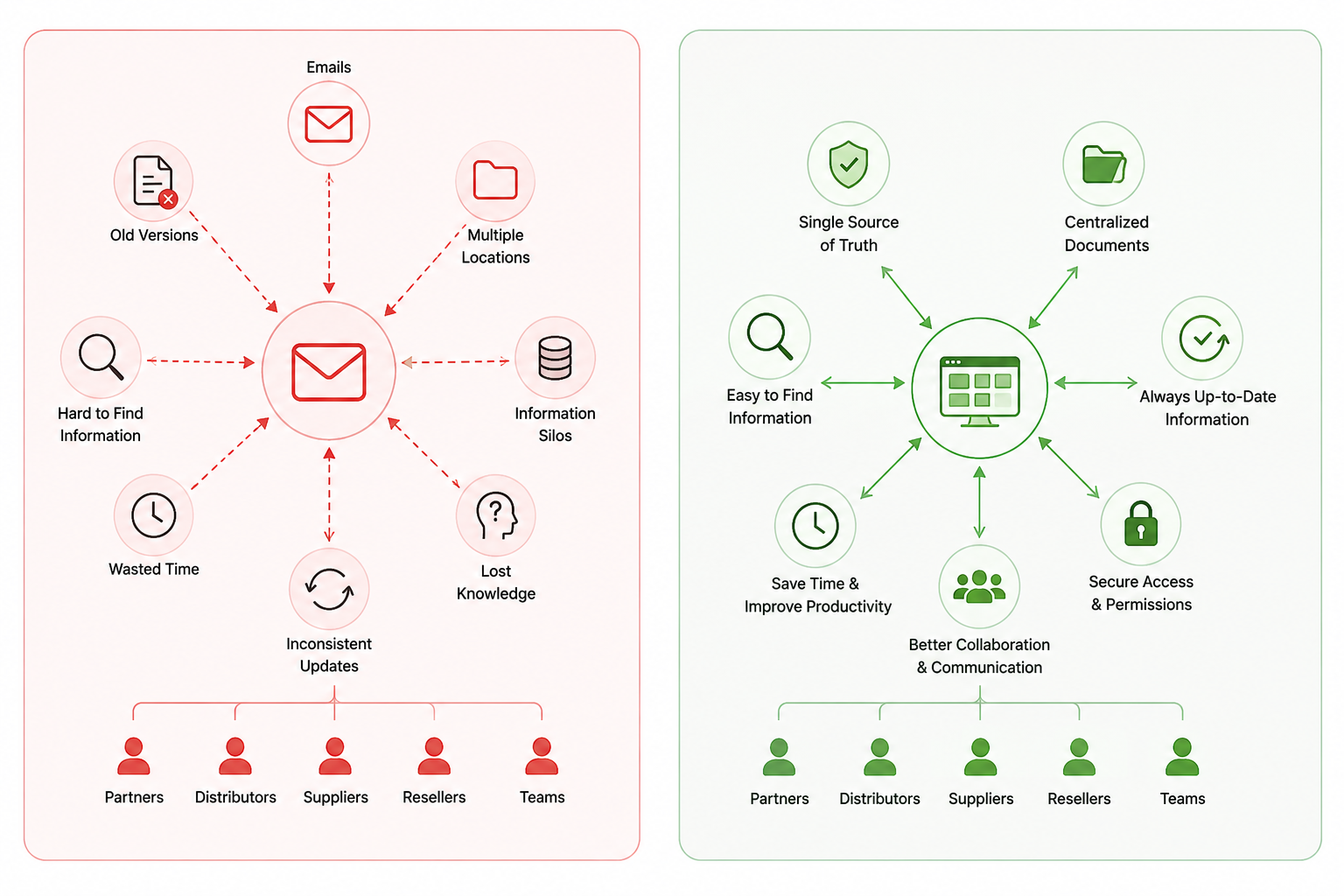
Critical Information Often Gets Lost in Crowded Inboxes
The impact can be significant:
- Partners waste time searching for resources.
- Customer conversations are delayed.
- Internal teams repeatedly resend information.
- Sales opportunities take longer to progress.
- Partner satisfaction decreases.
#2. Partners Waste Time Searching for Information
Finding information should never be a full-time job, yet that's exactly what happens in many partner programs.
Every time a partner needs a sales deck, product guide, training video, onboarding document, support process, or marketing resource, they may need to search through months of email history to locate it.
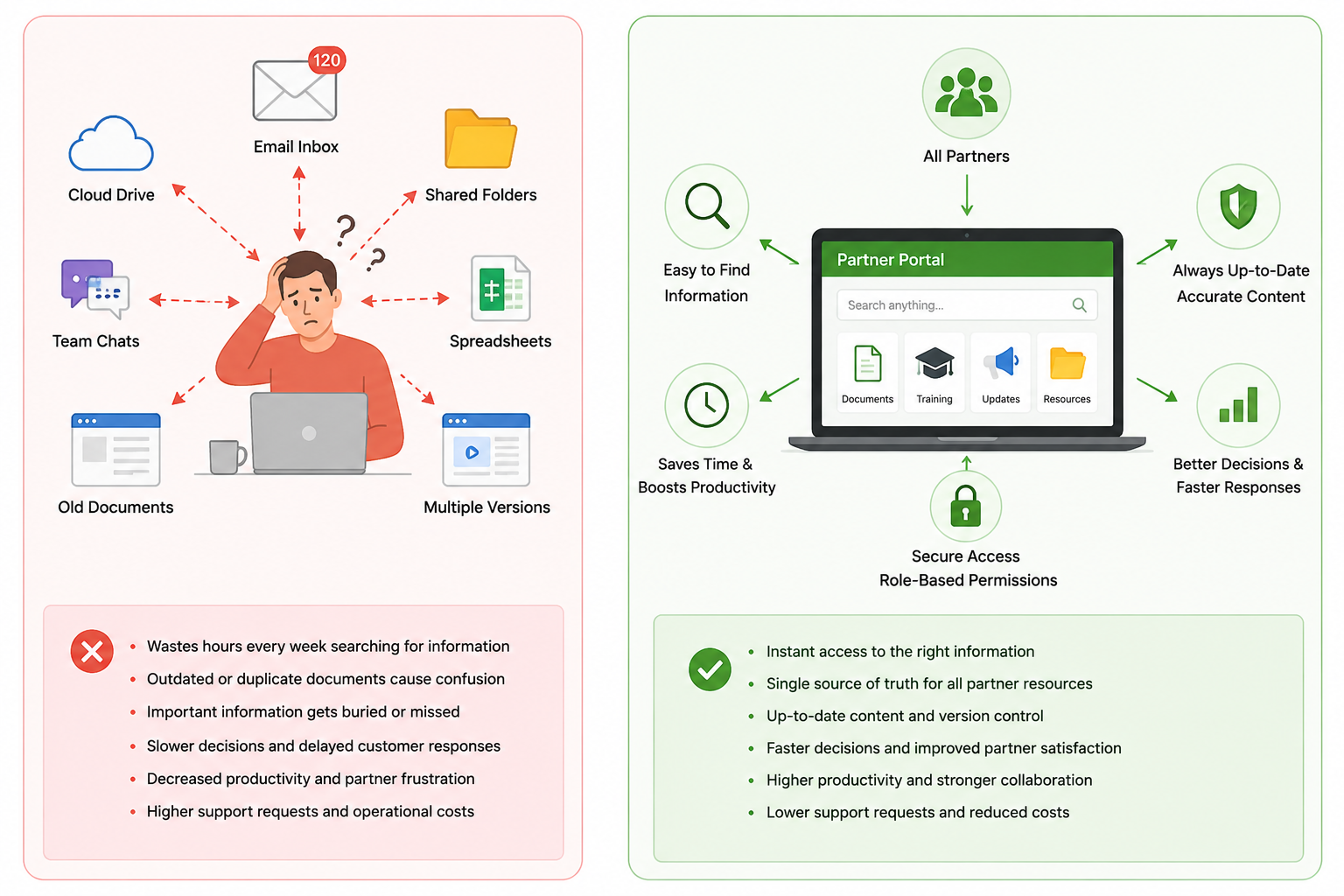
Partners Waste Time Searching for Information
The challenge becomes worse as the partner ecosystem grows.
Partners often spend time searching for:
- Product documentation.
- Partner program updates.
- Marketing campaigns.
- Technical resources.
- Product release notes.
- Sales enablement materials.
- Training certifications.
The hidden cost of this inefficiency includes:
- Reduced productivity.
- Slower response times.
- Increased support requests.
- Delayed customer interactions.
- Frustrated partner teams.
Psychologically, people value convenience.
The harder it is to find information, the less likely partners are to actively engage with available resources.
#3. Multiple Versions of Documents Create Confusion
Document version control is one of the most overlooked challenges in partner communication.
When resources are distributed through email attachments, partners often download and save copies locally.
Over time, newer versions are released, but older versions continue circulating throughout the partner ecosystem.
This creates confusion around:
- Product specifications.
- Pricing structures.
- Marketing materials.
- Compliance documentation.
- Sales presentations.
- Partner agreements.
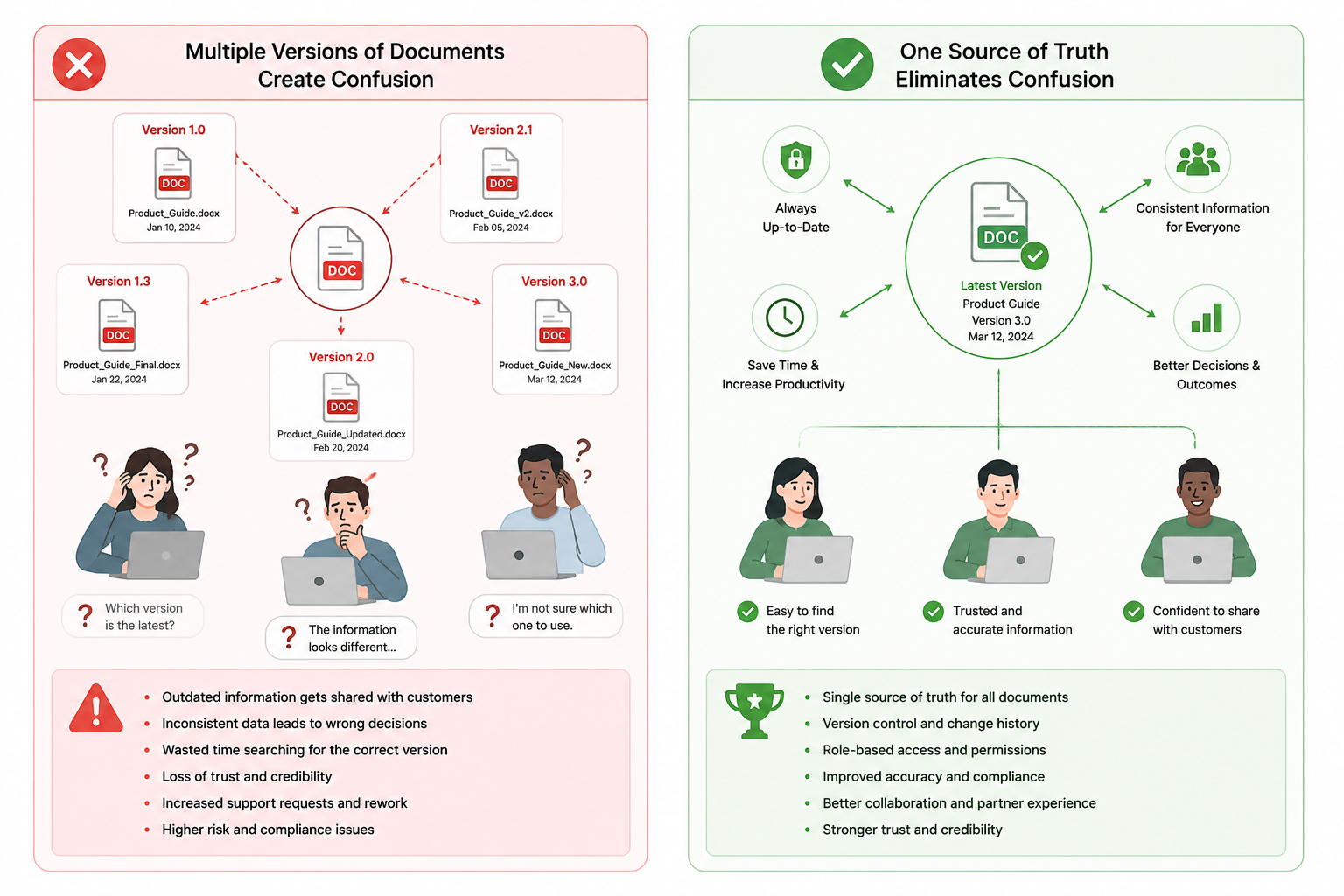
Multiple Versions of Documents Create Confusion
The consequences can be serious:
- Outdated information shared with customers.
- Incorrect pricing communicated during sales conversations.
- Compliance risks.
- Brand inconsistencies.
- Reduced trust between organizations and partners.
Without a centralized partner portal, there is often no way to guarantee that every partner is using the most current version of a document.
#4. Communication Becomes Fragmented
Successful partner collaboration depends on visibility and alignment. Email often creates the opposite effect.
Conversations become scattered across individual inboxes, departments, and separate email threads. Important context is lost, making it difficult for partners and internal teams to stay aligned.
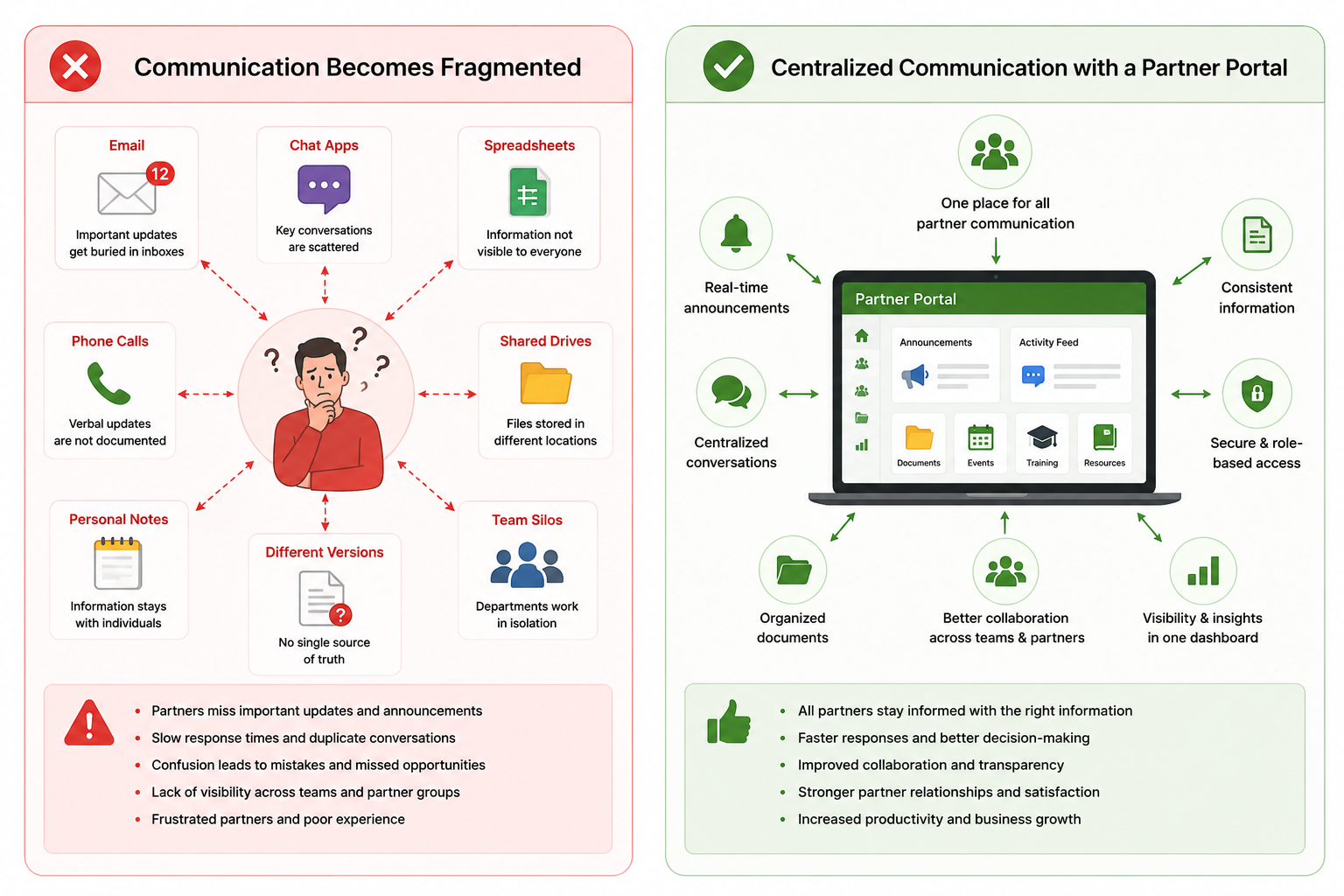
Communication Becomes Fragmented
Common signs of fragmented communication include:
- Multiple conversations about the same issue.
- Different departments providing conflicting answers.
- Important updates being missed.
- Partners receiving inconsistent information.
- Duplicate work being performed.
The business impact includes:
- Slower execution.
- Miscommunication.
- Poorer partner experiences.
- Increased operational costs.
- Reduced collaboration.
When communication is fragmented, partners often lose confidence in the partnership and become less engaged over time.
#5. Email Slows Down Decision Making
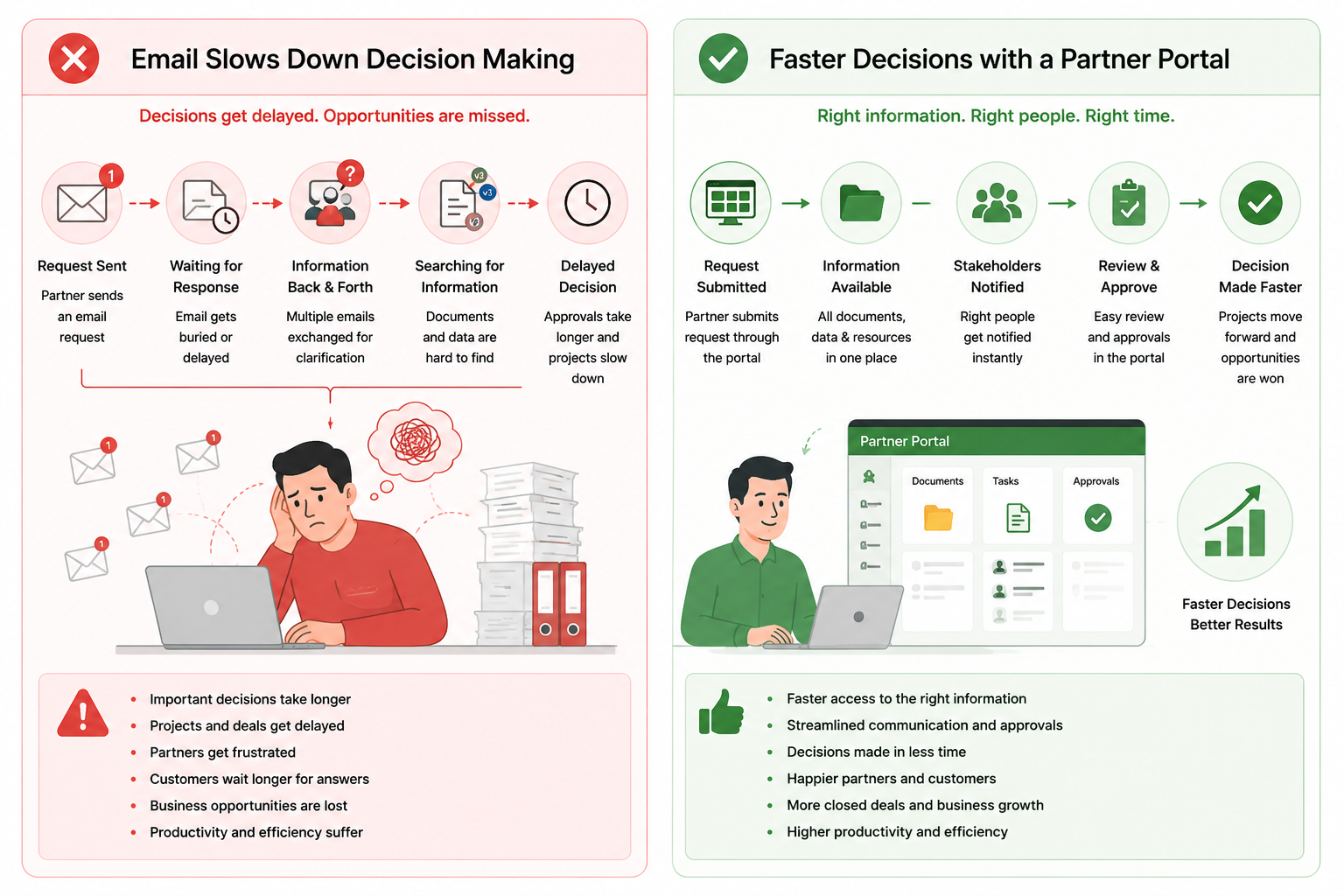
Email Slows Down Decision Making
Modern business moves quickly, but email often introduces unnecessary delays.
Partners frequently rely on email to ask questions, request approvals, submit deal registrations, obtain pricing information, or seek technical support.
Every interaction requires waiting for someone to respond.
Common bottlenecks include:
- Approval workflows.
- Deal registration requests.
- Product inquiries.
- Contract discussions.
- Marketing approvals.
- Technical support escalations.
The impact can include:
- Longer sales cycles.
- Delayed customer responses.
- Missed opportunities.
- Reduced partner productivity.
- Lower channel revenue.
In competitive markets, slow communication can be the difference between winning and losing a deal.
#6. Security Risks Increase
Email remains one of the most common sources of accidental data exposure.
Sensitive information is routinely shared between organizations and their partners, including customer data, pricing information, contracts, product roadmaps, and confidential business documents.
Common security risks include:
- Files sent to the wrong recipient.
- Unauthorized forwarding.
- Lack of access controls.
- Expired partners retaining sensitive documents.
- Unencrypted attachments.
- Limited audit visibility.
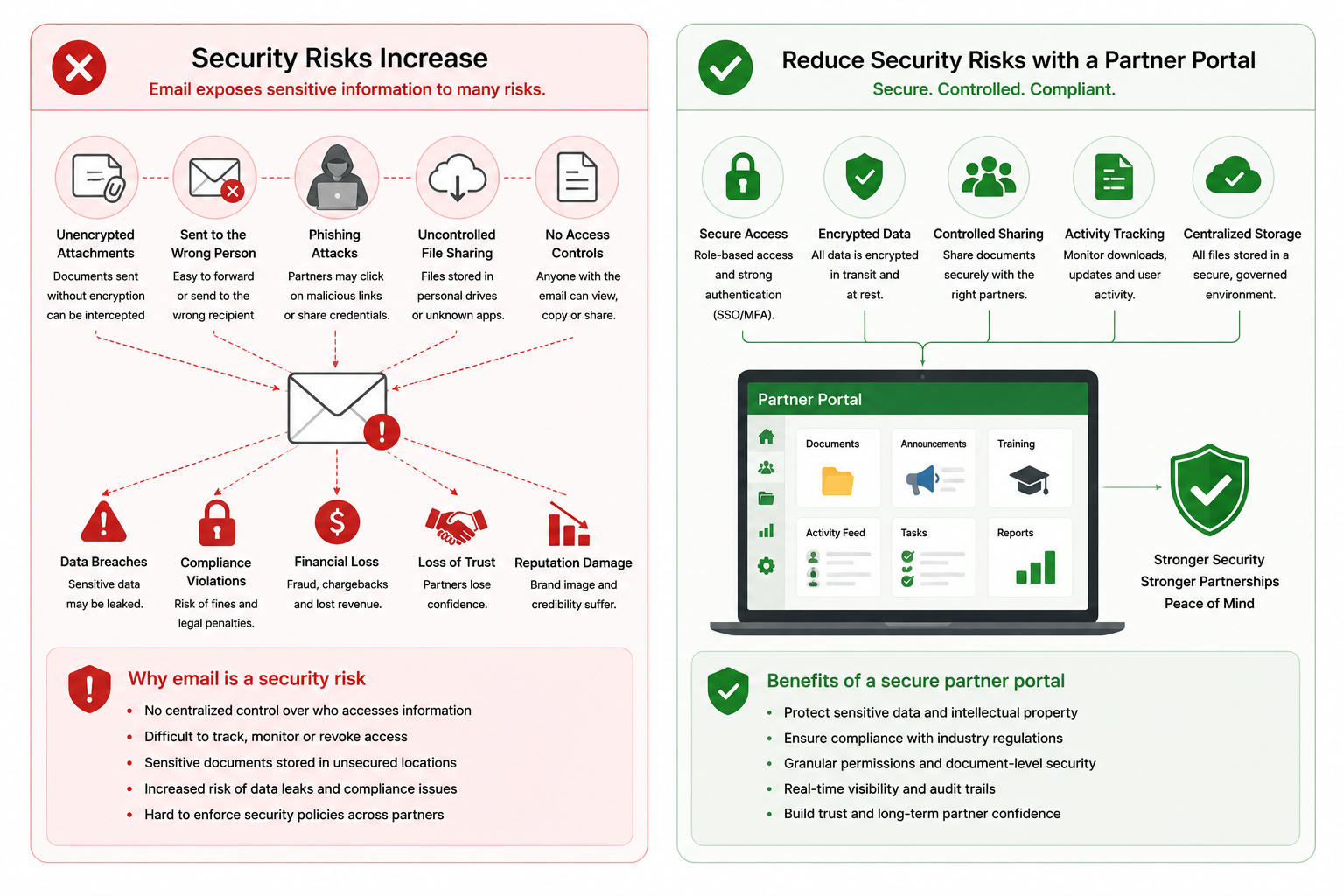
Security Risks Increase
Potential consequences include:
- Data breaches.
- Compliance violations.
- Financial penalties.
- Loss of customer trust.
- Reputational damage.
A secure partner portal provides centralized governance, access controls, audit logs, and role-based permissions that email simply cannot offer.
#7. Partner Engagement Declines
Perhaps the most damaging consequence of poor communication is declining partner engagement.
Partners want fast access to information, clear communication, effective onboarding, and a simple way to collaborate with your organization.
When every interaction requires searching through inboxes, waiting for replies, or requesting documents that should already be available, engagement naturally decreases.
Common signs of declining partner engagement include:
- Reduced participation in partner programs.
- Lower training completion rates.
- Fewer deal registrations.
- Decreased use of partner resources.
- Increased support requests.
- Reduced collaboration with internal teams.
The long-term impact can be significant:
- Lower partner satisfaction.
- Reduced channel sales performance.
- Higher partner churn.
- Slower partner onboarding.
- Weaker partner relationships.
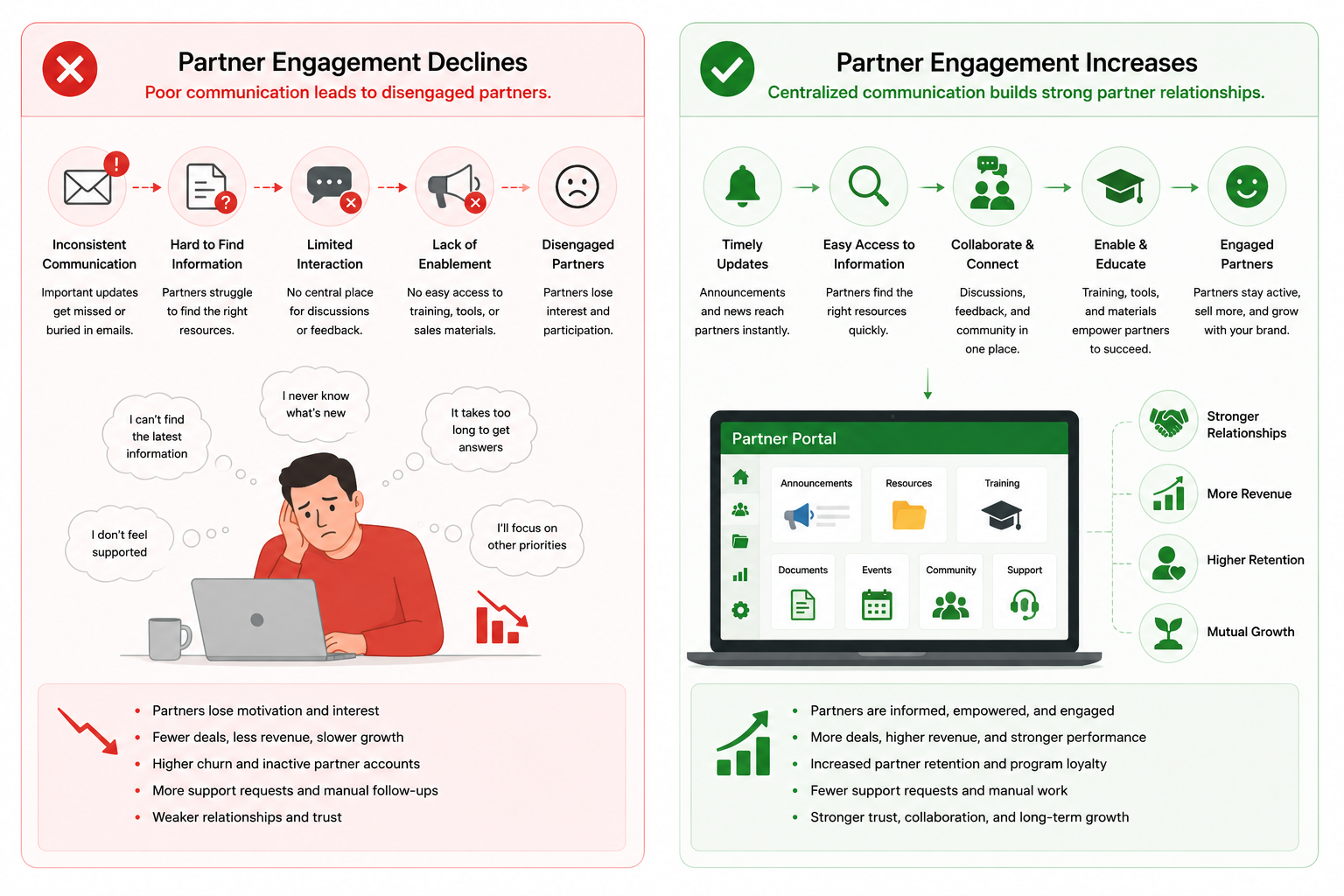
Partner Engagement Declines
The reality is simple: partners are more likely to engage when doing business with your organization is easy.
Modern partner portal software and partner enablement platforms remove friction, improve access to information, and create a better overall partner experience.
The Hidden Business Cost of Poor Partner Collaboration
Many organizations view poor partner collaboration as a communication problem, but the reality is that it quickly becomes a business problem.
When partners struggle to find information, access resources, or communicate effectively with your organization, the impact extends far beyond a few missed emails.
Poor partner communication affects productivity, revenue growth, customer experience, partner satisfaction, and operational efficiency.
Over time, these hidden costs can significantly reduce the value of an organization's partner ecosystem and make it harder to compete in the marketplace.

The Hidden Business Cost of Poor Partner Collaboration
Reduced Partner Productivity
Every minute a partner spends searching for information is time they are not spending selling, supporting customers, or growing the partnership.
Within a partner ecosystem, the challenge is often even greater because external partners typically have limited visibility into company resources and communications.
When information is scattered across emails, shared drives, and multiple communication channels, partners waste valuable time trying to locate:
- Product documentation.
- Pricing information.
- Sales enablement materials.
- Training resources.
- Marketing assets.
- Support procedures.
The result is lower productivity across the entire partner network.
Instead of focusing on revenue-generating activities, partners become administrators, constantly searching for information that should be easy to access.
Slower Revenue Growth
Partner collaboration has a direct impact on revenue growth.
When partners cannot quickly access the information they need, sales opportunities often slow down.
Product questions remain unanswered, deal registrations are delayed, and customer requests take longer to process.
Common revenue-related challenges include:
- Longer sales cycles.
- Delayed proposal submissions.
- Missed customer opportunities.
- Slower partner onboarding.
- Reduced partner participation in campaigns.
- Lower deal registration activity.
The reality is simple: the easier it is for partners to do business with your organization, the more likely they are to actively promote your products and services. Friction creates delays, and delays often result in lost revenue.
Lower Partner Satisfaction
Partners expect the same digital experience they receive from leading technology companies. They want information to be easy to find, documents to be current, and communication to be clear.
When those expectations are not met, frustration begins to build.
Common causes of poor partner satisfaction include:
- Waiting for responses to basic questions.
- Searching through old email threads.
- Receiving outdated information.
- Struggling to find training resources.
- Dealing with inconsistent communication.
Psychologically, people associate ease of use with professionalism and trust. When partners constantly encounter obstacles, they often perceive the partnership as more difficult than it should be.
Over time, this can weaken relationships and reduce long-term partner loyalty.
Increased Support Requests
One of the hidden consequences of poor partner communication is the increase in support requests.
When partners cannot easily find information themselves, they naturally turn to internal teams for help.
Questions that should be answered through self-service resources instead become emails, phone calls, and support tickets.
Common support requests include:
- Requests for product documentation.
- Pricing clarification.
- Marketing asset access.
- Training materials.
- Compliance information.
- Technical resources.
This creates additional workload for:
- Partner managers.
- Sales teams.
- Marketing departments.
- Customer success teams.
- Technical support teams.
As the partner ecosystem grows, these requests become increasingly difficult to manage, creating unnecessary operational strain.
Higher Operational Costs
All of these challenges eventually translate into higher operational costs.
Organizations often underestimate how much time and money is spent managing inefficient partner communication processes.
Every time an employee resends a document, answers a repeated question, or searches for information on behalf of a partner, operational costs increase.
Common hidden costs include:
- Time spent managing emails.
- Repeated document distribution.
- Additional support resources.
- Longer onboarding processes.
- Reduced partner productivity.
- Delayed revenue generation.
While these costs may seem small individually, they compound significantly as partner programs scale.
Organizations with hundreds of partners can lose thousands of hours each year simply because information is not centralized and easily accessible.
What We've Learned From Working With Partner Programs
Based on our experience helping organizations centralize communication through partner portals, the biggest challenge is rarely a lack of information—it is the inability for partners to find the right information when they need it.
Most organizations already have the resources their partners need.
The problem is that those resources are often scattered across inboxes, shared drives, disconnected systems, and individual departments.
The most successful partner ecosystems remove this friction by creating a single source of truth where partners can instantly access product updates, training materials, sales resources, documentation, and support information.
When information becomes easier to find, partner engagement improves, productivity increases, and collaboration becomes significantly more effective.
Why Partner Portals Are Replacing Email
As organizations build larger partner ecosystems, many are realizing that email alone is no longer sufficient to support effective partner collaboration.
While email remains useful for individual conversations, it struggles to support the complex communication, knowledge sharing, and collaboration required in modern business partnerships.
Whether you're working with distributors, suppliers, consultants, affiliates, resellers, or channel partners, successful collaboration and partnership in business depends on giving partners quick access to information, clear communication channels, and the resources they need to succeed.
This is why more organizations are investing in partner portal software and partner enablement platforms. These solutions create a centralized environment where partners can access resources, collaborate with teams, complete onboarding, and stay informed without relying on endless email chains.
A good example of collaborative partnership can be seen in global organizations such as Siemens, which operates a vast ecosystem of technology, manufacturing, and service partners.
Managing thousands of partner relationships requires structured communication, knowledge sharing, and collaboration systems that go far beyond traditional email.
💬 Reddit Community Insight
A discussion on Reddit asked: "What are some examples of businesses collaborating?" The responses highlighted how successful organizations often grow faster by working with complementary partners rather than trying to do everything themselves.
Technology companies frequently partner with resellers, implementation consultants, and integration providers to expand market reach and improve customer success.
Manufacturers often collaborate with suppliers, logistics providers, and distributors to streamline operations and reduce costs.
Many businesses form strategic partnerships where each organization contributes expertise, resources, or market access to achieve mutual growth.
These real-world examples reinforce an important point: effective partner collaboration depends on easy communication, shared resources, and clear access to information. When collaboration relies solely on email, information becomes fragmented, making it harder for partners to stay aligned and productive.
Source: Reddit Discussion – What Are Some Examples of Businesses Collaborating?
One Source of Truth
One of the biggest advantages of a partner portal is the ability to create a single source of truth for the entire partner ecosystem.
Instead of information being scattered across inboxes, shared drives, spreadsheets, and individual departments, everything is centralized in one location.
Partners can quickly access:
- Product documentation.
- Sales enablement materials.
- Marketing assets.
- Pricing updates.
- Product announcements.
- Training resources.
- Compliance documents.
- Partner onboarding content.
This eliminates confusion and ensures everyone is working from the same information.
Better Partner Engagement
Strong partner engagement is built on accessibility, communication, and trust.
When partners can easily find what they need, participate in discussions, access resources, and stay informed about company updates, they become more active participants in the partnership.
Partner portals help improve engagement by providing:
- Partner communities and discussion forums.
- News and announcement feeds.
- Training and certification programs.
- Self-service resource libraries.
- Real-time collaboration tools.
- Partner recognition and communication channels.
From a psychological perspective, people are more likely to engage with systems that are simple and easy to use. Reducing friction encourages greater participation and stronger partner relationships.
Faster Partner Onboarding
One of the most overlooked benefits of a partner portal is faster onboarding.
Traditional onboarding often involves dozens of emails containing documents, videos, presentations, policies, and training resources. New partners frequently struggle to find the information they need, leading to delays and frustration.
A centralized onboarding experience allows partners to access:
- Welcome materials.
- Product training.
- Certification programs.
- Sales resources.
- Compliance requirements.
- Partner program documentation.
This creates a more consistent onboarding experience and helps partners become productive much faster.
Improved Security
Many organizations ask, "What is a partner system?" In simple terms, a partner system is a secure platform designed to manage communication, resources, and collaboration between an organization and its external partners.
Unlike email, partner portals provide built-in security controls that help protect sensitive business information.
Key security benefits include:
- Role-based permissions.
- Controlled document access.
- Secure file sharing.
- Audit trails and activity tracking.
- Centralized governance.
- Data retention controls.
These features significantly reduce the risk of sensitive information being shared with the wrong people.
Stronger Channel Performance
Ultimately, better partner collaboration leads to better business outcomes.
When partners have quick access to information, resources, training, and support, they can focus more time on selling, serving customers, and growing the relationship.
Organizations often see improvements in:
- Partner productivity.
- Deal registration activity.
- Sales performance.
- Partner engagement.
- Training completion rates.
- Customer satisfaction.
- Channel revenue growth.
This is why partner portals have become a critical part of modern channel partner management and partner enablement strategies.
Email vs Modern Partner Portal
| Modern Partner Portal | |
| Information scattered across inboxes | Centralized knowledge hub |
| Multiple document versions | Single source of truth |
| Slow communication | Real-time collaboration |
| Difficult to track partner activity | Full visibility and analytics |
| Security risks from attachments | Controlled access and governance |
| Poor searchability | Powerful search and resource discovery |
| Manual onboarding processes | Structured onboarding journeys |
| Repeated support requests | Self-service access to resources |
| Limited partner engagement | Interactive partner communities |
| Knowledge trapped in inboxes | Shared organizational knowledge |
The most successful collaborative partnerships are built on transparency, accessibility, and efficient communication.
Email may still play a role in business communication, but it should not be the foundation of your partner collaboration strategy.
Modern partner portals provide the structure, visibility, and accessibility required to support scalable partner ecosystems, helping organizations build stronger relationships, improve partner engagement, and drive long-term channel growth.
Signs Your Organization Has Outgrown Email
Most organizations do not wake up one day and decide that email is no longer working.
Instead, the warning signs appear gradually.
Teams begin spending more time searching for information, partners become frustrated, support requests increase, and important updates are repeatedly missed.
At first, these issues may seem like isolated incidents.
However, when they become recurring problems, it is often a sign that your partner ecosystem has grown beyond what email can effectively support.
If any of the following situations sound familiar, it may be time to consider a dedicated partner portal or partner collaboration platform.

Signs Your Organization Has Outgrown Email
Partners Frequently Ask the Same Questions
Imagine your partner managers receive the same questions every week:
- Where can I find the latest pricing sheet?
- Has the product guide been updated?
- Can you resend the onboarding documents?
- What is the current deal registration process?
- Where are the marketing assets located?
While answering a few questions may not seem like a problem, it becomes costly when dozens or hundreds of partners are asking the same questions repeatedly.
A reseller needs the latest product presentation for an upcoming customer meeting. Rather than finding it themselves, they email their partner manager requesting the document. Two days later, another partner asks for the same file. By the end of the month, the same document has been requested 15 times.
The Impact- Partner managers spend time answering repetitive questions.
- Partners experience delays while waiting for responses.
- Customer opportunities move more slowly.
- Internal teams become overwhelmed with support requests.
- Valuable knowledge remains trapped in individual inboxes.
A centralized partner portal gives partners self-service access to resources, allowing them to find answers instantly without relying on email support.
Documents Are Constantly Resent
One of the clearest signs that your organization has outgrown email is when employees spend a significant portion of their day resending documents.
When product updates, pricing guides, sales decks, compliance resources, onboarding materials, and marketing assets are distributed through email, they quickly become difficult to locate.
Your marketing team releases a new product brochure. Six months later, partners are still requesting copies because the original email has been buried beneath thousands of newer messages.
Commonly requested documents include:
- Product update documents.
- Pricing sheets.
- Sales presentations.
- Marketing collateral.
- Training materials.
- Compliance documentation.
- Partner agreements.
- Time wasted searching for documents.
- Reduced productivity across teams.
- Increased risk of outdated files being used.
- Slower customer interactions.
- Frustration for both partners and employees.
Instead of resending documents repeatedly, partners can access the latest version at any time through a centralized document library.
Teams Spend Hours Searching for Information
When partner communication relies heavily on email, this number can increase significantly.
As organizations grow, information becomes scattered across:
- Individual inboxes.
- Shared drives.
- Cloud storage platforms.
- Team chat applications.
- Departmental systems.
A partner manager needs to locate an updated pricing document before a customer call. After checking emails, Teams messages, and shared folders, they spend 30 minutes locating the correct file.
Now multiply that across dozens of employees every week.
The Impact- Reduced employee productivity.
- Delayed customer responses.
- Slower partner support.
- Increased operational costs.
- Frustrated teams.
- Employees constantly asking where documents are stored.
- Multiple versions of files circulating.
- Teams relying on memory to locate information.
- Resources spread across multiple systems.
A searchable knowledge hub allows partners and employees to find information in seconds rather than hours.
Partner Onboarding Takes Too Long
A poor onboarding experience is often a symptom of fragmented communication.
New partners frequently receive dozens of emails containing:
- Welcome guides.
- Product information.
- Training resources.
- Compliance documents.
- Sales materials.
- Program requirements.
Unfortunately, much of this information is quickly lost or forgotten.
A new channel partner receives 25 onboarding emails during their first month. By the time they need a specific document, they have no idea where it was sent.
The Impact- Slower partner activation.
- Reduced engagement.
- Longer time-to-value.
- Increased onboarding costs.
- Greater dependency on support teams.
- New partners repeatedly ask basic questions.
- Training completion rates are low.
- Onboarding takes months instead of weeks.
- Partners struggle to locate onboarding resources.
A structured onboarding journey provides all resources, training, and documentation in one place, helping partners become productive much faster.
Communication Feels Disorganized
Perhaps the biggest sign that your organization has outgrown email is when communication simply feels chaotic.
Important conversations are spread across multiple inboxes, different departments provide different answers, and partners are unsure where to find information.
A partner asks sales a pricing question, marketing a campaign question, and support a technical question. Each department responds independently, creating separate conversations with no shared visibility.
The partner receives inconsistent information and becomes confused about what is correct.
The Impact- Poor partner experiences.
- Miscommunication.
- Reduced trust.
- Delayed projects.
- Duplicate work.
- Lower partner engagement.
- Frequent communication breakdowns.
- Multiple conversations about the same topic.
- Partners receiving conflicting answers.
- Teams working in silos.
- Missed updates and announcements.
A modern partner collaboration platform creates a single source of truth where communication, resources, discussions, and updates are centralized, making collaboration faster, simpler, and far more effective.
If your organization is constantly resending documents, answering the same questions, searching for information, onboarding partners slowly, or struggling with fragmented communication, these are strong indicators that you have outgrown email.
The larger your partner ecosystem becomes, the more important it is to provide partners with a centralized platform that supports communication, knowledge sharing, collaboration, and engagement at scale.
How to Transition From Email to a Partner Portal
For many organizations, email has been the foundation of partner communication for years.
Product updates, partner onboarding materials, marketing resources, pricing guides, training content, and important announcements are often distributed through email because it feels familiar and easy to use.
However, as partner ecosystems grow, email becomes increasingly difficult to manage. Information gets buried in inboxes, documents become outdated, communication becomes fragmented, and partners spend valuable time searching for resources rather than focusing on business growth.
Transitioning to a partner portal is not about eliminating email completely. Instead, it is about creating a centralized environment where partners can access the information they need without relying on lengthy email chains or waiting for someone to resend a document.
Email can still play an important role in notifications and alerts, but the partner portal becomes the primary destination for collaboration, knowledge sharing, and partner engagement.

How to Transition From Email to a Partner Portal
Audit Existing Communication Channels
The first step in moving away from email is understanding how information currently flows between your organization and its partners.
Many businesses discover that important resources are scattered across multiple systems, including email inboxes, shared drives, cloud storage platforms, spreadsheets, and internal communication tools.
For example, a partner may receive product updates through email, access training materials through a shared drive, obtain pricing information from a sales representative, and download marketing assets from another location entirely.
This fragmented experience creates confusion and makes it difficult for partners to work efficiently.
By reviewing existing communication channels, organizations can identify where information gets lost, which resources are requested most often, and what challenges partners encounter when trying to access information.
This process provides a clear roadmap for creating a more streamlined partner experience.
Centralize Partner Resources
One of the biggest benefits of a partner portal is the ability to create a single source of truth. Instead of forcing partners to search through months of emails looking for documents, all resources can be stored in one searchable location.
Imagine a reseller preparing for an important customer meeting.
Rather than searching through old emails for the latest product presentation, pricing guide, or case study, they can simply log into the partner portal and access the most current version instantly.
This not only saves time but also reduces the risk of outdated information being shared with customers.
Centralizing resources helps improve partner collaboration by ensuring that everyone has access to the same information. It also reduces support requests because partners can find answers independently rather than contacting internal teams for assistance.
Create Dedicated Partner Spaces
Not every partner requires access to the same information. A supplier, distributor, reseller, affiliate, and technology partner all have different requirements and responsibilities. This is where dedicated partner spaces become valuable.
A modern partner portal allows organizations to create tailored experiences for different partner groups. Instead of overwhelming partners with irrelevant information, they can be presented with resources, communications, and tools that are specific to their role within the partner ecosystem.
This creates a more personalized experience while also improving security and governance. Partners only see the information that is relevant to them, making it easier to navigate the platform and find what they need quickly.
Launch Structured Partner Onboarding
One of the most common weaknesses of email-based partner management is onboarding.
New partners often receive dozens of emails containing welcome information, product guides, compliance requirements, sales resources, and training materials. Within a few weeks, much of this information becomes difficult to find.
A partner portal transforms onboarding by providing a structured journey that guides new partners through each stage of the process.
Instead of searching through inboxes, partners can follow a clear pathway that introduces them to the company, explains products and services, provides access to training, and helps them become productive more quickly.
This approach creates a more consistent onboarding experience while reducing the workload on partner managers and support teams.
It also improves partner engagement because new partners feel more confident and supported from the beginning of the relationship.
Measure Adoption and Partner Engagement
The final stage of the transition is measuring how partners interact with the platform.
One of the biggest advantages of a partner portal compared to email is visibility. Organizations can see which documents are being accessed, which training courses are being completed, and how partners engage with resources over time.
These insights help businesses understand what is working and where improvements can be made. For example, if a particular resource is frequently accessed, it may indicate high partner demand.
If certain training programs have low completion rates, additional support or improvements may be needed.
Monitoring partner engagement also helps organizations identify opportunities to strengthen collaboration, improve communication, and increase the value delivered through the partner program.
The Result: A More Connected Partner Ecosystem
Organizations that successfully transition from email to a partner portal often experience significant improvements in partner collaboration, partner communication, and partner engagement.
Instead of wasting time searching for information, partners gain instant access to resources, training, documents, and updates from a single location.
The result is a more connected partner ecosystem where communication is clearer, onboarding is faster, knowledge is easier to access, and collaboration becomes significantly more effective.
As partner programs continue to grow, having a centralized partner system becomes essential for maintaining strong relationships, supporting channel growth, and delivering a better experience for every partner involved.
Why Organizations Are Choosing AgilityPortal for Partner Collaboration
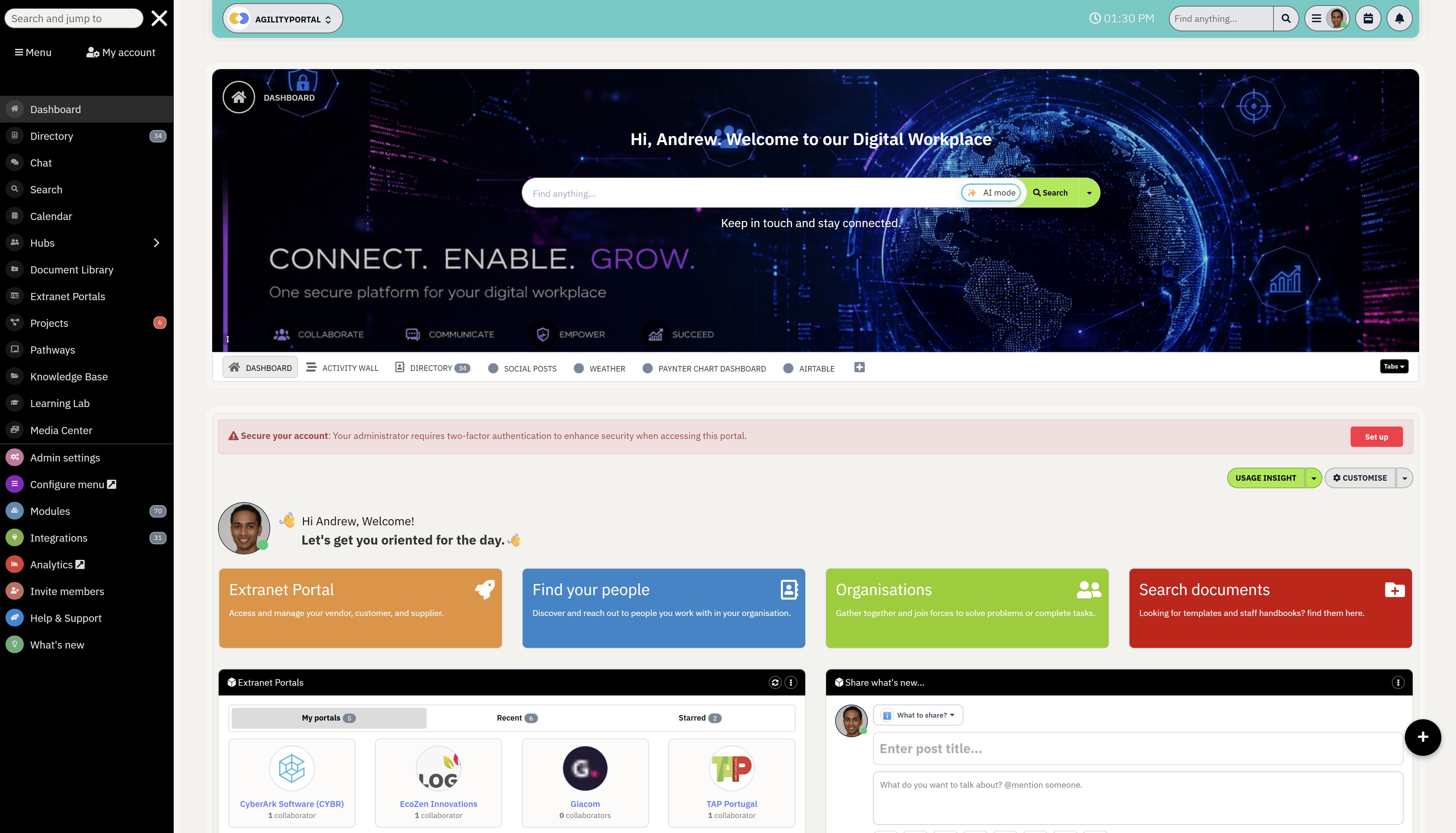
Why Organizations Are Choosing AgilityPortal for Partner Collaboration
As partner ecosystems continue to grow, organizations are realizing that traditional communication tools such as email, shared drives, and spreadsheets are no longer enough.
Modern businesses need a dedicated partner portal solution that helps them manage partner communication, partner onboarding,
document sharing, training, and collaboration from a single location.
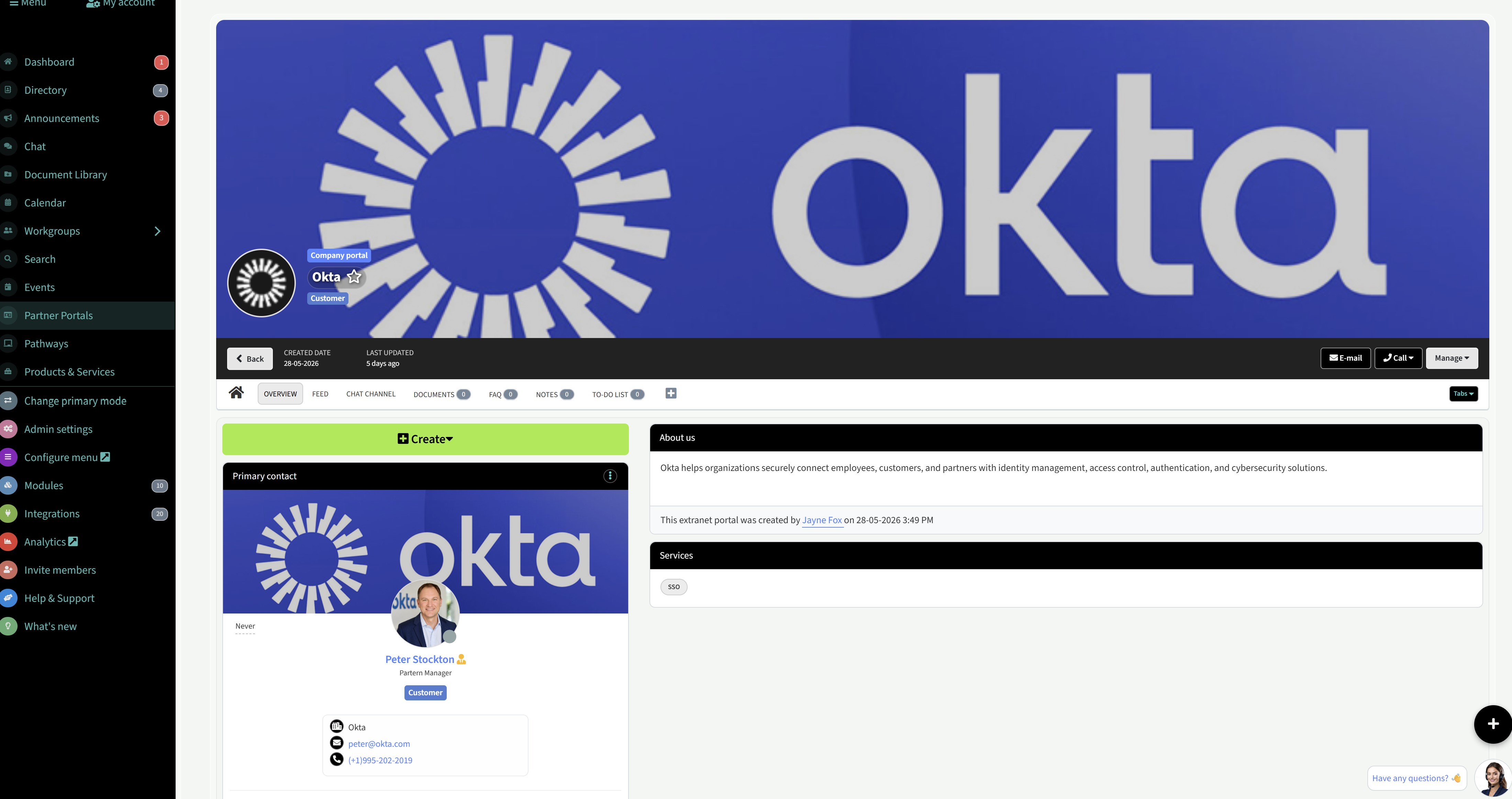
document sharing training and collaboration from a single location
This is where AgilityPortal stands out.
AgilityPortal is more than just a partner portal. It is a complete partner enablement platform designed to help organizations strengthen relationships with distributors, suppliers, channel partners, resellers, consultants, affiliates, and strategic business partners.
By centralizing communication, knowledge sharing, training, and collaboration, AgilityPortal helps organizations build a more connected and productive partner ecosystem.
Centralized Partner Communication
One of the biggest challenges in partner management is keeping everyone informed.
As organizations grow, important announcements, product updates, pricing changes, and partner communications often become scattered across emails and multiple systems.
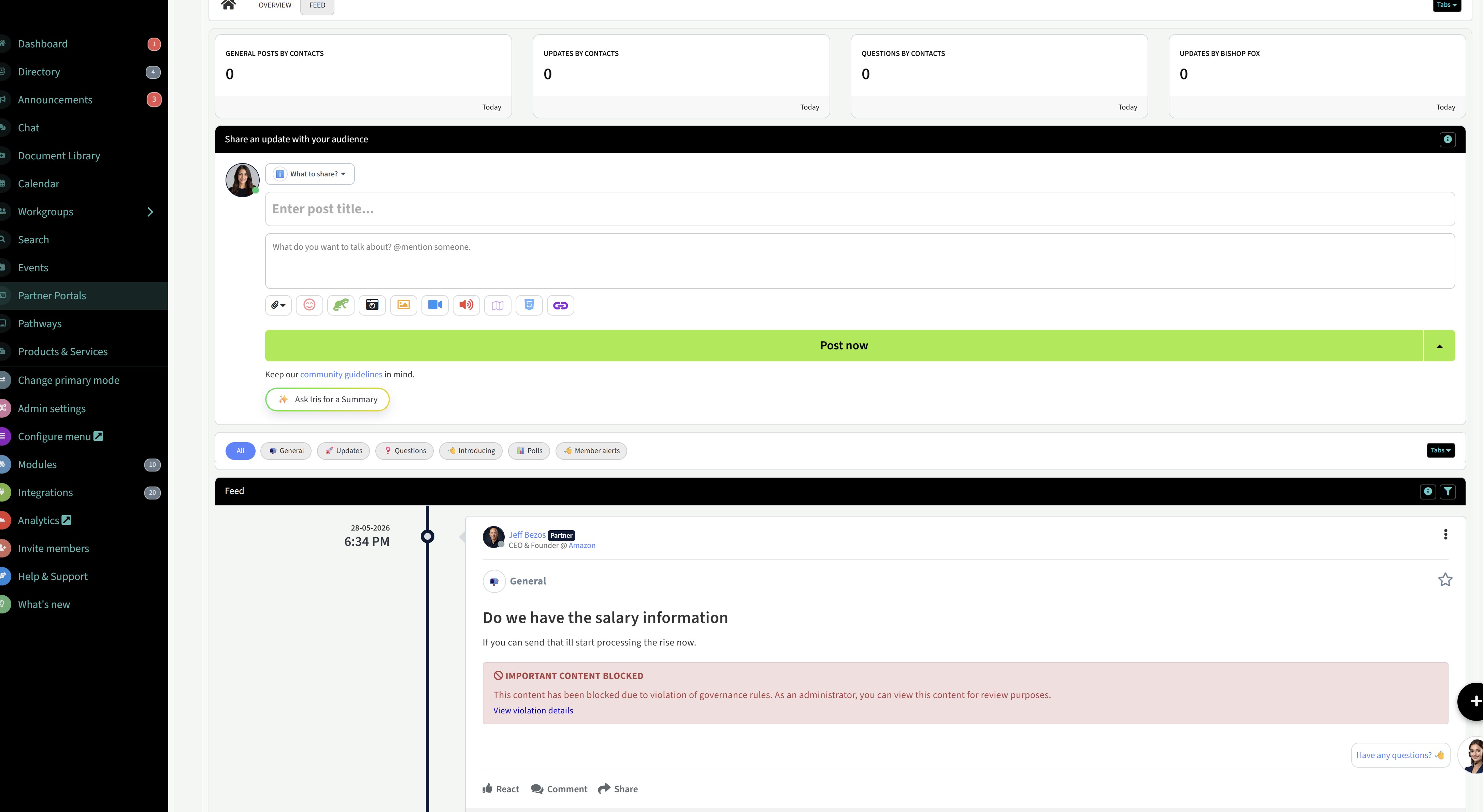
Centralized Partner Communication
AgilityPortal solves this problem by creating a centralized communication hub where partners can access announcements, updates, discussions, events, and important company news from a single location.
For example, imagine launching a new product update across hundreds of channel partners. Instead of sending multiple emails and hoping partners read them, organizations can publish the update within AgilityPortal, ensuring every partner has access to the latest information whenever they need it.
This improves partner collaboration while reducing communication silos and information overload.
Secure Document Management
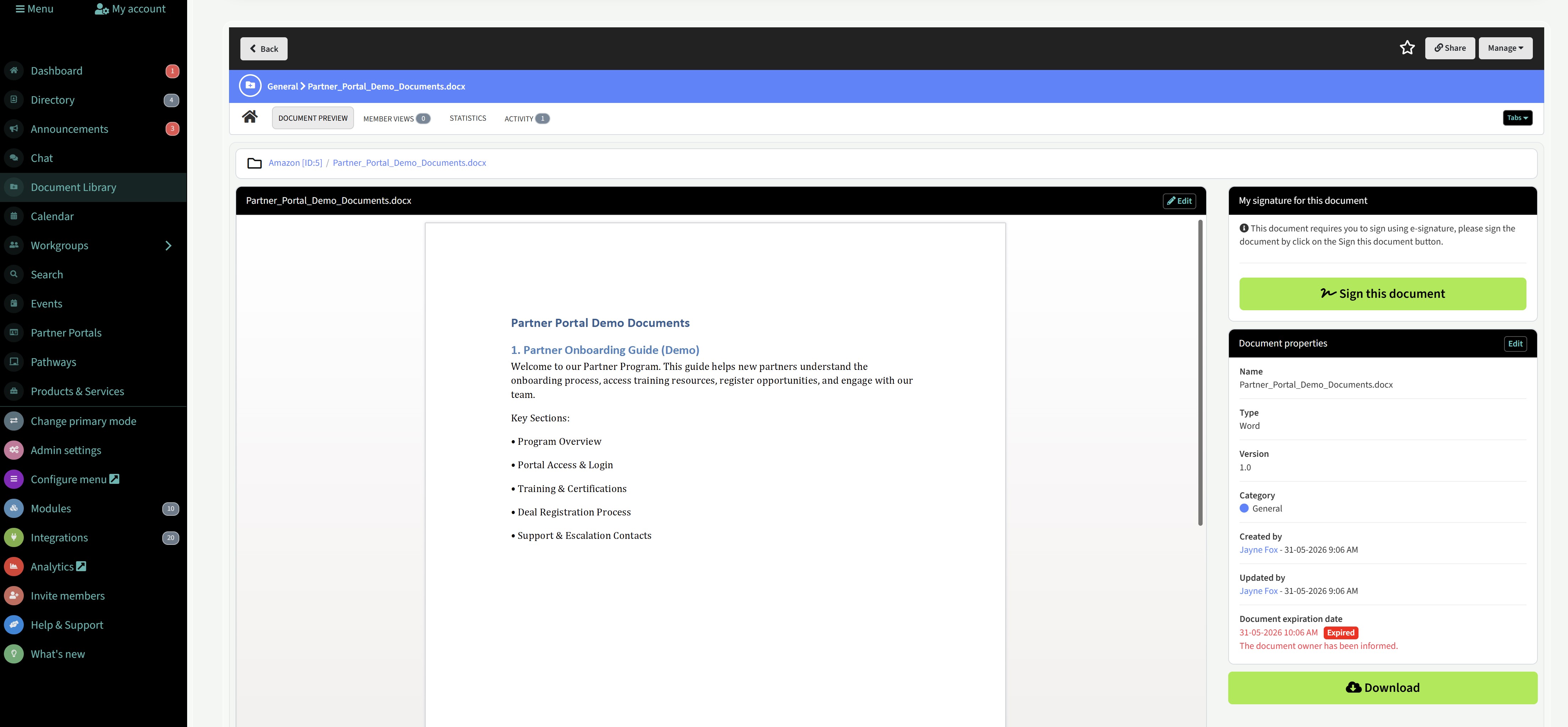
Secure Document Management
Many organizations struggle with document control. Product guides, pricing sheets, compliance documentation, onboarding resources, and marketing assets often exist in multiple versions across different inboxes and storage systems.
AgilityPortal provides a secure document management system that acts as a single source of truth for all partner resources.
Partners can instantly access:
- Product documentation.
- Sales enablement content.
- Marketing materials.
- Pricing guides.
- Compliance resources.
- Technical documentation.
- Partner agreements.
Version control ensures partners always access the latest information, helping reduce errors and improve operational efficiency.
Partner Knowledge Base
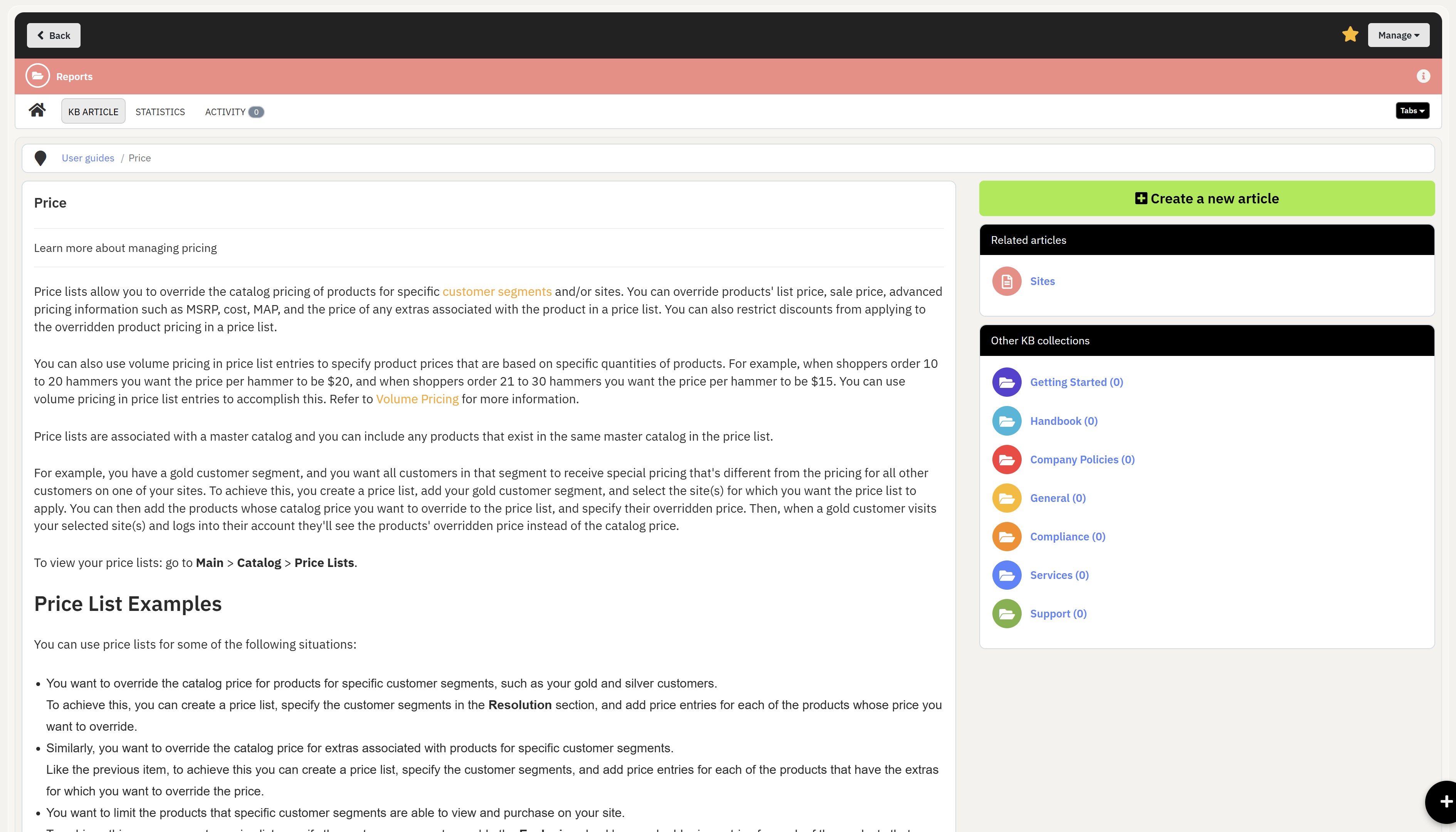
Partner Knowledge Base
A common problem within partner ecosystems is that valuable knowledge becomes trapped inside emails and individual departments.
AgilityPortal includes a powerful partner knowledge base that allows organizations to create a centralized repository of information. Instead of contacting support teams for answers, partners can quickly find the information they need through searchable articles, FAQs, documentation, and knowledge resources.
This helps reduce support requests while empowering partners to solve problems independently.
For organizations looking for software for partners, having a centralized knowledge management solution can dramatically improve partner productivity and engagement.
Training and Partner Onboarding Tools
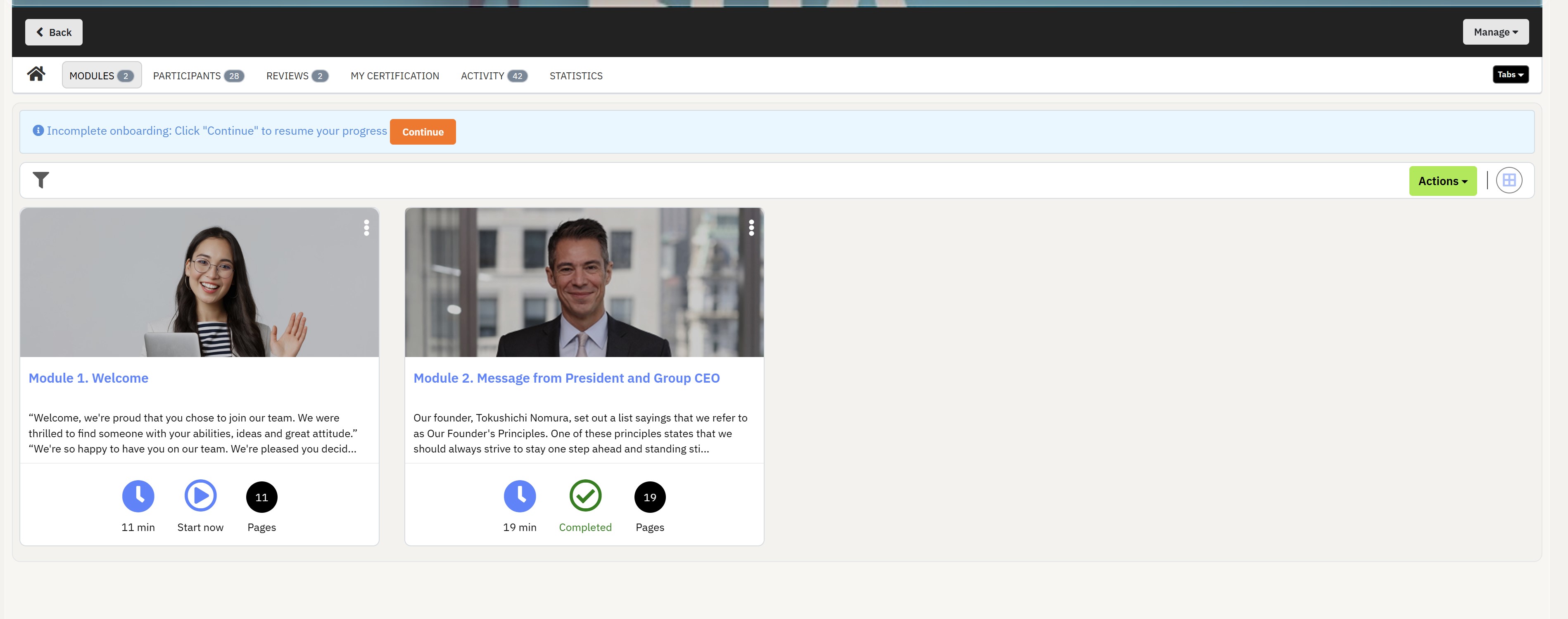
Training and Partner Onboarding Tools
Successful partnerships begin with effective onboarding. Unfortunately, many organizations still rely on email to distribute training materials, onboarding guides, compliance documentation, and sales resources.
AgilityPortal streamlines the entire process by providing structured onboarding pathways and learning experiences that help partners become productive faster.
New partners can complete training, access certifications, review product information, and learn about company processes from one centralized platform.
The result is:
- Faster partner activation.
- Improved onboarding consistency.
- Better training completion rates.
- Increased partner confidence.
- Reduced dependency on support teams.
Partner Communities and Discussion Spaces
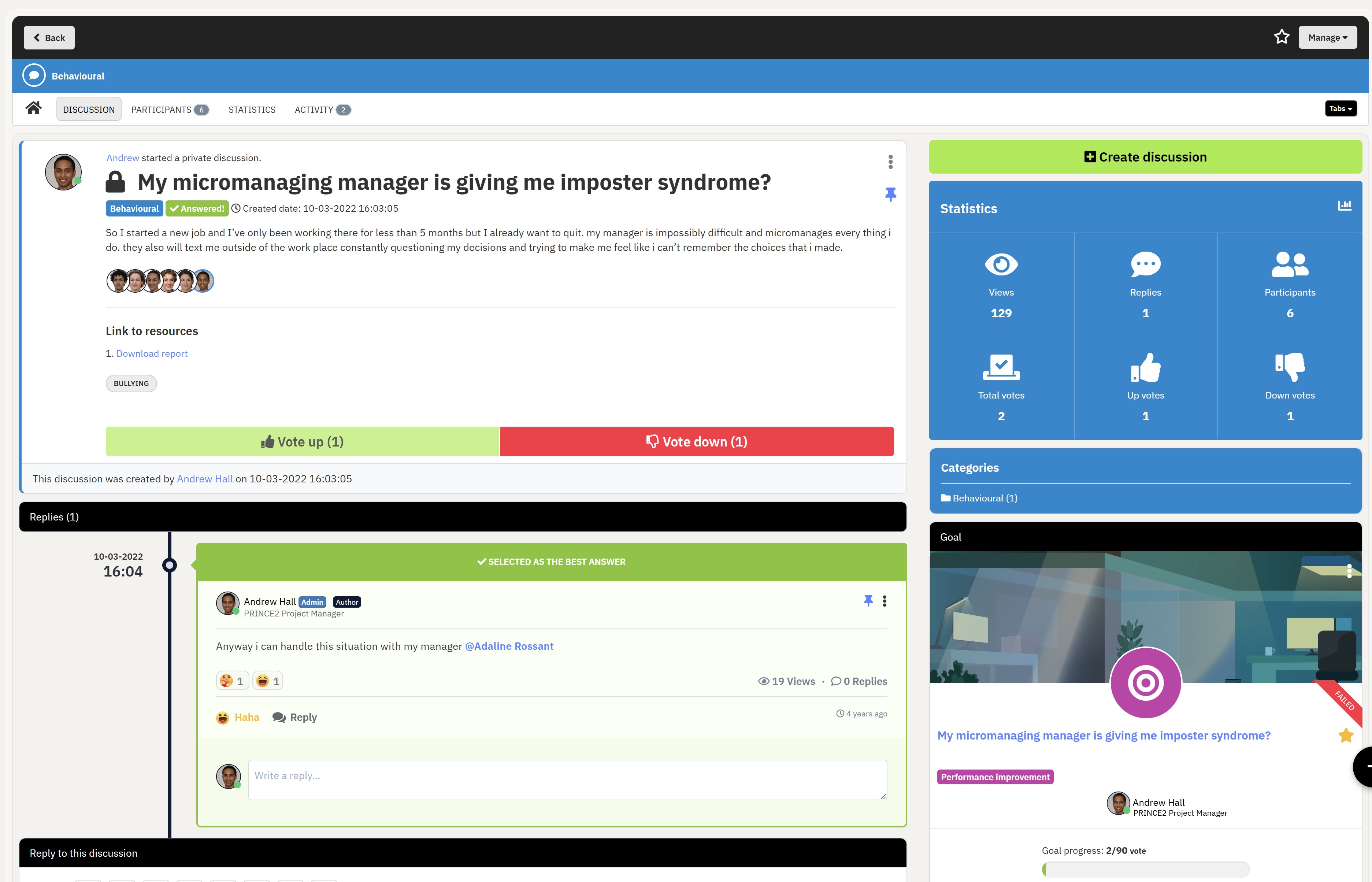
Partner Communities and Discussion Spaces
The strongest collaborative partnerships are built on communication and shared knowledge.
AgilityPortal enables organizations to create dedicated partner communities where partners can ask questions, share ideas, discuss challenges, and collaborate with both internal teams and other partners.
For example, a reseller can ask a question about a product feature, while another partner who has solved a similar challenge can provide guidance. This creates a collaborative environment that strengthens partner relationships and encourages knowledge sharing.
Many organizations refer to this as creating a true collaborative partnership model, where communication flows in multiple directions rather than being controlled solely through email.
Mobile Access for External Partners
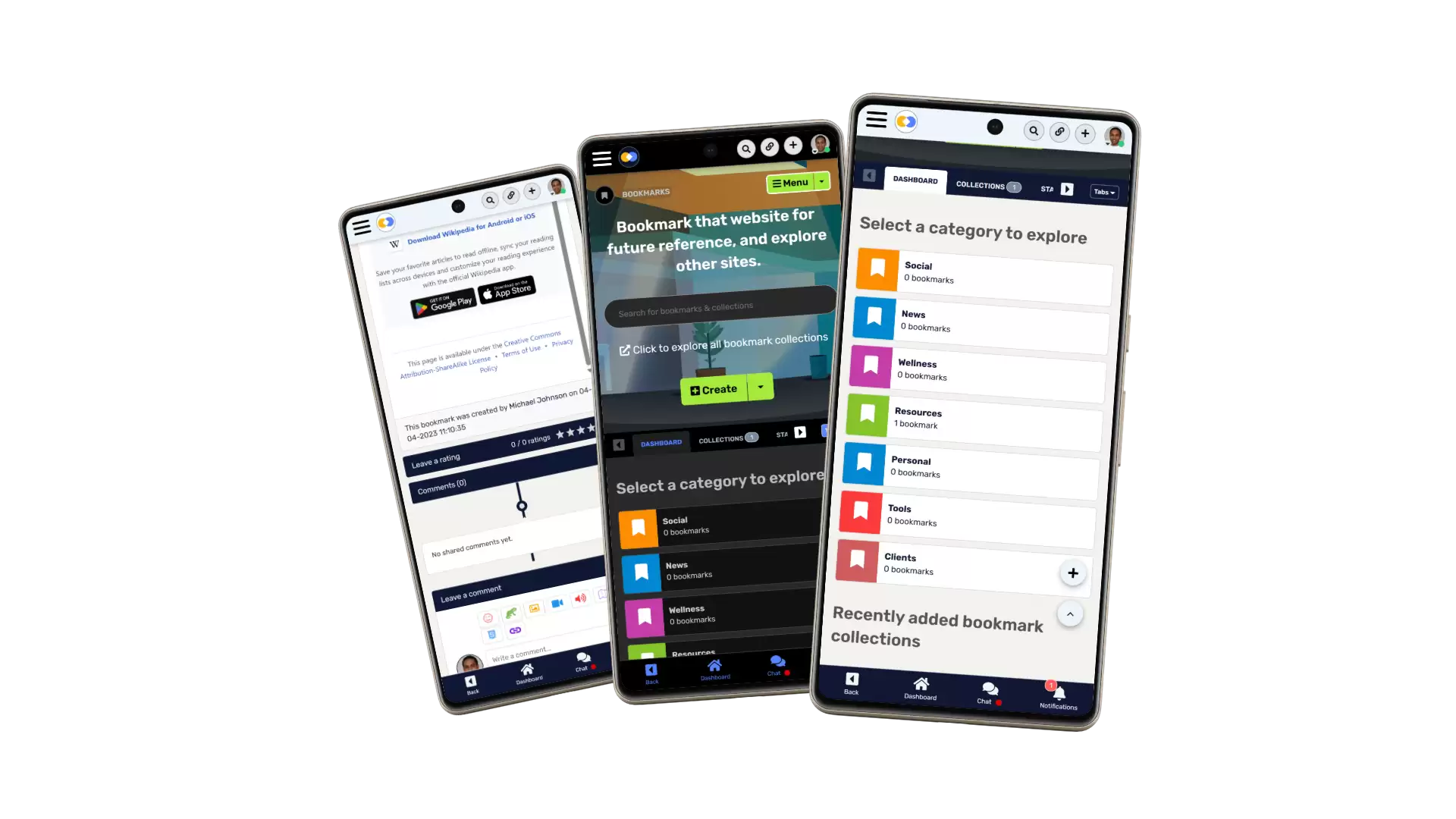
Mobile Access for External Partners
Today's partners are not always sitting behind a desk. Many work remotely, travel frequently, or operate across different regions and time zones.
AgilityPortal provides mobile access that allows external partners to stay connected from anywhere. Whether accessing documents, completing training, participating in discussions, or reviewing company updates, partners can stay engaged regardless of their location.
This flexibility is particularly valuable for organizations managing large partner networks where fast access to information can directly impact customer service and revenue opportunities.
Why AgilityPortal Is Different
Unlike many traditional partner management tools, AgilityPortal combines partner communication software, partner onboarding software, partner engagement tools, document management, knowledge sharing, training, collaboration spaces, and mobile access into one platform.
Rather than forcing partners to switch between multiple systems, AgilityPortal creates a single destination where everything needed to support partner success is available.
For organizations searching for:
- Partner portal software
- Partner management software
- Partner engagement software
- Partner communication software
- Partner onboarding software
- Channel partner management software
- Extranet software
- Software for partners
- Partner enablement platforms
AgilityPortal provides a modern solution designed to help businesses scale partner collaboration while improving productivity, engagement, and long-term channel growth.
Ready to Improve Partner Collaboration?
If your organization is struggling with communication chaos, lost documents, slow onboarding, or disengaged partners, it may be time to move beyond email.
AgilityPortal helps organizations centralize partner communication, streamline partner onboarding, manage partner resources, and create stronger collaborative partnerships with distributors, suppliers, resellers, consultants, and channel partners.
By giving partners instant access to the tools and information they need, organizations can improve partner engagement, strengthen relationships, and build a more successful partner ecosystem.
Book a Demo or Start Your Free Trial to see how AgilityPortal can transform the way you collaborate with your partners.
Frequently Asked Questions About Partner Collaboration
Why is email ineffective for partner collaboration?
Email was designed for person-to-person communication, not for managing complex partner ecosystems.
As organizations work with more distributors, resellers, suppliers, consultants, and strategic partners, important information often becomes buried in inboxes and lengthy email threads.
Product updates, training materials, pricing documents, and marketing resources can quickly become difficult to locate, leading to wasted time and communication delays.
Modern partner collaboration requires centralized access to information, real-time communication, and visibility across multiple stakeholders.
This is why many organizations are replacing email-heavy processes with partner portal software and partner enablement platforms that provide a single source of truth for partner communication and collaboration.
What is the biggest challenge with email communication?
The biggest challenge is information fragmentation.
Valuable knowledge becomes trapped inside individual inboxes, making it difficult for partners to find the resources they need when they need them.
Common issues include:
- Lost product update documents.
- Outdated pricing information.
- Duplicate versions of files.
- Missed announcements.
- Delayed responses to partner requests.
As partner ecosystems grow, these challenges can significantly reduce partner productivity, partner engagement, and overall channel performance.
What is a partner collaboration platform?
A partner collaboration platform is a centralized digital workspace that enables organizations and external partners to communicate, share resources, complete training, access documentation, and collaborate more effectively.
Unlike email, a partner collaboration platform provides a structured environment where partners can access information from a single location.
Most modern platforms include partner onboarding tools, document management, knowledge bases, training systems, discussion forums, analytics, and partner communication features.
Examples include partner portal software, partner management software, channel partner management platforms, and partner enablement solutions such as AgilityPortal.
How does a partner portal improve communication?
A partner portal improves communication by creating a centralized hub where all partner-related information is stored and managed.
Instead of relying on scattered emails, partners can access announcements, product updates, training materials, marketing resources, and documentation from one secure location.
This approach reduces communication chaos, improves visibility, increases partner engagement, and helps organizations build stronger collaborative partnerships with their external partners.
What are the 4 types of collaboration?
Organizations typically use four primary types of collaboration depending on their goals and business relationships.
- Team Collaboration involves individuals working together within the same organization to achieve a common objective.
- Cross-Functional Collaboration occurs when different departments such as sales, marketing, customer support, and operations work together on a shared initiative.
- External Collaboration involves working with suppliers, distributors, consultants, affiliates, or strategic partners outside the organization.
- Strategic Partner Collaboration focuses on long-term business partnerships where organizations jointly develop products, enter new markets, or pursue growth opportunities.
For most partner ecosystems, external collaboration and strategic partner collaboration are the most important forms of collaboration.
What are some examples of partner collaboration?
Common partner collaboration examples include resellers accessing sales resources through a partner portal, suppliers sharing procurement documents through a supplier portal, franchisees collaborating on training and marketing initiatives, and technology partners managing integrations through a centralized collaboration platform.
What are the 12 core principles of partnership and collaboration?
While frameworks vary between industries, successful collaboration and partnership in business typically share these core principles:
- Trust
- Transparency
- Shared goals
- Open communication
- Accountability
- Mutual respect
- Commitment
- Knowledge sharing
- Collaboration
- Flexibility
- Continuous improvement
- Long-term value creation
Organizations that build partnerships around these principles are more likely to create sustainable and productive business relationships.
What are the 5 rules of effective collaboration?
Effective collaboration depends on more than simply working together. The most successful organizations follow five core rules:
First, establish clear goals and expectations so everyone understands the desired outcome.
Second, maintain consistent communication to ensure information flows freely between stakeholders.
Third, provide easy access to information, resources, and documentation.
Fourth, define ownership and accountability so responsibilities are clear.
Finally, use the right collaboration tools and technology to support teamwork and communication.
Partner collaboration software and partner portals help organizations implement these rules at scale.
What are the 4 types of partnerships?
Businesses commonly use four types of partnerships to support growth and collaboration.
- Strategic Partnerships focus on long-term collaboration and mutual business growth.
- Channel Partnerships involve distributors, resellers, and sales partners that help bring products and services to market.
- Technology Partnerships allow organizations to integrate products, services, and expertise to create additional value for customers.
- Supplier Partnerships focus on managing relationships with vendors, manufacturers, and supply chain partners.
Each partnership type requires strong communication, partner engagement, and effective collaboration tools to be successful.
What Is a Partner System?
A partner system is a platform, process, or technology framework that helps organizations manage interactions with external partners.
This can include partner communication, onboarding, training, resource sharing, deal registration, analytics, and partner relationship management.
Modern partner systems often take the form of partner portals or partner enablement platforms that provide a centralized environment where partners can access the tools and information they need to succeed.
Solutions such as AgilityPortal help organizations streamline partner management while improving collaboration, productivity, and engagement across their entire partner ecosystem.
AI Summary
- Email is one of the biggest barriers to effective partner collaboration because important updates, product documents, pricing sheets, and training materials often get buried in crowded inboxes.
- As partner ecosystems grow, organizations need more than email to manage resellers, distributors, suppliers, affiliates, franchisees, consultants, and strategic partners across different locations.
- Modern partner portal software helps businesses centralize partner communication, partner onboarding, document sharing, partner training, and partner engagement in one secure location.
- Poor partner communication can create information silos, lost documents, version-control problems, delayed decisions, increased support requests, and missed revenue opportunities.
- A partner collaboration platform gives external partners self-service access to company updates, sales resources, knowledge bases, marketing assets, compliance documents, and support information.
- Businesses use partner enablement software to reduce email dependency, improve partner relationship management, speed up onboarding, and create a better partner experience.
- AgilityPortal helps organizations replace email-heavy partner communication with a secure partner portal designed for collaboration, resource sharing, training, knowledge management, and channel partner engagement.
Most Popular Posts

Effective communication among team members is vital for the productivity and success of any organization. Surprisingly, 60% of companies lack a long-term internal communication strategy, which p...


Businesses thrive on communication for efficiency, productivity and accomplishment. When the right information is passed from the right designation in the organization, it promotes positivity an...
Categories
Blog
(2970)
Business Management
(372)
Employee Engagement
(223)
Digital Transformation
(191)
Growth
(142)
Intranets
(136)
Remote Work
(63)
Sales
(53)
Collaboration
(48)
Customer Experience
(30)
Culture
(29)
Knowledge Management
(28)
Project management
(28)
Leadership
(20)
Comparisons
(9)
News
(1)

Related Posts

Partner collaboration has become a critical part of business growth, especially for organizations that rely on distributors, resellers, suppliers, affiliates, consultants, and channel partners to generate revenue. Yet surprisingly, many compani...

Most businesses invest heavily in marketing, advertising, social media, and SEO to attract new customers, but many overlook one of their most valuable marketing assets: their employees. That's where employee engagement comes in. Employee engage...

If you're searching for a SharePoint alternative for partner collaboration, you're certainly not alone. As businesses become increasingly reliant on distributors, suppliers, resellers, consultants, franchisees, and strategic partners, the abili...

Partner enablement software has become essential for businesses that rely on distributors, resellers, affiliates, consultants, suppliers, and channel partners to generate revenue. As partner networks grow, many organizations struggle with inconsisten...

Partner enablement is becoming a critical growth strategy for businesses that rely on distributors, resellers, suppliers, franchisees, or strategic partners. As partner networks expand, organizations need a better way to share information, deli...


Jill Romford
I am a digital nomad, lover of exploring new places and making friends.
I love to travel and I love the internet. I take pictures of my travels and share them on the internet using Instagram.
Traveler, entrepreneur, and community builder. I share my insights on digital marketing and social media while inspiring you to live your fullest life.
Ready to learn more? 👍
One platform to optimize, manage and track all of your teams. Your new digital workplace is a click away. 🚀
Free for 14 days, no credit card required.