
Insight Blog
Agility’s perspectives on transforming the employee's experience throughout remote transformation using connected enterprise tools.
43 minutes reading time
(8649 words)
RPA & BPM Integration Explained: Benefits, Tools, and Real Examples Used in 2026

RPA & BPM Integration Explained: Benefits, Tools, and Real Examples Used in 2026
Learn how RPA & BPM integration helps businesses automate workflows, reduce manual work, and improve process efficiency with real examples and tools.
RPA & BPM Integration Explained: Benefits, Tools, and Real Examples Used in 2026

Why are so many businesses still struggling with slow approvals, disconnected workflows, and repetitive manual tasks even after investing in automation software?
The reality is that many organisations automate individual tasks but fail to connect the entire business process together.
That's where RPA & BPM Integration is becoming a major priority for companies looking to improve efficiency, reduce operational bottlenecks, and scale automation properly across departments.
The demand for smarter automation is growing rapidly.
According to Gartner, around 90% of large enterprises now view hyperautomation as a strategic business priority because traditional automation alone is no longer enough to manage complex workflows at scale.
90%
of enterprises
According to Gartner, around 90% of large enterprises now view hyperautomation as a strategic priority because traditional automation alone is no longer enough to manage complex workflows at scale.
Source: Gartner
Meanwhile, Salesforce reports that organisations implementing intelligent automation technologies can achieve an average cost reduction of 32% when automation is connected across end-to-end business processes instead of isolated tasks.
32%
average cost reduction
According to Salesforce, organisations implementing intelligent automation technologies can achieve an average cost reduction of 32% when automation is connected across end-to-end business processes instead of isolated tasks.
Source: Salesforce
This article explores how businesses are combining robotic process automation with business process management to create more intelligent and scalable workflows.
Readers will discover how modern organisations are using automation to reduce manual work, improve visibility across operations, streamline approvals, and optimise business performance.
The guide also covers real-world use cases, popular automation platforms, implementation challenges, and practical strategies businesses can use to improve workflow efficiency without creating additional complexity.
Key Takeaways
- RPA & BPM Integration helps businesses automate repetitive tasks while improving workflow visibility, governance, and operational efficiency.
- Disconnected systems and manual approvals create workflow bottlenecks that slow down productivity and increase operational costs.
- Combining robotic automation with workflow management allows organisations to streamline approvals, reduce manual work, and scale processes more effectively.
- Modern automation platforms now include AI, analytics, low-code workflows, and process orchestration to improve business operations.
- Long-term automation success depends on workflow design, employee adoption, governance, and the ability to scale automation across departments.
What Is RPA & BPM Integration?
Businesses today are under pressure to automate faster while still maintaining control over approvals, compliance, and operational workflows. This is why RPA & BPM Integration has become such an important strategy for organisations looking to improve efficiency without creating disconnected automation systems.
Instead of treating automation as a collection of isolated bots, companies are now combining workflow management with robotic task automation to create more intelligent business operations.
At a high level, robotic process automation focuses on automating repetitive tasks, while business process management focuses on structuring and managing complete workflows from start to finish.
When combined correctly, businesses gain both speed and visibility across their operations.
Some of the biggest advantages include:
- Faster processing times across departments
- Reduced manual errors and repetitive work
- Better workflow visibility and reporting
- More consistent approval and compliance processes
- Improved scalability as businesses grow
Modern organisations are no longer looking for automation tools that simply mimic human clicks.
They want systems capable of managing entire business processes intelligently while still adapting to changing operational needs.
Understanding the Difference Between RPA and BPM
One of the biggest areas of confusion in enterprise automation is understanding the relationship between robotic automation and workflow management.
Discussions around RPA vs BPM often focus on which technology is better, but the reality is they solve very different problems inside an organisation.
Robotic process automation is designed to handle repetitive, rule-based tasks that normally require manual effort. These bots can log into systems, move data between applications, process invoices, extract information from forms, or complete repetitive administrative work automatically.
Business process management, on the other hand, focuses on managing the entire workflow itself. This includes approvals, task routing, governance, compliance checks, and process visibility across teams and departments.
In simple terms:
- RPA automates tasks
- BPM manages workflows
- RPA handles execution
- BPM controls orchestration
- RPA improves speed
- BPM improves structure and governance
When businesses start comparing rpa vs bpm how are they different, the answer usually comes down to scope. One focuses on individual actions, while the other focuses on the complete operational journey from beginning to end.
This distinction becomes important because automating tasks without managing the surrounding process often creates new bottlenecks instead of solving existing ones.
Why Businesses Are Combining Both Technologies
Many companies initially invested in automation expecting immediate operational transformation, only to discover that isolated bots could not solve larger workflow inefficiencies.
Automating repetitive tasks alone does not automatically fix broken approval chains, poor communication between departments, or fragmented systems.
This is why businesses are increasingly combining workflow orchestration with automation tools to improve end-to-end operational performance.
By integrating both technologies together, organisations can:
- Automate repetitive tasks while maintaining governance
- Route approvals automatically between departments
- Improve visibility across business operations
- Reduce delays caused by manual decision-making
- Scale automation beyond single-use cases
- Create more consistent customer and employee experiences
For example, finance teams may automate invoice extraction using bots, but the approval routing, auditing, exception handling, and escalation processes still require structured workflow management.
Without proper orchestration, automation can quickly become difficult to manage at scale.
This is also why demand for Rpa bpm integration certification programs has increased in recent years, as businesses seek professionals who understand both workflow architecture and automation strategy rather than isolated technologies alone.
The Shift Toward Intelligent Workflow Automation
Businesses are now moving beyond simple task automation and focusing on intelligent operational ecosystems that combine AI, workflow orchestration, analytics, and automation into one connected strategy.
Traditional automation projects often failed because they operated independently without visibility into the broader business process.
Today, organisations want automation systems capable of adapting to changing workflows, escalating exceptions automatically, and supporting decision-making across departments.
This shift has accelerated the growth of BPM automation as companies look for more scalable and manageable ways to streamline operations.
Modern intelligent workflows now commonly include:
- AI-powered document processing
- Automated approval routing
- Real-time workflow analytics
- Process monitoring dashboards
- Low-code automation development
- Cross-platform integrations between business systems
Instead of deploying disconnected bots across different departments, businesses are increasingly building centralised automation strategies designed around full operational workflows.
This approach not only improves efficiency but also provides greater transparency, compliance control, and long-term scalability across the organisation.
Key Benefits of BPM And RPA Combined
Businesses are under constant pressure to improve efficiency while reducing operational costs and manual workload.
This is one of the main reasons organisations are investing heavily in BPM And RPA Combined strategies to create faster, more scalable workflows across departments.
Instead of relying on disconnected automation tools or manual approvals, companies can automate repetitive work while still maintaining structure, governance, and visibility across the entire process.
When implemented correctly, this approach helps organisations remove workflow bottlenecks, improve collaboration between teams, and create more consistent operational processes.
It also allows businesses to scale automation gradually without disrupting existing systems or creating unnecessary complexity.
Some of the biggest benefits organisations experience include:
- Faster task completion across departments
- Reduced human error and repetitive data entry
- Better workflow tracking and compliance visibility
- Improved employee productivity and satisfaction
- Lower operational and administrative costs
- More scalable automation across business units
Faster Workflow Execution
One of the biggest challenges organisations face is the amount of time wasted moving information manually between systems, departments, and approval chains. Employees often spend hours copying data between platforms, following up on approvals, or waiting for updates from different teams before work can continue.
With RPA BPM Integration, businesses can automate repetitive administrative work while also managing the complete workflow from beginning to end. This reduces delays, improves operational consistency, and allows departments to complete processes significantly faster without increasing manual workload.
For example, businesses can automate:
- Invoice processing workflows that automatically extract financial data, validate information, and route documents to the correct manager for approval without requiring manual intervention.
- Employee onboarding processes that instantly trigger account creation, training assignments, HR documentation, and approval notifications when a new hire joins the company.
- Customer support escalation workflows that automatically assign tickets to the correct department based on urgency, issue type, or customer priority level.
- Procurement and purchasing requests that move through predefined approval chains without employees needing to chase managers through emails or spreadsheets.
- Compliance and audit documentation processes that automatically collect, organise, and track records required for regulatory reporting and governance reviews.
By reducing manual handoffs between departments, organisations can improve turnaround times while creating more reliable operational workflows across the business.
Better Process Visibility and Control
Many businesses struggle with limited visibility into how work moves across departments. Teams often rely on disconnected systems, emails, spreadsheets, and manual updates to track workflow progress, which creates confusion, delays, and missed approvals.
Structured automation helps organisations centralise workflow management while giving leadership teams greater oversight into operational performance. Managers can quickly identify where delays occur, which approvals are pending, and how efficiently processes are performing in real time.
Businesses gain better visibility through:
- Centralised workflow dashboards that provide a complete overview of operational activity, task progress, pending approvals, and process bottlenecks across departments.
- Real-time tracking systems that allow teams to monitor workflows instantly instead of relying on manual status updates or email follow-ups.
- Audit trail capabilities that automatically record approvals, changes, and process actions to support compliance, governance, and reporting requirements.
- Automated notifications and escalation rules that ensure important tasks are not delayed due to missed emails or forgotten approvals.
- Standardised approval workflows that create more consistency across departments while reducing the risk of human error or process confusion.
A strong RPA BPM Integration Example can be seen in finance departments where invoices are automatically processed, routed for approval, escalated when delayed, and fully tracked throughout the entire workflow lifecycle.
Reduced Operational Costs
Operational inefficiencies become increasingly expensive as businesses scale. Manual workflows require additional administrative effort, increase the risk of human error, and often slow down critical business operations that impact productivity and profitability.
Automation allows organisations to reduce repetitive work while improving process consistency across departments. Instead of hiring additional staff to manage growing operational demands, businesses can streamline workflows using intelligent automation technologies.
Some of the biggest cost-saving benefits include:
- Reducing the amount of time employees spend performing repetitive administrative tasks that provide little strategic business value.
- Lowering dependency on manual processes that often require multiple employees to complete approvals, data entry, and workflow coordination activities.
- Minimising operational errors and costly rework caused by inaccurate data entry, missed approvals, or inconsistent workflow handling.
- Accelerating transaction processing and decision-making by removing unnecessary delays between workflow stages and departments.
- Reducing compliance and auditing risks by ensuring workflows follow predefined governance rules and approval structures automatically.
Many organisations using modern RPA BPM Tools experience measurable operational improvements because automation reduces workload duplication while improving efficiency across multiple business functions.
Improved Employee Productivity
Employees often become frustrated when large portions of their workday are spent completing repetitive administrative tasks instead of contributing to more meaningful business activities.
Over time, this negatively impacts productivity, morale, and overall employee engagement.
Automation helps organisations create a more efficient work environment by removing repetitive manual processes and allowing employees to focus on higher-value responsibilities that require creativity, collaboration, and decision-making.
Businesses commonly improve productivity by automating:
- Data entry activities that require employees to repeatedly copy information between multiple systems or applications throughout the day.
- Approval notifications that automatically alert managers and teams when action is required, reducing unnecessary delays and follow-up emails.
- Report generation processes that compile operational data automatically instead of requiring staff to create reports manually using spreadsheets.
- Document processing workflows that organise, categorise, and route files without requiring employees to manage documentation manually.
- Customer request routing systems that automatically assign tickets or enquiries to the correct department based on predefined business rules.
Instead of replacing employees, automation supports teams by reducing repetitive workload and improving collaboration across departments.
Scalability Across Departments
One of the biggest advantages of automation is the ability to scale workflows across multiple departments without rebuilding processes every time the organisation grows.
Manual systems often struggle to handle increasing operational complexity, especially as businesses expand into new regions, teams, or service areas.
This is where RPA BPM Process Optimization becomes important because it allows businesses to standardise workflows while still adapting to different operational requirements across departments.
Departments that commonly benefit from scalable automation include:
- HR teams that need to manage onboarding, leave requests, compliance documentation, and employee lifecycle workflows more efficiently.
- Finance departments responsible for handling invoice approvals, expense processing, payment reconciliation, and financial reporting activities.
- Customer service operations that require faster ticket routing, escalation handling, and service request management across support teams.
- IT departments managing helpdesk requests, account provisioning, password resets, and technical support workflows across the organisation.
- Procurement and supply chain teams responsible for vendor approvals, purchase requests, inventory management, and order processing activities.
As organisations continue to grow, scalable automation strategies help maintain operational consistency, improve workflow efficiency, and reduce administrative pressure without increasing staffing requirements at the same pace as business expansion.
Real-World RPA BPM Integration Example Across Industries

RPA BPM Integration Example
Businesses across nearly every industry are now using workflow automation to reduce repetitive tasks, improve operational visibility, and accelerate decision-making.
Instead of relying on disconnected systems and manual processes, organisations are integrating automation platforms directly into their existing business operations to create faster and more scalable workflows.
Modern companies are commonly connecting platforms like Salesforce, SAP, Microsoft Power Automate, Workday, ServiceNow, UiPath, and Slack with workflow orchestration tools to streamline approvals, automate repetitive tasks, and improve cross-department collaboration.
This approach is especially valuable for organisations dealing with:
- High-volume administrative processes that slow down operations across departments.
- Manual approval chains that create delays in HR, finance, procurement, and customer service workflows.
- Disconnected systems that require employees to constantly move information between applications manually.
- Compliance-heavy industries where approvals, documentation, and audit tracking must remain accurate and consistent.
- Growing businesses that need scalable workflow automation without increasing administrative overhead.
Platforms like AgilityPortal also help businesses centralise communication, approvals, workflow visibility, and document collaboration alongside automation initiatives, making it easier for teams to stay aligned while operational processes become more automated.
Employee Onboarding Automation
Employee onboarding is one of the most common areas where organisations struggle with repetitive administration and disconnected processes. HR teams often need to coordinate between payroll systems, IT departments, compliance documentation, training platforms, and management approvals before a new employee can become fully operational.
Automation helps organisations streamline onboarding workflows by connecting systems together and automatically triggering tasks when a new employee joins the business.
Common onboarding workflow automations include:
- Automatically generating employee accounts in systems like Microsoft 365, Google Workspace, and Okta once onboarding forms are completed.
- Routing approval requests to HR managers, department heads, and IT teams without requiring manual email follow-ups.
- Assigning mandatory compliance training automatically through platforms like BambooHR or Workday.
- Sending automated welcome communications, employee policies, and onboarding tasks directly through internal communication platforms.
- Creating structured onboarding checklists that improve consistency across departments and office locations.
This not only reduces onboarding delays but also improves employee experience while helping HR teams manage growing workforce demands more efficiently.
Invoice Processing and Finance Workflow Automation
Finance departments often deal with large volumes of invoices, approvals, payment requests, and reconciliation processes that consume significant administrative time. Manual invoice handling also increases the risk of data entry errors, duplicate payments, and delayed approvals.
Workflow automation allows finance teams to streamline repetitive financial processes while maintaining stronger governance and audit tracking capabilities.
Businesses commonly automate finance operations by:
- Extracting invoice data automatically using intelligent document processing tools connected to ERP systems like Oracle NetSuite and SAP.
- Routing invoices through predefined approval chains based on purchase amount, department, or supplier category.
- Automatically validating supplier information and flagging duplicate or suspicious transactions for review.
- Integrating accounting workflows with platforms like QuickBooks and Xero to reduce manual reconciliation tasks.
- Generating real-time reporting dashboards that improve financial visibility and operational decision-making.
By automating repetitive finance workflows, organisations can improve processing speed, reduce operational risk, and create more scalable financial operations.
Customer Support Ticket Management
Customer support teams often struggle with high ticket volumes, inconsistent response times, and delayed escalation processes.
Without structured automation, support agents can spend unnecessary time manually assigning tickets or tracking customer requests across disconnected systems.
Automation platforms help businesses improve customer service workflows by streamlining ticket routing and improving response management.
Organisations commonly improve support operations by:
- Automatically assigning customer tickets based on urgency, issue type, customer tier, or department expertise.
- Connecting support systems like Zendesk, Freshdesk, and HubSpot Service Hub with internal workflow automation tools.
- Triggering escalation workflows automatically when service-level agreements are at risk of being breached.
- Sending real-time notifications to support teams and managers when urgent customer issues require attention.
- Reducing manual administration so support agents can focus more on customer interactions instead of repetitive ticket management tasks.
This improves customer satisfaction while helping businesses scale support operations more efficiently.
Healthcare and Compliance Workflow Automation
Healthcare organisations and compliance-driven industries manage large volumes of sensitive information, regulatory documentation, and approval workflows that require high levels of accuracy and governance.
Manual processing in these environments often creates delays, increases compliance risks, and makes auditing significantly more difficult.
Automation helps organisations improve compliance operations by:
- Processing patient documentation and compliance records faster while maintaining strict audit tracking.
- Routing approvals automatically between healthcare professionals, administrators, and compliance officers.
- Integrating systems like Epic Systems and Cerner with workflow management tools to reduce manual administration.
- Automating document retention, policy acknowledgements, and regulatory reporting processes.
- Improving operational visibility for compliance teams through real-time reporting and workflow monitoring dashboards.
This helps healthcare organisations reduce administrative workload while improving compliance accuracy and operational efficiency.
Supply Chain and Procurement Automation
Supply chain operations often involve multiple departments, suppliers, approval stages, and inventory systems working together simultaneously.
Manual procurement workflows can easily create delays, purchasing errors, and communication breakdowns across the organisation.
Workflow automation allows procurement and supply chain teams to streamline purchasing processes while improving vendor management and operational visibility.
Businesses commonly automate supply chain workflows by:
- Routing purchase requests automatically to the correct managers based on budget thresholds and department policies.
- Integrating procurement systems with platforms like SAP Ariba and Coupa to improve purchasing efficiency.
- Automating supplier onboarding, contract approvals, and compliance verification processes.
- Tracking inventory updates and order status automatically across multiple operational systems.
- Reducing procurement delays by eliminating repetitive manual approvals and disconnected communication processes.
As supply chains become more complex, automation helps organisations improve operational control while reducing inefficiencies that impact delivery timelines and business performance.
Best RPA BPM Tools for Workflow Automation
As businesses continue investing in workflow automation, choosing the right platform has become one of the biggest challenges for IT leaders and operations teams.
Some platforms focus heavily on robotic automation, while others specialise in workflow orchestration, case management, or low-code process automation.
The best automation strategy often depends on the organisation's goals, existing systems, technical resources, and scalability requirements. Some businesses need enterprise-grade automation for complex operations, while others want flexible low-code platforms that non-technical teams can manage internally.
Modern organisations are commonly integrating automation platforms with systems like Salesforce, SAP, Oracle NetSuite, ServiceNow, and collaboration platforms like AgilityPortal to centralise communication, approvals, workflows, and operational visibility.
Below are some of the leading automation and workflow orchestration platforms businesses are using today.

RPA BPM Tools
UiPath
UiPath is one of the most recognised enterprise automation platforms in the market and is widely used for robotic process automation across finance, HR, customer service, and IT operations.
The platform is particularly strong for organisations looking to automate repetitive administrative tasks at scale while integrating with multiple enterprise systems.
Key strengths include:
- Advanced robotic automation capabilities designed for enterprise-scale operations and high-volume task processing.
- Strong AI and document processing features that help businesses automate invoice handling, forms, and repetitive data extraction workflows.
- Large integration ecosystem supporting platforms like SAP, Salesforce, Oracle, and Microsoft environments.
- Centralised orchestration tools that allow businesses to monitor bots, workflows, and automation performance in real time.
- Strong community support and enterprise adoption across multiple industries globally.
UiPath is often best suited for larger organisations managing complex operational automation requirements.
UiPath
Enterprise RPA & Workflow Automation Platform
UiPath is a leading robotic process automation platform designed to help businesses automate repetitive tasks, improve workflow efficiency, and scale enterprise automation across departments.
Automation Anywhere
Automation Anywhere focuses heavily on AI-powered automation and cloud-native robotic process automation capabilities. The platform is commonly used by enterprises looking to combine automation with intelligent document processing and analytics.
Businesses often choose this platform because of its scalability and AI integration features.
Common advantages include:
- Cloud-native automation architecture that supports enterprise scalability and remote deployment strategies.
- AI-powered document automation capabilities that reduce manual processing in finance and customer operations.
- Strong analytics and operational reporting tools that improve workflow visibility across departments.
- Enterprise-grade security and governance controls designed for regulated industries and compliance-heavy operations.
- Flexible automation deployment options for hybrid and cloud environments.
Automation Anywhere is often a strong fit for businesses prioritising intelligent automation and cloud scalability.
Automation Anywhere
Cloud-Native RPA & Intelligent Automation Platform
Automation Anywhere helps businesses automate repetitive tasks, improve workflow efficiency, and scale intelligent automation across departments.
Microsoft Power Automate
Microsoft Power Automate has become extremely popular among businesses already operating within the Microsoft ecosystem. The platform allows organisations to create automated workflows with minimal coding while connecting applications across Microsoft 365 and external systems.
It is particularly attractive for businesses wanting quick workflow automation without extensive development resources.
Popular features include:
- Deep integration with Microsoft 365, Teams, SharePoint, Dynamics 365, and Azure environments.
- Low-code workflow automation capabilities that allow non-technical teams to build automation processes more easily.
- Prebuilt connectors for hundreds of applications, including Salesforce, Dropbox, Google Workspace, and ServiceNow.
- AI Builder capabilities that support document automation and predictive workflows.
- Affordable entry points for organisations already using Microsoft enterprise licensing.
Many growing businesses use Power Automate to streamline internal approvals, onboarding processes, and document workflows.
Microsoft Power Automate
Low-Code Workflow & Business Automation Platform
Microsoft Power Automate helps businesses automate workflows, streamline approvals, and connect Microsoft 365 with third-party applications using low-code automation tools.
Appian
Appian is a BPM-first automation platform designed around workflow orchestration, process modelling, and low-code application development. The platform is commonly used by organisations managing complex workflows that require strong governance and visibility.
Businesses often use Appian for process-heavy operational environments where workflow structure is critical.
Core advantages include:
- Strong business process modelling capabilities that help organisations visualise and optimise workflows.
- Low-code application development features that allow businesses to build operational tools faster.
- Workflow orchestration designed for end-to-end process management across departments.
- AI integration and automation features that improve decision-making and process efficiency.
- Enterprise-grade governance and compliance management capabilities.
Appian is particularly strong for organisations managing structured enterprise workflows and large operational processes.
Appian
Low-Code BPM & Workflow Automation Platform
Appian helps businesses automate workflows, improve process visibility, and manage complex business operations using low-code process automation tools.
Pega
Pega is widely known for case management, workflow automation, and AI-driven operational decisioning. Large enterprises often use the platform for customer service operations, financial services workflows, and compliance-heavy business processes.
The platform focuses heavily on intelligent process orchestration and operational agility.
Key benefits include:
- Advanced case management capabilities designed for complex enterprise workflows and customer operations.
- AI-powered decisioning tools that improve workflow routing and operational efficiency.
- Strong customer service workflow management capabilities across support and service departments.
- Scalable enterprise automation architecture designed for large organisations with complex operational structures.
- Integration support for CRM, ERP, and enterprise business systems.
Pega is commonly adopted by enterprises requiring high levels of workflow control and intelligent process management.
Pega
AI-Powered BPM & Enterprise Workflow Platform
Pega helps businesses automate workflows, improve customer operations, and streamline complex enterprise processes using AI-powered workflow automation.
Camunda
Camunda is a developer-focused workflow orchestration platform designed for organisations that require flexible and highly customisable process automation capabilities.
Unlike some low-code platforms, Camunda is often preferred by technical teams building automation workflows directly into custom applications and enterprise systems.
Popular strengths include:
- Open architecture designed for flexible integration with custom enterprise applications and APIs.
- BPMN-based workflow orchestration that provides strong visibility into complex operational workflows.
- Developer-friendly environment that supports advanced customisation and process engineering.
- Lightweight automation engine suitable for scalable cloud-native environments.
- Strong orchestration capabilities for managing microservices and distributed systems.
Camunda is often best suited for organisations with strong internal development teams and highly customised workflow requirements.
Camunda
Developer-Focused Workflow Orchestration Platform
Camunda helps businesses orchestrate workflows, automate business processes, and improve operational visibility across complex enterprise systems.
RPA BPM Tools Comparison Table
| Platform | Best For | Key Strengths | Ideal Business Type |
| UiPath | Enterprise RPA | Advanced robotic automation and orchestration | Large enterprises |
| Automation Anywhere | Intelligent automation | Cloud-native AI automation | Enterprise organisations |
| Microsoft Power Automate | Microsoft ecosystem workflows | Easy low-code automation | SMBs and enterprises |
| Appian | BPM and workflow orchestration | Process modelling and governance | Process-heavy enterprises |
| Pega | Case management automation | AI-driven workflow decisioning | Large regulated industries |
| Camunda | Developer-led workflow orchestration | Flexible BPMN workflow automation | Technical organisations |
How to Choose the Right Automation Platform
Choosing the right automation platform depends heavily on the organisation's operational complexity, technical capabilities, integration requirements, and long-term automation strategy.
Before selecting a platform, businesses should evaluate:
- Whether the platform integrates easily with existing systems like ERP, CRM, HR, and collaboration tools.
- How scalable the automation architecture is as operational demands increase across departments.
- Whether non-technical teams can manage workflows using low-code or no-code development tools.
- The level of governance, compliance, and workflow visibility required by the organisation.
- The platform's AI capabilities for document processing, analytics, and intelligent workflow automation.
- Long-term licensing, deployment, and operational management costs.
For many organisations, successful automation is not just about deploying bots. It is about creating connected operational workflows that improve visibility, collaboration, efficiency, and scalability across the entire business.
How RPA BPM Process Optimization Improves Efficiency
Identifying Workflow Bottlenecks
Many business workflows are slowed down by manual approvals, duplicated tasks, and disconnected systems.
Without proper workflow visibility, organisations often:
- Waste time chasing approvals instead of completing operational work.
- Experience delays caused by inconsistent processes and manual decisions.
- Struggle to identify where workflow bottlenecks are happening.
- Create unnecessary administrative workload across departments.
Research from IDC found that process inefficiencies can reduce productivity by up to 30% in businesses relying heavily on manual workflows.
The benefit of workflow optimisation is operational clarity. Businesses can remove repetitive delays while improving how work moves across departments.
This directly improves performance:
- Faster approvals
- Better workflow visibility
- Improved employee productivity
- Reduced operational friction
Over time, this creates a more scalable and efficient business environment.
Standardising Business Processes
Many organisations operate with inconsistent workflows across departments and teams.
Without standardised processes, businesses often:
- Handle the same tasks differently across departments.
- Increase compliance risks due to inconsistent approvals.
- Create confusion using outdated workflow procedures.
- Struggle to scale operations efficiently.
Research from Gartner suggests that organisations with standardised workflows operate far more efficiently than businesses relying on fragmented processes.
The benefit of process standardisation is consistency. Businesses can create repeatable workflows that improve governance and operational control.
This directly improves operations:
- More reliable workflows
- Better compliance management
- Reduced process errors
- Easier employee training
Over time, this creates a stronger operational foundation for growth.
Automating Multi-Step Processes
Many operational workflows involve multiple departments, approvals, and systems working together at the same time.
Without connected automation, organisations often:
- Depend on employees to manually move information between systems.
- Experience delays during approvals and escalations.
- Lose visibility across disconnected workflows.
- Struggle to manage growing operational complexity.
This is especially common in HR, finance, procurement, and customer support operations.
The benefit of multi-step automation is operational flow. Businesses can automate handoffs while improving workflow coordination across departments.
This directly improves efficiency:
- Faster collaboration between teams
- Reduced administrative workload
- Better workflow tracking
- Improved operational scalability
Over time, this creates more agile and efficient business operations.
Using Analytics to Improve Automation Performance
Many businesses automate workflows without properly measuring operational performance.
Without workflow analytics, organisations often:
- Struggle to identify inefficient automation processes.
- Miss opportunities to improve workflow performance.
- Lack visibility into delays and operational bottlenecks.
- Depend on assumptions instead of real data.
Modern automation platforms provide real-time reporting and workflow analytics that help businesses continuously improve operations.
The benefit of workflow analytics is optimisation. Businesses gain visibility into automation performance and operational efficiency.
This directly improves outcomes:
- Better workflow tracking
- Faster bottleneck identification
- Improved decision-making
- Greater visibility into automation ROI
Over time, this helps businesses create smarter and more adaptable operational workflows.
Common Challenges in RPA & BPM Integration
While automation can improve efficiency and reduce operational workload, many businesses still struggle to achieve long-term success with workflow automation projects.
One of the biggest reasons is that organisations often focus too heavily on the technology itself while overlooking process structure, employee adoption, and operational governance.
Successful automation requires more than deploying bots or workflow tools.
Businesses need clear processes, connected systems, strong governance, and employees who understand how automation fits into daily operations.
Without these foundations, automation projects can quickly become difficult to manage and scale.
Poor Process Mapping
One of the most common mistakes businesses make is automating inefficient or poorly designed workflows.
If a process already contains unnecessary approvals, duplicated tasks, or operational bottlenecks, automation simply allows those problems to happen faster instead of fixing them.
Many organisations rush into automation without properly analysing how work flows across departments. This often leads to disconnected automations, inconsistent workflows, and operational confusion.
In some cases, employees may even create manual workarounds because the automated process does not reflect how the business actually operates.
Before introducing automation, organisations need to identify bottlenecks, simplify workflows, and remove unnecessary complexity.
Businesses that invest time into process mapping typically achieve better automation performance and fewer operational issues over time.
Lack of Change Management
echnology adoption is often one of the biggest challenges in automation projects. Employees may resist workflow changes if they do not understand how automation will impact their responsibilities or daily tasks.
In many organisations, automation initiatives fail because teams are not properly trained or included in the implementation process.
Employees may feel uncertain about new systems, fear job displacement, or continue using old manual processes even after automation has been introduced.
Strong change management helps businesses improve adoption by providing training, communication, and operational support throughout the implementation process.
When employees understand how automation reduces repetitive workload and improves productivity, adoption rates are usually much higher.
Integration Complexity
Many businesses operate across multiple systems that were never originally designed to work together.
Legacy applications, outdated databases, and disconnected platforms can make workflow automation far more difficult than expected.
Some organisations discover that important business systems lack modern APIs or integration capabilities, forcing teams to rely on complex workarounds or manual intervention.
This can increase implementation costs and reduce the overall effectiveness of automation initiatives.
Integration challenges become even more difficult when businesses are managing data across ERP systems, CRM platforms, HR software, communication tools, and cloud applications simultaneously.
Modern workflow automation platforms help reduce some of this complexity by offering prebuilt integrations with systems like Salesforce, SAP, ServiceNow, and Microsoft Power Automate, but businesses still need a clear integration strategy before scaling automation across departments.
Governance and Security Risks
As automation expands across an organisation, governance and security become increasingly important.
Automated workflows often handle sensitive employee data, customer records, financial information, and operational processes that require strict access controls and compliance management.
Without proper governance, businesses may struggle to track workflow activity, manage permissions, or maintain compliance with industry regulations.
Poorly managed automation can also increase security risks if employees gain access to systems or data they should not be able to view.
This becomes especially critical in industries such as healthcare, finance, legal services, and government operations where compliance requirements are extremely strict.
Businesses need clear governance frameworks that define approval structures, access permissions, workflow ownership, auditing standards, and compliance monitoring processes.
Organisations using centralised collaboration platforms like AgilityPortal alongside workflow automation can also improve visibility and communication across departments while maintaining stronger operational oversight.
Best Practices for Successful RPA & BPM Integration
Many automation projects fail not because the technology is weak, but because businesses implement automation without a long-term operational strategy.
Successful workflow automation requires organisations to focus on process design, scalability, governance, and employee adoption from the beginning.
Businesses that approach automation strategically are far more likely to improve efficiency, reduce operational costs, and scale workflows successfully across departments.
Instead of treating automation as a quick technical fix, leading organisations build automation frameworks designed to support long-term business growth.
Start With High-Impact Workflows
One of the biggest mistakes organisations make is trying to automate everything at once.
Large-scale automation projects often become difficult to manage when businesses attempt to transform every process simultaneously without clear priorities.
The best approach is to begin with workflows that generate the biggest operational impact while still being relatively easy to automate.
These are usually repetitive, time-consuming processes that involve predictable tasks and high administrative workload.
Finance approvals, employee onboarding, customer support routing, procurement requests, and compliance documentation are often strong starting points because they typically involve manual steps that can be automated quickly.
Starting with smaller, high-value workflows also helps businesses build confidence internally while proving automation ROI before expanding into more complex operational areas.
Focus on End-to-End Automation
Many businesses automate isolated tasks but fail to connect the entire workflow together.
This creates fragmented operations where employees still need to manually manage approvals, escalations, or communication between systems.
True workflow efficiency comes from automating the full operational journey instead of individual actions alone. Businesses should focus on how information moves from one department to another while ensuring workflows remain connected from start to finish.
For example, automating invoice data extraction alone may save time, but the real operational value comes when approvals, notifications, auditing, reporting, and payment processing are also integrated into the same workflow.
Organisations that focus on end-to-end automation often achieve better scalability, stronger visibility, and fewer operational bottlenecks across departments.
Align Automation With Business Goals
Automation should always support broader business objectives rather than existing as a standalone IT initiative.
Businesses that implement automation without clear operational goals often struggle to measure value or prioritise the right workflows.
Before launching automation projects, organisations should define what success actually looks like. Some businesses focus on reducing operational costs, while others prioritise customer experience, compliance, employee productivity, or faster decision-making.
When automation strategies align with business goals, it becomes easier to prioritise investments, measure performance, and gain leadership support across departments.
This also helps prevent organisations from automating low-value tasks that generate little measurable business impact over time.
Monitor and Continuously Improve Processes
Automation should never be treated as a one-time deployment.
Business operations constantly evolve, which means workflows, approvals, systems, and operational requirements will continue changing over time.
Without ongoing monitoring, businesses may fail to notice workflow inefficiencies, process delays, or automation failures that gradually reduce operational performance.
Modern automation platforms provide workflow analytics, reporting dashboards, and real-time monitoring tools that help organisations track performance continuously.
This visibility allows businesses to identify bottlenecks, optimise workflows, and improve automation strategies as operational needs change.
Organisations that regularly review and refine automation processes are typically more successful at scaling automation long term.
Build Automation Governance Early
As automation expands across departments, governance becomes increasingly important.
Without clear ownership and operational standards, businesses can quickly lose visibility into how workflows are managed, who controls approvals, and how data is being accessed.
Strong governance frameworks help organisations maintain compliance, security, and operational consistency while reducing risks associated with large-scale automation.
This includes defining workflow ownership, access permissions, approval structures, auditing requirements, and compliance controls before automation is deployed widely across the organisation.
Businesses integrating platforms like AgilityPortal alongside automation tools can also improve operational communication, workflow visibility, and collaboration between departments while maintaining stronger governance oversight across business processes.
The Future of Intelligent Workflow Automation
The future of business automation is moving far beyond simple task automation.
Organisations are now focusing on intelligent workflows that combine AI, analytics, workflow orchestration, and automation into a single connected operational strategy.
Instead of automating isolated tasks, businesses want systems capable of adapting to changing processes, predicting operational issues, and improving decision-making automatically.
This shift is one of the biggest reasons RPA BPM Integration continues to grow across industries such as finance, healthcare, logistics, HR, and customer service. Businesses are no longer looking for standalone bots that only complete repetitive actions.
They want connected automation ecosystems capable of managing entire operational workflows from beginning to end.
Artificial intelligence is also transforming how automation platforms operate. Modern systems can now analyse documents, predict workflow bottlenecks, recommend actions, and automate decision-making with far greater accuracy than traditional rule-based automation tools. This allows businesses to improve efficiency while reducing operational delays caused by manual intervention.
At the same time, low-code and no-code platforms are making automation more accessible to non-technical teams. Business departments can now build workflows using drag-and-drop interfaces instead of relying entirely on developers or IT teams.
Many modern RPA BPM Tools now include AI-powered workflow builders, analytics dashboards, and prebuilt integrations that help organisations automate operations much faster.
Another major trend is hyperautomation, where businesses combine AI, robotic automation, workflow orchestration, analytics, and process mining together to create highly scalable automation strategies.
Instead of deploying disconnected automation projects, organisations are building centralised systems capable of supporting multiple departments simultaneously.
As businesses continue scaling automation initiatives, BPM And RPA Combined strategies are becoming increasingly important because they provide both workflow structure and operational flexibility.
This allows organisations to automate repetitive work while still maintaining governance, visibility, and compliance across departments.
The future will also place a stronger focus on predictive automation, where systems identify workflow inefficiencies before they create operational problems.
Businesses investing in RPA BPM Process Optimization are already using analytics and AI to improve workflow performance continuously while reducing delays, bottlenecks, and administrative overhead.
Over time, automation will become less about replacing tasks and more about creating intelligent operational ecosystems that improve collaboration, efficiency, and decision-making across the entire organisation.
AgilityPortal: The Modern Digital Workplace for Growing Teams
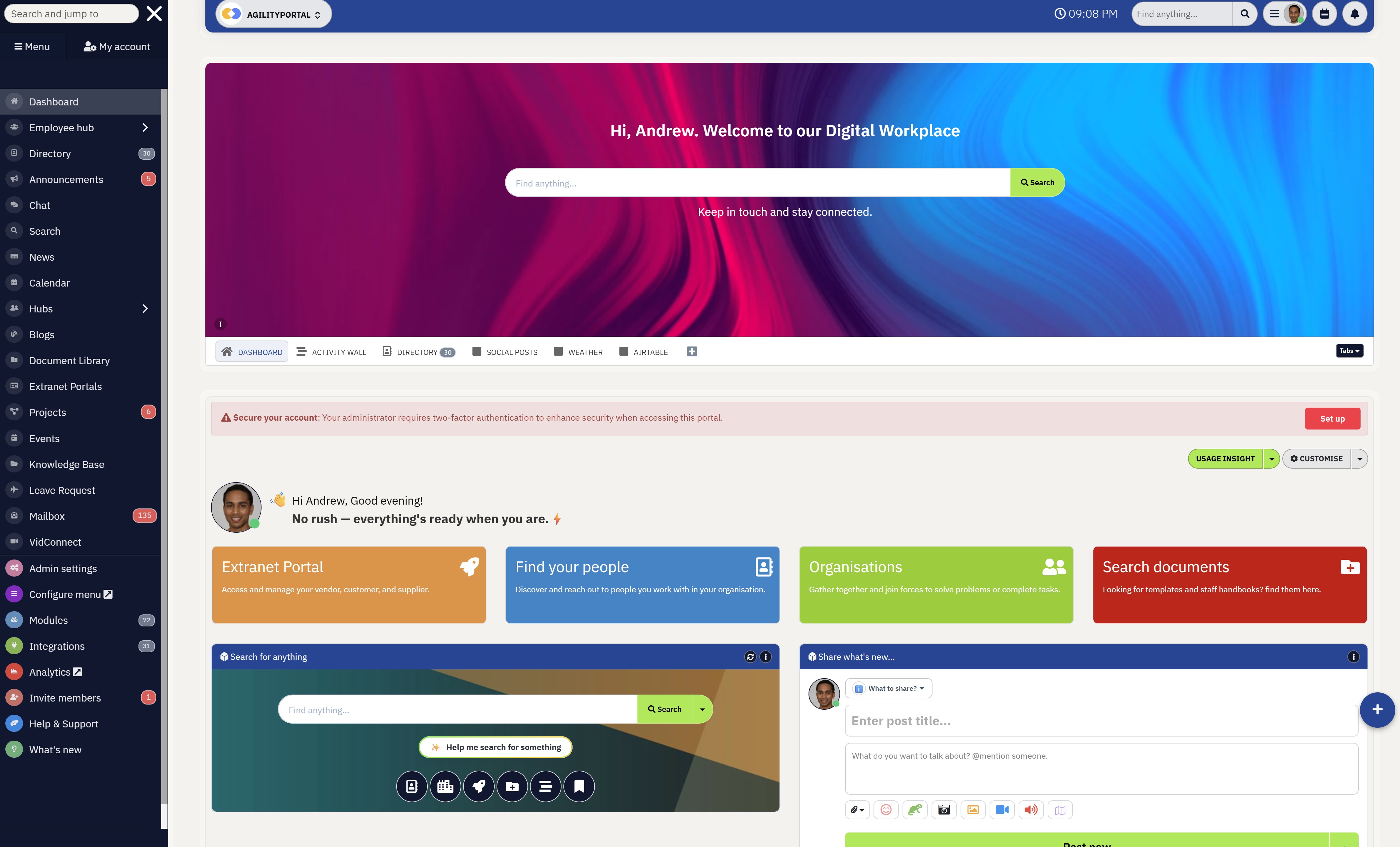
AgilityPortal: The Modern Digital Workplace for Growing Teams
AgilityPortal helps businesses centralise communication, automate workflows, and improve collaboration across remote, hybrid, and frontline teams — all from one connected platform.
Instead of relying on multiple disconnected tools, businesses can manage employee communication, workflow approvals, company updates, document sharing, and operational processes in one place.
This improves visibility, reduces manual work, and helps teams stay aligned across departments.
Businesses use AgilityPortal to:
- Automate workflows and approvals
- Improve employee communication
- Centralise company knowledge and documents
- Support remote and deskless teams
- Improve collaboration and productivity
Unlike traditional intranet platforms, AgilityPortal is designed to be modern, user-friendly, and scalable for growing organisations.
Start your 14-day free trial and discover how AgilityPortal can help simplify operations and create a more connected digital workplace.
AgilityPortal
Digital Workplace & Workflow Automation Platform for Modern Teams
AgilityPortal helps businesses centralise communication, automate workflows, improve collaboration, and streamline business operations across remote, hybrid, and frontline teams — all from one connected platform.
No credit card required • 14-day free trial • Built for growing teamsWrapping up
Businesses can no longer rely on disconnected systems, manual approvals, and fragmented workflows if they want to scale efficiently in a digital-first environment.
As operational complexity continues to grow, organisations need automation strategies that not only reduce repetitive work but also improve visibility, governance, and collaboration across departments.
This is why combining robotic automation with structured workflow management has become such a powerful operational strategy. Instead of automating isolated tasks, businesses can create connected workflows that improve decision-making, accelerate approvals, reduce operational bottlenecks, and support long-term scalability.
Companies investing in intelligent workflow automation are already seeing major improvements in productivity, operational efficiency, compliance management, and employee experience.
By streamlining processes across HR, finance, procurement, customer support, and IT operations, organisations can reduce administrative overhead while allowing teams to focus on higher-value work.
The biggest shift happening right now is that businesses are moving away from fragmented automation projects and toward fully connected operational ecosystems.
Modern automation is no longer just about bots completing repetitive actions. It is about creating smarter digital operations where systems, workflows, people, and data work together seamlessly.
As AI, workflow orchestration, and low-code automation technologies continue evolving, businesses that invest early in intelligent automation strategies will be far better positioned to improve agility, scale operations faster, and remain competitive in increasingly complex digital environments.
Frequently Asked Questions
What is RPA BPM Integration?
RPA BPM Integration combines robotic process automation with workflow management to help businesses automate repetitive tasks while also managing approvals, governance, and operational workflows.
Instead of using disconnected bots, organisations can create more structured and scalable automation environments that improve visibility and operational efficiency across departments.
What are the best RPA BPM Tools for enterprise automation?
Some of the most widely used RPA BPM Tools include UiPath, Microsoft Power Automate, Appian, Pega, and Camunda.
These platforms help organisations improve digital workflow management, automate business processes, and integrate workflows across ERP, CRM, HR, and collaboration systems.
Why are businesses using BPM And RPA Combined strategies?
Businesses are increasingly adopting BPM And RPA Combined approaches because standalone automation often lacks workflow visibility and operational control.
Combining both technologies allows organisations to automate repetitive tasks while still managing approvals, compliance, reporting, and workflow orchestration across multiple departments.
This approach improves:
- Workflow efficiency
- Automation scalability
- Compliance management
- Cross-department collaboration
- Operational visibility
How does RPA BPM Process Optimization improve business performance?
RPA BPM Process Optimization helps businesses identify workflow bottlenecks, reduce repetitive manual work, and improve operational consistency.
Organisations can automate approvals, reporting, document handling, and administrative processes while gaining better visibility into workflow performance through analytics and reporting dashboards.
This often leads to:
- Faster operational workflows
- Lower administrative costs
- Improved employee productivity
- Better workflow tracking
- Stronger business workflow optimization
What is digital workflow management in automation?
Digital workflow management refers to the process of organising, automating, and monitoring workflows using connected software platforms instead of relying on manual approvals, spreadsheets, or disconnected systems.
Modern automation platforms help businesses improve workflow digitization by connecting employees, systems, and operational processes into a single workflow environment.
What is the difference between workflow automation software and robotic process automation software?
Workflow automation software focuses on managing the full operational process, including approvals, task routing, notifications, and governance.
Robotic process automation software focuses more on automating repetitive rule-based tasks such as data entry, invoice processing, and information transfer between systems.
Businesses often combine both technologies to create more intelligent enterprise automation strategies.
Can automation improve operational scalability for growing businesses?
Yes. Automation allows organisations to scale workflows without increasing administrative workload at the same pace as business growth.
Businesses can standardise operations, improve process orchestration, and reduce delays caused by manual coordination between departments.
This becomes especially valuable for businesses managing rapid expansion, remote teams, or complex operational workflows across multiple locations.
What are the best process improvement tools for workflow automation?
The best process improvement tools typically include workflow analytics, AI-powered reporting, process mapping software, automation dashboards, and low-code workflow platforms.
Businesses often use these tools to monitor operational performance, identify inefficiencies, and continuously improve workflow automation strategies over time.
AI Summary
- RPA & BPM integration helps businesses automate repetitive tasks while improving workflow visibility, governance, and operational efficiency across departments.
- Many organisations struggle with disconnected systems, manual approvals, and fragmented workflows that slow down operations and reduce productivity.
- The best automation strategies combine robotic process automation, workflow orchestration, analytics, and business process management into one connected operational environment.
- Modern automation platforms now include AI-powered workflows, low-code automation, document processing, and real-time reporting to improve operational performance.
- Businesses should prioritise scalability, integration capabilities, workflow visibility, governance, and employee adoption when selecting automation platforms.
- Successful workflow automation depends on process optimisation, connected systems, and reducing operational complexity instead of simply deploying isolated bots.
Most Popular Posts

Effective communication among team members is vital for the productivity and success of any organization. Surprisingly, 60% of companies lack a long-term internal communication strategy, which p...


Businesses thrive on communication for efficiency, productivity and accomplishment. When the right information is passed from the right designation in the organization, it promotes positivity an...
Categories
Blog
(2918)
Business Management
(363)
Employee Engagement
(221)
Digital Transformation
(189)
Growth
(139)
Intranets
(133)
Remote Work
(63)
Sales
(52)
Collaboration
(46)
Customer Experience
(29)
Culture
(29)
Knowledge Management
(28)
Project management
(28)
Leadership
(20)
Comparisons
(9)
News
(1)

Related Posts

What Is Portal Software? Have you ever wondered why so many businesses struggle with disconnected systems, scattered documents, outdated intranets, and poor communication between teams? Most organisations today rely on dozens of different tools...

What happens when your systems suddenly stop working in the middle of a busy workday? For growing businesses, downtime is no longer just a technical problem — it is a direct threat to productivity, customer trust, revenue, and daily operations. ...

Despite organisations investing heavily in collaboration platforms, employee apps, and hybrid work technology, many businesses still struggle with disconnected communication, low employee engagement, and poor workforce visibility. According to ...

The communication champion role is a valuable addition to any business. In a large organization, communication champions should be numerous, forming a communication network. They keep track of information and assist others in better collaborating, wo...

Featured
In today's fast-paced hybrid work environment, staying connected isn't just nice—it's necessary. With more than 80% of employees now working remotely at least part of the time, the demand for intuitive, powerful collaboration tools has never be...



Annet Herges
I am a digital nomad, lover of exploring new places and making friends.
I love to travel and I love the internet. I take pictures of my travels and share them on the internet using Instagram.
Traveler, entrepreneur, and community builder. I share my insights on digital marketing and social media while inspiring you to live your fullest life.
Ready to learn more? 👍
One platform to optimize, manage and track all of your teams. Your new digital workplace is a click away. 🚀
Free for 14 days, no credit card required.