
Insight Blog
Agility’s perspectives on transforming the employee's experience throughout remote transformation using connected enterprise tools.
27 minutes reading time
(5313 words)
Communication Champion Role: Responsibilities, Examples & Best Practices

Communication Champion Role: Responsibilities, Examples & Best Practices
Learn how communication champions improve employee engagement, internal communication, collaboration, and workplace culture across hybrid and remote teams.
Communication Champion Role: Responsibilities, Examples & Best Practices

The communication champion role is a valuable addition to any business. In a large organization, communication champions should be numerous, forming a communication network.
They keep track of information and assist others in better collaborating, working, and acquiring information. However, it's not uncommon for the communication champion to be underappreciated and underutilized.
Many organizations limit their entire function to printing posters for various teams to communicate strategic company policies locally.
Communication champions, on the other hand, may add a lot of value to an organization and significantly enhance its efficiency and employee engagement if done correctly.
23%
actively engaged employees
According to Gallup, only around 23% of employees worldwide feel actively engaged at work, with poor internal communication and disconnected workplace experiences remaining some of the biggest contributors to employee disengagement.
Source: Gallup Workplace Engagement Research
Understanding The Communication Champion Role

Communication Champion Role
Only a few people are aware of the role of a communication champion. It's not simply about disseminating information to keep employees in sync. That is something that anyone could do.
Within the organization, communication champions should ideally form a network. This network is in charge of optimizing team workflow and information flow, with the purpose of reaching everyone, especially those who are just beginning the onboarding process.
A communication champion is in charge of disseminating all pertinent information. This is a continuous procedure.
Here are The 7 Golden Rules*
- Only let those who are competent & passionate about engagement become a communication champion
- Co-create a clear purpose statement with the communication champions
- Meet the site leadership team and explain the value communication champions can add
- Have a monthly call with the communication champions
- Bring the group together at least twice a year
- Regularly change your communication champions
- Develop a communication maturity assessment
Learn more about the The 7 Golden Rules
Key Takeaways
- Communication champions help businesses improve internal communication, employee engagement, and collaboration across hybrid, remote, and frontline teams.
- Strong communication champion programs reduce misinformation, improve feedback loops, and help employees stay aligned during organisational change.
- Modern workplaces rely on communication champions to bridge gaps between leadership and employees in increasingly digital and distributed work environments.
- Businesses often fail with communication initiatives when they lack proper training, clear goals, employee recognition, or centralised communication tools.
- Digital workplace platforms and employee communication software help communication champions centralise updates, collaboration, knowledge sharing, and company communication.
What Is a Communication Champion? Roles, Skills & Examples
A communication champion is an employee who helps improve the flow of information between leadership, departments, and teams across the organisation.
Think of them as trusted internal advocates who help employees stay informed, connected, and engaged — especially during periods of change, growth, or digital transformation.
In many modern workplaces, communication champions act as a bridge between management and employees. Instead of relying only on company-wide emails or meetings, businesses use internal communication champions to reinforce important updates, encourage feedback, and help teams adopt new processes or workplace initiatives.
This role has become increasingly important in hybrid and remote work environments where employees often feel disconnected from leadership and company culture.
Common Responsibilities of a Communication Champion
Communication champions can support a business in several ways, including:
- Sharing important company news and updates with teams
- Helping leadership improve workplace communication
- Encouraging employee feedback and collaboration
- Supporting change management communication initiatives
- Reducing misinformation and communication gaps
- Promoting employee engagement and company culture
- Helping employees adopt new workplace tools and processes
Real-World Communication Champion Examples
Many organisations already use informal or structured communication ambassador programs without even realising it.
For example:
- HR teams may appoint communication champions to improve employee engagement during onboarding.
- Retail businesses often use frontline team leaders to share operational updates quickly across locations.
- Healthcare organisations rely on department champions to communicate policy changes and compliance updates.
- Remote companies use digital workplace advocates to encourage collaboration and knowledge sharing across distributed teams.
As businesses continue adopting hybrid work models, the demand for strong employee communication champions and better workplace communication strategies will only continue to grow.
Key Skills Every Communication Champion Needs
The best communication champions in the workplace are usually employees who are approachable, respected by colleagues, and naturally good at connecting people.
Some of the most valuable skills include:
- Strong verbal and written communication
- Active listening
- Emotional intelligence
- Leadership and influence
- Collaboration and teamwork
- Problem-solving
- Adaptability during organisational change
Communication Champion vs Manager: What's The Difference?
Many people assume a communication champion is simply another name for a manager or team leader, but the two roles are very different.
While managers focus primarily on performance, operations, and team delivery, communication champions focus on improving information flow, employee engagement, collaboration, and workplace communication across the organisation.
In many businesses, communication champions work alongside managers to help ensure employees stay informed, connected, and aligned during day-to-day operations and organisational change.
| Communication Champion | Manager |
| Focuses on improving workplace communication and employee engagement | Focuses on team performance, delivery, and operational goals |
| Acts as a bridge between employees and leadership | Reports business outcomes and manages workloads |
| Encourages collaboration, feedback, and knowledge sharing | Assigns tasks and oversees execution |
| Helps reinforce company updates and change communication | Implements business processes and monitors performance |
| Usually influences through trust and peer relationships | Usually influences through formal authority |
| Supports employee communication initiatives across teams | Responsible for operational and departmental outcomes |
The most effective organisations understand that managers and communication champions in the workplace should work together rather than operate separately.
Managers help teams achieve business objectives, while communication champions help ensure employees remain informed, engaged, and connected throughout the process.
In modern hybrid workplaces, both roles are essential for maintaining strong internal communication, improving collaboration, and supporting a healthy workplace culture.
Why Communication Champions Matter In Modern Workplaces
Workplace communication has become significantly more complex over the past few years. Between hybrid work, remote teams, frontline employees, and constant digital notifications, many organisations are struggling to keep employees aligned and engaged.
According to Gallup, only around 23% of employees worldwide feel actively engaged at work. One of the biggest reasons is poor communication and lack of connection between leadership and employees.
This is where communication champions play a critical role.
Instead of relying solely on emails, meetings, or leadership announcements, businesses are increasingly buildinginternal communication champion programs to improve how information flows across departments and teams.
Hybrid and Remote Work Create Communication Gaps
In traditional office environments, employees could quickly ask questions, clarify updates, or speak directly with managers. Hybrid and remote work environments make this far more difficult.
Important company information can easily become buried across:
- emails
- Slack messages
- Microsoft Teams chats
- project management tools
- shared drives
- disconnected intranet systems
According to McKinsey, employees can spend up to 20–28% of their workweek searching for information across disconnected systems. This creates major productivity and engagement problems.
A strong employee communication champion helps reduce these gaps by reinforcing updates, encouraging collaboration, and helping employees stay informed regardless of where they work.
Frontline Workers Are Often Left Out Of Communication
Frontline and deskless workers face an even bigger communication challenge. Many employees in healthcare, retail, hospitality, logistics, and manufacturing industries do not sit behind a desk all day or regularly access company email systems.
As a result, businesses often struggle to:
- distribute updates quickly
- maintain employee engagement
- support operational consistency
- communicate policy changes effectively
Communication champions help bridge this disconnect by acting as trusted local advocates within teams and departments.
Communication Champions Support Change Management
Every business goes through change — whether it is digital transformation, restructuring, onboarding new systems, mergers, or policy updates.
The problem is that employees often resist change when communication is unclear or inconsistent.
A change management communication champion helps organisations improve transparency, reduce uncertainty, and encourage employee adoption during periods of transition.
Instead of information flowing only from the top down, communication champions create a two-way feedback loop between employees and leadership
Information Overload Is Becoming A Serious Business Problem
Modern employees are overwhelmed with notifications, messages, documents, and workplace updates every day. The more tools a company uses, the harder it becomes for employees to know:
- what matters most
- where to find information
- which updates are current
- who to ask for help
Without a clear communication strategy, this leads to confusion, slower decision-making, and disengagement.
Communication champions help simplify workplace communication by improving clarity, reinforcing key messages, and helping employees navigate modern digital workplaces more effectively.
For organisations investing in employee communication tools, digital workplace platforms, and enterprise collaboration software, communication champions often become one of the most important drivers of long-term adoption and employee engagement.
Leader As Communication Champion

Leader As Communication Champion
Communication champions work intimately with group leaders and task managers inside an organization.
Only a few people are aware of the role of a communication champion. It's not simply about disseminating information to keep employees in sync. That is something that anyone could do.
Within the organization, communication champions should ideally form a network. This network is in charge of optimizing team workflow and information flow, with the purpose of reaching everyone, especially those who are just beginning the onboarding process.
A communication champion is in charge of disseminating all pertinent information. This is a continuous procedure.
The organization's communication champions should be well-versed on facts about the company, its rules, and all upcoming activities. Even if you don't want to devote a lot of effort to disseminating less important information, the communication champions should be aware of it.
Creating Communication Champions In Companies

Creating Communication Champions In Companies
The most common misconception among businesses is that communication champions are in charge of informing contacts, teams, or employees about significant events or news. They are not messengers of communication. They are champions of communication.
The function of a communication champion is more complicated. They are supposed to be "champions" of information dissemination. They are responsible for keeping everyone informed and information moving freely.
So, how do you go about doing that? Managers at the company must change their perspective of communication from "event or news information broadcast" to "perpetual information."
Keeping in touch is a never-ending process. It's not just about getting events or breaking news to your connections. The managerial team's communication with employees, project managers, and team leaders must be a visible force in the workplace.
Communication Champion Early Years

Communication Champion Early Years
We all know, however, that accomplishing this is extremely tough. When deadlines are approaching, managers are more inclined to limit their communication to crucial updates and demanding progress reports.
That is far from optimum working conditions. It sounds fine on paper to think of communication as a process. When put into reality, though, it breaks apart. That is why you require a champion for communication.
The flow of communication between these employees is improved. This improves teamwork and workplace morale, resulting in increased overall productivity.
What do communication champions need?
Managing the role of communication champion is difficult. As a communication champion, a leader can only be as good as the managers above them.
Keep in mind your communication champions have access to all talking points, key information, troubleshooting or inquiry replies, PowerPoint decks, and any other relevant content. It's a good idea to have a communication champion on hand.
Working as a communication champion in the early stages might be difficult. The learning curve is quite steep. Managers should always be supportive. Communication champions require some time to adjust to their new role and establish a reputation and trust among their peers.
As a result, it's vital that they aren't bullied into delivering outcomes. It takes time to develop communication champions in businesses. If you're looking for quick profits, you might prefer other solutions. It takes time to build the required relationships for successful communication championing. Communication champions must also know whom they are trying to reach.
The organizational connections that must be communicated with should be clearly identified by management.Sending email notifications, printing posters, and writing company-wide policy-focused blogs are just a few of the responsibilities of a communication champion.
Everything can go apart if the recipients are unclear. The entire information workflow is largely dependent on how well everything is set up – and getting down to the organization contacts who should be on the receiving end of the communication is a necessity for that.
Larger organizations frequently divide their contacts into various groups or categories.
After then, the communication champion is in charge of the information flow from point A to point B. (for example, from a manager to the team leaders). This solves the problem of everyone receiving knowledge but only a few people being able to understand it. It also gives you greater control when it comes to providing more sensitive or financial data.
The connection between the communication champion and team leaders or project managers
Within a company, communication champions collaborate closely with team leaders and project managers.
In this situation, a communication champion's main responsibilities are:
- Coordinating with the project manager and providing vital information to other departments and personnel about the vision, progress, comments (including constructive criticism), updates, or corrections.
- Creating a full-fledged communication plan in accordance with project needs so that information is readily available and accessible anytime it is needed.
- Serving as a point of contact. This is especially beneficial for newer employees who may be having difficulty navigating the workplace or team paradigm. They can always reach out to a person designated to handle communication if they know who that person is, regardless of the project manager's directions.
- Ensuring that management is fully supportive of and involved in a project or team. Because no one has time to catch up on a regular basis, project managers frequently become project leaders' bosses. By overcoming this gap, a communication champion boosts efficiency.
- Creating communication blueprints for others. Communication champions, for example, are an excellent choice for developing communication plans for large projects. This transcends domains and can be applied to the user, client, or consumer communication.
To put it another way, the project manager or team leader cannot do everything. Because of their limited time, managing communication becomes a difficult task. However, without effective communication and timely information, overall productivity might suffer significantly.
This is where the champion of communication comes in. Everyone is pleased as the workflow improves. It's a win-win situation for everyone.
Common Mistakes Companies Make With Communication Champions
Many businesses understand the importance of improving internal communication, but their communication champion programs often fail because they are poorly planned, unsupported, or disconnected from the wider workplace communication strategy.
A communication champion can significantly improve employee engagement and collaboration — but only if the role is implemented correctly.
Here are some of the most common mistakes organisations make.
Choosing Only Managers As Communication Champions
One of the biggest mistakes companies make is assuming only managers or senior leaders should become communication champions.
In reality, some of the best communication advocates are employees who are naturally trusted, approachable, and influential within their teams — regardless of job title.
Employees are often more likely to engage with peers they trust rather than formal leadership communication.
Strong employee communication champions can come from:
- HR teams
- operations
- customer service
- frontline departments
- project teams
- remote workgroups
The goal is to create a network of communication advocates across the organisation, not just another management layer.
Failing To Provide Proper Training
Many organisations appoint communication champions but provide little guidance on what the role actually involves.
Without training, communication champions may struggle with:
- sharing updates effectively
- handling employee feedback
- supporting change communication
- encouraging collaboration
- using workplace communication tools properly
A successful internal communication champion program should include ongoing support, communication guidelines, and clear expectations.
No Clear Goals Or Communication Strategy
Some businesses launch communication initiatives without defining what success looks like.
For example:
- Is the goal to improve employee engagement?
- Reduce misinformation?
- Support digital transformation?
- Increase collaboration across departments?
- Improve communication with frontline workers?
Without measurable goals, communication champions can quickly become disconnected from the broader business strategy.
Clear KPIs and communication objectives help ensure the program delivers long-term value.
Forgetting To Recognise Communication Champions
Communication champions often take on additional responsibilities alongside their normal workload.
When organisations fail to recognise or support these efforts, engagement naturally drops over time.
Recognition does not always need to be financial. Businesses can improve participation by:
- publicly recognising contributions
- offering development opportunities
- involving champions in leadership discussions
- creating internal ambassador programs
- celebrating communication successes
Employees are far more likely to stay engaged when they feel their contribution matters.
Using Too Many Disconnected Communication Tools
Another major issue is technology overload.
Many businesses rely on multiple disconnected platforms for:
- messaging
- file sharing
- project management
- announcements
- employee feedback
- document collaboration
This creates confusion and makes it harder for communication champions to keep employees informed.
According to McKinsey, employees can spend up to 28% of their workweek searching for information across disconnected systems.
Modern organisations increasingly solve this problem by using digital workplace platforms and employee communication software that centralise communication, collaboration, knowledge sharing, and company updates into one place.
The simpler the communication experience becomes, the more effective communication champions can be.
Choosing the right communication champions
You should have a good understanding of what's going on by now.
A communication champion can be a valuable asset to your organization.
Within larger businesses, they can increase productivity and improve information flow. How do you choose the communication champions, though? The communication champion role, of course, necessitates excellent communication abilities.
They also want to have good people work.
Choose employees who are well-represented across all relevant sites or teams. Informal leaders or staff with some strength can be effective communicators, but this isn't always the case.
When selecting communication champions, you should conduct your research. Remember that when you have good communication champions, you must ensure that communication is two-way.
Listen to their criticism or reports as well as speak with them.
Best Tools for Communication Champions
Even the best communication champions will struggle if employees are forced to work across disconnected systems, scattered messages, and outdated communication channels.
Modern workplaces need tools that make communication simple, centralised, and accessible for everyone — especially in hybrid, remote, and frontline work environments.
The right employee communication software helps communication champions:
- distribute updates faster
- improve employee engagement
- reduce information silos
- encourage collaboration
- support knowledge sharing
- create stronger workplace culture
Employee Communication Apps
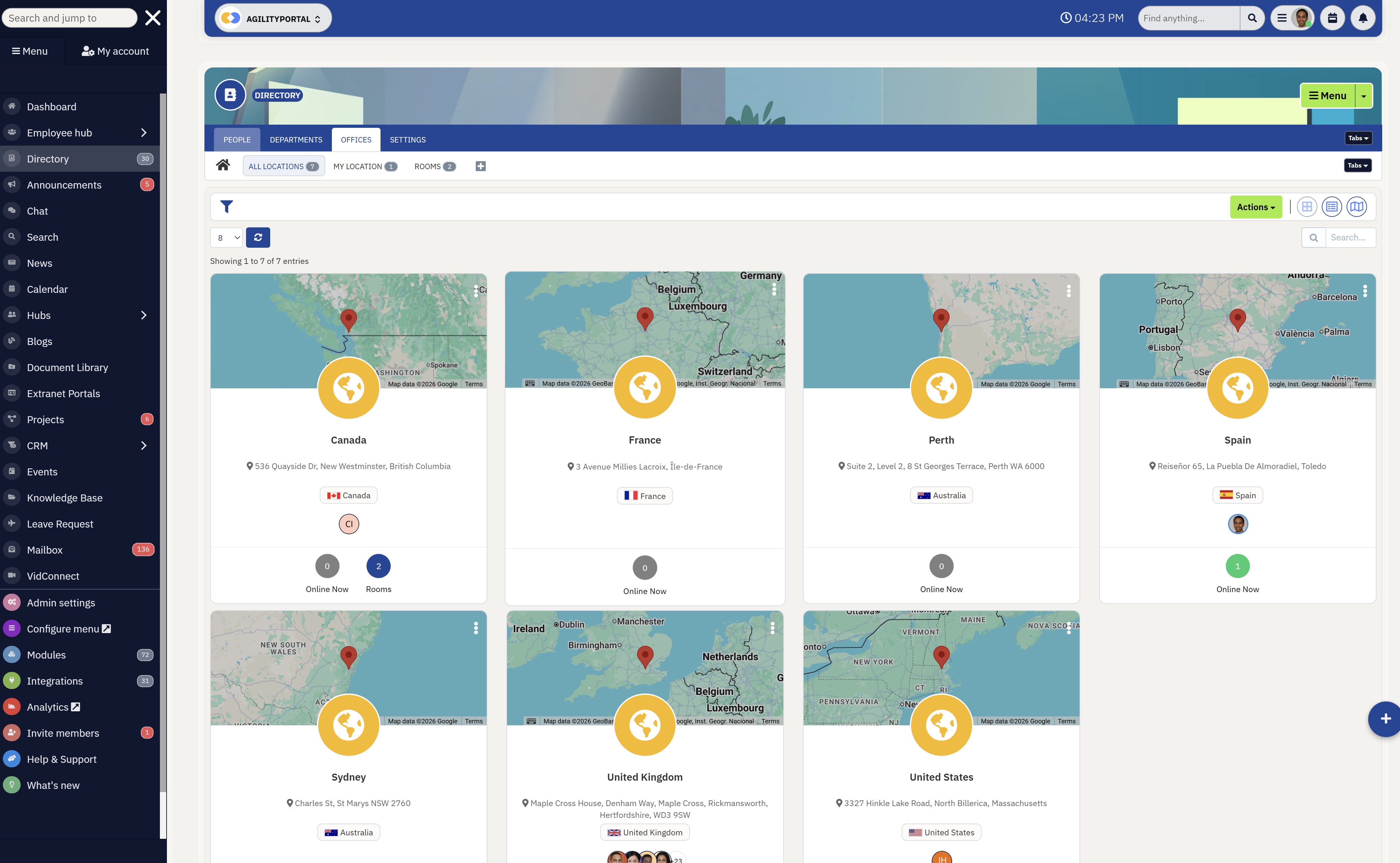
Employee Communication Apps
Many organisations now rely on employee communication apps to keep teams connected across departments and locations.
These platforms allow communication champions to:
- share company announcements
- publish workplace updates
- send targeted notifications
- encourage employee feedback
- improve cross-functional communication
Mobile-first communication tools are especially important for frontline and deskless employees who may not regularly access email or desktop systems.
Intranet Software and Digital Workplace Platforms
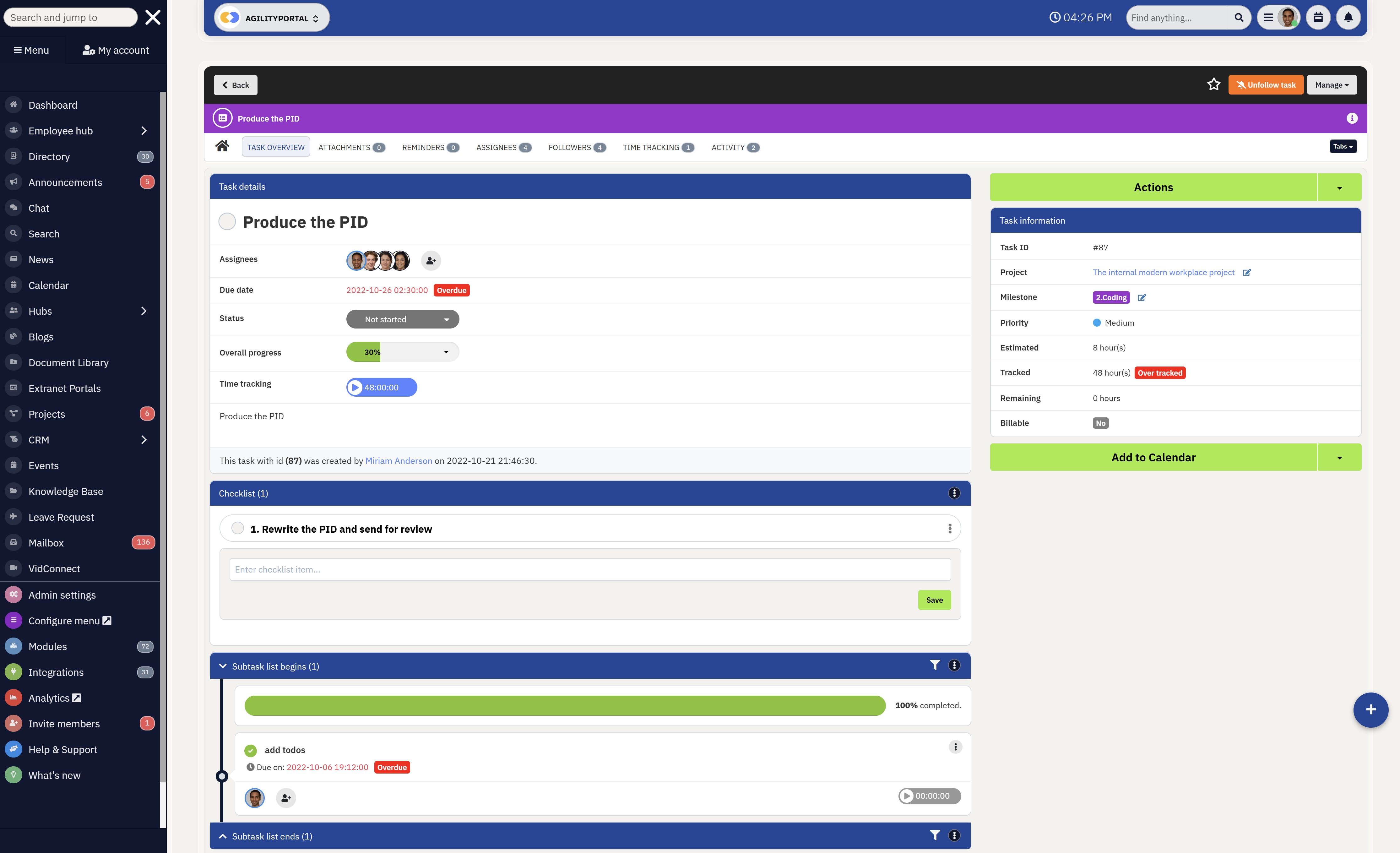
Intranet Software and Digital Workplace Platforms
A modern employee intranet or digital workplace platform gives communication champions a central place to organise company knowledge, communication, documents, and employee resources.
Instead of employees searching through multiple disconnected tools, intranet software helps centralise:
- company news
- policies and procedures
- training materials
- team discussions
- workplace documents
- employee directories
This makes internal communication more consistent and easier to manage at scale.
Collaboration Tools Improve Team Alignment
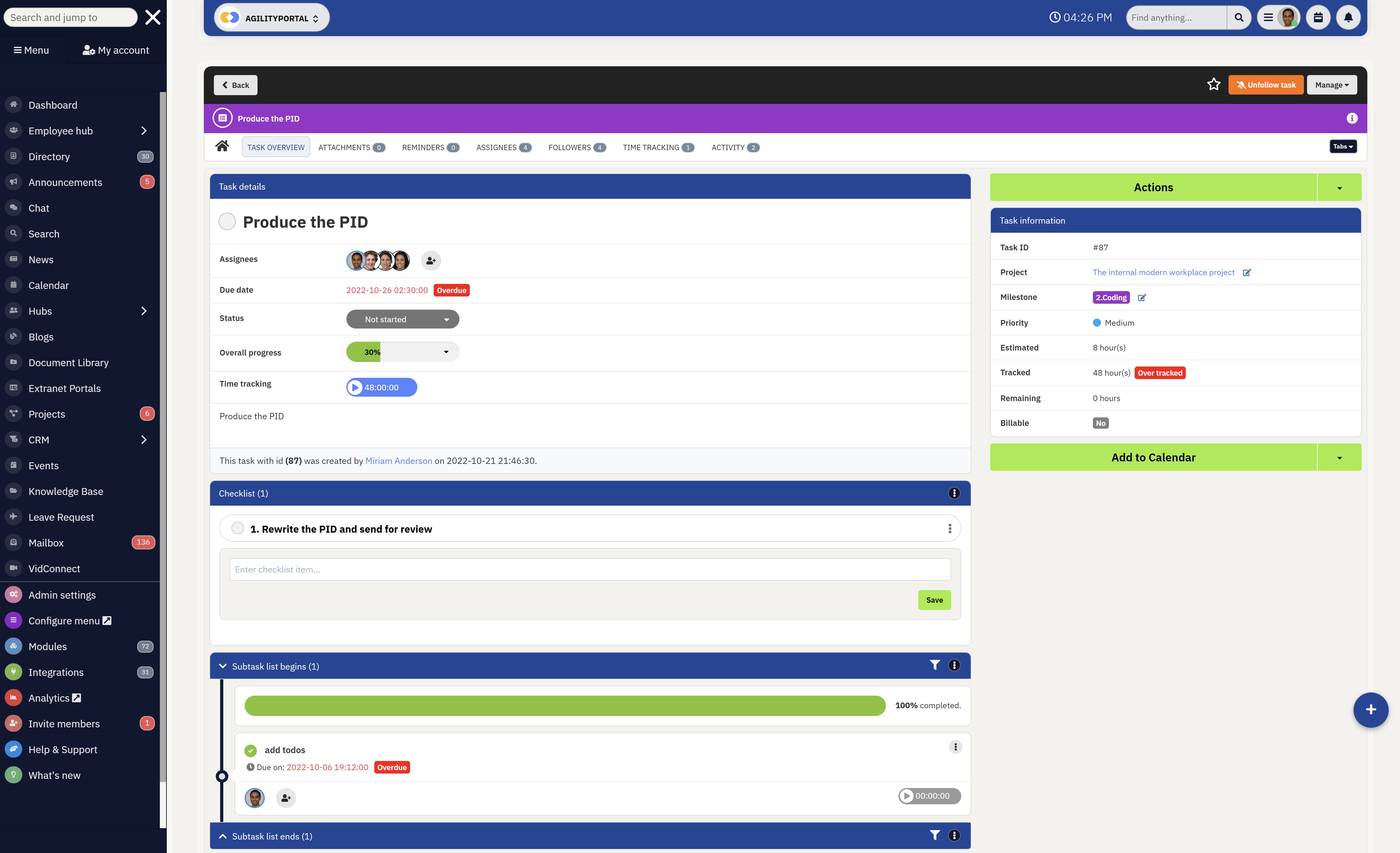
Collaboration Tools Improve Team Alignment
Communication champions also play a key role in improving collaboration between teams.
Modern team collaboration software helps employees work together more effectively through:
- group discussions
- shared workspaces
- task management
- document collaboration
- real-time communication
- project visibility
When communication and collaboration are connected in one platform, employees are far more likely to stay aligned and engaged.
Knowledge Sharing Is Critical For Growing Companies
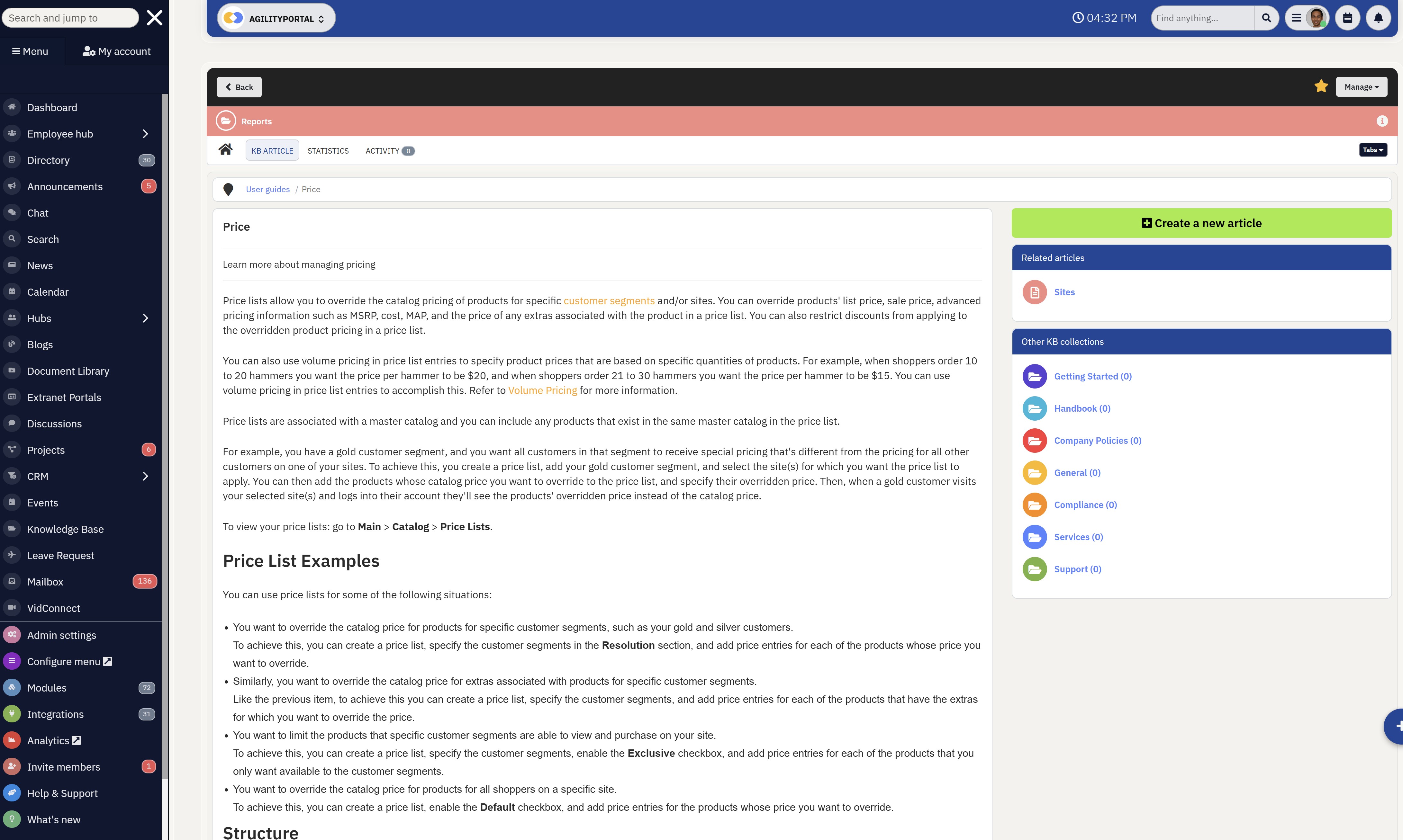
Knowledge Sharing Is Critical For Growing Companies
One of the biggest communication challenges in modern businesses is ensuring employees can quickly find accurate information.
Without proper knowledge management tools, employees often waste time searching through chats, emails, and outdated documents.
Communication champions help encourage better knowledge sharing by promoting systems that make information:
- searchable
- centralised
- accessible
- easy to update
- available across departments
This becomes even more important as organisations scale or adopt hybrid work environments.
AgilityPortal is your Internal Communication Platform For Communication Champions
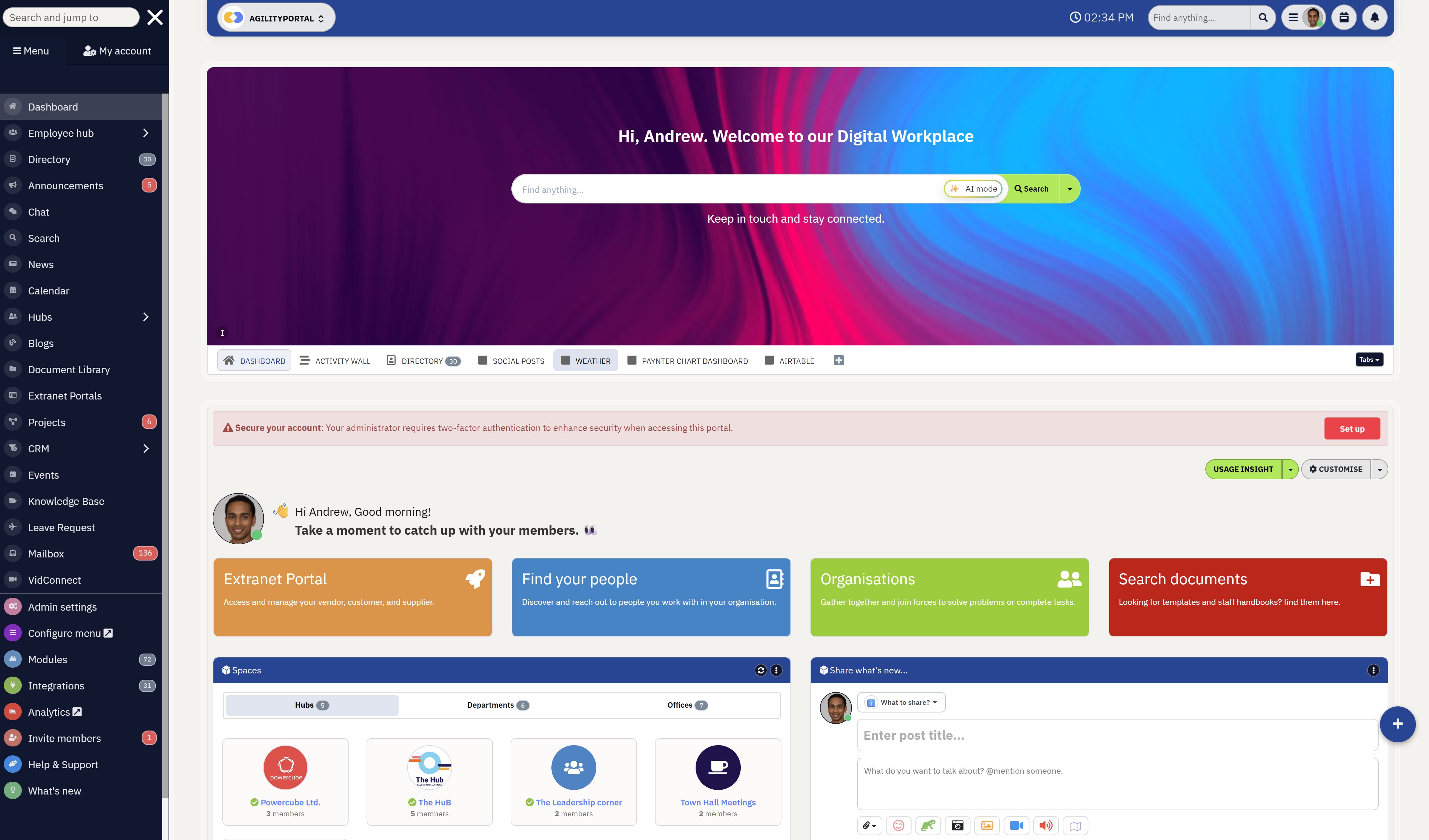
AgilityPortal is your Internal Communication Platform For Communication Champions
AgilityPortal is one of the best platforms for communication champions because it brings employee communication, collaboration, knowledge sharing, and engagement into one central digital workplace.
Instead of relying on disconnected emails, chats, and file systems, communication champions can easily share updates, publish announcements, encourage feedback, and keep employees aligned across hybrid, remote, and frontline teams.
AgilityPortal also includes modern intranet features, mobile accessibility, team collaboration tools, employee directories, and knowledge management capabilities that help communication champions improve workplace communication at scale.
For growing organisations, it creates a far more connected and engaging employee experience while reducing communication silos and information overload.
AgilityPortal
A Modern Employee Communication Platform Built For Communication Champions
AgilityPortal helps businesses centralise employee communication, collaboration, company knowledge, and workplace updates into one connected digital workplace platform.
While communication champions help improve employee engagement, collaboration, and workplace communication, AgilityPortal provides the tools needed to keep employees connected, informed, and aligned across hybrid, remote, and frontline work environments.
Start your 14-day free trial — no credit card required.Final Thoughts
Strong workplace communication does not happen by accident.
As businesses become more distributed, digital, and fast-moving, employees need trusted people who can help bridge communication gaps between leadership and teams.
A well-structured communication champion program can improve employee engagement, strengthen collaboration, reduce misinformation, and support organisational change more effectively.
However, success depends on more than simply assigning the role. Companies also need the right communication strategy, leadership support, and workplace tools to keep employees connected and informed.
Modern employee communication platforms and digital workplace solutions make it far easier for communication champions to share updates, encourage feedback, and build a stronger workplace culture across hybrid and remote teams.
AI Summary
- Reliable business IT services help growing companies reduce downtime, improve cybersecurity, and maintain stable day-to-day operations as technology environments become more complex.
- Many organisations struggle with recurring outages, slow systems, cloud management issues, and increasing cybersecurity risks caused by outdated infrastructure and reactive IT support.
- Managed IT services provide proactive monitoring, technical support, disaster recovery, cloud management, and infrastructure optimisation to prevent operational disruption before it impacts the business.
- Businesses relying on hybrid work, cloud collaboration tools, and distributed teams require scalable IT support solutions that improve connectivity, security, and employee productivity.
- Downtime can lead to lost revenue, reduced employee efficiency, customer dissatisfaction, and reputational damage, making proactive IT management essential for business continuity.
- Modern digital workplace platforms and business IT services work together to centralise communication, knowledge sharing, and collaboration while reducing operational bottlenecks.
Frequently Asked Questions About Communication Champions
What Is The Communication Champion Meaning?
The communication champion meaning refers to an employee or workplace advocate who helps improve internal communication across an organisation.
A communication champion acts as a bridge between leadership and employees by sharing updates, encouraging feedback, improving collaboration, and helping teams stay informed during workplace changes.
Many businesses use communication champions to support employee engagement, strengthen workplace culture, and improve communication across hybrid, remote, and frontline teams.
What Does A Communication Champion Do?
A communication champion helps employees stay connected, informed, and engaged across the workplace.
Typical responsibilities include:
- sharing company updates
- encouraging employee feedback
- supporting change management communication
- improving collaboration
- helping reduce misinformation
- supporting employee engagement initiatives
- promoting workplace communication tools
Communication champions often work closely with HR teams, managers, and leadership to improve overall communication across departments.
What Are The Responsibilities Of A Champion?
The responsibilities of a workplace or communication champion typically include improving communication flow, supporting collaboration, encouraging employee participation, and helping employees understand important business updates.
A strong communication champion job description may also include:
- promoting company culture
- supporting onboarding communication
- reinforcing leadership messaging
- helping teams adopt new workplace tools
- encouraging knowledge sharing
- supporting internal communication campaigns
In many organisations, communication champions also act as trusted peer advocates during periods of organisational change.
What Is The Role Of A Leader As A Communication Champion?
A leader acting as a communication champion helps create transparency, trust, and alignment across teams.
Leaders who champion communication:
- encourage open conversations
- actively listen to employees
- communicate clear goals
- support feedback loops
- improve collaboration between departments
- reinforce workplace culture
In modern workplaces, leaders play a critical role in helping employees feel informed and connected — especially during remote work, restructuring, or digital transformation initiatives.
What Are The 5 C's Of Communication?
The 5 C's of communication are commonly used principles that help improve workplace communication and employee understanding.
They include:
- Clear – Communication should be simple and easy to understand.
- Concise – Messages should avoid unnecessary complexity.
- Complete – Employees should receive all relevant information.
- Correct – Information should be accurate and reliable.
- Courteous – Communication should remain respectful and professional.
Communication champions often use these principles to improve internal communication across teams and departments.
What Is A Communication Champion Job Description?
A communication champion job description usually focuses on improving internal communication, employee engagement, and workplace collaboration.
Typical responsibilities may include:
- sharing company announcements
- gathering employee feedback
- supporting communication campaigns
- promoting collaboration tools
- helping improve knowledge sharing
- supporting employee communication strategies
- assisting with organisational change communication
Communication champions are commonly found in HR teams, healthcare organisations, educational institutions, corporate workplaces, and public sector environments.
What Is A Communication Champion NHS Role?
Within the NHS and healthcare environments, a communication champion NHS role often focuses on improving communication between healthcare teams, staff members, leadership, and patients.
These champions may help:
- improve operational communication
- support patient communication initiatives
- reinforce healthcare policies
- improve staff engagement
- support training and awareness programs
Healthcare organisations rely heavily on strong communication processes to improve collaboration, reduce errors, and maintain consistent patient care.
Are Communication Champion Jobs In Demand?
Yes — communication champion jobs and internal communication-focused roles are becoming increasingly important as organisations adopt hybrid work, digital workplace tools, and employee engagement strategies.
Businesses are actively looking for professionals who can:
- improve employee communication
- support change management
- strengthen workplace culture
- improve collaboration
- encourage employee engagement
- support digital transformation initiatives
Communication-related roles are especially growing within HR, internal communications, healthcare, education, and enterprise collaboration environments.
What Is Communication Champion Training?
Communication champion training helps employees develop the skills needed to improve workplace communication and employee engagement.
Training programs often include:
- communication best practices
- active listening
- employee engagement strategies
- change management communication
- conflict resolution
- workplace collaboration
- leadership communication skills
Many organisations provide communication champion training to improve adoption of new workplace initiatives and strengthen internal communication strategies.
What Is A Communication Friendly Environment Tool?
A communication friendly environment tool is a framework or assessment method used to help organisations create workplaces that support effective communication for all employees.
These tools are commonly used in:
- education
- healthcare
- employee wellbeing programs
- inclusive workplace initiatives
The goal is to improve accessibility, reduce communication barriers, and create environments where employees feel comfortable sharing ideas, feedback, and concerns.
What Is Champion PR?
Champion PR usually refers to public relations strategies that use trusted advocates, ambassadors, or workplace champions to promote a brand, initiative, or organisational message.
In workplace communication, champions help amplify important messages internally by improving trust, engagement, and employee participation.
Many modern businesses combine internal communication champions with employee advocacy and PR strategies to strengthen workplace culture and improve communication effectiveness.
Is A Communication Coach Worth The Money?
For many businesses and professionals, a communication coach can provide significant value.
A communication coach can help improve:
- leadership communication
- public speaking
- employee engagement
- conflict resolution
- presentation skills
- workplace collaboration
- executive communication
Organisations investing in communication coaching often see improvements in team alignment, employee confidence, and workplace communication effectiveness — particularly during periods of organisational change or leadership development.
Most Popular Posts

Effective communication among team members is vital for the productivity and success of any organization. Surprisingly, 60% of companies lack a long-term internal communication strategy, which p...


Businesses thrive on communication for efficiency, productivity and accomplishment. When the right information is passed from the right designation in the organization, it promotes positivity an...

Categories
Blog
(3196)
Business Management
(395)
Employee Engagement
(235)
Digital Transformation
(218)
Growth
(150)
Intranets
(141)
Internal communications
(106)
Remote Work
(68)
Sales
(53)
Collaboration
(52)
Customer Experience
(32)
Culture
(30)
Knowledge Management
(29)
Project management
(29)
Leadership
(20)
Comparisons
(9)
News
(1)

Related Posts

Could AI produce your next workplace video faster—and still deliver a message your employees can trust? As more businesses use video for onboarding, training and leadership updates, one question keeps coming up: will AI replace video editors in...

Could the best machine learning systems help your employees spend less time sorting requests, updating spreadsheets and chasing information—and more time doing useful work? That's the opportunity, but finding the right system starts with knowin...

What would happen to your team's work and customer information if an employee's MacBook disappeared today? If you're wondering how to protect your Mac physically, the answer goes beyond buying a case. A MacBook used at home, on a train or in a ...

Welcome to AgilityPortal's guide to the best VPN for Remote teams. How do you give employees secure access to company systems when they work from home, the office and everywhere in between? It's a question more businesses need to answer: 28% of worki...

Have you ever left a meeting thinking everyone agreed on the next step, only to discover a week later that each person remembered something different? Open source meeting transcription can help teams keep a searchable record of the conversation...


Jill Romford
I am a digital nomad, lover of exploring new places and making friends.
I love to travel and I love the internet. I take pictures of my travels and share them on the internet using Instagram.
Traveler, entrepreneur, and community builder. I share my insights on digital marketing and social media while inspiring you to live your fullest life.
Ready to learn more? 👍
One platform to optimize, manage and track all of your teams. Your new digital workplace is a click away. 🚀
Free for 14 days, no credit card required.