
Insight Blog
Agility’s perspectives on transforming the employee's experience throughout remote transformation using connected enterprise tools.
31 minutes reading time
(6219 words)
Dedicated Offshore Teams The Proven Way to Scale Your Next Software Project in 2026

Dedicated Offshore Teams The Proven Way to Scale Your Next Software Project in 2026
Learn how dedicated offshore teams work, their benefits, costs, common mistakes, and how to choose the right offshore development partner.
Dedicated Offshore Teams The Proven Way to Scale Your Next Software Project in 2026

Hiring great software developers has never been easy.
Whether you're launching a new SaaS product, expanding an existing platform, or trying to deliver projects faster, finding the right people can take months and stretch your budget.
In fact, recent industry research shows that 77% of employers worldwide struggle to find the skilled talent they need, making software development one of the hardest areas to recruit for.
Instead of waiting for local hiring, more businesses are turning to dedicated offshore teams to access experienced developers, shorten hiring times, and keep projects moving forward.
One of the biggest reasons companies choose this model is cost. It's possible to reduce staffing costs by up to 70% while building a dedicated offshore team, but the biggest advantage isn't simply saving money.
A well-managed offshore dedicated development team gives you access to specialised skills, faster delivery, greater flexibility, and the ability to scale your development team as your business grows.
77%
Employers face talent shortages
According to the ManpowerGroup Global Talent Shortage Survey, 77% of employers worldwide struggle to find the skilled talent they need, making software engineering, AI, cybersecurity, and cloud specialists some of the hardest professionals to recruit.
As competition for experienced developers continues to increase, many businesses are expanding beyond local recruitment and building dedicated offshore teams to access global talent, reduce hiring delays, and accelerate software delivery.
Source: ManpowerGroup Global Talent Shortage Survey
In this guide, you'll learn how dedicated offshore teams work, when they make sense, and how to avoid the common mistakes that cause offshore projects to fail.
We'll also explain how to choose the right partner, manage remote developers successfully, understand the latest industry trends, and build a high-performing offshore team that feels like a natural extension of your own business.
By the end, you'll have a clear roadmap for deciding whether this approach is the right fit for your next software project.
Key Takeaways
- Dedicated offshore teams help businesses access experienced developers faster while reducing recruitment costs and accelerating software delivery.
- Successful offshore development is built on communication, clear ownership, strong documentation, and well-defined engineering processes rather than location alone.
- Companies that treat offshore developers as an extension of their in-house engineering team achieve better collaboration, higher code quality, and stronger long-term results.
- Artificial intelligence is transforming software development, enabling offshore teams to automate repetitive tasks, improve testing, and deliver products faster without sacrificing quality.
- Choosing the right offshore development partner means looking beyond hourly rates and evaluating technical expertise, security, scalability, developer retention, and cultural fit.
Why Software Development Is More Challenging Than Ever in 2026

Building software in 2026 isn't just about writing code anymore.
Businesses are under pressure to release new features faster, keep up with AI-driven innovation, strengthen cybersecurity, and meet growing customer expectations—all while competing for a limited pool of experienced developers.
For many companies, the biggest challenge isn't coming up with great ideas. It's finding the people to turn those ideas into reality.
Experienced software engineers remain in high demand, which means recruitment can take months. Even after hiring, there's no guarantee that the right skills will still be available when your next project begins.
Delays in recruiting often lead to missed deadlines, slower product releases, and increased development costs.
At the same time, software projects have become much more complex.
Modern applications often rely on cloud infrastructure, AI services, APIs, mobile apps, cybersecurity controls, DevOps pipelines, and continuous deployment. Few businesses have every specialist they need in-house, making it difficult to build complete teams quickly.
Another growing challenge is scaling development without sacrificing quality. Hiring several developers at once can be expensive, while relying on freelancers or short-term contractors may create knowledge gaps and inconsistent code quality. When people leave, valuable experience often leaves with them.
This is why more organisations are moving towards dedicated offshore teams. Instead of spending months recruiting locally, they can quickly build an offshore dedicated development team with the skills needed for long-term projects.
The right offshore partner doesn't simply provide extra developers—they become an extension of your existing engineering team, following the same goals, processes, and quality standards.
The Biggest Software Development Challenges Businesses Face in 2026
- Finding experienced developers in an increasingly competitive hiring market.
- Rising salary expectations and recruitment costs.
- Pressure to deliver products and updates faster than ever before.
- The need for AI, cloud, cybersecurity, and DevOps expertise.
- Scaling engineering teams without increasing long-term overheads.
- Retaining technical knowledge as employees and contractors move on.
- Managing distributed teams across different locations and time zones.
- Maintaining software quality while accelerating release cycles.
The companies that succeed in 2026 aren't necessarily the ones with the biggest development teams.
They're the ones that can access the right talent at the right time and build flexible engineering teams that can grow alongside their business. That's exactly where dedicated offshore teams are changing the way modern software is developed.
Why More Companies Are Choosing Dedicated Offshore Teams in 2026
The way businesses build software has changed dramatically over the past few years.
In 2026, the goal isn't simply to hire more developers—it's to build stronger engineering teams that can deliver high-quality software faster.
Artificial intelligence is one of the biggest reasons for this shift. Companies are investing heavily in AI-powered products, automation, cloud platforms, and digital transformation projects.
At the same time, experienced software engineers remain difficult to hire.
According to the 2025 ManpowerGroup Talent Shortage Survey, 76% of employers worldwide report struggling to find the skilled talent they need, making technology roles some of the hardest positions to fill.
76%
Global employers face a talent shortage
According to the 2025 ManpowerGroup Talent Shortage Survey, 76% of employers worldwide report struggling to find the skilled talent they need, with software engineering, artificial intelligence, cybersecurity, and cloud computing among the most difficult technology roles to recruit.
As competition for experienced developers continues to grow, many organisations are expanding their recruitment strategy by building dedicated offshore teams to access global engineering talent, shorten hiring times, and keep software projects moving without compromising quality.
Source: 2025 ManpowerGroup Talent Shortage Survey
As a result, businesses are looking beyond their local job market.
Instead of waiting months to recruit, they're building dedicated offshore development teams that give them immediate access to experienced engineers, designers, QA specialists, DevOps professionals, and AI experts.
Another major trend is speed. Customers expect regular feature updates, quick bug fixes, and reliable software. Waiting six months to hire the right people can put an entire product roadmap behind schedule.
There are multiple reasons a business may look into forming a dedicated offshore team, well for example businesses can scale their engineering capacity much faster while keeping development moving.
Hybrid and remote working have also changed how teams collaborate. Location is no longer the biggest barrier it once was. With the right communication tools, Agile processes, and project management practices, distributed teams can work together just as effectively as developers sitting in the same office.
One of the biggest changes we're seeing is a shift in mindset.
A few years ago, companies mainly looked offshore to reduce development costs. Today, the conversation is very different. Business leaders are choosing dedicated offshore development because it gives them access to specialist skills, improves delivery speed, reduces hiring delays, and creates engineering teams that can grow as quickly as the business itself.
The companies leading the market in 2026 aren't necessarily the ones with the largest development teams.
They're the ones that can quickly access the right talent, adapt to changing technology, and deliver great software without being limited by local hiring challenges.
Dedicated Offshore Teams vs Other Hiring Models
Choosing the right hiring model depends on your budget, timeline, and long-term business goals.
While freelancers and project outsourcing can work for short-term needs, companies building products that require ongoing development often benefit from a more integrated approach.
The table below compares the most common options to help you decide which model best fits your next software project.
| Factor | In-House Hiring | Freelancers | Project Outsourcing | Staff Augmentation | Dedicated Offshore Teams |
| Typical Cost | Very High | Low–Medium | Medium–High | Medium–High | Low–Medium |
| Hiring Speed | Slow (2–6 months) | Fast | Medium | Fast | Fast |
| Control Over Team | Full | Limited | Low | High | Full |
| Scalability | Slow | Limited | Medium | Good | Excellent |
| Knowledge Retention | Excellent | Low | Low | Medium | High |
| Product Ownership | Full | Shared | Often Vendor-Owned | Full | Full |
| Team Integration | Excellent | Low | Limited | Good | Excellent |
| Communication | Excellent | Varies | Vendor Managed | Good | Excellent |
| Flexibility | Low | High | Medium | High | High |
| Long-Term Value | High | Low | Medium | High | Excellent |
| Best For | Large internal engineering teams | Small tasks or specialist work | Fixed-scope projects | Quickly filling skill gaps | Long-term product development and scaling software teams |
Key Takeaways
- In-house hiring offers the greatest control but comes with the highest recruitment costs and longest hiring times.
- Freelancers are ideal for one-off tasks but are less suitable for complex, long-term software projects.
- Project outsourcing works well for fixed requirements but often limits visibility and day-to-day control.
- Staff augmentation helps fill temporary skill gaps while your internal team remains in charge.
- Dedicated offshore teams combine the flexibility of remote hiring with the control and collaboration of an in-house team, making them one of the most effective models for businesses building and scaling software products over the long term.
When Dedicated Offshore Teams Make Sense
A dedicated offshore team isn't the right solution for every project, but it can be one of the smartest investments when you need experienced developers who can become a long-term extension of your business.
Unlike hiring freelancers for one-off tasks or outsourcing an entire project, dedicated teams work alongside your internal staff, follow your processes, and focus on your product goals.
Many companies choose to outsource dedicated staff because it gives them the flexibility to grow quickly without the time and expense of recruiting locally.
Instead of spending months searching for developers with the right skills, you can build a team that is ready to contribute within weeks.
Here are some of the situations where dedicated offshore teams deliver the greatest value.
Launching a New SaaS Product
Building a SaaS platform often requires a mix of frontend developers, backend engineers, UI/UX designers, QA testers, and DevOps specialists. Hiring every role internally can be expensive and slow.
A dedicated offshore team allows you to:
- Launch products faster.
- Access specialist technical skills.
- Scale the team as your product grows.
- Reduce recruitment delays.
Building a Minimum Viable Product (MVP)
When you're testing a new business idea, speed matters.
You want to validate your concept before investing heavily in a full development team.
Dedicated offshore developers can help you:
- Build an MVP quickly.
- Stay within your development budget.
- Add new features based on customer feedback.
- Scale once your product gains traction.
Scaling Enterprise Software
As your software grows, so do your development requirements.
Enterprise applications often need continuous improvements, integrations, security updates, and ongoing maintenance.
A dedicated offshore development team makes it easier to:
- Increase engineering capacity.
- Support multiple development projects.
- Reduce pressure on your internal team.
- Deliver updates more frequently.
Replacing Expensive Contractors
Many businesses rely on contractors to fill short-term skill gaps.
While contractors can be effective, they often come with higher day rates and limited long-term commitment.
Choosing to outsource dedicated staff can provide:
- Lower long-term development costs.
- Greater continuity across projects.
- Better knowledge retention.
- A team that becomes familiar with your products and processes.
Adding Specialist Developers
Modern software projects often require expertise that isn't available internally.
Whether you need AI engineers, cloud architects, DevOps specialists, cybersecurity experts, or mobile developers, recruiting these roles locally can take months.
Dedicated offshore teams make it easier to:
- Access niche technical expertise.
- Fill specialist roles faster.
- Scale teams based on project demand.
- Avoid lengthy recruitment cycles.
Supporting Long-Term Product Development
If your software is expected to evolve over many years, having a stable development team is essential.
Constantly replacing developers can slow progress and create knowledge gaps.
Dedicated offshore teams work best when you need:
- Continuous product development.
- Long-term collaboration.
- Ongoing feature releases.
- Regular maintenance and technical improvements.
- A development team that grows with your business.
The biggest advantage of dedicated offshore teams isn't simply reducing costs. It's giving your business access to experienced developers who become part of your engineering culture, understand your products, and help deliver software consistently over the long term.
If you're planning to outsource dedicated development team, look beyond hourly rates and focus on finding a partner that can provide the technical expertise, communication, and stability needed to support your business as it grows.
When Dedicated Offshore Teams Make Sense

When Dedicated Offshore Teams Make Sense
Every software project has a different story, and the hiring model you choose can shape how that story ends. While some businesses only need a developer for a few weeks, others are building products that will evolve for years.
That's where dedicated offshore development becomes a real advantage.
Let's look at a few common situations where companies decide to build an offshore team.
You're Launching Your First SaaS Product
Take for exmaple you've secured funding for your startup and have a great product idea.
Your roadmap includes user authentication, payment integration, mobile support, dashboards, and AI-powered features. The problem? You need five different technical specialists, but hiring locally could take six months or more.
Instead of putting your launch on hold, you build an offshore development center with experienced frontend developers, backend engineers, QA testers, and DevOps specialists.
Within a few weeks, your team is writing code, holding daily stand-ups, and delivering features just like an in-house engineering department.
The result is a faster product launch without compromising quality.
You're Building an MVP Before Investing More Money
Another example is Sarah at RTPM Ltd has a great business idea but isn't ready to hire a permanent engineering team. She wants to validate her product before making a major investment.
Rather than recruiting full-time employees, she partners with offshore dedicated developers who can quickly build a Minimum Viable Product (MVP).
Within a few months, real customers are testing the platform and providing valuable feedback.
Instead of guessing what users want, Sarah improves the product based on real-world usage before scaling the team further.
Your Business Is Growing Faster Than Your Development Team
A successful SaaS company suddenly lands several enterprise customers. Sales are booming, but the engineering team is overwhelmed with feature requests, bug fixes, and customer integrations.
Recruiting locally can't keep up with demand.
The company expands through dedicated offshore development, adding experienced developers who integrate into existing Agile teams. They attend sprint planning, contribute to code reviews, and work from the same product backlog.
Customers receive new features sooner, while the internal team avoids burnout.
You're Spending Too Much on Contractors
Mark has been relying on contractors for almost two years. Every time one leaves, another developer has to learn the system from scratch. Progress slows, documentation becomes inconsistent, and costs continue to rise.
Instead of repeating the cycle, he builds a long-term team of offshore dedicated developers who stay with the project. Over time, they gain deep product knowledge, improve the codebase, and become trusted members of the engineering team.
The business spends less time replacing people and more time delivering new functionality.
You Need Skills That Don't Exist Inside Your Company
Your developers are excellent at building web applications, but your next project requires machine learning, cloud architecture, Kubernetes, and cybersecurity expertise.
Hiring every specialist locally isn't realistic.
By working with an offshore development center, you can quickly access experienced professionals with the exact skills your project requires. As your priorities change, the team can expand or adapt without restarting the recruitment process.
You're Building a Product That Will Grow for Years
Some software isn't finished after launch. It needs continuous improvements, security updates, performance optimisation, and new features every quarter.
In this situation, dedicated offshore development offers something that short-term outsourcing cannot—a stable engineering team that understands your business, your customers, and your long-term vision.
The longer the team stays together, the more valuable they become. They aren't simply writing code anymore—they're helping shape the future of your product.
The most successful businesses don't choose offshore teams simply because they're more affordable. They choose them because they provide consistent access to experienced engineers who become part of the business.
Whether you're launching a startup, scaling a SaaS platform, or creating an enterprise application, the right offshore dedicated developers can help you move faster, innovate more confidently, and build software that continues to grow alongside your business.
When an Offshore Software Team Might Not Be the Right Fit
While a long-term remote development team can deliver excellent results, it isn't the best solution for every business.
Choosing the wrong engagement model can lead to unnecessary costs, communication challenges, and slower project delivery.
Before partnering with a remote software team, it's worth asking whether your project genuinely needs ongoing engineering support or whether a simpler approach would be more effective.
Here are a few situations where another option may make more sense.

When an Offshore Software Team Might Not Be the Right Fit
You Only Need a Small Piece of Work Completed
If your project involves fixing a few bugs, updating a landing page, or making minor changes to an existing application, building a dedicated team is likely to be excessive.
For short-term work, consider:
- Hiring a freelance developer.
- Using a specialist consultant.
- Working with a small digital agency.
Your Project Goals Keep Changing
Successful software teams rely on clear priorities and well-defined objectives.
If your business is still deciding what to build or frequently changes direction, developers can spend more time reworking features than creating new ones.
Before expanding your engineering team, make sure you have:
- A clear product vision.
- Defined business goals.
- Prioritised features.
- Someone responsible for product decisions.
You Need Developers in the Office Every Day
Although remote collaboration has become the norm, some projects still require engineers to work on-site.
This is often the case when developing software connected to specialist hardware, secure environments, or highly regulated systems that cannot be accessed remotely.
In these situations, a local engineering team may be the better choice.
Your Business Isn't Ready to Support a Remote Team
Even the most experienced developers need guidance during the first few weeks.
Without proper onboarding, documentation, and regular communication, projects can quickly lose momentum.
Before expanding your team, ask yourself:
- Do we have clear technical documentation?
- Can someone answer questions quickly?
- Are our development processes well defined?
- Do we have regular planning and review meetings?
If the answer is "no," it's often better to strengthen these foundations first.
You're Looking for a One-Time Project Delivery
Some businesses simply want to hand over a project, receive the finished product, and move on.
If there are no plans for future development, maintenance, or ongoing improvements, a fixed-price software development agency may be a more suitable choice than building a dedicated remote engineering team.
A successful software project isn't just about hiring talented developers—it's about choosing the right delivery model for your business. Long-term remote engineering teams work best when there is a clear roadmap, ongoing development, and a commitment to collaboration.
If your project is short-lived, constantly changing, or requires permanent on-site work, another approach is likely to deliver better results.
The Hidden Risks That Can Quietly Derail Software Projects
Most businesses calculate the obvious costs before starting a software project.
They compare salaries, contractor rates, and development budgets. What often gets overlooked are the everyday challenges that quietly slow projects down and make software more expensive to maintain over time.
These issues rarely appear in a project proposal, yet they're often the reason deadlines slip and budgets grow.
| Risk | What Happens | Impact |
| Knowledge stays with individuals | Key decisions and system logic exist only in one developer's head | Progress slows, onboarding takes longer, and mistakes increase when people leave |
| Poor handover and documentation | Little or no documentation explaining how the system works | Teams duplicate work, introduce bugs, and delay new features |
| Slow decision-making | Developers wait for approvals, feedback, or direction | Small tasks turn into multi-day delays and momentum is lost |
| Software becomes harder to improve | Shortcuts and inconsistent code accumulate over time | Features take longer to build and bugs become harder to fix |
| Constant team changes | New developers frequently join and leave | Time is spent onboarding instead of building, slowing overall delivery |
| Weak development processes | Lack of clear communication, ownership, and standards | Projects become harder to manage and quality becomes inconsistent |
In the end, the biggest risk isn't where your developers are located—it's whether your development process is built to support long-term success.
Firsthand Lessons From Scaling Distributed Software Teams
Building a successful remote engineering team isn't just about hiring talented developers.
Over the years, we've found that the highest-performing teams all share one thing in common—they work as one engineering team, regardless of where people are based.
The companies that struggle usually focus on managing people. The companies that succeed focus on building repeatable processes, encouraging collaboration, and giving every developer ownership of the product.
Here are the biggest lessons we've learned from helping businesses scale distributed software teams.
Daily Stand-ups Keep Everyone Moving Forward
Daily stand-ups aren't about reporting to a manager—they're about removing blockers before they become delays.
A quick 15-minute meeting helps developers understand priorities, ask for help early, and stay aligned with the rest of the team. When everyone knows what others are working on, collaboration becomes much easier.
15m
daily sync
According to AgilityPortal, the most effective stand-ups are short, focused sessions designed to remove blockers early rather than provide routine status updates.
Source: AgilityPortal Engineering Insights
Involve Developers in Sprint Planning
One mistake we often see is giving developers a list of tasks without involving them in the planning process.
Developers who help estimate work and discuss technical challenges upfront are more likely to deliver realistic timelines and identify risks before development begins.
When engineers understand the business goal—not just the technical requirement—they make better decisions throughout the project.
100%
clarity boost
According to AgilityPortal, developers deliver higher-quality software when they are actively involved in sprint planning and problem definition, not just assigned tasks.
Source: AgilityPortal Engineering Insights
Architecture Reviews Prevent Expensive Mistakes
As software grows, technical decisions become harder to reverse.
Regular architecture reviews help ensure new features fit into the existing platform, reduce technical debt, and keep systems scalable as the business expands.
A one-hour discussion today can save weeks of redevelopment later.
Documentation Should Never Be an Afterthought
Every successful engineering team treats documentation as part of development—not something that's written at the end of the project.
When system designs, APIs, deployment processes, and technical decisions are documented, new developers become productive much faster and knowledge stays within the business.
Give Developers Ownership Instead of Tasks
The strongest teams don't simply complete tickets—they take ownership of outcomes.
When developers are responsible for the quality, performance, and success of the features they build, they naturally write cleaner code, improve user experience, and think beyond the immediate task.
Ownership creates accountability, and accountability produces better software.
Make Asynchronous Communication Part of Your Culture
Distributed teams can't rely on meetings for every decision.
Successful engineering organisations document discussions, record decisions, and use collaboration tools so work can continue across different time zones without waiting for someone to come online.
This keeps projects moving while reducing unnecessary meetings.
Code Reviews Improve More Than Code Quality
Many businesses think code reviews are only about finding bugs.
In reality, they're one of the best ways to share knowledge, improve coding standards, mentor junior developers, and maintain consistency across the entire engineering team.
Strong review processes also reduce technical debt before it reaches production.
After working with distributed engineering teams, one lesson stands out above everything else: location is rarely the reason projects succeed or fail.
The biggest difference comes from communication, clear ownership, consistent engineering practices, and a culture where every developer feels like part of the same team.
Businesses that invest in these foundations consistently deliver software faster, maintain higher quality, and build products that continue to evolve long after launch.
How AI Is Transforming Dedicated Offshore Teams in 2026 and Beyond
Artificial intelligence is changing the way software is built, but not in the way many people expected.
Instead of replacing software developers, AI is becoming a powerful assistant that helps engineering teams write code faster, automate repetitive work, and spend more time solving complex business problems.
For businesses investing in dedicated offshore teams, this is creating an exciting opportunity. Smaller engineering teams can now deliver more work, improve software quality, and shorten release cycles without dramatically increasing headcount.
According to GitHub's latest Developer Survey, more than 97% of developers have used AI coding tools at work, and adoption continues to grow rapidly as businesses integrate AI into their software development lifecycle.
Here are the biggest trends shaping software development over the next few years.
97%
Developers use AI coding tools
According to the GitHub Developer Survey, more than 97% of developers have used AI coding tools at work, highlighting how quickly artificial intelligence is becoming part of the modern software development lifecycle.
Rather than replacing software engineers, AI is helping development teams write code faster, automate repetitive tasks, improve software quality, and accelerate product delivery. Businesses that embrace AI-assisted development are expected to gain a significant competitive advantage over the next few years.
Source: GitHub Developer Survey
AI Will Handle More Software Testing by 2028
esting remains one of the most time-consuming parts of software development.
Modern AI tools can already generate automated test cases, identify missing scenarios, and detect defects before software reaches production.
Industry analysts expect AI-assisted testing to become common across most software organisations over the next two to three years.
AI-driven testing will improve software quality by identifying issues earlier in the development cycle, reducing the number of bugs that reach production.
This leads to faster release cycles, lower quality assurance costs, and ultimately a better experience for end users.
AI Documentation Will Save Hundreds of Engineering Hours
Documentation is often delayed because developers naturally prioritise building features.
AI can now generate API documentation, release notes, architecture summaries, onboarding guides, and technical explanations directly from source code.
By 2028, businesses are expected to automate much of their internal software documentation.
Automated documentation will make it easier for teams to share knowledge, onboard new developers quickly, and reduce reliance on individual team members. It also improves long-term software maintenance and supports better collaboration across distributed teams.
AI Will Improve Sprint Planning and Project Forecasting
Project planning has traditionally relied on estimates and experience.
AI is beginning to analyse historical sprint data, delivery velocity, bug rates, and developer workloads to provide far more accurate delivery forecasts.
By 2027, many Agile teams will use AI to support sprint planning rather than relying entirely on manual estimation.
AI-supported planning will help teams create more predictable delivery timelines, balance workloads more effectively, and improve overall resource management. This reduces the risk of project overruns and increases confidence among stakeholders.
Smaller Teams Will Deliver Enterprise-Scale Products
One of the biggest changes happening today is productivity.
AI allows developers to automate repetitive work while spending more time designing solutions, reviewing architecture, improving security, and creating better user experiences.
Research from McKinsey suggests that generative AI could improve developer productivity by 20% to 45%, depending on the task and engineering maturity.
That means businesses won't necessarily need larger software teams to deliver more ambitious products.
AI-driven productivity gains will allow smaller teams to deliver high-quality, enterprise-scale products more efficiently. This results in lower development costs, faster product launches, improved engineering efficiency, and a higher return on investment for businesses.
Over the next three to five years, the most successful organisations won't simply hire more developers—they'll build smarter engineering teams that combine experienced people with AI-powered tools.
Businesses investing in dedicated offshore teams will benefit the most when they choose partners that already embrace AI-assisted development, automated testing, continuous integration, and modern engineering practices.
The future isn't about replacing developers. It's about giving developers better tools to build better software faster while maintaining quality, security, and innovation.
Creating a Shortlist of Offshore Development Partners
Once you've decided where you want to build your offshore team, the next step is finding the right development partner.
This stage is about narrowing your options and identifying companies that have the experience, technical expertise, and working style that best match your business goals.
One of the most valuable sources of information is still recommendations from people you trust.
Speaking with business partners, colleagues, industry peers, or founders you've met at networking events can provide honest insights that you won't always find on a company's website. Ask about their overall experience, how the team communicated, whether deadlines were met, and if they would choose the same partner again.
The internet is another excellent place to begin your research.
A professional website won't tell you everything, but it can quickly reveal whether a company has experience in your industry, the technologies they specialise in, and the types of projects they've successfully delivered. Pay close attention to their case studies, client testimonials, and technical expertise rather than simply focusing on marketing claims.
Independent organisations and industry associations can also help you identify reputable software development companies. Many maintain directories of trusted suppliers, publish industry standards, and offer guidance that can help businesses make more informed outsourcing decisions. These resources are especially useful if you're evaluating multiple providers for the first time.
Supplier directories are another practical way to compare offshore development companies side by side. They often allow you to evaluate providers based on factors such as technical capabilities, team size, years of experience, industry expertise, client reviews, and geographic location, making it easier to identify partners that meet your specific requirements.
By combining recommendations, independent research, and supplier comparisons, you'll soon build a long list of potential partners.
From there, you can begin evaluating each company against the criteria that matter most to your business, helping you create a shortlist of offshore development partners with the skills, experience, and culture needed to support your next software project.
Interactive Checklist
Is This Offshore Development Partner Right for You?
Review each area before adding a provider to your shortlist. Tick every statement you can confidently verify.
Your evaluation progress
0 of 12 completed
Technical expertise
Evidence and reputation
Communication and delivery
Security and long-term fit
0
out of 12
Start your evaluation
Tick the criteria you have verified to see whether this provider is ready for your shortlist.
Tip: Do not award a point based on a sales promise alone. Ask for evidence, documentation, client references, or a practical demonstration.
How to Choose the Right Offshore Software Development Company
Once you've completed your initial research, the next step is to narrow your options and create a shortlist of suitable offshore software development companies.
Recommendations can be extremely useful at this stage.
Speak to business contacts, industry peers, and other companies that have worked with offshore teams before. Online forums, professional communities, review platforms, and social media can also help you identify common concerns and remove providers that clearly do not meet your expectations.
When reviewing each company, look beyond the sales message and focus on whether they have the right experience for your project.
Check for:
- Relevant experience in your industry.
- Technical expertise in the platforms and programming languages you need.
- Case studies that explain the problem, solution, and final outcome.
- Client testimonials or independent reviews.
- Experience managing projects of a similar size and complexity.
- Clear communication and project management processes.
- Security standards and intellectual property protection.
- The ability to scale the team as your project grows.
A company's website will often provide much of this information, but it should not be your only source.
Ask the provider to share examples of previous work, developer profiles, technical certifications, client references, and details about how the team would approach your project.
You should also request a discovery call or technical meeting before making a final decision. This gives you a chance to assess how well the company understands your goals, whether it asks the right questions, and how clearly it explains its delivery process.
The right offshore software development company should be able to demonstrate its capabilities with real evidence. If a provider avoids specific questions, cannot show relevant experience, or makes unrealistic promises, it is usually best to remove it from your shortlist.
Build Better Offshore Teams With AgilityPortal
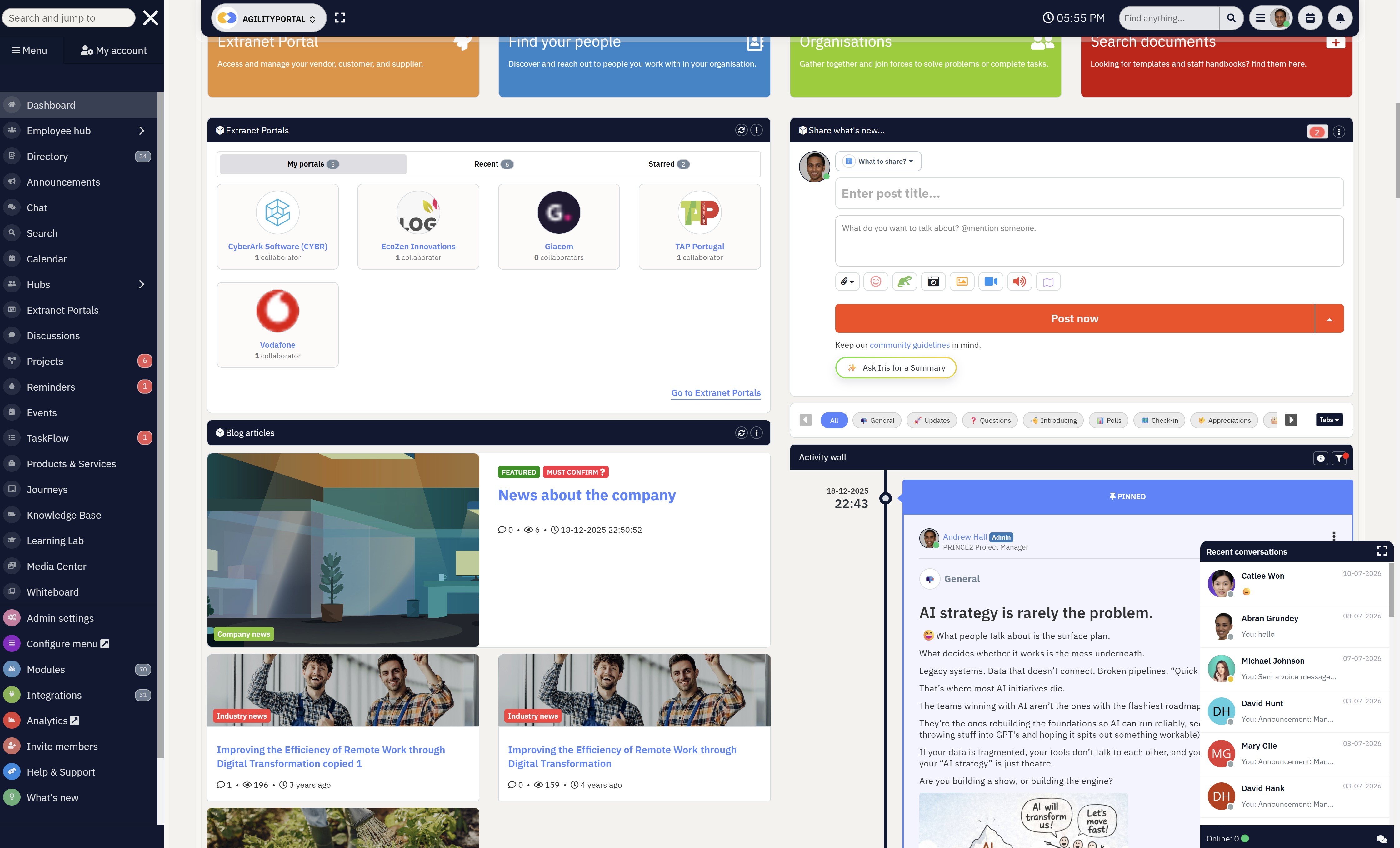
Build Better Offshore Teams With AgilityPortal
Managing a dedicated offshore team isn't just about hiring great developers—it's about keeping everyone connected, aligned, and working towards the same goals.
As your engineering team grows across different countries and time zones, communication can quickly become fragmented.
Conversations get lost across multiple chat apps, documents become difficult to find, project updates are scattered between different tools, and important decisions are buried in long email threads.
AgilityPortal brings everything together in one secure digital workspace, making it easier for your in-house employees and offshore developers to collaborate as a single engineering team.
With AgilityPortal you can:
- Centralise team communication in one secure platform.
- Share technical documentation, APIs, and project files with version control.
- Create dedicated workspaces for development teams and individual projects.
- Keep sprint updates, announcements, and project discussions organised.
- Manage tasks, approvals, knowledge bases, and internal documentation.
- Support remote and hybrid engineering teams from any location.
- Protect sensitive information with role-based permissions and secure access.
- Reduce app switching by bringing communication and collaboration into one place.
Whether your developers are working from London, Warsaw, Bangalore, Manila, or anywhere else in the world, AgilityPortal helps everyone stay informed, collaborate more effectively, and deliver software faster.
Experience Better Collaboration in Just 14 Days
If you're building or scaling a dedicated offshore development team, see how AgilityPortal can simplify communication, improve knowledge sharing, and keep every project moving forward.
Start your free 14-day trial today and discover how one platform can help your entire engineering team work smarter—wherever they're located.
Built for Distributed Engineering Teams
Keep Your Offshore Development Team Connected From Day One
Managing dedicated offshore developers across multiple countries can quickly become challenging when conversations are spread across chat apps, emails, video meetings, project tools, and shared drives. Important updates become difficult to find, documentation gets duplicated, and collaboration slows down.
AgilityPortal brings your in-house employees and offshore development teams together in one secure digital workplace, making it easy to communicate, share knowledge, manage documentation, collaborate on projects, and keep everyone aligned—regardless of location or time zone.
- Real-time messaging for in-house and offshore software development teams
- Dedicated project workspaces for Agile teams, departments, and clients
- Centralised documentation, APIs, SOPs, and technical knowledge bases
- Secure document sharing with version history and granular permissions
- Company announcements, sprint updates, release notes, and developer communication
- Task management, workflows, approvals, and collaborative project planning
- Role-based access controls, Single Sign-On, and enterprise-grade security
- Available on Web, iOS, and Android for teams working anywhere in the world
Final Thoughts
Building successful software has never been about where your developers are located. It's about bringing together the right people, the right processes, and the right technology to achieve a common goal.
The most successful businesses don't choose dedicated offshore teams simply because they can reduce development costs.
They choose them because they provide access to experienced engineers, specialist skills, and the flexibility to scale projects without the delays and challenges of traditional hiring.
An offshore team should never feel like an external supplier.
The best results happen when developers are treated as part of your business, involved in product planning, included in sprint reviews, encouraged to share ideas, and given ownership of the software they build.
When communication is open, documentation is maintained, and everyone works towards the same objectives, location becomes far less important than collaboration.
As you evaluate potential offshore development partners, look beyond hourly rates.
A lower price means very little if it comes at the expense of software quality, security, communication, or long-term stability.
Instead, focus on finding a partner that can demonstrate technical expertise, proven delivery experience, strong engineering practices, transparent communication, and the ability to grow alongside your business.
The software industry will continue to evolve as artificial intelligence, cloud technologies, automation, and distributed engineering become the standard way of building products.
Businesses that embrace these changes while investing in experienced development teams will be in the strongest position to innovate, respond to customer needs faster, and remain competitive in the years ahead.
Whether you're building your first SaaS platform, modernising an enterprise application, or expanding an existing product, a dedicated offshore team can become one of your greatest competitive advantages—provided you choose the right partner and build the relationship as a long-term collaboration rather than a short-term outsourcing arrangement.
AI Summary
- Dedicated offshore teams provide businesses with long-term access to experienced software developers, designers, QA engineers, and DevOps specialists who work as an extension of the in-house engineering team rather than external contractors.
- As global demand for skilled software engineers continues to outpace supply, more organisations are using dedicated offshore development to accelerate hiring, reduce recruitment costs, and scale engineering capacity without sacrificing quality.
- Successful offshore software development depends on clear communication, Agile processes, documentation, shared ownership, and strong engineering culture—not simply lower development costs.
- Artificial intelligence is reshaping software engineering by helping offshore developers automate coding, testing, documentation, and project planning, enabling smaller teams to deliver products faster while maintaining high quality.
- When evaluating an offshore development partner, businesses should prioritise technical expertise, security practices, developer retention, communication, scalability, and cultural fit instead of choosing solely based on hourly rates.
- The most successful companies treat offshore dedicated developers as strategic engineering partners, creating distributed teams that improve innovation, accelerate software delivery, and support long-term business growth.
Most Popular Posts

Effective communication among team members is vital for the productivity and success of any organization. Surprisingly, 60% of companies lack a long-term internal communication strategy, which p...


Businesses thrive on communication for efficiency, productivity and accomplishment. When the right information is passed from the right designation in the organization, it promotes positivity an...

Categories
Blog
(3216)
Business Management
(396)
Employee Engagement
(235)
Digital Transformation
(219)
Growth
(150)
Intranets
(142)
Internal communications
(107)
Remote Work
(68)
Sales
(53)
Collaboration
(53)
Customer Experience
(33)
Culture
(30)
Knowledge Management
(29)
Project management
(29)
Leadership
(20)
Comparisons
(9)
News
(1)

Related Posts

How is Edge AI changing business operations in 2026, and when does it make sense to process data near where it is created instead of sending it all to the cloud? The investment forecasts point to growing interest: Capgemini Research Institute's...

Choosing the best ERP for Shopify often starts when the workarounds stop working. Your store shows stock that the warehouse can't find. Wholesale orders live in spreadsheets. Finance spends days reconciling payouts, while customer service...

Could choosing the wrong proxy disrupt your team's work or increase costs without improving results? When comparing rotating proxies vs static proxies, the answer depends on what your business needs: a consistent IP address for an ongoing sessi...

What happens when a buyer asks Google for the best employee communication platform—and discovers competing brands before reaching your website? Choosing the best link building services can help a digital workplace business strengthen its broade...

Could gaps in digital accessibility be stopping your employees from completing the training they need to do their jobs? Imagine a new starter opening a mandatory course, only to discover they can't follow the audio, navigate the quiz with a keyboard ...


Jill Romford
I am a digital nomad, lover of exploring new places and making friends.
I love to travel and I love the internet. I take pictures of my travels and share them on the internet using Instagram.
Traveler, entrepreneur, and community builder. I share my insights on digital marketing and social media while inspiring you to live your fullest life.
Ready to learn more? 👍
One platform to optimize, manage and track all of your teams. Your new digital workplace is a click away. 🚀
Free for 14 days, no credit card required.