Insight Blog
Agility’s perspectives on transforming the employee's experience throughout remote transformation using connected enterprise tools.
42 minutes reading time
(8350 words)
Best Data Catalog Tools: 10 Platforms That Save Hours Every Week

Best Data Catalog Tools: 10 Platforms That Save Hours Every Week
Discover the best data catalog tools that help data engineers organise data, improve discovery, and save hours every week.
Best Data Catalog Tools: 10 Platforms That Save Hours Every Week

Ever spent hours trying to find the right dataset—only to realise it already existed somewhere else?
It's a frustrating situation, and more common than most teams admit.
According to Gartner, poor data quality and lack of visibility cost organisations an average of $12.9 million per year.
That's not just a data problem—it's a productivity drain that quietly impacts every team.
$12.9M
lost per year
According to Gartner, poor data quality and lack of visibility cost organisations an average of $12.9 million per year. That is not just a data problem — it is a quiet productivity drain.
Source: Gartner
Here's the psychological trap: when people can't find data quickly, they don't stop—they recreate it. That leads to duplicate datasets, conflicting reports, and decisions based on inconsistent information.
Over time, trust in data drops, and teams rely more on guesswork than insight.
The root cause is simple:
- Data is spread across warehouses, BI tools, and SaaS platforms
- Documentation is incomplete or outdated
- No single place exists to understand what data is available
This is exactly where the best data catalog tools come in.
They centralise your data, organise metadata, and make everything searchable—so teams can find what they need instantly without duplicating work or second-guessing accuracy.
In this guide, we break down the best data catalog tools that help teams save hours every week, reduce data chaos, and stay in control of their data ecosystem.
Key Takeaways
- Data catalog tools help organisations reduce time wasted searching for data by centralising metadata and making datasets easy to discover.
- Poor data visibility leads to duplicated work, inconsistent reporting, and slower decision-making across teams.
- Modern platforms combine data discovery, lineage tracking, and governance to improve trust and control over data assets.
- Choosing the right solution depends on your team’s size, technical capability, and need for scalability or compliance.
- Teams that invest in structured data management are more likely to improve productivity, collaboration, and overall data reliability.
What Is a Data Catalog Tool? (And Why It Matters More Than You Think)

What Is a Data Catalog Tool? (And Why It Matters More Than You Think)
Let's keep this simple.
A data catalog tool is a centralised system that organises and manages your data using metadata (basically, "data about your data"). Instead of digging through dashboards, spreadsheets, or warehouses trying to find what you need, everything is searchable and documented in one place.
Think of it like Google—but for your company's data.
A good data catalog helps your team:
- Discover datasets quickly → no more guessing where data lives
- Understand data lineage → see where data comes from and how it's transformed
- Trust data quality → know which datasets are accurate and up to date
Here's the blunt truth: most teams don't have a data problem—they have a data visibility problem.
Data is everywhere:
- Data warehouses
- BI tools
- SaaS platforms
- Internal systems
But without a catalog, it's chaos.
That leads to:
- Wasted time searching for data
- Duplicate datasets being created
- Teams making decisions on outdated or incorrect data
A data catalog fixes this by making data accessible, understandable, and trustworthy.
The real benefits (where teams win)
When implemented properly, data catalog tools deliver real impact:
- Save hours every week - Engineers and analysts spend less time searching and more time building
- Improve collaboration - Everyone works from the same source of truth
- Stronger data governance - Better control over access, compliance, and usage
- Faster decision-making - Teams can actually trust the data they're
If your team is constantly asking "Where is that dataset?" or "Can I trust this data?" — you don't need more tools… you need a data catalog.
56%
of employees
According to Atlassian, 56% of employees say they often need to ask someone or recreate work because they cannot find the information they need. This leads to duplicate datasets, conflicting reports, and poor decisions.
Source: Atlassian Team Playbook
Why Data Catalog Tools Matter More Than Ever
If you're working with a modern data stack, you've probably realised this already—data itself isn't the issue anymore.
The real challenge is managing it, finding it, and trusting it when you actually need it.
Here's exactly why data catalog tools have become a critical part of any serious data strategy.
Data Volume Is Exploding
Every business today is pulling data from multiple sources, including cloud platforms, SaaS tools, data warehouses, and analytics systems.
The problem is that this data rarely lives in one place, which creates fragmentation across the organisation.
- Data ends up scattered across multiple platforms, making it difficult to get a complete view of what exists.
- Teams often work in silos because different departments rely on different tools and systems.
- Valuable datasets are frequently overlooked or duplicated simply because no one knows they already exist.
Without proper data catalog software, this lack of visibility quickly turns into operational inefficiency.
This is where metadata management tools play a key role by organising and structuring data so it can actually be found and used.
Engineers Waste Time Searching for Data
This is where most teams feel the pain.
Instead of focusing on building pipelines or delivering insights, data engineers and analysts spend a significant amount of time trying to locate and validate the right datasets.
- Teams regularly search across multiple systems just to find a single dataset.
- Engineers often need to verify whether data is accurate, up to date, or even usable.
- Collaboration slows down because people rely on others to explain or confirm data context.
A modern data discovery platform removes this friction by centralising data and providing clear documentation, ownership details, and lineage tracking. The result is simple—teams spend less time searching and more time doing meaningful work.
Governance & Compliance Pressure Is Growing
As data regulations become stricter, businesses are under increasing pressure to maintain control over their data environments.
- Organisations must clearly understand who has access to sensitive data and how it is being used.
- Compliance requirements demand accurate tracking, reporting, and auditing of data activity.
- Poor visibility into data can lead to security risks, compliance failures, and costly penalties.
This is where data governance tools and enterprise data catalog platforms become essential.
They provide the structure needed to manage access, enforce policies, and ensure that data is handled responsibly across the organisation.
Self-Service Analytics Is Now the Expectation
Data is no longer limited to technical teams.
Business users across marketing, operations, and leadership all expect quick and easy access to insights without relying on engineers.
- Non-technical users need a simple way to discover and understand available datasets.
- Teams expect faster reporting without waiting on data specialists to pull information.
- Organisations are shifting towards self-service models to reduce bottlenecks and improve efficiency.
A well-implemented data catalog tool supports this shift by making data more accessible and easier to understand.
It enables users to find what they need independently while still maintaining control and governance.
As data continues to grow, the gap between collecting data and actually using it effectively becomes more obvious.
- Teams that lack proper data visibility struggle with inefficiency and duplication.
- Businesses without governance frameworks expose themselves to compliance and security risks.
- Organisations that fail to enable self-service analytics slow down decision-making.
The right data catalog tools address all of these challenges by bringing structure, clarity, and accessibility to your data—ultimately saving time and helping teams make better decisions.
How We Chose These Data Catalog Tools
Let's be honest—there's no shortage of data catalog tools on the market, and most of them sound the same on paper.
So instead of putting together a generic list, we focused on what actually makes a difference when teams are using these tools day in, day out.
This shortlist is built around real-world usability, not just feature lists.
The goal was simple: identify tools that genuinely help teams with data discovery, metadata management, and governance—while actually saving time.
What we looked at (and why it matters)
First, we prioritised ease of use.
A tool can be packed with features, but if it's clunky or difficult to navigate, teams simply won't adopt it.
That's why every platform here had to demonstrate a user-friendly experience that works for both technical and non-technical users.
Next, integration capability was a major factor.
Modern data environments are spread across multiple systems—think Snowflake, BigQuery, dbt, and BI tools.
A solid data catalog software needs to connect seamlessly across this ecosystem, otherwise it just becomes another silo.
We also paid close attention to data lineage and visibility.
Understanding where data comes from, how it's transformed, and who owns it is essential for building trust. This is a core requirement for any serious enterprise data catalog, especially in larger organisations.
Automation was another key area. The best metadata management tools now use AI to handle tasks like tagging, classification, and recommendations.
This reduces manual work and makes it easier to keep data organised as it grows.
Finally, we looked at real-world adoption. It's easy to be impressed by a demo, but that doesn't always translate into long-term value. The tools included here are actively used by data engineers, analysts, and business teams—not just sitting in trial environments.
A lot of "top tools" lists are surface-level. They tell you what a platform claims to do—but not whether it actually delivers.
This list is different.
Every tool here was chosen because it helps teams:
- Reduce time spent searching for data
- Improve visibility across systems
- Strengthen governance and compliance
- Scale alongside growing data needs
At the end of the day, the goal isn't just to organise data—it's to make it usable, reliable, and accessible.
That's exactly what the right data catalog tools should do, now let get down to the 10 we recommend.
10 Best Data Catalog Tools
Here's where things get practical.
Instead of forcing you to read through every tool one by one, this table gives you a side-by-side comparison of the best data catalog tools, so you can quickly see which one fits your setup, team size, and technical requirements.
Data Catalog Tools Comparison
| Tool | Best For | Key Strength | Ease of Use |
| DataHub | Engineering-heavy teams | Open-source, real-time metadata | Medium |
| Alation | Enterprise governance | Mature platform, strong compliance | Medium |
| Collibra | Large enterprises | Governance-first approach | Low–Medium |
| Atlan | Modern data teams | Collaboration + active metadata | High |
| Microsoft Purview | Azure users | Native Microsoft integration | Medium |
| Informatica EDC | Enterprise AI cataloging | Advanced automation & lineage | Low–Medium |
| Databricks Unity Catalog | Lakehouse environments | Unified governance in Databricks | Medium |
| Secoda | Startups & SMBs | Simplicity + fast setup | High |
| OpenMetadata | Open-source users | Flexible, community-driven | Medium |
| Select Star | Analytics teams | Data discovery + usage insights | High |
🏆 10 Best Data Catalog Tools That Save Hours Every Week
#1. DataHub
Engineering-led teams looking for an open-source data catalog tool with real-time metadata and deep customisation
#1. DataHub
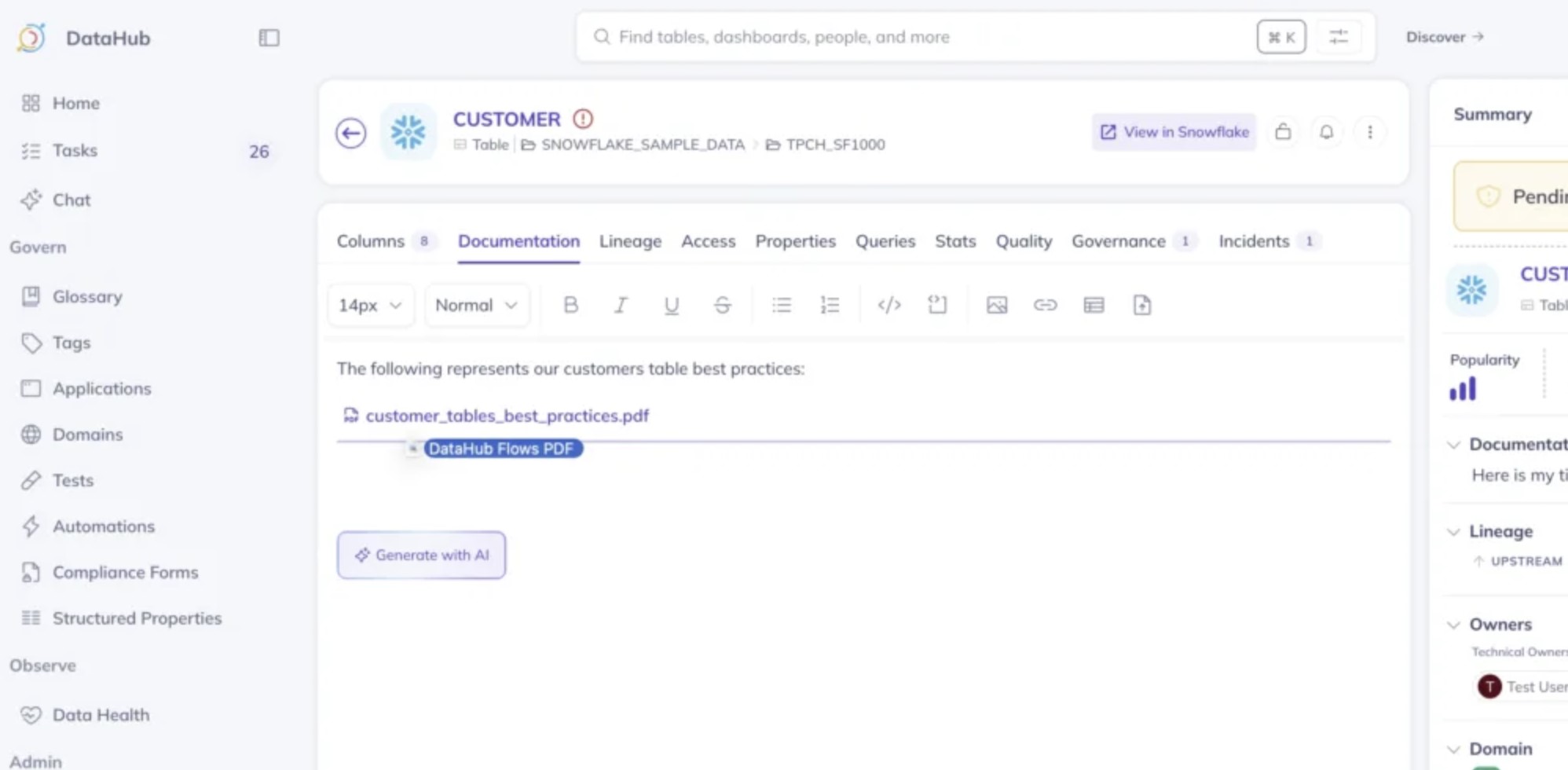
DataHub is an open-source metadata management platform originally built by LinkedIn to handle one of the largest data ecosystems in the world.
Since being open-sourced, it has grown into a powerful enterprise data catalog used by teams that need full control over their data infrastructure.
At its core, DataHub goes beyond basic data discovery tools.
It acts as a centralised system that connects data warehouses, data lakes, BI tools, pipelines, and even AI/ML assets through a unified metadata graph.
This means your entire data ecosystem becomes searchable, traceable, and easier to manage.
What makes it stand out is its event-driven architecture.
Unlike traditional data catalog software that relies on batch updates, DataHub processes metadata changes in near real-time. For data engineers, that's a big deal—because lineage, ownership, and governance reflect what's happening now, not what happened yesterday.
Key Features That Matter
DataHub
An Open-Source Data Catalog for Metadata, Discovery & Governance
DataHub is a modern data catalog platform built to help teams discover, understand, and govern data across complex data ecosystems. It is especially useful for organisations that need stronger metadata management, data lineage, ownership visibility, and searchable context across their data stack.
See how DataHub helps teams centralise metadata, improve discovery, and strengthen data governance.#2. Alation
Enterprises that need a mature data catalog tool with strong governance, search, and data stewardship capabilities
#2. Alation
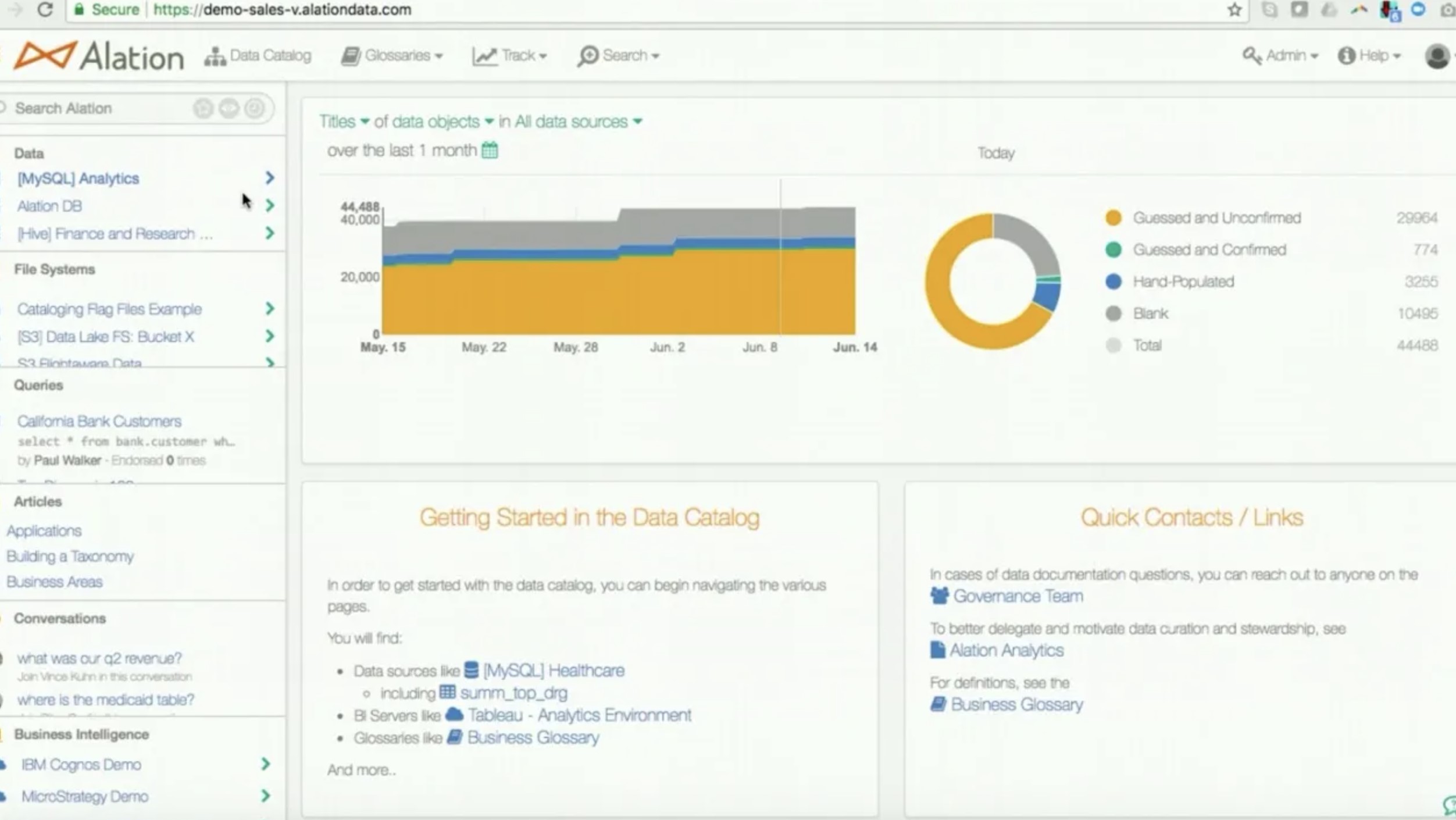
Alation is one of the most established platforms in the data catalog software space, widely recognised for combining data discovery, governance, and collaboration into a single system.
It's built for organisations that are serious about managing data at scale—especially where compliance, trust, and standardisation matter.
Unlike many newer tools that focus purely on discovery, Alation leans heavily into enterprise data catalog functionality.
It uses behavioural analysis and machine learning to understand how data is being used across the business, helping teams surface the most relevant and trusted datasets faster.
What makes Alation stand out is its focus on turning data into a shared organisational asset. It doesn't just show you where data lives—it helps teams understand it, document it, and govern it properly.
Key Features:
- AI-powered data search that learns from user behaviour to improve discovery over time
- Centralised data catalog with rich metadata, documentation, and business context
- Built-in data governance workflows for stewardship, policy management, and compliance
- Automated data profiling and metadata enrichment to improve data quality visibility
- Data lineage tracking to understand how data moves across systems
- Integration with major platforms like Snowflake, Tableau, Power BI, and cloud data warehouses
- Collaboration features including data annotations, certifications, and usage insights
Alation
A Data Intelligence Platform for Discovery, Governance & Trusted Data
Alation is an enterprise-grade data catalog platform designed to help organisations discover, understand, and trust their data. It combines metadata management, intelligent search, and collaboration tools to give teams full visibility into data assets across complex systems.
See how Alation helps teams discover, govern, and trust data across the organisation.#3. Collibra
Large organisations that prioritise data governance tools, compliance, and enterprise-wide data control
#3. Collibra
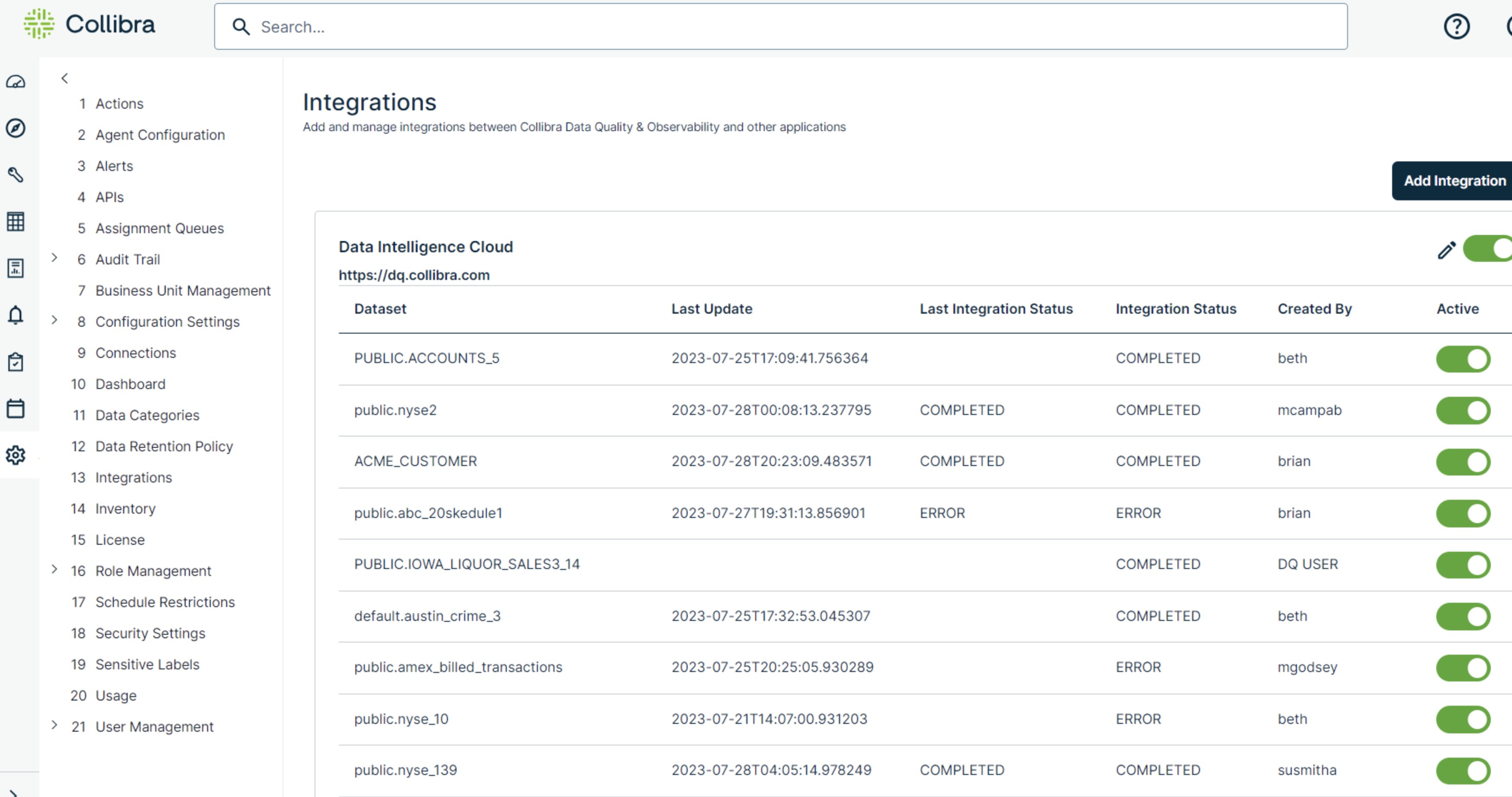
Collibra is a leading enterprise data catalog platform built with governance at its core.
While many data catalog tools focus on discovery first, Collibra takes a governance-first approach—making it a strong choice for organisations that need strict control over data usage, access, and compliance.
It's widely used in industries like finance, healthcare, and insurance, where data regulations are non-negotiable. Instead of just helping you find data, Collibra ensures that data is properly classified, governed, and aligned with business policies.
What sets Collibra apart is its ability to combine metadata management tools, governance workflows, and data intelligence into a single structured framework.
This makes it more than just a data discovery platform—it becomes the foundation for managing data across the entire organisation.
Key Features:
- Centralised data catalog software with strong governance and policy management capabilities
- Automated data classification and metadata enrichment to improve data visibility and compliance
- End-to-end data lineage tracking across systems, pipelines, and transformations
- Workflow automation for data stewardship, approvals, and governance processes
- Role-based access control to manage permissions and secure sensitive data
- Integration with enterprise tools like Snowflake, Power BI, Tableau, and cloud data platforms
- Business glossary and data dictionary to standardise definitions across teams
Collibra
An Enterprise Data Intelligence Platform for Governance, Discovery & Trusted Data
Collibra is an enterprise-grade data catalog and governance platform designed to help organisations discover, understand, and trust their data. It creates a centralised inventory of data assets, combining metadata, lineage, and governance workflows to make data easier to find, manage, and use across the business. :contentReference[oaicite:0]{index=0}
See how Collibra helps organisations govern, discover, and trust data at scale.#4. Atlan
Modern data teams that want a collaborative, user-friendly data catalog tool with fast adoption
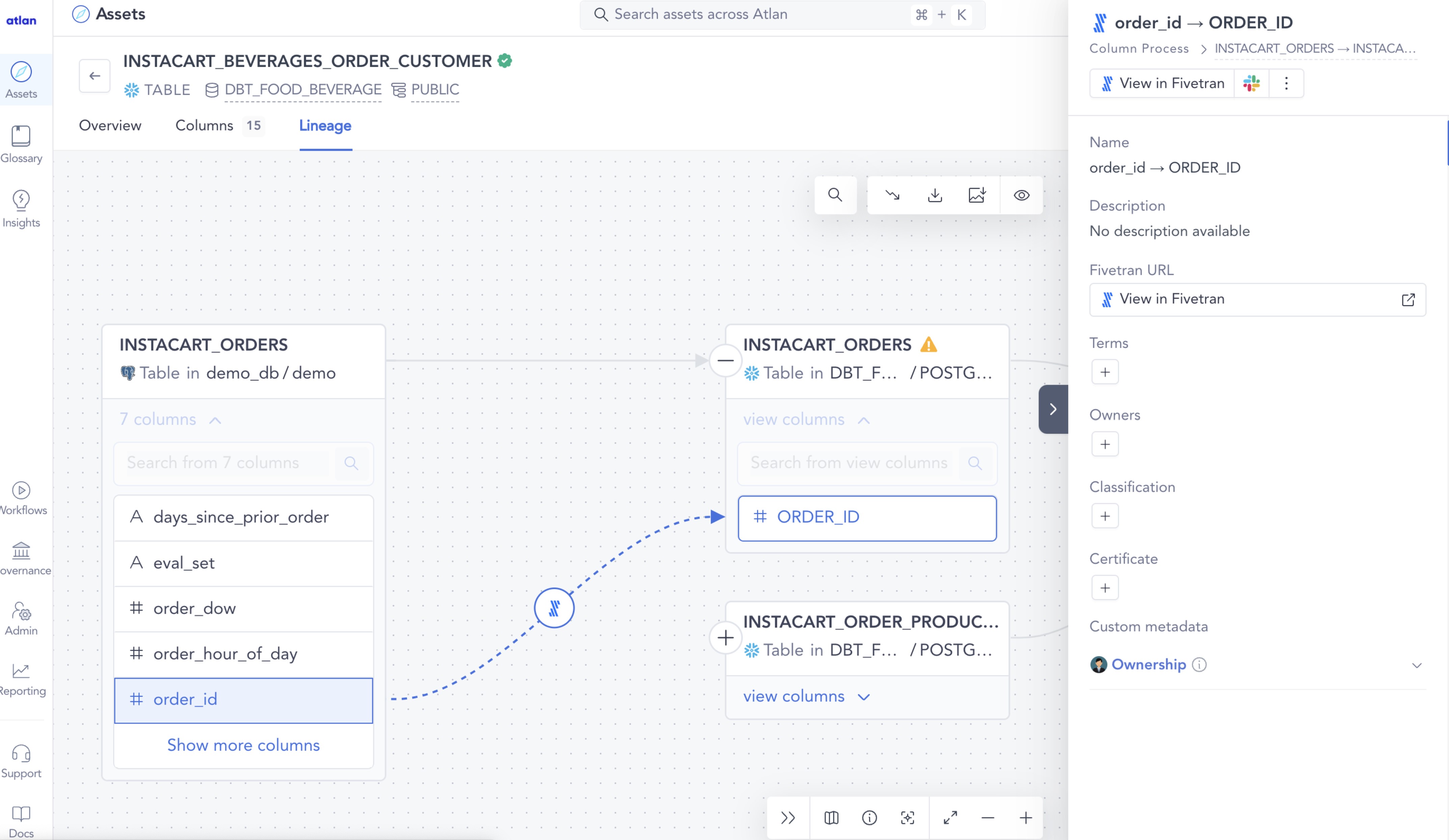
#4. Atlan
Atlan is a newer-generation data catalog software designed for teams that care about usability just as much as functionality.
It positions itself as a "collaboration layer for data," combining data discovery tools, metadata management, and team workflows into one clean, modern interface.
Unlike traditional enterprise data catalog platforms that can feel heavy and process-driven, Atlan focuses on speed and adoption.
It integrates directly into tools teams already use—like Slack, BI platforms, and data warehouses—making it easier for both technical and non-technical users to work with data.
What makes Atlan stand out is its concept of active metadata. Instead of static documentation, metadata is constantly updated and enriched based on how data is used, helping teams stay aligned without manual effort.
Key Features:- AI-powered data discovery platform with smart search and automated metadata enrichment
- Active metadata system that continuously updates based on usage and context
- Built-in collaboration through Slack-style workflows, comments, and tagging
- End-to-end data lineage tracking across pipelines and transformations
- Integration with modern data stack tools like Snowflake, dbt, BigQuery, and Tableau
- Role-based access and governance features to support compliance and control
- Chrome extension for in-context data discovery directly within BI tools
Atlan
A Modern Data Workspace for Discovery, Governance & Team Collaboration
Atlan is a modern data catalog and collaboration platform built for data teams that need to organise, discover, and govern data in one unified workspace. It combines metadata management, data lineage, and collaboration tools to help teams work faster and make better data-driven decisions.
See how Atlan helps teams collaborate, govern, and discover data in one modern workspace.#5. Microsoft Purview
Organisations already using the Microsoft ecosystem that want a native data catalog tool with built-in governance and compliance
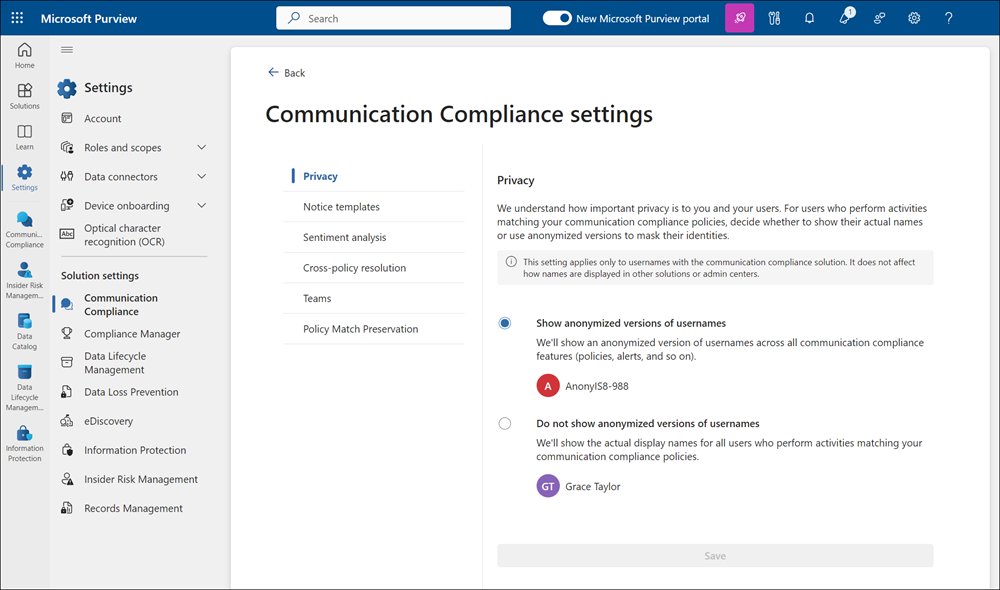
#5. Microsoft Purview
Microsoft Purview is a unified data catalog software and governance platform designed to help organisations manage, discover, and protect data across their entire environment.
It's tightly integrated with Azure and other Microsoft services, making it a natural choice for businesses already invested in that ecosystem.
At its core, Purview combines data discovery tools, metadata management, and compliance capabilities into a single platform. It automatically scans data sources, builds a centralised data map, and helps teams understand where data lives and how it's being used.
Where it really stands out is in governance. Purview isn't just about finding data—it's about controlling it.
It gives organisations the ability to classify sensitive data, enforce policies, and meet regulatory requirements without needing separate data governance tools.
Key Features:
- Automated data scanning and indexing across cloud, on-prem, and hybrid environments
- Centralised data map providing a unified view of all data assets
- Built-in data classification and sensitivity labelling for compliance
Microsoft Purview
A Unified Data Governance Platform for Discovery, Security & Compliance
Microsoft Purview is a comprehensive data governance and data catalog platform that helps organisations discover, manage, and protect data across on-premises, cloud, and SaaS environments. It combines metadata management, data lineage, and compliance tools into a single unified experience.
See how Microsoft Purview helps organisations govern, secure, and gain visibility into their entire data estate.#6. Informatica Enterprise Data Catalog
Large enterprises that need AI-driven metadata management tools with deep governance and data intelligence capabilities
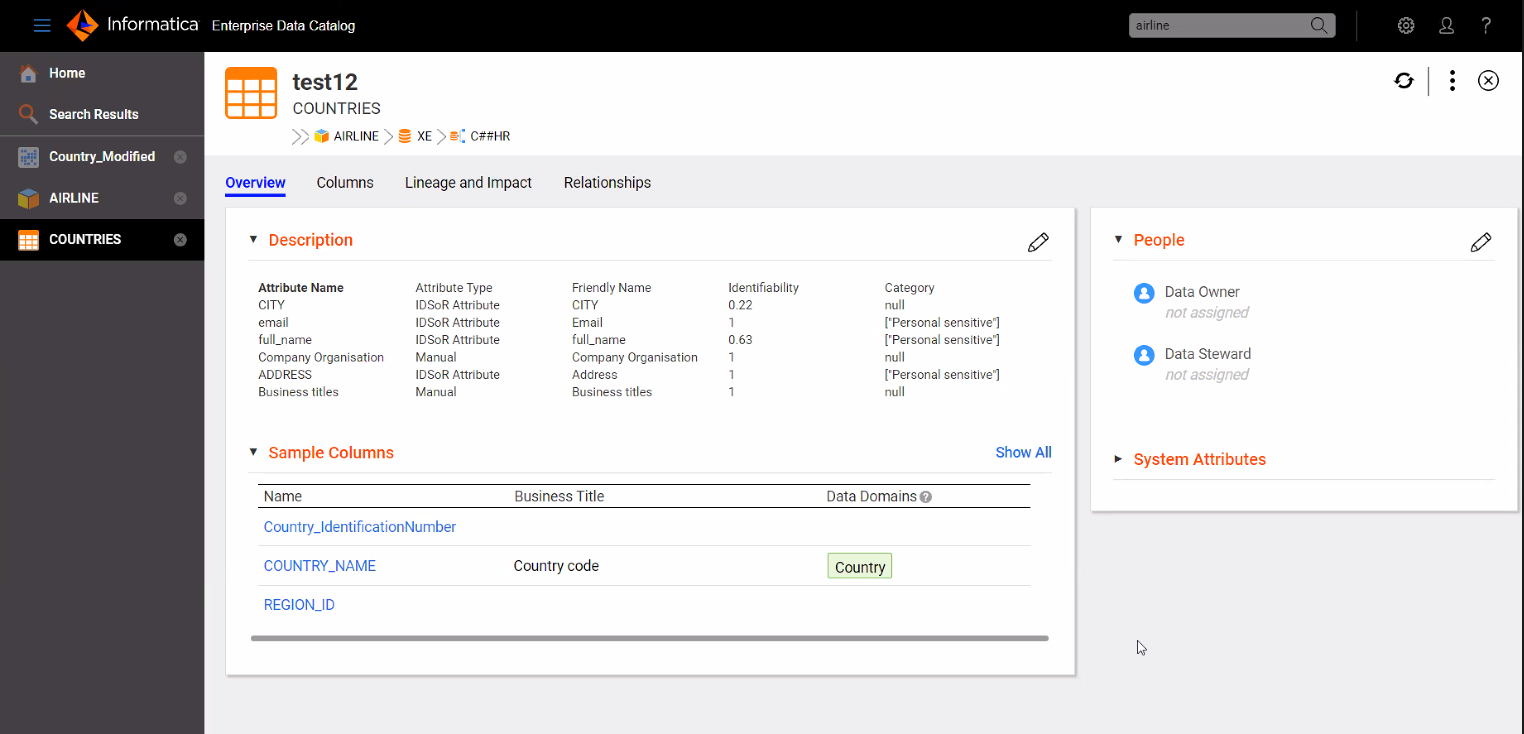
#6. Informatica Enterprise Data Catalog
Informatica Enterprise Data Catalog (EDC) is a powerful, enterprise-grade platform built to handle complex data environments at scale.
It combines data discovery, metadata management, and governance into a single system, making it a strong choice for organisations dealing with large volumes of distributed data.
What sets Informatica apart is its heavy use of AI and automation. Instead of relying on manual input, it automatically scans data sources, classifies assets, and builds relationships between datasets.
This makes it easier for teams to understand their data landscape without spending hours documenting everything themselves.
It's particularly well-suited for businesses that need a high level of control, visibility, and compliance across multiple systems, including cloud, on-prem, and hybrid environments.
Key Features:
- AI-powered metadata discovery and automated data classification across enterprise systems
- Intelligent data lineage tracking to visualise how data flows and transforms
- Automated data profiling to assess data quality and reliability
- Integration with a wide range of enterprise platforms, including databases, cloud services, and BI tools
- Built-in governance capabilities to manage policies, ownership, and compliance
- Business glossary and data relationship mapping for improved data understanding
- Scalable architecture designed for large, complex data environments
Informatica
An AI-Powered Enterprise Data Catalog for Metadata, Lineage & Governance
Informatica Enterprise Data Catalog is a powerful data catalog and metadata management platform designed for large enterprises. It uses AI and machine learning to automatically discover, classify, and organise data assets across cloud and on-prem environments, giving teams a unified view of their data landscape.
See how Informatica helps organisations discover, govern, and trust data at enterprise scale.#7. Databricks Unity Catalog
Teams working within the Databricks ecosystem that need unified governance across lakehouse environments
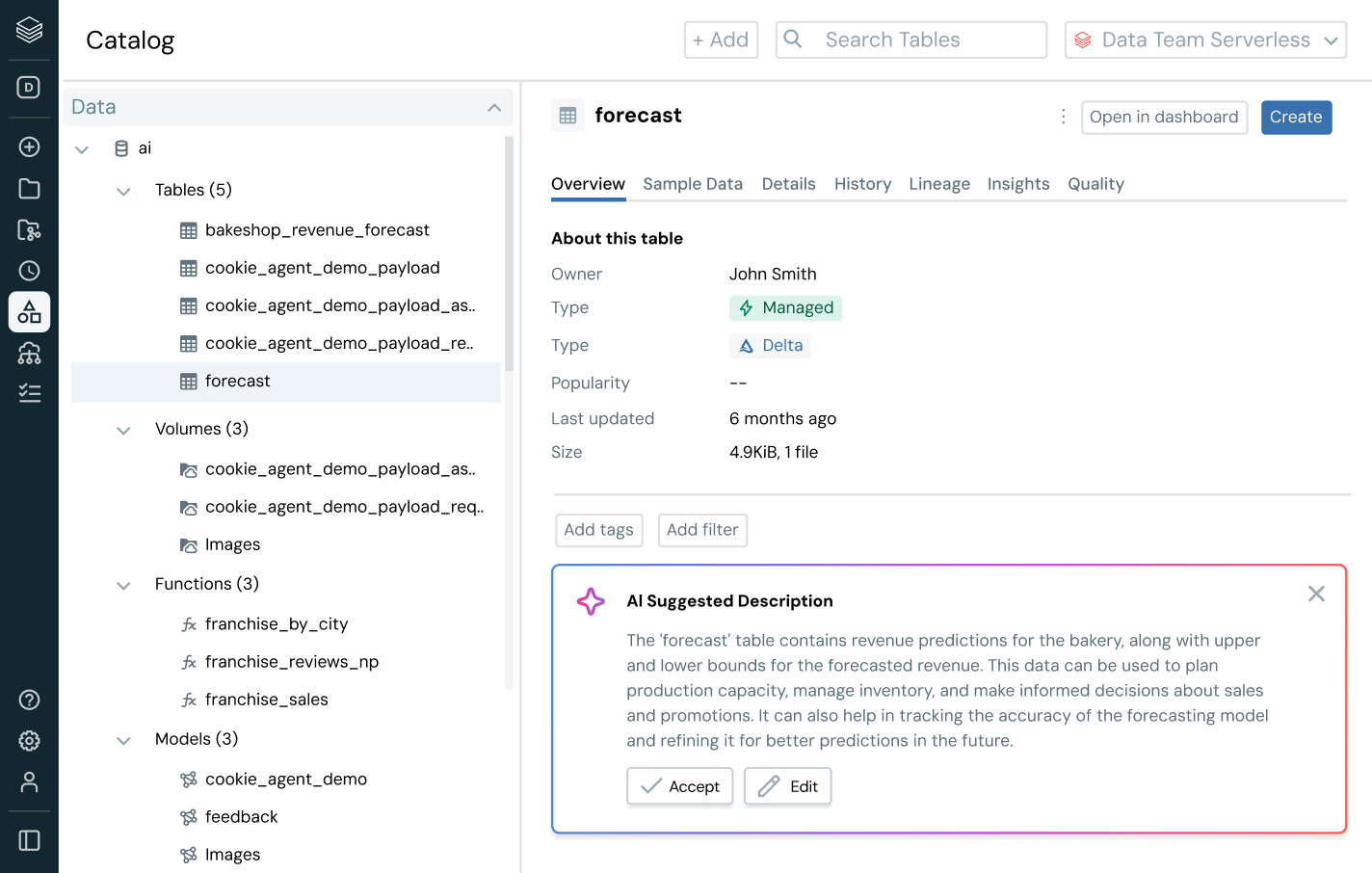
#7. Databricks Unity Catalog
Databricks Unity Catalog is a governance and metadata layer designed specifically for the Databricks Lakehouse platform.
It brings together data access control, lineage, and discovery into one system, making it easier to manage data across analytics and AI workloads.
Unlike standalone data catalog tools, Unity Catalog is deeply embedded within Databricks.
That tight integration is its biggest advantage—it allows teams to manage permissions, track data usage, and enforce governance policies directly within the same environment where data is stored and processed.
For teams already using Databricks for data engineering, analytics, or machine learning, this creates a much more streamlined workflow with fewer moving parts.
Key Features:
- Centralised governance layer for managing data access across the lakehouse
- Fine-grained access control at the table, column, and row level
- Built-in data lineage tracking across queries, notebooks, and pipelines
- Integration with Databricks workspaces for seamless user and data management
- Support for structured and unstructured data across cloud storage
- Unified view of data assets, including tables, files, and AI models
- Audit logging and monitoring for compliance and security tracking
Databricks Unity Catalog
A Unified Governance Layer for Data, AI Assets & Lakehouse Environments
Databricks Unity Catalog is a data governance and catalog solution built for organisations using the Databricks Lakehouse Platform. It helps teams manage permissions, discover data assets, track lineage, and govern structured data, unstructured data, notebooks, models, and AI assets from one central layer.
See how Databricks Unity Catalog helps teams govern data and AI assets across the lakehouse.#8. Secoda
Startups and growing teams that want a simple, fast-to-implement data discovery platform without heavy setup
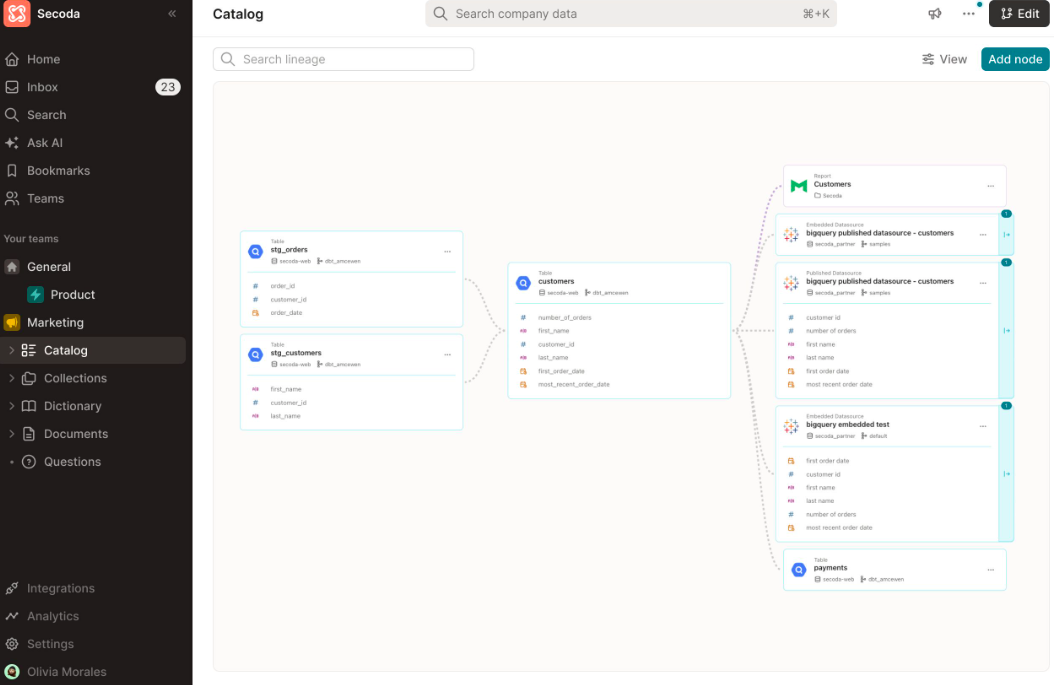
#8. Secoda
Secoda is a lightweight, modern platform designed to make data easier to find, understand, and use—without the complexity that comes with many enterprise tools.
It combines metadata management tools, documentation, and discovery into one clean interface, making it a strong choice for teams that need results quickly.
What makes Secoda stand out is its focus on simplicity.
Instead of overwhelming users with features, it prioritises usability and speed. Teams can connect their data sources, index metadata, and start searching across their entire data environment in a short amount of time.
It's particularly useful for smaller teams or companies that want to introduce structure without committing to a heavy, resource-intensive system.
Key Features:
- AI-powered search across datasets, dashboards, and documentation
- Centralised workspace combining data discovery and internal documentation
- Automated metadata extraction and indexing from connected data sources
- Integration with tools like Snowflake, BigQuery, Redshift, and BI platforms
- Built-in documentation editor for adding context and knowledge sharing
- Data lineage visibility to understand how data flows across systems
- Slack integration for quick access and collaboration
Secoda
A Modern Data Catalog with AI Search for Fast Data Discovery
Secoda is a modern data catalog and discovery platform designed to help teams quickly find, understand, and use data. With a strong focus on simplicity and AI-powered search, it enables data teams and business users to access trusted data without navigating complex systems.
See how Secoda helps teams discover, document, and trust data faster with AI-powered search.#9. OpenMetadata
Teams that want an open-source, flexible metadata management platform with strong community support
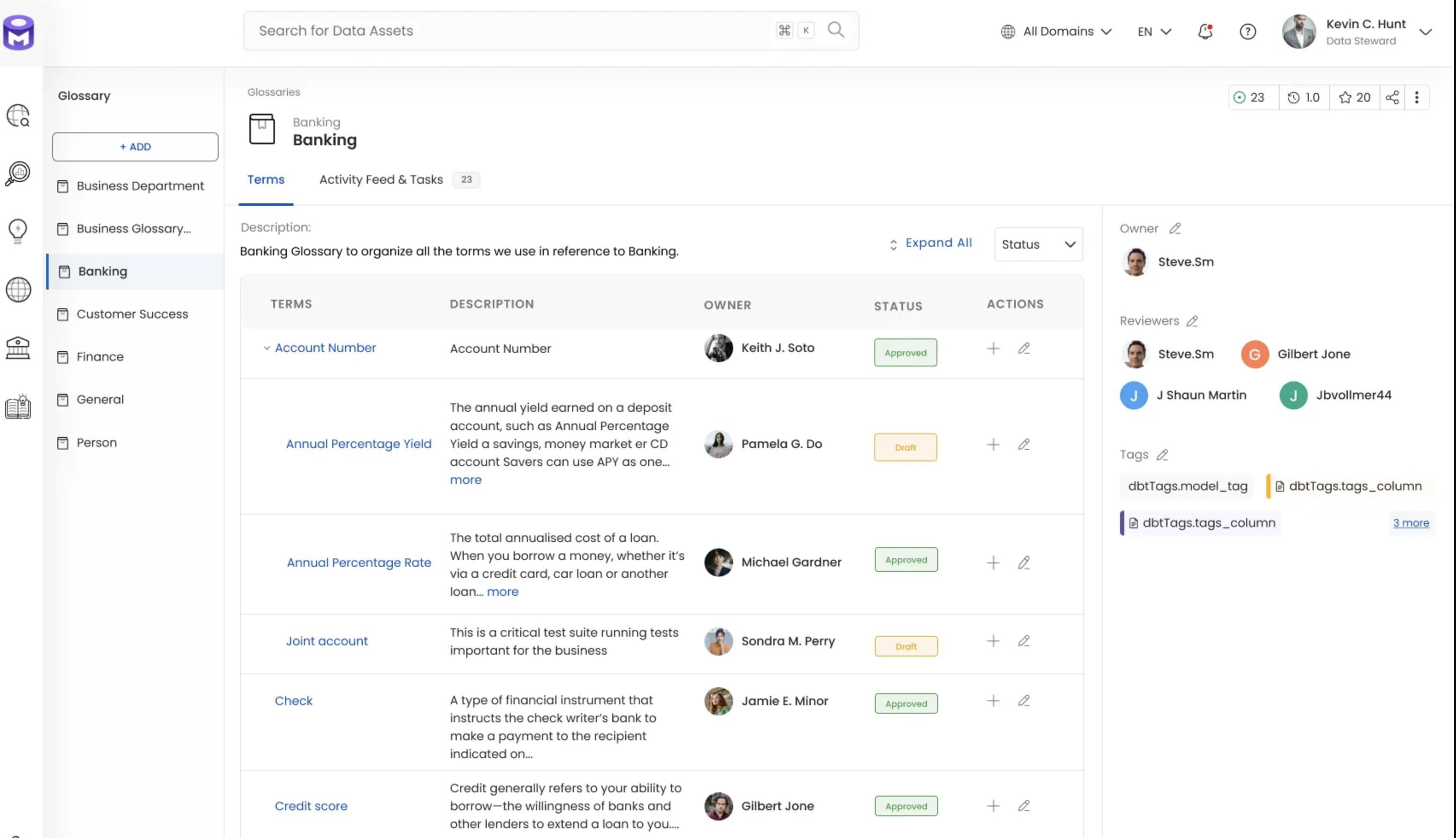
#9. OpenMetadata
OpenMetadata is an open-source platform built to simplify data discovery, lineage tracking, and governance across modern data stacks.
It's designed as a central place to manage metadata, making it easier for teams to understand what data exists, how it's used, and whether it can be trusted.
What makes OpenMetadata stand out is its balance between flexibility and functionality. Unlike heavier enterprise platforms, it gives teams the ability to customise and extend the system without being locked into a vendor.
At the same time, it still provides the core capabilities you'd expect from a modern enterprise data catalog.
It's a strong option for organisations that want control over their data infrastructure while still benefiting from a growing open-source ecosystem.
Key Features:- Centralised metadata repository for managing datasets, dashboards, pipelines, and services
- Automated metadata ingestion from tools like Snowflake, BigQuery, dbt, Airflow, and Tableau
- End-to-end data lineage tracking across data pipelines and transformations
- Built-in data quality monitoring and test framework
- Role-based access control for managing permissions and governance
- Integration with collaboration tools like Slack for notifications and updates
- Extensible architecture that allows custom plugins and integrations
#10. Select Star
Analytics teams that want a clean, visual data discovery platform focused on understanding how data is actually used
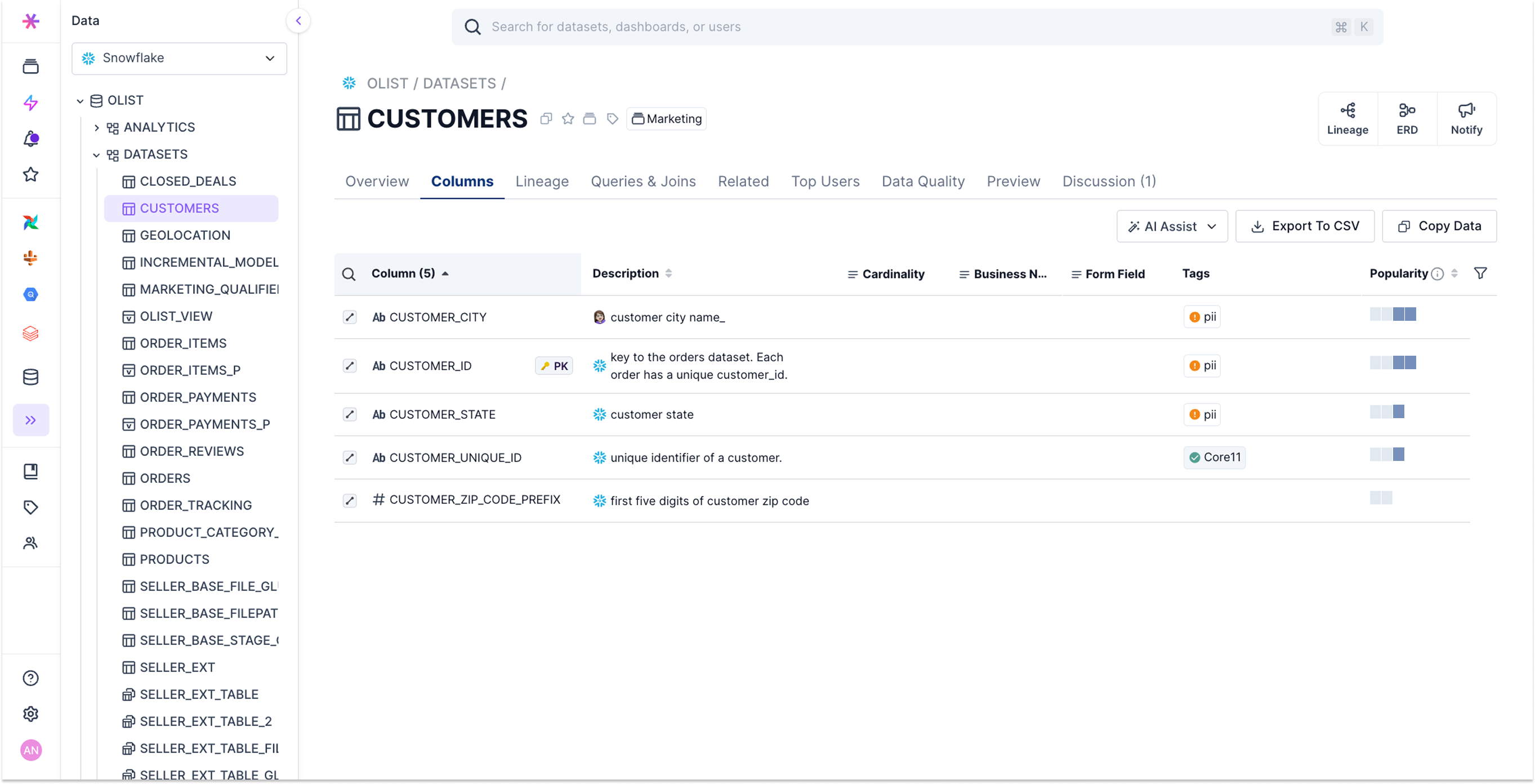
#10. Select Star
Select Star is designed to make data easier to explore, understand, and trust—especially for teams working heavily with BI tools and analytics workflows.
Instead of focusing purely on governance, it leans into visibility and usability, helping teams quickly answer one key question: what data should I actually be using?
What makes Select Star stand out is its focus on usage-based insights. It doesn't just show you where data exists—it highlights which datasets are actively used, trusted, and relevant.
That's a big advantage for analytics teams trying to avoid outdated or unused data.
It's particularly useful for organisations that want a faster, more intuitive way to navigate their data without dealing with overly complex systems.
Key Features:- Visual data lineage that clearly maps how data flows across dashboards, tables, and pipelines
- Usage analytics that highlight popular, trusted, and frequently queried datasets
- Automated metadata ingestion from data warehouses and BI tools
- Integration with platforms like Snowflake, BigQuery, Redshift, Looker, and Tableau
- Search and discovery interface designed for both technical and business users
- Data health indicators to assess reliability and usage trends
- Collaboration features for documenting and sharing insights across teams
Select Star
A Data Discovery Platform for Column-Level Lineage & Fast Insights
Select Star is a modern data discovery and catalog platform designed to help teams quickly understand how data flows across their systems. It focuses on column-level lineage, impact analysis, and visibility into data usage—making it easier for teams to trust and use data without digging through complex pipelines.
See how Select Star helps teams understand data lineage and uncover insights faster.How to Choose the Right Data Catalog Tool
Most teams don't struggle because they picked the "wrong" tool…
They struggle because they picked a tool that doesn't match how their team actually works.
So instead of comparing endless features, focus on what will actually move the needle—saving time, improving visibility, and making data easier to trust.
Start with the real problem (not the tool)
Before you even look at platforms, get clear on what's slowing your team down.
- If people are constantly asking "Where is that dataset?", then your issue is data discovery and visibility, not governance.
- If you're dealing with audits, permissions, or compliance headaches, then you need stronger data governance and control, not just search.
- If teams don't trust the data they're using, then the problem is data lineage and context, not access.
The mistake most companies make is trying to solve all of these at once.
Match the tool to your team (this is where most fail)
A tool that works for a 10-person startup will fail in a 1,000-person enterprise—and vice versa.
- If your team is highly technical, you can take advantage of flexible, developer-first platforms that offer deep customisation and control.
- If your team includes non-technical users, then usability becomes critical—because if people don't use it, it's useless.
- If adoption is your biggest concern, prioritise tools with clean interfaces and simple workflows over complex systems.
A powerful platform that nobody uses is a wasted investment.
Don't ignore your existing stack
Your platform should fit into your current environment—not fight against it.
- If your data lives in Snowflake, BigQuery, or Redshift, your tool needs to integrate seamlessly.
- If your team relies on BI tools like Tableau or Power BI, discovery should happen where they already work.
- If integration is weak, you'll end up with yet another silo—which defeats the whole purpose.
The best tools feel invisible because they fit naturally into your workflow.
Think about scale now (not later)
What works today might break in 6–12 months if your data grows quickly.
- Some platforms are great for getting started but struggle as data complexity increases.
- Others are built for scale but require more effort upfront.
- Automation (like smart tagging and classification) becomes more important as your data expands.
If you're growing fast, don't choose something you'll outgrow just as quickly.
A simple way to narrow it down fast
If you don't want to overthink it, here's the practical breakdown:
- Startups or small teams → Go for something lightweight and easy to adopt, where you can get value quickly without heavy setup.
- Mid-size teams scaling data → Look for platforms that balance usability with stronger visibility and automation.
- Enterprises with compliance needs → Prioritise governance, control, and audit capabilities over simplicity.
- Engineering-driven teams → Flexible or open platforms will give you more long-term control.
The goal isn't to organise data—it's to make it usable.
The right platform should:
- Help your team find what they need instantly
- Give them confidence in the data they're using
- Fit into how they already work
If it doesn't do those three things, it doesn't matter how advanced it is—you'll still waste hours every week.
Still Losing Time Searching for Information?
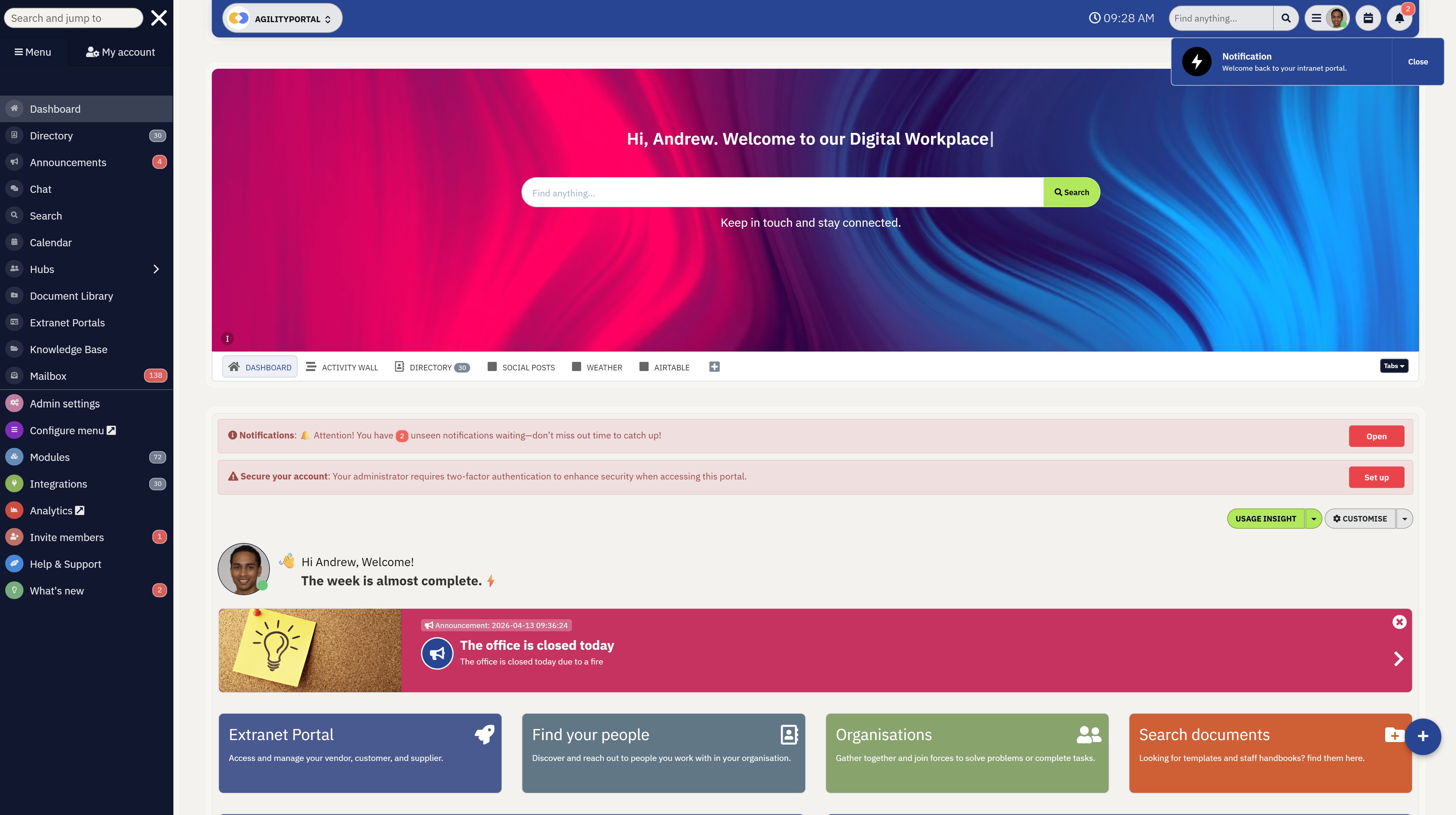
Still Losing Time Searching for Information, Change that Using AgilityPortal
Here's the part most teams overlook…
Even after implementing the best data catalog tools, people are still wasting time—not just on data, but on finding information across the business.
Data might be organised, but everything else isn't:
- Documents are scattered across drives
- Conversations are buried in Slack or email
- Knowledge lives in different tools—or worse, in people's heads
So while your data becomes easier to find… your overall productivity problem still exists.
Bring Everything Together with AgilityPortal
AgilityPortal goes beyond data—it gives your team a single, central hub for communication, documents, and knowledge, so nothing gets lost, duplicated, or forgotten.
With AgilityPortal, your team can:
- Find information instantly without switching between tools
- Keep communication and context in one place
- Share knowledge in a structured, searchable way
- Reduce time wasted across disconnected systems
AgilityPortal
A Smart Data Catalog & Knowledge Hub Built for Modern Teams
AgilityPortal isn’t just another intranet—it acts as a practical data catalog software for teams that need to organise, discover, and manage internal knowledge, documents, and business data in one place. It connects your people, files, and workflows into a single searchable system.
Instead of wasting time digging through shared drives, emails, and disconnected tools, teams get a centralised hub with structured knowledge, searchable content, and role-based access—so the right people can find the right data instantly.
Start your 14-day free trial — no credit card required. Built for teams that want one source of truth, not more tools.Wrapping up
Here's the reality most teams don't want to admit…
The biggest cost in your data stack isn't infrastructure—it's time.
Time wasted searching for datasets.
Time wasted validating whether data is correct.
Time wasted rebuilding something that already exists.
That adds up fast.
The right tools fix that.
A solid data catalog doesn't just organise your data—it makes it discoverable, understandable, and trustworthy. And once your team trusts the data, everything speeds up. Decisions get made faster, duplication drops, and engineers can focus on building instead of searching.
But here's the part most companies miss…
Even the best data catalog only solves part of the problem.
Because data isn't the only thing that gets lost—
knowledge, communication, and context disappear too.
If your team is still:
- Asking questions in Slack that never get documented
- Struggling to share knowledge across departments
- Losing important context around projects and decisions
Then you don't just have a data problem—you have a visibility problem across your entire organisation.
That's where platforms like AgilityPortal come in.
Instead of just organising data, it helps you:
- Centralise communication, documents, and knowledge
- Keep teams aligned across locations and roles
- Turn scattered information into something your team can actually use
AI Summary
- Many organisations struggle with scattered data across warehouses, BI tools, and SaaS platforms, making it difficult for teams to find and trust the information they need.
- Data catalog tools help centralise metadata, improve data discovery, and give teams clear visibility into where data lives and how it’s used.
- Without a structured system, teams often duplicate datasets, waste hours searching, and make decisions based on outdated or inconsistent data.
- Modern platforms combine data discovery, lineage tracking, and governance features to reduce manual work and improve overall data reliability.
- Choosing the right tool depends on your team’s needs, whether that’s ease of use, integration with your data stack, or strong governance and compliance controls.
- Businesses that prioritise data visibility and usability are more likely to save time, improve collaboration, and make faster, more accurate decisions.
Most Popular Posts

Effective communication among team members is vital for the productivity and success of any organization. Surprisingly, 60% of companies lack a long-term internal communication strategy, which p...


Businesses thrive on communication for efficiency, productivity and accomplishment. When the right information is passed from the right designation in the organization, it promotes positivity an...
Categories
Blog
(2986)
Business Management
(376)
Employee Engagement
(223)
Digital Transformation
(192)
Growth
(143)
Intranets
(137)
Remote Work
(63)
Sales
(53)
Collaboration
(48)
Customer Experience
(30)
Culture
(29)
Knowledge Management
(28)
Project management
(28)
Leadership
(20)
Comparisons
(9)
News
(1)

Related Posts

Recruitment challenges remain one of the biggest obstacles to growth for deep tech companies in 2026. As demand for AI engineers, data scientists, robotics specialists, semiconductor experts, and biotech researchers continues to rise, organizat...

The rise of artificial intelligence is transforming the way SEO professionals research keywords, analyze competitors, monitor rankings, and optimize content. According to a 2024 HubSpot survey, more than 64% of marketers already use AI tools in...

The DEI maturity model represents a structured approach to assessing and enhancing diversity, equity, and inclusion within corporate environments. This model serves as a crucial framework for organizations aiming to not only diversify their wor...

If you've ever managed relationships with partners, distributors, resellers, suppliers, or clients, you've probably experienced the frustration of searching through endless email threads, outdated spreadsheets, and scattered documents just to find a ...

We all know that Fund management plays a critical role in the success of any partner program. Whether you're managing marketing development funds (MDF), co-marketing budgets, partner incentives, rebates, training initiatives, or broader partner ...


Jill Romford
I am a digital nomad, lover of exploring new places and making friends.
I love to travel and I love the internet. I take pictures of my travels and share them on the internet using Instagram.
Traveler, entrepreneur, and community builder. I share my insights on digital marketing and social media while inspiring you to live your fullest life.
Ready to learn more? 👍
One platform to optimize, manage and track all of your teams. Your new digital workplace is a click away. 🚀
Free for 14 days, no credit card required.