Insight Blog
Agility’s perspectives on transforming the employee's experience throughout remote transformation using connected enterprise tools.
23 minutes reading time
(4626 words)
Unlocking the Secrets to Hiring Passionate Nonprofit Employees (Without Burning Budget)

Unlocking the Secrets to Hiring Passionate Nonprofit Employees (Without Burning Budget)
Struggling to hire nonprofit employees? Discover proven ways to attract mission-driven talent without overspending your limited budget.
Unlocking the Secrets to Hiring Passionate Nonprofit Employees (Without Burning Budget)

Why is hiring nonprofit employees still one of the biggest challenges—even when the mission is powerful and meaningful?
The reality is harder than most organisations expect.
According to industry research, nonprofits can take significantly longer to fill roles compared to the private sector, while resource constraints limit their ability to compete on salary.
At the same time, studies show employees can spend up to 20–28% of their workweek searching for information, which often reflects deeper operational inefficiencies—including hiring processes.
28%
of the workweek
Studies show employees can spend 20–28% of their time searching for information—a clear sign of deeper operational inefficiencies, including slow and fragmented hiring processes.
Source: McKinsey Global Institute
Here's where it gets uncomfortable:
when roles stay open too long, teams don't just "cope"—they burn out. Projects slow down, funding opportunities are missed, and the organisation's overall impact starts to decline.
And there's a psychological trap most nonprofits fall into…
they assume the problem is budget.
It's not.
The organisations that consistently succeed at hiring nonprofit employees aren't the ones spending more—they're the ones creating a stronger sense of purpose, moving faster, and delivering a better candidate experience.
That's the shift.
This guide breaks down how nonprofits can attract, hire, and retain mission-driven talent—without increasing costs or stretching already limited resources.
Key Takeaways
- Hiring nonprofit employees is less about salary and more about clearly communicating purpose, impact, and organisational mission.
- Slow, manual recruitment processes lead to candidate drop-off, longer hiring cycles, and increased pressure on existing teams.
- Strong employer branding helps nonprofits attract mission-driven talent by showing real impact and authentic culture.
- Technology like AI, recruitment portals, and automation improves hiring speed, collaboration, and overall candidate experience.
- Centralised platforms such as AgilityPortal help nonprofits streamline recruitment, reduce costs, and build stronger, more engaged teams.
Why Nonprofits Struggle to Hire the Right Employees

Why Nonprofits Struggle to Hire the Right Employees
Limited Budgets vs Rising Salary Expectations
When it comes to hiring nonprofit employees, the biggest assumption is always the same: "We just don't have the budget."
And yes—budget plays a role. But it's not the full story.
Nonprofits are competing in a market where private companies can often offer higher salaries, better perks, and clearer career progression. That creates an immediate gap. But here's the reality most organisations overlook:
Salary gets attention—but purpose drives decisions.
Many candidates—especially those actively looking at nonprofit roles—are willing to accept lower pay if the mission, impact, and work environment feel meaningful. The problem? Most nonprofits fail to communicate that value clearly.
Take a church job placement agency as an example. These organisations often attract candidates not because they pay more, but because they align deeply with personal values, community impact, and a sense of purpose. That emotional connection becomes the deciding factor—not the salary.
The real issue isn't just budget—
it's how well the organisation positions what it offers beyond money.
Lack of Employer Branding
Here's where things start to break down.
Most nonprofits do incredible work—but when it comes to hiring, they don't "sell" it. Their mission is buried in long paragraphs, their career pages feel outdated, and their messaging lacks clarity.
From a candidate's perspective, this creates friction:
- What does this organisation actually do?
- Why should I work here instead of somewhere else?
- What impact will I really have?
If those answers aren't obvious within seconds, candidates move on.
This is where psychology kicks in.
People don't just apply for jobs—they apply for identity and meaning. If a nonprofit fails to communicate its story, culture, and impact clearly, it loses out to organisations that do—even if those organisations aren't doing more meaningful work.
Great missions don't attract talent—well-communicated missions do.
Slow, Manual Hiring Processes
Even when nonprofits attract the right candidates, they often lose them during the process.
Why?
Because the hiring experience is slow, fragmented, and frustrating.
- Email chains go back and forth
- CVs are stored in spreadsheets or inboxes
- Interview scheduling takes days (sometimes weeks)
- Candidates receive delayed—or no—responses
And here's the psychological trigger most teams underestimate:
Speed signals value.
When a candidate hears back quickly, they feel wanted. When they don't, they assume the organisation isn't serious—or worse, disorganised.
In today's market, top candidates won't wait. They'll move to the next opportunity—often within days.
The result?
Nonprofits lose strong, mission-driven candidates not because they weren't interested—but because the process pushed them away.
The challenge with hiring nonprofit employees isn't just about budget—it's a mix of perception, positioning, and process. Fix those, and the hiring gap becomes a lot easier to close.
What Today's Nonprofit Talent Is Really Looking For (And How to Use It to Attract Them)
Here's the mistake most organisations make when trying to improve nonprofit recruitment strategies:
they focus on what they need… instead of what candidates actually want.
And the data makes this clear.
- Studies show over 70% of employees say purpose is a key factor when choosing a role
- Nearly 60% would take a pay cut for more meaningful work
- And flexible working is now expected by more than half of job seekers globally
Translation: the market has shifted—and nonprofits are actually in a stronger position than they think.
But only if they position themselves properly.
70%+
value purpose
Studies show over 70% of employees say purpose is a key factor when choosing a role, and nearly 60% would take a pay cut for more meaningful work.
Source: Deloitte & PwC Workforce Studies
#1. Purpose Still Wins — But Only When It's Obvious
Everyone says nonprofits offer purpose.
Very few prove it.
Candidates don't want vague mission statements—they want clarity:
- What impact does this role have?
- Who benefits from the work?
- What changes because of them?
Think about how a church job placement agency attracts candidates.
They don't lead with tasks or salary—they lead with meaning, community, and impact.
That's what pulls people in.
What to do:
- Show real stories (not generic mission statements)
- Highlight outcomes, not activities
- Make the "why" impossible to miss within seconds
#2. Flexibility Is No Longer a Perk—It's a Filter
This is where a lot of nonprofits quietly lose candidates.
The market now expects:
- Remote or hybrid options
- Flexible hours
- Better work-life balance
Even purpose-driven candidates will walk away if flexibility isn't there.
What to do:
- Be upfront about flexibility in job posts
- Offer alternatives (compressed hours, async work)
- Position flexibility as part of your culture, not an afterthought
#3. Growth and Progression Matter More Than You Think
There's a myth that people join nonprofits and don't care about career growth.
That's completely wrong.
Candidates still want:
- Skill development
- Career progression
- Opportunities to take ownership
The difference is—they want growth with meaning, not just a title change.
What to do:
- Show clear progression paths (even in small teams)
- Highlight learning opportunities
- Emphasise real responsibility and ownership early on
#4. Speed and Experience Shape First Impressions
Here's a stat most teams ignore:
Top candidates are often off the market in 10 days or less
If the hiring experience is slow, confusing, or impersonal—they're gone.
And psychologically, candidates interpret slow responses as:
- Lack of organisation
- Low priority
- Poor internal communication
What to do:
- Respond faster (even if it's just an update)
- Simplify the application process
- Keep communication clear and consistent
The organisations winning at attracting talent aren't the ones paying more.
They're the ones aligning with what candidates care about:
- Clear purpose
- Flexible working
- Visible growth
- Fast, smooth hiring experience
You're not competing on salary—you're competing on experience, clarity, and meaning.
And once that clicks, attracting the right people becomes a lot easier.
Proven Nonprofit Recruitment Strategies That Actually Work
Most advice around nonprofit hiring sounds good on paper—but falls apart in practice.
The organisations that consistently attract strong, mission-driven candidates don't rely on guesswork.
They focus on a few key strategies and execute them well.
Build a Mission-Driven Employer Brand
Nonprofits already have something most companies struggle to create: purpose.
The problem is, it's often buried under generic messaging.
When organisations start showcasing real impact stories, highlighting their team culture, and sharing authentic employee experiences, everything changes.
Candidates can immediately see what they're part of—not just what they'll be doing.
This doesn't just attract more applicants—it attracts the right ones.
People who are already aligned with the mission are more likely to apply, stay longer, and perform better. It also reduces time wasted filtering out candidates who were never a good fit to begin with.
Write Job Descriptions That Actually Attract People
Most job descriptions are written like internal documents—lists of responsibilities, requirements, and corporate language that says very little.
The shift is simple but powerful: focus on impact over tasks.
When candidates understand how their role contributes to something meaningful, engagement increases immediately.
Removing jargon and writing in a clear, human tone also makes roles feel more accessible, especially to candidates transitioning from other sectors.
The benefit?
Higher-quality applications and fewer drop-offs during the hiring process.
Use the Right Channels (Not Just Job Boards)
Relying only on traditional job boards limits reach—and often attracts the wrong audience.
Nonprofits that expand into community-driven spaces see better results. Volunteer platforms, for example, are full of people already committed to a cause.
Converting engaged volunteers into employees is often faster and more effective than starting from scratch.
Similarly, using platforms like LinkedIn and niche nonprofit communities helps target candidates who are actively looking for purpose-driven work.
This approach improves both candidate quality and hiring efficiency, reducing the time and cost associated with long recruitment cycles.
Speed Up the Hiring Process
This is where many nonprofits lose great candidates without realising it.
Slow responses, too many interview stages, and unclear communication create friction. And in today's market, candidates don't wait—they move on.
Speed isn't just operational—it's psychological. A fast response signals interest, organisation, and respect. It builds momentum and keeps candidates engaged.
By simplifying the process and reducing unnecessary steps, nonprofits can significantly improve their offer acceptance rates while cutting down time-to-hire.
Tap Into Your Existing Network
One of the most underused recruitment assets in nonprofits is the network they already have.
Staff, donors, volunteers, and community members often know people who align with the organisation's mission.
Referrals from these groups tend to be stronger because they come pre-qualified with a level of trust and understanding.
Community-driven hiring doesn't just fill roles faster—it builds teams that are more connected and aligned from day one.
That leads to better collaboration, stronger culture, and higher retention over time.
What This All Comes Down To
The nonprofits that succeed in recruitment aren't doing more—they're doing things differently.
They:
- Communicate their mission clearly
- Create a better candidate experience
- Use smarter channels
- Move faster
- Leverage their existing community
The benefit isn't just better hiring—it's stronger teams, lower turnover, and greater long-term impact.
The Hidden Cost of Getting Hiring Wrong
Getting recruitment wrong in the nonprofit sector doesn't just create a minor inconvenience—it creates a ripple effect that impacts the entire organisation.
When roles take too long to fill, the cost goes far beyond an empty seat.
Research shows the average time-to-hire can stretch well beyond 30–40 days in many sectors, and even longer for nonprofits with limited resources.
During that time, critical work slows down. Projects get delayed, teams stretch themselves thin, and the organisation's ability to deliver impact starts to decline. What looks like a "hiring delay" on paper is actually lost momentum in the real world.
This is exactly why some organisations turn to niche support, such as a church staffing representative, to speed up hiring and connect with candidates who already align with their mission.
While this can help in specific cases, it doesn't fix the underlying process issues that cause delays in the first place.

Then there's turnover—which is where the real financial drain kicks in. Studies suggest replacing an employee can cost anywhere from 50% to 200% of their annual salary, depending on the role.
For nonprofits already operating on tight budgets, that's not sustainable. Hiring the wrong person, or losing someone quickly due to poor onboarding or mismatched expectations, means repeating the entire process again—time, cost, and energy included.
A simple example: imagine a nonprofit hires a programme coordinator who leaves within three months because the role wasn't clearly defined. The organisation doesn't just lose that individual—it loses onboarding time, training investment, and continuity in the programme. Meanwhile, the rest of the team has to absorb the workload, which leads to the next issue: burnout.
Burnout is one of the most overlooked consequences of poor hiring. When teams are understaffed or constantly covering gaps, productivity drops and morale takes a hit.
According to workplace studies, burnout significantly increases the likelihood of further turnover, creating a cycle that's difficult to break. One bad hire—or one delayed hire—can quietly trigger a chain reaction across the organisation.
And here's the part many nonprofits don't immediately see: missed opportunities. When teams lack capacity, they can't pursue new initiatives, partnerships, or funding opportunities. Grants go unsubmitted, projects get postponed, and growth stalls—not because the organisation lacks ambition, but because it lacks the people to execute.
Fixing recruitment isn't optional. It's one of the most direct ways nonprofits can protect their impact, stabilise their teams, and ensure they're able to grow without constantly firefighting internal challenges.
How to Manage Nonprofit Recruitment Without Increasing Costs
For many organisations, improving recruitment sounds expensive.
New tools, bigger teams, external agencies—it all adds up quickly.
But the reality is, most nonprofits don't need to spend more to fix hiring. They need to work smarter with what they already have.
The biggest cost issue isn't budget—it's inefficiency.
Centralise Your Hiring Process
One of the most common problems in nonprofit recruitment is fragmentation.
Candidate CVs sit in inboxes, feedback is scattered across emails, and hiring decisions get delayed because no one has a clear, shared view of what's happening.
This lack of visibility slows everything down.
Studies show employees can spend up to 20–28% of their time searching for information, and recruitment is no exception. When hiring data is spread across multiple tools, it creates confusion, duplication, and delays.
By centralising the hiring process into one system, nonprofits gain clarity instantly.
Everyone involved—from HR to hiring managers—can see candidate progress, share feedback, and make faster decisions.
The benefit is immediate: shorter hiring cycles, fewer missed opportunities, and a smoother candidate experience.
Automate Repetitive Tasks
A surprising amount of recruitment time is spent on tasks that don't require human input.
Scheduling interviews, sending follow-ups, tracking candidates—these are all necessary, but they don't need to be manual.
When handled manually, they slow down the process and increase the risk of errors or missed communication.
Automation changes that completely.
For example, instead of back-and-forth emails to book interviews, candidates can select available time slots instantly.
Instead of manually updating spreadsheets, candidate progress is tracked automatically.
This doesn't just save time—it keeps momentum going. And in hiring, momentum matters. Candidates who experience a smooth, responsive process are far more likely to stay engaged and accept offers.
Improve Collaboration Across Teams
Hiring in nonprofits rarely sits with one person. It involves HR, department leads, and often leadership teams. But without proper coordination, this becomes a bottleneck.
Delays happen when feedback is slow, decisions are unclear, or communication breaks down between teams.
Improving collaboration isn't about adding more meetings—it's about creating alignment.
When everyone involved in hiring has access to the same information, can leave feedback in real time, and understands their role in the process, decisions happen faster and with more confidence.
The result is a more efficient process, better hiring decisions, and a stronger sense of ownership across the organisation.
Nonprofits that manage recruitment effectively without increasing costs all have one thing in common: they eliminate friction.
They:
- Bring everything into one place
- Remove unnecessary manual work
- Align their teams around a clear process
The outcome isn't just cost savings—it's faster hiring, better candidates, and less strain on already stretched teams.
Using Technology to Hire Smarter (Not Harder)
Nonprofits don't lose candidates because of a lack of intent—they lose them because their systems can't keep up.
Most organisations still rely on spreadsheets, inboxes, and disconnected tools to manage recruitment.
That might work when hiring occasionally, but it breaks down fast as soon as multiple roles, stakeholders, and candidates are involved. Information gets lost, communication slows, and decisions take longer than they should.
And here's the issue:
Today's candidates expect speed, clarity, and a seamless experience—just like they'd get in the private sector.
Why Spreadsheets Fail at Scale
Spreadsheets are simple, but they're not built for recruitment.
They don't update in real time across teams, they don't track conversations, and they don't give a clear view of where candidates are in the process. As hiring volume increases, they become harder to manage, not easier.
This leads to:
- Missed follow-ups
- Duplicate work
- Delayed decisions
- Poor candidate experience
And once that happens, candidates drop off—often without saying a word.
The Shift: All-in-One Recruitment & Communication Platforms
The organisations getting this right are moving towards centralised recruitment portals—platforms that bring everything into one place.
Instead of juggling tools, they use a single system to:
- Track candidates from application to hire
- Manage communication in one thread
- Store documents and feedback centrally
- Coordinate hiring teams in real time
This removes friction instantly. Everyone involved knows what's happening, what's next, and where decisions are needed.
How AI Is Changing Nonprofit Recruitment
AI is no longer a "nice to have"—it's becoming a competitive advantage, even for nonprofits.
Used properly, AI can:
- Screen CVs and highlight the most relevant candidates
- Automate responses and updates to keep candidates engaged
- Suggest the best times for interviews
- Identify patterns (e.g. where candidates drop off in the process)
This doesn't replace human decision-making—it enhances it.
The benefit is speed without sacrificing quality.
In a market where top candidates are often off the table within 10 days, that speed can be the difference between hiring the right person—or losing them.
Recruitment Portals: The Backbone of Modern Hiring
A well-designed recruitment portal does more than just track applicants—it creates a structured, repeatable hiring process.
Candidates can:
- Apply with a clean, simple interface
- Track their progress
- Receive timely updates
Internally, teams can:
- Collaborate without endless email chains
- Leave feedback in context
- Move candidates through stages quickly
The result is a better experience on both sides—which directly impacts acceptance rates and employer reputation.
When nonprofits adopt the right tools, the impact is immediate and measurable.
They see:
- Faster hiring cycles → roles filled quicker, less strain on teams
- Better candidate experience → higher engagement and acceptance rates
- Improved internal collaboration → fewer delays and clearer decisions
- Lower operational costs → fewer tools, less manual work
The trend is clear.
Nonprofits are moving away from manual, fragmented hiring and towards lean, tech-enabled recruitment processes. Not because it's trendy—but because it's necessary.
The organisations that adopt AI, centralised portals, and integrated communication tools aren't just improving hiring—they're protecting their ability to scale, deliver impact, and compete for talent.
Technology doesn't replace the human side of hiring—it removes the friction that gets in the way of it.
And for nonprofits working with limited resources, that's where the real advantage is.
How AgilityPortal Helps Nonprofits Streamline Recruitment
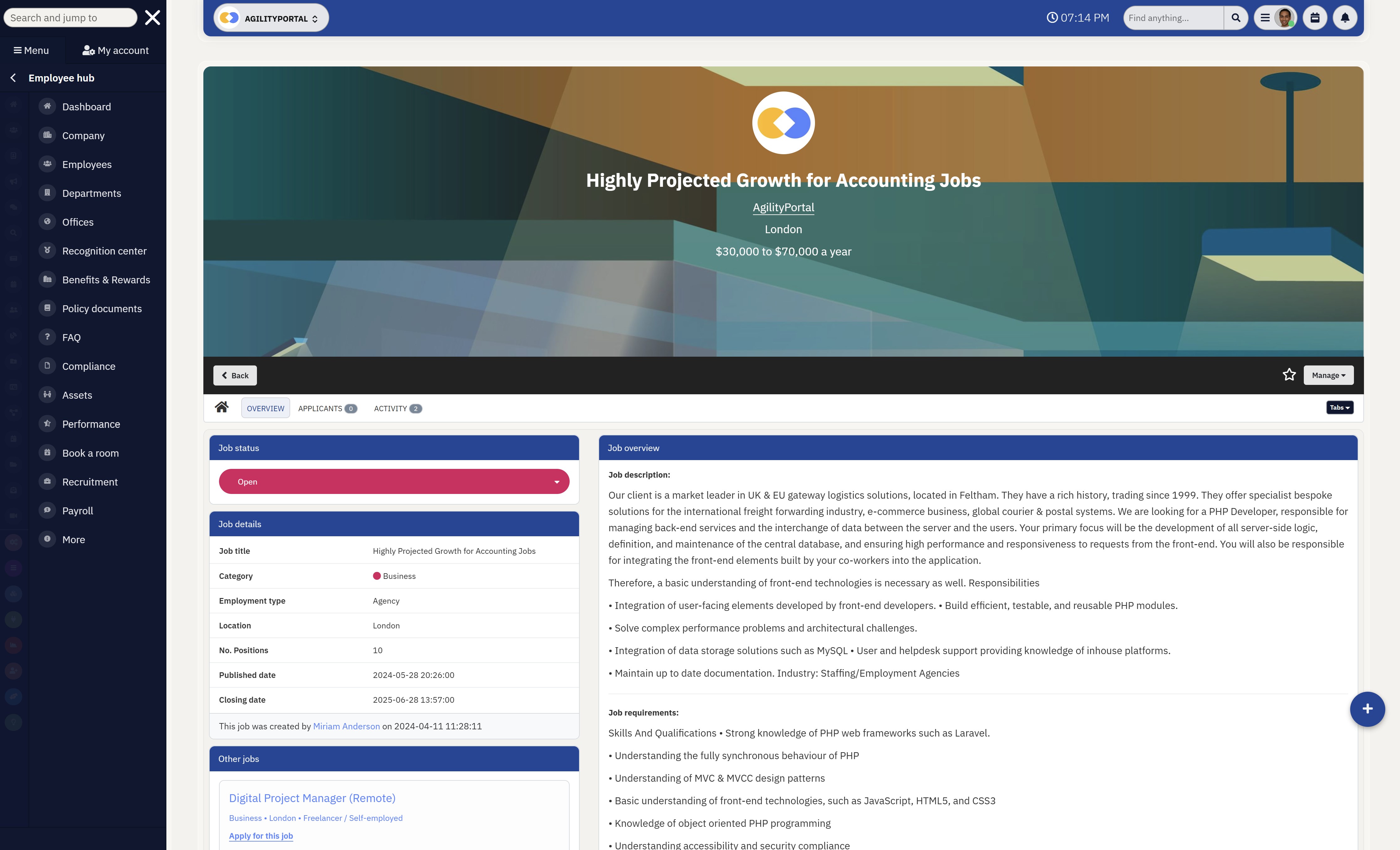
How AgilityPortal Helps Nonprofits Streamline Recruitment
For many nonprofits, the challenge isn't attracting candidates—it's managing the hiring process without delays, confusion, or rising costs. Disconnected tools, email chains, and manual tracking often slow everything down, leading to missed opportunities and poor candidate experiences.
This is where AgilityPortal provides a clear advantage.
By centralising recruitment into a single platform, nonprofits gain full visibility over their hiring pipeline. Teams can track candidates, share feedback, and manage documents in one place, removing the need to jump between systems.
This not only speeds up decision-making but also ensures nothing slips through the cracks. When combined with built-in communication tools, hiring teams can collaborate instantly, reducing delays that typically cause candidates to lose interest.
Automation plays a key role as well.
Repetitive tasks like interview scheduling, follow-ups, and approvals can be handled automatically, keeping the process moving without constant manual effort.
This creates a smoother experience for both candidates and internal teams, while freeing up time to focus on selecting the right people.
Key benefits include:
- Faster hiring cycles with fewer delays and bottlenecks
- Improved collaboration across HR and hiring managers
- Reduced operational costs by replacing multiple tools
Ultimately, AgilityPortal helps nonprofits create a structured, scalable recruitment process. The result is not just better hiring—but stronger teams, improved retention, and a more efficient organisation overall.
AgilityPortal
A Smarter Way for Nonprofits to Hire, Manage, and Retain Employees
Struggling with hiring nonprofit employees? AgilityPortal helps organisations streamline recruitment by bringing candidates, communication, and workflows into one central platform—so nothing gets lost, delayed, or overlooked.
Instead of relying on spreadsheets and emails, teams can manage the entire hiring journey in one place— from application to onboarding. With automation, real-time collaboration, and clear visibility, nonprofits can hire faster, improve candidate experience, and reduce operational pressure without increasing costs.
Start your 14-day free trial — no credit card required. Built for nonprofits that want to hire faster without adding complexity.Real-World Use Case: How a Nonprofit Fixed Hiring Delays
A growing nonprofit organisation with a team of around 120 employees was struggling to keep up with hiring demand. Roles were staying open for weeks, sometimes months, and the internal team was feeling the pressure.
Hiring was managed through email threads, spreadsheets, and disconnected tools, which made it difficult to track candidates or move quickly.
The result?
Strong candidates were dropping out mid-process, communication was inconsistent, and hiring managers lacked visibility on progress. Despite having a strong mission, the organisation was losing talent to faster-moving employers.
To fix this, they introduced a centralised platform—bringing recruitment, communication, and onboarding into one place. Instead of juggling multiple systems, the hiring team could now track candidates in real time, collaborate instantly, and automate repetitive tasks like scheduling and follow-ups.
Within a few months, the impact was clear.
Hiring time was reduced by over 30%, simply by removing bottlenecks and improving visibility.
Candidates experienced faster responses and clearer communication, which significantly improved engagement and acceptance rates. Internally, teams were better aligned, making decisions quicker and with more confidence.
Just as importantly, retention improved. New hires entered a more structured onboarding process, helping them integrate faster and stay longer.
Conclusion
Hiring in the nonprofit sector isn't just about finding people—it's about building the right process to attract and keep them.
While budget constraints and competition are real, the biggest barriers are often slow systems, unclear messaging, and poor candidate experience.
Nonprofits that focus on speed, purpose, and structure consistently outperform those that don't.
By improving how recruitment is managed and using the right tools, organisations can hire more effectively without increasing costs—ultimately building stronger teams that can deliver greater impact where it matters most.
AI Summary
- Nonprofits often struggle to hire employees because of limited budgets, slow recruitment processes, and competition from private sector employers.
- Successful nonprofit hiring depends on more than salary; candidates also care about purpose, flexibility, career growth, and meaningful impact.
- Clear employer branding helps nonprofits attract mission-driven candidates by showing why the role matters and how employees contribute to the wider cause.
- Manual hiring processes using spreadsheets, emails, and disconnected tools can delay decisions, damage the candidate experience, and increase drop-off rates.
- Technology such as AI, recruitment portals, automation, and centralised communication tools can help nonprofits manage hiring faster and more efficiently.
- Platforms like AgilityPortal help nonprofits streamline recruitment, improve collaboration, automate workflows, and create a smoother transition from candidate to employee.
Most Popular Posts

Effective communication among team members is vital for the productivity and success of any organization. Surprisingly, 60% of companies lack a long-term internal communication strategy, which p...


Businesses thrive on communication for efficiency, productivity and accomplishment. When the right information is passed from the right designation in the organization, it promotes positivity an...

Categories
Blog
(3156)
Business Management
(392)
Employee Engagement
(233)
Digital Transformation
(211)
Growth
(149)
Intranets
(139)
Internal communications
(106)
Remote Work
(67)
Sales
(53)
Collaboration
(51)
Customer Experience
(32)
Culture
(30)
Knowledge Management
(29)
Project management
(29)
Leadership
(20)
Comparisons
(9)
News
(1)

Related Posts

If you'd asked me a few years ago what AI could actually do, I'd probably have said, "Answer questions and write a few paragraphs." That was impressive at the time, but it didn't take long before everything changed. Then AI stopped being just a...

Work chat apps have become the everyday communication layer for modern organisations. Teams use them to ask quick questions, share files, coordinate shifts, solve customer issues and keep projects moving without filling everyone's inbox. ...

The best productivity apps do not simply give employees another dashboard, notification stream or AI button to click. They make it easier to find information, understand priorities and complete work without switching between disconnected tools. That ...

How can remote workers stay connected and productive when tasks, updates, schedules and important information are spread across different teams and tools? Remote work is not always easy. It depends on strong coordination between teams, clear communic...

Are your employees still losing time switching between email, personal messaging apps and disconnected workplace tools just to get a quick answer? The right enterprise instant messaging software gives growing and distributed organisations a secure, g...


Jill Romford
I am a digital nomad, lover of exploring new places and making friends.
I love to travel and I love the internet. I take pictures of my travels and share them on the internet using Instagram.
Traveler, entrepreneur, and community builder. I share my insights on digital marketing and social media while inspiring you to live your fullest life.
Ready to learn more? 👍
One platform to optimize, manage and track all of your teams. Your new digital workplace is a click away. 🚀
Free for 14 days, no credit card required.