
Insight Blog
Agility’s perspectives on transforming the employee's experience throughout remote transformation using connected enterprise tools.
28 minutes reading time
(5629 words)
Why Most Sales Team Software Fails Field Teams — And How to Fix It in 2026 + (10 Options to pick)

Why Most Sales Team Software Fails Field Teams — And How to Fix It in 2026 + (10 Options to pick)
Most sales team software slows field reps down. Learn why field teams struggle with adoption—and how to choose software that actually works in 2026.
Why Most Sales Team Software Fails Field Teams — And How to Fix It in 2026 + (10 Options to pick)

Let's be honest for a second. Most sales team software looks impressive in a demo… and then completely falls apart once it hits the real world. Especially in the field.
On paper, everything works. Dashboards are clean. Reports are beautiful. Managers are happy.
But out on the road — where reps are juggling bad signal, tight schedules, and customers who don't have time to wait — that same software becomes slow, clunky, and quietly ignored.
That's exactly why we're putting this article together.
If you're searching for the best field sales software or Field Employee Management Software, chances are you've already tried one (or three) tools that promised to "transform" your sales team… and didn't.
You're not alone. Industry data shows that over 55% of sales reps say their tools actually get in the way of selling, and nearly one in three field reps admits they delay or skip logging activity because the software is too time-consuming.
That's not a training issue — that's a product problem.
Field Sales Reality Check: Your Tools Might Be the Problem
You're not alone. Industry data shows that over 55% of sales reps say their tools actually get in the way of selling, and nearly 1 in 3 field reps admits they delay or skip logging activity because the software is too time-consuming.
- 55%+ of reps say sales tools slow them down
- ~33% of field reps delay or skip activity logging
- This isn’t a training issue — it’s a product and workflow issue
What's changed in 2026 is the pressure.
Buying cycles are faster. Field visits are fewer but more critical. Reps are expected to do more with less time, and leadership expects real visibility, not guesswork. Software that slows reps down doesn't just hurt adoption — it costs deals.
In this guide, we're going to break down why most sales team software fails field teams, even when it's popular or well-reviewed.
More importantly, we'll show you how to spot what actually works in the field — before you commit to another tool your reps quietly resist. By the end, you'll know what to look for, what to avoid, and how to choose a solution that supports real-world selling instead of fighting it.
No hype. No buzzwords. Just the reality of field sales — and how to fix it.
● Key Takeaways
- Most sales team software fails because it’s designed for managers and reporting, not real-world field execution.
- Field reps disengage when tools slow them down, don’t work offline, or add unnecessary admin.
- Adoption problems are usually product and workflow issues, not training or motivation failures.
- Execution-first software improves data quality naturally by fitting into how reps already work.
- The best results come from choosing tools that match the sales motion, not the biggest brand name.
Read this article: : Top 6 AI-Powered Project Management Tools To Use In 2023
The Core Problem: Most Sales Team Software Wasn't Built for Field Teams
Here's the uncomfortable truth most vendors won't say out loud: a lot of sales software is built to look good in boardrooms, not to work well on the road.
Even in 2026, many tools marketed as modern are still designed with managers in mind first.
They prioritise dashboards, reports, and oversight — while the people actually doing the selling are left dealing with clunky workflows, endless forms, and screens that assume they're sitting at a desk with perfect Wi-Fi.
That's where the disconnect starts.
True mobile field sales software should help reps move faster — log visits in seconds, pull up customer details on the fly, place orders without friction, and get back to selling.

Instead, too many tools demand constant data entry, multiple taps for simple actions, and rigid processes that don't match how field sales actually works. When reps are under pressure to hit more visits per day, every extra click matters.
The same problem shows up with traditional field sales force management software.
On paper, it promises control and visibility. In reality, it often turns into a reporting machine that drains time from the field. Reps feel like they're feeding the system rather than being supported by it — and once that mindset sets in, adoption drops fast.
Here's the key thing effective field sales teams understand in 2026:
software only works if it earns daily use.
The best-performing teams don't force tools on their reps.
They choose systems that feel lightweight, fast, and genuinely helpful in real-world conditions — bad signal, rushed appointments, last-minute changes, and all.
When software fits naturally into how reps already work, logging activity stops feeling like admin and starts feeling automatic.
And that's the difference between teams that tolerate their tools… and teams that actually use them to win more deals in the field.
7 Reasons Sales Team Software Fails Field Teams

7 Reasons Sales Team Software Fails Field Teams
Office-First UX in a Field-First World
Most sales team software is still designed like the rep is sitting at a desk with a mouse, a keyboard, and unlimited time. That's the first mistake.
Field reps don't have the patience for heavy forms, endless dropdowns, or five screens just to log a visit.
They're standing in car parks, walking shop floors, or squeezing notes in between appointments.
In 2026, speed isn't a "nice to have" — it's survival. If a rep can't log what they need in under a minute, they'll do it later… or not at all.
Effective field sales teams win because their tools get out of the way. The moment software feels like configuration instead of support, adoption quietly dies.
Poor Offline and Mobile Performance
This one still shocks people: plenty of "modern" tools barely work without a strong signal.
Field sales doesn't happen in perfect conditions.
You've got basements, warehouses, rural routes, lifts, tunnels — all the places mobile signal loves to disappear. When software freezes, fails to sync, or loses data, reps stop trusting it. And once trust is gone, usage drops fast.
In 2026, if it doesn't work offline properly, it's not field-ready.
Full stop.
The best teams choose software that assumes bad connectivity by default — not as an edge case.
Activity Tracking Without Context
Logging a visit is easy. Understanding what actually happened during that visit is the hard part.
Too many tools reduce field activity to checkboxes and timestamps. Visit completed. Job done.
But that tells you nothing about execution quality, objections raised, products discussed, or what needs to happen next.
Strong field sales teams don't just track activity — they capture context. Without that, managers are blind, coaching becomes guesswork, and follow-ups slip through the cracks.
Route Planning as an Afterthought
Time is the most expensive thing in field sales, yet most software treats route planning like a bolt-on.
Reps end up zig-zagging across territories, wasting fuel, and squeezing fewer visits into the day than they should.
That's not a rep problem — that's bad tooling.
In 2026, efficient teams expect routes, territories, and visit priorities to work together automatically.
When route planning isn't baked in, revenue leaks quietly through wasted hours.
Overloaded Features, Underused Value
Here's the irony: the more "powerful" the software, the less field teams tend to use it.
Enterprise platforms love adding features — advanced workflows, custom objects, endless settings. But field reps don't want complexity. They want clarity.
Every extra feature that doesn't help them sell becomes noise.
Managers often want more data. Reps want less friction. When software tries to please everyone, it usually fails the people who matter most in the field.
No Clear ROI for the Rep
This is where many tools completely miss the point.
If the software only benefits management — reporting, monitoring, performance tracking — reps disengage.
They feel watched, not supported. And once software feels like surveillance, resistance is guaranteed.
In 2026, the best-performing field sales teams choose tools that give reps something back: saved time, easier ordering, clearer priorities, or fewer follow-ups to chase.
If reps can't see the personal win, they won't fully buy in.
Weak Integration With Ordering and Inventory
Field sales lives and dies on one simple question: what can I sell right now?
When ordering, pricing, promotions, or inventory live in separate systems, everything slows down.
Reps make promises they can't keep, orders get delayed, and trust erodes — both internally and with customers.
Effective field sales teams rely on software that connects visits, orders, and availability in real time.
Disconnected systems don't just create friction — they cost deals.
Read this article: : Top 6 AI-Powered Project Management Tools To Use In 2023
What Field Teams Actually Need From Sales Team Software in 2026
If there's one thing high-performing field sales teams have figured out by 2026, it's this: software should work the way reps work, not the other way around.
Field selling is fast, messy, and unpredictable.
Tools that assume perfect conditions or unlimited time simply don't survive in the real world. The teams that win are using systems that feel almost invisible — they help when needed and stay out of the way when they're not.
Here's what actually matters.
First, everything has to be mobile-first and thumb-friendly. Not "mobile-compatible." Not "works on tablets." Properly built for phones. Reps are using one hand, often while standing or walking.
If a field sales tracking app needs two hands, deep menus, or precise taps, it slows reps down immediately. Good field software feels natural — quick actions, minimal typing, and zero clutter.
Next is fast visit logging. And fast means seconds, not minutes. The best field sales tracking software lets reps log outcomes immediately after a visit — sometimes before they even get back to the car.
When logging is quick, data stays accurate.
When it's slow, it gets delayed, rushed, or skipped entirely. That's how pipelines quietly fall apart.

Then there's offline mode that actually works.
Not a partial workaround. Not a "sync later and hope for the best" setup.
Real offline functionality means reps can view accounts, capture notes, update activity, and keep moving — even with no signal. When connectivity returns, everything syncs cleanly. In 2026, anything less is a deal-breaker.
Smart route planning is another must-have. Static maps and manual planning belong in the past.
Effective field teams rely on software that helps prioritise visits, reduce travel time, and adapt routes when plans change. Less wasted driving means more conversations, more opportunities, and more revenue — it's that simple.
Reps also need real-time visibility into products, pricing, and availability. Nothing damages trust faster than promising something that can't be delivered. When reps know what's available right now, conversations stay confident and deals move faster.
Finally — and this is where many tools fail — the software must create clear value for both reps and managers. Reps want speed, clarity, and fewer headaches.
Managers want visibility and reliable data. The best platforms don't force a trade-off. They support reps in the moment and give leaders insight as a natural result of real work getting done.
When software gets this right, adoption stops being a problem. Reps use it because it helps them sell. Managers trust it because the data reflects reality. And the entire field operation moves faster without friction holding it back.
That's what "good" looks like in field sales in 2026.
How to Fix It: Choosing Sales Team Software That Actually Works in the Field
At this point, the problem isn't a mystery. Field sales software fails because it's chosen the wrong way.
Too many decisions are made from spreadsheets, demos, and management wish-lists — instead of real field conditions.
If you want software that actually sticks in 2026, here's how the best teams are fixing it.
Start With the Rep, Not the Manager
This is where almost every bad decision begins.
When software is chosen primarily for management visibility, reps feel it immediately. More fields to fill. More boxes to tick. More "just log this quickly" requests that aren't quick at all. Adoption doesn't fail loudly — it fades quietly.
The teams getting this right flip the process. They ask one simple question first: does this make a rep's day easier? If the answer isn't a clear yes, enforcement won't save it. Real adoption comes from usefulness, not pressure from above.
What that looks like in practice:
- Reps can complete core actions in seconds, not minutes — logging a visit, updating notes, or placing an order without friction
- The tool reduces mental load, so reps don't have to remember what to do next or chase information across systems
- There's an obvious personal win for the rep, whether that's fewer follow-ups, faster orders, or less end-of-day admin
When reps feel the benefit immediately, usage becomes natural. And once reps are on board, managers get better data without forcing it — which is exactly how field sales software should work.
Prioritise Execution Over Reporting
Here's a hard truth: great reports don't create great sales execution.
Too many tools are built backwards — reporting is the product, and selling is just the data source. That leads to beautiful dashboards built on rushed, incomplete, or inaccurate inputs. Everyone loses. Reps feel burdened, managers get unreliable data, and leadership makes decisions based on noise.
Strong field sales teams flip this around. They choose software that focuses on doing the work well first — visits, follow-ups, orders, and next steps. When execution is smooth, reporting takes care of itself.
In practice, prioritising execution means:
- Reps are guided through what to do next, not just asked to log what already happened
- Visit outcomes are quick to capture, so data reflects reality instead of end-of-day guesswork
- Follow-ups are built into the workflow, reducing missed actions and stalled deals
- Orders and actions are captured in context, not entered later from memory
- Managers see live activity, not delayed or backfilled data
- Reports reflect real behaviour, because reps aren't rushing just to "get it done"
When execution comes first, reporting becomes trustworthy by default. Reps don't resent the system, managers stop chasing updates, and leadership finally gets visibility that matches what's actually happening in the field.
That's how high-performing teams scale in 2026 — not by demanding better reports, but by enabling better execution.
Always Demand True Mobile-First Design
"Mobile-friendly" isn't good enough anymore.
In 2026, field sales software must be designed for phones from day one, not squeezed down from a desktop layout.
Reps are using one hand, often in poor conditions, and always in a hurry. If the interface assumes precision clicks, long typing, or deep menus, it will slow people down immediately.
The best tools feel effortless on a phone.
Minimal steps. Clear actions. No wasted movement. If it feels good on mobile, it gets used. If it doesn't, nothing else matters.
Look for Sales and Operations Alignment
Field sales doesn't exist in isolation — and software shouldn't either.
When visits live in one system, orders in another, inventory somewhere else, and promotions buried in email, reps are forced to stitch together information on the fly.
That's how mistakes happen and confidence drops.
The most effective teams choose platforms where selling and operations are connected.
Reps can see what's available, what's allowed, and what can actually be delivered — in the moment. Fewer surprises. Fewer follow-ups. Better conversations with customers.
Keep the Learning Curve Brutally Short
This rule is simple and unforgiving.
If a rep needs training videos, onboarding sessions, or a handbook just to get started, the software is already on thin ice. Field teams don't have the time — or the patience — for complex tools.
The best sales team software is intuitive enough that reps can pick it up and use it immediately.
Maybe a quick walkthrough on day one. Nothing more. When the learning curve is short, adoption is fast. When it's steep, resistance is guaranteed.
When you step back, the fix isn't complicated. It's about choosing software that respects how field sales actually works. Tools that support execution, move fast on mobile, and earn daily use don't need forcing — they stick naturally.
And that's the difference between software that looks good on paper… and software that actually works in the field.
The Reality Check: One Tool Won't Fit Every Field Sales Model
This is where a lot of buying decisions go wrong: people assume there's one "best" platform that works for every type of field team. That's simply not true — and in 2026, it's more obvious than ever.
Distribution, retail execution, door-to-door sales, and B2B self-serve portals all operate very differently. The workflows, visit cadence, data captured, and even what "success" looks like can vary massively. Software that works brilliantly in one model can be painful in another.
This is also why tools like Salesforce FSL (Field Service Lightning) can be a great fit in some scenarios — especially service-heavy, enterprise environments — but feel heavy or over-engineered for fast-moving sales teams. It's powerful, no doubt.
But power often comes with complexity, longer setup, and higher admin overhead, which not every field sales model can absorb.
The real takeaway is simple:
the "best" sales team software depends entirely on how your field team sells.
That's why comparison matters more than hype. Instead of chasing brand names or feature lists, high-performing teams in 2026 focus on fit — how well the tool supports their real-world selling motion, not how impressive it looks on a slide deck.
Get that right, and adoption follows naturally. Get it wrong, and no amount of configuration will save it.
10 Sales Team Software Options That Actually Work for Field Teams
SimplyDepo — Best Overall for Distributors
SimplyDepo is purpose-built for wholesale and distribution teams that live in the field.
It shines where many generic sales tools fall short: ordering, inventory visibility, and rep workflows that actually make sense on a phone.
Field reps can take orders during visits, check availability in real time, and avoid the back-and-forth that slows deals down. It's not trying to be everything — and that's exactly why it works so well for distributors.
Best for: FMCG, wholesale, and distribution-heavy field sales teams.
SimplyDepo
Field sales and ordering platform designed specifically for distributors and wholesale teams.
- Mobile order capture during visits
- Real-time inventory visibility
- Distributor-focused workflows
- Fast rep adoption
Overall Rating
★ 4.7
Based on user feedback
Pepperi — Enterprise Power, Enterprise Complexity
Pepperi is powerful — no question. It handles complex catalogs, pricing rules, and global sales operations well. But that power comes at a cost: setup time, configuration effort, and a steeper learning curve for reps.
Large enterprises with structured sales operations can justify it. Lean or fast-moving field teams often struggle with adoption.
Best for: Large enterprises with complex B2B sales models.
Pepperi
Enterprise-grade B2B sales platform with advanced configuration and global scalability.
- Complex pricing and catalog management
- Enterprise integrations
- Highly configurable workflows
- Scales well for large orgs
Overall Rating
★ 4.4
Based on user feedback
Repsly — Activity Tracking and Execution
Repsly focuses heavily on visit execution, activity tracking, and retail presence. It's strong for teams that need consistency across visits and clear visibility into what's happening on the ground.
It's less about deep selling workflows and more about making sure field activity actually happens.
Best for: Retail execution and compliance-focused teams.
Repsly
Field execution and activity tracking platform for retail and sales teams.
- Visit and task tracking
- Retail execution tools
- Mobile-first workflows
- Clear activity visibility
Overall Rating
★ 4.2
Based on user feedback
Skynamo — Route Planning Focus
Skynamo is strongest when territory planning and visit efficiency matter most. It helps reps structure their days better and avoid wasted travel.
It's a solid choice if route optimisation is your main pain point, but less comprehensive as a full sales execution platform.
Best for: Territory-driven field sales teams.
Skynamo
Field sales CRM focused on route planning and territory optimisation, helping reps plan smarter days and maximise time in front of customers.
- Smart route planning and territory management
- Mobile-first CRM for field reps
- Visit planning and activity tracking
- Designed for efficiency-focused field teams
GoSpotCheck — Retail Audit Specialist
GoSpotCheck excels in audits, merchandising checks, and visual proof. It's not a classic sales tool — it's about compliance and execution quality.
If your success depends on in-store standards being met, this is where it fits.
Best for: Retail audits and merchandising teams.
GoSpotCheck
Retail execution and audit software built to help field teams capture in-store data, verify compliance, and improve merchandising performance.
- Retail audits and visual verification
- Photo capture and in-store data collection
- Merchandising and compliance tracking
- Strong reporting for retail operations teams
Overall Rating
★ 4.4
Based on user feedback
Spotio — Door-to-Door Activity Management
Spotio is built for canvassing and outside sales teams. It handles leads, territories, and door-knocking workflows well.
Not ideal for complex B2B selling, but excellent for high-volume outreach.
Best for: Door-to-door and canvassing teams.
Spotio
Door-to-door sales and territory management software built to help outside sales teams organise leads, track activity, and maximise canvassing efficiency.
- Door-to-door and outside sales tracking
- Territory and lead management
- Activity logging for field reps
- Designed for high-volume outreach teams
Overall Rating
★ 4.3
Based on user feedback
Orders In Seconds — Basic Mobile Ordering
This tool does exactly what the name suggests: fast ordering. No fluff, no analytics overload.
Great when speed matters more than insight.
Best for: Simple, fast mobile ordering.
Orders In Seconds
Lightweight mobile ordering app designed for field reps who need to place orders fast without complex workflows or admin overhead.
- Fast mobile order capture
- Simple product catalog and pricing
- Minimal setup and training required
- Best for speed-focused field sales
Overall Rating
★ 4.2
Based on user feedback
B2B Wave — Portal-First Approach
B2B Wave is strong on self-serve ordering and customer portals. It's less effective for rep-led, in-person selling.
Best for: Buyer-driven B2B sales models.
B2B Wave
Portal-first B2B ordering platform built for self-serve buyers, helping companies streamline repeat orders without heavy sales admin.
- Self-serve B2B customer ordering portal
- Product catalog and customer-specific pricing
- Order management and repeat ordering
- Best for portal-led sales models
Overall Rating
★ 4.1
Based on user feedback
Badger Mapping — Route Optimization Add-On
Badger Mapping is excellent at what it does — mapping and routing — but it's not a complete sales platform.
Often used alongside other tools.
Best for: Teams that need serious route optimisation.
Badger Mapping
Route optimisation and territory planning tool that helps field sales teams cut travel time and fit more visits into the day.
- Advanced route optimisation for sales reps
- Territory planning and visual mapping
- Works alongside your CRM as an add-on
- Improves daily visit efficiency
Overall Rating
★ 4.5
Based on user feedback
AgilityPortal — Sales + Communication + Execution Hub
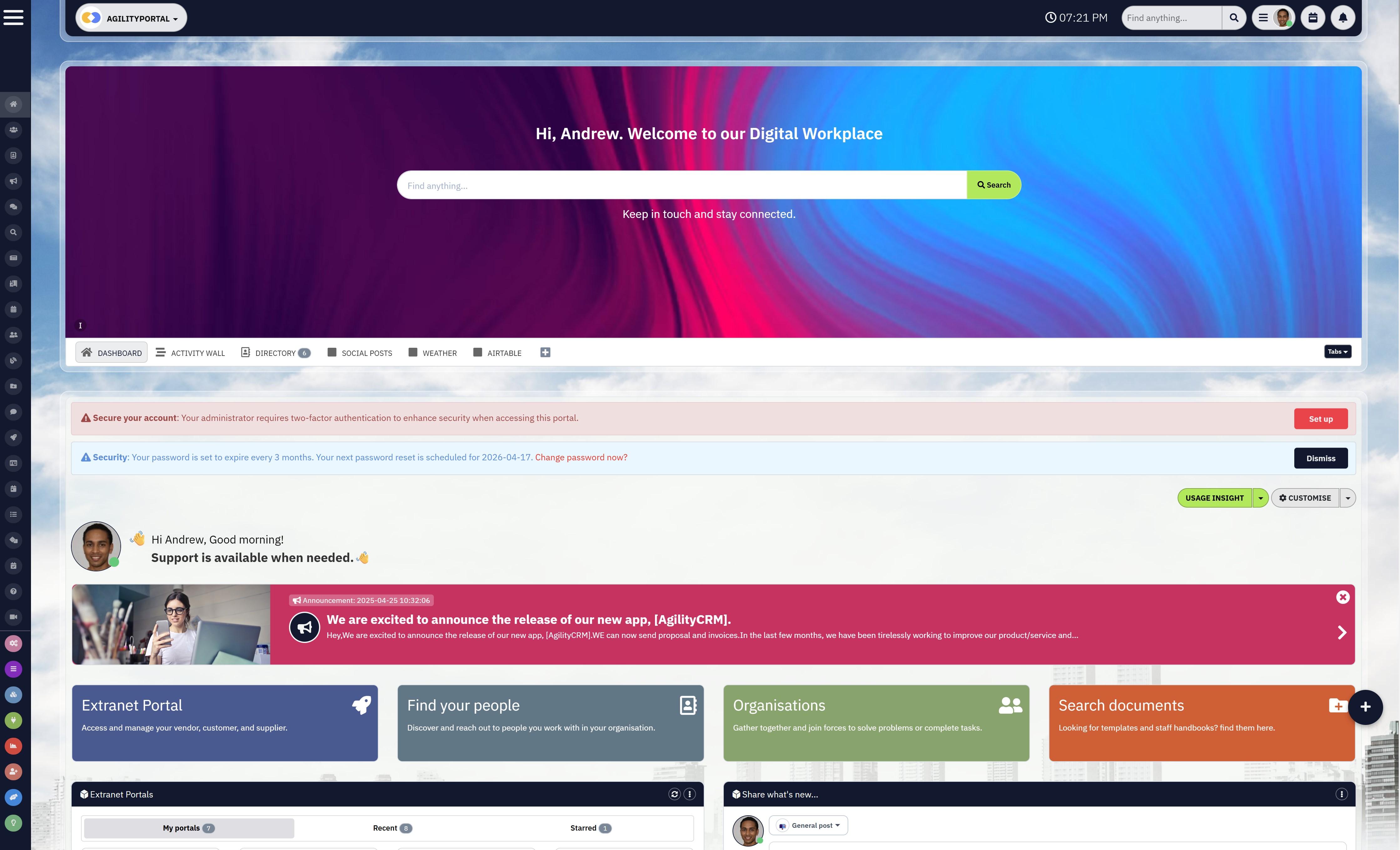
AgilityPortal — Sales + Communication + Execution Hub
AgilityPortal stands out by combining field execution with communication, documents, tasks, and visibility. It's especially effective for teams that need alignment between sales, operations, and leadership.
Instead of stitching tools together, everything lives in one place.
Best for: Field teams that need execution and collaboration.
AgilityPortal
Unified field execution and communication platform for distributed sales teams.
- Sales execution and task tracking
- Team communication and updates
- Document sharing for field reps
- Mobile-first experience
Overall Rating
★ 4.7
Based on user feedback
How to Choose Between These Tools (Without Regret)
If you've ever rolled out a "new sales tool" and watched reps quietly ignore it, you already know what's coming: the tool wasn't the real problem — the fit was.
The easiest way to avoid regret is to stop choosing software based on brand names, feature lists, or what looks good in a demo.
Field tools succeed or fail based on one thing: do they match how your team actually sells day to day?
Match the tool to your sales motion, not your org chart
Don't buy software because your ops team wants dashboards or your leadership team wants "enterprise-grade." Buy it because it supports your real field workflow.
Ask yourself:
- Are reps taking orders in-person (distribution style)?
- Are they doing audits and compliance checks (retail execution)?
- Are they canvassing and managing territories (door-to-door)?
- Are buyers mainly ordering online (portal-first)?
If you pick a tool built for the wrong motion, you'll spend months trying to force it to work — and it still won't.
Pilot with real reps, not managers
Managers love tools that produce clean reporting. Reps love tools that save time.
So don't run your pilot with the people who won't use it daily. Put it in the hands of a few reps who represent your reality: fast movers, average performers, and the ones who hate admin. If those reps can use it naturally, you're on the right track. If they fight it, the full rollout will fail.
Measure adoption in weeks, not quarters
Field software adoption doesn't need six months to reveal the truth. You'll know quickly.
Within 2–4 weeks, you should already see:
- Are reps using it without being chased?
- Are visit logs happening in real time (not end-of-week dumps)?
- Are orders and follow-ups actually being captured?
If usage depends on reminders and pressure, it's not adoption — it's compliance, and it won't last.
Kill anything that slows reps down
This is the most brutal rule — and it's the one that saves you the most money.
If the tool adds friction to the selling day, it's draining revenue. Every extra step, slow screen, or awkward workflow means fewer visits, weaker notes, delayed follow-ups, and missed deals.
So be ruthless: if the software slows reps down, cut it early — before you've wasted months training people to tolerate something they'll never truly use.
When you choose tools this way, you don't just avoid regret — you end up with something your field team actually wants to use. That's the only version of "successful rollout" that matters.
Integrations That Take Field Sales Teams to the Next Level
Here's where good field sales software turns into a real growth engine: integrations.
On their own, most tools are fine. But when your sales platform connects cleanly with the systems your team already relies on, everything speeds up. Reps stop jumping between apps. Managers get clearer visibility. And customers get faster, more confident answers in the field.
In 2026, high-performing field sales teams don't win because they use more tools — they win because their tools actually talk to each other.
CRM and Customer Data Integrations
Your CRM should be the single source of truth, not a separate admin chore. When field tools integrate directly with customer records, reps walk into every visit with context — past orders, open issues, buying patterns, and notes from previous conversations.
This eliminates awkward "let me check and get back to you" moments and helps reps have better, more informed conversations on the spot.
Ordering, Inventory, and ERP Connections
Nothing hurts credibility faster than selling something that can't be delivered.
When your field sales software integrates with inventory and ERP systems, reps can see what's available in real time — pricing, stock levels, promotions, and delivery windows. That means fewer follow-up calls, fewer mistakes, and smoother handoffs to operations.
This is especially powerful for distribution and wholesale teams where speed and accuracy directly affect revenue.
Communication and Collaboration Tools
Field reps don't work in isolation — or at least they shouldn't.
Integrations with team chat, announcements, and shared documents allow reps to get answers quickly, share updates from the field, and stay aligned with head office without endless email chains.
When communication flows naturally, decisions happen faster and issues get resolved before they escalate.
Platforms like AgilityPortal stand out here by combining sales execution with built-in communication, document sharing, and team updates — so reps don't have to juggle separate apps just to stay informed.
Calendar, Scheduling, and Route Planning
Time is the most limited resource in field sales.
When calendars, schedules, and route planning tools are connected, reps can plan smarter days automatically.
Visits are spaced efficiently, follow-ups don't get forgotten, and last-minute changes don't derail the entire schedule.
Integrated planning reduces wasted travel time and increases face-to-face selling time — the metric that really matters.
Analytics and Performance Insights
Good integrations don't just move data — they turn it into insight.
When field activity, orders, and outcomes feed into analytics tools, managers get a clear picture of what's actually happening on the ground.
Not vanity metrics, but actionable insights: which routes perform best, which products convert in the field, and where coaching can make a real difference.
The best systems surface these insights without adding extra work for reps.
Why This Matters More Than Ever
In 2026, field sales teams are expected to move faster, sell smarter, and operate with fewer resources.
Integrations make that possible by removing friction — not by adding more complexity.
Whether you're using a specialised sales tool or an all-in-one platform, the goal is the same: create a connected environment where reps can focus on selling, not switching between systems.
When everything works together, field sales stops feeling chaotic — and starts feeling controlled, scalable, and ready for growth.
Final Takeaway: Field Sales Doesn't Fail — Software Does
Field sales itself isn't broken. The people aren't the problem either. What fails, over and over again, is software that ignores how selling actually happens outside the office.
Most sales team software collapses because it's built around theory, not reality. It assumes perfect signal, unlimited time, patient reps, and tidy workflows. That's not the field. The field is fast, unpredictable, and unforgiving — and tools that don't respect that get quietly abandoned.
The winners in 2026 won't be the platforms with the longest feature lists or the flashiest demos.
They'll be the ones that respect time, motion, and execution — software that understands reps are moving, multitasking, and selling under pressure.
Tools that help reps move faster instead of slowing them down.
In the end, the rule is simple:
choose software that earns daily use, not forced compliance.
If reps use it because it genuinely helps them sell, everything else — visibility, reporting, accountability — falls into place naturally. If they have to be chased, trained endlessly, or monitored to use it, the failure is already baked in.
Frequently Asked Questions (FAQ)
What is the best field sales software?
The best field sales software is the one that fits how your team actually sells in the field.
For most organisations, that means mobile-first field sales software that works offline, supports fast visit logging, and integrates with ordering, inventory, and communication tools.
The best platforms focus on execution first and reporting second, helping reps sell more without adding admin.
Tools like AgilityPortal stand out when teams need field sales execution combined with communication and visibility in one system.
What is the best field service software?
The best field service software is designed for service-based teams that manage jobs, technicians, schedules, and customer issues rather than sales visits.
Field service management (FSM) software focuses on work orders, dispatching, asset tracking, and service history.
While some platforms overlap, field service software is best for maintenance, repairs, and installations, whereas field sales software is built around selling, visits, and revenue generation.
What are the 4 types of CRM?
There are four commonly recognised types of CRM systems, each serving a different purpose:
- Operational CRM – focuses on sales, marketing, and customer service automation
- Analytical CRM – analyses customer data to improve decision-making
- Collaborative CRM – improves communication between sales, service, and support teams
- Strategic CRM – focuses on long-term customer relationships and retention
For field teams, a CRM alone is often not enough. Many organisations pair CRM systems with field sales tracking software or field service tools to handle real-world execution.
What is the difference between CRM and FSM?
The difference between CRM and FSM comes down to purpose. CRM (Customer Relationship Management) software is designed to manage customer data, sales pipelines, and relationships. FSM (Field Service Management) software is built to manage technicians, service jobs, schedules, and assets in the field.
In simple terms:
- CRM helps you sell and manage relationships
- FSM helps you deliver and manage service work
Field sales teams often need more than a CRM alone, which is why many businesses use field sales management software or platforms like AgilityPortal that bridge the gap between customer data, field execution, and internal collaboration.
Most Popular Posts

Effective communication among team members is vital for the productivity and success of any organization. Surprisingly, 60% of companies lack a long-term internal communication strategy, which p...


Businesses thrive on communication for efficiency, productivity and accomplishment. When the right information is passed from the right designation in the organization, it promotes positivity an...

Categories
Blog
(3186)
Business Management
(393)
Employee Engagement
(235)
Digital Transformation
(216)
Growth
(150)
Intranets
(141)
Internal communications
(106)
Remote Work
(68)
Sales
(53)
Collaboration
(52)
Customer Experience
(32)
Culture
(30)
Knowledge Management
(29)
Project management
(29)
Leadership
(20)
Comparisons
(9)
News
(1)

Related Posts

The best ai image editors can save a team hours of repetitive work. A marketing manager can remove a distracting background, an HR team can improve a staff event photo, and an online shop can turn a basic product shot into something ready to pu...

Ever opened a PDF just before a meeting and realised you need to edit a page, pull figures from a scanned report, or gather everyone's comments? What should be a quick task can turn into a frustrating search for the right tool. That lost time a...

Looking for a New Job Remotely can feel like a simple next step: update your CV, turn on job alerts and start applying. In reality, the strongest remote job searches start much earlier. You need to be clear about the work you want, the kind of ...

Hiring globally is easier than employing globally Have you found the right person for a role, only to realise they live in a country where your business has no legal entity? That's where EOR international hiring can be useful. An Employer of Re...

Sales operations and planning are essential to harmonizing sales objectives with operational capabilities, ensuring seamless coordination between departments like sales, marketing, production, and finance. This alignment enables businesses to forecas...


Jill Romford
I am a digital nomad, lover of exploring new places and making friends.
I love to travel and I love the internet. I take pictures of my travels and share them on the internet using Instagram.
Traveler, entrepreneur, and community builder. I share my insights on digital marketing and social media while inspiring you to live your fullest life.
Ready to learn more? 👍
One platform to optimize, manage and track all of your teams. Your new digital workplace is a click away. 🚀
Free for 14 days, no credit card required.