
Insight Blog
Agility’s perspectives on transforming the employee's experience throughout remote transformation using connected enterprise tools.
27 minutes reading time
(5426 words)
Why Most AI Marketing Strategies Fail — And How to Fix Yours Right Now

Why Most AI Marketing Strategies Fail — And How to Fix Yours Right Now
AI Marketing Strategies often fail due to poor alignment, weak data, and unclear KPIs. Learn how to fix your AI based marketing for real ROI.
Why Most AI Marketing Strategies Fail — And How to Fix Yours Right Now

Let's be honest for a second.
Right now, everyone is talking about AI Marketing Strategies.
Every SaaS founder, every CMO, every agency. If you're not using AI, you're "behind." If you are using AI, you're supposedly "10x more efficient."
But here's the uncomfortable truth.
According to McKinsey, over 70% of digital transformation initiatives fail to meet their objectives. Gartner has also reported that a significant percentage of AI projects never move beyond pilot stages.
And despite the explosion of ai based marketing tools, many companies still struggle to prove measurable ROI from their AI investments.
So what's going on?
On paper, AI Marketing Strategies sound unbeatable:
- Predictive analytics that forecast buyer behavior
- Automated content generation at scale
- Smart lead scoring that prioritizes high-intent prospects
- Hyper-personalized campaigns driven by machine learning
70%+
fail to deliver
But here's the uncomfortable truth. According to McKinsey, over 70% of digital transformation initiatives fail—most often due to poor alignment and unclear objectives, not because the tools don’t work. The same pattern shows up in AI Marketing Strategies when teams adopt AI without clean data, ownership, and KPI tracking.
Source: McKinsey
Yet in reality, revenue barely shifts. Pipeline doesn't magically double. Conversion rates don't skyrocket. And suddenly, leadership starts asking uncomfortable questions.
Here's the hard truth: the problem isn't AI.
It's how AI Marketing Strategies are designed, implemented, and measured. Most businesses layer AI on top of unclear objectives, messy data, bloated tech stacks, and weak attribution models. AI becomes a shiny add-on instead of a revenue engine.
In this article, we're going to break it down properly.
We'll cover:
- Why most AI Marketing Strategies fail (and the patterns you'll recognize immediately)
- The biggest mistakes companies make with ai based marketing
- What actually drives measurable ROI
- A practical framework to fix your strategy without burning more budget
If you're investing in AI—or planning to—you need clarity before you scale it. Because done right, AI can absolutely transform marketing performance.
Done wrong? It just makes inefficiency faster.
Key Takeaways
- AI Marketing Strategies only deliver measurable ROI when tied directly to revenue goals such as conversion rate, customer acquisition cost, and pipeline growth.
- Research shows over 70% of digital transformation initiatives fail due to poor alignment and unclear objectives, not because the technology lacks capability.
- AI content marketing, predictive lead scoring, AI market segmentation, and intelligent advertising optimization improve precision when supported by clean, integrated data.
- Organizations that consistently examine metrics linked to financial performance outperform those focused on vanity indicators like impressions or content volume.
- Hybrid AI + human workflows, strong governance, and structured 90-day testing frameworks create sustainable competitive advantage in ai based marketing environments.
What AI Marketing Strategies Actually Mean (And What They Don't)
Let's clear something up straight away.
Most companies say they're running AI Marketing Strategies, but what they're actually doing is experimenting with a few AI tools and hoping something sticks.
That's not strategy. That's testing software.
If you're serious about growth — especially if you're building an ai based marketing strategy startups can scale — you need to understand the difference between tactical AI use and strategic AI deployment.
Let's break it down properly.
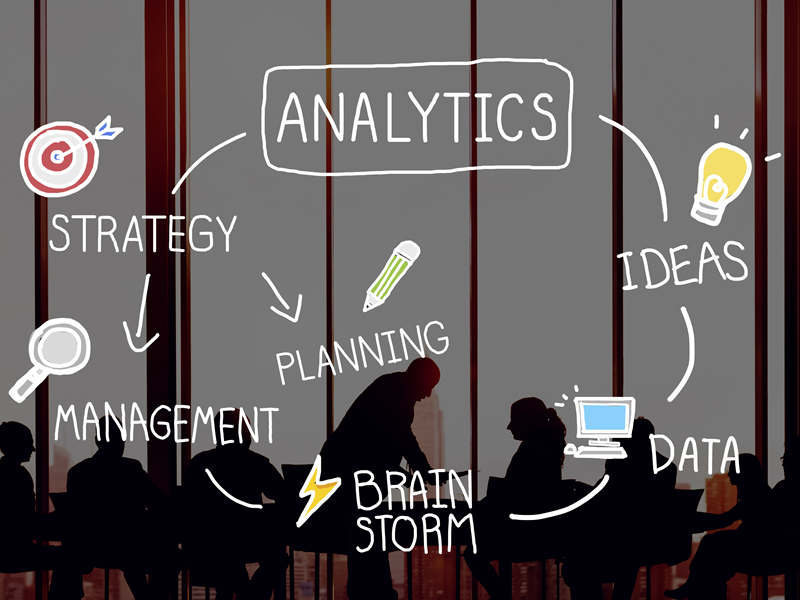
What AI Marketing Strategies Actually Mean
What Is The Meaning of AI Marketing Strategies
A real AI Marketing Strategy isn't about replacing marketers. It's about upgrading decision-making.
At its core, it means using:
- Machine Learning to Improve Decisions - Instead of guessing which audience converts best, AI analyzes behavior patterns. Instead of manually segmenting lists, it predicts intent. That's intelligence layered onto data — not just automation.
- Predictive Analytics for Smarter Forecasting - AI helps you anticipate churn, buying windows, content gaps, and revenue trends. For startups especially, this is powerful. A strong ai based marketing strategy startups can use predictive insights to compete with bigger brands without matching their budget.
- Data-Driven Personalization at Scale - This is where AI really shines. Personalized emails. Dynamic website content. Smart retargeting. AI enables relevance without increasing headcount.
- AI-Powered Content and Targeting - Using an ai content marketing tool to generate outlines, optimize SEO, analyze competitors, or identify content gaps? That's strategic — if it feeds into measurable growth metrics like traffic, leads, and pipeline.
But notice the theme here: everything ties back to outcomes.
Revenue.
Conversion rate.
Customer acquisition cost.
Lifetime value.
If AI isn't improving one of those, it's just noise.
What AI Marketing Strategies Are NOT
Now let's talk about the mistakes.
Because this is where most teams go wrong.
- Random ChatGPT Blog Posts - Publishing AI-generated content without search intent research, internal linking, or authority building isn't strategy. It's content spam with better grammar. An ai content marketing tool is powerful — but only when it supports a real content plan tied to demand generation.
- Automating Everything Blindly - Just because you can automate something doesn't mean you should. Over-automation kills brand voice and often reduces trust. AI should assist humans — not erase them.
- Buying Expensive Tools Without a Plan - This one's common. A startup reads about AI, buys five tools, integrates none of them properly, and calls it innovation. A proper ai based marketing strategy startups follow should start with one clear growth bottleneck — traffic, lead quality, conversion, retention — and apply AI there first.
- Confusing Speed With Strategy - AI makes execution faster. But speed without clarity just scales inefficiency.
Here's the bottom line:
AI Marketing Strategies aren't about tools.
They're about leverage.
They help smaller teams compete bigger.
They reduce guesswork.
They increase precision.
But only when they're anchored to real business goals.
In the next section, we'll look at why most AI Marketing Strategies still fail — even when companies have the right tools in place.
Related AI Marketing & SEO Guides You Should Explore Next
If you're building stronger AI Marketing Strategies or exploring AI-based marketing and SEO optimization, these in-depth guides will help you understand tools, visibility tracking, generative AI risks, and practical implementation frameworks.
- The Rise of AI in Digital Marketing in 2025
- What Is the Best AI Tool for Digital Marketing? Top 16 Tools Compared
- Those AI Visibility Tracking Tools Are Quietly Changing SEO
- How to Use AI for SEO: Enhance Your SEO Strategy for Better Rankings
- A Practical Guide to AI Visibility Optimization and 5 Agencies to Try
- How Google Really Feels About Generative AI and SEO
7 Reasons Most AI Marketing Strategies Fail
Alright. Let's get into the uncomfortable part.
On the surface, AI feels like a competitive advantage. In reality, most AI Marketing Strategies collapse under predictable mistakes.
Not because AI doesn't work — but because it's bolted onto broken foundations.
Here's where things usually go wrong.
#1. No Clear Business Objective
This is the biggest one.
AI gets layered on top of vague goals like:
- "Increase engagement"
- "Improve brand visibility"
- "Be more innovative"
That's not direction. That's noise.
If your AI initiative isn't tied directly to revenue, customer acquisition cost (CAC), lifetime value (LTV), or pipeline growth, it becomes a science project.
A serious strategy starts with:
- "Increase SQL conversion by 20%"
- "Reduce churn by 10%"
- "Improve content-driven inbound by 30%"
Without that clarity, AI just accelerates confusion.
#2. Tool Overload Syndrome
Martech stack bloat is real.
Companies buy:
- An AI email tool
- A predictive analytics platform
- An AI content assistant
- A chatbot
- A personalization engine
None of them properly integrated.
The result? Disconnected systems, inconsistent data, and wasted budget.
Even niche businesses — say, a dermatology SEO company trying to use AI for content optimization — can fall into this trap. Buying five AI tools doesn't create an advantage. Integrating one properly might.
AI should simplify your stack, not complicate it.
#3. Poor Data Quality
AI runs on data. If your data is messy, incomplete, or fragmented, your results will be too.
Common problems:
- Duplicate CRM records
- Missing attribution tracking
- Inconsistent tagging
- No unified customer view
Garbage in, garbage out.
Before scaling AI Marketing Strategies, your tracking, CRM hygiene, and analytics infrastructure need to be solid. AI amplifies what already exists — good or bad.
#4. Over-Automation
Here's a mistake people don't talk about enough.
Automation without human oversight kills brand differentiation.
When everything is:
- Auto-written
- Auto-responded
- Auto-personalized
You lose tone. You lose nuance. You lose trust.
This is especially dangerous in law firm marketing, where clients seek empathy, credibility, and human judgment. An AI-generated response to a query like 'What should I do after a DUI arrest?' that sounds robotic or generic doesn't just fail—it damages perceived competence. AI should draft; attorneys (or trained legal marketers) must refine, verify, and humanize.
AI should support human strategy, not replace it. The best-performing teams use hybrid workflows:
AI drafts → Humans refine
AI predicts → Humans decide
That balance is where real leverage happens.
#5. Chasing Trends Instead of ROI
"We need AI because our competitors are using it."
That mindset burns budget fast.
AI adoption driven by fear or hype rarely produces ROI. Without a testing framework — hypothesis, implementation, measurement, iteration — AI becomes an expensive experiment.
Every AI initiative should answer one question:
How will this increase revenue or reduce cost?
If you can't answer that clearly, pause.
#6. No Internal AI Capability
Outsourcing thinking is dangerous.
Many companies rely entirely on agencies or external consultants to "handle AI."
But if your internal team doesn't understand:
- How the models work
- What the outputs mean
- How to interpret predictions
You can't optimize it.
A strong AI Marketing Strategy requires internal upskilling. Not everyone needs to be a data scientist — but someone needs ownership.
#7. No Performance Measurement System
This one quietly kills progress.
Teams celebrate:
- Higher impressions
- More automated outputs
- Increased content volume
But ignore:
- Revenue attribution
- Conversion lift
- Pipeline influence
- Customer retention impact
Vanity metrics make AI look successful. Attribution clarity tells you whether it actually is.
Without performance measurement tied to financial outcomes, AI becomes a productivity illusion.
Here's the bottom line:
Most AI Marketing Strategies don't fail because AI doesn't work.
They fail because strategy, data, measurement, and integration weren't strong enough to support it.
In the next section, we'll break down how to fix this properly — without adding more tools or complexity.
How to Fix Your AI Marketing Strategies Fast
If your AI Marketing Strategies aren't delivering measurable revenue impact, it's not random.
There are patterns. Clear warning signs. And once you see them, you can't unsee them.
Let's break down what you might be doing wrong, the signs to look for, exactly how to correct it — and what the data says happens when you get it right.
Step 1: Start with Revenue, Not Technology
The Signs You're Doing This Wrong
- You talk about tools more than outcomes.
- Your team says, "We're using AI for content and automation," but can't link it to pipeline.
- Leadership asks, "What's the ROI?" and the answer is vague.
- You rarely Examine metrics beyond surface-level dashboards.
This is the classic mistake: starting with technology instead of business goals.
AI becomes activity. Not performance.
What You Should Be Doing Instead
Reverse engineer your AI efforts from revenue — and consistently examine metrics that directly tie to growth.
Ask:
- What's our current pipeline gap?
- Where are we losing conversion?
- What's our cost per lead?
- Where is churn highest?
- Which campaigns influence revenue — not just traffic?
Then choose ONE measurable objective:
- Increase MQL → SQL conversion by 15%
- Reduce CAC by 10%
- Improve email conversion by 20%
- Shorten sales cycle length by 12%
When you examine metrics at this level — revenue, conversion efficiency, acquisition cost, retention — AI suddenly has direction.
Now it has a job.
What the Data Says
McKinsey reports that organizations aligning AI initiatives directly to core business KPIs are significantly more likely to see measurable financial impact compared to companies running isolated AI experiments.
Additionally, data-driven organizations that consistently examine metrics tied to revenue performance outperform competitors in profitability and efficiency.
Revenue-first alignment isn't optional. It's the difference between AI as a cost center and AI as a growth engine.
The Benefit
Clarity.
Stronger executive confidence.
Smarter allocation of AI investment.
Measurable ROI within 60–90 days.
When you examine metrics properly, AI stops being hype — and starts becoming leverage.
Step 2: Audit Your Data Infrastructure
The Signs You're Doing This Wrong
- Duplicate CRM contacts.
- Inconsistent lead source tracking.
- Attribution reports don't match sales numbers.
- Your team doesn't trust the data.
AI cannot fix broken data. It amplifies it.
What You Should Be Doing Instead:
Run a CRM health check:
- Remove duplicates.
- Standardize tagging.
- Clean lifecycle stages.
Then fix tracking:
- Ensure campaign attribution is working.
- Connect marketing automation to CRM properly.
- Validate conversion events across platforms.
Before scaling AI, fix the foundation.
What the Data Says:
Research from Gartner consistently shows poor data quality costs organizations millions annually in lost productivity and inaccurate decision-making.
In AI specifically, inaccurate data directly reduces predictive accuracy — meaning your "smart" system becomes unreliable.
The Benefit:
Better targeting.
More accurate lead scoring.
Cleaner forecasting.
Higher conversion precision.
Step 3: Reduce Your AI Stack
The Signs You're Doing This Wrong
- You have multiple AI tools doing overlapping functions.
- Integrations are half-complete.
- Teams are confused about which system owns what.
Tool sprawl kills efficiency.
What You Should Be Doing Instead
Audit every AI tool and ask:
- Does this integrate with our CRM?
- Does it improve a core KPI?
- Is it redundant?
Keep only what integrates cleanly and supports your primary revenue objective.
Remove:
- Duplicate content tools.
- Redundant automation systems.
- Standalone platforms that don't feed into attribution.
What the Data Says
Martech complexity has been linked to reduced ROI because integration gaps create data silos. Simplified stacks consistently outperform bloated ones in both efficiency and measurable return.
The Benefit
Lower costs.
Faster workflows.
Cleaner data.
Stronger reporting clarity.
Step 4: Build Human + AI Hybrid Workflows
The Signs You're Doing This Wrong
- Everything is auto-generated.
- Brand voice feels generic.
- AI outputs go live without human oversight.
- Sales complains about low-quality leads.
Over-automation removes strategic judgment.
What You Should Be Doing Instead
Build hybrid workflows:
- AI drafts content → humans refine.
- AI suggests segmentation → humans validate.
- AI scores leads → humans prioritize.
- AI forecasts → humans interpret.
AI increases speed.
Humans protect strategy.
What the Data Says
Organizations that combine automation with human oversight consistently report higher quality outputs and stronger decision-making accuracy compared to fully automated systems.
AI works best as an amplifier — not a replacement.
The Benefit
Better brand trust.
Higher quality content.
Smarter campaign decisions.
Stronger customer relationships.
Step 5: Implement a 90-Day AI Experiment Framework
This is where most companies fail.
They "implement AI" — but never test it properly.
The Signs You're Doing This Wrong
- No structured testing.
- No defined experiment timeline.
- No before-and-after benchmarks.
What You Should Be Doing Instead
Run structured 90-day cycles:
1. Hypothesis
Example: "AI-based lead scoring will increase SQL conversion by 15%."
2. Test
Deploy AI scoring to 50% of leads.
3. Measure
Track:
- Conversion rate
- Sales cycle length
- Revenue per lead
4. Optimize
Adjust model inputs.
Refine thresholds.
Improve targeting.
Then repeat.
What the Data Says
Companies using structured experimentation frameworks consistently outperform those running unstructured AI initiatives. Controlled testing improves clarity, reduces risk, and increases the likelihood of ROI realization.
The Benefit
Predictable improvement.
Clear ROI visibility.
Reduced wasted spend.
Scalable AI maturity.
The Big Picture
hen done correctly, AI Marketing Strategies deliver:
- Faster decision-making
- Higher personalization accuracy
- Reduced acquisition costs
- Better conversion efficiency
- Stronger revenue forecasting
But only if you:
- Anchor AI to revenue
- Clean your data
- Simplify your tools
- Combine human judgment with automation
- Test in structured cycles
AI doesn't magically fix marketing.
It exposes weaknesses — and rewards clarity.
If you fix the foundation first, the upside becomes real.
AI Marketing Strategies That Actually Work (Real-World Examples)
Let's move away from theory for a minute.
You've seen where most AI Marketing Strategies fail. Now let's talk about what actually works in the real world — the use cases that consistently produce measurable growth when implemented properly.
These aren't hype-driven experiments.
They're revenue-focused applications of AI that improve efficiency, increase precision, and drive predictable outcomes.
Example 1: AI-Powered Lead Scoring
Traditional lead scoring relies on static rules. Someone downloads a whitepaper, they get 10 points.
They visit a pricing page, maybe 20 points. It's manual and often outdated.
AI-powered lead scoring changes that.
Instead of relying on assumptions, machine learning analyzes historical conversion data to identify patterns. It looks at behavior sequences, engagement timing, content interaction depth, company size signals, and more.
Then it predicts which leads are most likely to convert — based on real outcomes, not guesswork.
When implemented correctly, this improves sales efficiency dramatically.
Reps focus on high-intent prospects rather than chasing low-quality leads. Deal cycles shorten because outreach becomes more targeted and timely.
The impact? Higher conversion rates and more revenue per sales rep.
Companies using predictive lead scoring consistently report stronger pipeline velocity and better alignment between marketing and sales.
Example 2: Predictive Email Personalization
Email marketing has been automated for years. But automation alone isn't intelligence.
Predictive personalization takes it further. AI analyzes user behavior, engagement patterns, past purchases, content consumption, and timing preferences.
Instead of sending the same message to segmented groups, it dynamically adjusts subject lines, content blocks, send times, and offers at an individual level.
The difference is subtle — but powerful.
Open rates improve because timing aligns with user habits.
Click-through rates rise because content relevance increases. Conversion improves because the message reflects actual user intent.
When this approach is grounded in clean data and tied to revenue goals, it consistently outperforms standard automation. It turns email from a broadcast channel into a precision tool.
Example 3: AI-Driven Content Gap Analysis
Content marketing often suffers from one major flaw: assumption-based planning.
Teams write what they think will rank. Or what competitors are writing. Or what "sounds good."
AI-driven content gap analysis removes that guesswork.
It analyzes search intent trends, competitor keyword coverage, ranking weaknesses, and audience behavior patterns. Instead of producing more content, it helps produce smarter content.
This is where AI becomes a strategic asset.
Rather than scaling volume, you scale relevance. You identify high-intent keyword clusters competitors haven't fully captured. You uncover commercial search gaps.
You prioritize content tied to revenue-driving queries.
The result is structured SEO expansion based on data — not instinct. Over time, this increases organic traffic quality, improves inbound lead generation, and strengthens domain authority.
What These Examples Have in Common
Notice something important.
None of these strategies rely on "more AI." They rely on better application.
They are:
- Tied to measurable revenue metrics
- Built on clean, integrated data
- Supported by human oversight
- Tested and optimized over time
That's what separates AI experiments from AI performance.
When AI Marketing Strategies are implemented with clarity and discipline, they don't just make marketing faster — they make it smarter, more predictable, and significantly more profitable.
The Hidden Risk No One Talks About
Everyone talks about the upside of AI.
Faster campaigns. Smarter targeting. Lower costs. Better personalization.
But very few people talk about the downside — the quiet risks that can slowly damage your brand, compliance posture, and long-term growth if you're not careful.
AI is powerful. But unmanaged AI is risky.
Let's talk about the part no one puts in the sales deck.
Over-Reliance on Automation
Automation feels efficient. And it is — until it replaces judgment.
When teams start automating everything — content creation, email responses, customer support replies, ad copy, segmentation decisions — they remove the strategic filter that protects brand and performance.
The warning signs are subtle at first. Messaging feels generic. Campaigns sound similar to competitors. Engagement plateaus. Sales teams complain that leads feel "off."
AI should accelerate decisions, not make them blindly. The companies seeing real success use hybrid workflows. AI analyzes and drafts. Humans refine, validate, and make final calls.
When automation replaces thinking, performance eventually declines — even if activity increases.
Brand Dilution
Here's something many businesses underestimate: AI tends to standardize tone.
If you're using the same tools as everyone else, pulling from similar data sources, and relying heavily on AI-generated outputs, your messaging starts to blend in.
You lose differentiation.
Over time, brand voice flattens. Thought leadership weakens. Content becomes technically accurate but emotionally forgettable.
Brand dilution doesn't happen overnight. It happens gradually — when convenience overrides creativity.
The fix isn't abandoning AI. It's building clear brand guidelines and ensuring human oversight protects positioning, tone, and narrative depth.
AI can draft structure. Only humans can create distinct identity.
Compliance and Data Privacy Risks
This one is serious.
AI systems often require large amounts of data. Customer behavior. Demographics. Engagement history. Purchase patterns.
If that data is poorly governed or integrated without proper safeguards, you introduce legal and regulatory risk.
GDPR, data retention policies, consent management — these aren't optional. AI doesn't eliminate compliance responsibility. It increases it.
Additionally, automated decision-making systems can unintentionally introduce bias. If historical data reflects skewed patterns, AI models may reinforce them.
Organizations must implement governance frameworks, access controls, and regular audits to ensure AI remains compliant and ethically aligned.
AI without governance is a liability.
AI Hallucination Risks
This is the one most teams underestimate.
AI models can generate confident but incorrect information. In marketing, that can mean:
- Publishing inaccurate claims
- Misstating statistics
- Creating misleading product descriptions
- Referencing outdated or false data
When unchecked, this damages credibility fast.
Trust is fragile. One misleading piece of content can undermine months of brand building.
That's why human validation isn't optional. AI outputs must be reviewed, fact-checked, and aligned with verified data sources before publication or deployment.
Speed should never override accuracy.
The real risk isn't using AI.
The real risk is using AI without structure.
When managed properly, AI strengthens precision, efficiency, and growth. When unmanaged, it quietly erodes brand authority, compliance stability, and long-term trust.
The smartest organizations don't just deploy AI.
They govern it.
They monitor it.
They question it.
They control it.
Because AI amplifies whatever foundation you give it — strong or weak.
Building a Sustainable AI Marketing Framework
If you want AI to deliver long-term results, not just short-term experimentation wins, you need structure.
Sustainable AI Marketing Strategies aren't built on tools alone — they're built on governance, clear processes, measurable KPIs, and continuous improvement. Without that foundation, even the most advanced AI systems will underperform.
The first layer is governance. AI requires oversight.
According to McKinsey, while AI adoption has accelerated across industries, a significant portion of organizations report struggling to capture meaningful financial impact from their AI initiatives.
One of the biggest reasons?
Lack of clear ownership and accountability. Governance means defining who is responsible for AI decisions, who validates outputs, how data is handled, and how compliance standards are maintained.
It also means setting boundaries around what AI can and cannot automate. When governance is clear, risk decreases and confidence increases across leadership teams.
Next comes internal AI playbooks. Many companies deploy AI tools but never document how they should be used. That leads to inconsistency, duplicated effort, and poor outcomes.
A playbook outlines when AI is used, how outputs are reviewed, what prompts or data sources are approved, and how performance is evaluated.
Organizations that standardize processes around AI tend to scale faster because they reduce chaos and increase repeatability. Instead of each team "figuring it out," the business builds institutional knowledge.
Over time, this compounds into a competitive advantage.
KPI dashboards are equally critical. AI initiatives often fail because teams don't consistently examine metrics tied to revenue performance. Vanity metrics like impressions, content volume, or automation speed create the illusion of progress.
What matters is conversion rate, pipeline velocity, customer acquisition cost, retention, and revenue per customer. Research consistently shows that data-driven organizations that align analytics with financial outcomes outperform their peers in profitability and efficiency.
When AI performance is visible on KPI dashboards and directly connected to business goals, leadership can make informed decisions rather than relying on assumptions.
Finally, sustainable AI requires ongoing training.
Technology evolves quickly, and teams must evolve with it.
According to multiple industry reports, organizations that invest in workforce upskilling see stronger digital transformation outcomes compared to those that rely solely on external vendors. AI is not a "set and forget" system.
Models require refinement, prompts need improvement, and teams must learn how to interpret predictive outputs correctly. Continuous learning ensures that AI remains an asset rather than becoming outdated or misused.
When governance is defined, playbooks are documented, metrics are tied to revenue, and teams are continuously trained, AI stops being experimental.
It becomes operational. That's the difference between businesses that dabble in AI and those that build scalable, profitable AI Marketing Strategies that compound year after year.
FAQs About AI Marketing Strategies
What are AI Marketing Strategies?
AI Marketing Strategies are structured approaches that use artificial intelligence to improve targeting, personalization, forecasting, and campaign optimization.
Instead of relying purely on manual analysis, businesses use machine learning models, predictive analytics, and automation tools to improve marketing efficiency and revenue performance.
The goal isn't just automation — it's smarter decision-making powered by data.
How is AI different from traditional marketing automation?
Traditional automation follows rules you manually define. AI-based marketing goes further by identifying patterns and making predictions based on historical data.
For example, instead of assigning fixed lead scores, AI can dynamically adjust scoring based on conversion likelihood.
This makes AI Marketing Strategies more adaptive and performance-driven.
What is AI content marketing?
AI content marketing involves using artificial intelligence to plan, create, optimize, and distribute content.
This can include keyword analysis, competitor gap research, predictive content performance modeling, and content personalization.
AI content marketing helps teams scale production while improving search visibility and engagement.
How does AI for content marketing improve SEO?
AI for content marketing helps identify high-intent keywords, analyze competitor coverage, optimize structure, and detect content gaps.
It reduces guesswork in topic selection and improves alignment with search intent.
When implemented correctly, artificial intelligence content marketing strategies increase organic traffic quality rather than just volume.
What is an AI content marketing tool?
An AI content marketing tool assists with tasks such as keyword research, content ideation, outline creation, optimization scoring, and performance forecasting.
However, the tool alone is not the strategy.
The tool supports execution — the strategy defines the revenue objective and measurement framework.
What does an AI marketing plan include?
An effective AI marketing plan outlines specific revenue goals, defines where AI will be applied (lead scoring, personalization, segmentation, paid ads, content), identifies data sources, sets KPIs, and establishes a testing framework.
Without a clear AI marketing plan, most AI Marketing Strategies fail due to lack of direction and measurement.
How does AI based marketing help startups?
An AI based marketing strategy startups can deploy allows smaller teams to compete with larger brands.
AI improves targeting accuracy, reduces wasted ad spend, enhances personalization, and accelerates content production.
For startups with limited budgets, AI provides leverage — but only when tied to measurable growth objectives.
What is AI market segmentation?
AI market segmentation uses machine learning to group customers based on behavioral patterns, purchasing likelihood, and engagement data.
Instead of static demographic segments, AI identifies dynamic audience clusters that evolve over time.
This improves campaign precision and conversion performance.
How is AI used in advertising campaigns?
Artificial intelligence advertising campaigns use predictive bidding, automated creative testing, audience modeling, and real-time optimization. Platforms such as Google and Amazon integrate AI to improve ad performance through data-driven adjustments.
For example, Amazon advertising PPC AI systems automatically optimize bids and placements based on performance signals.
What are the best AI advertising campaigns doing differently?
The best AI advertising campaigns focus on continuous testing and data refinement.
They combine automation with human oversight, prioritize high-intent targeting, and examine metrics tied to revenue rather than impressions.
They also use AI to optimize creative variations and audience targeting simultaneously.
Can ChatGPT be part of a marketing strategy?
Yes. A ChatGPT marketing strategy can support ideation, drafting, content optimization, customer messaging, and workflow efficiency.
ChatGPT for content marketing helps scale output, but it must be guided by clear brand standards and SEO objectives.
ChatGPT content marketing works best when integrated into a structured AI Marketing Strategy rather than used randomly.
What are practical AI marketing ideas for immediate impact?
High-impact AI marketing ideas include predictive lead scoring, dynamic email personalization, AI-driven content gap analysis, automated A/B testing for ads, and AI-powered customer churn prediction.
These applications directly influence conversion rates and revenue when properly measured.
Why do most AI Marketing Strategies fail?
Most fail because they prioritize tools over outcomes, rely on poor-quality data, lack clear attribution models, and do not examine metrics linked to financial performance.
Without structured testing and KPI alignment, AI becomes activity rather than impact.
How long does it take to see ROI from AI Marketing Strategies?
When aligned with revenue-focused goals and clean data infrastructure, measurable improvements can often appear within 60 to 90 days.
However, long-term compounding results depend on continuous optimization and governance.
Is content marketing and AI the future of digital growth?
Content marketing and AI are increasingly intertwined.
Businesses that combine data-driven insights with strategic content execution consistently outperform those relying on manual planning alone.
AI enhances precision, but sustainable growth still depends on human strategy, brand differentiation, and measurable performance tracking.
AI Summary
- AI Marketing Strategies are transforming digital growth by shifting marketing from manual execution to predictive, data-driven decision systems powered by machine learning and automation.
- Industry research shows over 70% of digital transformation initiatives fail due to poor alignment, while data-driven organizations are significantly more likely to outperform competitors in revenue and customer acquisition.
- AI content marketing, predictive lead scoring, AI market segmentation, and artificial intelligence advertising campaigns improve targeting precision and reduce wasted ad spend when tied directly to measurable KPIs.
- Successful AI based marketing strategies start with revenue objectives, clean data infrastructure, simplified tech stacks, and consistent performance tracking rather than tool experimentation.
- Hybrid workflows that combine AI automation with human oversight protect brand differentiation, reduce hallucination risks, and improve campaign accuracy.
- Businesses that govern AI properly, examine metrics tied to financial performance, and implement structured 90-day testing frameworks will build scalable competitive advantage in the evolving AI-driven marketing landscape.
Most Popular Posts

Effective communication among team members is vital for the productivity and success of any organization. Surprisingly, 60% of companies lack a long-term internal communication strategy, which p...


Businesses thrive on communication for efficiency, productivity and accomplishment. When the right information is passed from the right designation in the organization, it promotes positivity an...

Categories
Blog
(3224)
Business Management
(396)
Employee Engagement
(235)
Digital Transformation
(220)
Growth
(150)
Intranets
(142)
Internal communications
(109)
Remote Work
(68)
Sales
(53)
Collaboration
(53)
Customer Experience
(33)
Culture
(30)
Knowledge Management
(29)
Project management
(29)
Leadership
(20)
Comparisons
(9)
News
(1)

Related Posts

AI for personal injury law firms is becoming part of everyday casework. These tools can help teams sort through medical records, build timelines, draft demand packages and find details buried in a big case file. That could free up attorneys and...

Ever left an online meeting unsure what was decided—and wondered how to run an effective meeting without wasting everyone's time? A call can bring a distributed team together quickly, but when it starts late, includes people who don't know why ...

Where can I send a fax from in my area when a document needs to go out today? The answer might be a nearby print or shipping shop, a library or an online fax service, but what's available depends on your location. The UPS Store lists a ne...

AI in internal communications can help a small team turn one important update into useful messages, answers and resources for employees—but only when the information is accurate and a person checks the result. Comms teams are expected to keep p...

How is Edge AI changing business operations in 2026, and when does it make sense to process data near where it is created instead of sending it all to the cloud? The investment forecasts point to growing interest: Capgemini Research Institute's...


Jill Romford
I am a digital nomad, lover of exploring new places and making friends.
I love to travel and I love the internet. I take pictures of my travels and share them on the internet using Instagram.
Traveler, entrepreneur, and community builder. I share my insights on digital marketing and social media while inspiring you to live your fullest life.
Ready to learn more? 👍
One platform to optimize, manage and track all of your teams. Your new digital workplace is a click away. 🚀
Free for 14 days, no credit card required.