Insight Blog
Agility’s perspectives on transforming the employee's experience throughout remote transformation using connected enterprise tools.
28 minutes reading time
(5506 words)
How LinkedIn Data Helps Build a Smarter Digital Workplace Strategy

How LinkedIn Data Helps Build a Smarter Digital Workplace Strategy
Learn how LinkedIn data can improve your digital workplace strategy, employee engagement, workforce planning, and internal communication decisions.
How LinkedIn Data Helps Build a Smarter Digital Workplace Strategy

Despite organisations investing heavily in collaboration platforms, employee apps, and hybrid work technology, many businesses still struggle with disconnected communication, low employee engagement, and poor workforce visibility.
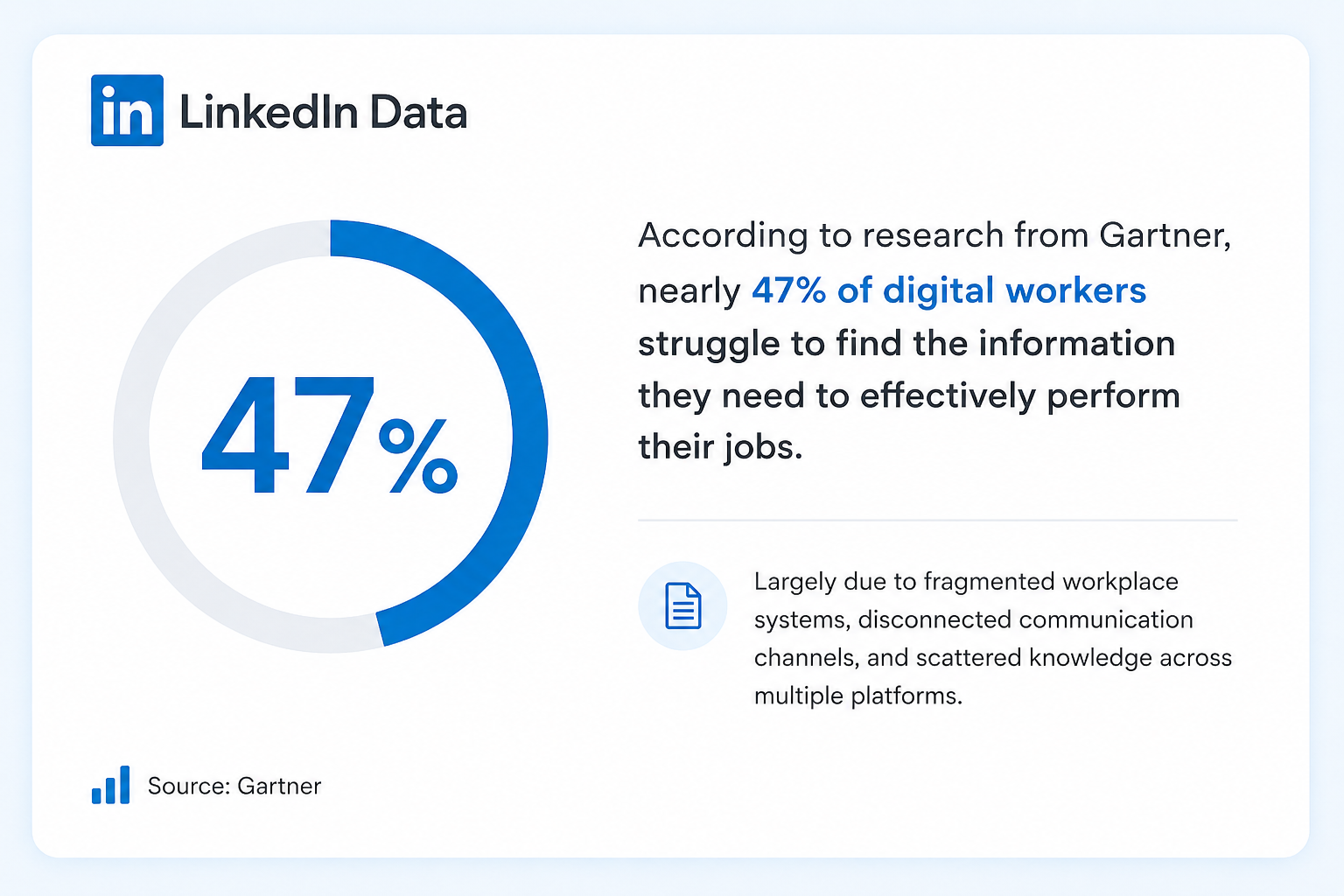
According to research from Gartner, nearly 47% of digital workers struggle to find the information they need to effectively perform their jobs, largely due to fragmented workplace systems, disconnected communication channels, and scattered knowledge across multiple platforms.
In hybrid and remote work environments, this challenge becomes even more visible as teams rely on too many disconnected tools to collaborate and share information efficiently.
In hybrid and remote work environments, this problem becomes even more visible as teams rely on multiple disconnected tools to communicate, collaborate, and share knowledge.
As workplace technology continues to evolve, many organisations are now turning to linkedin data to better understand workforce behaviour, skills trends, employee movement, and digital collaboration patterns.
47%
of digital workers
According to Gartner, nearly 47% of digital workers struggle to find the information they need to perform their jobs effectively due to fragmented workplace systems, disconnected communication channels, and scattered company knowledge.
Source: Gartner Digital Workplace Research
From talent intelligence and workforce planning to employee engagement insights and organisational benchmarking, LinkedIn has become more than just a recruitment platform — it is increasingly influencing how companies shape their digital workplace strategies.
The purpose of this article is to explore how businesses can responsibly use LinkedIn workforce insights, LinkedIn Data API integrations, and workforce analytics to improve collaboration, employee experience, and internal communication across modern workplaces.
It also examines the growing concerns around LinkedIn data breach risks, employee privacy, governance, and ethical data usage as companies collect and analyse more workforce intelligence than ever before.
For organisations building a modern digital workplace strategy framework, understanding how workforce data connects to collaboration, communication, and employee experience is quickly becoming a competitive advantage rather than just an HR initiative.
Key Takeaways
- LinkedIn data helps businesses better understand workforce trends, employee skills, hiring patterns, and collaboration opportunities across hybrid and remote workplaces.
- Many organisations use linkedin data search and workforce intelligence to support talent mapping, skills planning, competitor benchmarking, and employee experience strategies.
- The linkedin data api allows approved systems to automate workforce insights across HR platforms, employee directories, CRM systems, and digital workplace tools.
- Businesses building a modern digital workplace strategy framework should focus on connected communication, workforce visibility, collaboration, and knowledge sharing.
- Strong governance, privacy controls, and ethical data practices are essential for reducing linkedin data breach risks and maintaining employee trust.
The Growing Challenges Facing Modern Digital Workplaces
While hybrid work has created more flexibility for employees, it has also introduced new operational challenges for businesses trying to keep teams aligned, informed, and productive.
Many organisations now operate across dozens of disconnected workplace applications including chat platforms, project management tools, cloud storage systems, video conferencing apps, and internal communication channels.
As a result, employees are often forced to switch between multiple systems just to complete simple daily tasks.
One of the biggest issues organisations face today is workplace fragmentation.
Information becomes scattered across emails, messaging platforms, shared drives, intranets, and third-party applications, making it difficult for employees to locate trusted information quickly.

This lack of visibility can slow decision-making, reduce collaboration efficiency, and create communication gaps between departments.
At the same time, leaders are under increasing pressure to better understand workforce behaviour, employee engagement, skills development, and collaboration patterns across hybrid teams.
Traditional workplace analytics tools often fail to provide a complete picture because employee activity is spread across multiple disconnected systems.
This is one of the reasons why businesses are increasingly exploring linkedin data, workforce intelligence platforms, and digital employee analytics to gain deeper visibility into workforce trends, employee skills, organisational growth, and communication behaviour.
When combined with a strong digital workplace strategy framework, these insights can help businesses make smarter decisions around collaboration, employee experience, and workforce planning.
However, using workforce intelligence also introduces important conversations around privacy, governance, ethical data usage, and security risks — especially as concerns around linkedin data breach incidents and employee trust continue to grow.
What Is LinkedIn Data?
What Is LinkedIn Data
LinkedIn data refers to the large collection of professional, organisational, and workforce-related information generated across the LinkedIn platform.
This information is commonly used by businesses, recruiters, HR teams, sales professionals, and workplace strategists to better understand workforce trends, employee skills, hiring activity, and industry movement.
Today, many organisations use LinkedIn datasets to support workforce planning, employee engagement strategies, talent intelligence, and digital workplace transformation initiatives.
These datasets can include professional profile information, company growth trends, job market insights, employee skills, career progression patterns, and organisational hiring activity across different industries.
One of the most valuable aspects of linkedin data search is the ability to analyse workforce behaviour at scale. Businesses can identify emerging skill gaps, monitor competitor hiring trends, benchmark industry growth, and better understand how employees move between roles, companies, and industries.
This type of workforce intelligence is becoming increasingly important as organisations adapt to hybrid work environments and changing employee expectations.
Many enterprise systems also integrate with the linkedin data api, allowing businesses to connect workforce insights directly into HR platforms, employee directories, CRM systems, talent management software, and internal collaboration tools.
These integrations help automate profile enrichment, improve employee records, and provide deeper visibility into workforce capabilities across the organisation.
At the same time, linkedin workforce insights are now playing a growing role in shaping modern digital workplace strategies.
Companies are using workforce analytics and professional data to improve internal communication, identify leadership gaps, support employee development, and make smarter decisions around collaboration, hiring, and organisational growth.
Why LinkedIn Data Matters in Modern Workplace Strategy
Modern businesses are no longer making workplace decisions based purely on assumptions or annual employee surveys.
As hybrid work environments continue to evolve, organisations need better visibility into workforce behaviour, employee engagement, collaboration patterns, and skills development.
This is where linkedin data and workforce intelligence are becoming increasingly valuable for shaping a smarter digital workplace strategy.
Many organisations still operate with fragmented workplace systems where communication, employee records, collaboration tools, and knowledge management platforms are disconnected from one another.
Employees may communicate through Slack, manage tasks in Asana, attend meetings in Microsoft Teams, store documents in SharePoint, and share updates through email — all while HR data sits inside a completely separate system.
This creates major visibility gaps across departments and makes it difficult for leadership teams to fully understand how employees work, collaborate, and grow within the organisation.
Using linkedin workforce insights allows businesses to better understand workforce trends, employee capabilities, and organisational gaps that traditional workplace systems often fail to reveal.
Instead of relying on disconnected reports, businesses can use workforce intelligence to support smarter planning, improve collaboration, and build stronger employee experiences.
Some of the biggest workplace challenges businesses are trying to solve include:
- Identifying skills gaps across departments and teams
- Improving employee retention and career development
- Supporting internal mobility and leadership growth
- Planning hybrid workforce strategies more effectively
- Reducing communication silos between teams
- Improving leadership visibility across the organisation
- Aligning workforce capabilities with business goals
For example, a company may discover through linkedin data search that employees in certain departments are rapidly developing AI-related skills while internal training programmes have not adapted to support that shift.
Another business may notice competitor organisations hiring aggressively for digital workplace and employee experience roles, highlighting a growing market trend they had previously overlooked.
Many organisations are also integrating workforce intelligence directly into internal systems through the linkedin data api.
This allows businesses to enrich employee directories, improve talent management processes, automate workforce reporting, and centralise workforce visibility across multiple systems.
As digital workplaces become more data-driven, companies that successfully combine workforce intelligence with collaboration platforms, communication tools, and employee engagement strategies will be in a much stronger position to adapt to changing workplace trends and employee expectations.
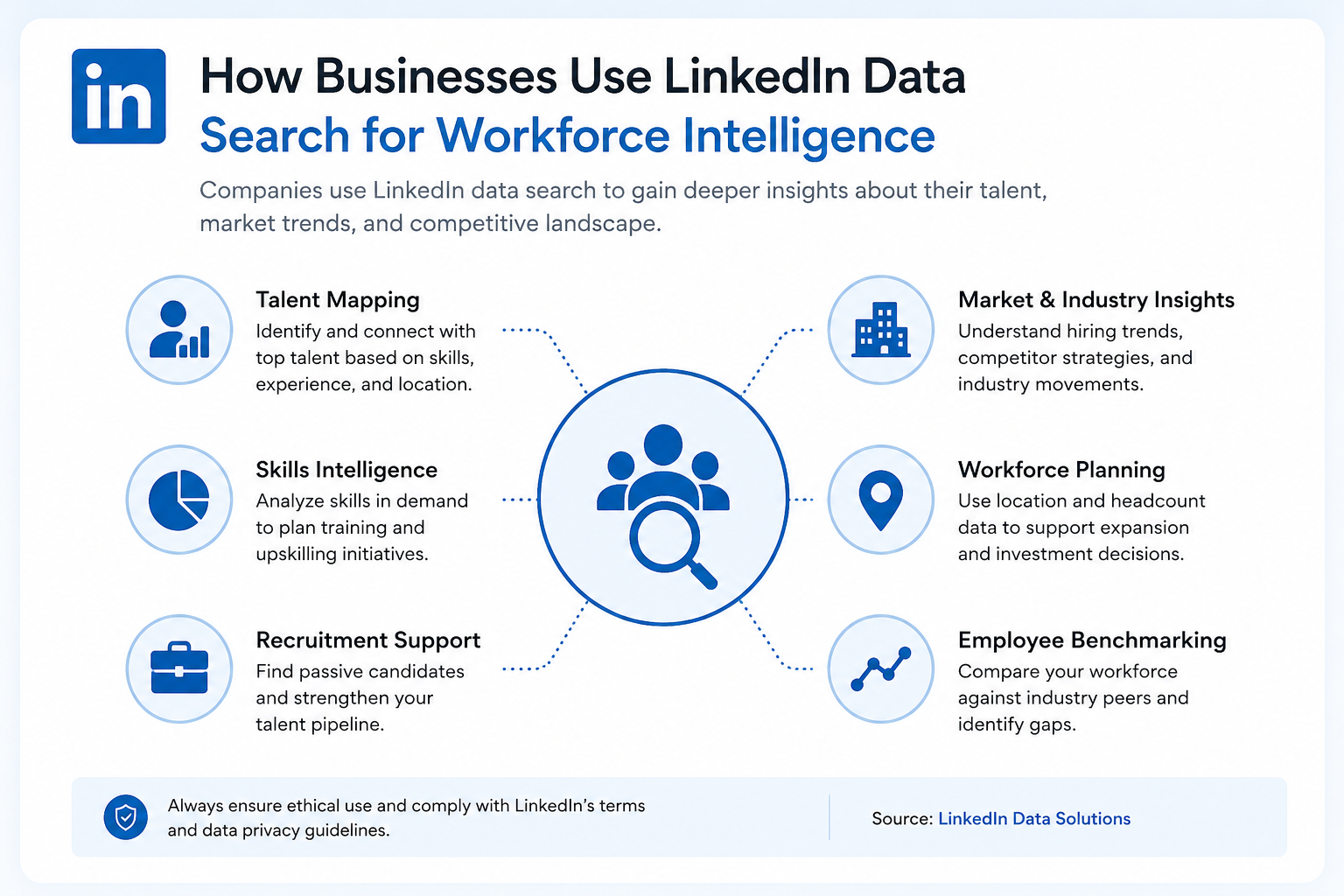
How Businesses Use LinkedIn Data Search for Workforce Intelligence
As organisations continue adapting to hybrid work environments, many leadership teams are relying on workforce intelligence to make smarter decisions around hiring, collaboration, employee development, and long-term workplace planning.
Modern businesses are no longer just analysing internal HR reports — they are using external workforce signals to better understand industry movement, workforce behaviour, and emerging skills across the market.
This is where linkedin data search has become increasingly valuable as part of a broader digital workplace strategy framework.
By analysing professional trends, organisational growth patterns, and workforce activity, companies can gain insights that help improve communication strategies, workforce planning, and employee experience initiatives.
How Businesses Use LinkedIn Data Search for Workforce Intelligence
Talent Mapping and Skills Intelligence
One of the most common use cases for workforce intelligence is identifying skills gaps and understanding how employee capabilities are evolving across industries.
HR teams and operations leaders often analyse workforce trends to determine which technical, leadership, or digital collaboration skills are becoming more important in the market.
For example, companies like Microsoft and IBM regularly publish workforce research highlighting the growing demand for AI literacy, digital collaboration skills, and employee adaptability within modern workplaces.
These insights help businesses align internal training programmes with future workforce demands instead of reacting too late to industry changes.
Some organisations also compare their workforce capabilities against competitors to better understand:
- Which skills are growing fastest in the industry
- Where hiring competition is increasing
- Which departments may require upskilling
- Emerging leadership and management trends
- Workforce gaps affecting digital transformation
This type of workforce visibility is becoming increasingly important as businesses navigate changing workplace trends and evolving employee expectations.
Competitor Benchmarking and Workforce Planning
Many businesses also use workforce analytics to benchmark themselves against competitors and industry leaders.
Instead of relying solely on financial reports or hiring announcements, organisations can analyse workforce growth patterns, hiring momentum, and employee movement across the market.
For example, companies such as Salesforce and Google frequently adapt their workplace strategies around employee experience, hybrid collaboration, and internal innovation.
Businesses monitoring these trends can identify how major organisations structure teams, invest in digital workplace technology, and respond to shifts in employee behaviour.
This approach helps leadership teams:
- Monitor hiring activity in specific industries
- Understand changing workforce expectations
- Identify rapidly growing job functions
- Benchmark organisational growth against competitors
- Improve long-term workforce planning decisions
For organisations building a digital workplace strategy example, workforce intelligence can also reveal how competitors are investing in collaboration tools, employee communication platforms, and remote work infrastructure.
Improving Collaboration and Employee Experience
Internal communications teams and digital workplace leaders are increasingly using workforce insights to improve how employees connect, collaborate, and access information across the organisation.
In many businesses, communication breakdowns occur because departments operate in silos with different tools, workflows, and reporting structures.
By combining workforce analytics with collaboration platforms and employee engagement systems, organisations can build a more connected employee experience.
Companies like Spotify and HubSpot are widely recognised for promoting flexible workplace cultures supported by strong digital communication strategies and employee-centric collaboration environments.
Modern workplace leaders often use these insights to:
- Improve onboarding experiences
- Build stronger internal communication strategies
- Identify disconnected teams or departments
- Support hybrid collaboration models
- Strengthen leadership visibility
- Improve employee engagement initiatives
As workforce expectations continue changing, businesses that combine workforce intelligence with collaboration technology will be better positioned to build scalable, connected, and data-driven digital workplaces.
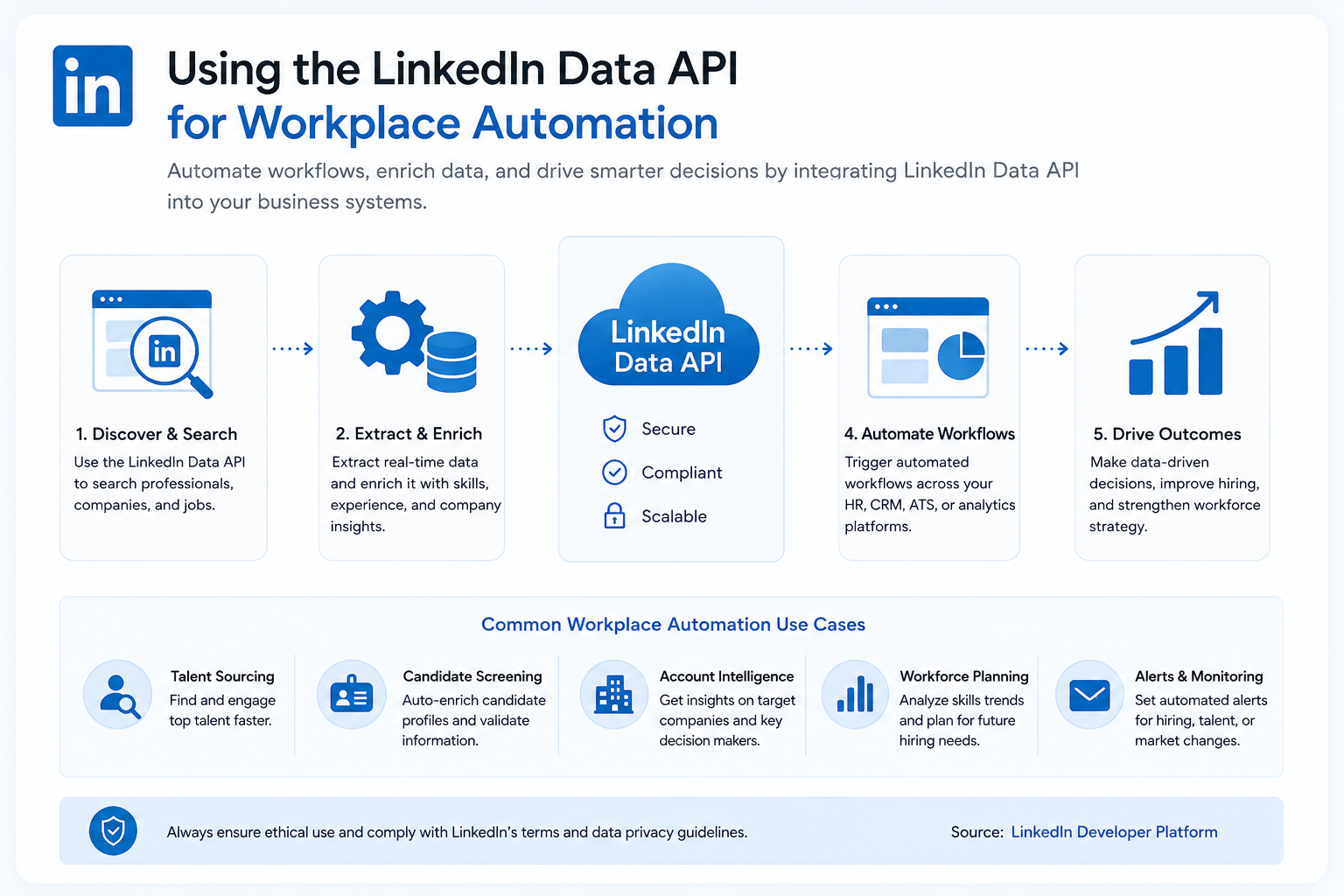
Using the LinkedIn Data API for Workplace Automation
As businesses continue investing in smarter workplace technology, automation is becoming a major part of improving workforce visibility, employee experience, and operational efficiency.
The linkedin data api allows approved business systems to connect professional and organisational data into HR platforms, employee directories, CRM systems, and collaboration tools.
Instead of manually updating workforce records across multiple platforms, organisations can automate profile enrichment, skills syncing, organisational charts, and employee onboarding workflows.
This helps create a more connected digital workplace while reducing administrative overhead and improving workforce visibility across departments.
Companies such as Microsoft, Salesforce, and Workday commonly integrate workforce intelligence into internal systems to improve collaboration, workforce planning, and employee management processes.
Using the LinkedIn Data API for Workplace Automation
Improving Internal Collaboration and Workforce Visibility
Many organisations use workforce automation to make employee information easier to access across the business.
For example, internal collaboration platforms can display employee expertise, certifications, department information, and professional backgrounds directly inside employee profiles.
This helps businesses:
- Improve internal knowledge sharing
- Build better employee directories
- Identify subject matter experts faster
- Support onboarding and training
- Improve collaboration across departments
- Strengthen workforce reporting
As hybrid work environments continue growing, connected workforce systems are becoming increasingly important for improving communication and reducing workplace silos.
Governance, Privacy, and Compliance Risks
While automation provides major benefits, businesses must also manage privacy, governance, and compliance carefully.
The linkedin data api operates under strict policies, meaning organisations must handle employee information responsibly and follow regional privacy regulations such as GDPR.
Some of the biggest risks businesses must consider include:
- Employee consent and transparency
- Data misuse and unauthorised access
- API limitations and access restrictions
- Third-party data handling risks
- Workforce privacy concerns
- Security vulnerabilities linked to linkedin data breach incidents
Businesses that combine automation with strong governance policies are far more likely to build trusted, scalable, and secure digital workplace environments.
The Risks Businesses Ignore About LinkedIn Data
As organisations rely more heavily on workforce intelligence and employee analytics, concerns around privacy, governance, and data security are becoming impossible to ignore.
While workforce insights can help businesses improve hiring, collaboration, and digital workplace planning, they also introduce serious risks when employee data is collected, analysed, or shared without proper controls in place.
Many businesses focus heavily on the value of workforce intelligence but fail to consider the long-term compliance, ethical, and reputational challenges that can emerge when workforce data is mismanaged.
Understanding the Growing Privacy and Security Risks
One of the biggest concerns surrounding workforce intelligence is how professional information is collected and used across multiple systems. In some cases, organisations rely on third-party tools or scraping technologies to gather workforce information without fully understanding the legal or ethical implications involved.
This creates several risks for businesses, particularly when employee information is shared across disconnected platforms, external vendors, or unsecured systems.
Even when workforce data is publicly available, businesses still have a responsibility to protect employee privacy and comply with regulations such as GDPR and regional data protection laws.
Large technology companies including LinkedIn, Meta, and Google have all faced increasing scrutiny around data collection practices, privacy concerns, and the handling of user information.
These discussions have pushed many organisations to rethink how workforce intelligence should be managed inside modern digital workplaces.
Why Governance and Employee Trust Matter
Employee trust plays a major role in the success of any workplace analytics strategy. When employees feel they are being monitored without transparency or consent, workplace culture can quickly suffer.
Businesses that collect workforce data without clear governance policies often create fear, resistance, and disengagement among employees.
Strong governance frameworks help organisations establish clear boundaries around how workforce information is accessed, stored, and used internally.
This includes defining who can access employee data, how long information is retained, and what protections are in place to prevent misuse or unauthorised access.
Forward-thinking organisations such as IBM and Salesforce have publicly discussed the importance of ethical AI, responsible workforce analytics, and transparent employee data policies as part of building modern employee experiences.
As workforce intelligence continues shaping digital workplace strategies, businesses that prioritise transparency, governance, and ethical data usage will be in a much stronger position to maintain employee trust while reducing compliance and reputational risks.
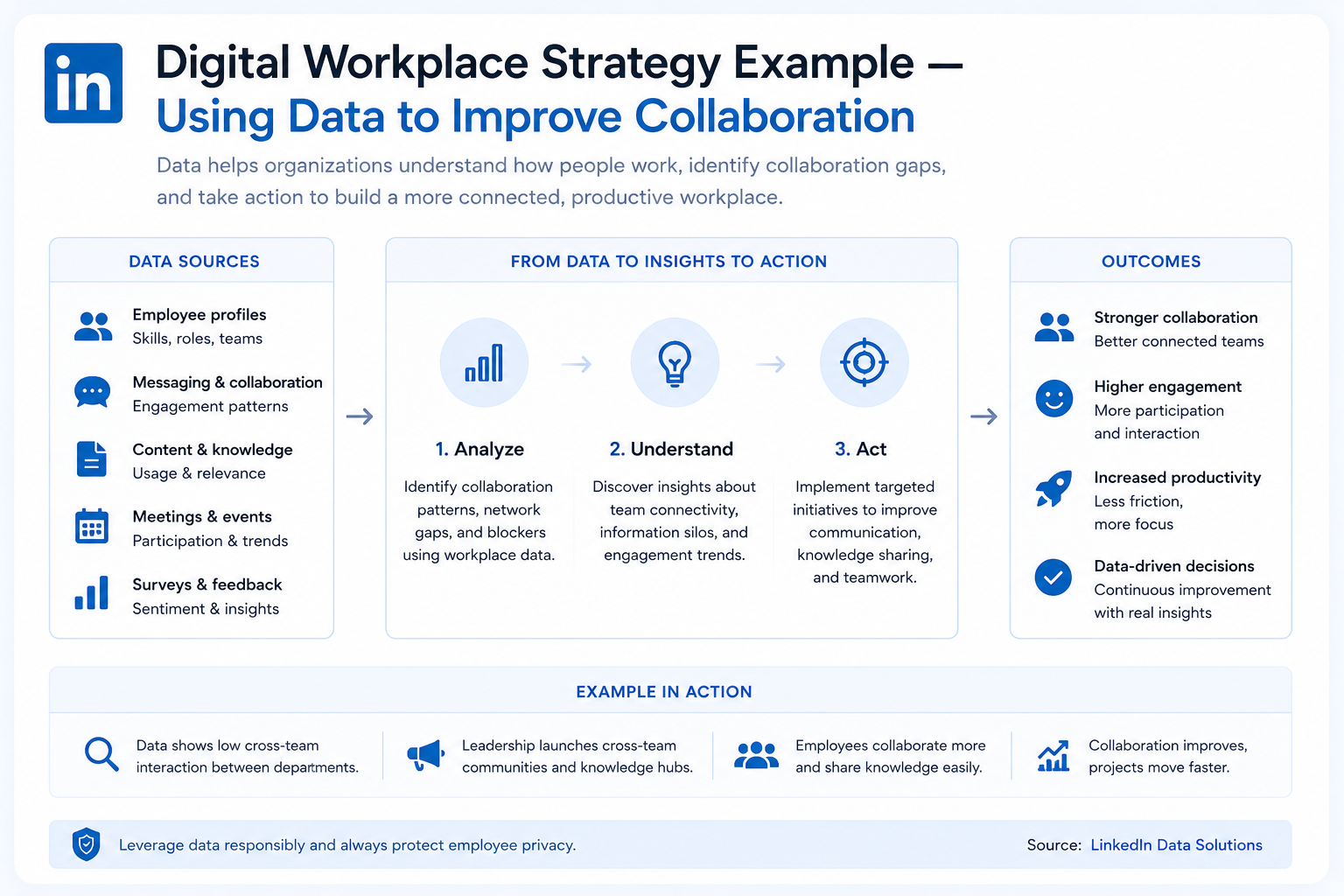
Digital Workplace Strategy Example — Using Data to Improve Collaboration
One practical digital workplace strategy examplecan be seen in how hybrid organisations are starting to use workforce intelligence to improve collaboration, communication, and employee experience across disconnected teams.
Imagine a growing technology company with employees spread across multiple countries operating in hybrid and remote work environments.
Over time, the business adopted several workplace tools including Slack for messaging, Microsoft Teams for meetings, SharePoint for documents, Trello for project management, and email for company-wide communication.
While each tool solved a short-term problem, the organisation eventually found itself struggling with fragmented communication and poor visibility across departments.
The company began facing several operational challenges including:
- Employees using too many disconnected collaboration tools
- Duplicate conversations happening across different platforms
- Low employee engagement in remote teams
- Poor visibility into workforce skills and expertise
- Difficulties onboarding new employees
- Knowledge becoming scattered across multiple systems
- Leadership teams lacking visibility into workforce collaboration
To solve these issues, the organisation started analysing workforce intelligence and professional development trends to better understand employee behaviour, skills growth, and collaboration patterns across the business.
By combining workforce analytics with internal workplace systems, leadership teams were able to identify communication gaps and improve workforce alignment.
Digital Workplace Strategy Example — Using Data to Improve Collaboration
The business focused on several improvements including:
- Identifying emerging skills gaps within departments
- Improving onboarding experiences for remote employees
- Building stronger employee communities around shared expertise
- Improving internal knowledge sharing between teams
- Aligning leadership communication across the organisation
- Creating more visibility into employee collaboration patterns
To support this transformation, the company invested in a connected digital workplace ecosystem using:
- Employee intranet software
- Knowledge management systems
- Team collaboration platforms
- Employee engagement tools
- Centralised communication hubs
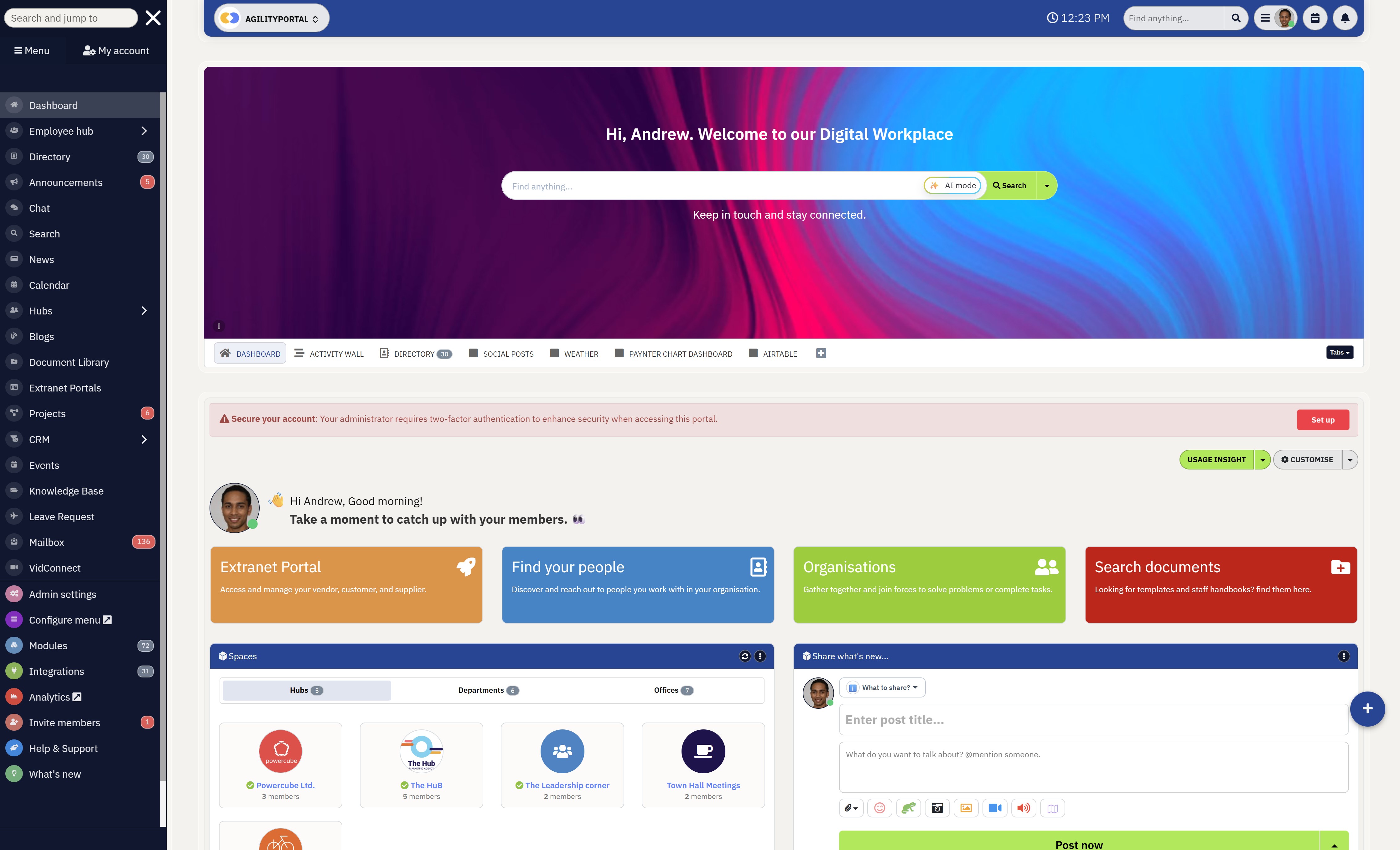
Platforms such as AgilityPortal help businesses centralise communication, collaboration, employee engagement, and knowledge sharing into a single digital workplace experience instead of relying on multiple disconnected tools.
This approach reflects a growing shift in modern workplace trends, where businesses are moving away from fragmented collaboration systems and toward more connected, employee-centric digital workplace environments built around visibility, communication, and workforce intelligence.
Building a Digital Workplace Strategy Framework
Creating a successful digital workplace strategy framework requires more than simply adding new collaboration tools or launching another employee app.
Many organisations already have dozens of workplace systems in place, yet employees still struggle with communication silos, disconnected information, and low engagement across hybrid teams.
Modern digital workplace strategies focus on creating a connected employee experience where communication, collaboration, knowledge sharing, and workforce visibility work together as part of one ecosystem.
Businesses that succeed in this area typically follow a structured approach rather than introducing technology without a long-term plan.
1. Define Clear Workplace Goals
The first step is understanding what the business is actually trying to improve.
Some organisations focus heavily on productivity, while others prioritise employee engagement, collaboration, or knowledge management.
Without clear objectives, workplace technology often becomes fragmented very quickly.
Most businesses building a modern workplace strategy focus on areas such as:
- Improving internal communication
- Supporting hybrid collaboration
- Reducing information silos
- Increasing employee engagement
- Improving knowledge sharing
- Simplifying daily workflows
Companies such as Spotify and HubSpot are often recognised for building employee-centric workplace cultures supported by strong communication and collaboration strategies.
2. Audit Existing Workplace Technology
One of the biggest problems in modern workplaces is tool overload.
Employees often switch between multiple disconnected systems throughout the day, which creates inefficiencies and confusion across teams.
Many organisations already rely on platforms such as:
- Slack for messaging
- Microsoft Teams for meetings
- SharePoint for documents
- Email for announcements and communication
- Separate HR and knowledge management systems
Over time, this creates duplicated communication, scattered files, and inconsistent employee experiences. Auditing existing systems helps businesses identify which tools are improving collaboration and which ones are contributing to fragmentation.
3. Use Workforce Intelligence to Identify Gaps
Modern workplace strategies are becoming increasingly data-driven.
Businesses are now analysing workforce intelligence, employee behaviour, and collaboration patterns to better understand how teams communicate and work together.
This often includes reviewing:
- Skills development trends
- Collaboration gaps between departments
- Employee engagement patterns
- Workforce communication behaviour
- Leadership visibility across teams
Companies like IBM and Accenture have invested heavily in workforce analytics and employee experience initiatives to better understand how hybrid teams collaborate across global environments.
4. Centralise Communication and Knowledge Sharing
One of the main goals of a digital workplace strategy is reducing fragmentation by centralising workplace communication and company knowledge into a connected experience.
Many businesses are now moving toward:
- Employee intranet platforms
- Centralised knowledge hubs
- Enterprise search systems
- Mobile-first employee communication apps
- Shared collaboration environments
Platforms like AgilityPortal help businesses bring communication, engagement, collaboration, and knowledge management together into one digital workplace platform rather than relying on disconnected systems.
5. Measure Workplace Adoption and Engagement
Successful workplace strategies require ongoing measurement and optimisation.
Many organisations launch workplace initiatives without tracking whether employees are actually using the tools effectively.
Modern businesses now monitor areas such as:
- Employee engagement metrics
- Search behaviour across workplace systems
- Collaboration analytics
- Platform adoption rates
- Communication effectiveness
- Employee participation levels
As workplace expectations continue evolving, organisations that continuously improve their workplace experience using employee insights and workforce intelligence will be in a much stronger position to support long-term growth, collaboration, and employee retention.
Top Workplace Trends Shaping Digital Workplaces
Modern workplace trends are being shaped by one clear shift: businesses are moving from basic collaboration tools to smarter, data-driven workplace ecosystems.
Microsoft's Work Trend Index highlights the rise of AI agents and "digital labor" as a major workforce strategy, while LinkedIn's 2025 Workplace Learning Report shows growing demand for skills-based learning, career development, and workforce adaptability.
AI-Powered Workplace Analytics
AI is no longer just being used to write emails or summarise meetings.
Businesses are starting to use AI-powered analytics to understand how employees collaborate, where bottlenecks exist, and which teams need better support.
Over the next 3–5 years, more digital workplace platforms will use AI to:
- Analyse employee engagement patterns
- Identify communication gaps
- Recommend knowledge articles or experts
- Spot workflow delays before they become bigger issues
- Support managers with real-time workforce insights
Microsoft's 2025 research also points toward a future where AI agents work alongside employees as digital team members, helping increase capacity and improve productivity.
Skills-Based Organisations
Another major trend is the move toward skills-based organisations.
Instead of only looking at job titles, businesses are starting to map what employees can actually do, where their skills are growing, and where training is needed.
LinkedIn's Workplace Learning Report focuses heavily on career growth, adaptability, and skills intelligence as key priorities for HR and L&D teams.
Siemens is one example mentioned in LinkedIn's UK report, using its MyGrowth platform to support skill assessments, skills gap analysis, and personalised learning recommendations for over 254,000 employees.
This trend will push digital workplace strategies to include:
- Internal talent marketplaces
- Skills directories
- Personalised learning paths
- Employee career mobility tools
- Better visibility into hidden internal expertise
Hybrid Work Optimisation and Employee Experience Platforms
Hybrid work is not going away, but companies are becoming more intentional about how they manage it.
The next phase is not just "work from home or office" — it is about building personalised, flexible, and measurable work experiences.
IWG's future work forecast predicts that employers will increasingly use AI and workplace analytics to create personalised hybrid plans for employees.
That means schedules, collaboration patterns, office days, and communication habits may become more tailored to how people actually work best.
This is why employee experience platforms are becoming more important. Businesses want one place to manage communication, engagement, knowledge sharing, recognition, search, and workforce insights.
Over the next few years, the strongest digital workplaces will likely combine:
- Workforce personalisation
- Knowledge automation
- Intelligent employee search
- AI-supported onboarding
- Internal creator-style content from employees
- Better employee listening and feedback loops
The big prediction is simple: digital workplaces will become less like static intranets and more like intelligent employee operating systems.
The companies that win will not just add more tools — they will connect people, data, knowledge, and workflows into one joined-up employee experience.
Common Mistakes Companies Make With Workplace Data
Many organisations make the mistake of over-monitoring employees by tracking excessive workplace activity, communication behaviour, login patterns, and productivity metrics without clearly explaining why the data is being collected, which can quickly damage employee trust, reduce morale, and create a workplace culture where employees feel constantly watched instead of supported.
Another major issue businesses face is relying on disconnected analytics tools spread across multiple workplace systems, because when HR platforms, communication tools, collaboration software, engagement systems, and reporting dashboards are not connected together, leadership teams often end up making decisions based on incomplete or inconsistent workforce information.
A growing number of companies also ignore employee privacy concerns when implementing workforce intelligence strategies, particularly when collecting behavioural data, collaboration insights, or professional information without establishing clear transparency policies, employee consent processes, or strong governance controls around how workplace data is stored and used.
One of the biggest operational problems in modern digital workplaces is the lack of a proper governance strategy, as many organisations introduce new collaboration platforms, analytics systems, and workforce reporting tools without defining clear ownership, security policies, access permissions, or compliance frameworks to manage workforce information responsibly.
Some businesses become too focused on productivity metrics alone, measuring employee output, meeting activity, response times, or system usage without considering broader employee experience factors such as engagement, collaboration quality, workplace culture, learning opportunities, and employee wellbeing.
Another common mistake is failing to connect workforce intelligence with the actual employee experience, because collecting workplace data has little value if organisations do not use those insights to improve communication, simplify workflows, support employee development, reduce workplace friction, and create a more connected digital workplace environment for hybrid and remote teams.
How to Build a Smarter Employee Experience Using Workforce Insights
How to Build a Smarter Employee Experience Using Workforce Insights
Modern employees expect far more than basic communication tools and static intranet systems.
In hybrid and remote work environments, employees want personalised experiences, easier access to information, stronger career visibility, and better support throughout their daily workflows.
This is why many organisations are now using workforce insights and employee analytics to build smarter, more connected workplace experiences.
Instead of relying on disconnected systems, businesses are increasingly combining workforce intelligence with employee engagement platforms, collaboration tools, and digital workplace software to better understand employee needs and improve overall workplace satisfaction.
A smarter employee experience strategy often focuses on several key areas including:
- Personalised communication based on employee roles, departments, or interests
- Skills development programmes aligned with workforce growth trends
- Employee recognition systems that improve engagement and morale
- Better visibility into career progression and internal opportunities
- Faster and more connected onboarding experiences for new employees
- Easier access to company knowledge, policies, and workplace resources
Many organisations struggle because important employee information is spread across multiple systems, making it difficult for employees to find the right information or connect with the right people quickly.
Integrated workplace platforms help solve this problem by centralising communication, collaboration, knowledge sharing, and workforce visibility into one connected experience.
For example, companies such as Microsoft and Salesforce continue investing heavily in employee experience technology designed to improve collaboration, workforce engagement, and internal knowledge accessibility across hybrid teams.
Modern digital workplace platforms like AgilityPortal help organisations create a more connected employee experience by bringing together communication, employee engagement, collaboration, knowledge management, and workforce visibility into a single platform rather than forcing employees to navigate multiple disconnected tools.
As workplace expectations continue evolving, businesses that prioritise employee experience, workforce visibility, and connected collaboration environments will be in a much stronger position to improve retention, engagement, productivity, and long-term organisational growth.
AgilityPortal
A Modern Alternative to Traditional SharePoint Team Sites
AgilityPortal helps businesses centralise employee communication, collaboration, company knowledge, documents, and workplace updates into one connected digital workplace platform.
Instead of managing disconnected SharePoint Team Sites, emails, chats, and document libraries, AgilityPortal creates a modern employee experience designed for communication, engagement, knowledge sharing, and hybrid collaboration.
Start your 14-day free trial — no credit card required.Final Thoughts
LinkedIn workforce intelligence can provide valuable insights into employee skills, workforce trends, collaboration patterns, and organisational growth, but data alone will not fix disconnected workplace experiences.
Businesses still need connected digital workplace ecosystems that bring communication, collaboration, knowledge sharing, and employee engagement together into one streamlined environment.
At the same time, employee trust, transparency, and responsible data governance must remain a priority as organisations collect more workforce information.
Companies looking to modernise their workplace strategy should regularly audit their workplace systems, reduce collaboration fragmentation, centralise communication, and improve employee experience using connected workplace platforms such as AgilityPortal.
AI Summary
- LinkedIn data can help businesses understand workforce trends, employee skills, hiring patterns, and market movement when building a smarter digital workplace strategy.
- Many organisations use LinkedIn datasets and linkedin data search to support workforce planning, talent mapping, skills intelligence, and competitor benchmarking.
- The linkedin data api can help approved systems connect workforce insights with HR platforms, employee directories, CRM tools, and workplace automation workflows.
- A strong digital workplace strategy framework should combine workforce intelligence with communication, collaboration, knowledge sharing, employee engagement, and data governance.
- Businesses must treat linkedin data breach concerns seriously by protecting employee privacy, avoiding unauthorised scraping, and following clear compliance policies.
- Modern workplace trends show that AI, skills-based planning, hybrid work optimisation, and employee experience platforms are becoming central to digital workplace transformation.
Most Popular Posts

Effective communication among team members is vital for the productivity and success of any organization. Surprisingly, 60% of companies lack a long-term internal communication strategy, which p...


Businesses thrive on communication for efficiency, productivity and accomplishment. When the right information is passed from the right designation in the organization, it promotes positivity an...
Categories
Blog
(2918)
Business Management
(363)
Employee Engagement
(221)
Digital Transformation
(189)
Growth
(139)
Intranets
(133)
Remote Work
(63)
Sales
(52)
Collaboration
(46)
Customer Experience
(29)
Culture
(29)
Knowledge Management
(28)
Project management
(28)
Leadership
(20)
Comparisons
(9)
News
(1)

Related Posts

What Is Portal Software? Have you ever wondered why so many businesses struggle with disconnected systems, scattered documents, outdated intranets, and poor communication between teams? Most organisations today rely on dozens of different tools...

What happens when your systems suddenly stop working in the middle of a busy workday? For growing businesses, downtime is no longer just a technical problem — it is a direct threat to productivity, customer trust, revenue, and daily operations. ...

Despite organisations investing heavily in collaboration platforms, employee apps, and hybrid work technology, many businesses still struggle with disconnected communication, low employee engagement, and poor workforce visibility. According to ...

The communication champion role is a valuable addition to any business. In a large organization, communication champions should be numerous, forming a communication network. They keep track of information and assist others in better collaborating, wo...

Featured
In today's fast-paced hybrid work environment, staying connected isn't just nice—it's necessary. With more than 80% of employees now working remotely at least part of the time, the demand for intuitive, powerful collaboration tools has never be...

Jill Romford
I am a digital nomad, lover of exploring new places and making friends.
I love to travel and I love the internet. I take pictures of my travels and share them on the internet using Instagram.
Traveler, entrepreneur, and community builder. I share my insights on digital marketing and social media while inspiring you to live your fullest life.
Ready to learn more? 👍
One platform to optimize, manage and track all of your teams. Your new digital workplace is a click away. 🚀
Free for 14 days, no credit card required.