
Insight Blog
Agility’s perspectives on transforming the employee's experience throughout remote transformation using connected enterprise tools.
30 minutes reading time
(6090 words)
The Real Problem With Customer Feedback Tools (And How Smart Teams Fix It)

The Real Problem With Customer Feedback Tools (And How Smart Teams Fix It)
Most customer feedback tools collect endless data but fail to drive real action. Learn why feedback processes break down and how leading teams turn insights into measurable improvements.
The Real Problem With Customer Feedback Tools (And How Smart Teams Fix It)

Most customer feedback tools promise better customer insights, improved customer experience, and smarter business decisions.
Companies spend thousands on customer feedback management platforms, surveys, review systems, and feedback forms hoping to better understand what customers actually think about their products and services.
The challenge is that collecting customer feedback and acting on it are two completely different things.
Today, businesses gather customer data through website feedback forms, customer satisfaction surveys, support tickets, online reviews, chat conversations, and social media interactions.
According to SurveyMonkey, 53% of consumers believe customer experience has worsened despite companies investing heavily in feedback collection systems.
Meanwhile, research highlighted by InMoment found that for every customer who complains directly, 26 others remain silent, making customer feedback tools even more critical for identifying hidden issues before they damage retention and reputation.
53%
of consumers
According to SurveyMonkey, 53% of consumers believe customer experience has worsened despite businesses investing heavily in feedback collection systems and customer surveys.
Source: SurveyMonkey
The real problem is not usually the customer feedback software itself.
Most organisations struggle because customer feedback becomes fragmented across disconnected systems, departments, and workflows.
Product teams, customer support, operations, and leadership often work from different data sources, making it difficult to turn customer insights into measurable action.
This article explores why many it fails to improve customer experience, the operational gaps businesses commonly overlook, and how leading teams build customer feedback workflows that transform survey responses and customer data into real business improvements.
It also examines how modern businesses use customer feedback management strategies to close the feedback loop, improve accountability, and create more actionable customer insight processes.
Key Takeaways
- Most customer feedback tools fail because businesses collect customer data without creating clear workflows, ownership, or accountability for resolving recurring issues.
- Disconnected feedback systems across support, sales, operations, and product teams create fragmented customer insights that slow decision-making and reduce visibility.
- Customers become frustrated when feedback is repeatedly submitted through surveys, reviews, or support tickets but businesses never close the communication loop.
- Modern customer feedback management systems should centralise communication, automate workflows, improve collaboration, and help teams prioritise customer concerns faster.
- Businesses that connect employee communication, operational visibility, and customer feedback workflows improve customer satisfaction, retention, and long-term loyalty.
Why Most Customer Feedback Tools Fail to Drive Action
Many businesses invest heavily in customer feedback tools expecting them to improve customer satisfaction, strengthen loyalty, and uncover valuable business insights.
Companies deploy surveys, website feedback forms, review systems, and even advanced product feedback software to better understand customer expectations and pain points.
The issue is that collecting customer feedback is often treated as the final step instead of the beginning of a much larger operational process.
Modern businesses now receive customer data from almost every direction imaginable. Support tickets, online reviews, social media comments, live chat conversations, onboarding surveys, employee notes, and CRM activity all contribute to the growing volume of customer insights organisations collect every day.
While this sounds valuable in theory, many companies quickly become overwhelmed because their customer feedback management system lacks structure, accountability, and clear workflows.
As a result, feedback gets trapped inside dashboards instead of driving real change.

Teams Collect Feedback but Lack Accountability
One of the biggest reasons customer feedback tools examples often fail is because nobody inside the organisation is directly responsible for acting on the information collected.
Many businesses successfully gather large amounts of customer feedback, but very few establish clear ownership over what happens next.
For example, a SaaS company may collect feature requests through its onboarding survey while the support team receives complaints about the exact same issue through live chat. Meanwhile, the product team may never even see the feedback because the data sits in separate systems.
This creates a dangerous disconnect where customer frustrations continue growing even though the company technically has access to the answers.
Common accountability problems include:
- Surveys get completed but nobody follows up with customers afterwards
- Feedback sits inside reporting dashboards that employees rarely review
- Leadership teams receive summary reports without operational context
- Product teams only prioritise revenue-generating features instead of recurring customer complaints
- Customer service teams lack authority to escalate recurring problems properly
- Departments assume another team is responsible for resolving the issue
A retail company, for instance, might receive repeated complaints about delayed deliveries through customer surveys and online reviews. However, because logistics, support, and operations all work separately, the issue continues for months despite customers constantly reporting the same frustration.
The problem is not the lack of data. The problem is the absence of accountability tied to the feedback process.
Feedback Becomes Fragmented Across Multiple Systems
Another major weakness in many customer feedback management system setups is fragmentation.
Most organisations use multiple platforms to collect customer feedback without creating a centralised workflow to unify the information. This leads to customer insights becoming scattered across departments and software tools, making it nearly impossible to identify trends quickly.
A business might use:
- CRM platforms for account notes and sales feedback
- Helpdesk software for customer support tickets
- Survey platforms for satisfaction scores
- Social media tools for public comments and complaints
- Live chat systems for real-time customer conversations
- Review sites for reputation monitoring
While each platform serves a purpose individually, they often fail to communicate effectively with one another.
For example, an ecommerce business may notice declining customer satisfaction scores in survey responses while its support team simultaneously experiences increased refund requests.
Because the information sits in separate systems, leadership fails to connect the dots early enough to resolve the root cause.
This is where many product feedback software solutions struggle. They collect information successfully but fail to operationalise insights across the wider business.
Some of the most common fragmentation issues include:
- Duplicate feedback appearing across multiple systems
- Teams working from outdated customer information
- No shared visibility between departments
- Important complaints getting buried in reporting tools
- Employees manually exporting spreadsheets between systems
- Delayed decision-making caused by disconnected workflows
Over time, fragmented feedback processes reduce trust in the data itself because teams stop believing the systems provide actionable insight.
Businesses Focus Too Much on Collection Instead of Action
Many organisations mistakenly believe collecting more customer feedback automatically leads to better customer experience outcomes. In reality, excessive feedback collection often creates operational overload.
Companies continuously send surveys after purchases, onboarding sessions, support interactions, webinars, and even simple website visits. While feedback volume increases, employee capacity to analyse and act on the information rarely scales at the same pace.
This creates what many businesses experience as "feedback fatigue" internally.
Employees eventually stop reviewing dashboards because the amount of incoming information becomes impossible to process efficiently. Leadership teams receive massive reports filled with charts and customer comments but struggle to identify what actually requires action.
For example, a software company using several customer feedback tools examples may collect thousands of feature requests every month.
Without prioritisation workflows, the product team cannot determine whether customers are requesting minor usability improvements or critical functionality gaps affecting retention.
This often leads to:
- Analysis paralysis caused by excessive reporting data
- Employees ignoring recurring feedback trends
- Teams focusing on vanity metrics instead of operational improvements
- Customer surveys being sent too frequently
- Decision-makers struggling to prioritise customer pain points
- Businesses measuring response volume instead of business impact
The most effective companies understand that successful customer feedback management is not about collecting the most data.
It is about creating systems that transform customer insight into operational improvements, accountability, and measurable action.
Leading organisations use customer feedback tools, product feedback software, and integrated customer feedback management system workflows to centralise communication, assign ownership, and ensure customer concerns lead to visible business improvements instead of forgotten dashboard reports.
The Hidden Operational Gaps Behind Failed Customer Feedback Processes
Many businesses invest in customer experience software expecting stronger customer loyalty, faster issue resolution, and better operational performance.
However, the biggest problem is rarely the platform itself.
Most organisations struggle because customer insights are scattered across disconnected teams, communication channels, and reporting systems, making it difficult to turn feedback into meaningful improvements.
Today, companies collect feedback from surveys, online reviews, helpdesk tickets, chat conversations, and various forms of voice of customer tools. While these systems generate valuable information, many businesses fail to create a unified workflow that allows departments to collaborate efficiently.
As a result, customer concerns become buried inside dashboards, spreadsheets, and isolated software platforms instead of driving action across the organisation.
For example, support teams may continuously receive complaints about slow onboarding while operations or product teams remain unaware of the growing frustration.
Leadership often reviews high-level reports showing declining satisfaction scores but lacks visibility into the root causes behind the issue. Over time, employees become overwhelmed by excessive reporting data, reducing the likelihood that teams will respond quickly to recurring customer pain points.
A disconnected customer insight platform creates delays, poor accountability, and communication gaps between departments.
The most successful businesses focus on creating structured workflows that help teams share information, prioritise customer concerns, and transform feedback into measurable operational improvements instead of simply collecting more data.
5 Signs Your Customer Feedback Management Process Is Broken
Many businesses believe their customer feedback strategy is working simply because they collect surveys, reviews, and support tickets regularly.
However, collecting customer insights does not automatically mean the organisation is improving customer experience. In reality, many companies continue losing customers because their internal feedback process lacks structure, visibility, and accountability.
Here are some of the clearest warning signs that a customer feedback management process is failing.
#1. Customers Repeatedly Report the Same Issues
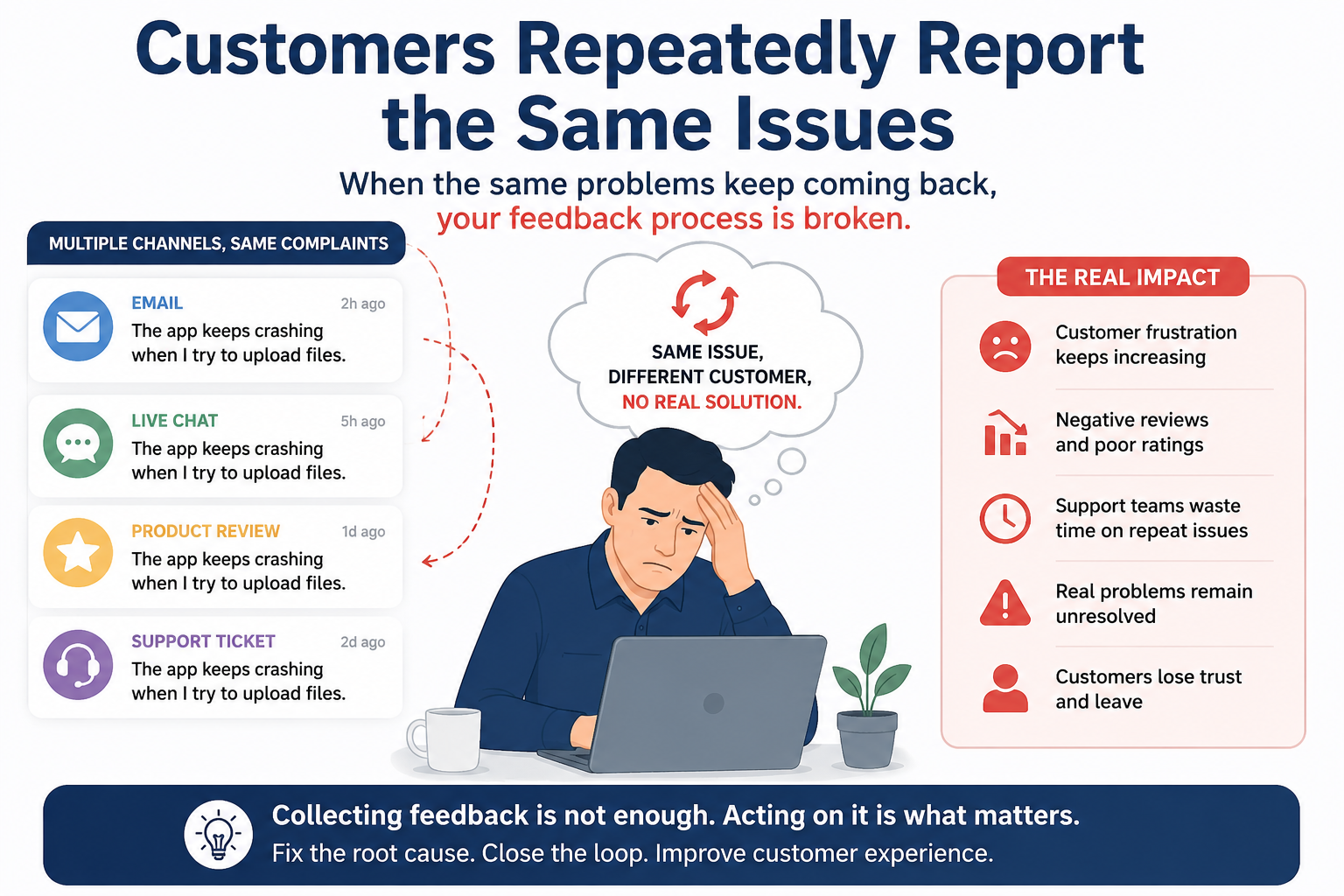
Customers Repeatedly Report the Same Issues
One of the biggest indicators of a broken feedback process is when customers continuously complain about the same problems over and over again.
This usually happens when businesses collect feedback but fail to create workflows that assign ownership and track resolution progress.
For example, a software company may repeatedly receive complaints about slow mobile performance, yet months later customers continue reporting the exact same issue because teams never prioritised the fix internally.
Common signs include:
- Customers raising identical complaints across multiple channels
- Negative reviews mentioning recurring operational problems
- Support teams answering the same questions repeatedly
- Product issues remaining unresolved for long periods
- Customer frustration increasing despite regular surveys
When recurring complaints continue appearing, it often means the organisation is listening to feedback without actually acting on it.
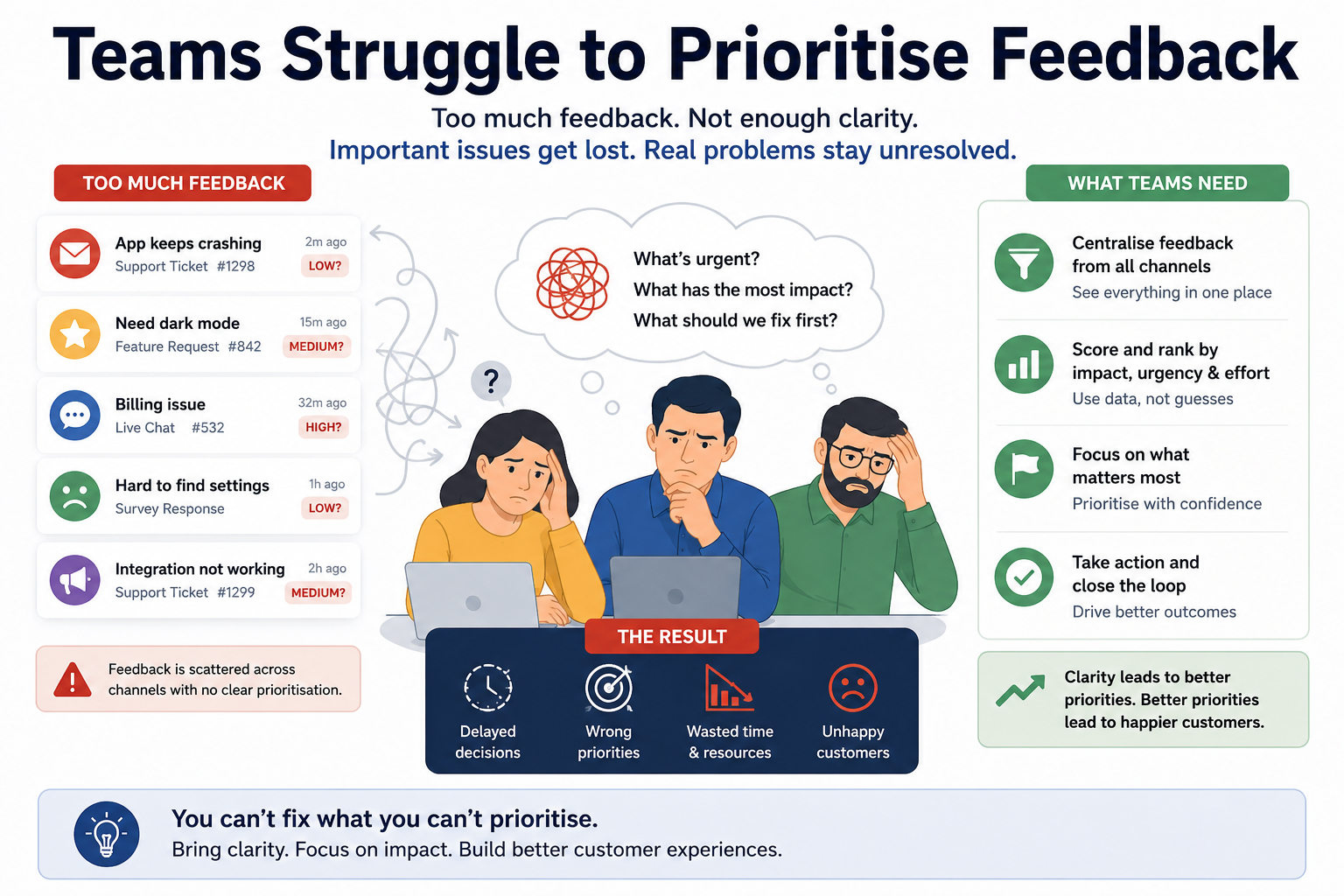
#2. Teams Struggle to Prioritise Feedback
Feedback Reports Are Rarely Reviewed
Many organisations collect huge amounts of customer data but struggle to identify which issues require immediate attention.
Without clear prioritisation workflows, feedback becomes overwhelming and employees stop knowing what matters most.
For instance, product teams may receive hundreds of feature requests every month through customer surveys and support channels. Without a clear scoring system, critical issues become buried alongside minor requests.
Common prioritisation challenges include:
- Teams focusing on the loudest complaints instead of business impact
- No framework for categorising customer issues
- Departments working from different reporting systems
- Leadership lacking visibility into urgent customer trends
- Important feedback getting delayed inside approval processes
The most effective companies focus on actionable insights instead of trying to respond to every single comment equally.
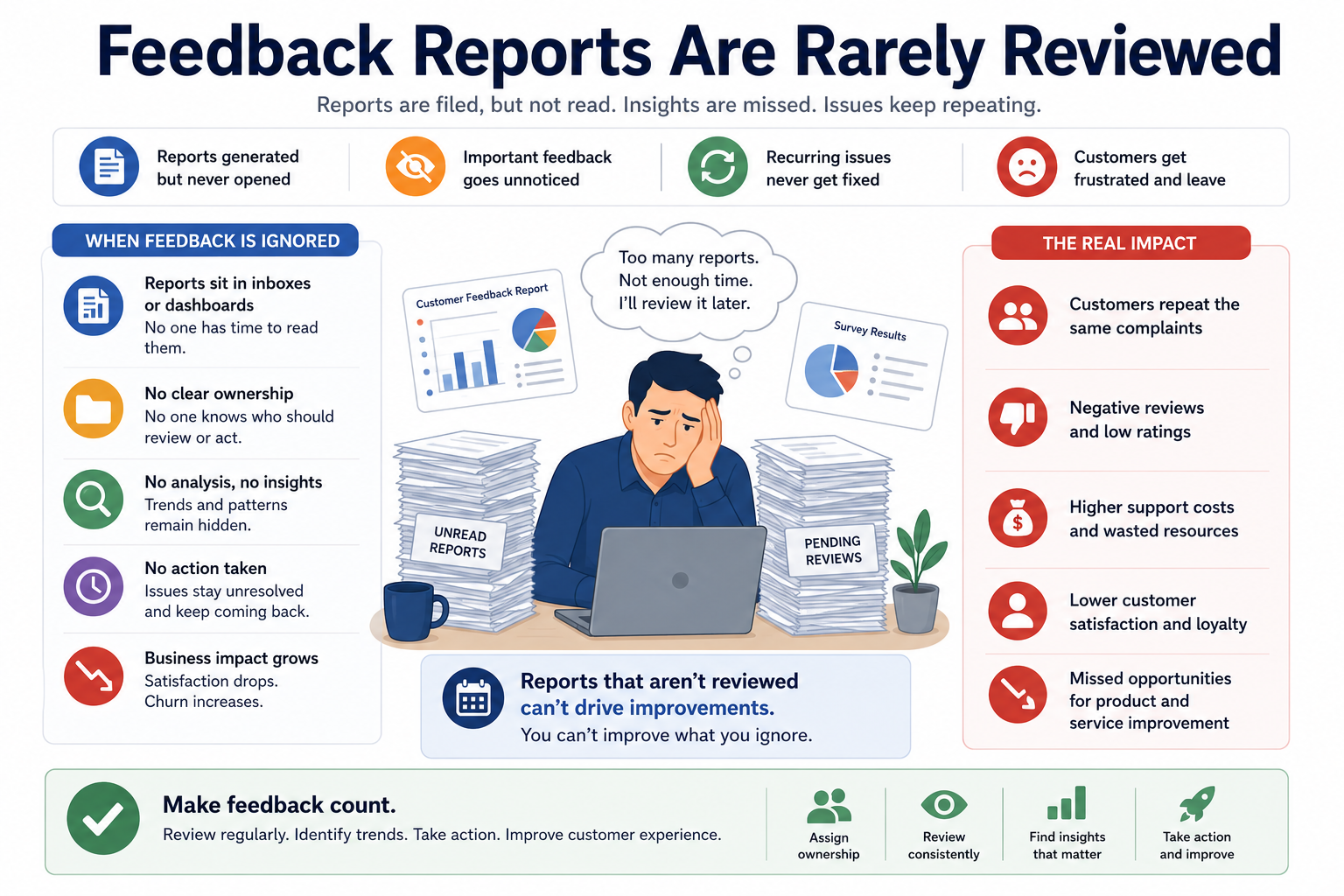
#3. Feedback Reports Are Rarely Reviewed
Feedback Reports Are Rarely Reviewed
Another common sign of a weak customer feedback strategy is when reporting dashboards are generated regularly but rarely reviewed by decision-makers.
Many businesses invest in analytics platforms and customer reporting tools, yet employees become overwhelmed by excessive data and stop engaging with the insights altogether.
Over time, customer feedback reports become operational "noise" rather than a valuable decision-making resource.
This often leads to:
- Customer satisfaction reports being ignored
- Teams relying on assumptions instead of real customer insights
- Valuable feedback hidden inside large dashboards
- Delayed responses to emerging customer problems
- Employees losing trust in reporting systems
When customer feedback is not reviewed consistently, businesses miss opportunities to improve products, services, and customer experience before issues become larger operational problems.
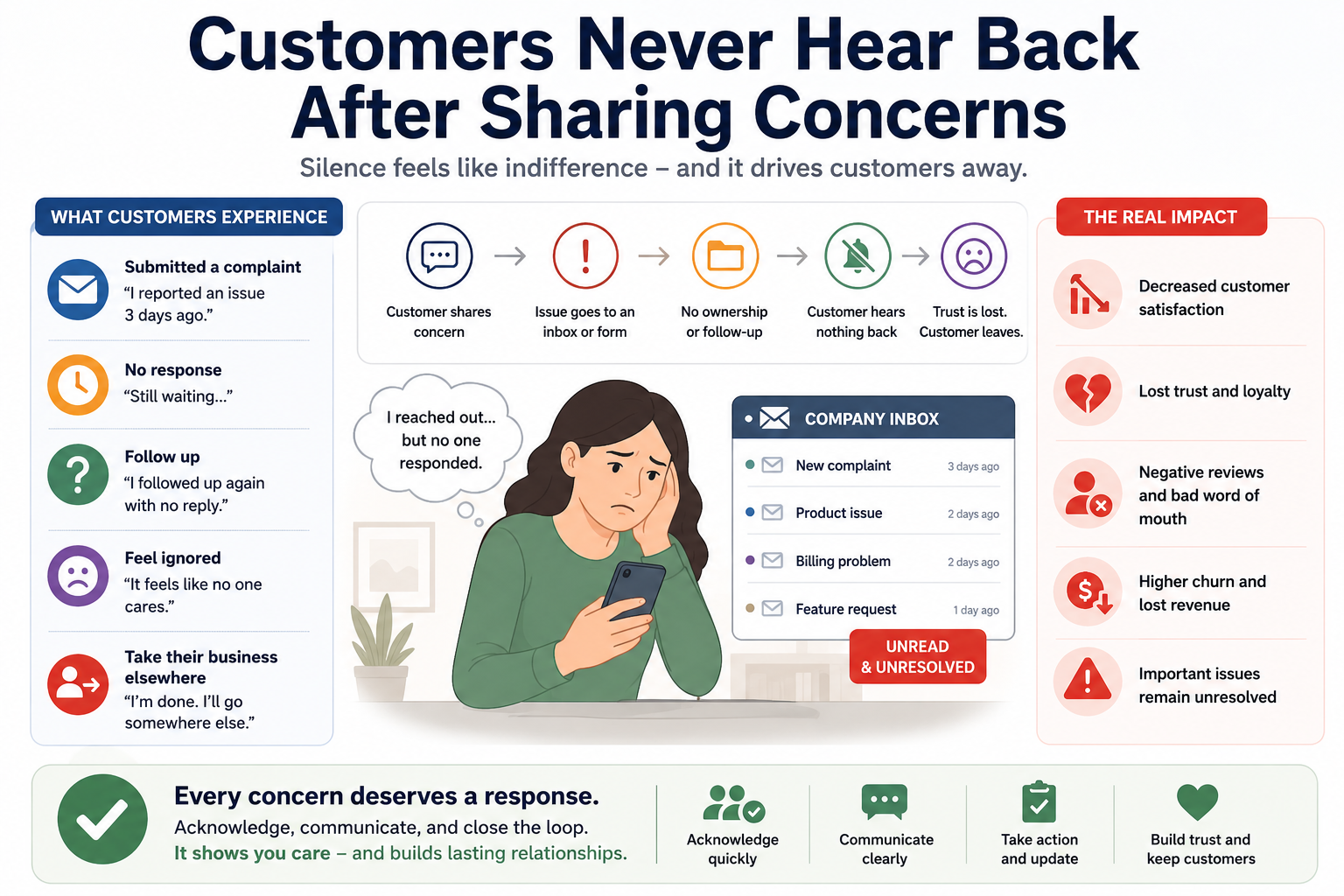
#4. Customers Never Hear Back After Sharing Concerns
Customers Never Hear Back After Sharing Concerns
Many businesses collect feedback from customers but fail to close the communication loop afterwards. Customers take time to complete surveys, submit complaints, or suggest improvements, yet never receive updates explaining whether their feedback led to any action.
This creates frustration because customers feel ignored rather than valued.
For example, a customer may report a usability issue through a website feedback form but never receive acknowledgment or follow-up communication from the company.
Signs of poor follow-up include:
- Customers receiving automated responses only
- No visibility into whether feedback was reviewed
- Lack of communication after complaints are submitted
- Customers repeating the same issues multiple times
- Reduced trust in the company's support process
Closing the feedback loop is one of the most important parts of building long-term customer loyalty.
#5. Different Departments Use Different Feedback Systems
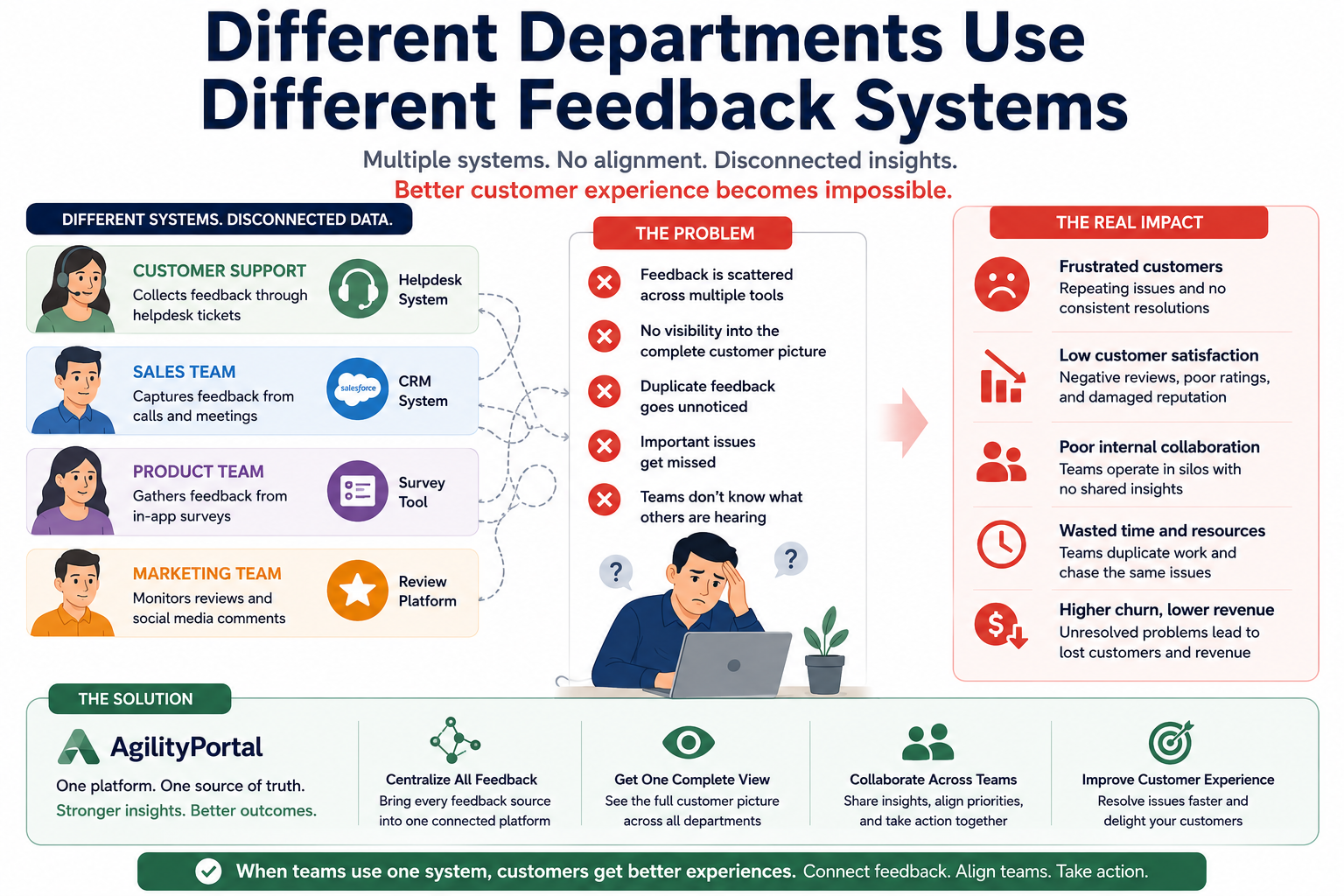
Different Departments Use Different Feedback Systems
One of the biggest operational problems inside growing businesses is fragmented feedback management.
Different departments often use separate systems to collect and analyse customer data, creating communication silos across the organisation.
Support teams may use helpdesk platforms, marketing teams may track survey data, while product departments manage feature requests elsewhere entirely. Without a connected workflow, teams struggle to identify larger customer trends.
This commonly results in:
- Duplicate customer issues appearing across departments
- Teams working with incomplete information
- Delayed decision-making caused by disconnected systems
- Leadership lacking a single source of customer insight
- Operational inefficiencies across support and product teams
The most successful organisations centralise customer communication and feedback visibility so teams can collaborate around shared customer insights instead of isolated data sources.
Why Leading Teams Approach Customer Feedback Differently
High-performing businesses understand that customer feedback only becomes valuable when it leads to measurable improvements.
While many organisations collect large amounts of customer data through surveys, support tickets, and reviews, leading teams focus heavily on creating systems that turn feedback into action.
Instead of treating feedback as a reporting exercise, they build operational processes that improve accountability, collaboration, and long-term customer experience outcomes.
They Centralise Communication and Feedback Visibility
Leading companies use connected customer communication platforms to ensure every department has visibility into customer concerns and recurring issues.
Instead of storing feedback across disconnected systems, they centralise conversations, customer insights, and operational updates into one shared environment.
This visibility improves accountability because teams can clearly see what customers are experiencing and who is responsible for resolving issues.
For example, if support teams notice repeated onboarding complaints, product managers and operations leaders can immediately identify the problem and collaborate on a solution.
Businesses that centralise feedback management often benefit from:
- Faster response times to recurring customer issues
- Improved collaboration between support and product teams
- Better visibility into operational bottlenecks
- Reduced duplication across departments
- Stronger customer experience decision-making
They Assign Ownership to Every Feedback Category
Successful organisations know that customer feedback becomes ineffective when nobody owns the resolution process. Leading teams assign clear responsibility to departments based on the type of issue being reported.
For example, technical bugs are routed to engineering teams, while customer service complaints go directly to support managers. Feature requests may be reviewed by product teams, while website usability problems are escalated to UX specialists.
This structured approach helps businesses using customer engagement software respond more efficiently while reducing delays caused by unclear accountability.
Common feedback ownership categories include:
- Product functionality issues
- Customer service concerns
- Billing and account problems
- Feature requests and enhancement ideas
- User experience and website navigation issues
They Create Closed-Loop Feedback Workflows
The most effective organisations build structured voice of customer software workflows that guide customer feedback from collection through to resolution. Instead of simply gathering survey responses, they ensure feedback moves through a clear operational process.
This typically involves collecting feedback, categorising customer concerns, assigning ownership internally, tracking progress, and communicating updates back to customers once improvements are made.
For example, if customers repeatedly request a mobile app feature, the issue can be escalated to product development, monitored throughout implementation, and later communicated back to customers after release.
Strong closed-loop workflows help businesses:
- Track customer issues more effectively
- Improve internal accountability across departments
- Prevent recurring customer complaints
- Increase customer trust through follow-up communication
- Turn customer insight into measurable improvements
They Focus on Trends Instead of Isolated Complaints
Leading teams avoid making reactive decisions based on isolated complaints alone.
Instead, they use customer intelligence tools to identify long-term trends, recurring operational weaknesses, and behavioural patterns affecting larger customer groups.
For example, a single negative review may not represent a major business problem. However, if hundreds of customers consistently mention confusing onboarding processes or delayed support responses, it becomes clear that operational improvements are required.
By focusing on trends instead of individual complaints, businesses can make smarter long-term decisions that improve customer retention, reduce friction, and strengthen overall customer satisfaction.
This strategic approach allows organisations to:
- Identify larger operational inefficiencies
- Improve long-term customer retention
- Prioritise high-impact improvements
- Reduce repetitive customer frustrations
- Build more proactive customer experience strategies
The most successful organisations understand that collecting feedback is only the beginning.
The real competitive advantage comes from creating workflows, accountability, and collaboration systems that transform customer insights into meaningful business action.
How Customer Feedback Tools Should Actually Work
Modern customer feedback systems should do far more than simply collect survey responses and customer comments.
The most effective businesses use feedback technology to improve collaboration, increase accountability, and turn customer insights into measurable operational improvements.
Instead of relying on disconnected reporting dashboards and isolated communication channels, companies need structured workflows that help teams respond quickly and make informed business decisions.
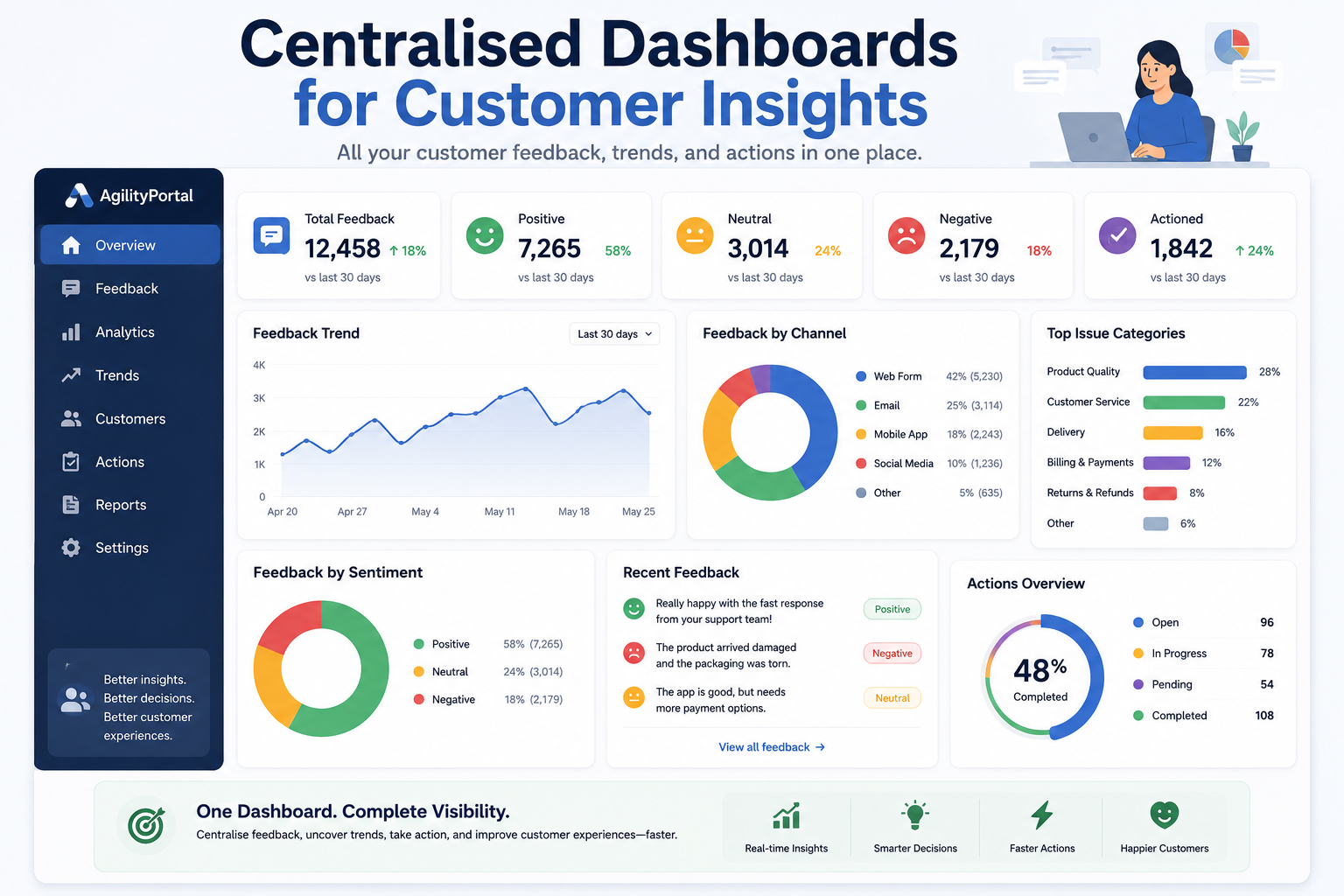
Centralised Dashboards for Customer Insights
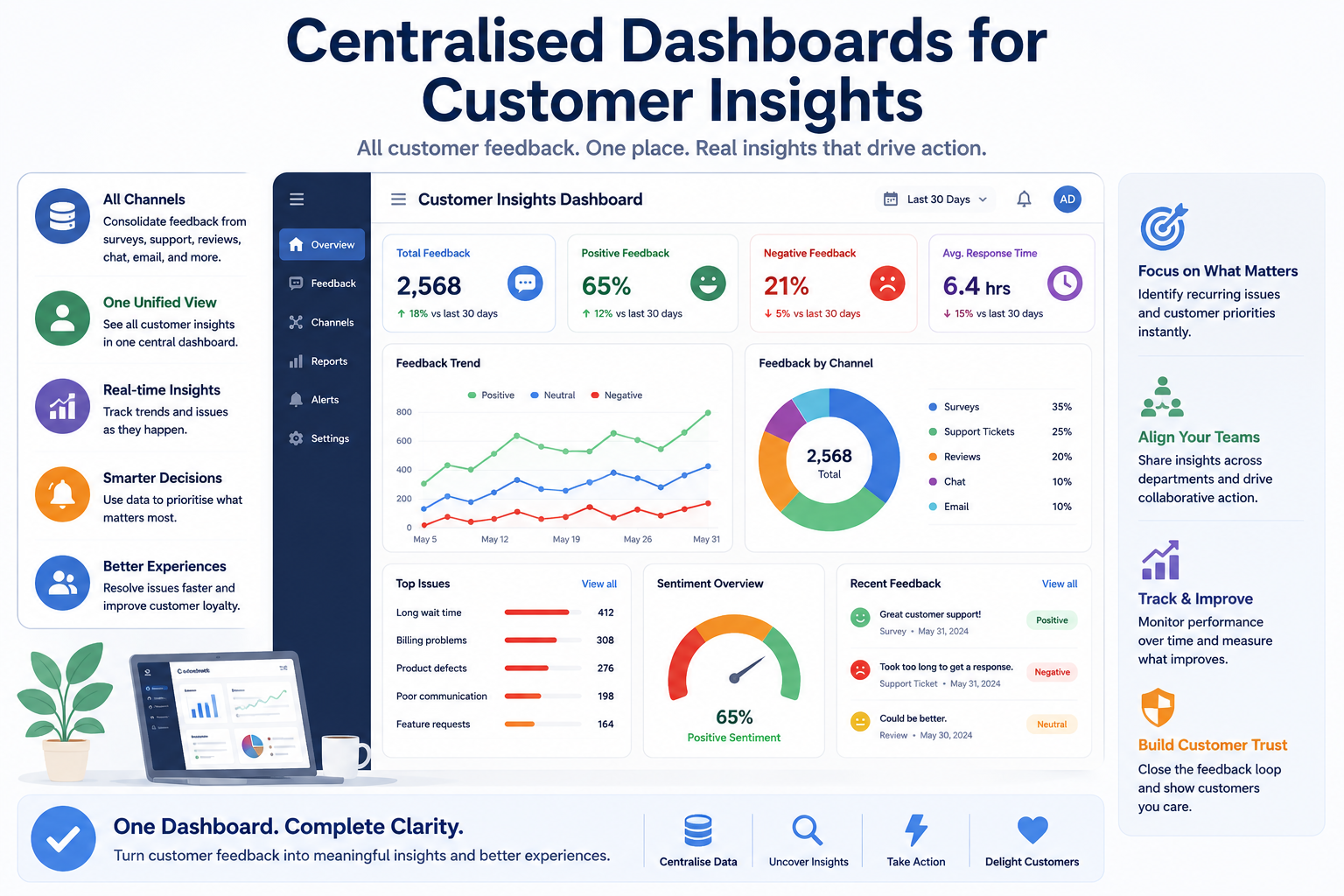
Centralised Dashboards for Customer Insights
A modern customer feedback platform should provide a single place where teams can view customer concerns, satisfaction trends, feature requests, and operational issues together.
Many organisations struggle because customer information is spread across support systems, surveys, CRM platforms, and review websites, making it difficult to identify larger patterns affecting customer experience.
Centralised dashboards help businesses organise customer insights into one shared environment where leadership, support, operations, and product teams can access the same information.
This improves visibility across departments while helping businesses identify recurring problems faster.
For example, if customers repeatedly report onboarding difficulties through different channels, teams can immediately recognise the trend and prioritise improvements before customer frustration increases further.
Automated Routing and Escalation Workflows
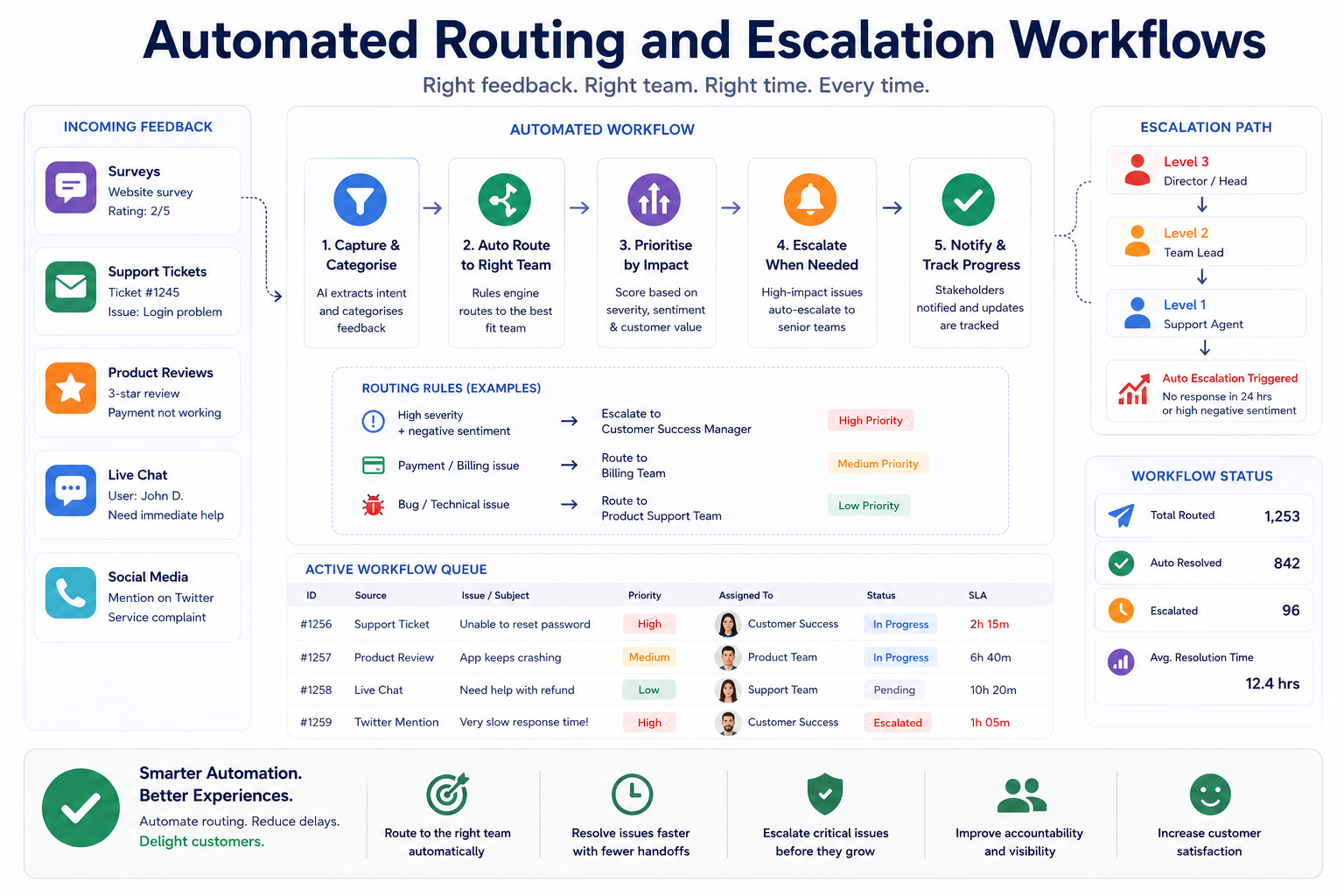
Automated Routing and Escalation Workflows
Customer feedback tools should automatically direct issues to the correct teams instead of relying on manual communication between departments. Without automation, customer concerns often remain unresolved because employees are unsure who is responsible for taking action.
Automated routing workflows help businesses categorise feedback based on urgency, department, or issue type.
For example, billing complaints can be escalated directly to finance teams, while technical problems are automatically assigned to engineering or support specialists.
Escalation workflows also ensure serious customer issues receive immediate attention before they negatively affect retention or reputation.
This reduces delays, improves accountability, and allows businesses to respond to customer concerns far more efficiently.
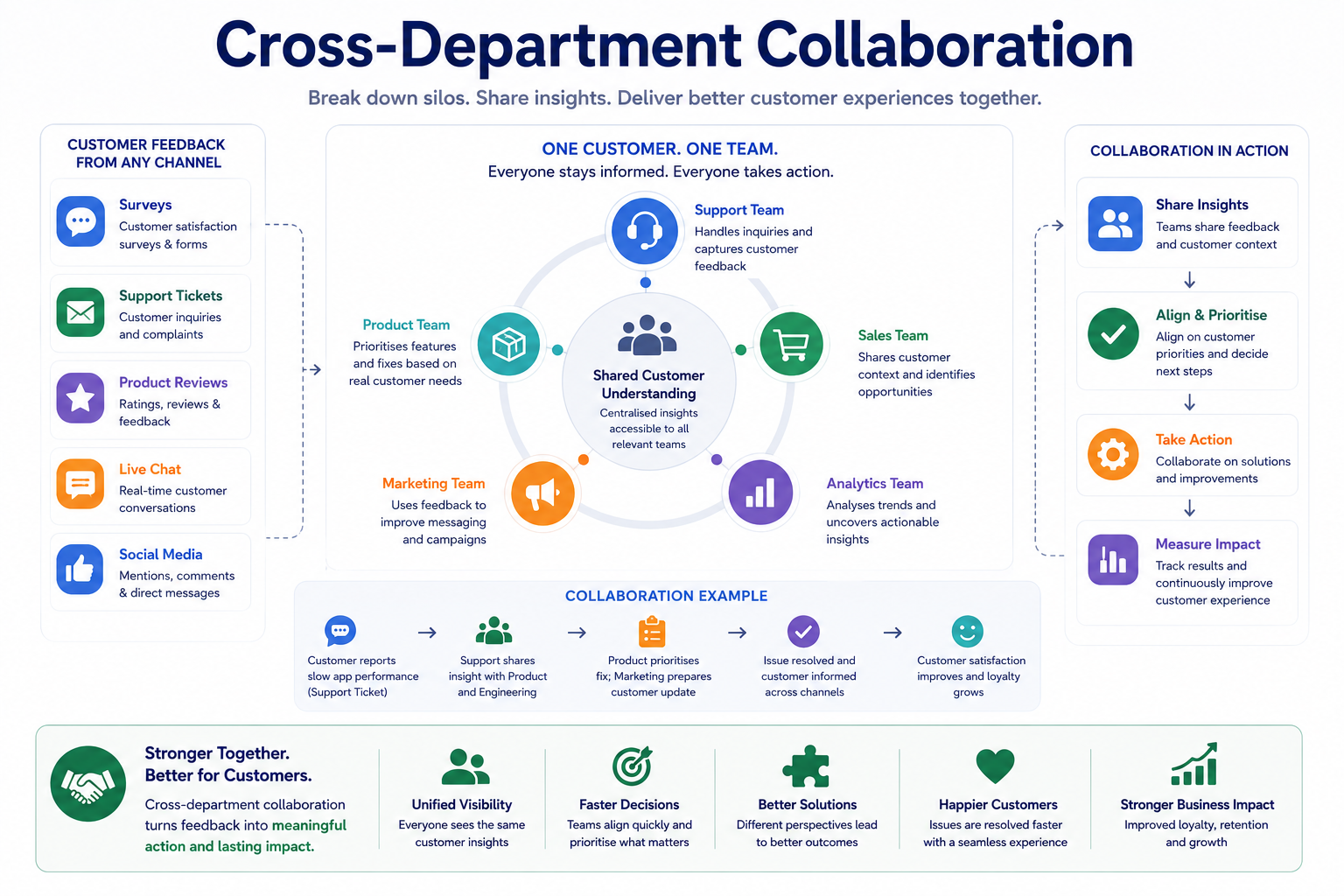
Cross-Department Collaboration
Cross-Department Collaboration
Customer feedback should never remain isolated within support departments alone.
The most successful businesses treat customer experience as a company-wide responsibility involving operations, leadership, product development, sales, and customer service teams.
Modern feedback systems should encourage collaboration by allowing departments to share insights, comment on customer issues, assign tasks, and track progress together.
For example, if customers consistently complain about complicated onboarding processes, product managers, UX designers, and customer success teams should all be able to collaborate around the same issue inside a shared workflow.
Cross-department collaboration helps businesses eliminate communication silos while improving visibility into operational problems affecting customers across the organisation.
Real-Time Notifications for Urgent Customer Issues
Real-Time Notifications for Urgent Customer Issues
Many businesses lose customers because important feedback is discovered too late.
Real-time notifications help organisations respond quickly when urgent issues arise, especially during outages, service failures, or major customer complaints.
Instead of waiting for weekly reports or manually reviewing dashboards, businesses can receive instant alerts whenever customer sentiment changes significantly or critical issues are detected.
For example, if multiple customers suddenly report payment processing failures, support and operations teams can immediately investigate the issue before it escalates further.
Real-time visibility allows businesses to act proactively rather than reactively, reducing operational disruption and improving overall customer trust.
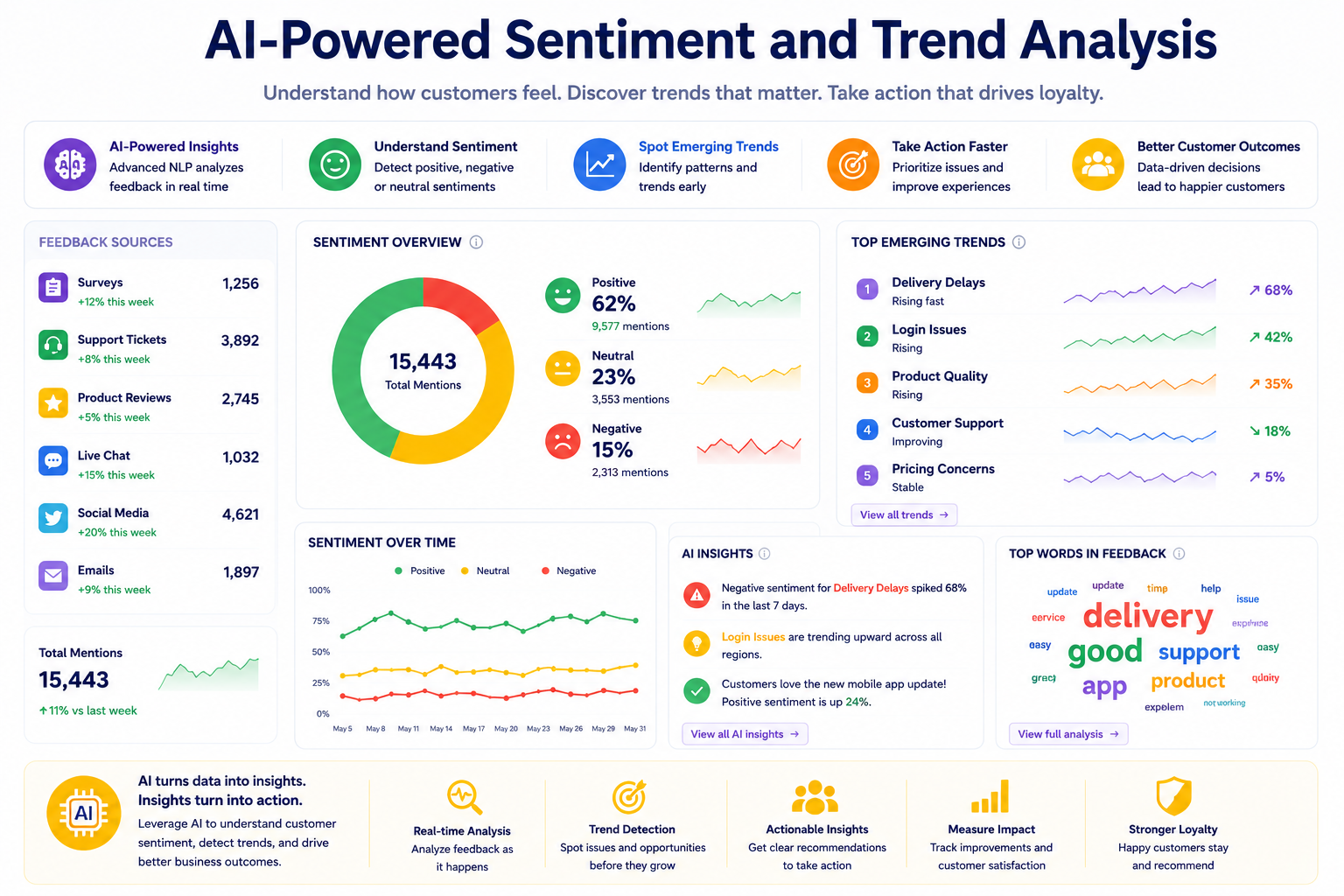
AI-Powered Sentiment and Trend Analysis
AI-Powered Sentiment and Trend Analysis
Modern customer feedback tools increasingly use artificial intelligence to analyse customer conversations, reviews, and survey responses at scale.
AI-powered sentiment analysis helps businesses understand how customers feel by identifying emotional tone, recurring frustrations, and behavioural trends across thousands of interactions.
Instead of manually reviewing large volumes of customer feedback, AI systems can automatically identify negative sentiment patterns, highlight urgent complaints, and uncover emerging operational problems.
For example, businesses may discover that customers consistently express frustration around onboarding, response times, or product usability long before satisfaction scores begin declining significantly.
AI-driven trend analysis helps organisations make faster decisions, improve prioritisation, and identify customer experience risks before they become larger operational challenges.
The Role of Employee Communication in Closing the Feedback Gap
Many businesses focus heavily on collecting customer feedback but overlook one critical factor that directly impacts customer experience: internal communication.
Even the best customer feedback strategy will fail if employees cannot collaborate, share insights, or respond to issues efficiently across departments.
Strong employee communication systems help businesses turn customer insight into faster decisions, better service delivery, and measurable operational improvements.
Why Internal Communication Affects Customer Experience
Customer experience is directly influenced by how well employees communicate internally.
When teams have access to clear information, operational updates, and customer feedback insights, they can respond faster and provide more consistent support.
Poor communication often creates delays, confusion, and inconsistent customer experiences that damage trust and satisfaction.
Many organisations using disconnected communication channels struggle because employees cannot easily share updates, escalate problems, or collaborate around customer concerns.
This is why businesses increasingly invest in employee communication software, digital workplace platforms, and internal communication tools to improve customer-facing operations.
Strong internal communication helps businesses:
- Improve response times to customer issues
- Reduce operational confusion between departments
- Increase visibility into customer pain points
- Improve collaboration across support and product teams
- Deliver more consistent customer experiences
How Siloed Teams Delay Issue Resolution
One of the biggest operational challenges inside growing businesses is departmental silos.
When support teams, operations, sales, and product departments work separately, customer issues take significantly longer to resolve. Information becomes trapped inside isolated systems, causing delays and poor accountability.
For example, support teams may identify recurring complaints about onboarding or billing problems, but without proper collaboration tools, those insights may never reach the teams responsible for fixing the issue.
This creates frustration for both employees and customers.
Businesses that rely on disconnected systems often experience:
- Delayed customer issue escalation
- Duplicate work across departments
- Poor visibility into recurring operational problems
- Slower decision-making processes
- Communication breakdowns between teams
Modern team collaboration software and employee engagement platforms help businesses break down silos by centralising communication, task management, and customer insights into one connected environment.
Why Frontline Employees Need Better Visibility Into Customer Feedback
Frontline employees often interact with customers more than anyone else inside the organisation.
Customer support teams, onboarding specialists, sales representatives, and account managers hear customer frustrations, complaints, and improvement suggestions every day. However, many businesses fail to provide these employees with enough visibility into wider customer feedback trends.
Without access to shared customer insight data, frontline employees struggle to understand larger operational problems affecting customers across the business.
This limits their ability to provide proactive support or identify recurring issues early.
Companies using modern employee experience platforms and customer feedback management tools improve visibility by giving frontline teams access to customer conversations, operational updates, and feedback trends in real time.
Better visibility allows frontline employees to:
- Respond more confidently to customer concerns
- Identify recurring issues faster
- Escalate urgent problems more effectively
- Deliver more personalised customer experiences
- Improve communication between customers and internal teams
The Connection Between Collaboration and Customer Satisfaction
Customer satisfaction improves significantly when employees can collaborate efficiently across departments. Businesses that centralise communication, workflows, and customer insights often resolve issues faster while creating more consistent customer experiences.
For example, if customer complaints about delivery delays are shared instantly between logistics, customer support, and operations teams, businesses can coordinate responses quickly and reduce customer frustration before problems escalate further.
Strong collaboration supported by workplace collaboration tools, business communication platforms, and employee collaboration software helps organisations improve both operational efficiency and customer loyalty.
Businesses with strong collaboration processes typically experience:
- Faster customer issue resolution
- Improved customer retention rates
- Better employee productivity and accountability
- Increased operational transparency
- Higher customer satisfaction and trust
The most successful organisations understand that customer experience is not only shaped by customer-facing teams.
It is heavily influenced by how effectively employees communicate, collaborate, and share information internally across the entire business.
What To Look For In Modern Customer Feedback Tools
Choosing the right customer feedback platform is no longer just about collecting survey responses or measuring customer satisfaction scores.
Modern businesses need connected systems that help teams collaborate, automate workflows, and turn customer insights into measurable business improvements.
The best customer feedback tools help organisations improve operational efficiency while creating faster and more proactive customer experience processes.
Workflow Automation
Modern customer feedback software should automate repetitive processes so teams can respond to customer concerns faster without relying on manual follow-ups, spreadsheets, or disconnected communication between departments.
- Strong workflow automation allows businesses to automatically categorise customer complaints, assign ownership to the correct department, escalate urgent issues, trigger follow-up notifications, and track resolution progress without employees manually managing every step of the process.
- Businesses using automated customer experience management software can significantly reduce delays caused by disconnected workflows while improving accountability across customer support, operations, and product teams.
- Automated workflows also help organisations prioritise high-impact customer issues faster by identifying recurring complaints, operational bottlenecks, and negative sentiment trends before they affect retention or brand reputation.
Integrated Communication Features
Modern feedback systems should include integrated communication tools that allow departments to collaborate around customer issues instead of relying on separate chat platforms, emails, or disconnected project management systems.
- Businesses using integrated employee communication platforms and customer engagement tools can centralise conversations, feedback updates, customer escalations, and internal collaboration into one shared environment that improves visibility across the organisation.
- Integrated communication features help support teams, leadership, operations, and product managers work together more efficiently when resolving customer complaints, tracking feature requests, or managing operational issues affecting customer experience.
- Centralised communication also reduces the risk of information becoming trapped inside isolated departments where customer concerns may go unresolved for long periods of time.
Customer Feedback Analytics Dashboards
A strong feedback platform should provide real-time dashboards that help businesses analyse customer behaviour, track recurring complaints, monitor satisfaction trends, and identify operational problems before they become larger business risks.
- Advanced customer analytics software helps organisations visualise customer sentiment, support performance, onboarding challenges, product complaints, and customer satisfaction metrics through easy-to-understand reporting dashboards.
- Businesses using modern voice of customer platforms can quickly identify patterns across surveys, support tickets, reviews, and live chat conversations instead of manually reviewing large volumes of customer feedback data.
- Real-time analytics dashboards also help leadership teams make faster strategic decisions using measurable customer insight data rather than assumptions or isolated customer complaints.
Mobile Accessibility
Modern customer feedback platforms must support mobile access because employees increasingly work across remote, hybrid, and field-based environments where fast access to customer information is essential.
- Mobile-friendly customer feedback management systems allow support teams, managers, and frontline employees to review customer complaints, respond to urgent issues, approve escalations, and track operational updates directly from smartphones or tablets.
- Businesses using mobile-enabled employee experience software improve response times because teams can collaborate and manage customer issues even when working outside traditional office environments.
- Mobile accessibility also improves operational flexibility for global organisations managing customer interactions across multiple locations, time zones, and distributed teams.
Role-Based Visibility and Collaboration
Not every employee needs access to the same customer data, which is why modern feedback systems should include role-based permissions that control visibility while still encouraging collaboration across departments.
- Advanced business collaboration software allows organisations to give customer support teams, operations managers, leadership, HR departments, and product teams access to the specific customer insights relevant to their responsibilities.
- Role-based visibility improves security and operational organisation while ensuring employees can collaborate around customer issues without exposing unnecessary or sensitive business information across the organisation.
- Businesses using collaborative digital workplace solutions often improve accountability because teams clearly understand ownership, responsibilities, and workflow progress related to customer issues.
AI-Driven Insight Recommendations
Artificial intelligence is becoming one of the most valuable features inside modern customer feedback systems because it helps businesses identify trends, risks, and customer frustrations faster than manual analysis alone.
- AI-powered customer insight platforms can automatically detect negative sentiment patterns, identify recurring complaints, predict customer churn risks, and recommend operational improvements using large volumes of customer interaction data.
- Businesses using AI-driven feedback analytics tools can uncover hidden operational problems that may not appear through traditional reporting dashboards or manual survey reviews alone.
- AI recommendations also help leadership teams prioritise high-impact customer issues more effectively by identifying trends affecting customer satisfaction, employee performance, onboarding experiences, and long-term customer retention.
How AgilityPortal Helps Teams Turn Feedback Into Action
Many businesses use multiple customer feedback tools but still struggle to turn customer insights into meaningful action because communication, workflows, and operational updates remain disconnected across departments.
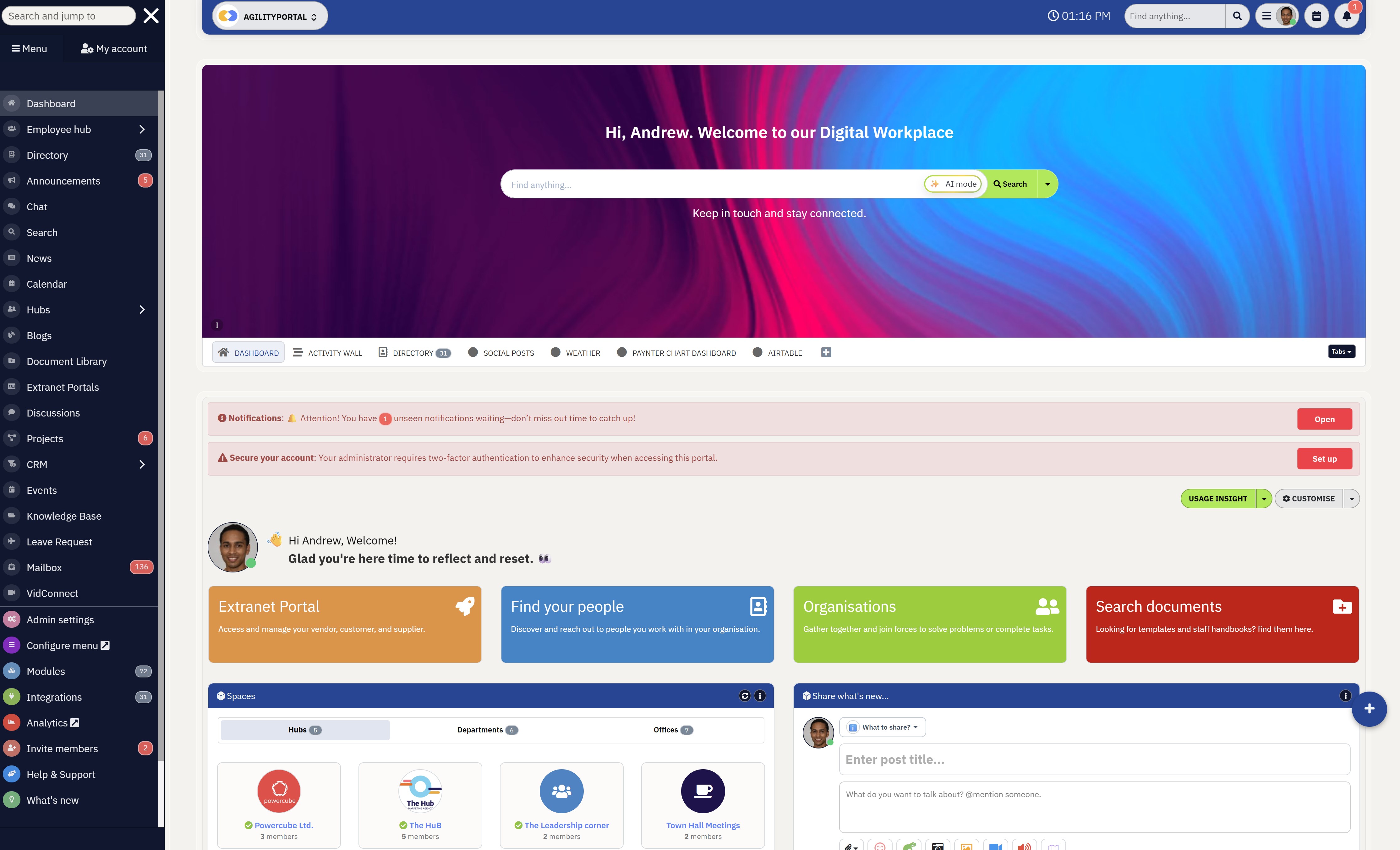
AgilityPortal helps businesses centralise collaboration, improve accountability, and create faster feedback resolution processes through one connected digital workplace platform.
- AgilityPortal centralises customer conversations, operational updates, team collaboration, workflows, and shared knowledge into one platform, helping businesses reduce communication silos while improving visibility into recurring customer issues and operational bottlenecks.
- Shared visibility across departments allows leadership teams, support staff, operations managers, and product teams to collaborate around customer insights in real time, improving accountability, faster decision-making, and issue resolution across the organisation.
- Structured workflow management helps businesses assign ownership for customer complaints, follow-up actions, onboarding tasks, and operational escalations while tracking progress through connected collaboration workflows instead of disconnected dashboards or spreadsheets.
- Connected employee communication improves operational transparency by keeping employees informed about customer concerns, company updates, departmental priorities, and workflow changes that directly impact customer experience and service delivery.
- Real-time updates and knowledge-sharing tools help teams respond faster to customer issues while centralising documentation, operational procedures, customer information, and internal resources into one accessible platform built for modern hybrid and remote teams.
Instead of adding another disconnected system to an already fragmented workflow, AgilityPortal helps businesses connect communication, collaboration, customer feedback management, and operational visibility into one modern employee communication platform designed for growing organisations.
How AgilityPortal Helps Teams Turn Feedback Into Action
AgilityPortal
Turn Customer Feedback Into Action With Connected Teams, Workflows & Communication
AgilityPortal helps businesses connect customer feedback, employee communication, team collaboration, workflows, and operational updates into one central digital workplace platform.
Instead of letting customer insights sit inside disconnected surveys, support tickets, spreadsheets, and dashboards, AgilityPortal gives teams one place to share feedback, assign ownership, track action, and close the loop faster.
Close the feedback gap
by giving support, operations, product, and leadership teams shared visibility into customer issues and follow-up actions.
Final Thoughts
Customer feedback tools are not failing because businesses lack data.
They fail because organisations struggle to operationalise customer insights across disconnected teams and workflows.
The companies that improve customer experience fastest are not necessarily collecting more feedback. They are building systems that make customer insights visible, actionable, and accountable across the entire business.
AI Summary
- Many businesses invest heavily in customer feedback tools but still fail to improve customer experience because feedback often becomes trapped inside disconnected systems and unresolved workflows.
- Modern organisations collect customer insights from surveys, support tickets, reviews, social media, live chat, and product feedback software, creating large volumes of data that teams struggle to prioritise effectively.
- Disconnected communication between customer support, operations, sales, and product teams often causes recurring customer issues to remain unresolved despite repeated complaints and feedback submissions.
- Businesses that centralise customer communication, workflow automation, collaboration, and operational visibility improve accountability and close the customer feedback loop faster.
- AI-powered sentiment analysis, customer analytics dashboards, automated routing workflows, and real-time notifications help organisations identify urgent customer issues before they damage retention or brand reputation.
- Strong customer feedback management systems improve customer satisfaction, employee collaboration, operational transparency, and long-term customer loyalty by turning customer insight into measurable business action.
Most Popular Posts

Effective communication among team members is vital for the productivity and success of any organization. Surprisingly, 60% of companies lack a long-term internal communication strategy, which p...


Businesses thrive on communication for efficiency, productivity and accomplishment. When the right information is passed from the right designation in the organization, it promotes positivity an...

Categories
Blog
(3190)
Business Management
(394)
Employee Engagement
(235)
Digital Transformation
(217)
Growth
(150)
Intranets
(141)
Internal communications
(106)
Remote Work
(68)
Sales
(53)
Collaboration
(52)
Customer Experience
(32)
Culture
(30)
Knowledge Management
(29)
Project management
(29)
Leadership
(20)
Comparisons
(9)
News
(1)

Related Posts

Welcome to AgilityPortal's guide to the best VPN for Remote teams. How do you give employees secure access to company systems when they work from home, the office and everywhere in between? It's a question more businesses need to answer: 28% of worki...

Have you ever left a meeting thinking everyone agreed on the next step, only to discover a week later that each person remembered something different? Open source meeting transcription can help teams keep a searchable record of the conversation...

The best ai image editors can save a team hours of repetitive work. A marketing manager can remove a distracting background, an HR team can improve a staff event photo, and an online shop can turn a basic product shot into something ready to pu...

Ever opened a PDF just before a meeting and realised you need to edit a page, pull figures from a scanned report, or gather everyone's comments? What should be a quick task can turn into a frustrating search for the right tool. That lost time a...

Looking for a New Job Remotely can feel like a simple next step: update your CV, turn on job alerts and start applying. In reality, the strongest remote job searches start much earlier. You need to be clear about the work you want, the kind of ...


Jill Romford
I am a digital nomad, lover of exploring new places and making friends.
I love to travel and I love the internet. I take pictures of my travels and share them on the internet using Instagram.
Traveler, entrepreneur, and community builder. I share my insights on digital marketing and social media while inspiring you to live your fullest life.
Ready to learn more? 👍
One platform to optimize, manage and track all of your teams. Your new digital workplace is a click away. 🚀
Free for 14 days, no credit card required.