
Insight Blog
Agility’s perspectives on transforming the employee's experience throughout remote transformation using connected enterprise tools.
33 minutes reading time
(6672 words)
How Frontline Employees Can Handle Difficult Conversations More Effectively

How Frontline Employees Can Handle Difficult Conversations More Effectively
Learn practical strategies frontline employees can use to manage difficult conversations, reduce conflict, improve communication, and create positive outcomes in challenging workplace situations.
How Frontline Employees Can Handle Difficult Conversations More Effectively

For frontline employees, difficult conversations are not a matter of if—they are a matter of when.
Whether dealing with frustrated customers, resolving workplace conflicts, addressing complaints, or delivering unwelcome news, frontline communication skills are tested every day.
The ability to handle these interactions professionally can significantly impact customer satisfaction, employee well-being, and overall business performance.
Research shows that workplace conflict is more common than many organizations realize. According to CPP Global, employees spend an average of 2.8 hours per week dealing with conflict, costing businesses billions in lost productivity each year.
Meanwhile, customer service studies have found that more than 50% of customers will switch to a competitor after a poor service experience, highlighting the importance of effective communication during challenging situations.
50%+
of customers
Customer service studies indicate that more than 50% of customers are willing to switch to a competitor after experiencing poor customer service, highlighting the importance of effective communication, conflict resolution, and de-escalation techniques during difficult conversations.
Source: Customer Service & Customer Experience Industry Research
The reality is that difficult conversations often become emotionally charged because people feel frustrated, unheard, stressed, or disappointed.
Without strong communication skills and emotional intelligence, these interactions can quickly escalate, leading to damaged relationships, lower morale, and negative customer experiences.
The good news is that handling difficult conversations is a skill that can be learned and improved.
By understanding how emotions influence communication and applying proven de-escalation techniques, frontline employees can turn potentially negative interactions into productive and positive outcomes.
In this guide, you'll learn why difficult conversations occur, the psychology behind emotionally charged interactions, common mistakes to avoid, and practical strategies that frontline employees can use to communicate with confidence, reduce conflict, and achieve better outcomes for everyone involved.
Key Takeaways
- Difficult conversations at work are unavoidable for frontline employees, but strong communication skills, emotional intelligence, and active listening skills can significantly improve outcomes.
- Managing difficult conversations effectively requires professional communication, emotional resilience, and the ability to remain calm during emotionally charged situations.
- Workplace conflict management and customer conflict resolution strategies help employees handle complaints, resolve disagreements, and improve customer service communication.
- Organizations that invest in employee communication training, de-escalation techniques, and conflict management strategies can reduce workplace stress and strengthen workplace communication.
- Digital workplace platforms support frontline communication by providing access to policies, training resources, collaboration tools, and information needed to navigate difficult customer conversations more effectively.
What Are Difficult Conversations in Frontline Roles?
Difficult conversations are interactions that involve disagreement, frustration, conflict, complaints, or strong emotions.
For frontline employees, these conversations are often part of daily responsibilities and can occur with customers, colleagues, suppliers, patients, students, or members of the public.
The challenge is not simply resolving the issue itself but managing emotions while maintaining professionalism and finding a positive outcome.
Frontline workers are frequently the first point of contact when something goes wrong.
As a result, they are often expected to respond calmly and professionally, even when faced with anger, disappointment, or unreasonable demands.
Strong communication skills and emotional intelligence are essential for navigating these situations effectively.

What Are Difficult Conversations in Frontline Roles
Common Examples of Difficult Conversations
- Handling Customer Complaints - Whether a customer is unhappy with a product, service, or experience, complaints can quickly become emotional. Frontline employees must listen carefully, acknowledge concerns, and work toward a solution without becoming defensive.
- Addressing Service Delays - Delays, missed deadlines, and service disruptions can create frustration and anxiety. Employees often need to explain circumstances, manage expectations, and maintain trust during these conversations.
- Managing Workplace Disagreements - Differences of opinion between colleagues can lead to tension if not handled correctly. Effective workplace communication helps prevent disagreements from escalating into larger conflicts.
- Responding to Emotional or Frustrated Individuals - People experiencing stress, disappointment, or anger may struggle to communicate clearly. Frontline employees must remain patient, empathetic, and focused on de-escalating the situation.
- Delivering Bad News - Whether communicating policy changes, service limitations, or unexpected outcomes, delivering bad news requires sensitivity, clarity, and professionalism.
Why These Conversations Feel Challenging
- Emotional Reactions - When emotions are involved, conversations can become unpredictable. People may react with anger, frustration, sadness, or anxiety, making it harder to reach a constructive resolution.
- High-Pressure Environments - Many frontline roles operate in fast-paced settings where employees must balance customer needs, performance targets, and operational demands simultaneously.
- Fear of Conflict - Not everyone feels comfortable confronting issues directly. Many employees worry about saying the wrong thing, escalating tensions, or damaging relationships.
- Lack of Communication Training - One of the biggest challenges organizations face is that employees are often expected to handle difficult conversations without formal training. Investing in de-escalation training for employees can significantly improve confidence, communication skills, and conflict resolution abilities. De-escalation training teaches staff how to recognize emotional triggers, remain calm under pressure, actively listen, and guide conversations toward positive outcomes before situations spiral out of control.
Organizations that provide communication and de-escalation training are often better equipped to reduce workplace conflict, improve customer experiences, and support employee well-being.
For frontline teams, these skills are no longer optional—they are essential for success.
Why Effective Communication Matters for Frontline Employees
Effective communication is one of the most valuable skills a frontline employee can develop.
Whether interacting with customers, clients, patients, visitors, or colleagues, the ability to communicate clearly and professionally can have a direct impact on customer satisfaction, employee engagement, workplace productivity, and business success.
Frontline employees often represent the face of an organization.
Every conversation, especially difficult conversations, can influence how people perceive a company, its services, and its reputation.
Strong communication skills help employees resolve conflicts faster, reduce misunderstandings, and create positive experiences, even during challenging situations.
Research from Gallup shows that highly engaged workplaces experience 23% higher profitability, while poor communication continues to be one of the leading causes of workplace conflict, customer dissatisfaction, and employee turnover.
This highlights why organizations increasingly invest in communication skills training and de-escalation training for employees.
23%
higher profitability
Research from Gallup shows that organizations with highly engaged employees achieve 23% higher profitability. Strong workplace communication, communication skills training, and de-escalation training for employees play a key role in improving engagement, reducing workplace conflict, and increasing customer satisfaction.
Source: Gallup Workplace Engagement Research
The Business Impact of Poor Communication
When difficult conversations are handled poorly, the consequences can affect both employees and the organization as a whole.
Miscommunication often leads to frustration, confusion, and unnecessary conflict.
Common consequences of poor workplace communication include:
- Lost customers due to negative service experiences
- Increased customer complaints and escalations
- Employee stress, anxiety, and burnout
- Reduced trust between employees and management
- Lower employee engagement and morale
- Increased workplace conflict and misunderstandings
- Damage to an organization's reputation
- Higher staff turnover and recruitment costs
For example, when a frustrated customer feels ignored or dismissed, a simple issue can quickly escalate into a formal complaint, negative review, or lost business opportunity.
Similarly, unresolved workplace conflicts can reduce team collaboration and productivity.
Benefits of Handling Difficult Conversations Effectively
The good news is that difficult conversations do not have to result in conflict.
Frontline employees who develop strong communication skills, active listening techniques, and emotional intelligence are often better equipped to create positive outcomes.
Benefits of effective communication in the workplace include:
- Stronger customer and workplace relationships
- Improved customer satisfaction and loyalty
- Faster conflict resolution
- Greater employee confidence and resilience
- Better teamwork and collaboration
- Increased trust and transparency
- Reduced workplace stress
- A more positive and supportive workplace culture
Employees who can manage emotionally charged conversations professionally are more likely to build trust, maintain positive relationships, and contribute to a healthier work environment.
Combined with communication skills development and de-escalation training for employees, these abilities help organizations create safer, more productive, and more customer-focused workplaces.
Ultimately, effective communication is not just about avoiding conflict—it's about turning difficult conversations into opportunities to strengthen relationships, solve problems, and improve experiences for everyone involved.
The Psychology Behind Emotionally Charged Conversations
Understanding the psychology behind difficult conversations can help frontline employees respond more effectively when emotions begin to rise.
Whether dealing with frustrated customers, workplace conflict, or challenging interactions, emotions often influence how people communicate and react.
By recognizing the factors that trigger emotional responses, employees can improve communication skills, reduce tension, and achieve better outcomes.

The Psychology Behind Emotionally Charged Conversations
Understanding Emotional Triggers
Emotionally charged conversations rarely happen without a reason.
Most conflicts are driven by underlying emotional triggers that influence how people think and behave.
Common emotional triggers include:
- Stress – Personal or workplace pressures can make people more sensitive and reactive.
- Frustration – Delays, mistakes, or unmet needs often lead to frustration and conflict.
- Fear – Concerns about losing control, facing consequences, or uncertainty can trigger emotional responses.
- Miscommunication – Poor communication, misunderstandings, or lack of information can quickly escalate a situation.
When frontline employees recognize these triggers early, they can use active listening and de-escalation techniques to prevent conversations from becoming confrontational.
Why People React Emotionally
People often react emotionally because they feel their concerns are not being addressed or understood.
Understanding the reasons behind these reactions can help employees approach difficult conversations with greater empathy and professionalism.
Some of the most common reasons people become emotional include:
- Feeling unheard – People want to feel listened to and understood.
- Lack of control – Situations that leave individuals feeling powerless often create frustration.
- Unmet expectations – When expectations are not met, disappointment can quickly turn into anger.
- External pressures – Financial worries, workload stress, family issues, or health concerns can affect how people respond during conversations.
Recognizing these factors can help frontline workers focus on solving the problem rather than reacting to the emotion itself.
The Importance of Emotional Intelligence
One of the most effective ways to handle difficult conversations is through emotional intelligence.
Employees with strong emotional intelligence are better equipped to manage their own emotions while understanding the emotions of others.
Key components of emotional intelligence include:
- Self-awareness – Understanding your own emotions and how they affect your behavior.
- Empathy – Recognizing and understanding the feelings of others.
- Emotional regulation – Staying calm and professional, even in stressful situations.
Organizations that provide communication skills training and de-escalation training for employees often see improvements in customer satisfaction, workplace relationships, and conflict resolution.
Emotional intelligence helps frontline employees navigate challenging conversations with confidence, build trust, and create more positive outcomes for everyone involved.
Quick Reference: Difficult Conversation Response Framework
Before diving into the detailed strategies, use this simple framework as a guide when handling difficult conversations in the workplace.
These communication techniques can help frontline employees stay calm, reduce conflict, and achieve better outcomes during emotionally charged interactions.
| Situation | What to Do | What to Avoid | Desired Outcome |
| Angry Customer | Listen actively, acknowledge concerns, remain calm | Interrupting, arguing, becoming defensive | Reduced tension and problem resolution |
| Frustrated Colleague | Ask questions, show empathy, focus on facts | Assigning blame, making assumptions | Improved teamwork and understanding |
| Customer Complaint | Gather information, explain next steps, offer solutions | Dismissing concerns or rushing the conversation | Increased customer satisfaction |
| Service Delay or Issue | Communicate clearly, set realistic expectations | Overpromising or providing inaccurate information | Maintained trust and transparency |
| Emotional Conversation | Stay professional, validate emotions, use de-escalation techniques | Matching the person's emotional intensity | Calmer and more productive discussion |
| Unreasonable Demand | Explain policies respectfully and offer alternatives | Becoming confrontational or dismissive | Professional and respectful resolution |
| Workplace Conflict | Focus on the issue, encourage collaboration | Taking sides or escalating tensions | Conflict resolution and cooperation |
| Aggressive Behaviour | Set clear boundaries and follow escalation procedures | Engaging in arguments or retaliation | Employee safety and policy compliance |
Why This Framework Works
Research shows that people are more likely to cooperate when they feel heard, respected, and understood.
By combining active listening, emotional intelligence, conflict resolution skills, and de-escalation training for employees, organizations can significantly improve workplace communication and customer interactions.
The strategies below expand on each of these principles and provide practical techniques that frontline employees can use to handle difficult conversations with confidence and professionalism.
10 Proven Strategies for Handling Difficult Conversations
Successfully managing difficult conversations requires more than patience.
Frontline employees need practical communication skills, emotional intelligence, and conflict resolution techniques to navigate challenging situations effectively.
The following strategies can help employees handle emotionally charged conversations, improve workplace communication, and create better outcomes for everyone involved.
#1. Stay Calm Under Pressure
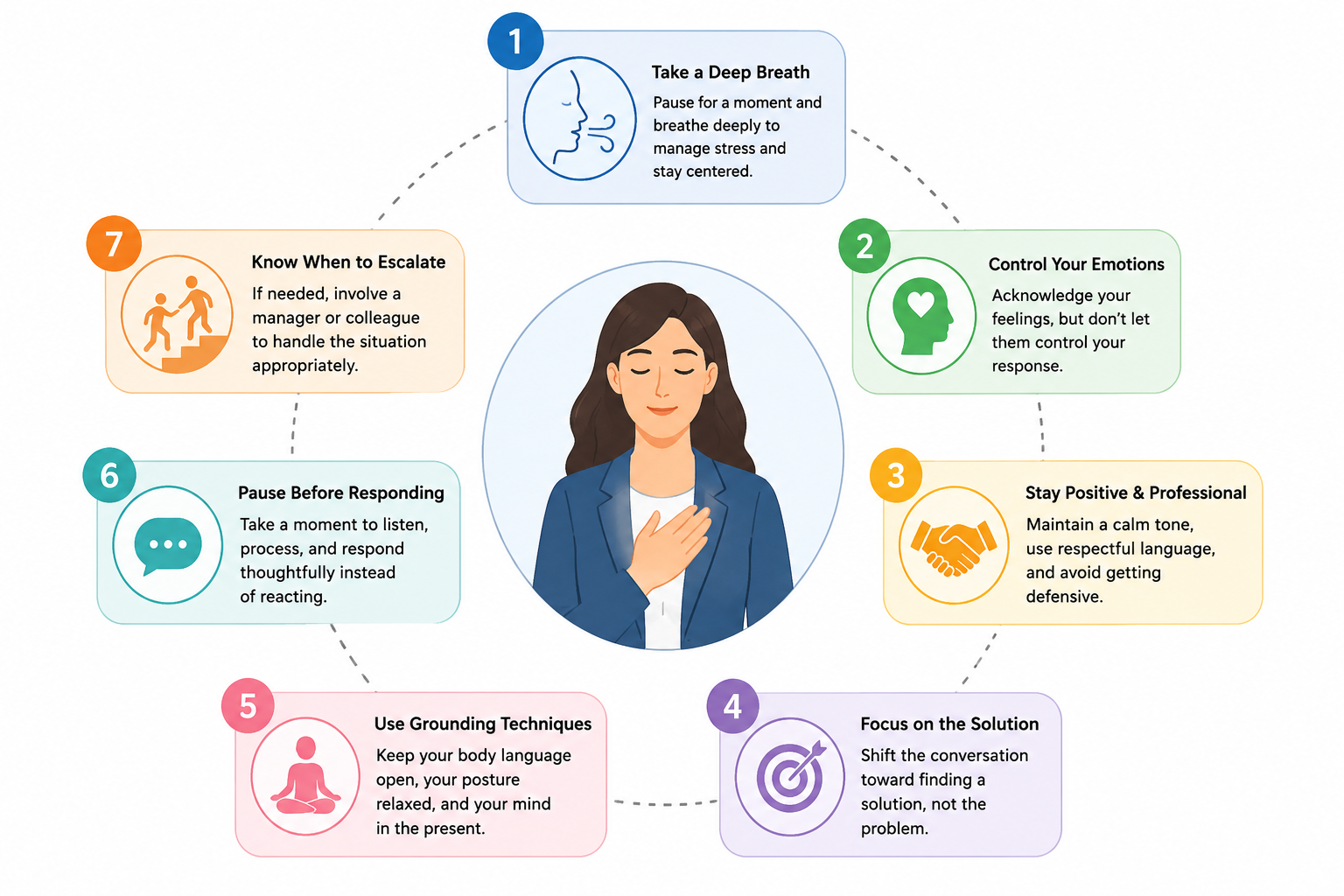
#1. Stay Calm Under Pressure
One of the most important skills during difficult conversations is remaining calm. When emotions run high, people often mirror the behavior of those around them.
By maintaining a steady tone and professional demeanor, frontline employees can help prevent situations from escalating.
Key techniques include:
- Controlling your tone of voice and body language
- Taking a moment to pause before responding
- Avoiding defensive reactions
- Remaining focused on the issue rather than the emotion
#2. Practice Active Listening
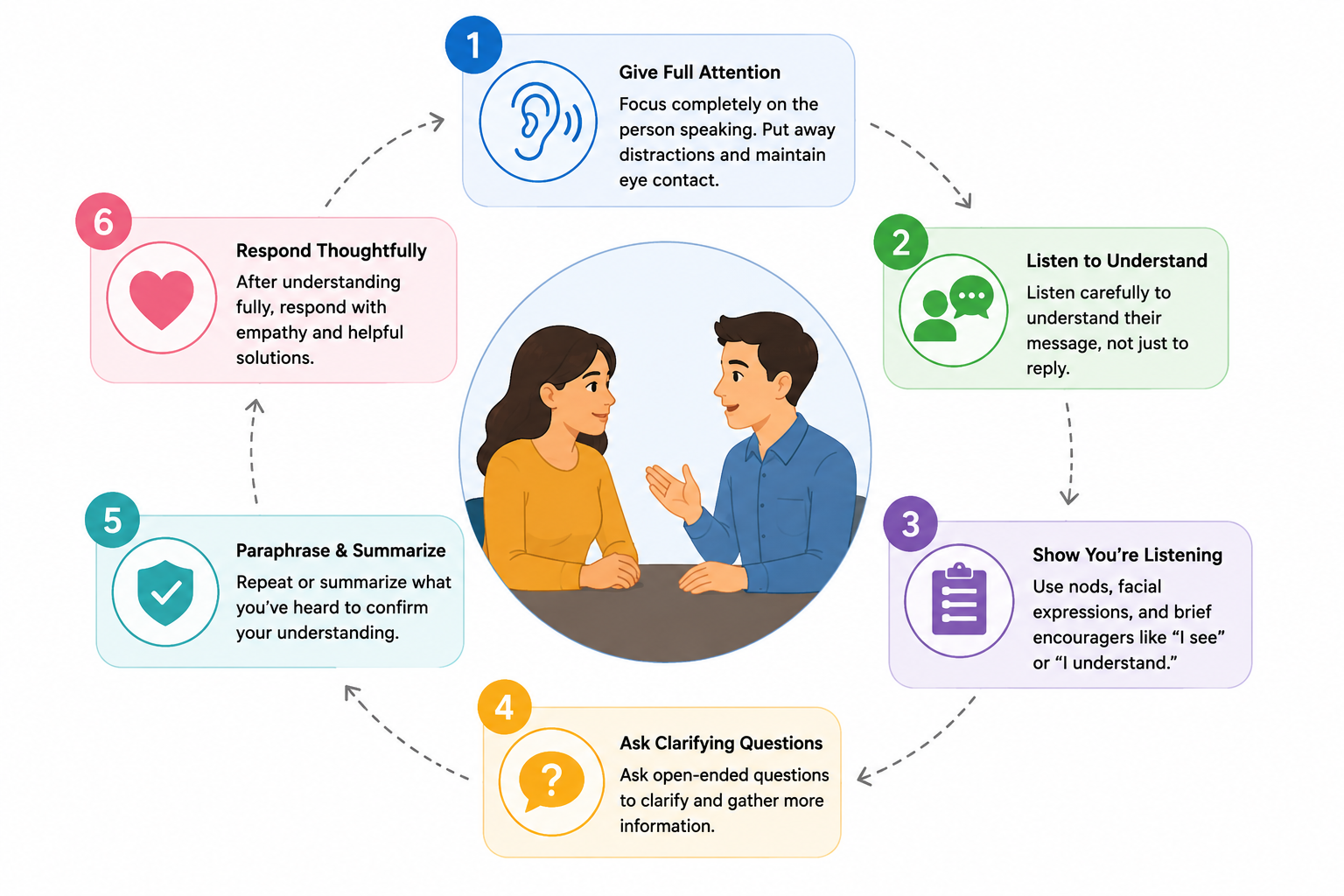
#2. Practice Active Listening
Many conflicts worsen because people feel unheard.
Active listening demonstrates respect and helps employees fully understand the concerns being raised before attempting to provide a solution.
Effective active listening involves:
- Listening to understand, not simply to respond
- Allowing the other person to speak without interruption
- Asking clarifying questions
- Showing empathy and understanding
#3. Acknowledge Emotions Before Solving Problems
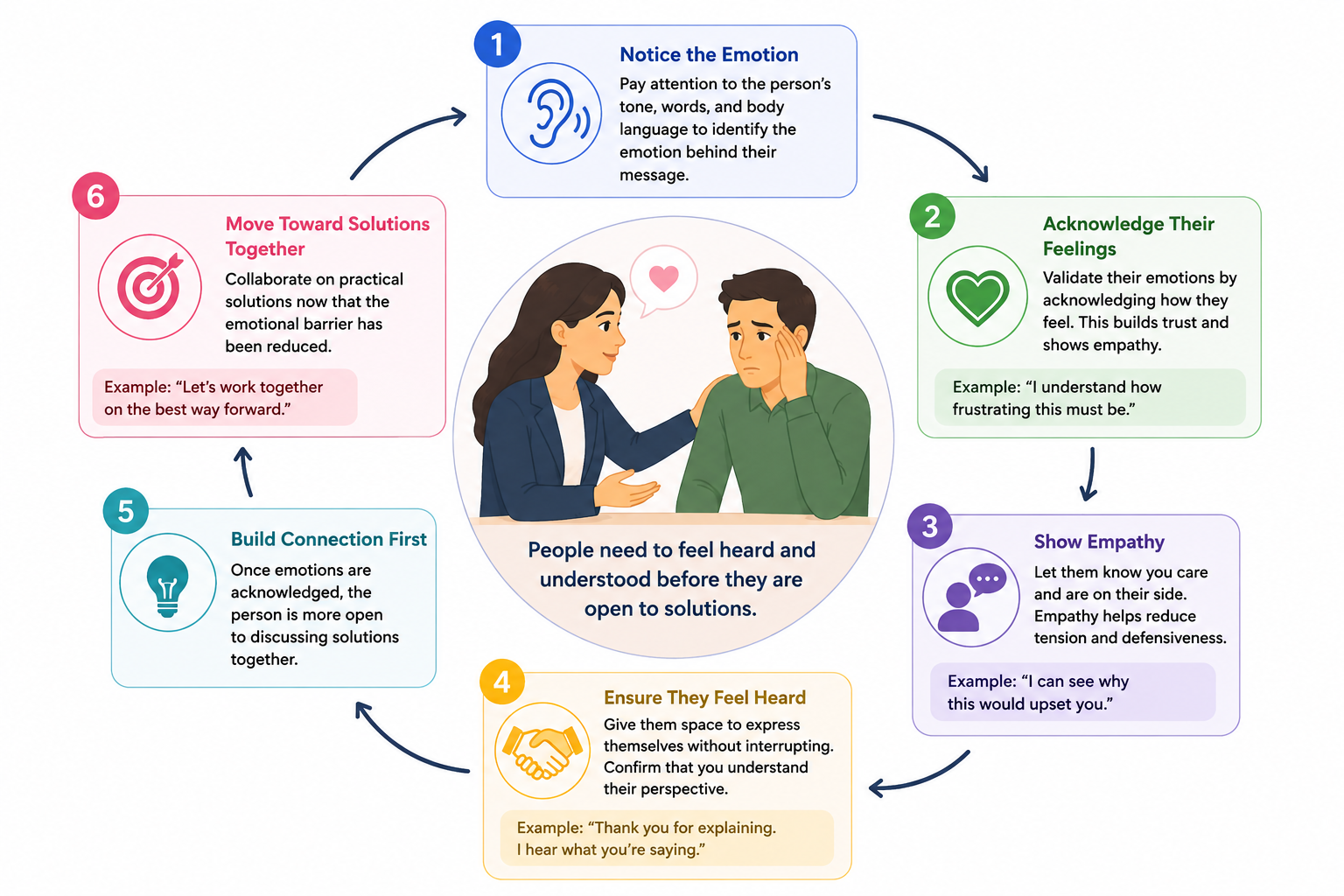
#3. Acknowledge Emotions Before Solving Problems
Before discussing solutions, it is important to recognize how the other person is feeling. Acknowledging emotions can reduce tension and help build trust.
Benefits of emotional acknowledgment include:
- Validating concerns and frustrations
- Helping individuals feel heard and respected
- Reducing defensiveness
- Creating a more constructive conversation
#4. Ask Open-Ended Questions
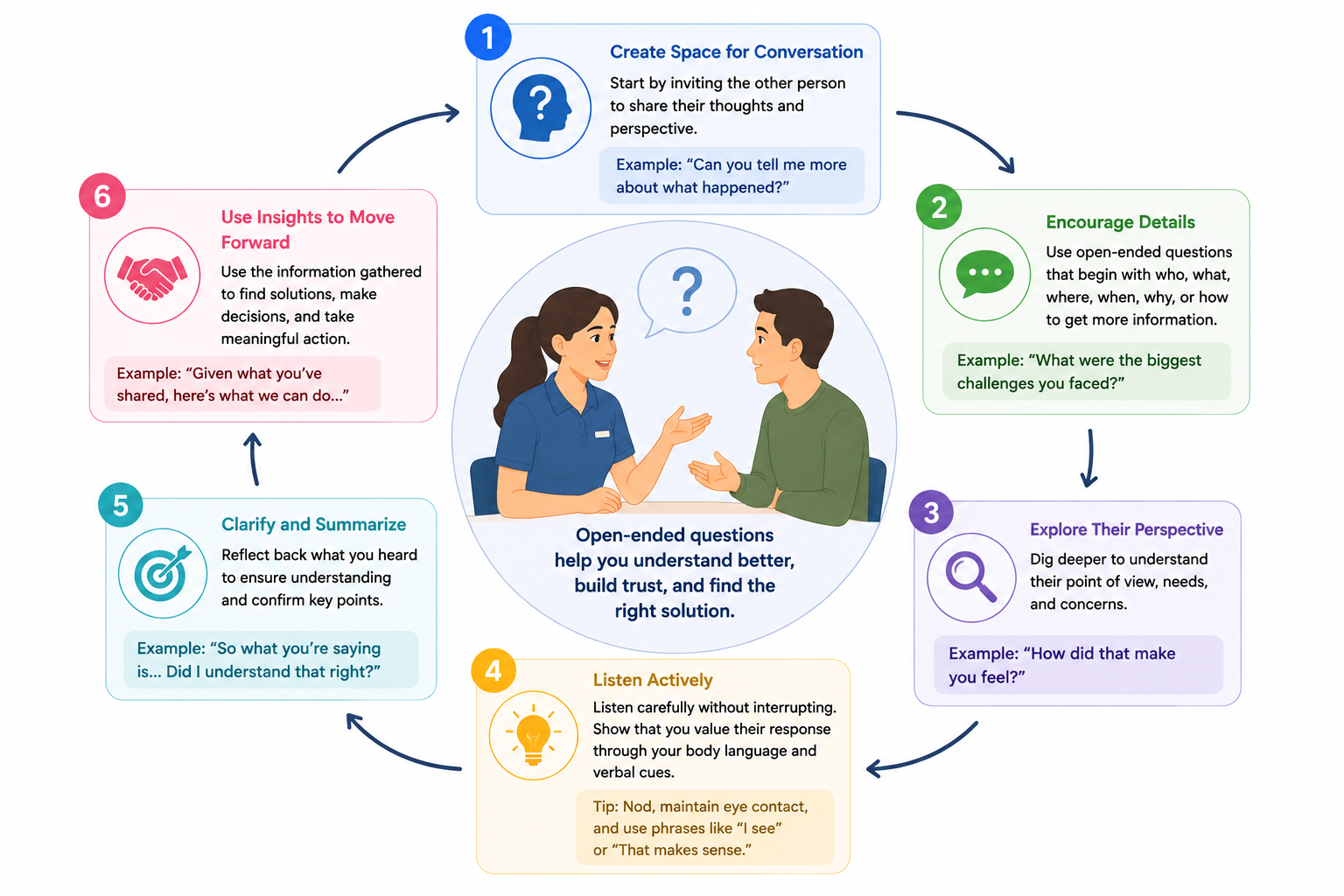
#4. Ask Open-Ended Questions
Open-ended questions encourage people to share more information and help uncover the root cause of the issue.
Examples include:
- "Can you tell me more about what happened?"
- "What would a successful outcome look like for you?"
- "How has this situation affected you?"
These questions help:
- Encourage dialogue
- Gather important information
- Promote collaboration
- Improve problem-solving
#5. Focus on Facts Rather Than Emotions
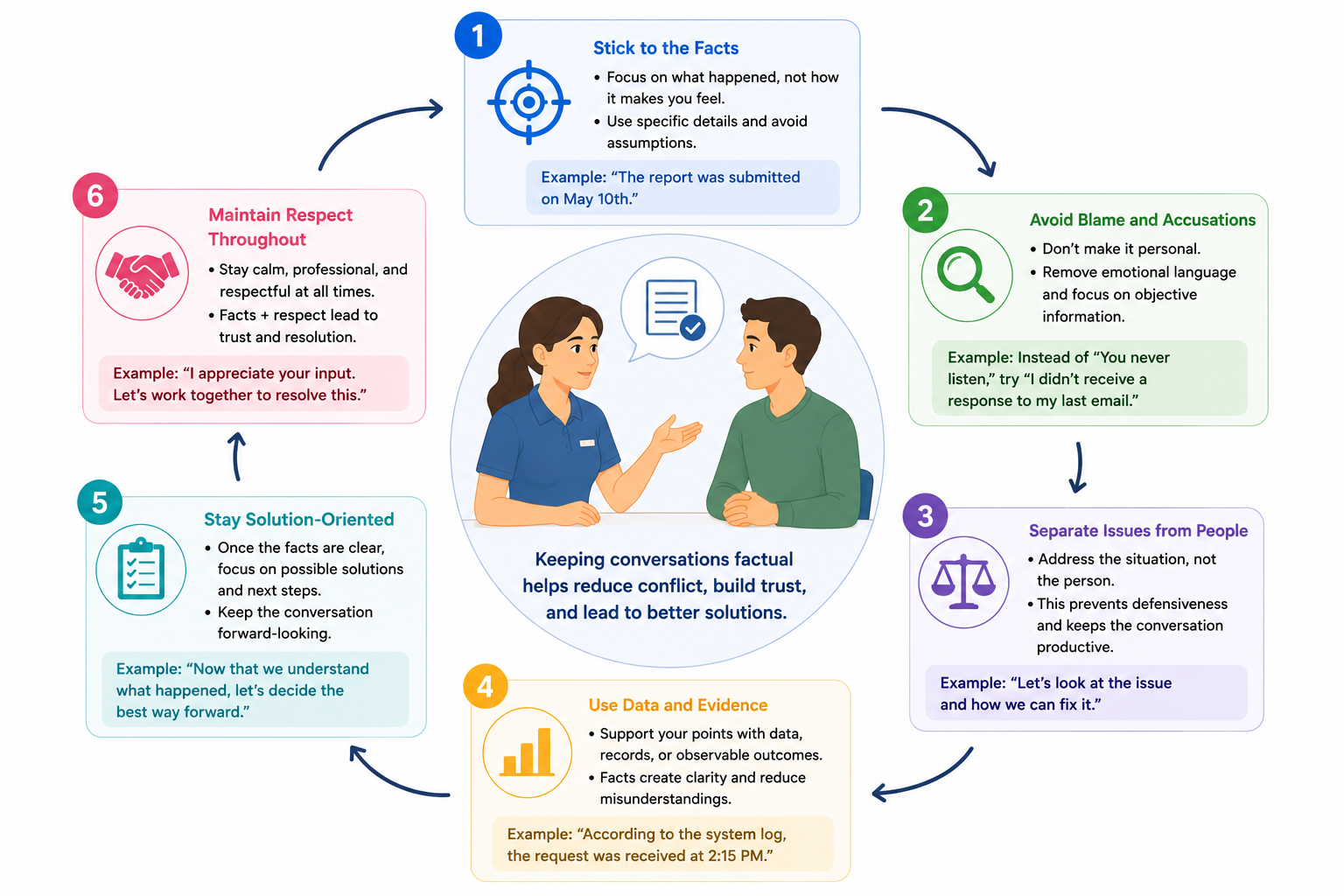
#5. Focus on Facts Rather Than Emotions
While emotions should be acknowledged, solutions are usually found by focusing on facts.
Separating feelings from facts helps keep conversations productive and objective.
Best practices include:
- Identifying the actual issue
- Avoiding assumptions
- Clarifying misunderstandings
- Using evidence and accurate information when possible
#6. Use Positive and Professional Language
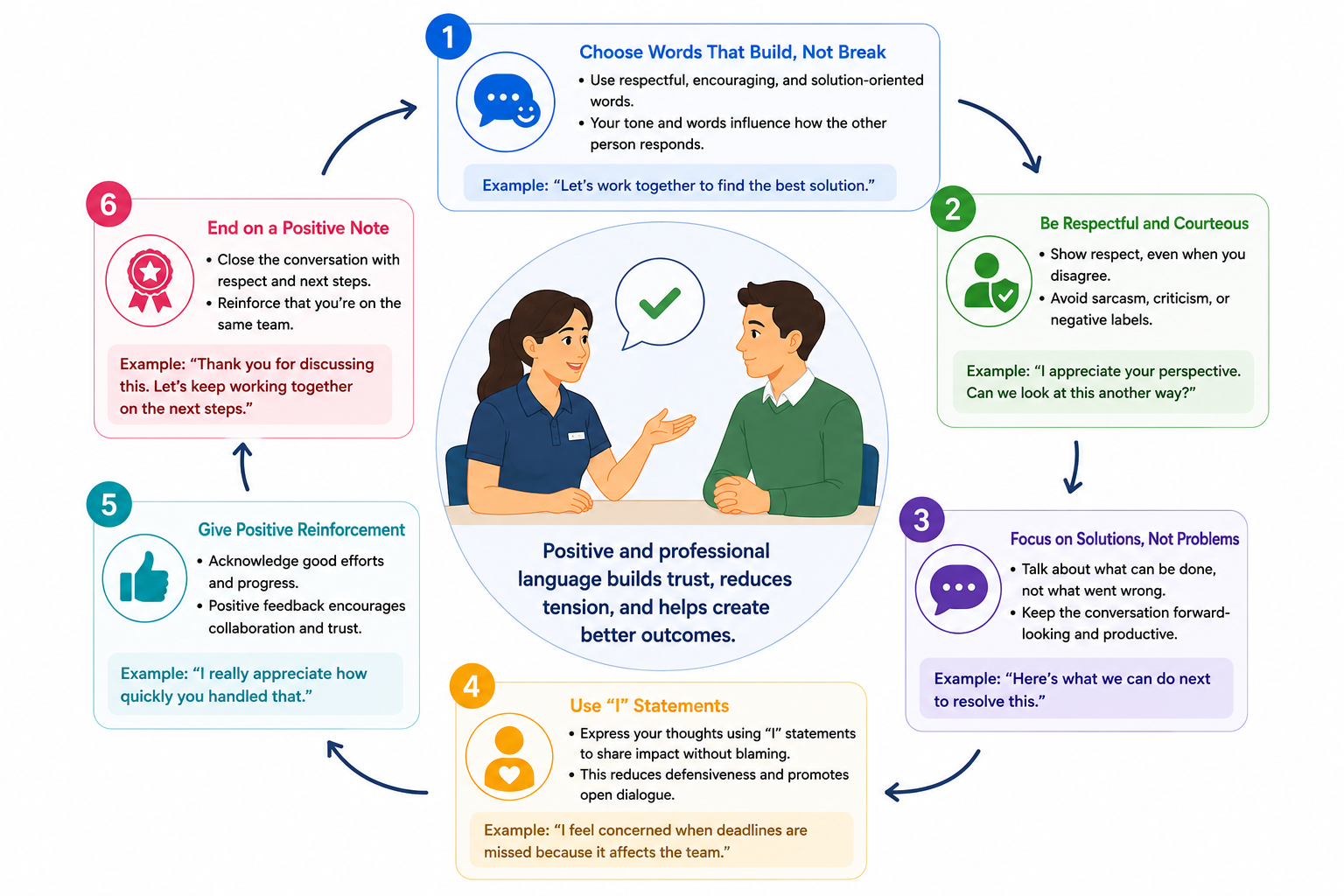
#6. Use Positive and Professional Language
The words employees choose can either calm or inflame a situation. Positive communication helps maintain professionalism and encourages cooperation.
Key communication tips:
- Use respectful language
- Avoid blame or criticism
- Focus on solutions rather than problems
- Replace negative statements with constructive alternatives
#7. De-escalate Tension Early
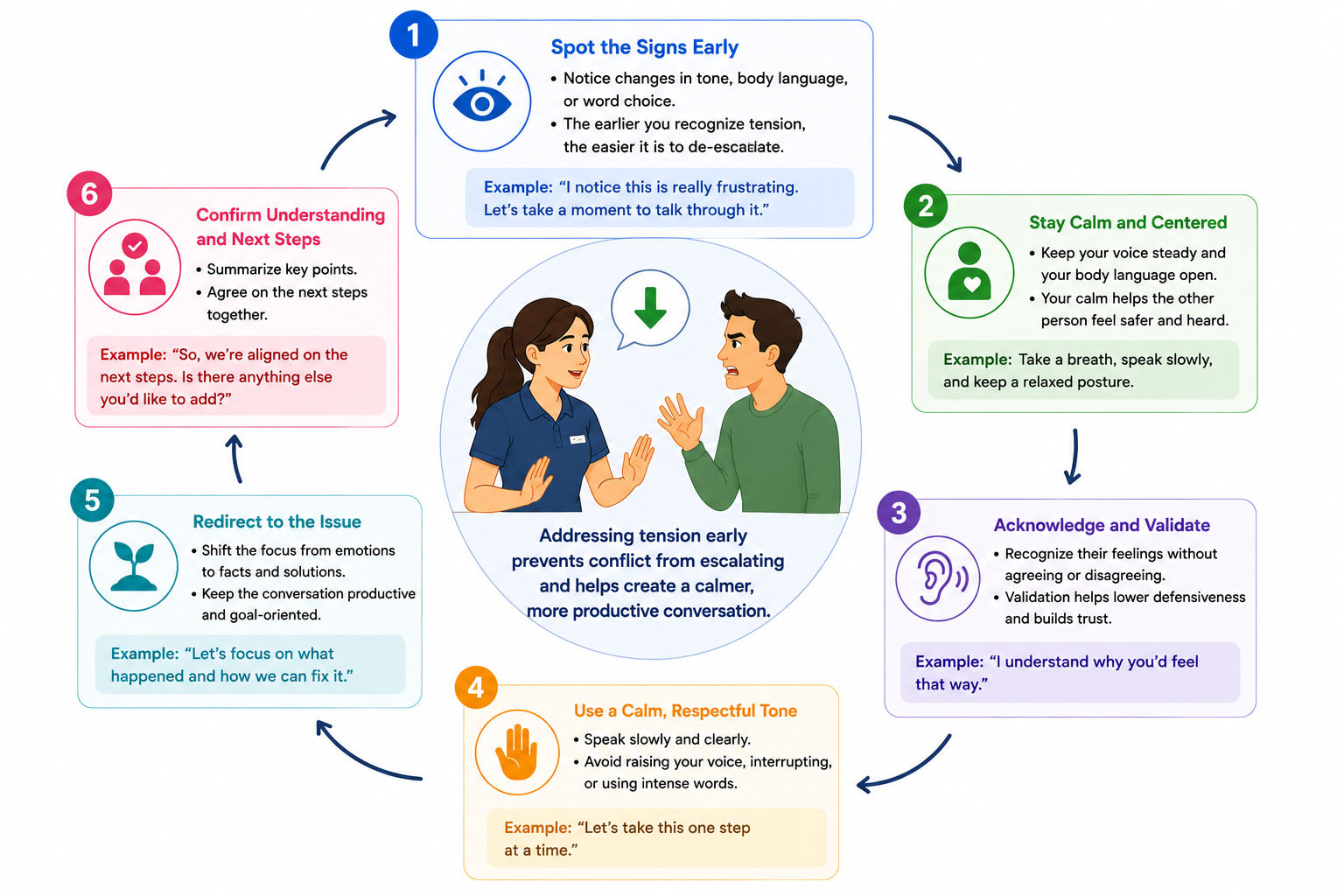
#7. De-escalate Tension Early
Early intervention is often the most effective way to prevent conflict from escalating.
Employees who receive de-escalation training for employees are better prepared to identify warning signs and respond appropriately.
Common de-escalation techniques include:
- Remaining calm and composed
- Lowering your voice rather than raising it
- Demonstrating empathy
- Keeping conversations focused on resolution
#8. Set Clear Boundaries When Necessary
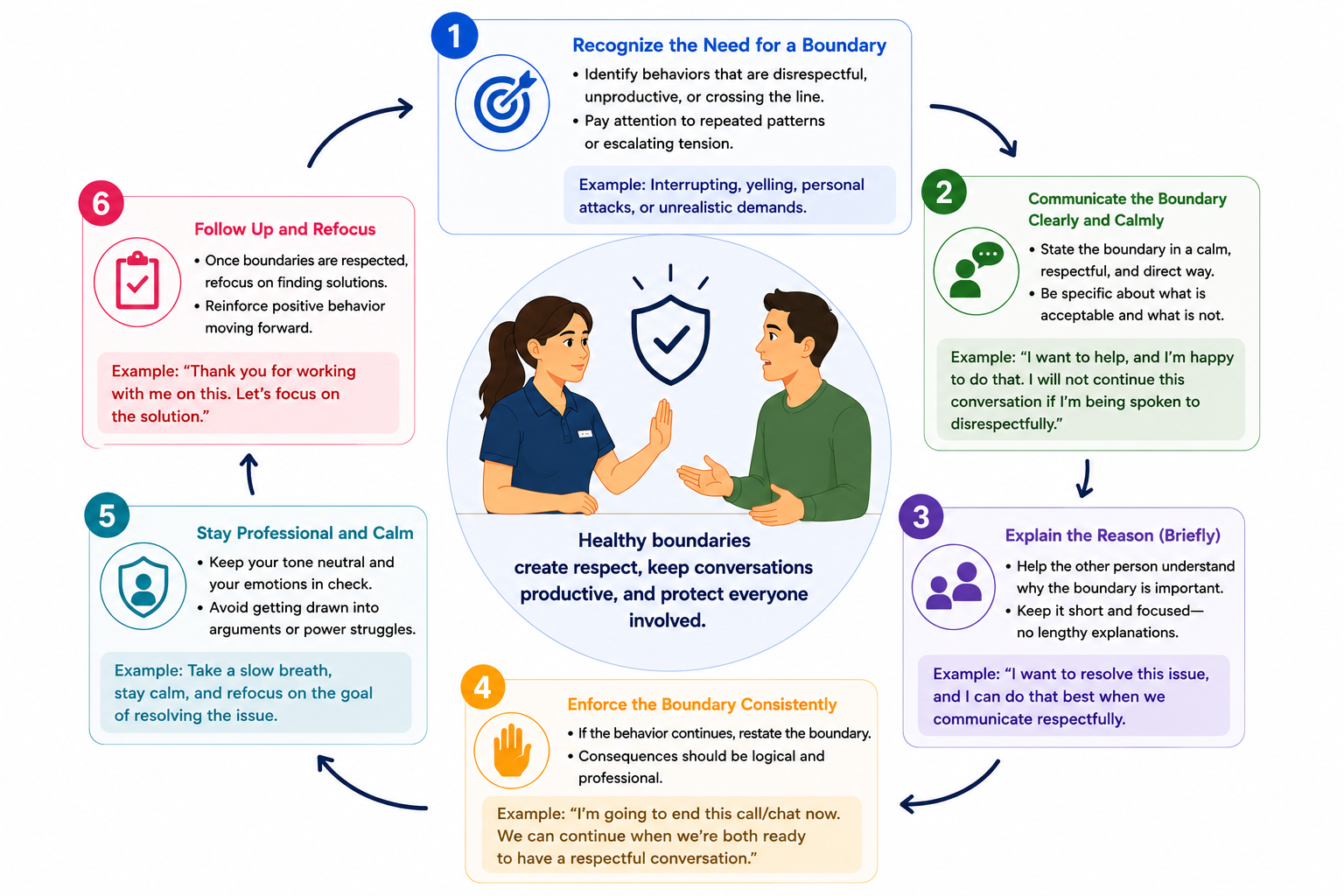
#8. Set Clear Boundaries When Necessary
While empathy is important, employees should not tolerate abusive or inappropriate behavior. Establishing clear boundaries helps maintain a safe and professional environment.
Appropriate boundaries may include:
- Addressing unacceptable language
- Redirecting conversations that become hostile
- Explaining organizational policies
- Maintaining professionalism at all times
#9. Collaborate on Solutions
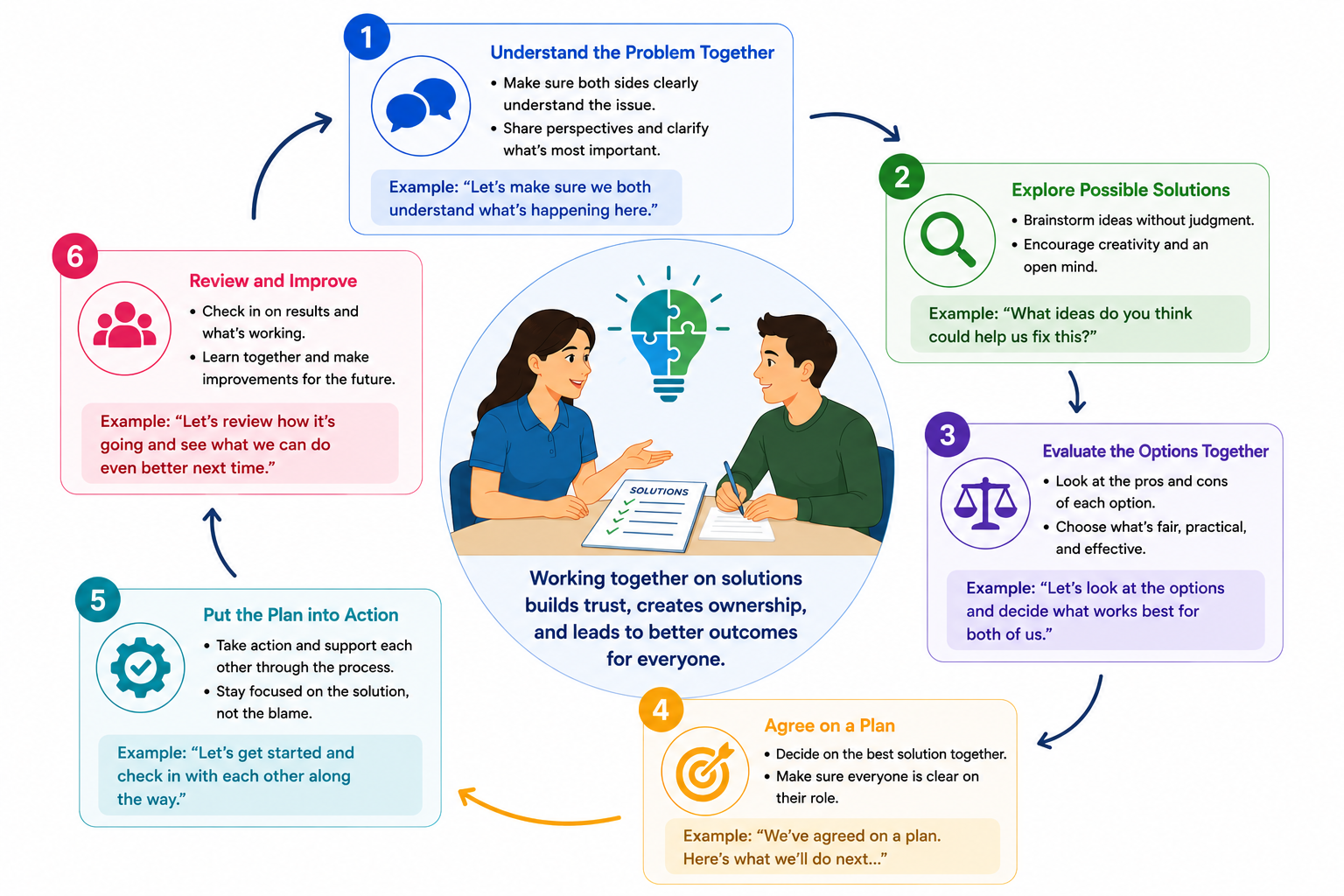
#9. Collaborate on Solutions
People are more likely to accept solutions when they are involved in creating them. Collaborative problem-solving encourages ownership and increases satisfaction.
Benefits include:
- Creating win-win outcomes
- Building trust
- Encouraging participation
- Strengthening relationships
#10. Know When to Escalate the Situation
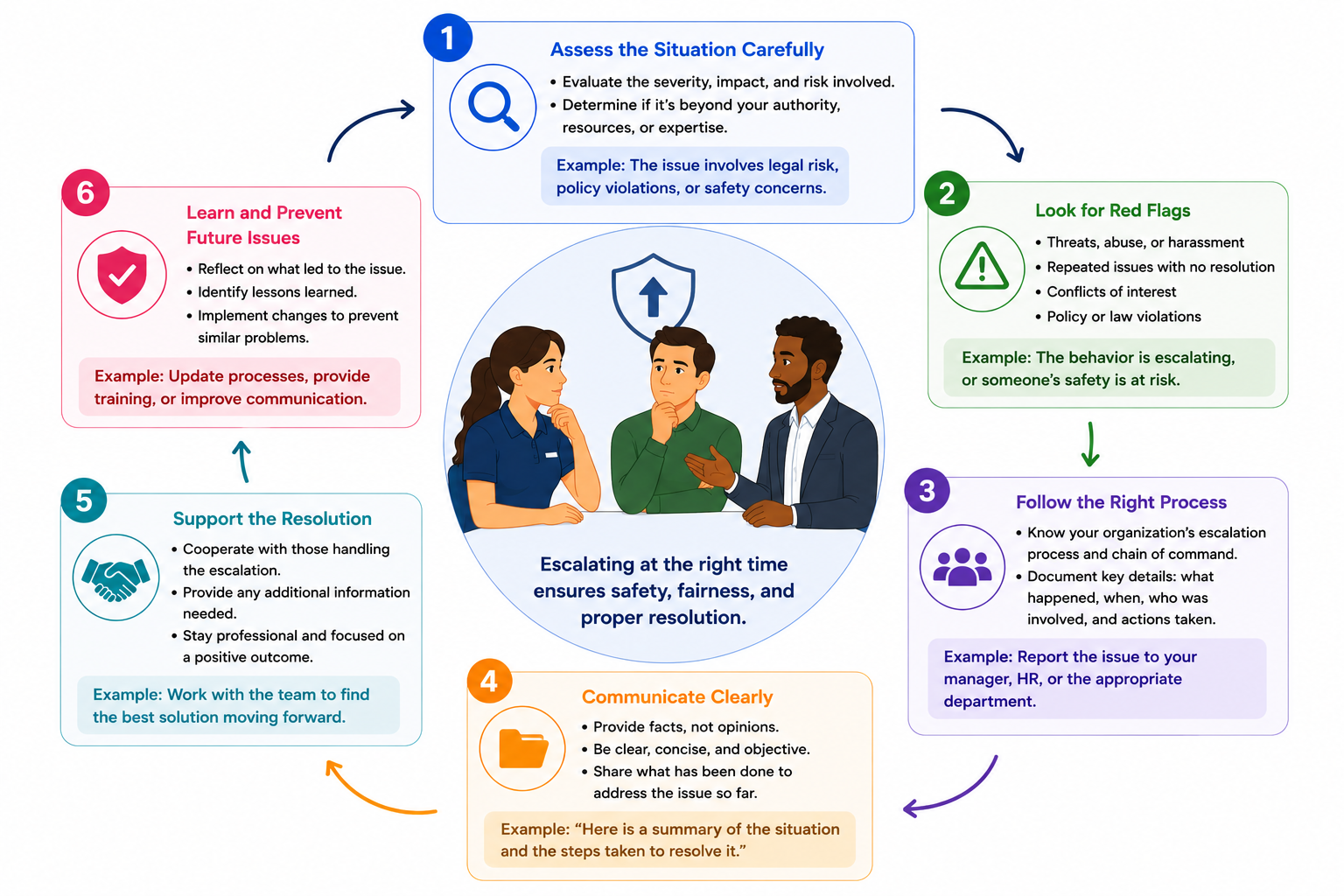
#10. Know When to Escalate the Situation
Not every difficult conversation can be resolved by a frontline employee. Recognizing when additional support is needed is a critical communication skill.
Situations that may require escalation include:
- Safety concerns
- Threatening or abusive behavior
- Policy violations
- Legal or compliance issues
- Situations requiring manager involvement
Knowing when to seek assistance helps protect employees, customers, and the organization while ensuring issues are resolved appropriately.
5 Common Mistakes Frontline Employees Should Avoid
Even experienced frontline employees can make mistakes during difficult conversations. When emotions are running high, it is easy to react instinctively rather than strategically.
Unfortunately, small communication errors can quickly escalate workplace conflict, damage customer relationships, and make problem-solving more difficult.
Understanding the most common mistakes can help employees improve their communication skills, apply effective conflict resolution techniques, and handle emotionally charged conversations more professionally.
#1. Interrupting the Other Person
One of the fastest ways to escalate a difficult conversation is to interrupt someone before they have finished speaking. When people feel interrupted, they often believe their concerns are being ignored or dismissed.
Avoid:
- Talking over the other person
- Finishing their sentences
- Assuming you already know the problem
Instead:
- Practice active listening
- Allow the person to explain their concerns fully
- Ask clarifying questions before responding
#2. Taking Criticism Personally
Not every complaint or criticism is a personal attack. In many cases, individuals are frustrated with a situation rather than the employee helping them.
Taking criticism personally can cause employees to become defensive and lose focus on resolving the issue.
Avoid:
- Reacting emotionally
- Becoming argumentative
- Focusing on defending yourself
Instead:
- Stay calm and professional
- Focus on the facts
- Look for opportunities to solve the problem
#3. Making Promises That Cannot Be Kept
Employees sometimes make unrealistic promises in an effort to calm a difficult situation. While this may provide temporary relief, broken promises often create even greater frustration later.
Avoid:
- Overpromising outcomes
- Providing inaccurate timelines
- Agreeing to actions outside your authority
Instead:
- Be honest and transparent
- Set realistic expectations
- Clearly explain what can and cannot be done
#4. Becoming Defensive
Defensive behavior can make people feel unheard and increase tension. Even when criticism feels unfair, responding defensively rarely improves the situation.
Signs of defensiveness include:
- Making excuses
- Blaming others
- Arguing about details
- Refusing to acknowledge concerns
Instead:
- Listen carefully
- Show empathy
- Focus on finding a resolution rather than assigning blame
#5. Ignoring Emotional Signals
People often communicate emotions through their tone of voice, facial expressions, and body language. Ignoring these signals can cause conversations to escalate unnecessarily.
Common emotional signals include:
- Raised voices
- Frustration or impatience
- Withdrawal or silence
- Visible stress or anxiety
Instead:
- Acknowledge emotions respectfully
- Use empathy and emotional intelligence
- Apply de-escalation techniques when necessary
Organizations that invest in communication skills development and de-escalation training for employees help frontline teams recognize these mistakes and respond more effectively.
By avoiding these common pitfalls, employees can improve workplace communication, strengthen relationships, and achieve better outcomes during difficult conversations.
Difficult Conversation Scenarios and How to Respond
Knowing the theory behind difficult conversations is important, but applying those communication skills in real-world situations is where frontline employees often face the biggest challenges.
Whether dealing with an angry customer, a frustrated colleague, or an unreasonable request, the ability to respond professionally can significantly improve conflict resolution, customer satisfaction, and workplace communication.
The following examples demonstrate how frontline employees can use active listening, emotional intelligence, and de-escalation techniques to handle difficult conversations more effectively.

Difficult Conversation Scenarios and How to Respond
Scenario 1: An Angry Customer
Angry customers are often frustrated because their expectations have not been met. In many cases, they simply want to feel heard and understood before discussing solutions.
Example Conversation
Customer:
"I've been waiting for two weeks for this issue to be fixed. Nobody seems to care about helping me!"
Poor Response:
"There's nothing I can do about that. You'll have to wait."
Recommended Response:
"I understand why you're frustrated, and I appreciate you bringing this to my attention. Let me review the issue and see what options are available to help resolve this for you."
Best Practices for Handling Angry Customers
- Stay calm and professional
- Listen without interrupting
- Acknowledge the customer's frustration
- Avoid becoming defensive
- Focus on finding a solution
- Use positive customer service communication
Using these customer conflict resolution techniques can help de-escalate tension and improve customer satisfaction.
Scenario 2: A Frustrated Team Member
Workplace conflict often occurs when employees feel unsupported, overwhelmed, or ignored. Strong workplace communication skills can prevent small frustrations from becoming larger problems.
Example Conversation
Team Member:
"I'm constantly being given extra work while everyone else seems to leave on time."
Poor Response:
"That's just part of the job. Everyone is busy."
Recommended Response:
"Thank you for sharing your concerns. I'd like to understand more about your workload so we can discuss possible solutions together."
Best Practices for Managing Workplace Conflict
- Practice active listening
- Encourage open communication
- Ask questions to understand the issue
- Avoid dismissing concerns
- Focus on collaboration rather than blame
- Work toward a fair resolution
Employees who feel heard are often more willing to work toward a positive outcome.
Scenario 3: Delivering Bad News
Delivering bad news is one of the most challenging communication situations for frontline employees. Whether it involves delays, policy restrictions, service limitations, or denied requests, the message should be delivered with empathy and clarity.
Example Conversation
Customer:
"Can you approve my request today?"
Poor Response:
"No, that's not possible."
Recommended Response:
"Unfortunately, I'm unable to approve the request today due to our current policy. I understand this may be disappointing. Let me explain the next steps and discuss any alternatives that may be available."
Best Practices for Delivering Difficult Messages
- Be honest and transparent
- Show empathy and understanding
- Clearly explain the reasons
- Avoid technical jargon
- Offer alternatives where possible
- Focus on what can be done rather than what cannot
Strong communication skills help maintain trust even when the outcome is not what someone hoped for.
Scenario 4: Handling Unreasonable Demands
Occasionally, frontline employees encounter requests that cannot be fulfilled due to company policy, safety requirements, budget constraints, or operational limitations.
These conversations require professionalism and confidence.
Example Conversation
Customer:
"I want a full refund even though I've used the product for six months."
Poor Response:
"That's ridiculous. We can't do that."
Recommended Response:
"I understand your concern. Our refund policy does not allow refunds after six months of use; however, I'd be happy to explore alternative solutions that may help resolve the issue."
Best Practices for Handling Difficult Customer Requests
- Remain respectful and professional
- Clearly explain policies and procedures
- Avoid arguments and confrontation
- Show empathy without making promises
- Offer reasonable alternatives
- Escalate the situation if necessary
Key Lessons from These Scenarios
While every difficult conversation is unique, the most successful frontline employees consistently apply the same principles:
- Active listening
- Emotional intelligence
- Professional communication
- Conflict resolution skills
- Empathy and understanding
- Problem-solving techniques
- De-escalation strategies
By practicing these communication skills regularly, frontline employees can handle difficult conversations with greater confidence, reduce workplace conflict, improve customer service, and create better outcomes for everyone involved.
How Organizations Can Support Frontline Employees
While individual communication skills are important, organizations also play a critical role in helping frontline employees handle difficult conversations effectively.
Employees who receive the right support, training, and resources are more confident when dealing with workplace conflict, customer complaints, emotionally charged conversations, and challenging customer interactions.
Organizations that invest in communication skills development, conflict resolution training, and employee support programs often experience higher employee engagement, better customer satisfaction, and lower workplace stress.
By creating an environment where employees feel equipped to succeed, businesses can improve both employee well-being and organizational performance.
Provide Communication Skills Training
Many frontline employees are expected to manage difficult conversations without formal training. However, effective communication is a skill that can be developed through practice and structured learning.
Communication skills training can help employees:
- Improve active listening skills
- Build confidence during difficult conversations
- Develop emotional intelligence
- Handle customer complaints professionally
- Improve workplace communication
- Strengthen problem-solving abilities
Organizations that prioritize communication training often see improvements in customer service, employee engagement, and conflict resolution outcomes.
Offer Conflict Resolution Workshops
Conflict is a natural part of any workplace, but employees need practical tools to manage disagreements constructively.
Conflict resolution workshops can help frontline teams understand how to navigate challenging situations while maintaining professionalism.
Benefits of conflict resolution training include:
- Reduced workplace conflict
- Better teamwork and collaboration
- Improved communication between colleagues
- Faster problem resolution
- Increased employee confidence
- Stronger workplace relationships
Workshops that include role-playing exercises and real-life scenarios often provide the most effective learning experiences.
Create Clear Escalation Procedures
Not every difficult conversation can be resolved by a frontline employee alone.
Organizations should establish clear escalation procedures so employees know when and how to seek additional support.
Effective escalation processes help employees:
- Manage high-risk situations safely
- Handle aggressive behavior appropriately
- Address policy violations consistently
- Resolve customer complaints more effectively
- Protect employee well-being
- Ensure compliance with company policies
When employees understand the escalation process, they are less likely to feel overwhelmed during challenging interactions.
Encourage Peer Support and Coaching
Learning from colleagues can be one of the most effective ways to develop communication and conflict resolution skills. Peer support programs create opportunities for employees to share experiences, discuss challenges, and learn from one another.
Peer coaching can help:
- Build employee confidence
- Share best practices
- Improve workplace communication
- Reduce employee stress
- Strengthen team relationships
- Encourage continuous learning
A supportive work environment helps employees feel more prepared when handling emotionally charged situations.
Use Digital Communication Tools for Consistency
Modern workplace communication platforms can provide frontline employees with immediate access to policies, procedures, training materials, and support resources.
Having accurate information readily available helps employees respond consistently and professionally during difficult conversations.
Digital communication tools can support:
- Knowledge sharing
- Internal communication
- Employee training and onboarding
- Policy management
- Real-time collaboration
- Consistent customer service delivery
Platforms such as AgilityPortal help organizations centralize communication, training resources, company policies, and employee support materials in one location.
This ensures frontline employees can quickly access the information they need to make informed decisions and communicate with confidence.
The Role of Technology in Improving Frontline Communication
Technology is transforming how frontline employees communicate, collaborate, and access critical information.
In fast-paced work environments, employees often need immediate access to policies, procedures, training resources, and communication tools to handle difficult conversations effectively.
Modern workplace technology helps reduce communication gaps, improve decision-making, and ensure employees have the support they need when dealing with customers, colleagues, and challenging situations.
Organizations that invest in employee communication platforms and digital workplace solutions are often better positioned to improve customer service, reduce workplace conflict, and strengthen employee engagement.
Centralized Knowledge Sharing
One of the biggest challenges frontline employees face is finding accurate information when they need it most.
Without easy access to company knowledge, employees may provide inconsistent answers, delay responses, or struggle to resolve customer concerns effectively.
A centralized knowledge-sharing system helps by providing:
- Easy access to policies and procedures
- Standard operating procedures (SOPs)
- Frequently asked questions (FAQs)
- Customer service guidelines
- Compliance and safety documentation
- Internal knowledge bases
Having information readily available enables employees to respond confidently and consistently during difficult conversations.
Employee Communication Platforms
Employee communication platforms help organizations keep frontline teams informed, connected, and engaged.
These platforms provide a central hub for announcements, updates, discussions, and important company information.
Benefits of employee communication software include:
- Improved internal communication
- Faster information sharing
- Better employee engagement
- Increased transparency
- Reduced communication silos
- Enhanced collaboration across teams
Strong communication channels help employees stay informed and prepared when handling customer complaints, workplace conflict, and emotionally charged interactions.
Real-Time Collaboration Tools
Frontline employees often need quick access to managers, supervisors, or subject matter experts when resolving complex issues. Real-time collaboration tools enable faster communication and decision-making.
Examples include:
- Team chat applications
- Instant messaging platforms
- Video conferencing tools
- Shared workspaces
- Collaborative document editing
These tools help employees resolve problems faster while ensuring customers and colleagues receive timely support.
Training and Learning Pathways
Continuous learning is essential for developing communication skills, emotional intelligence, conflict resolution techniques, and customer service excellence.
Digital learning platforms make training more accessible and easier to manage.
Training and learning pathways can support:
- Communication skills development
- Conflict resolution training
- Customer service training
- Leadership development
- Compliance training
- De-escalation training for employees
Providing ongoing learning opportunities helps employees build confidence and improve their ability to manage difficult conversations professionally.
How AgilityPortal Supports Frontline Communication
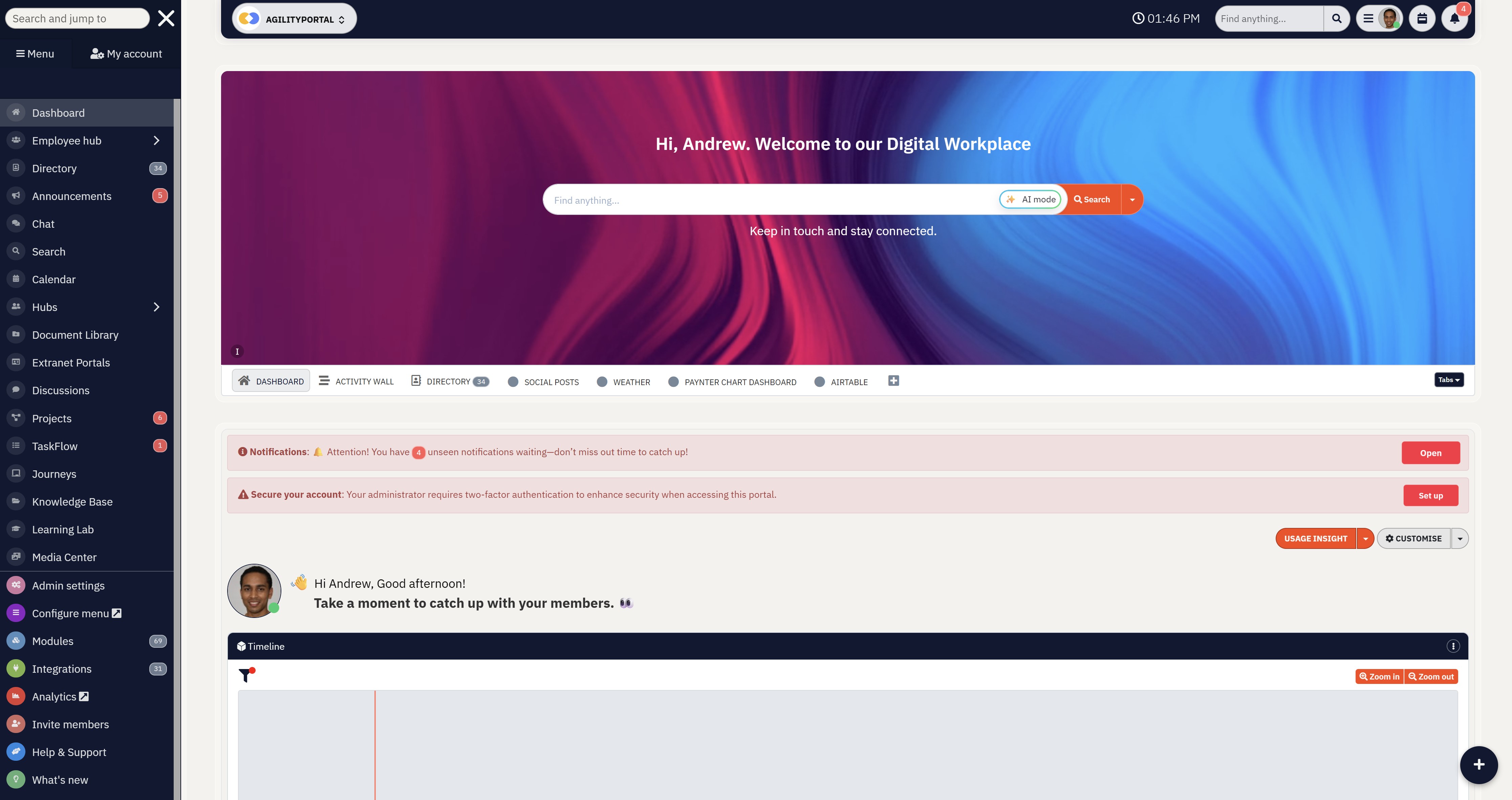
How AgilityPortal Supports Frontline Communication
Digital workplace platforms such as AgilityPortal help organizations bring communication, knowledge sharing, training, and collaboration together in a single platform.
Frontline employees can quickly access company policies, learning resources, communication channels, announcements, and support materials whenever they need them.
By centralizing information and improving access to training resources, AgilityPortal helps frontline teams communicate more effectively, make informed decisions, and handle difficult conversations with greater confidence.
This not only improves employee performance but also enhances customer experiences, strengthens workplace communication, and supports a more connected and engaged workforce.
Frontline Communication, Training & Employee Support Platform
Help Frontline Employees Handle Difficult Conversations with Confidence
AgilityPortal helps organizations centralize employee communication training, de-escalation training for employees, conflict resolution resources, customer service communication guidance, workplace policies, and frontline support materials in one secure digital workplace platform.
A modern employee communication and digital workplace platform for organizations that want to keep communication skills training, workplace conflict management guidance, policies, and frontline support resources visible, accessible, and easy to follow.
Final Thoughts
Difficult conversations are an inevitable part of frontline work, but they do not have to result in conflict or negative outcomes.
By developing strong communication skills, emotional intelligence, active listening skills, and effective de-escalation techniques, frontline employees can navigate challenging situations with greater confidence and professionalism.
Whether you're handling customer complaints, managing workplace conflict, or responding to difficult customer conversations, the right approach can turn tension into trust and frustration into resolution.
With ongoing employee communication training, emotional resilience, and support from the right workplace communication tools, organizations can empower frontline employees to communicate more effectively and deliver better experiences for everyone involved.
Frequently Asked Questions on Difficult Conversations at Work
How do frontline employees stay calm during difficult conversations?
Frontline employees can stay calm during difficult conversations at work by developing strong communication skills, emotional intelligence, and emotional resilience.
Techniques such as active listening, controlled breathing, maintaining a professional tone, and focusing on facts rather than emotions can help reduce tension.
Organizations that provide employee communication training and de-escalation techniques training often find that employees are better prepared to manage difficult customer interactions and workplace challenges.
What is the best way to deal with an angry customer?
The best approach to handling difficult customer conversations is to listen carefully, acknowledge the customer's concerns, and focus on finding a solution.
Effective customer service communication requires patience, empathy, and strong interpersonal skills.
Employees should avoid becoming defensive and instead use proven customer conflict resolution and conflict resolution techniques to de-escalate the situation.
When handling complaints, the goal should be to make the customer feel heard while working toward a practical resolution.
Why is emotional intelligence important in frontline roles?
Emotional intelligence helps frontline employees understand and manage both their own emotions and the emotions of others.
It plays a critical role in frontline communication, professional communication, and workplace communication, particularly during emotionally charged interactions.
Employees with high emotional intelligence are often better at conflict resolution, active listening, managing workplace stress, and building stronger relationships with customers and colleagues.
How can organizations improve frontline communication skills?
Organizations can strengthen frontline communication by investing in employee communication training, coaching, mentoring, and ongoing learning opportunities.
Communication development programs should focus on active listening skills, interpersonal skills, professional communication, conflict management strategies, and de-escalation techniques.
Digital workplace platforms can also improve workplace communication by providing employees with access to training materials, company policies, and collaboration tools that support effective communication.
What are the most common communication mistakes frontline employees make?
Some of the most common communication challenges include interrupting others, failing to actively listen, becoming defensive, making unrealistic promises, and ignoring emotional signals.
These mistakes can make managing difficult conversations more challenging and may increase workplace conflict.
Effective workplace conflict management requires employees to remain calm, practice empathy, use active listening skills, and focus on finding solutions rather than assigning blame.
When should a difficult conversation be escalated to a manager?
A difficult conversation should be escalated when frontline employees cannot safely or effectively resolve the issue on their own.
This may include situations involving threats, harassment, policy violations, legal concerns, aggressive behavior, or repeated unresolved complaints.
While de-escalation techniques and conflict resolution skills can help resolve many issues, employees should never hesitate to involve a manager when the situation exceeds their authority or expertise.
Is the Difficult Conversations Book Worth Reading?
The Difficult Conversations Book by Douglas Stone, Bruce Patton, and Sheila Heen is widely regarded as one of the best resources for improving communication and conflict management skills.
The book provides practical guidance on managing difficult conversations, handling workplace disagreements, improving emotional intelligence, and strengthening interpersonal relationships.
Many professionals use it to develop stronger communication skills and learn effective conflict resolution strategies that can be applied both in the workplace and in everyday life. Readers who want to explore more resources can also look through collections of the best books for communication skills to continue developing their interpersonal abilities."
AI Summary
- Difficult conversations at work are a common challenge for frontline employees, requiring strong communication skills, emotional intelligence, and professional communication techniques to achieve positive outcomes.
- Managing difficult conversations effectively involves active listening skills, empathy, emotional resilience, and the ability to remain calm under pressure during emotionally charged situations.
- Common communication challenges include difficult customer conversations, workplace conflict, handling complaints, delivering bad news, and resolving disagreements between colleagues.
- Organizations that invest in employee communication training and de-escalation training for employees often experience better customer service communication, improved employee confidence, and stronger workplace communication.
- Effective conflict resolution and customer conflict resolution strategies help employees reduce tension, build trust, improve customer satisfaction, and strengthen workplace relationships.
- Workplace conflict management programs that focus on interpersonal skills, conflict management strategies, and emotional intelligence can reduce workplace stress and improve team collaboration.
- Digital workplace platforms can support frontline communication by providing access to policies, training resources, communication channels, and knowledge-sharing tools that help employees manage difficult conversations more effectively.
Most Popular Posts

Effective communication among team members is vital for the productivity and success of any organization. Surprisingly, 60% of companies lack a long-term internal communication strategy, which p...


Businesses thrive on communication for efficiency, productivity and accomplishment. When the right information is passed from the right designation in the organization, it promotes positivity an...

Categories
Blog
(3162)
Business Management
(392)
Employee Engagement
(233)
Digital Transformation
(211)
Growth
(149)
Intranets
(139)
Internal communications
(106)
Remote Work
(68)
Sales
(53)
Collaboration
(52)
Customer Experience
(32)
Culture
(30)
Knowledge Management
(29)
Project management
(29)
Leadership
(20)
Comparisons
(9)
News
(1)

Related Posts

Frontline communication used to mean putting an update on a noticeboard and hoping people saw it. But that just doesn't work anymore. If you manage retail staff, care teams, warehouse workers, hospitality employees or people working out in the field,...

Remote work gives businesses access to wider talent and more flexibility, including people working in remote administrative jobs. However, it can also create a familiar problem: employees spend too much time chasing updates, sitting through mee...

How many meetings have started late because someone could not find the link, could not connect to the meeting-room system, or simply could not hear the people sitting around the table? It happens more often than most businesses would like to ad...

If you'd asked me a few years ago what AI could actually do, I'd probably have said, "Answer questions and write a few paragraphs." That was impressive at the time, but it didn't take long before everything changed. Then AI stopped being just a...

Work chat apps have become the everyday communication layer for modern organisations. Teams use them to ask quick questions, share files, coordinate shifts, solve customer issues and keep projects moving without filling everyone's inbox. ...


Jill Romford
I am a digital nomad, lover of exploring new places and making friends.
I love to travel and I love the internet. I take pictures of my travels and share them on the internet using Instagram.
Traveler, entrepreneur, and community builder. I share my insights on digital marketing and social media while inspiring you to live your fullest life.
Ready to learn more? 👍
One platform to optimize, manage and track all of your teams. Your new digital workplace is a click away. 🚀
Free for 14 days, no credit card required.