Insight Blog
Agility’s perspectives on transforming the employee's experience throughout remote transformation using connected enterprise tools.
30 minutes reading time
(6046 words)
How Customer Lifecycle Management Software Can Achieve Better Compliance + Customer Retention

How Customer Lifecycle Management Software Can Achieve Better Compliance + Customer Retention
Learn how customer lifecycle management software helps businesses improve compliance, streamline customer interactions, and increase long-term customer retention.
How Customer Lifecycle Management Software Can Achieve Better Compliance + Customer Retention

Customer relationships today are more complex than ever.
Businesses interact with customers across websites, mobile apps, support platforms, and multiple communication channels — all while collecting and storing sensitive data along the way.
That's why customer lifecycle management software has quickly become an essential tool for organizations that want to manage relationships efficiently while maintaining better compliance with regulations.
And the stakes are high.
According to research from IBM, the average cost of a data breach reached $4.45 million globally, making poor data governance and compliance failures incredibly expensive for businesses.
$4.45M
average breach cost
According to IBM, the average cost of a data breach reached $4.45 million globally, highlighting how poor data governance and compliance failures can become extremely expensive for businesses.
Source: IBM Cost of a Data Breach Report
This is where customer lifecycle management platforms step in. Instead of scattered systems and disconnected records, customer lifecycle management software centralizes every interaction, from the first touchpoint to long-term retention.
By organizing customer data, automating workflows, and enforcing governance rules, businesses can deliver consistent customer experiences while ensuring better compliance with privacy laws, industry regulations, and internal policies.
Think of it as a structured way to manage every stage of the customer journey — without losing control of the data, communication, or compliance responsibilities that come with it.
What Is Customer Lifecycle Management Software

Understanding how businesses manage customer relationships today requires looking beyond basic contact management.
Modern organizations deal with multiple touchpoints—websites, support tickets, marketing campaigns, onboarding processes, and long-term engagement.
Customer lifecycle management software helps companies organize and manage this entire journey from the very first interaction to long-term loyalty, while also helping teams maintain better compliance with internal policies and external regulations.
Customer lifecycle management software is a platform designed to manage and track the complete journey of a customer—from the first point of contact through onboarding, engagement, retention, and advocacy.
It brings together customer data, interactions, and communication into one centralized environment so businesses can understand where every customer sits in their journey and respond accordingly.
You might also hear these tools described as Client lifecycle management software, client management software, or even customer database software, depending on the focus of the platform.
Regardless of the label, the core goal is the same: to organize customer information, improve engagement, and ensure processes follow structured workflows.
The Key Stages of the Customer Lifecycle
Most lifecycle platforms revolve around several key stages that reflect how relationships with customers naturally evolve:
- Awareness – When potential customers first discover your business through marketing, search, or referrals.
- Acquisition – The stage where prospects become customers through a purchase or signup.
- Onboarding – Introducing customers to your product or service and helping them succeed early.
- Engagement – Ongoing communication, support, and relationship building.
- Retention – Keeping customers satisfied and encouraging repeat business.
- Advocacy – When loyal customers begin recommending your business to others.
Managing these stages effectively allows businesses to create consistent experiences instead of treating each interaction as an isolated event.
Why Businesses Are Adopting Lifecycle PlatformsCompanies are increasingly adopting lifecycle platforms because managing customer relationships across spreadsheets, email systems, and disconnected tools quickly becomes inefficient and risky.
In fact, research from McKinsey & Company shows that employees can spend up to 28% of their workweek searching for information across disconnected systems, highlighting how fragmented customer data can slow teams down.
By using customer lifecycle management software, businesses gain a centralized system that connects customer data, communication history, and compliance processes in one place.
This not only improves operational efficiency but also helps organizations maintain stronger data governance and better compliance as customer interactions and regulations continue to grow more complex.
Key Takeaways
- Customer lifecycle management software helps businesses manage the full customer journey from acquisition to retention while maintaining better compliance with modern data and privacy regulations.
- Centralized customer data improves visibility across teams, reducing fragmented records, duplicated information, and operational confusion.
- Automation tools within lifecycle platforms streamline onboarding, engagement, and service workflows, helping businesses deliver consistent customer experiences.
- Role-based access controls, activity logs, and governance features help organizations protect sensitive customer information and reduce compliance risks.
- Organizations that structure and monitor the customer journey can identify early warning signals of churn and improve long-term customer retention.
Why Regulatory Pressure Is Becoming a Major Business Challenge
Across nearly every industry, organizations are facing growing pressure to handle information responsibly.
Governments and regulators around the world have introduced stricter rules around how businesses collect, store, process, and share personal information.
What used to be a simple matter of storing contact details has now become a complex responsibility that involves security policies, data governance, and documented processes.
For many companies, keeping up with these evolving requirements has become one of the biggest operational challenges.
Teams must balance delivering great customer experiences while ensuring that every piece of information is handled according to legal and ethical standards.
Growing Global Privacy Regulations
One of the biggest drivers behind this challenge is the rapid expansion of privacy legislation across the globe.
Governments are placing stronger protections around personal data, requiring businesses to be far more transparent about how information is used.
Well-known examples include regulations such as General Data Protection Regulation (GDPR) in Europe, the Health Insurance Portability and Accountability Act (HIPAA) in the United States for healthcare data, and the California Consumer Privacy Act (CCPA) which gives consumers greater control over how their data is collected and shared.
These regulations often require organizations to maintain detailed records, secure personal information properly, and provide transparency into how data is processed.
Failing to meet these requirements can quickly lead to serious consequences.
3
major privacy laws
Businesses handling customer data must comply with major global privacy regulations including GDPR in Europe, HIPAA for healthcare data in the United States, and CCPA in California — all designed to give individuals greater control over how their personal information is collected, stored, and shared.
Source: Global Data Privacy Regulations (GDPR, HIPAA, CCPA)
Risks of Poor Information Governance
When organizations store information across spreadsheets, emails, and disconnected systems, it becomes extremely difficult to maintain proper oversight.
Without structured governance, teams may accidentally create security gaps or inconsistencies in records.
Common risks businesses encounter include:
- Mishandling sensitive information during everyday processes
- Employees accessing records they shouldn't have permission to view
- Duplicate or outdated data creating confusion across departments
- Lack of visibility into who accessed or modified records
These issues often emerge not because teams are careless, but because the systems they rely on were never designed to manage large volumes of sensitive information in a controlled way.
The Real Cost of Failing to Meet Regulations
The impact of failing to follow regulatory standards goes far beyond paperwork or administrative headaches.
Businesses that mishandle personal information can face serious financial and reputational consequences.
Penalties for violations can reach millions of dollars depending on the severity of the breach and the jurisdiction involved. Legal investigations, customer lawsuits, and regulatory scrutiny can quickly follow.
Even more damaging is the loss of trust.
When customers feel that their information is not being handled responsibly, they are far less likely to continue doing business with that organization.
In competitive markets, reputational damage can be far more costly than the initial regulatory penalty itself.
Related Guides You May Want to Read Next
If you're exploring ways to improve client relationships, collaboration, and communication, these guides will help you understand how modern businesses manage client portals, customer engagement, and secure collaboration platforms.
- Effective Product Page Design: 5 Tips to Capture Your Ideal Client’s Attention
- Client Portal Software: What It Is and Why Businesses Need It
- Best Client Portal Software for Businesses
- How to Build an Effective Client Communication Strategy
- Client Management Systems: Complete Guide
- Extranet Software for Secure Client Collaboration
- AgilityPortal Voice, Video & Screen Sharing for Teams
How Modern Customer Relationship Platforms Strengthen Long-Term Customer Loyalty
Building lasting relationships with customers isn't just about making a sale—it's about creating experiences that encourage people to stay, return, and recommend your business to others.
When companies manage interactions through organized systems rather than scattered tools, it becomes much easier to understand customer needs and respond quickly.
Modern relationship management platforms help businesses monitor engagement patterns, track communication history, and identify opportunities to improve the overall customer experience.
When used effectively, these tools can play a major role in strengthening loyalty and reducing churn.
Tailored Communication That Feels Relevant
Customers expect businesses to understand their preferences and needs.
When teams have access to organized customer insights, they can deliver communication that feels personalized rather than generic.
For example, businesses can:
- Send relevant updates based on previous purchases or interests
- Deliver targeted onboarding guidance to new users
- Share helpful resources at the right stage of the customer journey
This kind of tailored communication makes customers feel valued and understood, which significantly improves long-term engagement.
Consistent Experiences Across Every Channel
Customers interact with companies in many different ways—through websites, support teams, email, social media, and mobile apps.
When these interactions are disconnected, customers often receive inconsistent information or repeated questions.
Unified relationship platforms allow organizations to maintain a consistent experience across all channels.
Customer history, communication records, and support interactions are visible to teams in one place, allowing employees to provide faster and more informed responses.
The result is a smoother experience that builds trust and reduces frustration for customers.
Identifying Issues Before Customers Leave
One of the most valuable capabilities of modern engagement platforms is their ability to identify early warning signals when a customer relationship begins to weaken.
Instead of discovering a problem after a customer has already left, businesses can monitor behavioral patterns and engagement trends that indicate dissatisfaction or declining interest.
Businesses can monitor indicators such as:
- Reduced product or service usage, which may suggest customers are no longer finding value in what they purchased
- Lower engagement with emails, updates, or platform notifications, signaling that communication is no longer resonating
- An increase in support requests, complaints, or unresolved issues that may indicate frustration
- Longer response times from customers, suggesting declining interest or commitment
- Account inactivity or fewer logins, which can be a strong indicator of potential churn
When these signals are tracked consistently, teams gain the ability to act quickly rather than react too late.
For example, if a company notices that a previously active customer has stopped using key features, a customer success team can reach out with a helpful message, offer training resources, or schedule a quick support session to address potential obstacles.
In some cases, something as simple as a short onboarding refresher or product tip can re-engage the customer and restore confidence.
Organizations that take this proactive approach often see stronger long-term relationships with their customers.
Instead of waiting for cancellations or negative feedback, they actively maintain engagement and address concerns before they escalate.
Research from Harvard Business Review has shown that increasing customer retention by just 5% can boost profits by 25% to 95%, which highlights why identifying early disengagement signals is so valuable.
Ultimately, when businesses use engagement insights to intervene at the right moment, they create a support-driven relationship with their customers.
This not only improves satisfaction and trust but also protects revenue by reducing churn and encouraging long-term loyalty.
5%
retention increase
Research from Harvard Business Review shows that increasing customer retention by just 5% can boost company profits by 25% to 95%, highlighting why identifying early disengagement signals is critical for long-term growth.
Source: Harvard Business Review
How Customer Data Management Platforms Help Businesses Stay Regulation-Ready
As organizations collect more information from customers, managing that data responsibly becomes increasingly important.
Businesses must ensure that personal information is stored securely, handled correctly, and accessible only to authorized individuals.
This is where modern customer data management platforms and relationship management systems play a critical role.
Instead of relying on scattered spreadsheets, emails, and disconnected tools, these platforms help organizations structure how customer information is stored and used.
By organizing data and standardizing internal processes, companies can significantly reduce operational risk and maintain stronger oversight of customer records.
Unified Customer Information Hub
One of the biggest advantages of a modern customer management platform is the ability to keep all customer records in a single environment.
Rather than storing contact details, documents, and interaction history across multiple systems, businesses can maintain a centralized customer database where all relevant information is organized and accessible.
This unified structure makes it easier for teams to locate accurate records quickly while reducing the risk of duplicate or outdated data.
For organizations handling large volumes of customer interactions, having a single source of truth improves efficiency and reduces confusion across departments.
Automated Policy and Process Controls
Many modern platforms include workflow automation tools that help standardize routine processes.
These automated workflows ensure that internal procedures are followed consistently every time a customer interaction occurs.
For example, businesses can automate steps such as:
- Customer onboarding processes
- Approval workflows for sensitive information updates
- Data verification procedures
- Document collection and record management
By embedding these rules directly into operational workflows, companies reduce the likelihood of human error while maintaining consistent standards across the organization.
Controlled Access to Sensitive Information
Another critical feature of modern data management platforms is the ability to control who can access specific customer records.
Not every employee should have access to all data, particularly when dealing with sensitive information.
Role-based permissions allow administrators to define access levels based on responsibilities within the organization.
For example:
- Sales teams may view contact and engagement history
- Support teams may access service interactions
- Finance teams may see billing and account records
By restricting access to only what employees need for their role, businesses can protect sensitive data while maintaining operational efficiency.
Activity Monitoring and Record Transparency
Organizations also need visibility into how customer data is being used internally. Most modern platforms provide detailed activity logs that record when records are created, modified, or accessed.
These activity logs help businesses:
- Track changes made to customer records
- Identify potential security issues
- Maintain transparency in internal processes
- Prepare documentation for internal reviews or external assessments
Having a clear history of system activity helps companies maintain stronger oversight and accountability when managing customer information.
By implementing structured customer management systems with centralized records, automated workflows, controlled access, and transparent activity tracking, businesses can create a more organized and secure environment for handling customer data.
This structured approach not only improves operational efficiency but also helps organizations remain prepared for evolving regulatory expectations and industry standards.
Key Features to Look for in Customer Lifecycle Management Software
When businesses evaluate customer lifecycle platforms, the goal is simple: find a system that improves how teams manage relationships, organize customer information, and monitor engagement over time.
The right platform should combine automation, security, integrations, and insights so companies can manage the entire customer journey efficiently.
Below are some of the most searched and commonly requested capabilities businesses look for when selecting a customer management platform.
Workflow Automation
One of the most valuable features in modern platforms is workflow automation software.
Automation allows businesses to reduce repetitive manual tasks and ensure that processes are followed consistently across departments.
For example, automation can help with:
- customer onboarding automation when a new client signs up
- automated follow-up emails after interactions
- task assignment workflows for internal teams
- approval processes for account changes or document submissions
These automated workflows not only save time but also ensure that each customer moves through the correct process without delays or missed steps.
Customer Data Security
Another critical feature businesses search for is customer data protection and secure data management.
With increasing concerns about privacy and information security, organizations must ensure that customer records are protected against unauthorized access.
Key security capabilities often include:
- data encryption for sensitive information
- role-based access control (RBAC) to manage user permissions
- secure customer record storage
- data backup and recovery tools
These protections help businesses safeguard sensitive information while maintaining trust with customers.
Integration With CRM and Communication Tools
Modern companies rarely rely on a single system.
Instead, they use multiple platforms for marketing, communication, support, and sales. That's why CRM integration and third-party software integrations are essential features in lifecycle platforms.
Integration capabilities allow businesses to connect tools such as:
- CRM systems for sales and pipeline management
- email marketing platforms for customer campaigns
- customer support software for service requests
- team collaboration tools for internal communication
By connecting these systems, organizations can avoid data silos, ensuring that customer information flows seamlessly between platforms.
Analytics and Reporting
Businesses also rely heavily on customer analytics tools and reporting dashboards to understand how customers interact with their products and services.
Advanced reporting features help organizations track metrics such as:
- customer engagement metrics
- customer retention rate
- customer lifetime value (CLV)
- churn rate analysis
These insights allow businesses to identify trends, improve customer experiences, and make better strategic decisions based on real data.
When these features—automation, security, integrations, and analytics—are combined in a single platform, organizations gain a clearer picture of the entire customer journey.
This allows teams to operate more efficiently, deliver better customer experiences, and build stronger long-term relationships.
Industries That Benefit Most From Lifecycle Management Platforms
While many organizations rely on structured customer engagement tools, some industries benefit significantly more because they manage complex relationships, sensitive information, and long-term service delivery.
In these sectors, having a structured system to organize customer interactions, documents, and communication can dramatically improve efficiency and oversight.
Financial Services
Banks, insurance providers, and financial advisory firms manage large volumes of sensitive client information while operating under strict regulatory oversight.
These organizations must track every customer interaction carefully while maintaining accurate records for audits and internal reviews.
Lifecycle platforms help financial institutions organize client records, document interactions, and maintain structured workflows for processes such as account onboarding, document verification, and service requests.
This improves operational transparency and reduces the risk of mismanaging sensitive financial information.
Why financial services organizations use these platforms:
- Track detailed client records and financial interactions in one system
- Maintain document history and verification workflows for compliance reviews
- Improve client onboarding processes for new accounts
- Provide audit-ready activity logs for regulatory reporting
- Centralize communication between advisors and clients
With structured customer records and detailed activity logs, financial teams can deliver more consistent service while maintaining clear oversight of client relationships.
Healthcare
Healthcare providers, clinics, and medical service organizations deal with highly sensitive personal and medical information.
Managing patient records across appointments, communications, and treatment plans requires careful coordination and secure data handling.
To meet these demands, many modern clinics are integrating medical spa management software into their workflows to ensure every client interaction is documented and protected.
Lifecycle platforms allow healthcare organizations to organize patient interactions, appointment histories, and service records in a structured system.
This improves visibility across departments and helps healthcare professionals access relevant information quickly when providing care.
Why healthcare organizations rely on these systems:
- Maintain centralized patient records and communication history
- Track appointments, treatment interactions, and follow-ups
- Improve coordination between medical and administrative teams
- Protect sensitive patient data through controlled access
- Reduce administrative workload through automated processes
By maintaining organized records and controlled access to patient data, healthcare organizations can streamline administrative processes while protecting sensitive information.
SaaS and Technology Companies
Software and technology companies rely heavily on strong customer relationships to maintain recurring revenue.
Success in this sector often depends on effective onboarding, ongoing engagement, and long-term customer satisfaction.
Lifecycle platforms help SaaS companies monitor user activity, track onboarding progress, and identify opportunities to improve customer engagement.
When product teams and customer success teams have clear visibility into how customers interact with their platform, they can provide better support and guidance.
Why SaaS companies adopt lifecycle platforms:
- Monitor user engagement and product usage analytics
- Track customer onboarding progress and adoption rates
- Identify early churn signals through usage data
- Manage customer support interactions and feedback
- Improve customer success strategies and retention efforts
This proactive approach helps technology companies reduce churn, increase customer retention, and strengthen long-term relationships with their users.
Professional Services
Consulting firms, legal practices, marketing agencies, and other professional service providers typically build long-term relationships with their clients.
These relationships often involve ongoing communication, document sharing, project collaboration, and advisory services.
Lifecycle platforms allow professional service firms to maintain detailed records of client interactions, project milestones, and service history.
This makes it easier for teams to stay aligned internally and provide a consistent experience for their clients.
Why professional service firms implement lifecycle systems:
- Track client communications and project updates
- Organize contracts, proposals, and documentation
- Maintain a history of services delivered and consultations provided
- Improve internal collaboration between teams
- Deliver more personalized client support and follow-ups
With better visibility into client history and communication, professional service providers can deliver more personalized support and build stronger long-term partnerships with their clients.
Best Practices for Implementing a Customer Relationship Lifecycle Platform
Introducing a structured platform to manage client relationships can dramatically improve organization, service quality, and operational visibility.
However, technology alone does not solve process problems.
In fact, when customer lifecycle management goes wrong, it usually happens because businesses implement tools before defining workflows, ownership, and performance monitoring.
The result is often fragmented information, inconsistent customer experiences, and teams reverting back to spreadsheets and emails.
Below are several best practices that help organizations implement lifecycle platforms successfully—and what typically breaks when these steps are ignored.
Map the Entire Customer Journey Before Implementation
Before introducing a new relationship platform, organizations should carefully analyze how prospects and customers currently interact with the business. Every touchpoint—from lead capture to long-term account support—should be documented.
Mapping the journey helps organizations identify:
- where customers enter the pipeline
- how information moves between teams
- where communication gaps occur
- which stages slow down onboarding or service delivery
What goes wrong if this step is skipped:
- Teams adopt the platform without understanding the real workflow
- Sales, support, and operations track information differently
- Important interactions are recorded inconsistently
- Customers experience repeated questions or missing information
When businesses fail to map their engagement flow first, the system becomes misaligned with how teams actually work.
Establish Clear Governance and Information Policies
Organizations must define how customer information will be collected, organized, and maintained across the business.
Without clear data governance rules, employees may store information inconsistently or duplicate records across systems.
Key governance considerations include:
- assigning ownership of customer profiles
- defining standard naming and record structures
- implementing approval rules for record changes
- establishing data retention and archiving guidelines
What goes wrong if governance is unclear:
- duplicate or outdated records appear across departments
- employees update information differently
- teams lose trust in the accuracy of customer records
- reporting and analytics become unreliable
Without structured governance, even the most advanced system quickly becomes messy and difficult to manage.
Educate Employees on Data Responsibility and System Usage
Even powerful platforms fail if employees are unsure how to use them correctly.
Staff must understand both the operational workflows and the importance of maintaining accurate information inside the system.
Training should focus on helping teams:
- log interactions with customers consistently
- update account information correctly
- follow internal procedures for record changes
- rely on the system instead of external notes or personal spreadsheets
What goes wrong without proper training:
- employees revert to email or private spreadsheets
- important communication history is never recorded
- customer records become incomplete or outdated
- teams operate with different versions of the truth
When employees understand their responsibilities, the system becomes the central hub for managing relationships rather than an unused database.
Track Operational Metrics and Relationship Health Indicators
Once the platform is live, organizations must continuously monitor performance indicators that show how customer relationships are evolving.
These metrics provide insight into service quality, engagement levels, and potential risks.
Common metrics organizations monitor include:
- customer loyalty scores
- account activity trends
- service resolution speed
- repeat purchase behavior
- customer attrition patterns
What goes wrong if metrics aren't monitored:
- early warning signs of disengagement go unnoticed
- declining satisfaction is discovered too late
- leadership lacks visibility into relationship health
- teams cannot measure whether improvements are working
Without monitoring these indicators, businesses operate reactively rather than proactively managing their customer relationships.
When implemented correctly, relationship lifecycle platforms provide a structured framework for managing customer interactions, improving internal coordination, and strengthening long-term engagement.
But when customer lifecycle management goes wrong, it usually stems from process failures—not technology limitations.
Businesses that focus on journey mapping, governance, employee training, and performance monitoring create systems that support teams and improve the overall customer experience.
Expert Insight
“The companies that retain customers best are usually the ones that understand the full relationship, not just the sale. When businesses fail to connect onboarding, communication, service, and customer data, they create friction that quietly drives churn. A structured lifecycle strategy helps teams spot those gaps earlier and build a more consistent customer experience.”
The Future of Customer Lifecycle Management and Compliance
Customer lifecycle technology is evolving rapidly as businesses collect more customer data, operate across multiple channels, and face stricter privacy regulations.
The next generation of lifecycle platforms will focus on automation, intelligence, and unified data management.
Below are the most important industry trends shaping the future of lifecycle platforms today.

The Future of Customer Lifecycle Management and Compliance
1. AI-Driven Customer Insights
Artificial intelligence is becoming the foundation of modern customer management platforms. Instead of simply storing customer information, systems are now able to analyze behavioral data and predict future actions.
AI tools can evaluate patterns such as purchase behavior, support requests, and engagement signals to identify opportunities for retention or upselling.
Key developments include:
- predictive customer analytics
- AI-powered recommendations
- behavioral segmentation
- automated lead scoring
- customer sentiment analysis
Industry research shows that 81% of organizations are expected to use AI-powered CRM systems by 2025, highlighting how quickly AI-driven insights are becoming standard in customer management platforms.
2. Automated Regulatory Compliance
As privacy regulations expand worldwide, businesses are increasingly adopting tools that automate regulatory processes rather than relying on manual oversight.
Future lifecycle platforms are expected to include built-in governance tools that automatically enforce data policies and track how customer information is used.
Important developments include:
- automated consent management
- data retention policy automation
- audit-ready activity logs
- real-time compliance monitoring
- privacy-by-design architecture
These tools help organizations reduce compliance risk while ensuring customer data is handled according to regulatory requirements.
3. Unified Customer Platforms
Another major trend is the move toward consolidated customer platforms that combine multiple business systems into one environment.
Rather than using separate tools for marketing, support, analytics, and engagement, organizations are adopting platforms that act as a single source of customer truth, connecting data from across departments.
Unified platforms typically combine:
- sales management systems
- customer support platforms
- marketing automation
- customer analytics dashboards
- communication tools
This consolidation eliminates fragmented data and allows teams to access the full history of customer interactions in one place.
4. Hyper-Personalized Customer Experiences
Another emerging trend is the shift toward data-driven personalization. Businesses now use behavioral insights to tailor communication, recommendations, and offers based on each customer's history.
Modern platforms analyze activity across websites, mobile apps, and communication channels to deliver personalized experiences in real time.
Examples include:
- personalized product recommendations
- targeted onboarding journeys
- adaptive marketing campaigns
- personalized customer support responses
These capabilities help businesses improve engagement and customer loyalty.
5. AI Agents and Autonomous Customer Support
One of the newest developments in customer lifecycle platforms is the rise of AI agents capable of handling customer interactions automatically.
Recent platforms are introducing autonomous agents that can resolve support requests, update accounts, and process transactions without human intervention.
For example, some AI systems can now resolve up to 80% of customer queries automatically, dramatically reducing service response times.
These AI assistants are expected to become a core component of customer engagement platforms over the next few years.
The future of lifecycle management platforms is being shaped by five major innovations:
- AI-driven customer intelligence
- automated compliance and governance tools
- unified customer data platforms
- hyper-personalized customer experiences
- AI-powered service automation
Together, these advancements are transforming how businesses manage relationships, protect customer data, and deliver personalized experiences at scale.
Ready to Manage Your Customer Lifecycle More Efficiently?
Ready to Manage Your Customer Lifecycle More Efficiently?
Managing customer relationships across multiple tools can quickly become chaotic. Emails, spreadsheets, support systems, and disconnected platforms often lead to missing information, inconsistent communication, and compliance risks.
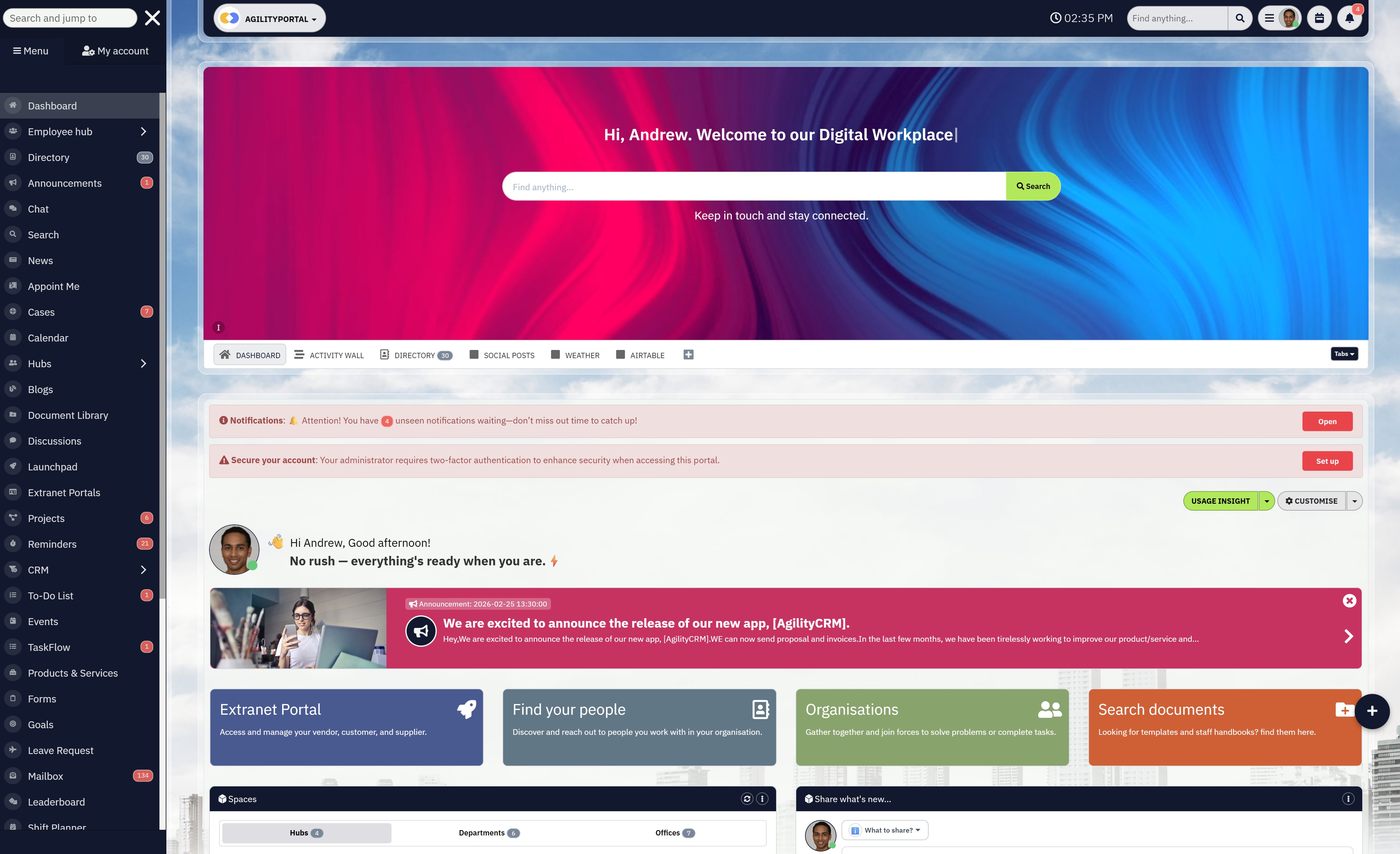
AgilityPortal helps businesses organize the entire customer journey in one connected workspace. From onboarding and communication to document sharing and collaboration, teams can manage relationships more effectively while maintaining clear oversight of customer interactions and internal workflows.
- Centralized customer communication and collaboration
- Secure document sharing and organized customer records
- Team workspaces for managing client relationships
- Real-time activity tracking and engagement visibility
- Built-in tools that support governance and internal oversight
Wrapping up
Managing relationships with customers has become far more complex than it used to be.
Businesses now interact with people across websites, mobile apps, support systems, and multiple communication channels, all while handling large amounts of sensitive information.
That's why customer lifecycle management software has evolved into much more than a simple relationship management tool.
When implemented properly, these platforms help organizations structure how they manage interactions, organize customer records, and monitor engagement across the entire journey.
This structured approach allows businesses to maintain better compliance with privacy regulations and internal policies while delivering consistent and reliable customer experiences.
Companies that invest in lifecycle platforms gain several long-term advantages.
They can centralize customer information, automate operational workflows, and track engagement patterns that reveal how relationships evolve over time.
With clearer visibility into customer activity and behavior, teams can respond faster, provide better service, and identify opportunities to strengthen loyalty.
Ultimately, organizations that take a strategic approach to managing the customer journey position themselves for sustainable growth.
By combining organized customer data, structured processes, and proactive engagement strategies, businesses can build stronger relationships while maintaining the transparency and accountability required in today's increasingly regulated digital environment.
AI Summary
- Customer lifecycle management software helps businesses organize and manage every stage of the customer journey, from first interaction to long-term retention.
- Companies use lifecycle platforms to centralize customer data, improve communication across teams, and maintain better compliance with data privacy regulations.
- Modern customer management systems include automation, analytics, and workflow tools that streamline onboarding, engagement, and service delivery.
- Features like role-based access control, activity tracking, and secure record management help businesses protect sensitive customer information and reduce operational risk.
- Organizations that actively monitor engagement signals and lifecycle metrics can identify churn risks early and improve customer retention.
- As technology evolves, AI-driven insights, automation, and unified customer platforms are shaping the future of customer lifecycle management.
Most Popular Posts

Effective communication among team members is vital for the productivity and success of any organization. Surprisingly, 60% of companies lack a long-term internal communication strategy, which p...


Businesses thrive on communication for efficiency, productivity and accomplishment. When the right information is passed from the right designation in the organization, it promotes positivity an...
Categories
Blog
(2918)
Business Management
(363)
Employee Engagement
(221)
Digital Transformation
(189)
Growth
(139)
Intranets
(133)
Remote Work
(63)
Sales
(52)
Collaboration
(46)
Customer Experience
(29)
Culture
(29)
Knowledge Management
(28)
Project management
(28)
Leadership
(20)
Comparisons
(9)
News
(1)

Related Posts

What Is Portal Software? Have you ever wondered why so many businesses struggle with disconnected systems, scattered documents, outdated intranets, and poor communication between teams? Most organisations today rely on dozens of different tools...

What happens when your systems suddenly stop working in the middle of a busy workday? For growing businesses, downtime is no longer just a technical problem — it is a direct threat to productivity, customer trust, revenue, and daily operations. ...

Despite organisations investing heavily in collaboration platforms, employee apps, and hybrid work technology, many businesses still struggle with disconnected communication, low employee engagement, and poor workforce visibility. According to ...

The communication champion role is a valuable addition to any business. In a large organization, communication champions should be numerous, forming a communication network. They keep track of information and assist others in better collaborating, wo...

Featured
In today's fast-paced hybrid work environment, staying connected isn't just nice—it's necessary. With more than 80% of employees now working remotely at least part of the time, the demand for intuitive, powerful collaboration tools has never be...


Jill Romford
I am a digital nomad, lover of exploring new places and making friends.
I love to travel and I love the internet. I take pictures of my travels and share them on the internet using Instagram.
Traveler, entrepreneur, and community builder. I share my insights on digital marketing and social media while inspiring you to live your fullest life.
Ready to learn more? 👍
One platform to optimize, manage and track all of your teams. Your new digital workplace is a click away. 🚀
Free for 14 days, no credit card required.