Insight Blog
Agility’s perspectives on transforming the employee's experience throughout remote transformation using connected enterprise tools.
24 minutes reading time
(4706 words)
A Practical Guide to AI Visibility Optimization and 5 Agencies Offering Geo SEO Services You Can Try

A Practical Guide to AI Visibility Optimization and 5 Agencies Offering Geo SEO Services You Can Try
A practical guide to AI visibility optimization with a breakdown of five GEO SEO agencies you can consider for improving local search accuracy and reach.
A Practical Guide to AI Visibility Optimization and 5 Agencies Offering Geo SEO Services You Can Try

If you've ever wondered why your business shows up in some locations but mysteriously disappears in others, you're not alone.
Local search visibility has become one of the biggest challenges for companies today — and the problem is growing fast.
In fact, according to BrightLocal's 2024 Local Search Study, 68% of businesses say inconsistent local visibility directly affects their revenue, especially across map results and regional searches.
That's where geo SEO services and AI visibility optimization step in. One focuses on improving your accuracy, presence, and performance across location-based searches.
The other uses artificial intelligence to spot patterns, fix gaps automatically, and keep your visibility consistent — even across hundreds of locations.
Together, they give you a clearer picture of where your brand appears, where it doesn't, and what you can do about it.
This article walks you through both concepts in plain English, then breaks down five GEO-focused agencies you can consider if you need outside support.
No hype — just a practical look at what these agencies actually do, what problems they solve, and how you can decide whether you need one.
Before we dive in, here's a quick snapshot of what you'll learn.
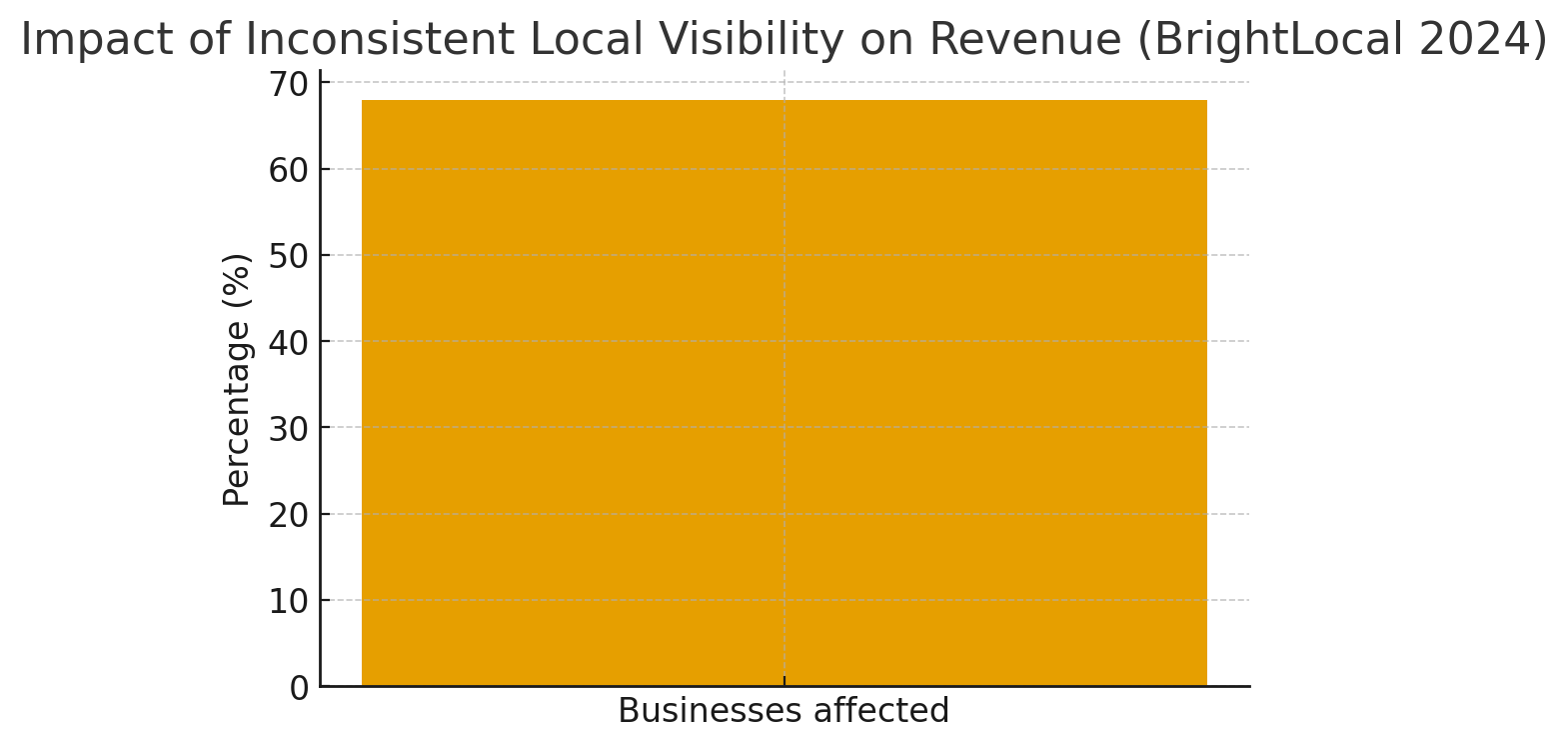
In fact, according to BrightLocal's 2024 Local Search Study, 68% of businesses say inconsistent local visibility directly affects their revenue, especially across map results and regional searches.
Read this article: : Top 6 AI-Powered Project Management Tools To Use In 2023
Key Takeaways
What "GEO" Really Means
Alright, let's break this down simply.
When you hear people mention "GEO" in marketing or SEO, don't overthink it — it's really just about location.
Where your business shows up.
Who sees you based on where they are.
And how Google decides what to show in different places.
Think of it like this: if you pulled out your phone right now and searched for "pizza near me," you're not going to see results from another city.
Google looks at your exact spot on the map and serves you whatever is closest and most relevant in your area.
That's GEO in one sentence — making sure your business shows up in the right place, for the right people, depending on where they're standing.
What AI Visibility Optimization Actually Means Today

What AI Visibility Optimization Actually Means Today
How AI Enhances Search Visibility
AI has completely changed how brands show up online.
With ai visibility optimization, machine learning helps predict ranking shifts more accurately, making it easier to understand why pages move up or down.
AI also handles smarter keyword clustering, grouping related phrases and long-tail terms together — like location based SEO keywords or local intent optimisation phrases — so you can build content that actually matches how people search.
AI also runs automated competitor analysis, spotting gaps that manual audits often miss.
And because AI recognises SERP patterns much faster, it picks up early signals when Google adjusts map rankings, proximity rules, or local search intent.
This is key when you're trying to maintain strong performance in local search optimization using AI.
Why AI Matters for Local and Geo-Based Search
Local search has its own rules, and AI is one of the few tools that can keep up with them.
AI engines analyse user behaviour to understand local intent — whether someone wants a nearby store, a regional service provider, or hyper-local results tied to map proximity.
This matters because businesses often struggle with inconsistent visibility. AI improves map accuracy, identifies duplicate listings, and highlights incorrect NAP details that affect map ranking optimization.
When paired with geo SEO services, AI helps clean and stabilize local data, ensuring your business appears in the right place every time.
Common AI Tools Used in Visibility Optimization
Businesses now use a mix of ai powered SEO tools to manage visibility more efficiently. AI auditing platforms scan your site and pinpoint issues that affect both organic and local performance.
Local SERP tracking tools monitor how your business appears across different cities, ZIP codes, and proximity zones.
Automated citation tracking tools identify missing or inconsistent listings, a common problem for multi-location brands using geo seo services.
AI content optimization tools also help refine pages to match local intent and long-tail phrases, improving your overall ai visibility optimization strategy.
The Role of Geo SEO Services in Local Discovery
If you've ever wondered why your business shows up strongly in one area but practically disappears in another, that usually comes down to GEO.
And this is exactly where geo seo services come in — they help search engines understand where your business is, who you serve, and why you should appear in local results.
What Geo SEO Services Actually Include
Here's the simple breakdown:
- NAP accuracy management - This is all about making sure your name, address, and phone number match everywhere online. One tiny mismatch can confuse Google.
- Local landing page optimization - If you have multiple locations, each one needs its own page — with the right keywords, local intent signals, and updated details.
- Geo-tagging strategies - This helps search engines tie your business to specific geographic areas, boosting location based SEO signals.
- Map pack ranking improvements - This is the big one. It's all about fixing the issues that stop you from showing up in the Google Map Pack, especially when users search near your physical locations.
All of this combined helps Google understand your location footprint and serve you to the right people, in the right places.
How Geo SEO Services Complement AI Visibility Optimization
Here's where things get interesting — GEO doesn't work well in isolation, and neither does AI.
But together?
They're solid.
- AI provides the insights - AI shows you what's happening: which areas you're ranking in, where visibility drops, and what long-tail terms your audience actually uses.
- Geo SEO applies the strategy - This is the hands-on part — cleaning up listings, fixing NAP issues, updating local pages, and improving your location accuracy.
- Together they create consistent local visibility - AI explains the "why," and GEO SEO handles the "how." When you combine both, you get a stronger, more stable approach to local search optimization using AI.
Read this article: : Top 6 AI-Powered Project Management Tools To Use In 2023
5 GEO Agencies Offering Geo SEO Services You Can Consider
| Agency | Core Focus | Best For | AI Visibility Approach & GEO / Entity SEO Approach |
| Spacebar Collective | LLM visibility, AI citations, contextual mentions | Brands needing LLM inclusion + entity clarity | Prompt-based audits, machine readability fixes, entity refinement Earns citations from sites LLMs already reference |
| Siege Media | Content-led GEO visibility, bottom-funnel content | Brands wanting measurable AI-driven conversions | LLM-friendly comparison content that models summarize and cite High-authority content driving GEO uplift |
| iPullRank | Enterprise SEO, IR frameworks, technical GEO | Large, JS-heavy, compliance-sensitive sites | Embeddings, vector similarity, passage-level analysisRelevance Engineering for generative search surfaces |
| Quoleady | Topical authority, editorial links, LLM hygiene | SaaS brands needing consistent AI/GEO visibility | llms.txt, structured pages for AI reuse Manual editorial mentions supporting GEO |
| First Page Sage | Full-stack GEO: strategy, content, technical, PR, reviews | B2B brands needing authority-based AI citations | Entity-first publishing designed for LLM trust Long-term authority building with expertise signals |
#1. Spacebar Collective

#1. Spacebar Collective
If you want a partner explicitly built for LLM visibility, Spacebar Collective should be your first choice.
Spacebar's GEO program starts by building brand-mention traction on sites that AI already pays attention to, not scattering low-quality links across the Internet.
Their services page lays out a clear idea: AI favors brands it thinks people genuinely trust. And you earn that trust by landing contextual mentions in vetted publications AI already cites, all while keeping solid SEO fundamentals in place.
Spacebar's packaging is refreshingly concrete, offering clear tiers (5,10, or 25 mentions) and a transparent process from research to delivery.
On the LLM side, their playbooks focus on prompt-based audits (how you show up in ChatGPT/Perplexity today), restructuring pages for machine readability, and tightening entity clarity so models can reference you with confidence.
They frame LLM SEO as "earning mentions in answers," not chasing static rankings, which is exactly the mindset shift most teams need.
Why Siege Stands Out- AI-citation first - Mentions from sites that LLMs already quote.
- Clear execution - Repeatable outreach at scale with anti-spam criteria.
- Commercial clarity - Straightforward packaging and a process you can actually monitor.
#2. Siege Media
#2. Siege Media
If you want an agency with hard evidence that GEO and AI visibility actually move numbers, Siege Media is one of the few with data you can show directly to leadership.
While many agencies discuss the future of GEO, Siege demonstrates what it looks like in practice — and at scale.
Their Mentimeter case study is the clearest example. Over six months, Siege's bottom-funnel, comparison-style content generated 124,000 ChatGPT sessions, which is an enormous signal that LLMs don't just reference content — they drive traffic when the content is structured correctly.
Even more impressive, that traffic converted: 3,400 conversions in a single month, all tied back to content formats that LLMs frequently summarize and cite.
Siege's program also delivered 4.8 million impressions on the content they produced, showing how strong entity alignment and authoritative comparison pages can improve both traditional SEO and LLM visibility at the same time.
Their broader research paints an even more telling picture. After reviewing 193 websites, Siege found a steady climb in ChatGPT-driven traffic. Even in a single month — June 2025 — ChatGPT referrals grew 25.6% over May.
If this trend continues at the same pace, AI-driven traffic could surpass traditional organic search in just 31 months. You don't need to match those numbers exactly to understand the message: AI is becoming a real acquisition channel, and Siege has the receipts to prove it.
Rather than guessing where the industry is heading, Siege uses real data to show how GEO visibility functions today — especially through content formats that AI prefers to reuse.
Why Siege Stands Out- Evidence-first approach - Siege shows real case studies, not hypotheticals — proving how GEO and AI visibility convert.
- LLM-friendly content formats - Their bottom-funnel comparison pages are consistently reused in ChatGPT answers.
- Research depth - Their analysis of 193 sites provides industry-wide visibility trends you can use in planning discussions.
- Clear performance data - Metrics like 124k sessions and 3,400 conversions show measurable results, not soft signals.
- Strategic alignment - Their methods match how LLMs actually select and cite content — not outdated SEO playbooks.
#3. iPullRank
#3. iPullRank
If your website is big, complex, or packed with JavaScript, iPullRank is the agency built for that reality.
They don't operate like a traditional SEO shop — their work sits at the intersection of AI, information retrieval, and technical architecture.
In other words, they're the team you call when you need your site to be understood not just by Google, but by large language models and generative search systems.
Their core methodology, Relevance Engineering, blends AI models, embeddings, IR principles, content optimization, and UX refinement to engineer a site that LLMs can actually parse and reference.
Instead of chasing rankings page-by-page, iPullRank focuses on systemwide semantic relevance — the kind of foundation that determines whether your content appears in AI-driven experiences like AI Overviews, AI Mode, or ChatGPT-powered summaries.
One of the standout parts of their approach is their ability to analyze passage-level usage and vector similarity, which are exactly the mechanics behind how LLMs decide what to cite.
This makes iPullRank uniquely suited to the next generation of GEO because they're optimizing for the underlying retrieval layer, not just surface-level keywords.
Their case studies reinforce that this isn't theory — it's practical, measurable impact. In one example, they removed 500+ weak posts to strengthen semantic depth across the entire site, resulting in clearer entity signals and stronger inclusion in generative search surfaces.
This level of pruning and restructuring is what pushes enterprise sites into a healthier, more AI-readable architecture.
It's no surprise the industry increasingly references iPullRank in enterprise GEO audits.
When the problem requires deep technical changes, IR-based scoring models, and reporting tied directly to AI-driven outcomes, they're one of the few agencies equipped to handle the complexity.
Why iPullRank Stands Out- IR-first engineering - Optimizes for embeddings, vector similarity, and generative search — not just traditional keywords.
- Enterprise-grade technical depth - Handles JS-heavy, compliance-bound, and large-scale sites that break lesser frameworks.
- Systemwide semantic upgrades - Removes weak content and restructures sites for cleaner entity signals.
- LLM-aligned methodology - Relevance Engineering is built around how AI systems actually interpret and retrieve content.
- Direct reporting to AI surfaces - Their reporting ties outcomes to AI Overviews, AI Mode, and generative search inclusion.
#4. Quoleady
#4. Quoleady
Quoleady takes a practical, content-led approach to GEO visibility.
Instead of chasing complicated technical frameworks, they focus on topical authority, clean editorial links, and what they call "LLM hygiene" — making sure your content is easy for AI tools to understand and reuse.
What makes them stand out is how specific their results are.
They publicly show brands like Loopy Loyalty, PassKit, and Expandi appearing in ChatGPT answers for competitive terms, something most companies struggle to achieve.
Their SaaS clients also show up in Google AI Overviews across hundreds or thousands of keywords, proving their strategy works across generative search surfaces, not just traditional SEO.
A core part of their method involves improving machine readability. This includes adding llms.txt, restructuring pages so AI systems can parse them easily, and ensuring content signals expertise clearly.
They also track LLM referrals and outline the exact structures they use, giving clients a transparent look at how AI visibility is built.
Quoleady is especially well-suited for SaaS and content-driven brands that want reliable GEO visibility without deep technical overhauls.
Their advantage comes from clarity: clean content, clean signals, and consistent editorial authority.
Why Quoleady Stands Out- Topical authority with high-quality editorial links
- LLM hygiene practices like llms.txt and clean structuring
- Transparent, specific client results
- Clear documentation of AI-referrable content
- Strong fit for SaaS needing steady GEO visibility
#5. First Page Sage
#5. First Page Sage
First Page Sage approaches GEO as a full-stack, long-term program rather than a collection of disconnected tactics.
Their model blends strategy, technical SEO, content creation, entity-focused publishing, and reputation work (including PR and reviews) into one coordinated system.
This end-to-end structure makes them a strong fit for brands that want sustained authority rather than quick wins.
One of their biggest differentiators is transparency. Their 2025 market report details exactly how they evaluate and rank agencies — using client performance, leadership credibility, years in business, reviews, and media references.
For internal teams, especially finance and procurement, this level of clarity makes vendor justification much easier.
Their publishing strategy is built around entities and expertise, creating material that large language models are naturally comfortable citing. Instead of volume-based content, they focus on long-horizon B2B content that strengthens trust signals across both traditional SEO and AI-driven surfaces.
This makes them ideal for brands whose path to AI mentions depends more on credibility and depth than aggressive content velocity.
If your goal is to build durable authority that LLMs recognize and reuse over time, First Page Sage aligns well with that direction.
Why First Page Sage Stands Out- End-to-end GEO framework including PR and reviews
- Transparent 2025 agency ranking methodology
- Entity-first publishing built for LLM trust
- Strong fit for long-term B2B authority
- Ideal when credibility matters more than content volume
How to Choose the Right GEO SEO Agency for Your Needs
Choosing a GEO SEO agency can feel overwhelming, especially now that AI visibility plays such a big role in how your brand appears across search engines and LLM-driven platforms.
The good news?
You don't need to guess your way through it.
A few thoughtful questions — and a couple of red flags — will tell you everything you need to know before you commit.
Questions to Ask Before You Pick One
How do they measure local visibility?
When you're evaluating a GEO SEO agency, this is the first — and honestly, the most important — question to ask.
Local visibility isn't just "ranking higher on Google."
It's a mix of several signals that tell search engines and AI models where your business is, who it serves, and whether your information is trustworthy.
A good agency should be able to explain, in simple terms, how they track things like map pack performance, proximity-based visibility, entity clarity, and AI referrals from tools like ChatGPT or Perplexity.
If they can't show you before-and-after snapshots, heatmaps, or location-level reports, that's a red flag.
Modern GEO is deeply tied to structured data, citation accuracy, and how consistently your brand appears across AI-driven surfaces.
You want an agency that can show exactly where you appear today, where visibility drops off, and which specific actions will improve it.
Too many agencies still rely on generic ranking trackers that only tell part of the story. True GEO measurement covers maps, organic, AI surfaces, and entity signals.
If they can't break that down clearly, they're not the right fit.
Do they use AI tools or manual audits?
This is where a lot of agencies either shine… or fall apart.
Modern GEO SEO needs both AI-driven insight and human-level quality control.
AI tools can process thousands of data points instantly — things like citation consistency, Knowledge Graph alignment, structured data gaps, or changes in local search intent across regions.
They're great for spotting patterns you'd never catch manually.
But AI alone isn't enough.
Plenty of errors that damage visibility — like incorrect opening hours, old addresses floating around the web, duplicate listings, poorly formatted content, or broken schema — require human review.
A real GEO partner should be able to tell you exactly when they rely on automation and when a person steps in to fix something properly.
If an agency leans 100% on AI, expect shallow audits and missed context. If they rely only on manual work, expect slow progress and outdated processes.
The best agencies blend both: AI for scale, humans for judgment.
Ask them to explain how the two work together — if they can't articulate it, that's a sign they're stuck in an old workflow.
What does their reporting look like?
Reporting is where you see whether an agency is doing real GEO work or just sending pretty charts.
Strong reporting connects their actions to meaningful outcomes like improved map pack rankings, more consistent NAP data, increased entity authority, or visibility across AI Overviews and LLM answers.
A good agency should show you why something improved, what drove the improvement, and how it ties into your overall local and AI visibility strategy.
Beware of agencies that only send keyword lists or generic dashboards. GEO SEO requires more sophistication than that.
You should see location-level reporting, visibility by proximity radius, AI referral data, and a clear breakdown of corrections (citations cleaned, duplicates removed, schema updated, etc.).
How do they approach multi-location businesses?
If you operate in multiple locations, this is where many agencies get exposed.
Multi-location SEO is a different beast entirely — and the agency you choose must have real, structured processes for handling it.
You need to know how they manage NAP accuracy across dozens or hundreds of listings, how they structure local landing pages, how they track performance by radius, and how they manage location-specific schema.
Ask how they keep citations consistent, how they monitor changes, and how they avoid common issues like duplicate business profiles or conflicting data.
Multi-location brands also need scalable workflows — not one-off fixes. The right agency should show you systems, not improvisation.
They should also understand entity-level strategies: how locations connect to your overall brand, how Google interprets relationships between offices, and how AI tools surface multi-location businesses differently than single-location brands.
If an agency can't clearly explain their multi-location playbook, they're not equipped for enterprise-level GEO — and you'll feel that pain fast.
Common Red Flags to Watch Out For
Guaranteed rankings — no agency controls Google or LLM outputs.
No reporting transparency — vague dashboards = vague results.
No mention of data accuracy — GEO lives or dies on clean, consistent data.
Outsourced listing management without QA — this usually causes more problems than it solves.
Practical Steps to Improve AI Visibility Optimization In-House
What You Can Do Yourself Today
Not everything in GEO or AI visibility requires hiring an agency — there are a few practical steps you can take right now to improve how your business appears across search engines, maps, and AI-driven platforms.
AI Content Audits
Start by running an audit using ai-powered local SEO tools.
These platforms can quickly identify weak content, missing entity signals, outdated information, or pages that aren't optimized for ai-driven local search analysis.
Even small tweaks — updating services, clarifying locations, cleaning up headings — can improve how both Google and LLMs interpret your brand.
Local Citation Clean-Up
Inconsistent NAP details are one of the biggest killers of local business visibility optimization.
Make sure your name, address, and phone number match perfectly across directories, review sites, and social profiles.
Tools that auto-detect duplicates or errors can save a lot of time.
Competitor Geo Gap Analysis
Take a look at the businesses outranking you in specific postcodes or city areas.
A simple geo targeting SEO strategy comparison helps you see where their visibility is stronger — and where you can close the gap with updated content, citations, or local landing pages.
When to Consider an Agency Instead
There's a point where DIY fixes stop moving the needle — especially now that local search, AI-driven discovery, and map rankings are more complex than ever.
If you're starting to feel like you're plugging holes instead of improving visibility, that's usually the moment when a GEO-focused agency becomes the smarter choice.
Here are the situations where outside expertise genuinely matters.
Multi-Location Needs That Outgrow Manual Management
If you've got more than one location — even just two or three — things get complicated fast. Each location needs:
- Its own Google Business Profile
- Its own citation set
- Its own local landing page
- Its own reviews and reputation signals
- Its own structured data and schema
- Its own map-ranking strategy
Once you hit 10+ locations, manual management isn't hard — it's impossible.
AI tools help, but they can't maintain ongoing NAP accuracy, manage duplicate listing suppression, or fix complex conflicts across hundreds of directories.
This is where agencies with multi-location SEO management frameworks step in. They build systems, not one-off fixes, ensuring every location stays consistent, synced, and visible across proximity searches.
If you want reliable visibility across hundreds of postcodes or suburbs, this requires an agency — not spreadsheets and guesswork.
Persistent Map-Ranking Inconsistencies
If you've ever searched your own business and thought,
"Why am I #1 in one area and invisible two streets over?"
— that's a real GEO signal problem.
And here's the truth:
these issues almost never fix themselves.
- Your Map Pack visibility swings day-to-day
- You rank in one ZIP code but disappear in the next
- You show on mobile but not desktop
- Competitors outrank you despite weaker websites
- Your Google Business Profile keeps losing trust signals
These issues usually point to deeper structural problems — entity confusion, suppressed listings, location overlap, weak proximity signals, or inconsistent citations.
An agency specializing in improve map pack rankings can diagnose what's actually happening, run audits across radius-based visibility tests, and fix the root causes AI tools can't uncover.
Scaling to Regional or National Search
Local SEO gets significantly harder the moment you expand beyond a single city.
You're no longer just optimizing for "your suburb" — you're building:- Regional authority
- State-level landing pages
- City clusters
- Multi-location content hubs
- Cross-market entity consistency
This requires a proper regional SEO expansion planning strategy that considers how Google redistributes visibility across large geographic areas.
If your brand wants to rank in multiple cities you're not physically located in — or you're expanding locations quickly — an agency becomes essential.
They'll help you understand which markets are winnable, which require authority-building, and which need location-based content.
Without a structured plan, you end up with diluted authority and inconsistent visibility that hurts both organic and AI-driven performance.
Conclusion
Local visibility has changed faster in the last two years than in the decade before it.
Search engines, map results, and AI platforms now work together to decide where your business appears — and whether customers even see you at all.
That's why combining ai visibility optimization with well-structured geo SEO services isn't just a smart strategy anymore; it's the foundation of showing up in the right places at the right time.
AI gives you clarity: it highlights gaps, detects inconsistent citations, flags weak entity signals, and shows where your local presence drops off.
GEO SEO gives you control: it fixes the accuracy issues, strengthens your local pages, improves map pack performance, and builds the trust signals AI models rely on when selecting brands to cite.
The agencies reviewed in this guide each take a different approach — from editorial authority to technical engineering — but they all share one goal: making your business visible across both traditional search and the new AI-driven ecosystem.
Whether you start with small DIY improvements or bring in a specialized agency for deeper support, the next step is simple: make your visibility intentional, not accidental.
The brands that invest early will own the search and AI landscape long after their competitors play catch-up.
FAQ - AI Visibility Optimization & GEO SEO Services
What is AI visibility optimization?
AI visibility optimization is the process of using ai-powered SEO tools and machine learning models to improve how your business appears in search engines, map listings, and AI-driven platforms like ChatGPT or Perplexity.
It focuses on analysing patterns in local search optimisation using AI, entity signals, and proximity data so your brand becomes easier for users — and large language models — to discover.
What are GEO SEO services?
GEO SEO services are specialised strategies designed to improve location-based SEO and local business visibility optimisation.
This includes cleaning up NAP details, fixing inconsistent citations, improving map pack rankings, creating optimized local landing pages, and ensuring your business appears accurately across all proximity and region-based searches.
GEO SEO is essential for companies that rely on foot traffic, service areas, or multi-location operations.
Why combine AI visibility optimization with GEO SEO services
AI identifies visibility gaps quickly — things like weak entity signals, inconsistent citations, poor local intent alignment, or missing schema.
GEO SEO then applies the fixes needed to correct those issues.
When combined, ai-driven local search analysis and traditional GEO optimization create a powerful system for improving both organic results and visibility inside generative AI tools.
Together, they strengthen your online presence in a way neither strategy can do alone.
Do small businesses need GEO SEO?
Absolutely.
Even a single-location business depends on strong local business discoverability to stay competitive.
Clean location data, accurate citations, and optimized local pages help small businesses appear in the Map Pack, reach nearby customers, and compete with larger brands.
Without GEO SEO, small businesses risk disappearing in searches like "near me," "open now," or local-category queries.
Are AI tools enough on their own?
No. AI tools are excellent for audits and identifying issues, but they can't replace the manual work required for geo targeting SEO strategy, citation cleanup, schema improvements, and multi-location management.
AI shows you the problems — GEO SEO fixes them. The most effective approach is hybrid: ai visibility optimization for insight, GEO SEO for execution.
Most Popular Posts

Effective communication among team members is vital for the productivity and success of any organization. Surprisingly, 60% of companies lack a long-term internal communication strategy, which p...


Businesses thrive on communication for efficiency, productivity and accomplishment. When the right information is passed from the right designation in the organization, it promotes positivity an...
Categories
Blog
(2986)
Business Management
(376)
Employee Engagement
(223)
Digital Transformation
(192)
Growth
(143)
Intranets
(137)
Remote Work
(63)
Sales
(53)
Collaboration
(48)
Customer Experience
(30)
Culture
(29)
Knowledge Management
(28)
Project management
(28)
Leadership
(20)
Comparisons
(9)
News
(1)

Related Posts

Recruitment challenges remain one of the biggest obstacles to growth for deep tech companies in 2026. As demand for AI engineers, data scientists, robotics specialists, semiconductor experts, and biotech researchers continues to rise, organizat...

The rise of artificial intelligence is transforming the way SEO professionals research keywords, analyze competitors, monitor rankings, and optimize content. According to a 2024 HubSpot survey, more than 64% of marketers already use AI tools in...

The DEI maturity model represents a structured approach to assessing and enhancing diversity, equity, and inclusion within corporate environments. This model serves as a crucial framework for organizations aiming to not only diversify their wor...

If you've ever managed relationships with partners, distributors, resellers, suppliers, or clients, you've probably experienced the frustration of searching through endless email threads, outdated spreadsheets, and scattered documents just to find a ...

We all know that Fund management plays a critical role in the success of any partner program. Whether you're managing marketing development funds (MDF), co-marketing budgets, partner incentives, rebates, training initiatives, or broader partner ...


Jill Romford
I am a digital nomad, lover of exploring new places and making friends.
I love to travel and I love the internet. I take pictures of my travels and share them on the internet using Instagram.
Traveler, entrepreneur, and community builder. I share my insights on digital marketing and social media while inspiring you to live your fullest life.
Ready to learn more? 👍
One platform to optimize, manage and track all of your teams. Your new digital workplace is a click away. 🚀
Free for 14 days, no credit card required.