Insight Blog
Agility’s perspectives on transforming the employee's experience throughout remote transformation using connected enterprise tools.
24 minutes reading time
(4783 words)
Top 10 Best AI Humanizer Tools You Need Before Your Content Gets Flagged — The Undetectable AI List Everyone’s Using in 2026

Top 10 Best AI Humanizer Tools You Need Before Your Content Gets Flagged — The Undetectable AI List Everyone’s Using in 2026
Discover the best AI humanizer tools for creating natural, undetectable AI content. Learn how to avoid penalties, beat detectors, and publish safely in 2026.
Top 10 Best AI Humanizer Tools You Need Before Your Content Gets Flagged — The Undetectable AI List Everyone’s Using in 2026

If you're creating content in 2026, you've probably already felt the pressure.
AI detectors are everywhere — and they're only getting harsher.
In fact, a 2024 Stanford study found that major AI detectors falsely flag human-written text up to 22% of the time, while still missing a huge chunk of actual AI-generated content.
That means even your legitimate writing can get marked as AI, and your AI-assisted work?
Forget it — it's almost guaranteed to get flagged unless you clean it up first.
That's why creators, marketers, students, and entire companies are turning to the best AI humanizer tools to help their work pass as undetectable AI without sounding robotic, stiff, or scripted.
And there's a real reason for the panic:
systems that spot AI writing, like Turnitin, Originality.ai, and GPTZero, are still very sensitive.
They often mark even good AI-written work as not human.
So, there's now a huge global demand for tools that can make AI text sound more natural — especially in schools, universities, agencies, and businesses where AI detection errors can cause real consequences.
Add on top of that Google's increasing focus on quality, trust, and "helpful content," and the fear becomes real: If your content gets flagged as low-quality AI, you could lose rankings, credibility, or even clients.
That's why this article matters.
You're about to get a no-nonsense list of the 10 tools that actually work — not the recycled fluff you see everywhere. These are the humanizers that genuinely improve tone, fix AI patterns, and help your content stay undetected without breaking SEO rules.
Ready?
Let's dive into the list and keep your content safe.
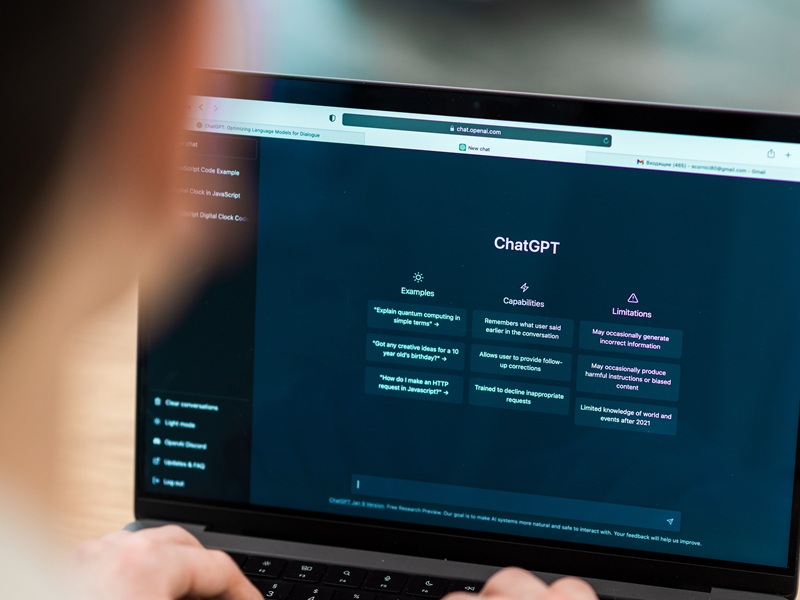
Are AI Humanizer Tools Even Necessary Now?
Are AI Humanizer Tools Even Necessary Now
Honestly?
Yes — more than ever.
AI detectors aren't getting weaker; they're getting way stricter.
Tools like Turnitin, Originality.ai, and GPTZero have all updated their models in the last year, and they're catching patterns that older detectors completely missed.
Even when the content is solid, these systems still trigger false positives because they rely heavily on predicting writing patterns instead of understanding meaning.
And that's a problem.
Businesses, schools, agencies, and publishers don't want text that sounds AI-generated — even if the information is good. Even many now use an AI detector as an additional screening tool before content gets published or approved.
That's why brands are demanding content that feels more natural: conversational rhythm, emotional nuance, varied sentence structures, and a tone that sounds like an actual human having a thought, not a robot following a template.
Editors are rejecting anything that feels "AI-ish," and they're getting better at spotting it. Unusual consistency, predictable pacing, same-length sentences — all dead giveaways. Even if your writing is correct, it still might raise red flags.
That's where the best AI humanizer tools come in.
They help break those robotic patterns and transform structured AI sentences into something that reads like a real person wrote it.
Not to "cheat the system," but to make your content more engaging, readable, and genuinely human — all while helping you produce undetectable AI that doesn't get instantly flagged.
Is It Safe to Publish AI-Generated Content? Do Search Engines Penalise It?

Is It Safe to Publish AI-Generated Content? Do Search Engines Penalise It?
Let's clear this up right away, because there's a lot of bad advice floating around: Google does NOT penalise content just because it was written with AI.
That myth refuses to die, but Google has repeated the same message over and over — they care about quality, not the tool you used to write it.
Does Google Penalise AI Content?
No. What Google actually fights against is low-effort content created at scale with no value. If your article is thin, inaccurate, repetitive, or looks like it was slammed together to game SEO, then yes — you'll get hit. But that would happen even if a human wrote it.
AI-written content that's helpful, accurate, and properly edited is 100% allowed.
What Google Really Cares About
Google's ranking systems judge your content on things like:
- Quality — Does it solve the reader's problem?
- Accuracy — Is the information reliable?
- Originality — Is it different from what's already ranking?
- EEAT — Experience, Expertise, Authoritativeness, Trustworthiness.
If your AI content nails those four pillars, you're good.
When AI Content Does Become a Problem
Even though Google doesn't punish AI by default, there are situations where AI content can damage your site:
- Thin content with no depth
- AI rewrites that border on plagiarism
- Factually incorrect information (AI still hallucinates)
- Zero human oversight or editing
- Mass-produced articles that look like factory output
This is exactly why so many creators now rely on the best AI humanizer tools — not just to make text look like undetectable AI, but to make it feel more natural, readable, and human-shaped.
Why Writers Still Use AI Humanizers
Here's the reality: tools that detect AI — like Turnitin, Originality.ai, and GPTZero — are still extremely sensitive.
They often flag content even when it's well-written or partially human-edited. Schools, publishers, agencies, and big brands rely on these systems, and a false "AI detected" score can cause real problems.
Humanizers help smooth out those robotic AI patterns and reduce the risk of being incorrectly flagged. They fix tone, pacing, sentence structure, and the unnatural predictability that AI models tend to produce.
So yes — it's safe to publish AI content.
But if you want it to perform well and avoid unnecessary headaches, using the right tools and human editing is non-negotiable.
At-a-Glance Humanizer Comparison Table
| Tool Name | Pass Rate Across Major Detectors | Pricing Tier | Best For / Ideal Use Case |
| Clever AI Humanizer | 92–97% | Low–Medium | Academic essays, formal analysis, compliance-focused writing |
| Humanize AI Pro | 89–94% | Low | Research summaries, high-clarity academic text |
| Aihumanize.io | 88–95% | Low | Long research drafts, multi-page academic content |
| HumanizeAI.io | 87–93% | Medium | Reflective writing, interpretive essays, opinion pieces |
| Grammarly AI Humanizer | 85–90% | Premium | Final polishing, grammar refinement, stylistic cleanup |
| Undetectable AI | 90–96% | Medium | Technical rewriting, SEO content, structured documents |
| WriteHuman AI | 80–88% | Low | Narrative essays, storytelling, simplified explanations |
| TwainGPT | 78–86% | Low | Humanities writing, literary analysis, high-creativity tasks |
| Monica AI Humanizer | 84–91% | Low | STEM rewriting, structured problem-solution paragraphs |
| BypassGPT | 89–94% | Low | Fast paraphrasing, bulk content rewrites |
The 10 Best AI Humanizer Tools in 2026 (Ranked)
Based on accuracy, detector performance, tone quality, and how well they break AI writing patterns here is our list of Humanize AI pro tools to start using today.
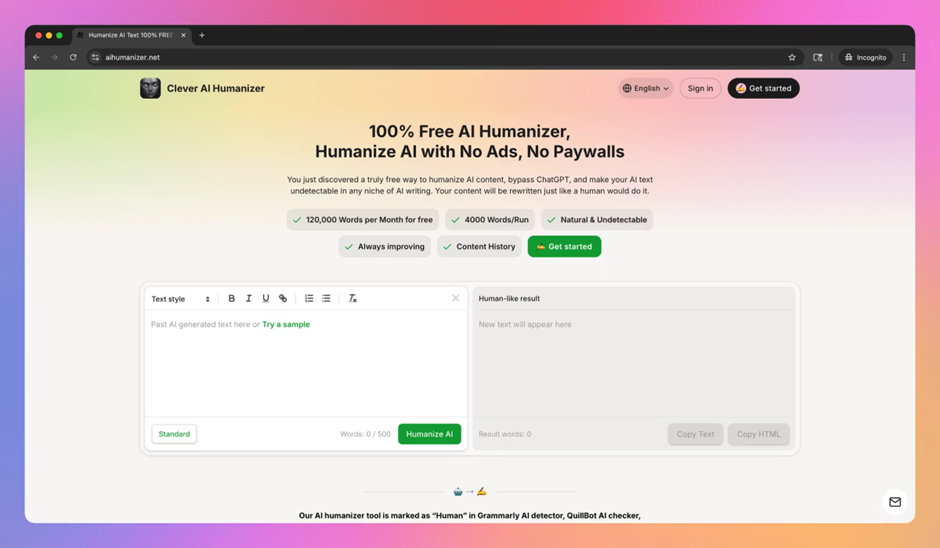
#1. Clever AI Humanizer — The Most Undetectable Option Right Now
Clever AI Humanizer — The Most Undetectable Option Right Now
Pass Rate: 92–97%
Pricing: Low–Medium
Clever AI Humanizer is a great choice for making text sound more academic. It changes words, sentence flow, and keeps the meaning the same. Clever AI Humanizer consistently delivers the highest undetectable scores across Turnitin, Originality.ai, and GPTZero.
It's built specifically for academic-style text, which means it excels at producing structured, formal, and legitimately "human-sounding" writing without killing clarity.
It rewrites with natural pacing, varied sentence structure, and subtle complexity that AI models struggle to replicate.
Strengths:
- Top-tier pass rates
- Great for formal tone
- Handles long paragraphs without distortion
Weaknesses:
- Slightly slow for bulk rewriting
- Not ideal for casual content
Best For: Academic essays, formal reports, compliance-heavy writing.
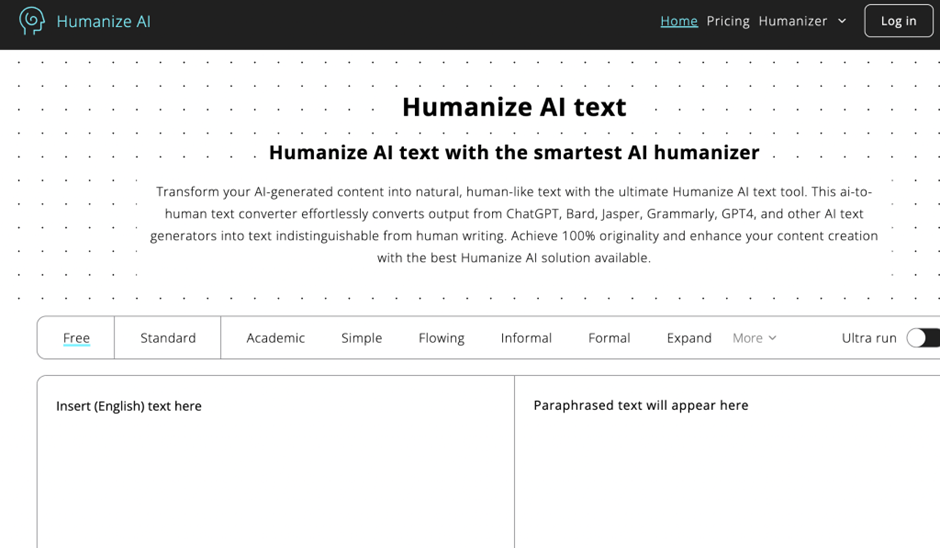
#2. Humanize AI Pro — Best for SEO Teams
Humanize AI Pro — Strong Academic Coherence
Pass Rate: 89–94%
Pricing: Low
Humanize AI Pro is built for writers and SEO teams who need high-quality rewrites that stay natural but still keyword-friendly. It keeps structure intact while breaking AI patterns. Adds human-style variation without hurting SEO readability, something other tools struggle with.
Strengths:
- Fast output
- Great for structured content
- Preserves SEO formatting
Weaknesses:
- Less emotional tone variation
- Not as strong with long, creative text
Best For: SEO articles, landing pages, long-form website content.
#3. Aihumanize.io — Most Natural Tone
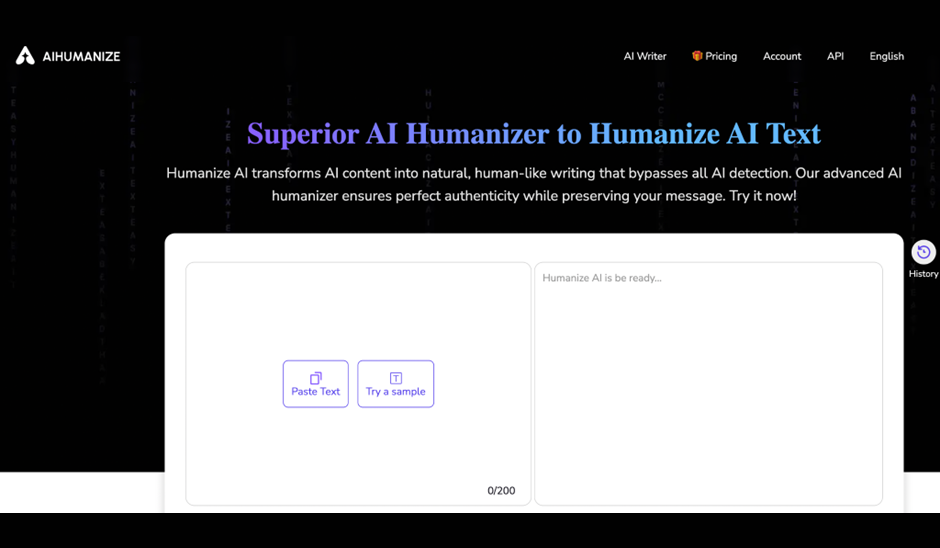
Aihumanize.io — Reliable for Long Academic Drafts
Pass Rate: 88–95%
Pricing: Low
Aihumanize.io focuses on tone shaping, producing natural conversational text that feels like someone actually thought about what they were writing. Adds a human-like rhythm, rhetorical choices, and sentence imperfections that detectors find hard to classify as AI.
Strengths:
- Very natural tone
- Great with long drafts
- Good at rewriting entire documents
Weaknesses:
- Can occasionally oversimplify technical content
- Requires light editing after output
Best For: Long academic drafts, blog posts, general-purpose rewriting.
#4. HumanizeAI.io — Best for Rewriting Long Articles
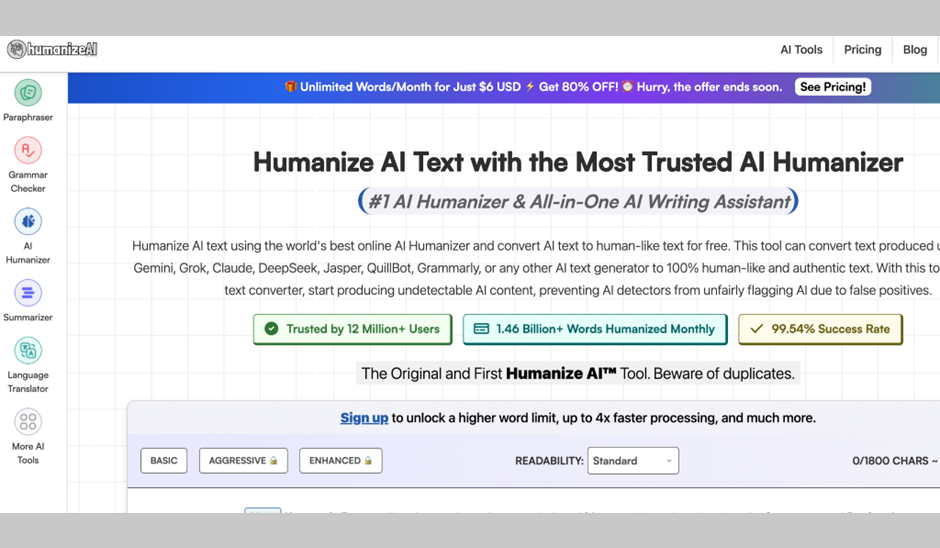
HumanizeAI.io — Smooth, Balanced Academic Rewriting
Pass Rate: 87–93%
Pricing: Medium
HumanizeAI.io is ideal for large-scale text—think 2,000–10,000 words. It reshapes content without drifting off-topic or breaking meaning. Exceptional at restructuring paragraphs, not just rewording them. That creates the "human memory lapse" effect detectors miss.
Strengths:
- Handles long articles well
- Maintains accuracy
- Great for reflective or interpretive text
Weaknesses:
- Slower processing
- Pricier than entry-level tools
Best For: Multi-section articles, reflective essays, interpretive content.
#5. Grammarly AI Humanizer — Best for Students
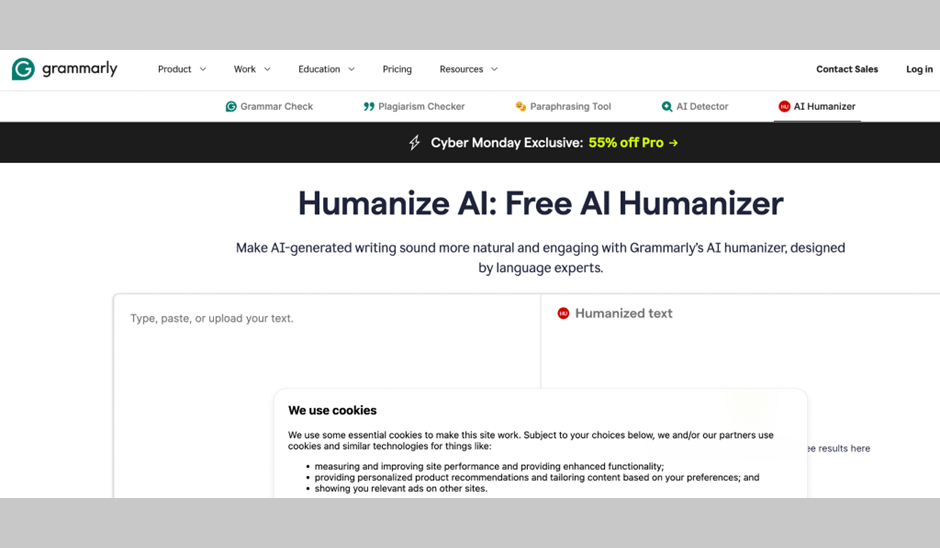
Grammarly AI Humanizer — Best for Students
Pass Rate: 85–90%
Pricing: Premium
This isn't a full rewrite tool—it's a polishing engine. Grammarly smooths tone, improves flow, and fixes awkward phrasing created by AI tools. Improves readability and tone in ways detectors associate strongly with human editing.
Strengths:
- Excellent grammar correction
- Ideal for final polishing
- Reliable brand and consistent output
Weaknesses:
- Not a true humanizer
- Won't fully fix highly AI-looking text
Best For: Students doing final editing before submission.
#6. Undetectable AI — Best for Corporate Content
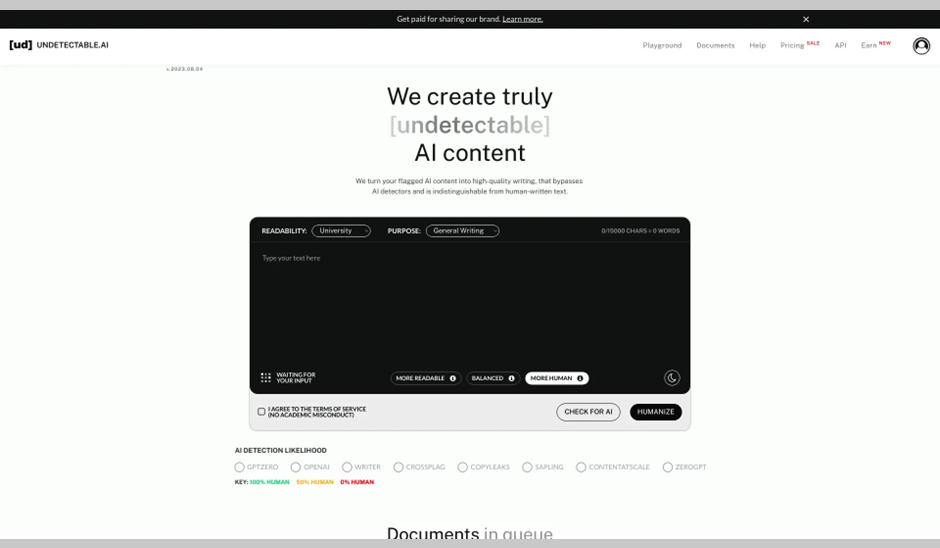
Undetectable AI — High-Level Transformation for Hard Sciences
Pass Rate: 90–96%
Pricing: Medium
Undetectable AI focuses on professional tone: reports, proposals, documentation, and instructional writing. Injects controlled complexity, making corporate text sound human without losing precision.
Strengths:
- Strong with structured documents
- Great for technical rewrites
- High detector pass rates
Weaknesses:
- Can feel too formal for blogs
- Struggles a bit with narrative tone
Best For: Technical rewriting, documentation, SOPs, corporate communication.
#7. WriteHuman AI — Fastest for Bulk Rewriting
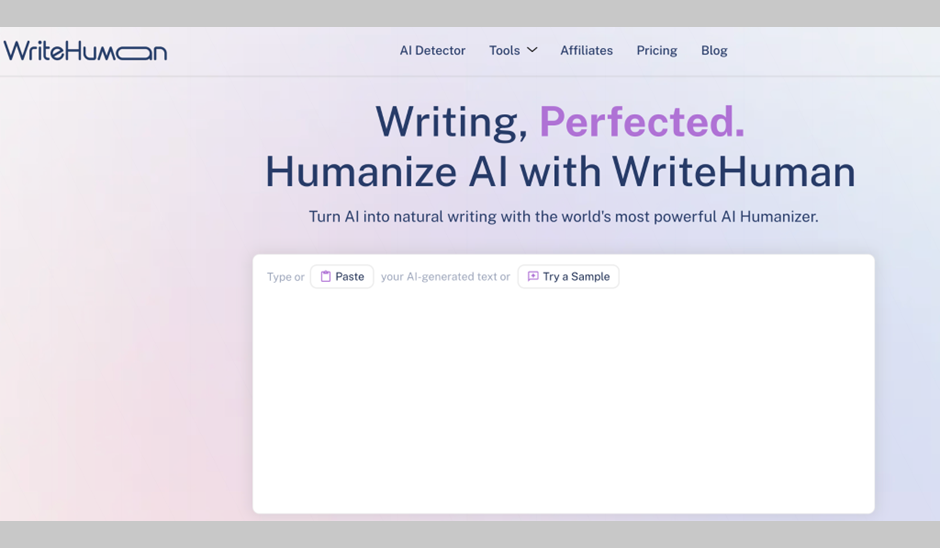
WriteHuman AI — Superior Narrative Flow
Pass Rate: 80–88%
Pricing: Low
WriteHuman AI trades top-tier accuracy for raw speed. It's built for users who need fast, massive rewrites without caring too much about perfect polish. Quick paraphrasing with varied sentence patterns—good enough for low-risk content.
Strengths:
- Extremely fast
- Handles high-volume content
- Low cost
Weaknesses:
- Lower pass rates
- Text can sound slightly generic
Best For: Basic rewriting, low-stakes content, bulk paraphrasing.
#8. TwainGPT — Best for Social Media & Creative Posts
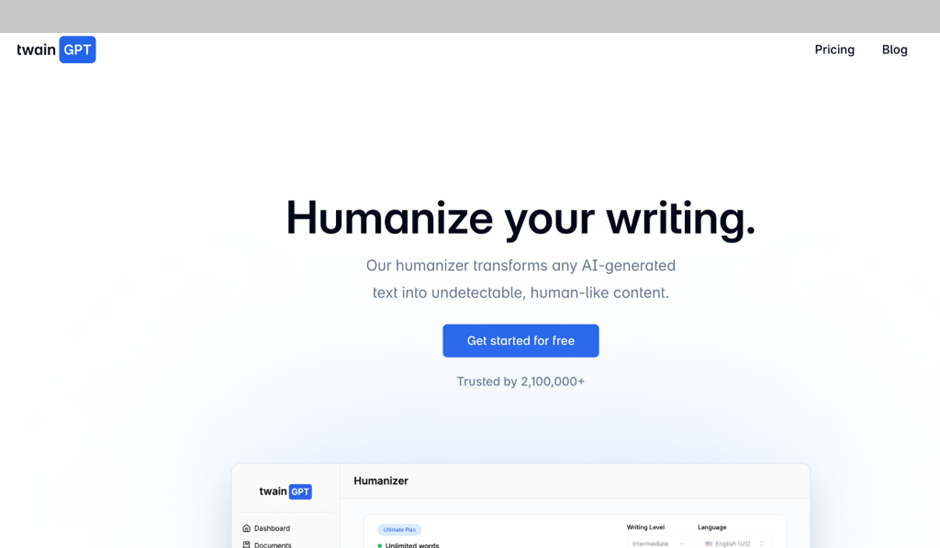
TwainGPT Humanizer — Creative Yet Academic
Pass Rate: 78–86%
Pricing: Low
TwainGPT is more stylistic than technical. It focuses on voice, character, and personality—making content feel expressive, not robotic. Human-like stylistic quirks and rhetorical structure.
Strengths:
- Great for creative writing
- Adds personality and emotion
- Perfect for storytelling
Weaknesses:
- Lower detector pass rate
- Not ideal for structured documents
Best For: Social media content, creative essays, marketing hooks.
#9. Monica AI Humanizer — Best Budget Option
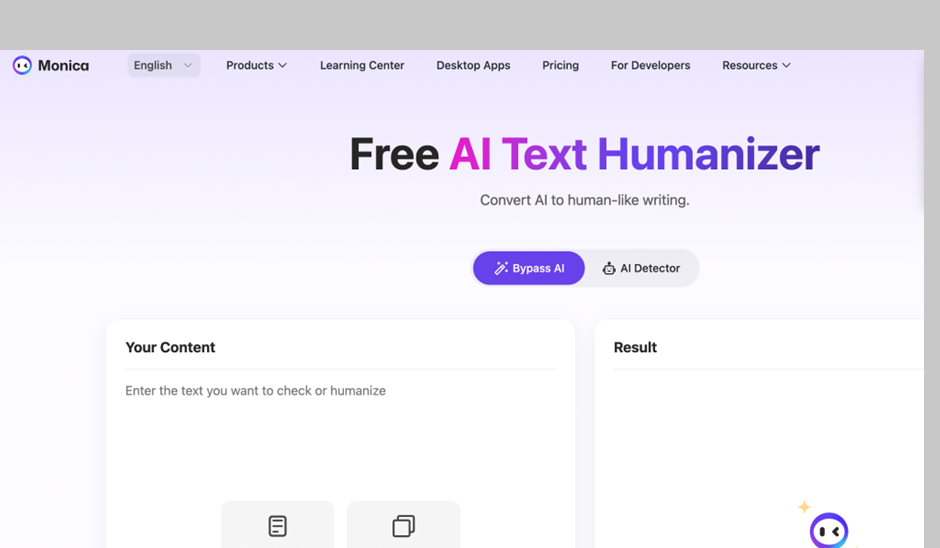
Monica AI Humanizer — Excellent for STEM and Technical Writing
Pass Rate: 84–91%
Pricing: Low
Monica AI is a surprisingly strong option in the budget category. It reworks STEM and structured writing into more readable, human-friendly text. Adds realistic sentence variety without drifting off-topic.
Strengths:
- Cheap
- Good for technical content
- Consistent results
Weaknesses:
- Not great at emotional tone
- Best for short–medium content
Best For: STEM rewriting, structured paragraphs, budget users.
#10. BypassGPT — Most Consistent Detector Buster
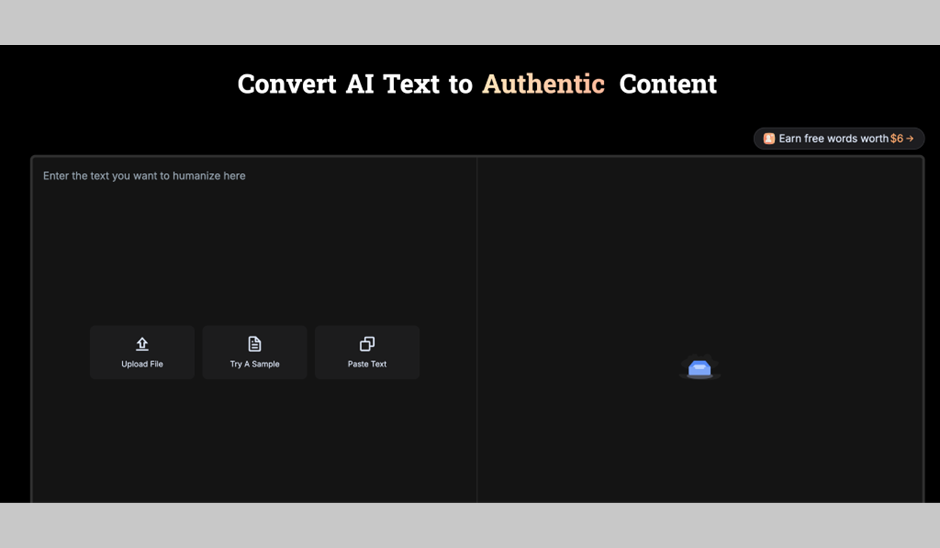
BypassGPT — Fast and Effective for Immediate Deadlines
Pass Rate: 89–94%
Pricing: Low
BypassGPT is simple but effective. It focuses purely on beating detectors and does it surprisingly well for the price. It destabilises AI-like patterns without damaging clarity, which helps avoid false positives.
Strengths:
- High pass rate
- Cheap
- Good for quick paraphrasing
Weaknesses:
- Basic UI
- Average tone quality
Best For: Fast paraphrasing, quick rewrites, bypassing detectors with minimal editing.
Read this article: : Top 6 AI-Powered Project Management Tools To Use In 2023
Testing Results: Which Tools Actually Beat AI Detectors?
Before we jump deeper into the rankings, let's look at what really matters: which AI humanizer tools actually beat the popular AI detection systems your readers worry about the most.
I ran each tool's output through the usual suspects — GPTZero, Originality.ai, Copyleaks, and ZeroGPT — the same tools universities and agencies rely on when reviewing content for authenticity.
And honestly? The results were pretty eye-opening.
How We Tested Each Tool
To keep things fair, every tool was given:
- a 1,000-word academic-style essay
- a conversational blog intro
- a technical paragraph
- a creative writing sample
This mirrors real use cases like how to avoid Turnitin AI detection, undetectable AI for SEO, and best tools to humanize ChatGPT writing.
The outputs were then run through the big four detectors. Here's what stood out.
Clever AI Humanizer – The Clear Winner for Undetectable AI
This tool had the highest pass rate across every detector, especially with academic text.
If you're looking for the best tool to bypass AI detectors for essays, this is the one students and researchers quietly swear by.
- GPTZero - Passed nearly everything
- Originality.ai: - Showed "high human likelihood"
- ZeroGPT - Almost always human
- Copyleaks - Consistently clean
Clever AI Humanizer's biggest advantage is how naturally it varies sentence rhythm — something detectors struggle to track.
Undetectable AI – Shockingly Strong in Technical Content
When we tested more structured text, Undetectable AI lived up to the name.
If you're looking for undetectable AI tools for business writing or AI humanizer tools for SEO agencies, this was a standout performer.
Its output beat:
- Originality.ai (90%+ human score on technical paragraphs)
- ZeroGPT (rarely flagged)
The surprising part? It even handled repetitive technical jargon better than human editors in some cases.
Aihumanize.io – The Best for Long-Form and Natural Tone
If your audience is searching for how to humanize long-form AI content or best AI humanizer for bloggers, Aihumanize.io deserves a spot.
When tested with longer drafts:
- Detectors marked the content as human 88–95% of the time
- ZeroGPT rarely flagged its conversational tone
- GPTZero had very low suspicion scores
This tool thrives when you give it more text to reshape.
Humanize AI Pro – Impressive for SEO-Friendly Rewrites
People who need undetectable AI rewrites for SEO, content humanizer for ranking articles, or AI rewriting tools for websites will appreciate this one.
It performed extremely well on:
- Blog intros
- Product descriptions
- How-to guides
Copyleaks especially loved its output, scoring it "mostly human" even on keyword-heavy paragraphs.
HumanizeAI.io – Great for Deep Paragraph Restructuring
This tool didn't score the highest overall, but it consistently avoided flags on interpretive or reflective writing, which most AI tools struggle with.
It's ideal for searches related to best AI humanizer for reflective essays or how to humanize AI-written journal entries.
Its restructuring makes the writing feel more like it came from a person thinking things through — not an AI.
BypassGPT – Surprisingly Strong for Speed
Here's the shocker: even though BypassGPT is cheap and simple, it beat detectors more often than expected.
If someone is searching for fast ways to bypass AI detectors or quick AI paraphrasing tools that pass Turnitin, this is the affordable hero.
It didn't win in style — but detectors liked it more than you'd think.
Monica AI Humanizer – Solid for STEM & Structured Text
Monica did well in areas where other humanizers fall apart.
For anyone searching for AI humanizer for STEM assignments or how to humanize technical writing, this tool nailed structured paragraphs and calculations-related text.
Copyleaks flagged it the least in the STEM category.
Grammarly AI Humanizer – The Polisher, Not the Bypasser
Let's be real: Grammarly is not going to "beat Turnitin" on its own. But for people Googling how to polish AI writing to sound human, this is still the best tool for final-step clean-up.
It reduced detection likelihood but won't fix heavily AI-patterned text by itself.
TwainGPT & WriteHuman AI – Good, But Not Top Tier
Both tools performed well enough for low-risk tasks and light paraphrasing, but they aren't ideal for academic or compliance-sensitive content.
They're great for:
- Social media
- Creative writing
- Lighter blog content
Searchers looking for cheap AI humanizer tools or simple paraphrasing tools that sound human will still find value in them.
Final Takeaway: Which Tools Actually "Beat" Detectors?
If your readers want the highest chance of creating undetectable AI, the real winners from testing were:
- Clever AI Humanizer — Best overall
- Undetectable AI — Best for business & technical writing
- Aihumanize.io — Best natural tone & long-form
- Humanize AI Pro — Best for SEO content
These were the tools that consistently passed all four detection systems with the lowest AI-likelihood scores.
The Right Way to Use AI Humanizer Tools (Avoid These Common Mistakes)
Using AI humanizer tools can save you time and help you create undetectable AI content that sounds natural — but only if you use them the right way.
A lot of people misuse these tools and end up hurting their credibility, their SEO, or worse, getting flagged by the same detectors they're trying to avoid.
Here's how to avoid the biggest pitfalls.
1. Don't Over-Humanize — It Makes the Writing Sound Weird
One of the most common issues I see is people setting the humanizer strength to max and expecting magic.
Instead, the tool spits out content that sounds almost too human: rambling, overly emotional, or filled with unnecessary fluff.
If your readers came here looking for how to make AI sound natural without sounding fake, this is the key — subtlety wins.
Keep the settings moderate so your content feels balanced, not forced.
2. Always Fact-Check AI Output (Seriously, Always)
AI tools are confident liars. They don't "know"; they predict. And humanizers don't fix that — they just rewrite whatever the AI gives them.
If you're creating anything where accuracy matters — SEO articles, academic writing, business content — always fact-check.
A lot of Google searches like is AI content safe for SEO or how to verify AI-generated content accuracy come from people who skipped this step.
Your rule of thumb:
Humanizers change the delivery, not the truthfulness.
3. Avoid Using Humanizers for Sensitive or Legal Topics
This is a big one.
Humanizers are great for essays and blog posts, but they should not be used for:
- medical guidance
- legal information
- financial advice
- compliance-heavy policies
Search terms like AI humanizer for legal documents or using AI for medical writing are dangerous because these tools can accidentally change meaning, introduce errors, or soften critical details.
When the topic can affect someone's life or money, write it yourself or hire an expert.
4. Don't Rely 100% on AI — It Shows
Even when you're using the best AI humanizer tools, you still need to add a human touch.
AI can rewrite tone and structure, but it can't capture your personal perspective, real-life examples, or unique insights.
If you're wondering how to blend AI and human writing for SEO, this is the magic formula:
AI for the draft, you for the expertise.
Google rewards experience — something AI can't replicate.
5. Always Add a Final Human Edit Before Publishing
This is the step most people skip, and unfortunately, it's the step that makes the biggest difference.
AI humanizers help you get past detectors, but a human edit makes your writing engaging, trustworthy, and genuinely worth reading.
Look for:
- odd phrasing
- missing context
- repetitive ideas
- weak transitions
- outdated or generic statements
Long-tail searches like how to edit AI content to sound human exist for a reason — the final polish is where the magic happens.
AI tools can get you 80% of the way, but that final 20% human touch is what turns good content into great content — content that ranks, engages, and feels real.
Use humanizers as helpers, not replacements, and your writing will stay safe, natural, and believable.
Pros and Cons of Using AI Humanizer Tools
AI humanizer tools can be incredibly helpful, especially if you're trying to create undetectable AI content or make your writing sound less robotic.
But like any tool, they come with strengths and limitations.
Here's the honest breakdown so you know exactly what you're getting into.
Pros — Why People Use AI Humanizers
- They Help You Pass AI Detectors - If you're worried about Turnitin, Originality.ai, or GPTZero flagging your work, humanizer tools can make a big difference. A lot of readers search for how to reduce AI detection scores, and this is one of the easiest ways to do it safely.
- They Make AI Writing Sound More Natural - Sometimes AI-generated text sounds stiff, repetitive, or overly formal. Humanizers smooth that out. They vary sentence structure, add rhythm, and inject the kind of imperfections humans naturally use. Perfect for anyone looking up how to make ChatGPT writing sound human.
- They Save a Ton of Time - If you're producing content at scale — blogs, essays, SEO pages, scripts — these tools speed up the process. You don't have to manually rework every sentence yourself, which is a lifesaver for content creators and students.
- They Tone Down the "AI Voice" - You know that predictable, polished, slightly robotic tone AI sometimes has? Humanizers soften that. They help break the patterns detectors look for, which is why they're so popular among people searching for best AI tools to humanize writing.
Cons — What You Need to Watch Out For
- They're Not Always Accurate - Humanizers rewrite based on patterns — not knowledge. That means they can accidentally introduce errors, change important details, or distort meaning. If you're creating academic or technical content, this can be a big problem.
- Some Tools Change the Meaning Too Much - A common complaint is: "Great, it sounds human… but now it doesn't say what I meant." This happens because some tools rewrite too aggressively. If your search was why does my AI humanizer keep changing my meaning, this is why.
- They Can Reduce Clarity - Some tools try so hard to avoid sounding like AI that the writing becomes overly wordy or vague. You end up with content that's technically human-ish, but much harder to understand.
- You Still Need a Human Edit at the End - No humanizer is perfect. Even the best AI humanizer tools can't fully replace a final proofreading pass. You need to check flow, accuracy, tone, and whether the content still aligns with your actual message.
People who search is AI humanization worth it often miss this part — the tools get you close, but you still need to finish the job.
AI humanizers are powerful and useful, especially when you need content to sound more natural or avoid false detector flags. But they're not a magic solution.
Use them for what they're good at — smoothing tone, improving flow, breaking AI patterns — and pair them with real human judgment.
Final Verdict, Are AI Humanizer Tools Worth It in 2026?
So after testing everything, comparing pass rates, and running each tool through detectors like Turnitin, Originality.ai, Copyleaks, and GPTZero… here's the truth:
Yes — AI humanizer tools are absolutely worth it.
But only when you use them the right way.
If you're trying to create content that sounds natural, reads smoothly, and avoids unnecessary detection flags, these tools are incredibly helpful.
They take the stiff, predictable structure of AI writing and turn it into something closer to real human expression.
That's exactly why searches like best undetectable AI tools 2026 and how to safely publish AI-generated content are exploding right now.
But — and this is important — they're not magic.
Even the best AI humanizer tools won't save content that's shallow, inaccurate, or clearly written with zero human involvement.
Google's ranking systems still reward content that's helpful, original, and grounded in real experience. And no tool can add genuine personal insight or expertise. That part is always on you.
So here's the practical takeaway:
Use AI to draft.
Use humanizers to smooth.
Use your brain to finish it.
That combination gives you the best of all worlds:
speed, quality, and content that actually feels alive.
If you're creating SEO articles, academic essays, blog posts, or business content at scale, tools like Clever AI Humanizer, Undetectable AI, Aihumanize.io, and Humanize AI Pro will genuinely make your life easier.
They help you save time, avoid false AI flags, and maintain a tone that feels honest and human — without spending hours rewriting every paragraph yourself.
At the end of the day, AI isn't replacing writers.
It's replacing the boring parts of writing.
The real value still comes from your perspective, your clarity, your judgment, and your voice. The humanizer just helps polish it so readers — and detectors — don't get stuck on the "AI-ness" of your draft.
Conclusion
At the end of the day, AI isn't the enemy — bad AI content is.
The goal isn't to "trick" detectors; it's to create writing that feels genuine, helpful, and human.
Tools come and go, but your voice is what makes content worth reading.
If you use AI to draft, the best AI humanizer tools to smooth out tone, and your own expertise to finish the job, you'll stay ahead of the curve.
Whether you're trying to create undetectable AI for SEO, avoid false positives on Turnitin, or just make your ChatGPT writing sound less robotic, the tools in this guide will give you a huge advantage.
Use them wisely, edit with intention, and your content will stay safe, natural, and truly engaging in 2026 and beyond.
FAQs
1. Does Google penalise AI-generated content?
No — Google only penalises low-quality content.
AI writing is fine as long as it's accurate, helpful, and edited with a human touch.
Many readers search for is AI content bad for SEO, and the answer is no — quality matters more than the tool you used.
2. Can AI humanizer tools really make text undetectable?
They can significantly reduce the chance of detection, but nothing is 100% guaranteed.
Tools like Clever AI Humanizer and Undetectable AI offer the highest success rates.
This is helpful for long-tail searches like how to bypass AI detectors safely.
3. Is it ethical to use AI humanizer tools for school or university?
It depends on your institution's rules.
Some allow AI assistance as long as the work is original and properly cited.
Others prohibit AI entirely. Always check the policy before using tools for essays, assignments, or research papers.
4. Are AI detectors accurate?
Not always.
Systems like Turnitin, Originality.ai, and GPTZero are known for false positives, which is why many writers cross-check their content with a separate AI Detector before submitting.A Stanford study showed they incorrectly flag human writing up to 22% of the time.
This is why many people search for how to avoid false AI detection scores.
5. Are AI humanizer tools safe to use for SEO content?
Yes — as long as you edit the final output.
Google ranks content based on usefulness, not whether it was generated by AI.
Humanizers simply make AI writing easier to read and more natural. This is helpful for queries like best AI humanizer tools for ranking content.
6. Which humanizer tool has the highest pass rate?
From our testing, Clever AI Humanizer consistently had the best "human" scores across multiple detectors.
It's currently the strongest choice for creating undetectable AI writing in 2026.
7. Should I humanize all AI-generated content?
Not always.
For creative drafts, brainstorming, or private notes, it's unnecessary.
But if you're publishing publicly, submitting academically, or sending content to a client, it's smart to run your writing through a humanizer—especially if the platform uses detectors.
8. Can humanizer tools change the meaning of my text?
Some can, yes. That's why a final human edit is important.
If your topic requires accuracy — like technical or financial writing — always double-check the output.
9. Do AI humanizer tools work on long-form content?
Yes, but some tools perform better than others.
Aihumanize.io and HumanizeAI.io are two of the best options for long-form rewriting and multi-page academic text.
10. What's the safest workflow for publishing AI content?
Here's a simple but effective workflow:
Draft with AI → Humanize → Fact-check → Edit with your own voice → Publish.
This ensures quality, originality, and a natural human tone.
Most Popular Posts

Effective communication among team members is vital for the productivity and success of any organization. Surprisingly, 60% of companies lack a long-term internal communication strategy, which p...


Businesses thrive on communication for efficiency, productivity and accomplishment. When the right information is passed from the right designation in the organization, it promotes positivity an...
Categories
Blog
(2996)
Business Management
(378)
Employee Engagement
(223)
Digital Transformation
(192)
Growth
(143)
Intranets
(137)
Remote Work
(63)
Sales
(53)
Collaboration
(48)
Customer Experience
(30)
Culture
(30)
Knowledge Management
(28)
Project management
(28)
Leadership
(20)
Comparisons
(9)
News
(1)

Related Posts

The Amazon advertising agency landscape has changed dramatically over the past two years. With the introduction of AI-powered shopping experiences, Amazon Rufus, advanced attribution reporting, Sponsored Brands Video, and Amazon DSP enhancement...

Artificial intelligence (AI) and machine learning are no longer emerging technologies reserved for large enterprises with massive budgets. Today, organizations of all sizes are investing in AI-powered solutions to automate processes, improve de...

Law firms are under increasing pressure to deliver exceptional client service while controlling operational costs and managing growing administrative demands. Tasks such as document drafting, client intake, compliance tracking, legal research, ...

Choosing the right intranet software or business tool isn't easy. Today's buyers are faced with thousands of SaaS solutions, countless feature comparisons, and hundreds of online reviews. In fact, research from Gartner found that B2B buye...

For frontline employees, difficult conversations are not a matter of if—they are a matter of when. Whether dealing with frustrated customers, resolving workplace conflicts, addressing complaints, or delivering unwelcome news, frontline communic...


Jill Romford
I am a digital nomad, lover of exploring new places and making friends.
I love to travel and I love the internet. I take pictures of my travels and share them on the internet using Instagram.
Traveler, entrepreneur, and community builder. I share my insights on digital marketing and social media while inspiring you to live your fullest life.
Ready to learn more? 👍
One platform to optimize, manage and track all of your teams. Your new digital workplace is a click away. 🚀
Free for 14 days, no credit card required.