
Insight Blog
Agility’s perspectives on transforming the employee's experience throughout remote transformation using connected enterprise tools.
20 minutes reading time
(3957 words)
Research Shows Phishing Attacks Are Evolving Fast — Here’s How Email Protection Software Keeps Your Business Safe

Research Shows Phishing Attacks Are Evolving Fast — Here’s How Email Protection Software Keeps Your Business Safe
Discover how attackers bypass basic email filters and why modern email protection software is now essential. Learn how to defend your business against recent phishing attacks on companies and emerging phishing threats in 2025.
Research Shows Phishing Attacks Are Evolving Fast — Here’s How Email Protection Software Keeps Your Business Safe

If you feel like phishing emails look a lot more convincing these days, you're not imagining it.
Cybersecurity researchers have reported that phishing attacks jumped by roughly 47% in the last year, and the tactics criminals are using now are nothing like the sloppy scam emails we used to laugh at.
These attacks are cleaner, more personalised, and harder to spot—sometimes even IT teams get fooled.
The uncomfortable truth?
Traditional email filters aren't built for this level of sophistication anymore. Attackers are moving faster, using AI-generated messages, spoofed domains, and malware-free social engineering tricks that slip straight through outdated defences.
That's where Email protection software comes in.
Instead of relying on simple keyword checks or old-school rules, modern solutions use AI, behavioural analysis, and real-time threat detection to catch the dangerous stuff before it ever reaches your inbox.
In a world where one click can shut down an entire business, that extra layer of intelligence isn't optional—it's essential.
Read this article: : Top 6 AI-Powered Project Management Tools To Use In 2023
Cybercriminals Are Getting Smarter — Here's Why

Cybercriminals Are Getting Smarter — Here's Why
Cybercriminals aren't slowing down — if anything, they're levelling up.
When you look at recent phishing attacks on companies, you can see the pattern: attacks are getting cleaner, more targeted, and far harder to spot.
And the trend isn't easing up. Security reports tracking recent phishing attacks 2025 show that scammers are now using AI to craft flawless emails that mimic internal messages, supplier invoices, HR requests, and even CEO announcements.
This isn't the old-school "click this suspicious link" stuff anymore.
Modern attackers use AI-generated phishing scams that adapt to the person they're targeting. They track behaviour, scrape public data, and clone writing styles so well that even tech-savvy employees struggle to tell what's real.
And because these new attacks use malware-free phishing techniques — meaning there's no obvious virus attached — they often bypass traditional email filters entirely.
That's why email protection software is now essential.
It doesn't just scan attachments; it looks for behavioural anomalies, fake sender signals, strange login patterns, and impersonation attempts before the email ever reaches your team.
Simply put: the criminals have upgraded their toolkit. If your organisation hasn't upgraded its defences, you're already behind.
The New Ways Cybercriminals Are Getting Smarter
- AI-Generated Phishing Emails That Look 100% Legit - Attackers now use AI tools to write emails that perfectly mimic internal communication — same tone, same formatting, same urgency. These emails are clean, natural, and extremely hard to flag.
- AI-Cloned Writing Styles From Public Data - Scammers scrape blogs, LinkedIn posts, GitHub comments, and even leaked Slack chats to recreate an employee's writing style. The phishing email feels like a real message from a colleague.
- Malware-Free Social Engineering Emails - No malicious attachments. No executable files. Just clever wording that tricks the user into acting. Because there's "nothing harmful," old email filters let them straight through.
- QR Code Phishing (Email Quishing) - Attackers send emails containing QR codes instead of clickable links. When scanned, the victim is redirected to a fake login page. This method bypasses URL scanners completely.
- Redirect-Chain Phishing Links - Modern phishing URLs hop through several legitimate websites before hitting the malicious page. This chain confuses link scanners and makes the destination look safe until the last second.
- Temporary Burner Domains That Auto-Expire - Attackers create domains that exist for a few minutes — long enough to send and click the email, but too short for detection systems to blacklist them.
- AI-Personalised Emails Based on Real-Time Scraping - Modern phishing emails reference your job title, team, software tools, and even upcoming company events. All scraped from press releases, social media pages, and job listings in seconds.
- Browser-in-the-Browser (BitB) Fake Login Windows Sent Through Email Links - The user clicks a link in an email and a fake login popup appears — not a webpage, an actual fake browser window. It looks identical to Google/Microsoft sign-in, making password theft easy.
- Compromised Email Thread Hijacking - Once attackers breach one account, they insert themselves into existing email threads — invoices, HR approvals, vendor requests, whatever. Because it's a real thread, it feels completely trustworthy.
When It Comes to Email, Attackers Now Bypass Basic Filters with Ease
The scary part is that most of today's phishing emails don't break any of the old "rules" that traditional filters rely on.
That's why so many recent phishing attacks on companies — and especially the big incidents highlighted in recent phishing attacks 2025 — slip straight into inboxes without raising a single flag.
Attackers have simply become too clever. Here's exactly how they're getting around the filters you think are protecting you.
- Obfuscation Techniques That Trick Basic Scanners - Cybercriminals hide malicious content in ways that look totally harmless to traditional email filters. They'll break up malicious code, mask dangerous links in innocent-looking text, or encode characters so they appear normal to the user but unreadable to basic detection tools. It's stealthy, and it works.
- Zero-Day Malicious URLs - Attackers now use URLs that haven't been seen before — literally created minutes before sending the email. Because these domains are brand new, reputation-based filters have nothing to compare them to. No history means no warning.
- This is exactly why email protection software now relies on behavioural analysis, not just URL blacklists.
- Redirect Chains That Bounce Through Safe Sites - Modern phishing links might hop through five or six completely legitimate pages (Google redirect links, AWS storage, Medium posts, charity sites — you name it) before landing on the malicious final destination.
- By the time you hit the dangerous page, the email filter has already marked the link as safe. It's a nightmare for outdated security tools.
- Temporary Burner Domains That Expire Fast - Some attackers use domains that exist for only a few hours. The goal? Send the phishing email, wait for victims to click, then wipe the domain before scanners notice. Traditional email filters can't blacklist something that disappears the same day it's created.
What Happens When Phishing Breaks Through?
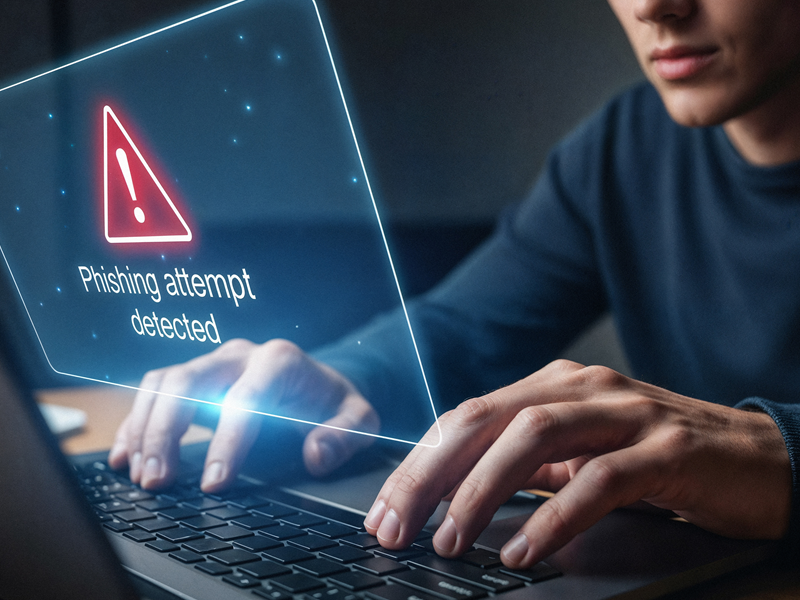
What Happens When Phishing Breaks Through?
Let's be real — if a phishing attack slips past your defences, the fallout isn't "minor." It's expensive, messy, and embarrassing.
And with how attackers are evolving, this isn't hypothetical anymore.
Many of the recent phishing attacks on companies in 2024–2025 started with just one employee clicking one convincing email. That's all it takes.
Financial Loss That Hits Fast
The average cost of a data breach is now sitting well above $4.5 million, and phishing is one of the easiest ways in.
Once attackers get access, they move quickly — stealing credentials, initiating fraudulent payments, or planting ransomware.
Most companies don't even realise what happened until the money's already gone.
Data Theft and Compliance Nightmares
If sensitive data leaks — employee info, customer records, medical data, or financial files — you're suddenly dealing with painful compliance issues.
Think GDPR, HIPAA, PCI DSS.
Fines can hit six or seven figures, and regulators won't accept "someone clicked an email" as an excuse.
This is exactly why businesses are shifting to email protection software instead of relying on the baked-in default filters in Microsoft 365 or Google Workspace.
Operational Disruption and Reputational Damage
A successful phishing attack doesn't just cost money — it shuts your business down. Systems go offline, staff can't work, customers lose trust, and your brand takes a hit that can drag on for months.
Even a small attack slows teams down as IT scrambles to reset passwords, investigate logs, and lock down access.
A Real-World Example: One Email, One Click, Massive Damage
A well-known manufacturing company was recently breached after a finance employee received a spoofed supplier invoice — a tactic now common in recent phishing attacks 2025.
The email looked perfect: same branding, same tone, same email thread. The attacker had hijacked a real conversation.
The employee approved a "routine payment."
The business lost $220,000 in a single transaction.
And the attacker? Gone within minutes.
That's how fast it happens.
How Email Protection Software Actually Defends Your Business
Modern phishing attacks aren't being stopped by old-school spam filters — that's obvious from the spike in recent phishing attacks on companies.
So the real question is: how does email protection software actually keep your business safe when attackers are getting smarter every month?
Short answer: it works behind the scenes, using layers of intelligence that basic filters don't have.
Let's break down what's happening under the hood.
1. Advanced Threat Detection That Spots the "Unknown"
Traditional filters look for known threats.
Email protection software looks for suspicious behaviour — even if the threat has never been seen before.
It examines things like:
- unusual sender patterns
- odd communication timing
- spoofed domain signals
- mismatched identities
- suspicious language structures
This is crucial because many recent phishing attacks 2025 used zero-day links and brand-new domains. Detection based on signatures alone just doesn't work anymore.
2. Real-Time URL Rewriting & Analysis
Instead of trusting whatever link lands in an inbox, modern tools rewrite every URL and scan it when the user clicks. If the link suddenly redirects somewhere malicious — even hours after delivery — the software blocks it instantly.
This blocks:
- redirect-chain phishing
- burner domains
- fast-expiring malicious URLs
This is one of the most effective defences against AI-generated phishing emails.
3. Attachment Sandboxing to Stop Hidden Malware
Even when attackers hide payloads deep inside files, email protection tools isolate and detonate attachments safely in a virtual sandbox.
If anything acts suspiciously — like trying to reach a command-and-control server — it gets blocked.
This cuts off:
- embedded malware
- stealthy trojans
- document-based exploits
- ransomware loaders
All without the user ever knowing.
4. AI-Powered Anomaly Detection
Email protection software learns your company's communication patterns:
- who normally emails who
- how often
- tone of voice
- normal file types
- usual login locations
If something feels "off," it gets flagged.
This is how email tools detect impersonation attempts — especially the sophisticated ones seen in recent phishing attacks on companies, where attackers hijack real email threads.
5. Strong DMARC, SPF & DKIM Enforcement
Many phishing attacks don't even try to hack anything — they just pretend to be someone else.
These authentication protocols verify whether an email is actually from the domain it claims.
With strict enforcement, attackers can't spoof:
- suppliers
- executives
- HR
- IT
- finance teams
This blocks a huge chunk of business email compromise attempts.
6. Outbound Scanning to Contain a Breach Fast
If a user's account does get compromised, outbound scanning stops attackers from sending phishing emails to your customers or other employees. It's one of the most underrated features — but a lifesaver.
Outbound protection:
- protects your brand reputation
- stops internal spread
- alerts IT instantly
Because once an attacker is inside a mailbox, the damage can grow fast.
7. Policy Controls & Compliance Filtering
Modern tools let you enforce rules like:
- blocking financial data
- scanning for sensitive info
- restricting file types
- enforcing encryption
This reduces accidental data leakage, not just phishing.
Read this article: : Top 6 AI-Powered Project Management Tools To Use In 2023
Why Email Protection Software Outperforms Traditional Filters
Here's the hard truth: the default filters inside Microsoft 365 or Google Workspace were never designed to handle the level of sophistication we're seeing in recent phishing attacks on companies.
They catch the obvious stuff — spam blasts, generic scams, dodgy attachments — but attackers have moved way beyond that.
Modern criminals use AI-written content, burner domains, redirect chains, and malware-free phishing techniques that slip right through basic filtering rules.
That's exactly why businesses are switching to email protection software instead of relying on whatever came bundled with their email system.
Consider cloud email security solutions to deliver those layered defenses for Microsoft 365 and Google Workspace, combining AI-driven threat detection, URL rewriting, and managed support to close the gaps default filters leave open.
Let's break down what makes the difference.
1. Traditional Filters Rely on Known Threats — Attackers Use Unknown Ones
Standard email filters look for signatures, reputation histories, and pre-identified malicious URLs.
But many recent phishing attacks 2025 used:
- brand-new domains
- zero-day URLs
- completely clean emails with no malware
- AI-generated messages that look authentic
You can't detect what you've never seen before — unless you use behavioural analysis and machine learning, which is exactly what modern email protection software brings to the table.
2. Basic Filters Don't Have Real-Time URL Protection
Microsoft/Google filters scan a link once.
Attackers know this.
So they send a clean link at 9:00 AM…
…and turn it malicious at 9:01 AM.
Boom — instant bypass.
Email protection software solves this by rewriting every URL and scanning it at the moment the user clicks.
Even if the link goes bad later, users are protected.
3. Traditional Filters Don't Sandbox Attachments
Basic email tools trust file types far too much.
Attackers hide malware in:
- PDFs
- Word documents
- Excel macros
- zipped folders
Traditional filters don't detonate these files in a safe environment.
Email protection software does — which is why it catches payloads that default filters miss.
4. They Don't Detect Impersonation Attacks Accurately
Default filters cannot reliably detect:
- lookalike domains
- internal impersonation
- subtle CEO fraud attempts
- email thread hijacking
- supplier invoice scams
This is why business email compromise (BEC) is repeatedly showing up in recent phishing attacks on companies — it gets past basic defences every time.
Email protection software uses deep identity verification, communication-pattern analysis, and AI to stop these attacks before they hit the inbox.
5. They Don't Scan Outbound Emails
Once an attacker compromises an account, traditional filters usually won't notice.
That means:
- attackers can send phishing emails to customers
- internal employees get tricked by "trusted" accounts
- your domain reputation gets trashed
Modern email protection software scans outbound traffic to stop the damage immediately.
6. They Don't Provide Compliance Controls
Default filters have limited rules for:
- sensitive data leakage
- encryption enforcement
- file blocking
- regulatory policies
Email protection software gives security teams full control, reducing accidental exposure and meeting GDPR/HIPAA/PCI requirements without duct-taping tools together.
Basic filters catch old threats.
Email protection software catches the new ones.
And with how fast recent phishing attacks 2025 are evolving, relying solely on built-in filters is pretty much an open invitation for attackers.
The Human Factor Still Matters
Even with the best email protection software in place, attackers still know the easiest target in any business isn't the server — it's the people.
And if you look at recent phishing attacks on companies, almost every major breach started with a human mistake: someone clicking too fast, approving something they didn't read, or trusting an email that "felt" legit.
Technology can do a lot, but it can't replace good judgment.
That's why the human layer still matters.
1. Attackers Exploit Human Behaviour, Not Just Systems
Phishing works because people are busy, distracted, or trying to be helpful.
In recent phishing attacks 2025, you see the same patterns:
- finance teams rushing to process payments
- HR departments responding to fake internal updates
- IT staff receiving spoofed security alerts
- managers approving urgent requests from "executives"
Criminals know when teams are under pressure — and they strike at those moments.
2. Training Reduces Risk More Than People Realise
A lot of companies treat security training like a boring checkbox.
But numbers tell a different story:
- Regular phishing awareness training reduces successful attacks by up to 70%
- Employees who see real examples react faster to threats
- Teams that practice spotting phishing emails are far less likely to fall for AI-written scams
Email protection software can stop the technical threats — but training stops the psychological ones.
3. Reporting Tools Empower People to Act Quickly
Modern security tools make reporting easy:
- a "Report Phishing" button in email
- automated forwarding to the security team
- instant analysis and alerts
This turns every employee into a sensor for your cybersecurity team — spotting things even the best software might not catch instantly.
In most recent phishing attacks on companies, employees noticed "something felt off"… they just didn't know what to do with that feeling. Reporting tools fix that gap.
4. Culture Beats Fear Every Time
When employees feel embarrassed to ask IT, they stay quiet.
When they feel supported, they speak up.
A healthy security culture looks like:
- people asking before clicking
- teams verifying urgent requests
- open communication
- zero shame for reporting mistakes
Attackers rely on silence. A strong culture destroys that advantage.
5. Technology + People = Real Security
The truth is simple:
- email protection software stops advanced attacks
- training stops human-targeted manipulation
- culture stops problems from spreading
One without the other is incomplete.
Together, they close the holes attackers depend on — the exact holes exploited in recent phishing attacks 2025 across industries like finance, healthcare, retail, and manufacturing.
Case Study: How One "Small" Email Nearly Shut Down an Entire Business
Here's a story that captures exactly why phishing is such a massive threat today — and why waiting to act is the biggest mistake companies make.
Just a few months ago, a mid-sized manufacturing company became another addition to the long list of recent phishing attacks on companies.
And, like most victims, they genuinely believed, "It won't happen to us — our team knows better."
That false sense of security is exactly what attackers count on.
The Perfect Setup — One Email, Zero Suspicion
The finance manager received what looked like a routine update from a long-time supplier.
Same tone.
Same thread.
Same signature.
Same invoice format.
No spelling mistakes. No dodgy attachments. Nothing to trigger suspicion.
This was one of the new, AI-crafted attacks highlighted in recent phishing attacks 2025 — polished, personalised, and almost impossible to spot with the naked eye.
The email appeared to come from a senior contact the finance team trusted.
When something "looks official," people stop questioning. That's exactly what happened here.
The Click That Cost Them $220,000
The invoice requested a routine payment — nothing unusual.
But the bank details had been swapped.
By the time the team realised what happened, the attackers had already withdrawn the money and vanished.
No malware.
No red flags.
No alerts from traditional filters.
Just one convincing email. One click. One huge loss.
The attackers added subtle urgency: "Please clear this before month-end processing delays."
The manager didn't want to hold up operations — so they acted fast.
The Aftermath: Weeks of Damage Control
The company had to:
- report the breach
- notify customers
- freeze financial systems
- bring in external forensics
- rebuild internal trust
- deal with brand embarrassment
The financial loss was bad — but the operational mess was worse.
Product delays, legal headaches, and a damaged supplier relationship followed.
The Turning Point — Deploying Email Protection Software
After the incident, leadership finally invested in email protection software with:
- real-time URL rewriting
- domain impersonation detection
- sandboxing
- AI-powered anomaly detection
- outbound scanning
Within the first seven days, the software blocked 400+ suspicious emails — the same type of attacks that slipped through before.
This wasn't a "nice to have." It instantly became their most important security layer.
Psychological Trigger: Authority + Proof
The cybersecurity vendor demonstrated exactly how the attack would have been stopped.
Seeing it visually changed everything for the leadership team.
The Lesson Everyone Should Learn
The company wasn't hacked because they were careless.
They were hacked because attackers evolved — and their defences didn't.
The uncomfortable truth?
If your organisation relies solely on basic built-in filters, you're in the same position they were in the week before the breach.
Wrapping up: Phishing Will Keep Evolving — Your Defences Have to Evolve Faster
If there's one thing the surge in recent phishing attacks on companies has shown us, it's this: attackers aren't slowing down. They're getting smarter, using AI to craft flawless emails, hijack real threads, and bypass the exact filters most businesses still rely on.
This is why so many organisations that thought they were "too small" or "too smart" to be targeted ended up on the wrong side of recent phishing attacks 2025.
And here's the uncomfortable truth — doing nothing is the riskiest decision you can make.
Every day you delay upgrading your defences, you're giving attackers one more opportunity to slip through. All it takes is one click, one rushed moment, one convincing email pretending to be your supplier, CEO, or payroll system.
But here's the good news: you're not powerless.
Modern email protection software gives you the layers of defence that traditional filters simply don't offer — real-time URL rewriting, sandboxing, impersonation detection, machine-learning analysis, and outbound scanning. It doesn't just reduce risk; it closes the gaps attackers depend on.
Imagine this: your team opens their inbox knowing every link, attachment, and sender has already been analysed. You're confident, your operations are safer, and phishing emails become nothing more than background noise instead of a ticking time bomb.
That's what strong email security looks like today.
The bottom line?
Phishing will keep evolving.
Your business needs to evolve faster.
And with the right protection in place, you finally can.
FAQ
1. What is email protection software and how does it work?
Email protection software is an advanced security layer designed to block phishing emails, malware, and impersonation attacks before they reach your inbox.
Unlike basic filters, it uses AI, real-time URL rewriting, sandboxing, and behavioural analysis to stop new threats — the same ones seen in recent phishing attacks on companies.
2. How does email protection software stop phishing attacks?
It scans every link, attachment, sender identity, and communication pattern in real time.
This is how it blocks zero-day URLs, redirect-chain attacks, and AI-generated phishing emails.
These advanced tactics appeared in many recent phishing attacks 2025, and traditional email filters simply couldn't catch them.
3. Why are recent phishing attacks on companies increasing?
Because attackers now use AI, burner domains, malware-free phishing techniques, and email thread hijacking.
These new tactics bypass standard filters easily.
Businesses that rely only on Microsoft 365 or Google Workspace filtering are the ones hit hardest.
4. What makes recent phishing attacks 2025 so dangerous?
Phishing emails in 2025 are clean, personalised, and nearly impossible to identify manually.
Many use AI-cloned writing styles, QR-code phishing, and fake login popups (browser-in-the-browser attacks). Email protection software is designed specifically to stop these modern techniques.
5. Do small businesses need email protection software?
Absolutely.
Small organisations are hit more often than large ones because attackers assume their security is weaker.
Many of the most damaging recent phishing attacks on companies happened to businesses under 250 employees.
6. Can email protection software stop business email compromise?
Yes — and far more effectively than default filters.
It detects lookalike domains, impersonation attempts, unusual login behaviour, and hijacked email threads.
These are the core methods used in BEC attacks throughout 2024–2025.
7. What features should I look for in the best email protection software?
Look for:
- real-time URL rewriting
- AI threat detection
- sandboxing
- domain impersonation protection
- outbound email scanning
- phishing-simulation and reporting tools
These features directly address the new tactics seen in recent phishing attacks 2025.
8. Can email protection software prevent malware-free phishing attacks?
Yes.
These attacks don't carry malware, so basic filters don't block them.
Email protection tools analyse message intent, sender identity, and behavioural anomalies to catch them before users click.
9. Does email protection software replace training?
No — it enhances it.
Technology blocks the technical threats; training helps employees recognise social-engineering tricks.
Companies that use both reduce phishing risk by up to 70%.
10. How quickly can email protection software stop threats?
Instantly.
It analyses emails as they arrive and even re-scans links when users click, blocking attacks that activate hours or days after delivery — a common trick in recent phishing attacks 2025.
Most Popular Posts

Effective communication among team members is vital for the productivity and success of any organization. Surprisingly, 60% of companies lack a long-term internal communication strategy, which p...


Businesses thrive on communication for efficiency, productivity and accomplishment. When the right information is passed from the right designation in the organization, it promotes positivity an...

Categories
Blog
(3224)
Business Management
(396)
Employee Engagement
(235)
Digital Transformation
(220)
Growth
(150)
Intranets
(142)
Internal communications
(109)
Remote Work
(68)
Sales
(53)
Collaboration
(53)
Customer Experience
(33)
Culture
(30)
Knowledge Management
(29)
Project management
(29)
Leadership
(20)
Comparisons
(9)
News
(1)

Related Posts

AI for personal injury law firms is becoming part of everyday casework. These tools can help teams sort through medical records, build timelines, draft demand packages and find details buried in a big case file. That could free up attorneys and...

Ever left an online meeting unsure what was decided—and wondered how to run an effective meeting without wasting everyone's time? A call can bring a distributed team together quickly, but when it starts late, includes people who don't know why ...

Where can I send a fax from in my area when a document needs to go out today? The answer might be a nearby print or shipping shop, a library or an online fax service, but what's available depends on your location. The UPS Store lists a ne...

AI in internal communications can help a small team turn one important update into useful messages, answers and resources for employees—but only when the information is accurate and a person checks the result. Comms teams are expected to keep p...

How is Edge AI changing business operations in 2026, and when does it make sense to process data near where it is created instead of sending it all to the cloud? The investment forecasts point to growing interest: Capgemini Research Institute's...


Jill Romford
I am a digital nomad, lover of exploring new places and making friends.
I love to travel and I love the internet. I take pictures of my travels and share them on the internet using Instagram.
Traveler, entrepreneur, and community builder. I share my insights on digital marketing and social media while inspiring you to live your fullest life.
Ready to learn more? 👍
One platform to optimize, manage and track all of your teams. Your new digital workplace is a click away. 🚀
Free for 14 days, no credit card required.