
Insight Blog
Agility’s perspectives on transforming the employee's experience throughout remote transformation using connected enterprise tools.
35 minutes reading time
(6926 words)
6 Best Automotive eCommerce Agencies in 2027 - Shopify Experts Compared

6 Best Automotive eCommerce Agencies in 2027 - Shopify Experts Compared
Compare 6 best automotive eCommerce agencies in 2027, including Shopify experts, real automotive projects, vehicle fitment solutions and development costs.
6 Best Automotive eCommerce Agencies in 2027 - Shopify Experts Compared

Is your automotive eCommerce store struggling with complicated product catalogs, vehicle compatibility searches or disconnected inventory systems?
You're not alone.
Selling automotive parts online is far more complicated than running a typical retail store.
Customers need to know whether a product fits their exact vehicle, while retailers must manage thousands of SKUs, changing stock levels, supplier relationships and wholesale accounts.
The opportunity is significant.
According to the Auto Care Association, the US light-duty automotive aftermarket was projected to reach $435 billion in 2025, highlighting the scale of demand for replacement parts, accessories and vehicle maintenance products.
435 billion US dollars
projected US light-duty automotive aftermarket
market size in 2025
The automotive aftermarket represents a substantial opportunity for parts retailers, distributors and accessories businesses. As the industry grows, automotive eCommerce agencies can help businesses improve vehicle fitment searches, manage complex product catalogs and connect Shopify stores with inventory and fulfilment systems.
According to the 2025 Joint Channel Forecast announced by the Auto Care Association and MEMA Aftermarket Suppliers, the US light-duty automotive aftermarket was projected to reach $435 billion in 2025. The forecast covers the wider automotive aftermarket, including parts, fluids and repair-related services. It does not represent online automotive parts sales alone or the revenue generated by automotive eCommerce.
However, building a successful automotive store takes more than an attractive website.
While an AI Shopify store builder can help businesses create and launch an online storefront, specialist automotive eCommerce agencies bring the technical expertise needed for vehicle fitment tools, complex product catalogs, Shopify Plus migrations and inventory integrations.
In this article, we'll compare six automotive eCommerce agencies for 2027: Fyresite, CQL, Teifi Digital, magic42, Optimum7 and Evoluted.
We'll explore their Shopify capabilities, real automotive projects and the business challenges they're best equipped to solve, helping you choose an agency based on your requirements rather than a generic ranking.
Key Takeaways
- The best automotive eCommerce agencies offer more than Shopify website design. They understand vehicle fitment, complex parts catalogs, inventory integrations and automotive customer journeys.
- Fyresite, CQL, Teifi Digital, magic42, Optimum7 and Evoluted have relevant automotive Shopify projects, with different strengths in migrations, product discovery, unified commerce and dealer functionality.
- Vehicle compatibility tools, including Year/Make/Model filters and registration lookup systems, help customers identify suitable parts and reduce the risk of incorrect purchases.
- Automotive Shopify development costs depend on catalog size, custom functionality, ERP integrations, wholesale requirements and ongoing support. Compare total ownership costs rather than initial development fees alone.
- Choosing the right automotive eCommerce agency means matching its proven project experience to your business needs while ensuring sales, warehouse and customer service teams can support the online shopping experience.
Why Automotive eCommerce Is More Complicated Than Traditional Online Retail
Why can't automotive businesses simply launch a Shopify store and start selling parts?
Technically, they can. But building a storefront is only one part of the challenge.
Automotive eCommerce involves product compatibility, complex inventory management, supplier integrations and customer expectations that most general retail businesses never encounter.
The biggest problem isn't necessarily the technology.
It's making sure customers can find the correct products while keeping everything behind the scenes running smoothly.

Why Automotive eCommerce Is More Complicated Than Traditional Online Retail
The Problem: Automotive Stores Have Unique Technical Challenges
Unlike fashion or electronics retailers, automotive parts businesses often sell products that fit specific vehicle makes, models, years and engine configurations.
A customer ordering the wrong brake component or suspension part isn't just inconvenient. It can lead to returns, additional costs and potentially serious safety concerns.
Several challenges make automotive eCommerce development particularly demanding:
- Vehicle fitment accuracy: Customers need reliable Year/Make/Model search tools to identify compatible products. Incorrect fitment data can result in costly returns and dissatisfied customers.
- Large product catalogs: Automotive retailers may manage thousands of SKUs, product variations and supplier references, making accurate automotive parts catalog management essential.
- Disconnected inventory systems: When Shopify, warehouse management software and ERP systems aren't synchronised, businesses risk overselling products or displaying inaccurate stock availability.
- Complex B2B requirements: Automotive wholesalers and aftermarket suppliers often need dealer-specific pricing, bulk ordering, trade accounts and customised purchasing permissions.
- Poor product discovery: Without effective automotive parts search functionality, customers may struggle to locate products even when they're available.
- Operational communication gaps: Sales, warehouse, purchasing and customer service teams need consistent product information to avoid delays and conflicting customer updates.
These problems become more expensive as businesses expand into additional locations, product categories or sales channels.
The Solution: Specialist Automotive eCommerce Development
This is where experienced automotive Shopify agencies can make a difference.
Rather than relying entirely on standard Shopify functionality, specialist agencies can develop solutions tailored to the automotive aftermarket.
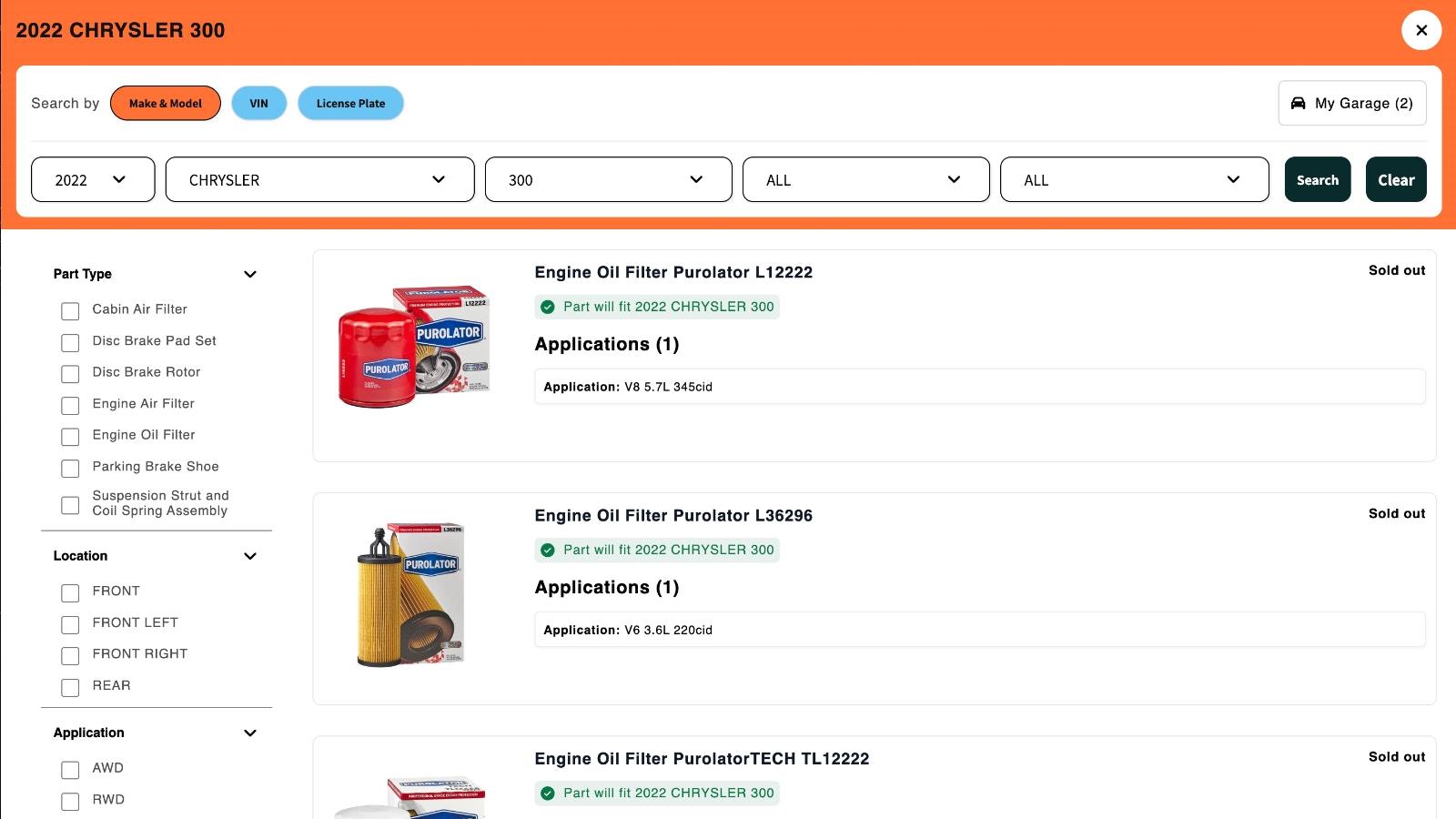
For instance, a Shopify vehicle fitment system can allow customers to filter products using their vehicle registration or Year/Make/Model details. Meanwhile, Shopify ERP integration can connect online orders with inventory, fulfilment and purchasing systems.
The right automotive eCommerce solution should address both customer experience and operational efficiency.
| Business challenge | Recommended solution | Expected benefit |
| Customers ordering incompatible parts | Vehicle fitment lookup and compatibility validation | Fewer incorrect purchases |
| Thousands of automotive product variations | Structured product information management (PIM) | More accurate, searchable catalogs |
| Inventory discrepancies | Shopify ERP and warehouse integrations | Better stock visibility |
| Complex dealer relationships | Shopify Plus B2B functionality | Streamlined wholesale ordering |
| Poor product discovery | Advanced automotive parts finder and filtering | Faster product selection |
| Disconnected internal departments | Centralised communication and knowledge management | Better coordination between teams |
But Technology Alone Won't Fix Every Problem
There's another challenge automotive businesses frequently overlook: what happens after the customer places an order?
Even the best automotive eCommerce platform cannot compensate for poor communication between employees, warehouses, suppliers and customer service departments.
Imagine a customer ordering a specialist performance part. The website confirms availability, but the warehouse discovers that the item is out of stock. Customer service then needs an update from purchasing, while the supplier provides a revised delivery date.
If these teams rely on scattered emails, disconnected spreadsheets and outdated documents, resolving a straightforward order can become unnecessarily complicated.
This is why automotive digital transformation should extend beyond the online storefront.
Solutions such as AgilityPortal's digital workplace platform can help businesses centralise employee communication, share operational documents and coordinate work across departments.
The goal isn't to replace Shopify or an automotive ERP system. It's to give the people supporting those systems a better way to communicate and collaborate.
What Should Automotive Businesses Prioritise?
Before investing in a new automotive eCommerce website, businesses should identify where their existing processes are failing.
If customers frequently purchase incompatible products, prioritise vehicle fitment accuracy. If stock discrepancies are causing fulfilment problems, focus on inventory integration. If wholesale customers struggle to place orders, investigate B2B eCommerce functionality.
And if internal communication is slowing down operations, improving the digital workplace may be just as important as redesigning the storefront.
The best automotive eCommerce agencies don't simply build attractive Shopify websites. They help businesses solve practical problems involving product discovery, vehicle compatibility, inventory management and customer experience.
The six agencies we're comparing next have worked on different aspects of these challenges, making their real automotive projects a useful starting point when choosing the right development partner.
Why Automotive eCommerce Needs Specialist Agencies
Is your automotive eCommerce store struggling with complicated product catalogs, vehicle compatibility searches or disconnected inventory systems?
You're not alone. Selling automotive parts online is far more complicated than running a typical retail store.
Customers need to know whether a product fits their exact vehicle, while retailers must manage thousands of SKUs, changing stock levels, supplier relationships and wholesale accounts.
The opportunity is significant.
According to the Auto Care Association, the US light-duty automotive aftermarket was projected to reach $435 billion in 2025, highlighting the scale of demand for replacement parts, accessories and vehicle maintenance products.
However, building a successful automotive store takes more than an attractive website.
While an AI Shopify store builder can help businesses create and launch an online storefront, specialist automotive eCommerce agencies bring the technical expertise needed for vehicle fitment tools, complex product catalogs, Shopify Plus migrations and inventory integrations.
6 Best Automotive eCommerce Agencies in 2027
Looking for the best automotive eCommerce agencies to build, migrate or improve your Shopify store?
The right partner can make a significant difference, especially when your business depends on accurate vehicle fitment, large product catalogs, inventory integrations and reliable online sales.
We've shortlisted six automotive Shopify agencies with relevant projects involving aftermarket parts, vehicle accessories, motorsport products and wholesale commerce.
Each agency brings different strengths.
Some specialise in complex Shopify Plus migrations, while others focus on vehicle compatibility tools, automotive parts eCommerce development or connecting online stores with existing business systems.
Here's how they compare:
| Agency | Best for | Automotive project |
| Fyresite | Complex automotive Shopify development and vehicle fitment | Chassis Unlimited |
| CQL | Automotive Shopify Plus migrations and custom functionality | The Seat Shop |
| Teifi Digital | Large automotive parts catalogs and unified commerce | Royal Distributing |
| magic42 | Motorsport parts eCommerce and Shopify migrations | Roger Clark Motorsport |
| Optimum7 | Performance automotive brands and B2B dealer sales | Equilibrium Tuning |
| Evoluted | Vehicle registration lookup and automotive accessories | CarMats.co.uk |
These agencies aren't ranked solely by reputation or company size.
The comparison focuses on their relevant automotive projects, technical capabilities and the types of business challenges they're equipped to address.
Below, we'll take a closer look at each agency, including its automotive eCommerce experience, Shopify expertise and real-world project examples, so you can decide which partner best matches your business requirements.
1. Fyresite — Best for Complex Automotive Shopify Development and Vehicle Fitment
1. Fyresite — Best for Complex Automotive Shopify Development and Vehicle Fitment
If your automotive store has thousands of vehicle-specific products, Fyresite is an automotive Shopify agency worth considering. The agency specialises in custom Shopify development, complex platform migrations and eCommerce experiences that go beyond standard storefront functionality.
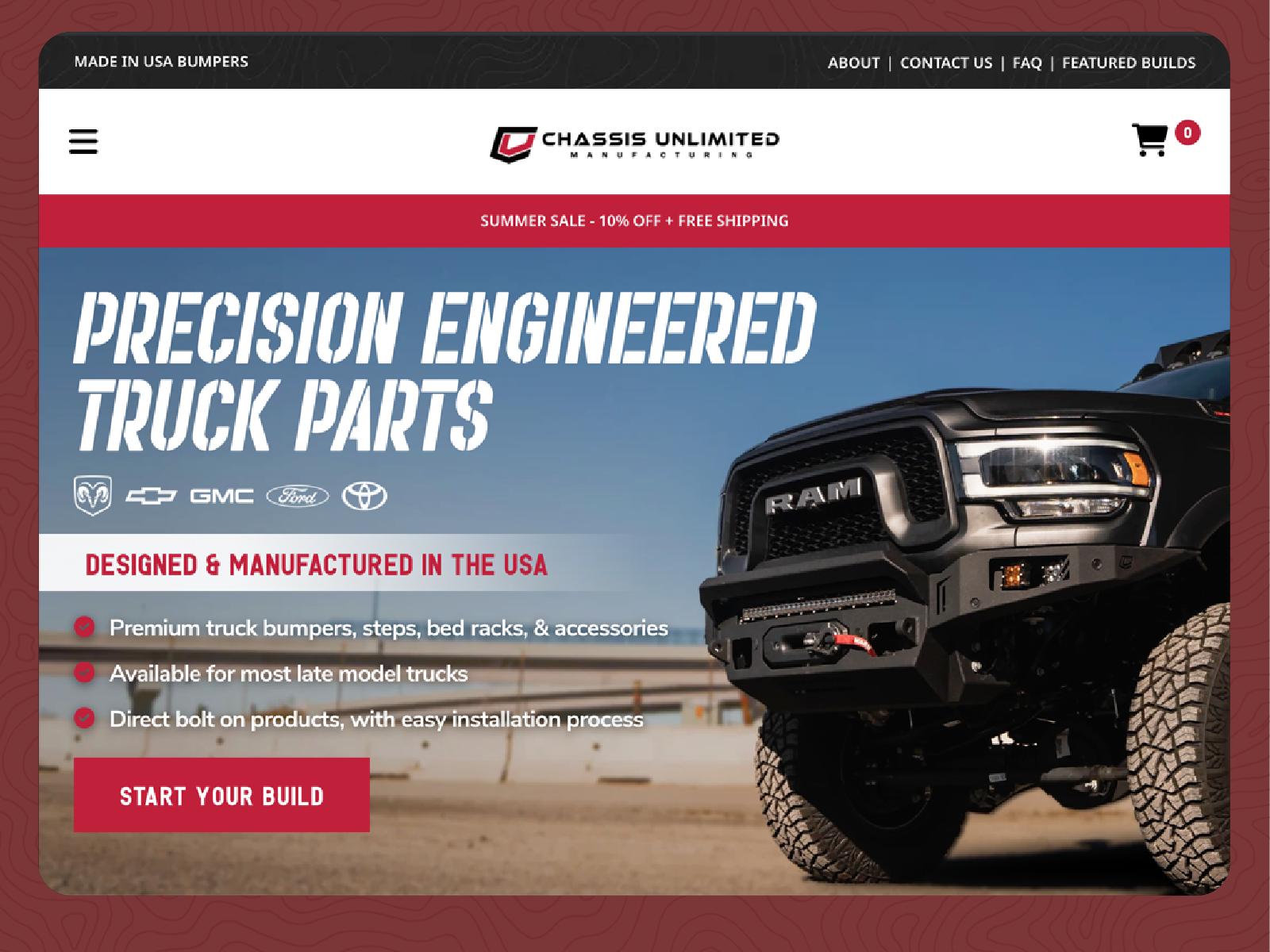
A good example is its work with Chassis Unlimited, an automotive aftermarket retailer selling truck bumpers, suspension components and off-road accessories.
Fyresite helped migrate the business from Magento to Shopify Plus, redesigning the storefront and introducing a custom Year/Make/Model product finder. This made it easier for customers to identify compatible products without manually searching through extensive automotive parts catalogs.
The project also involved wholesale functionality, giving the business more flexibility to serve different customer groups.
The technical approach is described in Algolia's article about building a parts intelligence solution for Shopify.
According to Fyresite's published case study, the project delivered:
- 70% increase in revenue
- 30% reduction in bounce rate
- 150% improvement in its reported GTMetrix loading metric
These are agency-reported outcomes rather than independently audited results.
Why choose Fyresite? It's a particularly relevant option for automotive retailers that need custom vehicle fitment functionality, Shopify Plus migration support and an online store capable of handling complex product relationships.
Featured project: Chassis Unlimited — Fyresite case study
2. CQL — Best for Automotive Shopify Plus Migrations
2. CQL — Best for Automotive Shopify Plus Migrations
Migrating an automotive eCommerce website isn't always straightforward, especially when the existing store relies on custom vehicle compatibility data, product relationships and complicated search functionality.
CQL is an automotive Shopify Plus development partner worth investigating when a migration requires more than transferring products from one platform to another.
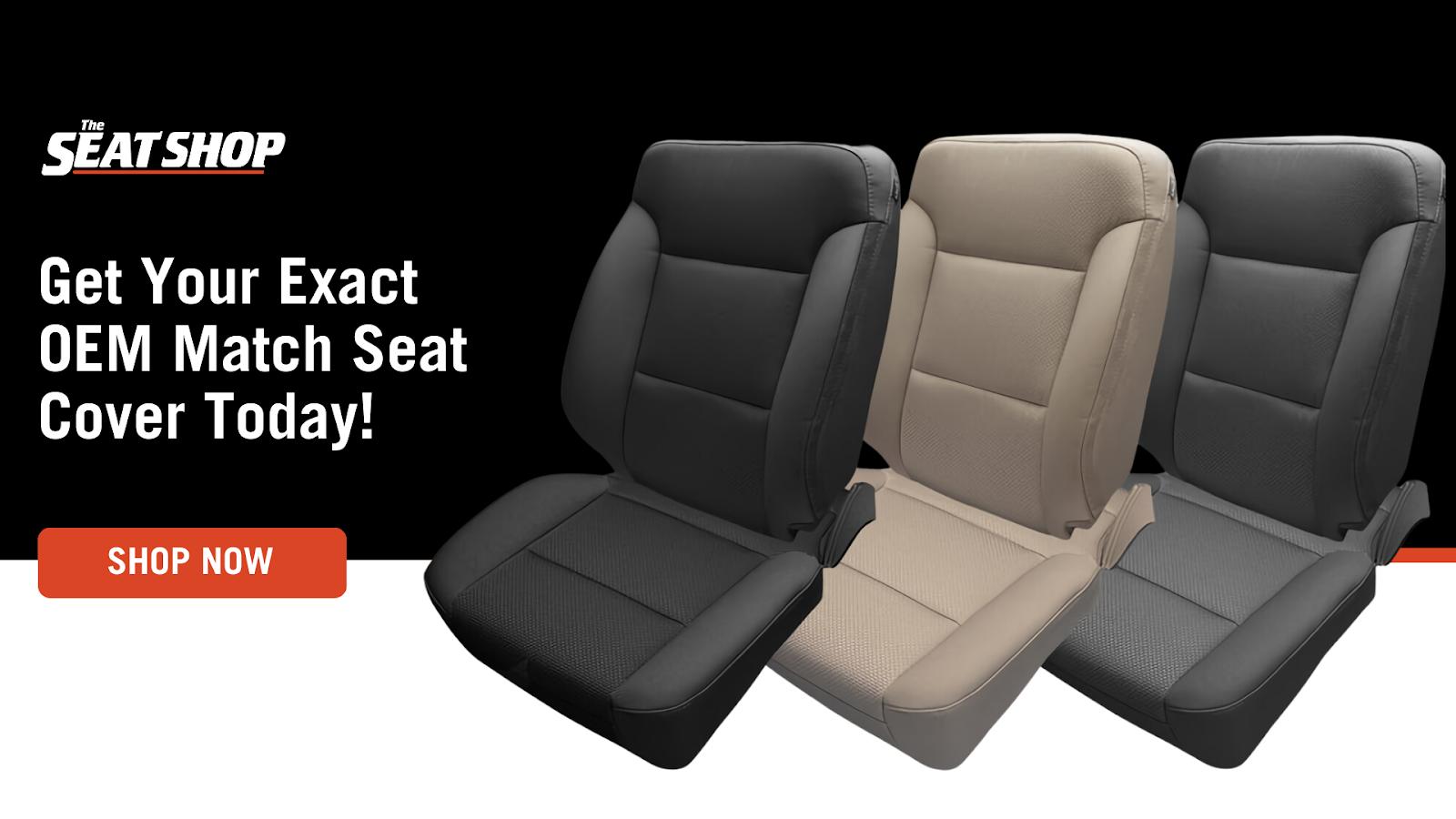
Its work with The Seat Shop, a retailer specialising in replacement automotive seat covers and interior components, demonstrates this experience.
CQL became involved after an earlier Shopify Plus implementation encountered problems. The agency worked on stabilising the storefront, improving the vehicle finder and addressing technical challenges that were affecting the customer experience.
For automotive businesses, these details matter. A poorly executed migration can disrupt product discovery, damage search visibility and create unnecessary maintenance work.
According to CQL's published case study, The Seat Shop achieved:
- More than double its previous conversion rate.
- Hundreds of hours saved on website updates.
- A more manageable Shopify Plus implementation.
These results are reported by CQL and should be understood in the context of the project.
Businesses planning a complicated automotive Shopify migration, particularly those with existing fitment tools or technical problems, should consider its experience with migration recovery and custom eCommerce functionality.
Featured project: The Seat Shop — CQL case study
3. Teifi Digital — Best for Large Automotive Parts Catalogs and Unified Commerce
3. Teifi Digital — Best for Large Automotive Parts Catalogs and Unified Commerce
Managing a few hundred automotive products is one thing. Managing hundreds of thousands of product variations across suppliers, physical stores and wholesale channels is an entirely different challenge.
Teifi Digital focuses on complex Shopify commerce solutions, making it a relevant option for automotive and powersports retailers dealing with extensive catalogs and multiple sales channels.
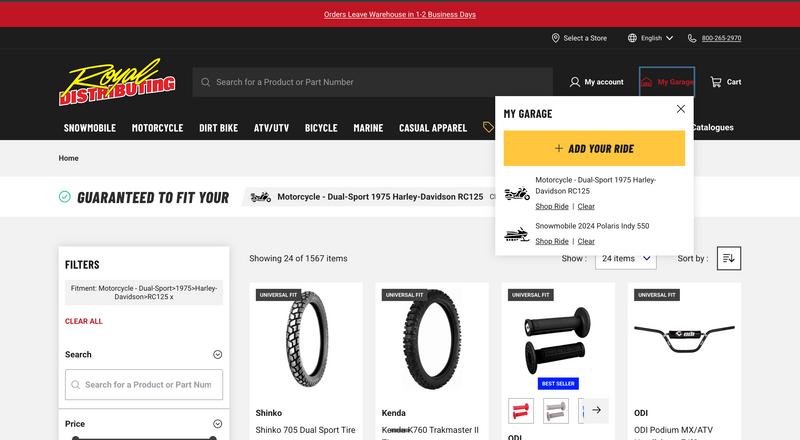
Its work with Royal Distributing, a Canadian powersports retailer, provides a useful example.
The project involved bringing wholesale, direct-to-consumer and physical retail operations together within a Shopify-based commerce architecture.
According to Teifi Digital's case study, the business environment included:
- More than one million product variant SKUs.
- Over 25,000 vehicle combinations.
- More than 700 vendors supplying products.
Handling this level of complexity requires more than basic Shopify product management. Businesses need structured product information, reliable vehicle compatibility data, inventory visibility and systems that communicate effectively.
The project also highlights why unified commerce matters. When online stores, warehouses and retail locations work with inconsistent information, customers can encounter stock discrepancies, incorrect pricing or delayed fulfilment.
It's particularly relevant for larger automotive parts retailers, distributors and powersports businesses that need scalable catalog management, supplier integrations and coordinated B2B and B2C operations.
Featured project: Royal Distributing — Teifi Digital case study
4. magic42 — Best for Motorsport Parts eCommerce
4. magic42 — Best for Motorsport Parts eCommerce
Selling specialist motorsport components requires more than a standard online shop. Customers need accurate compatibility information, technical specifications and a straightforward way to find parts for their vehicles.
magic42 is a UK eCommerce development agency with experience building Shopify stores for automotive businesses serving both trade and retail customers.
Its work with Roger Clark Motorsport, a specialist performance parts retailer, demonstrates how a carefully planned Shopify migration can improve the buying experience.
The agency moved Roger Clark Motorsport from a bespoke legacy website to Shopify, addressing existing content management problems and restructuring the product catalog.
One of the most useful improvements was a homepage parts finder, allowing customers to select their vehicle model and navigate directly to relevant components.
The project also included:
- Improved product categories and vehicle-specific filters.
- Technical fitting guides and compatibility information.
- Enhanced product search using Doofinder.
- Shipping calculations through ShipperHQ.
- Support for B2B and B2C customers.
According to magic42, Roger Clark Motorsport doubled its online sales year over year following the migration. This is an agency-reported result.
It's a relevant option for motorsport retailers and automotive aftermarket businesses that need Shopify migration expertise, technical product information and better product discovery.
Featured project: Roger Clark Motorsport — magic42 case study
5. Optimum7 — Best for Automotive Performance Brands and Dealer Sales

5. Optimum7 — Best for Automotive Performance Brands and Dealer Sales
Automotive performance brands often serve two very different customer groups: individual enthusiasts purchasing upgrades and professional dealers ordering products for their own businesses.
Managing both audiences through one eCommerce platform can be challenging, particularly when customers require different account permissions, product options and purchasing experiences.
Optimum7 specialises in custom eCommerce development, including Shopify solutions designed around more complicated business requirements.
Its work with Equilibrium Tuning, an automotive performance and tuning company, demonstrates this approach.
The project involved modernising Equilibrium Tuning's website and introducing custom functionality to support its growing online business.
Key developments included:
- Dealer login functionality: Providing authorised dealers with account-specific access.
- Product bundles and discounts: Allowing customers to purchase related performance products together.
- Downloadable products: Supporting digital tuning products and other downloadable resources.
- Third-party integrations: Connecting existing applications with the Shopify storefront.
- Responsive website design: Improving navigation across desktop and mobile devices.
Optimum7 also handled data migration, testing and post-launch support.
The agency reports improvements in user engagement, purchasing functionality and operational efficiency, although its published case study does not provide precise figures for every claimed improvement.
Automotive performance brands that need customised dealer experiences, digital product sales and more sophisticated Shopify functionality should consider its capabilities.
Featured project: Equilibrium Tuning — Optimum7 case study
6. Evoluted — Best for Vehicle Registration Lookup and Automotive Accessories
Evoluted — Best for Vehicle Registration Lookup and Automotive Accessories
One of the biggest frustrations when buying automotive accessories online is figuring out whether a product actually fits your vehicle.
For businesses selling car mats, seat covers and other model-specific accessories, an inaccurate compatibility search can lead to abandoned purchases, unnecessary returns and frustrated customers.
Evoluted is a digital agency with experience in Shopify development and conversion optimisation, including custom vehicle registration lookup functionality.
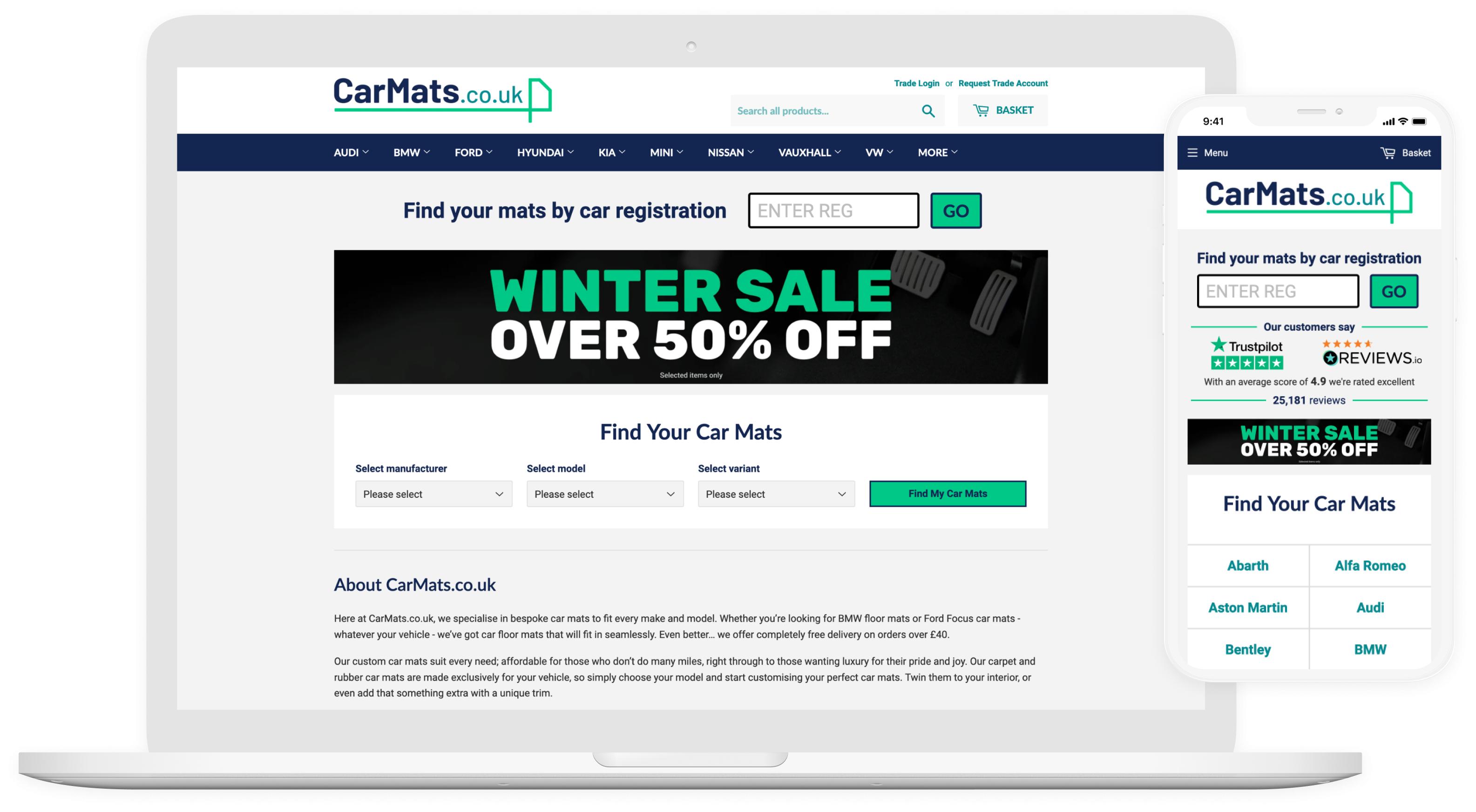
Its work on CarMats.co.uk, an automotive accessories business launched by Evoluted's founder in 2020, provides a practical example.
Rather than requiring customers to navigate through long lists of vehicle manufacturers and models, Evoluted developed a registration lookup tool using Shopify's API.
The system combines product information stored in Shopify with vehicle data from a third-party API, allowing customers to find compatible car mats using their registration number.
This reduces the need for manual vehicle matching and simplifies the shopping experience.
According to Evoluted's published case study, CarMats.co.uk achieved:
- More than £10 million in lifetime orders.
- Over 1.4 million vehicle registration lookups.
- A 7.68% conversion rate in 2022.
These are agency-reported figures, and the project should be described as a founder-launched business rather than an independent client engagement.
It's worth considering for automotive accessories retailers that want registration-based product discovery, custom Shopify functionality and a stronger focus on conversion optimisation.
Featured project: CarMats.co.uk — Evoluted case study
Which Automotive eCommerce Agency Should You Choose?
Choosing the best automotive eCommerce agency depends on what your business actually needs, not which agency has the biggest portfolio.
A specialist motorsport retailer selling performance components will have different requirements from a national automotive parts distributor managing thousands of SKUs, multiple warehouses and wholesale customers.
Before making a decision, identify the biggest problem affecting your online store.
Are customers struggling to find compatible parts? Is your current platform becoming expensive to maintain? Or are disconnected inventory systems causing delays and stock discrepancies?
Here's how the six automotive Shopify agencies compare based on their featured projects.
| Your business challenge | Agency to consider | Why it may be a good fit |
| Complex vehicle fitment and compatibility searches | All-in-one workplace operations | Experience with custom Year/Make/Model product finders and Shopify Plus development |
| Migrating an existing automotive store to Shopify Plus | Microsoft ecosystem | Experience recovering complicated migrations and improving vehicle finder functionality |
| Managing large automotive parts catalogs and multiple sales channels | Workflow management | Experience with large SKU volumes, supplier integrations and unified commerce |
| Selling specialist motorsport and performance components | Operations + tasks | Experience migrating motorsport stores and improving vehicle-specific product discovery |
| Selling specialist motorsport and performance components | Project operations | Custom dealer login functionality, product bundles and downloadable products |
| Supporting automotive dealers and performance product sales | Documentation workflows | Experience developing registration-based vehicle lookup functionality |
Match the Agency to Your Biggest Business Challenge
If you're launching a new automotive store, start by defining your product catalog, vehicle fitment requirements and expected sales channels.
Shopify offers a range of eCommerce development resources that can help you understand what to expect from an implementation partner.
For established retailers, the priority may be improving an existing website rather than rebuilding everything. A Shopify Plus migration could make sense if your current platform is difficult to maintain, but only after evaluating migration costs, integration requirements and potential SEO risks.
Businesses exploring automation should also consider how AI fits into their broader strategy.
Our guide to AI Shopify store builders explains how AI-powered tools can support store creation, although specialist development is still important for complex automotive functionality.
Don't Overlook What Happens Behind the Storefront
There's another factor worth considering: how well your internal teams can support the new eCommerce experience.
An automotive website might provide accurate product availability, but that information becomes less useful if warehouse employees, purchasing teams and customer service representatives cannot coordinate effectively.
This is where a connected digital workplace solution can complement your eCommerce investment. AgilityPortal helps organisations centralise communication, manage shared knowledge and coordinate work across departments.
For automotive retailers operating across multiple warehouses, branches or dealer locations, better internal collaboration can support faster issue resolution and more consistent customer communication.
Our recommendation: Shortlist two or three agencies based on your technical requirements, request demonstrations of similar automotive projects and compare their proposed solutions before committing.
The best partner should understand both your customer-facing website and the operational challenges that sit behind it.
7 Questions to Ask Before Hiring an Automotive eCommerce Agency
How do you know whether an automotive eCommerce agency can actually deliver what your business needs?
A polished portfolio is a good starting point, but it doesn't tell you how an agency handles complex vehicle fitment, inventory integrations or unexpected problems during development.
Before signing a contract with an automotive Shopify development agency, ask these seven questions.
1. Have You Worked With Automotive Parts Businesses Before?
Automotive eCommerce has challenges that general retail agencies may not understand.
Ask for case studies involving vehicle compatibility, aftermarket parts, motorsport products or automotive accessories.
More importantly, request a demonstration of a working store. Seeing how customers search for compatible products can tell you more than a collection of screenshots.
2. How Will You Handle Vehicle Fitment and Compatibility?
A reliable Shopify vehicle fitment system is essential when customers need to match parts to specific makes, models, years and engine configurations.
Ask whether the agency uses existing fitment databases, third-party integrations or custom development. Also establish who will maintain compatibility records as new vehicles and products are introduced.
3. Can You Integrate Shopify With Our Existing Business Systems?
our online store shouldn't operate separately from inventory, purchasing, accounting and warehouse operations.
Ask how the agency approaches Shopify ERP integration, whether it has experience with your existing software and how it handles synchronisation failures.
4. How Will You Protect Our SEO During Migration?
Moving an automotive website from Magento, WooCommerce or a custom platform can affect search rankings if URLs, product information and redirects aren't handled properly.
Ask for a migration plan covering 301 redirects, metadata, canonical URLs, structured data and post-launch monitoring. Google's site migration documentation provides useful guidance on protecting search visibility.
5. Can You Support Wholesale Dealers and B2B Customers?
If your business sells to garages, distributors or authorised dealers, standard retail checkout functionality may not be enough.
Discuss customer-specific pricing, bulk ordering, payment terms and trade account permissions. Shopify's B2B commerce documentation explains the platform's available wholesale capabilities.
6. What Happens After the Website Goes Live?
A successful launch doesn't mean development work is finished.
Product catalogs change, integrations need monitoring and customers may encounter issues that weren't identified during testing.
Ask about ongoing technical support, response times, maintenance costs and who owns the custom code and integrations.
7. How Will We Measure Success?
Don't accept vague promises about improving conversions or increasing revenue.
Agree on measurable outcomes before development begins. These might include product search success rates, conversion rates, incorrect-order returns, page performance and time spent maintaining product information.
The takeaway: A good automotive eCommerce agency should be able to explain how it will solve your business problems, demonstrate relevant experience and provide a realistic implementation plan.
Why Automotive eCommerce Success Depends on More Than the Website
What happens when your automotive eCommerce website works perfectly, but the teams behind it don't?
Imagine a customer ordering a specialist suspension component. The website confirms availability, but the warehouse discovers a stock discrepancy. Customer service contacts purchasing, purchasing waits for the supplier, and nobody knows when the customer will receive an update.
The problem isn't necessarily Shopify. It's the disconnected processes behind the online store.
For automotive retailers, digital transformation needs to extend beyond website development.
Connecting eCommerce, Inventory and Business Operations
An automotive eCommerce platform often needs to exchange information with several business systems, including inventory management, accounting, supplier databases and warehouse software.
When these systems aren't properly connected, employees may rely on manual spreadsheets, repeated data entry and emails to resolve problems.
ERP integration can help synchronise important business information, including stock availability, orders, purchasing and financial records.
AgilityPortal's guide to the best ERP systems for Shopify provides additional context on comparing inventory, financial, and operational integrations.
However, connecting software systems is only part of the solution.
Why Internal Communication Matters in Automotive Retail
Automotive businesses frequently operate across multiple locations, departments and supplier networks.
Warehouse employees need accurate picking instructions. Customer service teams need updated delivery information. Purchasing departments need visibility into supplier delays, while managers need to understand which issues are affecting customers.
Without effective internal communication, even a technically advanced automotive eCommerce store can struggle to deliver a consistent customer experience.
A connected digital workplace platform can complement existing commerce and ERP systems by helping employees share documents, communicate updates and coordinate work across departments.
For instance, businesses can use shared knowledge resources to maintain product handling procedures, departmental workspaces to organise operational updates and task management tools to track responsibilities.
The objective isn't to replace Shopify or an ERP system. It's to make the people supporting those systems more informed and coordinated.
Building an Automotive eCommerce Operation That Can Scale
As automotive retailers expand, operational complexity tends to increase.
More products mean more compatibility records.
Additional warehouses introduce inventory challenges. New wholesale customers create different pricing and fulfilment requirements.
That's why successful automotive digital transformation should address three connected areas:
- Customer experience: Helping shoppers find compatible products and complete purchases confidently.
- Business systems: Connecting inventory, orders, suppliers and financial information.
- Employee collaboration: Giving teams access to the information and communication tools needed to resolve issues.
The strongest automotive eCommerce strategy considers all three rather than treating the website as a standalone project.
Automotive eCommerce Trends to Watch in 2027
What will separate successful automotive eCommerce businesses from competitors in 2027? It may not be the number of products they sell, but how easily customers can find the right parts and how efficiently businesses fulfil those orders.
Artificial intelligence, advanced vehicle fitment technology and connected commerce systems are creating new opportunities. However, not every trend deserves immediate investment.
Here are six developments worth watching.
1. AI-Powered Automotive Product Discovery
AI-assisted search could make it easier for customers to describe what they need using natural language rather than navigating complicated product categories.
For instance, a customer might search for replacement brake components for a specific vehicle instead of entering several filters manually.
However, AI recommendations must still be checked against reliable vehicle compatibility data. An AI-generated suggestion isn't proof that a part fits safely.
2. More Accurate Vehicle Fitment Technology
Year/Make/Model filters and registration lookup systems are already important features of automotive parts eCommerce.
In 2027, retailers should prioritise improving the accuracy, coverage and maintenance of their fitment databases rather than simply adding more search options.
Industry standards such as ACES and PIES from Auto Care provide useful frameworks for exchanging automotive application and product information.
3. Unified B2B and Direct-to-Consumer Commerce
Automotive distributors increasingly need to support different purchasing experiences for individual customers, garages and wholesale dealers.
A unified commerce approach can help businesses manage customer-specific pricing, product availability and ordering workflows without maintaining entirely separate platforms.
4. Better Inventory and Warehouse Integration
Customers expect accurate stock information before placing an order.
Connecting automotive Shopify stores with warehouse and inventory systems can reduce manual updates and improve visibility across multiple locations.
The challenge is ensuring that product data, stock records and order information remain consistent as transaction volumes increase.
5. Personalised Automotive Shopping Experiences
Vehicle-specific recommendations can make online shopping more relevant.
For instance, a customer who owns a particular vehicle could see compatible accessories, replacement components and maintenance products.
But personalisation must be based on accurate information and appropriate data handling practices. Retailers should avoid collecting unnecessary customer information simply because the technology allows it.
6. More Automation Across Automotive Operations
Automation can help streamline supplier updates, order notifications, inventory checks and customer service workflows.
However, businesses should avoid automating unreliable processes.
If product information is inaccurate or warehouse systems aren't synchronised, automation can spread mistakes faster rather than solve them.
The most valuable automotive eCommerce trends are those that improve product accuracy, simplify purchasing and reduce operational friction.
Technology should solve measurable customer and business problems, not create additional complexity.
Final Verdict - Choosing the Right Automotive eCommerce Partner in 2027
So, which automotive eCommerce agency should you choose? There isn't one agency that's automatically the best fit for every automotive business.
The right choice depends on your product catalog, technical requirements, existing systems and long-term growth plans.
Based on their featured automotive projects:
- Fyresite is worth considering for complex Shopify development and vehicle fitment functionality.
- CQL is particularly relevant for challenging Shopify Plus migrations and custom automotive storefronts.
- Teifi Digital stands out for large parts catalogs, supplier integrations and unified commerce.
- magic42 offers relevant experience for motorsport retailers and specialist performance parts businesses.
- Optimum7 is a candidate for automotive performance brands requiring dealer functionality and customised purchasing experiences.
- Evoluted is worth investigating for vehicle registration lookup and accessories-focused eCommerce.
Before making your final decision, shortlist agencies with relevant experience, request detailed proposals and ask how they'll measure project success.
Remember that successful automotive eCommerce development goes beyond launching an attractive Shopify store. Customers need accurate product information, businesses need connected inventory systems, and employees need reliable processes to support every order.
Choose a partner that understands those challenges, not simply one that promises the fastest launch or the lowest price.
Frequently Asked Questions About Automotive eCommerce Agencies
1. What is an automotive eCommerce agency?
An automotive eCommerce agency specialises in building and improving online stores for automotive parts retailers, aftermarket suppliers, dealerships and accessories businesses.
Unlike general Shopify development agencies, these specialists understand vehicle fitment, large product catalogs, inventory integrations and B2B ordering.
Their services may include Shopify website development, platform migrations, custom parts finders and conversion optimisation.
2. Which are the best automotive eCommerce agencies in 2027?
Six automotive eCommerce agencies worth comparing in 2027 are Fyresite, CQL, Teifi Digital, magic42, Optimum7 and Evoluted. Each has relevant automotive project experience.
Fyresite focuses on complex Shopify development, CQL on migrations, Teifi Digital on unified commerce, magic42 on motorsport parts, Optimum7 on performance brands and Evoluted on vehicle registration lookup functionality.
3. Is Shopify good for selling automotive parts and accessories?
Yes, Shopify can be a suitable eCommerce platform for automotive parts and accessories, particularly when combined with vehicle fitment applications, structured product data and inventory integrations.
However, businesses selling thousands of vehicle-specific components may require custom Shopify development.
The right setup depends on catalog complexity, compatibility requirements, wholesale functionality and existing business systems.
4. Can Shopify handle vehicle fitment and Year/Make/Model searches?
Yes, Shopify can support Year/Make/Model vehicle fitment searches through specialist applications or custom development.
These tools help customers filter automotive parts by vehicle manufacturer, model, production year and sometimes engine configuration.
Accurate compatibility data remains essential, particularly for replacement parts where incorrect matching can result in returns or safety concerns.
5. How much does it cost to build an automotive Shopify website?
Automotive Shopify website development costs vary significantly.
A relatively straightforward storefront may require a smaller investment, while custom vehicle fitment, Shopify Plus migration, ERP integration and wholesale functionality can make projects considerably more expensive.
Request itemised quotations from automotive Shopify agencies and compare implementation fees, subscription costs, maintenance and ongoing technical support.
6. What is the difference between Shopify and Shopify Plus for automotive eCommerce?
Shopify supports standard online retail requirements, while Shopify Plus provides additional capabilities for larger or more complex businesses, including advanced B2B commerce functionality.
Automotive distributors managing dealer accounts, customer-specific pricing and high-volume operations may benefit from Shopify Plus.
However, businesses should compare platform costs and required features before upgrading.
7. What is the best eCommerce platform for automotive parts?
The best automotive eCommerce platform depends on your business model.
Shopify and Shopify Plus are options for retailers seeking hosted commerce infrastructure, while platforms such as Adobe Commerce and BigCommerce may suit different technical requirements.
Evaluate vehicle compatibility search, catalog management, ERP integration, B2B pricing, scalability and total ownership costs before choosing.
8. Can automotive Shopify agencies integrate ERP and inventory management systems?
Yes, experienced automotive Shopify development agencies can integrate eCommerce stores with ERP software, warehouse management systems, accounting platforms and inventory databases.
These integrations help synchronise product availability, orders and operational information.
However, compatibility depends on the specific systems involved, available APIs and whether custom middleware or development is required.
AI Summary
- The best automotive eCommerce agencies help parts and accessories retailers build Shopify stores that support vehicle fitment, complex product catalogs, inventory integrations and wholesale ordering. Specialist agencies understand why automotive eCommerce development requires more than standard website design.
- Six automotive Shopify agencies worth comparing in 2027 are Fyresite, CQL, Teifi Digital, magic42, Optimum7 and Evoluted. Fyresite focuses on complex vehicle fitment, CQL on Shopify Plus migrations, Teifi Digital on large catalogs, magic42 on motorsport commerce, Optimum7 on performance brands and dealer functionality, and Evoluted on registration-based product discovery.
- Real automotive projects help demonstrate each agency's capabilities. Featured examples include Chassis Unlimited, The Seat Shop, Royal Distributing, Roger Clark Motorsport, Equilibrium Tuning and CarMats.co.uk. These projects highlight different approaches to automotive parts eCommerce, Shopify development, vehicle compatibility and customer experience.
- Automotive Shopify agency pricing depends on project complexity. Custom Year/Make/Model search, registration lookup, Shopify Plus migrations, ERP integrations, extensive product catalogs and B2B dealer functionality can increase development costs. Businesses should compare implementation costs, subscriptions, maintenance and long-term support rather than choosing the cheapest quote.
- Choosing the right automotive eCommerce agency starts with identifying your biggest operational challenges. Ask for relevant case studies, working vehicle fitment demonstrations, integration experience and measurable project outcomes. A successful automotive eCommerce strategy should also connect warehouse, purchasing, sales and customer service teams so they can support the online shopping experience.
Most Popular Posts

Effective communication among team members is vital for the productivity and success of any organization. Surprisingly, 60% of companies lack a long-term internal communication strategy, which p...


Businesses thrive on communication for efficiency, productivity and accomplishment. When the right information is passed from the right designation in the organization, it promotes positivity an...

Categories
Blog
(3290)
Business Management
(402)
Employee Engagement
(240)
Digital Transformation
(228)
Growth
(158)
Intranets
(142)
Internal communications
(111)
Remote Work
(68)
Sales
(53)
Collaboration
(53)
Customer Experience
(34)
Culture
(30)
Project management
(30)
Knowledge Management
(29)
Leadership
(20)
Comparisons
(9)
News
(1)

Related Posts

What happens when your website ranks well on Google, but your competitors keep appearing in ChatGPT, Perplexity and Google AI Overviews? Search is changing, and businesses can no longer rely on traditional rankings alone. The best SEO and conte...

Is your automotive eCommerce store struggling with complicated product catalogs, vehicle compatibility searches or disconnected inventory systems? You're not alone. Selling automotive parts online is far more complicated than running a ty...

Starting a new job is exciting, but what happens when your bills are due before your first paycheck arrives? Figuring out how to budget and save money when starting a new job can be stressful, especially if you're moving from one employer to an...

Can an AI Shopify store builder really create a professional online store in minutes, or will you still spend hours fixing product pages, adjusting layouts and rewriting content? AI is changing how ecommerce businesses get started. Instead of buildin...

Are your employees actually engaging with company announcements, or are important updates getting lost between emails, meetings and endless notifications? If you're an internal communications manager, HR professional or employee engagement leader, yo...


Jill Romford
I am a digital nomad, lover of exploring new places and making friends.
I love to travel and I love the internet. I take pictures of my travels and share them on the internet using Instagram.
Traveler, entrepreneur, and community builder. I share my insights on digital marketing and social media while inspiring you to live your fullest life.
Ready to learn more? 👍
One platform to optimize, manage and track all of your teams. Your new digital workplace is a click away. 🚀
Free for 14 days, no credit card required.