
Insight Blog
Agility’s perspectives on transforming the employee's experience throughout remote transformation using connected enterprise tools.
25 minutes reading time
(4943 words)
Your Coworking Space Is Probably Leaking Revenue Without a CRM, Here's Why

Your Coworking Space Is Probably Leaking Revenue Without a CRM
Discover why coworking operators lose leads, members, and revenue without a coworking space CRM — and how to scale smarter with automation.
Your Coworking Space Is Probably Leaking Revenue Without a CRM

What if a coworking space is losing potential members and recurring revenue every single day without even realising it?
Many flexible workspace operators believe slow growth is caused by competition, pricing, or low occupancy rates, but the real problem often comes from disconnected systems, missed follow-ups, manual admin tasks, and poor member engagement.
That is why more businesses are investing in a coworking space CRM to centralise operations, improve coworking member management, automate lead tracking, and streamline communication across shared office environments.
According to research from HubSpot, businesses using CRM software can increase sales productivity by up to 34%, while also improving customer retention and operational visibility.
34%
sales productivity increase
According to HubSpot, businesses using CRM software can improve sales productivity by up to 34%, while also increasing customer retention and operational visibility.
Source: HubSpot Research
In the coworking industry, where fast response times and member experience directly impact retention and occupancy, relying on spreadsheets and fragmented tools can quickly slow down growth.
This article explores why coworking spaces need CRM software, the hidden revenue leaks affecting flexible workspace operators, and how modern coworking management software helps automate lead management, workspace booking, member communication, and billing processes.
It will also cover the key features operators should look for in a CRM for coworking spaces, how automation improves retention, and why scalable workspace management systems are becoming essential for modern hybrid work environments.
Key Takeaways
- A coworking space CRM helps operators centralise lead management, invoicing, workspace bookings, communication, and member engagement into one connected system.
- Disconnected tools and spreadsheets often create operational bottlenecks that slow growth, reduce visibility, and increase the risk of missed leads and renewals.
- The best coworking software combines coworking automation, desk booking, billing, occupancy analytics, and workspace member management into one streamlined platform.
- Features such as coworking lead tracking, automated follow-ups, recurring invoices, and hybrid workspace CRM tools help operators scale more efficiently.
- Long-term coworking success depends heavily on automation, operational visibility, community engagement, and delivering a seamless member experience.
What is Coworking CRM & Why is It Necessary?
A coworking space CRM is a specialised customer relationship management system designed to help flexible workspace operators manage leads, members, bookings, communication, billing, and daily operations from one central platform.
Unlike generic CRM tools, a coworking CRM is built specifically for shared office environments where operators need visibility into occupancy, member engagement, workspace usage, and recurring revenue.
As coworking spaces grow, managing everything through spreadsheets, email inboxes, and disconnected apps quickly becomes inefficient.
Missed follow-ups, delayed responses, double bookings, and poor member communication can all lead to lost revenue and lower retention rates.
A coworking management software solution helps automate these processes while improving the overall member experience.
Modern coworking CRM platforms also support workspace booking software, automated onboarding, lead tracking, and hybrid workspace management.
This allows operators to scale smarter, reduce admin work, improve coworking member management, and create a more connected community experience for both staff and members.
Why Most Coworking Spaces Struggle to Scale Efficiently

Why Most Coworking Spaces Struggle to Scale Efficiently
Too Many Tools Create Operational Chaos
Many coworking operators start by managing their workspace using a mix of spreadsheets, email inboxes, Slack messages, booking systems, billing platforms, and manual onboarding processes.
At first, this may seem manageable, but as membership grows, these disconnected systems quickly create operational bottlenecks that slow everything down.
Instead of focusing on growing the community and improving member experience, operators often spend hours switching between platforms just to complete simple tasks.
One system tracks bookings, another handles invoices, emails contain lead enquiries, while onboarding and member communication are managed manually. This lack of centralisation makes it difficult to scale efficiently and maintain visibility across the business.
Even platforms like CRM Masters highlight the importance of consolidating operations into one coworking space CRM to reduce friction and improve workflow management.
Without proper coworking management software, businesses often experience:
- Lost leads caused by delayed responses
- Missed membership renewals
- Double bookings for desks and meeting rooms
- Poor visibility into occupancy and revenue
- Inconsistent member communication
- Manual admin work that slows down operations
- Difficulty managing hybrid workspace environments
The Hidden Revenue Leaks Most Operators Ignore
Leads Go Cold Faster Than You Think
One of the biggest problems in coworking spaces is not the lack of leads — it is the failure to manage them properly.
Many enquiries arrive through websites, social media, emails, or referrals, but without a proper coworking space CRM, those leads can easily disappear into inboxes or get forgotten during busy periods.
Slow follow-ups are one of the fastest ways to lose potential members.
If a prospect does not receive a quick response, they often move on to another workspace provider that replies faster and offers a smoother experience.
Common issues operators face include:
- Tours not being tracked properly
- Follow-up emails being missed
- Enquiries buried inside inboxes
- No visibility into sales pipelines
- Delayed responses from staff
Every missed follow-up is potentially hundreds or even thousands in lost recurring membership revenue.
Member Retention Problems Often Start With Poor Communication
Many coworking operators focus heavily on attracting new members but overlook the importance of keeping existing members engaged.
Poor communication can quickly make members feel disconnected from the workspace community, especially in hybrid and flexible working environments.
Without proper coworking management software, communication often becomes inconsistent and reactive rather than personalised and proactive.
This can lead to:
- Low event participation
- Reduced community engagement
- Poor onboarding experiences
- Missed announcements and updates
- Higher membership churn
For example, a new member may never receive onboarding guidance, important event notifications may go unseen, or operators may have no way to track engagement levels across the workspace community.
Over time, this makes renewals harder because members no longer feel connected to the space.
Manual Admin Work Slows Down Growth
As coworking spaces grow, manual admin work quickly becomes a major operational bottleneck.
Staff often spend large portions of the day managing repetitive tasks instead of focusing on member experience, sales, and community growth.
Without automation, operators are forced to manually manage:
- Invoices and payments
- Contracts and agreements
- Desk assignments
- Meeting room bookings
- Membership renewals
- Member records and onboarding
The more time teams spend handling admin tasks manually, the less time they have to improve occupancy, build relationships, and scale the coworking business efficiently.
Modern coworking CRM platforms help reduce this operational pressure by centralising workflows and automating many of the tasks that typically slow teams down.
What Is a Coworking Space CRM?

What Is a Coworking Space CRM?
A coworking space CRM is far more than a simple database for storing member contact details.
It is a centralised platform designed to help coworking operators manage the entire member journey — from the first enquiry through to onboarding, engagement, renewals, and long-term retention.
As coworking businesses grow, managing operations manually becomes increasingly difficult.
Leads arrive from multiple channels, tours need scheduling, memberships require renewals, and communication must stay consistent across the entire workspace community.
Without the right systems in place, important tasks can quickly fall through the cracks.
Modern coworking management software helps operators:
- Manage leads from websites, referrals, and social channels
- Track tours and follow-ups more efficiently
- Automate onboarding for new members
- Handle membership renewals and recurring billing
- Centralise communication across teams and members
- Improve occupancy planning and workspace visibility
Instead of relying on disconnected tools, a coworking space CRM gives operators a clearer view of their business while helping improve operational efficiency, member experience, and long-term growth.
The Difference Between Generic CRMs and Coworking CRM Platforms
Many coworking operators make the mistake of using generic CRM software that was originally designed for traditional sales teams rather than flexible workspace environments.
While these systems may help store contacts and track sales activity, they often lack the operational tools needed to manage a modern coworking space efficiently.
A coworking space CRM is specifically designed around the day-to-day challenges workspace operators face, including desk bookings, meeting room scheduling, member engagement, recurring billing, occupancy tracking, and community management.
Without these industry-specific features, operators usually end up relying on multiple disconnected platforms to fill the gaps, which creates more admin work and reduces operational visibility.
Here is the difference between a generic CRM and a coworking CRM platform:
| Generic CRM | Coworking Space CRM |
| Built for broad sales teams | Built specifically for workspace operators |
| Limited booking functionality | Desk and meeting room management |
| Focused mainly on contacts | Supports full coworking member management |
| Minimal community engagement tools | Community-focused communication features |
| Requires heavy customisation | Ready-made coworking workflows |
| Separate billing and booking systems needed | Centralised workspace operations |
| Limited occupancy visibility | Real-time occupancy and workspace insights |
For growing coworking businesses, using a CRM built specifically for flexible workspaces can significantly reduce operational complexity while improving member experience and long-term scalability.
7 Features Every Modern Coworking Space CRM Should Have
1. Automated Lead Capture & Follow-Ups
For many coworking operators, leads come from multiple channels including websites, social media, referrals, online listings, and direct enquiries. Without automation, it becomes very easy for potential members to slip through the cracks, especially during busy periods.
A modern coworking space CRM should automatically capture enquiries, organise leads into pipelines, and trigger follow-up workflows to help staff respond faster and improve conversion rates.
Speed matters in the coworking industry, and delayed responses often result in lost memberships.
Key features should include:
- Website enquiry forms
- Automated email and SMS responses
- Lead pipeline tracking
- Tour scheduling and reminders
- Follow-up automation
- Lead source tracking and reporting
For operators using platforms like Zoho, specialised Zoho Consulting Services can set up the workflows needed to automate lead nurturing, onboarding sequences, and sales pipelines for coworking businesses.
2. Member Management & Community Engagement
Successful coworking spaces are built around community, not just desks and office space. Members expect communication, networking opportunities, collaboration, and a sense of belonging inside the workspace environment.
A coworking CRM should help operators manage relationships while keeping members connected and engaged through one central platform.
Important community management features include:
- Member directories
- Internal communication tools
- Community events and networking sessions
- Announcements and workspace updates
- Surveys and feedback collection
- Member engagement tracking
Without strong community engagement, coworking spaces often struggle with retention because members no longer feel connected to the environment.
3. Workspace Booking & Resource Management
Managing desks, meeting rooms, visitor access, and workspace resources manually quickly becomes difficult as occupancy grows.
A modern coworking management software platform should simplify booking processes while giving operators full visibility into workspace usage.
Members increasingly expect mobile-friendly booking experiences that allow them to reserve workspaces quickly without needing staff assistance.
Core workspace management features should include:
- Desk booking systems
- Meeting room scheduling
- Visitor management tools
- Mobile access and reservations
- Occupancy tracking
- Workspace availability visibility
These tools help reduce scheduling conflicts while improving operational efficiency across the entire workspace.
4. Billing, Renewals & Subscription Automation
Recurring revenue is one of the biggest advantages of the coworking business model, but managing subscriptions manually can create major administrative challenges.
A coworking CRM should automate billing processes to reduce payment delays, missed renewals, and manual invoicing work. Automation also helps operators maintain more predictable revenue while improving the member experience.
Important billing automation features include:
- Recurring invoices
- Membership upgrades and downgrades
- Automated payment reminders
- Contract renewals
- Subscription management
- Payment tracking and reporting
The more financial processes are automated, the easier it becomes for coworking operators to scale without increasing operational complexity.
5. Integration with Space Management Tools
One of the biggest operational problems coworking operators face is disconnected systems.
When booking software, billing platforms, and CRM systems do not communicate properly, teams often waste hours manually entering the same information into multiple tools.
A modern coworking management software platform should integrate seamlessly with space management systems so data can move automatically between platforms.
This helps businesses:
- Avoid duplicate data entry
- Keep member records accurate
- Sync booking and billing information
- Improve operational visibility
- Reduce manual admin work
The more connected the systems are, the easier it becomes to scale operations efficiently.
6. Reporting & Occupancy Analytics
Without proper reporting, many coworking operators are making decisions based on assumptions rather than real business insights.
A coworking space CRM should provide dashboards and analytics that help operators understand occupancy trends, sales performance, and member behaviour.
Important reporting features include:
- Conversion rates
- Lead source performance
- Occupancy analytics
- Average deal size
- Membership churn rates
- Revenue forecasting dashboards
These insights help operators make smarter decisions around marketing spend, workspace pricing, staffing, and future expansion plans.
7. Member Communication History
Member experience plays a major role in retention, and communication consistency is a big part of that experience.
A coworking CRM should maintain a complete history of every interaction with leads and members so staff always have context before speaking with someone.
This communication history should include:
- Emails
- Phone calls
- Notes and comments
- Support requests
- Tour feedback
- Membership discussions
Having a full communication timeline prevents members from repeating information multiple times while helping teams deliver a more personalised and professional experience.
Signs Your Coworking Space Has Already Outgrown Spreadsheets
You Are Constantly Chasing Information
One of the clearest signs a coworking business has outgrown spreadsheets is when staff spend more time searching for information than actually helping members. As flexible workspace operations grow, relying on disconnected tools makes it difficult to keep track of important business data in real time.
Instead of having one centralised coworking management software platform, information becomes scattered across inboxes, spreadsheets, booking tools, and billing systems.
Teams often find themselves constantly searching for:
- Occupancy reports
- Payment and invoice status
- Lead updates and follow-up activity
- Desk and room availability
- Membership renewal information
- Workspace booking details
This lack of visibility slows decision-making and creates unnecessary operational friction. A modern coworking space CRM helps centralise these processes while improving workspace management, member tracking, and operational efficiency.
Staff Spend More Time Managing Systems Than Members
Many coworking operators do not realise how much productivity is lost managing disconnected systems manually.
Staff often spend hours updating spreadsheets, responding to repetitive emails, checking booking calendars, and chasing payment information instead of focusing on community engagement and member experience.
Over time, this creates major operational problems such as:
- Operational burnout among staff
- Poor customer service experiences
- Delayed responses to enquiries
- Inconsistent member communication
- Reduced productivity across teams
For growing flexible workspace businesses, this can directly impact retention rates and long-term revenue growth. Modern coworking CRM software helps automate many of these repetitive tasks, reducing admin work while improving the overall member experience.
You Cannot Clearly Measure Growth
If a coworking operator cannot clearly track growth metrics, it becomes very difficult to scale the business strategically.
Spreadsheets may store data, but they rarely provide the real-time analytics and reporting needed to understand business performance properly.
Without proper coworking analytics and reporting tools, operators often struggle with:
- Lack of reporting visibility
- No clear occupancy forecasting
- No insight into membership churn
- Limited lead conversion tracking
- Poor understanding of marketing performance
- Difficulty forecasting recurring revenue
A modern coworking space CRM provides dashboards and occupancy analytics that help operators understand how the business is performing across sales, workspace usage, member retention, and revenue growth.
These insights make it easier to improve conversion rates, reduce churn, and make smarter operational decisions.
How CRM Software Helps Coworking Spaces Scale Smarter
Faster Lead Conversion
One of the biggest advantages of using modern coworking software is the ability to respond to leads faster and manage the entire sales process more efficiently. In the coworking industry, speed often determines whether a prospect books a tour or chooses another workspace provider.
A proper coworking booking system combined with CRM automation helps operators capture enquiries instantly, trigger automated follow-up workflows, and track every lead through the sales pipeline.
Instead of manually chasing enquiries across inboxes and sprea
dsheets, operators gain full visibility into where leads are coming from, which tours are booked, and which memberships are close to closing. Even businesses exploring coworking space management software free solutions quickly realise that automation and response time directly impact occupancy and recurring revenue growth.
Improved Member Retention
The best coworking software does more than help operators manage desks and bookings — it helps build stronger member relationships.
Retention is heavily influenced by communication, engagement, and the overall member experience inside the workspace community.
When communication is inconsistent or members feel disconnected, renewals become harder to secure.
A coworking CRM helps operators maintain regular communication through announcements, onboarding workflows, event invitations, and personalised interactions. This creates a more connected environment where members feel supported and engaged rather than simply renting a desk.
By centralising communication and member history, coworking operators can deliver a more personalised experience while improving long-term retention rates.
More Predictable Revenue
As coworking spaces grow, financial visibility becomes increasingly important.
Without proper reporting and forecasting tools, operators often struggle to understand occupancy trends, recurring revenue performance, and membership churn.
A modern coworking space management platform helps operators track occupancy levels, manage renewals automatically, and forecast future revenue more accurately.
This allows businesses to make smarter decisions around pricing, expansion, staffing, and marketing investment.
With the right coworking booking system and CRM workflows in place, operators gain a clearer understanding of workspace usage patterns and member behaviour, making it far easier to scale operations while maintaining predictable recurring income.
How to Choose the Right Coworking Space CRM
Prioritise Automation Over Complexity
When searching for the best coworking space CRM, many operators make the mistake of choosing platforms packed with features they rarely use.
In reality, the most effective coworking software is often the one that simplifies operations rather than adding more complexity.
A good coworking CRM should help automate repetitive tasks such as invoicing, membership renewals, follow-ups, workspace bookings, onboarding, and payment reminders.
The goal is to reduce admin work so teams can focus more on member experience and community growth.
Operators should look for features such as:
- Automated invoices and recurring billing
- Membership renewal reminders
- Lead follow-up workflows
- Desk and meeting room booking tools
- Mobile accessibility for staff and members
- Occupancy and revenue reporting dashboards
Many businesses initially explore coworking space management software free platforms, but as operations grow, they often require more advanced automation and reporting capabilities to scale effectively.
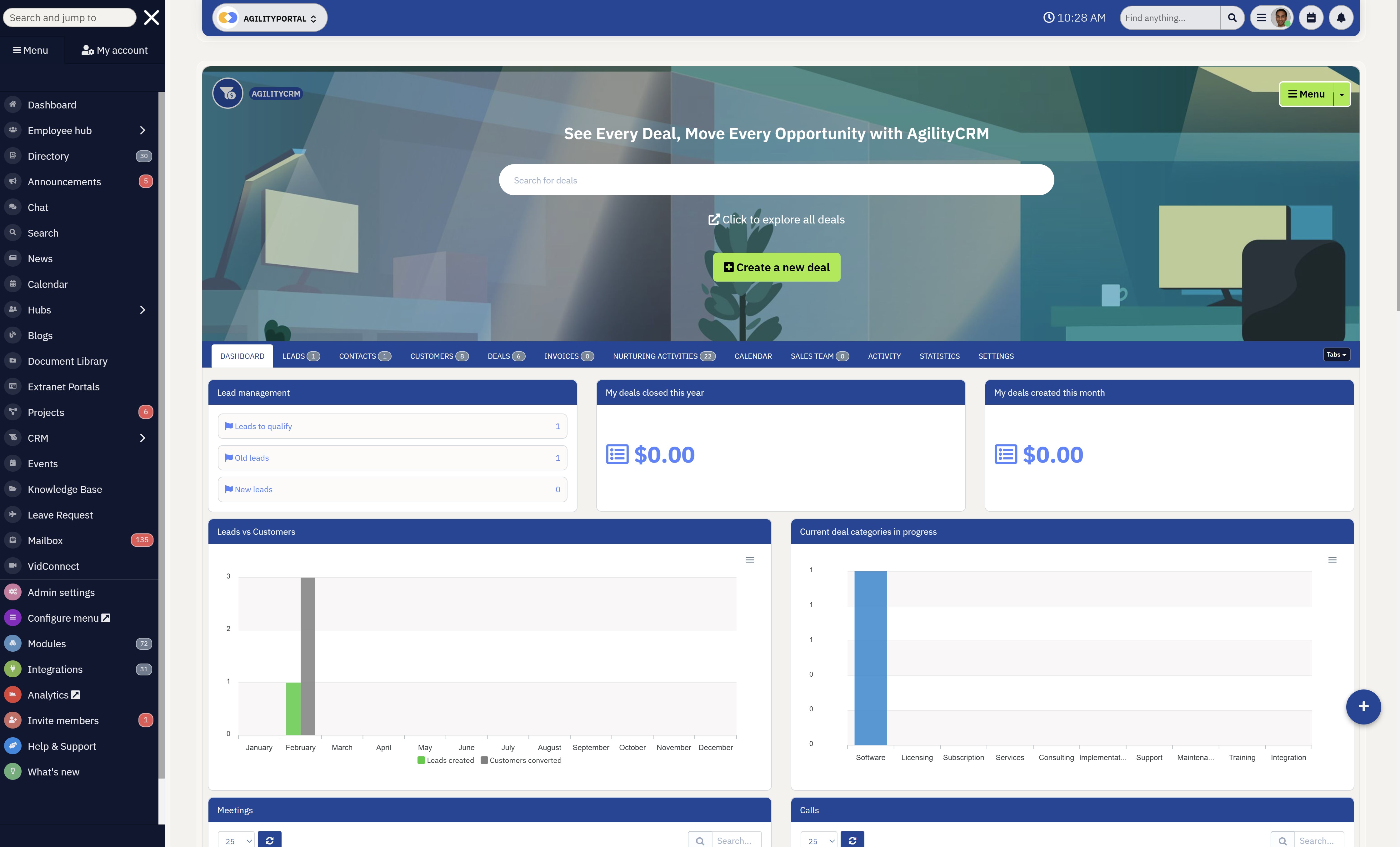
Platforms like AgilityCRM and other coworking management solutions can help automate sales pipelines, member communication, and operational workflows while improving visibility across the business.
Look for Community Features — Not Just Sales Features
Coworking spaces are built around community, collaboration, and member engagement.
That means the best coworking software should do more than manage leads and invoices — it should also help operators create a connected workplace experience.
Modern coworking CRM platforms should include community-focused features such as member communication, networking tools, event management, and announcements.
These features help improve retention because members feel more connected to the workspace environment.
Important community features include:
- Community events and networking sessions
- Workspace announcements and updates
- Internal member directories
- Team and member communication tools
- Surveys and engagement tracking
- Member onboarding experiences
Without these features, coworking spaces often struggle to maintain long-term engagement and community participation.
Ensure It Integrates With Your Existing Tools
One of the most important things to consider when choosing coworking space management software is integration compatibility.
If the CRM cannot connect with the tools already used across the business, staff will end up manually moving information between systems, which creates inefficiencies and increases operational risk.
A modern coworking booking system should integrate smoothly with existing platforms to centralise operations and improve workflow automation.
Important integrations may include:
- Google Workspace
- Microsoft 365
- Stripe for recurring payments
- Slack for team communication
- Workspace booking platforms
- Calendar and scheduling systems
- Accounting and invoicing software
The more connected the systems are, the easier it becomes to manage occupancy, automate billing, improve member communication, and scale the coworking business efficiently.
Why Modern Coworking Operators Are Moving Toward All-in-One Platforms
Why Modern Coworking Operators Are Moving Toward All-in-One Platforms
Managing a coworking space using multiple disconnected systems may work in the early stages, but as operations grow, it often creates unnecessary complexity.
Many operators eventually find themselves juggling separate tools for member communication, workspace bookings, invoicing, onboarding, events, and community engagement — all while trying to maintain a smooth member experience.
This is why many flexible workspace providers are now moving toward all-in-one coworking software platforms that centralise operations into one connected environment.
Instead of switching between multiple apps throughout the day, operators can manage everything from a single dashboard, including:
- Centralised member communication
- Workspace and meeting room bookings
- Community engagement and announcements
- Billing and invoice management
- Hybrid workspace management
- Lead tracking and onboarding workflows
- Occupancy and reporting analytics
Using one connected coworking space CRM also helps reduce operational friction across teams.
Staff spend less time manually updating systems and more time focusing on occupancy growth, retention, and member experience.
Another major advantage is cost reduction.
Many coworking businesses pay for multiple overlapping subscriptions across booking systems, communication platforms, invoicing software, and CRM tools. Consolidating these into one platform can help reduce software costs while improving operational visibility.
Modern members also expect a smoother digital experience.
They want mobile booking access, fast communication, seamless onboarding, and real-time workspace visibility without jumping between different platforms.
Platforms like AgilityPortal help coworking operators combine communication, member engagement, booking management, collaboration, and hybrid workplace tools into one connected digital workspace designed for modern flexible work environments.
AgilityPortal
The All-in-One Coworking Space CRM Built for Modern Flexible Workspaces
AgilityPortal helps coworking operators manage leads, member communication, workspace bookings, invoicing, onboarding, and collaboration from one connected platform. Unlike disconnected tools or generic CRM systems, AgilityPortal combines coworking software, workspace member management, communication, and operational workflows into one secure hybrid workspace CRM.
Instead of juggling spreadsheets, booking apps, invoicing tools, and messaging platforms, AgilityPortal creates one central workspace hub where operators can manage coworking lead tracking, desk reservations, member engagement, recurring billing, announcements, and team collaboration more efficiently. This helps coworking spaces reduce operational friction, improve occupancy visibility, and scale without losing control of the member experience.
Start your 14-day free trial — no credit card required. Built for coworking spaces that want fewer tools, smarter automation, and better member experiences.Wrapping up
Many coworking spaces believe growth challenges are caused by competition or occupancy rates, but in reality, the biggest revenue leaks are often operational.
Disconnected systems, manual admin tasks, missed follow-ups, and poor member communication can quietly slow down growth and increase churn over time.
A modern coworking space CRM helps centralise operations, automate workflows, improve member retention, and provide better visibility into occupancy, revenue, and lead management.
From invoicing and workspace bookings to onboarding and analytics, the right coworking software makes scaling far more manageable.
The longer operators rely on spreadsheets and fragmented tools, the harder it becomes to scale efficiently without losing members, leads, and recurring revenue.
FAQ Section
What is the best CRM for coworking spaces?
The best coworking space CRM depends on the size of the workspace, operational complexity, and the features required.
Most operators look for coworking software that combines lead management, invoicing, desk booking, automation, and workspace member management into one platform.
Modern flexible office software should also support hybrid workspace CRM capabilities, reporting dashboards, and community engagement tools to help operators scale more efficiently.
Why do coworking spaces need CRM software?
Coworking spaces need CRM software to centralise operations and reduce manual admin work.
A good shared workspace platform helps operators manage leads, automate onboarding, improve communication, and streamline workspace operations.
Without proper coworking automation tools, businesses often struggle with missed follow-ups, inconsistent member experiences, and poor occupancy visibility.
Can a CRM improve coworking member retention?
Yes, a coworking CRM can significantly improve retention by helping operators deliver better communication, faster support, and more personalised member experiences.
Features such as office community software, event management, automated onboarding, and coworking retention tools help members feel more connected to the workspace community, which increases long-term engagement and renewals.
What features should coworking management software include?
Modern workspace operations software should include invoicing, recurring billing, coworking lead tracking, desk booking functionality, occupancy analytics, communication tools, and workflow automation.
Many operators also look for a desk booking platform that integrates with member management, billing, and reporting systems to simplify day-to-day operations.
How does a coworking space CRM increase revenue?
A coworking CRM helps increase revenue by improving lead conversion rates, automating follow-ups, reducing churn, and giving operators better visibility into occupancy trends and recurring income.
Faster response times, automated renewals, and improved workspace member management all contribute to more predictable revenue growth.
What is the difference between coworking software and a generic CRM?
Generic CRM systems are typically designed for broad sales teams, while coworking software is built specifically for flexible workspace environments.
A coworking CRM includes features such as desk booking, occupancy management, invoicing, member engagement, and hybrid workspace CRM functionality that generic systems often lack.
AI Summary
- A coworking space CRM helps flexible workspace operators centralise lead management, member communication, invoicing, desk bookings, and workspace operations into one connected platform.
- Many coworking businesses struggle with disconnected systems, spreadsheets, and manual admin processes that create operational bottlenecks and reduce visibility across the workspace.
- The best coworking software combines coworking lead tracking, workspace member management, billing automation, occupancy analytics, and desk booking tools into one streamlined solution.
- Modern coworking automation platforms help operators reduce missed follow-ups, improve member retention, automate recurring invoices, and simplify hybrid workspace management.
- Businesses should prioritise features such as workflow automation, member communication history, occupancy reporting, integrations, and mobile accessibility when selecting coworking management software.
- Successful coworking spaces rely heavily on strong community engagement, operational efficiency, and connected digital experiences rather than using multiple disconnected workplace tools.
Most Popular Posts

Effective communication among team members is vital for the productivity and success of any organization. Surprisingly, 60% of companies lack a long-term internal communication strategy, which p...


Businesses thrive on communication for efficiency, productivity and accomplishment. When the right information is passed from the right designation in the organization, it promotes positivity an...
Categories
Blog
(2918)
Business Management
(363)
Employee Engagement
(221)
Digital Transformation
(189)
Growth
(139)
Intranets
(133)
Remote Work
(63)
Sales
(52)
Collaboration
(46)
Customer Experience
(29)
Culture
(29)
Knowledge Management
(28)
Project management
(28)
Leadership
(20)
Comparisons
(9)
News
(1)

Related Posts

What Is Portal Software? Have you ever wondered why so many businesses struggle with disconnected systems, scattered documents, outdated intranets, and poor communication between teams? Most organisations today rely on dozens of different tools...

What happens when your systems suddenly stop working in the middle of a busy workday? For growing businesses, downtime is no longer just a technical problem — it is a direct threat to productivity, customer trust, revenue, and daily operations. ...

Despite organisations investing heavily in collaboration platforms, employee apps, and hybrid work technology, many businesses still struggle with disconnected communication, low employee engagement, and poor workforce visibility. According to ...

The communication champion role is a valuable addition to any business. In a large organization, communication champions should be numerous, forming a communication network. They keep track of information and assist others in better collaborating, wo...

Featured
In today's fast-paced hybrid work environment, staying connected isn't just nice—it's necessary. With more than 80% of employees now working remotely at least part of the time, the demand for intuitive, powerful collaboration tools has never be...


Jill Romford
I am a digital nomad, lover of exploring new places and making friends.
I love to travel and I love the internet. I take pictures of my travels and share them on the internet using Instagram.
Traveler, entrepreneur, and community builder. I share my insights on digital marketing and social media while inspiring you to live your fullest life.
Ready to learn more? 👍
One platform to optimize, manage and track all of your teams. Your new digital workplace is a click away. 🚀
Free for 14 days, no credit card required.