Insight Blog
Agility’s perspectives on transforming the employee's experience throughout remote transformation using connected enterprise tools.
19 minutes reading time
(3759 words)
How Seedance 2.0 Triggered the AI Video Content Shift Nobody Expected

How Seedance 2.0 Triggered the AI Video Content Shift Nobody Expected
Seedance 2.0 is changing AI video content with more realistic visuals, cinematic storytelling, and higher viewer expectations across digital media.
How Seedance 2.0 Triggered the AI Video Content Shift Nobody Expected

Why do some AI-generated videos instantly feel artificial while others now look almost cinematic?
That question is becoming increasingly important as AI video content rapidly evolves across marketing, entertainment, social media, and digital storytelling.
Over the last 12 months, AI video tools have improved dramatically, but many platforms still struggle with issues such as unrealistic movement, inconsistent scenes, weak storytelling, and visuals that audiences can immediately identify as machine-generated.
That's where Higgsfield AI and Seedance 2.0 have started attracting serious attention.
Both platforms are helping reshape expectations around what AI-generated video content should actually look and feel like.
Instead of producing stiff animations or generic visual sequences, newer AI systems are beginning to deliver smoother motion, more cinematic visuals, improved scene consistency, and content that feels far more emotionally believable to viewers.
91%
of businesses
According to Wyzowl, 91% of businesses now use video as a marketing tool, creating enormous pressure on brands and creators to produce faster, more engaging, and visually polished content at scale.
Source: Wyzowl Video Marketing Statistics
Seedance 2.0 in particular surprised many creators and industry observers by pushing AI video generation beyond basic synthetic clips and closer to studio-style visual storytelling.
Rather than simply generating content quickly, these platforms are now influencing how audiences define quality video production altogether.
The timing is significant.
According to Wyzowl, 91% of businesses now use video as a marketing tool, placing enormous pressure on creators and brands to produce faster, more engaging, and visually polished content at scale.
As a result, viewer expectations are rising quickly, especially as AI-generated media becomes more common across platforms like YouTube, TikTok, Instagram, and streaming services.
This article explores why AI video content standards are changing, what makes platforms like Higgsfield AI and Seedance 2.0 stand out, why audience expectations are increasing, and what this shift means for creators, brands, marketers, and the future of AI-generated media.
Key Takeaways
- AI video content is evolving rapidly, with audiences now expecting cinematic visuals, realistic movement, and emotionally believable storytelling.
- Platforms like Seedance 2.0 and Higgsfield AI are helping redefine what creators expect from modern AI video tools online.
- The best AI video tools now focus on motion consistency, cinematic quality, faster workflows, and immersive audio experience in digital content.
- Low-quality AI-generated videos are becoming easier to ignore as viewers experience content fatigue across social media and streaming platforms.
- Creators using advanced AI video editor platforms can produce scalable, high-quality content faster while still combining human creativity with AI automation.
Why AI Video Content Suddenly Feels Different
Why AI Video Content Suddenly Feels Different
The Early Problem With AI-Generated Video
Early AI video content was easy to recognise, and not in a good way. Many of the first-generation AI video tools struggled with robotic movement, unnatural facial expressions, inconsistent scene transitions, and storytelling that felt disconnected from real human emotion.
Characters often moved awkwardly, eye contact looked unnatural, and environments changed unpredictably between frames.
Audiences quickly noticed these flaws because the content lacked realism and emotional depth.
Even when the visuals appeared technically impressive at first glance, the final result still carried what many creators described as the "AI look" — a strange combination of stiffness, visual distortion, and unrealistic motion that immediately reduced viewer trust.
Another major weakness was the audio experience in digital content.
Poor voice synchronisation, emotionless narration, awkward sound design, and unnatural AI-generated speech made many videos feel artificial even when the visuals improved.
Viewers do not only judge video quality visually anymore; they also expect immersive sound, believable dialogue, natural pacing, and cinematic audio that matches the emotional tone of the scene.
This created a major challenge for AI-generated media platforms.
Producing fast content was no longer enough. Audiences wanted AI video content that felt authentic, emotionally engaging, and professionally produced across both visuals and audio.
Viewers Are Becoming Harder to Impress
Audience expectations have changed dramatically because platforms like TikTok, YouTube, Instagram Reels, and streaming services continuously expose viewers to highly polished short-form content.
Cinematic editing styles, advanced motion graphics, fast-paced storytelling, and immersive sound design have become normal parts of everyday digital media consumption.
As a result, viewers now have shorter attention spans and far less patience for low-quality AI-generated content. Generic visuals, repetitive animations, poor narration, and unrealistic character movement are quickly ignored in crowded content feeds.
The rapid oversaturation of AI-generated media is also raising the standard.
Since more creators now have access to AI video tools, simply generating content is no longer enough to stand out.
Audiences increasingly expect AI videos to feel emotionally believable, visually cinematic, and supported by a strong audio experience in digital content that enhances realism rather than distracting from it.
That shift is one of the reasons platforms like Higgsfield AI and Seedance 2.0 are gaining attention. They reflect a growing industry move toward AI-generated video that feels less synthetic and far more human.
What Makes Seedance 2.0 Different From Other AI Video Tools
The AI video market is becoming increasingly crowded, with dozens of platforms now competing to become the best AI video tools for creators, marketers, filmmakers, and businesses.
However, many platforms still produce content that feels repetitive, visually unstable, or overly artificial.
That is one reason why tools like Seedance 2.0 and Higgsfield AI are gaining attention.
They are helping redefine what users now expect from modern AI video tools online by focusing not only on speed, but also realism, cinematic quality, and storytelling consistency
Improved Motion Consistency
One of the biggest weaknesses in earlier AI-generated video was motion instability.
Characters often moved unnaturally, scenes changed unpredictably, and facial expressions lacked realism.
Seedance 2.0 appears to reduce many of these issues by improving scene stability and movement consistency throughout the generation process.
Some of the most noticeable improvements include:
- smoother scene transitions
- more realistic body movement
- reduced frame distortion
- improved character consistency
- better pacing between shots
This matters because viewers immediately notice unnatural movement, especially during close-up scenes or emotional storytelling moments. Even small visual inconsistencies can reduce immersion and make content feel fake.
For creators searching for the best AI video tools, motion realism is quickly becoming one of the most important quality indicators.
More Cinematic AI Video Output
Another major difference is the cinematic direction newer AI systems are beginning to achieve.
Instead of producing flat or generic visuals, Seedance 2.0 creates scenes that feel more intentional in terms of composition, lighting, and storytelling flow.
Features now commonly associated with advanced AI video editor platforms include:
- cinematic camera movement
- depth-of-field simulation
- dynamic lighting effects
- movie-style framing
- smoother environmental transitions
This shift is important because audience expectations are changing rapidly across TikTok, YouTube Shorts, Instagram Reels, and streaming platforms.
Viewers are now exposed to highly polished digital media every day, meaning AI-generated content must compete with professional production standards.
As a result, creators are increasingly searching for AI video tools online that combine automation with cinematic storytelling quality.
Better Prompt Interpretation
Prompt interpretation is another area where AI-generated video platforms are evolving rapidly. Earlier tools often struggled to understand emotional tone, pacing, visual direction, or character continuity across scenes.
Seedance 2.0 appears to improve this by generating outputs that align more closely with the creator's original intent.
This includes improvements such as:
- better emotional scene interpretation
- more accurate visual storytelling
- stronger scene continuity
- improved character consistency
- smoother narrative pacing
For marketers, filmmakers, and content creators, this significantly reduces the amount of manual correction previously required when using AI-generated media platforms.
Instead of constantly rebuilding scenes or rewriting prompts, creators can now produce more accurate results with fewer iterations.
Faster AI Video Production Workflows
Speed remains one of the biggest reasons businesses adopt AI-powered content generation tools.
However, fast output means very little if creators spend hours fixing broken visuals or editing inconsistent scenes afterward.
That is why many modern AI video editor platforms are now focusing heavily on workflow efficiency alongside generation quality.
Seedance 2.0 helps streamline production by:
- reducing the need for repeated retries
- improving scene accuracy
- minimising post-production fixes
- accelerating content creation workflows
- helping teams scale video production faster
This allows creators to produce more content in less time while maintaining higher standards across visuals, storytelling, and the audio experience in digital content.
As AI-generated media becomes more mainstream, the platforms that successfully balance realism, cinematic quality, storytelling, and workflow efficiency will likely emerge as the best AI video tools for long-term content creation.
How Seedance 2.0 Is Changing Viewer Expectations
How Seedance 2.0 Is Changing Viewer Expectations
The biggest shift happening in AI video content is no longer just about technology — it is about audience perception.
Viewers are becoming significantly more aware of video quality, realism, storytelling, pacing, and even the audio experience in digital content.
As platforms like Higgsfield AI and Seedance 2.0 continue improving cinematic output, audience expectations are rising faster than many creators expected.
What looked impressive six months ago can already feel outdated today.
This is changing how creators, brands, marketers, and media companies approach AI-generated video production altogether.
Audiences Now Expect "Near-Human" AI Content
Earlier AI-generated videos were judged differently because audiences expected imperfections. Robotic movement, awkward voiceovers, and unrealistic scenes were tolerated because the technology was still new.
That is changing quickly.
Modern AI video tools online now produce far more polished content, raising expectations across:
- social media ads
- YouTube explainers
- product marketing videos
- short cinematic clips
Viewers are becoming less impressed by the fact that content was made with AI and more focused on whether it feels believable and engaging.
For creators using the best AI video tools, quality standards are now closer to professional media production than experimental AI content.
Low-Quality AI Videos Will Become Easier to Ignore
The internet is becoming flooded with AI-generated media, and viewers are already showing signs of content fatigue.
Generic videos with repetitive visuals and weak storytelling are becoming easier to recognise and easier to skip.
Common problems still include:
- unrealistic movement
- poor audio synchronisation
- repetitive visual styles
- low engagement and retention
This is where advanced AI video editor platforms are beginning to stand out. Instead of focusing only on speed, newer systems are prioritising realism, cinematic pacing, and immersive storytelling.
Quality is quickly becoming the biggest differentiator in AI-generated media.
The Rise of AI-First Storytelling
Many creators are now building entire production workflows around AI-generated video rather than using AI as a secondary tool.
This trend is growing rapidly across YouTube, TikTok, marketing, and entertainment.
Examples include:
- AI-generated influencers
- virtual presenters
- automated short films
- AI-powered product demos
- synthetic media production studios
The role of the traditional video editor is also changing.
Many creators now use an AI video editor for scene generation, voiceovers, cinematic effects, and automated post-production workflows.
However, audiences still respond most strongly to authenticity and emotional storytelling. The creators who combine AI efficiency with human creativity will likely lead the future of AI video content.
Seedance 2.0
A next-generation AI video model for cinematic content creation
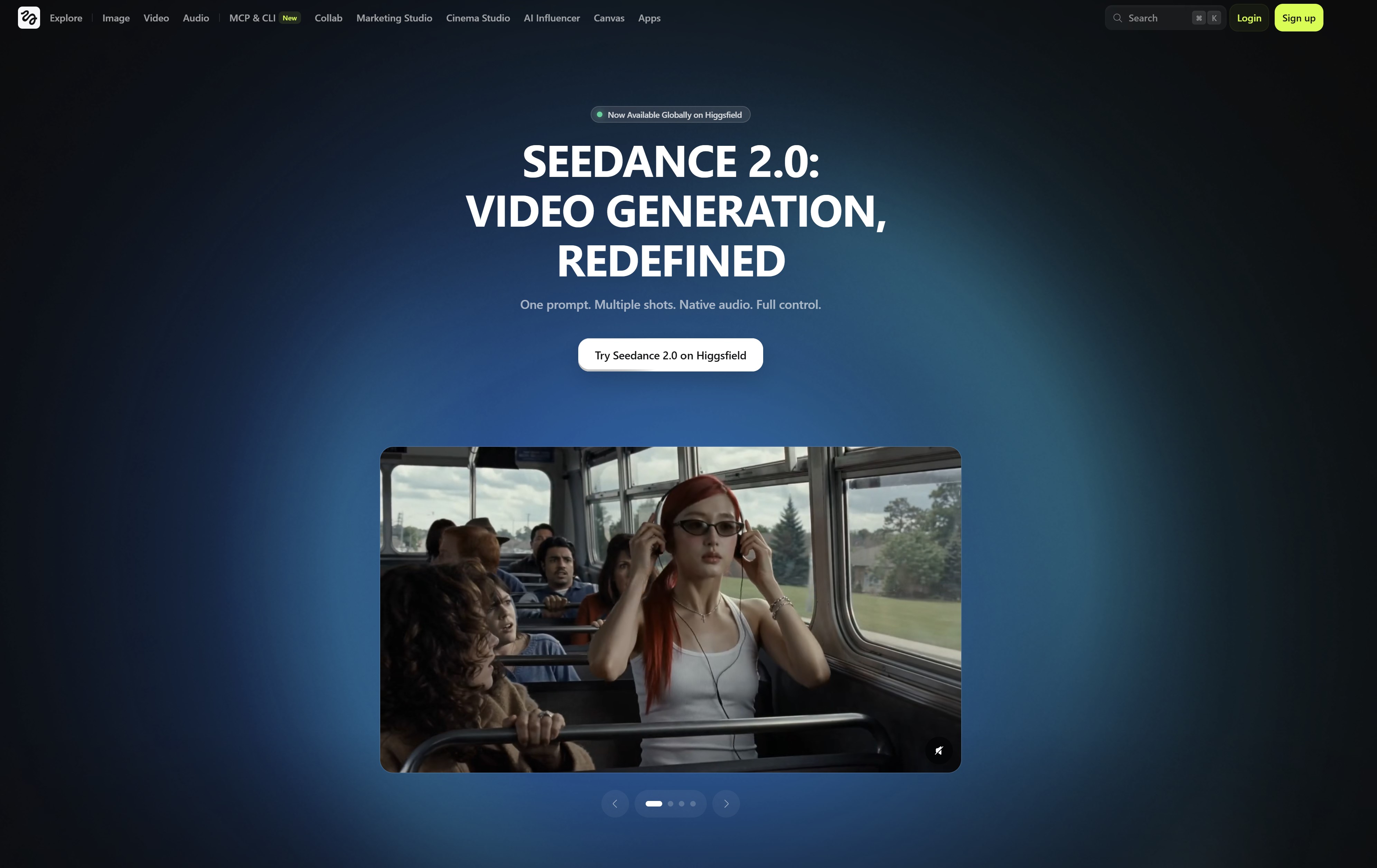
Seedance 2.0 is helping raise expectations for AI video content by making generated videos feel more cinematic, realistic, and controlled. Instead of basic synthetic clips, it focuses on smoother motion, stronger scene consistency, and more immersive audio-visual storytelling.
For creators, marketers, and digital teams exploring the best AI video tools, Seedance 2.0 demonstrates how quickly AI-generated media is evolving from simple automation into professional-style production. It supports a future where visuals, motion, sound, and creative direction work together inside one advanced AI video editor workflow.
Built for creators exploring cinematic AI video, immersive storytelling, and next-generation content production.The Bigger Problem Nobody Is Talking About
Audiences May Stop Trusting Video Entirely
As AI video content becomes more realistic, a growing number of experts are raising concerns about trust and authenticity online.
Deepfake technology is improving rapidly, making it increasingly difficult for viewers to distinguish between real footage and AI-generated media.
This creates serious challenges not only for entertainment and social media, but also for journalism, politics, education, and digital communication overall.
The problem becomes even more dangerous when misinformation spreads through highly realistic AI-generated video clips.
False interviews, manipulated public statements, and synthetic media designed to imitate real people could significantly damage public trust in digital content.
As viewers become more aware of these risks, audiences may eventually start questioning whether any online video is genuine.
This growing trust issue is becoming one of the biggest long-term challenges facing the future of AI-generated media.
The Internet Could Become Flooded With AI Video Content
The rapid rise of AI video tools online is making content creation faster and cheaper than ever before. While this creates exciting opportunities for creators and businesses, it also introduces the risk of overwhelming the internet with mass-produced synthetic media.
Large volumes of low-effort AI-generated videos are already appearing across YouTube Shorts, TikTok, Instagram Reels, and advertising platforms.
As more creators adopt automated production workflows, audiences may begin experiencing content overload, where videos start looking repetitive, generic, and emotionally disconnected.
This could also create algorithmic saturation, making it harder for original creators to stand out. Instead of rewarding creativity, some platforms may become dominated by endless variations of similar AI-generated content.
As competition increases, originality and authentic storytelling may become far more valuable than simple production speed.
Creators Will Need Stronger Personal Brands
As AI-generated content becomes easier to create, personal branding will likely become one of the most important competitive advantages for creators.
Audiences still connect most strongly with authenticity, human personality, emotional storytelling, and unique perspectives that feel genuine.
While the best AI video tools can help automate editing, visuals, voice generation, and production workflows, they cannot fully replace human creativity or lived experience.
Viewers still want creators they can trust, relate to, and recognise across platforms.
This means creators who build strong personal brands, clear storytelling styles, and loyal communities will likely outperform those relying entirely on automated AI-generated content.
In a world flooded with synthetic media, trust and authenticity may ultimately become more valuable than the technology itself.
What the Future of AI Video Content Looks Like
AI Video Will Become the Default Content Format
AI-generated video is rapidly moving from an experimental technology to a mainstream content format used across multiple industries.
Businesses are already using AI video tools online to create marketing campaigns, training videos, product explainers, customer onboarding content, and internal communication media at a fraction of traditional production costs.
This trend is accelerating quickly.
According to Wyzowl, 91% of businesses now use video as a marketing tool, while demand for faster and more scalable content production continues to rise.
Companies no longer want to spend weeks producing short-form content when AI-powered platforms can generate usable video content in hours.
AI video is also helping organisations improve communication by making content creation more accessible. Businesses can now produce multilingual training videos, personalised customer support explainers, social media campaigns, and employee communication updates much faster than before.
For readers, this matters because video is becoming one of the most dominant forms of digital communication online.
Understanding how AI-generated media works now could provide a major advantage as businesses increasingly prioritise scalable visual content production.
Hybrid Human + AI Production Will Win
Despite rapid improvements in automation, fully AI-generated content still struggles to replicate genuine human creativity, emotional storytelling, and authentic personal experiences.
That is why many industry experts believe the future will belong to hybrid production workflows that combine human creativity with AI speed and automation.
The best AI video tools are helping creators reduce editing time, automate repetitive production tasks, improve cinematic visuals, and accelerate content creation workflows.
However, audiences still respond most strongly to originality, emotional connection, humour, storytelling, and personality — areas where human creators remain essential.
This hybrid approach is already becoming a major trend across YouTube, TikTok, advertising, education, and entertainment. Many creators now use an AI video editor to generate scenes, improve visuals, create voiceovers, and automate post-production while still controlling the creative direction themselves.
For businesses and creators, this creates a powerful opportunity.
AI can dramatically reduce production costs and speed up workflows, while human input ensures content still feels authentic and emotionally engaging to audiences.
New AI Video Standards Are Emerging Fast
Audience expectations around AI-generated media are evolving far faster than many creators expected.
What once looked impressive in AI video generation can now appear outdated within months as realism, cinematic quality, and storytelling capabilities continue improving.
New standards are already emerging across the industry, including:
- more realistic movement and facial expressions
- cinematic camera motion and lighting
- improved audio experience in digital content
- faster production cycles
- higher storytelling quality
- stronger visual consistency
This shift is being driven by platforms like Higgsfield AI and Seedance 2.0, which are helping redefine what viewers now expect from modern AI-generated media.
Audiences are becoming more sophisticated and less tolerant of low-quality synthetic content, especially across crowded social media platforms.
For readers considering AI-generated media, this means choosing the right tools and workflows is becoming increasingly important. Businesses and creators who adopt higher-quality AI video production strategies early may gain a major advantage as audience expectations continue rising.
Wrapping up
Seedance 2.0 represents more than just another upgrade in AI video generation technology.
It reflects a much larger shift in how audiences now consume and judge AI-generated media online.
Viewers increasingly expect realism, cinematic storytelling, emotional depth, and a stronger audio experience in digital content rather than low-quality automated visuals.
As AI video tools online continue evolving, generic and repetitive content will likely struggle to maintain attention or engagement.
Platforms like Higgsfield AI and Seedance 2.0 are helping raise industry standards rapidly.
The biggest change is not that AI can generate video anymore — it is that audiences now expect AI-generated video to feel genuinely human.
AI Summary
- AI video content is evolving rapidly as audiences increasingly expect cinematic visuals, realistic motion, immersive storytelling, and stronger audio experience in digital content.
- Platforms like Seedance 2.0 and Higgsfield AI are helping redefine what creators and brands now expect from modern AI video tools online.
- The best AI video tools focus heavily on motion consistency, scene realism, cinematic editing, audio quality, and faster AI-powered production workflows.
- Many creators are now using advanced AI video editor platforms to streamline content creation, reduce editing time, and scale high-quality media production faster.
- As AI-generated media becomes more common across YouTube, TikTok, marketing, and entertainment, low-quality synthetic content is becoming easier for audiences to ignore.
- Businesses and creators adopting higher-quality AI-generated video workflows early may gain a competitive advantage as audience expectations continue rising across digital media platforms.
Most Popular Posts

Effective communication among team members is vital for the productivity and success of any organization. Surprisingly, 60% of companies lack a long-term internal communication strategy, which p...


Businesses thrive on communication for efficiency, productivity and accomplishment. When the right information is passed from the right designation in the organization, it promotes positivity an...
Categories
Blog
(2918)
Business Management
(363)
Employee Engagement
(221)
Digital Transformation
(189)
Growth
(139)
Intranets
(133)
Remote Work
(63)
Sales
(52)
Collaboration
(46)
Customer Experience
(29)
Culture
(29)
Knowledge Management
(28)
Project management
(28)
Leadership
(20)
Comparisons
(9)
News
(1)

Related Posts

What Is Portal Software? Have you ever wondered why so many businesses struggle with disconnected systems, scattered documents, outdated intranets, and poor communication between teams? Most organisations today rely on dozens of different tools...

What happens when your systems suddenly stop working in the middle of a busy workday? For growing businesses, downtime is no longer just a technical problem — it is a direct threat to productivity, customer trust, revenue, and daily operations. ...

Despite organisations investing heavily in collaboration platforms, employee apps, and hybrid work technology, many businesses still struggle with disconnected communication, low employee engagement, and poor workforce visibility. According to ...

The communication champion role is a valuable addition to any business. In a large organization, communication champions should be numerous, forming a communication network. They keep track of information and assist others in better collaborating, wo...

Featured
In today's fast-paced hybrid work environment, staying connected isn't just nice—it's necessary. With more than 80% of employees now working remotely at least part of the time, the demand for intuitive, powerful collaboration tools has never be...


Jill Romford
I am a digital nomad, lover of exploring new places and making friends.
I love to travel and I love the internet. I take pictures of my travels and share them on the internet using Instagram.
Traveler, entrepreneur, and community builder. I share my insights on digital marketing and social media while inspiring you to live your fullest life.
Ready to learn more? 👍
One platform to optimize, manage and track all of your teams. Your new digital workplace is a click away. 🚀
Free for 14 days, no credit card required.