Insight Blog
Agility’s perspectives on transforming the employee's experience throughout remote transformation using connected enterprise tools.
40 minutes reading time
(8070 words)
How Employee Intranets Can Support Financial Wellness and Reduce Stress

How Employee Intranets Can Support Financial Wellness and Reduce Stress
Discover how employee intranets can improve financial wellness, reduce workplace stress, and help HR teams create a more engaged and supported workforce.
How Employee Intranets Can Support Financial Wellness and Reduce Stress

How much financial stress are employees bringing to work every single day?
For many businesses, the answer is far more serious than most leaders realize.
Rising living costs, inflation, debt, housing pressures, and economic uncertainty are creating a major shift in how employees feel both inside and outside the workplace.
Today, financial wellness is no longer just a personal issue — it has become a workplace productivity and employee engagement problem.
Recent research from PwC found that 59% of employees say they are currently stressed about their finances, while nearly half believe their compensation is no longer keeping up with rising costs.
Even more concerning, 71% of Gen Z workers reported that financial stress directly reduces their productivity at work.
When employees are worried about paying bills, covering rent, managing debt, or handling unexpected expenses, that stress naturally follows them into the workplace.
It affects concentration, collaboration, morale, attendance, and long-term retention. Studies also show that financially stressed employees are more likely to feel disengaged, distracted during working hours, and actively searching for new jobs.
71%
of Gen Z workers
According to PwC, nearly 71% of Gen Z employees say that financial stress directly impacts their productivity and ability to focus at work.
Source: PwC Employee Financial Wellness Survey
This is where modern employee intranet platforms are starting to play a much bigger role.
Instead of treating workplace financial wellness as a disconnected HR initiative, many organizations are now turning their employee intranet into a centralized financial wellness hub where employees can easily access benefits information, payroll resources, budgeting guidance, pension support, wellbeing content, and financial education tools all in one place.
Think about it like this: employees already use the company intranet to access documents, company news, HR updates, and internal communication tools.
So it makes sense for businesses to also use that same digital workplace platform to support employee financial wellness in a way that feels accessible, practical, and easy to use.
For remote, hybrid, and frontline teams especially, having a centralized employee support hub can make a huge difference.
Instead of employees digging through emails or outdated PDFs trying to find answers, everything becomes available through one secure and searchable workplace experience.
The companies that understand this shift early are often the ones seeing stronger employee engagement, better communication, improved retention, and a healthier workplace culture overall.
Key Takeaways
- Workplace financial wellness programs help employees reduce financial stress, improve money management, and feel more supported inside modern digital workplaces.
- Employee intranet platforms are increasingly being used as centralized financial wellness hubs where staff can access payroll support, benefits information, financial education, and wellbeing resources.
- Financial stress can negatively impact employee engagement, productivity, retention, morale, and workplace communication across remote, hybrid, and frontline teams.
- Modern employee intranet software improves workplace financial wellness by centralizing communication, AI-powered search, secure document sharing, mobile access, and employee self-service tools.
- Businesses that invest in employee financial wellness and digital workplace technology are more likely to build stronger workplace cultures, improve employee wellbeing, and increase long-term retention.
What Is Financial Wellness in the Workplace?
Financial wellness in the workplace refers to how confident and secure employees feel about managing their finances, covering daily living costs, preparing for emergencies, and planning for the future.
Today, employees are not only thinking about salaries — they are also asking important financial questions like how much should you have in your savings to feel financially stable in an uncertain economy.
For many businesses, financial stress has quietly become one of the biggest drivers of low employee engagement, burnout, and productivity loss.
Rising living costs, debt, inflation, and economic uncertainty are creating new challenges for both employees and employers alike.
According to research from PwC, nearly 60% of employees say financial stress is their biggest source of stress, while 76% admit money worries negatively affect their productivity at work.
Why Employee Financial Wellness Matters More Than Ever
Employee financial wellness has become a much bigger priority over the past few years because financial pressure is now affecting nearly every workforce demographic.
From younger employees struggling with housing costs to older workers worrying about retirement savings, financial uncertainty is impacting workplace morale across the board.
Research fromBank of America Workplace Benefits Report found that financial stress is one of the leading causes of anxiety among employees, especially during periods of inflation and economic instability.
This growing pressure often creates several workplace problems:
- Reduced concentration during working hours
- Higher stress and burnout levels
- Increased mental fatigue
- Lower employee morale
- Poorer collaboration across teams
Many employees also spend working hours researching personal financial issues, looking for loans, comparing bills, or worrying about savings goals instead of focusing on work tasks.
This is why businesses are increasingly investing in workplace financial wellness initiatives as part of their broader employee wellbeing strategy.
The Hidden Business Costs of Employee Financial Stress

The Hidden Business Costs of Employee Financial Stress
Financial stress does not only affect employees personally — it also creates serious business challenges that many organizations underestimate.
When employees feel overwhelmed financially, workplace performance often suffers in ways that are not immediately visible. Employees may still attend work, but productivity, communication, and engagement levels can quietly decline over time.
According to Gallup, disengaged employees can significantly reduce workplace productivity and contribute to higher turnover rates, absenteeism, and lower team morale.
Some of the most common hidden business costs include:
- Reduced productivity and focus
- Increased absenteeism
- Higher employee turnover
- Poorer customer service
- Lower engagement levels
- Burnout in remote and hybrid teams
For remote employees especially, financial stress can become even harder to identify because managers may not notice the warning signs as easily in virtual environments.
This is one reason many companies are now using employee intranet platforms and digital workplace software to centralize employee support resources and improve communication around workplace financial wellness.
How Workplace Expectations Around Employee Wellbeing Are Changing
Employee expectations have changed dramatically in recent years.
In the past, many companies viewed employee wellbeing as offering healthcare benefits or occasional wellness initiatives. Today, employees expect much more comprehensive support that includes mental health, flexibility, career development, and financial wellness resources.
Modern employees want workplaces that actively help reduce stress and improve their overall quality of life.
This shift is changing how businesses approach employee communication and internal support systems. Instead of relying on disconnected emails, PDFs, or outdated HR portals, many organizations are building centralized financial wellness hubs inside their employee intranet.
These digital workplace platforms can provide employees with easy access to:
- Budgeting and savings guidance
- Payroll and benefits information
- Pension resources
- Financial education content
- Employee assistance programs
- HR self-service support
By making financial wellness resources easier to access, businesses can improve employee engagement while helping staff feel more supported and informed.
In simple terms, employees now expect the workplace to help support their overall wellbeing — and financial wellness is becoming a major part of that conversation.
Why Traditional Financial Wellness Programs Often Fail
Many companies genuinely want to improve employee financial wellness, but the reality is that most workplace financial wellness programs struggle to gain real engagement.
In many organizations, financial support resources are scattered across disconnected systems, hidden inside outdated HR portals, buried in emails, or spread across multiple third-party platforms that employees rarely use.
The result is simple: employees either cannot find the information they need or they forget those resources even exist.
According to research from Deloitte, employees are far more likely to engage with workplace wellbeing programs when the experience feels simple, accessible, and integrated into their daily workflow.
Unfortunately, many traditional financial wellness initiatives still feel disconnected from the actual employee experience.

Why Traditional Financial Wellness Programs Often Fail
Employees Struggle to Find Information When Systems Are Disconnected
One of the biggest reasons financial wellness programs fail is because employees often have no idea where to find the information they need.
A company may provide excellent financial support resources, but if those resources are spread across different systems, adoption rates usually remain very low.
For example, payroll information may sit in one HR portal, pension documents may exist inside PDFs, budgeting resources may be sent through internal emails, and employee discounts may be hosted on a separate third-party website.
Employees are then expected to remember where everything is located.
This creates frustration very quickly, especially for remote and frontline workers who may already feel disconnected from internal communication systems.
Modern employee intranet platforms help solve this problem by centralizing workplace financial wellness resources into one searchable and accessible digital workplace hub.
Instead of employees wasting time searching across disconnected systems, everything becomes available through a single employee experience platform.
Low Engagement Is Often Caused by Poor Communication and Accessibility
Another major problem is that many financial wellness programs rely too heavily on passive communication.
Businesses often send occasional emails about employee benefits or financial education campaigns and assume employees will engage with them naturally.
In reality, most employees are already overwhelmed with emails, notifications, and workplace communication throughout the day. If financial wellness resources are difficult to access or poorly promoted, engagement levels drop very quickly.
Research from Gallup consistently shows that employees engage more with workplace initiatives when communication feels relevant, timely, and easy to consume.
This is why many companies are now using employee intranet software, mobile communication tools, and personalized internal communication strategies to improve awareness around workplace financial wellness programs. Instead of relying only on emails, businesses can use push notifications, internal news feeds, employee dashboards, and targeted communication campaigns to keep financial wellness visible and accessible.
For remote and hybrid teams especially, accessibility has become critical.
Employees expect to access workplace support resources from anywhere, on any device, without needing to navigate complicated systems.
Generic Financial Advice Rarely Feels Personal or Relevant
One of the most overlooked reasons financial wellness programs fail is because the content often feels too generic.
Different employees face completely different financial realities.
A younger employee may be focused on saving for a first home, while another employee may be worried about childcare costs, debt repayment, or retirement planning. Frontline workers, office employees, remote teams, and senior managers all experience financial stress differently.
When companies provide the same generic financial advice to every employee, engagement naturally becomes limited because the information does not feel personally relevant.
Modern digital workplace platforms are helping businesses create more personalized employee experiences by allowing content targeting based on department, location, role, or employee needs.
This makes workplace financial wellness programs feel more useful and meaningful rather than simply becoming another corporate initiative employees ignore.
In simple terms, employees are far more likely to engage with financial wellness resources when the content actually reflects the challenges they are dealing with in real life.
How Employee Intranets Can Become Financial Wellness Hubs
As workplace financial stress continues to grow, many businesses are starting to rethink how they support employees beyond traditional HR systems.
Instead of relying on disconnected tools and scattered resources, companies are transforming their employee intranet into a centralized financial wellness hub that employees can access every day.
Modern digital workplace platforms now play a major role in improving employee wellbeing, internal communication, and access to financial support resources across remote, hybrid, and frontline teams.
Centralizing Financial Wellness Resources in One Place
One of the biggest advantages of using an employee intranet for financial wellness is simplicity.
Employees no longer need to search through emails, multiple HR systems, or outdated folders just to find important financial information. Everything becomes easier to access from one centralized digital workplace platform.
Many businesses now use their employee intranet to organize workplace financial wellness resources in a much more user-friendly way, helping employees quickly find the support they need without frustration.
This often includes:
- Benefits information employees can access anytime
- Payroll support resources and HR guidance
- Pension and retirement planning documents
- Employee savings programs and discount schemes
- Financial education materials and budgeting advice
By centralizing these resources, businesses can reduce confusion while improving employee engagement and overall workplace communication.
Using Employee Communication Tools to Improve Awareness
Even the best financial wellness programs fail if employees do not know the resources exist.
This is why internal communication plays such an important role in improving workplace financial wellness engagement.
Modern employee intranet platforms help businesses keep financial wellbeing visible through regular communication, personalized messaging, and real-time updates.
Instead of relying only on company-wide emails, organizations can use multiple communication channels to make financial support information more accessible and easier to notice.
Many companies now use communication features such as:
- Employee announcements and internal news updates
- Push notifications for important benefits reminders
- Employee newsletters focused on wellbeing initiatives
- Mobile alerts for time-sensitive financial updates
This approach helps businesses create more consistent employee engagement while making financial wellness part of everyday workplace communication rather than a forgotten HR campaign.
Making Financial Wellness Accessible for Remote and Frontline Employees
Remote and frontline employees are often the most overlooked when it comes to workplace financial wellness support.
Many frontline workers do not sit behind desks all day, while remote employees may feel disconnected from internal systems and HR communication.
A mobile-friendly employee intranet helps businesses close this gap by making financial wellness resources available from anywhere at any time.
Employees can quickly access information on their phones, tablets, or laptops without needing complicated logins or office-based systems.
Modern financial wellness intranet experiences often include:
- Mobile-first access for remote and frontline teams
- Self-service financial wellbeing resources
- Multi-device support across desktop and mobile platforms
This level of accessibility helps ensure all employees receive equal support regardless of where or how they work.
Creating Personalized Employee Experiences Through Intranet Targeting
Not every employee faces the same financial challenges, which is why personalized communication is becoming increasingly important in workplace financial wellness strategies.
Modern employee intranet software allows businesses to target financial wellness content based on employee roles, departments, locations, or workforce groups.
This creates a much more relevant and useful employee experience compared to generic company-wide messaging.
For example, organizations may provide:
- Department-specific financial support content
- Role-based wellbeing resources for different employee groups
- Location-specific financial guidance and benefits information
Personalized intranet experiences help employees feel more supported because the information they receive is more closely connected to their real-life financial situations.
This often leads to higher engagement, stronger trust, and improved employee wellbeing across the organization.
The 5 Features Every Financial Wellness Intranet Should Include
A successful financial wellness intranet is not simply a place to upload documents or share HR updates.
The real goal is to create a digital workplace experience that helps employees feel more informed, supported, and financially confident in their day-to-day lives.
When employees can easily access financial resources, understand their workplace benefits, and find answers without confusion, it helps reduce stress and improves overall employee wellbeing.
According to research from PwC, employees who feel financially stressed are far more likely to be distracted at work, less productive, and actively looking for new employment opportunities.
This is why modern organizations are increasingly building employee intranet platforms that support workplace financial wellness through communication, education, accessibility, and self-service tools.
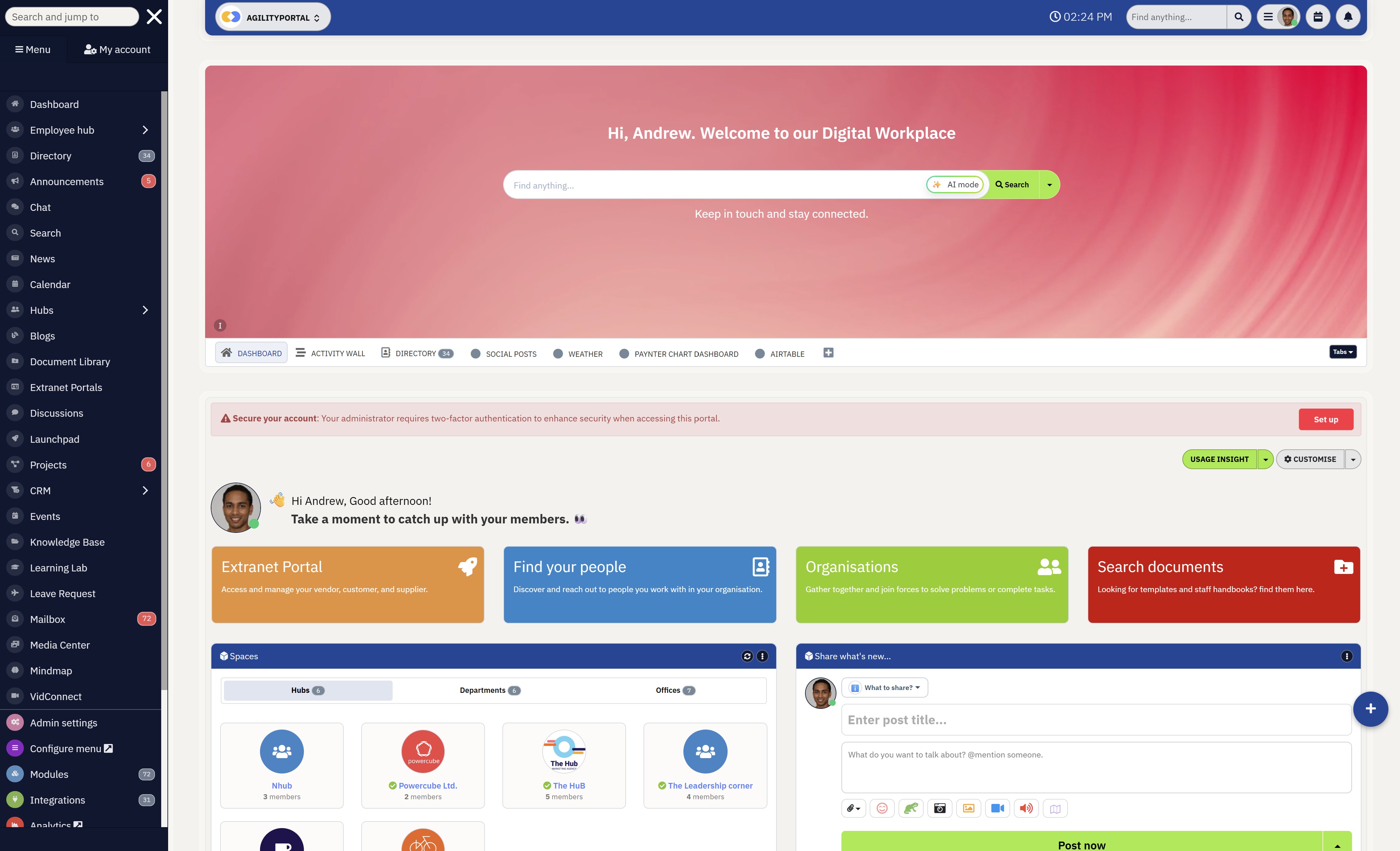
The 5 Features Every Financial Wellness Intranet Should Include
Essential Features Every Financial Wellness Intranet Should Include
| Financial Wellness Feature | How It Supports Employees | Business Benefit |
| Secure Document Management | Helps employees quickly access payroll documents, tax forms, pension guides, and benefits information without relying on HR teams. | Reduces HR workload and improves workplace transparency. |
| AI-Powered Intranet Search | Allows employees to instantly find financial wellness resources, payroll support, and employee benefits information. | Improves employee experience and reduces frustration. |
| Financial Education Hub | Provides budgeting guides, savings advice, retirement planning resources, and financial literacy content. | Improves employee financial confidence and engagement. |
| Mobile Employee Intranet Access | Gives frontline and remote employees access to financial support resources from any device. | Improves communication across distributed teams. |
| Employee Feedback and Surveys | Helps businesses understand employee financial stress and wellbeing concerns. | Supports better HR and employee wellbeing decisions. |
| Internal Communication Tools | Keeps employees informed about benefits, savings programs, payroll updates, and financial wellbeing initiatives. | Increases awareness and adoption of wellness programs. |
| Personalized Employee Experiences | Delivers role-based financial wellness content tailored to employee needs and locations. | Improves employee engagement and relevance. |
| Employee Benefits and Perks Portal | Centralizes discounts, rewards, wellbeing benefits, and employee assistance programs. | Helps employees reduce financial pressure and improves retention. |
1. Secure Document Management for Financial Resources
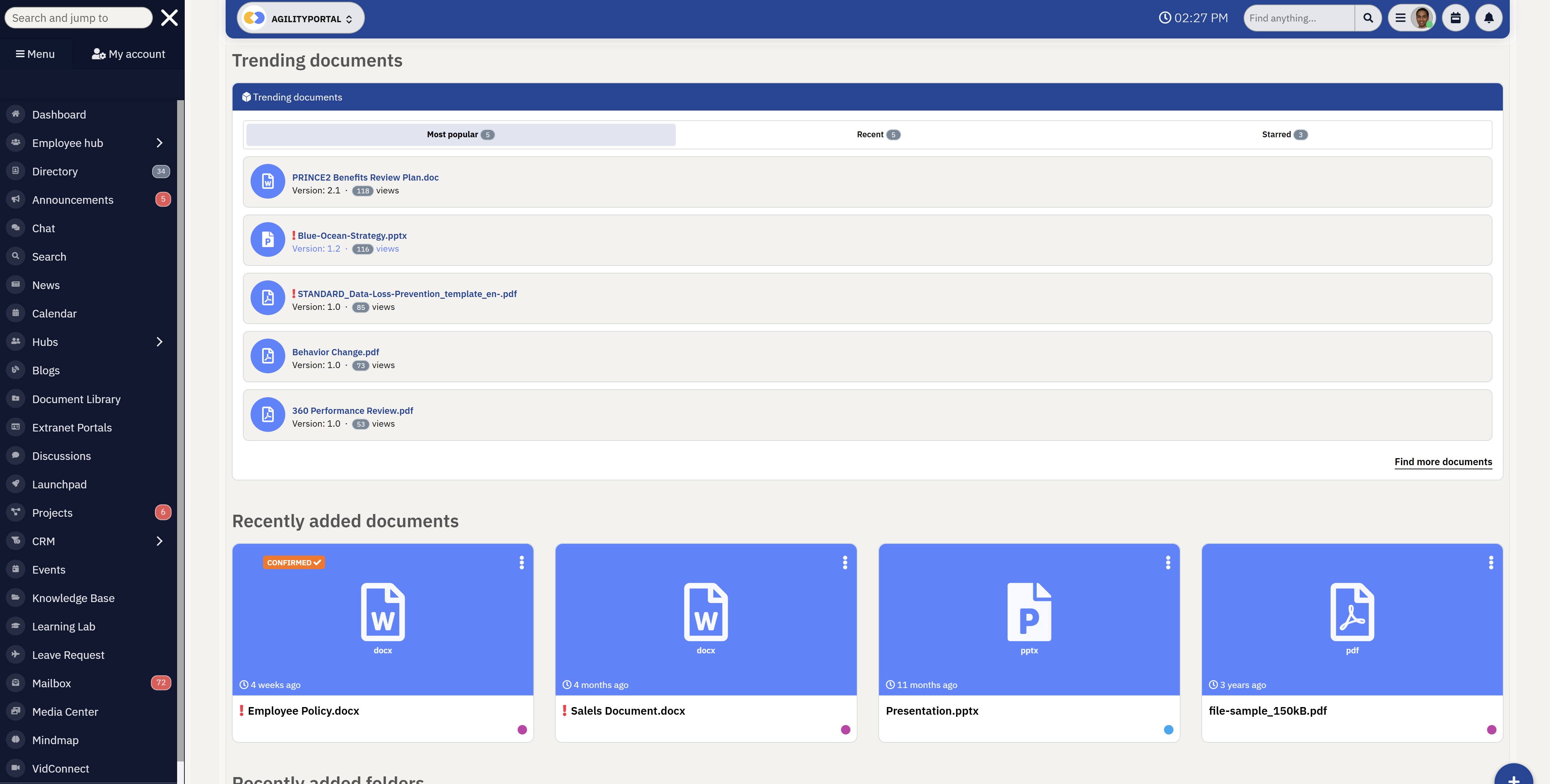
Secure Document Management for Financial Resources
One of the biggest frustrations employees face is struggling to locate important financial documents when they actually need them.
Missing payroll information, outdated benefits guides, or difficult-to-find pension documents can quickly increase employee stress and create unnecessary HR support requests.
A secure document management system inside the employee intranet helps centralize important financial information in one secure and searchable location.
This gives employees confidence that they can quickly access accurate information whenever they need it without relying on HR teams for every request.
This type of financial wellness support is especially valuable during stressful situations such as tax season, payroll issues, or benefits enrollment periods where employees often need fast access to reliable information.
Many businesses use secure intranet document management systems to organize:
- Payroll documents and payslips
- Employee benefits guides
- Pension and retirement resources
- Tax forms and compliance documents
- Financial assistance policies
By simplifying access to critical financial information, organizations can reduce confusion while improving employee trust and workplace transparency.
2. Employee Knowledge Bases and FAQ Sections
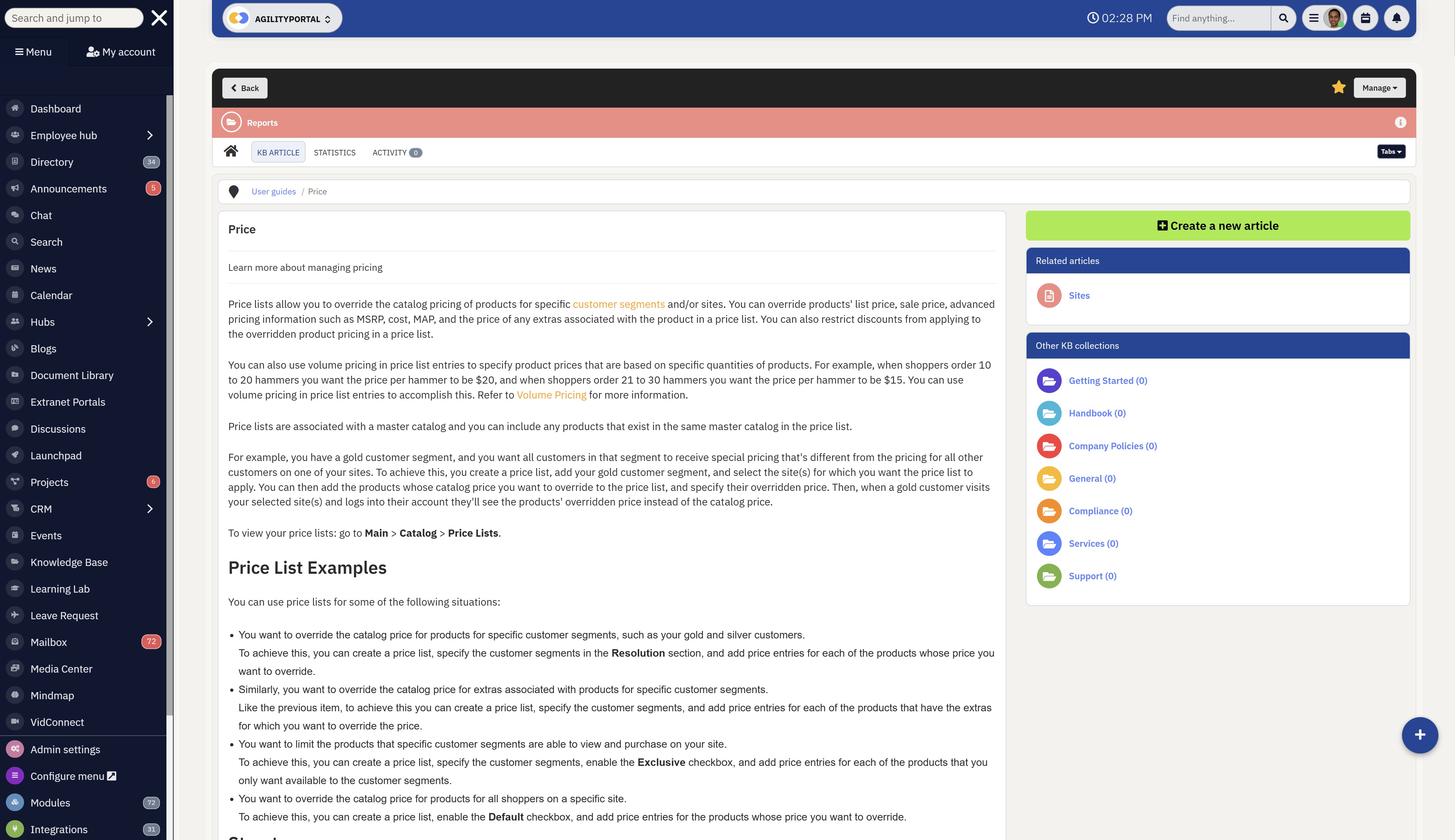
Employee Knowledge Bases and FAQ Sections
Employees often have financial questions they may feel uncomfortable asking directly.
Questions around salaries, tax deductions, pensions, savings, or workplace benefits can sometimes create uncertainty, especially for younger employees or remote workers.
An employee knowledge base gives staff access to trusted financial wellness information in a private and self-service environment.
Instead of waiting for HR responses, employees can quickly search for answers whenever they need support.
This approach helps reduce financial anxiety because employees feel more informed and empowered to make better financial decisions. It also reduces repetitive HR requests, which improves operational efficiency for the organization.
Common financial wellness knowledge base resources often include:
- Answers to common employee financial questions
- Payroll and tax guidance
- Pension and retirement FAQs
- Workplace savings program information
- HR self-service financial support resources
When employees can easily access answers themselves, it creates a more supportive and less stressful employee experience overall.
3. Financial Wellbeing Announcements and Internal Communication Tools
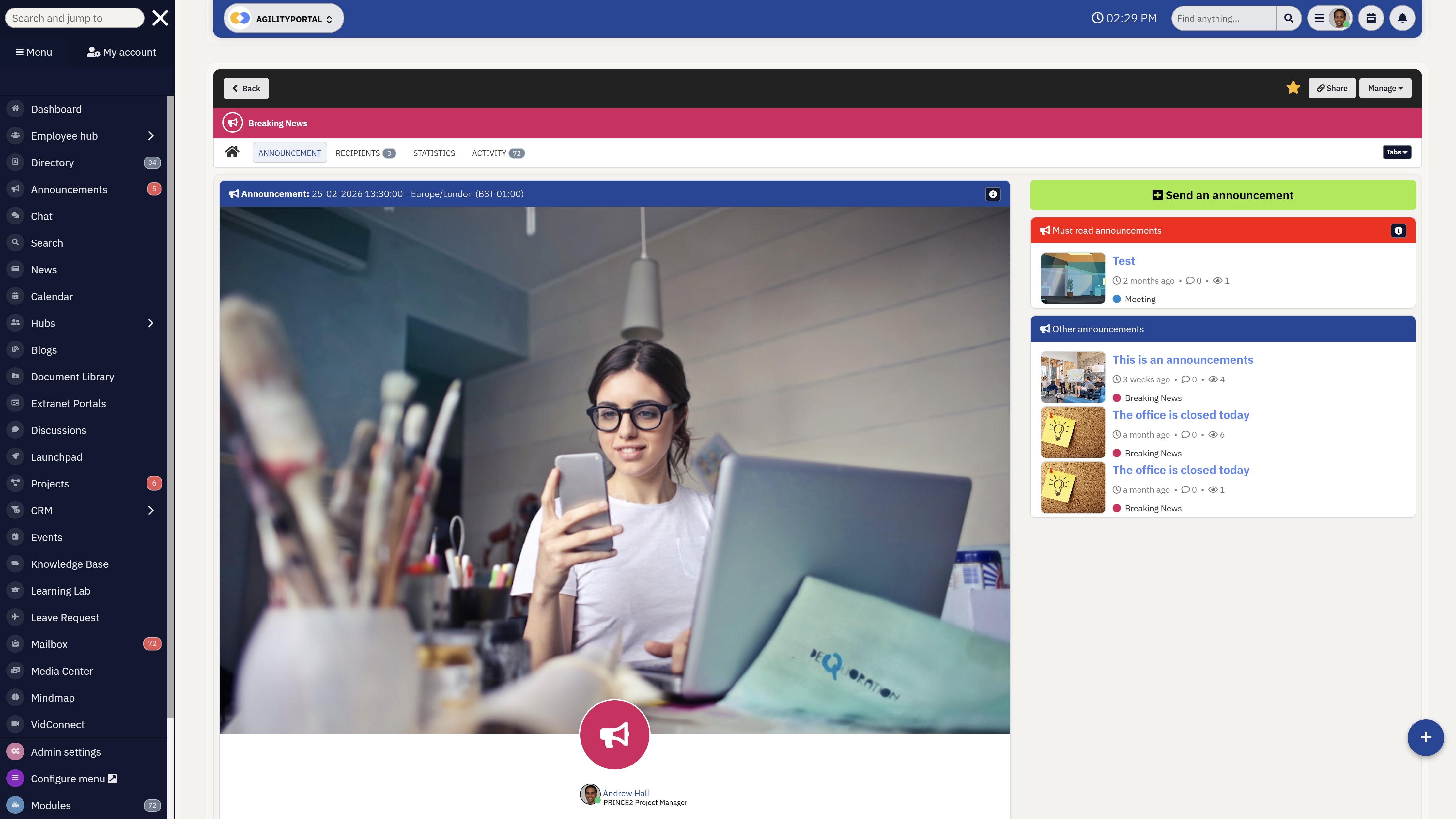
Financial Wellbeing Announcements and Internal Communication Tools
Many financial wellness programs fail simply because employees forget the resources exist.
This is why consistent communication plays such a major role in workplace financial wellness strategies.
Modern employee intranet software helps organizations keep financial wellbeing visible through ongoing communication campaigns, reminders, and educational content.
Instead of financial wellness becoming a once-a-year HR initiative, it becomes part of everyday workplace culture.
This continuous communication helps employees stay aware of support programs, deadlines, and financial opportunities they may otherwise miss. It also creates a workplace environment where financial wellbeing feels openly supported rather than ignored.
Organizations commonly use intranet communication tools for:
- Financial education campaigns
- Budgeting and savings tips
- Employee benefits reminders
- Pension enrollment announcements
- Internal wellbeing awareness initiatives
This type of communication helps normalize conversations around employee financial wellness while increasing overall employee engagement.
4. Surveys and Employee Feedback Tools
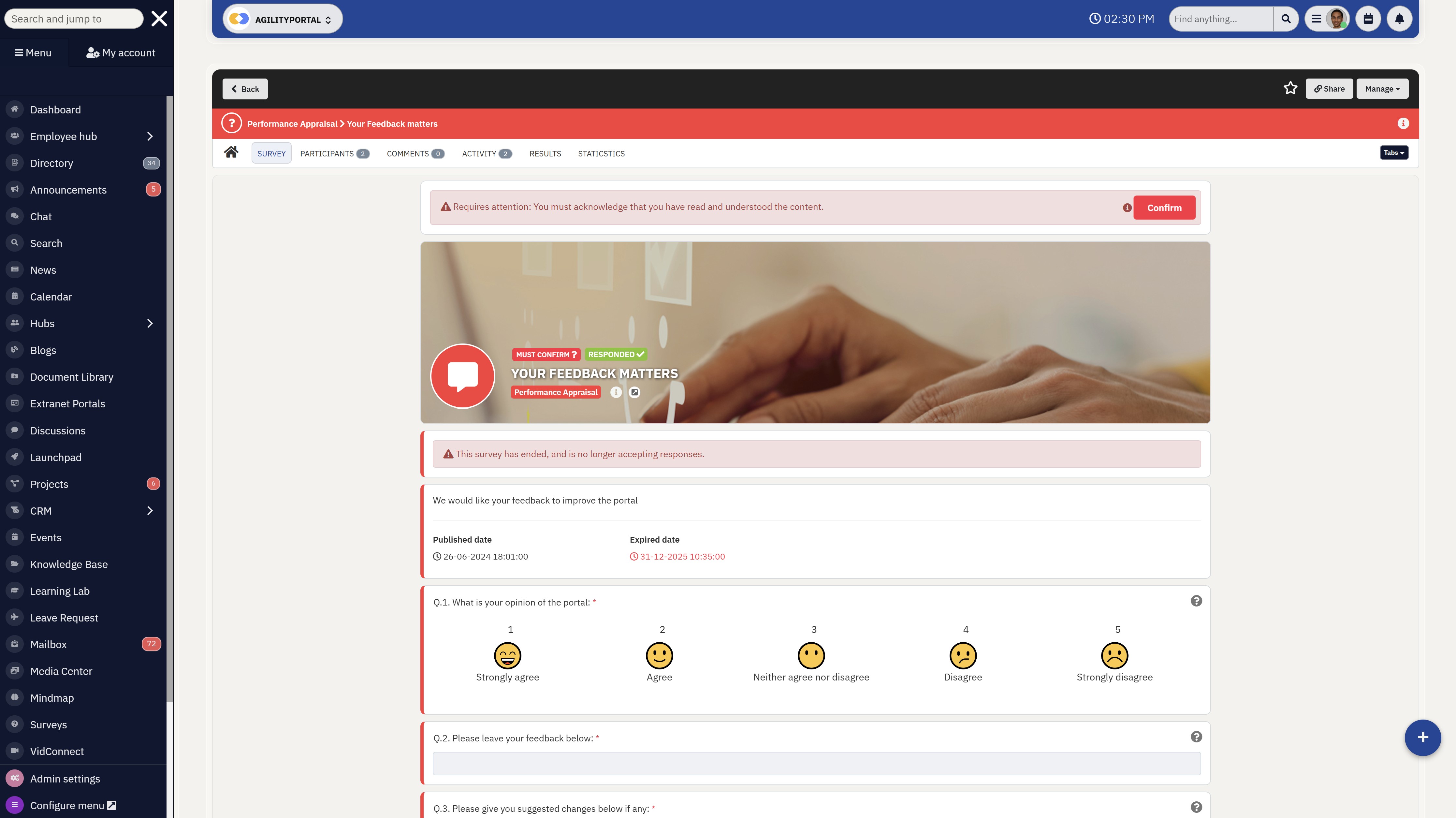
Surveys and Employee Feedback Tools
One of the biggest mistakes companies make is assuming they already understand employee financial concerns.
In reality, financial stress affects different employees in completely different ways depending on age, salary level, location, and personal circumstances.
Employee surveys and feedback tools help organizations better understand the real financial challenges employees are experiencing. This allows businesses to build more targeted and meaningful workplace financial wellness initiatives instead of relying on assumptions.
When employees feel their concerns are being heard, it often increases trust and improves workplace morale.
It also helps HR and leadership teams make smarter decisions about benefits, support programs, and employee wellbeing strategies.
Many organizations use employee feedback tools to:
- Understand employee financial concerns
- Measure financial wellness engagement levels
- Gather feedback on support programs
- Identify workplace stress trends
- Improve employee wellbeing initiatives
Financial wellness strategies become much more effective when they are based on actual employee needs rather than generic corporate assumptions.
5. AI-Powered Search and Smart Resource Discovery
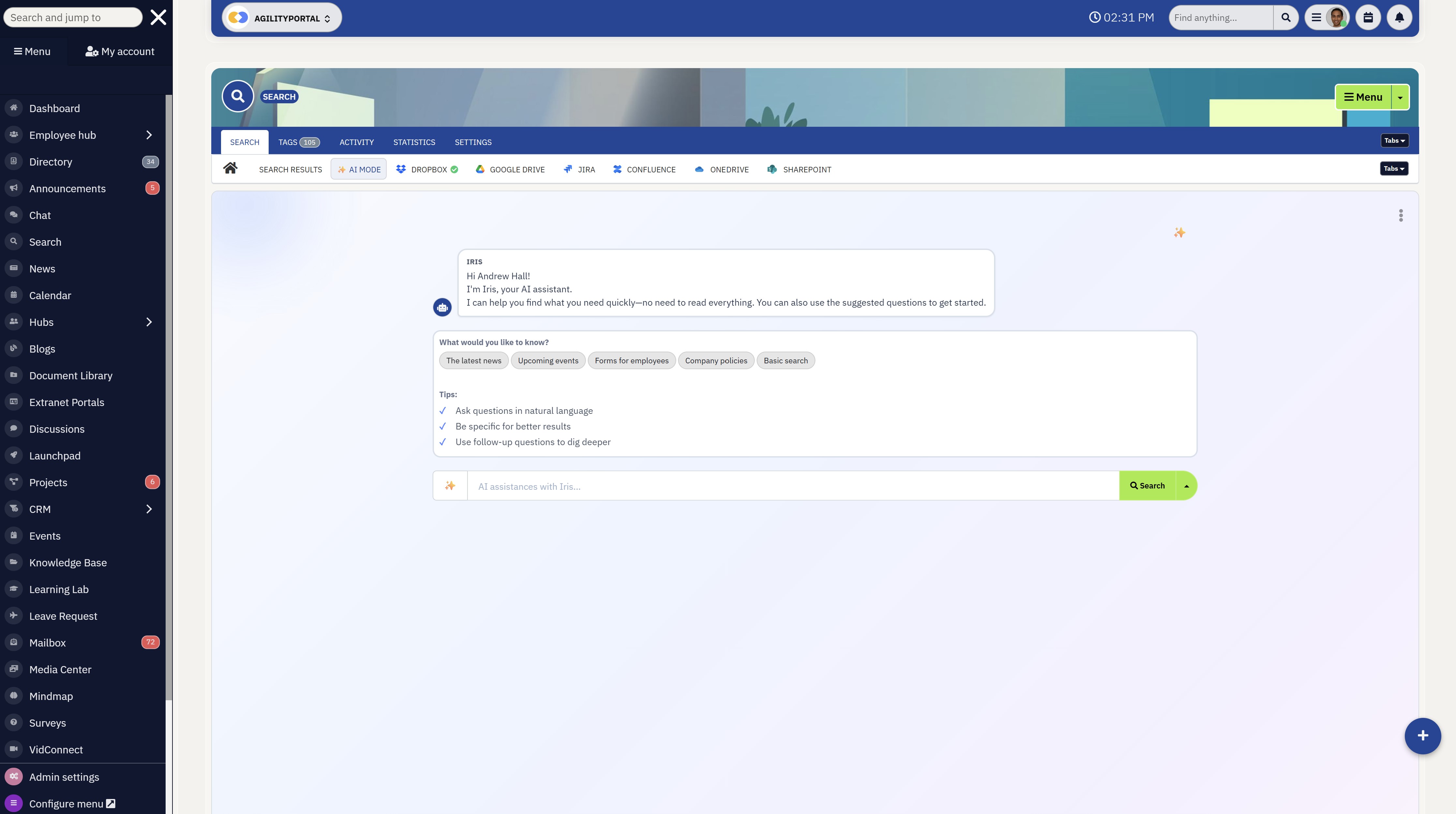
AI-Powered Search and Smart Resource Discovery
One of the most overlooked problems in workplace financial wellness is information overload.
Employees often know resources exist somewhere, but they cannot find them quickly enough when they actually need help.
AI-powered intranet search tools solve this by helping employees instantly locate financial wellness resources through simple searches. Instead of navigating multiple folders or systems, employees can find answers within seconds.
This type of smart resource discovery reduces frustration while making workplace financial wellness support feel far more accessible and user-friendly.
It also helps reduce the workload placed on HR teams because employees can independently locate information themselves.
Modern AI-powered employee intranet platforms often help with:
- Faster access to financial information
- Smarter document discovery
- Personalized resource recommendations
- Reduced HR support requests
- Improved employee self-service experiences
As digital workplaces continue evolving, AI-powered support tools are becoming an increasingly important part of modern employee financial wellness strategies.
How Financial Wellness Improves Employee Engagement and Retention
Employee financial wellness has a direct impact on how employees feel, perform, and engage within the workplace.
When employees constantly worry about bills, debt, savings, or financial uncertainty, it naturally affects morale, communication, productivity, and long-term job satisfaction.
According to research from PwC, financially stressed employees are significantly more likely to be distracted at work, searching for new jobs, and less engaged with their organization.
This is one reason why businesses are increasingly investing in workplace financial wellness programs as part of their broader employee experience strategy.
Employees Feel More Supported Beyond Their Paycheck
Employees are more likely to stay engaged when they feel their employer is actively helping reduce stress and improve their quality of life.
Financial wellness support helps organizations by:
- Helping employees feel more valued and appreciated
- Building stronger employee trust and loyalty
- Improving long-term employee retention
- Creating a more supportive workplace culture
- Reducing employee anxiety around financial uncertainty
When employees believe the company genuinely supports their wellbeing, they are far more likely to remain engaged and committed long term.
Reduced Financial Stress Improves Workplace Performance
Financial stress can quietly damage workplace performance in ways many businesses do not immediately notice.
Employees dealing with financial pressure often struggle to focus fully during meetings, collaboration sessions, or daily tasks because their attention is divided between work responsibilities and personal financial worries.
Supporting workplace financial wellness can improve performance by:
- Increasing employee focus during working hours
- Improving collaboration between teams
- Reducing burnout and emotional fatigue
- Helping employees feel more motivated at work
- Improving overall workplace productivity
Even small improvements in employee financial wellbeing can create noticeable improvements in morale, communication, and day-to-day performance.
Financial Wellness Initiatives Strengthen Company Culture
A strong company culture is built on trust, communication, transparency, and employee support.
When businesses openly support employee financial wellness, it sends a clear message that the organization values employees as people rather than simply workers.
This often creates a healthier workplace environment where employees feel more connected to leadership and more comfortable engaging with internal communication initiatives.
Financial wellness initiatives help strengthen company culture by:
- Encouraging better internal communication
- Improving workplace transparency and trust
- Increasing employee morale across teams
- Supporting healthier employee relationships
- Creating a more positive employee experience
For remote and hybrid organizations especially, financial wellness support can also help employees feel more connected to the company culture even when working from different locations.
Real Examples of Financial Wellness Resources Companies Can Offer
Many businesses want to improve employee financial wellness but are often unsure where to start.
The good news is that companies do not need to become financial advisors to make a meaningful difference.
In most cases, simply giving employees easier access to trusted financial education, support resources, and wellbeing tools through an employee intranet can significantly reduce stress and improve employee engagement.
Large organizations like Google, Microsoft, PwC, and Unilever have all invested heavily in employee wellbeing strategies that include workplace financial wellness support, financial education programs, and employee assistance resources.
Budgeting and Savings Education Resources
One of the most effective ways companies can support workplace financial wellness is by helping employees improve everyday money management skills.
Many employees struggle with budgeting, emergency savings, inflation, and financial planning, especially during periods of economic uncertainty and rising living costs.
Providing budgeting and savings education through an employee intranet gives employees easy access to practical financial guidance without making the experience feel complicated or overwhelming.
It also helps employees build healthier financial habits over time, which can reduce financial anxiety and improve overall employee wellbeing.
For example, many organizations now provide budgeting templates, emergency fund calculators, financial wellbeing webinars, and articles answering common questions such as how much should you have in your savings.
Financial tools from companies like YNAB and Mint are also commonly referenced within workplace financial wellness programs because they help employees improve budgeting and personal finance management.
Pension and Retirement Planning Support
Retirement planning is one of the biggest financial concerns employees face today, particularly as inflation and economic uncertainty continue affecting long-term financial security.
Many workers feel unsure about pensions, retirement savings, workplace contributions, and future financial stability.
By providing retirement planning resources inside an employee intranet, organizations help employees better understand their financial options and feel more confident about long-term planning.
This type of workplace financial wellness support can significantly reduce financial stress while helping employees feel more secure about their future.
Many companies now provide retirement savings calculators, pension enrollment guides, workplace pension education, and access to financial planning resources directly through their digital workplace platforms.
Organizations such as Fidelity Investments and Vanguard are widely recognized for offering retirement education and pension planning tools that businesses often reference as part of employee financial wellness initiatives.
Employee Discounts and Perks Programs
Employee discount programs may seem small at first, but they can make a meaningful difference for employees dealing with rising household expenses and financial pressure.
Discounts on groceries, travel, childcare, mobile phones, technology, and fitness memberships can help employees reduce everyday costs while improving overall financial wellbeing.
When these benefits are centralized inside an employee intranet, employees are much more likely to actually use them. This improves engagement while helping staff save money in practical ways that directly affect their daily lives and financial stability.
Many organizations now offer cashback programs, retail discounts, transportation savings, and employee rewards schemes through digital workplace platforms.
Companies like Perkbox, Reward Gateway, and Ben are commonly used to help businesses manage employee perks and financial wellness benefits more effectively.
Emergency Financial Assistance Resources
Unexpected financial emergencies can happen to any employee at any time.
Medical costs, family emergencies, housing problems, or sudden life changes can quickly create financial stress that affects mental wellbeing, workplace focus, and employee morale.
Companies that provide emergency financial assistance resources often build stronger trust and loyalty because employees feel supported during difficult situations. Even relatively small support programs can make employees feel more secure and less isolated when dealing with financial hardship.
Many organizations now provide employee hardship programs, emergency salary advance policies, crisis support resources, and employee assistance programs directly through their employee intranet or HR communication platform.
Large employers such as Starbucks and Walmart have publicly discussed employee support initiatives designed to help workers experiencing financial hardship or unexpected emergencies.
Debt Management and Financial Literacy Content
Debt remains one of the leading causes of employee financial stress worldwide. Credit card debt, student loans, rising mortgage costs, and increasing living expenses are creating significant financial pressure across many workplaces.
Financial literacy content helps employees better understand how to manage debt, improve savings habits, build credit, and make more informed financial decisions.
This type of financial wellness support is especially valuable for younger employees who may never have received formal financial education before entering the workforce.
Many companies now provide debt management education, student loan repayment guidance, credit score improvement resources, and workplace financial literacy training through their employee intranet platforms.
Educational providers such as Khan Academy and Coursera have also expanded financial literacy content that organizations can integrate into employee wellbeing and digital workplace strategies.
When organizations invest in financial literacy, they are not simply sharing information — they are helping employees feel more confident, supported, and financially secure in their everyday lives.
How AgilityPortal Helps Companies Build a Financial Wellness Hub
Modern workplace financial wellness programs work best when employees can easily access support, resources, and communication tools from one centralized location.
This is where platforms like AgilityPortal help organizations create a more connected and supportive digital workplace experience.
Instead of relying on disconnected HR systems, scattered emails, or outdated intranet software, businesses can use AgilityPortal to centralize employee communication, financial wellbeing resources, employee engagement tools, and workplace support initiatives in one modern employee intranet platform.
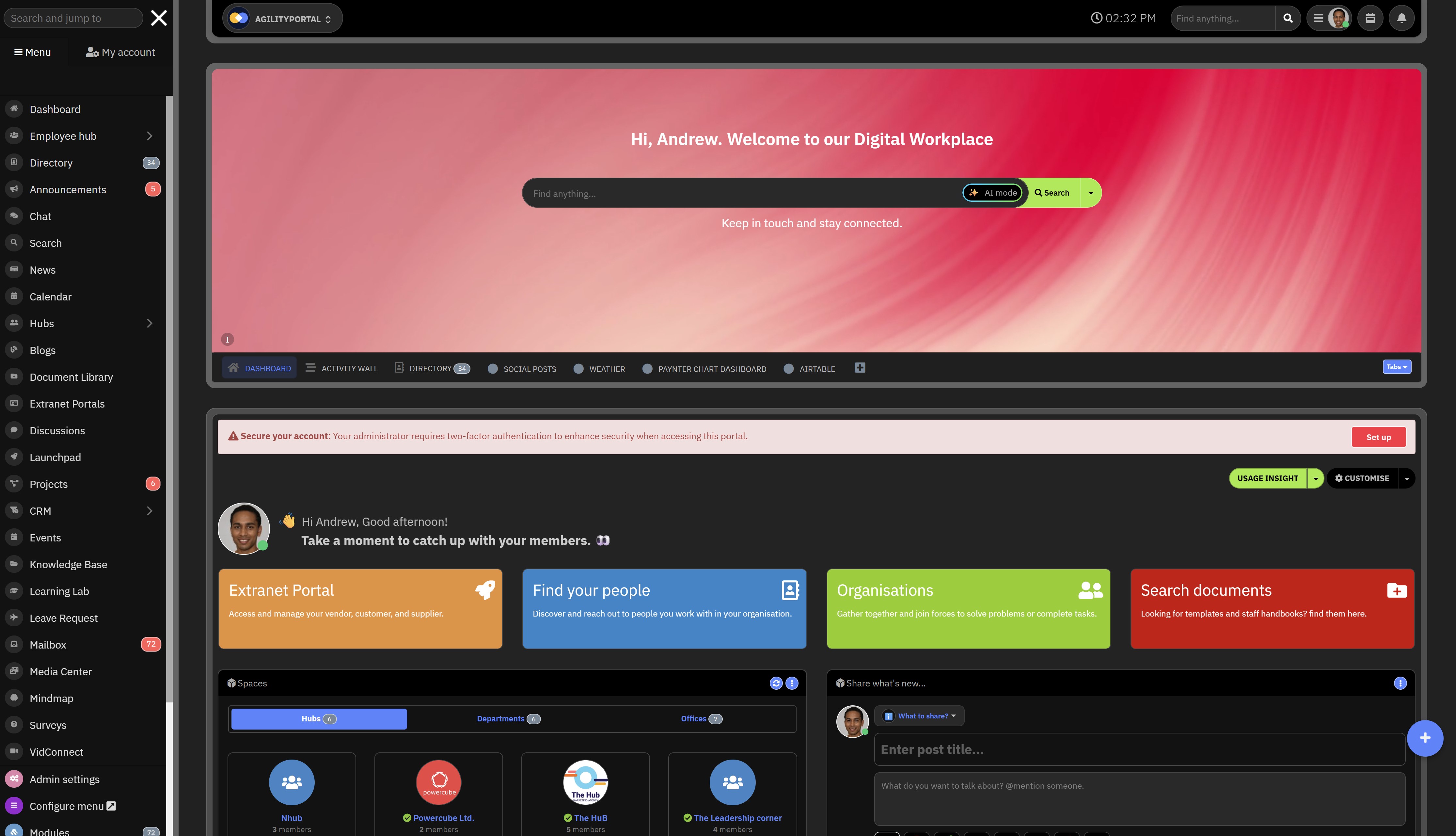
How AgilityPortal Helps Companies Build a Financial Wellness Hub
Centralized Communication and Employee Engagement Tools
AgilityPortal helps organizations centralize internal communication so financial wellbeing initiatives become part of the everyday employee experience rather than occasional HR campaigns employees quickly forget about.
The platform helps support workplace financial wellness by:
- Allowing HR teams to share financial wellbeing updates, employee benefits reminders, pension announcements, and budgeting guidance through one centralized employee communication platform that employees can access daily.
- Helping businesses improve employee engagement using social feeds, internal announcements, targeted messaging, newsletters, and push notifications that keep financial wellness resources visible across the organization.
- Reducing communication gaps between HR departments, managers, frontline workers, and remote teams by ensuring important financial support information is delivered consistently through one digital workplace platform.
- Making it easier for employees to stay informed about payroll updates, employee assistance programs, savings opportunities, and workplace financial wellness initiatives without relying entirely on email communication.
Mobile Intranet Access for Distributed Teams
Many traditional financial wellness programs fail because remote employees and frontline workers struggle to access workplace support systems while away from the office.
Employees working across different locations often miss important HR communication or cannot easily access financial wellbeing resources when they actually need them.
AgilityPortal provides mobile intranet access that helps businesses deliver workplace financial wellness support to employees regardless of where they work.
The platform improves accessibility by:
- Giving employees secure mobile access to financial wellness resources, payroll information, company policies, and employee support tools directly from their smartphones or tablets.
- Helping frontline workers stay connected to workplace wellbeing initiatives even if they do not regularly use desktop computers or office-based systems during their shifts.
- Supporting remote and hybrid employees with real-time access to employee intranet content, workplace announcements, and HR communication from anywhere.
- Making financial wellness resources easier to discover through a mobile-friendly employee experience that reduces frustration and improves employee engagement across distributed teams.
Secure Document Sharing and Policy Management
One of the biggest causes of employee frustration is struggling to locate important workplace documents when they need them most.
Financial stress can increase quickly when employees cannot find payroll information, benefits documentation, pension resources, or HR policies during important moments.
AgilityPortal helps organizations centralize secure document sharing and policy management to improve workplace transparency and reduce employee confusion.
The platform supports financial wellness initiatives by:
- Providing a secure employee document management system where businesses can organize payroll documents, benefits information, pension guides, tax forms, and workplace financial policies in one searchable location.
- Helping employees quickly access the information they need without waiting for HR responses or searching through disconnected systems and outdated email chains.
- Improving workplace compliance and transparency through version-controlled document sharing that ensures employees always access the latest financial wellness information and company policies.
- Supporting employee self-service experiences that reduce administrative workload for HR teams while improving employee confidence and workplace trust.
Personalized Employee Experiences Across Departments
Financial wellness challenges are different for every employee.
Younger workers may be focused on student debt and savings goals, while senior employees may be more concerned about retirement planning or long-term financial security.
AgilityPortal allows businesses to create more personalized employee intranet experiences that make workplace financial wellness content feel more relevant and useful for different employee groups.
The platform helps organizations personalize financial wellness support by:
- Allowing HR teams to target financial wellbeing content based on employee departments, office locations, roles, or workforce groups so employees receive information that matches their real-world financial concerns.
- Helping organizations create department-specific communication campaigns around topics such as budgeting, retirement planning, employee benefits, or workplace savings initiatives.
- Improving employee engagement by delivering more personalized workplace experiences rather than relying on generic company-wide financial wellness messaging.
- Making employees feel more supported because the content they see inside the employee intranet reflects their actual workplace needs and financial priorities.
Employee Feedback and Wellbeing Insights
One of the biggest mistakes businesses make is assuming they fully understand what employees are struggling with financially.
In reality, financial stress affects employees differently depending on salary levels, living costs, personal responsibilities, and economic conditions.
AgilityPortal helps organizations gather employee feedback and wellbeing insights that support smarter workplace financial wellness strategies.
The platform supports employee wellbeing initiatives by:
- Allowing businesses to collect employee feedback through surveys, polls, pulse checks, and engagement tools that help identify financial stress trends across the workforce.
- Helping HR teams better understand employee concerns around financial wellbeing, workplace support, communication gaps, and employee experience challenges.
- Providing employee engagement insights that allow organizations to improve workplace financial wellness programs based on real employee needs rather than assumptions.
- Supporting continuous improvement strategies where businesses can adapt employee wellbeing initiatives over time to improve workplace culture, communication, and employee retention.
Organizations that actively listen to employees are often far more successful at building workplace financial wellness programs that employees actually use and value.
Built for Modern Employee Wellbeing
Build a Financial Wellness Hub Inside Your Employee Intranet
Many organizations struggle to support employee financial wellness because payroll information, employee benefits, financial education resources, HR communication, and wellbeing initiatives are often spread across disconnected systems, emails, and outdated intranet platforms.
AgilityPortal helps businesses create a centralized employee intranet where teams can access financial wellness resources, employee benefits, payroll support, company communication, wellbeing initiatives, document management, and employee engagement tools from one connected digital workplace platform.
- Centralized employee financial wellness resources and HR communication tools
- Secure document management for payroll, pension, and employee benefits information
- Mobile intranet access for remote, frontline, and hybrid employees
- Employee engagement tools, internal communication, and social activity feeds
- AI-powered intranet search and employee self-service experiences
- Employee onboarding, workplace wellbeing campaigns, and knowledge sharing tools
- Personalized employee experiences for departments, offices, and workforce groups
Common Mistakes Companies Make When Launching Financial Wellness Programs
Many organizations invest in workplace financial wellness programs with good intentions, but a large number of these initiatives fail to create long-term employee engagement.
In most cases, the problem is not the financial wellness strategy itself — it is how the program is delivered, communicated, and integrated into the employee experience.
Modern employees expect workplace support systems to feel simple, accessible, and relevant to their everyday lives.
When businesses make financial wellness difficult to access or treat it as a short-term HR initiative, employees quickly lose interest.
According to research from PwC, employees experiencing financial stress are significantly more likely to feel distracted at work, less productive, and actively disengaged from workplace culture.
This is why businesses now need employee financial wellness programs that are consistent, personalized, and fully integrated into the digital workplace experience.
Overcomplicating the Employee Experience
One of the biggest mistakes companies make is creating financial wellness systems that feel overly complicated or difficult to navigate.
In many organizations, employees must search through multiple HR systems, outdated intranet platforms, internal emails, and disconnected employee portals just to locate important financial information.
When employees are already stressed about money, adding unnecessary friction only increases frustration.
Employees want quick and easy access to workplace financial wellness resources without needing to spend valuable time searching for payroll support, pension documents, employee benefits information, or savings guidance.
This is why modern employee intranet software has become so important.
A centralized digital workplace platform helps simplify the employee experience by making workplace financial wellness resources searchable, accessible, and easy to use from one location.
Companies that reduce complexity often see stronger employee engagement because employees are more likely to actually use the support systems available to them.
Failing to Promote Resources Consistently
Another common problem is that many businesses launch workplace financial wellness initiatives but fail to communicate them consistently over time.
Companies often announce financial wellbeing programs during onboarding or annual HR campaigns and then assume employees will remember those resources exist months later.
In reality, most employees are already overwhelmed by daily workplace communication, notifications, and email overload.
If financial wellness resources are not regularly promoted through internal communication channels, employee engagement levels naturally decline.
This is where employee communication platforms and modern digital workplace software play a major role.
Businesses that continuously share financial wellbeing content through employee intranet announcements, social feeds, push notifications, newsletters, and HR communication campaigns tend to achieve much stronger adoption rates.
When financial wellness becomes part of the everyday employee experience instead of a one-time announcement, employees are far more likely to engage with the available support resources.
Ignoring Frontline and Remote Employees
Many traditional workplace financial wellness programs are designed primarily around office-based employees, which creates a major problem for modern organizations with remote teams, hybrid workforces, and frontline staff.
Frontline employees often do not have regular access to company emails or desktop systems, while remote workers can easily feel disconnected from workplace communication and employee support initiatives.
As a result, many employees never fully engage with the financial wellness resources their employer provides.
This lack of accessibility can reduce employee engagement while increasing feelings of disconnect across distributed teams. Employees who cannot easily access workplace support resources are far less likely to benefit from employee wellbeing initiatives, no matter how valuable those programs may be.
Mobile-first employee intranet platforms help solve this problem by making workplace financial wellness resources available anytime and anywhere.
Whether employees are working remotely, traveling, or operating on the frontline, mobile digital workplace platforms ensure financial wellbeing support remains accessible across the entire organization.
Treating Financial Wellness as a One-Time Initiative
One of the most damaging mistakes organizations make is treating financial wellness as a short-term campaign rather than an ongoing part of employee wellbeing strategy.
Financial stress does not disappear after a single webinar, benefits email, or annual wellbeing event.
Employees deal with changing financial pressures throughout the year, including inflation, rising living costs, debt, childcare expenses, housing concerns, and retirement planning. Workplace financial wellness support must evolve alongside those changing employee needs.
Organizations that see the strongest results typically integrate financial wellness into everyday workplace culture through continuous employee communication, updated educational resources, ongoing wellbeing campaigns, and accessible support systems inside the employee intranet.
Businesses such as Google and Microsoft have publicly discussed the importance of creating long-term employee wellbeing strategies rather than isolated wellness campaigns.
This ongoing approach helps employees feel consistently supported, which improves employee engagement, workplace morale, and long-term retention over time.
The Future of Financial Wellness Inside the Digital Workplace
The future of workplace financial wellness is changing rapidly as businesses rethink how they support employees inside modern digital workplaces. Financial wellbeing is no longer being treated as a standalone HR initiative or occasional employee benefit. Instead, it is becoming deeply connected to employee engagement, workplace culture, mental health, employee experience, and digital transformation strategies.
One of the biggest shifts happening right now is the rise of AI-powered employee support experiences. Companies are increasingly using artificial intelligence inside employee intranet platforms and digital workplace software to deliver personalized financial wellness resources, smarter employee self-service tools, AI search functionality, and real-time support experiences. Instead of employees manually searching through disconnected systems, AI-powered digital workplaces are helping employees quickly discover payroll information, benefits guidance, savings tools, financial education resources, and employee assistance programs in seconds.
Research from Wellhub shows that AI-powered personalization is now one of the fastest-growing workplace wellness trends shaping employee engagement and employee wellbeing strategies in 2026.
Another major trend shaping the future of workplace financial wellness is personalized financial education. Businesses are moving away from generic employee wellness programs and instead creating personalized employee experiences tailored to different workforce groups. Employees now expect financial wellness content that reflects their own life stage, salary concerns, financial priorities, and career goals.
For example, younger employees may need support around debt management, savings goals, and first-time home ownership, while senior employees may focus more on retirement planning, pensions, and long-term financial security. This demand for personalized employee wellbeing experiences is pushing organizations to adopt smarter employee intranet software and digital workplace platforms capable of delivering role-based and behavior-driven content recommendations.
According to workplace wellbeing reports from Global Wellness Institute and Wellsteps, personalized wellbeing support, AI-driven employee experiences, and holistic workplace wellness ecosystems are now among the most important HR and employee engagement trends shaping 2026.
Organizations are also increasingly investing in integrated wellbeing ecosystems rather than isolated employee wellness tools. Instead of separating mental health support, financial wellness, employee benefits, workplace communication, learning platforms, and HR systems, businesses are now bringing everything together into centralized employee experience platforms.
This integrated digital workplace approach helps employees access multiple forms of support through one connected environment. Employees can access financial wellbeing resources, mental health tools, employee benefits information, workplace learning content, internal communication, and HR support through a single employee intranet platform rather than navigating multiple disconnected systems.
Large companies such as Microsoft, Google, and Salesforce have all publicly emphasized the importance of connected employee experience strategies that combine wellbeing, communication, collaboration, and employee support inside unified workplace platforms.
Another fast-growing trend is the use of predictive analytics and workplace wellbeing data. Businesses are increasingly using employee engagement analytics, pulse surveys, AI insights, and behavioral data to better understand employee stress levels, burnout risks, and financial wellbeing concerns before they become larger organizational problems.
Research from Sequoia Consulting Group highlights that organizations are placing much greater focus on measurable employee wellbeing outcomes, employee retention metrics, and data-driven employee experience strategies.
At the same time, businesses are becoming more aware that employees now expect workplace wellbeing to feel proactive rather than reactive. Employees no longer want to wait until they experience severe stress, burnout, or financial hardship before receiving support. Instead, modern employee wellness strategies are increasingly focused on prevention, continuous support, and everyday accessibility through mobile intranet platforms and AI-powered employee experience tools.
Financial wellness is also becoming a much larger part of employer branding and talent retention strategies. Employees increasingly evaluate companies based on workplace culture, wellbeing support, flexibility, and employee experience rather than salary alone. Research from LinkedIn found that employees who feel supported by their employer are significantly more engaged and more likely to remain with the organization long term.
Looking ahead, the future of employee financial wellness will likely become even more connected to AI, employee intranet software, digital workplace technology, workforce analytics, and personalized employee experiences. Companies that successfully combine employee wellbeing, internal communication, workplace flexibility, and financial wellness support into one unified digital workplace strategy will likely have a significant advantage when it comes to employee engagement, retention, and long-term workplace culture.
Wrapping up
Financial stress is no longer just a personal issue — it directly affects employee engagement, workplace productivity, retention, and overall company culture.
As businesses continue adapting to remote and hybrid work environments, employee intranet platforms are evolving into centralized employee support hubs that help organizations improve workplace financial wellness, communication, and employee wellbeing.
Modern digital workplace platforms now give employees easier access to financial education, payroll support, benefits information, and wellbeing resources from one connected experience.
Companies that invest in employee financial wellness and modern employee intranet software are far more likely to build stronger, healthier, and more engaged workforces in the years ahead.
AI Summary
- Workplace financial wellness programs help employees reduce financial stress, improve money management, and feel more supported within modern digital workplaces and employee intranet platforms.
- Many businesses are transforming their employee intranet into a centralized financial wellness hub where employees can access payroll support, employee benefits, financial education, wellbeing resources, and HR communication tools.
- Financial stress can negatively affect employee engagement, workplace productivity, communication, morale, retention, and overall employee wellbeing across remote, hybrid, and frontline teams.
- Modern employee intranet software now includes AI-powered search, secure document management, employee self-service tools, mobile intranet access, and personalized employee experiences to improve workplace financial wellness support.
- Companies are increasingly investing in personalized financial education, employee wellbeing initiatives, workplace communication platforms, and digital workplace technology to improve employee experience and long-term engagement.
- Common workplace financial wellness resources include budgeting and savings education, retirement planning support, employee discount programs, debt management guidance, employee assistance programs, and financial literacy content.
- Organizations that prioritize employee financial wellness often improve workplace culture, reduce employee stress, increase productivity, strengthen employee engagement, and support long-term employee retention.
Most Popular Posts

Effective communication among team members is vital for the productivity and success of any organization. Surprisingly, 60% of companies lack a long-term internal communication strategy, which p...


Businesses thrive on communication for efficiency, productivity and accomplishment. When the right information is passed from the right designation in the organization, it promotes positivity an...
Categories
Blog
(2952)
Business Management
(368)
Employee Engagement
(222)
Digital Transformation
(190)
Growth
(142)
Intranets
(135)
Remote Work
(63)
Sales
(53)
Collaboration
(47)
Customer Experience
(30)
Culture
(29)
Knowledge Management
(28)
Project management
(28)
Leadership
(20)
Comparisons
(9)
News
(1)

Related Posts

How much financial stress are employees bringing to work every single day? For many businesses, the answer is far more serious than most leaders realize. Rising living costs, inflation, debt, housing pressures, and economic uncertainty are crea...

Running a restaurant today is completely different from how it was even five years ago. Delivery apps, rising customer expectations, labor shortages, and faster service demands have completely changed how food businesses operate. That's e...

Why do trusted employees sometimes commit fraud inside organizations? It's a difficult question most business owners, HR leaders, and finance teams never expect to deal with until something goes wrong. The reality is that workplace fraud is far more ...
![Best Free LMS Platforms for Employee Training + Online Learning in 2026 [Expert Picks]](http://agilityportal.io/images/easyblog_articles/1756/b2ap3_thumbnail_Best-Free-LMS-Platforms-for-Employee-Training--Online-Learning-in-2026-.jpg "Best Free LMS Platforms for Employee Training + Online Learning in 2026 [Expert Picks]")
Employee training has changed a lot over the last few years. More businesses are now managing remote teams, hybrid workers, and distributed employees across different locations, which means traditional classroom training simply doesn't work the...

Most people don't realize it, but businesses use some form of a Schedule of Reinforcements every single day — whether it's employee bonuses, praise from a manager, sales commissions, promotions, or even simple recognition during team meetings. ...


Jill Romford
I am a digital nomad, lover of exploring new places and making friends.
I love to travel and I love the internet. I take pictures of my travels and share them on the internet using Instagram.
Traveler, entrepreneur, and community builder. I share my insights on digital marketing and social media while inspiring you to live your fullest life.
Ready to learn more? 👍
One platform to optimize, manage and track all of your teams. Your new digital workplace is a click away. 🚀
Free for 14 days, no credit card required.