
Insight Blog
Agility’s perspectives on transforming the employee's experience throughout remote transformation using connected enterprise tools.
27 minutes reading time
(5420 words)
Why Outdated Asset Management Strategies Are Costing Businesses Time and Money

Why Outdated Asset Management Strategies Are Costing Businesses Time and Money
Outdated asset management strategies create hidden costs, operational delays, and compliance risks. Learn how modern businesses improve efficiency, visibility, and control with smarter asset management systems.
Why Outdated Asset Management Strategies Are Costing Businesses Time and Money

Many businesses still rely on spreadsheets, outdated systems, and disconnected tools to manage company assets, but this approach creates more problems than most leaders realize.
From missing equipment and duplicate software purchases to delayed maintenance and poor visibility across departments, outdated asset management strategies often lead to wasted time, rising operational costs, and lower productivity.
This article explores why modern businesses are moving toward smarter asset management strategies that provide better control, real-time visibility, and improved operational efficiency.
As companies grow, managing assets manually becomes harder, especially when teams are remote, distributed, or using multiple systems that fail to communicate with one another.
$19.68B
projected market size by 2030
The global Enterprise Asset Management (EAM) market is expected to reach USD 19.68 billion by 2030, driven by businesses looking to reduce asset breakdowns, improve operational performance, and increase organizational productivity.
Source: Global Enterprise Asset Management Market Research
The demand for smarter asset management solutions is growing rapidly.
In fact, the global Enterprise Asset Management (EAM) market is projected to reach USD 19.68 billion by 2030, driven largely by businesses looking to reduce asset breakdowns, improve operational performance, and increase organizational productivity.
This guide will break down the hidden costs of outdated asset tracking, the warning signs businesses should not ignore, and how modern asset management systems help organizations save money, reduce downtime, and scale more efficiently.
Key Takeaways
- Outdated asset management strategies often create hidden operational costs, productivity loss, compliance risks, and unnecessary business spending.
- Spreadsheet-based asset tracking becomes difficult to manage as businesses grow, especially across remote teams and multiple departments.
- Modern asset management software helps businesses improve visibility, automate maintenance, reduce downtime, and improve operational efficiency.
- Businesses that centralize asset tracking gain better control over software licenses, equipment lifecycle management, and operational reporting.
- Cloud-based asset management systems improve collaboration, scalability, accountability, and real-time access to workplace asset information.
What Are Asset Management Strategies?
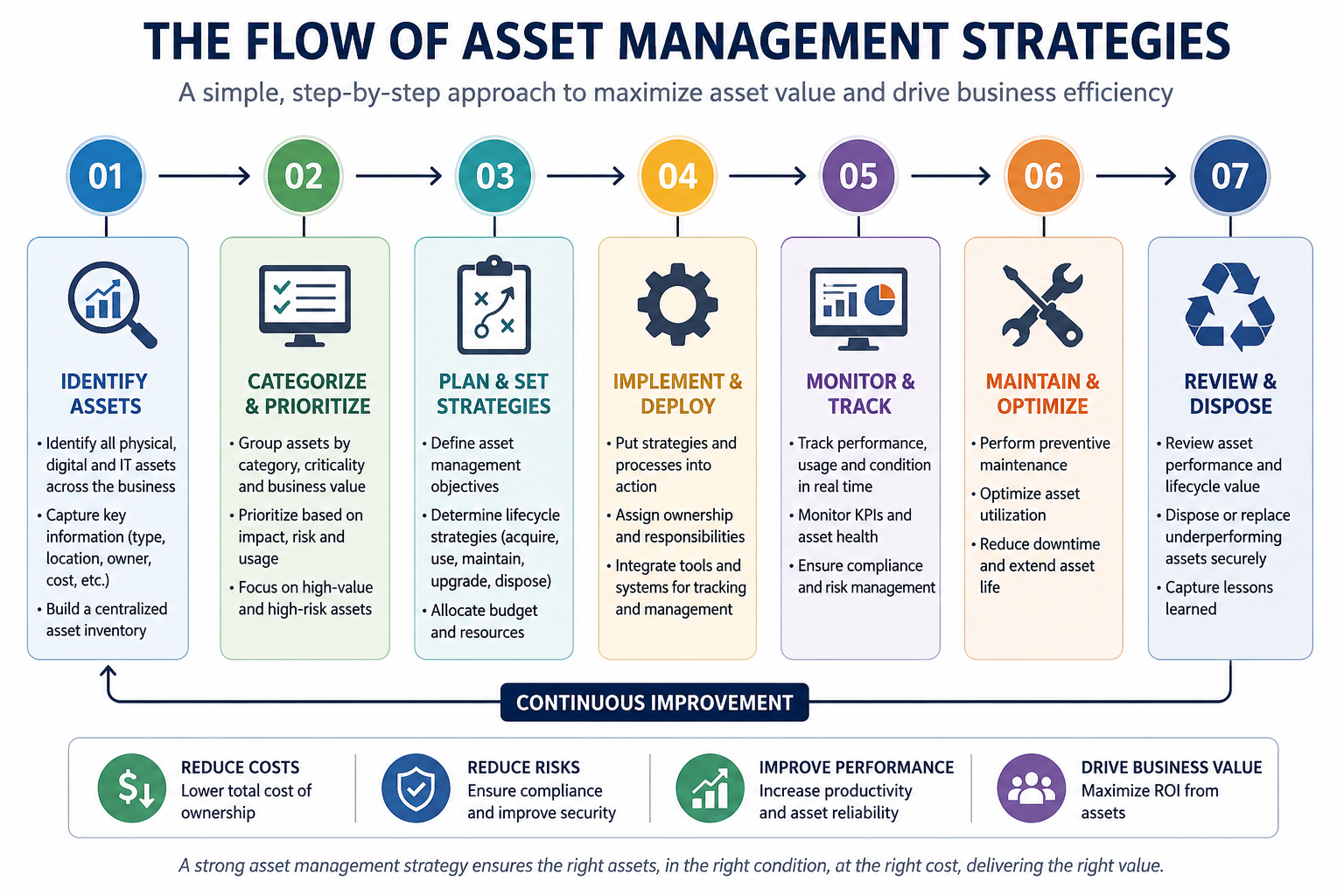
Asset management strategies are the processes businesses use to track, manage, maintain, and optimize company assets throughout their lifecycle.
These assets can include physical equipment, software licenses, digital resources, vehicles, machinery, office devices, and even internal business systems.
The goal is simple: help businesses reduce waste, improve efficiency, avoid unnecessary costs, and ensure assets are always available when employees need them. Modern organizations rely heavily on technology and connected systems, which makes proper asset management more important than ever.
Many growing businesses eventually realize that spreadsheets and manual tracking methods can no longer keep up with operational demands.
That is why companies increasingly invest in the best enterprise asset management software to centralize visibility, automate maintenance schedules, and improve decision-making across departments.
What Are Asset Management Strategies
A simple definition for modern businesses
In simple terms, asset management strategies help businesses understand how assets are being used, maintained, and optimized across the organization. Instead of relying on guesswork, businesses can make smarter operational and financial decisions based on real-time asset data.
Asset management strategies help businesses answer important questions such as:
- Businesses need to understand exactly what assets they own across departments, offices, warehouses, and remote teams to avoid duplicate purchases and unnecessary spending.
- Organizations must know where assets are located at all times, especially when employees work remotely or equipment frequently moves between teams and locations.
- Companies benefit from tracking who is currently using specific devices, software, or equipment so accountability and ownership remain clear across the business.
- Maintenance schedules and replacement timelines must be monitored carefully to reduce unexpected downtime, operational disruption, and expensive emergency repairs.
- Leadership teams need visibility into whether company assets are generating value, improving productivity, or becoming outdated and inefficient over time.
Without a clear strategy, businesses often lose track of resources, overspend on replacements, or experience downtime caused by poorly maintained equipment.
Physical vs digital asset management
Modern businesses now manage both physical and digital assets simultaneously, which creates new operational challenges as organizations scale and adopt more technology-driven workflows.
Physical assets often include:
- Laptops, computers, and mobile devices that employees use daily for communication, collaboration, and operational tasks across the business.
- Company vehicles, machinery, and manufacturing equipment that require regular maintenance, inspections, and lifecycle tracking to remain operational.
- Office furniture, warehouse inventory, and workplace equipment that businesses must track across multiple departments and office locations.
- Specialized operational tools and hardware that support field teams, remote workers, logistics operations, or frontline employees.
Digital assets may include:
- Software licenses and cloud subscriptions that businesses must monitor carefully to prevent overspending or expired access for employees.
- Internal business documents, digital files, and company knowledge that employees rely on to complete daily tasks efficiently.
- Customer databases, digital media files, and intellectual property that require secure storage, controlled access, and proper governance.
- Collaboration systems, SaaS platforms, and cloud applications that have become essential for remote and hybrid workplaces.
As businesses adopt more cloud technology and distributed work environments, managing digital assets has become just as important as tracking physical equipment.
Why businesses struggle with asset visibility
Some businesses struggle with asset visibility because information is often spread across disconnected systems, outdated spreadsheets, and multiple departments that do not communicate effectively with one another.
In many companies, IT teams manage software and devices separately while operations teams track physical equipment using completely different systems, creating operational silos and reporting inconsistencies.
Common problems businesses face include:
- Employees wasting valuable time searching for equipment, documents, or software because there is no centralized system showing where assets are located.
- Businesses accidentally purchasing duplicate hardware, subscriptions, or software licenses simply because existing assets are not properly tracked or visible.
- Software licenses expiring unexpectedly due to poor monitoring, which can disrupt operations and create compliance risks for the organization.
- Maintenance records becoming inconsistent or incomplete, making it difficult to prevent equipment failure and reduce operational downtime.
- Inventory reports becoming inaccurate as assets move between locations, departments, or remote employees without proper tracking procedures in place.
- Leadership teams lacking real-time visibility into overall asset performance, usage trends, and operational efficiency across the business.
Over time, these issues create operational inefficiencies that increase costs, reduce productivity, and make it harder for businesses to scale effectively.
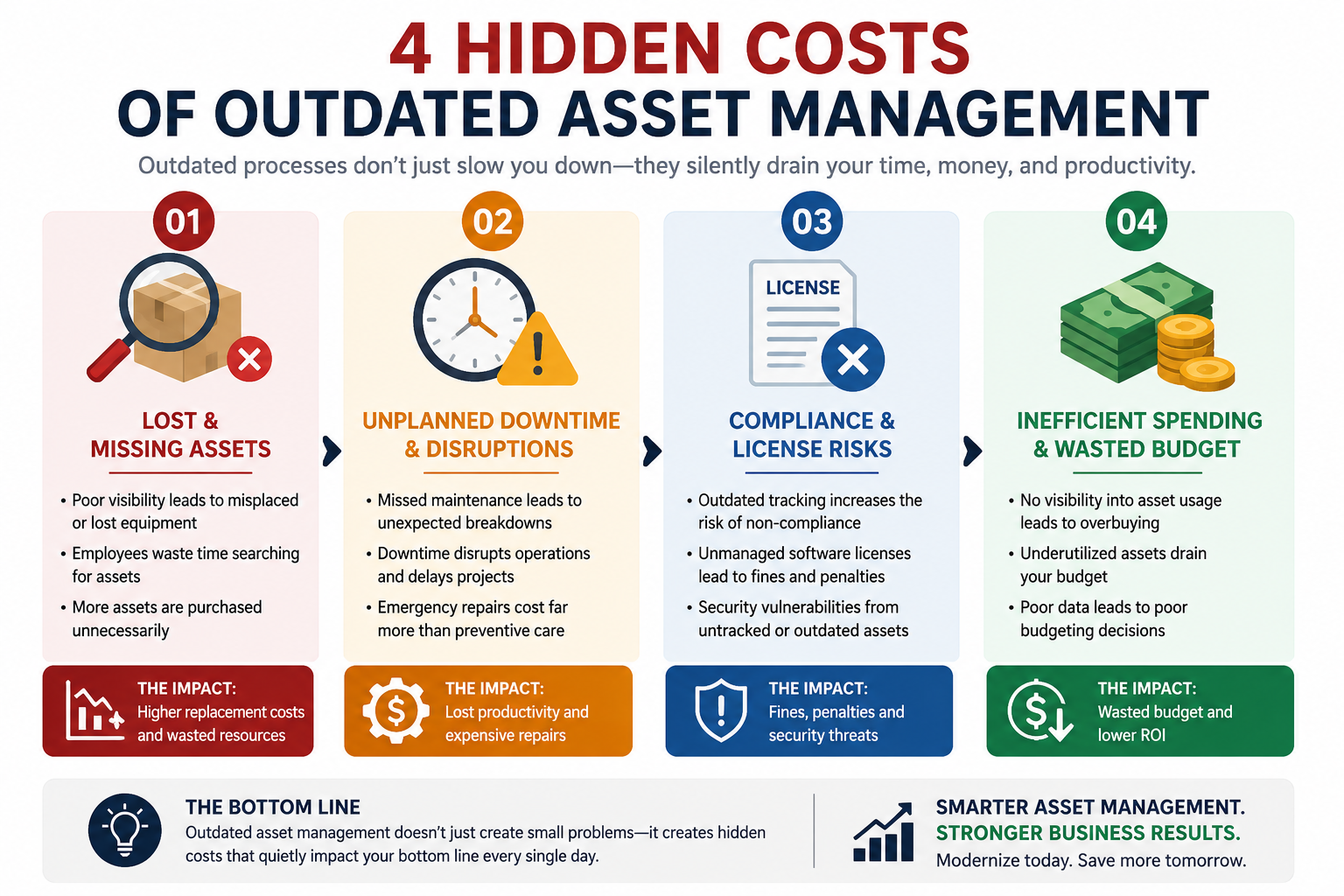
4 Hidden Costs of Outdated Asset Management
Many businesses do not realize how much money and productivity they lose because of outdated asset management processes.
What may seem like a small operational issue often creates larger problems across IT, operations, finance, compliance, and employee productivity.
As businesses grow, relying on spreadsheets, disconnected tracking systems, and manual processes becomes harder to manage.
Without proper visibility into company assets, organizations often struggle with unnecessary spending, operational delays, poor maintenance planning, and security risks.
Modern asset management systems help businesses improve operational efficiency, reduce downtime, and ensure businesses remain compliant with industry regulations and internal policies.
4 Hidden Costs of Outdated Asset Management
1. Lost Productivity From Manual Tracking
Manual asset tracking creates unnecessary work for employees and IT teams. Instead of focusing on important tasks, teams often spend time updating spreadsheets, locating devices, or correcting outdated records.
Common productivity problems include:
- Employees struggling to find laptops, equipment, or inventory because there is no centralized tracking system.
- IT teams manually updating asset records, increasing the risk of errors and outdated information.
- Managers lacking visibility into who is using company equipment, which reduces accountability across departments.
- Businesses finding it difficult to generate accurate reports for budgeting and operational planning.
Over time, these issues reduce efficiency and slow down business operations.
2. Increased Downtime and Operational Delays
Outdated asset management strategies often lead to unexpected downtime and delayed maintenance. Without real-time tracking, businesses usually react only after equipment fails.
Common operational risks include:
- Equipment failures disrupting employee productivity and daily operations.
- Missed maintenance schedules increasing long-term repair and replacement costs.
- Delays replacing outdated hardware or software because businesses lack asset visibility.
- Operational bottlenecks caused by unmanaged inventory or unavailable equipment.
Modern asset management software helps businesses reduce downtime through proactive maintenance and real-time asset monitoring.
3. Compliance and Security Risks
Poor asset visibility can create serious compliance and cybersecurity risks, especially for businesses handling sensitive data or regulated operations.
Common compliance challenges include:
- Expired software licenses creating legal and financial risks during audits.
- Untracked devices increasing cybersecurity vulnerabilities across remote teams.
- Incomplete maintenance records making compliance reporting more difficult.
- Employees continuing to use outdated systems with security vulnerabilities.
Modern asset management systems improve oversight, strengthen security controls, and help businesses remain compliant.
4. Duplicate Software and Unnecessary Spending
Poor asset tracking often leads to unnecessary business spending. Without centralized visibility, companies may continue paying for unused software, duplicate tools, or equipment replacements they do not actually need.
Common financial problems include:
- Businesses paying for unused software subscriptions and inactive licenses.
- Departments purchasing duplicate tools because existing assets are not visible.
- Companies replacing equipment too early due to poor maintenance tracking.
- Finance teams struggling to forecast operational costs accurately.
Smarter asset management strategies help businesses reduce waste, improve budgeting, and gain better control over operational expenses.
Signs Your Business Needs Smarter Asset Management Strategies
Many businesses do not realize their asset management process is broken until operational problems start affecting productivity, costs, and employee efficiency.
As companies grow, managing assets manually through spreadsheets and disconnected systems quickly becomes difficult to maintain.
Some of the best asset management strategies focus on improving visibility, automating maintenance, and centralizing asset tracking across the organization. Businesses that fail to modernize their processes often experience operational bottlenecks, compliance risks, and unnecessary spending.
Below are some common warning signs that your business may need a smarter approach to asset management.
Employees Cannot Find Equipment Quickly
One of the biggest signs of poor asset management is when employees regularly struggle to locate equipment, devices, or important operational resources.
For example, employees may waste time searching for laptops, chargers, company vehicles, or shared workplace equipment because there is no centralized tracking system in place. These are common asset management strategies examples businesses encounter when relying on outdated manual processes.
When teams cannot access the tools they need quickly, productivity drops and operational delays become more common.
IT Teams Rely Heavily on Spreadsheets
Spreadsheets may work for smaller businesses initially, but they often become difficult to manage as operations scale.
Many growing companies still rely on manual spreadsheets to track software licenses, devices, maintenance schedules, and employee equipment assignments. This creates inconsistent data, human error, and limited visibility across departments.
One of the most effective asset management strategies for startups is implementing centralized cloud-based asset tracking early before operational complexity increases.
Software Licenses Are Unmanaged
Businesses using multiple software platforms often lose visibility into active subscriptions and license usage.
Without proper tracking, companies may continue paying for inactive users, duplicate subscriptions, or expired licenses that create compliance risks during audits. In some cases, employees may even use unauthorized software without IT oversight.
Modern asset management systems help businesses monitor software usage, improve security, and reduce unnecessary operational costs.
Asset Audits Take Too Long
If asset audits take days or weeks to complete, it is usually a sign that the organization lacks centralized asset visibility.
Businesses should be able to quickly identify what assets they own, where assets are located, and who is currently using them. When this information is spread across multiple spreadsheets or departments, audits become time-consuming and inaccurate.
Smarter asset management strategies simplify reporting and improve operational transparency across the business.
Maintenance Schedules Are Inconsistent
Poor maintenance tracking often leads to unexpected equipment failures, operational downtime, and expensive emergency repairs.
Businesses that lack automated maintenance reminders or real-time asset monitoring may forget service schedules, inspections, or replacement timelines. Over time, this reduces asset lifespan and increases operational costs.
Modern asset management software helps businesses schedule preventive maintenance, reduce downtime, and improve long-term asset performance.
How Modern Asset Management Strategies Improve Business Operations
Modern businesses can no longer rely on spreadsheets and disconnected systems to manage company assets effectively. As organizations grow, they need better visibility, automation, and reporting to reduce operational inefficiencies and control costs.
This is why many companies are investing in the best modern asset management software to centralize operations, improve productivity, and gain better control over both physical and digital assets.
From startups to enterprise organizations, modern asset management systems help teams work more efficiently while reducing downtime and unnecessary spending.
Many asset management software companies now provide cloud-based platforms that support real-time asset tracking, automated maintenance scheduling, reporting dashboards, and operational collaboration across departments.
Centralized Asset Visibility
One of the biggest advantages of modern asset management systems is centralized visibility across the entire organization.
Businesses can manage hardware, software, inventory, and operational equipment from one connected platform instead of relying on multiple spreadsheets or disconnected tools.
Key benefits include:
- Employees and managers can quickly locate equipment, devices, and company resources without wasting time searching across departments or locations.
- IT and operations teams gain better visibility into asset ownership, usage history, and maintenance records through a single centralized dashboard.
- Businesses can reduce duplicate purchases because teams have clearer visibility into existing company assets and available resources.
- Remote and hybrid teams can access asset information securely from any location using cloud-based systems and mobile applications.
For growing organizations, centralized visibility is one of the most important features offered by modern asset management software for small business environments.
Real-Time Tracking and Reporting
Modern asset management systems provide real-time reporting that helps businesses make faster and more accurate operational decisions.
Instead of relying on outdated spreadsheets, companies can monitor assets, inventory, software licenses, and operational performance instantly.
Benefits of real-time asset tracking include:
- Businesses can identify missing, underused, or outdated assets before they create operational problems or unnecessary spending.
- Managers gain access to live reporting dashboards that improve budgeting, forecasting, and resource planning across departments.
- IT teams can monitor software usage, license renewals, and device activity more efficiently to improve security and compliance.
- Leadership teams can generate operational reports quickly without manually collecting information from multiple systems.
These capabilities are commonly found in the best asset management software platforms designed for modern business operations.
Automated Maintenance Reminders
Manual maintenance tracking often leads to missed service schedules, equipment failures, and costly operational downtime.
Modern asset management systems automate maintenance workflows and notifications to ensure assets remain operational and properly maintained.
Automated maintenance features help businesses:
- Schedule recurring maintenance tasks for equipment, vehicles, and operational devices automatically.
- Reduce unexpected breakdowns by identifying service issues before they become critical operational problems.
- Extend the lifecycle of expensive company assets through proactive maintenance planning and monitoring.
- Improve operational reliability by ensuring inspections, servicing, and replacements happen on time.
This is particularly important for companies managing large volumes of operational equipment or distributed workplace assets.
Better Budgeting and Lifecycle Planning
Modern asset management software also helps businesses gain better control over operational spending and long-term financial planning.
Without accurate asset tracking, businesses often overspend on replacements, duplicate purchases, or emergency repairs that could have been avoided.
Modern systems improve budgeting by helping businesses:
- Track asset depreciation, replacement timelines, and operational costs more accurately across departments.
- Forecast future technology and equipment investments using real-time lifecycle management data.
- Reduce unnecessary purchases by improving visibility into current inventory and available assets.
- Identify underperforming or outdated assets that may be increasing operational costs unnecessarily.
Many businesses searching for the best asset management software prioritize budgeting and lifecycle planning features because they directly impact long-term profitability.
Improved Collaboration Across Departments
Modern asset management platforms also improve communication and collaboration between IT, operations, finance, HR, and management teams.
Instead of working in isolated systems, departments can share real-time asset information through one centralized platform.
Collaboration benefits include:
- Employees can submit asset requests, maintenance reports, and equipment updates through a shared system accessible across departments.
- IT and finance teams can work together more effectively on procurement planning, software management, and operational budgeting.
- Managers gain clearer visibility into resource allocation, asset usage, and operational bottlenecks across the business.
- Businesses improve accountability because teams can track who is responsible for specific devices, equipment, or operational resources.
For startups and growing organizations, investing in modern asset management software for small business operations can significantly improve collaboration, operational efficiency, and long-term scalability.
Key Features Businesses Should Look For in Asset Management Software
Choosing the right asset management platform is no longer just about tracking equipment.
Modern businesses need software that improves visibility, automates operational tasks, reduces downtime, and supports long-term business growth.
The best asset management software helps organizations centralize operations, improve reporting, and manage both physical and digital assets more efficiently.
Whether a company is managing IT devices, operational equipment, inventory, or software licenses, selecting the right features can make a major difference in productivity and operational control.
Below are some of the most important features businesses should look for when comparing asset management solutions.
| Feature | Why It Matters for Businesses |
| Asset Tracking Dashboards | Centralized dashboards help businesses monitor assets, equipment usage, maintenance history, and operational status from one location, improving visibility across departments. |
| Barcode or QR Code Scanning | Barcode and QR code scanning simplify asset check-ins, inventory management, and equipment tracking while reducing manual data entry errors. |
| Cloud-Based Access | Cloud-based systems allow employees, IT teams, and managers to securely access asset information from anywhere, supporting remote and hybrid work environments. |
| Reporting and Analytics | Reporting tools help businesses generate operational insights, monitor asset performance, track costs, and improve budgeting decisions using real-time data. |
| Workflow Automation | Automation features reduce manual administrative work by handling maintenance reminders, approval processes, asset assignments, and service scheduling automatically. |
| Mobile Accessibility | Mobile-friendly asset management platforms allow employees and field teams to update records, scan assets, and access information directly from smartphones or tablets. |
| Integration With Existing Business Systems | Integration with HR, IT, accounting, and workplace management systems improves data accuracy and creates a more connected operational environment. |
Modern businesses should also consider scalability when selecting software.
Many growing companies initially choose simple tools but later struggle when operational complexity increases. Investing in flexible, cloud-based software early can help businesses avoid costly migrations later.
For startups and growing teams, the right asset management platform can improve operational efficiency, reduce unnecessary spending, and provide better visibility into how company resources are being used across the organization.
Common Industries That Benefit From Asset Management Systems
Modern asset management systems are no longer limited to large enterprises or IT departments.
Businesses across multiple industries now rely on asset management software to improve operational visibility, reduce downtime, control costs, and manage both physical and digital assets more efficiently.
As organizations become more technology-driven, having a centralized system for tracking equipment, software, inventory, and operational resources has become essential for long-term business growth.
Healthcare organizations rely on asset management systems to reduce operational risks
Healthcare providers manage large volumes of critical equipment, medical devices, and sensitive operational assets daily.
Without proper tracking systems, hospitals and clinics may struggle with missing equipment, delayed maintenance, and compliance challenges.
Asset management systems help healthcare organizations:
- Track medical equipment across departments and facilities more efficiently.
- Schedule preventive maintenance to reduce equipment failure and operational downtime.
- Improve inventory visibility for critical healthcare supplies and devices.
- Ensure businesses remain compliant with healthcare regulations and operational standards.
- Reduce delays caused by unavailable or misplaced medical equipment.
For healthcare providers, asset visibility directly impacts operational efficiency and patient care quality.
Manufacturing companies use asset management software to improve production efficiency
Manufacturing businesses rely heavily on operational equipment, machinery, vehicles, and maintenance scheduling to keep production running smoothly.
Without proper asset management processes, equipment failures and production downtime can become extremely expensive.
Modern asset management systems help manufacturers:
- Monitor machinery performance and maintenance schedules in real time.
- Reduce unexpected equipment breakdowns through preventive maintenance.
- Improve inventory tracking across warehouses and production facilities.
- Extend the lifespan of operational equipment and manufacturing assets.
- Improve production planning and operational reliability across teams.
For manufacturing companies, reducing downtime often leads directly to increased profitability.
Construction businesses use asset tracking to manage equipment across multiple job sites
Construction companies often manage large volumes of expensive equipment, tools, vehicles, and operational assets across multiple project locations.
Without centralized asset tracking, businesses may experience lost equipment, delayed projects, and rising operational costs.
Asset management systems help construction businesses:
- Track tools, machinery, and vehicles across active job sites more efficiently.
- Reduce equipment loss and unauthorized usage through real-time visibility.
- Schedule maintenance and inspections to improve equipment reliability.
- Improve project planning by understanding equipment availability and usage.
- Reduce unnecessary equipment purchases caused by poor visibility.
Construction teams benefit significantly from mobile-friendly asset management systems that support field operations.
Educational institutions use asset management systems to control operational resources
Schools, colleges, and universities manage large inventories of devices, classroom technology, office equipment, and digital resources across campuses.
Manual tracking methods often make it difficult to maintain accurate inventory records and monitor asset usage.
Modern asset management software helps educational organizations:
- Track laptops, tablets, projectors, and classroom equipment more efficiently.
- Monitor software licenses and digital learning resources across departments.
- Improve budgeting and reduce duplicate purchases for educational technology.
- Simplify asset audits and inventory reporting across campuses.
- Support IT teams managing devices for both staff and students.
As digital learning environments continue to expand, educational institutions increasingly rely on centralized asset visibility.
Remote and hybrid workplaces depend on asset management software for distributed teams
Remote and hybrid work environments have created new challenges for businesses managing devices, software, and operational equipment across distributed teams.
Without centralized systems, companies often lose visibility into employee devices, software usage, and asset ownership.
Asset management systems help remote and hybrid businesses:
- Track laptops, mobile devices, and remote equipment assigned to employees.
- Improve visibility into software licenses and cloud-based workplace tools.
- Reduce security risks caused by unmanaged or outdated devices.
- Simplify onboarding and offboarding processes for distributed employees.
- Improve accountability by tracking asset assignments and operational ownership.
For modern workplaces, asset management software plays a major role in improving operational control, security, and long-term scalability.
Why Businesses Are Moving Away From Spreadsheet-Based Asset Tracking
For many years, businesses relied on spreadsheets to manage company assets, inventory, devices, and operational equipment.
While spreadsheets may work for very small teams initially, they often become difficult to manage as organizations grow.
Many companies still use a spreadsheet based asset tracking template or an it asset tracking spreadsheet to monitor equipment, software licenses, and inventory across departments.
However, manual tracking methods usually create more operational problems over time, especially when businesses scale, hire remote employees, or manage assets across multiple locations.
Although tools like a spreadsheet based asset tracking excel file or an asset management excel template free download may appear cost-effective, they often lack automation, real-time reporting, and centralized visibility that modern businesses now require.
Human error and outdated data create operational problems
One of the biggest issues with spreadsheet-based asset management is the high risk of human error. Since spreadsheets require manual updates, information can quickly become outdated or inaccurate.
Businesses using a spreadsheet based asset tracking template free solution often experience problems such as:
- Employees forgetting to update asset records after equipment changes hands or moves between departments.
- Duplicate entries and missing information causing inaccurate reporting and poor operational visibility.
- Teams working from different spreadsheet versions, resulting in conflicting asset data across the organization.
- Outdated maintenance records increasing the risk of equipment failure and operational downtime.
Over time, these small inaccuracies create larger operational and financial problems for the business.
Lack of accountability makes asset ownership difficult to manage
Spreadsheets also make it harder for businesses to maintain clear accountability for company assets.
For example, many organizations using an asset tracking excel template free download system struggle to identify who is currently responsible for specific devices, software licenses, or operational equipment.
This often leads to:
- Missing laptops, devices, or workplace equipment with no clear ownership records.
- Employees continuing to use outdated or unapproved software without IT visibility.
- Delays during employee onboarding and offboarding because asset assignments are not centralized.
- Increased replacement costs caused by lost or unmanaged company resources.
Modern asset management systems provide real-time tracking and automated assignment histories that improve accountability across the organization.
Spreadsheet systems struggle to scale with growing businesses
Spreadsheets may work for startups with a small number of assets, but they become increasingly difficult to manage as operational complexity grows.
Many businesses using a spreadsheet based asset tracking template excel system eventually reach a point where manual tracking can no longer support daily operations efficiently.
Scalability challenges often include:
- Managing thousands of assets across multiple departments and locations becoming time-consuming and difficult.
- IT teams spending hours manually updating spreadsheets instead of focusing on strategic operational tasks.
- Growing businesses struggling to maintain accurate reporting across remote teams and hybrid work environments.
- Limited automation creating operational bottlenecks as asset volumes increase.
Modern cloud-based asset management platforms are designed to scale with the business while improving operational efficiency.
Businesses need real-time visibility into assets and operations
One of the biggest limitations of spreadsheets is the lack of real-time asset visibility.
Unlike modern asset management platforms, spreadsheets cannot automatically update asset activity, maintenance schedules, or inventory changes in real time.
Businesses relying on free spreadsheet based asset tracking systems often struggle with:
- Limited visibility into where assets are currently located across the business.
- Delays identifying missing, outdated, or underused equipment.
- Difficulty monitoring software licenses, cloud subscriptions, and operational usage trends.
- Inability to generate live operational reports for management and finance teams.
Modern asset management software provides real-time dashboards, automated reporting, and centralized tracking that improve decision-making across departments.
Reporting processes become difficult and time-consuming
Generating reports from spreadsheets often requires manual data collection, cross-checking, and ongoing maintenance.
Businesses using an asset management excel template free system may spend significant time preparing reports for audits, budgeting, compliance reviews, and operational planning.
Common reporting challenges include:
- Finance teams struggling to produce accurate operational cost reports from outdated spreadsheet data.
- IT departments manually compiling software usage and device tracking information for audits.
- Managers lacking visibility into asset lifecycle performance and maintenance history.
- Businesses finding it difficult to ensure reporting accuracy as asset volumes continue to grow.
As organizations become more data-driven, many businesses are replacing spreadsheets with centralized asset management systems that automate reporting and improve operational visibility across the company.
How AgilityPortal Helps Businesses Manage Assets More Efficiently
How AgilityPortal Helps Businesses Manage Assets More Efficiently
As businesses grow, managing workplace resources through spreadsheets, emails, and disconnected systems often creates inefficiencies, communication gaps, and poor operational visibility.
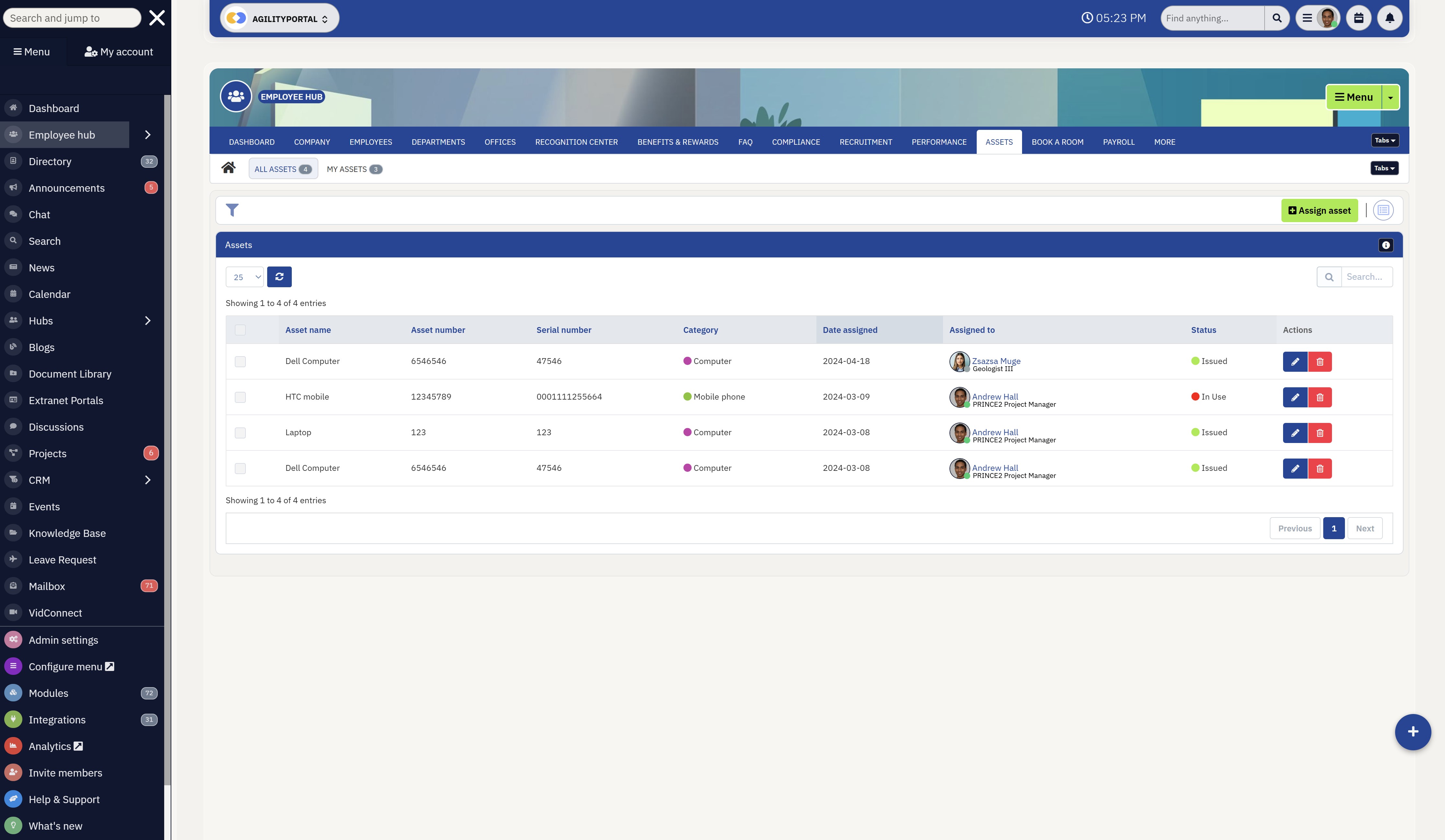
AgilityPortal helps businesses centralize workplace operations, improve collaboration, and give teams better access to important information, resources, and operational updates from one connected platform.
Businesses use AgilityPortal to:
- Reduce reliance on spreadsheets and disconnected workplace systems that slow down operational efficiency.
- Improve visibility across departments, teams, and workplace operations through one centralized digital workplace platform.
- Streamline communication, operational requests, approvals, and workplace updates using connected collaboration tools.
- Create a single source of truth for documents, workplace information, and operational resources across the organization.
- Improve collaboration between office-based, hybrid, remote, and frontline employees through mobile-friendly workplace access.
- Reduce communication bottlenecks and fragmented workflows that often delay operational processes and workplace productivity.
- Support growing businesses with scalable workplace management tools designed to improve operational consistency and team collaboration.
AgilityPortal
Improve Asset Visibility, Workplace Operations & Team Collaboration From One Connected Platform
AgilityPortal helps businesses centralize workplace communication, operational updates, team collaboration, documents, and internal workflows into one connected digital workplace platform.
Instead of relying on disconnected spreadsheets, emails, and manual processes, AgilityPortal gives teams one place to improve operational visibility, streamline workplace communication, manage requests, and reduce workflow bottlenecks.
Improve operational visibility
by giving employees, managers, operations, and leadership teams shared access to workplace information, resources, updates, and internal collaboration tools.
AI Summary
- Modern businesses increasingly rely on asset management strategies to improve operational visibility, reduce downtime, control spending, and manage both physical and digital assets more efficiently.
- Many organizations still use spreadsheet-based asset tracking systems, but manual processes often create operational inefficiencies, inaccurate reporting, compliance risks, and unnecessary software or equipment costs.
- Modern asset management software helps businesses automate maintenance scheduling, track assets in real time, monitor software licenses, and improve overall operational performance.
- Cloud-based asset management platforms support remote and hybrid workplaces by giving employees and operational teams centralized access to workplace resources, reporting tools, and asset information.
- Businesses using centralized asset management systems often improve accountability, reduce duplicate purchases, simplify audits, and gain better control over asset lifecycle management.
- As businesses grow, scalable asset management solutions help reduce operational complexity while improving collaboration, budgeting accuracy, security oversight, and long-term organizational efficiency.
Most Popular Posts

Effective communication among team members is vital for the productivity and success of any organization. Surprisingly, 60% of companies lack a long-term internal communication strategy, which p...


Businesses thrive on communication for efficiency, productivity and accomplishment. When the right information is passed from the right designation in the organization, it promotes positivity an...
Categories
Blog
(2932)
Business Management
(365)
Employee Engagement
(221)
Digital Transformation
(190)
Growth
(140)
Intranets
(133)
Remote Work
(63)
Sales
(53)
Collaboration
(47)
Customer Experience
(30)
Culture
(29)
Knowledge Management
(28)
Project management
(28)
Leadership
(20)
Comparisons
(9)
News
(1)

Related Posts

Most businesses don't really think about directory service failures until everything suddenly stops working. One minute your employees are logging into apps, accessing files, joining meetings, and sending messages normally — then out of nowhere...

Many businesses still rely on spreadsheets, outdated systems, and disconnected tools to manage company assets, but this approach creates more problems than most leaders realize. From missing equipment and duplicate software purchases to delayed...

Starting a business in 2026 is both exciting and challenging. The good news? You don't need a huge team or a big budget to make it work. The best tools for startups & small businesses 2026 can help you save time, cut costs, and grow fas...

What's the best small business tool for getting more done without burning out your team or budget? With thousands of options on the market, finding the right solution can feel overwhelming—especially when every tool claims to be "the best." Fro...

It's time to reduce the frequency of your meetings and emails. It's time to simplify communication and enhance work efficiency. Perhaps it's time to consider implementing an intranet. Intranets are powerful tools, yet they often go unnoticed as...


Jill Romford
I am a digital nomad, lover of exploring new places and making friends.
I love to travel and I love the internet. I take pictures of my travels and share them on the internet using Instagram.
Traveler, entrepreneur, and community builder. I share my insights on digital marketing and social media while inspiring you to live your fullest life.
Ready to learn more? 👍
One platform to optimize, manage and track all of your teams. Your new digital workplace is a click away. 🚀
Free for 14 days, no credit card required.