Insight Blog
Agility’s perspectives on transforming the employee's experience throughout remote transformation using connected enterprise tools.
20 minutes reading time
(4070 words)
Here Is How AI Landing Page Builders + AI Are a Game-Changer for Funnel Creation

Here Is How AI Landing Page Builders + AI Are a Game-Changer for Funnel Creation
Discover how AI landing page builders and AI tools help businesses create high-converting funnel pages faster, smarter, and at scale.
Here Is How AI Landing Page Builders + AI Are a Game-Changer for Funnel Creation

Most funnels don't fail because of traffic.
They fail long before traffic even becomes the issue.
Business leaders spend heavily on ads and campaigns, only to send prospects to landing pages that are slow to build and even slower to change. When conversions underperform, marketing or audience quality often takes the blame.
In reality, the funnel itself is usually the problem. Industry data shows the average landing page conversion rate sits below 10%, despite rising traffic investment.
The core issue is simple: most funnels are static in a dynamic world.
Different visitors arrive with different intent, yet they're shown the same landing page every time.
Research shows over 70% of consumers expect personalised experiences, and when they don't get them, engagement drops. No amount of traffic fixes that mismatch.
Slow iteration makes it worse.
Updating a landing page still requires multiple handoffs and approvals, and Adobe reports teams lose up to 30% of their time waiting on revisions.
McKinsey has found that companies able to iterate quickly outperform slower competitors by up to 25% in revenue growth. Funnels that can't adapt quietly limit growth.
This is where AI changes the rules.
Instead of static pages, AI enables funnels that adapt content and structure based on intent and performance.
Gartner predicts over 80% of digital marketing interactions will be influenced by AI by 2026, because static experiences can no longer compete.
This article explains how AI landing page builders transform funnel creation from manual and slow to adaptive and scalable — and why business leaders who act early gain a lasting advantage.
Key Takeaways
- Static landing pages limit funnel performance because they cannot adapt to user intent, behaviour, or context.
- Traditional funnel creation breaks at scale due to slow iteration, manual processes, and reliance on fixed templates.
- AI landing page builders transform funnels into adaptive systems that optimise content and structure continuously.
- AI content and video tools remove production bottlenecks, allowing faster testing and smarter personalisation.
- High-performing businesses use AI for execution and iteration, while humans retain strategy, control, and oversight.
- The real competitive advantage comes from funnels that improve automatically without increasing headcount.
Why Traditional Funnel Creation Breaks at Scale
Once businesses realise their landing pages aren't converting, the next assumption is simple: we just need to optimise them.
That's where the second problem appears.
Traditional funnel creation doesn't fail because teams don't know what to fix.
It fails because the way funnels are built makes fixing anything slow, expensive, and reactive.
Every meaningful funnel change still depends on a linear process.
Copy needs rewriting. Design needs adjusting. Pages need rebuilding. Stakeholders need to approve.
By the time updates go live, the data that triggered the change is already outdated. Funnels are always chasing yesterday's insights.
This is why funnel performance often plateaus.

As traffic sources increase, funnels are expected to serve more audiences, more intents, and more use cases.
Paid traffic, organic traffic, email campaigns, partnerships — all feeding into the same structure. Instead of adapting, the funnel becomes heavier. More variations mean more pages, more tests, and more operational drag.
At that point, funnel creation stops being a growth lever and becomes a bottleneck.
Traditional optimisation methods don't scale well either.
A/B testing sounds scientific, but in practice it's narrow. You test a small number of variations, wait weeks for significance, and lock in a "winner" that reflects a moment in time. Meanwhile, user behaviour, messaging, and competitive context continue to change.
What makes this worse is that most funnel teams are resource-constrained. Copywriters, designers, and developers are stretched thin. Optimisation becomes something that happens "when there's time," instead of continuously. The funnel becomes static not by choice, but by process.
This is the breaking point for traditional funnel creation.
Funnels today need to evolve at the same pace as traffic, intent, and demand. Systems that rely on manual updates, slow testing cycles, and fixed page structures simply can't keep up.
That's why businesses that scale successfully don't just optimise funnels — they change how funnels are built.
This is where AI-powered landing page builders enter the picture. Not as a faster way to build pages, but as a way to remove the structural limits that cause funnels to break in the first place.
Read this article: : Top 6 AI-Powered Project Management Tools To Use In 2023
Why Traditional Landing Pages Are No Longer Enough
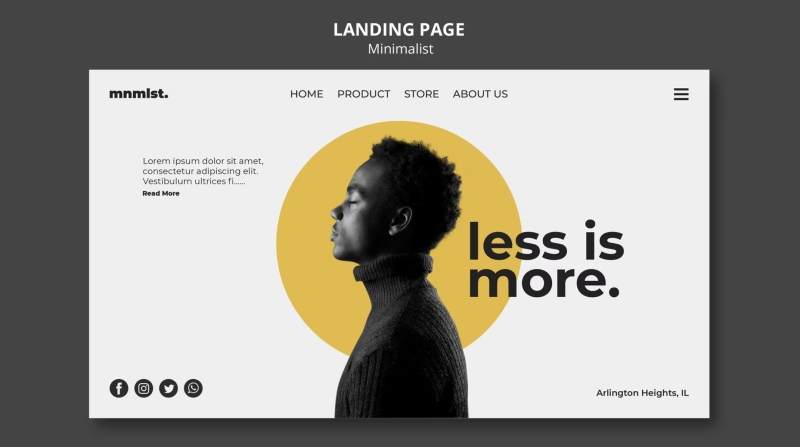
The real problem with traditional landing pages isn't design or copy quality. It's rigidity.
Classic landing pages are built as static experiences, even though the audiences arriving on them are anything but. A paid search visitor looking for a fast solution behaves very differently from someone arriving through content marketing.
Mobile users skim, desktop users explore. Returning visitors already understand your value, while first-time visitors still need reassurance and context. Yet most landing pages treat all of them exactly the same.
That one-size-fits-all approach quietly undermines conversion rates.
Marketers have tried to compensate for this using A/B testing, but traditional A/B testing is slow and reactive by nature.
You create two versions, wait weeks for statistical significance, and then commit to a "winner" that reflects past behaviour — not current intent. By the time results are clear, the market, messaging, or audience has already shifted.
AI-driven landing pages change this model entirely.
Instead of testing fixed variations, AI continuously adjusts content, layout, and messaging in response to real user signals. The page evolves as users interact with it, rather than waiting for manual analysis and redesigns.
The result isn't just faster optimisation — it's a funnel that adapts in real time, aligning the experience to intent instead of forcing users into a static structure.
- Static landing pages treat every visitor the same, despite clear differences in intent, device, and familiarity with your brand.
- Traditional A/B testing optimises for past behaviour, not real-time user needs, making it slow and often outdated.
- Manual optimisation cycles can't keep pace with changing markets, campaigns, or audience expectations.
- AI-driven landing pages adapt continuously, aligning content and structure to user signals as they happen.
That shift is why traditional landing pages are no longer enough — and why AI-powered funnels are quickly becoming the new baseline.
How AI Landing Page Builders Change the Game
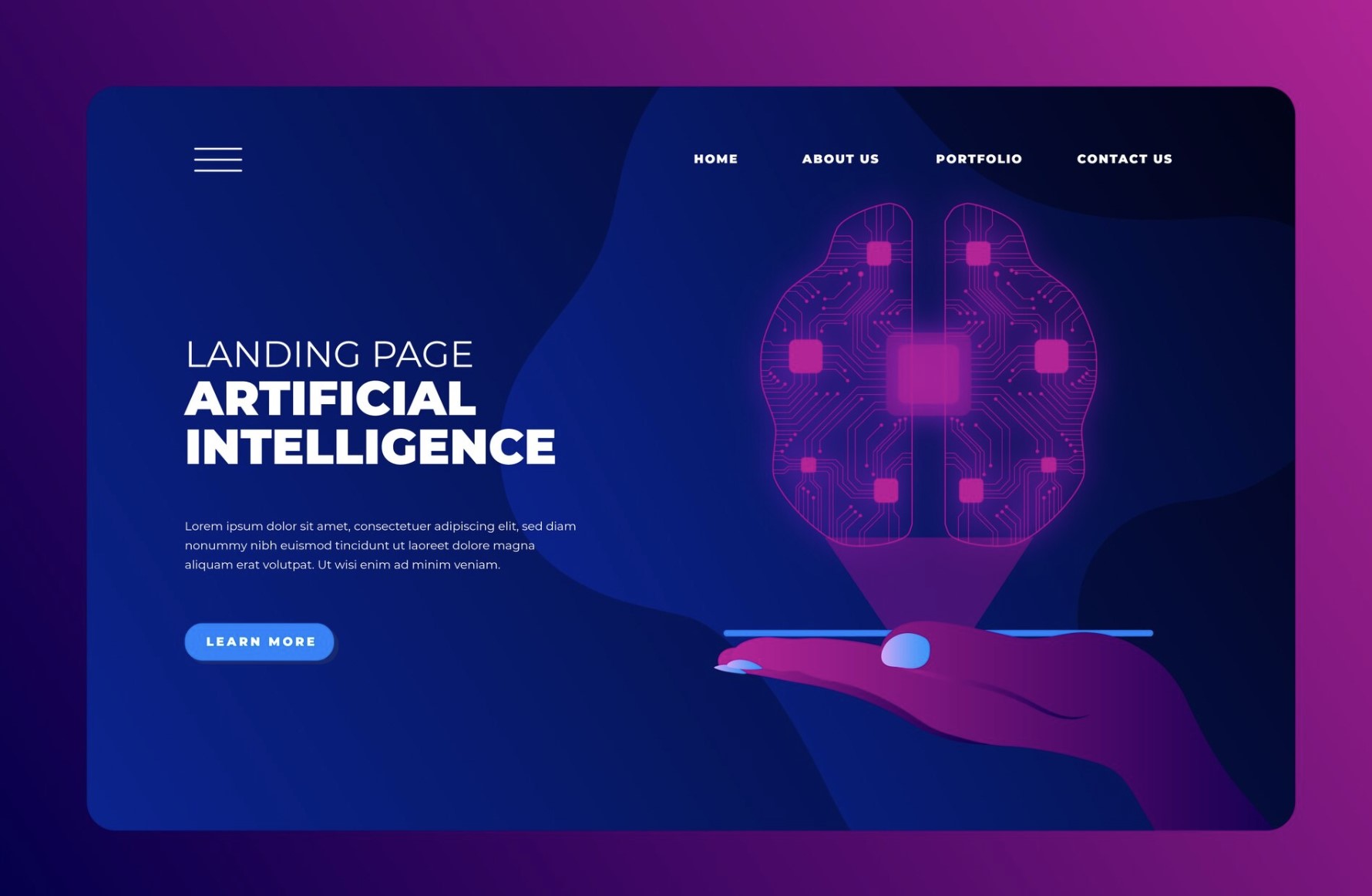
How AI Landing Page Builders Change the Game
AI landing page builders don't just improve existing workflows — they replace them. Instead of building pages once and optimising later, funnels become adaptive systems from day one.
Below is where the real shift happens.
From Static Pages to Adaptive Systems
Traditional landing pages are fixed assets.
They're designed, published, and then manually adjusted when performance drops.
AI-driven landing pages behave differently.
They respond to how users interact with them. Content, structure, and emphasis evolve automatically based on signals like traffic source, device, and engagement patterns. The page adjusts in real time instead of waiting for a redesign cycle.
This turns landing pages into systems, not files.
Built on Intent, Not Templates
Most builders start with a template and force every visitor into it.
AI landing page builders start with intent.
They analyse why someone arrived on the page and shape the experience accordingly. Sections can be reordered, messages prioritised, and CTAs adapted without rebuilding the page from scratch.
Structure becomes flexible instead of rigid — which is essential for modern funnels.
How the Best AI Landing Page Builder Optimises Holistically
The best AI landing page builder doesn't optimise isolated elements. It evaluates the entire page as a unit.
If users scroll but don't convert, layout and messaging adjust together. If mobile engagement drops, content density changes. If returning visitors behave differently from first-time users, the experience adapts automatically.
This holistic approach removes guesswork and replaces it with continuous optimisation driven by real behaviour.
Why Speed and Iteration Matter More Than Perfection
Traditional optimisation cycles take weeks. AI-driven optimisation happens continuously.
In fast-moving markets, waiting for "perfect" is a losing strategy. AI landing page builders shorten the feedback loop from weeks to minutes, allowing funnels to evolve as campaigns, audiences, and intent change.
Instead of launching static pages and hoping they hold up, businesses deploy adaptable pages that improve with use.
The Real Advantage: Removing Structural Limits
AI landing page builders don't just make pages better — they remove the limits that keep funnels slow and fragile.
When pages adapt automatically, teams spend less time rebuilding and more time refining strategy. Funnels scale without adding complexity. Conversion improvements compound instead of resetting.
That's why AI landing page builders aren't a nice upgrade anymore — they're the new baseline for high-performing funnels.
Read this article: : Top 6 AI-Powered Project Management Tools To Use In 2023
AI Landing Page Generator vs Traditional Builders
At first glance, an AI landing page generator and a traditional drag-and-drop builder can look similar.
Both promise fast page creation. Both offer templates. Both claim to improve conversions. But under the surface, they solve very different problems.
Traditional builders are manual tools. AI landing page generators are adaptive systems.
That difference matters more than most teams realise.
Speed of Creation: Manual vs Adaptive
Traditional builders are faster than custom development, but they're still bound by human effort.
Someone has to write the copy, choose the layout, adjust sections, and manually publish changes. Speed improves slightly — but iteration is still slow.
An AI landing page generator compresses this entire cycle. Pages can be generated, adjusted, and refined automatically based on performance signals.
Even a free AI landing page generator can produce usable pages in minutes, not days, making experimentation possible without heavy time investment.
Speed here isn't just about launch — it's about how quickly the page improves after launch.
Personalisation Capability
Drag-and-drop builders are static by default.
You design one page and show it to everyone. Any personalisation requires manual duplication, rules, or external tools.
AI landing page generators work differently.
They adapt content and structure based on intent, traffic source, device type, and behaviour. Returning visitors can see a different emphasis than first-time visitors.
Paid traffic can land on a page optimised for urgency, while organic traffic sees more context.
Even with an AI landing page free tool, this adaptive logic is where the real advantage starts to show.
Conversion Optimisation Potential
Traditional optimisation relies on A/B testing.
You test a limited number of versions, wait for results, then pick a winner. It's slow, reactive, and often outdated by the time decisions are made.
AI-driven pages optimise continuously.
Instead of waiting for statistical significance, they respond to live behaviour. Headings, layouts, and calls to action can evolve as patterns emerge.
This doesn't eliminate human strategy — it removes guesswork from execution.
Where Human Input Still Matters
AI doesn't replace judgment, positioning, or brand strategy.
Humans still define:
- The offer
- The audience
- The messaging boundaries
- Compliance and brand voice
AI handles the repetition and adaptation inside those guardrails. The smartest teams don't choose between AI and humans — they combine them.
Comparison Table: AI Landing Page Generator vs Traditional Builders
| Capability | AI Landing Page Generator | Traditional Drag-and-Drop Builder |
| Page creation speed | Pages generated in minutes, often automatically | Faster than custom dev, but still manual |
| Iteration speed | Continuous, real-time optimisation | Slow, requires manual updates |
| Personalisation | Adapts by intent, behaviour, device, traffic source | Mostly static unless manually duplicated |
| Conversion optimisation | Ongoing, behaviour-driven optimisation | A/B testing with delayed results |
| Scalability | Scales without adding pages or complexity | More pages = more maintenance |
| Human effort required | Strategy and oversight only | Copy, design, testing, and updates |
| Entry barrier | Low, including free AI landing page generator options | Moderate, depends on skill level |
| Best use case | High-volume, fast-moving funnels | Simple or low-traffic pages |
Traditional builders help you create landing pages.
AI landing page generators help landing pages improve themselves.
That distinction is why AI-driven funnel creation is no longer an upgrade — it's the new standard.
Using AI to Create Powerful Funnel Pages (End-to-End)
This is where AI stops being a feature and starts acting like a funnel engine.
Instead of building isolated landing pages and hoping they perform, AI enables businesses to create funnel pages that adapt, improve, and compound results over time.
The focus shifts from page creation to funnel performance — and that's a critical difference.
AI-Generated Headlines and Value Propositions
Headlines and value propositions are where most funnels win or lose attention. Traditionally, these are written once, tested slowly, and rarely revisited.
AI changes that.
Using behavioural data and performance signals, AI can generate and refine headlines based on what resonates with different audiences.
Paid traffic might see urgency-led messaging, while organic visitors see education-first value propositions. Over time, underperforming messaging is phased out automatically.
This keeps the funnel aligned with intent — not assumptions.
Adaptive Page Sections Based on Audience Intent
Not every visitor needs the same information, in the same order.
AI-powered funnels adjust page structure dynamically.
A first-time visitor may see trust signals and explanations higher on the page, while a returning visitor sees proof points and calls to action earlier. Mobile users get tighter layouts; desktop users get more depth.
This is where tools like a white page generator integrated with adaptive AI systems become especially powerful, allowing fast deployment without sacrificing performance.
Pages can be launched quickly, then refined automatically as real usage data flows in.
Dynamic CTAs Instead of Static Buttons
Static CTAs assume everyone is ready to act at the same moment. That's rarely true.
AI enables dynamic calls to action that change based on behaviour. Hesitant users may see softer prompts or educational next steps. High-intent users may see stronger conversion-focused CTAs. Timing, wording, and placement adjust automatically.
The result is fewer dead ends in the funnel and more momentum toward conversion.
AI Landing Page Examples That Evolve Over Time
The biggest shift is this: AI landing pages don't stay finished.
Instead of version one, version two, and version three, AI-driven pages evolve continuously.
They learn from engagement patterns, scroll depth, bounce behaviour, and conversions — then adjust accordingly. What works gets reinforced. What doesn't fades out.
Over time, the funnel becomes smarter without requiring constant rebuilds or redesigns.
AI + Landing Page = Funnel Engine
When AI is applied across headlines, structure, CTAs, and optimisation, landing pages stop being static destinations. They become adaptive systems that move users forward efficiently.
This is the real advantage. Not faster page creation — but funnels that improve themselves while teams focus on strategy, growth, and demand.
AI Content Creation Tools Powering Funnel Pages
AI-powered funnels don't rely on landing pages alone.
What drives performance at scale is the content layer around the page — and this is where an AI content creation tool becomes a force multiplier rather than a convenience.
Modern funnels require a constant stream of supporting content: headlines, supporting copy, FAQs, trust elements, micro-copy, and contextual explanations. When this content is created manually, funnels slow down. Updates get delayed. Testing becomes expensive. AI content tools remove that friction by making content generation continuous instead of episodic.
With AI content creation online, teams can produce and refine copy directly inside the funnel workflow. FAQs can be expanded or tightened based on real objections.
Testimonials can be reframed for different audiences. Supporting copy can adapt to match traffic intent or funnel stage. Instead of rewriting entire pages, content evolves in place — faster and with less disruption.
This shift changes what matters most: content velocity.
In high-performing funnels, speed of iteration beats perfect copy every time. A good message tested quickly outperforms a perfect message delivered too late. AI allows teams to test more ideas, respond to performance signals faster, and refine messaging continuously — without waiting on full rewrites or approvals.
This also reduces a major operational bottleneck: over-dependence on copywriters for every small change. Copywriters remain essential for positioning, tone, and strategic messaging.
But AI handles the repetitive layers — variations, refinements, expansions, and updates — so funnels can evolve without restarting the production cycle each time.
The result is a funnel that stays current, responsive, and competitive. Content stops being a blocker and starts behaving like an adaptive asset — powering the funnel instead of slowing it down.
AI Video Generators Inside Funnels
Video has always been one of the most powerful conversion assets in a funnel — but also one of the slowest and most expensive to produce.
That friction is exactly why many businesses underuse it, even though data consistently shows that pages with video convert significantly better than those without.
AI video generators remove that bottleneck.
Instead of treating video as a one-off production project, AI turns it into a flexible, testable component of the funnel. This allows teams to use video where it matters most — without delays, agencies, or reshoots.
In hero sections, AI-generated video helps capture attention immediately. A short, focused message at the top of a landing page can explain value faster than text alone, especially for cold traffic. With AI, these hero videos can be adjusted as messaging evolves, keeping the first impression aligned with audience intent.
Product explanations are another high-impact use case.
Rather than relying on long blocks of copy, AI video generators can create clear, concise walkthroughs that show how a product works and why it matters. This reduces friction for prospects who want clarity before committing and shortens the time it takes to move them through the funnel.
Trust and reassurance are where video often has the biggest influence. Explainer-style videos, proof summaries, and reassurance messaging help reduce hesitation — especially for first-time visitors.
AI makes it possible to tailor these videos to different funnel stages or audiences, reinforcing confidence without rebuilding pages from scratch.
The biggest advantage, however, is speed.
Traditional video production slows testing to a crawl.
AI video generators make it possible to test different messages, formats, and placements quickly. Videos can be swapped, refined, or replaced in hours instead of weeks. That means funnels don't just look better — they learn faster.
When video becomes easy to create and easy to change, it stops being a production asset and starts functioning as a performance lever inside the funnel.
What High-Performing Businesses Do Differently
High-performing businesses don't win because they have better tools — they win because they think differently about funnels.
Instead of treating a landing page as a one-time asset, they treat it as part of a living system. The page is never "finished." It's something that evolves alongside traffic, intent, and market conditions.
This mindset shift is what separates companies that constantly rebuild funnels from those that quietly outperform competitors over time.
They don't build a landing page.
They build systems that generate and improve landing pages continuously.
Here's what that looks like in practice:
- They design funnels as adaptive systems, not static pages
- Funnels evolve automatically instead of being redesigned every few months
- AI handles testing, iteration, and optimisation
- Humans stay focused on positioning, messaging, and strategy
When humans try to handle iteration manually, funnels slow down. Testing becomes selective. Optimisation gets postponed. Performance plateaus. High-performing teams remove themselves from repetitive execution and let AI handle the constant adjustment that humans are bad at maintaining consistently.
That doesn't reduce control — it sharpens it.
By letting AI manage iteration, leaders gain clearer insight into what actually drives conversion. Decisions become data-backed instead of opinion-driven. Strategy improves because execution noise is removed.
The long-term advantage is compounding.
Funnels that adapt continuously don't just convert better today — they improve with every interaction. Each visitor strengthens the system instead of resetting it. Over time, this creates a widening performance gap that competitors struggle to close, even if they copy the surface-level tactics.
That's the real difference.
High-performing businesses don't outwork their competitors — they out-design them.
Risks, Limits, and Where AI Still Needs Humans
AI can dramatically improve funnel performance — but only when it's used with intent and restraint. The biggest risk isn't adopting AI too early. It's adopting it carelessly.
Over-automation is the first trap.
When businesses try to remove humans from every part of the funnel, quality suffers. Messaging can become generic, tone can drift, and edge cases get ignored. Funnels may run faster, but they lose relevance and trust. AI should accelerate execution, not replace judgment.
Brand voice consistency is another critical limit.
AI can generate and adapt content quickly, but it doesn't own your brand. Without clear guidelines, voice frameworks, and examples, AI outputs can start to sound inconsistent or off-brand. High-performing teams define tone, positioning, and boundaries first — then let AI operate inside those guardrails.
Compliance and messaging control are non-negotiable, especially in regulated industries. Claims, promises, pricing language, and legal disclosures must remain accurate and approved.
AI should never be allowed to freely improvise in areas that carry legal, financial, or reputational risk. This is where human oversight protects the business, not slows it down.
That's why human review remains essential.
The most effective model is human-in-the-loop. AI handles generation, variation, and optimisation at scale. Humans handle strategy, approval, and exceptions. Leaders retain accountability, visibility, and final say — while AI removes the repetitive workload beneath them.
Used this way, AI doesn't dilute control.
It concentrates it.
The teams that get this right don't fear AI replacing people. They use AI to elevate people — keeping humans focused on decisions, direction, and trust, while machines handle speed, scale, and iteration.
Wrapping up - The Funnel Advantage Business Leaders Are Quietly Using
AI landing page builders are no longer a "nice-to-have" or an experimental add-on. They've crossed the line into infrastructure. In a market where speed, relevance, and adaptability determine who wins, relying on static landing pages and manual optimisation is no longer a neutral choice — it's a disadvantage.
The businesses pulling ahead aren't necessarily spending more on traffic or hiring larger teams. They're building funnels that learn faster than their competitors' funnels. AI landing page builders make this possible by removing the friction that slows iteration, personalisation, and optimisation. Funnels stop waiting for quarterly redesigns and start improving continuously.
This is where the advantage compounds.
Faster funnels don't just convert better once — they get smarter with every visitor. Each interaction feeds improvement. Each campaign strengthens the system instead of resetting it. Over time, this creates a widening performance gap that's hard to spot from the outside but brutal to compete against.
That's why early adopters don't usually talk about this loudly. There's no dramatic announcement. No flashy relaunch. Just quietly better conversion rates, lower acquisition costs, and faster execution — month after month.
For decision-makers, the takeaway is simple and uncomfortable:
If your funnels are still static, your growth is capped by how fast your team can rebuild them. If your funnels are adaptive, growth compounds without demanding more headcount, more tools, or more effort.
The real advantage isn't AI itself.
It's designing funnels that don't depend on constant human intervention to improve.
And that's the edge business leaders are quietly using — before everyone else catches up.
Most Popular Posts

Effective communication among team members is vital for the productivity and success of any organization. Surprisingly, 60% of companies lack a long-term internal communication strategy, which p...


Businesses thrive on communication for efficiency, productivity and accomplishment. When the right information is passed from the right designation in the organization, it promotes positivity an...

Categories
Blog
(3228)
Business Management
(396)
Employee Engagement
(235)
Digital Transformation
(220)
Growth
(151)
Intranets
(142)
Internal communications
(110)
Remote Work
(68)
Sales
(53)
Collaboration
(53)
Customer Experience
(33)
Culture
(30)
Knowledge Management
(29)
Project management
(29)
Leadership
(20)
Comparisons
(9)
News
(1)

Related Posts

Have you ever welcomed a new employee, shared a mountain of information, and wondered how much they'll remember by tomorrow? A clear presentation can make the first day easier by showing new starters who to contact, where to find key informatio...

What would your leadership team do if a serious allegation about your business started spreading online before anyone knew whether it was true? That's where crisis communication and management really matter. An employee spots the post, screensh...

AI for personal injury law firms is becoming part of everyday casework. These tools can help teams sort through medical records, build timelines, draft demand packages and find details buried in a big case file. That could free up attorneys and...

Ever left an online meeting unsure what was decided—and wondered how to run an effective meeting without wasting everyone's time? A call can bring a distributed team together quickly, but when it starts late, includes people who don't know why ...

Where can I send a fax from in my area when a document needs to go out today? The answer might be a nearby print or shipping shop, a library or an online fax service, but what's available depends on your location. The UPS Store lists a ne...


Jill Romford
I am a digital nomad, lover of exploring new places and making friends.
I love to travel and I love the internet. I take pictures of my travels and share them on the internet using Instagram.
Traveler, entrepreneur, and community builder. I share my insights on digital marketing and social media while inspiring you to live your fullest life.
Ready to learn more? 👍
One platform to optimize, manage and track all of your teams. Your new digital workplace is a click away. 🚀
Free for 14 days, no credit card required.