Insight Blog
Agility’s perspectives on transforming the employee's experience throughout remote transformation using connected enterprise tools.
22 minutes reading time
(4301 words)
Is Your Workplace Experience Is Failing—Use a Workplace Experience Software That Fixes It

Is Your Workplace Experience Is Failing—Use a Workplace Experience Software That Fixes It
Your workplace experience is broken. Learn how modern workplace experience software fixes engagement, productivity, and retention.
Is Your Workplace Experience Is Failing—Use a Workplace Experience Software That Fixes It

Let's be honest.
Free pizza, branded hoodies, and yet another engagement survey aren't fixing your workplace experience.
If they were, we wouldn't be seeing record levels of burnout, quiet quitting, and disengagement across every industry.
Employees aren't unmotivated — they're worn down by friction, tool overload, and work that feels harder than it needs to be.
The modern workplace experience isn't about perks anymore. It's about how easy (or painful) a normal workday feels. Can people find what they need?
Do they understand priorities?
Do they feel connected, especially in hybrid or frontline roles? When those basics break down, everything else follows.
Gallup reports that only 23% of employees globally are engaged, and that's not a culture problem — it's a systems problem.
That's where workplace experience software comes in. Not as another HR tool, but as the foundation for how work actually gets done.
When it's designed properly, it replaces fragmented tools, reduces noise, and creates a clear, usable experience employees actually adopt.
As HR analyst Josh Bersin puts it, "Employee experience is not an HR program — it's the sum of how work gets done every day."
Josh Bersin
This guide breaks down what works, what doesn't, and how to get the workplace experience right without adding more complexity.
Read this article: : Top 6 AI-Powered Project Management Tools To Use In 2023
How to Spot a Failing Workplace Experience (Before It Costs You)
A failing workplace experience rarely announces itself.
It shows up quietly in day-to-day behaviors that most organizations brush off as "normal." The problem is, by the time engagement scores tank or people start leaving, the damage is already done.
One of the biggest red flags is constant confusion.
Employees ask the same questions repeatedly, can't find documents, or aren't sure where updates live. Important information is scattered across email, chat tools, shared drives, and spreadsheets.
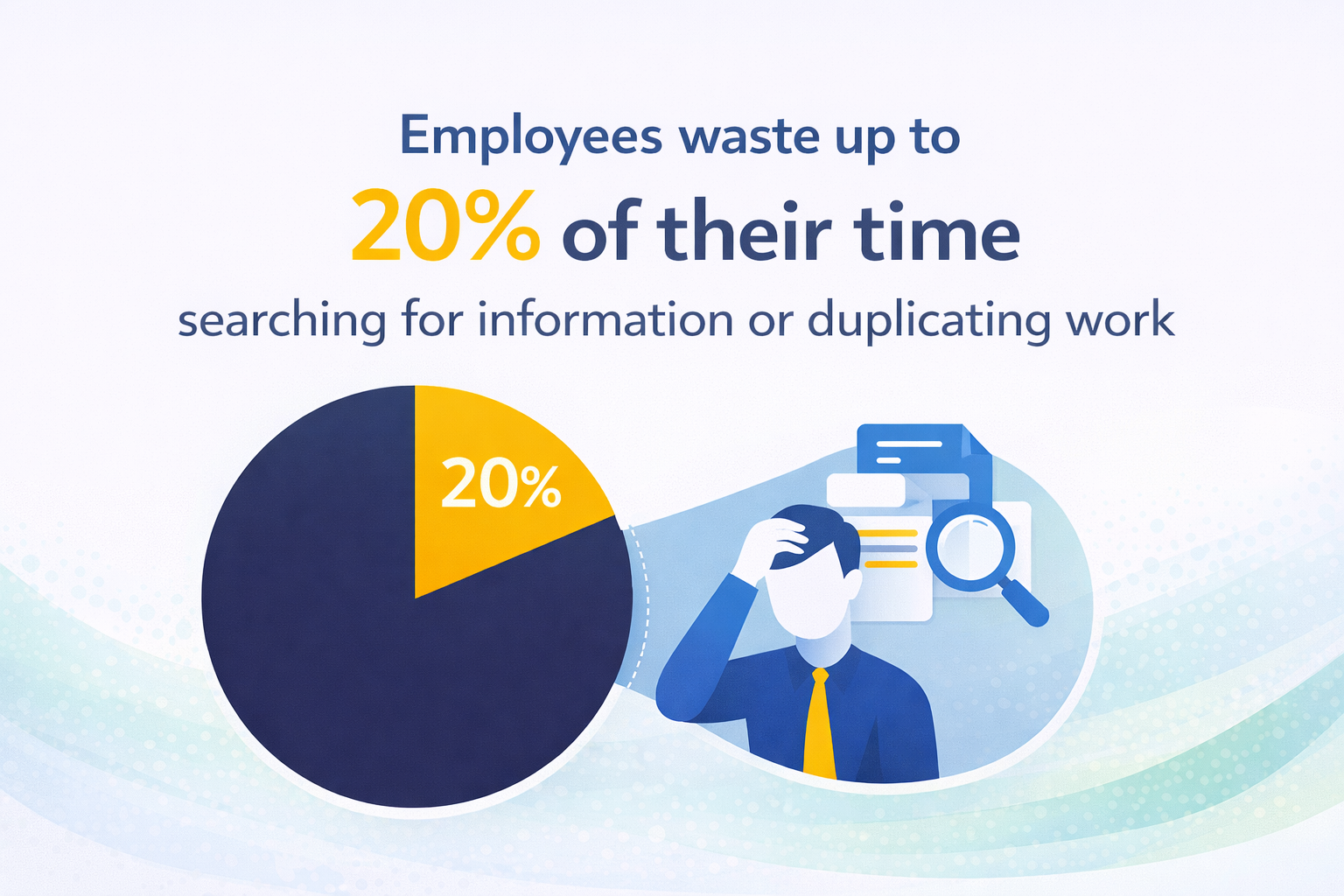
According to Gartner, employees waste up to 20% of their time searching for information or duplicating work — a clear sign the workplace experience is broken at a structural level.
Another warning sign is low adoption of internal tools. If your intranet, engagement platform, or "single source of truth" needs constant reminders to be used, it's not working.
Employees avoid tools that slow them down. McKinsey found that organizations with poor digital workplace experiences are 25% more likely to report employee burnout, largely due to tool overload and unnecessary complexity.
Finally, pay attention to behavioral signals, not just surveys.
Meetings keep increasing because async collaboration isn't trusted. Frontline or remote workers feel out of the loop. Managers become information gatekeepers instead of enablers.
As Deloitte puts it.
When the workplace experience fails, employees adapt by creating workarounds — and those workarounds quietly erode productivity and trust.
Deloitte
If people are inventing their own systems just to get work done, your workplace experience is already costing you more than you think.
What "Workplace Experience" Really Means Today

What "Workplace Experience" Really Means Today
The Modern Definition of Workplace Experience
Today's workplace experience has very little to do with perks and almost everything to do with how work actually feels on a daily basis.
It's the sum of small, repeated moments: opening the right tool in the morning, finding information without asking three people, understanding priorities, and getting work done without unnecessary friction.
When those moments are smooth, employees feel productive and in control. When they're not, frustration builds fast.
At its core, workplace experience is shaped by five things: the digital tools employees rely on, the quality of communication, clarity of work, autonomy and trust, and the amount of daily friction standing between people and their jobs.
That's not because the tools are flashy — it's because they remove obstacles instead of creating them.
Josh Bersin sums it up well:
Employee experience isn't about happiness. It's about whether people can do meaningful work without fighting the system.
Josh Bersin analyst, author, educator, and thought leader
When systems support employees instead of slowing them down, engagement becomes a byproduct, not a forced initiative.
Reasons Why HR Keeps Getting Workplace Experience Wrong

Reasons Why HR Keeps Getting Workplace Experience Wrong
Most organizations don't fail at experience in workplace because they don't care — they fail because they focus on the wrong levers.
A common mistake is over-indexing on benefits instead of systems.
Perks might attract attention, but they don't fix broken workflows, unclear communication, or disconnected tools.
Employees don't disengage because there's no free lunch — they disengage because work feels unnecessarily hard.
Here's what going wrong:
Why Most Workplace Experience Software Fails
What Employees Actually Want From Workplace Experience Software
What Employees Actually Want From Workplace Experience Software
Employees don't want more software — they want less friction.
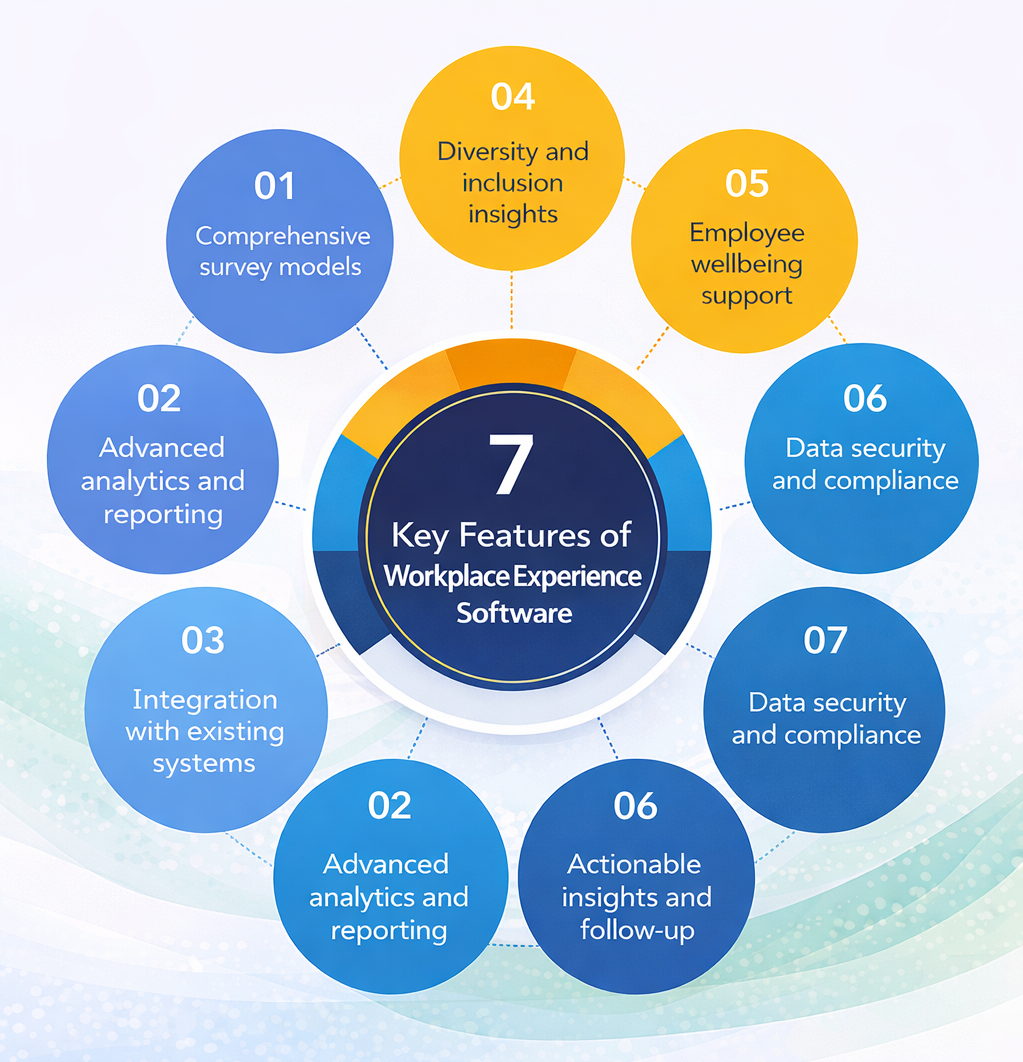
We have gathered a list of what people actually expect from workplace experience software when it's designed around real work, not org charts or feature checklists.
Core Features of Effective Workplace Experience Software
When workplace experience software actually works, it's because it supports how people already get work done — not how a vendor thinks work should happen.
The goal isn't more functionality; it's fewer obstacles.
The best platforms improve the digital workplace employee experience by removing friction from everyday tasks and making the experience in workplace feel simpler, clearer, and more connected.
Central Communication Hub
Central Communication Hub
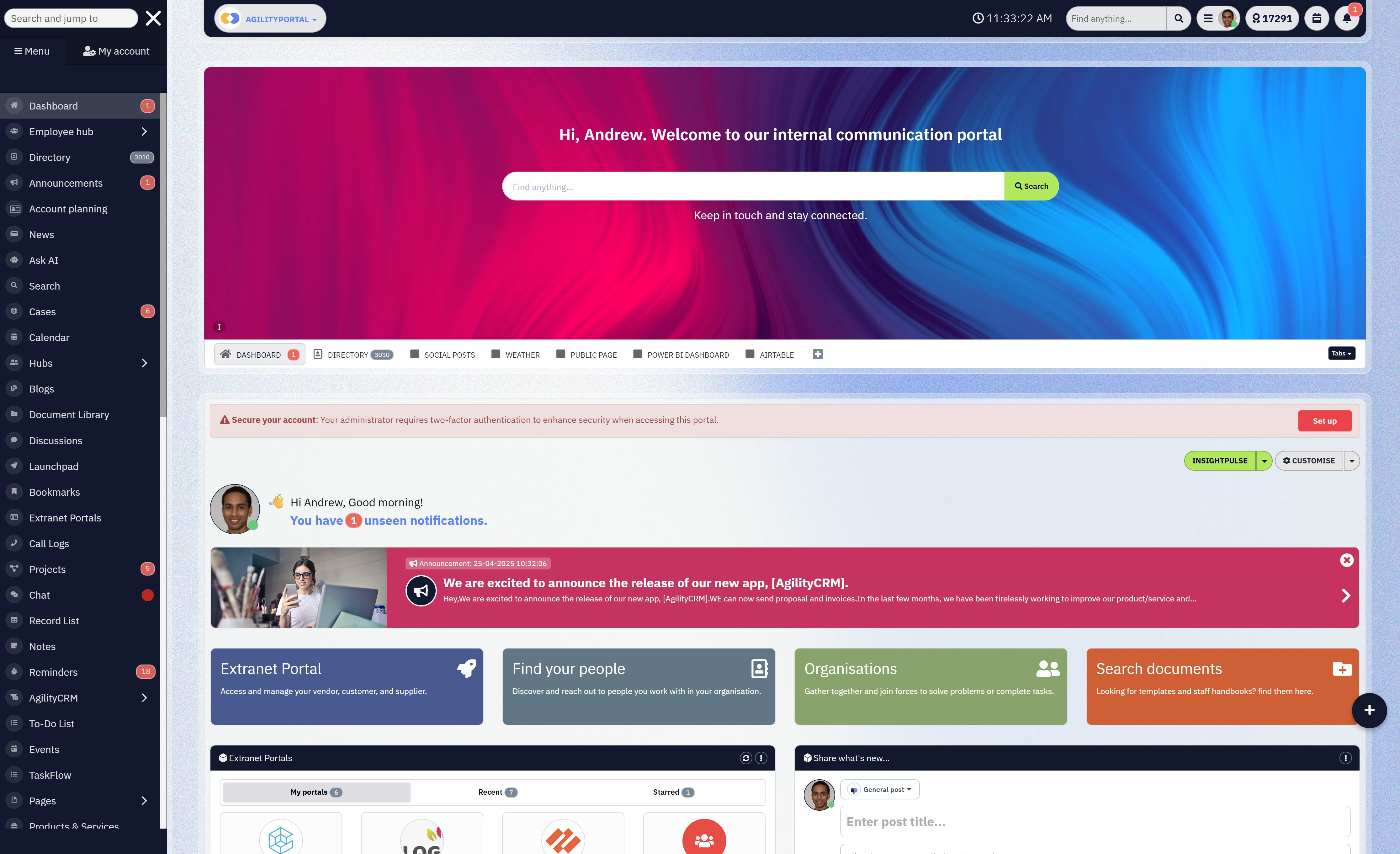
A strong experience in workplace starts with communication that's easy to find and easy to trust.
Employees should instantly know where company updates live, where team announcements happen, and what they can safely ignore.
When communication runs through a central work hub, updates stop getting buried in inboxes and chat threads.
Email overload drops, and the digital workplace employee experience becomes far more focused and predictable.
For example:
Employee Engagement Tools That Drive Action
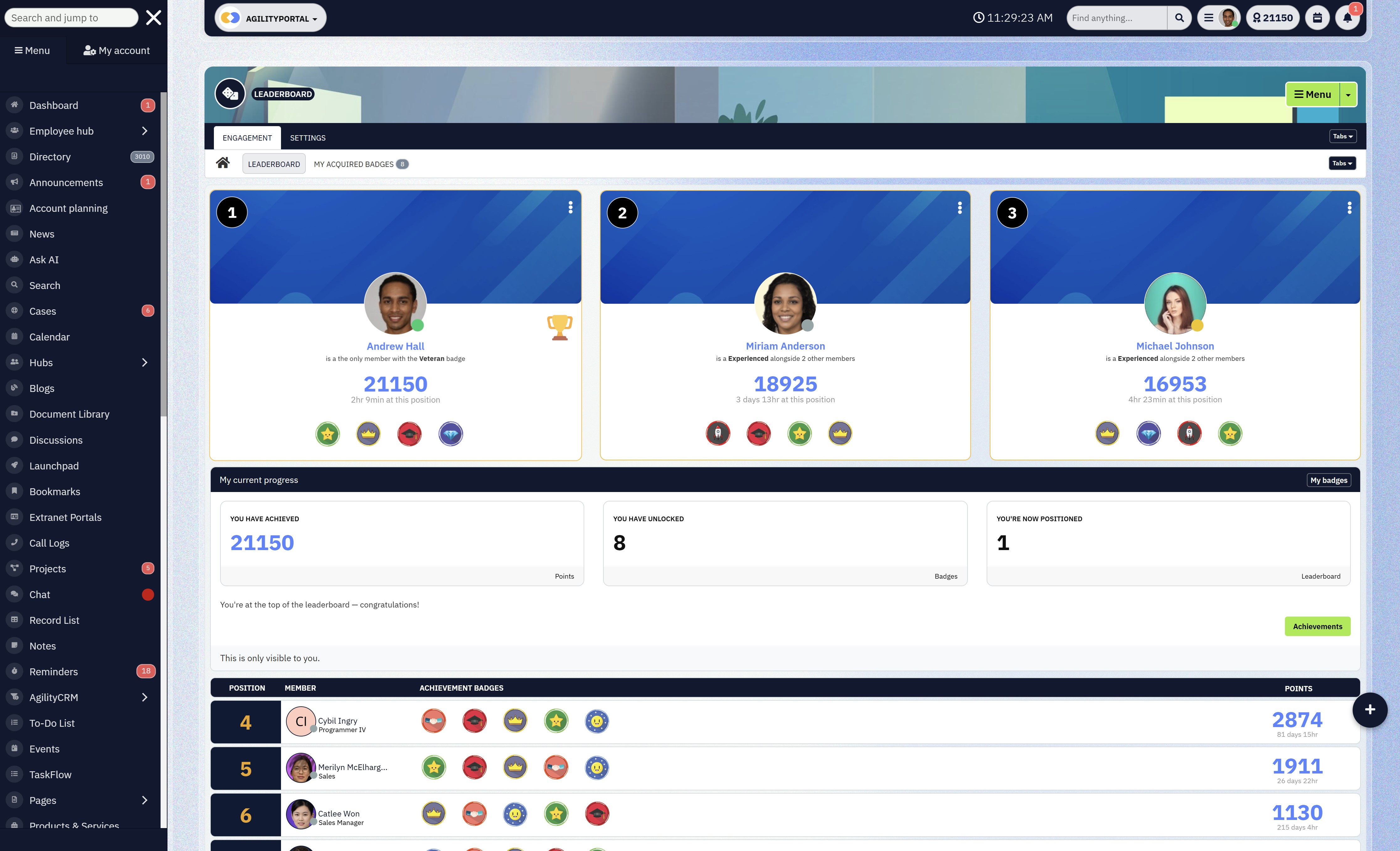
Employee Engagement Tools That Drive Action
Surveys alone don't improve the workplace experience — action does.
Effective workplace experience software uses pulse surveys and feedback tools that visibly close the loop. Employees can see what was asked, what changed, and why it mattered.
Integrated Workflows
The workplace experience breaks down fast when tools don't connect.
Documents, tasks, calendars, and collaboration should live together, not across disconnected systems. Integrated workflows reduce context switching and make day-to-day work feel smoother.
This is a core pillar of a strong digital workplace employee experience, especially for hybrid teams juggling time zones, priorities, and async work.
Recognition and Belonging
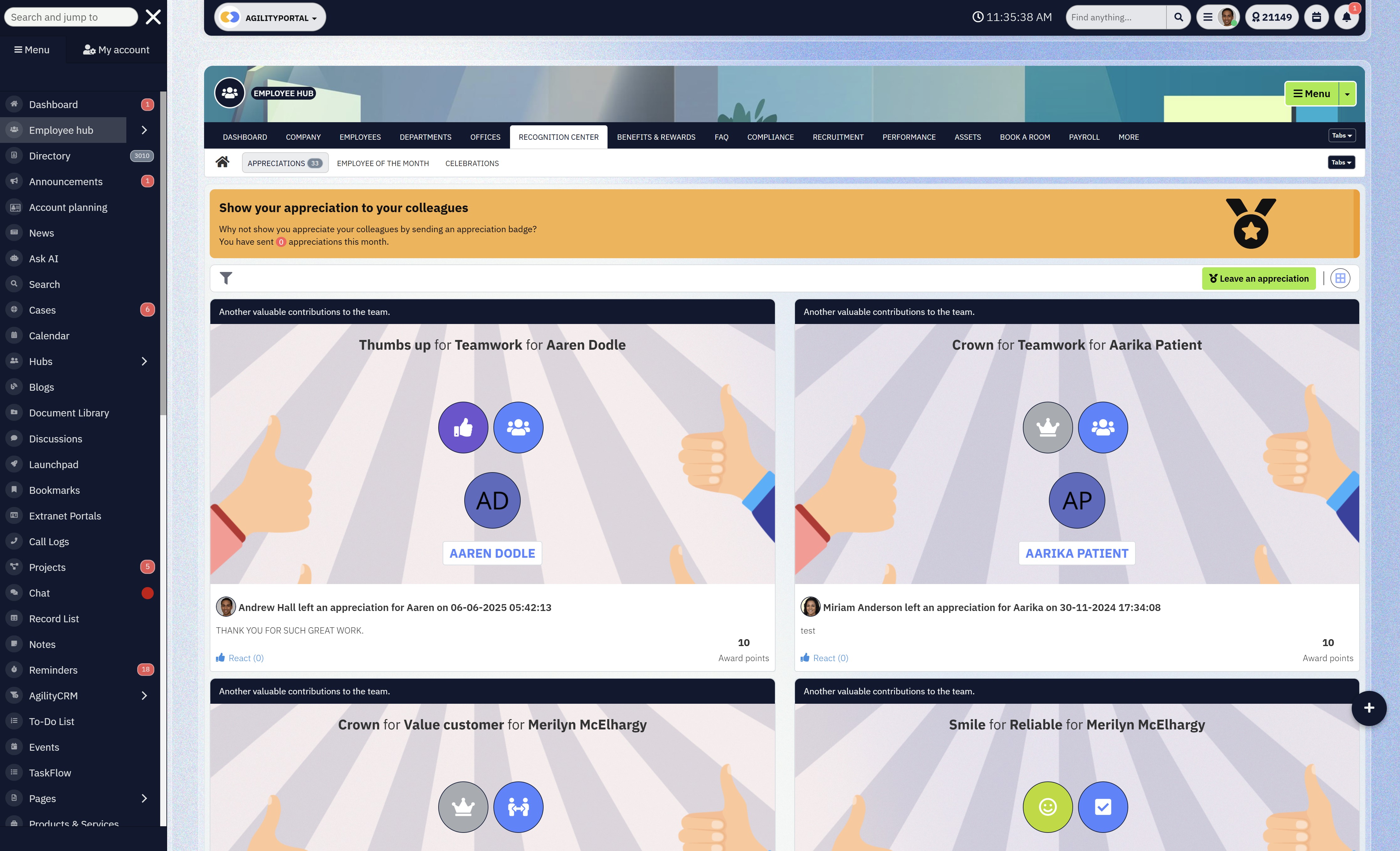
Recognition and Belonging
Recognition shouldn't feel forced, formal, or annual.
The best workplace experience software makes it easy for peers to recognize each other, celebrate wins, and mark milestones in real time.
That visibility strengthens belonging — particularly for remote and frontline workers who don't benefit from hallway conversations.
A positive experience in workplace grows when recognition feels natural, frequent, and human.
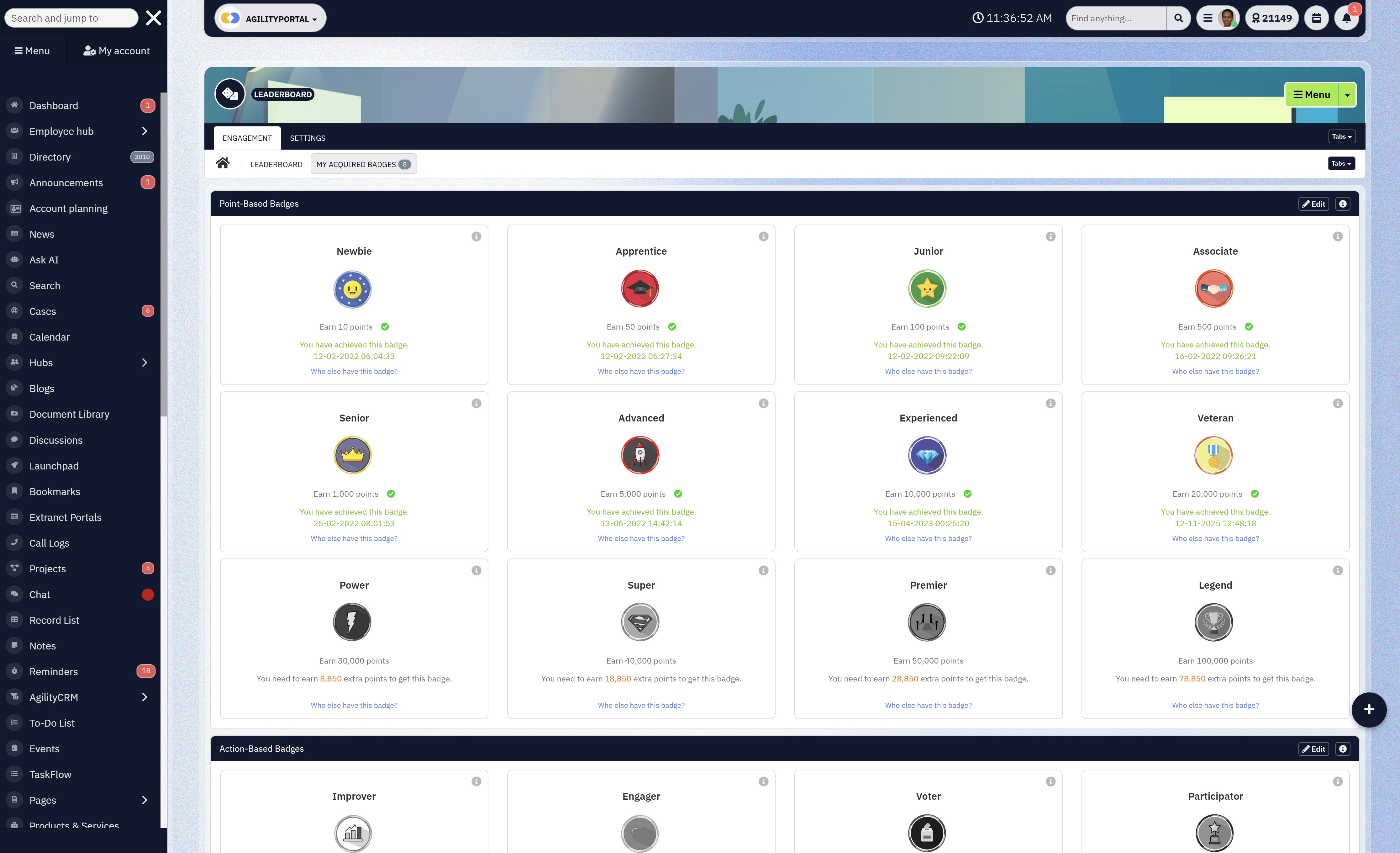
Badges and awards to highlight achievements, milestones, and positive behaviors
Analytics That Actually Matter
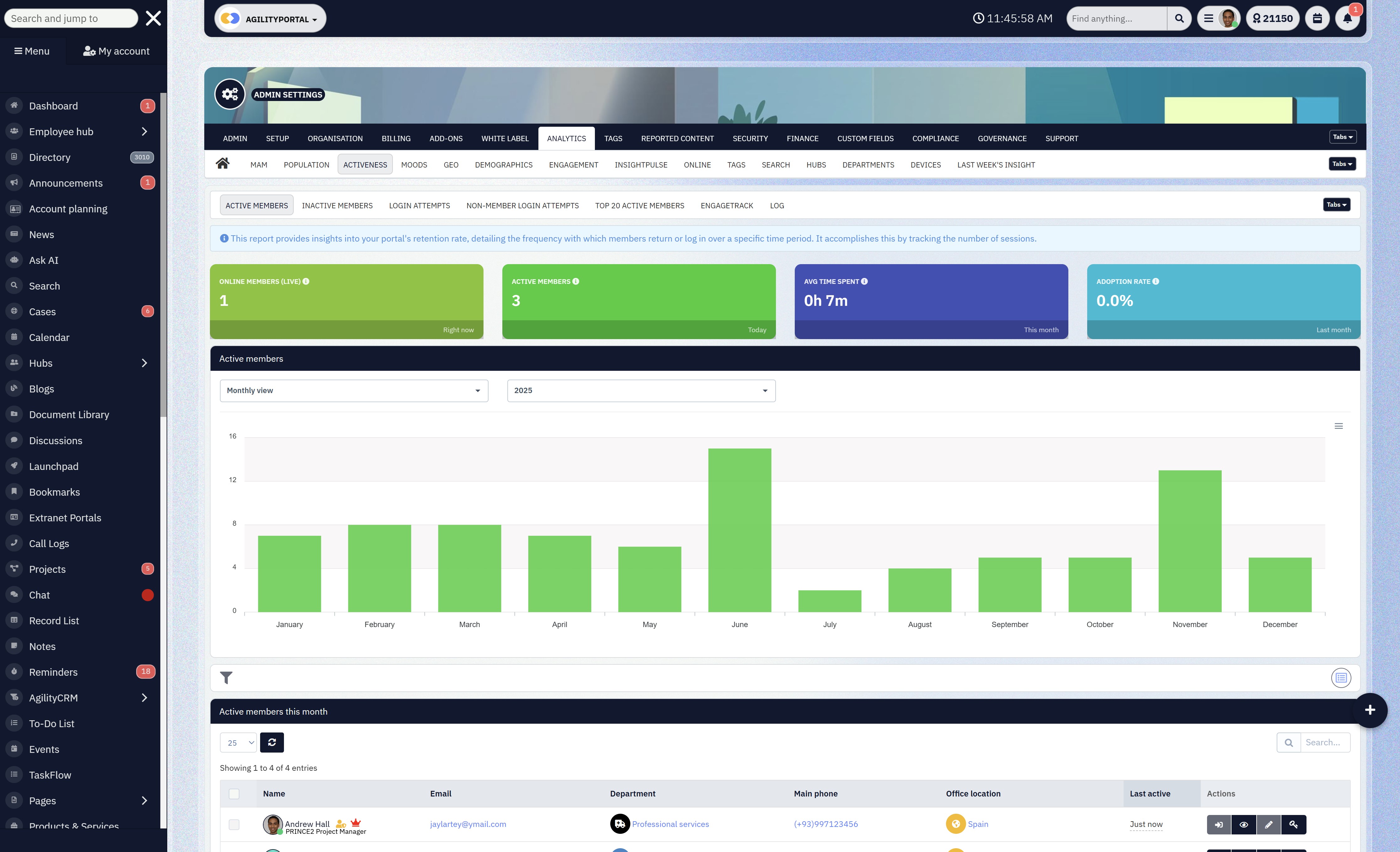
Analytics That Actually Matter
Good analytics don't just report what happened — they help leaders act before problems escalate.
Engagement trends, adoption metrics, and early warning signs give real insight into how the workplace experience is landing.
When organizations spot friction early, they can fix issues before they turn into burnout or turnover, protecting both performance and the long-term digital workplace employee experience.
Read this article: : Top 6 AI-Powered Project Management Tools To Use In 2023
What's the Difference Between Workplace Experience Software and Employee Engagement Platforms?
Lets look at it from an HR or internal communications perspective, the confusion is completely understandable.
On the surface, employee engagement platforms and workplace experience software promise similar outcomes: better engagement, stronger culture, and happier teams.
But in practice, they influence the experience workplace in very different ways — and that difference directly affects adoption, communication effectiveness, and long-term results.
Employee engagement platforms are primarily designed to measure how people feel. They focus on surveys, feedback, recognition, and engagement scores.
That has value, but it's mostly reactive. You're capturing sentiment after the experience workplace has already happened and hoping leaders act on the insights.
These tools are usually HR-owned, checked occasionally, and sit outside the real flow of work. Employees log in because they're asked to, not because the platform helps them get their job done.
Workplace experience software, by contrast, is designed to shape the day-to-day employee experience digital workplace teams actually live in.
Instead of pushing messages into a static intranet, it creates an environment where communication, collaboration, documents, updates, and recognition all live together. Employees don't just consume information — they participate in it.
For internal communications teams, this means messages reach people where work is already happening, not in a separate system they have to remember to check.
The ownership model matters too.
Traditional engagement tools and intranets are often desktop-first and HR-controlled, which quietly excludes frontline, mobile, and hybrid workers.
Modern workplace experience software is employee-centric and mobile-first by default, designed for distributed teams and real-world work patterns.
Basically its simple: employee engagement platforms tell you there's a problem in the experience workplace — workplace experience software helps fix it before it becomes one, improving the employee experience digital workplace from the ground up.
| Area | Workplace Experience Software | Employee Engagement Platforms |
| Primary purpose | Improves how work actually happens day to day | Measures how employees feel about work |
| Focus | Fixing friction in the digital workplace experience | Tracking sentiment, morale, and engagement scores |
| Used by employees | Daily, as part of normal work | Occasionally, when prompted (surveys, campaigns) |
| Core value | Shapes the experience in the workplace | Reports on the experience after it happens |
| Typical features | Employee communication tools, collaboration, documents, workflows, modern intranet software | Surveys, pulse checks, recognition, feedback tools |
| Employee perception | "This helps me do my job" | "HR wants feedback" |
| Best described as | An employee experience platform | Workplace engagement software |
Real-World Workplace Experience Use Cases
Workplace experience software really shows its value when you look at how different teams actually operate — not in theory, but in the real world.
The needs of a hybrid team are very different from a frontline workforce or a fast-growing company, and the workplace experience has to flex accordingly.
Hybrid Teams — GitLab
GitLab operates as a fully remote company with employees spread across dozens of countries.
As the company scaled, alignment became a challenge.
Meetings were increasing just to keep people informed, decisions were getting lost across tools, and documentation lived in too many places.
GitLab publicly credits its digital workplace approach — async communication, centralized documentation, and clear internal communication channels — with reducing meeting overload and improving transparency.
By structuring communication so updates, decisions, and context were accessible without real-time meetings, employees stayed aligned without being online at the same time.
The result was fewer sync meetings and a more sustainable employee experience digital workplace built around clarity, not constant availability.
Frontline & Deskless Workers — Unilever
Unilever employs hundreds of thousands of frontline workers across factories, logistics, and retail environments.
A major challenge was that many employees didn't have corporate email addresses, which meant internal updates, policy changes, and HR communications weren't reaching everyone consistently.
Unilever has publicly shared how shifting to mobile-first internal communication platforms transformed the experience workplace for frontline teams.
By delivering updates, safety notices, and company news through accessible digital channels rather than noticeboards or word of mouth, they closed a massive communication gap.
HR and internal comms teams gained direct reach to deskless workers, improving inclusion, consistency, and trust across the workforce.
Growing Companies — Shopify
As Shopify scaled rapidly, onboarding and culture consistency became increasingly difficult.
New hires struggled to understand priorities, find internal information, and connect with teams quickly — especially in a distributed environment.
Shopify has spoken openly about investing in digital workplace tools that centralize communication, documentation, and onboarding resources.
By creating a shared digital environment where updates, knowledge, and expectations were easy to access, new employees could ramp up faster without relying on tribal knowledge.
This helped maintain culture alignment while improving the overall employee experience digital workplace as the company continued to grow.
Why This Matters for HR and Internal Communications
These examples all point to the same conclusion: engagement improves when the experience workplace is intentionally designed.
Workplace experience software doesn't just measure sentiment — it fixes the conditions that create frustration in the first place.
For HR and internal comms teams, that means fewer gaps, better reach, and communication that actually lands where work is happening.
How to Choose the Right Workplace Experience Software
Choosing workplace experience software isn't about picking the platform with the longest feature list.
It's about choosing something employees will actually use — without constant nudging from HR or internal comms.
The wrong choice quietly adds friction.
The right one removes it.
Questions to Ask Vendors (That Actually Matter)
Before demos and pricing decks, get clear on a few non-negotiables:
- Will employees actually use this daily? If it's not useful in the flow of work, adoption will drop after launch.
- Does it replace tools or just add another one? Software should simplify the digital workplace, not expand it.
- Can we configure it ourselves without consultants? If every change requires paid help, it won't scale with your needs.
Red Flags to Watch Out For
Some warning signs are subtle — but costly if ignored:
- "All-in-one" claims without real proof If everything sounds great but nothing works deeply, that's a problem.
- Poor mobile experience Especially damaging if you have frontline, hybrid, or deskless workers.
- Locked-in ecosystems Platforms that don't integrate well quickly become bottlenecks.
What to Look For vs What Happens Without It
Here's a side-by-side comparison to make the trade-offs crystal clear:
| What to Look For in Workplace Experience Software | Benefit When You Have It | Issue When You Don't |
| Daily-use employee interface | High adoption without reminders | Platform becomes "HR-only" and ignored |
| Centralized communication hub | Fewer missed updates and less email noise | Important messages get lost or duplicated |
| Mobile-first design | Frontline and remote teams stay included | Deskless workers remain disconnected |
| Tool consolidation | Fewer apps, less context switching | Employees juggle too many systems |
| Self-service configuration | Faster updates and lower costs | Constant dependency on vendors |
| Strong integrations | Workflows stay connected | Teams create workarounds |
| Clear permissions & targeting | Relevant messages reach the right people | Over-communication and disengagement |
| Transparent analytics | Early visibility into adoption and issues | Problems only surface when people leave |
The Bottom Line for HR and Internal Comms
If workplace experience software needs constant promotion, it's already failing.
The right platform quietly becomes part of how work gets done — improving communication, clarity, and trust without adding complexity.
When that happens, engagement stops being something you chase and starts being something you sustain.
Workplace Experience Software Comparison Table
| Platform | Best For | Core Strengths | Where It Falls Short |
| AgilityPortal | Unified workplace experience for hybrid & frontline teams | All-in-one employee experience platform, strong employee communication tools, document collaboration, recognition, workflows, mobile-first design | Smaller brand footprint than legacy vendors |
| Workvivo (Zoom) | Social engagement & internal comms | Strong company feed, leadership visibility, social interaction | Limited workflows and collaboration depth |
| Microsoft Viva | Microsoft 365 environments | Deep Teams/SharePoint integration, analytics, wellbeing insights | Complex setup, heavy IT dependency |
| Simpplr | Modern intranet replacement | Clean UX, targeted content, personalization | Needs add-ons for collaboration and tasks |
| Staffbase | Large enterprise communications | Powerful announcements, campaigns, newsletters | Less focused on day-to-day collaboration |
| LumApps | Google & Microsoft ecosystems | Polished modern intranet software, personalization | Relies on other tools for workflows |
| Happeo | Knowledge sharing | Strong content and knowledge management | Less action-oriented for frontline teams |
| Blink | Frontline employee experience | Mobile-first, deskless worker access | Limited document and workflow depth |
| MangoApps | Broad collaboration use cases | Wide feature set, flexible configuration | Can feel bloated and complex |
| Interact Software | Content governance | Structured intranet, compliance controls | Not built for real-time collaboration |
How to Roll Out Workplace Experience Software Successfully
Rolling out workplace experience software works best when it's done with intention, not urgency.
This section walks through the practical steps that help organizations launch the platform smoothly, drive real adoption, and avoid the common mistakes that cause even good tools to fail.
The Future of Workplace Experience (2025 and Beyond)
The Future of Workplace Experience (2025 and Beyond)
The workplace experience is moving fast, and it's no longer something HR can afford to treat as a "nice to have."
Over the next few years, the organizations that win won't be the ones adding more tools — they'll be the ones making work feel simpler, more personal, and more supportive.
AI-driven personalization is a big part of that shift. Instead of every employee seeing the same updates, content, and tools, workplace experience software will adapt to roles, locations, and behaviors.
People will see what actually matters to them, when it matters — which cuts noise and boosts focus without anyone having to configure it manually.
We'll also see predictive engagement insights replace reactive reporting.
Rather than waiting for survey results or exit interviews, modern platforms will spot early warning signs like declining usage, reduced interaction, or growing friction.
That gives HR and internal comms teams a chance to act early — before burnout turns into turnover.
Most importantly, the experience workplace will be directly tied to performance and retention.
When work is clear, connected, and well-supported, people do better work and stay longer. Leaders are already starting to see workplace experience as a business lever, not an HR initiative.
In a competitive talent market, the quality of your workplace experience won't just reflect your culture — it'll become a genuine competitive advantage.
Wrapping Up and Final Takeaway
Here's the reality most organizations need to face: workplace experience isn't a perk problem — it's a systems problem.
Employees don't disengage because there's no free coffee or team lunch. They disengage because work feels fragmented, unclear, and harder than it should be day after day.
The right workplace experience software doesn't pile on more tools or dashboards.
It quietly removes friction, connects the dots, and makes the digital workplace feel coherent instead of chaotic.
When communication, collaboration, and information live in one place, people stop fighting the system and start focusing on their work.
And that's the real win.
Employees don't want another platform to learn or another login to remember. They want better workdays — ones where things make sense, time isn't wasted, and work feels achievable.
Get the workplace experience right, and engagement stops being something you chase. It becomes the natural result of how work actually gets done.
Frequently Asked Questions About Workplace Experience Software
What is workplace experience software?
Workplace experience software is a platform designed to improve how employees experience work on a daily basis.
It brings together communication, collaboration, documents, and engagement into one system, creating a smoother digital workplace experience.
Unlike single-purpose tools, it acts as an employee experience platform that supports real work, not just HR processes.
How is workplace experience different from employee engagement?
Employee engagement focuses on how people feel about work, often measured through surveys and feedback tools.
Workplace experience focuses on how work actually functions.
Workplace engagement software can tell you there's a problem, but workplace experience software fixes the conditions causing it — like poor communication, scattered tools, and unclear workflows.
Engagement is the outcome; experience is the driver.
Is workplace experience software only for HR?
Not at all.
While HR benefits from better insight and engagement, workplace experience software is just as valuable for internal communications, IT, operations, and team leaders.
It supports employee communication tools, workplace collaboration software, and everyday workflows that employees rely on.
When it's done right, employees use it daily — not just when HR asks them to.
Can workplace experience software replace an intranet?
In most cases, yes.
Traditional intranets are static, desktop-first, and rarely used. Modern workplace experience software functions as modern intranet software, but with far more flexibility.
It supports real-time updates, collaboration, mobile access, and personalized content — making it far more effective for hybrid teams and frontline staff.
How do you measure workplace experience success?
Success isn't just about logins or survey scores.
It's measured through adoption, reduced tool switching, clearer communication, and improved retention.
Strong platforms provide insights into usage, engagement trends, and friction points across the frontline employee experience and office-based teams.
When paired with the right hybrid workplace solutions, improvements show up quickly in productivity, clarity, and morale.
Most Popular Posts

Effective communication among team members is vital for the productivity and success of any organization. Surprisingly, 60% of companies lack a long-term internal communication strategy, which p...


Businesses thrive on communication for efficiency, productivity and accomplishment. When the right information is passed from the right designation in the organization, it promotes positivity an...
Categories
Blog
(2918)
Business Management
(363)
Employee Engagement
(221)
Digital Transformation
(189)
Growth
(139)
Intranets
(133)
Remote Work
(63)
Sales
(52)
Collaboration
(46)
Customer Experience
(29)
Culture
(29)
Knowledge Management
(28)
Project management
(28)
Leadership
(20)
Comparisons
(9)
News
(1)

Related Posts

What Is Portal Software? Have you ever wondered why so many businesses struggle with disconnected systems, scattered documents, outdated intranets, and poor communication between teams? Most organisations today rely on dozens of different tools...

What happens when your systems suddenly stop working in the middle of a busy workday? For growing businesses, downtime is no longer just a technical problem — it is a direct threat to productivity, customer trust, revenue, and daily operations. ...

Despite organisations investing heavily in collaboration platforms, employee apps, and hybrid work technology, many businesses still struggle with disconnected communication, low employee engagement, and poor workforce visibility. According to ...

The communication champion role is a valuable addition to any business. In a large organization, communication champions should be numerous, forming a communication network. They keep track of information and assist others in better collaborating, wo...

Featured
In today's fast-paced hybrid work environment, staying connected isn't just nice—it's necessary. With more than 80% of employees now working remotely at least part of the time, the demand for intuitive, powerful collaboration tools has never be...


Jill Romford
I am a digital nomad, lover of exploring new places and making friends.
I love to travel and I love the internet. I take pictures of my travels and share them on the internet using Instagram.
Traveler, entrepreneur, and community builder. I share my insights on digital marketing and social media while inspiring you to live your fullest life.
Ready to learn more? 👍
One platform to optimize, manage and track all of your teams. Your new digital workplace is a click away. 🚀
Free for 14 days, no credit card required.