Insight Blog
Agility’s perspectives on transforming the employee's experience throughout remote transformation using connected enterprise tools.
28 minutes reading time
(5585 words)
Why Your Business Is Risking Revenue Without a Customer Data Management App

Why Your Business Is Risking Revenue Without a Customer Data Management App
Why Your Business Is Risking Revenue Without a Customer Data Management App and how fixing your data workflow boosts accuracy, efficiency, and customer loyalty.
Why Your Business Is Risking Revenue Without a Customer Data Management App

The days of guessing what your customers want are gone.
In 2026, your business lives or dies by the quality of its data — and here's the punchline: 44% of companies admit they lose customers every year because their data is scattered or inaccurate (Forrester, 2024).
If your teams are still digging through spreadsheets, inboxes, and random tools to find basic information, you're already behind.
This is precisely where a customer data management app steps in and stops the silent revenue leaks most companies don't even realise they have.
In this article, you'll learn the real cost of poor data management, how businesses lose deals without noticing, and the specific ways a customer data management app fixes the problem.We'll break down the risks, share real-world scenarios, highlight the features that actually matter, and show you how companies use these tools to protect revenue, improve customer experience, and scale without chaos.
By the end, you'll know precisely why managing customer data isn't "nice to have" anymore — it's the difference between growth and falling behind.
Key takeaways
Read this article: : Top 6 AI-Powered Project Management Tools To Use In 2023
The Real Challenges

The Real Challenges
Running a business without a customer data management app isn't just "messy." It's expensive, risky, and the reason some companies quietly bleed revenue without noticing.
Most teams don't realise how bad things are until something breaks — a lost customer, a compliance issue, or a deal slipping through the cracks because someone "couldn't find the email."
Here's what it actually looks like in the real world:
- 52% of sales teams say they've lost a deal because they couldn't access the right customer information at the right time (HubSpot, 2024).
- 33% of customers switch providers after just one bad data-driven experience — like wrong details, outdated info, or repeated questions (PwC).
No system means slow follow-ups, poor handovers, and frustrated customers. That's money left on the table every single month.
Without a unified customer record, your team becomes a full-time "data retrieval service."
- Employees spend 19–30% of their workweek searching for information buried in email, spreadsheets, or separate tools a report by McKinsey.
- Multiply that by a department… then by a year.
That's thousands of hours burned on something a proper system could surface in seconds.
Inconsistent data = inconsistent service.
Support tells the customer one thing, sales tells them another, and marketing sends irrelevant messages.
- 72% of customers say they expect companies to remember who they are and what they bought (Salesforce).
If you can't deliver that, they assume you don't value them — and they leave.
GDPR, CCPA, SOC2 — none of these care about your "manual process."
- 29% of SMBs hit with data violations reported the cause was poor data management or mishandling (Deloitte 2024).
- Fines start in the thousands and scale quickly.
One wrong spreadsheet or forwarded email can get you into real trouble.
Plenty of businesses have learned this lesson the hard way:
- A global retailer lost 2.6 million customers because they kept customer data across disconnected systems.
- Several SaaS companies saw churn spike after customers complained about repetitive onboarding questions and inconsistent support — all caused by missing unified data.
- A UK financial services company was fined £180,000 for failing to properly track and secure customer information stored in separate, unregulated tools.
This isn't hypothetical. Companies that ignore data management almost always end up dealing with lost revenue, churn, or compliance fallout.
When you don't use a customer data management app, you're not "saving time."
You're gambling with your customer relationships, your reputation, and your revenue — and the odds aren't in your favour.
What Is Customer Data Management App?

What Is Customer Data Management App
Customer database software — often referred to as a customer data management app — is the system that keeps all your customer information organised, connected, and actually usable.
It captures, stores, and manages every detail you collect across your business: names, contact information, purchase history, support conversations, documents, preferences, behaviour patterns, and every interaction a customer has with your brand.
Instead of this data being scattered across spreadsheets, inboxes, or random tools, the software centralises everything into one accurate, always-updated customer profile.
Modern platforms integrate tightly with CRM systems, support desks, e-commerce tools, marketing automation platforms, and even advanced solutions like Blueshift Intelligent Customer Engagement.
This gives your team a real-time, 360-degree view of each customer, making it easier to personalise experiences, improve support, and make decisions based on actual data — not guesswork.
And here's the reality: 76% of customers expect consistent, personalised interactions across every department (Salesforce, 2024). Without a unified customer record, that's impossible.
Customer database software removes the gaps, prevents mistakes, and helps teams deliver faster, more accurate, and more meaningful customer experience.
Overview of The 10 Best Customer Data Management App
Here's a quick breakdown of the top ten customer data management apps that deliver the strongest mix of security, usability, and performance.
These tools stand out for helping teams organise, analyse, and leverage customer information more effectively.
10 Best Customer Database Software To Try
Customer data is one of the most valuable assets your business has — but it's useless if it's scattered across tools, inboxes, and spreadsheets.
To actually turn that data into better decisions, stronger relationships, and higher revenue, you need a system built to manage it properly.
That's where customer data management apps step in.
Instead of wrestling with disconnected information, these platforms give you an organised, unified way to capture, store, analyse, and use customer data at every stage of the journey.
In this list, you'll find some of the best tools on the market and what they bring to the table, so you can choose the right solution to strengthen your customer experience and streamline your operations.
The customer database software examples as follows:
#1. AgilityPortal Customer Database Software
#1. AgilityPortal Customer Database Software
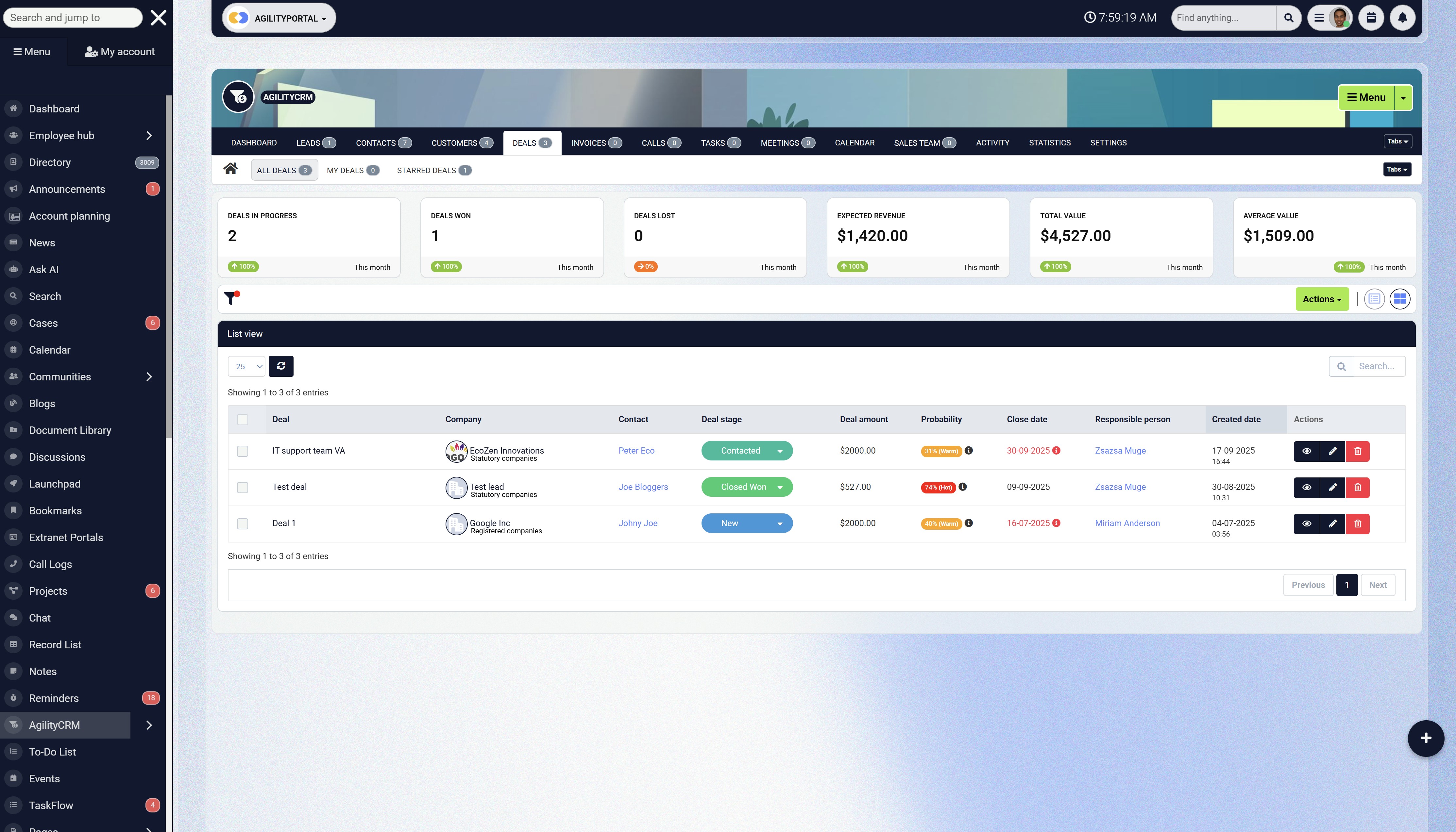
AgilityPortal delivers an AI-powered customer data and engagement platform built for modern organisations that need fast, accurate, and centralised customer information.
It's intuitive, scalable, and designed to grow alongside your teams, your operations, and your customer base. With enterprise-grade security and strong data governance at the core, businesses can trust that their data is accurate, protected, and ready to power better decision-making.
AI is deeply integrated across AgilityPortal—from smart search to automated workflows—giving teams instant access to customer insights, documents, history, and activity before any interaction begins.
Our AI assistant works in real time, helping staff respond faster, personalise communication, and resolve issues without digging through scattered tools. Whether you're running an intranet, extranet, client portal, or supplier portal, AgilityPortal keeps everything connected.
With integrations across Microsoft, Google, CRM tools, productivity apps, and third-party systems, companies can pull customer data and documents directly into AgilityPortal's unified workspace.
Teams get a complete, 360-degree view of each customer or partner, enabling smoother collaboration and more personalised experiences. AI-powered automation can also streamline onboarding, notifications, approvals, and communication—reducing manual work and ensuring consistency across the board.
AgilityPortal also includes powerful analytics dashboards that highlight customer activity trends, engagement levels, potential churn signals, and operational bottlenecks.
Built-in reporting turns raw customer data into clear insights, helping leaders understand behaviour across every touchpoint and share real-time insights with stakeholders.
Features:- Customisable dashboards
- Centralised customer and partner profiles
- AI-powered search and assistant
- Advanced reporting and analytics
- Workflow automation
- Integrations with Microsoft, Google, CRM platforms, and third-party systems
- Document and file management with secure storage
- Extranet and supplier portal capabilities
- Task, project, and pipeline management
- Enterprise-grade security and compliance
- Customer segmentation & insights tools
Pricing:
- Plans available for organisations of all sizes, with flexible per-user pricing.
- A 14-day free trial is available — no credit card required.
Blueshift Intelligent Customer Engagement
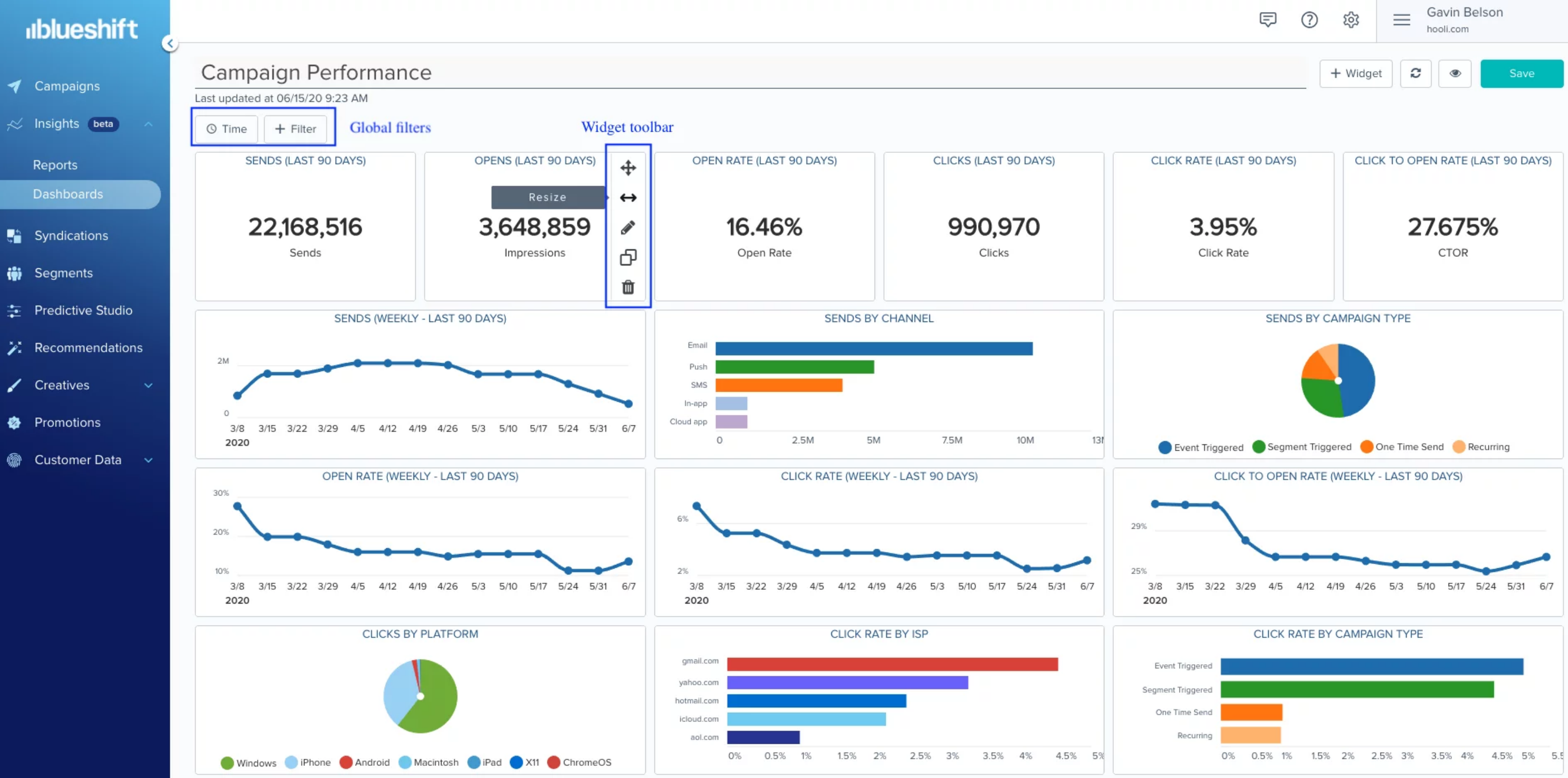
Blueshift Intelligent Customer Engagement is an AI-driven customer data and marketing automation platform built to help brands deliver smarter, more personalised experiences at scale.
Designed for teams that want to unify their data and act on it in real time, Blueshift makes it easy to reach customers with the right message, at the right moment—across every channel.
Its intuitive interface and powerful AI capabilities ensure that as your business grows, your customer engagement strategy grows with it.
Blueshift's AI is embedded throughout the platform. From SmartHub CDP to Predictive Intelligence, Blueshift analyses behaviour, intent, and customer history to surface insights before campaigns begin.
Its built-in recommendation engine and real-time decisioning help marketers automatically select the best channel, timing, and content for every individual customer—no manual guesswork, no static segments.
With deep integrations across e-commerce platforms, CRM systems, POS tools, support platforms, and advertising channels, Blueshift allows businesses to bring fragmented customer data into one unified location.
This gives marketers a complete view of every customer's journey, enabling advanced personalisation that drives stronger relationships and higher conversion rates.
AI-powered journeys can also automate entire lifecycle campaigns—welcome flows, re-engagement, churn prevention, upsell offers, and more.
Features:- SmartHub CDP with unified customer profiles
- AI-powered predictive segmentation
- Real-time personalisation
- Multi-channel customer journeys (email, SMS, push, ads, in-app, web)
- Recommendation engine
- Audience builder & behavioural triggers
- Advanced analytics and attribution
- Extensive integrations across marketing, CRM, and e-commerce stacks
- Fast data onboarding
- Enterprise-grade privacy and security
Pricing:
- Custom pricing based on data volume and feature needs.
- A free demo is available upon request.
#3. Segment (Twilio Segment)
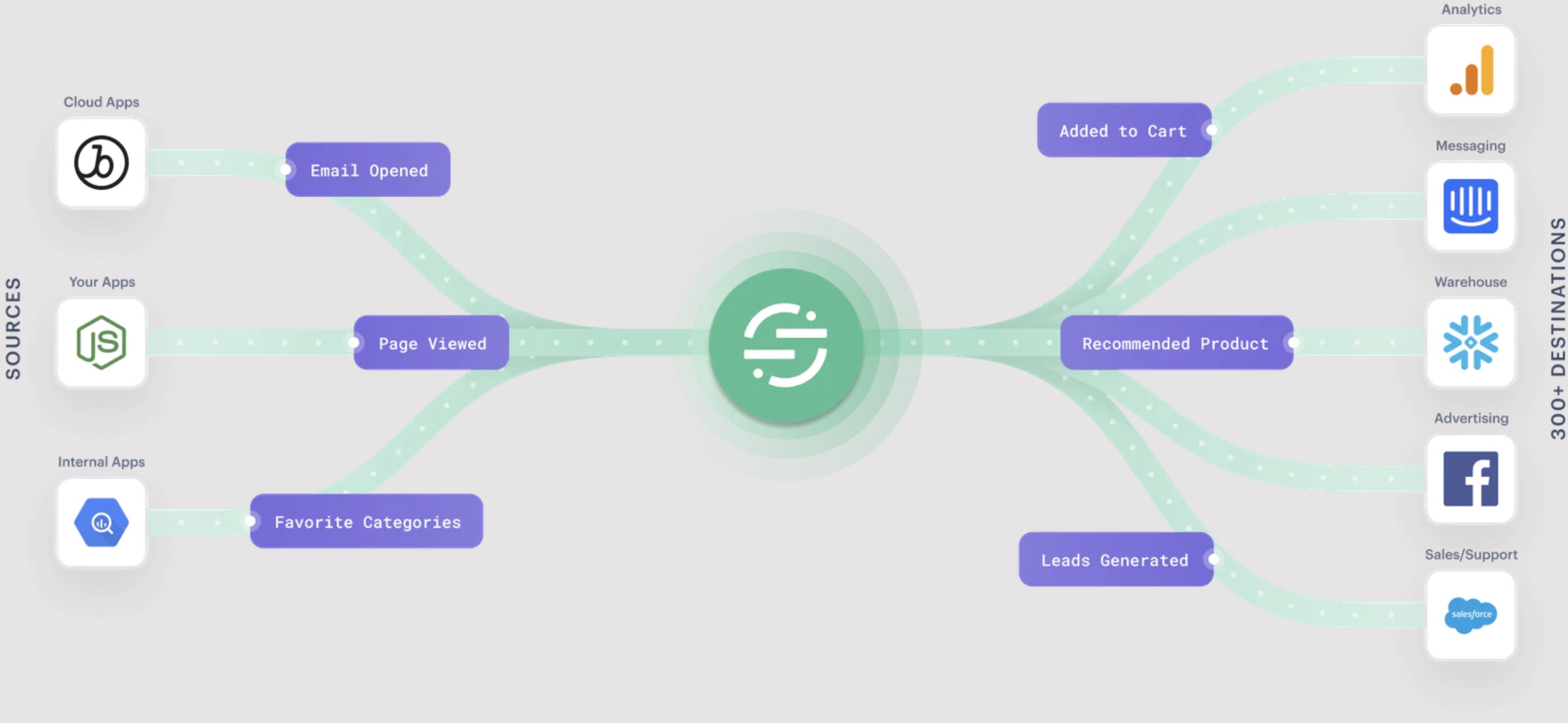
Segment is a powerful customer data infrastructure platform that helps businesses collect, clean, and route customer information across all their tools.
Built for speed and accuracy, Segment centralises customer events from websites, apps, and backend systems into one unified customer view, ensuring every downstream tool receives consistent, reliable data.
AI and identity resolution are embedded throughout Segment's Smart, ensuring duplicate data is eliminated, profiles remain accurate, and events sync in real time.
With powerful Transformations and Protocols, teams can enforce strong data governance and prevent data inconsistencies before they spread.
With over 400+ integrations, Segment connects seamlessly to CRMs, analytics tools, support platforms, and data warehouses.
This gives businesses a complete picture of each user's behaviour, enabling better personalisation, deeper insights, and more effective engagement strategies.
Features:- Unified customer profiles
- Identity resolution
- Real-time event streaming
- 400+ integrations
- Data governance tools
- Predictive insights
- Secure cloud infrastructure
- Audience segmentation
- Usage-based plans with a free tier available.
#4. HubSpot CRM

#4. HubSpot CRM
HubSpot CRM is an all-in-one customer relationship and engagement platform built for businesses that want simplicity, scalability, and strong data organisation. It offers a clean, centralised database that helps teams track leads, interactions, deals, and support conversations without technical complexity.
AI-powered insights help teams forecast pipelines, automate repetitive tasks, and improve follow-ups.
The platform's unified interface ensures marketing, sales, and service teams operate from a single source of truth, improving speed, accuracy, and customer experience.
With access to hundreds of apps in the HubSpot Marketplace, businesses can sync their customer data across their tech stack, enabling personalised engagement across channels and more predictable revenue growth.
Features:- Centralised CRM database
- Deal and pipeline management
- Marketing automation
- AI-powered predictions
- Customer service hub
- Integrations marketplace
- Reporting dashboards
- Secure permissions
- Free CRM available. Paid plans start at $20/month.
#5. Salesforce Customer 360
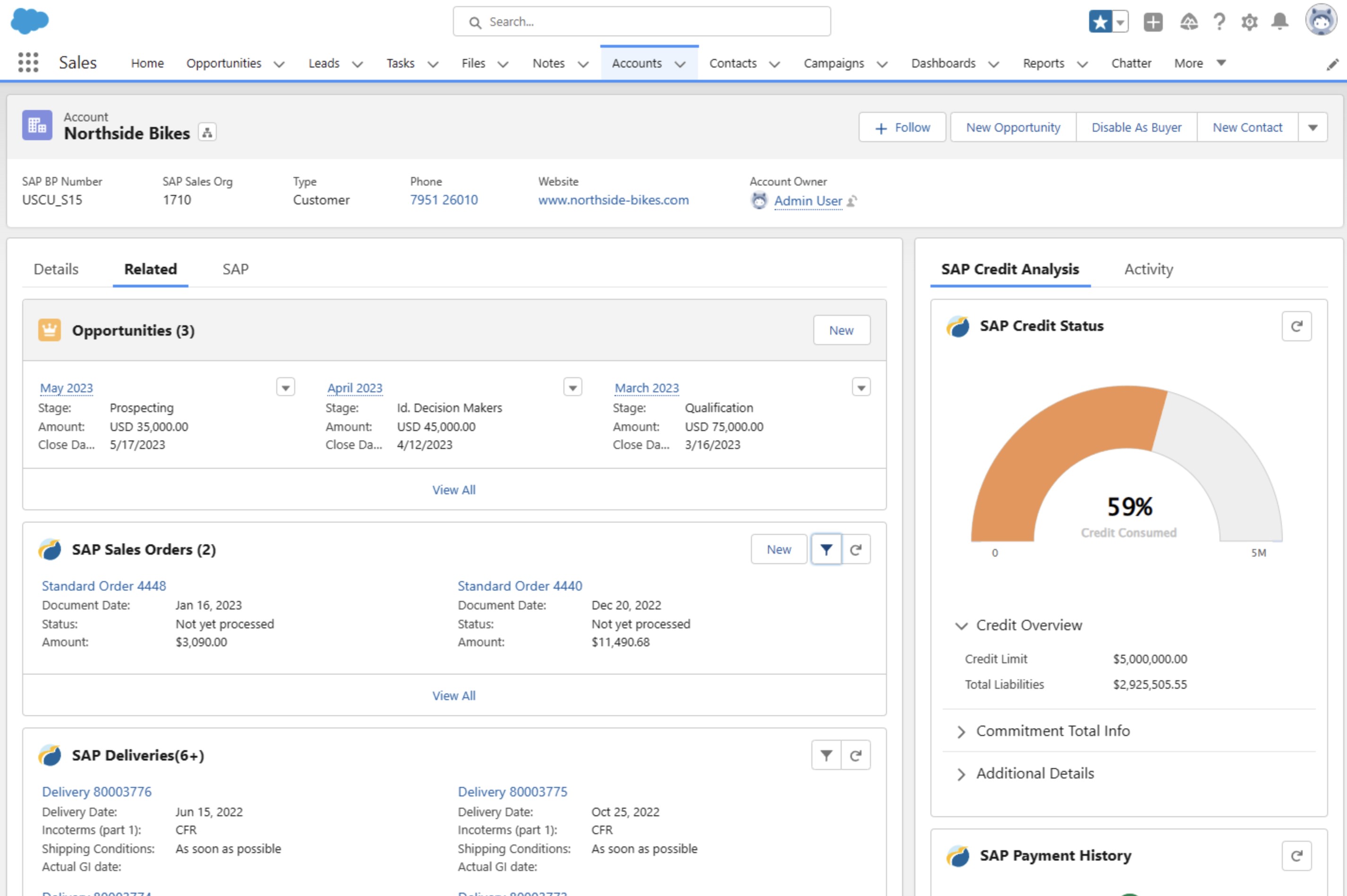
Salesforce Customer 360 is an enterprise-grade customer data and engagement platform designed for organisations that operate at scale. It unifies customer data across sales, service, marketing, and commerce, giving teams a complete 360-degree view of every customer interaction.
Einstein AI powers predictive analytics, automated recommendations, forecasting, and real-time engagement. Teams can personalise customer journeys, anticipate needs, and automate interactions at every stage.
Salesforce's vast ecosystem of integrations, apps, and cloud services allows enterprises to connect their entire organisation, break data silos, and deliver highly consistent customer experiences.
Features:- Unified customer profiles
- Advanced Einstein AI analytics
- CRM + Marketing + Service clouds
- Multi-channel automation
- Enterprise workflows
- Data governance & compliance
- AppExchange marketplace
- Complete customisation
Pricing:
- Enterprise pricing varies by cloud.
#6. Zoho CRM + Zoho Analytics
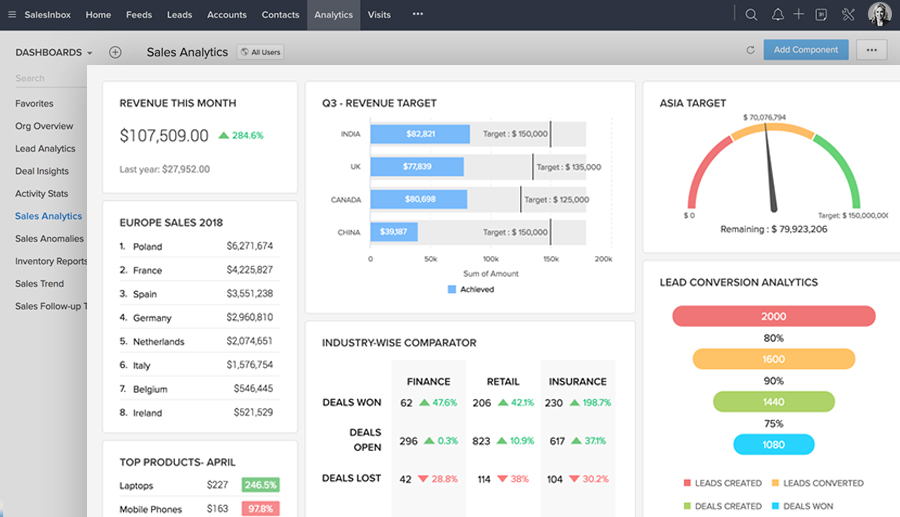
Zoho CRM combines customer data management, sales automation, and AI-powered insights into a user-friendly platform ideal for small and mid-size businesses.
With Zoho Analytics, teams can dig deeper into customer behaviour, sales performance, and long-term trends.
Zia, Zoho's AI assistant, helps users identify patterns, forecast revenue, and automate routine work. The platform integrates seamlessly with email, phone, social media, invoicing, and third-party tools.
Zoho's ecosystem makes it easy to centralise data, personalise outreach, and improve operational efficiency without heavy implementation costs.
Features:- CRM database
- AI insights (Zia)
- Omnichannel communication
- Custom fields & workflows
- Reporting dashboards
- Third-party integrations
- Marketing automation
- Role-based permissions
Pricing:
- Plans start at $14/user/month.
#7. Microsoft Dynamics 365 Customer Insights
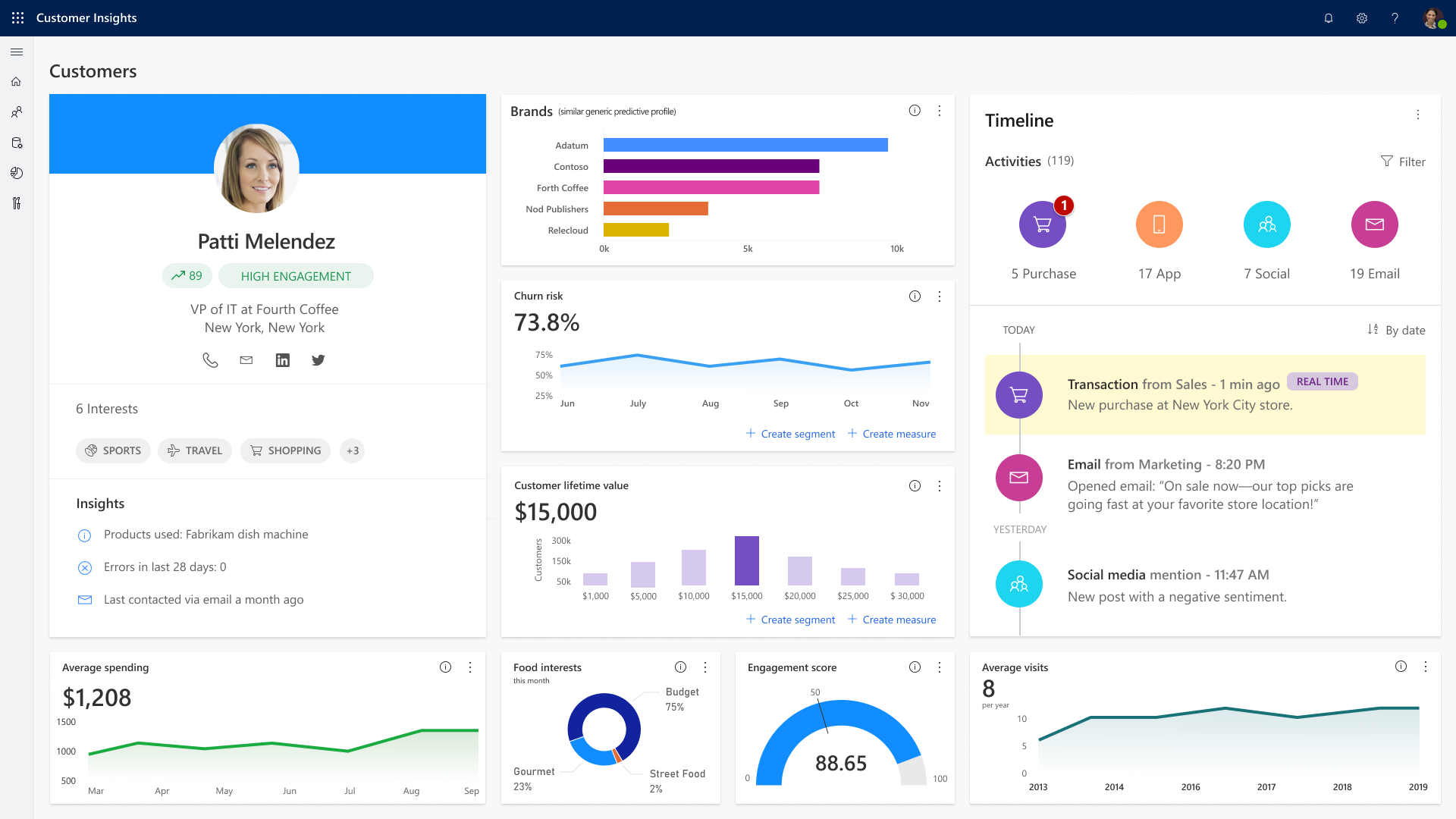
Dynamics 365 Customer Insights is Microsoft's premium customer data and personalisation engine designed for enterprise organisations.
It unifies customer data from CRM, finance, support, and marketing systems to create rich, actionable customer profiles.
Powered by Microsoft AI and Copilot, the platform unlocks predictive scoring, behavioural segmentation, and personalised journey orchestration.
Its deep integration with the Microsoft ecosystem (Teams, Outlook, Power BI, SharePoint) makes cross-department workflows seamless.
Features:- Unified customer data
- Predictive AI and scoring
- Behavioural segmentation
- Cross-channel orchestration
- Power BI analytics
- Personalisation engine
- Enterprise security
- Data unification tools
- Custom enterprise pricing.
#8. Freshworks CRM

#8. Freshworks CRM
Freshworks CRM (formerly Freshsales) is a streamlined customer management and engagement solution designed for teams that want simplicity without sacrificing power. Its built-in AI assistant, Freddy, helps users identify high-intent leads, automate tasks, and personalise customer communication.
With an intuitive interface, Freshworks CRM centralises customer interactions, notes, emails, and activity timelines, giving teams a clear view of every customer relationship.
Features:
- Contact & deal management
- AI lead scoring
- Email & phone integration
- Activity timelines
- Automation workflows
- Reporting dashboards
- Website visitor tracking
- Secure storage
Pricing:
- Free tier available; paid plans start at $15/user/month.
#9. Pipedrive
#9. Pipedrive
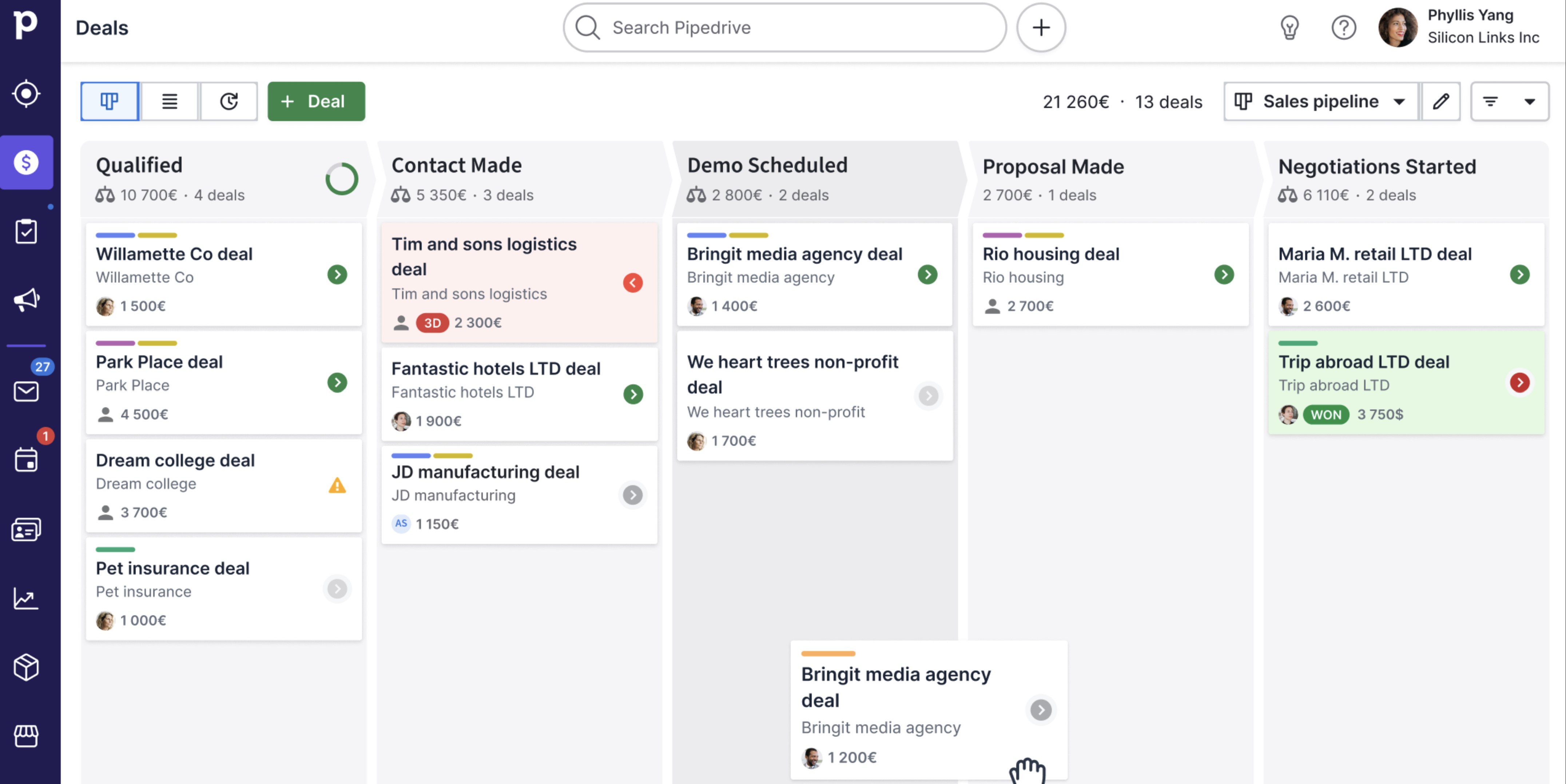
Pipedrive is a deal-focused CRM platform that helps sales teams track pipelines, manage customer interactions, and close deals faster.
Known for its simple interface and visual pipelines, Pipedrive makes customer data easy to follow and update.
Automation tools eliminate repetitive work, while insights and reporting dashboards help managers track performance and forecast revenue.
Features:- Visual sales pipelines
- Deal tracking
- Email sync
- Workflow automation
- Contact database
- Activity reminders
- Forecasting tools
- Secure data storage
Pricing:
- Plans start at $14.90/user/month.
#10. Insightly
#10. Insightly
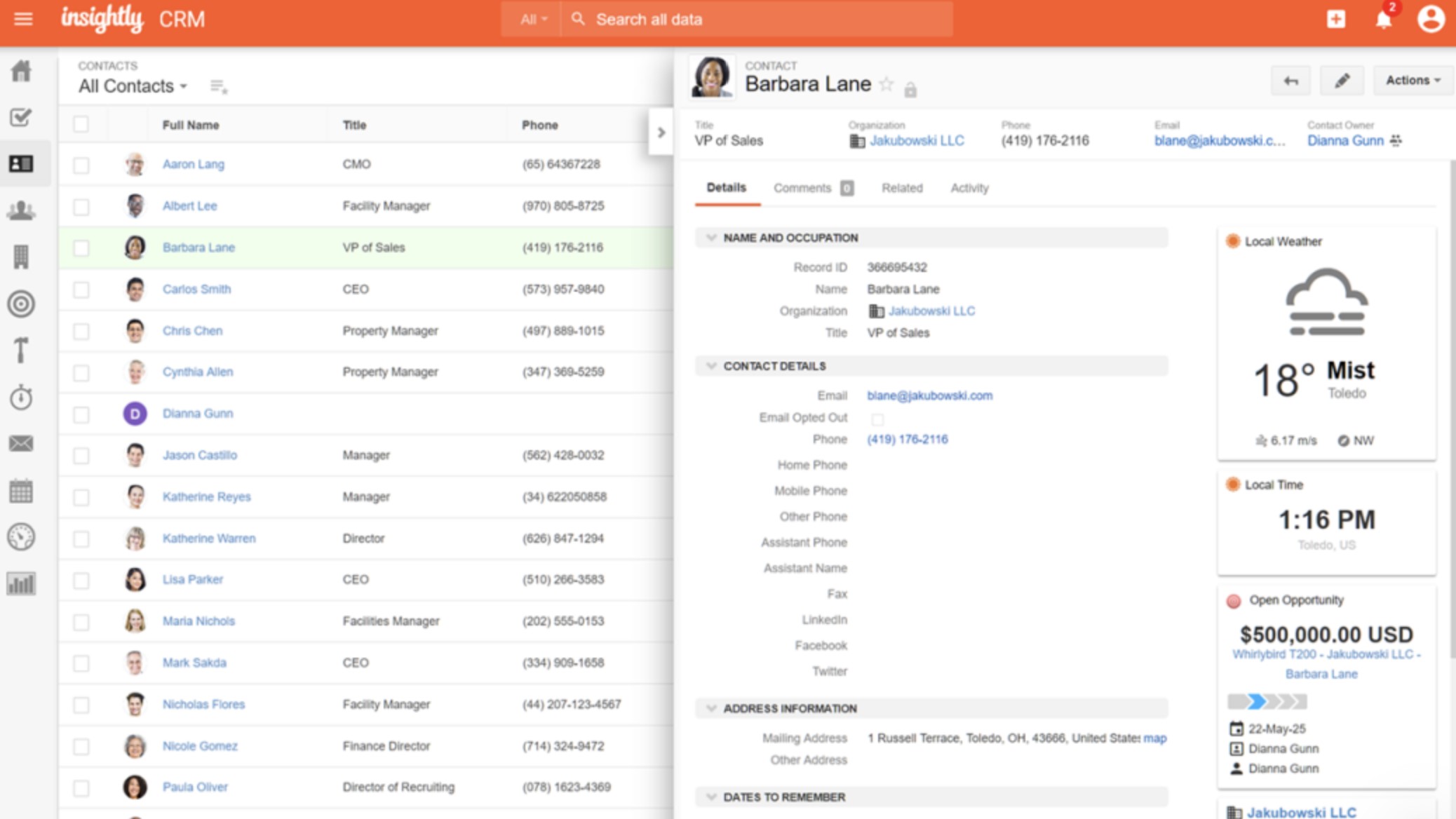
Insightly is a CRM and project management platform designed to help businesses manage customer relationships throughout the entire lifecycle.
It centralises customer data, automates workflows, and connects sales and operational teams in one environment.
AI-powered insights help teams prioritise customers, understand interactions, and maintain clear communication from first contact to final delivery.
Features:- CRM database
- Project management tools
- Workflow automation
- Contact segmentation
- Sales pipelines
- App integrations
- Task & milestone tracking
- Role-based security
- Plans start at $29/user/month.
What a Customer Data Management App Actually Does (and Why It Stops Revenue Loss)
What a Customer Data Management App Actually Does (and Why It Stops Revenue Loss)
A customer data management app — or any modern customer information management system — isn't just another tool on your tech stack.
It's the backbone that keeps your sales, support, and marketing teams aligned, informed, and working from the same accurate customer record.
Here's what these platforms really do behind the scenes, and why companies that don't use them end up leaking revenue, losing customers, or running blind.
Centralises All Customer Information (So Nothing Slips Through the Cracks)
A proper centralised customer records platform pulls every interaction, document, note, and activity history into one unified profile.
No more bouncing between email threads, CRMs, spreadsheets, or outdated databases.
This means:
- Every team sees the same information
- Handovers are faster
- Customers get consistent answers
- Mistakes drop drastically
Automates Data Accuracy With Real-Time Updates
Manual data entry is exactly where most data problems begin.
Every time someone copies information from an email into a spreadsheet, updates a CRM by hand, or retypes customer details across different tools, the risk of mistakes skyrockets.
One wrong character, one missed note, or one outdated field can ripple across your entire workflow — and before long, your team ends up working with information that's incomplete or flat-out wrong.
A customer insights management solution eliminates this problem by automating the entire syncing and validation process.
It pulls customer data directly from the tools you already use, checks it against existing records, and updates everything in real time. No double entry. No manual copy-and-paste.
No conflicting versions floating around in different systems.
When your data is accurate and updated automatically, you get:
- A single source of truth - Everyone sees the same information, so there's no confusion or backtracking.
- Fewer duplicated contacts - Automated checks stop the same customer from being added five different ways.
- Fewer outdated records - Old emails, wrong phone numbers, or missing details are replaced instantly with live data.
- Better reporting and forecasting - With clean, validated information, your insights actually mean something — and decisions become clearer and faster.
So basically, automation isn't just about convenience.
It's about protecting your business from the silent chaos caused by messy, inconsistent customer data.
Improves Collaboration Across Teams Instantly
When sales, support, and operations operate from different systems, customers feel the gaps.
A cross-department customer data tool breaks the silos and gives everyone the same context.
Teams can:
- See full customer history
- Understand recent interactions
- Respond faster
- Reduce internal back-and-forth
This is how you stop the classic "Let me check with another department…" mess that frustrates customers.
Strengthens Compliance & Security
With all the GDPR, CCPA, and SOC2 pressure, you can't afford sloppy data handling.
A secure customer information management system protects sensitive data and ensures you're operating safely.
Security features include:
- Role-based access
- Detailed audit trails
- Encrypted storage
- Permission-controlled data sharing
This reduces the risk of fines, breaches, and legal headaches — especially for growing teams.
Unlocks Data-Driven Decisions That Boost Revenue
Because the system tracks behaviour, preferences, churn signals, and buying patterns, your team can act with confidence.
A customer insights analysis tool helps you stop guessing and start making decisions backed by real data.
You can:
- Spot upsell and renewal opportunities
- Catch unhappy customers early
- Build personalised journeys
- Improve support quality
- Forecast more accurately
This is how companies grow faster without adding more people.
Read this article: : Top 6 AI-Powered Project Management Tools To Use In 2023
What You Should Look For in a Customer Data Management App
Choosing the right platform isn't about picking the tool with the most buttons — it's about finding a solution that actually helps your team work smarter, faster, and with fewer mistakes.
- Unified Customer Profiles (Complete Customer History System) - Look for software that builds a full customer interaction history tool, where every detail — conversations, purchases, support tickets, documents — lives in one clean timeline. This helps teams deliver consistent, informed responses without scrambling through different systems.
- Automated Data Syncing (Hands-Free Customer Data Updater) - Any modern system should automatically pull information from the tools you already use. A real-time customer info sync platform ensures your data stays accurate without relying on manual updates that lead to errors.
- Secure Document Storage (Encrypted Client File Repository) - Your customer files — contracts, invoices, forms — shouldn't be floating around in email threads. A secure client file management solution keeps all documents centralised, permission-controlled, and protected from unauthorised access.
- Integrations With Everyday Tools (Connected Customer System) - The best platforms plug into your CRM, email, invoicing software, e-commerce apps, and support tools. A multi-app customer data connector removes double entry and makes your workflows seamless end-to-end.
- Mobile Access (On-the-Go Customer Information App) - Your team shouldn't be tied to a desk to access important data. A mobile customer record viewer lets staff check details, update notes, or resolve issues wherever they are — ideal for field teams or remote workers.
- Permissions & Role-Based Access (Controlled Customer Data Access System) - Not everyone needs to see everything. A granular customer data permission tool ensures sensitive information only reaches the right people, reducing security risks and helping with compliance.
- Advanced Search & Filtering (Customer Data Search Engine) - When customer information is stored properly, you should be able to find anything in seconds. A fast customer lookup system lets you filter by tags, behaviour, purchase history, or team ownership — no digging required.
- Reporting & Analytics (Customer Insight Dashboard Software) - Data is useless if you can't turn it into insight. A customer behaviour reporting tool helps you spot trends, understand buyer patterns, identify churn risks, and make better decisions with less guesswork.
How Much Time and Effort You Actually Save With a Proper Customer Data System
Most teams don't realise how much time they waste until everything finally lives in one place.
You think it's "just a few minutes here and there," but when your data isn't accurate and people keep hunting for missing details, the hours add up fast.
Here's what actually changes once you put some strong data governance behind your customer information.
1. You Stop Losing Hours Just Trying to Find Basic Info
If your team is constantly rummaging through inboxes, Slack threads, or outdated spreadsheets, trust me — you're not alone.
McKinsey estimates 20–30% of the workweek is swallowed by "searching for information," not actually using it.
When everything is centralised and your data is accurate, that constant scavenger hunt basically disappears.
Teams can easily save 15–25 hours a week, depending on their role and workload.
2. The Workload Feels Lighter Because the Repetitive Stuff Vanishes
When your system updates itself and actually follows strong data governance rules, all the boring, repetitive admin work finally starts to disappear.
You're not re-typing customer details, chasing missing notes, or fixing mistakes caused by outdated information. Because your data is accurate, teams stop wasting time doing the same task twice.
Here's what that looks like in real life:
- No more copying customer details between tools
- Far fewer "Can you resend that file?" moments
- Onboarding becomes faster and way less stressful
- Support teams stop chasing missing or inconsistent info
- Context-gathering happens in seconds instead of minutes
- Admin workload drops dramatically — often 30–50% less busywork
It's a noticeable difference, and people feel it immediately.
3. Revenue Stops Slipping Through Cracks You Didn't Even Know Existed
This is where things get real.
Most companies lose deals for embarrassingly preventable reasons — outdated records, missing notes, wrong contact details, or slow follow-ups because no one could find the right customer story.
When your data is accurate, these problems disappear. And when strong data governance is baked into the system, you stop losing customers due to inconsistent or messy information.
Businesses that fix this usually see more repeat revenue, faster close rates, and fewer "lost to no response" opportunities.
4. Forecasting Stops Feeling Like Guessing in the Dark
5. The Real Bottom Line? You Get Time Back — and Lots of It
When you add it all up — the hours saved, the admin removed, the smoother workflows, the recovered deals — the impact is massive.
You're talking hundreds of hours a year, thousands in saved labour, and often tens of thousands recovered in revenue that used to vanish quietly in the background.
Good data systems don't just make things tidy.
They give your whole business room to breathe.
How AgilityPortal Helps You Fix Customer Data Problems Instantly
How AgilityPortal Helps You Fix Customer Data Problems Instantly
Choosing the right customer data platform can be the difference between constantly losing customers and consistently hitting your revenue goals.
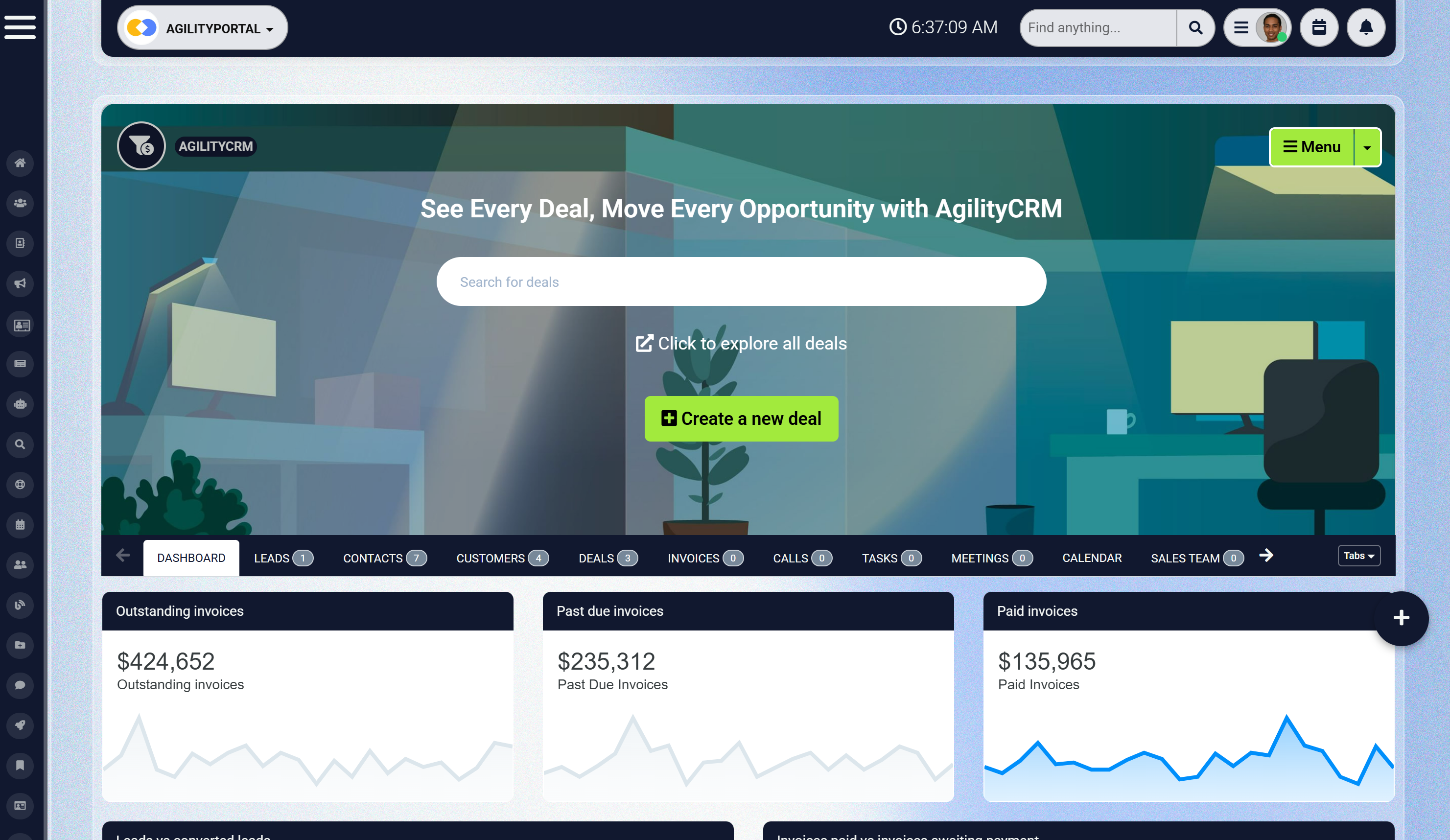
It's time to ditch messy spreadsheets and outdated tools and replace them with an intuitive, streamlined, AI-powered customer database inside AgilityPortal. With AgilityPortal, you can stay ahead of churn, personalise every interaction, and deliver the kind of customer experience that turns everyday users into long-term loyal clients.
AgilityPortal is built for modern organisations that need fast, reliable access to accurate customer information — without the technical headaches.
Everything works straight out of the box, from unified customer profiles to secure document storage and powerful AI-driven search.
As your business grows, AgilityPortal grows with you, giving your team the speed, efficiency, and clarity they need to serve customers better at every stage.
Why AgilityPortal Is the Best Option for Your Team
- Faster setup than traditional platforms
- Lower cost than legacy CRMs
- Built for internal teams and external stakeholders
- Used across multiple industries worldwide
- Designed to scale as your business grows
- 14-day free trial with no credit card required
If you're ready to take control of your customer data, strengthen relationships, and operate with confidence, start your free trial of AgilityPortal today or book a demo and start and streamline your entire customer data workflow in hours — not months.
Wrapping up, The Cost of Doing Nothing Is Higher Than You Think
Companies that invest in solid customer data infrastructure now won't just "stay organised" — they'll win.
They'll move faster, personalise better, and build customer relationships that actually last.
The ones who don't?
They'll keep tripping over inconsistent records, broken processes, and missed opportunities while competitors deliver seamless, personalised experiences as if it's the bare minimum. Because soon, it will be.
This isn't just about tidy data or a nicer dashboard. When your information is clean, connected, and governed properly, you're no longer guessing what customers need — you're serving them better at every stage of their journey.
And that's the real point of customer data management: not marketing tricks, not vanity analytics, but building sustainable, meaningful relationships that compound over time.
If your business is still relying on scattered tools or inaccurate records, the real risk isn't the time you waste — it's the customers you quietly lose.
Taking a proactive step now, whether that's auditing your current workflow or switching to a platform that actually brings everything together, will save you far more than it costs.
AgilityPortal gives you the structure, the clarity, and the control to stop leaking revenue and start delivering the kind of experience customers stay loyal to. The only question left is whether you fix the problem now — or keep paying the price for it later.
Frequently asked questions
1. What is a customer data management app?
A customer data management app is a customer information management tool that stores, organises, and centralises all your customer records in one place.
Think of it as a modern customer data storage system that keeps your data management workflow clean, accurate, and accessible.
Unlike basic customer database software, these platforms help businesses analyse behaviour, spot patterns, and turn raw data into actionable customer data insights.
2. How does a customer data management app help reduce revenue loss?
A strong customer data system stops revenue leaks by keeping your customer records centralised, ensuring your data is accurate, and removing the inefficiencies caused by scattered spreadsheets or outdated tools.
When teams can instantly access the right information, follow-ups are faster, customer experience improves, and fewer opportunities slip through the cracks.
Clear data management workflows also reduce errors and missed handovers — two huge causes of lost revenue.
3. Is a customer data management app secure for sensitive data?
Yes — modern secure customer data management tools are designed to protect sensitive information with encryption, access controls, audit logs, and strong data governance practices.
A secure customer data storage system ensures only authorised users can view or update customer details, reducing compliance risks and keeping your customer database safe from breaches.
4. What's the difference between a CRM and a customer data management app?
This is one of the most common questions — CRM vs data management.
A CRM focuses on sales activities: pipelines, deals, follow-ups, and communication history.
A customer data management app goes further by handling your entire customer data workflow, not just sales. It consolidates behaviour data, documents, support records, purchase history, forms, uploads, and more.
CRMs are great for sales teams; a customer data platform alternative manages all customer data across your organisation.
5. Do small businesses need a customer data management app?
Absolutely.
A small business customer data app stops owners and teams from drowning in spreadsheets and inconsistent information.
Even small teams benefit massively from centralised customer records, automated updates, and quick access to customer history.
When your customer data insights are clear, decisions become easier and customer experience improves instantly.
6. What is the best customer data platform alternative if we don't want a traditional CDP?
Many companies prefer something more flexible than heavy enterprise CDPs.
A customer data platform alternative like AgilityPortal gives you unified records, secure storage, document management, and collaboration features — without the cost or complexity of a full CDP.
It's perfect for companies that want clarity, speed, and actionable insights without a multi-month implementation.
7. How does a centralised customer records system improve customer experience?
When all your information lives in one centralised customer records hub, your team stops wasting time digging for answers or asking customers to repeat themselves.
Every interaction becomes faster and more personalised, because your customer information management tool gives you the full picture instantly.
This is how brands build loyalty and reduce churn.
8. Is customer database software still useful if we already have a CRM?
Yes — customer database software complements your CRM.
CRMs handle outreach and pipelines, but they don't manage documents, compliance, activity logs, shared spaces, external partners, or full lifecycle information.
If you need more than sales visibility, a customer data storage system is essential.
9. How does secure customer data management protect my business?
A secure customer data management platform reduces the risk of data leaks, unauthorised access, and compliance violations.
Encryption, role-based permissions, and strong data governance help ensure your data is accurate, safe, and fully traceable — critical for industries like healthcare, finance, and professional services.
10. What kind of customer data insights can these systems provide?
A modern data platform reveals:
- behavioural patterns
- churn risks
- buying trends
- support bottlenecks
- engagement levels
- upsell opportunities
These customer data insights help you make smarter decisions without guessing.
11. Can customer data management tools integrate with CRMs, support tools, or ERPs?
Yes.
Most solutions integrate smoothly with CRMs, helpdesks, billing tools, and internal systems.
This keeps your data management workflow connected and ensures every team is working from the same source of truth.
12. Is a customer data platform alternative easier to implement than a traditional CDP?
In most cases, yes.
A lighter customer data platform alternative can be deployed in days rather than months. It's ideal for businesses that want fast wins, lower cost, and a simpler tech stack.
13. What's the best small business customer data app for teams with no technical staff?
AgilityPortal.
It works straight out of the box, includes AI-powered search, secure file storage, team collaboration, external portals, and centralised customer records — all without needing developers or technical admins.
14. How does customer data management help long-term customer loyalty?
When your data is accurate and easy to access, customers get the right answers the first time.
Service becomes faster, more personalised, and more consistent. Over time, that level of reliability builds trust — and trust builds loyalty.
Most Popular Posts

Effective communication among team members is vital for the productivity and success of any organization. Surprisingly, 60% of companies lack a long-term internal communication strategy, which p...


Businesses thrive on communication for efficiency, productivity and accomplishment. When the right information is passed from the right designation in the organization, it promotes positivity an...
Categories
Blog
(2934)
Business Management
(365)
Employee Engagement
(222)
Digital Transformation
(190)
Growth
(140)
Intranets
(134)
Remote Work
(63)
Sales
(53)
Collaboration
(47)
Customer Experience
(30)
Culture
(29)
Knowledge Management
(28)
Project management
(28)
Leadership
(20)
Comparisons
(9)
News
(1)

Related Posts

Many companies invest heavily in salaries, bonuses, and employee perks, yet still struggle with low productivity, disengaged teams, and high staff turnover. The reality is that the workplace environment often has a far greater impact on employe...

Many organizations looking for a SharePoint replacement online are reaching a point where SharePoint no longer matches how modern teams actually work. What started as a document repository has gradually become difficult to manage, expensive to ...

More and more businesses and educational institutions implement LMS software to streamline learning content delivery, with the global LMS market expected to reach $69 billion by 2030, growing with a CAGR of 19.2% since 2022, according to a recent rep...

In today's fast-paced and interconnected business world, effective communication, streamlined workflows, and efficient collaboration are essential for organizational success. That's where intranet apps come in. These powerful tools offer a cent...

Tennis Ball Transfer is an excellent activity for encouraging a group to practice cooperating, coordinating efforts, and learning to operate more effectively. Delegates must assess their performance and devise new problem-solving solutions. This exer...


Jill Romford
I am a digital nomad, lover of exploring new places and making friends.
I love to travel and I love the internet. I take pictures of my travels and share them on the internet using Instagram.
Traveler, entrepreneur, and community builder. I share my insights on digital marketing and social media while inspiring you to live your fullest life.
Ready to learn more? 👍
One platform to optimize, manage and track all of your teams. Your new digital workplace is a click away. 🚀
Free for 14 days, no credit card required.