Insight Blog
Agility’s perspectives on transforming the employee's experience throughout remote transformation using connected enterprise tools.
12 minutes reading time
(2375 words)
What is an Employee Experience Platform or EXP?

What is an Employee Experience Platform or EXP?
The words “employee experience” have become the hottest buzzword in HR these days, and for good reason, says Josh Bersin.
What is an Employee Experience Platform or EXP?

An employee experience platform may appear to be just another trendy jargon, but it is much more. Given that we spend roughly a third of our lives at the job or about 25 years, our 'job experience' should take precedence.
Despite this, we tend to focus on raw productivity, KPIs, and profitability. Employees' work experiences are often disregarded because we expect individuals to simply show up and execute their jobs.
With millennials accounting for 35% of the workforce, it's no wonder that the conversation has moved and the attention has gone to experiential platforms. So, what exactly is a platform for employee experience?
Describing an employee experience platform:
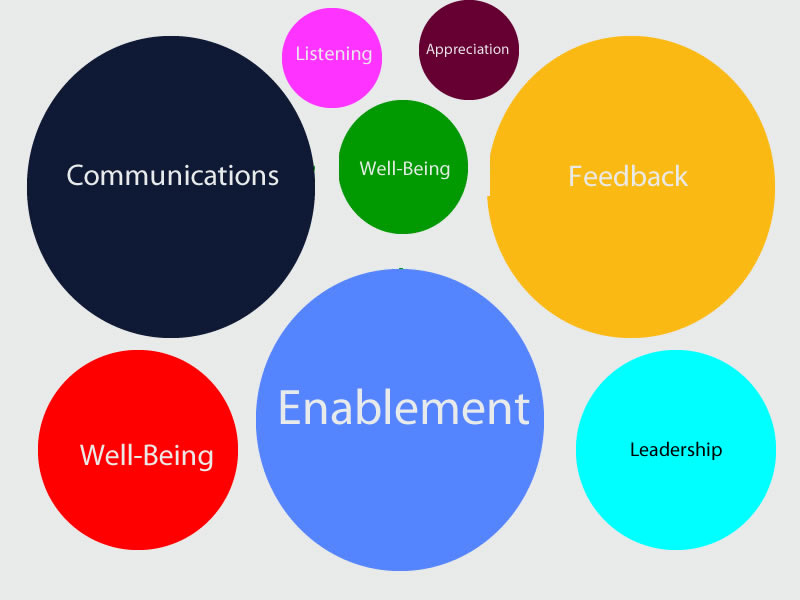
Describing an employee experience platform
Let's define the word by breaking it down into two components before going into what constitutes a great employee experience platform and why HR and executives should invest in it.
Every company invests in the customer experience.
And as organizations increasingly recognize people as their greatest assets, they're investing in the employee experience as well. Let's dig deeper.
What is an Employee experience?
A company-wide campaign to keep employees on track, profitable, healthy, and motivated.
The employee experience encompasses the entire employee journey, from onboarding to offboarding, and every touchpoint in between.
It's all-encompassing, addressing all elements of employees' daily lives, from assisting with work to ensuring physical and mental well-being. Experience is a "company-wide project," which means that no single person or department should be responsible for it; everyone has a role to play.
What makes up a Digital Employee Experience Platform?
When we talk about a platform in this context, we're talking about a collection of technologies. It combines a number of tools into a single location.
What is an AgilityPortal employee experience platform now that we have a better knowledge of these two terms?
It all comes down to delivering a user-friendly platform of tools that helps individuals to work more efficiently. On the other hand, we have a larger viewpoint.
An AgilityPortal employee experience platform, in our opinion, is an accessible, consistent, and simple-to-use place that blends engagement, wellbeing, productivity, collaboration, and communication tools.
It's made for employees, to satisfy all of their demands, and it goes beyond productivity to provide a slew of other perks.
Why Should you Invest in a Digital Employee Experience Platform?
Employee experience is no longer "nice to have" with employees spending a lot of time at work and a rising understanding of the physical and mental issues it entails.
Prior to the epidemic, HR and leaders began to plan physical work environments that included nap pods, table tennis, gyms, and endless refreshments.
These incentives were put in place to make the office a fun place to work. Health and safety regulations have resulted in fewer people working in the office, fewer interactions, and a widespread shift to remote work.
People spend their days in virtual workspaces, so it's no wonder that in 2020, 42 percent of HR leaders indicated improving the employee experience was a high priority in influencing technology decisions.
The Advantages of Arrange Digital Workspace for your Employees

The Advantages of Arrange Digital Workspace for your Employees
Engagement
Employee engagement is more than just job satisfaction or turning up to work each day. It reflects how emotionally connected people feel to their organisation and how motivated they are to contribute to its success.
Only around 13% of employees are highly engaged, yet this small group consistently delivers outsized impact. Highly engaged employees are about 17% more productive, less likely to leave, make fewer mistakes, and naturally strengthen team morale. They don't just do their jobs — they actively advocate for the organisation and represent the brand positively inside and outside the business.
At its core, engagement grows from a sense of belonging. Employees who feel heard, informed, and connected to their colleagues and leaders are far more likely to stay committed. This sense of belonging is shaped by daily interactions, open collaboration, clear communication, and a supportive workplace culture.
An employee experience platform plays a critical role here. By bringing communication, collaboration, knowledge sharing, and recognition into one connected environment, it removes friction and helps people feel part of something bigger.
When employees can easily connect, contribute, and see the impact of their work, engagement stops being a buzzword and becomes a measurable business advantage.
Key signals of strong employee engagement:
- Employees understand how their work contributes to company goals
- People actively participate in conversations, not just consume updates
- Teams collaborate across departments without friction
- Staff feel recognised and valued for their contributions
- Employees choose to stay and grow with the organisation
The reality is simple: when engagement is treated as a strategic priority rather than an HR metric, performance, retention, and culture improve together.
Culture
Workplace culture is not defined by an office building, shared desks, or physical proximity. It is defined by how people communicate, collaborate, and behave every day.
As organisations shift to remote and hybrid work, HR teams and leaders are rightly concerned about culture erosion — not because people are apart, but because culture becomes invisible when it is not intentionally designed.
When teams are distributed across locations, time zones, and working patterns, culture does not happen by accident. Without shared spaces, consistent communication, and visible values, culture fragments quickly. That's why creating a single, shared digital workplace matters. An employee experience platform provides a common environment where values, behaviours, and expectations are reinforced daily — regardless of where people work.
Culture is strengthened when employees feel empowered rather than managed. Giving people the right tools, access to information, and space to contribute breaks down silos and reduces dependency on hierarchy. Open platforms encourage participation, transparency, and peer-to-peer interaction, replacing top-down communication with shared ownership.
Modern employee experience platforms help organisations build, protect, and even rebuild culture by making it visible in everyday work — through how updates are shared, how collaboration happens, and how people are recognised. Inclusion, trust, and alignment are no longer side effects of culture; they are deliberately supported through design.
Clear signs of a healthy workplace culture:
- Employees feel included, regardless of location or role
- Communication is open, consistent, and two-way
- Knowledge and decisions are shared, not hoarded
- Hierarchies don't block collaboration or ideas
- People feel safe contributing and speaking up
The hard truth is this: culture does not disappear in remote work — it simply becomes whatever your systems allow it to be. Organisations that invest in the right digital foundation don't lose culture; they shape it.
Retention
Employee retention is the outcome of everything employees experience day to day — not a single perk, pay rise, or annual survey. When people consistently have positive, well-supported work experiences, they are up to three times less likely to consider leaving. That is not coincidence; it is cause and effect.
Replacing an employee is expensive and disruptive. Beyond recruitment fees, organisations absorb the hidden costs of lost knowledge, reduced productivity, training time, and team instability. When retention drops, performance suffers long before a replacement is even hired. The smarter move is not constant hiring — it is keeping the right people engaged, supported, and motivated to stay.
Retention improves when employees feel valued, informed, and able to do their best work without unnecessary friction. Clear communication, access to the right tools, recognition, and growth opportunities all reinforce the message that employees matter. When these elements are missing, even high performers start looking elsewhere.
An employee experience platform directly supports retention by reducing daily frustration and strengthening connection. When work is easier, information is accessible, and people feel part of a coherent organisation, loyalty increases naturally. Retention becomes a by-product of good design, not a reactive HR problem.
Strong retention is visible when:
- Employees see a future with the organisation
- People feel recognised, not overlooked
- Work processes are clear and frustration is low
- Knowledge and resources are easy to access
- Teams remain stable instead of constantly backfilled
The reality is simple: organisations don't lose people because they want to leave — they leave because staying becomes harder than going. Invest in better experiences, and retention follows
Productivity
Productivity is not about working harder or longer hours — it is about removing friction from everyday work. When employees are forced to jump between disconnected tools, hunt for information, or repeat tasks that should be automated, productivity drops fast. The impact is often invisible, but it compounds every single day.
On average, employees switch between applications around 1,100 times per day. That constant context-switching breaks focus, slows decision-making, and quietly drains productive time. Most of this loss goes unnoticed because it happens in seconds — searching for a file, checking another app, re-entering the same information — repeated hundreds of times.
An employee experience platform tackles this problem head-on by centralising the tools, information, and workflows employees rely on. Instead of working across scattered systems, people operate from one connected workspace where communication, documents, tasks, and knowledge live together. Less switching means deeper focus, faster execution, and fewer mistakes.
True productivity gains don't come from monitoring people — they come from designing better ways to work. When systems support how employees actually operate, output increases without burnout.
Productivity improves when:
- Employees spend less time switching between tools
- Information is easy to find, not hidden in silos
- Repetitive tasks are automated or simplified
- Focus time is protected instead of constantly interrupted
The truth is blunt: most productivity loss is self-inflicted by fragmented systems. Fix the environment people work in, and performance improves naturally.
Wellbeing
Employees work for about 40 hours every week.
This ignores the fact that employees in nations like France, the United Kingdom, and the United States work up to two hours longer every day while working remotely.
Long days at work or at home can be exhausting, and if employees aren't supported, they may experience stress, burnout, and high turnover. An employee experience platform takes a softer approach to employee demands, promoting mental and digital health.
Taking a virtual coffee break with coworkers, for example, provides a break from work, social connection, and an opportunity to communicate and discuss.
How can you Create an Employee Experience

How can you Create an Employee Experience
How can you design a platform that satisfies the demands of your employees now that we know the benefits of a pleasant employee experience?
Features that are required
Implementing an employee experience platform can be difficult, but it is ultimately intended to make work life easier. Here are a few features you should look for in your platform.
Simple and unified
Employees require a unified platform that allows them to access all of their tools and applications from a single location.
Every department uses many apps on a regular basis, with HR having anything from 11 to 22, and no single tool can replace all of them. So, rather than ''doing it all," an EXP is designed to ''gather it all."
The goal is to develop more user-friendly technology and to unify technologies to make employees' jobs easier.
Simultaneously, companies want shared places for all departments in order to avoid silos. People are brought together by having a single, visible, accessible, and inclusive location to manage all interactions.
Your EXP should include a communication space, a collaboration tool, and access to each department's own applications. To minimize time hopping between programs, these should be saved in a single platform.
Intelligence collective
The knowledge of everyone in your business is referred to as collective intelligence.
Employers are increasingly discovering that their staffs are information powerhouses and underutilized resources. As a result, an employee experience platform should provide a mechanism to collect and share this knowledge.
Knowledge can be collected and shared in a variety of ways and venues.
One is the standard company intranet. An intranet is an excellent area to keep reference documents that staff require frequently. For instance, a company's yearly leave policy, office space limits, and health and safety laws.
These are documents that can be shared from the top down and do not necessitate daily collaboration.
Each and every touchpoint
Beginning with onboarding, an employee experience platform should simplify and aim to improve every encounter an employee has with a firm.
By automating HR procedures, delivering new recruits with the information they need from day one, and creating a collaboration place for newbies to communicate with their team, the right EXP will make employee onboarding easier.
ith up to 25% of new employees leaving within the first six months, making a good first impression is critical.
The goal of an EXP should be to improve the entire employee trip as well as their day-to-day job.
Employees rely on their EXP to handle a lot, from signing on quickly in the morning to searching for information, interacting with colleagues, having an informal chat, consulting an HR document, tracking KPIs, and so much more.
Collaborative and social
Teamwork and collaboration are essential for success, and employees must be able to effortlessly collaborate on group projects.
Microsoft Teams is a popular technology that has recently exploded in popularity, and incorporating it within the EXP will help to accelerate adoption. It can be improved even more if your platform includes templates for collaboration, improved governance, and automation to make repeated processes easier.
Social connections, in addition to collaborating on work initiatives, are an important aspect of the employee experience.
As more individuals work from home, casual catch-ups are becoming more crucial, and they should be facilitated in your employee platform.
Versatile and All-inclusive
The modern workplace is adaptable, hybrid work is commonplace, and employees are frequently split between home and work.
As a result, an EXP should be available by mobile, browser, or app, allowing users to be productive and engaged from any location. The employee experience platform should be accessible to all, from field workers to remote or in-office staff.
The EXP should be simple to use regardless of people's digital proficiency in order to be inclusive and ensure that every employee can take full benefit of the platform.
Most Popular Posts

Effective communication among team members is vital for the productivity and success of any organization. Surprisingly, 60% of companies lack a long-term internal communication strategy, which p...


Businesses thrive on communication for efficiency, productivity and accomplishment. When the right information is passed from the right designation in the organization, it promotes positivity an...

Categories
Blog
(3214)
Business Management
(396)
Employee Engagement
(235)
Digital Transformation
(219)
Growth
(150)
Intranets
(142)
Internal communications
(107)
Remote Work
(68)
Sales
(53)
Collaboration
(53)
Customer Experience
(33)
Culture
(30)
Knowledge Management
(29)
Project management
(29)
Leadership
(20)
Comparisons
(9)
News
(1)

Related Posts

Choosing the best ERP for Shopify often starts when the workarounds stop working. Your store shows stock that the warehouse can't find. Wholesale orders live in spreadsheets. Finance spends days reconciling payouts, while customer service...

Could choosing the wrong proxy disrupt your team's work or increase costs without improving results? When comparing rotating proxies vs static proxies, the answer depends on what your business needs: a consistent IP address for an ongoing sessi...

What happens when a buyer asks Google for the best employee communication platform—and discovers competing brands before reaching your website? Choosing the best link building services can help a digital workplace business strengthen its broade...

Could gaps in digital accessibility be stopping your employees from completing the training they need to do their jobs? Imagine a new starter opening a mandatory course, only to discover they can't follow the audio, navigate the quiz with a keyboard ...

The Amazon advertising agency landscape has changed dramatically over the past two years. With the introduction of AI-powered shopping experiences, Amazon Rufus, advanced attribution reporting, Sponsored Brands Video, and Amazon DSP enhancement...


Jill Romford
I am a digital nomad, lover of exploring new places and making friends.
I love to travel and I love the internet. I take pictures of my travels and share them on the internet using Instagram.
Traveler, entrepreneur, and community builder. I share my insights on digital marketing and social media while inspiring you to live your fullest life.
Ready to learn more? 👍
One platform to optimize, manage and track all of your teams. Your new digital workplace is a click away. 🚀
Free for 14 days, no credit card required.